It’s possible that I shall make an ass of myself. But in that case one can always get out of it with a little dialectic. I have, of course, so worded my proposition as to be right either way (K.Marx, Letter to F.Engels on the Indian Mutiny)
Ruth Clarke introduces a Labour Women Leading event on International Women’s Day.
At a time when powerful men are attacking abortion rights, and cutting Diversity Equity and Inclusion and overseas aid budgets in favour of ‘defence’, one might think that women have little to celebrate. Yet International Women’s Day is still a time when sisters joyfully reflect on their strength and solidarity – and celebrate they do! This year many events have taken place early because March 8th falls within both the Holy Month of Ramadan and the period of Lent. It is very special when women get together to forget their everyday concerns and share company, food and music.
As political women, Labour Women Leading will mark IWD with an online event on Friday 7th March, starting at 7 p.m. We will recognise progressive Latino leaders like President Claudia Sheinbaum in Mexico and President Xiomara Castro in Honduras. We will also note the achievements of indigenous women like Minister Sonia Guajajara of Brazil, fighting to protect their communities as well as the Amazon rainforest. Meanwhile, Hackney Councillor Claudia Turbet-Delof will also consider the likely negative impacts of Trumpism in America’s back yard.
Sawsan Salim directs the Kurdish and Middle Eastern Women’s Organisation, who have just celebrated the success of their Afghan Women’s Resettlement Programme in the London Borough of Islington. Originally from Iraqi Kurdistan, Sawsan was active in the Women Life Freedom movement that saw global recognition following the death of Mahsa Amini in police custody in Iran. She will reflect on the determination and bravery of her sisters in Kurdistan and elsewhere.
February saw a visit to the UK of Palestinians, mainly women, from the West Bank and East Jerusalem, organised by the Camden and Abu Dis Friendship Association. We are all too well aware of their issues, but their positivity and resilience had to be seen to be believed. Solidarity does matter, and Jewish Socialist Ruth Lukom will consider what further support can be offered by sisters in the UK.
Finally, we cannot forget our sisters in Africa, and their struggles with patriarchy and misogyny – not to mention war, displacement and hunger. Let’s celebrate Farida Charity, speaker of the Yumbe District Council in Uganda. A former community leader and peace advocate, she now uses her leadership position to advocate for peaceful co-existence between communities, and for mentoring and health services for women and girls. Then there’s Glanis Changachirere, the founding director of the Institute for Young Women’s Development in Zimbabwe, now a movement with 7,000 members across rural and mining communities, which is promoting legislation to challenge the cultural inequalities and injustices borne by young women in the country.
Despite the many challenges, our sisters around the world do still have much to celebrate! Please join us if you can on Friday 7th March. You can register in advance here.
Ruth Clarke is Secretary of Labour Women Leading.
The world’s elites ignore a horrendous case of ethnic cleansing – and will do so again
In a decade defined by war, notes the author in his Introduction, the destruction of Nagorno-Karabakh is destined to be no more than a historical footnote. The exodus of its entire population in September 2023 was not met with the headlines or outrage that have accompanied other human catastrophes in the region. But without learning the lessons of what happened, it is quite likely to be repeated elsewhere. Arguably, it already is.
Background
It was the Soviet Communist authorities that placed Nagorno-Karabakh, three-quarters of whose population was Armenian, under the control of Azerbaijan. As the Soviet Union began to collapse, a peaceful rally in Yerevan, demanding the transfer of the region to Armenia, provoked a violent response in Azerbaijan that saw thirty Armenians killed in a pogrom in Baku. Ethnic violence exploded and a mass two-way exodus began.
As the USSR fell apart, Soviet soldiers sold off their weapons to the highest bidders. Across the region, villages were torched, houses looted and civilians killed. The war resulted in a decisive victory for Armenia which now occupied a much wider area than the original land of Nagorno-Karabakh – yet it was reluctant for diplomatic reasons to annexe or recognise the independence of the new territory.
Over the next decades, Azerbaijan’s larger population and massive oil revenues swung the balance of power in its favour. Its dictatorship promoted authoritarianism and nationalism. “The state doctrine became more and more virulently anti-Armenian,” writes Gavin. In one school textbook, Armenians were blamed for Stalin’s purges and even earlier, bloodier atrocities.
New wars broke out in 2020, 2021, 2022 and 2023, culminating in victory for Azerbaijan and the end of Nagorno-Karabakh. Gavin’s book covers this most recent period.
Azerbaijan ascendant
The Second Nagorno-Karabakh War started in September 2020 at the height of the Covid pandemic. It ended 44 days later, with a full withdrawal from the territory Armenia had earlier occupied, leaving Nagorno-Karabakh isolated within Azerbaijan’s territory. Russian ‘peacekeepers’ would be deployed to prevent further bloodshed.
Jubilant crowds celebrated in Azerbaijan while Armenians saw the deal as a total capitulation. Not for the last time, Armenia’s reformist Prime Minister Pashinyan was blamed. He in turn accused his oligarchic predecessors of a level of corruption that left the army ill-prepared for battle.
In 2022, a two-day war broke out when Azerbaijan attacked Armenian territory. When Russia’s President Putin visited Armenia in November, public hostility was unprecedented, due to the strong sense that Russia had abandoned Armenia to Azerbaijan’s aggression. Reflecting the antipathy, Pashinyan at the last minute refused to sign a joint declaration with Russia on their continued cooperation. Amazed, “Putin dropped his pen,” reports Gavin.
This was courageous of Pashinyan, given Russia’s control of Armenia’s borders and its grip over its economy. Meanwhile, Azerbaijan was mounting a professional and effective PR campaign to win western support. In 2022, more than 200 ‘journalists’ visited the country, mostly on trips funded by the government. The following year, that number more than doubled.
The blockade
Azerbaijan’s blockade of Nagorno-Karabakh began in December 2022. As food, medical and energy supplies in the enclave began to dwindle, Armenians again directed their anger at Russia for its failure to stop Azerbaijan’s tightening of the noose.
As reported on Labour Hub at the time, Amnesty International and Human Rights Watch condemned the blockade and the International Court of Justice of the United Nations ordered Azerbaijan to “ensure unhindered traffic” on the highway connecting Armenia with Nagorno-Karabakh. The European Court of Human Rights also called for free travel. Both rulings were ignored by the Azerbaijan regime.
In August 2023, a session of the UN Security Council ended without conclusion. A text condemning Azerbaijan was killed off by a Russian veto – possibly payback for Armenia’s previous criticism of Moscow. Prominent Russian voices were also beginning to rebuke the Armenian government for “flirting with NATO” and providing aid to Ukraine. Armenia had also become a major destination for Russians escaping conscription in the war on Ukraine.
The following month when the author interviewed the Armenian Prime Minister, Pashinyan made it clear that Russia’s role as peacekeeper in the region was over and he was now putting his faith in the West to uphold the rights of Armenians in Nagorno-Karabakh.
That faith would prove misplaced. Pashinyan might have read the signals better, for example, European Commission President Ursula von der Leyen’s July 2022 visit to Baku to sign a memorandum of understanding with Azerbaijan, hailing it as a “crucial energy partner” and doubling the supply of gas from Azerbaijan to the EU. In any case, EU officials, in their attempts to mediate in the dispute, were completely out of their depth, in Gavin’s analysis.
Nor was the US any more reliable, with Washington’s ambassador to Yerevan saying the Karabakh Armenians could live safely under Baku’s rule – just months before Azerbaijan’s final attack. Azerbaijan’s rising status as an oil power, plus its historic antipathy towards neighbouring Iran, made it a vital regional partner for the West. The fate of 100,000 Armenians was not going to get in the way of that.
The final assault
On September 19th 2023, Azerbaijan launched a military offensive against the Armenian enclave, as Russian ‘peacekeepers’ hurriedly pulled out. Around 200 people were killed and hundreds more wounded, including old women and children. Turkey’s President Erdogan expressed support for Azerbaijan’s military aggression. Within two days, Nagorno-Karabakh was forced into unconditional surrender. The wholesale evacuation began and the world’s media arrived to cover the story.
“For a year,” writes Gavin, “these people had been living under a blockade that the world, and the media, had virtually ignored… begging for coverage in the sincere belief that if the world paid attention, it would do something. It didn’t. Now that they had lost everything, we were going to put them on the front page.”
In Azerbaijan, trials began of leading Karabakh Armenians. But the regime also took advantage of the situation to crack down on academics, journalists and other opposition figures at home. Running for a fifth term in a far from democratic election, President Aliyev was re-elected with 92% of the vote.
The following month, the Karabakh parliament building was bulldozed. Little remains now of the century-long Armenian presence amid the boarded up houses and ransacked apartments. The dereliction was presented by Azerbaijan at the COP28 in Dubai as an environmental breakthrough: the region, emptied of its inhabitants, had achieved climate neutrality. The next COP in Baku went ahead as planned in November 2024, although that too was preceded and followed by renewed repression of government critics.
Consequences
The shameful way the world’s elites looked away from Azerbaijan’s aggression and ethnic cleansing in Nagorno-Karabakh has consequences. It emboldens President Putin who feels nobody is going to do much in the face of his unprovoked aggression towards Ukraine and elsewhere. As for the Armenians, their brave pivot towards democracy looks like being abandoned in an international order devoid of honest principles.
Nagorno-Karabakh’s leaders remain in prison. In January 2025, the Parliamentary Assembly of the Council of Europe adopted a new resolution calling on Azerbaijan to release them along with other Armenian prisoners of war.
The Aliyev regime meanwhile continues to ratchet up its rhetoric, calling an independent Armenia a threat to the region and “a fascist state in its nature”. The characteristically emollient Armenian Prime Minister Nikol Pashinyan responded by urging Azerbaijan to cool tensions and stick to dialogue. Devoid of international support, it’s hard to see what else he might do.
Mike Phipps’ book Don’t Stop Thinking About Tomorrow: The Labour Party after Jeremy Corbyn (OR Books, 2022) can be ordered here.
Annelise Dodds resigns from UK government over foreign aid budget cuts
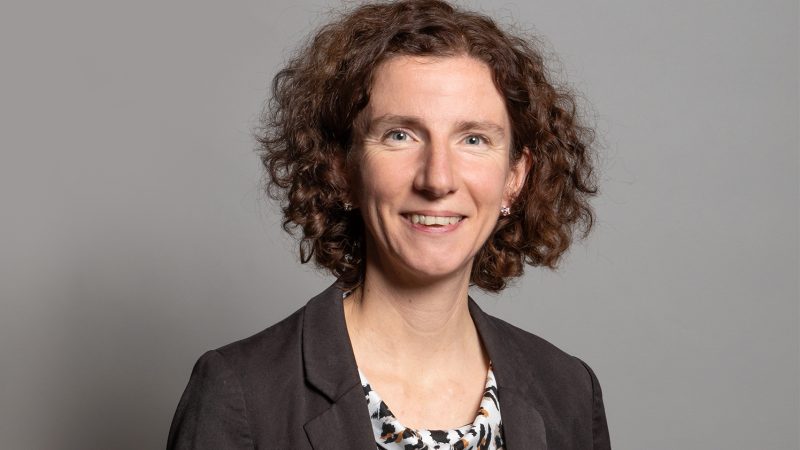
International development minister Anneliese Dodds has resigned from her post over Keir Starmer’s decision to cut the foreign aid budget to fund a boost in defence spending.
Earlier this week, Starmer told MPs that the development budget would be cut from 0.5% to 0.3% to fund the “biggest sustained increase in defence spending since the Cold War”.
However, Dodds – who attends Cabinet – warned that Starmer would find it “impossible” to deliver on commitments to maintain development spending in Gaza, Sudan and Ukraine with the reduced budget.
Dodds has also quit her post as minister for women and equalities.
In a letter to the Prime Minister, Dodds said she was resigning “with sadness” but said that cuts to international aid would “remove food and healthcare from desperate people – deeply harming the UK’s reputation”, adding: “The reality is that this decision is already being portrayed as following in President Trump’s slipstream of cuts to USAID.”
She wrote: “You have maintained that you want to continue support for Gaza, Sudan and Ukraine; for vaccination; for climate; and for rules-based systems. Yet it will be impossible to maintain these priorities given the depth of the cut; the effect will be far greater than presented, even if assumptions made about reducing asylum costs hold true.
“The cut will also likely lead to a UK pull-out from numerous African, Caribbean and Western Balkan nations – at a time when Russia has been aggressively increasing its global presence. It will likely lead to withdrawal from regional banks and a reduced commitment to the World Bank; the UK being shut out of numerous multilateral bodies; and a reduced voice for the UK in the G7, G20 and in climate negotiations. All this while China is seeking to rewrite global rules, and when the climate crisis is the biggest security threat of them all.”
Dodds said that, while she “stood ready” to work with the government on delivering increased spending, “knowing some might well have had to come from overseas development assistance”, she said the “tactical decision was taken for ODA to absorb the entire burden”.
However, she also said she remains proud of the work Starmer has achieved since she backed him to become Labour leader.
“I will continue to support you and the change you are determined to deliver – but now I shall do so from the backbenches,” she said.
Reaction from Labour MPs… and Kemi Badenoch
A number of Labour MPs have expressed their sadness at Dodd’s decision to leave office, with Rotherham MP Sarah Champion describing her as “honourable to the end”.
She said her resignation was a “big loss to the sector, but I don’t think you had another option”.
Newcastle upon Tyne Central and West MP Chi Onwurah also said she was sad to see Dodds leave the government.
She said: “I know what the role meant to her, the belief, principles and commitment she brought to it. Anneliese has always acted in accordance with her conscience and I am sad to see her leaving the government.”
Norwich South Clive Lewis suggested other factors, such as the government’s “direction of travel” may have influenced Dodds’ decision to resign and said the cuts to the aid budget emphasised the need for Starmer to consider the case for a wealth tax.
He told Radio 4’s World at One: “We don’t tax wealth anywhere near as much. This is the conversation this government is going to have to have, because whether it comes to public spending domestically or internationally, or on defence, or investment into net zero and all the other things that we now want to do in terms of industrial manufacturing and supply chains, we need to have that resource.”
Suspended Labour MP and former shadow chancellor John McDonnell also described Dodd’s decision as “sad news” but said he could “fully understand why Anneliese has taken this decision”.
He said: “Anneliese was previously a member of my Treasury team and was incredibly hard-working, dedicated and highly professionally talented. Her resignation would be a significant loss to any government.”
However, the Prime Minister had support for his decision to cut foreign aid from an unlikely source, Kemi Badenoch.
In a post on social media, the Conservative leader said: “I disagree with the Prime Minister on many things but on reducing the foreign aid budget to fund UK defence? He’s absolutely right.
“He may not be able to convince the ministers in his own Cabinet, but on this subject I will back him.
“National interest always comes first.”
Deputy Prime Minister Angela Rayner has defended the decision to cut aid spending and told broadcasters: “It is a really difficult decision that was made, but it was absolutely right that the Prime Minister and the Cabinet endorsed the Prime Minister’s actions to spend more money on defence. We want to see the economy grow so that we can then get back to having more money to spend on things like overseas aid and on our public services.”
‘You’ll have more to contribute in the future’: PM
In response to Dodds’ resignation, Prime Minister Keir Starmer defended the decision to cut the foreign aid budget but praised her work as a minister.
He said: “The decision I have taken on the impact on ODA was a difficult and painful decision and not one I take lightly. We will do everything we can to return to a world where that is not the case and to rebuild a capability on development. However, protecting our national security must always be the first duty of any government and I will always act in the best interests of the British people.
“Your work to support the most vulnerable regions has had a significant impact. I appreciate your tireless work to set this government’s direction on equality and opportunity. You have shown determination to tackle all forms of discrimination and boost opportunity for people across the UK.
“I know you will have more to contribute in the future and continue to represent your constituents in Oxford East with dedication.”
Who might replace Dodds?
A number of MPs could potentially succeed Dodds as international development minister, including Putney MP and Northern Ireland minister Fleur Anderson, who has a background working with aid charities, and Cowdenbeath and Kirkcaldy MP Melanie Ward, who worked as a humanitarian aid worker prior to being elected and served as CEO of Medical Aid for Palestinians.
"We've had free speech for a very long time in the UK and it will last a long time, and we are very proud of that".
Prime Minister Keir Starmer is being praised for intervening and correcting JD Vance after the U.S. Vice-President falsely claimed that there are “infringements on free speech” in the UK.
Vance made the comments during the Prime Minister’s trip to Washington, where he held talks with U.S. President Donald Trump. Starmer and Trump were taking questions from reporters at the Oval Office.
Vance was also present in front of the gathered media, and was asked to expand on his recent comments that European leaders were stifling free speech.
The Vice-President said in front of Trump and Starmer: “We do have of course a special relationship with our friends in the UK and also our European allies, but we also know there have been infringements on free speech that affect not just the British – what the British do in their own country is up to them – but also affect American technology companies and by extension, American citizens.
“So that’s something we will talk about at lunch.”
Starmer interrupted and said: “We’ve had free speech for a very long time in the UK and it will last a long time, and we are very proud of that”.
Asked if he does not agree, he said: “No. I mean, I certainly we wouldn’t want to reach across the US and we don’t and that’s absolutely right. In relation to free speech in the UK. I’m very proud of our history there.”
One social media user wrote of the exchange: “Good to see Starmer defend the UK’s record on free speech in JD Vance’s face, who has absolutely no idea what he’s talking about.
“The UK did not jail people last summer for ‘expressing their opinions’. It jailed people for inciting violence and racial hatred.”
Mikey Smith, Deputy political editor at the Mirror posted: “Keir Starmer slaps down JD Vance to his face over free speech in the UK.”
Four Green Councillors set out the continuing state of the local government funding crisis
In the coming months, local councils across the UK are facing tough decisions around their budgets. These are the first under the new Labour government, elected in 2024 under a banner of change. Despite uplifts in government funding for children’s services, social care and health budgets, many councils are facing desperate challenges. Austerity under Labour might feel different – but it is still austerity.
In the period from 2010-2024, councils’ core funding is set to see a real-term reduction of at least 9% according to the Institute for Fiscal Studies. In larger councils with areas of high deprivation, these reductions are set to be a real-term reduction of 26% per person.
Since the 2008 financial crisis, austerity became the new normal – a way of weaponising debt, and further entrenching inequality. UK taxpayers shouldered the burden of bailing out the bankers who caused the financial collapse, whilst seeing public services stripped to the bone under the narrative of austerity.
In recent years, economic stagnation, the rising cost of living crisis, cuts to public services and falling incomes have created a deeply damaging situation in which millions in the UK are struggling. At the same time, the very richest have felt none of the cost of this.
At a local level, there has been a weak assumption that volunteers could ‘pull together’ to plug the gaps in public services which austerity and privatisation have left threadbare. Labour and Conservative governance acts to protect the interests of capitalist management structures and our local services continue to be eroded.
We Green councillors challenge this damaging austerity agenda, with a call for genuine change. Below are personal reflections from each of us on the challenges that we face in negotiating budgets. Councillor Nicola Day, Peterborough City Council:
I was involved in ongoing budget discussions at Peterborough City Council where cuts were proposed to the library services, museum opening hours and a mothballing of the local lido (the only remaining city pool). As Greens we raised our concerns and after an outcry following the public consultation, cuts to the Lido were removed, whilst the library and museum cuts were put on review.
It will often be the poorest people who access libraries for books, IT services and signposting to other services who will be most affected. Closing most of our libraries would also cause social isolation for those who enjoy visiting the group sessions and events that libraries offer. I run my own councillor surgery in our local library, it is a warm, comfortable and safe space that also hosts skills workshops and events for all ages. I strongly believe that closing 7 out of our 10 libraries would be wrong. Threats of closures and cuts also pit local communities against each other in a battle to save services which is socially divisive. The public budget consultation and the outcry from our city’s residents show that austerity budgets are not welcomed by our local community. The cuts to these libraries have now been reviewed – although they have still not been taken off the table completely. Councillor Zoë Garbett, Hackney Council:
At Hackney Council I have heard promises that a Labour Government will make all the difference, yet they are parroting the lines last year used under a Conservative government. There ‘being no money’ and ‘given the financial situation’ is the language of austerity, being used to justify a budget of cuts. Despite some uplifts in funding, the Hackney Mayor and Cabinet are being dishonest about the cuts being made, they are often hidden away in the Cabinet papers.
Proposals include scrapping the funding for Hackney Carnival groups, which will mean the end of the Hackney Carnival, and further changes to libraries after redundancies with likely reductions in opening hours. An equalities impact assessment states that the cuts will disproportionately negatively impact Black residents and children with SEND and their families. The Council simply isn’t listening to residents: last year they made cuts to youth services where young people feel ‘everything they loved will be lost’.” Councillor Nick Morphet, Northumberland County Council:
At Northumberland Council the Green Party feels that the administration and finance officers have done a good job of setting the budget in a very difficult situation. However we are very disappointed that the new government hasn’t yet put an end to austerity and improved local government finance. As a result of its failure to do so, we’re being asked to agree to a 4.55% increase in council tax (an unfair tax), to eat even further into our reserves and to make £16.3m of savings which will disproportionately disadvantage women. Austerity is a choice, and it’s because we want nothing to do with it or the consequences of it that we won’t be voting for this budget. Councillor David Francis, South Tyneside Council:
Despite a change in government, the harsh reality for local councils remains unchanged—South Tyneside, one of the most deprived boroughs in England, is still being forced to implement an austerity-driven budget that demands more from residents while delivering less. The services we provide are not luxuries; they are lifelines.
This year’s budget sees £1.2 million in vacancy closures (cuts through stealth), reductions in street scene services, and cuts to vital support for children and families. At the same time, residents face a 4.95% increase in Council Tax, effectively paying more for fewer services. These cuts don’t just erode local infrastructure—they hit the most vulnerable hardest, undermining the council’s own ambitions for financial security, strong communities, and fairness. Yet, Labour councillors continue to follow the party line rather than fighting for a fairer deal for South Tyneside. Austerity remains a political choice, and the people of this borough deserve representatives willing to challenge the system rather than simply administering its failures.”
We, as Green Councillors, are calling out the Labour government and their choice of austerity. With so many councils facing significant and similar pressures across the UK, there is clearly something wrong. The capitalist system is a game that is motivated by private profit, the rules of which are decided by those who are winning. Our only option is to destroy the rulebook and break the game.
As energy prices soar in Britain, Spain keeps bills low with renewable energy
Overall costs of electricity, heating, cooling, water and waste disposal are 40 percent cheaper in Spain, where the cost of living is, on average, 26.5 percent lower than in UK.
Households across Britain are facing another energy bill increase from April 1 after the regulator Ofgem raised its price cap by 6.4 percent, adding £111 for the average household per year.
Rising bills hit low-income households hardest, as they absorb a larger portion of their budgets, pushing many into fuel poverty.
If you listened to the likes of Richard Tice, you’d be convinced that renewable energy makes us poorer.
“More renewables making us poorer and exposed to foreign energy, the Reform deputy leader posted in September 2024.
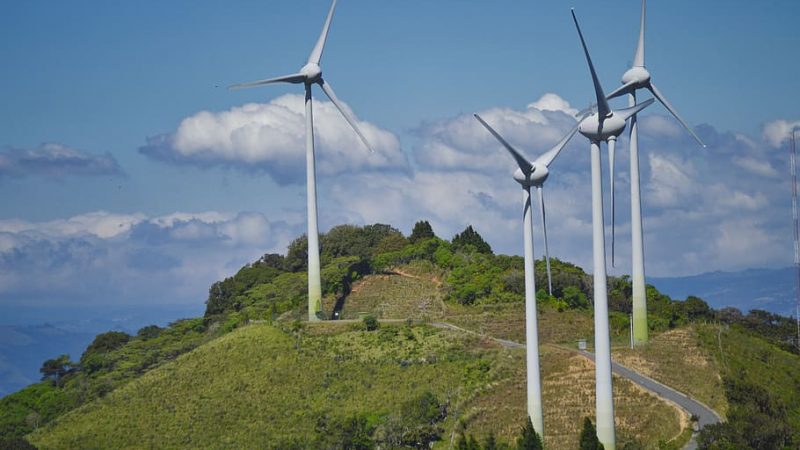
However, in direct contrast to such claims, compared to the UK, Spain has managed to keep energy costs significantly lower through extensive use of renewable energy.
Overall costs of electricity, heating, cooling, water and waste disposal are 40 percent cheaper in Spain, where the cost of living is, on average, 26.5 percent lower than in UK, according to data from the world’s largest cost of living database.
Spain has long been a leader in the European renewable energy sector. It was an early adapter of onshore wind farms, which now account for more than 20 percent of the country’s power generation. Over the last couple of decades, it has made substantial investments in wind and solar capacity. Hydropower, which used to be Spain’s largest source of renewable energy, accounts for approximately 10% of its total generation today.
“Spain’s renewable energy achievements come as no surprise given its history of strategic investments and early adoption. Its progress should be a clear benchmark for counterparts and serve as testament to the attainability of a cleaner energy future,” said Fabian Ronningen, senior renewables and power analyst,” Rystad Energy.
A study by BBVA analysed the impact of renewable energy on electricity prices in Spain. From 2021 to 2024, Spain’s growing share of low-marginal-cost renewables, primarily solar photovoltaic (PV) and onshore wind, led to a nearly 20 percent reduction in wholesale electricity prices.
Renewables help reduce electricity prices despite their reliance on weather conditions and the current lack of energy storage. And while lower energy prices have reduced revenues from solar and wind energy, particularly for solar, there is no indication that this trend is discouraging further investment in renewables, a phenomenon known as “cannibalisation,” the study found.
Opinion The boys are back in town: reflections on the psychology of Trumpworld
How did a cluster of toxic, binary attitudes get from the heads of small boys and Silicon Valley into the heart of Trump’s administration?
Trump has shoved us rudely back into a world order where mobsters rule. He and his henchmen hold liberal democracy, humanitarian action, sovereignty and the rule of law in contempt. Driven by material and ideological self-interest, they aim first to destroy, then remodel, society in their own tech-fantasy image.
Governments, legacy media and industry have cowered in response, but there is also knee-jerk resistance to the possibility that we may accidentally have unlearnt the lessons of 1930s Germany. The lawless US coup we’re witnessing is just too alien, too alarming.
To build resistance to Trumpworld we need to look beneath the surface action to its ‘nuclear core’, the psychology that fuels it. Small boys: the formation of binary thinking
The tech bro giants who are so admired by Trump and so integral to his administration best exemplify Trumpworld’s psychological core. This core is a cluster of attitudes that carve the world into tightly interconnected groups of binary opposites: superior vs inferior, dominant vs subordinate, powerful vs weak, black vs white, normal vs abnormal, male vs female, self vs other, etc. Musk is a particularly extreme but also illustrative case.
During childhood, Musk endured physical and mental bullying, both within his family and at school where he was marginalised as a nerdy, technically gifted oddball. Experiences such as these, in Musk’s case, exacerbated by autism, are petri-dishes for longer-term binary attitudes. They generate a sense of victimhood common amongst adult Incel types and the urge to overcome vulnerability through extreme physical and/or intellectual prowess. These compensatory attitudes reinforce others in the binary network: ‘being a tech genius or belonging to the same club also lends me unassailable levels of power, normality, masculinity, control’, etc.
Key features of binary thinking are that it blocks the process of growing up and, in males, often fosters misogyny. Thus, we find Musk currently arrested in the teen mindset of a 15-year-old, unable to develop the nuances of adulthood. He’s still playing out his early fanatical obsession with his comic book hero Superman and the compulsive need for drama and attention he shares with Trump. He’s still sharing shrill posts proclaiming that ‘only high status males should participate in government because women (and low testosterone men) are incapable of critical thought’; he’s still making lewd jokes about breasts, and still expecting people to laugh at his removing the ‘w’ from Twitter. Big Boys: from startups to supremacy
Political writer, Kara Swisher who worked closely with Silicon Valley’s tech fraternity, notes their culture of blatant contempt for women. Musk’s own misogyny now extends to the workplace where, for example, 14 women are suing him for failure to prevent ongoing sexual harrassment in his companies Tesla and Space X.
Swisher also observed enthusiasm in Silicon Valley for the Great Replacement theory, which holds that white Europeans and Americans are being deliberately replaced by “inferior stock” from South America, Africa and Asia. Trump’s own view, as stated in his election campaign, that “non-white immigration is an existential threat to the nation” is now regarded as mainstream in the administration. Once again, we see binary attitudes working together in the diktat that the line between black and white and the dominance and superiority of self as white over other as black must not be blurred.
Earlier in their careers, tech bros Musk and Zuckerberg harnessed their skills briefly to progressive aspirations such as the Paris Climate Accord and social media as a force for good. But these outlooks later buckled under the combined weight of business self-interest and older, more powerful binary habits of thought. Tech as a social good could also have been financially lucrative but, arguably, was sidelined because, as a humanitarian, communitarian mission, it is at odds with the binary need to dominate, control and self-serve espoused by the tech bro community. Boys in charge: Musk, Trump and the politics of dominance
The binary attitude patterns that drive Musk tells us much about the US administration, notably the outspoken misogyny of Trump himself, Vance, Hegseth, Gorka, Kloster, and many other members of his ‘alpha male’ manosphere. This unashamedly explicit anti-female bias is on full display in Trump’s demand that Romania releases Andrew Tate.
It also explains the administration’s raging contempt for the untidy liberal shadings of wokeness, and of DEI as a community whose very existence subverts the binary order of things, including the comfortable dualities of male vs female. Trumpworld thrives on a rigid, censorious understanding of what constitutes ‘normal’.
Additionally, the cluster underpins the administration’s open embrace of the rigidly authoritarian, intolerant, far-right politics of Netanyahu. It could, and should, also have provided a vantage point for foreseeing the Vance / Musk endorsement of the anti-woke, anti-immigrant AfD and Trump’s alliance with Putin. Europe should not be “shocked”.
The conceited tech bros now in charge act, like kids in a toyshop, with uncouth, unselfconscious naivety, buoyed and blinded by their stunning electoral success. It’s beyond their wildest dreams that the infantile broligarchy they concocted in their bedrooms could suddenly have acquired supreme, potentially world-dominating, powers. They are giddy with it. Where is Trump?
Notionally, Trump is in charge though not obviously in control. He is displayed as the head of a unified, competent administration. But was the head in charge of the body when Musk visited Germany to talk up the AfD, or called for Starmer to be deposed, or when Vance visited Munich to put Europe in its place? By staying silent on these forays, Trump tacitly lends them his blessing, thus presenting himself as still one step ahead of his “shadow presidents” and avoiding humiliation.
It’s also likely that Trump is being continually radicalised by his own administration. He’s surrounded by a noisy team of extremists, bent on global tech and ideological control. He’s certainly internalized the broligarch vision of tech as the ultimate solution. By keeping up with his administration’s extravagant missions he preserves both his place in the Big Boys Club and the virility mantle he wears to disguise his septuagenarian decline. Presiding vengefully over his wrecking ball executive orders and the lawless chaos unfolding around him serves the psychic function of a beauty treatment, enabling him to feel empowered, rejuvenated, and still virile. The boys go abroad: global consequences
All of this, notably the quest for male supremacy, the binary contempt for ‘a feminised world’ and the magnetic pull of authoritarianism, is evident in the US administration’s response to the Gaza and Ukraine crises.
Trump’s attack on Zelensky as a freeloading ‘dictator who started the war with Russia’ looks bafflingly foolish. But it’s completely explicable if viewed as a binary message about supreme power. His vindictive lie reminds the world that ‘I (“King”) Trump am all powerful, whereas you are weak. My proof is that the world is so beholden to me, I can say absolutely anything with impunity; this fully reaffirms my absolute prepotency’. Shameless lying is a key Trump superpower.
Similarly, Vance’s tirade at the Munich Security Conference was an outing abroad for the strutting arrogance and hubris of the ‘alpha male’ mindset. In a single speech he managed to alienate and patronise the room by delivering a breathtakingly rude yet irrelevant populist diatribe about free speech. This bizarre focus on culture wars in a context crying out for international negotiation demands an explanation.
Vance’s central purpose was not to discuss solutions to the Ukraine / Russia conflict but, essentially it seems, to inform European leaders why they’d been excluded from the ‘Big Boys Club’. In accord with Medvedev’s description of Europe as a “frigid spinster mad with jealousy and rage”, Vance’s contemptuous message was that ‘the US and our brothers call the shots now and adjudicate the world’s future. Whereas (aside from parties like the AfD whose ideology mirrors ours) you, Europe, have been frozen out of talks because you are woke, weak and inferior’.
This macho disdain was also illustrated by the US’s initial exclusion of Zelensky from negotiations with Russia and in the ruthless diktat that Ukraine won’t be allowed to join Nato, won’t get its territory back, and won’t get US military aid. And we see it the in the exclusion of the Palestian people from talks with Netanyahu, the dismissal of Gaza’s sovereignty, and the brutal plan to ethnically cleanse the region.
The contempt displayed by Vance and others in their ‘Bully Club’ exclusions is also reflected in the DOGE’s swaggering ‘move fast and break things’ approach to policy. Business interests are a factor in this posturing but so, centrally, are displays of virility, prowess, dominance, and disdain for vulnerability. Withdrawing staff from US agencies that manage critical infrastructure, including nuclear facilities and aviation, is ‘off the scale’ reckless. But there’s a nihilistic pleasure in exercising the power to break things and scare everyone witless (notably vulnerable groups like civil service employees and migrants) that outweighs concerns about the damage yet to show.
Somehow, something has gone terribly wrong and attitudes that should have been confined to making people’s life hell in some playground or small office, escaped from Pandora’s box and are now driving the construction of a technobrat programme to dominate the world. The lucky Vance must feel truly ‘pumped’ to find he can hurl the venomous insults that feed his binary ego at the leaders of almost an entire continent. Dangerous alignments
Commentators tend to predict events in Trumpworld by reference to its business interests. But underlying these interests is a nuclear core of interconnecting binary attitudes that dominates the US administration and provides its overarching vision for policy making. This attitude complex expresses itself incessantly as a hunger for perfect prowess, ruthless individualism and absolute control through fear, misogyny, racism, anti-woke and anti-DEI sentiment.
Trump is the conduit for an authoritarian, white male supremacist world view that is dominated by the muscular forces of his tech oligarchy and that holds inclusivity, altruism and social reform in contempt as ‘feminised’ and weak. It’s this underlying dynamic that best explains Trumpworld’s dark replay of so many aspects of 30s Germany and its shocking alignment with authoritarian interests elsewhere.
If we’d played closer attention to this dynamic we might have been better able to predict and perhaps even head off the frightful New World (dis)Order we find ourselves in.
Claire Jones writes and edits for West England Bylines and is co-ordinator for the Oxfordshire branch of the progressive campaign group, Compass
The story, which follows a young girl learning to live with her freckles and her unique identity, has been removed from schools operated by the Department of Defense under the Trump administration.
Freckleface Strawberry, a semi-autobiographical picture book by actress US Julianne Moore, is the latest target in the right’s ongoing assault on books.
The story, which follows a young girl learning to live with her freckles and her unique identity, has been removed from schools operated by the Department of Defense under the Trump administration.
Moore was informed of the ban by the non-profit literacy activist group Pen America, which champions the freedom to write and the rights to protect free expression in the United States and worldwide.
In a social media post, the author added that she was particularly saddened that “kids like me, growing up with a parent in the service and attending a [Department of Defense Education Activity – DoDEA] school will not have access to a book written by someone whose life experience is so similar to their own.”
“I can’t help but wonder what is so controversial about this picture book that caused it to be banned by the US Government,” Moore continued. “I am truly saddened and never thought I would see this in a country where freedom of speech and expression is a constitutional right.”
Freckleface Strawberry is one of a list of library books suspended for a ‘compliance review’ after a presidential executive order.
The Department of Defense said it was examining library books “potentially related to gender ideology or discriminatory equity ideology topics”. After access to all library books was suspended for a week for a review, a “small number of items” were identified and have been kept for “further review,” it said.
The order follows a history of banning school books in the US that authorities find challenging.
Worryingly, this issue is not confined to the US. The UK is also facing its own wave of censorship. Books have been removed from university libraries because of their depiction of reality. In 2022, the government ordered schools in England not to use material from groups that believe that capitalism should end.
But banning Freckleface Strawberry, a book about a child’s self-acceptance? That’s a whole new level of absurdity. The right certainly has some peculiar ideas about what DEI actually means. And yet, these very same people claim to be champions of free speech?
And remember when the Trump administration called book bans a “hoax”? Wasn’t his whole “smaller government” pitch supposed to give Americans more freedom? Now, they’re denying even the simple pleasure of reading about a little girl with freckles.
Corporate America’s MAGA makeover – will the UK follow suit?
Resistance will require strong political leadership from progressive politicians in the UK and in Europe to withstand the hopelessly short term and contradictory bombast of Trumpian politics
.
The re-election of Donald Trump has thrown corporate America’s commitment to diversity, equity and inclusion (DEI) policies into reverse. Along with environmental, social, and governance (ESG), DEI standards are being dumped, as executives buckle under pressure from the long-held conservative grudge against affirmative action and programmes designed to upend discrimination and promote progression.
It raises the question of whether these organisations were ever truly committed to these causes, given how easily they can discard such values. More concerning still, is whether UK companies will follow suit and cave to the right’s witch hunt against what’s pejoratively labelled ‘wokeness.’
Or will they resist political demonisation and uphold their DEI commitments? If they stand firm, they’ll diverge from the path taken by their US counterparts, led by a president, who controversially suggested the day after the plane crash in Washington that DEI policies had hindered the recruitment of the brightest people into air traffic control.
Consider the likes of Apple’s Tim Cook, Google’s Sundar Pichai and OpenAI’s Sam Altman. They all joined Meta’s Zuckerberg and Amazon’s Bezos in pledging $1mn to Trump’s inauguration fund. Pichai even flew to Trump’s Mar-a-Lago estate in Florida, presumably to placate the president, who had previously claimed Google was “rigged” to hide positive coverage about him. As did Amazon founder Jeff Bezos. They are just two of the many top execs eager to gain favour with a president known for his sharp criticism of companies and CEOs he dislikes.
Amid the growing embrace of unfettered capitalism, DEI departments being dismantled, support for racial diversity charities is fading, and involvement in climate change initiatives are being scrapped. Anything deemed ‘woke’ is being scrubbed from corporate documents, advertisements, and public statements.
Take McDonald’s, one of the largest US corporations to announce it is ‘sunsetting’ its specific diversity goals, including requiring its suppliers to commit to certain DEI targets and avoiding participation in external surveys that measure corporate diversity. McDonald’s is also changing the name of its diversity team to the Global Inclusion Team — a common practice for many other companies that have rolled back diversity pledges.
McDonald’s said such changes have been driven by a recent Supreme Court ruling against affirmative action, which effectively ended race-conscious admission programmes at colleges and universities across the US.
Then there’s Meta, formerly Facebook. In January, Dana White, UFC CEO and close friend of Trump, was added to Meta’s board. The company restructured its diversity leadership, shifting its chief diversity officer to a new role, while abandoning previous goals to increase racial and gender diversity among suppliers and managers.
Mark Zuckerberg, Meta founder, joined a podcast by Joe Rogan, who endorsed Trump in the election, and praised the rise of “culturally neutered” companies. “I think having a culture that celebrates the aggression a bit more has its own merits that are really positive,” he said.
The global professional services firm Deloitte meanwhile has purged its DEI-related content. Management recently told staff it was ‘sunsetting’ its diversity goals in the US, as well as an annual DEI report. The term sunsetting is interesting. What follows sunset? Darkness which seems just about right.
In this current political climate, Wall Streeters feel suitably emboldened to openly embrace a profit-driven market, without nodding to any broader social goals.
“Most of us don’t have to kiss ass because, like Trump, we love America and capitalism,” one banker commented.
Another said: “I feel liberated. We can say ‘retard’ and ‘pussy’ without the fear of getting cancelled . . . it’s a new dawn.”
Lovely. A ‘new dawn’ perhaps only for those eager to resurrect outdated, misogynistic language at the expense of respect and inclusivity and straight forward decency. If this is what ‘liberation’ looks like, it’s a grim reminder of how easily some can lose sight of the values of dignity and equality.
For employees at these major corporations, the DEI backsliding must surely raise questions. How can they trust their employers’ commitment to values when those ‘core values’ can be discarded so easily?
So, what about in Britain, long seen as the loyal follower of the US? There are worrying signs that UK corporations are following Trump’s aggressive anti-woke line.
BP pulls the plug on green ambitions
Just this week, BP angered climate groups by announcing it was abandoning its 2020 plan to become a Net Zero energy company. The oil giant will invest in new gas and oil projects, equating to around $10bn a year, in a bid to reverse its flagging fortunes – flagging in relation to other oil companies that is given that it still makes a healthy return for investors.
BP’s chief executive, Murray Auchincloss, said its green plans were ‘misplaced’ and went ‘too far, too fast.’
The announcement sparked outrage among climate campaigners. Greenpeace UK has called on the government to “ensure companies like BP pay their share for the climate damage they’re causing”.
BT to scrap diversity measures
Meanwhile BT, once the bastion of Britishness with a state telecoms monopoly, is to scrap the diversity measures in its manager bonus scheme. The company told major investors that it plans to replace the DEI component of its scorecard with a focus on employee engagement.
The new system is set to come into effect in April, following what BT described as “strong support” from shareholders.
The move comes despite criticism from Allison Kirkby, BT chief executive, of companies that are “stepping back from their commitment to inclusion.”
Reporting BT’s decision, the Telegraph framed it as part of a broader trend.
“Telecoms giant joins major US companies in rolling back DEI initiatives amid return of Trump,” it headlined, adding: “BT is to scrap diversity measures in its manager bonus scheme in one of the clearest signs yet that British business is rethinking the role of ethnic and gender representation targets.”
But then the right-wing’s media’s elevation of anti-woke narratives is not surprising. Last month, Murdoch’s Sun published a corker of a frontpage.
“£8bn research cash used for trans-friendly robots, ‘queer animals’ and TikTok dance…”, read the headline of a report based on research by the TaxPayers’ Alliance (TPA), the right-wing think-tank that campaigns for low taxes, less government intervention and has long opposed government measures to combat climate change.
But as fact-checkers Full Fact concluded, the Sun’s headline was misleading, as £8 billion is roughly the entire annual budget for UK Research and Innovation. About £10.4 million of funding has been allocated to projects that the TaxPayers’ Alliance described as “woke”.
A misleading headline in the Sun? Surely not!
Are UK banks wobbling?
Amid this anti-progression, anti-climate action landscape, British banks, once champions of green finance, seem to be having a wobble. Last month, HSBC delayed its Net Zero target for operational emissions by two decades, now aiming for 2050 instead of 2030. The bank blamed the delay on “latest best practice on carbon offsets,” signalling a shift in the consensus that carbon credits should play a minimal role in corporate Net Zero strategies.
However, as Simon Mundy, Moral Money editor at the Financial Times points out, banks’ relatively small operational emissions are not the biggest concern.
“Far more important is the finance that they provide to the energy transition. On this front, there’s no evidence that they’ve seriously watered down their objectives since 2021.”
Since 2021, HSBC has facilitated $393.6 billion in sustainable finance and investment and is on track to meet its goal of at least $750 billion by the end of this decade. Similarly, NatWest, which committed to providing £100 billion in climate and sustainable funding between 2021 and 2025, had already reached £93 billion last December.
But Mundy’s point isn’t to claim UK banks are climate champions – they remain under intense scrutiny from environmental groups for their exposure to the fossil fuel sector, particularly Barclays, which does more oil and gas finance than any other bank in Europe.
“And their varying definitions of terms like “sustainable finance” make it hard to draw apples-to-apples comparisons of their performance,” he writes.
But if government action doesn’t accelerate, the banks have hinted that more serious environmental policy retreats might be in store.
“Our climate ambitions are unlikely to be achieved without timely and appropriate government policy and technology developments,” HSBC warned.
Glimmers of hope?
While there are certainly wobbles, there are signs that UK businesses are holding strong on diversity commitments, even as their US counterparts scale back. McDonald’s UK, for example, is sticking to its DEI policies, pledging 40 percent of senior roles for under-represented groups by 2030 and enhancing social inclusion in its supply chains.
The Bakers, Food and Allied Workers Union (BFAWU) had urged McDonald’s to resist following America’s example. The union accused the US business of ‘regressive’ actions in backtracking on DEI commitments.
The position of McDonald’s UK position mirrors a similar move by Deloitte UK which has insisted it was “committed to diversity goals” even as the US branch announced a DEI retreat.
What do Britons think?
When asked about the prospect of UK companies following US businesses in scaling back their commitments on DEI, half of Britons believe it would be ‘bad.’
Mike Granleese, head of data and insights at Apella Advisors, which carried out the study, explained to the Times why most people thought ditching DEI was bad.
“For some, that’s because firms would miss out on talent,” he said. “But the biggest reason for thinking less of firms that junk diversity programmes is that they would be abandoning principles they previously said they held dear. The public values authenticity.”
But the poll also recorded some support for scaling back on DEI commitments, with 29 percent either agreeing with or “understanding” the move, and that older people and men were more inclined to agree with Trump’s position.
“The Trump agenda is not popular among Britons, with most opposing moves by business and politicians to adopt the president’s ideas,” Granleese added. “But that view is not universal and significant parts of UK opinion are positive about Trumpism.”
I have to say that I’ve yet to meet anyone in Britain openly supportive of Trump, but perhaps they’re out there, just keeping their admiration quiet, for obvious reasons.
But even if Britain stands by its DEI commitments, Trumpism’s assault on ‘wokeism’ could still be felt here.
Stonewall staff ‘shellshocked’
Staff at LGBTQ+ UK charity Stonewall, are reportedly ‘shellshocked’ after news that the charity might be forced into cutting staffing by as much as 50 percent, principally due to US funding for overseas DEI initiatives being frozen by the Trump administration.
“Workers at the LGBTQ+ charity were told on Thursday that restructuring would take place, and that only roles with dedicated funding would be safe,” the Times reported.
“Simon Blake, the chief executive of Stonewall, made the announcement in an office-wide Teams call, which was said to have left its 114 staff ‘shellshocked.’”
It might be hard to keep up with everything Trump says and does, but he and his close allies like Elon Musk couldn’t be clearer about their push to dismantle corporate practices they view as pervasive, especially DEI.
As a result, business leaders are rapidly pivoting their practices to be more aligned with their president’s vision. Worryingly, pockets of resistance to the DEI and the climate agenda are emerging in Britain, where some in the corporate world seems to be looking to America for direction, but are as yet unsure whether to follow.
It will require strong political leadership from progressive politicians in the UK and in Europe to withstand the hopelessly short term and contradictory bombast of Trumpian politics. In the end Trump will fail but the worry is the damage he does until that happens.
Immigration key to solving Britain’s construction crisis – say experts
Central to Labour’s ambitious growth plan are major infrastructure projects and the construction of 1.5 million new homes. But the feasibility of these plans is now under question.
‘Labour’s plan for 1.5m new homes under threat from skills shortage,’ splashed the I newspaper’s front-page story on February 24.
Construction industry insiders have warned that Britain needs an extra 25,000 bricklayers, 10,000 carpenters, 4,000 plasterers, plus thousands more skilled tradespeople.
Dropout rates among young construction apprentices are as high as 40 percent on some courses, and government plans to train apprentices have been described as a “drop in the ocean.” Meanwhile, an ageing workforce means more than 20 percent are over 50 and likely to retired before the end of the next decade.
While Labour maintains a tough stance on immigration, with a record number of migrant arrests in January, ministers have acknowledged the need for a significant increase in migrant workers to fill the skills gap in construction. The sector has already experienced a sharp decline in employment numbers, driven partly by the loss of EU workers following Brexit, but also by the retirement of an ageing workforce that is 85% UK-born.
“Immigrant labour is likely to be critical to any government that is serious about building substantially more homes as well as more and better infrastructure,” said Professor Noble Francis, the Construction Product Association’s economics director.
“Training of UK workers is currently insufficient to meet even building what we were building just a few years ago, never mind what we will need to build in the future,” he added.
To address the labour shortage gap, the Home Builders Federation (NFB) is calling for a three-to-five-year construction visa programme. This would be accompanied by a scheme to train UK workers in the same discipline as foreign workers, ensuring that the UK workforce can eventually meet demand. Given that it takes two to three years for someone to qualify in construction and an additional two years to gain experience, the proposed visa program would provide an immediate solution while building a skilled workforce for the future.
Rico Wojtulewicz, head of policy and market insight at the HBF, explained the importance of attracting more people to the construction industry.
“People often say that we’ve got to get more people interested in construction. And I think that obviously the government’s obsession with university education and moving away from trades has created problems in terms of selling that to parents and schools.”
The labour shortages caused by immigration restrictions are not limited to construction. Sectors such as hospitality and manufacturing are also feeling the strain. Since Brexit, the proportion of hospitality workers from overseas has dropped from 25 percent to 12 percent, leaving little room for further reductions. As a result, pubs and restaurants have had to reduce their operating hours due to a lack of staff.
Ahead of last year’s general election, Kate Nicholls, chief executive of the lobby group UK Hospitality, stressed the importance of investing in skills and helping people into employment, to ensure any long-term reduction in migration rates did not exacerbate skills shortages. She warned:
“We’ve got a really sparse population and it’s super-ageing. The bottom line is that even if you took every single person in Cumbria seeking work, you would not fill that gap.”
In manufacturing, employers are likely to turn to automation if they cannot employ migrant labour, warns David Bailey, professor of business economics at Birmingham Business School.
“The government has assumed restricting migrant workers will lead to higher wages and productivity but that doesn’t happen automatically.
“Even greater restrictions [on top of Brexit] would make recruiting workers more difficult and might constrain companies’ ability to increase output.
“It also means that companies would have to look at more automation. If you can’t get workers, you have to automate.”