Tuesday, March 04, 2025

Rise of far right

Rafia Zakaria 
March 1, 2025
DAWN


The writer is an attorney teaching constitutional law and political philosophy.


EUROPE has been marching rightward for some time, with voters in France, Portugal, Belgium, and Austria following this trend. Germany’s election results continued this trajectory, as Friedrich Merz, leader of the centre-right Christian Democratic Union, was elected chancellor. Merz has yet to form a coalition and announced he would soon begin talks with the Social Democratic Party (SDP) to establish a government by Easter. A record-breaking 82.5 per cent voter turnout was recorded in Germany this year — the highest since the 1990s.

It was not just Merz’s victory that is significant. While his bloc secured 208 seats, the far-right Alternative for Germany party won an unprecedented 150 seats. The AfD — often referred to as the ‘Nazi party’ due to its members’ anti-Semitic and pro-Nazi leanings — was long considered a fringe group. Sunday’s election proved otherwise. The party doubled its vote share from the last election, propelled largely by young voters aged 18 to 24 years. Among its campaign promises were harsher immigration policies and a better relationship with Russia, despite Germany’s current hostilities with Moscow over the Ukraine war.

Björn Höcke, a leader of the AfD, has previously used Nazi-era slogans. At a rally in May 2021, he invoked the phrase “everything for Germany”, once used by SA storm troopers who played a pivotal role in the Nazi rise to power. Höcke was convicted for violating Germany’s anti-Nazi laws and fined, though he evaded a three-year ban from public office. He claimed he had been merely expressing his sentiments and was unaware of the phrase’s Nazi roots — despite being a history teacher. The judges who heard Höcke’s case in court said they were convinced that Höcke was well aware of the ban when he made the statements.

Höcke was not the only AfD politician with ties to Nazi rhetoric. Maximilian Eugen Krah, a member of the party’s executive board, stated that not everyone who belonged to Adolf Hitler’s SS was “automatically a criminal”. The SS was responsible for the murder of hundreds of thousands of Jews during World War II. Another AfD politician, Matthias Helferich, once described himself in an online chat as the “friendly face of the Nazis”, later claiming it was a joke. Both men had been sidelined by the AfD’s leadership but have now returned following the party’s electoral success — underscoring the AfD’s growing confidence.


This new Europe is uninterested in equality or human dignity.

So far, mainstream German politicians, including outgoing Chancellor Olaf Scholz, have refused to collaborate with the AfD due to its extremist ideology. This exclusion has kept the party on the fringes of governance. However, if the far-right party continues its upward trajectory, it is uncertain how long this firewall will hold. Merz wants to form a government with the SDP, ensuring that, for now, the AfD remains out of power.

Europe’s collective shift to the right signals two crucial developments. The first is that most of the far-right parties — from Marine Le Pen’s National Rally in France to the AfD in Germany — stand accused of antisemitism. The persistence of this hatred suggests that Europe has never really dealt with its deep-seated anti-Jewish sentiment, even decades after the Holocaust. Six million Jews may have been murdered by Hitler, but rather than integrating the survivors, decades ago, Europeans with British assistance encouraged them to move to Palestine, where they established the Jewish state of Israel. The great irony of the moment is that Israeli Jews consider poor and impoverished Pa-lestinians a threat while ignoring Eu-rope, some of whose leaders are not averse to mou­thing Nazi slogans.

The second shift is that the post-World War II order — designed to prevent another mass atrocity — is crumbling. The hypocrisy of this system became evident as the world watched the mass killing of Palestinians with impunity.

The once noble façades of human rights and moral superiority have collapsed, revealing Europe’s true face — xenophobic, racist and misogynist. This new Europe is uninterested in equality or human dignity; it is preoccupied with white supremacy.

For people in the Middle East and South Asia — regions with long histories of Western colonial oppression and political interference — this revelation is not surprising. Many never believed the West’s claims of espousing human rights. If the past 25 years represented the ‘better’ face of Europe’s centrist and left-leaning politics, one cannot help but wonder how much worse the next 25 years will be.

rafia.zakaria@gmail.com

Published in Dawn, March 1st, 2025
Rich and powerful

Syed Sheheryar
 Raza Zaidi 
 March 3, 2025 
DAWN


The writer is a lawyer.


“…POWER, freedom, a cushion, the root of all evil, the sum of blessings” was how Carl Sandburg, who died in 1967, described money. Decades later, one look at the world shows us how true his words are even today. Unequal wealth distribution has long been a subject of debate amongst intellectuals, and has even given rise to movements like Karl Marx’s socialism. Yet, it is in moments when the rich abuse their wealth and resources at the expense of the common populace that the idea of money being “power” and the “root of all evil” hits home.

Of late, the reckless show of wealth has been on abundant display both internationally and locally. The rich often took a back seat in electioneering; they operated and funded political parties to toe their agendas in private, shying away from public scrutiny. Yet all of that was thrown out of the window when one man proceeded, in a naked display of his wealth, to acquire perhaps the strongest weapon of public scrutiny — Twitter. To drive home the message, Tesla’s founder entered Twitter’s head office with an actual sink to let his acquisition of the social media platform sink in. Unfortunately, the acquisition of Twitter, now X, was not the end but the shape of things to come.

Since acquiring it, Musk has continued to promote right-wing voices through the X platform, even making speeches at Donald Trump’s election campaign. At one point during the election, Musk’s campaign group America PAC announced that $1 million each day would be given to one registered voter in the seven US swing states, who would sign a petition supporting the right to bear arms and free speech. This move was widely criticised as being nothing but a ploy to swing the US presidential elections in a blatant cash grab. Yet, Musk’s backing worked and President Trump has come back to power. Musk did not stop there and has since proceeded to take an active interest in foreign elections, supporting right-wing parties and candidates.


Wealth is often accompanied with notions of superiority.


In the recently concluded German elections, for example, the AfD party, otherwise a fringe, right-wing outfit, took a historic second position, winning over 100 seats. For the naysayers, this was largely down to the public and unabashed backing given to the AfD by Musk, one of the richest men in the world, and the new US administration; the belief is that the X platform gave the AfD far greater reach than it had ever had.

Internationally, perhaps the naked display of wealth and the aforesaid election meddling came as a shock to the public. Locally, the tragic murder of a young boy, Mustafa Amir, and subsequent attempts by the alleged culprits to avoid justice were just another stark reminder of the reality in Pakistan, where money for the rich and the powerful is the “sum of all blessings”. Imagine having such great belief in the power of money that you are able to, allegedly, forcibly resist arrest and have the audacity to fire directly at the police. There are more instances of brutal murders like that of Noor Mukadam. Besides, several incidents of merciless beatings of servants and peasants by an entitled elite regularly come to light. It appears that the rich in Pakistan not only acquire wealth, they also acquire a licence to kill — with impunity — or so they imagine.

You don’t necessarily have to think long and hard to identify the power which comes with being rich in Pakistan. A simple stroll along any public road is enough for one to witness new heavy-duty vehicles with armed private guards. This frequent display of personal fiefd­oms is a stark reminder of the depths of the in­­equality in Pak­istani society.

With wealth should come the idea of benevolence. However, here, wealth is often accompanied with notions of superiority, which have been embedded in the minds of the rich through elitist educational institutions, gated communities, and a justice system skewed in favour of those with deep pockets. Take Pakistan’s grand clubs as an example, most of which have very strict policies, which, for instance, prohibit drivers and domestic help from going beyond a point, almost as if the dessert — the rich — are being protected from the common flies.

Money itself is not a problem, and neither is the pursuit of money an act of shame — as long as such pursuit does not come at the cost of the lives of others. To be rich is a blessing but it may also be a curse. The idea of a society should not be one that is tailored to cater to the needs of the rich. Rather, the idea of a society should be one of harmony, where civil liberties, respect and dignity are not dictated by your bank balance but by intellect and the contributions — whether big or small — you make to its functioning.


X: @sheheryarzaidi

Published in Dawn, March 3rd, 2025
Challenge of a reset

March 3, 2025 
DAWN
The writer is a former ambassador to the US, UK and UN.

PRESIDENT Donald Trump’s foreign policy actions and pronouncements have created geopolitical upheaval at an already unsettled time in the world. It has sent countries scrambling to find ways to navigate the new global terrain and figure out how to engage with Washington under Trump’s mercurial management. He has upended US foreign policy on several fronts including the Middle East and Ukraine, jettisoned Western allies, all but abandoned the transatlantic alliance, and deliver­­ed more blows to multilateralism. His imposition of tariffs on friends and competitors alike has rai­sed the spectre of a global trade war. Trump’s ‘Am­­erica First’ unilateralist approach is further fragmenting the global order and ushering in a disruptive and volatile phase in international affairs.

This is the context in which Islamabad is weighing where it will figure with Trump’s America. Both the government and opposition have been trying, so far unsuccessfully, to elicit the new ad­­minis­tr­ation’s attention. In fact, relations between the US and Pakistan have been at an inflection poi­­nt since the American withdrawal from Afg­h­anistan in 2021. For over two decades, the war in Afgha­n­istan provided the principal basis for engagement between the US and Pakistan even as it became a source of mutual mistrust and disenchantment.

After that ended, Pakistan’s diminished geopolitical importance for Washington drove relations to a low point. On the other hand, Pakistan’s long-standing strategic ties with China continued to intensify. Increasingly, America was seen as a self-absorbed and inconsistent partner as well as a reluctant regional player. China was perceived as having the will, money and growing global clout needed for a more constructive and enduring relationship that met both Pakistan’s defence and economic interests.

Benign disengagement between Pakistan and the US may be the best option for now.

Nevertheless, Pakistan sought a reset in ties with the US. But this proved elusive. President Joe Biden’s tenure saw little high-level engagement and he showed no interest in interacting with Pakistan’s leaders. The low point in relations was also reflected in the fact that the US secretary of state never once visited Pakistan during the Biden years. Military-to-military contacts, however, continued as did CT cooperation. The Biden administration’s parting shot was to impose sanctions on several Pakistani entities aiding its missile programme. Although this had little impact, the tough statement accompanying the move, promptly denounced by Islamabad, did sour ties.

In Trump’s first term, relations got off to a turbulent start when he accused Pakistan of “lies and deceit”, claiming it was not helpful in Afghanistan despite receiving “billions of dollars” in US aid. He went on to suspend security assistance including coalition support funds. But re-engagement got underway when Trump decided on exiting Afghanistan and sought Pakistan’s help for talks with the Taliban to strike a deal at Doha. Apart from that and the evident geniality between Trump and former prime minister Imran Khan, the bilateral relationship remained undefined and shorn of substance.

This posed the challenge then as it does today of resetting ties in a fundamentally changed global and regional environment. The history of the roller coaster relationship, with cyclical swings between intense engagement and deep estrangement, shows that positive transformations in ties were always driven by geopolitical storms or superpower dynamics extraneous to the bilateral relationship. America’s shifting geopolitical concerns that shaped its regional priorities also defined relations with Pakistan. They drove bilateral ties into different phases with security issues determining the relationship.

In the Cold War, when the US aim was to contain communism, Pakistan became America’s ‘most allied ally’. Then after 1979 there was a mutual interest to roll back the Russian invasion of Afghanistan. The third, post-9/11 phase involved defeating Al Qaeda in the ‘war on terror’. This ended with the US pullout from Afghanistan.

Despite their close cooperation in these three phases, there was always an elephant in the room. In the first, it was India. The US priority was to defeat communism, but for Pakistan ties with Washington were part of its external balancing strategy of seeking extra-regional support to address its security dilemma given the vast power asymmetry with a hostile India. In the second phase, the elephant in the room was Pakistan’s nuclear programme even as the two collaborated in the joint struggle against the Soviet occupation of Afghanistan. This divergence was to surface after the Russian defeat when the US imposed wide-ranging sanctions on Islamabad on the nuclear issue and Pakistan became America’s most sanctioned friend.

In the most recent phase, Pakistan’s communication channels with the Taliban produced a disconnect with the US. Islamabad believed that one day everyone would have to deal with them but Washington saw this as evidence of Pakistan’s ‘double game’.

It is against this backdrop that Islamabad seeks to reconfigure ties with the US based on Pakistan’s intrinsic importance and not as a sub-set of Ame­rica’s other concerns. But a reset faces many challenges.

For a start, Pakistan does not figure in the Trump administration’s recast priorities. There are other constraining factors. America’s top strategic priority is to contain China. Although Pakis­tan says it wants to balance relations between the US and China, it sees its strategic future to lie with China and will not be part of any anti-China coalition. This limits the space for Pakistan-US relations. So does America’s growing strategic and economic relationship with India, its partner of choice in the region in its strategy to project India as a counterweight to China. Finding space betw­een these two strategic realities is a challenge for the Pakistan-US relationship. Another limiting factor is Pakistan’s economic weakness which acts as a major impediment for meaningful relations.

Important as future relations with the US are, perhaps until Pakistan is able to empower itself economically and fix its domestic problems a phase of benign disengagement between the two countries is preferable. Keeping its head down — for now — with an administration that only wants to play by its own rules and whose proclivity for capricious conduct can create unnecessary problems is an option worth considering by Pakistan. This is not an argument to put diplomacy on hold but to consider whether over-eagerness for engagement with a preoccupied and transactional Wash­ington without having much to offer or gain is in Pakistan’s interest. Showing strategic patience and waiting it out may serve the country better.


Published in Dawn, March 3rd, 2025
Gambling with World War III

Published March 4, 2025 
DAWN

The writer is Dawn’s correspondent in Delhi.


TOO many opposite and unyielding opinions are ranged on the subject, which requires an explanatory note before coming to the point. The ungainly White House spat between Donald Trump and Volodymyr Zelensky has gripped everyone’s attention. But let me make a small point here.

If anything, the wordy duel reminds one of an old Chinese saying: ‘Don’t interrupt the enemy if he is making a mistake.’ Think about it. If Trump’s controversial actions at home help to dismantle the global snooping menace of Five Eyes — the sobriquet for the dark club of intelligence agencies of the US, UK, Australia, Canada and New Zealand, is it not a matter of relief for the rest of the world?

Cynics may consider the views of Edward Snowden on the subject. It was his revelations about the Five Eyes intelligence alliance that exposed how the US and its allies spy on citizens and share their information.

On the diplomatic circuit, if Trump’s actions in the war in Ukraine stop the meat grinder from wasting more human lives and also helps undermine the corrosive transatlantic military alliance of old colonial powers, should the rest of the world rejoice or go into depression?

Some discussants on the subject see Vladimir Putin as a greater threat to peace. Zelensky calls him a terrorist. Ukraine’s constitution forbids him to talk to Putin. Airy-fairy duels don’t lead anywhere. In fact, a most crucial observation that was made in the Oval Office on Friday has been buried in the rush to take sides between Zelensky and his host and Putin.

The point we may have missed was Trump’s sound advice to Zelensky showing him the door: “You are gambling with World War III.” It’s hard to remember an American president confessing to an ally he had been arming in a brutal war to be wary of the conflict turning into a nuclear war.

Anyone can describe Trump as a threat to America, to democracy and so forth. No one is taking away the import of that criticism. But valid as it is, the timing of the criticism masks the distress of Jack Nicholson’s complaint in As Good As It Gets. “I am drowning here, and you are describing the water.”

Trump, in fact, made another self-appraisal for Zelensky to ponder. He said the Ukraine-Russia war should never have happened. It is a fratricidal war, indeed, just as the Afghans were made to range against each other with this or that ruse, only to be abandoned because of imperialism’s attention deficit.

We saw pretty much the same thing in Vietnam, pitting brother against brother. The Iraq war was as contrived as the Ukrainian conflict. The modus operandi was also the same: give the quarry the kiss of death. April Glaspie did to Saddam Hussein what years later Victoria Nuland would do to Zelensky. Both were seduced into ruinous wars and then presented with the bill for reparations.

Before the current stand-off, ordinary Russians and Ukrainians were invested in each other as members of a larger Slavic family. They shared a common history, most notably of jointly defeating Hitler, although Ukraine had its own variants of Nazi sympathisers too. The two peoples shared the same church, their cuisine, and much of their culture. Ironically, powerful Soviet leaders had Ukrainian links. Nikita Khrushchev, Leonid Brezhnev, and Konstantin Chernenko were born or raised in Ukraine.

Why was Trump speaking to Zelensky about the spectre of a nuclear holocaust should Ukraine continue to rib Russia with foreign weapons? It’s possible, as some analysts believe, that he was warning European partners as much as Zelensky about the perils of persisting with a fruitless and calamitous conflict. Now that Russia and the US appear to be on the same page in the stand-off, where could the trigger for a catastrophe be lying?

There are several triggers, not least in the Middle East, while the South China Sea continues to be another volatile region. But the real Russian roulette that Trump was cautioning about is being played out in London by none other than the usual suspects.

A ‘coalition of the willing’ is being hustled together. Keir Starmer and Emmanuel Macron, both struggling with terrible popularity ratings at home, insist they want to put ‘boots on the ground’ in Ukraine, ostensibly to strengthen Zelensky’s hand in the event of a ceasefire. Credible analysts see this as a poisoned chalice for Putin. After all, Russia waded into Ukraine to vacate the possibility of having Nato members on its borders. European leaders know Putin would never accept them as neighbours.

Moreover, as implied by Trump in his second term in office, the West, more specifically NATO, had deliberately provoked Putin. The UK has been stressing that a Russian victory would pose a threat to Europe. Does the claim have any basis in fact? Or is it rooted in Britain’s history of Russophobia?

Ever since Churchill’s iron curtain speech and the rise of James Bond, Russophobia has only prospered. The chorus in the Biden days was that Russia had lost the war. Trump pooh-poohed the claim and effectively said it isn’t happening. His predatory fangs are out for Ukrainian minerals instead. He won’t be unaware that the Ukraine war is also known as Hillary Clinton’s revenge for Putin’s indiscretion of stalling her dismantling of Syria à la Libya in Antony Blinken’s company.

The businessman in Trump makes him instinctively averse to needless risks. He should have been rattled last month when a military helicopter crashed midair into a commercial airliner over Washington airport. The helicopter was carrying out a mock drill to evacuate an imaginary POTUS to safety during an imaginary nuclear attack.

To make it eerier, Annie Jacobsen, in her insightful book called Nuclear War, had only recently described a helicopter crash involving the US president who was being rescued to a safehouse but ended up with multiple fractures and no one alive to help.


jawednaqvi@gmail.com

Published in Dawn, March 4th, 2025
Case of the BLA and PKK

Muhammad Amir Rana 
March 2, 2025 
DAWN


The writer is a security analyst.


WITH the fall of the Assad regime in Syria, the Middle East’s militant landscape has been in the throes of a rapid transformation. Armed groups are under immense pressure to change tactics, with many altering their strategies. Others are undecided due to ideological and geostrategic considerations.

A particularly significant development is the call by Abdullah Öcalan, a founding member of the Kurdistan Workers’ Party (PKK), urging his group to disarm and dissolve itself. This announcement is bound to have far-reaching implications for the region; Öcalan’s message is likely to resonate among various Kurdish armed factions, in particular those that are located in north-eastern Syria and northern Iraq, and which have historical links to the PKK. It would be interesting to see how Kurdish groups backed by the Syrian Democratic Forces (SDF) will react to the development, given their deep connections to the PKK. Öcalan’s statement could potentially reshape the political and military dynamics of the region.

The SDF was not invited by the Türkiye-backed Hayat Tahrir al-Sham, which toppled the regime of Bashar al-Assad in Syria, to participate in a dialogue to form a new transnational government due to pressure from Ankara. However, SDF leaders have confirmed that they are in talks with the new authority in Damascus. Indeed, the HTS will consider Ankara’s advice in dealing with the SDF, while defusing Öcalan’s pressure would be challenging for the SDF. The SDF is also waiting for a response from the new administration in the US to see how it will react to the recent developments. Öcalan’s announcement will likely further pressure and isolate the SDF, forcing it to decide which path to adopt. Initially, the SDF denounced Öcalan’s call and stated that it had nothing to do with Syria.

The tolerance for non-state actors of all ideological and political shades in the Middle East is reducing fast, with Iran seemingly alone in supporting the resistance by non-state actors in the region. The PKK’s call for disarming itself after 40 years of resistance, during which time 40,000 lives were lost, will have a consequential impact.


The PKK’s call for disarming itself after 40 years of resistance will have a far-reaching impact.

The Middle East is changing, and it remains to be seen whether the changes will be confined to the region or impact other areas as well, including Pakistan. The most curious case would be that of the Balochistan Liberation Army (BLA), which seeks inspiration from the PKK and other Kurdish militant movements.

The BLA is an ethno-nationalist militant group with left-leaning tendencies; it is also one of the most active insurgent groups among the 10 major leftist separatist movements worldwide. Left-leaning secular separatist movements are known to take inspiration from one another in shaping their ideological and political paradigms, as well as in refining their tactics and strategies. Moreover, such movements are open to influences from religiously motivated groups, especially in the area of operational tactics. For instance, alongside influences from other leftist militant movements, the BLA has also adopted tactics of Al Qaeda and the TTP, including the use of suicide bombings in its operations.

Among leftist insurgencies, the BLA is mainly influenced by Kurdish militant movements in Türkiye, Syria, Iraq, and Iran, viewing them as historical parallels. This influence was certainly in evidence when the BLA named one of its female suicide bombers Zilan Kurd after a Kurdish woman who, on June 30, 1996, carried out a suicide attack targeting Turkish soldiers in Dersim. The real name of the Baloch Zilan was Mahal Baloch, a seventh-semester law student at the University of Turbat, and originally from Gwadar. Interestingly, the BLA assigned her this name in February 2023, the same year that the Democratic Autonomous Administration of North and East Syria — also known as Rojava — declared support for the BLA, highlighting the similarities between the Baloch and Kurdish struggles.

Despite these ideological parallels and symbolic connections, no concrete ties have been established between the BLA and Kurdish militant groups, aside from speculations that the BLA sought to leverage Kurdish networks to gain legitimacy in the West — particularly from the US, which has designated the BLA as a terrorist organisation. Rojava, the American-backed militia in Syria, gained the West’s support for fighting the militant Islamic State group; the BLA is often accused of having links with the TTP — a link that contradicts its leftist ideological leanings. While the alleged nexus between the BLA and TTP is an ambiguous one, the BLA has been significantly influenced by Kurdish militant groups in their inclusion of women in their ranks. The women have participated actively in operations, and increasingly, the names of female BLA militants are making headlines.

Apparently, there is no direct comparison between the evolving situation in the Middle East and the one in Pakistan and Afghanistan, but recent developments are likely to invite introspection among Balochistan insurgents, mainly the BLA. They are quite possibly reflecting on how their sources of inspiration have come under pressure despite the military and financial support that the US has given them. This may not be an era where resistance movements can easily succeed. Lessons can be learned from Colombia to the Philippines, where left-leaning ethno-nationalist movements struggle. The PKK disarmed itself without achieving substantial gains. The BLA, being the most active group in this club, might use this as an excuse to continue its resistance against the state.

This reflection is not limited to non-state actors. State institutions can also learn that initiating change can break the cycle of violence. A significant difference can be made by adopting a more inclusive approach towards the Baloch, incorporating them in a broader national cohesion scheme, addressing their political and economic grievances, and, most importantly, reviewing policies on matters like missing persons. The state and the insurgents might sustain the cycle of violence for decades, but the cost will be immense, affecting the economy, peace, and national cohesion.

Published in Dawn, March 2nd, 2025
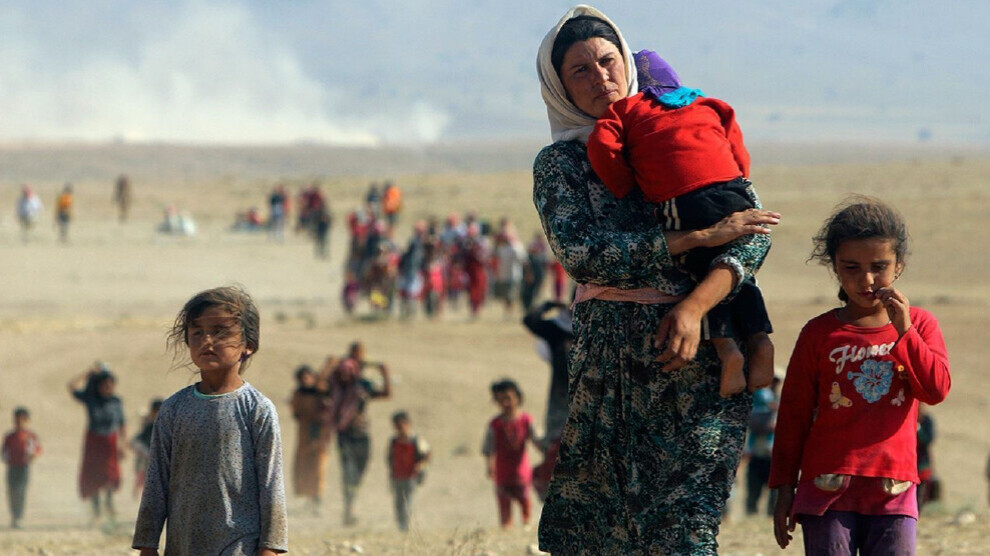
Yazidi Genocide: More than 5,000 killed, 6,371 abducted

The numbers include only those who have been identified while the fate of many other Yazidi citizens who are still missing remains unclear.


ANF
NEWS DESK
Monday, 3 March 2025, 

The Office of the Rescued Yazidi Prisoners announced the balance sheet of the genocidal attacks carried out by ISIS against the Yazidi people on August 3, 2014.

Based on the identified data, the Office shared the number of Yazidi citizens who were massacred and those whose aftermath could not be clarified.

Those murdered and orphaned

According to the Office's data:

Over five thousand Yazidi citizens were massacred.

2,745 children became orphans.

96 mass graves have been identified so far.

Those abducted and rescued

6,317 Yazidis were abducted, including 3,448 men and 2,869 women.

A total of 3,558 Yazidi citizens were rescued from ISIS. These included 1,211 women, 339 men, 1,047 girls and 961 boys.

Mass graves and those unaccounted for

According to the shared data, 274 people who were captured, massacred and buried in mass graves by ISIS were identified and had their remains handed over to their families. These included 237 men and 37 women.

On the other hand, 2,558 people were reported killed but remain unaccounted for. These included 1,225 women and 1,333 men.

The Office of the Rescued Yazidi Prisoners emphasized that these numbers include only those who have been identified, while the fate of many other Yazidi citizens who are still missing remains unclear.
Halabja: In Remembrance of the Tragedy of the  Iraqi Kurds


By:Azad Berweriye
TiL
Date: March 2, 2025

A dead Kurdish man protecting his child during the poison gas attack by Saddam Hussein’s forces in 1988 in Halabja, Iraqi Kurdistan. 
Photo: Archive/no credit

Azad Berwerîye | Exclusive to The Insight International

The Kurdish nation is no stranger to tragedy. Even now, while the protestors at Tishreen Dam suffer casualties in the name of Rojava’s defense and the Kurds suffer from cultural repression beneath the boots of the governments oppressing them, suffering is a daily routine for Kurdish existence.

The Kurds have always endured and continue to endure mistreatment at the hands of powers that view them as obstacles to their goals of domination, seeing their lives and identity as disposable and insignificant as ants.

While the Kurds have received more coverage regarding their struggle for survival, the extent to which they endured massacres is still in need of more attention, with little mention in international media.

It makes the Kurdish saying, “The Kurds have no friends but the mountains,” ring valid in the hearts of most Kurds, suffering in isolation while the rest of the world does little to listen to their plight.

No other massacre demonstrates this more poignantly than the Halabja Massacre, which occurred on March 16, 1988. In this massacre, Saddam Hussein ordered the use of chemical weapons in the town of Halabja, with his army launching poison gas against the city.

The attack is the largest use of chemical weapons toward civilians in modern history, resulting in 5,000 casualties in the region. Due to these attacks, Halabja and surrounding areas still suffer from polluted water and soil. There is also a higher risk of cancer and infertility in the region
.
Dead bodies in the aftermath of the Chemical attack in Halabja, Iraqi Kurdistan, March 16, 1988. Photo: SM/Archive

The attack was one of many in Saddam’s Anfal campaign. Following the Ba’ath regime’s killing of 8,000 Kurds from the Barzanis in 1983, the Anfal campaign against the Kurds began in February 1988. It ended in September of that same year, destroying over 3,000 Kurdish villages and resulting in around 150,000-180,000 people dead.

Many of them were in mass graves, and there are still reports of people missing from the results of the genocide. The basis for these attacks was that, during the Persian Gulf War, the Kurds allied themselves with Iran to gain autonomy from the Ba’ath regime, which had previously limited their jurisdiction.

Since Iran was Iraq’s enemy during the war, on top of the Ba’ath regime’s Arabization policies, the government used the war as an excuse to carry out mass killings against the Kurds, calling them collaborators with the enemy. Even the name of the campaign, “the Spoils” in Arabic, named after the eighth sura of the Koran, showcases the intent of the regime to reduce the Kurds to nothing more than people to exploit for their political gain.

The residents of Halabja would bear the arguably biggest brunt of these attacks. The Iraqi military launched chemicals consisting of mustard gas, Sarin, and Tabun, resulting in the deaths of many Halabja residents.

Women, children, and older people consisted of 75% of the victims of the attacks. The attacks led to the destruction of several residential areas and many fleeing outside the city to Iran and adjacent regions. Most of them never came back.
Dead bodies after the Chemical attack in Halabja, Iraqi Kurdistan, March 16, 1988. Photo: SM/Archive/via Ekurd.net

Despite Southern Kurdistan achieving semi-autonomy under the Kurdistan Regional Government (KRG), recognition of and justice for the horrors the victims faced in Halabja is limited. For instance, while the High Tribunal and Supreme Court of Iraq acknowledged the Anfal campaign as a genocide after Saddam Hussein’s execution, they have not given the same recognition to the Halabja massacre.

Saddam did receive his death sentence based on the Anfal campaign as his crime, but the Iraqi government did not list the Halabja massacre as one of his crimes. Even in Europe, where politicians like Bernard Kouchner from France raised attention to the killings at the time, not all countries have acknowledged what happened at Halabja.
Chemical attack on Kurdish civilians in Halabja, Iraqi Kurdistan 1988. Photo: Archive

It adds insult to injury, knowing that even international attention towards the event at the time was negligible. Due to the West’s backing of Saddam Hussein’s war against Iran at the time, they voiced no criticisms of Saddam’s actions to maintain relations with them against what they perceived to be an enemy to the West.

The Halabja victims were and continue to be without a voice or any kind of acknowledgment, their struggles unending, and any cries for justice only reaching the void.

The Halabja massacre is not the only tragedy that the Kurds have suffered to this extent. Similar massacres against Kurds have happened in the past and continue to the present day. They’re almost too similar to the devastation of the Halabja massacre and the lack of recognition these massacres have received. It’s too reflective of the overall issues the Kurds face as a people today

.
Turkish Dersim genocide against Kurds. Photo: Courtesy/wikipedia

One particular massacre that showcases this struggle is the Dersim Massacre, which the Turkish state carried out against the Kurdish Alevis in Dersim. After the establishment of the Turkish Republic around the early 20th century, Turkey adopted a Turkification policy towards different ethnicities, suppressing their language and culture.

This policy was ruthless towards Kurds and Alevis, who staged revolts against the government to achieve cultural rights, the Turkish state killing many of them and their leaders in the process. This pattern of revolt and suppression ultimately led to the Turkish military carrying out the Dersim Massacre between 1937-1938, where they bombarded the town.

The result was the death of around 30,000 Alevis, with a potential count of closer to 70,000. The Turkish State described this event as a “pacification” and “a mission of civilization” until Recep Tayyip Erdogan apologized for the massacre in 2009.

Over 14,000 thousand Kurds were killed in the Dersim massacre. Photo: Haberpan

Despite this acknowledgment, the Alevis still suffer from persecution under the Turkish government with its policies against Kurdish culture and language, on top of policies particular to Alevis. On top of the criminalization of Kurdish identity, the Turkish state uses religious education (RE) courses to enforce Sunnification in Turkey’s borders.

The government enforces a pro-Sunni Turkish identity in the schools, excluding the Alevis and Kurdish culture. Alevi students often endure mistreatment from students and teachers because of this. On top of the massacres against them in Dersim and similar policies in the 60s, such as the Turkish state building mosques in Alevi villages to enforce Sunni Islam onto them, these educational policies only finish what the Turkish state had already started with the Dersim Massacre, a policy whose aims were the ethnocide of the Kurds and Alevis

.
Pro-Turkey Syrian Islamic mercenary fighters execute 9 civilians Kurds including senior Syrian Kurdish political leader Hevrin Khalaf in Syrian Kurdistan, October 12, 2019. Photo: SM

Rojava also knows full well the intensity of suffering from massacres against them from oppressors. When Turkey captured the city in its “Operation Olive Branch,” carried out by its proxies, the Syrian National Army (SNA) in January 2018, they subjected the city to drastic displacement changes and tightened control.

For instance, after the invasion, Turkey resettled Sunni Arab refugees into Kurdish homes after the Kurds fled the invasion and continued similar trends into 2019 with their military actions between Tel Abyad and Ras al-Ain. Due to these resettlements, the Kurdish population dropped from 80-90% before the invasion to around 25% as of 2022.

The SNA has also arbitrarily arrested/kidnapped 8,696 people, with a third of the people’s whereabouts unknown. The city became a haven of thugs and corruption, in contrast to the democratic society that existed before the Turkish invasion.

Pro-Turkey Syrian mercenary FSA Islamic fighter are looting in the Kurdish city of Afrin in Syrian Kurdistan (Rojava), March 18, 2018. Photo: AFP

It is atrocities like this that make it crucial always to remember the Halabja massacre. The Halabja massacre reflects not only the tragedy of the people who had to endure this massacre but also the struggles of other Kurds throughout Kurdistan.

The lack of justice against the perpetrators of the Halabja massacre is the same as the lack of accountability towards Turkey for its mistreatment of Kurdish Alevis after the Dersim massacre. The cries of Halabja’s victims echo the moans of former Afrin residents to return to their homes in freedom and for their perpetrators to bear the weight of their atrocities. Any atrocity against a group of Kurds is a wound on the whole of Kurdistan, despite whatever borders exist between the four parts of Kurdistan.
People walk through debris in the center of the Kurdish town of Afrin in Syrian Kurdistan (Rojava), on March 18, 2018 Turkish troops supporting pro-Turkey Syrian mercenary FSA fighters drove the Kurdish YPG forces out of Afrin, over hundred thousand Kurds leave the Afrin Canton. March 24, 2018. Photo: Reuters

As Rojava’s fate is uncertain with the new HTS administration in Syria and the results of the peace talks between Ocalan and Turkey still unknown, it is crucial now more than ever to remember these massacres.

Doing so reminds us of why the Kurdish movement exists today and how their existence is at stake without it. They are reminders of how the division of the Kurds by the governments ruling them has hurt them and how important it is for the Kurds to stick together united to protect each other from similar events.

As the Halabja massacre nears its 37th anniversary on March 16, 2025, we grieve the loss of life from this attack. We remember that the injustice of the victims of this attack, and others like it, still exists. We remember that injustice for massacres doesn’t stop with autonomy or that memory of the event is unlimited from just a single acknowledgment. We remember that fighting against injustice is a constant battle.

We remember the Halabja Massacre to continue that fight.

BibliographyAftergood, S. (1998, November 8). Chemical Weapons Programs: History. Chemical Weapons Programs – Iraq Special Weapons Facilities. https://nuke.fas.org/guide/iraq/cw/program.htm
Cetin, U., & Jenkins, C. (2025). The Sunnification and Turkification of Alevi Kurds in Turkey: The Use of Education as a Colonising Practice. In D. Anand & N. Kaul (Eds.), Contemporary Colonialities: Kurds and Kashmiris (pp. 59–80). University of Westminster Press. http://www.jstor.org/stable/10.16997/book70.7
Human Rights Watch. (n.d.). Introduction : GENOCIDE IN IRAQ: The Anfal Campaign Against the Kurds (Human Rights Watch Report, 1993). Human Rights Watch. https://www.hrw.org/reports/1993/iraqanfal/ANFALINT.htm
IC, R. (2023, January 20). Explainer: Afrin, 5 years under Turkish occupation. Rojava Information Center. https://rojavainformationcenter.org/2023/01/explainer-afrin-5-years-under-turkish-occupation/
Karim, H. F., & Baser, B. (2023). Collective Memory in Post-Genocide Societies: Rethinking Enduring Trauma and Resilience in Halabja. Review of Middle East Studies, 56(1), 56–72. https://www.jstor.org/stable/27240924
Lukas, H. (2011, July 27). Dersim Massacre, 1937-1938. SciencesPo. https://www.sciencespo.fr/mass-violence-war-massacre-resistance/en/document/dersim-massacre-1937-1938.html
Mlodoch, K. (2012). “We Want to be Remembered as Strong Women, Not as Shepherds”: Women Anfal Survivors in Kurdistan-Iraq Struggling for Agency and Acknowledgement. Journal of Middle East Women’s Studies, 8(1), 63–91. https://doi.org/10.2979/jmiddeastwomstud.8.1.63
Sadiq, I., Baser, B., & McLoughlin, S. (2023). Revisiting Legacies of Anfal and Reconsidering Genocide in the Middle East Today: Collective Memory, Victimhood, Resilience, and Enduring Trauma. Review of Middle East Studies, 56(1), 4–8. https://www.jstor.org/stable/27240919
Zayadin, H. (2024, February 29). “Everything is by the Power of the Weapon.” Human Rights Watch. https://www.hrw.org/report/2024/02/29/everything-power-weapon/abuses-and-impunity-turkish-occupied-northern-syria

Caleb Fox (Azad Berwari) is a Kurdish speaker and the author of the cultural blog Dengê Çiyayên: Voice of the Mountains, where he explores Kurdish culture, language, and heritage.

The opinions expressed in this article are solely those of the author.

Copyright © 2025 The Insight International. All rights reserved
Opinion

Ocalan's call for peace and the regional variable in favour of Turkiye


An Iraqi Kurdish woman waves a flag bearing the portrait of the founder of the Kurdistan Worker’s Party (PKK) Abdullah Ocalan as people gather at Freedom Park, in Iraq’s autonomous Kurdistan region on February 27, 2025 
[SHWAN MOHAMMED/AFP via Getty Images]

by Dr Amer Al-Hazeel
March 4, 2025 
MEMO

The Kurdish issue is viewed as a thorny and multi-dimensional issue, as it includes conflicts extending across four countries: Iraq, Iran, Turkiye and Syria. In all of these countries, the Kurds are striving to fulfil their right to self-determination by establishing an independent state.

Shortly after the change of Saddam Hussein’s regime in Iraq, the Kurds were satisfied with a degree of autonomous self-rule. In Turkiye, Abdullah Ocalan and his comrades founded the Kurdistan Workers’ Party (PKK) in 1978, demanding the establishment of a Kurdish state. In 1984, Ocalan announced the start of the armed struggle against Ankara, which prompted Turkiye and its NATO allies to designate the party as a terrorist organisation. Turkiye arrested Ocalan in 1999 and sentenced him to death, but the sentence was commuted to life in prison.

In a surprise move last week, Ocalan took advantage of a visit by a delegation of MPs from the pro-Kurdish Peoples’ Democratic Party (HDP) to his prison and called on all armed groups to lay down their arms and dissolve the PKK. He stressed that he bears “historical responsibility for this call and decision.”

This reflects Ocalan’s deep understanding of geopolitical changes and Turkiye’s growing regional role, especially with the expansion of its influence in Syria after the fall of Bashar Al-Assad’s regime. It also aligns with internal pressures, as many Kurdish factions express their desire to move from an armed to political struggle.

These developments also come at a time when the Turkish government has begun to reconsider its policies towards the Kurds, especially considering the ongoing crises in the region and the regional role that Turkiye seeks to play through its alliance with the new Syrian regime led by Ahmed Al-Sharaa.

The bottom line is that Ocalan realised that continuing the armed struggle under the current regional and global circumstances could destroy any chance of achieving the Kurds’ goals. As such, his call was made to confirm their readiness to participate in a serious peace process that guarantees the Kurds their civil rights.

For his part, Turkish President Recep Tayyip Erdogan expressed his belief that “the efforts for a terror-free Turkiye… have entered a new phase.” He emphasised his chief duty to promote an inclusive climate that embraces all groups. He also expressed his willingness to consider the possibility of releasing Ocalan to be an effective partner in the national reconciliation efforts.

If this step is taken, it could play a pivotal role in changing the behaviour of the US- and Israeli-backed Syrian Democratic Forces (SDF), which would contribute to facilitating the Syrian reconciliation process. Turkiye will certainly be the biggest winner if it succeeds in thwarting the Israeli desires aimed at creating a Druze-Kurdish “Salah al-Din Canton”, which would separate Syria from Jordan on the southern border. It would also prevent their unification as a strong state allied with Turkiye, which greatly worries Israel given its growing role on its northern border and in the region.

This article first appeared in Arabic in Arab28 on 3 March 2025

The views expressed in this article belong to the author and do not necessarily reflect the editorial policy of Middle East Monitor.


PKK declares ceasefire with Turkiye after Ocalan's calls for peace


March 2, 2025

A protester waves a flag bearing a portrait of Abdullah Ocalan, the leader of the Kurdistan Worker’s Party (PKK) jailed in Turkey since 1999, during a demonstration calling for his release in the Kurdish-majority city of Qamishli in northeastern Syria on February 15, 2025
 [SOULEIMAN / AFP/Getty Images]


The Kurdistan Workers’ Party (PKK) militant group has declared a ceasefire with Turkiye, accepting the call of their imprisoned leader to lay down their arms and drop their decades-long fight against the Turkish state.

On Thursday, Abdullah Ocalan – the leader of the PKK who has been imprisoned on a Turkish island for the past 25 years – issued a statement calling for his Kurdish separatist group’s “laying down of arms, and I take on the historical responsibility of this call”.

His statement, which was made in a letter revealed by members of Turkiye’s pro-Kurdish DEM party, also expressed the leader’s desire for the PKK to hold a congress in which they formally agree to dissolve the group

Who is Abdullah Ocalan, the Kurdish militant leader urging peace with Turkiye?

Following that call by the 75-year-old Ocalan, the PKK’s executive committee on Saturday issued its own statement broadcast by its ANF news outlet, saying that “in order to pave the way for the implementation of leader Apo’s [Ocalan’s] call for peace and democratic society, we are declaring a ceasefire effective from today”. The group assured that “none of our forces will take armed action unless attacked”.

The group confirmed that “we agree with the content of the call as it is and we say that we will follow and implement it”, but added some conditions it expects to be carried out within that goal. Those include the demand for Ocalan himself to “personally direct and lead it for the success of the congress”.

The PKK also urged for the easing of Ocalan’s prison conditions, stating that he “must be able to live and work in physical freedom and be able to establish unhindered relationships with anyone he wants, including his friends.”
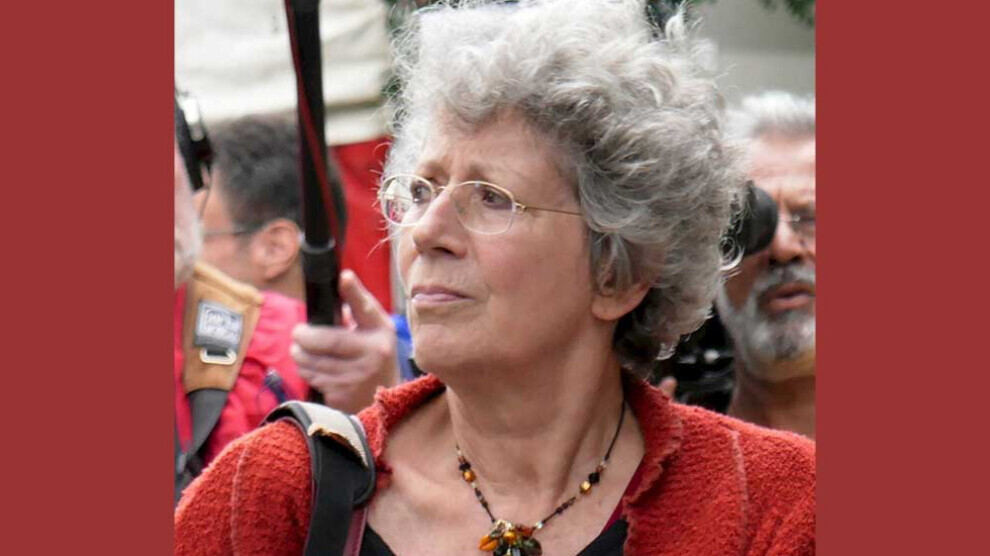
Nobel Peace Prize Laureate Williams: Abdullah Öcalan's call for peace is inspiring

Nobel Peace Prize winner and human rights activist Jody Williams said that Öcalan's efforts for peace were inspiring.


ANF
NEWS DESK
Tuesday, 4 March 2025


VIDEO INTERVIEW


Nobel Peace Prize winner and human rights activist Jody Williams told Medya Haber TV journalist Erem Kansoy that Abdullah Öcalan's call for peace was an extremely positive development in the context of increasing war and genocide around the world.

Williams said: "It is inspiring to see Abdullah Öcalan wanting to move towards peace," and added that this process should be supported.

Williams continued: "The necessary conditions must be provided for him to be able to do what he says and participate in the process. Öcalan must be provided full security as a leader who is fully involved in this process."

Williams said that Öcalan would be a perfect candidate for the Nobel Prize.


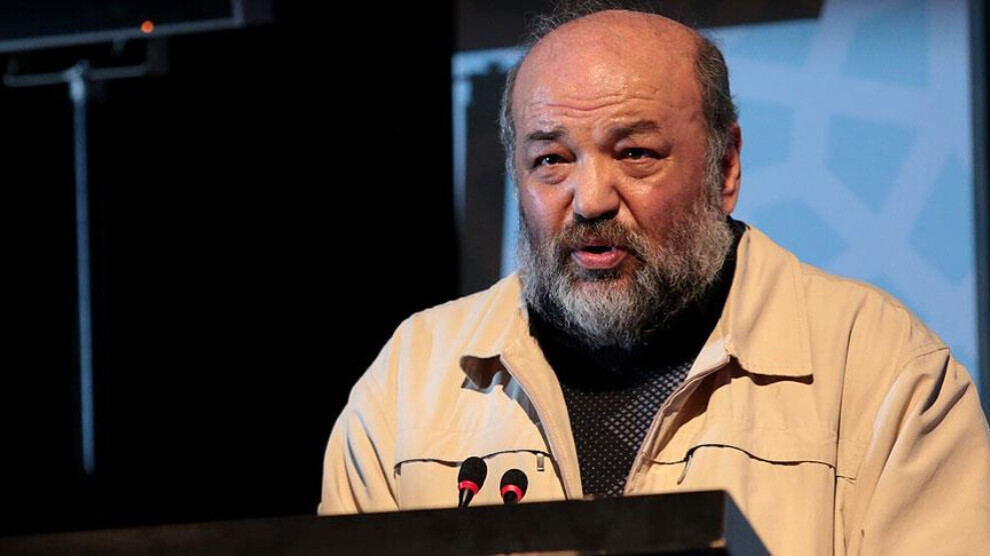
Eliaçık: Öcalan's call represents an ideological jump forward

Writer Ihsan Eliaçık said that Abdullah Öcalan's Call for Peace and Democratic Society does not represent a retreat but rather an ideological jump forward.


ANF
ISTANBUL
Sunday, 2 March 2025

Abdullah Öcalan’s historic call continues to be discussed both in Turkey and internationally. While different groups debate the statement and its implications.

Writer Ihsan Eliaçık told ANF that he "does not see Öcalan’s call as a retreat. On the contrary, it represents an ideological step forward. Even if he were not in prison, this call demonstrates a high intellectual performance, a re-reading of history, and deep historical analysis. He has moved beyond concepts like separate nation-states, autonomy, and cultural rights, and is advocating for a comprehensive democratic transformation. He envisions a system not based on any particular faith, ethnicity, sect, or individual but rather on the will of a democratic society. In such an environment, he believes Kurds can express themselves freely. These are straightforward radical democratic demands."

Eliaçık noted that those with strong nationalist feelings initially responded with emotional rhetoric and added that their adaptation to the process would take time. He said: "The adaptation of nationalist circles to this process may take quite some time. Everyone is trying to steer events in a direction that serves their own interests in response to these new developments. Öcalan is observing both internal and external developments and is guiding them according to his own paradigm. He is looking for ways to make the most of this process."

Radical democracy would end Turkish dominance in the state

Eliaçık pointed out that Turkish nationalists are the least prepared for this process, explaining that the desired radical democracy would affect them the most. He said: "The group least prepared for this process is Turkish nationalists. Because radical democracy would put an end to Turkish dominance in the state but, at the same time, it would not allow for Kurdish dominance either. It does not foresee the supremacy of any particular group outside the will of a democratic society: rather, it makes everyone truly equal."


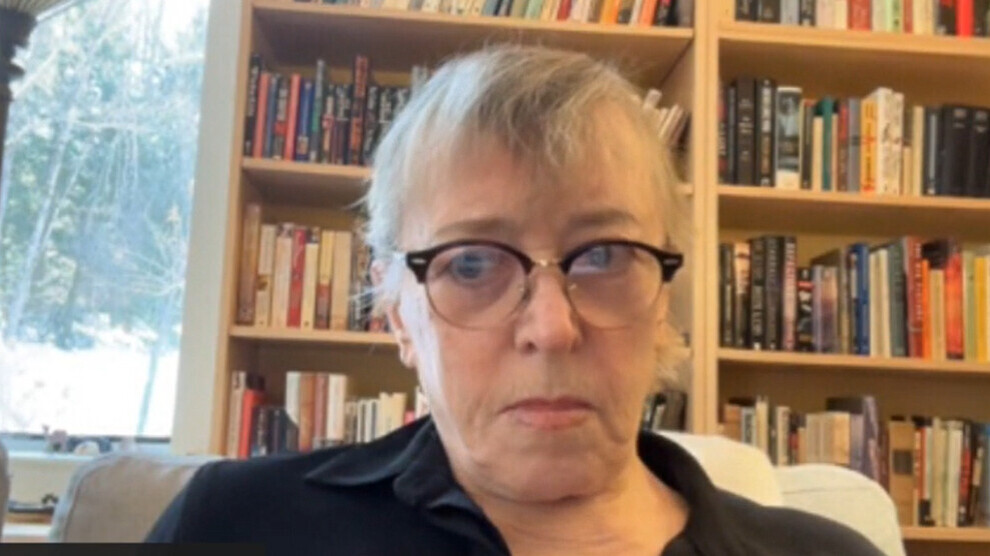
Journalist Lefevre: Rojava is the future of democracy


Journalist Gabrielle Lefevre said that protecting Rojava and its model is a duty for all, as it faces the threat of genocide.


SERKAN DEMIREL
BRUSSELS
Monday, 3 March 2025


The Turkish state and its affiliated armed groups continue their attacks on the Autonomous Administration regions of Northern and Eastern Syria. In these air and ground assaults, civilians, including women and infants, are deliberately targeted and killed. Since the beginning of the occupation, war crimes and crimes against humanity have been systematically committed in the occupied regions of Afrin (Efrîn), Girê Spî, and Serêkaniyê.

The crimes perpetrated by the Turkish state in North and East Syria and the occupied territories were examined by the Permanent Peoples’ Tribunal (PPT), which convened in Brussels, Belgium, on February 5-6. This session, held under the name "Rojava Peoples’ Tribunal," included Gabrielle Lefevre, a renowned Belgian journalist and human rights advocate, as part of the panel of judges.

ANF spoke with journalist Gabrielle Lefevre, who has deep knowledge of the Middle East, about the crimes committed by the Turkish state in North and East Syria, the Rojava model, and the international community's silence in the face of these events.

You were part of the panel of judges at the Rojava Peoples’ Tribunal, held in Brussels, Belgium, on February 5-6. What would you say about the importance and purpose of this tribunal?

As long as the international community remains incapable of upholding international law, especially human rights, and given that the situation in Rojava is catastrophic, nearing the level of genocide, a reality that is scarcely known and barely disseminated, the PPT serves as the voice of citizens and oppressed peoples.

This is a tribunal of global citizens who reject the massacres in Rojava and the domination of peoples by a state. It is a court for those who have no other means of defense, for communities that, at the very least, need the solidarity of other peoples and individuals. This is what makes the PPT extraordinarily important.

Having followed the tribunal’s work for decades, I can say that it plays a crucial role in exposing injustices and the extreme oppression inflicted upon peoples.

Crimes amounting to genocide are being committed

You previously made a preliminary statement regarding the tribunal’s decision. Have you finalized the tribunal’s rulings?

We have already announced a preliminary ruling regarding the tribunal’s stance. At the moment, we are working with the other judges to draft the final verdicts, which will be thoroughly substantiated with detailed justifications.

However, our preliminary conclusions were very clear. Every case presented and supported by the prosecutors was backed by solid evidence. It has been unequivocally established that war crimes, crimes against humanity, and acts nearing the level of genocide are taking place.This situation bears striking parallels to what is happening in Palestine. If this continues unchecked, the completion of this genocide will be inevitable. Therefore, international intervention is imperative; otherwise, we will witness a genocide unfolding helplessly before our eyes.

One of the greatest failures of democracy today is its incapacity to prevent genocides. Yet, we possess all the necessary evidence. I personally verified the evidence presented by the prosecutors through independent sources, and everything was confirmed to be true.

What is even more alarming is that the ruling authorities in Turkey, including the president and ministers, sometimes openly boast on social media about actions that are undeniably criminal, falsely framing them as "counterterrorism operations." This claim is entirely misleading. However, their own admissions serve as further proof that these crimes are indeed happening. At this point, we are facing an arrogance of power that believes it can manipulate public perception. They are actively working to shape Turkish public opinion and preemptively counter international criticism.

Reports confirm the crimes

Are you basing your conclusions about war crimes and crimes against humanity solely on the evidence presented by prosecutors and lawyers in the tribunal? Was it difficult for you to reach this decision, or did you consult other sources?

The facts are undeniable, and the evidence is clear. There are numerous reports from major international organizations, including the United Nations (UN), Human Rights Watch (HRW), and Amnesty International. These institutions cannot be bought or manipulated; they have proven their credibility and expertise over decades. In addition to the tribunal’s own investigations, we thoroughly examined reports from these organizations. The findings were entirely consistent with the evidence presented by the prosecutors.

Resistance against occupation

Turkish officials claim they are conducting a fight against "terrorism" in North and East Syria. This narrative is repeatedly used to justify these crimes. What are your thoughts on this approach?

This is the exact same rhetoric that the Israelis use against Palestinian resistance fighters. Resistance against occupation is labeled as terrorism. What is happening in Syria, and particularly in Rojava, is a struggle against an occupying force. It is not terrorism. During World War II, European resistance fighters who stood against the German occupation were also branded as terrorists by the Nazis. But in reality, they were freedom fighters. In certain situations, resistance, including armed resistance, becomes a necessity.

Turkey is directly responsible

Some human rights organizations, including those you mentioned, suggest in their reports that the crimes committed in the occupied territories are the responsibility of Turkish-backed armed groups rather than the Turkish state itself. Does the fact that these crimes are carried out by such groups absolve Turkey under international law?

These militias, or what we call "proxy fighters," are directly protected by Turkey. They are armed, commanded, and answer directly to the Turkish state. In reality, it is the Turkish Minister of Defense who coordinates and organizes these forces. The fact that the occupied regions are administered by Turkey, that everything operates in Turkish, that the official currency is the Turkish lira, and that security, or rather repression, is enforced by militias acting under direct orders from the Turkish government makes the situation unmistakably clear.

Moreover, the high-performance military equipment used (drones, warplanes) belongs to the Turkish army, as evidenced by the prosecution's findings. These militias are not independent actors; they function as extensions of the Turkish military or as remnants of radical militant groups now operating under Turkish command.

Erdoğan draws strength from international silence

As you mentioned, the Turkish state is deliberately targeting civilians and civilian settlements, directly violating international law. Yet, the international community remains largely silent. How do you interpret this silence and impunity toward Turkey?

This is precisely what the PPT aims to highlight: raising awareness. However, the current geopolitical landscape is so complex that even the UN is powerless, and President Erdoğan knows this very well.

Erdoğan, with incredible cunning and recklessness, continues to defy international law while intensifying pressure on Rojava. His goal is to dismantle the democratic, self-governing model in Rojava, which is based on gender equality. This model poses a direct threat to the authoritarian, religiously driven, and conservative Turkey he envisions.

The international community has already demonstrated its complete inability to prevent genocide in Palestine or stop Israeli expansionism from redrawing territorial borders. Lebanon has suffered and continues to suffer, while Syria remains partially occupied by Israel, all of this happening with total impunity.

At the same time, on the other side of Syria, Turkey carries out its attacks in a more covert manner yet follows the same principles, violating the most fundamental and sacred laws of civilization. The Geneva Conventions and international law as a whole are being entirely disregarded. These values are being trampled in the same reckless manner as we see with Israel, which is backed by the United States, and a vision of a world where only the strongest, wealthiest, and most powerful dictate the law while fundamental rights are ignored. This is exactly what is happening almost everywhere. That is why we, as citizens, must remind people by every possible means that it is we, the people, who are the true bearers and defenders of the law.

We must take action

The law derived from the Universal Declaration of Human Rights does not belong to the powerful. It is simply the law; a recognition of our profound humanity, a set of universal rights from which everyone benefits equally. It is our duty to constantly remind the world of this.

We may seem weak, but in countries where democracy still exists, we hold significant power. In the end, it is we who vote. It is we who hold members of parliament accountable and question them. On the other hand, a delegation from the Permanent Peoples’ Tribunal will listen to what has happened and what has been said in the European Parliament. Perhaps they will draw conclusions for the future of Europe’s relations with Turkey.

We hope that parliamentarians will awaken and truly defend the rights of this people. No people, especially the Kurds in Rojava, deserve the persecution they are subjected to today. No people deserve this. No one. Such oppression has never been considered legitimate, neither throughout history nor under any framework of international law. No one has ever justified such an injustice.
Erdogan hails Ocalan’s call to disband PKK, Kurdish party urges government to act


By:TII team


Date: March 1, 2025

Turkey’s president Recep Tayyip Erdogan, January 15, 2025. Photo: AK Party/X

ISTANBUL,— Turkish President Recep Tayyip Erdogan described Abdullah Ocalan’s recent call for the Kurdish Workers’ Party (PKK) to disband and disarm as a “historic opportunity” for Turkey.

Following Ocalan’s statement on Thursday, in which he urged the PKK to end its armed struggle, Erdogan emphasized that this was a chance to eliminate what he called “the wall of terror.”

The PKK, which Ankara considers a “terrorist” group, has been engaged in a violent insurgency against the Turkish government for over 40 years.

Ocalan, the imprisoned leader of the PKK, called for all factions to lay down their arms, and for the PKK to formally dissolve. However, the group’s military leadership has not responded to the appeal.

Erdogan pledged that Turkey would “carefully monitor” the situation and ensure the peace talks aimed at ending the insurgency would succeed. He warned against any “provocations” during this critical time.

“The elimination of the threat of terrorism and weapons will naturally open up space for political dialogue within the democratic process,” Erdogan said, stressing that both Turkish and Kurdish citizens would not tolerate any attempts to derail the peace efforts.

The conflict between Turkey and the PKK has resulted in more than 40,000 deaths since it began in 1984. Despite previous peace talks, the conflict has continued, and Erdogan’s government remains firm in its stance against the PKK, which has been designated a terrorist organization by Turkey and its allies.

Pro-Kurdish Party Calls for ‘Democratic Solution’ to Conflict

Turkey’s pro-Kurdish opposition party has called on the government to seize the opportunity to end the longstanding Kurdish insurgency, urging a commitment to a “democratic solution.”

Tuncer Bakirhan, co-president of the Democratic Party of the Peoples (DEM), said that the Turkish government must show real political will to resolve the Kurdish issue. Speaking in an interview on Friday, Bakirhan emphasized that simply laying down arms was insufficient.

“There is a Kurdish problem that cannot be solved with weapons alone,” Bakirhan told Haberturk TV. “The Kurdish people are waiting for concrete measures toward a democratic resolution.”

The conflict between the Turkish government and the PKK has seen multiple peace attempts falter.

The last peace talks broke down in 2015, and no significant dialogue took place until October 2024, when a nationalist ally of President Erdogan unexpectedly offered a peace gesture, conditioned on Ocalan renouncing violence.

While Erdogan supported the initiative, his government subsequently intensified pressure on opposition groups, leading to the arrest of hundreds of Kurdish politicians, journalists, and activists.

After several meetings with Ocalan, DEM relayed his call for the PKK to lay down its weapons and convene a congress to formally dissolve the organization.

(Credit: AFP)

Copyright © 2025 The Insight International. All rights reserved