It’s possible that I shall make an ass of myself. But in that case one can always get out of it with a little dialectic. I have, of course, so worded my proposition as to be right either way (K.Marx, Letter to F.Engels on the Indian Mutiny)
Tuesday, March 04, 2025
U$ BIRD FLU & EGG PRICES
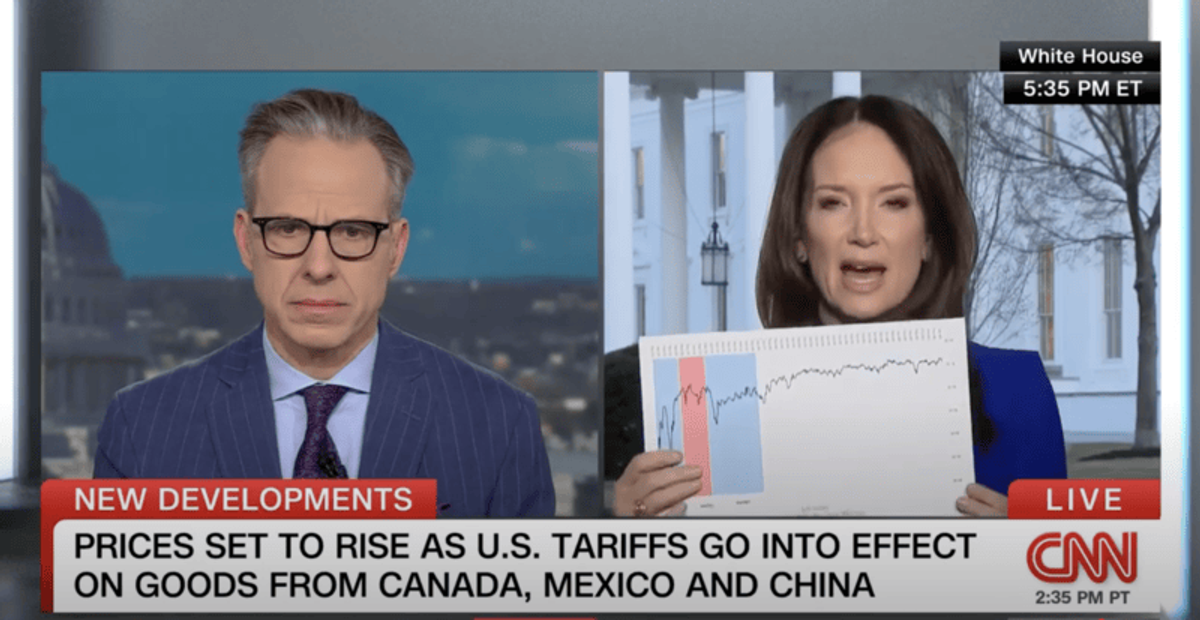
'You brought it up': CNN's Tapper presses Trump official on 'backyard chickens' advice
Trump administration Agriculture Secretary Brooke Rollins was confronted by CNN's Jake Tapper on Tuesday about her comments that people should consider raising chickens in their backyards if they want to beat rising egg prices — an activity that is itself expensive and not available to many families in cities or in neighborhoods with rules against livestock.
The president campaigned in part on lowering the cost of groceries, saying everything was cheaper when he was last president — however, since he has taken office, egg prices have soared even further, fueled by bird flu outbreaks and the necessary measures to contain it. These shortages have become so bad that Waffle House even introduced a per-egg surcharge on its menu.
"I'm the ag secretary," said Rollins, who previously served as a general counsel to former Texas Gov. Rick Perry, holding up a graph. "I'm really focused on the price of eggs, amongst other things, right now. But what I want to show you in this chart is you can see for 30 years, the price of eggs was pretty stagnant. Then under Obama went up a little bit. That's the first blue. Then under Trump, went down right here, then under Biden, absolutely skyrocketed. So it isn't just avian flu, although that's a driver. It's the cost of doing business. The cost of inputs went up 30 percent under the last administration. We have to deregulate. We have to roll back the rules. We have to make it easier for our producers to produce for America. And that's all part of the same conversation."
Tapper seized on the opportunity to talk about egg prices, bringing up her recent interview in which she advised consumers wary of egg prices to consider raising "backyard chickens."
"Let's talk about eggs, if I may, just because you brought it up, you wrote in that Wall Street Journal op-ed, 'We also want to make it easier for families to raise backyard chickens,'" said Tapper. "Democratic Leader of the Senate Chuck Schumer pounced on that. He put on social media ... quote, 'How embarrassing for them. Can't wait to hear Trump's 'chickens in every backyard' riff at tomorrow's speech. This is not a solution.' What's your response?"
"Well, of course, Chuck Schumer would resort to basically poking fun at the average American family who is looking to ensure that they can feed their family, that their children have what they need to perhaps live the American dream," said Rollins. "Tonight, the president ... [will] be rolling out what his vision for America is and how we do restore the American dream to everyone. Listen, the cost of eggs is today's urgent issue. We rolled out a five-point plan last week. It includes biosecurity, repopulating the flocks very, very quickly, deregulating, importing eggs from around the country, and then putting more money into therapeutics and research."
"So we have a plan. Biden never had a plan. And you can see that here," she added, holding up her graph of egg prices upside down and pointing at it. "And you can see that in so many of the other areas that he failed in over the last four years."
Share of total U.S. exports and imports by top trading partners
January to September 2024
A bar chart showing the share of total U.S. exports and imports by top trading partners from January to September 2024. Mexico leads exports at 16.4%, followed closely by Canada at 17.0%. In imports, Canada accounts for 12.8%, while China has a notable 13.3%. Other countries include Germany and Japan.
Exports
Imports
Mexico
16.4%
15.7%
Canada
17.0
12.8
China
6.8
13.3
Germany
3.7
5.0
Japan
3.9
4.5
Note: Countries are arranged by share of total trade; Data: U.S. Census Bureau; Chart: Axios Visuals
Texas stands to take the hardest hit of any state under the Trump tariffs on Mexico, Canada, and China, leaving businesses and consumers bracing for higher prices and economic fallout.
Why it matters: If foreign goods cost 25% more, someone has to absorb the difference — either businesses or consumers.
Some estimates suggest the new tariffs could cost the average U.S. household $830 a year — and that's before factoring in likely retaliatory tariffs from Canada, China, and Mexico.
State of play: PresidentTrump triggered a global trade war with the biggest U.S. trade partners Tuesday by slapping 25% tariffs on exports from Canada and Mexico and 20% on China.
The tariffs on imported goods could cost the Texas economy an estimated $47 billion, per economic research firm Trade Partnership Worldwide.
Zoom in: Arlington Mayor Jim Ross warned that rising production costs could lead to higher car prices, weakened demand and potential job losses at the General Motors manufacturing facility in the city.
The big picture: The tariffs will affect big-ticket items like cars and machinery, but also consumer staples — everything from groceries to beer and oats.
The impact will be especially sharp on goods that are harder to produce domestically, such as many agricultural products.
The other side: Trump campaigned on using tariffs to revive domestic industries.
Threat level: Because Texas is deeply integrated with supply chains — from Mexico in particular — the state will more heavily feel the strain, Tony Payan, director of the Center for the U.S. and Mexico at the Baker Institute, tells Axios.
"Because Texas is the origin, destination or transit point of two-thirds of binational trade, clearly, Texas will be more affected than other states that are not as integrated," he says.
Trump scrambling to 'work something out' with Canada and Mexico after markets melt down
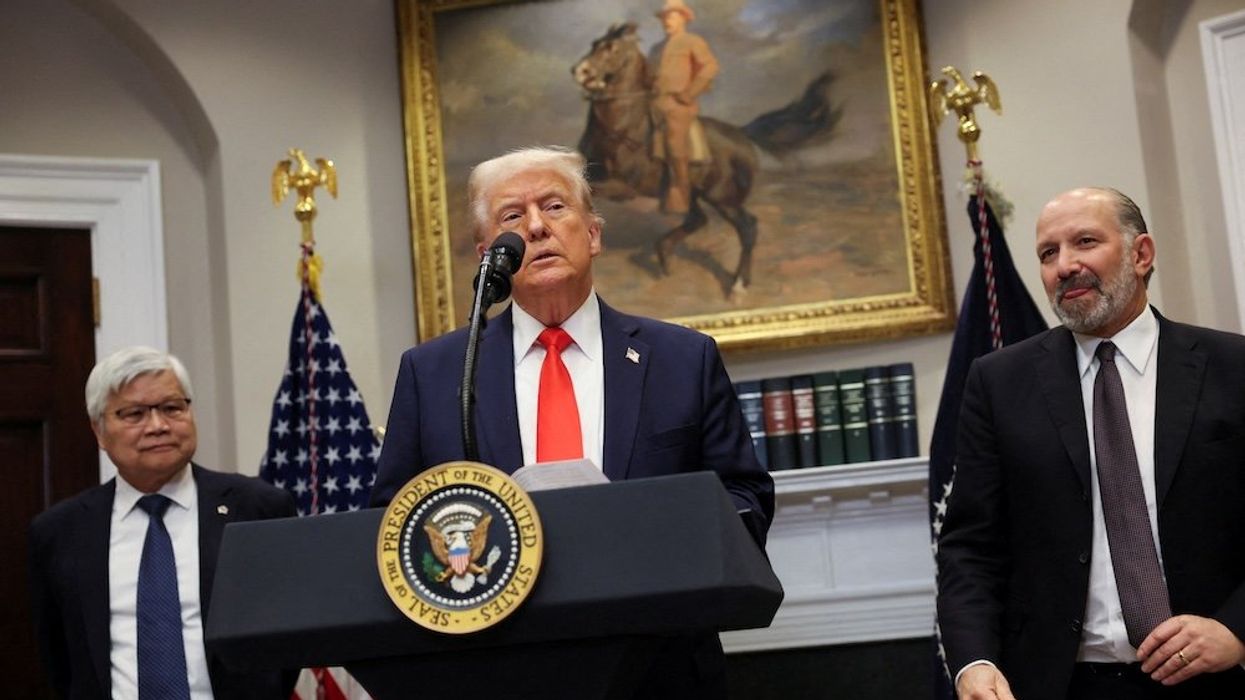
U.S. President Donald Trump makes an announcement about an investment from Taiwan Semiconductor Manufacturing Company (TSMC), flanked by C.C. Wei, Chairman and CEO of TSMC and Commerce Secretary Howard Lutnick, in the Roosevelt Room at the White House in Washington, D.C., U.S., March 3, 2025. REUTERS/Leah Millis
Ever sincePresident Donald Trump announced new tariffs on the United States' neighbors, financial markets have been reeling. His administration is now signaling that Trump may be willing to somewhat back off from the new duty fees soon if he can work out a deal.
NBC News reported Tuesday that Commerce Secretary Howard Lutnick is now indicating that Trump may be willing to meet the leaders of Canada and Mexico "in the middle" following two consecutive disastrous days of trading. Lutnick's announcement that Trump would "probably" consider a compromise came after Trump re-introduced 25% tariffs on Canada and Mexico after previously walking them back.
"Both the Mexicans and the Canadians are on the phone with me all day today, trying to show that they’ll do better," the commerce secretary told Fox Business. "And the president is listening because, you know, he’s very, very fair and very reasonable. So I think he’s going to work something out with them."
Trump's desire to bring Canadian Prime Minister Justin Trudeau and Mexican President Claudia Sheinbaum to the negotiating table comes on the heels of the Dow Jones Industrial Average dropping by more than 1,300 points over the past 48 hours. CNBC reported that the S&P 500 and the Nasdaq Composite also posted losses, with the former seeing its biggest one-day drop since December this week.
It initially appeared as if the U.S. was poised for a crippling trade war with Canada, as Trudeau said he intended to add a retaliatory 25% tariff to imported American goods. Trump responded that if Trudeau imposed new tariffs, he would hit Canada again with subsequent duty fees. "Shark Tank" star Kevin O'Leary told Fox News this week that the threat of a trade war spooked investors, as the higher prices that the tariffs would bring would result in consumer spending trending downward.
The threat of new tariffs could also result in Americans delaying expensive purchases, like buying new vehicles. Flavio Volpe, who is the president of the Automotive Parts Manufacturers' Association, recently said that the tariffs would not only raise prices, but also endanger jobs both in the U.S. and in Canada.
"[Manufacturers] can't go buy a crank shaft or car seats at a Walmart," Volpe told Canada's CTV News. "So, the industry, like it did in those first two incidents, will close within a week and that includes Ontario and Michigan all the way down to Kentucky, Alabama and Texas."
Not even a day into the new tariffs against Canada and Mexico, President Donald Trump is considering some form of compromise on them — but not a full repeal or another total delay, reported Bloomberg News on Tuesday.
“Both the Mexicans and the Canadians were on the phone with me all day today trying to show that they’ll do better, and the president’s listening, because you know he’s very, very fair and very reasonable,” Lutnick told Fox Business. “So I think he’s going to work something out with them — it’s not going to be a pause, none of that pause stuff, but I think he’s going to figure out: you do more and I’ll meet you in the middle some way and we’re going to probably announcing that tomorrow.”
However, Lutnick stressed that a full rollback of the tariffs was not on the table.
“If you live under those rules, then the president is considering giving you relief,” he said. “If you haven’t lived under those rules, well, then you have to pay the tariff.”
The tariffs were initially to take effect in February. Trump agreed to a 30-day pause in exchange for Canada and Mexico taking border security measures they had already committed to.
This comes as the Dow Jones Industrial Average has plummeted in response to the tariffs, which business leaders and economists broadly fear will raise prices for consumer goods and materials and slow down the economy, particularly if the targeted countries retaliate with tariffs of their own.
As U.S. President Donald Trump's new tariffs took effect on Tuesday, Congressman Don Beyer released a Joint Economic Committee report showing that the policies could cost the average working-class family in the United States at least $1,600 annually.
"The tariffs Trump just imposed on Canada, Mexico, and China will raise costs by up to $2,000 per year for an average American family," Beyer (D-Va.) said in a statement. "The trade war Trump is igniting will weaken our economy and cause chaos in our marketplace as Americans pay the cost in the form of higher prices on everyday items."
Dean Baker, co-founder and senior economist of the Center for Economic and Policy Research, warns that Trump's tariffs could cost families even more than the estimates from Beyer's report, which cites figures from the Budget Lab at Yale University.
"While our report does not touch on this, these tariffs will also lead to retaliation that badly harms American producers," Beyer said. "And they will fail to achieve any of the pretextual objectives Trump has stated for imposing them. Less than two months into his term, Trump is running the economy into the ground and raising a real and growing risk of a recession."
Ignoring experts' warnings about impacts on consumers and the economy, Trump on Tuesday doubled his previous tariff for Chinese imports to 20% and—after a monthlong delay—hit Canadian and Mexican imports with 25% tariffs. As The Associated Pressreported, the moves sparked "swift retaliation" from "America's three biggest trading partners."
Leaders from those countries had warned of their responses if Trump followed through on his threats. There was also evidence of what would happen from the tariffs that the president imposed on China during his first term. At the time, Beyer's report notes, "U.S. importers and consumers paid almost entirely for Trump's tariffs through higher prices."
Trump has recently claimed that his plan will force production in the United States, but the report points out that the new "tariffs also impact the price of domestically produced goods by causing U.S. producers to raise prices if their supply chain relies on imported raw materials subject to the tariffs."
Using figures released Monday by the Budget Lab, Beyer's report warns that this time:
Electronics, like computers, phones, and televisions, will see overall prices rise by nearly 11%; Clothing prices are expected to also rise by 7.5%; The price of cars, car parts, and other motor vehicles are expected to increase by over 6%; Oil will also rise by 1.7% and petroleum and coal products will rise by 1.6%, making it more expensive for families to fill up their gas tanks and heat their homes; And at a time when a trip to the grocery store is already squeezing household budgets, grocery prices will jump under these tariffs, with fresh produce prices rising by nearly 3%, rice prices increasing by 4.4%, and food prices overall rising by nearly 2%.
"In addition to harming the national economy, Trump's tariff policies will significantly impact state and local economies," the report says. "In fact, small counties in the South and Midwest tend to have economies that are most reliant on international trade. Those states that are heavily dependent on trade for statewide business may also be particularly impacted."
Despite the anticipated impacts of the tariffs that Trump has already imposed, he is expected to go even further, targeting the European Union and beyond. The Tax Policy Center warned in October that "a 20% worldwide tariff and a 60% tariff on Chinese goods, one of many import tax ideas floated by... Trump, would increase household taxes by an average of nearly $3,000 in 2025."
Beyer—who serves on the panel behind the report and the House Ways and Means Subcommittee on Trade—noted Tuesday that "Republicans in Congress could stop this at any time by passing legislation I and others have offered to rein in Trump's abuses of tariff authorities, but they appear content to help Trump raise prices and risk economic disaster."
Separately, Beyer and every other Democrat on the subcommittee released a joint statement stressing that "Americans simply cannot afford to be caught in endless trade wars" and that they "are united in rejecting these irresponsible tariffs designed to increase revenue for more tax cuts for the ultrawealthy."
Republicans control not only the White House but also both chambers of Congress, and GOP House members last month advanced a budget resolution that would fund an extension of Trump's 2017 tax cuts for the rich by slashing health and food assistance programs that help millions of working-class Americans.
Beyer and his subcommittee colleagues called on House Republicans "to work with us to reassert Congress' role in setting strategic, stable trade policies and to invest in the American economy, instead of abdicating their responsibilities to President Trump and Elon Musk," the billionaire leading the administration's effort to gut the federal government.
'He called him Donald!'
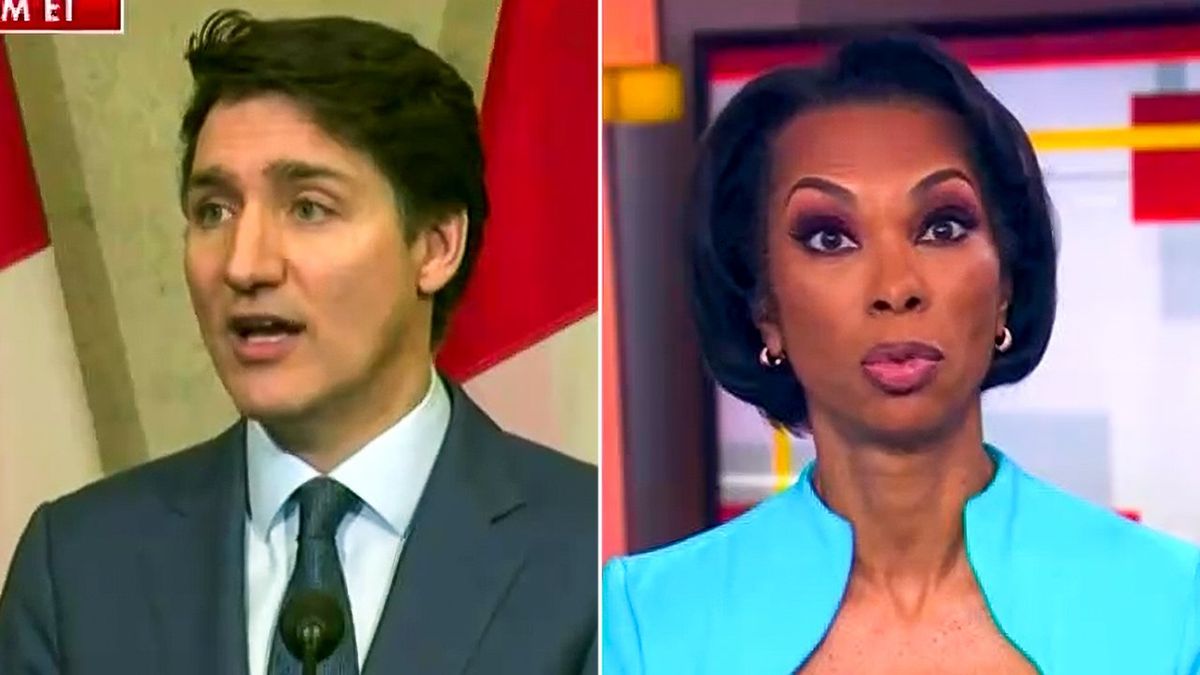
FOX News Harris Faulkner aghast over Justin Trudeau's response to Trump
Fox News host Harris Faulkner expressed outrage after Canadian Prime Minister Justin Trudeau referred to the U.S. president as "Donald."
In a speech on Tuesday, Trudeau responded to U.S. President Donald Trump's decision to impose 25% tariffs on Canadian goods.
"We will stand up for Canadians every single second of every single day because this country is worth fighting for," Trudeau said before Faulkner cut him off.
"He has just made this personal with President Trump!" the Fox News host exclaimed. "He didn't acknowledge his title as President of the United States."
"He called him Donald more than once!" she continued. "He said this is a very, well, he said you are a very smart person, but this is a dumb thing to do, paraphrasing that first part."
"And then he made the point that the world is watching and that this fight between him and who he called Donald is not good."
Trudeau has said Canada would respond to Trump's tariffs with a 25 percent tariff on $155 billion worth of American goods.
Read Prime Minister Justin Trudeau's speech responding to Trump's trade war
IT'S NOT ABOUT FENTANYL
PM says Trump wants to see 'total collapse' of Canadian economy
PM spoke on Parliament Hill after the U.S. announced 25% tariffs on Canadian goods
CBC News · Posted: Mar 04, 2025
FULL SPEECH | Trudeau outlines response to U.S. tariffs, says Canada will 'relentlessly' fight to protect economy
Duration14:10
Prime Minister Justin Trudeau, speaking from Parliament Hill on Tuesday, says Canada will immediately start imposing tariffs on $30 billion worth of U.S. goods. Trudeau said tariffs will be imposed on the remaining $125 billion of American products in 21 days as a response to U.S. tariffs that went into effect on Canada Tuesday.
Prime Minister Justin Trudeau delivered a speech Tuesday morning on Parliament Hill announcing Canada's response to a 25 per cent tariff U.S. President Donald Trump is imposing on most Canadian goods. Here is a transcript of his remarks.
Today the United States launched a trade war against Canada, their closest partner and ally, their closest friend.
At the same time, they're talking about working positively with Russia. Appeasing Vladimir Putin, a lying, murderous dictator.
Make that make sense.
Canadians are reasonable and we are polite but we will not back down from a fight — not when our country and the well-being of everyone in it is at stake.
At the moment, the U.S. tariffs came into effect in the early hours of this morning and so did the Canadian response.
Canada will be implementing 25 per cent tariffs against $155 billion worth of American goods. Starting with tariffs on $30 billion worth of goods immediately and tariffs on the remaining $125 billion of American products in 21 days' time.
Today, we will also be challenging these illegal actions by filing dispute resolution claims at the World Trade Organization and through the USMCA.
But in the meantime, our tariffs will remain in place until the U.S. tariffs are withdrawn and not a moment sooner.
And should these tariffs not cease, we are in active and ongoing discussions with provinces and territories to pursue several non-tariff measures — measures which will demonstrate that there are no winners in a trade war.
Prime Minister Justin Trudeau said Tuesday that the justifications for U.S. President Donald Trump's tariffs — including assertions around fentanyl — are bogus. 'So, we actually have to fold back on the one thing he has said repeatedly, that what he wants is to see a total collapse of the Canadian economy, because that'll make it easier to annex us, is the second half of his thought.'
Now, just like I did a month ago, I want to speak first directly to the American people.
We don't want this.
We want to work with you as a friend and ally — and we don't want to see you hurt either. But your government has chosen to do this to you.
As of this morning, markets are down and inflation is set to rise dramatically all across your country. Your government has chosen to put American jobs at risk at the thousands of workplaces that succeed because of materials from Canada, or because of consumers in Canada, or both.
They've chosen to harm American national security, impeding access to the abundant critical minerals, energy, building materials and fertilizers that we have and that the United States needs to grow and prosper.
They've chosen to launch a trade war that will first and foremost harm American families.
They've chosen to sabotage their own agenda that was supposed to usher in a new golden age for the United States.
And they've chosen to undermine the incredible work we've done together to tackle the scourge that is fentanyl, a drug that must be wiped from the face of the Earth.
So on that point, let me be crystal clear: There is absolutely no justification or need whatsoever for these tariffs today.
Now, the legal pretext your government is using to bring in these tariffs is that Canada is apparently unwilling to help in the fight against illegal fentanyl. Well, that is totally false.
Let's look at the facts.
Our border is already safe and secure. Far less than one per cent of fentanyl flows and less than one per cent of illegal crossings into the United States comes from Canada. But we acted because we know we can always do better.
We responded to concerns, including from the president, by implementing an ambitious $1.3-billion border plan — a border plan that includes generational investments in new AI and imaging tools to stop the flow of fentanyl in its tracks, stronger co-ordination and information-sharing with American agencies, along with the deployment of drones, helicopters and additional personnel to keep our border secure.
Canada's new fentanyl czar Kevin Brosseau says he found 'receptive audiences' in Washington on a trip where he met with U.S. border czar Tom Homan and Homeland Security Secretary Kristi Noem, part of an effort to sell Canada's 'substantial' progress on the border and avoid tariffs on March 4.
Now a month ago, as part of an agreement with the United States that paused the tariffs, we made further commitments. We appointed Kevin Brousseau as our fentanyl czar, a man who dedicated his multi-decade career in law enforcement to combating organized crime networks and drug trafficking.
We designated seven drug cartels — sick, evil groups who cynically profit off the pain and suffering of people on both sides of the border — as the terrorist organizations that they are.
And just yesterday, we launched a new joint operations partnership supported by a $200-million investment between Canada's security and law enforcement agencies, a partnership that will enhance the co-ordination of information and intelligence in order to thwart criminal gangs involved in the illegal fentanyl trade.
And critically, our actions are working.
As the U.S. Customs and Border Protection just acknowledged, there was a 97 per cent drop in fentanyl seizures from January compared to December to a near-zero low of less than half an ounce seized in January — even with all the further enforcements and actions we've taken at the borders.
In sum, we stepped up. We engaged closely and constructively with the president and his administration. We did everything we promised.
We stuck to our word and we did it because we believe in working together to protect our citizens.
Prime Minister Justin Trudeau directed part of his speech at U.S. President Donald Trump. (AP Photo)
Now I want to speak directly to one specific American.
Donald, in the over eight years you and I have worked together, we've done big things. We signed a historic deal that has created record jobs and growth in both of our countries.
We've done big things together on the world stage, as Canada and the U.S. have done together for decades, for generations.
And now we should be working together to ensure even greater prosperity for North Americans in a very uncertain and challenging world.
Now, it's not in my habit to agree with the Wall Street Journal, but Donald, they point out that even though you're a very smart guy, this is a very dumb thing to do.
We two friends fighting is exactly what our opponents around the world want to see.
And now to my fellow Canadians.
I won't sugarcoat it. This is going to be tough, even though we're all going to pull together because that's what we do.
We will use every tool at our disposal so Canadian workers and businesses can weather this storm. From expanding EI benefits and making them more flexible, to providing direct supports to businesses, we will be there as needed to help.
But Canada, make no mistake. No matter how long this lasts, no matter what the cost, the federal government and other orders of government will be there for you.
We will defend Canadian jobs. We will take measures to prevent predatory behaviour that threatens Canadian companies because of the impacts of this trade war, leaving them open to takeovers.
Employment and Labour Minister Steven MacKinnon, speaking from Toronto after broad U.S. tariffs on Canadian products went into effect, said specifics are still being discussed but noted that assistance to workers impacted by U.S. tariffs will rely 'heavily' on the EI system.
We will relentlessly fight to protect our economy. We will stand up for Canadians every single second of every single day because this country is worth fighting for.
(In French) The recent months have been stressful and, honestly, exhausting for all of us.
But I believe we can be reassured by the incredible solidarity we've seen among Canadians. Solidarity among businesses, among unions, civil society, Indigenous communities and all Canadians.
All of Canadian society is speaking with one single voice so that we can be heard by our U.S. partners and to illustrate that the imposition of these tariffs is a very bad idea.
At the same time, we are working internally to remove the barriers to internal trade between the provinces and territories. We're working to try and reach new markets around the world to build an economy even more strong and resilient than before.
In recent years I've had a number of opportunities to talk to global leaders. My message is always the same: Canada is a reliable partner and our door is wide open.
In the face of uncertainty and worry, Canadians have shown so much solidarity. I saw you sharing lists of Canadian products to help your loved ones and friends and support Canadian businesses. I saw you change your travel plans to stay in Canada rather than going to the United States.
I saw you redouble your efforts to support our small businesses and our workers here in Canada. I saw you defend our culture and ensure it can flourish. I saw you encourage our athletes with unprecedented fervour.
I thought I could never be even prouder of my country and my compatriots. And yet, I still have something to ask of you. Do not give up. This is the time to redouble your efforts to stand up for our country, to do everything we possibly can to choose Canada and defend Canada.
Together we will go through some tough times.
But after seeing you and seeing your reaction in recent weeks, I have to say I have never been as optimistic with respect to the future of our beautiful country, in spite of all the challenges we're facing right now.
Canada remains the best country in the world. We have so many reasons to be proud of our home, to be proud of our land, but I'm especially proud of our ability to come together when that is required.
Canadians have different backgrounds, speak different languages and have different religions. But when it comes time to defend our country, we speak with a single voice and walk hand in hand. In spite of all, Canadians will always be relying on each other.
Now, we've been through tough spots before, but every time we've faced long odds and seemingly insurmountable obstacles, we've not only survived, we emerge stronger than ever.
Because when it comes to defending our great nation, there is no price we all aren't willing to pay, and today is no different.