Thursday, March 06, 2025

Macron Mulls Joint Washington Visit with Zelenskyy and Starmer


By RFE/RL staff - Mar 05, 2025

President Trump stated that he received a letter from President Zelenskyy expressing Ukraine’s readiness to negotiate with Russia and proposed a deal on Ukraine’s mineral resources.

European leaders, including President Macron, are considering a joint visit to Washington with Zelenskyy and British Prime Minister Starmer to promote peace talks.

Despite the positive signals, the Kremlin remains cautious about Ukraine’s negotiation offers due to a legal ban on negotiating with Russian President Vladimir Putin.


European leaders jumped to renew a push for an end to Russia's invasion of Ukraine after US President Donald Trump said President Volodymyr Zelenskyy wrote a letter stating he's ready for talks with Moscow while also offering to sign a deal on Ukraine's mineral resources "at any time."

After a week of tumult that culminated with the United States announcing a suspension of military aid to Ukraine after a heated exchange between the two leaders, Trump told a joint session of Congress on March 4 that Zelenskyy sent him a letter expressing a willingness to come to the negotiating table.

That glimmer of hope was all European leaders -- rattled by the disastrous and very public clash between Trump and Zelenskyy at the White House last week -- needed to try to launch a new initiative to get peace talks back on track.

A spokeswoman for the French government told reporters on March 5 that President Emmanuel Macron is mulling a joint visit to Washington with Zelenskyy and British Prime Minister Keir Starmer, all three of whom were in the US capital last week.

"Earlier today, I received an important letter from President Zelenskyy of Ukraine. The letter reads, 'Ukraine is ready to come to the negotiating table as soon as possible to bring lasting peace closer. Nobody wants peace more than the Ukrainians,' he said," Trump quoted the letter as saying.


That came after Zelenskyy said earlier in the day that "none of us wants an endless war," adding Ukraine was "ready to return to the negotiating table as soon as possible to bring long-term peace closer."

"My team and I are ready to work under President Trump's strong leadership to achieve long-term peace," he added.

The Kremlin called Zelenskyy's talk of peace negotiations "positive," though spokesman Dmitry Peskov tamped down the enthusiasm by adding that Ukraine has legally barred negotiations with Russian President Vladimir Putin through a decree the Ukrainian leader signed in 2022.

"So, in general, the approach is positive, but the nuances have not yet changed," Peskov said. "For the time being, there's still a legal ban on the president of Ukraine negotiating with the Russian side."
No Mention Of The Oval Office Disaster

Trump's speech to Congress followed statements from White House officials that there would be a pause on all US military support for Ukraine in its battle to repel invading Russian forces and after the highly public argument in the Oval Office.

Zelenskyy left the White House on February 28 following the dispute and the two did not sign the critical minerals agreement. During a press conference on March 3, Trump said he did not think the deal was dead.

Trump did not mention his public spat with Zelenskyy last week in the Oval Office, flipping the narrative by saying: "We are getting along very well with them and lots of things are happening."

In quoting Zelenskyy, Trump "signaled that he put the conversation in the White House on the sidelines," Mikhail Alexeev, a professor of political science at San Diego State University, told RFE/RL.

"There was no call for Zelenskyy to resign. There was no talk about Ukraine being ungrateful."

Trump has made ending the war a priority and flipped three years of US policy on its head by reaching out directly to Putin, whom his predecessor had isolated politically since the start of the war in February 2022.

US-Ukraine Critical Minerals Deal Back In Focus

Daniel Vajdich, president of Yorktown Solutions, which lobbies on behalf of Kyiv, said the agreement on minerals would be good for both Ukraine and the United States.

"It gives the US concrete equities in Ukraine that should now be protected," said Vajdich.

The fund created by the agreement will be an important mechanism for getting the US private sector to invest in Ukraine’s reconstruction, added Vajdich, a former adviser to several Republican presidential candidates.

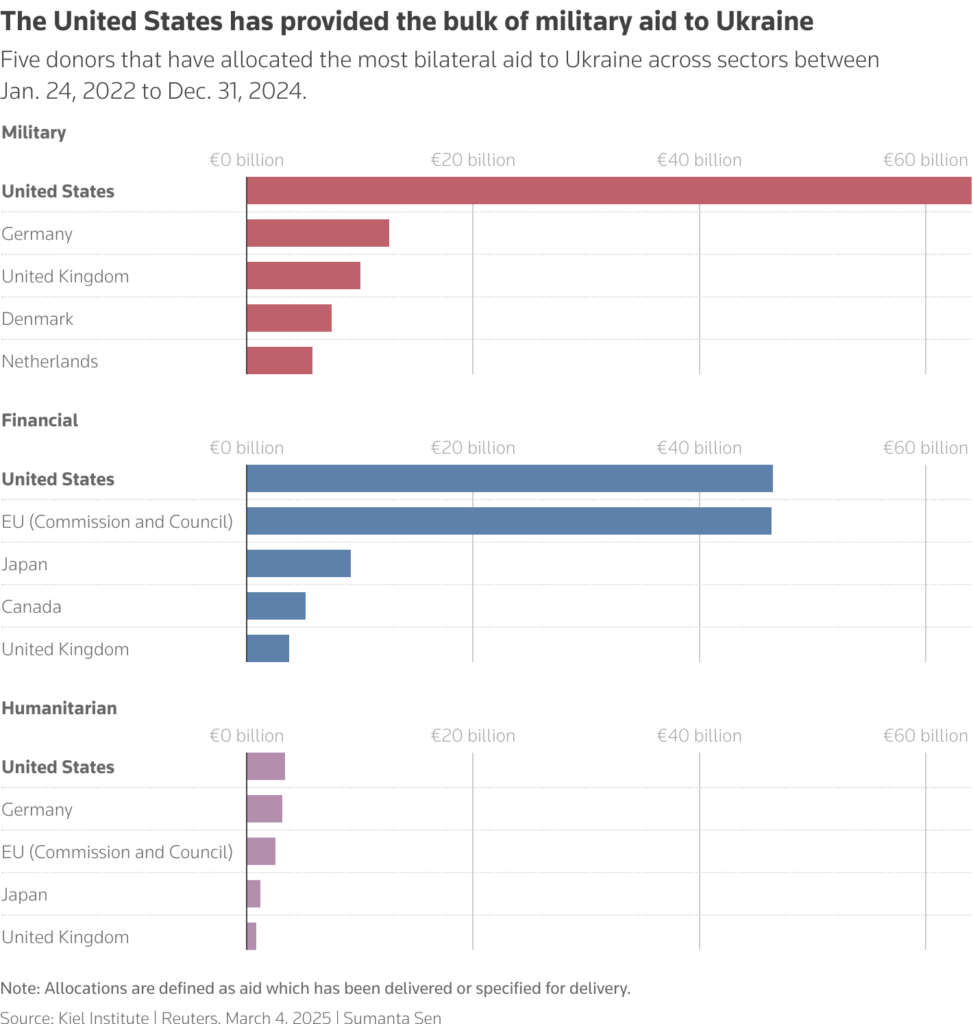
Trump had promoted the deal as a way to recoup the billions of dollars in US support since the war began and justify continuing the aid.

Ukrainian political analyst Ihor Reiterovych said Trump's remarks appeared to suggest that the spat with Zelenskyy was over and both are ready to move on.

"It is really very noteworthy that Trump did not say anything specifically about the suspension of military aid to Ukraine," Reiterovych told RFE/RL's Ukrainian Service. "We hope that this issue will be resolved positively in the near future, perhaps not even days, but hours."

'The Longest Ever' Address To Congress

The address was Trump's first to a joint session of Congress since taking office less than 50 days ago.

The US president began his speech by saying "America is back" and touting his policies on immigration, crime, and the efforts of the Department of Government Efficiency (DOGE) led by billionaire Elon Musk to cut government spending.

Trump has pursued a "shock and awe" strategy since being inaugurated on January 20, announcing drastic changes to domestic and foreign policy, often using executive orders to bypass Congress, as he seeks to fulfill his campaign promises.

Rebecca Gill, a political science professor at the University of Nevada Las Vegas, told RFE/RL that the more than 100-minute address, the longest ever by a president to a joint session of Congress, was "typical Trump."

"I don't think anybody would be surprised that it was pretty aggressive and combative," she said.

By RFE/RL
These Canadian Energy Firms Could Be Among The Hardest Hit By U.S. Tariffs


By Tsvetana Paraskova - Mar 03, 2025


Energy firms account for 40% of the top 10 Canadian companies that would be the biggest revenue losers as U.S. tariffs go ahead.

Syntax Data: The energy sector is at risk of losing billions of U.S. dollars from revenues, considering how much business Canadian energy producers do with the U.S.

Household names like TC Energy, Enbridge and Suncor could be severely impacted by tariffs.


With U.S tariffs on Canadian imports coming into effect on Tuesday, March 4th, analysts have started to quantify the potential losses for Canadian companies from the trade spat.

Energy firms account for 40% of the top 10 Canadian companies that would be the biggest revenue losers as U.S. tariffs go ahead, according to a recent report by Syntax Data.

Last week, U.S. President Donald Trump said that the tariffs on Canada and Mexico – delayed by a month to March 4 – would go ahead as planned. The U.S. plans a 25% tariff on all imports from Canada and Mexico, with the exception of Canadian energy which would face a 10% tariff.

After the tariffs were delayed by a month, Syntax Data said, “While the impact on US-Canada negotiations remains uncertain, one thing is clear: some businesses will be hit harder than others.”

The energy sector is at risk of losing billions of U.S. dollars from revenues, considering how much business Canadian energy producers do with the U.S., according to Syntax Data’s research.


A total of 40% of the top 10 companies identified are in energy production, including Enbridge Inc. and TC Energy, which each generate about half of their revenues in the U.S., the report found.

“With 60 per cent of U.S. crude oil being imported from Canada, a 10 per cent tariff on energy could have major implications for the energy industry,” Syntax Data says.

“While lower tariffs are likely designed to avoid extreme energy price hikes for U.S. consumers, Canadian energy companies with significant U.S. exposure would face major ramifications.”

Of the ten most exposed Canadian companies, four are in the energy sector, per Syntax Data. These are Enbridge (second most exposed of all Canadian firms), TC Energy (fourth), Parkland Corp (ninth), and Suncor Energy (tenth).

Enbridge, the pipeline giant operating Mainline, the largest pipeline network that sends Canadian crude oil to the United States, generates 45.5% of its revenue from U.S. operations, while the share is even higher for TC Energy, at 52.2%. Parkland and Suncor have lower U.S.-generated revenue exposure, with U.S. operations accounting for 20.1% of Parkland’s revenue and 13.1% of Suncor’s.


In a comment to Oilprice.com, Enbridge states that in the near-term, tariffs on Canadian exports and potential retaliation may impact the market, but Enbridge expects no material effect on its business, as it does not own the oil and gas it transports and, therefore, it expects to remain insulated from commodity price volatility.

The most exposed Canadian company is in the chemicals sector, fertilizer producer Nutrien, according to Syntax Data’s report.

Still, a lower 10% tariff on Canadian energy and “the fact that U.S. Midwest refineries may not have immediate substitutes for Canadian heavy crude oil gives a relative (not absolute) reprieve that would relieve some pressure on energy-producing provinces—mainly Alberta, Saskatchewan and Newfoundland and Labrador,” RBC said.

Canadians overwhelmingly support retaliatory tariffs, a poll for Bloomberg showed last month, while Canadian policy makers are now more inclined than ever to find alternative export avenues for Canadian oil, almost all of which currently flows south to the U.S.

The province of Saskatchewan in Western Canada will consider all permits for pipelines crossing its territory as “pre-approved,” Premier Scott Moe said last week, writing “Effective Immediately: All pipeline permits going east, west, or south received in Saskatchewan will be considered pre-approved.”

“We encourage all provinces and the federal government to do the same,” Moe wrote on X.

The U.S. tariff threat was a wake-up call for Canadian policymakers that the federal and provincial governments may have too hastily scrapped over the past decade Alberta-to-coast pipeline projects that could have diversified Canada’s oil and gas exports.

By Tsvetana Paraskova for Oilprice.com
US Refinery Shutdowns, Growing Demand Could Send Fuel Inventories to 25-year Low


By Irina Slav - Mar 04, 2025

EIA: fuel inventories could plunge to the lowest levels since 2000.

The refining industry globally has been experiencing the effects of a declining supercycle even though demand has continued to grow.

EIA: this squeeze is about to become marked next year.


Refinery closures combined with growing demand for gasoline, diesel, and jet fuel are about to start squeezing available volumes—and this squeeze is about to become marked next year. That’s according to the Energy Information Administration, which warned this would plunge inventories to the lowest levels since 2000.

Two refineries are set to shut down this year, the EIA said in the latest edition of its monthly Short-Term Energy Outlook. One is in Houston, and the other in Los Angeles. The Houston facility, owned by LyondellBasell, which has already begun the process of the shutdown, has a capacity of 263,776 barrels daily. The Los Angeles refinery, property of Phillips 66, can process 138,700 barrels of crude daily. The closure of these two would reduce fuel production capacity in the country by 400,000 barrels daily.

The refining industry globally has been experiencing the effects of a declining supercycle even though demand has continued to grow, and, as confirmed by the EIA, this growth will continue. Even so, the record margins of 2022 and 2023 are gone now. Before the new cycle begins, some belt-tightening is in order.

Related: Trump’s Tariff To Hike Prices at the Pump for US Drivers: Gas Buddy

In the U.S., refiners were also subjected to additional pressure during the Biden administration to join the federal government’s climate change-oriented energy policy and switch to biofuels from petroleum fuels. In California, specifically, pressure has been strong, both on the federal and state level, with the government in Sacramento recently demanding from refiners in California to keep a certain level of fuel inventories to avoid price spikes that the refiners themselves attribute to the state government’s energy policies seeking to phase out vehicles using petroleum fuels.

The closure of the Phillips 66 refinery in Los Angeles is one consequence of that policy. There are even reports that California authorities are considering refinery nationalizations to secure the supply of fuels to drivers in the state. Two refineries in California have already converted to biofuel production plants because biofuel production fetches generous subsidies from the state government: Phillips 66 is closing the L.A. facility by the end of this year, and Chevron and Valero are also considering shutdowns.

As a result of these refinery closures, the supply of fuels will understandably tighten, with diesel and jet fuel especially vulnerable, it seems. The diesel tightness will be global and manifest this year, as an estimated 1 million barrels per day of refining capacity across Europe and the U.S. is set to close permanently. Another 800,000 barrels daily in new capacity is set to come online in China, India, and Indonesia, Reuters estimated at the end of 2024, which leaves a gap of about 200,000 bpd. Demand for fuels, meanwhile, has continued to surprise to the upside.

In the United States specifically, refining output is estimated to decline by 190,000 barrels daily this year, the Energy Information Administration said this week, with a further decline of 180,000 barrels daily in 2026. “To meet the forecast increase in U.S. consumption of petroleum products with less U.S. refinery capacity, we expect refinery utilization to remain relatively high and for net U.S. exports of petroleum products to decrease to meet domestic fuel demand,” the EIA said in its Short-Term Energy Outlook.

If demand for fuels continues growing, a shortage may well be on the way, as suggested by the chief executive of Phillips 66 last year. Mark Lashier said in September 2024 that refinery closures prompted by low margins could shave some 700,000 bpd from global refining capacity. He saw this as a positive for U.S. refiners, however. “The US has become very competitive in refining,” Lashier said. “We’re able to compete out in the world global markets.”

By Irina Slav for Oilprice.com
PDAC: Teck plans to sell to Asia to avoid US tariffs


Reuters | March 4, 2025 |


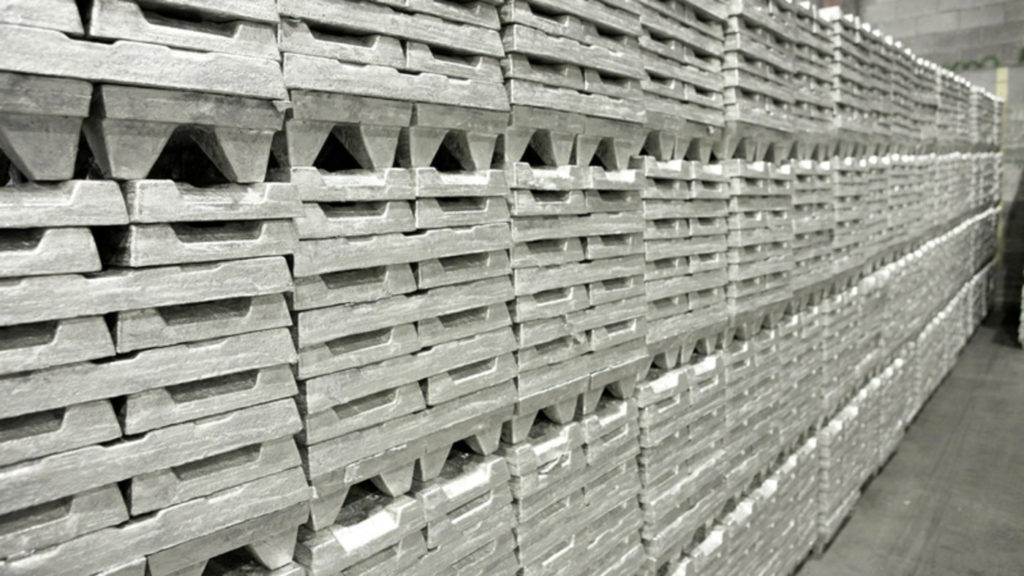
Refined zinc from Teck’s Trail operations in British Columbia, Canada. 
Credit: Teck Resources

Canadian miner Teck has been developing plans to sell zinc to Asia instead of the US to circumvent tariffs from President Donald Trump’s administration on Canadian imports, CEO Jonathan Price on Tuesday.


Teck, which sells most of its refined zinc to the US, has been working on a contingency plan for months, Price told the PDAC mining industry conference in Toronto.

“We have been reserving warehousing capacity, looking to reserve space in ports to export the metals to Asia,” Price said.

“We will find buyers and prices will adjust.”

The additional warehousing and port spaces would be in Canada, a company representative said.

Trump’s 25% tariffs on imports from Canada as well as Mexico took effect on Tuesday, launching new trade conflicts with the United States’ three biggest trading partners. Economists expect US companies to bear the cost of those tariffs.

Teck produces about 260,000 metric tons of refined zinc annually.

That equates to less than a third of total US demand in 2024 when it stood at 848,000 metric tons, or 6% of the world’s total, according to the International Lead and Zinc Study Group (ILZSG).

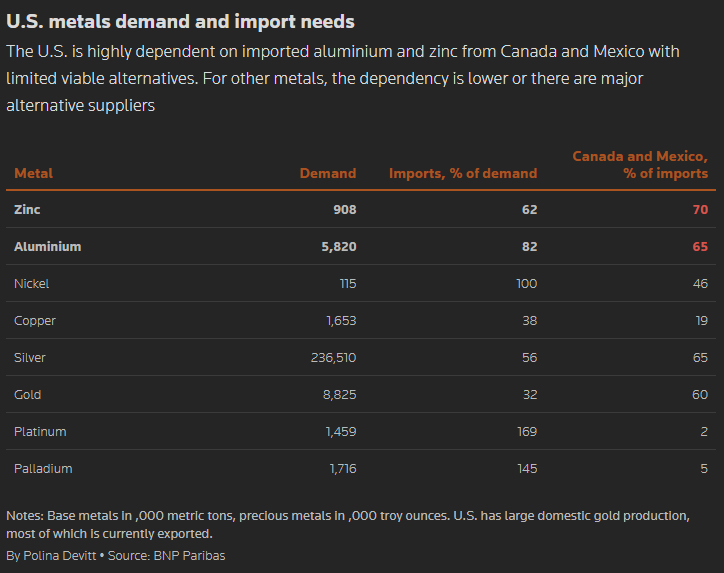
BNP Paribas estimates that the United States imports 62% of its zinc needs, mainly from Canada and Mexico.

Price said he expects the tariffs to raise the cost of commodities and drive inflation, and that “there is little upside”.

Vale Base Metals, the base metals spinoff of iron ore giant Vale that sells Canada-produced nickel to the US, is also looking to adapt to the tariffs, Vale Base Metals chair Mark Cutifani said.

“We are talking to everyone on this to see how this can be resolved,” he told reporters.


(By Divya Rajagopal, Polina Devitt, Pratima Desai and Daina Beth Solomon; Editing by Chizu Nomiyama, Veronica Brown and Barbara Lewis)
Zelenskiy pledges to ‘make things right’ with US as minerals deal remains uncertain

Reuters | March 4, 2025 | 


Credit: Volodymyr Zelenskiy’s X account

Ukrainian President Volodymyr Zelenskiy pledged to repair relations with the US on Tuesday after what he described as a “regrettable” Oval Office clash with US President Donald Trump last week, while the fate of a much-debated minerals deal remained unclear.


Four sources told Reuters that the Trump administration and Ukraine plan to sign a deal giving the US access to Ukrainian minerals in return for military aid. Later on Tuesday, however, US Treasury Secretary Scott Bessent told Fox News, “There is no signing planned,” according to a post on X by a Fox reporter.

The White House, Ukraine’s presidential administration in Kyiv and the Ukrainian embassy in Washington did not immediately respond to requests for comment on the deal.

Early Tuesday Zelenskiy said he wanted to “make things right” and was ready “any time and in any convenient format” to sign a minerals deal, which he left on the table during a visit to Washington after the Oval Office argument with Trump.

Trump, Zelenskiy nix minerals deal

His statement came a day after Trump halted military aid to Ukraine, his latest move to upend US policy and adopt a more conciliatory stance toward Russia.

“None of us wants an endless war. Ukraine is ready to come to the negotiating table as soon as possible … Nobody wants peace more than Ukrainians,” Zelenskiy said in his statement on X.

“My team and I stand ready to work under President Trump’s strong leadership to get a peace that lasts.”

The statement made no mention of the pause in US military supplies.

Zelenskiy’s statement was clearly aimed at stressing Kyiv’s gratitude following the explosive confrontation at the White House, at which Trump and Vice President JD Vance scolded Zelenskiy as insufficiently appreciative.

“We do really value how much America has done to help Ukraine maintain its sovereignty and independence,” Zelenskiy wrote. “Our meeting in Washington … did not go the way it was supposed to be. It is regrettable that it happened this way. It is time to make things right.”

Zelenskiy outlined a path towards a peace agreement, which he said could begin with a release of prisoners and a halt to air and sea attacks, if Russia did the same.

“Then we want to move very fast through all next stages and to work with the US to agree a strong final deal.”
Geopolitical shift

Earlier, Zelenskiy’s prime minister, Denys Shmyhal, said Ukraine’s forces could hold their own on the battlefield against Russian troops, but that Kyiv would do everything possible to continue cooperating with the US.

“We will continue to work with the US through all available channels in a calm manner,” Shmyhal said. “We only have one plan – to win and to survive.”

A Russian drone attack late on Tuesday killed one person and triggered power, water and heating cuts in Ukraine’s Black Sea port of Odesa for the second day running, the regional governor said.

In Moscow, the Kremlin said cutting off US military aid to Ukraine was the best possible step towards peace, although it was waiting to confirm Trump’s move.

US Democrats have raised an outcry over Trump’s abrupt pivot towards Russia, the most dramatic geopolitical shift in generations for Washington, where governments under both parties since the 1940s have prioritized defending Europe from a hostile Moscow.

Trump is expected to further outline his plans for Ukraine and Russia in a major speech to Congress later on Tuesday.

So far, leaders of Trump’s Republican Party in Congress have made little or no pushback to the move. Many Republicans had earlier been vocal backers of Ukraine, which relied on US and European military aid to fight bigger and better-armed Russia through three years of warfare that has killed and injured hundreds of thousands of soldiers on both sides.

Shmyhal said Kyiv was doing more to ramp up its own military production, especially drones. But air defences could be a particular problem if US aid ends, especially the Patriot batteries that are Ukraine’s only defence against Russian ballistic missiles aimed at its cities.

The US cut-off, while “pretty significant,” was less harmful to Kyiv than it would have been earlier, “because Ukraine is far less dependent on direct US military assistance now,” said Michael Kofman, a senior fellow at Carnegie Endowment.
Pressure on Europe

The pause puts more pressure on European allies who have publicly embraced Zelenskiy since the Oval Office blow-up. Britain and France, whose leaders both visited the White House last week, have offered troops to help guard a potential ceasefire.

On Tuesday, Germany’s conservatives and Social Democrats announced proposals to set up a 500 billion euro fund to help ramp up defence spending.


European Commission President Ursula von der Leyen unveiled proposals to mobilize up to 800 billion euros ($840 billion) for EU defence spending. The 27-nation bloc holds an emergency summit on Thursday.

French President Emmanuel Macron’s office said the president had spoken with both the US and Ukrainian leaders and welcomed Zelenskiy’s will to re-engage with Trump.

But France’s Prime Minister Francois Bayrou was sharply critical of Trump’s move to pause military supplies.

“Suspending aid during a war to a country under attack means abandoning the country under attack and accepting or hoping that the aggressor will win,” he said during a parliamentary debate.

Ukrainians were stunned and many described Washington’s move as a betrayal. Oleksandr Merezhko, head of the Ukrainian parliament’s foreign affairs committee, said it looked like Trump was “pushing us towards capitulation”.

“Yes, it is betrayal, let’s call it like it is,” said lawyer Olena Bilova, 47, in Kyiv. “But let’s hope that American civil society and the elites of the European Union will not leave us alone.”


(Reporting by Olena Harmash, Yuliia Dysa, Andrea Shalal, Gram Slattery, Idrees Ali, Erin Banco, Steve Holland, Lidia Kelly, Mike Stone, Jasper Ward, Patricia Zengerle and Pavel Polityuk; Writing by James Oliphant, Peter Graff, Alex Richardson and Nia Williams; Editing by Ros Russell, Gareth Jones and David Gregorio)
US withdrawing from plan to help major polluters move from coal


Reuters | March 5, 2025 

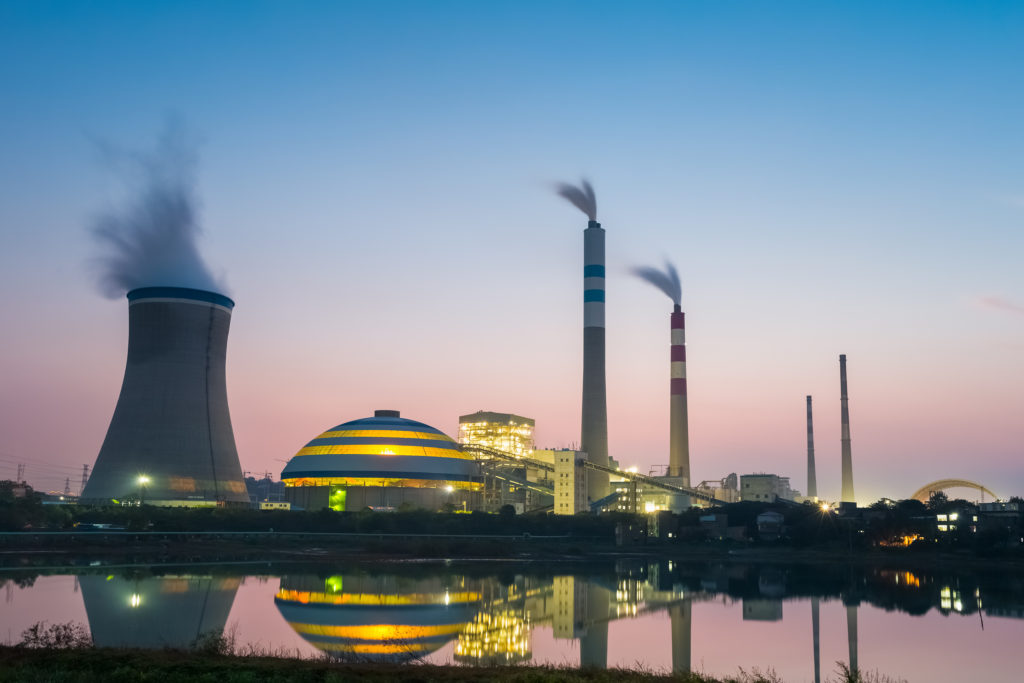
Coal power plant. Stock image.


The United States is withdrawing from the Just Energy Transition Partnership, a collaboration between richer nations to help developing countries transition from coal to cleaner energy, several sources in key participating countries said.


JETP, which consists of 10 donor nations, was first unveiled at the UN climate talks in Glasgow, Scotland in 2021.

South Africa, Indonesia, Vietnam and Senegal were subsequently announced as the first beneficiaries of loans, financial guarantees and grants to move away from coal.

Joanne Yawitch, head of the Just Energy Transition Project Management Unit in South Africa, said on Wednesday that the United States had communicated its withdrawal from the plan there.

In Vietnam, two foreign officials with direct knowledge of the matter said Washington was withdrawing from JETP in the country, and one of them said the US was also exiting from all JETP programs, including in Indonesia.

Another source familiar with the matter said the US had withdrawn from the JETP in Indonesia and South Africa.

“We have been informed by the US of their withdrawal,” said another South Africa-based source in the donor group.

“There remains significant finance available, and the International Partners Group remains fully committed to supporting South Africa to deliver on its just energy transition through the partnership,” the person said.

Since President Donald Trump returned to office in January, Washington has slashed foreign aid and championed development of fossil fuels.

The US state department did not immediately respond to a request for comment. The sources declined to be named as they were not authorized to speak on the matter.

US commitments for Indonesia and Vietnam exceeded $3 billion in total, mostly through commercial loans, while in South Africa the commitment was for $1.063 billion out of $11.6 billion pledged for the country.

(By Tim Cocks, Francesco Guarascio, Fransiska Nangoy and Sudarshan Varadhan; Editing by Tony Munroe and Sharon Singleton)
Congo courts Trump for strategic minerals tie-up as war looms

Bloomberg News | March 4, 2025 |


Stock image.

The Democratic Republic of Congo has offered the US exclusive access to critical minerals and infrastructure projects in exchange for security assistance as it battles a rebellion backed by neighboring Rwanda.


In a letter to US Secretary of State Marco Rubio, Congo asked for an urgent meeting between Presidents Felix Tshisekedi and Donald Trump to discuss a pact that would give American companies access to some of the most coveted minerals for the energy transition.

“As the world’s largest supplier of cobalt and a major producer of lithium, tantalum and uranium, the DRC’s resources are integral to US industrial competitiveness and national security,” an Africa-US business group lobbying on Congo’s behalf said in the letter. A partnership “presents a unique opportunity for the United States to establish a reliable and exclusive supply chain.”

The invitation to exploit Congo’s vast resources shows Tshisekedi has become increasingly desperate in his fight against Rwanda, which supports a rebel group that’s threatened to overthrow his government and seized a wide swath of the country’s mineral-rich east.

The Trump administration is “open to discussing partnerships in this sector,” the US State Department said in an email. “Partnerships with US companies will strengthen both US and DRC economies.”

But any deal is likely a long way off. Trump’s predecessor, Joe Biden, struggled to interest US firms in Congo’s minerals amid concerns about corruption, environmental degradation and labor issues. The US has also been reluctant to assist Congo’s military, which has been accused of human-rights abuses.


Tricky negotiations

“For the DRC, this would likely involve lengthy, tricky renegotiations of mining contracts, while it is difficult to see the Trump administration being able to mobilize US investors,” said Joshua Walker, program director for the Congo Research Group at New York University’s Center on International Cooperation. “And it is still unclear whether the new administration will commit significant resources to ending Rwandan aggression in the DRC.”

The letter was one of several sent to senior US officials last month, offering a Congolese deal similar to the Trump administration’s proposed minerals-for-security arrangements with Ukraine, which fell apart last week.

Congo’s mining industry, which is also the world’s second-biggest source of copper, is dominated by Chinese companies. A tie-up with the US would allow Tshisekedi to “shift away from China’s dominant influence and strengthen economic ties with the West,” the lobby group said.

The letter offers US companies operational control and “exclusive extraction and export rights.” It also proposes involvement in a planned deep-water port on Congo’s Atlantic coast and the establishment of a joint strategic mineral stockpile.

In exchange, the US would provide training and equipment for Congo’s armed forces as well as direct security assistance. It would have access to military bases “to protect strategic resources.”

The letter, disclosed on the Foreign Agents Registration Act website, was sent by lobbyist Aaron Poynton of the Africa-USA Business Council on behalf of Pierre Kanda Kalambayi, chair of the Congolese Senate’s Committee on Defense, Security and Border Protection.

Similar letters were also addressed to the heads of the House and Senate Foreign Relations Committees, Republican Senator Ted Cruz, Commerce Secretary Howard Lutnick and Republican Representative Rob Wittman, who chairs the House Critical Minerals Policy Working Group.

(By Michael J. Kavanagh)


Mercuria, Glencore renew deal for Congo’s share of Tenke copper

Bloomberg News | March 5, 2025 |  


Tenke Fungurume copper and cobalt mine in the DRC. Image: CMOC

Mercuria Energy Group Ltd. and Glencore Plc renewed a deal to buy copper from the Democratic Republic of Congo’s state miner, responding to a push by the company to sell its share of output from joint ventures independently.


The two trading houses successfully bid to buy copper from the giant Tenke Fungurume mine, which is majority-owned by China’s CMOC Group Ltd., according to people familiar with the matter.

Mercuria was allotted 50% of state-held Gecamines’ share of the volume, while Glencore won 25%, the people said, asking not to be identified as the matter isn’t public. The remaining 25% has yet to be allocated.

Those are the same proportions the two traders won when Gecamines last year marketed its share of output for the first time in an effort to gain more insight into the pricing of Congo’s minerals. In that sale, the final 25% went to Trafigura Group.

Spokespeople for Mercuria and Glencore declined to comment. Gecamines didn’t respond to a request for comment.

Tenke sold 409,410 tons of copper and 24,003 tons of cobalt last year, according to Congolese government data. Gecamines holds a 20% equity share of the mine.

(By Jack Farchy and William Clowes)

QUANTITY VS QUALITY

Elon Musk’s Starlink satellites are falling back to Earth: Is ozone layer at risk?

Story by Bijin Jose
 • March 4, 2025


In January, about 120 SpaceX Starlink satellites burnt up in Earth’s atmosphere. Reports say there were three to four re-entries each day which led to the creation of artificial meteor showers, and were visible to many around the world.

While these spectacular showers are seemingly harmless or even eye-pleasing, scientists have raised alarms about their serious threat to the environment. Scientists have raised concerns about the satellite re-entries in the upper atmosphere or mesosphere which then settle in the stratosphere that houses the Earth’s protective ozone layer. The major concern is the release of aluminium oxide particles that could, in the long run, damage the ozone layer.

When satellites re-enter and burn up, many of the metals on the satellites get oxidised, including aluminium. Small Low Earth Orbit (LEO) satellites like Starlink have aluminium in abundance, and they have a lifetime of about five years, according to reports. There is a constellation of such satellites that enable Starlink to operate its SpaceX satellites. Since the first batch of 60 satellites took place in May 2019, many of them have been coming down regularly.

According to the European Space Agency (ESA), there are over 28,000 objects in space and most of them are in low Earth orbit. In the last few years, nearly 8,000 Starlink Satellites have been launched. The increasing demand for internet coverage globally is accelerating the rapid launch of small communication satellite constellations. As of now, SpaceX is the front-runner with permission to launch another 12,000 Starlink satellites and as many as 42,000 planned. Meanwhile, Amazon and other companies around the world are also planning satellite constellations ranging between 3,000 and 13,000 satellites.

What happens during the re-entry of satellites?

January witnessed the maximum re-entries. Upon reentry, the aluminium in these satellites creates aluminium oxide, which is a threat to the ozone layer. The LEO satellites usually orbit between 550 and 1,200 km above the Earth. Once their operational period comes to an end, they are decommissioned and allowed to fall back on Earth. This mechanism has been designed to prevent space debris from accumulating. This is so far seen as a responsible approach to space sustainability.

During their re-entry into the atmosphere, satellites travel at about a speed of 27,000 km per hour. At this high speed, the collision of the satellite with the dense atmosphere generates extreme heat through aerodynamic friction. Following this, the satellite almost instantly disintegrates, and most of its components vaporise. Most satellites are designed to burn up entirely before reaching Earth’s surface to avert any danger to people or property.

According to scientists, this burning-up process is not ‘environmentally neutral.’ During the process, the metals in the satellite undergo chemical transformations, especially concerning aluminium, which usually constitutes about 40 per cent of a satellite's mass. Research shows that a typical Starlink satellite weighs around 250 kg and produces about 30 kg of aluminium oxide particles upon re-entry to the atmosphere. They are not huge debris but microscopic nanoparticles that stay suspended in the upper atmosphere.

Why is aluminium oxide a concern?

The re-entries usually happen in the mesosphere, which is around 50 to 80 km above Earth’s surface. Reportedly, the aluminium oxide nanoparticles emitted during the burn-up stay afloat in this region for long periods before they descend into lower altitudes. The scientific concern here is about what happens when these particles eventually reach the stratosphere, which is home to the ozone layer that protects all life from harmful ultraviolet radiation.

Also Rea | Who will win the race to Artificial General Intelligence?

According to researchers from the University of Southern California’s Department of Astronautical Engineering, aluminium oxide can act as a catalyst for chemical reactions that involve chlorine, much like the process that led to ozone depletion from chlorofluorocarbons (CFCs) in the past. CBFs are capable of destroying ozone molecules.

Unlike the CFCs, which were banned under the 1987 Montreal Protocol, the aluminium oxide particles do not consume ozone directly. However, as per the research, they act as catalysts or substances that can enable chemical reactions without being consumed themselves. Reportedly, one aluminium oxide particle could potentially contribute to the destruction of thousands of ozone molecules over decades.

What do scientists say?

Several recent studies have suggested a significant increase in aluminium oxide in the atmosphere related to the re-entry of satellites. In February 2023, Nasa conducted high-altitude test flights over Alaska at about 60,000 feet. Closer examination of the aerosols collected revealed the presence of 10 per cent of stratospheric sulphuric acid particles, which were larger than 120 nanometres in diameter, containing aluminium and other metals emitted from satellite and rocket re-entries. These tests confirmed that space hardware was leaving what scientists call a detectable chemical signature in the atmosphere.

According to researchers, the rate of increase is more concerning. Researchers from the University of Southern California Department of Astronautical Engineering suggested that aluminium oxides in the atmosphere increased eightfold between 2016 and 2022. This coincides with the rapid proliferation of satellite constellations during this period. In 2022 alone, re-entries released an estimated 41.7 metric tonnes of aluminium into the atmosphere, which is about 30 per cent more than natural inputs from micrometeoroids (tiny space rocks leading to 16.6 metric tonnes of aluminium oxide in the mesosphere). Researchers say if the pace of current satellite deployment persists, aluminium oxide releases could reach 360 metric tonnes annually — a 646 per cent increase over natural atmospheric levels.

https://www.youtube.com/watch?v=qs2QcycggWU

When it comes to impact, there is a time delay involved, making the situation particularly grave. Based on molecular dynamic simulations, the particles created in the mesosphere may take around 20 to 30 years to descend into the ozone layer, meaning the environmental impact of today’s satellite re-entries will not be apparent for decades. Scientists claim that by the time measurable ozone depletion is detected, the mesosphere could already be overflowing with aluminium oxide particles that will likely continue to affect ozone chemistry for years to come, till some regulatory changes are implemented. These modelling studies also suggested that in the extreme case, these particles could contribute to an additional 0.05 per cent ozone loss over Antarctica each year. Although this percentage seems small, it could likely delay or reverse the ozone layer’s expected recovery.

Challenges and potential solutions

Even though the concerns are valid, researchers also point to the absence of a comprehensive regulatory framework that addresses the atmospheric impact of re-entries. Reports say the US Federal Communications Commission (FCC) provides licenses to satellite mega-constellations, but it does not consider re-entry debris or ozone depletion in its assessments. Also, commercial satellites have been excluded from environmental review under the National Environmental Policy Act (NEPA).

From the global perspective, while the UN Committee on the Peaceful Uses of Outer Space (COPUOS) has begun discussions around guidelines for space sustainability, the progress has been slow. There is also no binding international agreement regarding pollution from satellite re-entries.

Experts say coordinated action from various stakeholders will help address the challenge. They say satellite manufacturers could come up with alternatives to aluminium or design spacecraft that can be boosted into higher graveyard orbits rather than allowed to re-enter. A graveyard orbit is an orbit where decommissioned satellites are placed to reduce the risk of collisions between operational satellites and space debris. This, however, may require additional onboard propellant and may only delay the problem for some more years.

The ESA was in discussions with SpaceX in October 2024 to join an international effort towards reducing space debris, according to reports. As part of ESA's Zero Debris initiative, it aims to prevent the generation of new orbital debris by 2030.


BHP urges Australia to sharpen competitive edge amid global trade shifts


BHP Australia president Geraldine Slattery

4th March 2025
By: Mariaan Webb

Creamer Media Senior Deputy Editor Online


BHP Australia president Geraldine Slattery has warned that Australia’s competitive edge in the resources sector is at risk without sustained investment in productivity, energy, and labour policies.

Speaking at the Australian Financial Review Business Summit on Tuesday, Slattery highlighted the shifting dynamics of global trade, heightened geopolitical tensions, and changing commodity demand as key challenges facing the nation’s resources sector.

“It’s clear the rules of the game are changing, and the competition is fierce,” Slattery told the summit. “Optimism, but not complacency.”

Slattery emphasised that Australia had long reaped the rewards of a thriving resources sector, as the world called for the country's abundant reserves of gas, iron-ore and coal. The country's extensive resources, proximity to end markets, and trade liberalisation had seen benefits flow to the national economy.


She pointed to global trends, including the transition to a lower-carbon economy and increasing digitalisation, as forces reshaping demand for minerals. “While the need for these resources remains strong, commodity demand is shifting to a new phase that supports the energy transition, a lower carbon economy, and increased digitisation,” she stated.

Slattery said that, all things considered, she was optimistic for Australia’s future. "We have many of the mineral deposits which will fuel the next phase of global development. We have a demonstrated capability in getting these minerals to market. We have strong and stable institutions, and good relationships with our key markets.

“These advantages are however not unique, nor will they prevail over time without continued investment,” she said.

Australia’s reliance on exports makes the country particularly vulnerable to global economic shifts. Slattery noted that the ongoing “flurry of trade moves and countermoves as countries seek to shore up industrial investment and secure mineral and energy supplies” underscores the need for Australia to remain competitive.

She urged policymakers and business leaders to focus on strengthening the country’s economic position. “What is within our control - investments and policy settings in productivity, in energy, in labour and capabilities - these are the settings that demand our attention as business, political and academic leaders,” she said.

Looking ahead, Slattery called for a national conversation on how best to maintain Australia’s standing as a global resources powerhouse. “I’m hopeful that a big part of the conversation we are going to have over coming days, and indeed the conversation we will have as a nation over coming months, is how best Australia can strengthen our competitive edge, lean into our natural strengths, and be clear on the settings and capabilities that will enable us to compete.”

Critical Metals

BHP CEO Talks Critical Minerals Opportunities, Challenges in Canada

At PDAC, BHP CEO Mike Henry discussed opportunities, challenges and solutions for the copper and critical minerals sectors in Canada to help the country compete globally.
Person in suit holding yellow engineer helmet stands in front of Canada flag.
NatasaAdzic / Adobe Stock

More than anything else, rapid urbanization is driving demand for critical minerals like copper around the world.

Delivering the opening keynote address at this year’s Prospectors and Developers Association Conference (PDAC) in Toronto, Ontario, Canada, BHP (ASX:BHP,NYSE:BHP,LSE:BHP) CEO Mike Henry spoke to the opportunities and challenges posed by the growth of urban centers around the world.

His presentation discussed how the mining industry, including Canada's, can respond to the growing demands on the resource sector and deliver the critical minerals that will be required over the next few decades.

The opportunity: Copper and critical minerals demand outpacing supply

Over the last 10 years, there has been a global population redistribution. For the first time, more of the world’s population lives in urban centers than in rural areas. Along with this shift has come greater densification, which has pushed electrical grids to their limits.

However, as Henry pointed out, this is just the beginning. By 2050, the global population will grow by 25 percent to 10 billion people, and the vast majority of them will live in urban centers.

“They are the engines of massive opportunity for our industry. More high rises, homes, roads and infrastructure, greater electrification, more phones, televisions, cars and air conditioning. More energy, more data centers to power AI and cloud computing,” he said.

This population boom means the world will need more of everything, from copper and steel to potash and other minerals.

As a company, BHP is a global powerhouse. Its portfolio of assets touches on a variety of minerals that will be critical in the coming decades; few, however, may be as important as copper. Henry suggests that demand for red metal will rise 70 percent over the next 15 years.

The massive surge in demand presents an enormous opportunity for the resource sector, especially for investors. Outlining the scale of capital required, Henry estimates that more than US$250 billion will be needed for mining and concentration to keep pace with demand growth, with additional funding needed for smelting and refining — and that’s just for copper.

When other minerals are added to the equation, the total could reach US$800 billion between now and 2040.

The first challenge: Finding significant critical mineral deposits in Canada

Although opportunities exist, they don’t come without challenges, and Henry suggests that the challenges exist both above and below ground.

“First, we’re going to have to find the resources… Those resources are big, large deposits that are becoming harder to find," he said. "They’re deeper, they're more remote, they come with new technical challenges, and they’re often in riskier jurisdictions."

This has led to BHP rethinking how it invests in exploration, seeing them not only fund and carry out exploration work itself, but partnering with other companies around the world.

Some of these partnerships have seen work being carried out in Canada with Henry suggesting considerable untapped resources in the country.

“Of course, Canada has extensive exploration history already, yet much of this has been at shallow depths in subaortic areas. So there remains potential to find deeper or underexplored parts of the country, and we’re engaged in that effort with a specific focus on copper,” he said.

The solution, he said, is to apply new technologies from other sectors, including 3D seismic sensors and muon tomography. However, this new technology generates huge amounts of data, which benefits from advances in artificial intelligence to help make sense of all the information being collected.

Henry says that BHP has taken a different approach to partnerships by borrowing from the tech sector.

“We’ve also borrowed the accelerator concept from big tech, and we are supporting innovative exploration technologies, methods, and ideas through our global accelerator program, BHP Explorer,” Henry said.

The implications are enormous for an industry that needs new ideas brought to the forefront in short timelines.

The second challenge: Government mining policies

However, the biggest challenge facing the resource sector comes not from within the industry but from outside it.

Henry suggested that the biggest changes can come from evolving government policy, and he thinks things are beginning to move in the right direction. Canada itself released a critical minerals strategy in 2021, and its latest update includes 34 minerals and metals.

“There has been a very welcome burst of renewed government interest in critical minerals in recent times, and the motivations do vary,” he said.

For some governments, this interest stems from a desire to use resources to unlock the economic opportunity associated with decarbonizing the global energy grid. Meanwhile, other governments are pursuing critical minerals needed to provide energy security, economic sovereignty and defense supply chain resilience.

Henry noted that some countries are taking steps to make themselves more competitive and are working to attract capital investment for projects through fiscal reform and tax credits. He also pointed out that some governments are streamlining the regulatory process, which he suggests will speed up development time and reduce risks.

Henry sees incredible benefits in Canada due to the strength of the mining sector, but he cautions that past successes aren’t indicative of future success. He believes Canada is in danger of missing out on the next great opportunities in the resource sector.

“Other countries have some mix of even better resource endowments in certain commodities, better tax and royalty regimes, more streamlined permitting processes, while still maintaining high standards and more productivity, enabling industrial relations framework,” Henry said.

Henry sees complacency and bureaucracy as the enemy of growth and economic security, and believes Canada needs to accelerate its efforts to match those being carried out elsewhere.

In comparison, he points to Chile, where he says they’ve accelerated permitting for multi-billion dollar greenfield projects to five to 10 years and even shorter for brownfield developments. In Canada, he said, those timelines stretch to 10 to 15 years.

“Global capital is going to flow to the best opportunities, risk return opportunities globally. So if a country isn’t constantly benchmarking and saying, what’s the combined effect of our industrial relations policies, our tax settings, our permitting process relative to the other countries that are chasing the same opportunity, we run the risk of falling behind,” Henry said.

What does this mean for investors?

Henry outlined a potential for staggering growth in the mining sector for critical minerals such as copper over the next 15 to 20 years. He suggested there is an opportunity for investors looking to get into the sector at all levels, from exploration to production.

He also noted that it is not without problems. When investors evaluate projects, especially early in development, they should recognize that a multitude of factors could determine their success or failure.

Henry touched on access to the resource, the depth of the deposit and its remoteness. He also noted that jurisdictions play a huge part in a project's success, so investors should research a country's permitting process and tax system, as well as why a country may look to fast-track projects and whether it affects a company’s risk analysis.

“Once capital mobilizes in one direction, sometimes it can be quite hard to mobilize back in the other,” Henry said.

Don't forget to follow us @INN_Resource for real-time updates!

Securities Disclosure: I, Dean Belder, hold no direct investment interest in any company mentioned in this article.

From Your Site Articles

 Prospectors & Developers of Canada Association Conference

PDAC: Canada’s energy and natural resources minister presses critical minerals case

Colin McClelland - The Northern Miner
March 5, 2025 |


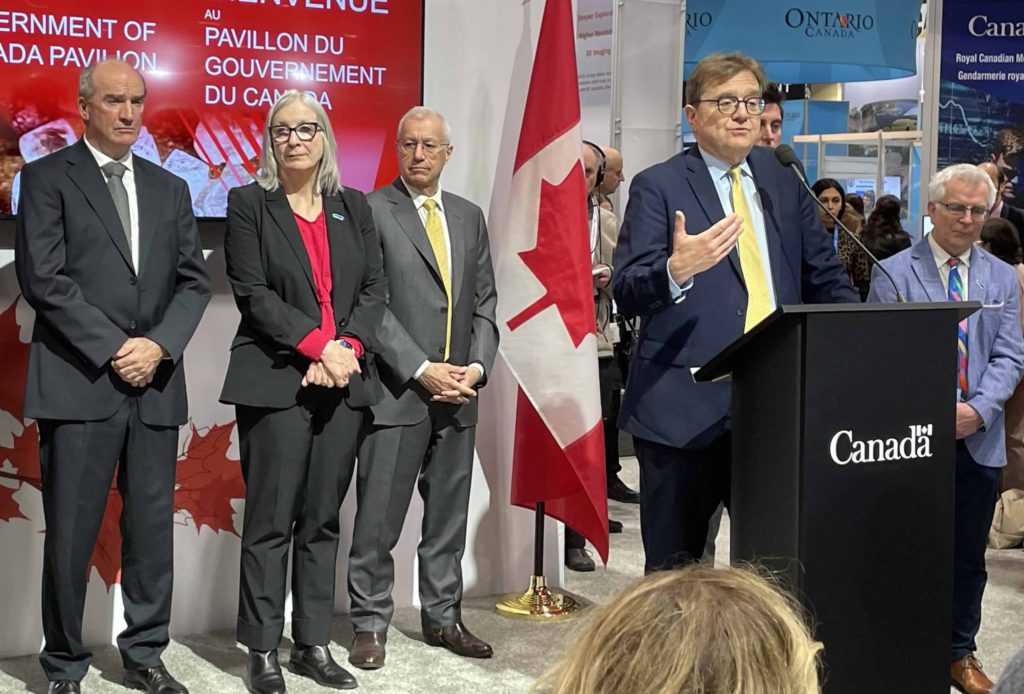
Jonathan Wilkinson, Canada’s Minister of Energy & Natural Resources. Credit: Colin McClelland


Canada’s energy and natural resources minister said the Trump administration must realize it could soon face taxed critical mineral exports from its northern neighbour in response to tariffs that began on Tuesday.


The US depends on Canadian oil, nickel, zinc, uranium, potash and germanium – among other resources – to make steel, ships and planes, fuel power plants and grow food, Jonathan Wilkinson said at the Prospectors & Developers of Canada Association’s annual convention in Toronto.

“When President Trump says he doesn’t need something from Canada, that’s just not true,” Wilkinson told reporters Tuesday afternoon. “And so looking at putting on either our own export tariffs or looking at other measures that would include deciding we’re going to sell some of those products elsewhere, those are fully on the table.”

After the US imposed 25% tariffs on most Canadian goods, and 10% on oil and minerals, Canada fired back with its own levies.

Separate 25% duties on aluminum and steel are due March 12. The minister’s planned trip to meet this week in Washington with Doug Burgum, US Secretary of the Interior, was postponed, Wilkinson’s staff said Wednesday.

The situation is fluid, with President Donald Trump and Prime Minister Justin Trudeau due to speak by phone Wednesday morning. Trump is to make an announcement Wednesday afternoon that might exempt the auto sector or contain reduced tariffs, US Secretary of Commerce Howard Lutnick told Bloomberg News.

The stunning move by the Trump administration to levy tariffs on its oldest ally and biggest trading partner when the continent has had a free trade agreement for more than 30 years has left Canadians bewildered but determined to fight back. While mining executives generally welcome a US President who’s keen to slash red tape and approve projects, the mood at PDAC was one of defiance against an irrational trade war.
Tariff irony

“With critical minerals, the option that the Americans have is to buy more from China, or it’s to buy more of some of them – the potash trade, in particular – from Russia,” Wilkinson said. “It’s hard to see how the measures that are being taken by the American president to a country that has historically been their closest friend and ally leads them down a path to purchasing more materials from their greatest adversaries.”

Ontario Premier Doug Ford said Tuesday he would consider export taxes on nickel and electricity that could be around 25%. A day earlier, he suggested nickel could be stockpiled and sold in other markets. However, Minister Wilkinson and Vic Fedeli, Ontario’s Minister of Economic Development, Job Creation and Trade, couldn’t say exactly how these plans would work other than through federal-provincial cooperation. While provinces control extraction, Ottawa determines export policies.

Wilkinson noted that Atlantic region giant Irving Oil raised prices for its US-bound fuels like gasoline and heating oil by 10% on Tuesday. Canadians have already begun making choices to replace American products like Kentucky bourbon and Florida orange juice, while US Republican Senators Rand Paul, Mitch McConnell and Paul Thune expressed opposition to the tariffs.

“First and foremost, Americans are going to feel it at the pump and in their utility bills simply because of the tariffs that the President himself has imposed on American consumers,” Wilkinson said. “The first point of departure is to create domestic pressure, to get the administration to reflect on its decision.”

Toronto exchange’s (TSX) mining dominance under threat as explorers exit

Bloomberg News | March 3, 2025 | 


Toronto Stock Exchange entrance. ( Stock Image.)

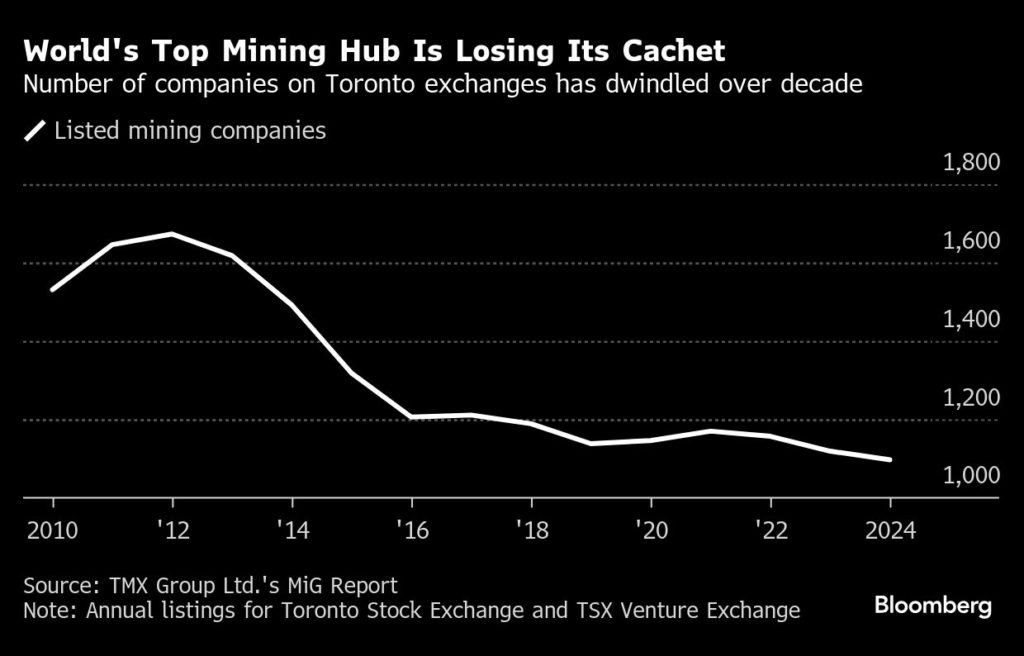
Toronto’s claim as the world’s top mining hub is under threat as exploration companies leave Canada and listings dwindle on the nation’s resource-heavy stock exchange.


Canada’s once-thriving mining industry is facing challenges to its decades-old model, in which explorers and developers woo investors with promises of mining breakthroughs and established producers feed on their success, swallowing them in lucrative takeovers. Industry consolidation has reduced head offices and eliminated listings, companies find it harder to attract investors, and government rules on foreign investment have become more restrictive.

“The industry that has fueled most of the great Canadian minerals discoveries over the past 50 years is but a skeleton of itself,” said mining financier Pierre Lassonde, who co-founded Franco-Nevada Corp. “We should be extremely concerned.”

Three small firms shut their Canadian headquarters in the past nine months to relocate to other countries: Lithium Argentina AG, Solaris Resources Inc. and Falcon Energy Materials Plc. At least two others — Cornish Metals Inc. and Almonty Industries Inc. — are embarking on similar plans. It’s not just small companies: Toronto-based Barrick Gold Corp., the world’s No. 2 miner, has mused about redomiciling to the US.

As executives, bankers and investors gather this week for the annual Prospectors and Developers Association of Canada conference in Toronto, the health of the industry is top of mind for attendees visiting this global mining epicenter.

The Toronto Stock Exchange and the TSX Venture Exchange represent 40% of the world’s public mining companies, providing home to 1,097 listings, exchange owner TMX Group Ltd. said in its latest listings guide. That’s down from 2010, when the exchanges had 1,531 mining companies to account for 56% of global listings for the industry. The decline comes as stock markets in London, Sydney and New York have been competing to attract mining companies.


Allied Gold Corp. is applying for a listing on the New York Stock Exchange, joining an industrywide migration to the world’s top bourse. The Toronto-based company would join a long list of gold miners that are on both Canadian and US exchanges.

New York’s status as a global hub for gold equities expanded in recent years after a series of major deals transformed the industry and created two North American titans — Newmont Corp. and Barrick — that trade in the US city. Barrick has long been headquartered in Toronto, though last month the Globe and Mail reported that CEO Mark Bristow said he was considering redomiciling to the US. Barrick didn’t respond to requests for comment.

Barrick weighs US relocation, says CEO Bristow

Toronto’s dwindling mining listings over the past decade can be partly chalked up to consolidation and shifting focus, according to TMX Group. About half of mining delistings were tied to mergers and acquisitions, and 27% were companies that converted to cannabis firms.

A dearth of initial public offerings in recent years hasn’t helped stem the decline. There were no significant mining IPOs in the past year. Back in 2010, 90 miners went public after collectively raising $1.26 billion.

The roots of the financing drought can be traced back to the commodities boom of the early 2010s, when miners borrowed heavily to fund ambitious exploration targets and mammoth takeovers. When markets crashed, it left balance sheets shredded and shareholders with dramatic losses.

“The junior miners have been in a nuclear winter ever since,” said David Garofalo, chief executive officer of Gold Royalty Corp. “The sector overspent on exploration, it overspent on expansions, and so there was a major hangover — massive amounts of debts on balance sheets, and significant cost escalation.”

Meanwhile, the growth of investor interest in exchange-traded funds has supplanted smaller, resource-focused funds that take positions in junior miners.

“We’ve seen a market evolution over the last 10 years — a rotation away from those smaller resource funds into larger funds that are more passive,” said Jeff Killeen, director of policy and programs at the Prospectors & Developers Association of Canada. “And that inherently brings up the threshold for minimum investment.”

That’s left smaller companies chasing financial support from other sources, including Chinese investors willing to make bets on their prospects. The reliance some small firms have on Chinese funding is a testament to a lack of alternatives, said Lassonde, who’s leading a campaign calling for Canadian pension fund managers to boost investment in domestic companies.

“As juniors, you get the money wherever you can,” he said. “And if Canada can’t be there for them, they leave.”

For those staying in Canada, it’s getting harder to find financial backers. Prime Minister Justin Trudeau’s government has been cracking down on foreign investment in mining since late 2022, after his government ordered three Chinese firms to divest from a trio of Canadian lithium explorers. The move came amid a broader push by Western countries to tackle China’s growing dominance in the critical minerals supply chain. The federal government further tightened mining investment rules last July, prompting some departures.

“I don’t think it’s going to start a stampede for the door, but it shows how these policies have been viewed as relatively aggressive and broad in scope,” said Braden Jebson, a mergers and acquisitions lawyer at Torys LLP, in an interview. “Companies with limited Canadian connections are assessing if those are worth the limitations of these investment policies.”

Among the exits, Solaris Resources moved to Ecuador after the copper company called off a financing deal with Zijin Mining Group that would have given the Chinese firm a 15% stake and a board seat.

Falcon Energy moved to Abu Dhabi after failing to secure a $12.7 million investment from China’s Carbon ONE New Energy Group Ltd. The move gave the company previously known as SRG Mining Inc. “expanded strategic options” while seeking to build a graphite mine in New Guinea, it said at the time.

And Lithium Argentina, which has partnered with China’s Ganfeng Lithium Group Co., relocated its Vancouver headquarters to Switzerland in January, calling it the “best jurisdiction from a strategic, commercial and legal perspective” and noting the move provided expanded financing flexibility.

“If the government keeps making it harder for companies to access global capital, it could impact Canada’s overall health in the medium to long term,” said Dean McPherson, TMX Group’s global mining head. “It means a loss of potential revenue and a loss of strength for Canada as a global destination for mining companies to be domiciled.”

(By Jacob Lorinc)