Thursday, March 06, 2025

America’s Human Rights Crisis: Prison Slavery

 March 6, 2025
Facebook

Inmate fire crew from South Fork Forest Camp.

 Photograph Source: Oregon Department of Forestry – CC BY 2.0

Why does American society remain so deeply implicated in the enslavement of Black Americans? Slavery was never abolished in the United States, and today it enjoys widespread support among both Republicans and Democrats. Almost 800,000 people are subject to the conditions of prison slavery, but this estimate is almost certainly low, as the lack of reliable data means that it “excludes people confined in local jails or detention centers, juvenile correctional facilities, and immigration detention facilities.” This system, supported and perpetuated by both halves of the ruling class, is an extension of the country’s history of racism and chattel slavery, a way to reinstitute slavery within a legal framework that loudly insists it has been abolished.

The new slavery is a shameful mark on our country’s pretenses to respect for human rights and the dignity of every human being, the latest chapter in a story of race-based hierarchy and domination. When slavery was formally abolished, a major loophole was left in place, one that would help race-based slavery survive to the present day. The Thirteenth Amendment, ratified in December 1865, inscribes the Emancipation Proclamation’s abolition of slavery into the country’s supreme source of law, but it does not contemplate a total end to slavery within the nation’s borders. Rather the amendment carves out a fateful exception to the prohibition of slavery:

Neither slavery nor involuntary servitude, except as a punishment for crime whereof the party shall have been duly convicted, shall exist within the United States, or any place subject to their jurisdiction [emphasis added].

Slavery is perfectly legal and permissible as long as the enslaved are deemed criminals, which allows prisons to completely dispense with any protections for prison workers. It goes without saying that this exception to the general rule against slavery creates a major incentive to criminalize the mere existence of Black Americans, to use the criminal justice system to create a permanent pool of free labor. If prison slavery is not, on its own, the primary cause of the mass incarceration crisis besieging Black bodies, then billions of dollars’ worth of free labor every year nonetheless remains a powerful force in the service of a racist, two-tier system of “justice.” And indeed this incentive problem has done its work within the American social system, propelling and insulating a system of mass incarceration that recalls and recreates the race-based slavery that so deeply defines the country’s history.

All available evidence shows that the longer one spends in prison, the more likely they are to end up back in the system after they’re back in society. But here is “the great irony of our American criminal justice system.” Today, we imprison huge numbers of people and the prison sentences have grown longer—“thus our system of mass incarceration all but assures high rates of recidivism.” The scale of mass incarceration in the United States is “unparalleled historically” and the shame of the country on the global stage as an egregious violation of accepted human rights. Today, some 2 million people are held in America’s prisons and jails (the majority, about 1.2 million of them, in the prisons), and they live in some of the harshest conditions of abuse and neglect. The data on the country’s sadistic penchant for mass incarceration are startling: in 1972, the rate of imprisonment was about 93 people per 100,000, but by 2009, it was seven times that number, and in the decade between 1985 and 1995, the prison population grew by an average of 8 percentage points every year. Black Americans are highly over-represented in the contemporary prison system; last spring, the Prison Policy Initiative found that “the national incarceration rate of Black people is six times the rate of white people” (emphasis in original). As we shall see, once they are locked up, Black people are far more likely to be subjected to inhumane treatment and even to conditions regarded as torture under international human rights law.

The criminalization of Black existence is a time-honored tradition in the United States. After the formal abolition of slavery, the policing, court, and prison systems have become the primary means through which Black Americans are deprived of their freedom and relegated to second-class political and economic status. Voting in California this past fall saw voters reject Proposition 6, which would have eliminated a provision in the state’s constitution that permits involuntary servitude as punishment of incarcerated people. It would also have prevented the state from continuing to discipline those in prisons who refuse to work. It seems that America’s voters, even in blue states, remain enthusiastic about slavery.

Those enslaved in America’s prisons “are paid very little (between 13 and 52 cents an hour on average)—if at all—and are excluded from the basic rights and protections afforded to most workers.” Many U.S. states offer no compensation at all for work undertaken while in prison. These are the people who do some of the most dangerous and unpleasant work there is, from fighting massive forest fires and processing poultry to disposing of biohazardous waste, often without appropriate safety equipment, having been stripped of even the most minimal legal protections.

Totally captive and vulnerable, American prisoners are subject to a form of super-exploitation—they can be forced to do anything for any or no pay. They have no right to refuse work. But every year they produce more than $11 billion in economic value through the goods they help to manufacture and the services they provide. Those who do refuse to work under these slavery conditions are subject to severe punishment, often torture, as in the case of solidary confinement. The United Nations has said that indefinite or prolonged solitary confinement of longer than 15 days is a form of torture and thus a violation of international law. More than 3 of every 4 prisoners report that refusals to work are met with additional punishments such as “solitary confinement, denial of opportunities to reduce their sentence, and loss of family visitation, or the inability to pay for basic life necessities like bath soap.”

In 2022, the ACLU and the University of Chicago Law School’s Global Human Rights Clinic released a report detailing the findings of one of the most comprehensive studies of the U.S. prison system to date. Their study gives us one of the clearest pictures we have of the massive human rights crisis ongoing in the country’s prisons, combining a thoroughgoing review of government data with surveys and interviews of over 100 prison workers (in California, Illinois, and Louisiana) and “65 interviews with key stakeholders including experts, formerly incarcerated individuals, representatives of advocacy organizations, academics, and leaders of reentry organizations across the country.” The investigation spanned a period from 2018 to 2022 and involved Freedom of Information Act (FOIA) requests in all 50 states. The study reveals that more than 4 out of 5 enslaved prison laborers work on “general prison maintenance, which subsidizes the cost of our bloated prison system,” meaning that the captive are forced to prop up their own enslavement.

Today, many states require all of their government bodies to purchase things like “furniture, cleaning supplies, printed materials, and uniforms” from the prison system. The ways in which the political class speaks of those enslaved in America’s prisons follows in an unbroken current of racist rhetorical strategies popular throughout the country’s history. The forced labor to which they are subjected is for their own good, instructing and edifying them, providing them a point of access to the superior white, Western mind and its culture. Though it is frequently advanced with the language of dignity and rehabilitation, this rationale is fatally undermined by the best evidence we have from inside the country’s prisons. Prison laborers report that the contemporary slavery to which they are subjected serves in fact to “degrade, dehumanize and further cripple incarcerated workers,” according to Global Human Rights Clinic Fellow and lecturer Mariana Olaizola Rosenblat.

Degradation and dehumanization are fundamental features of this system. In February 2024, both the DOJ Office of the Inspector General and the Government Accountability Office released comprehensive reports on the connected crises of widespread preventable death and continued, pervasive overreliance on solitary confinement. The Inspector General’s report looked at four types of preventable deaths: suicide, homicide, accident, and unknown factors. Over an 8-year period covered by the report, 344 people fell into one of these categories. The report shares its finding that “a combination of recurring policy violations and operational failures contributed to inmate suicides, which accounted for just over half of the 344 inmate deaths we reviewed.” Many of the policy violations and operational failures involved the subject of the GAO report, which was the follow-up on an earlier study that resulted in a number of recommendations. Last year’s report confirmed that the Bureau of Prisons had failed to deliver on “54 of the 87 recommendations from two prior studies on improving restrictive housing practices.” The GAO report also observed the startling racial disparities in the use of restrictive housing. Though they were 38 percent of the total Bureau of Prisons population, Black prisoners were 59 percent of the restrictive housing placements; whites were 58 percent of the total population and 35 percent of these placements. The connection between solitary confinement and the most severe mental health issues is clear in the available data, as more than half of the inmates who committed suicide were in solitary confinement at the time. It is hardly a coincidence that the brutality of this system is today at its worst for Black people in the South. A January 2025 report from the Economic Policy Institute points out that in the South “incarceration rates are the highest, prison wages are lowest, and forced labor arrangements bear the most striking resemblances to past forms of convict leasing and debt peonage.” The report shows that states in the American South “incarcerate people at the highest rates in the world.” If we treated U.S. states as countries for the purposes of the global ranking, 30 of them (plus the U.S. as a country) would find a place at the top of the global incarceration rate list. Only El Salvador tops several Southern states, and only El Salvador, Cuba, Rwanda, and Turkmenistan “rank higher or alongside these 30 states” in the world.

Proper maintenance of the prison labor pool has become a major public policy priority, and it is often the rationale for avoiding measurable improvements to prison conditions. As a 2023 note in the Harvard Law Review pointed out, then-Attorney General of California Kamala Harris “met heavy criticism” for advancing this kind of reasoning as a way to fight in court against the enforcement of the Supreme Court’s historic decision in Brown v. Plata. Against all of the available evidence, California argued that overcrowding was not in fact the source of the constitutional violation. As Justice Kennedy pointed out at oral argument, “Overcrowding is of course always the cause.” While prisoners were sitting in their own feces and dying in record numbers, Harris and her office were insistent that extreme levels of overcrowding in the country’s largest (by population and economy) and richest state should not be directly addressed. California prisoners were commiting suicide at a rate twice that of the national average.

The factual record in the case also clearly demonstrated that alternatives to prison were both more effective at reducing recidivism and less expensive. Harris and her office “filed motions that were condemned by judges and legal experts as obstructionist, bad-faith, and nonsensical, at one point even suggesting that the Supreme Court lacked the jurisdiction to order a reduction in California’s prison population.” For Kamala Harris, as for the rest of the political class, upholding the constitutional prohibition against cruel and unusual punishment was less important than maintaining a proper stock of slaves to fight fires and perform other brutal and dangerous jobs. The example of California here underscores just how easy it has been for the “progressive” quarters of the U.S. political establishment to forsake the clearest and most egregious constitutional and human rights violations with no real criticism from their supporters. Understanding these contemporary political realities requires that we confront American history.

Very few among white society in the South accepted either their defeat in the war or the passage of the Thirteenth Amendment as the final word on whether Black people were their rightful slaves. Without some system of labor super-exploitation, the entire social order and way of life would be upended. And although this was of course the real demand of abolition, that would not stand. Capital, dependent on free labor, had to find a way to replace the productive capacity of the freed slaves. A tidal wave of new legal and social strictures came in the wake of the Civil War and the Thirteenth Amendment, calculated to reinstate the second-class status of the Black population and concomitantly the exploitative economic system associated with it. New Black Codes imposed a comprehensive and draconian system of control and punishment for the crime of being Black on Southern soil. A form of racial capitalism continued from the slave economy.

Vagrancy laws were used to drive Southern Blacks both into low or unpaid work or else into the prisons, where slavery remained and remains perfectly legal. A complex new system of convict leasing arose in the place of traditional chattel slavery during reconstruction, with discipline and authority enforce brutally through “gang rapes, beatings and harassment of weaker cons,” through ranks of sub-bosses and “trusty shooters” who could be relied upon to eliminate noncompliant prisoners. W.E.B. Du Bois summarizes this state of affairs in his 1935 book Black Reconstruction: “The whole criminal system came to be used as a method of keeping Negroes at work and intimidating them. Consequently, there began to be a demand for jails and penitentiaries beyond the natural demand due to the rise of crime.” As Du Bois points out, prior to formal emancipation, Southern prisons held comparatively few people, the overwhelming majority of whom were white.

As the celebrated historian Gerald Horne put it, “They linked race and class. It’s not as if our ancestors were brought to these shores because people didn’t like us, because people despised us. They were brought to these shores for profit, to be an unpaid working class.” Contemporary elite discourse in the United States has largely attempted to understand slavery without reference to its class component, as an expression of racial hatred in an economic vacuum. Hubert Harrison wrote similarly that Black Americans “form a group that is more essentially proletarian than any other American group,” “brought here with the very definite understanding that they were to be ruthlessly exploited.”

It is impossible to understand lynching as an accepted cultural spectacle without confronting the question of economic class as the defining aspect of American racism. As even the lowest of the low in white society could partake in the sadistic killing of Black people, this dark ritual buttressed the rigid hierarchical structure of society at the time. Lynchings were the crystallized, concentrated expression of the brutal violence at the heart of the social order, which constructed whiteness in terms of the ability to dispose of Black bodies arbitrarily and at will. This expression of whiteness preempted the possibility of poor whites discovering their class solidarity with enslaved Blacks.

The perpetuation of slavery on American soil gives the lie to the ridiculous, ahistorical idea that the American economic system is something even somewhat like a “free market,” based on robust protection of individual liberty and rights. The capitalist system requires that there be masses of people who can be absorbed into a system of violent, programmatized deprivation. American capitalism continues to be predicated on domination and exploitation, the most severe forms of which still include forms of race-based slavery that, like their antecedents, are treated as legal and legitimate within our class hierarchy.

David S. D’Amato is an attorney, businessman, and independent researcher. He is a Policy Advisor to the Future of Freedom Foundation and a regular opinion contributor to The Hill. His writing has appeared in Forbes, Newsweek, Investor’s Business Daily, RealClearPolitics, The Washington Examiner, and many other publications, both popular and scholarly. His work has been cited by the ACLU and Human Rights Watch, among others.

How Mesopotamia’s Urban and Industrial Revolution Started Politics as We Know It Today


 March 6, 2025
Facebook

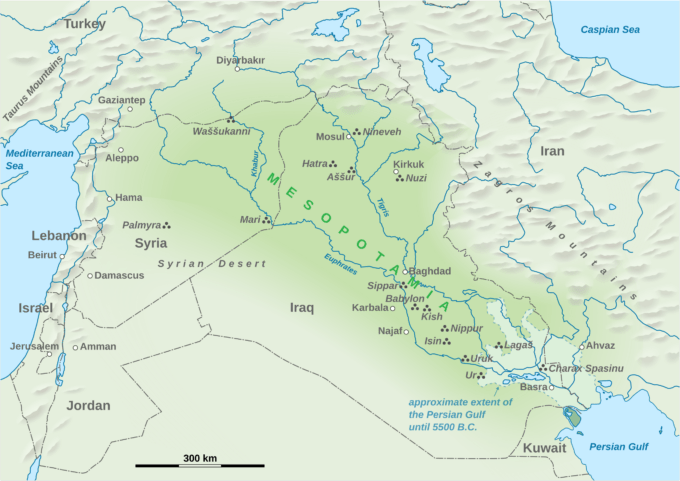
Image Source: Goran tek-en – CC BY-SA 4.0

Archaeologist and scholar Giorgio Buccellati’s book At the Origins of Politics describes how Mesopotamia’s urban revolution in the late fourth millennium BC shaped a new mentality. The segmentation and specialization of industrial production required written recordkeeping, standardization of weights and measures, and surveying and allocation of land planning. This inherent logic of handicraft production and its related organization of trade and market exchange, especially with the palace and temple institutions, led to new forms of social interaction, with the state and its laws and religion consolidating the new managerial hierarchies.

I met Buccellati in 1994 at the first of what would become a decade-long series of Harvard-based colloquia to compile an economic history of the Bronze Age Near Eastern origins of money and interest, land tenure, and its public obligations. Since these innovations were shaped largely by relations with the temples and palaces, our group started by focusing on just what it meant to be public or private.

It was fairly clear what “privatization” meant, but calling the palace or temples “public” was problematic. Royal price schedules for grain, silver, and other key commodities applied only to transactions with these large institutions, which were corporately distinct from the rest of the economy where prices were free to vary. Hammurabi’s laws focused on the relations between the palatial sector and the family-based economy on the land, which followed its own common law tradition for wergild-like personal offenses and other legal problems not involving the palace. How far beyond the palace did the state extend?

Buccellati’s paper focused on a broader philosophical idea of “public” as referring to the overall system of social and economic organization: “The dichotomy between public and private is coterminous with the origin of the city.”1 As he points out in At the Origins of Politics: “The increased size of the settlements created a critical mass, whereby face-to-face association no longer was possible among each member of the social group.” The relationship was political. “On the etymological level, the terms ‘urbanism’ and ‘politics’ are equivalent, given that they both derive from the word for ‘city’ in Latin and Greek respectively.” His term “state-city” emphasizes the overall political and administrative context.

He views industrialization as the economic dimension of the urban revolution that occurred in the late fourth millennium BC. The scale and social complexity of mining (or trading for metal) and metallurgy, beer-making, and weaving involved increasingly impersonal relationships as industrial organizations created products beyond the ability of individuals to make by themselves. The evolution was from direct personal contact to being part of a long, specialized chain.

Describing this takeoff as the first Axial Age, Buccellati explains how economic and social relations had been transformed over the 50,000-year evolution from small Paleolithic groups to urban industrial production, trade, and property relations. The technology and administration of production transformed the character of labor and what Buccellati calls para-perceptual thought. The moral principles of mutual aid, group solidarity, protection of the needy, and basic rights to means of self-support were retained from pre-urban practice but were administered on the state level.

“The state was never able to eliminate or even ignore the people… political ideology became a way for the leadership to justify itself in front of the base,” bolstered by religious attitudes to popularize an “Ideology of Control… the ideology of command, of leadership not necessarily based on coercive means.” Even in the face of “ever-increasing gaps in prestige and economic ability,” the rhetoric of kingship promoted “a sense of solidarity that transcends the limit of reciprocal face-to-face recognition.”

For the king, the aim was to make “submission not just tolerable but actually desirable.” That enabled Mesopotamian rule to be personal and indeed dynastic. “The king was not just the most powerful private individual; he embodied a distinct organism.” Kings were described as serving heaven, as reflected in Hammurapi’s stele depicting him presenting his laws to the god of justice, Shamash (or in some interpretations, receiving them from Shamash).

“The private model was thus superimposed from scratch on the public one,” merging the state and religion as every new king pointed to his ancestors as if this meant continuity of the law. The principle of kings being hereditary was accepted “without ever being formulated in theoretical terms.”

From Living in a State of Nature to a Stratified Managerial Order

Buccellati describes production as evolving from interpersonal and small scale to institutional and large scale. He describes how Paleolithic hunters and gatherers met their needs by using what they found in nature. They napped flints to make spear points and cutting tools, and wove plant fibers to make clothing, baskets, and other artifacts, but these materials were as they found them. And personal wealth took the form of shells or other objects found in nature. However, the increasing complexity of industrial organization transformed the character of producers in that they ceased to have face-to-face relations with the users of the objects they made. Products evolved increasingly beyond objects found in nature, and also beyond the ability of single individuals to make them as they required chains of transformation via metallurgy and manufacturing.

Although Buccellati does not focus on land tenure, money, and credit in this volume, his analytic schema of the transition from “nature” to man-made institutional structures suggests how land and credit relations evolved along similar lines, from informal and spontaneous to formal and standardized. If there was an archaic relationship with the land, it was for an Indigenous tribe to claim territory as belonging to itself for hunting and gathering and for ceremonial or religious functions.

Most exchange was domestic, taking the form of reciprocal gifts, often of the same food types simply as a means of binding groups together in the spirit of mutual aid. But artifacts were traded among Indigenous communities already in the Ice Age, from one tribal group to another, sometimes passed along over long distances.

Gathering places for such exchange existed already in the Ice Age, often at river crossings or natural meeting points. These would have been seasonal sites, with chieftains responsible for keeping the lunisolar calendar to time when to travel to such spots. If anything, such gathering places were the opposite of the later city that Buccellati describes. The idea was to prevent any one group from dominating others or restricting territorial control. The result was akin to the amphictyonic centers of classical antiquity, neutral zones set aside from political cities and rivalries, with careful equality of participants as a condition for amicable relations.

Deities often were trees, woods, or natural rock formations such as those that survived in Germanic religion into the first millennium of our era, and Japan’s Shinto religion. Lunar and solar deities were part of an astronomical cosmology reflecting the rhythms of nature. By the Bronze Age, gods took on the role of patrons of social authority and justice as urbanization transformed the natural environment.

Technology enabled the production of new shapes and “artifacts that have no analogy in nature.” Mud bricks became standardized to build walls. “Stone is no longer seen as an adaptation of pre-existing forms” but was shaped to produce new building structures. Fire played an important role in controlling the environment, not only to cook food but also to bake mud bricks and harden ceramics, and to refine metal from ores and make alloys such as bronze to produce tools, weapons, and other implements. The potter’s wheel and spindles for weaving were developed, and a managerial class came into being as manufacturing such products required increasingly complex organization, from producers and traders to armies.

The Neolithic agricultural revolution saw the standardization of land, allotted to community members in lots sufficient to support their families, with proportional obligations attached—obliging their holders to serve in the army and provide seasonal corvée labor on communal building projects.

These obligations were what defined land tenure rights. That created a strict relationship with the emerging urban centers that transformed “the village as it existed in prehistory… in the sense of autonomous villages that found an end in themselves. … Agricultural or manufactured production did not have as its end point the village, but rather and especially the urban markets.” Rural villages became part of the city, and local conflicts were settled by traveling urban judges.

Monetization of Exchange Between the Rural and Urban Centers

Money evolved as part of the valuation dimension of exchange. Anthropologists studying surviving Indigenous communities have found that artifacts typically are valued for their rarity or lineage of ownership. In archaic times such objects were often buried with their wearers, having become part of their personal identity. In time, they took a proto-monetary signification of esteem. But it was in southern Mesopotamia that money became formalized as a measure of valuation, simultaneously for domestic agrarian and industrial exchange—mainly for grain and wool—and for foreign trade. In both cases, the palace and temples played a key role. A standardized measure of value was needed for the economy’s own industrial and institutional functioning, not merely for personal decoration and status.

Foreign trade was necessary to obtain raw materials not found in the region’s river-deposited soil. Copper and tin were the key metals that were needed, the alloy of which gave its name to the Bronze Age (3500-1200 BC), but silver was adopted as the main measure of value for palace transactions and those of entrepreneurs, presumably because of its role in religious symbolism. Silver and other commodities were obtained by a mercantile class of entrepreneurs, whose major customers were the palace and temples, which also supplied most of the textiles being exported.

The largest categories of debts and fiscal obligations were inter-sectoral, owed by citizens on the land and mercantile entrepreneurs to the palace sector and its temples. The seasonal character of agriculture made credit necessary to bridge the gap between planting and harvesting, to be paid on the threshing floor when the crop was in. Grain served as the main domestic agrarian measure of value and the medium for paying agrarian debts.

The palace and temples integrated their economic accounts by setting the silver mina and shekel that denominated the value of commodities obtained in foreign trade (and consignments of what was exchanged for them) as equal to corresponding measures of grain, while dividing the relevant measures into 60ths to facilitate the allocation of food and raw materials based on the 30-day administrative month used by the large institutions.

The resulting monetary system of account-keeping for credit and fiscal collection was part of a broader economic context in which standardized weights and measures were used to quantify and calculate the various magnitudes of the inputs required by the large institutions for producing commodities in their workshops, along with the amounts of the charges, fees, and rents payable to the institutions and fiscal collectors.

The surplus grain rent paid to the large institutions supported dependent labor in the weaving and handicraft workshops. Commodities no longer were made by individual craftpersons known to the users, but by many, whose identities were institutional and hence collective and impersonal as far as the buyers or users were concerned. The workforce consisted largely of war widows and orphans, and also slaves captured from the mountains surrounding Mesopotamia. (A typical word for slave was “mountain girl.”)

The textiles woven by this labor were consigned to merchants to act as intermediaries between the large institutions or the growing class of private estate holders and foreign purchasers. Interest charges (usually equal to the original loan value for consignments of five years) served as a means for consigners and backers to obtain their share of the gain that merchants were expected to make on their trade.

Bucellati shows how the urban revolution’s “evolutionary process in motion” to transform society and with it “the very nature of human existence.” The development of writing, for instance, had a deep effect in transforming thought processes, much as the creation of languages had served to “externalize thought.” It enabled the communication of ideas to others without having to rely on memory.

Originally used by the eighth millennium BC to oversee and quantify trade and exchange transactions, it came to be used for accounting and credit, and increasingly to preserve, arrange and order thoughts, public announcements, treaties, poetry, and laws. The written word became a new medium for thought. Buccellati describes this “reification of thought” as part of the “removal from nature.” That was part of the evolving uniformity that spread from the production of commodities to shape the overall social order.

Debt Strains Lead Rulers to Protect Their Economies From Polarizing

Industry and entrepreneurial foreign trade concentrated control and wealth in the hands of managers and “big men.” Their economic gains caused a wealthy class to emerge, initially within the large institutions, with credit being used to pry labor away from palace control. Creditor claims on indebted cultivators accumulated, largely at the institutional level of landholders, merchant-creditors, and also ale-women, whose customers ran up tabs for their beer, to be settled at “payday” on the threshing floor when crops were harvested.

It was inevitable that strains would develop as a result of the rising role of credit and debt relations, especially in times of flooding or crop failure. As rent and other payment arrears and interest charges mounted up, private lending (often by royal or temple officials acting on their own account) became the major initial way to obtain the labor of debtors, by requiring them to work off their debts. That prevented cultivators from performing the stipulated corvée and military service that they owed in exchange for their land tenure rights.

The result was a threefold conflict: first, creditors against debtors; second, creditors against the palace over the appropriation of labor via debt bondage; and third, the assertion of creditor power against traditional communal moral ideas of equity and mutual aid. Archaic communities traditionally sought to minimize economic inequality, perceiving much personal wealth as being achieved by exploiting others, above all by indebting them. By the third millennium, indebted cultivators faced the threat of being disenfranchised, losing their personal freedom and self-support land through foreclosure.

As Buccellati observed in our 1994 colloquium royal protection of homesteaders, canceling the overgrowth of personal debt resulted “more from a concern for the public domain than as a phenomenon of privatization.” Rulers from the third millennium BC onward protected palace claims on the labor of their citizens from being disrupted by debt strains of the type to which subsequent Western civilization has succumbed. Sumerian rulers made sure that these strains would not be permanent because that would have been at the expense of the palace’s own requirements for corvée and military service from agrarian debtors.

Buccellati pertinently notes that three main considerations shaped Near Eastern public laws: “the concept of rules, the sense of justice, [and] the decisive moments in resolving conflict.” Hammurapi’s “code” was simply a collection of judgments, but his andurarum proclamations were enforced by the courts to cancel personal debts (but not mercantile debts), liberate bondservants (but not slaves), and redistribute self-support land (but not townhouses) that had been forfeited to creditors or sold under economic duress. These Clean Slates were the most basic royal administrative acts of Mesopotamian rulers from Sumerian times onward. They were the moral pillar of the state.

The Mesopotamian State Solved the Debt Problem That Western Civilization Has Not

Buccellati sees the transformation of production, economic control, and ways of perceiving and thinking about one’s place in society as progressing toward a geopolitical peak with the Assyrian Empire. What enabled and made this sustained achievement so successful were royal laws to regularly restore economic balance on a system-wide level. Clean Slate proclamations prevented a creditor oligarchy from emerging to rival palace claims on the labor and crop surpluses of citizens on the land. In this respect, the distinction between financial and industrial gain-seeking—and the socially destructive character of usury and creditor self-interest—was recognized already in the third millennium BC in the Hymn to Shamash, the Akkadian god of justice (lines 103-106):

What happens to the loan shark who invests his resources at the (highest) interest rate?
He will lose his purse just as he tries to get the most out of it.
But he who invests in the long term will convert one measure of silver into three.
He pleases Shamash and will enrich his life.2

Buccellati rightly states that “We are the heirs of Mesopotamian perception and political experience.” Modern civilization, however, has retrogressed from the Bronze Age Mesopotamian achievement of avoiding deepening financial and economic imbalance. He notes that modern society defines property as being alienable, but in the West securing property rights always has entailed the “right” to forfeit it to creditors or sell under duress—irreversibly. That has been the case ever since Near Eastern commercial and credit practices were brought to the Aegean and Mediterranean lands in the first millennium BC.

The West has adopted the basic economic practices invented in the fourth and third millennia BC, but not the economically protective measures that rulers took to annul the buildup of creditor claims to reverse the increase in debt bondage and loss of land by debtors. That decontextualization is what in my view makes the West “Western.”

Bronze Age Near Eastern practice was so different from the Western worldview that most modern historians resist recognizing and appreciating the relevance of the region’s takeoff in the fourth and third millennia BC. Indeed, today’s anti-state economic ideology denies that money and industrial enterprise could have been innovated by what Buccellati calls the state, that is, the palatial authority.

This ideology obscures a great question posed for the West: How is it that Near Eastern “divine kingship” achieved what Western democracy has failed to do: check the emergence of a creditor rent-seeking oligarchy, which in classical antiquity would strip the Greek, Italian, and other populations of their means of self-support that had formed the basis of economic liberty for the first 3,000 years of the Mesopotamian takeoff that this book so comprehensively describes.

Notes.

1. Buccellati, Giorgio, “The Role of Socio-Political Factors in the Emergence of ‘Public’ and ‘Private’ Domains in Early Mesopotamia,” in Hudson, Michael and Levine, Baruch (eds.), Privatization in the Ancient Near East and Classical Antiquity (Cambridge, Mass: Peabody Museum [Harvard], 1996):131.

2. In Giorgio Buccellati, “When on High the Heavens…”: Mesopotamian Religion and Spirituality with Reference to the Biblical World (London, 2024):194, citing Reiner, Erica, Your Thwarts in Pieces, Your Mooring Rope Cut: Poetry from Babylonia and Assyria (Ann Arbor, 1985): 68-84, and W.G. Lambert, W.G., Babylonian Wisdom Literature (Oxford, 1960): 122-138.

This text is adapted from Michael Hudson’s foreword to At the Origins of Politics by Giorgio Buccellati, and this excerpt was produced by Human Bridges.

Michael Hudson’s new book, The Destiny of Civilization, will be published by CounterPunch Books next month.