Thursday, March 06, 2025

Donald the Taxman Strikes at Midnight


 March 6, 2025
Facebook

Super-Cargo ship entering the Columbia River at Astoria. Photo: Jeffrey St. Clair.

The waiting is over, Donald Trump has hit America’s workers with the largest tax increase they have ever seen. Trump’s taxes on imports (tariffs) from Canada, Mexico, and China will cost people in the United States somewhere around $400 billion a year or around $3,000 a household.

This is far larger than any tax increase we’ve seen in the last half-century, and unlike tax increases put in place by Clinton and Obama, it will primarily hit low and middle-income households. Their tax increases primarily hit the top 1% percent, which is probably why they got so much more attention from the media.

It is not clear what our reality TV show president hopes to accomplish with these tax hikes. His stated reasons don’t make much sense. Canada, Mexico, and China are already cooperating with the U.S. on the issues he is complaining about. There is a minimal flow of fentanyl and undocumented immigrants from Canada.

Mexico sharply curtailed the flow of undocumented immigrants following a deal with Biden last summer. We can look to reduce the flow further, but that could probably be accomplished by negotiations rather than imposing a big tax on U.S. households.

China has also cooperated in reducing the flow of precursor substances for making fentanyl. Here also there were probably better prospects for further reductions through a path of negotiations rather than Donald Trump’s big tax increases.

Also, unlike Canada and Mexico, China’s economy is not that dependent on its trade with the U.S. China’s exports to the U.S. come to less than 2.5 percent of its GDP. If Donald Trump’s taxes reduce that by half, it could look to export to other countries (like Canada or Mexico) or increase domestic demand.

It seems implausible that Donald Trump’s stated reasons for his tax increase are his actual reasons. In principle, taxes on imports can be used as part of an industrial strategy to build up key industries, as was explicitly the case under Biden. His tariffs were intended to promote the advanced semi-conductor industry, as well as solar and wind energy and electric cars.

However, it would be difficult to find any evidence of an industrial strategy in Trump’s plans. He actually is deliberately sabotaging the industries Biden sought to foster.

There is an old saying in Washington that if you want to understand politicians, look at what they do, not what they say. On that front there is no ambiguity. Donald Trump is imposing big new taxes, and he is doing it in a way that does not require congressional approval.

He has made no secret of his intention to cut taxes on the wealthy. While Elon Musk and DOGE boys have put on a good show with the chain saw and breaking into various government agencies, the savings they can actually identify don’t amount to much.

If Trump can’t find major savings in the budget, then he will have to raise other taxes if he doesn’t want to hugely increase the deficit with his tax cuts for the Elon Musk crowd. This is the most obvious explanation for Trump hitting us with his huge import taxes. It sounds much better to pretend he’s cracking down on fentanyl and illegal immigration than to say he’s whacking ordinary workers with a big tax increase. But that is what Donald Trump is doing.

Trump’s Record Large Tax Increase

 March 5, 2025
Facebook

Image Source: kalhh – CC0

The taxes on imports (tariffs) that Donald Trump is putting in place next week, coupled with his earlier taxes, will rank among the largest tax increases ever imposed. They are far larger than the tax hikes put in place by Presidents Clinton and Obama, which sent Republicans into a frenzy.

The basic story, as it stands now, is that Trump will impose 25 percent taxes on imports from Canada and Mexico, while increasing his 10 percent tax on imports from China to 20 percent. Our imports from Canada and Mexico together came to roughly $1 trillion last year, while our imports from China were a bit over $400 billion.

This means that, before any resulting adjustments in trade patterns, the tax would come to $330 billion ($250 billion plus $80 billion). There are many issues with this simple calculation. Trump may allow some items, like Canadian oil, to be taxed at a lower rate. However, the figure also excludes Trump’s tax on steel and aluminum imports from other countries, which would make the tax considerably larger.

This means that we can use this $310 billon figure as a reasonable approximation of the size of Donald Trump’s tax increase. With GDP coming in at around $30 trillion in 2025, this tax hike would be equal to 1.0 percent of GDP.

By comparison, the tax hike that Bill Clinton pushed through in 1993, primarily on high-end taxpayers, came to 0.66 percent of GDP.  The tax increase that President Obama pushed through in 2010 to cover the projected cost of Obamacare came to 0.43 percent of GDP, less than half the size of Trump’s tax hikes, as shown below.

If Republicans are really opposed to tax increases, they should be outraged about the huge taxes that Donald Trump is imposing on imports. On the other hand, these import taxes will be paid disproportionately by low and middle-income families, since they both spend a larger share of their income than rich families, and what they do spend goes disproportionately to goods rather than services. (Low and middle-income households are less likely to spend money on fine dining and foreign vacations.)

If the Republicans’ main concern is taxes that rich people pay, then it is more understandable that they would not be upset about the huge taxes Donald Trump is imposing on imported goods. The rich will be less affected by these taxes and can be more than compensated by tax cuts that Trump has promised them.


The Elites Big Lie on Equality

March 4, 2025
Facebook

Photograph by Nathaniel St. Clair

(I saw that Jeff Bezos wants the Washington Post’s editorial page to run pieces touting the merits of free markets. Here’s my submission.)

There are not many issues on which there is largely bipartisan agreement, so the story we tell about the origin of economic inequality stands out. Both sides agree that the increase in inequality of income and wealth is driven by an unfettered market. The difference is that conservatives say it is wise to accept the outcomes of the ‘free market,’ while people on the left believe the government should ameliorate the effects of the market.

But both sides accept that inequality is caused by the market. This is nothing but a Big Lie that bolsters elite interests.

The reality is that there is no “the market” out there generating inequality. The government structures the market, which is infinitely malleable and can produce almost any outcome we want. Over the last half-century, we have increasingly structured markets in ways that generate more inequality — a reality that our economic policy debates largely refuse to acknowledge.

Let’s start with the clearest example: government-granted patent and copyright monopolies. These are government policies to promote innovation and creative work. Since we have seen lots of innovation over the last half-century, one could argue these are good policies. However, the economy actually had faster productivity growth (the economic measure of innovation) in the quarter century following World War II — a time when there was less inequality, and these monopolies were less important. Recent policies have made these monopolies longer and stronger.

In the case of prescription drugs, while patents monopolies provide incentives for innovation, they also provide incentives for drug companies to lie about the safety and effectiveness of their products. The opioid crisis is the most prominent example, where drug manufacturers deliberately misled the public about the addictiveness of a new generation of drugs so that doctors would more freely prescribe them. Instances where drug companies are less than honest about their products occur all the time.

But the merits or disadvantages of monopolies in specific circumstances obscures our understanding of the broader pattern: These are government policies with enormous implications for the distribution of income. We will spend over $650 billion this year (or $5,000 per household) for drugs and other pharmaceutical products that would likely sell for less than $100 billion in a free market without patent monopolies.

As far as the impact on inequality, we can take the example of Bill Gates. He would likely still be working for a living if the government did not threaten to arrest people who copied Microsoft software without paying him a licensing fee.

The shaping role of government goes far beyond enforcing these costly monopolies. While we have supposedly embarked on a quest for what is often labeled ‘free trade,’ little effort has been put into removing the obstacles that protect physicians and other highly paid professionals from international and domestic competition. As a result, our 1 million doctors earn an average of morethan $360,000 a year, twice as much as their counterparts in other wealthy countries.

Or consider the lesson of the 2008-9 financial crisis. If we really believed in the “neoliberal” free market ideals, why didn’t we let most of our major financial institutions go bankrupt? That would have given us a much smaller financial sector (which is already subject to other backstops from the government, like deposit insurance).

If having a smaller financial sector was a goal prioritized by a government promoting efficiency, we could institute a modest financial transaction tax. After all, we apply sales taxes to most items people buy. Given that sales taxes are the norm, we could argue the special exemption for financial transactions is a government intervention, and that taxing sales of stock in the same way as we tax sales of shoes and furniture would be a more “free market” policy. There would certainly be fewer great fortunes in the financial sector if its sales subject to a transactions tax.

It is impossible to overstate the extent to which policy choices by government structure the market. Corporations as legal entities (as opposed to partnerships, where the partners are personally liable for a company’s actions) are the creation of the government. Our corporate governance rules make it far easier for CEOs and other top executives to pull down incredibly high paychecks than is the case in Europe or East Asia. Again, this is simply how the government structures the market – we are not choosing between government intervention and a supposedly free market.

It is understandable that people who approve of the rise in inequality claim that it is just the natural workings of the market. After all, blaming the market sounds much better than saying we rigged the market to redistribute income upward. But those who are bothered by inequality – and want to do something about it – should resist this obviously false narrative.

This first appeared on Dean Baker’s Beat the Press blog.

Dean Baker is the senior economist at the Center for Economic and Policy Research in Washington, DC


Elon Musk’s Shock Troops, AI and Plutocracy


 March 6, 2025
Facebook
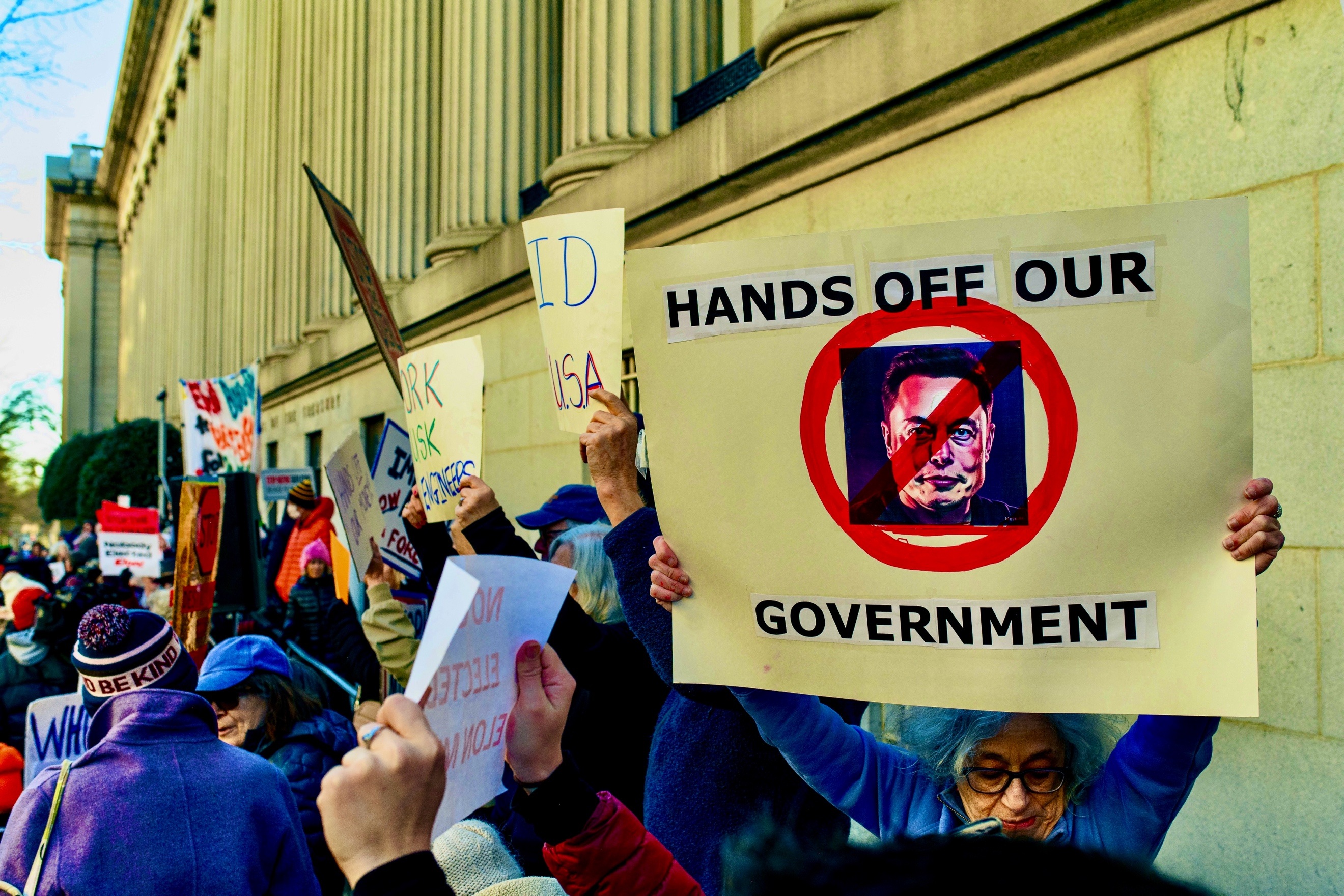
A group of people holding signs AI-generated content may be incorrect.

Poster from a protest against Elon Musk by MoveOn, February 4, 2025. Geoff Livingston, Flickr, Creative Commons.

I worked for 2 years on Capitol Hill and 25 years for the US Environmental Protection Agency. During those 27 years I met many bureaucrats and a few Congressmen and Senators. I even met the mother of President Jimmy Carter and the Secretary of Agriculture, Bob Bergland.

This experience opened my eyes to the advantages of government served by well-educated, competent, honest, and dedicated civil servants. The industry perpetually seeks decisions from government agencies on their products. Some of those products seeking and requiring approval by the US EPA, for example, pesticides, can be lethal to wildlife and humans alike. So, government experts evaluating such chemicals must possess advanced knowledge of chemistry, biology, and toxicology. Unfortunately, these experts work in an environment dominated largely by politics, not science. This means that the lobbyists, not scientists, have the ear of policy makers. I came across and lived through this chaos: scientists making their arguments for human and environmental health protection in technical memos; the opposition from lobbyists representing companies, manufacturers, and powerful legal firms saying their products would save the farmers and increase prosperity. The cacophony and lies of deregulation disturbed me.

I attended hundreds of meetings of EPA scientists, and industry lobbyists and senior EPA policy makers. At times, the public interest of safety prevailed, as in the early years of the EPA, 1970s. But many times, the political appointees made decisions that favored the industry. These decisions, under Democratic and Republican administrations alike, explain why conventional, not certified organic, food is probably laced by neurotoxins and carcinogens while ecosystems and wildlife have been threatened with diseases, destruction, and extinction. I protested such policies and, immediately, senior people branded me with a slander of not being a “team player” and, worse, tried firing me. In 1990, they took steps for firing me, but the administrator, William Reilly, rejected their efforts.

My life at EPA became precarious. I had to be very careful. Senior managers even planted a spy in my office who provoked me and, no doubt, reported me to his bosses. A colleague warned me about the spy. The consequences of this treatment were severe. I was promoted only once. So, speaking out was very hazardous and expensive. Despite the antagonism between me and a few senior officials over policy, I persevered. I simply could not accept fashionable deregulation, which compromised science and public and environmental health in order to profit agribusiness. This moral dilemma angered and astonished me. For some time, I refused to accept the US was falling from the rule of law and civilization. No civilized society would willfully feed its people tainted food and risk life on Earth.

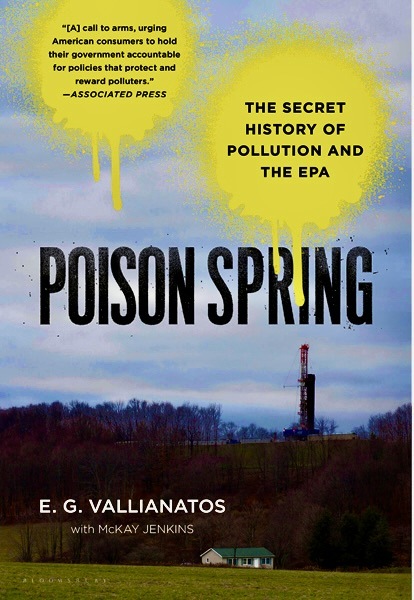
Some of my colleagues shared my frustrations. They suspected I was going to write about corruption at EPA. At appropriate times spanning more than 2 decades, they gave me their memos and other reports they authored. The information and knowledge in those documents and my personal experience helped me write my 2014 book, Poison Spring: The Secret History of Pollution and the EPA.

A cover of a book AI-generated content may be incorrect.

Public good

I never gave in to the corrupt temptations for career advancement. Call it stubbornness or moral commitments to science-based decisions for the protection of human and environmental health. I came out of Greek culture centered around the propositions of “the beautiful and the good” and “know yourself” that necessitate the virtues of the supremacy of truth and the public good.

I still have the best memories of the civil servants I worked with. They were my friends. They were certainly more diplomatic than I was, but they did serve the public good with their scientific reports. Now, in 2025, the leadership of America is outdoing the corrupt environmental policies of the Ronald Reagan administration of the 1980s. President Donald Trump and his billionaire co-ruler, Elon Musk, are unravelling the federal government. Their purpose is not efficiency. It is political and ecological disruption. Musk is the “wrecking ball” of “crucial institutions.” He picked up on the fashionable idea of billionaires working long and hard for their ill-gotten wealth.

David Brooks of the New York Times hit the nail on the head, saying: “The “DOGE boys” [of Elon Musk’s Department of Government Efficiency], “are mostly incompetent, so the fiscal effect will probably be tiny, but they are unleashing a reign of terror and intimidation that will affect the psychology of all federal workers.”

True. DOGE has been demoralizing and firing thousands of civil servants. However, twenty-one government workers with expertise in data and digital services resigned to protest the vandalism of the billionaire Musk. They said they came to government from holding senior technology positions in private companies. Their goal and mission was to serve all Americans no matter their political affiliation. But seeing the ruthlessness of Musk and his young assistants, they decided that resignation was better than disavowing their oath to serve America. They explained why they left the government in their letter of resignation dated February 25, 2025:

“We swore to serve the American people and uphold our oath to the Constitution across presidential administrations. However, it has become clear that we can no longer honor those commitments… [The] removal of highly skilled civil servants… endangers millions of Americans who rely on these services every day. The sudden loss of their technology expertise makes critical systems and Americans’ data less safe… [DOGE’s] actions are not compatible with the mission we joined the United States Digital Service to carry out: to deliver better services to the American people through technology and design. We will not use our skills as technologists to compromise core government systems, jeopardize Americans’ sensitive data, or dismantle critical public services. We will not lend our expertise to carry out or legitimize DOGE’s actions.”

I understand these courageous technologists. I, too, lived through a reign of terror and intimidation, so I fully sympathize with them. And while in my case, “whistleblowers” were treated harshly, in the Trump / Musk administration most government workers are treated like whistleblowers for reasons unrelated to informing the public about corruption in the government and industry.

Erik Baker, historian of science at Harvard, gives us useful insights for trying to explain the bizarre behavior of Musk. He says, “Mr. Musk’s decades in the highest echelons of the tech industry, surrounded by other executives who justified their lordship over their private empires by trumpeting their inexhaustible work ethic, have taught him that if you work harder than everyone else, you should be rewarded with unquestioned rule over your dominion. Now he is seeking to extend this logic into our government, transforming it, like one of his companies, into another personal fief.”

Artificial Intelligence fuels the fiefdom of the tech billionaires

With large companies the world over firing workers and replacing them with machines, Musk is bringing this deskilling and debilitating force for the running of the federal government. Musk is an expert in dumping workers for machines. He culled the workers of the companies he purchased. Erik Baker says that after Musk took over Twitter, “he fired half its employees and informed those who remained that he would be imposing an “extremely hard-core” management style; many of them took his offer to resign in exchange for three months of severance. Now Mr. Musk is applying the same playbook to the federal government, seeking to replace career officials with DOGE shock troops and machine learning algorithms.”

Climate chaos

Firing workers increases the profits of billionaires like Musk. It’s the same thing with deregulation. The downsides, ecocide and diseases like cancer, take time to manifest themselves. Climate chaos, however, is different. Hurricanes, fires, and flooding hit hard. Yet for a long time, we failed to connect nature’s anthropogenic fury to human actions. Petroleum companies, which knew since the 1970s of the consequences of ceaseless burning of their product, polluted the atmosphere and muddled waters by funding / bribing academics to keep raising doubts about the causes of climate change.

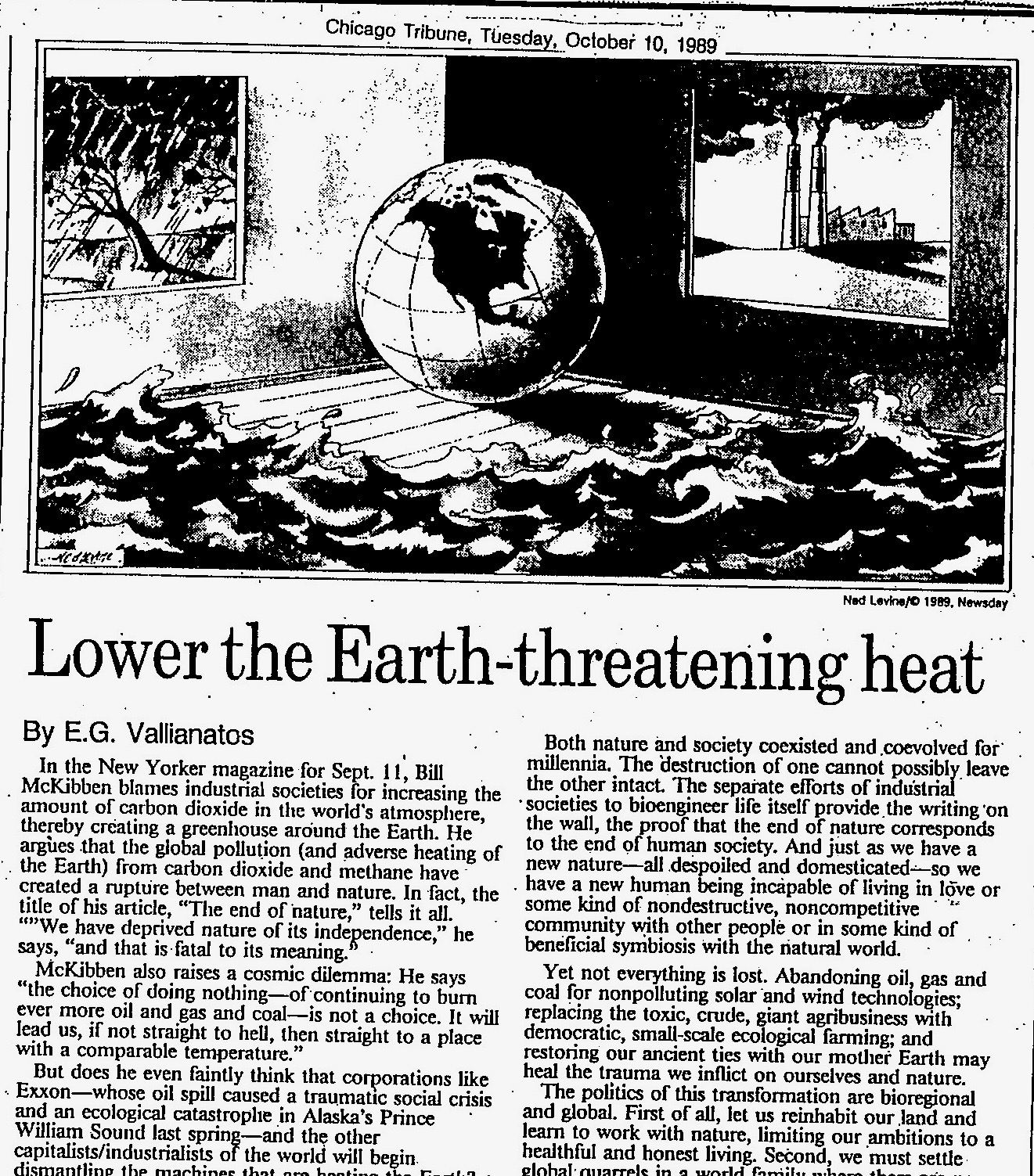
Indeed, the 1990 effort at the US EPA to dismiss me from the civil service was directly associated to an article I wrote for the Chicago Tribune (Oct. 10, 1989), in which I pointed my finger at the petroleum companies for causing climate chaos.

A newspaper article about the earth-threatening heat Description automatically generated

What I did not know in 1989 was that the US was warming 68 percent faster than any other country on Earth. The bad news came out in November 14, 2023 by the US Fifth National Climate Assessment.

I wonder how is it possible after a decade of climate fires, heat waves on land and sea, ice melting, permafrost thawing, floods, droughts, and destruction of property costing hundreds of billions, how politicians like Trump and Elon Musk, as well as most Republican politicians, dare ignore such calamities and existential dangers? The Trump administration even withdrew from the 2015 Paris Climate Accord. It’s mind-boggling. Are they extraterrestrials? Don’t they read? Do they hate science? And, finally, don’t they care about their children and grandchildren? Is America dropping to another dark age?

Freezing the government

As I already said, I remember my days at the US Environmental Protection Agency, starting with the immoral effort to freeze the federal government by the Ronald Reagan administration. Vice President George Walker Bush used to go to government agencies demanding that they rethink any project they funded that cost more than $ 100,000. Deregulation was the most fashionable policy of the Republicans. Reagan even dismantled the solar panels President Jimmy Carter had installed on the roof of the White House. His EPA administrator, Anne Gorsuch, fired the agency’s lawyers responsible for enforcing the laws.

The Republican and Democratic politicians were blind to the industry corruption my EPA colleague, Adrian Gross, had revealed. Gross, a capable and dedicated pathologist, brought to light decades-long criminal chemical industry practices of making data out of thin air. That is, Gross caught a giant laboratory, International Bio-test Laboratory (IBT) near Chicago, giving clean reports to hazardous pesticides and other chemicals it tested for companies, states, and even governments. In other words, farmers used those dangerous carcinogenic and neurotoxic chemicals “tested” by IBT and other corrupt laboratories. Those dangerous chemicals had been approved by the EPA because of the fake reports of IBT and the climate of corruption. But the findings of Gross made some difference, and, in 1983, the US EPA and the Justice Department put IBT out of business. Yet, the Republicans and not a few Democrats continue to push their deregulation year after year. By the early twenty-first century, the US EPA was a skeleton of its early 1970s self. Deregulation became policy. Companies still “test” their pesticides and other chemicals. EPA was forced to shut down its own laboratories and do away with its scientists who inspected laboratories. One of those laboratories that closed tested the efficacy of antibiotics. The EPA even deleted public access to hundreds of studies it had funded. Corruption became the law of the land. For example, agribusiness lobbyists are convincing Iowa legislators to give immunity from prosecution to pesticide merchants. The proposed legislation would not allow Iowans suing pesticide companies for failing to warn their products might cause cancer.

What Trump and Musk are doing are accelerating the toxic policies of the Reagan administration. With diminished, dispirited, and frightened federal workers, the industries will do exactly what the cigarette companies did for more than a century. Their advertisements will continue to repeat the lie that American food is the safest in the planet. Meanwhile, our “safe” farmers are sterilizing the land, almost wiping out biodiversity, and even threatening honeybees with extinction. Their animal farms are dormant factories of disease, potential pandemics, and contaminated meat.

Apparently, these dire threats are beyond Trump. His speech to Congress, March 3, 2025, was more of the same rhetoric of deceit and hubris. Frank Bruni of the New York Times, said that “Everything in Trump’s world is extreme, absolute, unnuanced, superlative. Worst ever. Best ever. “Like nothing that has ever been seen before.” Over and over. It’s juvenile. It’s narcissistic.” And yet, Trump and his billionaire advisor, Musk, keep talking about MAGA. But do they understand the word greatness?

Alexander the Great earned that honor because of his genius in strategic thinking and unparalleled courage and virtues. He united the ecumene. He built 70 poleis (cities) all over Asia. Those cities had Greek institutions of civilization: schools, libraries, the rule of law, theaters, athletic games and festivals.

Sliding back to another dark age?

Trump and Musk, however, are not building civilization. They are wrecking it. They know that deregulation increases risk, corruption, disease, and violence. It enables factory owners to profit at the expense of public and environmental health. Seeing Musk wielding a chain saw like a weapon unmasked him and his collaborator and enabler, Trump. These co-emperors intend to discard the already weak democratic institutions of America, thus converting the country officially to a plutocracy. This means setting aside the rule of law and returning to the lawless rule of weapons and wealth.

Evaggelos Vallianatos, Ph.D., studied history and biology at the University of Illinois; earned his Ph.D. in Greek and European history at the University of Wisconsin; did postdoctoral studies in the history of science at Harvard. He worked on Capitol Hill and the US EPA; taught at several universities and authored several books, including The Antikythera Mechanism: The Story Behind the Genius of the Greek Computer and its Demise. He is the author of Earth on Fire: Brewing Plagues and Climate Chaos in Our Backyards, forthcoming by World Scientific, Spring 2025.