Saturday, March 08, 2025

The Hidden Face of Female Poverty in the UK


MARCH 8, 2025

On International Women’s Day, Aisha Maniar looks at how poverty is holding back progress towards gender equality.

Poverty poses a major obstacle and block to progressing women’s rights and improving the lives of women and, subsequently, much of the rest of society all over the world. Women make up the majority of people living in poverty worldwide including the United Kingdom, the sixth largest economy in the world. International Women’s Day offers a timely opportunity to shed light on the often overlooked gendered nature of poverty in Britain today.

One in five, or 14.3 million people, in Britain currently live in poverty, defined by the Joseph Rowntree Foundation as individuals whose “resources are well below what is enough to meet your minimum needs, including taking part in society” (2025 UK Poverty report). For women, the figure is higher; they are likely to have a persistently low income, acquire debt and be more entrenched in poverty than men. Women from ethnic minorities and with disabilities experience poverty at higher rates, and there is also a north/south divide in the level and impact of female poverty.

Higher female poverty in the UK can be broadly attributed to the same factors as in many other countries in the world: lower pay, the gender pay gap, and the far higher burden of unpaid care work placed on women. Women contribute billions of pounds in unpaid care work annually to the economy and absorb the burden of many of the cuts to public and support services for children, the elderly and disabled.

With women holding almost two-thirds of low-paid, part-time and insecure jobs, opportunities to save and work themselves out of poverty and debt diminish. It also means that many women continue to experience poverty into retirement. In the past decade, the “the proportion of female pensioners in the UK living in poverty has increased by six percentage points”, with over 1.25 million female pensioners “living below the breadline.” 

The impact is not just on earnings and savings but on all aspects of life. The stigma and shame attached to poverty mean that women very often suffer invisibly. Food poverty means many mothers reduce their food intake to ensure their children are properly fed. A 2023 Action Aid report found that period poverty increased by almost 20% in the year before.

One of the more visible aspects of widespread poverty in the UK today is homelessness. Women, for their own safety, are once again largely invisible. Government statistics report that women make up around 15% of rough sleepers nationwide. The first national women’s rough sleeping census held by Solace Women’s Aid in 2023 found that “In the 41 local areas that took part in the Census, 815 women were identified compared to just 189 through the Government’s Rough Sleeping Census.”

Off the streets, women make up over 60% of homeless adults in temporary accommodation, with this number having doubled in the past decade. Poor, unsuitable and precarious housing options for women add to the silent suffering, and often prevent women, with or without children, leaving abusive relationships and domestic violence.

A further invisible impact is on women’s health. Austerity measures have seen life expectancy fall over the past decade. The disparity in the life expectancy of the average woman and women living in poverty is almost one decade. For women experiencing sleeping rough, a life expectancy of 43 is almost half that of the average woman.

These are not just statistics but the everyday precarious living conditions and inequality experienced by millions of women across the UK. Poverty is not the result of the poor lifestyle choices of individuals but of deliberate punitive choices made by politicians.

There is much to be done to reverse growing gender inequality and the regression of women’s rights due to poverty. The current Labour government has failed thus far to take positive action, such as scrapping the two-child limit for universal credit support and addressing the detriment to millions of women affected by the rise in pension age.

Just some of the many steps that need to be taken immediately to address poverty and its impact on women’s rights in the UK include rethinking cuts to council budgets that force the burden of social care onto women as unpaid care work, increasing funding for women’s organisations who understand the particular challenges all kinds of women face, and public investment in childcare, making it affordable to allow women to access their rights and participate more fully and equally in society.

Aisha Maniar is a human rights activist.

Image: https://www.goodfon.com/holidays/wallpaper-zhenskiy-den-pozdravlyayu-8.html Licence: Attribution-NonCommercial 4.0 International CC BY-NC 4.0 Deed


End gender pension and pay gap so millions won’t retire as poor as their grandmothers

MARCH 7, 2025

The National Pensioners Convention is calling for an end to the iniquitous gender pension gap which leaves many women pensioners in poverty.

Ahead of International Women’s Day, the NPC is also calling for a bridging of the gender pay gap to allow today’s female workers to earn enough to afford higher pension contributions and avoid falling into the poverty trap like their grandmothers.

More than one in five women pensioners in the UK are estimated to live in poverty compared to one in four men, and the figure is higher among single women.  Those, particularly older women who live alone, make up the biggest proportion of the two million pensioners currently living in poverty in the UK. 

Research by the Pension Policy Institute (PPI) for their 2024 Gender Pensions Gap Report found women on average retire with pension savings of £69,000, compared to £205,000 for men. The report concluded: “In order to close this gap, a girl would need to start pension saving at just three years old.”

Jan Shortt, NPC General Secretary, said: “The theme of International Women’s Day on 8th March is a call to ‘Accelerate Action’ on gender equality. That’s why the NPC will be writing to the Ministers for Women and Equalities and the Department for Work and Pensions – Bridget Phillipson MP and Liz Kendall MP – urging them to end the iniquitous pensions gap that means millions of particularly older and vulnerable women are living in poverty.

“Most people do not understand our two-tier state pension system which means more than two thirds of our 12.5 million pensioners – those who retired before 2016 – receive much lower pensions than the new state pension figures often quoted in the press.”

The gap is largely due to older women in their late 70s, 80s and 90s who retired before 2016 having much lower state pensions, and occupational pensions because they took time out of work for family responsibilities.  And they might not have been able to pay enough National Insurance to ensure that they even receive the basic/old rate.

Jan Shortt added: “The NPC is campaigning for everyone who retires – no matter their age, gender or contributions – to receive the same basic state pension, set at 70% of the living wage and above the official poverty level.

“No one should be penalised because of their circumstances from having a decent quality of life in retirement – and this starts with a decent income.  But striving to bridge the gender pay gap to allow more women to afford higher personal pension contributions is equally important, and something any decent society should be committee to.”

 The “NPC is also advocating for the WASPI women to receive the compensation the Ombudsman recommended and not be ignored by the government. Rightly, successive governments wanted to equalise the retirement age for men and women – but the way it was done for those ‘50s born WASPI women is grossly unfair.”

Image: https://www.flickr.com/photos/gordonmcmullan/5680454074/| London Mayday and Rally 2011 | Gordon McMullan | Flickr Attribution-NonCommercial-ShareAlike 2.0 Generic CC BY-NC-SA 2.0 Deed


Celebrate International Working Women’s Day by Joining the Struggle Against Imperialism!


International Women’s Day (IWD) was founded by working-class women who staunchly opposed war and fought for labor rights, peace, and equality. Rooted in the anti-war and socialist movements of the early 20th century, IWD emerged as a day to challenge oppression and demand justice. However, IWD has been co-opted by intersectional imperialists—women of diverse cultural backgrounds who unite under the banner of the U.S. empire, perpetuating violence and destabilization across the globe. This betrayal of its radical origins demands a reckoning.

The U.S. empire, draped in the language of feminism and empowerment, has weaponized IWD to justify its gangsterism. In Gaza, U.S.-backed Israeli forces have killed and displaced thousands of women and children, destroying homes, hospitals, and schools under the guise of “security.” In Sudan, U.S.-aligned forces and foreign interventions have fueled a devastating civil war, displacing millions and leaving women vulnerable to sexual violence and starvation. In Haiti, U.S. imperialism has propped up corrupt regimes and destabilized the nation, leaving women to bear the brunt of poverty, violence, and systemic collapse. Meanwhile, in the U.S., Black women in cities like Chicago and rural areas like the Mississippi Delta face systemic neglect, police violence, and economic exploitation. These are not isolated incidents but the direct consequences of Western imperialism, which prioritizes profit and power over human lives.

The celebration of IWD by those complicit in these atrocities is a grotesque distortion of its founding principles. True solidarity with women worldwide means opposing the systems that exploit and destroy their lives. It means standing against the U.S. empire’s wars, sanctions, and interventions that disproportionately harm women in the Global South. It means reclaiming IWD as a day of resistance against imperialism, capitalism, and patriarchy.

For the Black Alliance for Peace, the task is reclaiming International Women’s Day as a day of struggle, not of celebration—a day to dismantle Western imperialism and fight for a world where all women can live in freedom and dignity.

No Compromise.

No Retreat!


IWD

8 March: Solidarity with women in Gaza, the DR of the Congo, and of the world at large


Saturday 8 March 2025, by CADTM International

On this international day of struggle for the rights of women, the CADTM reasserts its commitment to feminist movements that fight systemic oppressions everywhere in the world: patriarchal capitalism, neocolonial exploitation, and militarized violence.


Austerity measures imposed in the name of repayment of illegitimate debt are a heavier burden on women,* who are over-represented in exploitative and invisibilized sectors. Privatization of public services, destruction of health systems, dismantling of social protections: the consequences are tragic for women (as well as for the most vulnerable groups), who have to make up for the State’s shortcomings. In all countries, whether in the South or in the North, the logic of debt and profit relies on exploiting free or underpaid labour by women.

Women in the South pay the highest price!

In a global context earmarked by the deepening of social, economic and ecological crises, women of the South pay the highest price for their governments’ illegitimate indebtedness. Debt feeds the neoliberal policies imposed by international financial institutions (IMF, World Bank) that take public services apart and privatize public goods.

Whether in Africa, South America or Asia, women attempt, through their invisible and unpaid labour, to make up for the destruction of health systems, of education, access to water and to land. Far from being isolated instances, those acts of violence are actually part of a global system of domination in which patriarchy, racism, capitalism and colonialism feed on each other.

It is worth remembering that in Belgium alone the Ligue des travailleuses domestiques (League of female Domestic Workers) estimates that some 70 to 80,000 undocumented women work in the domestic sector. Those thousands of women are deprived of their rights and exploited yet respond to a blatant deficit of services dedicated to children and dependent people, a sector that has been neglected by successive Belgian governments at every level. The transfer of this essential care work to undocumented, invisibilized and badly paid workers is one of the symptoms of our liberal societies, which exploit the most vulnerable people and devalue the work of women to the benefit of the rich.
Gaza: women face war and destruction

In Gaza, Palestinian women are subjected to an unprecedented level of violence while the world merely looks on: their children are murdered, their land is grabbed through a colonial occupation, their houses and schools and hospitals are relentlessly bombed, they are forced into displacement and deprived of all basic care and facilities. They have to survive practically without access to water, food or medicine.

The CADTM denounces an ongoing genocide and Zionist colonial violence, supported by Western powers. The CADTM affirms its unconditional solidarity with Palestinian women and the Palestinian people as they stand up to a colonial war. According to available data women and children represent a significant part of the victims in the Gaza Strip. The UN indicated that from October 2023 to October 2024 women and children accounted for “almost 70%” of deaths in Gaza. In addition, Oxfam reported that more women and children were killed by the Israeli army in one year of war in Gaza than in any other equivalent period in the last twenty years.

DRC: the exploitation of resources goes hand in hand with extreme violence against women

In the Democratic Republic of the Congo, women’s bodies are on the front line of violence. In mining areas, where the exploitation of cobalt, coltan and other minerals feeds global supply chains, they suffer sexual violence, mutilation and forced displacement. The CADTM points out that the predatory extraction of Congolese resources is intimately linked to the debt system, which is used as a tool of domination that subjects the country to structural dependence.

In the east of the country, notably in Kivu, violence perpetrated by armed groups such as M23, supported by regional and international interests, are part and parcel of a neocolonial logic of exploiting underground resources (among other interdependent factors). Sexual violence used as an instrument to control and subject women, as also forced displacements, cannot be reduced to mere manifestations of individual violence or to direct consequences of armed conflicts. They are part of a global system in which the extractivist economic logic and power relationships play a major role in perpetuating violence against women.

The CADTM denounces the complicity of international creditors and multinationals in perpetuating this violence. The illegitimate indebtedness of the DRC for decades has served only to deprive the population of infrastructure, and women in particular of their fundamental rights of access to health, education and security.

Let us fight for a world that is free from the burden of debt, from patriarchy and colonialism

Faced with such systemic violence, the 8th of March is for us an international day of struggle for a radical transformation of our societies, aiming to build a collective resistance against the prevailing model. We consider that women’s struggles cannot be dissociated from struggles against capitalism, against illegitimate debt and for a social, environmental and feminist justice.

The CADTM calls upon international solidarity with women in Palestine, the DRC and of all areas in the world where patriarchal, racist and economic violence has to be resisted. We reassert that the cancellation of illegitimate debt, the end of austerity measures, economic sovereignty and self-determination of the people are necessary conditions for a feminist, just and liberated future, in the North and in the South.

On the 8th of March, let us strike and demonstrate in the streets for a world without debt, without exploitation and without war!

*When we refer to women, we mean anyone who identifies as such..

Attached documents8-march-solidarity-with-women-in-gaza-the-dr-of-the-congo_a8890.pdf (PDF - 908.4 KiB)
Extraction PDF [->article8890]


CADTM International


International Viewpoint is published under the responsibility of the Bureau of the Fourth International. Signed articles do not necessarily reflect editorial policy. Articles can be reprinted with acknowledgement, and a live link if possible.
DEI,IWD,WOMENS HISTORY MONTH

The female explorers who braved the wilderness but were overlooked by the history books


Nagel Photography
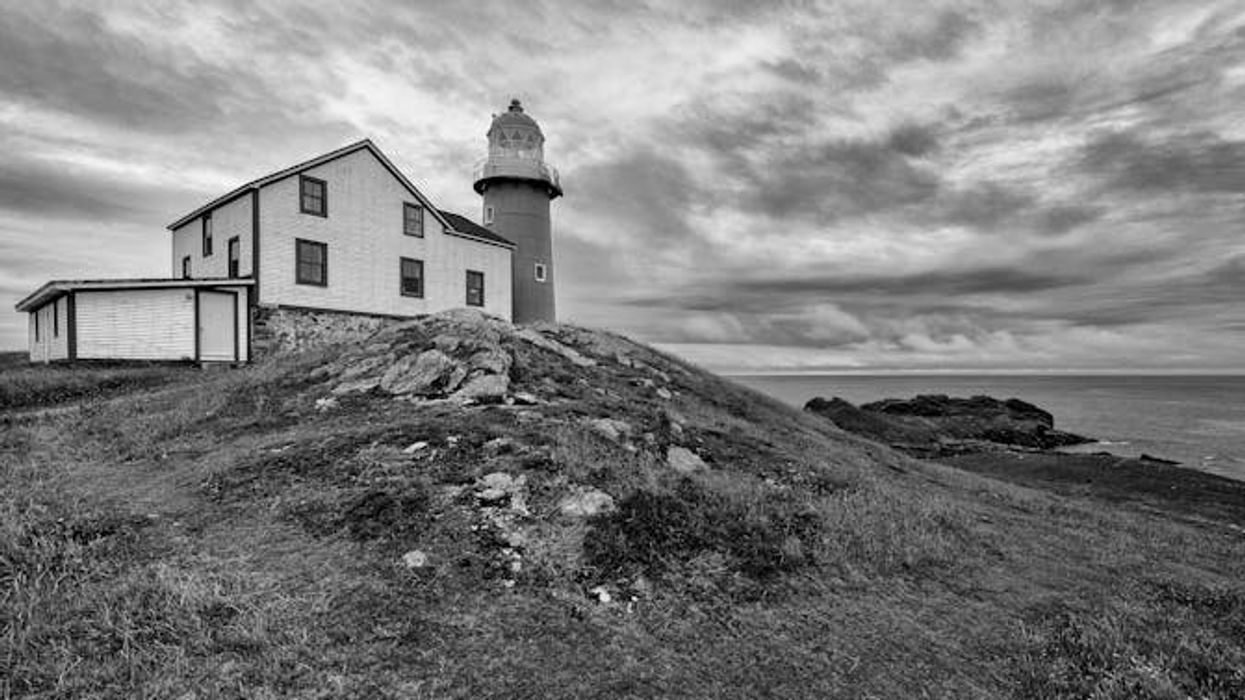
Ferryland lighthouse near Labrador in the Canadian Arctic, an area mapped by Mina Hubbard in 1905.

The ConversationMarch 04, 2025


In the summer of 1905, a young Canadian widow, Mina Hubbard, set out on an expedition to map the northeastern corner of Labrador, from Lake Melville up to Ungava Bay, an inlet of the Arctic Ocean. It was an unusual challenge for a former nurse who had left school at 16.

Her husband, Leonidas Hubbard, had died in this same harsh environment two years earlier. Mina, 35, intended to complete his work.

Although she faced physical dangers on the 600-mile journey – starvation, bears, freezing rivers and rapids – her greatest antagonists were the reporters and editors of the male-dominated outdoors press of early 20th-century north America.

The popular Outing magazine, for whom Leonidas Hubbard had written, was the most excoriating. Its editor, Caspar Whitney, thundered in an editorial that “the widow” should not be in the wilderness, let alone speak about it.

The wild was no place for a white woman, especially one accompanied by First Nation (Native American) guides. This was not long after she had given an interview to another paper.   


Mina Hubbard in northern Labrador.

Other newspapers described her as a grief-stricken hysteric. This was the only explanation they could find for her decision to go on such a long and arduous journey. When she was 300 miles into her expedition, having found the source of the Naskaupi River, the New York Times reported on its front page that she had given up, beaten back by hardship and privations.    

New York Times.CC BY-NC-ND

Instead the paper claimed that a man, an explorer called Dillon Wallace who was also in northern Labrador, was “pushing forward beyond any white man’s previous track”. In fact, Hubbard had neither given up, nor had Wallace caught up with her. She would reach Ungava Bay several weeks before his party. But it fitted the dominant narrative of the time: that the wilderness was no place for a woman.

I explore the idea of what the wild is, and of its being a gendered space, in my new book, Wildly Different: How Five Women Reclaimed Nature in a Man’s World. From ancient myths such as Ulysses or Gilgamesh, to the present where research shows that women face harassment and othering even on remote Antarctic bases, the wild has for centuries been a site of heroic male adventuring and rugged exploration.

Studies show that even in modern hunting societies, while women tend forest plots and hunt small game near the village or camp, it is the men who go away, often for many days, to hunt for big game and status.

Myths from across the world have told listeners and readers that women who stray beyond the city wall, village paling or encampment are either supernatural, monsters, or have been banished for perceived sins against society.

In the Greek myth of Polyphonte, the young girl who refuses to follow the correct gender role to become a wife and mother, and wants instead to hunt in the forest, is treated to a terrible punishment from the gods. She is tricked into falling in love with a bear-turned-man and gives birth to two bestial children. She and her sons are then transformed into flesh-eating birds.

In a more recent echo of the media coverage of Mina Hubbard’s journey, in Kenya in the 1980s and 1990s, the environmental activist Wangari Maathai was attacked and belittled. She even had a curse put on her for planting trees in forests earmarked for development by the country’s then president, Daniel arap Moi, and for challenging Moi’s plans to build a skyscraper in one of Nairobi’s last green spaces.

At the height of Maathai’s confrontation with President Moi, the Daily Nation newspaper repeated criticism of both Maathai and her Green Belt Movement organisation. Headlines included: “MPs condemn Prof Maathai” and “MPs want Maathai movement banned”. Her crime? Wanting to slow disastrous desertification and soil erosion, and to empower rural women by planting 30 million trees.

When British mountaineer Alison Hargreaves was killed in the Himalayas in 1995, reporting focused on her being a mother and wife. Historical newspaper records I found during my research roundly accused her of abandoning her primary role of caring for her children.

The Sunday Times called her “A mother obsessed”, while the Independent led with the headline, “Dangerous ambition of a woman on the peaks”. The Daily Telegraph headline read, “A wife driven to high challenges”. Readers’ letters were even more critical, branding her as selfish and irresponsible.
A novelty nail file

Women who have received neutral or positive coverage for their work have tended to have novelty value, or had accomplished a feat so extraordinary that their being a woman was part of the narrative   

.
CC BY-SA

The entomologist Evelyn Cheesman spent decades collecting insects on Pacific islands, from the Galapagos to New Guinea. Her work led to support for a biological dividing line between different ecosystems in the New Hebrides to be named Cheesman’s Line, and her contribution to science was a great novelty for the newspaper press.

Her months-long, arduous expedition to Papua New Guinea in the early 1930s earned her the headline in the now defunct UK News Chronicle, “Woman collects 42,000 insects”.

After Cheesman published her memoir in 1957, detailing four decades of exploration, the headline in the newspaper Reynolds News announced: “Woman trapped in giant spider’s web”. The sub-head simply statesd, “saved by her nail file”.

More broadly, my research disappointingly concludes that over 100 years on, women explorers and scientific fieldworkers are still represented as unusual or out of place in the wild. These media narratives are dangerous as they feed into social attitudes that put women at risk and cause them to change their behaviour outdoors by avoiding isolated places, especially beyond daylight hours, for example.

Studies show that women (and black and hispanic) hikers in the US are more afraid of being attacked by men than by bears or other wild animals. Women’s outdoor groups, and campaigners such as Woman with Altitude and the Tough Girl podcast are working hard to counter this narrative, encouraging women to enjoy the beauties and discoveries still to be made in the world’s most rugged and remote places.

Don’t have time to read about climate change as much as you’d like?
Get a weekly roundup in your inbox instead. Every Wednesday, The Conversation’s environment editor writes Imagine, a short email that goes a little deeper into just one climate issue. Join the 40,000+ readers who’ve subscribed so far.

Sarah Lonsdale, Senior Lecturer in Journalism, City St George's, University of London

This article is republished from The Conversation under a Creative Commons license. Read the original article.

IWD

FROM THE ARCHIVE

100 Years Of Bread and Roses


Saturday, March 08, 2008


Today marks the 100th Anniversary of International Women's Day one of two Internationalist Workers Holidays begun in the United States. And it is one that recognized women as workers, that as workers women's needs and rights are key to all our struggles hence the term Bread and Roses.

Women have led all revolutions through out modern history beginning as far back as the 14th Century with bread riots. Bread riots would become a revolutionary phenomena through out the next several hundred years in England and Europe.

It would be bread riots of women who would lead the French Revolution and again the Paris Commune, led by the anarchist Louise Michel.

Bread riots occurred in America during the Civil War.

It would be the mass womens protest and bread riots in Russia in 1917 that led to the Revolution there. The World Socialist Revolution had begun and two of its outstanding leaders were Rosa Luxemburg and Clara Zetkin, both who opposed Lenin's concept of a party of professional revolutionaries leading the revolution and called for mass organizations of the working class. Their feminist Marxism was embraced by another great woman leader of the Russian Revolution; Alexandra Kollontai.

Women began the Winnipeg General Strike of 1919 by shutting down the phone exchange.
Women began the Winnipeg general sympathetic strike. At 7:00 a.m. on the morning of Thursday, May 15, 1919, five hundred telephone operators punched out at the end of their shifts. No other workers came in to replace them. Ninety percent of these operators were women, so women represented the vast majority of the first group of workers to begin the city-wide sympathetic strike in support of the already striking metal and building trades workers. At 11:00 a.m., the official starting point of the strike, workers began to pour out from shops, factories and offices to meet at Portage and Main. Streetcars dropped off their passengers and by noon all cars were in their barns. Workers left rail yards, restaurants and theatres. Firemen left their stations. Ninety-four of ninety-six unions answered the strike call. Only the police and typographers stayed on their jobs. Within the first twenty-four hours of the strike call, more than 25,000 workers had walked away from their positions. One-half of them were not members of any trade union. By the end of May 15, Winnipeg was virtually shut down.


Again it would be mass demonstrations of women against the Shah of Iran that would lead to the ill fated Iranian revolution.

Today with a food crisis due to globalization bread riots are returning.

When women mobilize enmass history is made.

March is Women's History Month, March 8 is International Women's Day (IWD), and March 5 is the birthday of the revolutionary Polish theorist and leader of the 1919 German Revolution, Rosa Luxemburg. It was Rosa Luxemburg's close friend and comrade, Clara Zetkin, who proposed an International Women's Day (IWD) to the Second International, first celebrated in 1911.

Clara Zetkin, secretary of the International Socialist Women's Organization (ISWO), proposed this date during a conference in Copenhagen because it was the anniversary of a 1908 women workers' demonstration at Rutgers Square on Manhattan's Lower East Side that demanded the right to vote and the creation of a needle trades union.

The demonstration was so successful that the ISWO decided to emulate it and March 8 became the day that millions of women and men around the world celebrated the struggle for women's equality.

Actually, International Women's Day is one of two working class holidays "born in the USA." The other is May Day, which commemorates Chicago's Haymarket martyrs in the struggle for an eight-hour day.


Clara Zetkin

From My Memorandum Book


“Agitation and propaganda work among women, their awakening and revolutionisation, is regarded as an incidental matter, as an affair which only concerns women comrades. They alone are reproached because work in that direction does not proceed more quickly and more vigorously. That is wrong, quite wrong! Real separatism and as the French say, feminism Ã  la rebours, feminism upside down! What is at the basis of the incorrect attitude of our national sections? In the final analysis it is nothing but an under-estimation of woman and her work. Yes, indeed! Unfortunately it is still true to say of many of our comrades, ‘scratch a communist and find a philistine’. 0f course, you must scratch the sensitive spot, their mentality as regards women. Could there be a more damning proof of this than the calm acquiescence of men who see how women grow worn out In petty, monotonous household work, their strength and time dissipated and wasted, their minds growing narrow and stale, their hearts beating slowly, their will weakened! Of course, I am not speaking of the ladies of the bourgeoisie who shove on to servants the responsibility for all household work, including the care of children. What I am saying applies to the overwhelming majority of women, to the wives of workers and to those who stand all day in a factory.

“So few men – even among the proletariat – realise how much effort and trouble they could save women, even quite do away with, if they were to lend a hand in ‘women’s work’. But no, that is contrary to the ‘rights and dignity of a man’. They want their peace and comfort. The home life of the woman is a daily sacrifice to a thousand unimportant trivialities. The old master right of the man still lives in secret. His slave takes her revenge, also secretly. The backwardness of women, their lack of understanding for the revolutionary ideals of the man decrease his joy and determination in fighting. They are like little worms which, unseen, slowly but surely, rot and corrode. I know the life of the worker, and not only from books. Our communist work among the women, our political work, embraces a great deal of educational work among men. We must root out the old ‘master’ idea to its last and smallest root, in the Party and among the masses. That is one of our political tasks, just as is the urgently necessary task of forming a staff of men and women comrades, well trained in theory and practice, to carry on Party activity among working women.”


Bread and Roses

As we go marching, marching, in the beauty of the day,
A million darkened kitchens, a thousand mill lofts gray,
Are touched with all the radiance that a sudden sun discloses,
For the people hear us singing: Bread and Roses! Bread and Roses!

As we go marching, marching, we battle too for men,
For they are women's children, and we mother them again.
Our lives shall not be sweated from birth until life closes;
Hearts starve as well as bodies; give us bread, but give us roses.

As we go marching, marching, unnumbered women dead
Go crying through our singing their ancient call for bread.
Small art and love and beauty their drudging spirits knew.
Yes, it is bread we fight for, but we fight for roses too.

As we go marching, marching, we bring the greater days,
The rising of the women means the rising of the race.
No more the drudge and idler, ten that toil where one reposes,
But a sharing of life's glories: Bread and roses, bread and roses.

Our lives shall not be sweated from birth until life closes;
hearts starve as well as bodies; bread and roses, bread and roses

SEE:

IWD: Raya Dunayevskaya


IWD Economic Freedom for Women

Feminizing the Proletariat


IWD WAGES FOR HOUSEWORK


It was started in 1972 by Mariarosa Dalla Costa, Silvia Federici, Brigitte Galtier, and Selma James who first put forward the demand for wages for housework..ca

Wages for Housework - A History of an International Feminist Movement, 1972–77; This is the first-ever international history of the divisive and influential ...


Feb 7, 2025 ... Callaci, a professor of history at the University of Wisconsin-Madison, has written a book, Wages for Housework, which chronicles the radical ...

Jun 8, 2012 ... A life in writing: Selma James. 'By demanding payment for housework we attack what is terrible about caring in our capitalist society'.

Jan 13, 2022 ... 60 Years of Intersectional Feminism: An Interview with Selma James ... From anti-communist witch-hunts to independence movements to wages for ...

Global Women's Strike is an international multiracial grassroots network campaigning for recognition and payment for all caring work for people and planet - a ...

 Libcom.org

Brooklyn's Selma James is the founder of the International. Wages for Housework Campaign and coordinator of the. Global Women's Strike. This text, first ...


In 1972 Selma James set out a new political perspective. Her starting point was the millions of unwaged women who, working in the home and on the land, were.

Mar 9, 2022 ... In Our Time is Now: Sex, Race, Class, and Caring for People and Planet, Selma James brings together essays.

DEI/IWD

Airlines with more women at the top are more efficient


A research analyses the efficiency of 45 airline groups before and after the Covid pandemic


Universitat Oberta de Catalunya (UOC)


The aviation sector was one of those hardest hit by the restrictions in place during the Covid pandemic. Research led by the Universitat Oberta de Catalunya (UOC) analysed the efficiency of 45 airline groups over two years, before and after the crisis: in 2019 and in 2022. The team investigated to what extent the presence of women on the boards of directors and in the executive teams of these companies affected their results.

"Our research shows that, despite the unprecedented crisis caused by the pandemic, airlines with greater gender diversity in their leadership adapted better to the challenges," explained Professor Pere Suau-Sanchez, co-author of the study and leader of the Sustainability, Management and Transport Research Group (SUMAT) in the UOC's Faculty of Economics and Business. "Women had a more positive influence than men in ensuring that airlines remained efficient after the pandemic," he added.

The study, which also involved the University of Edinburgh, has been published in the Journal of Air Transport Management. To measure efficiency, it included indicators such as the number of seats occupied, operational performance and sustainability.

According to the team of researchers, if the 45 airline groups analysed were to increase the proportion of women on their boards of directors and executive teams to at least 25%, a target set by the airlines association IATA, their efficiency could improve by 1.9% in terms of capacity management (the flights and seats available) and by up to 3.2% in other variables such as sustainability.

"These figures are considerable if we apply them to the industry as a whole and take into account that they'd be higher if the 50% representation target were achieved," said Laura Lamolla, co-author of the study, associate professor and also a researcher in the SUMAT group at the UOC.


Diversity improves decision-making

The team selected a total of 45 airline groups representing different regions: 15 in America, 12 in Europe and 18 in the Asia-Pacific region. The sample consisted of a range of company sizes and business models, including full-service global airlines, such as American Airlines, and low-cost carriers. The main criterion for choosing the 45 companies was the availability of data on gender diversity in their executive teams, obtained from specialized databases.

"Although the average proportion of women in the sector globally is 18% on the board of directors and 15% in the executive team, there are also airlines that are leading the way, such as Vueling, which has an executive team with 71% women and 40% in management positions," said Suau-Sanchez.

The study's findings reveal that airlines with greater gender diversity on their boards and in their executive teams exhibited greater efficiency before and after the Covid crisis.

"The resilience observed can be explained, in part, by the diversity of perspectives in decision-making. In airlines with more women, this facilitated more innovative and balanced approaches during a period of great uncertainty. These airlines also considered long-term effects, not just the immediate impacts," Lamolla said.


Similar results in other industries

To add to their analysis, the team also sought the opinion of people in senior management positions, executive boards and boards of directors at airlines in different regions and with varying business models. A total of 24 people were contacted, 16 women and 8 men. None of the men responded, which has also been the case in similar studies in the aviation sector.

"It's true that other female leaders haven't responded to us either, when they've done so in the past, which could indicate the effects of the 'token' theory, according to which many women who reach top executive positions keep a low profile on certain issues, to avoid conflict in a context dominated by men," Suau-Sanchez suggested.

The results obtained in the research are in line with studies carried out in other industries, which have also demonstrated that gender diversity translates into better business results. The next step for the UOC team will be to better understand the specific reasons for these results within the aviation sector.

"Interviews and the literature confirm that gender diversity brings a greater variety of perspectives, experiences and skills to decision-making. It allows companies to address complex problems with more innovative and balanced solutions," Lamolla said.


This research contributes to Sustainable Development Goals (SDGs): 5, Gender Equality8, Decent Work and Economic Growth, and 9, Industry, Innovation and Infrastructure.


UOC R&I

The UOC's research and innovation (R&I) is helping overcome pressing challenges faced by global societies in the 21st century by studying interactions between technology and human & social sciences with a specific focus on the network society, e-learning and e-health.

Over 500 researchers and more than 50 research groups work in the UOC's seven faculties, its eLearning Research programme and its two research centres: the Internet Interdisciplinary Institute (IN3) and the eHealth Center (eHC).

The university also develops online learning innovations at its eLearning Innovation Center (eLinC), as well as UOC community entrepreneurship and knowledge transfer via the Hubbik platform.

Open knowledge and the goals of the United Nations 2030 Agenda for Sustainable Development serve as strategic pillars for the UOC's teaching, research and innovation. More information: research.uoc.edu.