Thursday, March 20, 2025

MONTANA

Massive Deforestation Project That Threatens Grizzlies, Lynx and Wolverine Halted


 March 20, 2025
Facebook

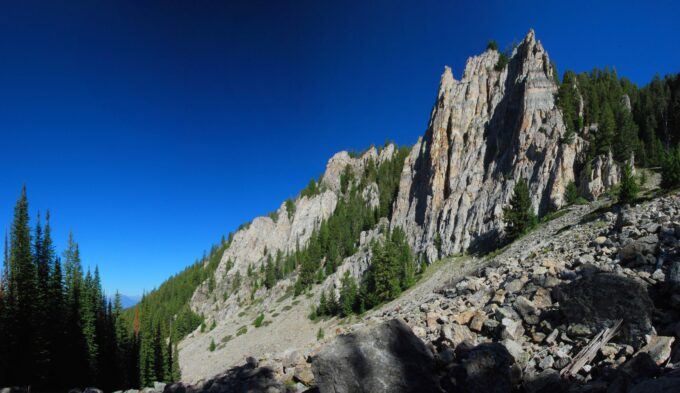
The Pallisades. Photo: Michael Hoyt,

Thanks to our threat to sue the Forest Service over using a categorical exclusion to avoid analyzing impacts on bull trout, grizzly bears, and lynx, a massive deforestation project in Montana’s Bitterroot Valley has been halted.

The Forest Service’s Eastside Project authorized 15,000-45,000 acres of tree cutting and burning per year for 20 years and the 500,000-acre project covers almost the entire east side of the Bitterroot National Forest from Stevensville to over 50 miles south in the Sapphire Mountains.

The Forest Service illegally authorized this massive project through the use of a categorical exclusion, which was intended for projects that would have no impact on the environment such as painting an outhouse or building a shed at a Ranger station.

But now the project has been halted since the Alliance for the Wild Rockies, Center for Biological Diversity, Fiends of the Bitterroot and other conservation groups sent the government a 60-day Notice of Intent to Sue for violating the Endangered Species Act. We notified the Forest Service that they failed comply with the Endangered Species act in a number of ways including failing consult with the U.S. Fish and Wildlife Service on the project’s effect on bull trout and grizzly bears — both of which are listed as threatened species — in violation of the Endangered Species Act.

Congress included the 60-day notice requirement in the citizens’ enforcement provision of the Endangered Species Act specifically to give the government that much time to correct their illegal activity before facing a lawsuit.

Normally the Forest Service responds to our 60-day notices with a letter telling us to go jump in a lake. Then we sue the agency — and have won in court over 80 percent of the time. But this time, undoubtedly realizing they were fighting a losing battle, the Forest Service agreed to halt actions to implement the tree cutting and burning until they followed the law.

It would be great to think the Forest Service has all of a sudden became a law-abiding agency, but unfortunately, they are still violating other laws with this project, including by authorizing half a million acres of tree cutting and burning without environmental review.

Despite the vast landscape the project will impact, the Forest Service did not disclose where the tree cutting and burning will occur. That’s a clear violation of the National Environmental Policy Act, which requires the federal government — and anyone who does a project using federal money — to notify the public of what they plan to do, where they plan to do it, and how it will affect the environment.

In the case of the Eastside project, the Forest Service claims that the precise location, timing, and scope of the treatments will be decided immediately prior to implementation, but without further analysis or public input which is a violation of the National Environmental Policy Act.

The law also requires the Forest Service to take a “hard look” at potential impacts to wildlife, including wolverines which are particularly important since scientists have discovered a lactating female wolverine in the project area, and there have been multiple instances of confirmed grizzly bear presence in the Sapphire Mountains over the past year. Grizzly bears, lynx, wolverines, bull trout and bull trout critical habitat are all protected under the Endangered Species Act.

American citizens are required to follow the law every single day. It is time for the Forest Service to start following the law and quit destroying habitat for threatened and endangered species.

During the last Trump administration, our small, gritty organization, the Alliance for the Wild Rockies, sued 18 times to protect our planet and we won 16 times.

Please help the Alliance for the Wild Rockies fight to make the Trump Administration’s Forest Service follow the law and help Counterpunch spread the word.

Mike Garrity is the executive director of the Alliance for the Wild Rockies.


Conflating Recreation With Conservation is Not Wilderness Preservation
March 20, 2025
Facebook

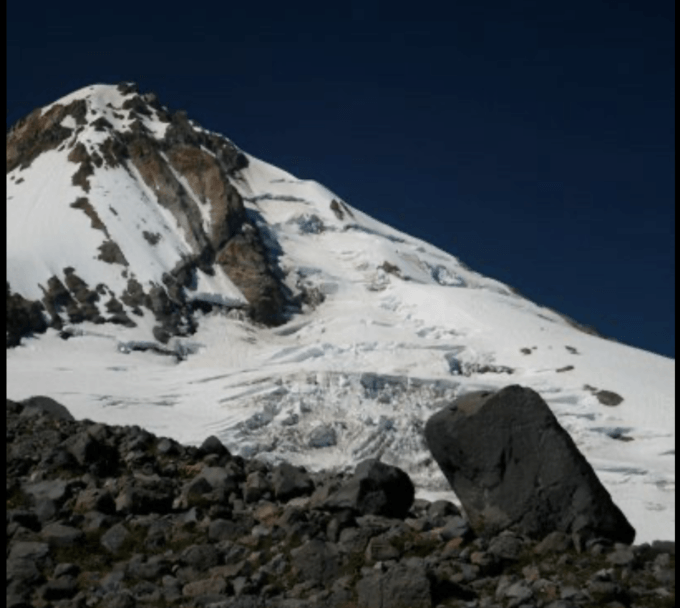
Mt Hood Wilderness, Oregon. Photo: Jeffrey St. Clair.

In the final hours of the 118th Congress, the Senate took up and passed the EXPLORE Act, which former President Biden signed into law on January 6. Some of our members reached out, confused after seeing other conservation nonprofits urging support for this bill, even as Wilderness Watch opposed it. News articles covering the EXPLORE Act suggested it could be a blueprint for conservation moving forward. But the EXPLORE Act has stirred fundamental questions about conservation, specifically, whether public lands like Wilderness should be protected for their own intrinsic value, or if their value lies solely in what we can extract from them.

As Howard Zahniser, author of the Wilderness Act, said, “The purpose of the Wilderness Act is to preserve the wilderness character of the areas to be included in the wilderness system, not to establish any particular use.” Wilderness is a priceless place to recreate—it provides us solitude, a chance for reflection, and an opportunity to experience a world we don’t manipulate and control. But, as John Muir once said, “Nothing dollarable is safe.” This includes Wilderness.

Consumptive activities include mining, logging, grazing, drilling, and, yes, recreating. While logging litters stumps and slash piles across clearcuts, and mining strips away soil, recreation consumes the space and security of plants and animals. Recreation can destroy habitat, and displace or habituate wildlife. Human presence can drive wildlife to ecologically inferior habitats where food may be in short supply and predator risk is higher. It can also physiologically stress animals, making them more susceptible to disease. High-use and concentrated recreation areas, such as climbing spots, can decrease the nesting success of birds. To top it off, recreation contributes to the introduction and spread of invasive species. These pressures influence whether individual animals produce offspring, affecting broader population levels. For these reasons, we must consider limits and restraint on our recreation impacts.

Some conservation groups supported the EXPLORE Act because of provisions aimed at expanding access to public lands, especially for broader socioeconomic groups. While that’s a worthy goal, the bill gives the National Park Service discretion to install cell towers in backcountry throughout the National Park system, including within designated, potential, recommended, or eligible Wilderness. The EXPLORE Act also increases mechanized and motorized access on public lands; upgrades cabins, campgrounds, and resorts; loosens restrictions on commercial filming; and reduces the public’s ability to review outfitter impacts to wild places on all public lands, including Wilderness.

Alarmingly, the EXPLORE Act makes the first ever exception for a nonconforming recreation activity in Wilderness by allowing climbers to hammer fixed anchors into rock faces. Wilderness cliffs of gneiss and quartzite, limestone and slate, once untarnished by evidence of recreation, can now bear permanent proof of human presence. Moreover, the installation of permanent, fixed anchors will inevitably draw more climbers to what were once quiet wilderness cliffs.

Politicians driving the EXPLORE Act didn’t attempt to veil its purpose. Bringing the bill to the floor for a vote, Senator Joe Manchin—who caucused with the Democrats—said, “We have made a focus of supporting our public lands and the outdoor recreation economy, which is the fastest growing element of our economy in every state.” His Republican colleague, Senator John Barasso, said, “It is a first-of-its-kind recreation package, and it will boost our nation’s outdoor economy…Outdoor recreation added over $1 trillion to our national economy in 2023—$1.2 trillion. That is 2.3 percent of our entire gross domestic product…This is a big deal.”

Yes, this is a big deal, but one where humans aren’t paying the price. Dwindling populations of flora and fauna foot the bill through increasing habitat destruction and biodiversity loss. And contrary to Senator Barasso’s claims, the EXPLORE Act is not “a first-of-its-kind recreation package.” It’s only the latest in a long line of bipartisan legislation that has conflated recreation with conservation—slowly chipping away at protections for the wild. Before the EXPLORE Act, it was the 2023 Outdoor Recreation Act. Before that was the 2019 John Dingell Act. Maybe next year we’ll be fighting the Wealth and Income Landscape Development Act—the WILD Act—because America’s leaders can’t resist a quippy acronym when weakening environmental protections for profit.

By design, the EXPLORE Act is human-centered and extractive—what can nature do for us? But anthropocentric utility was never the reason for protecting Wilderness. This reality is at the core of why Wilderness Watch and our members—who sent thousands of messages to Congress—so strongly opposed the bill. Conflating recreation with conservation causes untold harm to the wild. Perhaps this conflation is based on the myth that recreationists are, by default, conservationists—though there is little evidence linking these qualities, and emerging research suggests the opposite. Anecdotally, we’ve just observed a vocal subset of the climbing community lobby for recreation over preserving Wilderness. More so than individuals, however, capitalism fuels this conflation.

In an economic system where industry is controlled by private ownership, where self-interests and me-firsts feature prominently, and where gains are measured in dollars, it’s not surprising that the common value assigned to public lands extends only so far as who can profit from them. The bipartisan introduction the EXPLORE Act received on the Senate floor wasn’t rooted in equity—it was rooted in money that the recreation industry can generate if turned loose on public lands. Even if recreationists are the foot soldiers, at the end of the day, those who provide goods and services will profit the most from the EXPLORE Act. It’s certainly not groups of veterans or disadvantaged youth who profit financially from constructing cell phone towers, modernizing cabins, or selling bikes, climbing hardware, and ATVs.

Whale Creek, Clackamas Wilderness, Oregon. Photo: Jeffrey St. Clair.

With less than 3 percent of the Lower 48 designated as Wilderness, does capitalism not consume enough space already? If you drive through the endless agricultural development of the Midwest—essentially clearcuts of the native prairie—you become acutely aware of how much “progress” has shaped and terraformed our corner of the planet. In the urban sprawl of American cities and their suburbs, you have to wonder if there is any space we don’t feel entitled to, despite the history of overconsumption and ecological destruction that feeds civilization. Or, perhaps we’re suffering from a collective cultural amnesia—we’ve forgotten that these places used to be wild and can’t imagine what they once were like.

Upon witnessing how rapidly industrialization was chewing through the wild over a half-century ago, a few visionary women and men—with the help of an overwhelming majority of Congress—laid the groundwork for a more ecologically ethical future. In the Wilderness Act, they developed a new idea to counter the threat of expanding settlement and growing mechanization. That new idea was Wilderness, and Wilderness offered something invaluable in the face of unprecedented and unrelenting development—it offered domains of respite for the natural world.

Conflating recreation with conservation completely fails to preserve Wilderness. A mountain goat and her kids crossing the steep terrain of the Northern Rockies, as goats have done for eight million years, will never generate profit like the climbing industry. The wilderness idea means protecting the intrinsic value of Wilderness and all of the life it safeguards, regardless of utility to humans or profit capacity. While recreation was always meant to be a part of Wilderness, elevating it to an all-consuming priority will trammel the natural world. Only when we step back and allow space for the more-than-human will we see the wilderness idea fully realized.


Mason Parker is Wilderness Watch’s Wilderness Defense Director and Katie Bilodeau is Wilderness Watch’s Legislative Director and Policy Analyst.


USA

Behind the Numbers Lies Austerity and Authoritarianism


 March 20, 2025
Facebook

Image by Markus Spiske.

The Trump administration likes numbers. Numbers of dollars spent on his campaign and numbers of federal workers fired. Numbers of dollars the rich will get back after tax cuts and numbers of dollars that will be saved by throwing people off their health insurance (Medicaid) and food subsidies(SNAP). Then there’s the numbers regarding immigrants being rounded up and sent away. Plus, the number forty-three represents the number of countries whose citizens will be restricted and banned from entering the United States. There are also numbers describing the tariffs and numbers of voters who voted for Trump. Who can ignore the numbers of Palestinians and Yemenis killed—approaching 1000 as I write this—by Israel and Washington since Trump moved into 1600 Pennsylvania Avenue?

Nobody really knows how truthful the numbers we are told are and nobody seems to care enough to do much about them. Every person fired is a person who wonders how they’re going to pay for their home and their food. Every person fired supporting a family finds that scenario magnified with each family member they support. And now the trumpists are going after unions, threatening to terminate the federal government’s contract with the union representing TSA workers and talking about firing postal workers. This is the beginning, not the end of what might well be fascism.

Recently a legal resident who spoke out against government policies overseas was kidnapped from their home and held incognito. No one, not even the arrested man’s pregnant wife knew where he was for a day. Although 102 congresspeople responded to this gross violation of the Constitution, flawed document that it is, by noting that this is what dictators do, only fourteen signed a previous letter calling for the man’s release. The trumpists threaten more of these actions and continue cutting funding from schools with anti-occupation student organizations. School and corporations line up to enforce the contempt for humanity these actions represent even after the trumpists take back millions of dollars in dedicated grants. Most of the media colludes with the people in power, unwilling to challenge the authoritarians almost certain to repress their freedom to write no matter how much they acquiesce.

A billionaire named Musk is given power to reshape the bureaucracy as he sees fit. No oligarch has ever ruled a regime that did not put their greed for money and power first. Elon Musk is not any different. Nor is Donald Trump. Still, it’s not enough to only go after Musk and the rest of the billionaires forcing austerity on the very class that made them obscenely wealthy. It’s a good place to begin, but they are not alone in their onslaught. The number of co-conspirators is greater than you think but not as great as they think it is. This is a battle between the ruling class and the rest of us. Those who are not in the former but identify with that class’s interests should not be surprised when their heroes in the halls of money and power leave them as if they were compost ready to be turned over in the bin. This is a good place to once again remind those who think their interests are the same as the billionaires that the only thing the ruling class wants from them is their surrender (and maybe their children should the rulers decide a war is useful to their future.

All these numbers don’t mean much as numbers. They mean a whole lot more when it’s your neighbor who got laid off or your partner who got fired. Or your kids whose school had to close after the teachers were sent home. Wait until hospitals start closing because working class people who were on Medicaid can no longer take care of their medical needs. Wait until your parents stop getting social security checks. Wait until you can’t pay your rent or your mortgage because your job either doesn’t exist or has been privatized and your wage was cut. Wait until the ripple effect of the public sector cuts reaches your city or town—recession will barely begin to describe the situation. The Democrats—bless their capitalist hearts—would like to help you out but they’ve got an election coming up somewhere and they need you to donate to their party. Take that donation out of your unemployment check before the trumpists take that away, too. If you’re lucky, there will be another election for you to vote in. That’ll show them.

We need to fight. I mean, seriously fight. Fighting back means going beyond the courts, beyond performance protests and well beyond elections. I know it’s difficult for many to accept, but if you’re not part of the oligarchy the United States government is not interested in your existence. This is true even if you march to its orders. Even if you wear a MAGA hat and pay your dues. Most judges, politicians, military officers are either part of the problem or afraid to stand up to it. Most men and women in the media and the rest of the corporate sector are of a similar mind. That’s what can happen when one identifies with the powerful even when they have no love for you. The Democrats are slowly learning this fact, but we shouldn’t wait for them to lead given their hesitancy to risk their livelihood.

There’s a meme making the rounds that says nothing will stop this but mass non-compliance. I think that this sentiment is a good beginning. However, I believe it’s going to take something more. Those who oppose Trumpism need to make the country ungovernable ultimately. If they keep firing people, raising tariffs locking up and deporting protesters, those of us out of work will have plenty of time to go about it. Nothing is the same and it’s unlikely to improve for those who aren’t in the 1%. It won’t matter how long you wait. Might as well fight back.

Ron Jacobs is the author of several books, including Daydream Sunset: Sixties Counterculture in the Seventies published by CounterPunch Books. His latest book, titled Nowhere Land: Journeys Through a Broken Nation, is now available. He lives in Vermont. He can be reached at: ronj1955@gmail.com

BYE BYE VOA

Turn Off That (Government) Radio!

 March 20, 2025
Facebook

Photo by Frank Albrecht

On March 14, US president Donald Trump signed an executive order reducing “statutory functions of unnecessary governmental entities to what is required by law.”

Among other institutions, the order targets the United States Agency for Global Media and the broadcast media it operates and funds: Voice of America, Radio and Television Martí, Radio Free Europe/Radio Liberty, Radio Free Asia, and the Middle East Broadcasting Networks.

At less than one 6,750th of last year’s $6.75 trillion federal spending, USAGM may seem like small potatoes, but as the late US Senator Everett Dirksen (R-IL) reportedly said, “a billion here, a billion there, pretty soon you’re talking about real money.” And good reasons for wadding up the agency and tossing it in the dustbin of history go far beyond the financial.

What are the agency and its outlets, really? In a word, propaganda.

Their entire purpose is and always has been to regale the world — especially that portion of its population ruled by non-US-approved governments — with the US government’s take on every event and every issue.

While that approach never seemed very much like what America advertises itself as, it may have made at least a little sense during the Cold War when Radio Moscow and China Radio International likewise spread their regimes’ messages via the airwaves.

Now, though, in addition to not reflecting supposed American values (you know, free speech and free press instead of government propaganda), those state-operated broadcast media are beyond redundant.

These days, US “mainstream private sector” media — print, radio, television, and Internet — go toe-to-toe with competitors (state-operated and “private sector” alike) worldwide, reaching far more people than their USAGM predecessors.

And, for the most part and in most respects,  those “private sector” platforms have long since brought their editorial lines into compliance with the US regime’s every whim.

Yes, American media tend to segregate along partisan lines, but they’re generally all MURKA! (as defined by Washington, DC) all the time, from Fox News on the “right” to MSNBC on the “left.” Each of those outlets, and many others, dispose of budgets several times that of USAGM while serving as, effectively, government stenographers without tax funding from Congress.

I’d personally prefer a more combative and inquisitive American press to “private sector” government propaganda mills, but that ship has sailed. Why continue paying government to do what it’s managed to cow the “private sector” into doing for it? Give USAGM the ax.

Thomas L. Knapp is director and senior news analyst at the William Lloyd Garrison Center for Libertarian Advocacy Journalism (thegarrisoncenter.org). He lives and works in north central Florida.


The Long Shadow of Berlin: Capitalism, Colonialism, and the Legacy of 1885


March 20, 2025


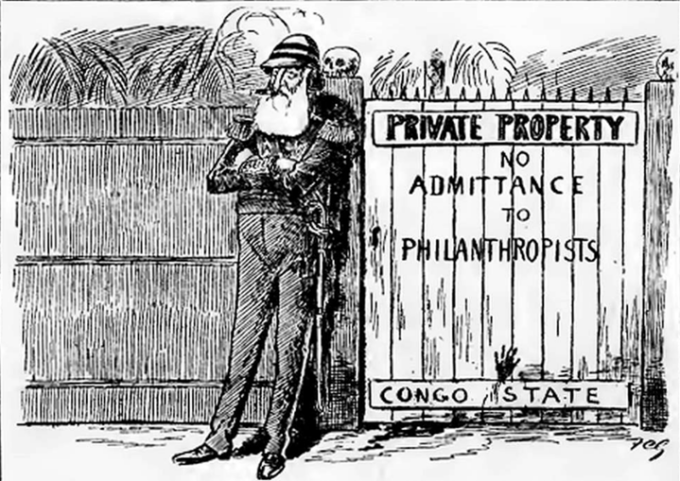
King Leopold II of Belgium, Creator: Picture-Politicsde Londres, Copyright: Public Domain

February 26th marked the 140th anniversary of one of the most consequential events in the history of Western imperialism: the signing of the General Act at the Berlin Conference of 1885. Convened by German Chancellor Otto von Bismarck, the conference sought to prevent any unsportsmanlike behaviour among the Great Powers as they set about plundering the African continent—of its labour, natural resources, and trade routes. After three months deliberating over territorial borders and free trade zones, the 14 signatories—including Germany, France, Britain, Portugal and Belgium’s King Leopold II—finalised an agreement on what they deemed the most equitable means of ransacking Africa in service of their colonial empires.

A wealth of recent retrospectives has deftly examined the conference and its lasting consequences for both the colonised and the colonisers. Yet what remains largely overlooked is the economic rupture that triggered the ‘Scramble for Africa’—the first major crisis of modern capitalism—a crisis whose repercussions continue to shape global inequality to this day.

The Illusion of Endless Growth and the Shock of Crises

For much of the 19th century, the dominant economic classes of the industrial nation­s—bankers who controlled credit, merchants overseeing trade, industrialists heading production, and the political class who upheld their interests—prospered within the borders of their respective nation states. They had long reaped the benefits of industrial expansion, believing that capitalist growth could continue indefinitely so long as markets remained stable. A fundamental illusion underpinned the prosperity of the Global North in this period: a belief that the original sin of dispossession—the violent expropriations of land, resources, and labour which originally set the wheels of accumulation in motion—would never have to be repeated. This illusion was violently shattered by the Panic of 1873.

That year marked the beginning of the first truly international economic crisis, as industrial economies from the United States to Austria-Hungary reached a critical threshold: domestic markets could no longer absorb the sheer volume of goods and surplus capital being produced. Factories churned out more than could be sold, banks sat on capital with too few profitable outlets, and economic stagnation loomed. As a result, overproduction and wealth hoarding became an existential threat to the entire capitalist system.
As Hannah Arendt observed in her study of imperialism, once capital could no longer find profitable domestic outlets for distribution and investment, this:


“threatened to transform large strata of society into gamblers, to change the whole capitalist economy from a system of production into a system of financial speculation…the decade immediately before the imperialist era, the seventies of the last century, witnessed an unparalleled increase in swindles, financial scandals, and gambling in the stock market.”(Arendt 135)

Expansion as Crisis Management

The age of imperialism dawned as the industrial elite realised that the only way to overcome economic crisis was to break down national borders and expand into foreign markets. The Long Depression mobilised the capitalist classes of Europe and beyond, compelling governments to make overseas expansion their top priority. Throughout the 1870s and 1880s, business interests became indistinguishable from national interests, with economic growth directing the course of foreign policy.

The General Act of the Berlin Conference was the culmination of this decade long shift, in which financiers and industrialists bent the state apparatus to serve their imperialist ambitions. As Britain’s Colonial Secretary, Joseph Chamberlain, bluntly put it, “You cannot have omelettes without breaking eggs…you cannot destroy the practices of barbarism…which for centuries have desolated the interior of Africa, without the use of force”.

And force—the military, the police, and the machinery of state violence— was precisely what the capitalist classes depended upon to secure their overseas investments. The Act formalised what had become essential for capitalism’s survival: transforming state power into the enforcer of financial expansion. Through territorial annexation, trade monopolies, and military intervention, states assumed the role of securing investment frontiers for private capital, reinforcing a pattern in which economic crises were not solved through internal reform but through external conquest. This pattern, established in the imperial age, remains a defining feature of global capitalism to this day.

Imperialism’s Enduring Spectre

J.A Hobson wrote in 1902 that “the economic root of imperialism…consists of rents, monopoly profits, and other unearned or excessive elements of income, which, not being earned by head or hand, have no legitimate raison d’être.” Hobson identified wealth concentration as the driving force behind economic expansionism, arguing that when a small elite controls a disproportionate share of wealth, the domestic economy falters.

When the bottom 50% of a nation holds just 2.6% of its wealth, the majority lack the purchasing power to sustain demand, forcing corporations to seek foreign markets for investment and trade.Rather than addressing inequality through redistributive policies or progressive taxation, capitalist economies historically respond to crises with constant expansion. This logic has dictated the trajectory of global capitalism for nearly 150 years—from the Berlin Conference, where imperialism was enshrined as the solution to economic stagnation, down to its modern-day incarnations. Today’s multinational corporations inherit this legacy, leveraging state power to shape economic and foreign policy in their favour. Elon Musk’s manoeuvring to secure state-backed trade deals with China and India—circumventing regulations to access new consumer markets and cheap resources—is not an isolated case of corporate opportunism. It is the logical continuation of a century-old pattern, in which capital relentlessly expands its frontiers to resolve crises born from excessive wealth accumulation.

From the gunboats of the colonial era to the trade deals and financial instruments of modern multinational corporations, the means of expansion may have changed, but the underlying rationale has not. Just as imperialist conquest was once justified under the guise of civilising ‘barbarous’ nations, today’s economic interventions are framed as efforts to spread democracy, secure supply chains, or promote development. Meanwhile, far-right movements deflect attention from the structural causes of economic instability, blaming migrants, globalisation, or cultural change rather than the system of wealth concentration that triggers expansion in the first place. Until the root causes of inequality are addressed, the same forces that drove the Berlin Conference in 1885 will continue to shape global power dynamics: perpetuating cycles of imperialism and exploitation under new guises.


Mark Hackett is a freelance writer and researcher based in Glasgow, Scotland. His work has previously featured in the Monthly Review.