Friday, March 21, 2025

Lutnick Urging Fox Viewers to Buy Tesla Stock Decried as 'Abuse of Power for Personal and Family Gain'

One critic noted that the billionaire commerce secretary "conveniently forgot to mention his family business empire holds nearly $840 million in the company" led by government-gutting Elon Musk.
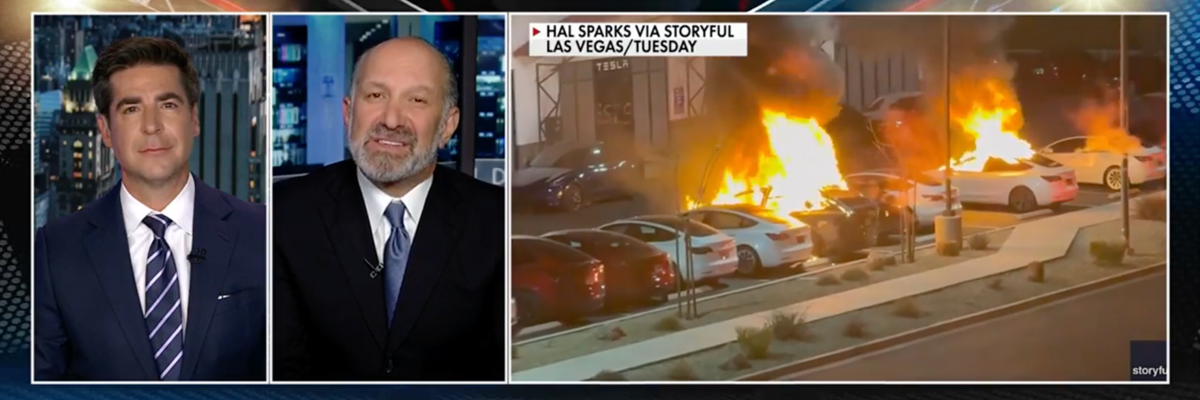


U.S. Commerce Secretary Howard Lutnick urged Fox News viewers to invest in Elon Musk's company Tesla on March 19, 2025.
(Photo: Fox News/screen grab)

Jessica Corbett
Mar 20, 2025
COMMON DREA MS

"Buy Tesla. It's unbelievable that this guy's stock is this cheap. It'll never be this cheap again... Who wouldn't invest in Elon Musk?"

That's what U.S. President Donald Trump's billionaire commerce secretary, Howard Lutnick, told viewers of Fox News' "Jesse Watters Primetime" on Wednesday—comments that watchdog groups swiftly condemned as unethical and illegal.

In addition to serving as CEO of companies including electric vehicle maker Tesla, Musk heads Trump's Department of Government Efficiency, which is leading the administration's sweeping attack on the federal bureaucracy. Musk is also the richest person on Earth, with an estimated net worth of $310-327.5 billion, some of which he put toward electing the Republican president

Earlier this month, Trump hosted a Tesla car show at the White House. His and Lutnick's stunts come as the company faces protests over Musk's work for the administration. Axiosreported that "Tesla shares were down about 1.7% in premarket trading Thursday to $231.75. The stock is down 5% in the last five days, 35% in the last month, and 42% so far this year."

The commerce secretary not only urged Fox's audience to invest in Tesla, he also heaped praise on Musk, calling him "probably the best entrepreneur, the best technologist, the best leader of any set of companies in America."


Responding to Lutnick's remarks in a Thursday statement, Kedric Payne, vice president, general counsel, and senior director for ethics at Campaign Legal Center, said that "the president's Cabinet members take an oath to serve the American people, and with that oath comes the ability and privilege to exercise a vast amount of power."

"Such power is intended to promote the public interest," Payne continued, stressing that officials like the commerce leader are "legally barred" from promoting their personal business interests. "Secretary Lutnick's actions violate the ethics rules that were enacted to hold public officials accountable to the American people. His statement is part of a pattern of behavior showing that Trump's indifference to ethics is trickling down to his most senior officials."

"The American people deserve a government that prioritizes public good," he added. "Most people will conclude that promoting a stock is not tied to any public good and ethics laws agree. The Office of Government Ethics and Commerce ethics officials should hold Lutnick accountable and reassure the public that their officials will face consequences if they use their public office to enrich themselves or their allies."


Tony Carrk, executive director of the watchdog Accountable.US, not only criticized Lutnick's remarks but also highlighted how the Cabinet member could benefit from them, declaring that "this is what abuse of power for personal and family gain looks like."

"When the billionaire commerce secretary used the Trump administration bully pulpit to try to rocket Tesla stock value, he conveniently forgot to mention his family business empire holds nearly $840 million in the company," Carrk explained. "While Secretary Lutnick is busy making TV appearances in a government capacity to potentially enrich his family business and his close ally Elon Musk, the rollercoaster Trump tariff policies he helped orchestrate are doing little to lower costs for working people—in fact quite the opposite."

Asked about Lutnick's comments on Thursday, White House Press Secretary Karoline Leavitt said, "I think the commerce secretary was reiterating that the president supports an American-made company like Tesla, who produces a very good product for the American people, which was beloved by the American people, particularly Democrats, until Elon Musk decided to vote for Donald Trump."

"And now we have seen despicable and unacceptable violence taking place across our country at Telsa dealerships, against workers, employees, and also innocent Americans who drive these vehicles," she added. "It's actually a scary time in our country because of this political violence from the left, and the White House and the president's entire administration condemn it wholeheartedly."

As outrage over the Trump administration's promotion of Musk's company mounted on Thursday, the National Highway Traffic Safety Administration recalled more than 46,000 of Tesla's Cybertrucks—or nearly all of them on U.S. roads—due to concerns about an exterior panel that can detach while driving, creating safety problems.

Watch: Fox News host pushes 'death penalty' for Tesla vandalism

David Edwards
March 20, 2025 
RAW STORY

Fox News/screen grab

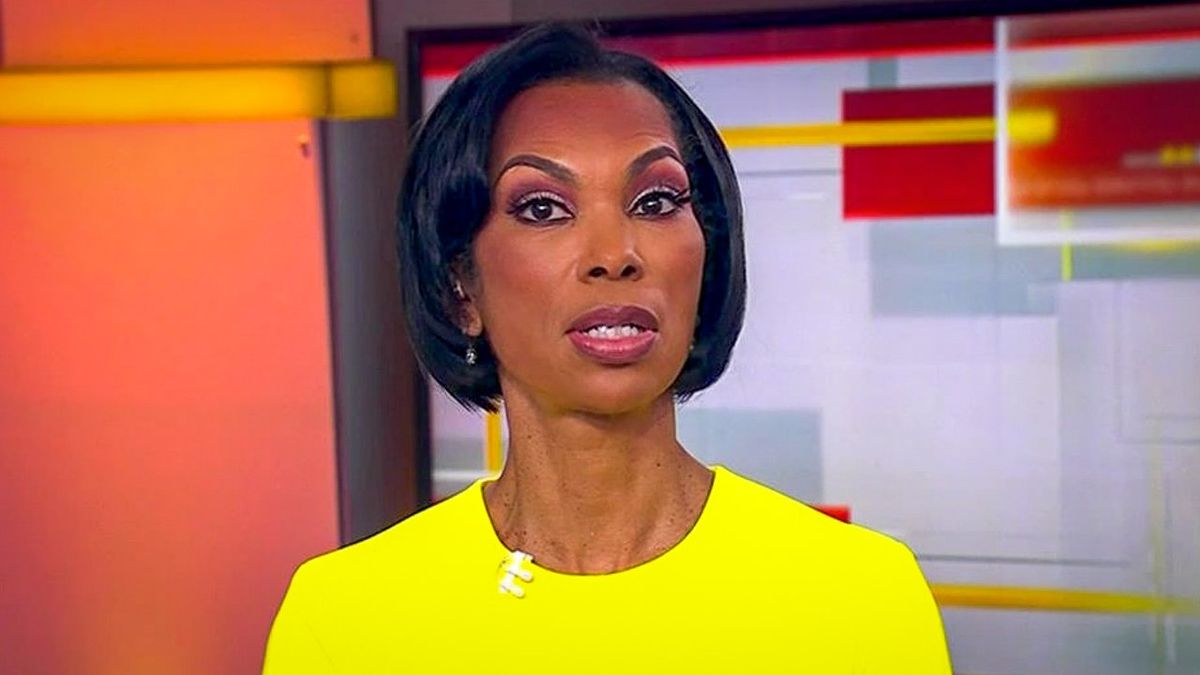
Fox News host Harris Faulkner floated the possibility of using the death penalty on people who vandalize Tesla cars, facilities, or infrastructure.

Faulkner made the remarks during a Thursday interview with White House Press Secretary Karoline Leavitt.

"What happens if there's someone in one of these cars, they blow up?" the Fox News host asked. "That becomes murder, or worse, terrorism plus."

"And I know that on January 20th, the president signed through an executive order restoring the death penalty," she continued. "Do you think this sort of thing, and I hate to think it, people leave their children and pets in cars... This is deadly, dangerous stuff these liberal protesters are playing with."

Leavitt did not rule out capital punishment for Tesla vandalism.

"I can tell you is that President Trump condemns this violence, and he is determined to restore law and order in our country, and he will ensure that the harshest penalties are pursued for those who are engaging in this vicious violence that we have seen targeted at this American company, Tesla dealerships, Tesla employees, and also innocent Americans who have chosen to drive these vehicles," the press secretary vowed. "The Trump derangement syndrome from the left is on true display with these attacks."

"It is getting dangerous, and the White House wholeheartedly condemns it," she added.

Watch the video below from Fox News or click here.


Naked Kennedy Center Staffer Rips 'Villainous Liar' Trump and 'Nazi Wannabe' Musk

"I have called Trump out on his bullshit and dare him to fire me for being unapologetically queer, and critical, for showing up everyday in my best red lip and woke gender ideology that says don't fuck with me."


Tavish Forsyth, founder of Bird City Improv and the associate artistic lead for the Kennedy Center's Opera Institute, is seen here delivering a nude monologue against Republican U.S. President Donald Trump's takeover of the Washington, D.C. performing arts center.
(Photo: ImproVision/YouTube/screen grab)


Brett Wilkins
Mar 20, 2025
COMMON DREAMS

"Walk away or fight?"

That's what one program director at the John F. Kennedy Memorial Center for the Performing Arts in Washington, D.C. asked in response to U.S. President Donald Trump's bigoted attacks on racial, religious, and sexual minorities—and the artist literally bared all of himself while mulling the question.

"Trump has taken over the Kennedy Center, and that's a place where I work. He has banned drag performers from its stages. And as the saying goes, 'we're all born naked and the rest is drag," Tavish Forsyth, the associate artistic lead for the Kennedy Center's Opera Institute, said in a YouTube video, wearing nothing but an 8-bit rainbow-striped heart digitally superimposed over his groin.


Trump recently took over the Kennedy Center, firing its board, appointing himself chair of the body, and replacing its members with loyalists in what many critics believe is a bid to remake the venerable institution in his own image.


Washington Post associate editor Marc Fischer wrote Wednesday that "there has been much worry in the anti-Trump world that the president will turn the Kennedy Center into an easy-listening temple, a reliquary for washed-up middlebrow acts, a refuge for the few artists who wave the MAGA flag. Kid Rock in the Opera House, Jason Aldean in the Concert Hall."

Reflecting his administration's attacks on LGBTQ+ people, Trump has canceled or proscribed performances deemed "woke," including a concert featuring the Gay Men's Chorus and the National Symphony Orchestra's A Peacock Among Pigeons: Celebrating 50 Years of Pride.


Calling Trump a "villainous liar," Forsyth asked: "Does staying make me a collaborator or somehow complicit in a hostile government takeover that is systematically targeting the rights, livelihood and liberty of poor people, queer people, Black, brown people, people of color, immigrants, Muslims, victims in war-torn countries, ethnic cleansing, women... Gosh when I put it like that, it seems kind of obvious: Fuck Donald Trump and fuck the Kennedy Center. But, on the other hand, is staying holding the line and living to fight another day?"

Forsyth called Trump's move to install himself as the head of Kennedy Center's board "surprising, because he seemed so busy draining dams, damning alliances, siding with killers, endorsing genocide, erasing trans and queer people from history, deporting people who have every right to live in a land of immigrants—a stolen land—and doing everything in his goddam power to seem like a big tough man while Nazi wannabe [Elon] Musk, systematically erodes the government while selling Cybertrucks to the next generation of American war criminals."

"And now that I've said all this shit, people will name me radical, crazy, Antifa, terrorist, pot-smoking, faggot, hippie, whatever the fuck," Forsyth continued. "I also fear that I make myself unemployable. To which I also say, 'Fuck it!' If I'm unemployable, then let it be because I chose to be unrulable. Let it be because I choose me, my beloved family, and stand in solidarity with communities that equally deserve to be free."


"Every bone in my body says run," Forsyth confessed. "And I haven't been sleeping well for over a week. My heart says love one another. My ego says don't let them win. Don't give up. Don't abandon a worthy cause... I have called Trump out on his bullshit and dare him to fire me for being unapologetically queer, and critical, for showing up everyday in my best red lip and woke gender ideology that says don't fuck with me. I threaten him to arrest me for breaking his unjust laws that threaten diversity."

"Shoot your shot, Donald," he added. "The rest of you, should I quit the Kennedy Center or wait to be crucified for this man's sins?"
 
WAR ON LGBTQ+
Trump Admin Considers Ending Division Tasked With Funding HIV/AIDS Prevention

The move could send the US back to “the dark days of the ‘80s, when people died from HIV every day,” one advocate said.

March 20, 2025

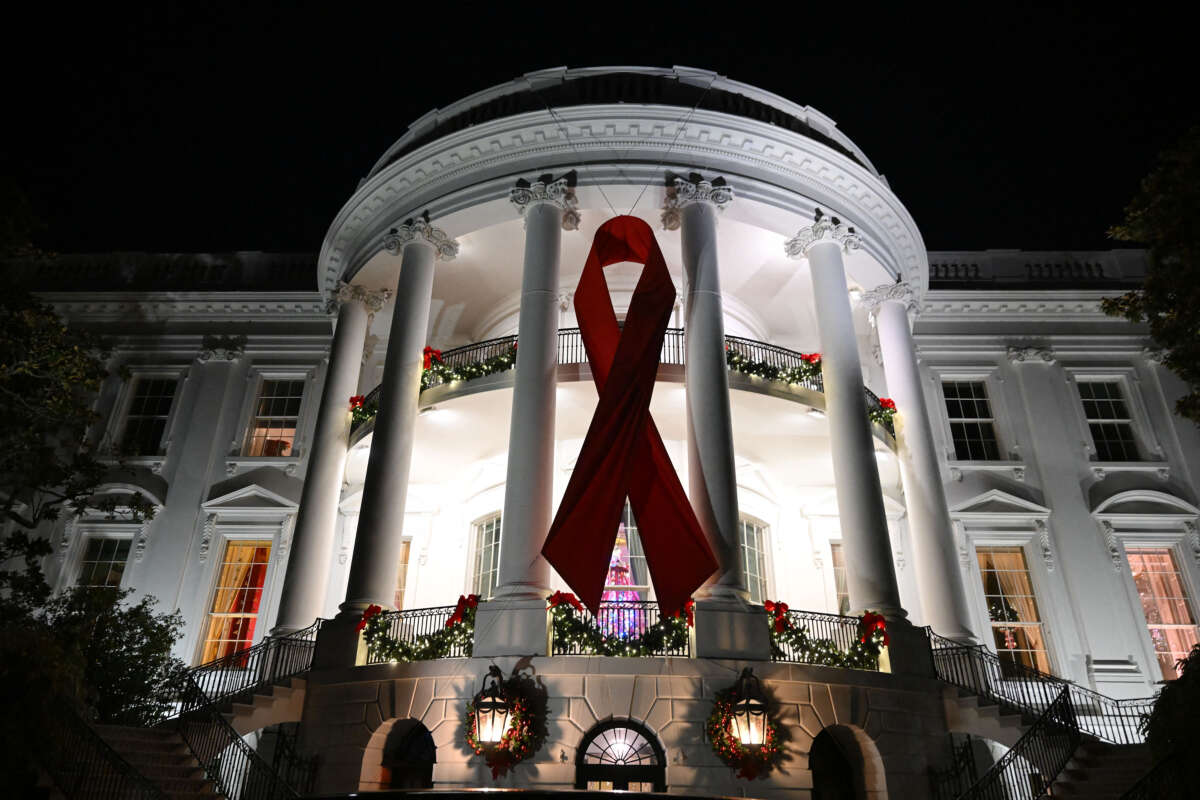
A red ribbon is displayed on the South Lawn of the White House to recognize World AIDS Day on December 1, 2024, in Washington, D.C.Andrew Caballero-Reynolds / AFP via Getty Images


Support justice-driven, accurate and transparent news — make a quick donation to Truthout today!

The Trump administration is reportedly considering ending a division within the Center for Disease Control and Prevention (CDC) that is focused on funding HIV/AIDs prevention and treatment.

Even if Trump simply shifts the responsibilities of that division to another agency within the Department of Health and Human Services (HHS), it could result in fewer federal services, placing the burden of HIV/AIDS prevention on states at considerably higher costs, including for taxpayers.

The CDC currently provides states with funding to detect and respond to outbreaks, implement syringe exchange programs, expand HIV testing in emergency rooms, and conduct education programs and other prevention methods.

A federal official with knowledge of the administration’s thinking said that the plan is “not 100 percent going to happen,” but it’s “100 percent being discussed.”

Any changes to these programs could be catastrophic, reversing the recent trend of reduced rates of new HIV/AIDS diagnoses.

Related Story

Trump’s Cuts to USAID May Wipe Out Nearly a Tenth of Global Climate Finance
US contributions to international climate funds were already seen as low relative to its wealth and responsibility. By Josh Gabbatiss , CarbonBrief  March 10, 2025


“It would be devastating. The work is important because every new HIV transmission results in a person having a lifetime cost related to being HIV positive,” said Jesse Milan, president and CEO of AIDS United.

In his 2019 State of the Union Address, President Donald Trump surprised many HIV/AIDS organizations and advocates by announcing a goal to effectively eradicate the virus within the U.S. by the year 2030. The results of his plan were undeniably positive: Rates of new HIV infections dropped by 30 percent in young people, and by 10 percent in other groups of people within three years of the announcement.

Since taking his second oath of office, however, many of Trump’s executive orders — particularly those targeting LGBTQ people — have detrimentally affected the cause.

“The success of the ‘Ending the HIV Epidemic’ initiative is in peril,” said Colleen Kelley, board chair of the nonprofit group HIV Medicine Association, speaking to Roll Call about the matter. “Not only will we not end the HIV epidemic with the current administration’s policies, we could reverse these gains and go back to the dark days of the ’80s, when people died from HIV every day.”

In an HIV + HEP Policy Institute press release, the organization said that it was willing to hear the administration out on its plans for tackling HIV/AIDS in the U.S. — but that any funding cuts could have dire consequences.

“If the administration has new ideas on how to conduct HIV prevention, including testing, surveillance, education and PrEP outreach, we are more than willing to discuss them…. But we cannot unilaterally cut the funding that Congress has appropriated and that states, local governments, and community-based organizations rely on to carry out their public health responsibilities to address HIV and other infectious diseases,” the organization said. “Without those federal resources, the number of new cases and the lifetime costs of treating them will just, sadly, multiply.”

The news that Trump is considering cutting funding dedicated to treating and preventing HIV/AIDS domestically comes as his administration has slashed funding for foreign programs with the same goal. Cuts to the United States Agency for International Development (USAID) and other programs have included significant reductions in funding for the President’s Emergency Plan for AIDS Relief (PEPFAR) program, which has been credited with saving 26 million lives and preventing millions of HIV infections around the world.

Although PEPFAR wasn’t totally canceled, several of its major contracts were shrunken or cut completely, resulting in 20 million people — including 600,000 children — no longer receiving HIV/AIDS treatments globally. If the funding does not get restored quickly, it could result in a sixfold increase in HIV burden over the remainder of Trump’s presidency, experts have warned.


Teachers Say 'See You In Court' as Trump Tries to Abolish Department of Education


"We won't be silent as anti-public education politicians try to steal opportunities from our students, our families, and our communities to pay for tax cuts for billionaires," said the head of the nation's largest labor union.


Demonstrators gather outside of the U.S. Department of Education headquarters in Washington, D.C. on March 13, 2025 to protest mass layoffs and budget cuts at the agency, initiated by the Trump administration and Department of Government Efficiency.
(Photo: Bryan Dozier/Middle East Images/AFP via Getty Images


Brett Wilkins
Mar 20, 2025
COMMON DREAMS


Update:


U.S. President Donald Trump signed an executive order on Thursday afternoon directing Education Secretary Linda McMahon to begin the process of shutting down the Department of Education.

"Hopefully she will be our last secretary of education," Trump said of McMahon, promising to "find something else" for the billionaire businesswoman to do.

Sunrise Movement, the youth-led climate campaign, responded to Trump's move by announcing a Friday "study-in" outside Department of Education headquarters in Washington, D.C.


Earlier:

As U.S. President Donald Trump prepares to sign an executive order Thursday directing officials to shut down the Department of Education, Democratic politicians, teachers and communities across the nation are vowing legal and other challenges to the move.

Trump is set to check off a longtime Republican wish list item by signing a directive ordering Education Secretary Linda McMahon to "take all necessary steps to facilitate the closure of the Department of Education and return education authority to the states."

Shutting down the department—which was created in 1979 to ensure equitable access to public education and employs more than 4,000 people—will require an act of Congress, both houses of which are controlled by Republicans.

"Trump and his Cabinet of billionaires are trying to destroy the Department of Education so they can privatize more schools."

Thursday's expected order follows the department's announcement earlier this month that it would fire half of its workforce. U.S. Sen. Bernie Sanders (I-Vt.) and more than three dozen Democratic senators condemned the move and Trump's impending Department of Education shutdown as "a national disgrace."

Abolishing the Department of Education is one of the top goals of Project 2025, the Heritage Foundation-led roadmap for a far-right takeover and gutting of the federal government closely linked to Trump, despite his unconvincing efforts to distance himself from the highly controversial plan.

U.S. Sen. Tina Smith (D-Minn.) called Trump's bid to abolish the Department of Education "more bullshit" and vowed to fight the president's "illegal behavior until the cows come home."

Sen. Chris Van Hollen (D-Md.) said on social media: "Trump and his Cabinet of billionaires are trying to destroy the Department of Education so they can privatize more schools. The result: making it even harder to ensure that ALL students have access to a quality education. Another outrageous, illegal scam. We will fight this."


New Jersey Attorney General Matt Platkin, a Democrat, warned that "ending the U.S. Department of Education will decimate our education system and devastate families across the country."


"Support for students with special needs and those in rural and urban schools will be gone," he added. "We will stop at nothing to protect N.J. and fight this reckless action."

Becky Pringle, president of the National Education Association (NEA)—the nation's largest labor union—said in a statement Thursday that "Donald Trump and Elon Musk have aimed their wrecking ball at public schools and the futures of the 50 million students in rural, suburban, and urban communities across America, by dismantling public education to pay for tax handouts for billionaires."

Musk—the de facto head of the Department of Government Efficiency (DOGE)—is the world's richest person. Trump and McMahon are also billionaires.

"If successful, Trump's continued actions will hurt all students by sending class sizes soaring, cutting job training programs, making higher education more expensive and out of reach for middle-class families, taking away special education services for students with disabilities, and gutting student civil rights protections," Pringle warned.

"This morning, in hundreds of communities across the nation, thousands of families, educators, students, and community leaders joined together outside of neighborhood public schools to rally against taking away resources and support for our students," she continued. "And, we are just getting started. Every day we are growing our movement to protect our students and public schools."

"We won't be silent as anti-public education politicians try to steal opportunities from our students, our families, and our communities to pay for tax cuts for billionaires," Pringle added. "Together with parents and allies, we will continue to organize, advocate, and mobilize so that all students have well-resourced schools that allow every student to grow into their full brilliance."


The ACLU is circulating a petition calling on Congress to "save the Department of Education."

"The Department of Education has an enormous effect on the day-to-day lives of students across the country," the petition states. "They are tasked with protecting civil rights on campus and ensuring that every student—regardless of where they live; their family's income; or their race, sex, gender identity, or disability—has equal access to education."

Randi Weingarten, president of the American Federation of Teachers, responded to Trump's looming order in four words: "See you in court."


'No More Cuts': Colorado Teachers Rally for Quality Education

"We must take action to protect funding for education in Colorado to ensure that the budget is no longer balanced off the backs of students," the state's largest teachers' union said.


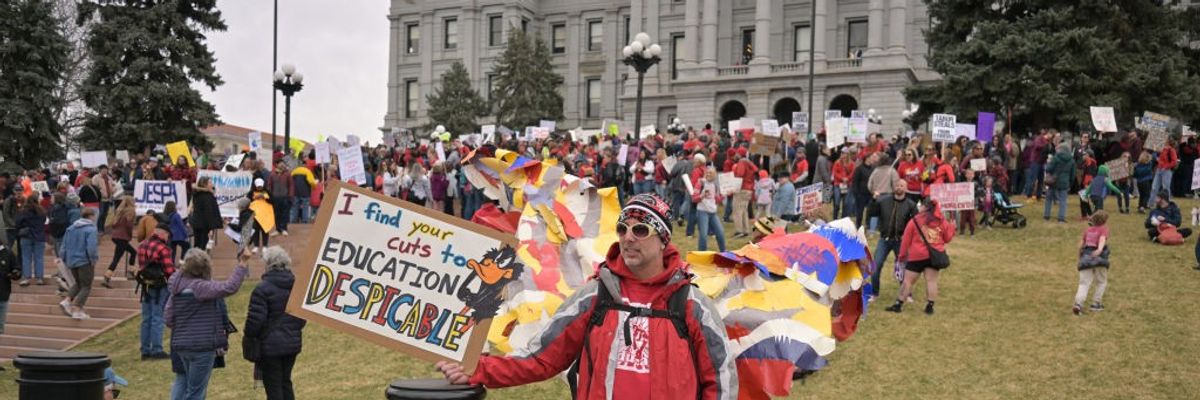
Art teacher Thad McCauley holds a sign at a March 20, 2025 rally calling for fully funded public schools outside the Colorado State Capitol in Denver.
(Photo: R.J. Sangosti/MediaNews Group/The Denver Post via Getty Images)

Brett Wilkins
Mar 20, 2025
COMMON DREAMS


Thousands of teachers and allies rallied at the Colorado State Capitol in Denver Thursday to demand that officials stop diverting money meant for public education to balance the state's budget.

Led by the Colorado Education Association (CEA), the state's largest teachers union, protesters wore crimson T-shirts reading "#RedForEd," a nationwide campaign for quality public education. Demonstrators chanted slogans including, "You left us no choice, we have to use our teacher voice!" and held placards with messages including "No More Cuts" and "Fund the Future."

CEA president Kevin Vick toldChalkbeat Colorado that "we feel like we've done our time. We simply are at our limit and we can't absorb any more losses."

"Districts are operating at such a thin margin that if there is significant losses in revenue at this point, it's going to mean a lot of teachers lost," Vick added. "It's going to mean a lot of schools closing."


Rob Gould, president of the Denver Classroom Teacher's Association, toldKMGH that "our teachers are tired of always—and every year—balancing the budget on the backs of our students."

Many Colorado school districts canceled classes for the day due to the high number teachers who said they would miss work to attend the protest. The Colorado Sunreported that around two-thirds of schools in Denver, the state's largest district, were closed Thursday.

Rally participants demanded that state lawmakers and Democratic Colorado Gov. Jared Polis preserve education funding jin the face of a $1.2 billion budget shortfall for next fiscal year. This could complicate a promise by Polis and lawmakers to stop using a mechanism called a budget stabilization factor—often derisively dubbed the "B.S. factor"—to divert funding from public schools to cover other budget items. Colorado state lawmakers are now considering allocating less money than promised to school districts in order to address the projected deficit.


According toColorado Public Radio:
Last year, state lawmakers voted to fully fund Colorado schools by no longer withholding funding from schools and diverting it to other departments. In January, two studies commissioned by lawmakers concluded that full funding—$9.8 billion this year—isn't enough. The studies said Colorado needs to spend $3.5 billion to $4.1 billion more per year to adequately fund its public schools.

But two months later, it's clear that doing so will be impossible in the short term and could mean asking voters for more money in the long term. A coalition of education advocacy groups say lawmakers' current struggles and the history of K-12 spending in the state illustrate why Colorado needs to discuss a long-term solution to increase revenue for school funding.

"Colorado students and educators are already being asked to do more with less every year—and now lawmakers are considering even more cuts to public education," CEA said in a statement promoting Thursday's rally. "Despite being one of the wealthiest states in the country, Colorado chronically underfunds its public schools by $4,000 to $4,500 per student per year compared to the national average."

"Now, facing a budget shortfall of over $1 billion, we must take action to protect funding for education in Colorado to ensure that the budget is no longer balanced off the backs of students across all four corners of the state," the union added. "Let's be clear: A cut is a cut, and students pay the price."

Thursday's rally came as U.S. President Donald Trump signed an executive order directing Education Secretary Linda McMahon to "take all necessary steps to facilitate the closure of the Department of Education and return education authority to the states."

Joan Marcano, whose two daughters attend a Denver elementary school that was closed for the day, said he backs the protesters.

"I support the teachers," he told KMGH. "These are the people who take care of my daughters every day."


Columbia University Historians Warn of Trump’s Threat to Academic Freedom

“Authoritarian regimes always seek to gain control over independent academic institutions,” the historians warned.
Truthout
March 20, 2025

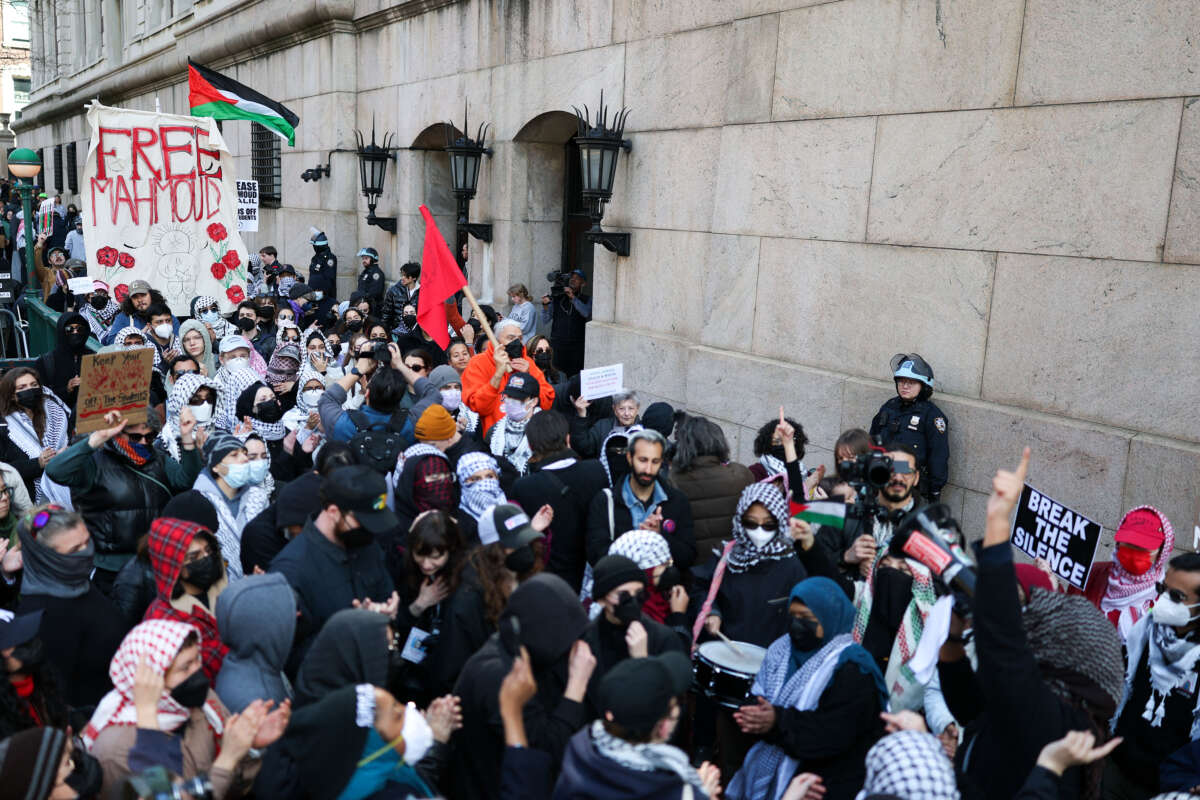
Pro-Palestine activist demonstrate in front of Columbia University in support of Mahmoud Khalil, in New York on March 14, 2025.Charly Triballeau / AFP via Getty Images

Members of Columbia University’s History Department have sent a letter to the university president and Board of Trustees, urging resistance against the Trump administration’s attempts to influence university policy. Their letter follows reports that Columbia is nearing a deal to acquiesce to the Trump administration’s demands — which include a major crackdown on pro-Palestine protesters on campus — in exchange for the restoration of $400 million in federal funding.

“As faculty members of the Department of History at Columbia University, we recognize in the recent actions of the Trump Administration a desire to assert political control over the university,” the historians wrote. While not an official statement from the department, the letter was signed by 41 of its approximately 50 members.

On March 7, the Trump administration revoked $400 million in federal research funding from Columbia, alleging that the university had violated Title VI by failing to address the “persistent harassment of Jewish students.” On March 15, the administration sent what Columbia professor Sheldon Pollock described as a “ransom note” to the university, outlining a series of conditions that Columbia must meet in order for the funding to be restored. Pollock, writing in The Guardian, called it “the most dangerous letter in the history of higher education in America,” arguing that the Trump administration seeks to “destroy the independence of American higher education.”

Despite the risks, The Wall Street Journal reports that Columbia is nearing an agreement to comply with the administration’s demands, which include banning masks on campus, implementing a plan to punish student protesters, and placing the Department of Middle East, South Asian, and African Studies under “academic receivership,” stripping faculty of control. The administration has also called for the university to expand the authority of campus police to “arrest and remove students” — a demand that comes just days after a Palestinian student protester was abducted by Immigration and Customs Enforcement (ICE) from his Columbia-owned apartment after pleading with the university for protection.

Columbia’s historians emphasized in the letter that while academic freedom at the university has been endangered before — citing incidents such as faculty dismissals during World War I, expulsion of a student protester against Nazism in the 1930s, and repression of anti-apartheid demonstrations in the late 20th century — this situation is fundamentally different. “Authoritarian regimes always seek to gain control over independent academic institutions. That is what we see unfolding now,” they warned.


Khalil Case Shows How Migrant Justice and Palestine Solidarity Are Tied Together
The detention of Columbia University activist Mahmoud Khalil was made possible by the normalization of deportation. By Silky Shah , Truthout March 15, 2025


Recently, Michael Ignatieff, former president of Central European University (CEU), drew parallels between Columbia’s predicament and his own experience resisting Hungarian Prime Minister Viktor Orbán’s attempts to expel CEU from Budapest. Writing in The Chronicle of Higher Education, he recounted being called by a university president whose institution faces severe federal funding cuts, endangering its medical school and research labs. While he did not name the university in his article, his description strongly suggests Columbia.

“The question the embattled university president asked, in effect, was how a university fights an authoritarian regime,” Ignatieff wrote. His advice: build alliances. “Make the case to the public that these attacks are senseless assaults on institutions that promote what America is famous for: life-saving science and world-class innovation.”

However, some critics argue that Columbia’s recent actions — such as authorizing police to conduct a brutal raid of pro-Palestine encampments, surveilling student protesters and punishing them through a secretive disciplinary committee, revoking student’s degrees for participating in protests, and failing to protect its students from politically-motivated deportation — have alienated potential allies.

“With each act of oppression, the bar for respect of human liberties and the freedom of academic spaces wanes,” CUNY professors Heba Gowayed and Jessica Halliday Hardie wrote in an article for Truthout earlier this month. “We must all insist, vocally and without fear, that colleges and universities recommit themselves to the principles of academic freedom and free expression before it is truly too late.”

Columbia’s historians echo this warning. They argue in their letter that compliance with the administration’s demands will not only endanger academic freedom, but historic scholarship itself.

“We call on scholars, students, administrators, and staff here at Columbia and around the world to reject such efforts to dominate colleges and universities,” the letter says. “Such interventions jeopardize our ability to think honestly about the past, the present, and the future, and to do so with our students, who deserve every opportunity to learn and to think for themselves.”

The Wall Street Journal has noted that compliance with the government’s demands does not guarantee the reinstatement of federal funds. A letter from the Trump administration last week described meeting its nine demands as merely a “precondition for formal negotiations” and outlined further “immediate and long-term structural reforms” it expects from Columbia.

“Should this control be realized, here or elsewhere, it would make any real historical scholarship, teaching, and intellectual community impossible,” the historians say in the letter.

Columbia is not the only university currently facing federal pressure. The Education Department is investigating 60 colleges and universities for “antisemitism” — which has been redefined to target people who are protesting Israel’s genocide in Gaza — and sent notices to more than 50 institutions regarding their diversity, equity, and inclusion (DEI) programs. Additionally, on Wednesday, the administration announced that it was suspending approximately $175 million in federal funding for the University of Pennsylvania over a transgender swimmer who last competed for the school in 2022.
US and Israel Have Laid the Groundwork for War With Iran. Will Trump Set It Off?


For decades, the US political establishment has treated war with Iran as an inevitability.

 We must reverse course.
March 19, 2025

The return of Donald Trump to the White House intensifies concerns about whether the United States will further engage in yet another conflict, this time with Iran. On Monday, Trump announced that Iran will be held responsible for attacks by the Houthis in the Red Sea, and will suffer “dire” consequences.

While Trump has brought his characteristic bombast to the issue, he is far from the only voice calling for U.S. military action against Iran. For many years, U.S. foreign policy leaders and media have habitually framed a war with Iran as increasingly inevitable. Public discourse has largely characterized Iran as a “destabilizing force” in the Middle East, and the idea that military action is the next logical step has been promulgated by mainstream Democratic Party leaders as well as the right.

In the past, Trump has surrounded himself with Republican foreign policy thinkers known for their hawkish views on Iran. While he may have become alienated from some of the more pronounced voices leading this charge (such as former National Security Adviser John Bolton, and former Secretary of State Mike Pompeo), the confirmation of Marco Rubio as the U.S. secretary of state, and Trump’s unequivocal vows of support for any Israeli actions would seem to overwhelm speculative narratives of his aversion to war. On October 1, Rubio issued a statement urging the reimposition of a maximum pressure campaign against Iran, and showed full support for Israel to “respond disproportionately” against Iran.

Never miss another story

Get the news you want, delivered to your inbox every day.

Email*


National Security Adviser Michael Waltz said in an interview with Fox News last month that “all options are on the table,” when it comes to U.S. policy on Iran’s nuclear program, and that the U.S. will only enter negotiations with Iran if “they want to give up their entire program and not play games as we’ve seen Iran do in the past in prior negotiations.”

Nothing about U.S. or Israeli policies suggests that either country is really driven by ideological opposition to Iran’s leadership; at different times, both have found it convenient to cooperate with Iran. During the Iran-Iraq War in the 1980s, despite their official stances against Iran, Israel and the U.S. discreetly supplied Iran with weapons and spare parts, mainly for American-made military equipment left over from the Shah’s era — even as the U.S. also quietly supported Iraq. While Israel’s aid aimed to destabilize Iraq, which was then seen as a major regional threat to Israel, the U.S. aimed to limit Soviet influence in the region as part of what would become known as the Iran-Contra affair.

Related Story
News |
Politics & Elections
Trump Issues Sanctions on Iran, Threatens to “Obliterate” It If He’s Killed
Trump has signed an executive order to exert pressure on Iran while also trying to obtain a nuclear deal.
By Sharon Zhang , TruthoutFebruary 6, 2025

Under Israeli Prime Minister Benjamin Netanyahu’s right-wing government, Israel has long openly expressed its desire for regime change in Iran while laying the groundwork for a military conflict. Speaking alongside Rubio in his recent visit to the White House last month, Netanyahu praised Trump’s strong leadership and celebrated Iran’s weakened regional position as a result of the war between Israel and Hamas, as well as the expansion of the war into Lebanon. He expressed confidence in “finishing the job” with Iran.

The consequences of a U.S. or Israeli conflict with Iran would be catastrophic. The Iran-Iraq War, which lasted eight years, left deep scars on the lives of millions, with children bearing the brunt. Iranian men were drafted; fathers, brothers and boys as young as 12 volunteered to fight, leaving behind fractured, grieving communities struggling with shortages of food, water and electricity.


Now is the moment to commit to the work of negotiating a new deal that prioritizes the long-term prosperity of regular people and rejects endless warmongering.

Even without direct war, the United States, United Nations and the European Union have already inflicted sanctions upon Iran, some of which date back to soon after the 1979 Revolution, with the aim of immiserating and pressuring Iranians enough to revolt against the current government. For far too long, the U.S. and its allies have used sanctions as weapons of war, hurting the people of Iran without achieving their purported goals. Iran’s foreign assets have been frozen, and trade embargoes have been imposed with varying degrees of severity over the years. During the last few years, sanctions have tightened further due to Iran’s support for Russia in its invasion of Ukraine and the brutally suppressed protests after the death of Mahsa Jina Amini, weakening Iran’s economy and crushing its working class.

According to experts, as a direct result of sanctions, over 20 percent of Iran’s middle class has fallen below the poverty line. Eighty percent of the country’s citizens have been forced to seek government assistance — hardly driving a wedge between people and government. Iran’s middle class, a potential force for change in the country, has been disproportionately affected. The effects on individuals have been diverse but devastating: Human Rights Watch reports that many Iranians with complex medical conditions cannot access essential treatments as the result of sanctions. Sanctions have reportedly strengthened the Iranian state and military, allowing government-owned companies with the resources to evade sanctions to become more powerful within the domestic sphere.

Despite consistent fearmongering, there is no evidence that Iran currently possesses a nuclear weapon. But it’s closer than it was before; a December 2023 IAEA report stated that Iran had begun producing approximately nine kilograms of uranium enriched to 60 percent Uranium-235 every month, making it easy to quickly accelerate to producing the 90 percent enriched Uranium-235 necessary to build a nuclear bomb.

The current political status quo doesn’t offer much by way of incentives for Iran to abandon its nuclear ambitions once and for all. The Iran Deal provided for sanctions relief and IAEA oversight of Iran’s nuclear facilities, against those who called for military action against the country. But without such an agreement, and without any assurance that the U.S. will not support or participate in a major military action against Iran, there’s little reason to expect Iran to step back from the nuclear edge.

And the stakes are even higher than they might seem to a casual observer. Israel already has nuclear weapons, despite its decades-old commitment to coyly denying its arsenal exists. And Saudi Arabia’s crown prince has stated that if Iran develops nuclear weapons, his nation will follow suit. This would mean three nuclear-armed states in the Middle East. And despite the increasing willingness in some quarters to discuss a “limited” nuclear exchange as something short of a catastrophe, nuclear weapons use in the Middle East would have horrendous implications across the world.

When it comes to Iran, diplomacy has proven effective at preventing nuclear proliferation, increasing transparency and cooperation, and reducing nuclear risks. The Iran Deal should be remembered as a success, not a moment of weakness for the United States. Now is the moment to commit to the work of negotiating a new deal that prioritizes the long-term prosperity of regular people and rejects endless warmongering.

This article is licensed under Creative Commons (CC BY-NC-ND 4.0), and you are free to share and republish under the terms of the license.


Hanieh Jodat is a political strategist and a key strategist with Defuse Nuclear War, an initiative of RootsAction. She also serves as the Chair of Progressive Democrats of America – Middle East Alliances, focusing on fostering dialogue and progressive policies on critical global issues.

Emma Claire Foley  is the campaign director for Defuse Nuclear War. She is a nuclear weapons policy expert, writer and filmmaker who has spent her career working for nuclear disarmament campaigns. Her commentary has been featured in Newsweek, NBC, The Guardian, and other international news outlets


World Meteorological Organization: Last 10 Years Have Been the Hottest on Record

A WMO report also found that 2024 was the warmest year in a 175-year observational period.
March 19, 2025

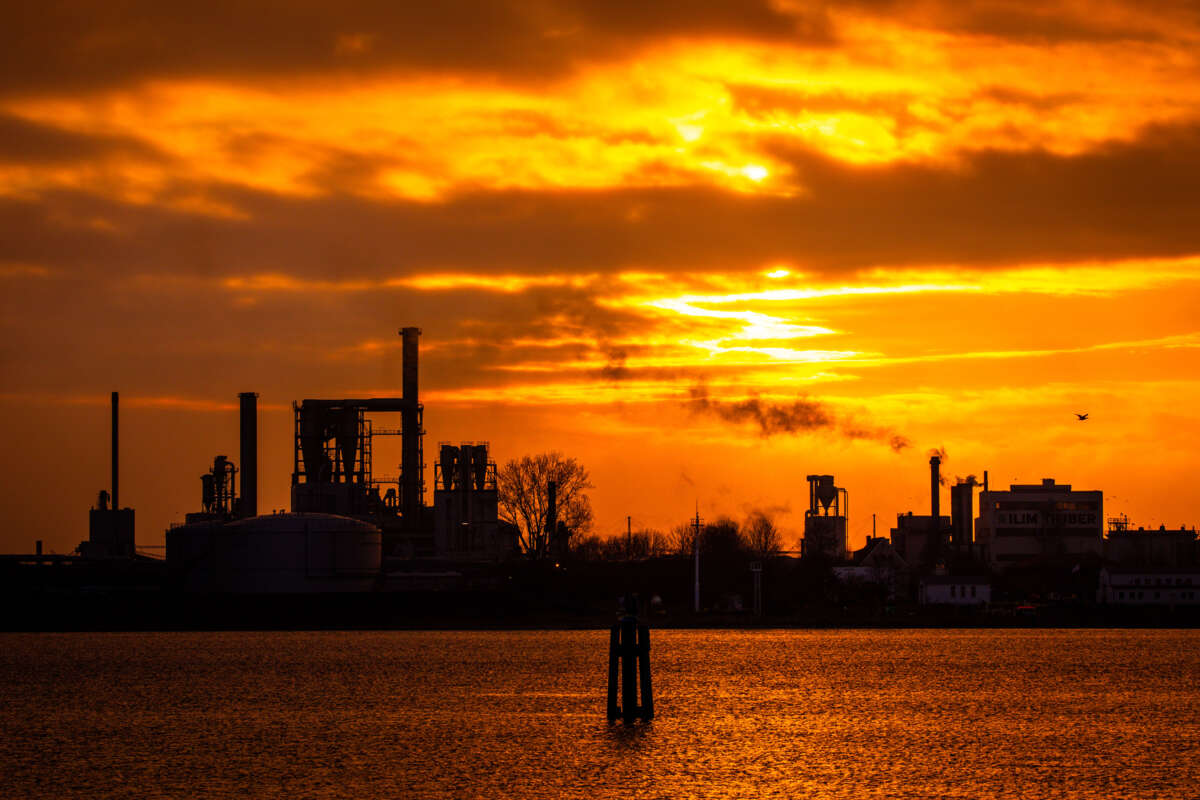
Smoke rises from the chimneys of wood-processing industrial plants at the seaport of Wismar, Germany, on March 12, 2025.Jens Büttner / picture alliance via Getty Images

A report released by the World Meteorological Organization on Tuesday found that not only was 2024 the warmest year in a 175-year observational period, reaching a global surface temperature of roughly 1.55°C above the preindustrial average for the first time, but each of the past 10 years were also individually the 10 warmest on record.

“That’s never happened before,” Chris Hewitt, the director of the WMO’s climate services division, of the clustering of the 10 warmest years all in the most recent decade, told The New York Times.

All told, the agency’s State of the Global Climate 2024 adds new details to the public’s understanding of a planet that is getting steadily warmer thanks to human-caused greenhouse gas emissions.


2024 clearly surpassed 2023 in terms of global surface temperature. 2023 recorded a temperature of 1.45°C above the average for the years 1850-1900, which is used to represent preindustrial conditions, according to the report.

The report from the WMO, a United Nations agency, includes “the latest science-based update” on key climate indicators, such as atmospheric carbon dioxide, ocean heat content, and glacier mass balance. Many of these sections report grim milestones.


2024 Was the World’s Hottest Year, Exceeding Paris Climate Agreement Threshold
“The trajectory is just incredible,” the director of the Copernicus Climate Change Service said on Friday. By Chris Walker , Truthout  January 10, 2025


In 2023, the atmospheric concentration of carbon dioxide reached the highest levels in the last 800 000 years, for example, and in 2024, ocean heat content reached the highest level recording in the over half-century observational period, topping the previous heat record that was set in 2023.

As of 2023, two other greenhouse gases, methane and nitrous oxide, also reached levels unseen in the last 800,000 years.

“Over the course of 2024, our oceans continued to warm, sea levels continued to rise, and acidification increased. The frozen parts of Earth’s surface, known as the cryosphere, are melting at an alarming rate: glaciers continue to retreat, and Antarctic sea ice reached the second-lowest extent ever recorded. Meanwhile, extreme weather continues to have devastating consequences around the world,” wrote WMO Secretary-General Celeste Saulo in the introduction to the report, which drew its findings from data drawn from dozens of institutions around the world.

“While a single year above 1.5°C of warming does not indicate that the long-term temperature goals of the Paris agreement are out of reach, it is a wake-up call that we are increasing the risks to our lives, economies and the planet,” wrote Saulo.

In 2015, 196 party countries signed on to the agreement to pursue efforts “to limit the temperature increase to 1.5°C above preindustrial levels.” According to the United Nations, going above 1.5ºC on an annual or monthly basis doesn’t constitute failure to reach the agreement’s goal, which refers to temperature rise over decades.

There are multiple methods that aim to measure potential breach of 1.5°C over the long term, according to the report. The “best estimates” of current global warming based on three different approaches put global temperatures somewhere between 1.34°C and 1.41°C compared to the pre-industrial period.

The report also details the damage brought on by a number of extreme weather events last year, including Hurricanes Helene and Milton in the United States, and Cyclone Chido, which impacted the French territory of Mayotte.
WTF?!

Setting Ominous Precedent, US Court Tells Greenpeace to Pay $660M to Pipeline Firm

The March 19 ruling from a jury in North Dakota sets a chilling precedent that could erode protest rights in the US.
March 20, 2025
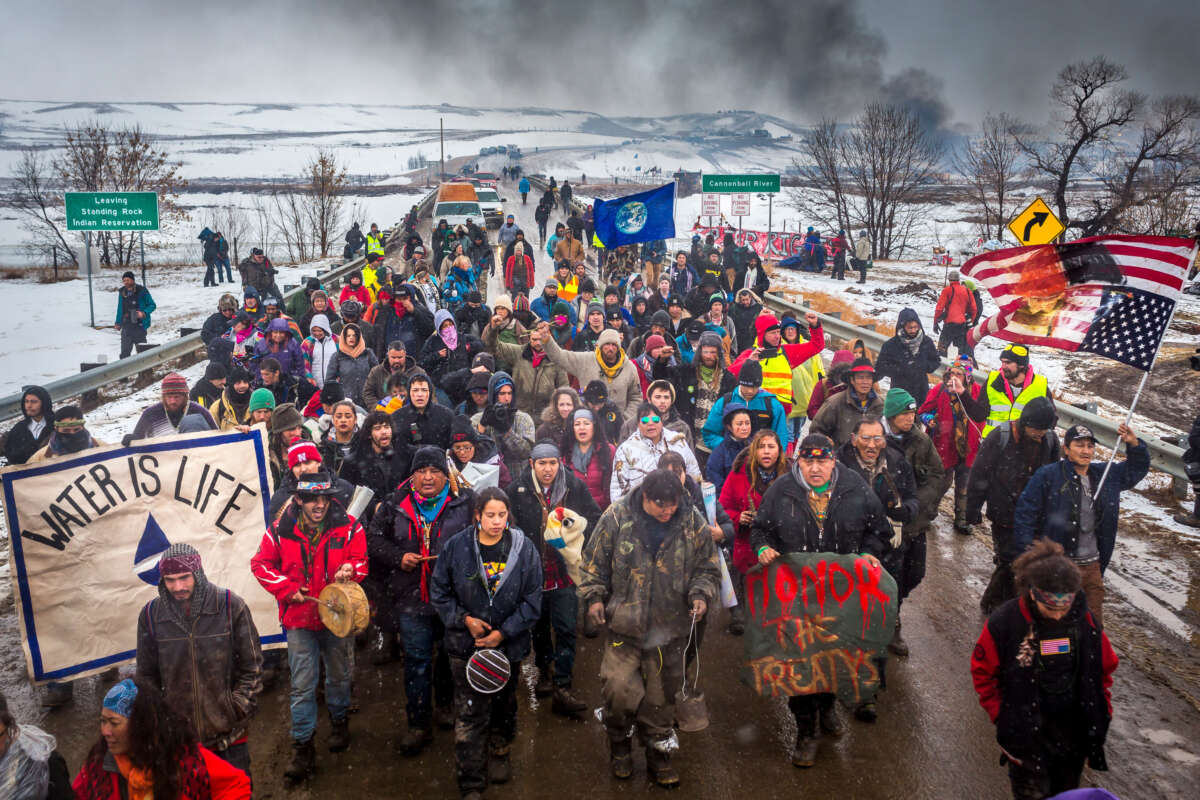
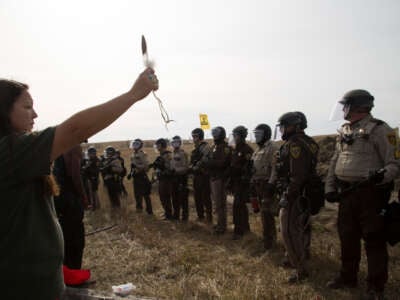
Indigenous Water Protectors and other environmental activists protest the Dakota Access Pipeline (DAPL) in North Dakota on February 22, 2017. Greenpeace was ordered by a jury in March 2025 to pay millions in damages to Energy Transfer Partners, the corporation that constructed the Dakota Access Pipeline, for supporting anti-DAPL protests.Michael Nigro / Pacific Press / LightRocket via Getty Images

On March 19, 2025, a jury in Morton County, North Dakota, issued a catastrophic verdict against Greenpeace in a high-stakes lawsuit over Greenpeace’s actions during the Dakota Access Pipeline (DAPL) protests, forcing Greenpeace to pay over $660 million in damages to Energy Transfer Partners, the corporation that constructed the Dakota Access Pipeline.

Over the three and a half week trial, Greenpeace and Energy Transfer Partners sparred over the extent of Greenpeace’s involvement on the ground during the 2016-2017 #NoDAPL Water Protectors uprising. At the height of the movement, thousands of Indigenous people and allies converged in North Dakota to protest to protest the construction of the pipeline. The epicenter of the protests centered around the spill risks posed by the crossing of Lake Oahe, a section of the Missouri River and sole source of water for the Standing Rock Sioux Nation.

Energy Transfer Partners sought to hold Greenpeace liable for “inciting” illegal conduct that took place during the protests, business damages as a result of Greenpeace’s role in divestment campaigns against DAPL funders, and defamation damages for statements made by Greenpeace that Energy Transfer Partners regards as false. After being asked for support by Indigenous organizers, Greenpeace USA sent support to protests on the ground, providing solar panels to charge protesters’ phones and issuing a $20,000 grant to support direct action trainings. These direct action trainings covered civil disobedience tactics, including the use of “sleeping dragon” lockboxes to form barricades. Greenpeace sent six employees to the protest camps, but argued in court that Greenpeace personnel never engaged in trespassing or any other form of illegal conduct. According to Greenpeace’s testimony, the two other Greenpeace entities named in the suit — Greenpeace Fund and Greenpeace International, never put employees on the ground at the protests, nor funded the trainings. In the suit, the only allegation made about Greenpeace International was that the organization made false statements in a civil society open letter to pipeline financiers. The letter was not led by Greenpeace and was signed by over 500 organizations.

In total, the pipeline corporation asked the jury to award over $800 million. During the trial, Energy Transfer Partners sought to hold Greenpeace liable for $75.7 million in direct damages from the protests, plus an additional $60.1 million the pipeline corporation expended on additional security. Other claimed damages included costs associated with loan refinancing and pipeline delays. In court, Greenpeace expert witnesses traced the cause of the five-month delay to permitting issues with the Army Corps of Engineers, not to protests. As one of the line items, Energy Transfer Partners sought recovery of the $7 million the company spent on public relations consultants seeking to rehabilitate the pipeline’s image. In addition to recompense for actual damages, Energy Transfer Partners sought punitive damages potentially adding up to over a billion dollars. The jury granted an estimated $700 million of this request.

The suit has broad ramifications in its adoption of a collective liability theory of protest. Holding Greenpeace accountable for illegal actions taken by some protesters and the economic impacts of protests on corporations sends a warning shot to all organizations seeking to provide support to social movements. The suit additionally attempts to hold Greenpeace accountable for spreading “misinformation” — listing a series of politically disputed claims widely repeated and argued within the #NoDAPL movement.

Greenpeace faces a $300 million lawsuit from Energy Transfer Partners, the company behind the Dakota Access Pipeline. By Cody Bloomfield , Truthout February 23, 2025

This lawsuit fits with a global trend of corporations targeting environmental organizations for their advocacy, through the use of Strategic Lawsuit Against Public Participation, or SLAPP. In SLAPP cases, the plaintiff often does not expect to win the suit on the merits; instead, the powerful corporations and individuals filing SLAPPs hope to intimidate their critics and force them to expend limited financial resources on legal defense. The Coalition Against SLAPPs in Europe documented 1,049 SLAPP suits filed in Europe across all categories between 2010 and 2023, many against environmental defenders.

“The purpose of a SLAPP is to punish one’s critics by exposing them to lengthy, costly and stressful litigation,” Kirk Herbertson, U.S. director for advocacy and campaigns at EarthRights International, told Truthout. “That certainly seems to have been the intent all along. I think the difference here is that, in addition to using the litigation process itself to harass Greenpeace, Energy Transfer was also able to maneuver the case through a combination of courtroom tactics and propaganda tricks to position themselves where they had a realistic chance of actually securing a verdict against Greenpeace.”
A Trial in a Hostile Venue

The choice of venue for the suit substantially narrowed Greenpeace’s path to a favorable judgement. The trial was held in conservative Morton County, which voted for Trump by a margin of 75.9 percent to 22.2 percent in the 2024 presidential election. The courthouse is located just 45 minutes south of where the protests were held, and many Morton County residents had direct experience with the #NoDAPL protests. In jury selection, nearly half the jury indicated that they had been impacted.

Ahead of the trial, both sides conducted extensive jury pool survey research. In jury research commissioned by Greenpeace, nearly half of residents surveyed indicated that they could not be fair jurors in the case. (Energy Transfer Partners commissioned a study of their own, which reported that most people surveyed were not impacted. The results from the final juror pool in court indicated otherwise.) Greenpeace filed a petition to move the case to Cass County, where research indicated that potential jurors had fewer interactions with DAPL protests. The judge denied the motion. From the outset, Greenpeace had a tough uphill battle to convince jurors to rule in their favor.
High Stakes for Greenpeace; a Chilling Effect on Civil Society

For Greenpeace, the adverse judgement poses an existential threat. In court filings, Greenpeace wrote that an unfavorable judgement might render them unable to appeal the judgement due to lack of funds. Greenpeace has publicly stated an intention to appeal the case all the way up to the Supreme Court, if necessary, but the court filing indicated that Greenpeace fears bankruptcy, should they be required to pay the $300 million in damages that the suit sought. One of the three Greenpeace arms targeted, the fundraising arm Greenpeace, Inc., reported $40 million in income in 2023. According to Greenpeace USA’s financial audit, the organization had $6.5 million in liquid financial assets in 2023 — less than the amount of damages sought by Energy Transfer Partners for the cost of public relations consultants alone. Greenpeace has successfully fended off SLAPPs before, but the outlook in hostile Morton County represents a dire threat to the organization.

In addition to the hundreds of millions in damages owed, Greenpeace has spent “millions” in legal fees, according to Deepa Padmanabha, senior legal advisor to Greenpeace. While 35 states and Washington, D.C. have SLAPP protections — and some allow for fee recovery — North Dakota has none.

The fallout for civil society could be significant. Many smaller organizations don’t have the funds or in-house legal firepower to fight yearslong legal battles. The danger of SLAPP suits lies in the potential chilling impact across civil society. Organizations providing protest support in hostile jurisdictions may constrain their activities out of fear of being targeted by calamitous lawsuits.

In a press conference, Padmanabha noted, “It’s clear that the intent behind the case is not just to destroy Greenpeace, but it’s to divide and destroy the movement and our right to protest.”

For its part, in a statement to Truthout, Energy Transfer Partners said: “Our lawsuit is about recovering damages for the harm Greenpeace caused our company. It is not about free speech. Their organizing, funding, and encouraging the unlawful destruction of property and the dissemination of misinformation goes well beyond the exercise of free speech.”

Asked by Truthout about Energy Transfer Partners’ statement, Herbertson commented, “They’re using public relations messaging to characterize Greenpeace’s role in a way that is not factual. To punish Greenpeace for some other unidentified people’s actions sends a dangerous message: that anyone who participates in a protest can be punished for anyone else’s actions.”

News outlets across the political spectrum have noted the ramifications of the case for free speech and protest. (The far right site Breitbart ran the headline “Greenpeace Trial Begins in North Dakota in Key Free Speech Case.”)
Challenging the Outcome; Penalizing SLAPP Filers

The U.S.-based entities of Greenpeace — assuming they don’t deplete their legal funds first — intend to take the case to the North Dakota Supreme Court, then to the U.S. Supreme Court if necessary. At the North Dakota Supreme Court, the appeal would be decided by a panel of five justices, as opposed to the jury determination at the local level.

On the international front, the Netherlands-based Greenpeace International is seeking remedy through the newly enacted European Union Anti-SLAPP Directive. Clamping down on SLAPPs became a political and advocacy priority in the EU after 2017, when news emerged that assassinated investigative journalist Daphne Caruana Galiza was facing 48 pending lawsuits at the time of her murder. Designed to cut off “venue shopping” by SLAPP filers, the directive allows courts in EU member states to block enforcement of adverse SLAPP judgements rendered outside of the EU and recover SLAPP defendants’ legal fees. The Coalition Against SLAPPs in Europe (CASE), one of the leading advocates for the directive, emphatically endorsed Greenpeace International’s countersuit.

“By invoking the EU Anti-SLAPP Directive, Greenpeace International is not only defending itself but also setting a precedent that could protect activists, journalists, and advocates everywhere,” commented Emma Bergmans, member of the CASE Steering Committee and senior policy advisor and advocacy advisor at Free Press Unlimited, in a Greenpeace press release.

The countersuit will be the first test of the Anti-SLAPP Directive. Reuters noted that it is unclear whether EU and Dutch law would apply to the Dallas-based pipeline company, but advocates of the directive are optimistic. With uncertain options in the U.S., the international approach could open another avenue of recourse for Greenpeace, potentially providing a bulwark against the looming threat of bankruptcy.
Verdict Endangers Free Speech and Protest

Walking out of the North Dakota courthouse, Padmanabha told reporters, “We know that this fight is not over.” In the U.S., any appeals will likely center around whether the jury pool provided the opportunity for a fair trial. Greenpeace’s odds of prevailing in North Dakota, a hostile jurisdiction, were slim. But the case sends a message to other organizations engaging in protest support that they, too, may be liable for millions in damages.

“It’s consistent with other intimidation tactics,” said Herbertson. “The strategy is to target a big name, where everyone else decides to keep their heads down and stay quiet.”

In awarding damages that punish commonplace speech and advocacy — in addition to validating a collective liability theory of protest — the North Dakota jury has endangered core exercise of First Amendment rights. With much of the case centered around the business impacts of Greenpeace’s advocacy, and one of the three Greenpeace branches alleged only to have signed a letter, the lawsuit strikes at protected speech. The success of Energy Transfer Partners’ suit could embolden other corporations to file SLAPP suits, sending a chilling effect across civil society.

As Greenpeace figures out its next steps, the organization has responded to the ruling with a renewed commitment to continuing its environmental defense.

The work of Greenpeace “is never going to stop,” Padmanabha was reported as saying by the Associated Press. “That’s the important message.”


This article is licensed under Creative Commons (CC BY-NC-ND 4.0), and you are free to share and republish under the terms of the license.

Cody Bloomfield 
is a journalist covering policing and protest. They are the former communications director of Defending Rights & Dissent.