Friday, March 21, 2025

Chinese EVs Surge in Global Markets

By ZeroHedge - Mar 20, 2025

Chinese automakers are significantly increasing their presence in global markets,
 particularly in emerging economies, with competitively priced and feature-rich electric vehicles.

While the U.S., Canada, and the EU impose tariffs, markets like Bangkok, Johannesburg, and Sao Paulo are embracing Chinese EVs, leading to a surge in export numbers.

Traditional automakers like Ford are acknowledging the competitive threat, especially in regions like India and South America, as Chinese brands gain market share through strategic marketing and affordability.


Chinese EVs like Great Wall, BYD, Chery, and SAIC are flooding the streets in places other than the U.S., according to a new report from Bloomberg.

While the U.S., Canada, and the EU impose tariffs to protect domestic automakers, emerging markets are embracing Chinese vehicles, creating fresh competition for global carmakers.

Places like "Bangkok to Johannesburg to Sao Paulo" are being dominated by the new low cost, sleek EVs that China has been churning out en masse over the last half decade.

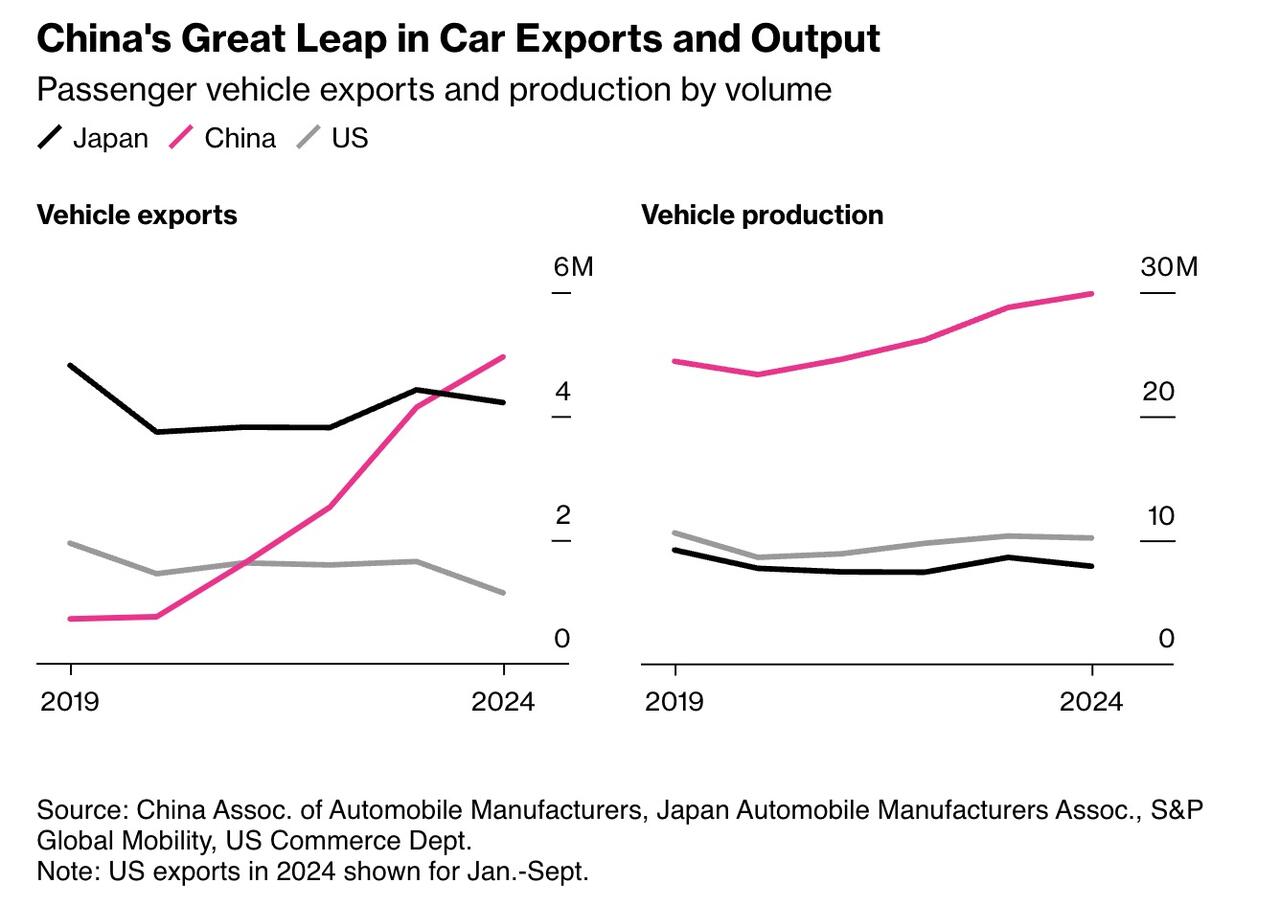
Bloomberg writes that China now leads global vehicle exports, shipping 4.9 million passenger cars in 2024—up from less than 1 million in 2020, according to the China Association of Automobile Manufacturers.

“Chinese automakers have pushed into lots of global markets with high quality and competitively priced vehicles,” said Abby Chun Tu of S&P Global Mobility, comparing their strategy to past successes of South Korean and Japanese brands. Unlike their predecessors, they also offer advanced software and feature-rich models, even at lower price points.


Despite concerns in the U.S. and Europe over China’s EV dominance, most Chinese car exports remain gas-powered, as many developing nations lack EV infrastructure.
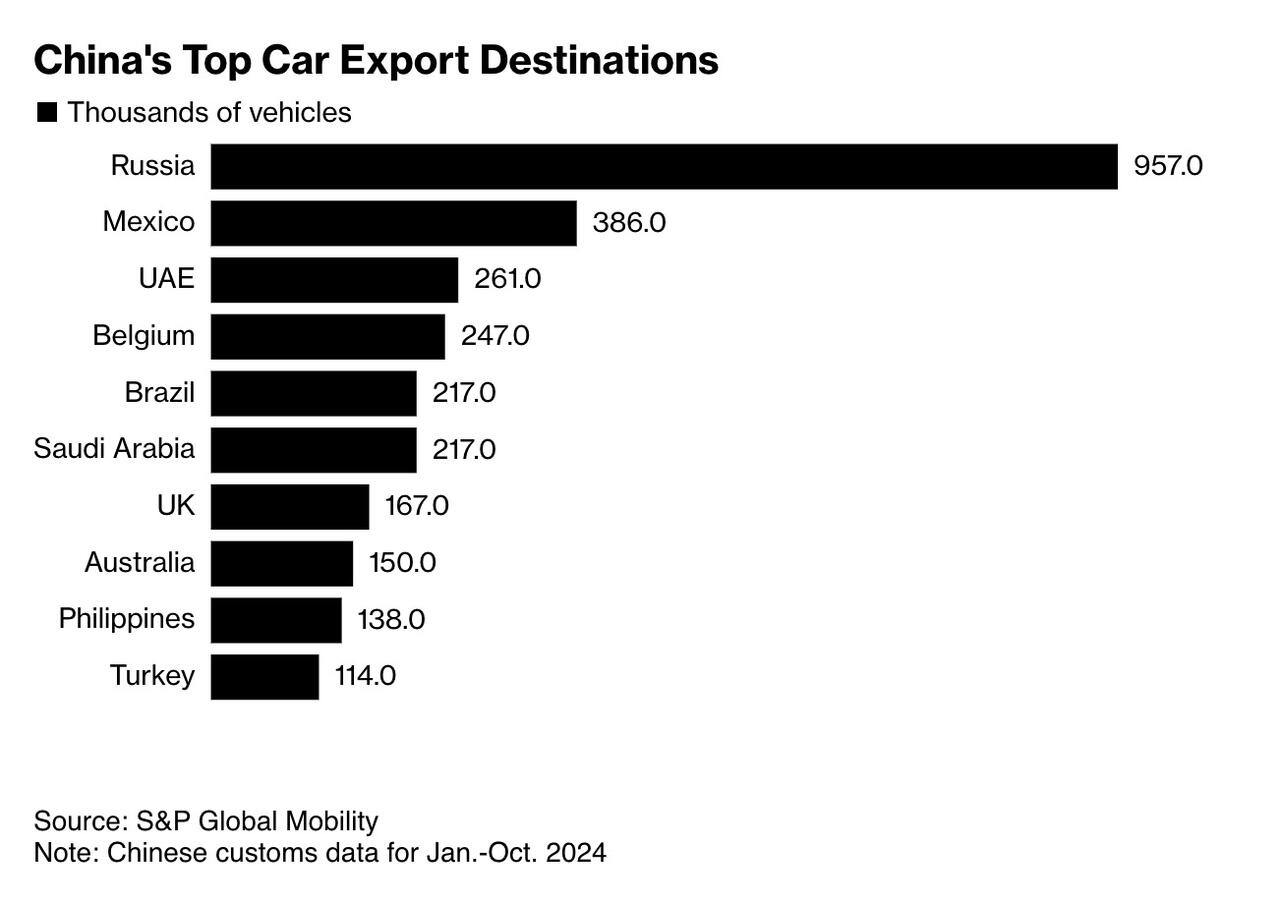


With a growing foothold, China’s global auto market share could rise from 3% today to 13% by 2030—hitting 39% in Africa and the Middle East, according to AlixPartners.

Ford CEO Jim Farley acknowledged the competitive threat, saying, “In emerging markets like India, especially South America, they’re being dominated by the Chinese.”

Ford has exited Brazil, where BYD took over its former plant, but aims to hold ground in South Africa and Thailand. “We have to think about future-proofing that,” Farley said.


The article concludes, stating GM and Stellantis see Chinese automakers as a threat but partner with them to stay competitive.

Chinese brands gain ground with marketing and low prices. In Brazil, BYD featured PelĂ© in ads, and Luiz Palladino compared his Haval H6 EV to BMW, saying, “It has everything I want.”

Tax breaks helped China’s foothold in Brazil, with BYD and Great Wall building plants. “The Chinese found a great opportunity,” said Ricardo Roa of KPMG.
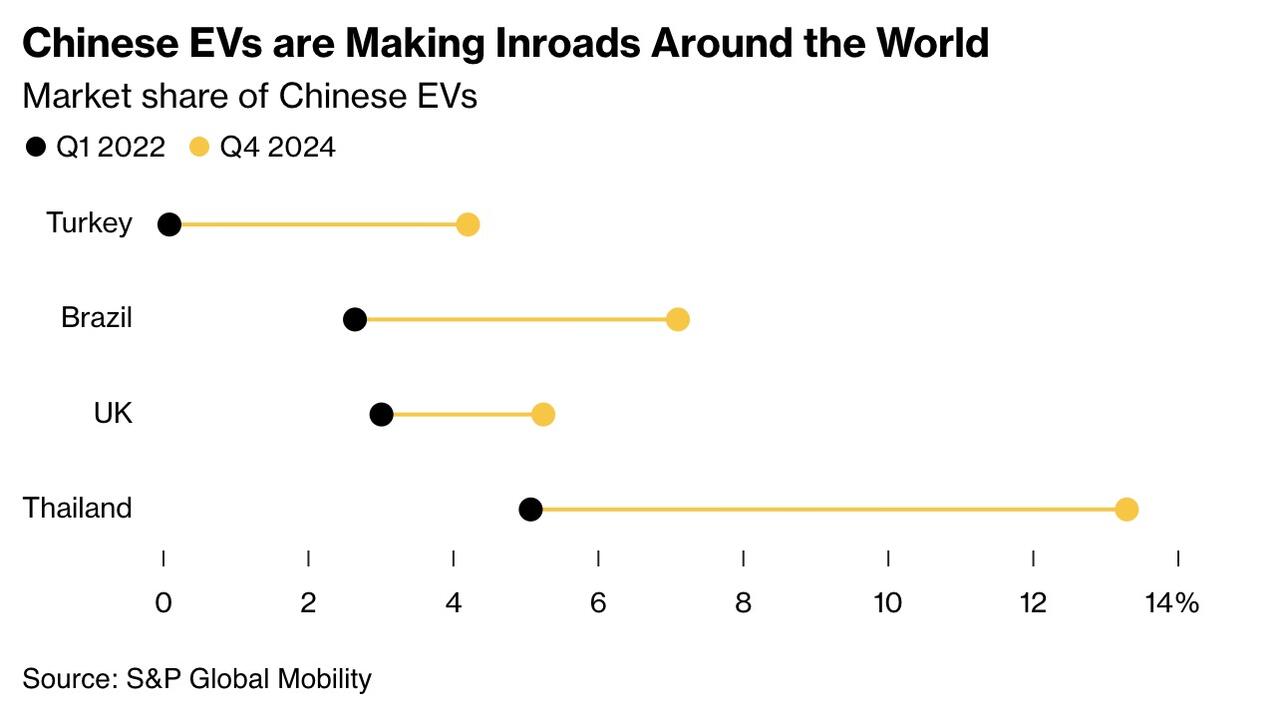


In Thailand, Chinese brands now hold 13.3% of the market and 71% of EV sales. As Japanese automakers retreat, Chinese rivals take over.

At Bangkok’s Motor Expo, Wiyawit Petra, a longtime Toyota and Honda driver, considered a BYD hybrid. “I want to open my heart to something new now,” he said. “It’s also affordable, so it’s worth the risk.”

By Zerohedge.com
Hedge Funds Struggle as Green Stocks Crash

By Irina Slav - Mar 20, 2025

The freezing of the IRA and rollbacks on climate policies are forcing hedge funds and pension funds to rethink their strategies.

Green energy stocks have fallen to five-year lows, and a hedge fund founder declared the energy transition "dead for now.".

The growing divide in the investment world is forcing financial institutions to take sides.


Donald Trump’s second presidency has unquestionably upended the energy world—and the energy investment world. With the IRA in deep freeze and rollbacks of various climate change-related regulation, some of the biggest players in financial markets are feeling the heat. Hedge funds with a focus on energy have found themselves in a juggling act on a tightrope.

Bloomberg wrote this week that a lot of money managers were scrambling to strike the right balance between investors who were still insistent that emission-cutting commitments were priority number one and those who are accepting energy reality for what it is and seeking to replace those commitments with profits.

Some pension funds in northern Europe, for instance, were discussing a pullout from the United States because of the Trump administration’s dismissal of the climate change fight, which those pension funds’ managements see as ignoring a substantial future investment risk, Bloomberg reported. Interestingly, British funds are doing the opposite, riding the wave of reprioritization to keep those investors who are in the game to make money rather than save the planet.

Some specific examples provided by Bloomberg include a Dutch pension fund, DME, that is reviewing a $5-billion mandate with Blackrock because its management feels the U.S. financial giant has stopped taking its transition ambitions seriously, jeopardizing the Dutch pensioners’ money. As the fund put it, “BlackRock’s diminishing ambitions in responsible and sustainable investing” were threatening the $5 billion.

Interestingly, BlackRock is also the central character of another investment review noted by Bloomberg, this time for its too big of a focus on the energy transition, as perceived by the investment fund—the state pension fund of Indiana. Because of that perception, which is the exact opposite of DME’s perception of the same investment bank, the pension fund of Indiana pulled its money out of BlackRock and put it in State Street.

The Bloomberg report comes days after the founder of a hedge fund specifically set up to invest in the energy transition declared the transition dead, “for now.” Speaking to Bloomberg again, Nishant Gupta, founder of Kanou Capital, said that “The whole sector — solar, wind, hydrogen, fuel cells — anything clean is dead for now,” adding that the fundamentals in the energy transition space were “very poor.”

Another recent report, this time by the Financial Times, strengthens the perception that not all is well with the transition and maybe the investment entities shifting their focus have a point. In that report, the FT said that green energy stocks had slumped to the lowest in five years despite an improving interest rate environment and continued strong government support for all things transition.

“Companies that we hold in the decarbonization sector have seen strong growth and stable returns, but they have underperformed in terms of share price,” the FT cited the chief of sustainable equity at Ninety One, Deirdre Cooper, as saying. “I have never seen such bearishness in terms of the valuation for companies with structural growth . . . The market is assuming no growth for decarbonisation [ie the sector],” Cooper added.

In the latest sign that a shift is underway in the energy investment world, Aviva Investors, a division of French insurance giant Aviva, revised plans to divest from companies that are, according to Aviva, not doing enough to decarbonize. The investment arm of the insurer cited a “very different macro backdrop” and the fact that “Concerns over energy security and economic recovery have come to the fore, which in turn has had an impact on the regulatory environment and trajectory of national decarbonisation plans.”


The energy transition was supposed to be strong, unstoppable, and accelerating. Instead, it is slowing down, despite the massive government support, and returns, where there were any, are down, too. As one executive from a French climate NGO told Bloomberg, “Financial institutions will need to pick a side.” Indeed they will—the choice would be between the side that makes money and the side that loses it.

By Irina Slav for Oilprice.com


U.S. Firm Backed by Gates and Bezos Seeks Congo Lithium Exploration

U.S. firm KoBold Metals, whose backers include billionaires Bill Gates and Jeff Bezos, is seeking to develop a huge hard rock lithium deposit in the Democratic Republic of Congo as the African country, which also has large cobalt, gold, and cobalt resources, is seeking a minerals partnership with the United States.

KoBold Metals has set sights on taking over a mining license for an area, the Manono project, which promises large lithium deposits. The U.S. firm “would welcome the opportunity to develop the asset,” Sandy Alexander, the chief legal officer of KoBold Metals, wrote in a letter to Congo’s president seen by Bloomberg News.

The Roche Dure resources in the Democratic Republic of Congo “has the potential to become a large-scale, long-lived lithium mine,” KoBold’s Alexander wrote in the letter to the chief of staff of the Democratic Republic of Congo’s President Felix Tshisekedi dated January 21.

Investment in the deposit has been impeded by a legal dispute between Australian firm AVZ Minerals Ltd, China’s Zijin Mining Group Co, and the government of the DRC.

Two years ago, the DRC canceled AVZ Minerals’ exploration license. It divided the exploration area into two separate areas and handed one of them to the Chinese firm Zijin.  

AVZ Minerals earlier this month won a compensation case at the International Court of Arbitration of the International Chamber of Commerce (ICC) over the project.

AVZ Minerals also said that it is in discussions with several U.S.-based parties to raise funding for the lithium project.

KoBold says that it is using AI to explore for minerals. Currently, the company backed by U.S. entrepreneurs and billionaires is exploring more than 70 projects worldwide.

KoBold Metals could consider bringing in partners to fast-track the development of a new copper mine in another African country, Zambia, that could cost about $2 billion, the start-up’s co-founder and president Josh Goldman told Reuters last month.

By Charles Kennedy for Oilprice.com

KOBOLD MINER


Shareholder Showdown: Elliott Demands Further Changes at BP


By Charles Kennedy - Mar 21, 2025


Elliott Management is discussing further actions with other BP shareholders to improve the company's performance.

These discussions include potential deeper cost reductions and leadership reshuffles.

The focus is on addressing BP's underperformance compared to peers and demanding more significant changes than the company's recent strategy shift.


Elliott Management, the activist investor pushing for changes at BP, has discussed with other large shareholders in the supermajor potential additional moves to boost the company’s performance including more cost reductions and leadership reshuffles, two shareholders have told Reuters.

BP’s stock has been underperforming its UK-based peer, Shell, and other major international oil firms in recent years. The BP board has been under increased pressure to seek fundamental changes to the business to reward shareholders more.

The pressure on BP became more intense earlier this year after Elliott Management bought a stake and demanded changes in strategy. Elliott has accumulated nearly 5% in the supermajor and signaled it would be pushing for changes in strategy, or even for board reshuffles, to address the undervalued shares of the company.

In a major reset back to oil and gas, BP last month said it would increase its investment in upstream oil and gas to $10 billion per year while slashing spending on clean energy by more than $5 billion a year.

In the upstream, BP will aim for 10 new major projects to start up by the end of 2027, and a further 8–10 projects by the end of 2030. Production is also expected to grow, to 2.3–2.5 million barrels of oil equivalent per day (boed) in 2030, with capacity to increase to 2035.

That’s a stark departure from the previous strategy to lower oil and gas output by 2030.

BP will also look to reduce costs and net debt, boosting the target to $4 billion–$5 billion of structural cost reductions by the end of 2027 and targeting $20 billion of new divestments to be announced by the end of 2027.

However, Elliott and other shareholders are seeking even deeper changes and have held meetings to build consensus around additional demands, according to Reuters’ sources.

Shareholders are meeting on April 17 for BP’s annual general meeting, at which they will be asked to vote on the re-election of the board, including chair Helge Lund and chief executive officer Murray Auchincloss.

By Charles Kennedy for Oilprice.com


Panama president says not informed of First Quantum suspending mine arbitration


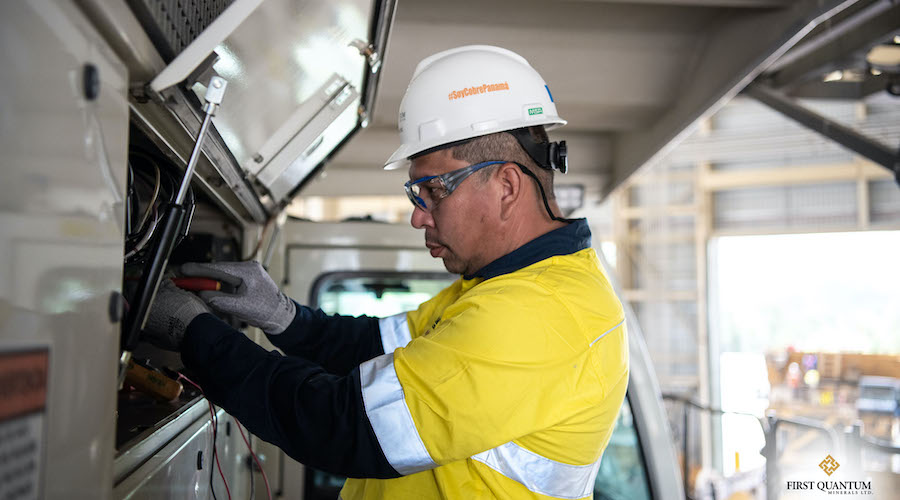
A Cobre Panama worker. (Image by Cobre Panama).

Panama’s President Jose Raul Mulino said on Thursday that his government has not been notified yet by Canada’s First Quantum Minerals that the miner has suspended arbitration over its shuttered copper mine in the country.

An internal memo from the company’s local unit, Cobre Panama, last Friday showed the company had instructed its lawyers to start work to suspend arbitration against Panama, referring to cases it filed after the government’s 2023 shutdown of the mine following protests over environmental concerns.

Mulino said the government would not be able to hold talks with First Quantum until the arbitration suspension was finalized, but that he believed the miner was taking the proper legal steps.

“We haven’t been notified of that suspension, but in good faith, I must assume that it’s a process … that takes a reasonable amount of time,” he told a press conference.

“Until we are notified, there will be no formal conversations.”

Mulino added that he will start talks with his team and the country’s mining chamber next week to discuss issues about Cobre Panama.

Shares in First Quantum were trading down 0.6% at 1501 GMT.

(By Elida Moreno and Daina Beth Solomon; Editing by Sarah Morland and Frances Kerry)


China’s HBIS collaborates with Vale to advance steel decarbonization

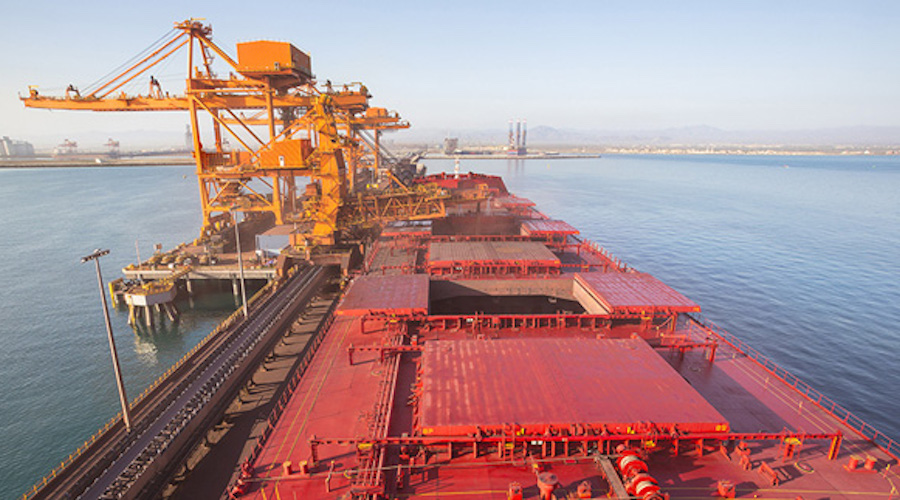
Vale’s terminal in Oman. Photo by Vale.

Chinese steelmaker HBIS group signed a memorandum of understanding (MoU) with iron ore mining giant Vale to promote decarbonization in the steel value chain, both companies said on Thursday.

Both parties will jointly identify optimal burden solutions for low-carbon transition and exploring the feasibility of using the Tecnored furnace to treat solid waste and extract valuable metals, they said.

“The signing of the MoU on the cooperation for decarbonization of the steel industry value chain represents a joint action by two major international enterprises in the upstream and downstream of the industrial chain to address climate change,” HBIS chairman Liu Jian said in a statement on the company’s WeChat account.

Both HBIS and Vale aim to achieve carbon neutrality by 2050.

Liu also hopes both sides will explore breakthrough decarbonization technologies such as circular economy, hydrogen metallurgy and carbon capture, utilization and storage (CCUS).

Steelmakers across the world have sought cooperation with upstream mining giants for green transition in the hard-to-abate steel sector that has contributed to 7% of global carbon dioxide emission.

(By Amy Lv and Colleen Howe; Editing by Chizu Nomiyama)

BMO changes some mortgage rules for steel, aluminum business owners due to trade war


Reuters | March 21, 2025 |


Stock image.

Canada’s Bank of Montreal has changed some terms of its mortgage process for steel and aluminum business owners, a memo sent to its brokers shows, as US tariffs stoke uncertainties in the industry.


The lender said in the memo this week that borrowers’ total debt service ratio – the percentage of monthly household income that covers housing costs and other debts – will be reduced to 42% from 44%, meaning the borrower will have more room to manage their housing budget and a smaller mortgage.

BMO also added the steel and aluminum sector to its list of industries that are more prone to risk.

“With newly announced tariffs between Canada and the United States, and consideration to the turbulent economic landscape, BMO BrokerEdge has reviewed its risk appetite for tariff-impacted industries,” the memo said.

“As a result, we have revised our temporary lending criteria for self-employed borrowers.”

Canada, the biggest foreign supplier of steel and aluminum to the United States, announced this month 25% retaliatory tariffs on goods including steel, aluminum, computers, sports equipment and other products in response to US President Donald Trump’s tariffs on Canadian-made steel and aluminum.

Steel manufacturers in Canada have said that the tariffs will cause grave concern for Canadian steel workers and have asked the government to support the industry.

A spokesperson for BMO said the measures would not impact workers and were meant to protect customers’ long-term financial health.

Policy adjustments are normal course procedure that reflect multiple inputs including the macroeconomic environment, the lender said.

The list, called limited appetite industries, also includes utilities, construction, and transportation as areas where the lender has a slightly reduced tolerance.

BMO is the first bank in Canada to take such an action in response to the trade war.

Toronto-based mortgage broker and owner at Integrated Mortgage Planners, David Larock, said the change was minor and expects other lenders to make similar adjustments.

(By Nivedita Balu; Editing by Caroline Stauffer and Nia Williams)

Read More: Canada initiates WTO dispute complaint on US steel, aluminum duties
Trump’s love for coal is crashing into market’s economic reality


Bloomberg News | March 21, 2025 | 


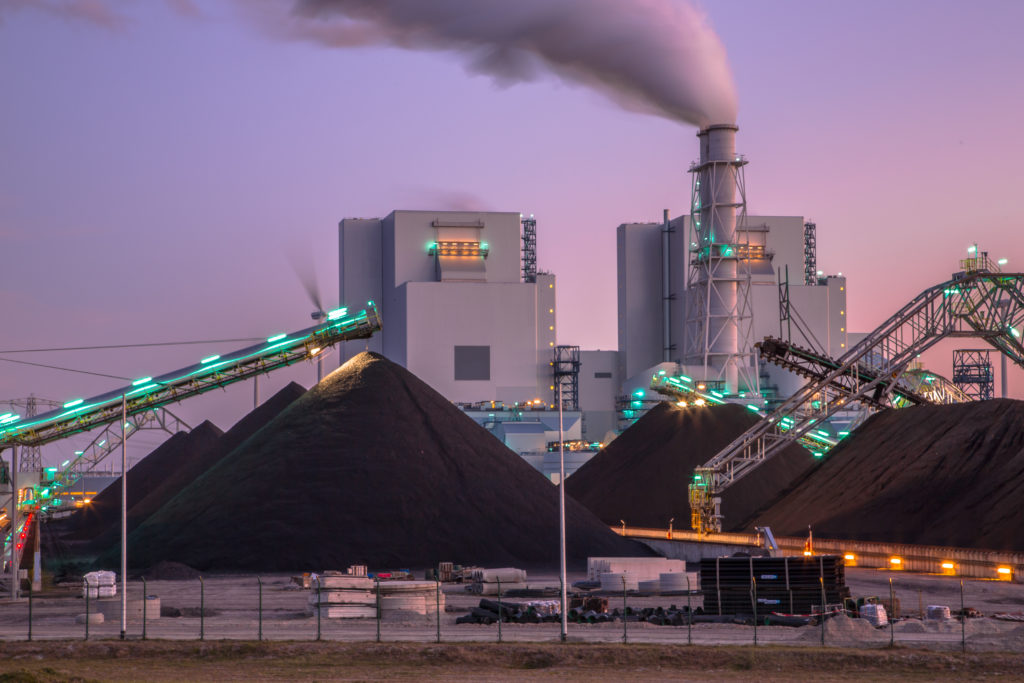
New coal plant. Stock image.


The US coal industry is once again enjoying support from the White House. Yet that’s unlikely to quell the economic challenges that underpin a long-term decline for the dirtiest fossil fuel.


Just this week, President Donald Trump in a social media post touted “BEAUTIFUL, CLEAN COAL.” His administration has signaled it’s eyeing emergency powers to restart shuttered plants and has launched a sweeping overhaul of US environmental mandates. The moves overlap a macro trend that’s also poised to help the industry: surging power demand from data centers. Already, power companies have extended, or are considering extending, the lives of some plants that had been ticketed for extinction. All of this suggests the US may burn more coal in the near term.

But in some ways, rhetoric from the current administration is a bit toned down from Trump’s first term and national political support has also eased since then. Even more fundamentally, experts argue that the industry is still battling headwinds that will drag on for years.

“Power-plant owners, operators and developers don’t think of investments in terms of administrations — they think 10, 15, 20 years down the road,” said Timothy Fox, an analyst at Washington-based ClearView Energy Partners.


Much of the demise for coal has been in the cards for years. The challenge has come not just from federal mandates and public pressure to cut back on emissions, but also competition from cheaper sources of energy. Federal regulations have also raised operational costs.

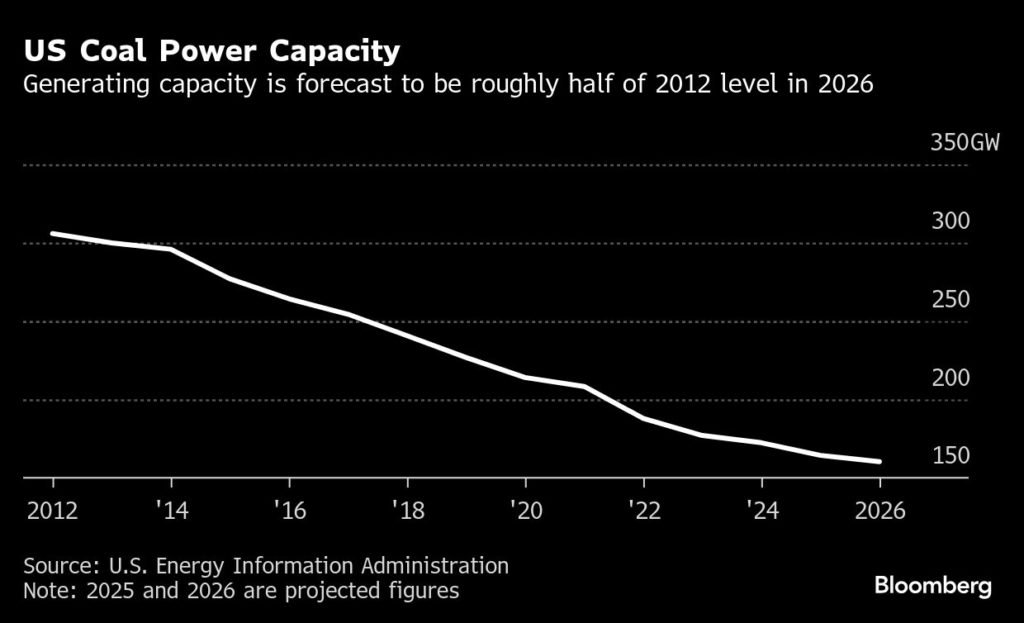
Coal power in 2024 made up around 15% of US electricity generation for all sectors, down from more than 50% in 2001, according to the Energy Information Administration. As recently as 2020, Peabody Energy Corp., the largest US coal miner, was at risk of declaring bankruptcy for a second time due to demand declines. And banks have also pulled out from financing coal in recent years on concerns over backing stranded assets.

Joe Biden’s administration sped up coal’s inexorable decline. US data show that 71 coal units are set to retire by 2030.

US Energy Secretary Chris Wright said in an interview with Bloomberg News this month that the Trump administration is working on a plan to stem the closure of plants. Wright declined to provide specifics of the proposal other than to say the “general mechanism” of it would be market-based in an effort to remove obstacles “so entrepreneurs can build new systems and operate the ones they’ve got already.”

There are significant challenges to overcome, according to Josh Price, director of energy and utilities at Capstone LLC.

Restarting a closed plant would require capital expenses to fix it up so that it can run properly, and it’s unclear who would bear that cost. The industry would also grapple with a labor shortage and inadequate rail infrastructure to transport the fuel, Price added.

That doesn’t mean Trump’s efforts won’t create at least a short-term boost for coal use. Some plants undoubtedly will stay online longer than planned.

In December, Vistra Corp. said it planned to prolong the life of a large coal-fired plant in Illinois. Utility giant Southern Co. says extending coal is among its options to meet demand from artificial intelligence.

The strongest prospects for coal, though, appear outside the US. Demand continues to rise in India and China. And Japan — the lone G7 country without a phaseout deadline for coal-fired power — has taken the view that scrapping inefficient coal plants will need careful consideration to maintain a stable power supply.

In the US, there’s the question of how long policy support will last. A climate-focused president could, of course, return to the White House as soon as January 2029.

There’s also uncertainty over what industry groups (outside of coal producers) would be supportive of plans to revive the fossil fuel. Independent power producers may not be keen on the idea, the oil and gas industry would back gas instead and utilities are concerned about consumer impact, Capstone’s Price said.

(By Shoko Oda)


US wants revised terms on Ukraine minerals deal, FT reports


Staff Writer | March 21, 2025 | 


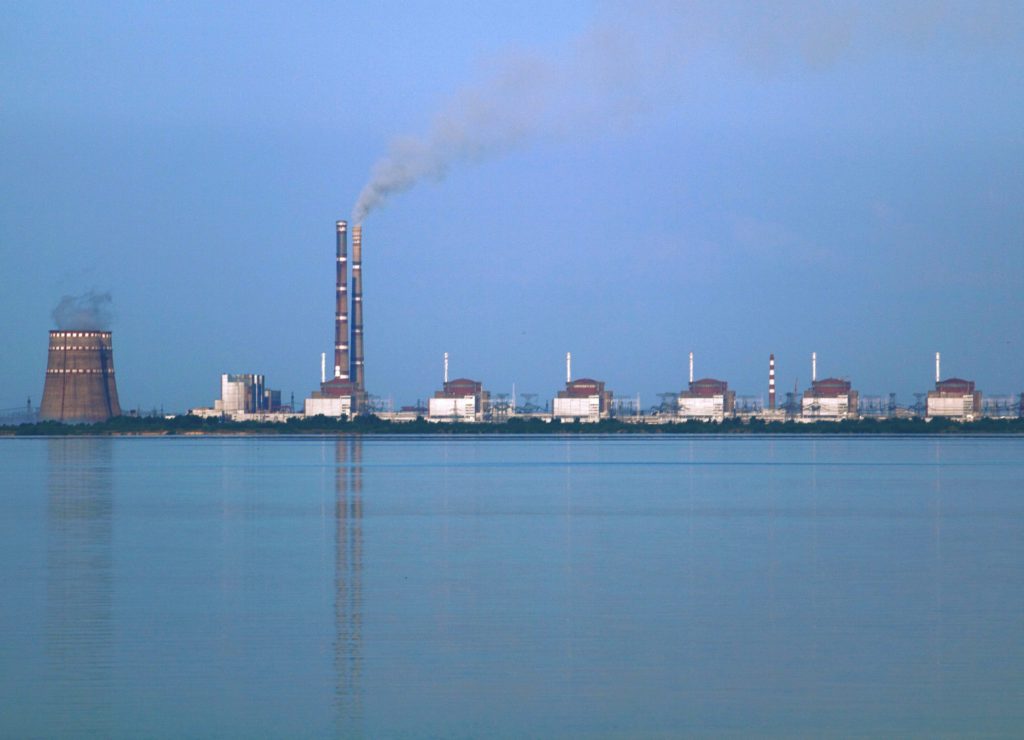
Zaporizhzhia power plant. Credit: Wikipedia under licence CC BY-SA 3.0


The Trump administration is looking to renegotiate its proposed minerals deal with Ukraine which, if agreed, would grant the US expanded access to the Eastern European resources, the Financial Times reported on Friday.


The FT has learned, citing Ukrainian officials, that Washington wants to broaden the terms of the deal to include other assets, most notably a nuclear power plant that is currently under Russian control. It is also looking to add more specific provisions on American ownership of a joint investment fund.

These changes would, the sources said, essentially require a renegotiation of the unsigned minerals that fell apart last month.

The FT report comes a day after US President Donald Trump said that a minerals deal will be signed “shortly” following his talks this week with the Russian and Ukrainian leaders. The pledge was made following his signing of an executive order to increase US production of critical minerals. In addition to Ukraine, Trump said that his government is also looking at rare earths and minerals in other countries.

With the potential revision of terms, Ukrainian officials told FT they are concerned about Volodymyr Zelenskiy’s government “being pressured into unfavourable terms”, especially after Washington paused arms deliveries and intelligence sharing with Kyiv earlier this month.

During a phone call this week, Trump and Zelenskyy reportedly discussed Ukraine’s energy supply and nuclear plants, the FT said, citing both the secretary of state Marco Rubio and national security adviser Mike Waltz.

Zelenskyy told reporters during an online briefing on Wednesday that they discussed just one nuclear facility: the Zaporizhzhia nuclear power plant, Europe’s largest.

Located 650 km southeast of Kyiv on the Dnipro River, the facility has been under Russian military control since March 2022.

Trump says he’ll soon sign Ukraine natural resources deal

Bloomberg News | March 20, 2025 | 


Ukrainian flag in Lviv. Stock image.


President Donald Trump said he would soon sign a natural-resources deal with Ukraine that would give the US partial control over revenue from future resource extraction.


“One of the things we are doing is signing a deal very shortly with respect to rare earths with Ukraine,” Trump said Thursday during an education event at the White House.

The agreement fell apart late last month after a tense Oval Office meeting between Trump and Ukrainian President Volodymyr Zelenskiy. Under that deal, Ukraine would contribute half of all revenues from future sales of natural resources, including minerals, oil, natural gas, hydrocarbons as well as infrastructure to a reconstruction fund jointly owned with the US.

Trump’s comments come one day after his top spokeswoman said the administration was moving beyond the previously negotiated minerals deal with Kyiv to focus more broadly on a peace agreement between Russia and Ukraine.

“We are now focused on a long-term peace agreement,” White House Press Secretary Karoline Leavitt said Wednesday. “We’ve moved beyond just the economic minerals deal framework.”

Trump’s focus on Ukraine’s commodities has raised questions about what the nation really has to offer. It has no major rare-earth reserves that are internationally recognized as economically viable. Ukraine is an established producer of coal, iron ore, uranium, titanium, and magnesium, and expanding those sectors could be profitable for the US.

The president spoke about the Ukraine agreement shortly after he invoked emergency powers to boost the US’s ability to produce critical minerals, and possibly coal, as part of a broad effort to ramp up domestic production and lower reliance on imports.

“I also signed an executive order to dramatically increase production of critical minerals and rare earths. It’s a big thing in this country, and as you know, we’re also signing agreements in various locations to unlock rare earths and minerals and lots of other things all over the world, but in particular Ukraine,” Trump said.

(By Akayla Gardner)


CMA CGM Makes Rival Bid for Air Belgium in Move to Expand Air Cargo Ops

plane air cargo
CMA CGM is bidding to acquire Air Belgium's cargo operations (Air Belgium)

Published Mar 20, 2025 3:51 PM by The Maritime Executive


CMA CGM Group, which launched a niche air cargo operation in 2021, has made a last-minute rival bid to take over the troubled carrier Air Belgium. It comes as the French group has said it plans to continue to grow in the air cargo segment including expanding with a base in the United States.

Air Belgium was founded in 2016 and started operations offering long-haul passenger flights and cargo operations in March 2018. It was struggling to establish its operations when the COVID-19 pandemic overtook the industry and forced it to ground its operations and convert passenger planes into cargo aircraft for medical transport. Citing the impact of COVID-19, the war in Ukraine, soaring fuel prices, inflation, and falling consumer purchasing power, the company ceased its passenger operation in September 2023 to focus on air cargo and leasing for passenger and cargo flights.

The company currently has two Airbus A330-200 and two Boeing 747-8F planes in operation highlighting the enhanced payload capacity and a variety of options provided by the fleet. The company however was placed under judicial supervision in September 2023 and moved a year later into judicial liquidation.

A group called Air One Belgium, a joint venture of the UK’s Air One International and the Dutch company Peso Aviation Management, made a bid for the company which was accepted in December 2024. The deal has failed to close which last week led the Belgian authorities to revoke the acquisition permission and declared the deal had failed. The court gave Air Belgium till March 27 to find an alternate investor or face liquidation.

CMA CGM was familiar with Air Belgium having started its cargo operation in 2021 working with the Belgium company. CMA CGM obtained its operating certificate in 2022 and launched its own fleet. CMA CGM currently operates four cargo planes, including three Boeing 777Fs and an Airbus A330F with orders for two more 777s and eight Airbus A350Fs due in late 2027 and beyond. Last week as part of a $20 billion investment plan for the U.S., CMA CGM said it would also establish a new air cargo hub in Chicago, and deploy five new Boeing 777 freighters, operated by American pilots.

Air One Belgium announced that it was appealing the court decision as it wanted to proceed with its acquisition of the troubled Belgian carrier. Today, Air Belgium confirmed that CMA CGM has entered a competing proposal for the cargo operations. 

Belgium’s Walloon Brabant Business Court will review the bids. A hearing is scheduled for March 27.