Sunday, April 13, 2025


How fake OSINT manipulates Middle East news
Fake Open-Source Intelligence accounts are spreading disinformation about the Middle East on X, with many following a similar playbook.


Alysia Grapek
09 April, 2025
THE NEW ARAB


Fact-checking and open-source intelligence (OSINT) - the analysis of publicly available information - have become popular tools in combating media manipulation.

But these techniques can also be used more sinisterly. News reporting on the Middle East is increasingly facing massive disinformation campaigns on social media, leaving media professionals and audiences alike scrambling to counter the pernicious effects.

When the OSINT field is abused, the public is exposed to harmful mis- and disinformation under the guise of objective facts.
OSINT in the Arab world

Since the start of Israel's genocide in Gaza, OSINT has been increasingly used to uncover Israeli war crimes. Geolocation, or using public sources such as satellite imagery and photos to identify a location, has helped pinpoint sites where Israeli soldiers have destroyed civilian infrastructure in Gaza and the occupied West Bank.

These geolocations help build evidence that could potentially be used in future court cases and in countering Israeli disinformation about their war tactics.


In Lebanon, fact-checking and OSINT investigations continue to play a role in finding and documenting evidence of Israeli crimes, while in Syria, dedicated OSINT investigation teams, like the database Bayanat by the Syria Justice and Accountability Centre, help counter online disinformation.

But legitimate fact-checking initiatives face barriers.

"Certain types of content – particularly those related to developments in our region, such as the situation in Gaza - are being restricted; there appears to be far less effort directed at combating disinformation campaigns," Murad Mohammed Al-Hamwi, an open-source investigative journalist and fact-checker, told The New Arab.

So-called OSINT has also been weaponised to push falsehoods, Israeli talking points, and misinformation.
Disinformation through OSINT accounts

OSINT Defender, a high-profile account found to be run by US-based former army officer Simon Anderson, spreads alleged disinformation on Ukraine and Palestine. The account, which boasts over 1.3 million followers on X, has posted debunked Israeli military claims as OSINT-verified truths, including that a Hamas headquarters was found under Gaza's Al-Shifa hospital.

Other profiles claiming to be OSINT monitors or radars, such as Open Source Intel, use their platform to spread pro-Israel narratives and disinformation under the guise of verified truth. The account, which sells Israeli merchandise and is open about being based in Israel, uses the bio "Monitoring Real-Time News and Open Source Intelligence", which closely resembles that of OSINT Defender.

While Israeli troops were invading Lebanon in November, Open Source Intel posted an unsourced map of the Arab country, saying the Israeli military "looks like it's going to try to encircle Al-Khaim, a very strategic mountain", adding it would "hopefully fall by next week".


In another post, the account shared a screenshot of an UNRWA statement and claimed the UN's Palestinian refugee agency "IS A TERRORIST ORGANISATION", an Israeli disinformation talking point.

Accounts spreading fake information often post legitimate breaking news in between publishing opinionated, unverified, and biased descriptions of news events, making it harder for the public to separate fact from fiction. It would take a user wading through the entire profile to notice the difference.


They also use a number of ploys in the hopes of appearing more credible and legitimate, including by paying for the blue tick verified status on X. Other potential warning signs are the terms "Radar", "Monitor", "Warfare" or, more literally, "OSINT" or "Open Source" in their names, as well as nearly identical formatting in posts and structure. Photos, videos, and claims are often digitally edited and presented without links to original sources.

Bara'a Al-Ma'any, a fact-checker and digital verification specialist with the Arab Fact Checkers Network, part of Arab Reporters for Investigative Journalism, said: "When an account tries to obscure where footage comes from by not providing the original source, flipping the images or deleting a watermark, it shows a tactic that purposely tries to hide the information that can be used to help verify something."

Posts often begin with a lightning bolt or siren emoji, usually alongside the word "BREAKING" – a sign the content is aimed at grabbing attention. Using this format, OSINT Observer, an anonymously run profile claiming to be based in the Middle East, shared disinformation fabricating claims that the deaths of two Israeli hostage children from the Bibas family were caused by "ordinary Gazans".

The earlier post about the autopsy refers to an Israeli claim that the children were killed by Hamas and not an Israeli airstrike, though evidence was never provided for this accusation.


Other accounts using these tactics include Israel Radar, which reports almost exclusively on Israeli military actions, narratives, and talking points. The now-deleted account MiddleEastOsint was recently exposed as part of an Israeli disinformation campaign to smear Palestinian journalists.

"OSINT disinformation accounts that focus on the Arab world can hurt the credibility of journalists on the ground too, putting people in the position of having to suffer through traumatic experiences twice. One to report on it and the other to prove that what they reported was true," Al-Ma'any said.

War Monitor, though not an OSINT-specific page, uses the same formatting to share news while adding its own opinion. The account, which identifies itself as being based in Lebanon, shares breaking news interspersed with opinions, commentary, and examples of bigoted beliefs. In one post, the account wrote: "Why hasn't my government deported every single Syrian refugee currently in Lebanon?".


The tactics of making breaking news-style posts and using the open-source label to stir up engagement also point to a broader strategy.


"When an algorithm detects that a particular piece of content is gaining traction among users, it tends to amplify that content by pushing it to an even broader audience, under the assumption that it is relevant or desirable," Al-Hamwi said. "The problem arises when that content is, in fact, false or misleading."
X's complicity: Danger in virality

X posts receive most of their engagement shortly after publication, making it difficult for fact-checkers to act in time and helping fake news break through. Tariq Kenney-Shawa, US policy fellow at the Palestinian think tank Al-Shabaka, said pro-Israel OSINT profiles have "always provided cover for the Israeli military", including through selective reporting and ignoring war crimes.

"But what I think has changed is the prospect of making money on [X] – the monetisation of engagement," he told The New Arab.

"Any type of engagement, whether it's negative or positive, can pay big bucks. The reality is that disinformation and outright propaganda are high-engagement content, meaning they generate a lot of money."

Experts urge users to develop media literacy around OSINT accounts by checking what information exists about a post's author and their motives, looking for uncited sources, and questioning whether so-called investigators are inserting their own opinions or regurgitating politicised claims.

"These [fake] accounts aren't just popping up out of nowhere and brainwashing people, they're providing what many people want, which is quick, politically charged breaking news that confirms people's pre-existing biases," Kenney-Shawa said.

Alysia Grapek is an editor, fact-checker, and open-source intelligence investigator specialising in the Middle East and geolocation
Culture

“Gaza has long been denied a sense of history”

Preserving 5,000 years of Gaza's history through rescued treasures at the Arab World Institute in Paris


The Arab World Institute's exhibition on Gaza’s archaeological treasures offers European visitors a vital glimpse into the history of the Palestinian enclave


Naima Morelli
10 April, 2025
THE NEW ARAB

“Gaza has long been denied a sense of history,” says Elodie Bouffard, curator of the Institut du Monde Arabe (Arab World Institute) in Paris.

“History can be accepted everywhere, but this area is completely swept away, anhistorical.”

It is undeniable that any time we think about Gaza after October 2023, it’s hard to think about anything else other than the devastating human loss that has been unfolding in real time. Contemporary havoc leaves little space for historical pondering.

However, Elodie Bouffard, who coordinated the exhibition Trésors sauvés de Gaza 5000 ans d'histoire — Treasures Saved from the Gaza Strip with a team of specialists, is convinced that it’s important to offer European visitors a glimpse into the history of this Palestinian enclave.

“Humanitarian aid is the priority,” says Elodie. “At the same time, it’s important to preserve heritage in terms of history, culture and knowledge that could be lost forever.”


Elodie says that as soon as the ceasefire was announced, the Institute felt it was high time to talk about the history of this area, but the resumption of Israel's genocide after the ceasefire "filled our urgency.”

‘Rescued Treasures of Gaza: 5000 Years of History’ exhibition poster [Instagram @institutdumondearabe]


A longstanding commitment to Palestine


The show is somewhat of a continuation of a previous exhibition, What Palestine Brings to the World, that took place just when Israel began its war in Gaza in 2023.

While that exhibition focused more on the contemporary element, Trésors Sauvés de Gaza — which runs from April to November 2, 2025 — themes around preserving heritage during war.

Visitors are invited to explore the historical landscape of a region that is overshadowed by an ongoing genocide, continuous conflict and systematically erased by colonial violence.

Through a collection of artefacts spanning millennia, the exhibition highlights the ingenuity and craftsmanship of the different civilizations that have shaped Gaza's cultural identity, as well as its dialogue with the Mediterranean.

Each piece tells a story of human creativity and the enduring spirit of a people determined to preserve their heritage amidst adversity.

'Rescued Treasures of Gaza: 5,000 Years of History' highlights the theme of preserving heritage during times of war [Getty]

The exhibition showcases artefacts spanning millennia, reflecting Gaza's cultural heritage and its connection to the Mediterranean [Getty]

Indeed, the pieces in the show come mainly from the Musée d'Art et d'Histoire de Genève, which since 2007 has stored over 500 works belonging to the Palestinian National Authority, artefacts that have been unable to return to their homeland.

A part of this collection belonged to a private collector, Jawdat Khoudary, whose main collection in northern Gaza, which included Christian and Byzantine core, was bulldozed down during the war.

Support from organisations such as Première Urgence Internationale, ALIPH, and L'Œuvre d'Orient has been instrumental in enhancing the project's visibility and communication.

The exhibition is a chronological journey through the ages, curated to highlight the diverse epochs that have shaped Gaza's cultural identity.


From the Bronze Age to the great Muslim dynasties, the collection encompasses millennia of human creativity and innovation, with craftsmanship at its core: “What we are showcasing are indeed objects, but truly what we are speaking about here is the human element that imbues each piece with significance,” an exhibition statement reads.

Curated by the architectural studio AAU Anastas, based between Paris and Bethlem, the presentation, especially in the first section, showcases the pieces with very few display cases to allow viewers close-ups of the work.

“The whole scenography was done on carts. It is as if at any moment you could take the work with you,” Elodie reveals.

“This raises the question of uprooting and exile because the pieces look like they are anchored nowhere, constantly on the move. We wanted this kind of a frontal approach. We're in a completely raw relationship with the work itself.”
Gaza as a crossroad of civilisations

One of the standout pieces in the exhibition is a magnificent mosaic from a 6th-century church, a Byzantine masterpiece that exemplifies Gaza's historical importance as a cultural crossroads.

Measuring an impressive six by three metres, the mosaic design features local fauna, such as sheep, alongside exotic animals like elephants, leopards, and giraffes, identifying Gaza's role as a hub of trade and cultural exchange: "Around 500, the king of Ethiopia sends a very large caravan to give gifts to the Byzantine emperor Anastasius. These depictions on the mosaic speak of the big crossroads which was Gaza, a meeting point of civilizations,” the text explains.

The mosaic floor of a Byzantine church in Gaza [Getty]

Elodie also recounts the story of its discovery, which was quite outstanding: "This mosaic, quite simply, was discovered by a farmer. It was only 20 cm of sand in the middle of his field, in 1998."

This is not the only discovery that happened by chance, as each artefact in the exhibition carries with it the stories of those who discovered, preserved, and cherished them.

Elodie shares the tale of a fisherman who found a marble statue of Aphrodite – a small piece presenting splendid drapery, and just handed it to a collector: “There is a human story woven into each of the work It also tells some spectacular human stories. When a work is saved from trafficking, from destruction, is because someone has made a choice.”

As for the statue, the interesting element is that there has never been marble in Gaza, so the statue is an export, probably realised by a local craftsman of exceptional skills.


“This piece speaks also of exchanges with the Greek and Hellenic work, and the presence of temples, such as Aphrodite’s temple. This is a lesser-known story of Gaza.”
Heritage during wartime

The exhibition also confronts the challenges of preserving heritage in times of conflict and violence, a reality that is all too familiar in Gaza.

"We have one section of the show dedicated to historical sites like the Omari Mosque, the Church of Saint Porphyre, the Pasha's Palace. We tried documenting more than eight sites, based on the current knowledge we have of their state of damage, destruction, or the fact that they have been protected," Elodie explained.

The exhibition runs from 3 April to 2 November, 2025 [Getty]

In the second section of the exhibition, we find 3D reconstructions of three sites to give visitors an idea of the scale of the buildings.

“According to UNESCO figures, there are around 350 known sites,” Elodie continues. “More than 150 of these have been assessed to date, and of these 150, more than 94 have suffered damage ranging from slight to very serious.”

Working with a group of French, Swiss, and Palestinian academics, the exhibition provides rare documentation of the state of damage, destruction, and protection of sites in Gaza. The academics have cross-referenced satellite data and feedback from the field to get a better idea of the impact that Israel's brutal genocide is having on Gaza's heritage.

"The exhibition is a reminder of the fragility of cultural heritage in conflict zones and the pressing need for preservation efforts," Elodie says.

“Our work is really about opening up debates, making people curious, asking questions. And in that respect, to give Gaza back its history, which had been systematically swept away by decades of war,” she adds.

"We felt that putting a bit of thought back into all this would also serve to reflect on the future of the Gaza Strip itself.”

Naima Morelli is an arts and culture writer with a particular interest in contemporary art from the Middle East, North Africa and the Asia-Pacific region. She is also the author of Arte Contemporanea in Indonesia, un’introduzione and The Singapore Series: a contemporary art reportage
REVIEWS

Inter-religious Practices and Saint Veneration in the Muslim World: Khidr/Khizr from the Middle East to South Asia


Book Editor(s):Michel Boivin, Manoël Pénicaud
Published Date:January 2025
Publisher:Routledge
Paperback:294 pages
ISBN-13:9781032478661

April 1, 2025 
MEMO

Saint veneration and inter-religious practices in the Muslim world are often viewed through rigid sectarian or doctrinal lenses, often overlooking the lived religious experiences that blur these lines. Inter-religious Practices and Saint Veneration in the Muslim World: Khidr/Khizr from the Middle East to South Asia, edited by Michel Boivin and Manoël Pénicaud, challenges that narrow focus. The book explores how the enigmatic figure of Khidr (the ‘Green One’)—known variously as a prophet, wali, and guide—has long served as a spiritual link between religious communities, appearing in narratives across Islam, Christianity, Hinduism and even Sikhism, from Anatolia to the subcontinent.

The book opens with Hugh Talat Halman’s chapter, “The Sage of Inner Knowledge: Al-Khidr in Qur’an, Hadith, and Tafsir,” which delves into the Qur’anic narrative of Khidr’s encounter with Prophet Moses. This story, found in Surah Al-Kahf (18:60-82), portrays Khidr as a mystical guide imparting esoteric wisdom beyond conventional understanding. Halman examines how this narrative has been interpreted in Islamic exegesis, particularly within Sufi traditions, where the relationship between Khidr and Moses is seen as emblematic of the “master-disciple” dynamic. Khidr is also widely believed to have been a contemporary of Alexander the Great. As Halman summarises: “In the heart of al-Khidr and his story is a message of divine mercy and inner knowledge imparted by God that has moved countless people throughout the ages.”

In Shia narratives, Khidr’s role extends to interactions with other significant figures. For instance, some accounts suggest that Khidr accompanied Imam Al-Mahdi during a meeting with Sheikh Hassan ibn Muthlih Jamkarani in 984 CE, instructing the construction of the Jamkaran Mosque near Qom, Iran. A shrine is also dedicated to Khidr in Sarafand, Lebanon – although “There is no tomb inside… ‘because Al-Khidr is not yet dead.’”

The scope of the book is wide-ranging, covering historical, ethnographic, and textual perspectives. It captures not only the symbolic versatility of Khidr/Khizr but also how his veneration actively shapes shared sacred spaces and inter-communal practices.

Bedeviled: Jinn Doppelgangers in Islam & Akbarian Sufism

One particularly illuminating chapter is Michel Boivin’s own contribution on Khizr in Sindh, Pakistan. Drawing on fieldwork and local narratives, Boivin details how “Khaja Khizr” is venerated not just in Sufi shrines but also in Hindu communities, including during boat-blessing rituals where his role as the patron of water and guidance at sea is invoked. The inter-religious aspect is not an anomaly here; it is central to the practice. Boivin also notes that following the decline of the Mughal Empire, Khizr’s iconography “was incorporated into the Sikh aesthetic… like the representations of Guru Nanak.”

Another standout chapter is by Manoël Pénicaud, who examines pilgrimages to shared sacred sites in the Mediterranean, where Christian and Muslim communities have historically venerated Khidr Prophet Elijah (alongside Jews) and St. George together. As Pénicaud notes, “Khidr is revealed as a contact point with other religious systems than Islam,” and that of the shared saints and prophets in the region, is “the one who is the most capable of transformation and to absorb Biblical and Christian personages.”

The volume doesn’t romanticise syncretism—it also tackles the tensions and contestations that arise around shared saints. In the Balkans, for instance, the annual ritual of the meeting of Khidr and Ilyas (Hidrellez) is shown to be a site of both unity and negotiation, where different religious groups interpret and reframe the meaning of the practice according to their own worldviews.

A fascinating conceptual thread throughout the book is the role of Khidr in mediating between heaven and earth, life and death, Islam and “the other.” The authors consistently show that saint veneration—often dismissed as marginal—is in fact deeply political and socially meaningful, especially in contexts where formal religious boundaries are porous or contested.

Inter-religious Practices and Saint Veneration in the Muslim World is both timely and necessary. More than a study of Khidr/Khizr as a religious figure, it offers a lens into the lived religious practices that have historically blurred the boundaries between communities. At a time when sectarianism is often foregrounded in discussions of the Muslim world, this volume reminds us of a long-standing, often overlooked, tradition of shared sacred figures and spaces.

Anchored in solid scholarship and informed by fieldwork across regions, it sheds light on the local, often deeply personal, ways in which religion is experienced and negotiated. For researchers and general readers alike, it offers a meaningful engagement with the interconnected histories of belief that continue to shape religious life from the Middle East to South Asia.

Sufis in Medieval Baghdad


Book Author(s):Atta Muhammad
Published Date:October 2023
Publisher:I.B.Tauris
Hardback:192 pages
ISBN-13:9780755647590

December 15, 2023 
MEMO


There is a tendency to think about public spheres as modern socio-political innovations. German philosopher Jurgen Habermas, who coined the idea of public sphere in the 1960s, said it was a place that lies between state and civil society, where common people critically and rationally debate matters of common interest. While other thinkers have debated the concept and what it means, there is a belief that it is a post-enlightenment and secular phenomenon. However, something called a public sphere can be observed in the premodern world and includes religious institutions. Medieval Baghdad was one such place where a public sphere existed, argues Atta Muhammad. Indeed there were multiple public spheres and a robust and critical engaged population – Atta Muhammad argues in his new book Sufis in Medieval Baghdad: Agency and the Public Sphere in the Late Abbasid Caliphate.


In the 11th century, Sufi movements became prominent in society, “the roles of the Sufis of Baghdad in religious, social and political spheres that brought tangible benefits to common people…These Sufi figures tried to fulfil a range of the religious, spiritual and material needs of common people through the charitable institutions of ribats or Sufi lodges.” These lodges weren’t the only public institutions available but they were among the most prominent, especially during the Seljuk and Ayyubids dynasties. Rich and poor were associated with these lodges and they provided common space where elites, scholars, sufis, merchants and common people could frequent. Interestingly, while many charitable and sufi lodges were founded and funded by elites, quite a large number were also funded and founded by members of the general public. They offered a range of charitable activities and were at the core of public life in Baghdad. One important way the ribats contributed to the expansion of public space in Islamic societies was through educational initiatives.

According to Muhammad, there were two types of Sufi educational institutions – one involves the master-disciple relationship, where a sheikh guides students in a range of topics from correct Islamic behaviour, belief, but also personal and professional training. Pupils could learn practical skills useful to their trades, useful things for their everyday life and spiritual training.

The second type were expanded ribat, madrasa and mosques, which disseminated knowledge to disciples and the masses. Students from across the world would come to these institutions to learn. “In the medieval Islamic world, travel for the sake of knowledge was a prevalent phenomenon.” These students would be from a wide range of socio-economic backgrounds, which demonstrates a growing educated public was emerging in medieval times. Libraries were also an important part of these lodges, which contained books for both scholars and wider society, indeed libraries were not only in mosques, schools and lodges, but were also added to hospitals and mausoleums too. There were also many female Sufi lodges that facilitated these developments among women too. Above all else, the lodges provided spaces for people to debate the issues of the day.

Religious institutions were not the only forms of public sphere available to people. “People belonging to a non-ruling elite created spaces through which they contributed to the public good…These groups and organisations could be called ‘civic associations’ as they were formed by religious, spiritual and mercantile groups with the aim of raising the living standards of their communities and towns.”

While contributing to the public good was everyone’s responsibility. This was highlighted by how, when a Turkish soldier tried to assault a Muslim woman outside the Jami’a Mosque in Baghdad in 1069, a riot broke out. The day after the riot, people gathered outside the Caliph’s palace and demanded justice. The Caliph was told about the situation and merchants and local notables went to resolve the situation.

Sufis in Medieval Baghdad provides a fascinating study and snapshot into civic life in medieval Baghdad. It is clear that a variety of civic and non-elite institutions played a crucial role in providing security, education and improving economic development alongside elite institutions and the government. Everyday people were very interested and actively involved with running their societies – regardless of whether or not the ruler wanted it or not. Muhammad has given a good overview of what tools were available to people and the theoretical framework that shaped their understanding. Sufis in Medieval Baghdad will be a welcome addition to growing scholarship on the role of the public in daily life and society in premodern times.

In-depth

What's next for Turkey's anti-Erdogan protests?


The opposition has vowed to continue protests and civil disobedience, despite a massive crackdown on any form of dissent.


Ylenia Gostoli
10 April, 2025
THE NEW ARAB


Turkey's opposition has vowed to continue a campaign of protests and civil disobedience despite a massive government crackdown on protesters, journalists, and artists.

After a pause for the Eid holidays and the temporary closure of universities, thousands of young people gathered on Tuesday in Istanbul’s Kadikoy - a neighbourhood known as an opposition stronghold - in solidarity with fellow students arrested in Sarachane.

A similar demonstration took place in Ankara. Of the roughly 2,000 protesters detained in recent weeks, around 300 remain in jail pending trial, mostly accused of taking part in banned nationwide protests against the arrest of Istanbul’s mayor, Ekrem ImamoÄŸlu.
Related


Ylenia Gostoli

His detention on corruption charges - alongside that of about 100 other opposition figures - is widely seen by critics as an attempt to sideline President Recep Tayyip ErdoÄŸan’s main political challenger. ErdoÄŸan has condemned the protests as “evil” and insists the judiciary operates independently, denying any interference.

The first in a series of weekly rallies in Istanbul was held on Wednesday, organised by the main opposition Republican People’s Party (CHP), which has confirmed ImamoÄŸlu as its presidential candidate despite his arrest and the revocation of his university degree - a move that, if upheld, could bar him from running.


This week's rally took place in the district of Sisli, whose mayor was also arrested and replaced with a government trustee.

CHP leader Ozgur Ozel has also pledged to hold a rally in a different Anatolian city each weekend and has launched a signature campaign aimed at securing the backing of more than half the population for ImamoÄŸlu’s release and for early elections, which, according to Ozel, should be held “no later than November”.

“ImamoÄŸlu was a very popular politician. Clearly the regime is headed in a more repressive direction. I don't think that ErdoÄŸan can turn the ship around, so in that sense, he crossed his Rubicon,” Berk Esen, an associate professor of political science at Istanbul's Sabanci University, told The New Arab.

“The opposition is going to be running an uphill battle with the ruling party, very determined to use force whenever it is necessary in order to curb down the protests,” he added.

For a second week this Wednesday, civil society groups have backed a boycott campaign urging citizens to refrain from purchases or economic activity for a day. Ozel had previously called for a boycott of government-linked companies and media outlets that failed to broadcast footage of the protests.

But even those campaigns have been met with a crackdown, with some government officials, including Turkey's trade minister, saying the campaign’s promoters are endangering the country's economy - already for years plagued by rampant inflation and a plummeting lira.

At least eleven people, including artists, have been arrested for publicly supporting the boycott, which has prompted several international musicians to cancel scheduled performances in Istanbul.


The arrest of Istanbul's mayor, Ekrem ImamoÄŸlu, has sparked Turkey's largest protests in a decade. [Getty]

The campaign of arrests hasn't spared journalists, with at least 15 arrested since the protests begun, nine of whom were taken from their homes in dawn raids and are mostly facing unprecedented charges of having taken part in the protests.

Further complicating the picture is the Kurdish factor. The pro-Kurdish DEM party, currently the third largest in parliament, has been engaged in a delicate dialogue with the government for months, culminating in a call from PKK leader Abdullah Ocalan to lay down arms, broadcast through a message from the prison where he has been held since 1999.

The DEM leadership expressed solidarity with ImamoÄŸlu, but street mobilisation among Kurds has been limited. Many would point out that for years, dozens of democratically elected Kurdish mayors have been routinely removed from office and replaced by government-appointed officials, criticising that the main opposition party has done little to stand by them or prevent it from happening.


“The Kurdish movement and the DEM Party have supported the CHP in the past three elections through a kind of informal alliance in major cities, which helped the CHP win key mayoral seats in both 2019 and 2024,” Mesut YeÄŸen, a researcher at the Reform Institute who specialises in the Kurdish issue, tells The New Arab.

“At the same time, the peace process remains deeply important for the Kurdish population, leaving them in a difficult position,” he adds. On an institutional level, “the DEM Party, the PKK, and the government are still engaged - they're still on the track,” YeÄŸen explains, noting that it would be risky for the government to abandon the process, as it is closely tied to political dynamics and the Kurdish leadership in Syria.

Winthrop Rodgers

According to Berk Esen, the country’s future will largely depend on the opposition’s ability to sustain the momentum of the popular protests.

“If the momentum is lost and popular protests die out, we're looking at a consolidation of this authoritarian regime with elections no longer creating a way out for the opposition,” Esen says.

“If, however, the protests prove to be sustainable, coupling that with a fragile economy, it is going to really weaken this regime. That is not going to end this regime overnight, but it will create a process of gradual decline, which may bring about its end.”

Ylenia Gostoli is a reporter currently based in Istanbul, Turkey. She has covered politics, social change, and conflict across the Middle East and Europe. Her work on refugees, migration, and human trafficking has won awards and grants.

Follow her on Twitter: @YleniaGostoli
In post-Assad Syria, Kurdish-led SDF impose media blackout on Aleppo neighbourhoods

The Kurdish-led SDF are due to evacuate two Aleppo neighbourhoods under a deal with the Syrian government, but are still stopping media from accessing them

Paul McLoughlin
Syria
13 April, 2025


The SDF are due to evacuate Sheikh Maqsoud soon [Amer Al-Sayid Ali / The New Arab]

Aleppo, Syria - Dirt barriers and guards remained stationed outside two Kurdish-dominated enclaves in the city of Aleppo on Friday, as members of the Syrian Democratic Forces (SDF) left the neighbourhoods this week after an agreement with the Syrian government.

Security and administration in Aleppo’s Sheikh Maqsoud and Achrafiah neighbourhoods have been largely managed by the US-backed Kurdish-led SDF since 2015, which controls around 25% of Syria's territory, including most of the northeast.

Following a pact signed by Syrian interim President Ahmed Al-Sharaa and SDF military commander Mazloum Abdi on 10 March, it was agreed that all areas would eventually be brought under government control and SDF units integrated into the national army.

Following the withdrawal of Kurdish fighters last week, armed guards from the SDF-linked Asayish security forces remained stationed at the entrance of Sheikh Maqsoud on Friday, inspecting bags and screening people entering the district.

Guards at Sheikh Maqsoud would not allow The New Arab and Al-Araby Al-Jadeed journalists entry to the North Aleppo neighbourhood without approval from the Democratic Autonomous Administration of North and East Syria (AANES), something we have sought for over a month.

At the security point in Sheikh Maqsoud, a small lone Syrian national flag now flies alongside six larger blue banners of the Asayish and Kurdish authorities. The entrance to the neighbourhood still shows signs of 14 years of fighting in the city of Aleppo, with damage from shelling and sniper positions visible in a wall of apartment blocks that surround the enclave.

The situation was similar in Achrafieh, where the flags of the Asayish security forces were visible from a long line of traffic waiting to enter the neighbourhood.

Bar sporadic checkpoints, most Syrians - including journalists - have been largely free to move around the country following the fall of Bashar Al-Assad on 8 December, whose regime killed 181 journalists since the start of the conflict in 2011, with no independent media allowed to operate in regime-controlled areas.

The two Kurdish enclaves in Aleppo, like northeastern Syria, have remained largely autonomous throughout the war with their own administrative, security, and ‘visa’ procedures.

This includes stringent protocols for foreign journalists operating in SDF-controlled areas, including requiring permission to enter the territories - approval Al-Araby Al-Jadeed and The New Arab have continuously sought over the past six weeks.

Shahira Salloum, managing editor of Al-Araby Al-Jadeed website, was with The New Arab during our attempts to enter Sheikh Maqsoud, and said her experience at the enclave was in stark contrast to reporting from other parts of Syria.

"We have entered all parts of Syria freely, and the one side that didn’t allow us into areas they control was the SDF," Salloum told The New Arab.

"It was a very strange experience for us given our previous experiences in Syria, where people and security forces opened their doors and spoke freely. It puts a question mark over their policies and their supposed commitment to democracy."

The situation was similar the the SDF-controlled ‘border point’ near Raqqa, where guards prevented The New Arab and Al-Araby Al-Jadeed journalists from accessing northeast Syria.

Media rights groups such as Reporters Without Borders have for years called on Kurdish-dominated authorities in the northeast to lift restrictions on journalists, with foreign and Syrian reporters needing approval from the AANES to access areas under their control.

In addition to this stringent accreditation process for foreign media entering the northeast, journalists also require a local fixer to operate in the area.

Local journalists have also been jailed for writing critically about the AANES, while broadcasters such as Rudaw and Kurdistan 24, which cover Kurdish politics in Syria and Iraq, have also faced restrictions in the territories.

The agreement signed between Abdi and Sharaa in March stipulates that all border points, airports, and oil fields will come under the control of the Damascus government by the end of the year.

Since the agreement was signed, there has been prisoner exchanges between the two sides, while Kurdish rights will be guaranteed, including a lifting on restrictions on the teaching of the Kurdish language implemented during the Baathist regime.

SDF fighters will also withdraw from Sheikh Maqsoud and Achrafieh, with two batches leaving the two Aleppo enclaves over the past week and heading for northeast of Syria - an Arab-majority region but under the control of a Kurdish-dominated political and security apparatus.

Kurds who lost their nationality during Bashar and Hafez Al-Assad’s rule will also be given Syrian citizenship, while internally displaced Kurds will be allowed to return to their homes.

The deal ends years of conflict between the SDF and rebel forces now integrated into the Syrian government, including Hayat Tahrir Al-Sham, was once led by Al-Sharaa, which has fought fierce clashes with Kurdish militias in Aleppo.


Syrian forces deploy at key dam under deal with Kurds: media

The Kurdish authorities in northeastern Syria struck a deal with the central government on running a key dam they captured from the Islamic State group.


The New Arab Staff & Agencies
12 April, 2025


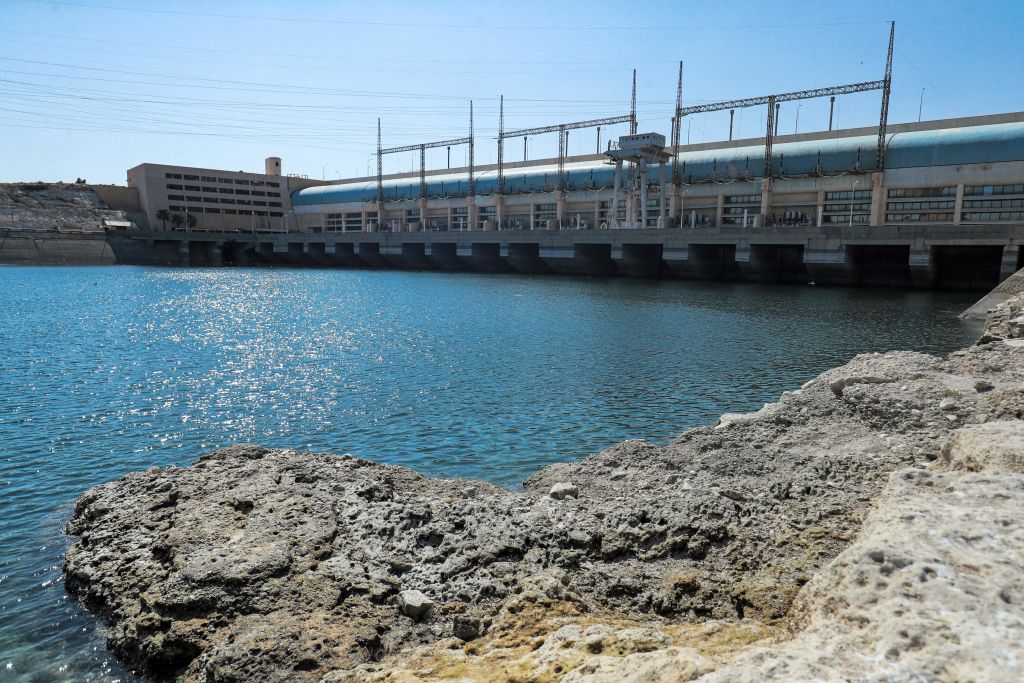
Fighters loyal to the new Syrian government in Damascus established after the December overthrow of longtime strongman Bashar al-Assad have begun taking over security and a joint administration will run the Tishrin dam. [Getty]

Security forces from the new government in Damascus deployed Saturday around a strategic dam in northern Syria, under a deal with the autonomous Kurdish administration, state media reported.

Under the agreement, Kurdish-led fighters of the US-backed Syrian Democratic Forces (SDF) will pull back from the dam which they captured from the Islamic State group in late 2015.

The Tishrin dam near Manbij in Aleppo province is one of several on the Euphrates and its tributaries in Syria that play a key role in the nation's economy by providing it with water for irrigation and hydro-electric power.

On Thursday, a Kurdish source said the Kurdish authorities in northeast Syria had reached agreement with the central government on running the dam.

A separate Kurdish source told news agency AFP on Saturday that the deal, supervised by the US-led coalition, stipulates that the dam remain under Kurdish civilian administration.

Syria's state news agency SANA reported "the entry of Syrian Arab Army forces and security forces into the Tishrin Dam ... to impose security in the region, under the agreement reached with the SDF".

The accord also calls for a joint military force to protect the dam, and for the withdrawal of Turkey-backed factions "that seek to disrupt this agreement", SANA said.

It is part of a broader agreement reached in mid-March between Syria's interim President Ahmed al-Sharaa and SDF commander Mazloum Abdi, aiming to integrate the institutions of the Kurdish autonomous administration into the national government.

The dam was a key battleground in Syria's civil war that broke out in 2011, falling first to rebels and then to IS before being captured by the SDF.

Days after Sharaa's coalition overthrew Syrian leader Bashar al-Assad in December, Turkish drone strikes targeted the dam, killing dozens of civilians, Kurdish officials and a Britain-based war monitor.


Israel cancels 'provocative' tourist tours inside occupied Syria

Israel has cancelled all 'tourist tours' inside illegally occupied Syrian territory days after they were originally announced


The New Arab Staff
12 April, 2025


Israel has expanded its illegal occupation of the Golan Heights [Getty]


The Israeli army announced on Friday the cancellation of all planned "tourist tours" to border areas inside illegally occupied Syrian territory, which had been arranged for Israeli tourists accompanied by guides holding official permits.

In a statement, the Israeli army explained that the decision came following an "operational situation assessment," adding that "entry to the fence-crossing routes will not be permitted at this stage," in reference to areas seized by the Israeli army beginning in December 2024, adjacent to the occupied Syrian Golan Heights.

According to the Israeli newspaper Yedioth Ahronoth, the cancellations affected three main routes: the Ruqad River, the Hamma Bridge on the banks of the Yarmouk River, and the Hejaz Railway tunnel in the Yarmouk area.

On the other hand, a fourth route, located on Mount Hermon overlooking the Lebanese border, was excluded from the cancellation decision, with the army confirming that this path will remain temporarily open for now.

Days earlier, the Israeli military had notified potential Israeli tourists of its intention to organise special tours inside Syrian lands beyond the border strip, in an unprecedented move aimed at reinforcing what it calls "security tourism," under the direct protection of the army.

According to Haaretz newspaper, the surprise invitation to the tours came from the Northern Command of the Israeli army and Division 210, in coordination with the Golan Regional Council.

The tours include areas that are normally off-limits - locations recently occupied by Israel and classified as being outside the border fence of the buffer zone.

According to Israeli media outlets, one of the planned tours was expected to include a visit to an observation point on Mount Dov, overlooking southern Lebanon and the Beqaa Valley.

Some of the areas included in the tours were previously controlled by the former Assad regime’s forces prior to its fall, while others were taken over by Israel later.

Despite Israeli military assurances that the initiative is “entirely safe,” this has been widely questioned in Israel due to the sensitive nature of the border regions involved—particularly in light of the repeated security incidents that have occurred there in recent years.

Yedioth Ahronoth described the move as unprecedented since the founding of Israel, noting that many of the sites involved in the tours are considered closed military zones. This gives the activity a provocative character and has stirred concerns about covert expansionist aims masked as tourism.

Almost as soon a Syrian rebel coalition overthrew the regime of Bashar al-Assad in December, Israel exploited the situation by seizing Syrian territory adjacent to the occupied Golan Heights in southwestern Syria.

Since then, it has unleashed unprecedented airstrikes on Syrian targets, killing dozens of civilians and destroying key infrastructure in the country. It has also issued numerous threats against the Syrian government, warning its security forces to stay out of southern Syria.


What does the Trump administration want from Damascus?


An aerial view of the area as protesters march through the streets of Yarmouk Refugee Camp in Damascus, Syria, on March 28, 2025, carrying Palestinian flags and chanting anti-Israel slogans. [Bakr Al Kasem – Anadolu Agency]


Opinion
April 11, 2025 
MEMO

Following US President Donald Trump’s administration’s decision to change the status of Syrian diplomats at the UN mission, which involved the US not recognising the new Syrian administration, a question comes to mind: What does the Trump administration want from Damascus? Is it using non-recognition as a bargaining chip to manipulate Damascus, and perhaps its regional and international backers?

The US administration’s decision can be described as largely technical, meaning it is bureaucratic in nature, not political. For example, the decision to change the visa type is based on an internal assessment that classifies the interim transitional government in Syria as an extension of structures unacceptable to the US, specifically in terms of its alleged ties to factions designated as terrorist organisations. Its technical nature is confirmed by the fact that it is issued by institutions of a technical, rather than political, nature, such as the Department of Homeland Security.

However, this does not mean that the decision has no political implications, and it indicates that lifting the sanctions is not on the Trump administration’s agenda. There is a possibility that the Trump administration will reconsider the US Treasury Department’s decision under the Biden administration, which stipulated a six-month relief of the sanctions, which could be extended. This means that the road to Syria’s exit from its economic crisis is still long, given that the US role in this area is crucial, and that these policies may push many countries to change their approach to relations with Damascus out of fear of being affected by US sanctions.

What is interesting about American policy is that, even at the height of its conflict with Iran, Russia and the Assad regime, and while leading an international coalition through the Military Operations Centre (MOC) offices in Turkiye and Jordan, it did not go so far as to withdraw recognition of Bashar Al-Assad’s regime, and neither the status nor privileges of Syrian diplomats at the UN mission in New York were affected. Furthermore, the new government in Damascus enjoys de facto legitimacy, a legitimacy based on which most countries in the South were able to integrate themselves seamlessly into the international system without any problems or complications. Furthermore, the removal of the Assad regime entailed geopolitical changes that served Washington’s interests, as part of its efforts to weaken Iranian influence in the region.

Various assessments and analyses of the American position suggest that Washington is still evaluating the new administration in Damascus to reach an arrangement for dealing with this administration, which is primarily composed of Islamist groups led by Hay’at Tahrir Al-Sham, which Washington classifies as a “terrorist organisation.” However, this new Syrian administration is attempting to formulate a moderate governing system an Islamic nature, similar to those in Turkiye and Malaysia, to gain the approval of the outside world. Yet, American political behaviour remains cautious in dealing with this new regime, with responses ranging from placing it under observation to testing it through a list of conditions presented by Deputy Assistant Secretary of State for Levant and Syria Affairs, Natasha Franceschi, to Syrian Foreign Minister, Asaad Al-Shaibani, on the sidelines of the donors’ conference. Furthermore, the Trump administration is witnessing a difference in views between the State Department and the White House on the nature of dealing with Damascus. It appears that the White House (which is home to many pro-Israel supporters) remains the most effective in determining the form of policies to be adopted toward Damascus.

Despite this, the Trump administration’s policy remains largely unclear and vague. There is no clear negative position toward the policies of the new Syrian administration, which has expressed its willingness to cooperate on issues of concern to Washington, particularly the fight against the Islamic State (Daesh) and the issue of chemical weapons. The US administration does not appear to be particularly concerned with the issue of minorities, especially since President Ahmad Al-Sharaa’s administration is working diligently to accommodate Christians, who are the Trump administration’s primary concern. The rest of the components are a given for Washington. The Trump administration has hinted at its relative satisfaction with the Sharaa administration’s measures regarding the constitutional declaration and government formation or at least has not expressed explicit objection to these measures.

This means that the Trump administration is not interested in the specifics of Syria itself, nor in the nature of policies pursued by the Sharaa administration, reflecting the unimportance of Syria to the Trump administration, especially after Iran’s withdrawal and Russia’s weakening. Consequently, the strategic status (already low in the Trump administration’s opinion) has declined to a minimum, placing Syria outside the Trump administration’s priorities, demoting it to a neglected file. Its affairs may be entrusted to regional and international actors in the coming period given growing indications of a US withdrawal from Syria, which is no longer a possibility but has entered the implementation phase through the successive gradual withdrawals of US forces from eastern Syria.

The Trump administration will likely not have a specific policy on Syria in the coming period, nor will it invest diplomatically in Syria. It is likely to pursue a policy of managing the situation through low-level diplomacy to manage the relationship between Turkiye and Israel. In the best-case scenario, it will turn Syria into a bargaining chip for regional parties seeking to benefit from the Syrian dynamic, especially since they possess the tools capable of paralysing Syria: US sanctions, the continuity of which would hinder any ability to emerge from fragility and danger.

This article first appeared in Arabic in Al-Araby Al-Jadeed on 10 April 2025

The views expressed in this article belong to the author and do not necessarily reflect the editorial policy of Middle East Monitor.


Syria extends deadline for probe into killings of Alawites


Red Crescent workers help evacuate wounded members of the Alawite sect on March 10 after they sought refuge near a Russian airbase in coastal Syria after violence and revenge killings. (AP/File)

Updated 11 April 2025
AP

President Ahmed Al-Sharaa grants fact-finding committee three month extension to identify perpetrators

Human rights groups say more than 1,000 civilians — mostly Alawites were killed in violence last month


BEIRUT: Syria’s presidency announced on Friday that it would extend a probe into the killings of Alawite civilians in coastal areas that left hundreds dead after clashes between government forces and armed groups loyal to former President Bashar Assad spiraled into sectarian revenge attacks.

The violence erupted on March 6 after Assad loyalists ambushed patrols of the new government, prompting Islamist-led groups to launch coordinated assaults on Latakia, Baniyas, and other coastal areas.

According to human rights groups, more than 1,000 civilians — mostly Alawites, an Islamic minority to which Assad belongs — were killed in retaliatory attacks, including home raids, executions, and arson, displacing thousands.

The sectarian violence was possibly among the bloodiest 72 hours in Syria’s modern history, including the 14 years of civil war from which the country is now emerging. The violence brought fear of a renewed civil war and threatened to open an endless cycle of vengeance, driving thousands of Alawites to flee their homes, with an estimated 30,000 seeking refuge in northern Lebanon.

On March 9, President Ahmed Al-Sharaa, the former leader of an Islamist insurgent group, formed a fact-finding committee and gave it 30 days to report its findings and identify perpetrators. In a decree published late Thursday, Sharaa said the committee had requested more time and was granted a three-month non-renewable extension.
The committee’s spokesperson, Yasser Farhan, said in a statement on Friday that the committee has recorded 41 sites where killings took place, each forming the basis for a separate case and requiring more time to gather evidence. He said some areas remained inaccessible due to time constraints, but that residents had cooperated, despite threats from pro-Assad remnants.

In a report published on April 3, Amnesty International said its probe into the killings concluded that at least 32 of more than 100 people killed in the town of Baniyas were deliberately targeted on sectarian grounds — a potential war crime.

The rights organization welcomed the committee’s formation but stressed it must be independent, properly resourced, and granted full access to burial sites and witnesses to conduct a credible investigation. It also said the committee should be granted “adequate time to complete the investigation.”

Witnesses to the killings identified the attackers as hard-line Sunni Islamists, including Syria-based jihadi foreign fighters and members of former rebel factions that took part in the offensive that overthrew Assad. However, many were also local Sunnis, seeking revenge for past atrocities blamed on Alawites loyal to Assad.

While some Sunnis hold the Alawite community responsible for Assad’s brutal crackdowns, Alawites themselves say they also suffered under his rule.