It’s possible that I shall make an ass of myself. But in that case one can always get out of it with a little dialectic. I have, of course, so worded my proposition as to be right either way (K.Marx, Letter to F.Engels on the Indian Mutiny)
Thursday, April 24, 2025
MSC Boxship Gets Emergency Tow to Las Palmas
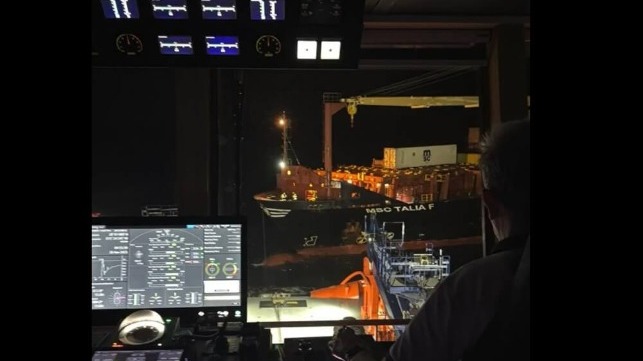
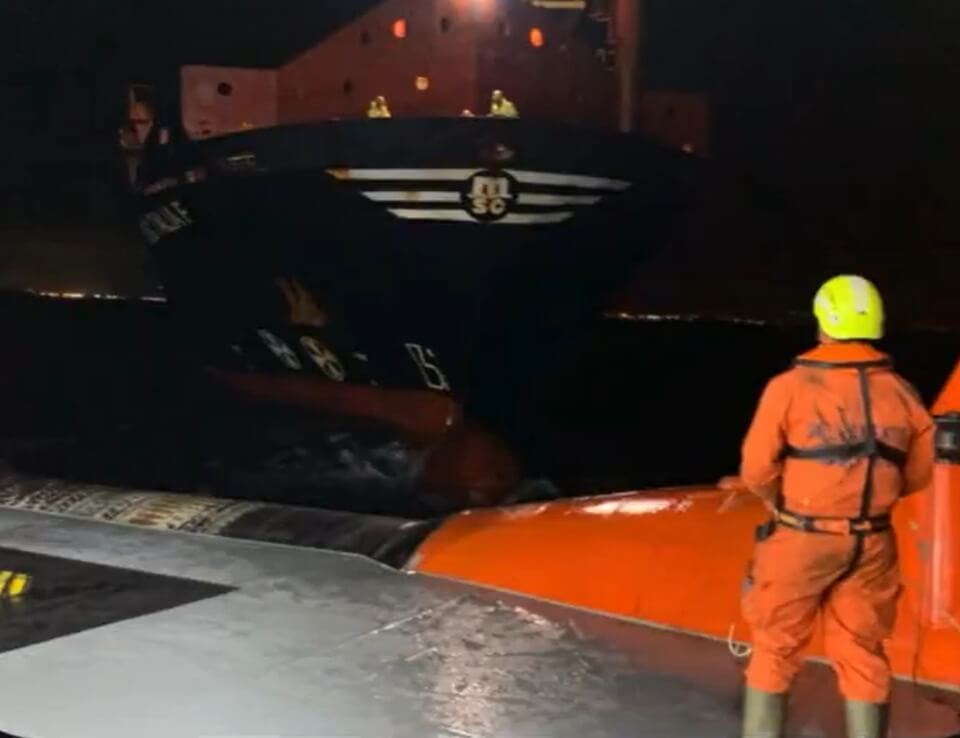
DP operator maneuvers a Salvamento Maritimo rescue tug close to MSC Talia F's bow to pass a towline (Salvamento Maritimo)
Over the weekend, Spanish first responders rescued a disabled MSC boxship that was adrift just off Gran Canaria, according to the Salvamento Maritimo rescue service.
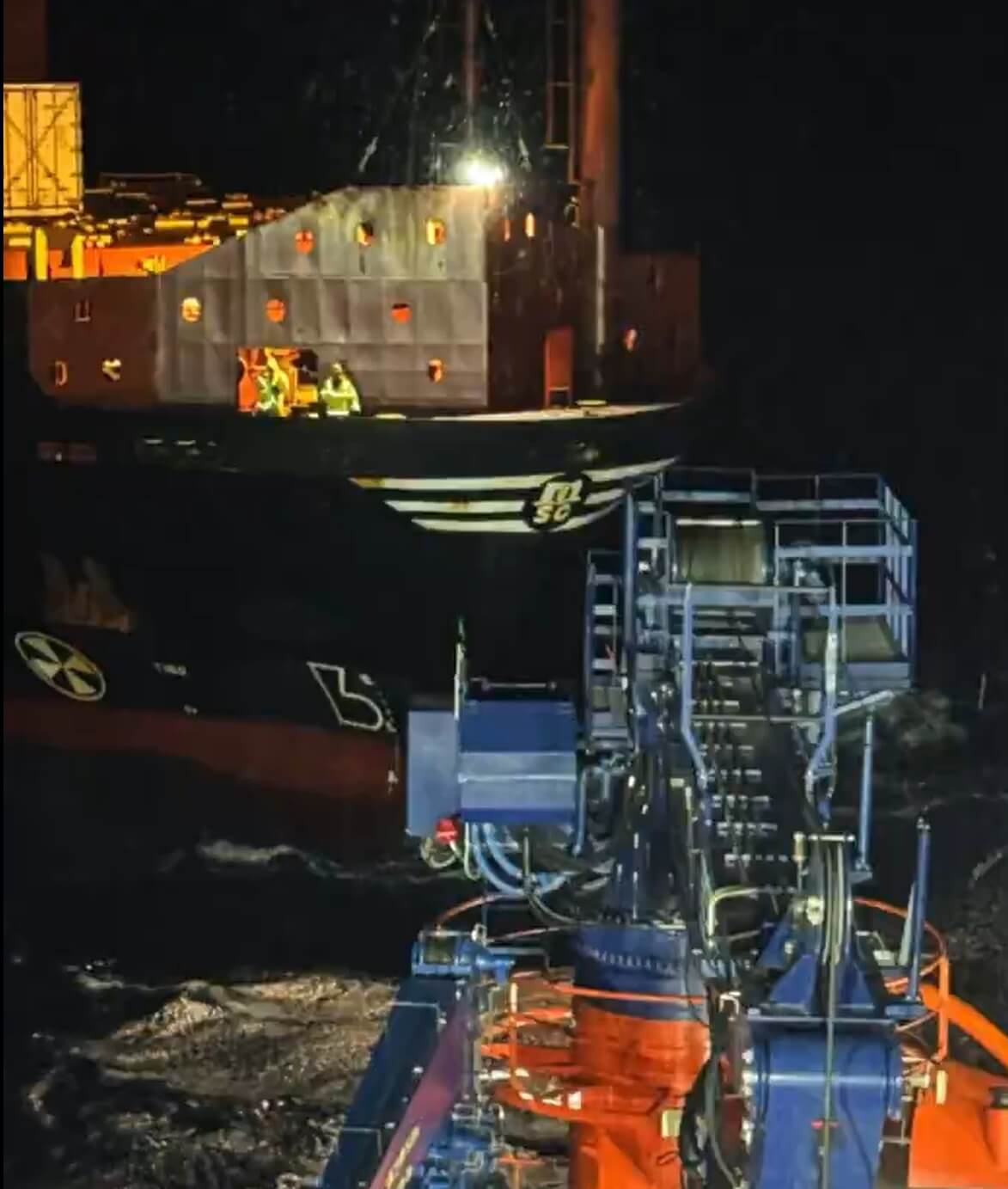
On Saturday, the 1,000 TEU feeder MSC Talia F broke down about eight nautical miles to the east of Punta Melenara, Gran Canaria. The vessel was drifting south at about two knots, parallel to shore. Winds were NNE at about 25-30 knots, with rough seas, but the response crew got the small container ship in tow and brought her safely to Las Palmas. The boxship resumed her commercial voyage on Monday and is back under way.
Images courtesy Salvamento Maritimo
MSC Talia F is a 12,000 dwt feeder built in 2005. She is owned in Liberia and operated by MSC, the world's largest container liner. Her most recent inspections were conducted last year, and found issues with corrosion and piping - none serious enough to warrant a detention.
It is second breakdown involving an older boxship in two months for MSC. The company expanded its fleet rapidly during the late-pandemic era by acquiring or keeping older tonnage, avoiding scrap sales and paying well for used boxships that would not have commanded high prices a few years earlier.
In February, the 2003-built MSC Baltic III lost power and drifted aground on the west coast of Newfoundland in a winter storm, forcing the crew to abandon ship. The vessel is still aground on a rocky ledge, and small quantities of tar balls have been found on nearby shores.
ALT. FUEL
Japan Engine Starts Co-Firing Ammonia Engine Ahead of October Delivery
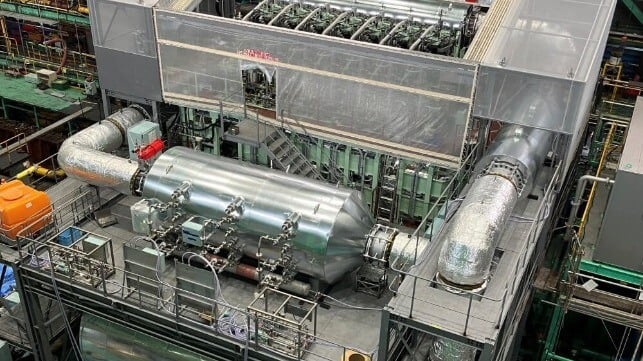
J-Engine reports it started co-firing a full-scale ammonia engine due to be delivered in October (Japan Engine)
Japan Engine Corporation reports key progress in the race among the major engine manufacturers to complete the certification and delivery of the first ammonia-fueled commercial shipping engine. The company reports it will be ready to ship the engine in October for installation in a gas carrier as other major companies including MAN and WindGD have also reported they were in the final stages of certification before shipping their first ammonia engines.
The company reports that the first Japanese-developed and manufactured commercial unit of a large, low-speed, two-stroke engine recently started co-firing operation with ammonia. It is being labeled the first full-scale commercial engine based on ammonia. J-ENG reports its first development is a large, low-speed, ammonia-fueled 2-stroke engine (50 cm cylinder bore).
The project was launched under the auspices of the “Green Innovation Fund Project: Next-generation Ship Development” project of the New Energy and Industrial Technology Development Organization (NEDO). Since May 2023, when J-ENG started the world's first ammonia co-firing operation of a large, low-speed, two-stroke engine in a test engine, the company reports it has obtained many results and knowledge. This includes insights into stable operation at high ammonia co-firing rates and safe handling of ammonia, through various test operations over about a year and a half.
J-ENG says it will conduct verification operations on the full-scale engine and plans to ship the engine in October of this year. The engine will be installed on an Ammonia-Fueled Medium Gas Carrier (AFMGC) and then demonstration operations of the vessel will be carried out. Concurrently, the company says it is also developing an ammonia-fueled engine with a cylinder bore of 60 cm for several promising follow-on projects.
Seeking to be a first mover for next-generation fuel engines J-Engine says it has also decided to construct a new plant with the support of a subsidy project by the Ministry of the Environment and the Ministry of Land, Infrastructure, Transport and Tourism through the GX Economic Transition Bonds. The plant, which is scheduled for completion in 2028, will be used to expand the production of ammonia fuel engines (in the product mix with fuel oil engines) and promote the spread and expansion of zero-emission ships.
Testing and demonstrations of the first ammonia-fueled vessels began in 2024. Japan’s NYK is at the forefront with a converted tug that previously ran on LNG and was rebuilt with an ammonia-fueled engine. DNV calculates that there currently are 33 vessels on order to be fueled by ammonia due for delivery by the end of this decade.
IMF: Trump's Tariffs Could Slow Global Trade Growth by Half in 2025
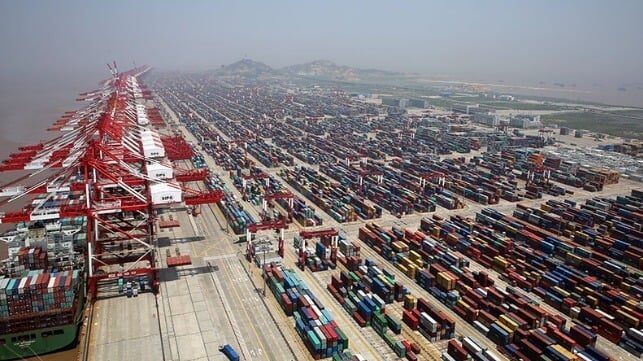
Port of Shanghai's sprawling Yangshan terminal complex (file image)
Global trade volume and global economic growth will both be reduced if new U.S. tariff policies continue on their current course, according to the International Monetary Fund's latest World Economic Outlook forecast.
Compared to its last update in January, the IMF has cut back its 2025 trade growth forecast by half, from an expected 3.2 percent down to 1.7 percent. It also pared back its economic growth forecast from 3.3 percent in 2024 to 2.8 percent in 2025 - a global slowdown, but not a recession. IMF predicts that the most affected OECD country will be the nation at the center of the tariff negotiations: the United States, which will see growth for 2025 reduced by half (from 1.8 percent down to 0.9 percent).
However, the IMF's forecast assumes that the Trump administration holds course on its current tariff plans, including the "reciprocal" tariff list affecting most foreign trade partners. That prediction appears uncertain, and the White House has repeatedly changed its position on what the final bundle of tariffs should look like after all talks are completed.
On Tuesday, following Monday's sharp selloff in the U.S. markets, Treasury Secretary Scott Bessent told a private meeting of JP Morgan investors that the growing trade war with China is "unsustainable." Trump's 145 percent top tariff rate on Chinese goods is the steepest on any U.S. trading partner, and China has imposed a retaliatory tariff of 125 percent.
Bessent predicted that these tariff tensions would de-escalate in the "very near future," even though formal talks with Beijing have not started. Immediately after his closed-door comments, public markets soared, and the Dow recovered Monday's losses by the close of trading Tuesday.
Separately, White House press secretary Karoline Leavitt told reporters on Tuesday that the administration is already reviewing 18 trade proposals, and there will be trade meetings with 34 other countries this week alone. She confirmed that as of yet, there have been no formal talks between President Donald Trump and Chinese President Xi Jinping on tariffs.
“We're going to be very nice [with China]. They're going to be very nice. And we'll see what happens," Trump said Tuesday. "But ultimately, they have to make a deal because otherwise they're not going to be able to deal in the United States."
Trump also suggested that he is not going to "play hardball" with China, despite his longstanding complaints that Chinese industrial policies have "ripped off" America.
Trump's plan for one-on-one, nation-by-nation dealmaking has an additional challenge: China has threatened anyone who sits down to talk with the White House if the outcome is bad for Beijing.
"China firmly opposes any party reaching a deal at the expense of China’s interests," the nation's commerce ministry said in a statement. "For one’s own temporary selfish interests, sacrificing the interests of others in exchange for so-called exemptions is like seeking the skin from a tiger. It will ultimately only fail on both ends and harm others without benefiting themselves."
Shipping Stocks Begin to Regain Losses After Hints of a Tariff Reprieve
Clear signals that the Trump administration wants to pare back its new tariffs have prompted a market recovery, and key stocks in cruise and commercial maritime have begun to regain the losses they suffered after the April 2 levy announcements - but the course ahead is still far from certain.
Trade with China has been hit hardest with a 145 percent blanket tariff rate. Container booking data for mid-May shows that shipments for inbound cargo from China to LA-Long Beach will be down by more than 40 percent, according to CNBC, an unprecedented and sudden drop.
On Tuesday, Trump told the press that he would not "play hardball" with China and would be "nice" in negotiations going forward. He added that the current rate would be coming down "substantially," though not all the way to zero.
On Wednesday, the Wall Street Journal reported that Trump's team is aiming at average tariffs of 50-65 percent on Chinese goods, possibly lower for noncritical items and higher for strategic industries. A final decision has not been made, the WSJ said.
Later in the day, Treasury Secretary Scott Bessent denied that the White House is considering cutting tariff rates on China without getting something in return. But he said that both sides are motivated to walk back from current levels. "Neither side believes that these are sustainable [tariff] levels," he said. "This is the equivalent of an embargo, and a break between the two countries in trade does not suit anyone's interests."
Stocks have rallied on the news of a likely tariff rollback, including some key shipping stocks. AP Moller-Maersk, the largest publicly-listed ocean carrier (and second-largest overall) saw its shares jump up eight percent in a day. It has now regained most of its losses since April 2, buoyed by expectations of lower trade barriers.
Jones Act carrier Matson, which operates an express service between China and the United States, has been hit hard by the tariff disruption: its stock has lost nearly a quarter of its value since April 2. It began to recover from those losses on Tuesday, reflecting rising expectations of an eventual return to higher booking levels on transpacific routes.
As a discretionary expense, cruising is sensitive to swings in economic outlook, and it has tracked the recovery of the rest of the market. Carnival rebounded 3.5 percent over the past five days, Royal Caribbean is up by 7.5 percent, and Norwegian Cruise Line is up by 5 percent. However, all of the big three cruise stocks - like the markets overall - are still well below where they were last month.
Argentine Responders Rescue Crew of Sinking Tug on Rio de la Plata
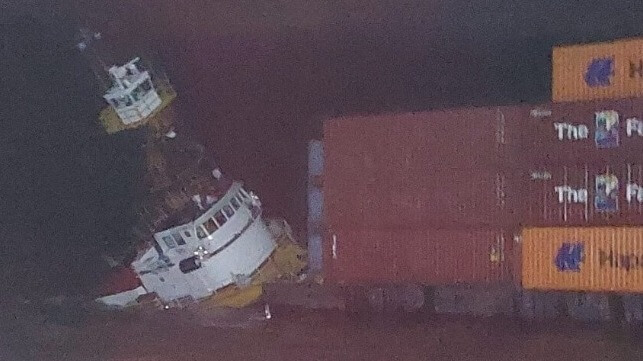
Papu Mar sinking by the stern while still attached to her container barge (Argentine Naval Prefecture)
Last week, the Argentine Naval Prefecture rescued the crew of a tug that flooded and partially sank while pushing a container barge off the coast of Buenos Aires.
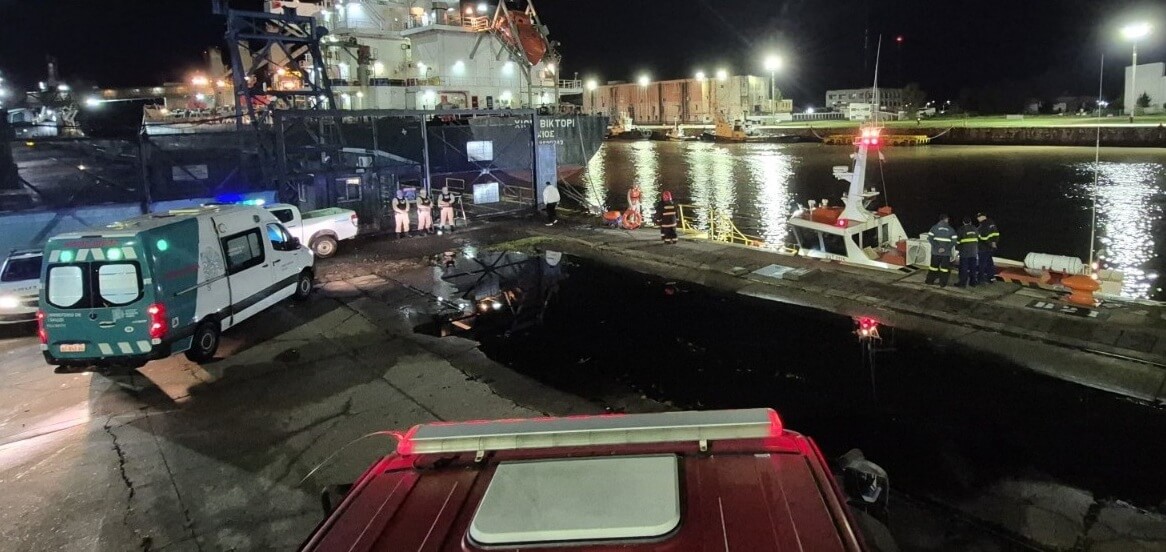
On Friday, the captain of the Paraguayan-flagged tug Papu Mar made a mayday call to report flooding on board at a position off Atalaya in the Paso Banco Chico, the inner bay of the Rio de la Plata. All crewmembers safely abandoned ship onto their own barge and were rescued by first responders. They were taken ashore for medical checkups.
Courtesy Argentine Naval Prefecture
The tug Papu Mar is still partially sunken, but does not pose a hazard to navigation, the agency said in a statement. The barge has 153 containers aboard, and it is still lashed to the tug. No cargo losses or damage have been reported.
To monitor for environmental impact, Argentina's naval prefecture continues to monitor the area with occasional overflights. A commercial tug, the Ona Don Lorenzo, is keeping the barge out of the channel while salvors prepare for next steps.
Egypt Launches First Domestically-Built Tugs for Suez Canal
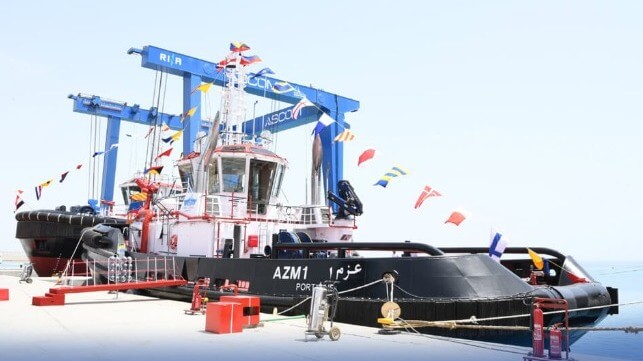
Egypt launched the first of 10 new domestically-built tugs for the Suez Canal (SCA)
Egyptian officials celebrated the launch of the first two domestically-built tugboats on April 23, which will be used for the Suez Canal. They highlighted it was part of a broader effort to expand Egypt’s maritime community and support the capabilities of the Suez Canal Company.
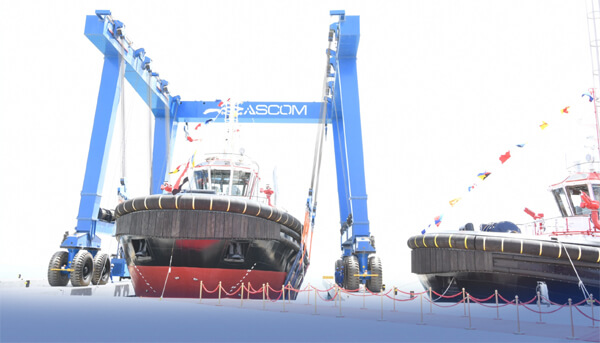
In a public-private partnership, new shipyard capabilities were established at the southern port of Safaga where the tugs were launched. The development of the yard included a new marine quay with mooring bollards, a quay for lifting vessels, and an 850-ton winch for lifting and unloading equipment and vessels.
During the speeches, it was highlighted that Egyptian President Abdel Fattah El-Sisi is supporting the effort. The president outlined the vision of localizing various marine capabilities in Egypt. In addition to the tug construction, the president directed the development of a new fishing fleet which will include 12 deep-sea vessels as well as the construction capabilities for tourist vessels.
New cranes and berths were built to increase Egypt's shipbuilding capabilities (SCA)
The first of 10 new tugs planned for the Suez Canal Authority were officially launched during the ceremony. They highlight the tugs have a pulling power of 90 tons and incorporate advanced navigational capabilities and environmentally friendly technologies. Each tug is 32 meters (105 feet) in length and with a top speed of 12 knots. They were designed by the international firm Robert Allan.
Among the features incorporated into the new tugs are main engines from the Belgian company ABC that will provide increased operating power and longer service life. They have also been designed to reduce carbon emissions. Incorporated into the design is a special external fire extinguishing system, using a separate engine from the main engines, which helps to provide better control and maneuvering during fire emergencies, and a water capacity of up to 2,400 cubic meters.
The first two vessels, Azm 1 and Azm 2, were launched while work is underway on units number 3 through 6. The hulls are completed and outfitting is underway on the mechanical, electrical, and piping work. A total of 10 tugs will be built in this class.
The Suez Canal Authority highlights an ambitious strategy to develop and modernize its maritime fleet by incorporating the latest technologies. The new tugs will be part of the fleet both for the guidance of vessels and to respond to emergencies. Work is also underway at the Alexandria Naval Yard on the Authority’s largest tug which will have a reported pulling force of 190 tons.
U.S. Forces Ordered Airstrike on Smuggling Vessel off Somalia
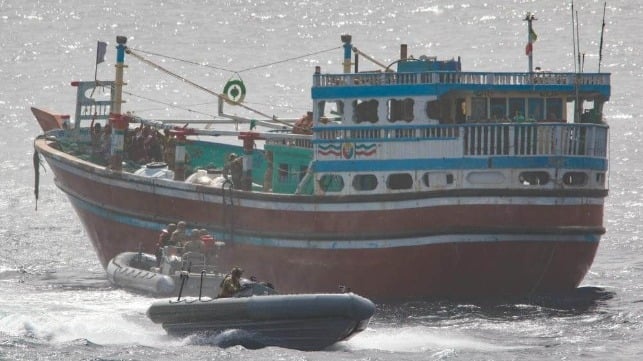
A typical U.S. Navy dhow interdiction in the Mideast. This time, no boarding occurred (USN file image)
In a little-noticed action last week, U.S. African Command (Africom) took the rare step of bombing a stateless vessel that was suspected of smuggling arms into Somalia.
The boat was allegedly delivering "advanced conventional weapons" to al-Shabaab militants in Somalia. Al-Shabaab ("The Youth") is an Islamic militant movement with roots in al-Qaeda, and has been fighting the Somali government since the early 2000s. More recently, Western analysts suggest, al-Shabaab has developed ties to Yemen's Houthi terrorist group - based in part on shared interests in arms smuggling.
U.S. special forces have contributed to the counterinsurgency campaign against al-Shabaab for years, but have not dealt the group a decisive defeat. The conflict has recently heated up, with Al-Shabaab fighters making gains near the capital city of Mogadishu, and the Somali government's allies have responded with new urgency. Turkey's army delivered 500 troops into Mogadishu earlier this week, and Africom has launched a new round of airstrikes on remote Al-Shabaab positions.
Within this urgent context, Africom opted to use revised Pentagon engagement policies to order a rapid airstrike on the inbound smuggling vessel, according to The War Zone. "They have to do things quickly. They did not have time to pull in boats [for a boarding]," a U.S. official told the outlet.
The Somali government said in a statement that the strike targeted an unflagged ship and a smaller support craft that were operating in Somali territorial waters. It added that in Africom's assessment, "all individuals aboard both vessels were neutralized."
Africom did not provide further details, but suggested that no civilians were harmed.
Historically, suspected smuggling boats in the Mideast and Horn of Africa have been interdicted in search and seizure boardings, often by U.S. Coast Guard teams with law enforcement training; kinetic weapons have almost never been used against cargo vessels in the area, at least in publicized actions.
Tanker Boarded and Robbed in First Incident in Four Years Off Nigeria
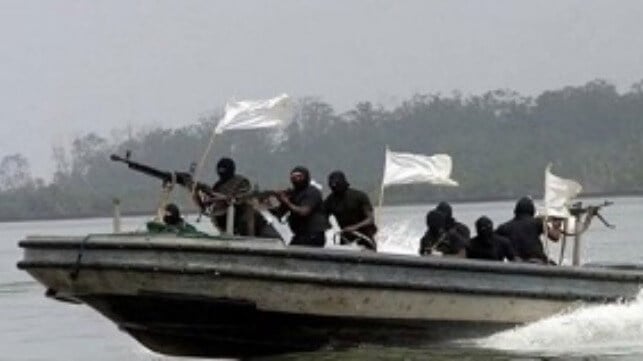
A product tanker was robbed as incidents continue across West Africa and the Gulf of Guinea region (file photo)
A product tanker traveling more than 100 nautical miles south of the Nigerian coast was boarded earlier this week. Security services are saying the crew was well prepared and remained safe and while it was the first recent incident, the risks remain high across the Gulf of Guinea and in West Africa.
The official report from Maritime Domain Awareness for Trade – Gulf of Guinea (MDAT-GoG) says the boarding took place on April 21 and involved four individuals. They reportedly approached the vessel at high speed in a black-hulled craft and remained aboard for nearly four hours taking personal property and equipment from the vessel before fleeing.
Security consultants Neptune P2P Group is highlighting that the captain and crew were well-prepared and followed mitigation recommendations quickly fleeing to the citadel where they remained during the incident. The perpetrators may have tried to enter the citadel or Martin Kelly, Head of Advisor at EOS Group, speculates it was a possible attempt at kidnapping because the pirates remained aboard for nearly four hours. The crew was unharmed according to the authorities.
The official reports did not name the vessel involved, but in an unconfirmed report, Neptune P2P says it was the Sea Panther, a 13,000 dwt chemical tanker with Greek ownership and registered in the Marshall Islands. The vessel’s AIS shows it departed Lomé on April 20 and arrived on April 23 at Douala, Cameroon.
While it is the first reported incident involving a commercial vessel near Nigeria in years, the dangers remain high in the region. Yesterday, the Nigerian authorities confirmed that a well-known fashion designer from Port Harcourt had been murdered by pirates. The individual named Hope Georgewill was kidnapped on March 26 and his family reportedly paid a ransom of approximately $1,250. The police reported they recovered his body and that they also raided the pirates' hideout killing four individuals and recovering a stash of weapons, outboard motors, and other equipment.
The Nigeria Security and Civil Defence Corps also reported on April 19 that one of its personnel was killed during a shootout with a pirate group. The incident took place in the Niger Delta Region.
MDAT-GoG’s data shows that in April alone there have been four incidents including an attempted robbery off Monrovia, Liberia, and boardings near Accra, Ghana, and Abidjan in Cote d’Ivoire. Security services have also warned of continuing pirate group activity to the south in the region between Equatorial Guinea and São Tomé e Principe.
The current incident is reported by Neptune P2P as the fifth boarding in the Gulf of Guinea in 2025. The group highlights a 30 percent increase in activity over the same period in 2024.
Wind Industry Installs Record Capacity in 2024 Despite Policy Instability
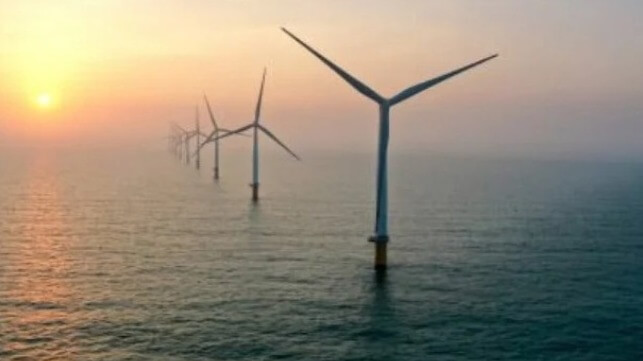
Installation of wind power is continuing globally despite growing instability (file photo)
The Global Wind Energy Council is out with its annual report highlighting that 2024 was a record year for new capacity, with 117 GW of wind energy installed across the world. However, it also pointed out that although 2024 was another record year for wind installations the headline numbers mask big disparities in terms of the pace of deployment across global markets, and now trade wars and political instability threaten the progress for the sector.
The lion’s share of installations in 2024 however also took place in a small number of key mature markets, including China and Europe. Much of the progress also came onshore where 109 GW was added while just 8 GW was installed offshore. Globally it reports capacity has reached 1,136 GW, spread across all continents and with 55 countries installing wind turbines in 2024.
China led the way for new installations in 2024 with 79824 MW of new capacity while surprisingly despite growing opposition the U.S. was second (4058 MW) edging out Germany. India and Brazil rounded out the Top 5 in 2024.
There was record growth in other regions, including Asia-Pacific (7 percent), while Africa & Middle East saw a 107 percent growth rate, driven by Egypt installing 794 MW and Saudi Arabia’s 390 MW. North America, LATAM, and Europe experienced a decline in new installations compared with 2023.
“Once again, the wind industry has broken new installation records, despite more challenging macroeconomic headwinds over the last few years,” said Ben Backwell, CEO of GWEC. “The aggressive stoking of tariff wars adds further uncertainty to international investment decisions and threatens to disrupt the international supply chains which the wind industry relies on. The full costs on our industry of the wide array of declared and threatened tariffs we have seen – both general and on specific commodities such as steel - have yet to be fully calculated.”
GWEC, however, warns of increasing policy instability in some markets and points to the need to improve permitting, grid transmission, and auctioning mechanisms. It says these steps are critical to keep pace with the global trend for electrification, meet countries’ energy and climate targets, and lessen reliance on volatile fossil fuels. It also sees this as critical to fulfilling globally agreed ambitions to triple renewable energy capacity by 2030.
“It's vitally important that policymakers around the world don’t take their eyes off the prize, ensure stable and predictable market frameworks, work within multilateral frameworks to ensure free and fair trade,” says Blackwell. He says governments must work with investors and the industry to enable rapid deployment of clean, efficient wind power to support economic growth, resilience, and prosperity.
The report forecasts a compound average growth rate of 8.8 percent for the wind industry, projecting an additional 981 GW of wind energy capacity across the globe by 2030. GWEC’s Market Intelligence service sees consecutive record years through to 2030, with 138 GW of new capacity in 2025, 140 GW in 2026, 160 GW in 2027, 167 in 2028, and a leap in 2029 and 2030 to 183 GW and 194 GW respectively.
GWEC’s forecast for 2025-2030 sees offshore wind rise from 16 GW in 2025 to 34 GW, with offshore moving from 11.8 percent of new capacity to 17.5 percent of new capacity by the end of the decade.
This year’s Global Wind Report focuses on four key challenges the market faces, including financial and macroeconomic headwinds, trade barriers and market fragmentation, inadequate procurement and auctioning frameworks, and challenging investment conditions in the global wind energy supply chain.
Wednesday, April 23, 2025
Antwerp Surpasses Rotterdam in Q1 Containers as Ports Fear U.S. Tariffs
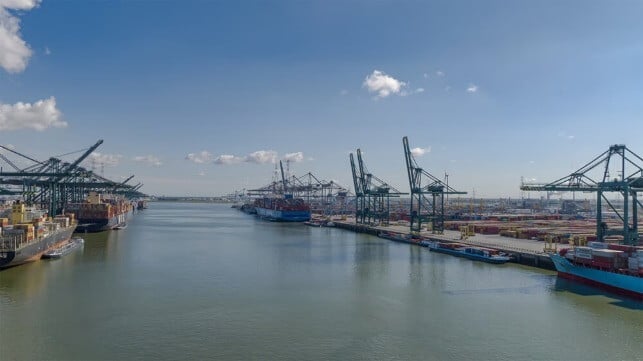
Antwerp was Europe's busiest container port in Q1 but is waiting to seethe impact of U.S. tariffs (Antwerp-Bruges)
In a surprise development, the Port of Antwerp-Bruges surpassed the Port of Rotterdam for container volume during the first quarter of 2025. Traditionally Europe’s second busiest port, Antwerp-Burges highlighted its market share in the Hamburg-Le Havre Range increased to 30.5 percent, and on a global level, the port climbed one position to reach 14 in the ranking of largest ports, but like all its peers, the port is anticipating a tough period in the coming months related to the unrelenting tariff policy of Donald Trump.
Antwerp-Bruges released its first quarter throughput performance highlighting the strength of its container business while reporting an overall decline largely driven by a sharp decrease in bulk volumes. Container throughput however was up 4.6 percent in tonnage and 4.5 percent in TEUs. The ports handled 3,436,000 TEUs. By comparison, the Port of Rotterdam which has long dominated in Europe reported a 2.2 percent increase in TEUs to 3,364,000.
The Belgian port said the growth came amidst the transition to the new alliances among liner companies, industrial actions including a paralyzing port strike, and congestion at other ports, which also contributed to longer container dwell times for Antwerp-Bruges. Rotterdam said its tonnage decreased due to an eight percent decline in loaded exports, a decline in the number of transshipment containers, bad weather in January, and an operational dispute at one of its terminals which resulted in fewer ship visits, delays, and lower productivity.
During the quarter, Antwerp-Bruges handled 67.7 million tonnes of cargo, reporting a four percent overall decline, citing the weak performance in the bulk categories. Liquid cargo recorded the sharpest decline, falling by 19.1 percent impacted by gasoline, naphtha, and LNG. The segment is not only feeling the impact of sanctions against Russia and the struggling European petrochemical sector but has also been hit by changing market conditions in Africa. Belgium’s ban on high-sulfur and benzene fuels exports to Africa is having material negative effects on shipments.
Rotterdam also reported an overall 5.8 percent decline in first quarter throughput. It said the decline was also mostly due to less throughput of crude oil and oil products, iron ore, and coal.
“We are in particularly uncertain times, which makes it difficult to predict what 2025 will bring next. But as in previous crises, our port is showing resilience and operational reliability,” said Jacques Vandermeiren, Port of Antwerp-Bruges CEO. “At the same time, the protectionist measures taken by the United States make it clear that Europe needs to make a stronger commitment to robust economic policies in order to strengthen our industry and anchor its strategic position.”
Historically, the United States has been the second-largest global trading partner of Port of Antwerp-Bruges for over two decades. In 2024, the maritime trade volume accounted for approximately 10 percent of the port's overall cargo traffic. Of this, 11 million tonnes were exported to the U.S., with the port handling over 200,000 cars bound for the U.S. as well as auto and machinery parts (mostly from Germany), chemicals, vehicles, food, plastics, and pharmaceuticals.
Executives at the Port of Rotterdam expressed similar concerns. They noted that import duties imposed by the United States on goods exported from Europe had yet to have an effect on first-quarter throughput but were creating uncertainty.
“The first three months of this year were characterized by a high degree of volatility in world trade as a result of threatened import duties in the United States and conflicts in Ukraine and the Middle East,” said Boudewijn Siemons, CEO of Port of Rotterdam Authority. “This volatility has led to uncertainty among companies in the areas of trade and investment. We see this reflected in throughput volumes and the willingness to invest. In these uncertain times, it remains as important as ever that, together with national and European governments, the Port of Rotterdam continues to work towards a competitive European investment climate.”
In the Know 68: Joseph Morris, CEO and Port Director for Port Everglades
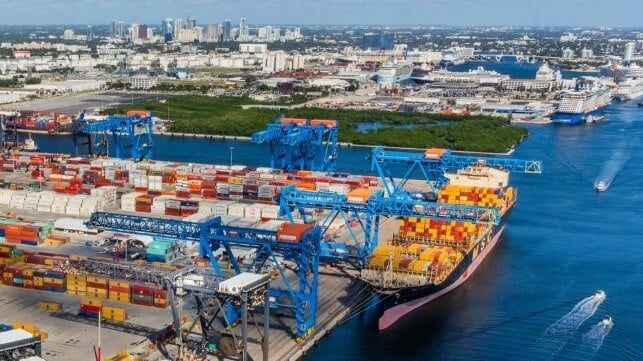
Port Everglades ranks as the world’s third busiest cruise home port, and it is the main port for petroleum products in South Florida. It's a self-supporting enterprise fund of Broward County, Florida and generates more than $26 billion in economic activity, supporting about 11,000 direct jobs. It's a key hub for the region's shipping needs, and handles about one million TEU worth of containerized cargo a year.
To get all the details about the port's operations and its positive impact, TME founder and editor-in-chief Tony Munoz spoke with port CEO and director Joseph Morris, who has over twenty-five years of experience in the ports sector. For the full conversation, listen in below.
The opinions expressed herein are the author's and not necessarily those of The Maritime Executive.
Gas Leak on a Barge Prompts Community Alerts on Houston Ship Channel
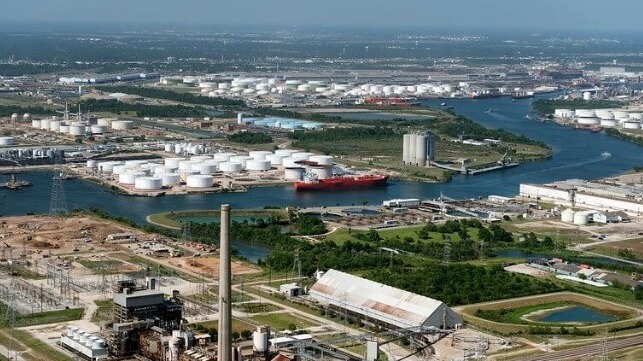
On Tuesday, a gas leak on a barge on the Houston Ship Channel prompted community alerts on the key energy-infrastructure corridor, but local officials say that no air quality threats have been detected and residents have the all-clear.
Operator Kirby Inland Marine told local media that a vapor release occurred aboard a barge at the Targa Resources dock in Galena, Texas. A valve leak released an unspecified quantity of butadiene, a common industrial gas used for making plastics and synthetic rubber (like car tires). 1,3-butadiene is an EPA-listed carcinogen, an inhalation irritant, and highly flammable. Luckily, it breaks down quickly in the atmosphere, limiting the time in which it can have an effect.
The leak occurred because of a broken valve, according to local CW39 Houston. It was contained by late Tuesday, and the barge was towed to a safe location for further evaluation. The Houston Ship Channel has reopened to full service, and the City of Galena Park says that there are no air quality threats to the public.
No injuries were reported from the gas leak.
For a Veterans March on Washington
by Gabe Ignetti / April 22nd, 2025
In May 1932, jobless WWI veterans organized a group called the a march on Washington. 43,000 demonstrators including 17,000 veterans their families, and affiliated groups gathered to demand to demand compensation from the Federal Government for their sacrifices in World War 1. That march and it’s suppression by the military was a key factor in the overturning of a deeply reactionary Republican Administration and the onset of the New Deal.
In this same month of May 2025, plans are being made in Washington for a military parade by Donald Trump for his birthday on June 14, honoring himself. All this is occurring in the face of his planned cut of 72,000 employees in the Veterans Administration to improve “efficiency” on an agency with an already existing reputation for taking forever to process disability claims that are vital to the health of our veterans.
It’s well past time that the United States government to put less care about it’s patrons at Lockheed Martin and more care into their soldiers and veterans. It’s time to build for a new Veterans March on Washington on June 14 to counter this military parade honoring this aspiring dictator, and this is the best way to defeat him.
This is not just a moral question alone but a tactical one as well. The crux of Trump or any would-be dictator in history succeeding is based on the support of their rank and file soldiers and these are the same troops that are being grossly underpaid, exploited and expendable in the pursuit of the reckless dreams of our “fearless leader”.
Trump has openly declared that he intends to use military force against political dissent in this nation and the question of whether these same exploited soldiers are ready to pull the trigger is pivotal as to whether he succeeds or fails. They will have to choose on whether or not to stand down and uphold the US Constitution. The stark choice will be to to either resist or to follow the path of least resistance.
All of our efforts against Trump cannot and will not succeed unless and until we put the issues facing our troops and veterans front and center and June 14 is the day to do it.FacebookTwitterRedditEmail
Gabe Ignetti is a former Vice-President at Large of the Central Labor Council of th U.S. Virgin Islands. He has served on the board of 350 South Florida and is a retired public school teacher living in Florida. He can be reached at: gabeignetti@yahoo.com. Read other articles by Gabe.
 Images courtesy Salvamento Maritimo

 Courtesy Argentine Naval Prefecture