It’s possible that I shall make an ass of myself. But in that case one can always get out of it with a little dialectic. I have, of course, so worded my proposition as to be right either way (K.Marx, Letter to F.Engels on the Indian Mutiny)
Thursday, April 24, 2025
Royal Navy Carrier Departs on Eight-Month Deployment
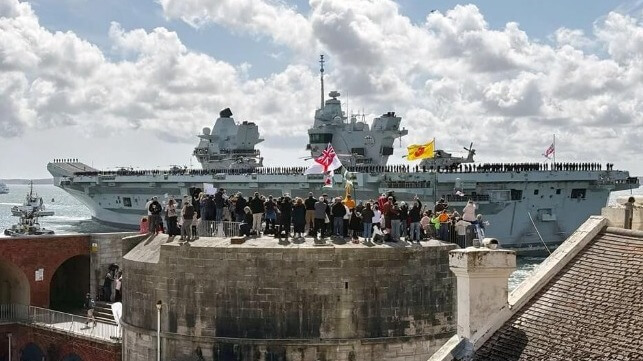
HMS Prince of Wales departs Portsmouth (Royal Navy)
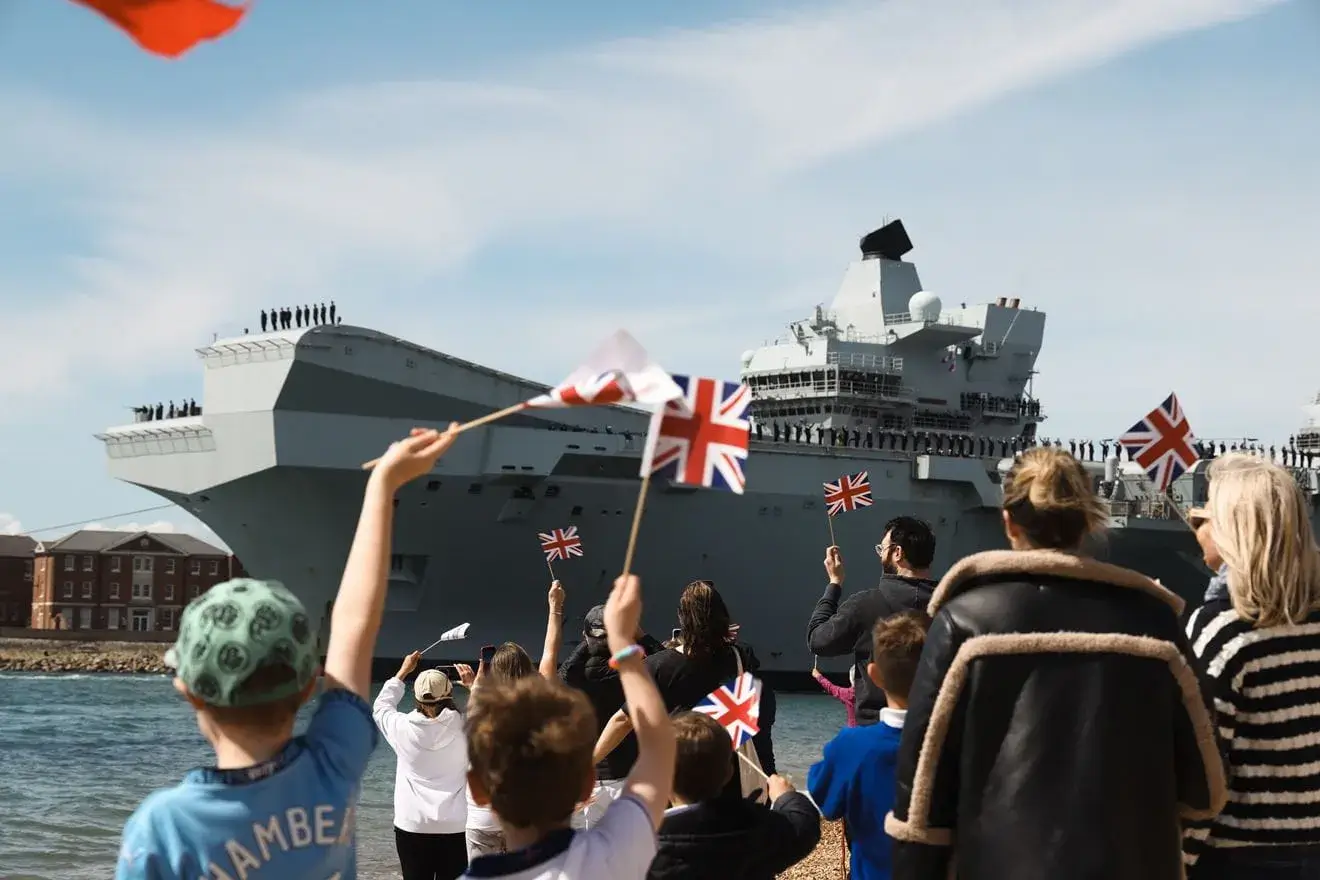
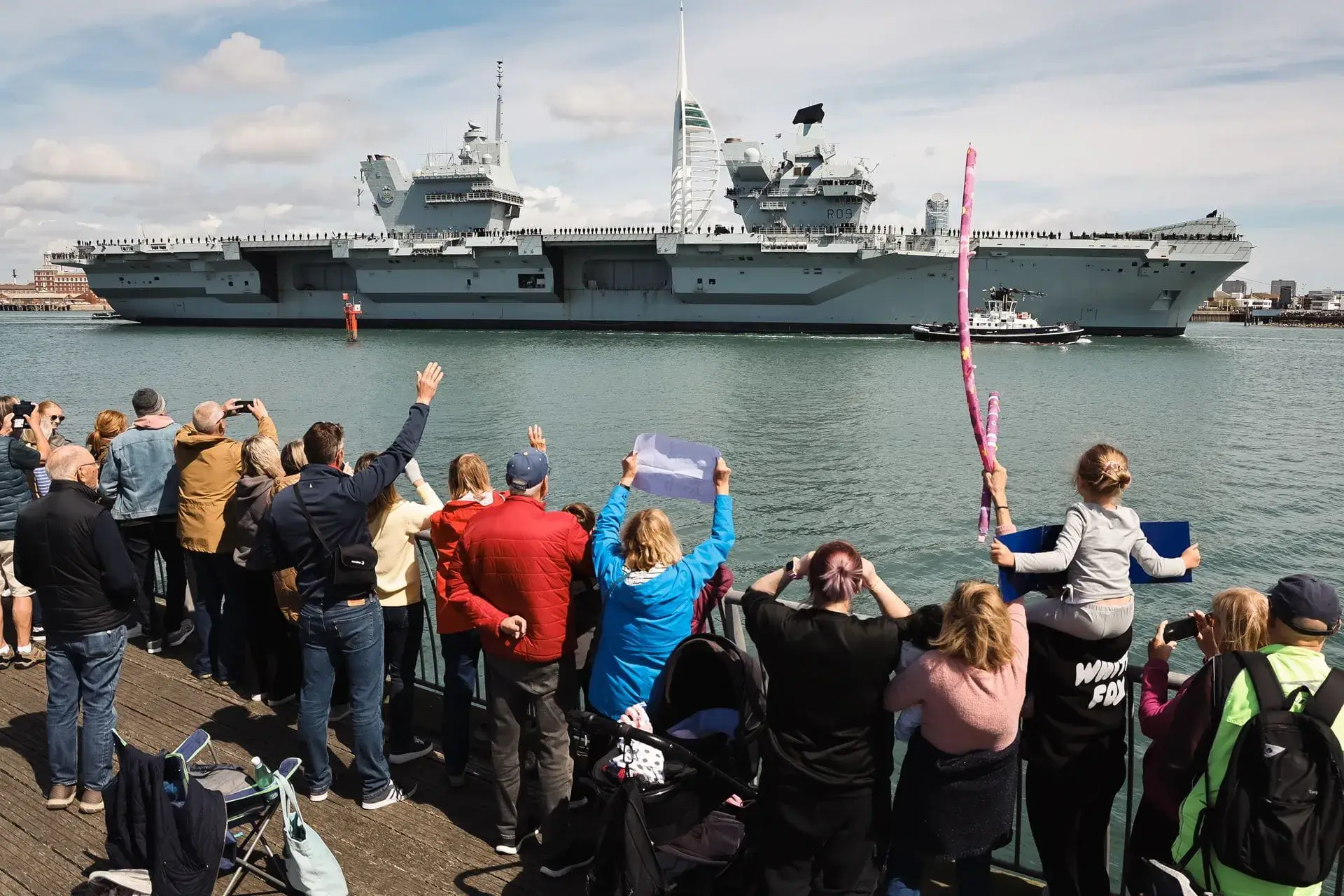
On Tuesday, the Royal Navy carrier HMS Prince of Wales got under way from Portsmouth for an eight-month deployment that will take her - and her airwing of F-35B fighters - all the way to the Pacific. The Royal Navy has named the mission "Operation Highmast."
"Working closely with partners from across the globe, Operation Highmast will demonstrate credible deterrence and our support to NATO and the rules-based international order," said Commodore James Blackmore, the strike group's commander. "This will reaffirm that the UK is secure at home and strong abroad and reinforce the UK’s commitment to the Indo-Pacific."
HMS Prince of Wales will be escorted by destroyer HMS Dauntless, frigate HMS Richmond, oiler RFA Tidespring and an unnamed Astute-class attack submarine. The Royal Canadian Navy and the Spanish Navy are each contributing a frigate, and the Norwegian Navy is sending two frigates for the full voyage, according to Navy Lookout. U.S. Navy vessels often join British deployments but are not on the current public roster.
Courtesy Royal Navy
HMS Prince of Wales will conduct joint exercises off France, then transit into the Mediterranean for more drills with the Italian Navy. After this workup, she will transit the Suez Canal and the Red Sea, bound for points east. It is as-yet unknown whether or how much she will be involved in the U.S. bombing campaign over Yemen during the transit; British forces have participated in the effort before, but the operation has intensified and its scope has broadened under the current U.S. administration.
It is the second time that the Royal Navy has deployed a carrier strike group on a long-distance mission in recent years. The last was in 2021, when HMS Queen Elizabeth departed Portsmouth for a seven-month voyage at the height of the COVID-19 pandemic. Propulsion system issues affected HMS Prince of Wales in August 2022, taking the carrier out of service for a year. HMS Queen Elizabeth went into drydock for similar repairs for an extended period in 2024.
VIKING & Offshore Wind Safety Leaders Launch 1st Immersion Suit for Women
VIKING Life-Saving Equipment has launched the first Crew Transfer Vessel (CTV) immersion suit in the world designed for women working in offshore wind energy, using guidance on diversity and inclusivity from industry leaders Ørsted, Siemens and Vestas.
The VIKING YouSafe™ Cyclone suit joins a growing portfolio of VIKING PPE whose fit and features reflect the safety needs of female seafarers, pilots and technicians in the marine and offshore industries.
The most recent UK Government Industrial Strategy Offshore Wind Sector Deal study included a “minimum target” for one third of the industry’s workforce to be by 2030 (2018 – 16%). In UK waters, and elsewhere, getting the right PPE in place to best serve the safety needs of women offshore has become a focus for equity and inclusivity strategy at Ørsted, Siemens and Vestas.
“As a young industry, offshore wind offers a huge opportunity to change attitudes in the workplace, and to encourage the diversity, equity and inclusion women are entitled to expect,” said Lasse Hansen, Senior HSE Manager, PPE and TMSE, Ørsted. “Ørsted has identified female-specific PPE as part of the critical infrastructure we need for women to work safely offshore today and a necessity to attract more of them into this industry. We were delighted to work with VIKING as one of our key safety solution providers to take a significant step in the right direction.”
Delivered in high-vis GORE-TEX® NARVIK™, the female-fit YouSafe™ Cyclone suit is approved to the same dual SOLAS/MED and CE/ISO standard as the male version and is available in multiple sizes. Common features include compatibility with all standard offshore harnesses, durable Neoprene cuffs and neck seal, retro-reflective piping for increased visibility in dark surroundings, and a maintenance free zipper.
However, ratios and cut are redesigned for shorter torsos, and different hip and chest proportions, and for a range of smaller sizes that avoid the risk of snagging in fixtures and fittings. The sleek looking design also offers a high level of comfort and enhances the safety of women when stepping or jumping to/off the platform, climbing the tower or moving around the nacelle. In addition, the suit includes integral braces, which hold suit pants for free leg movement when climbing and allow the wearer to doff its top part to move around freely.
Poul Parning, Senior EQS PPE Specialist, Siemens Gamesa said the Cyclone suit was a welcome contribution to its efforts to attract more women to offshore wind, ensuring that outdated practices did not frustrate career progress. “There has been an intense focus on PPE as a diversity, equity and inclusion issue at Siemens Gamesa for the last two years; we have already adopted a new safety harness for women. The Cyclone CTV suit supports corporate goals.”
Speaking for Vestas Wind Systems, HSE Manager Peter Armstrong-Cribb added: “At Vestas, we believe that diversity and inclusion go hand in hand with innovation, and that everyone must feel safe, valued, and that their voice is heard. The right PPE puts these beliefs into practice.”
VIKING built on its internal design work by interviewing women working offshore in the wind industry to develop the new suit, before trialing prototypes at a test day with Ørsted, Siemens and Vestas in Liverpool, UK earlier this year. After further tests offshore and customer feedback, the YouSafe™ Cyclone was launched in October.
“Bringing Cyclone to market has been a joy because we have worked with customers whose competitive position did not stand in the way of our common goal to deliver a safety necessity and level the playing field for women working offshore” said Bettina Kjærgaard, Global Sales Manager Offshore Wind, VIKING Life-Saving Equipment. “Their response in spreading the word has also been phenomenal.”
The products and services herein described in this press release are not endorsed by The Maritime Executive.
Chinese Shipbuilders Feel "Big Relief" After US Softens Port Fee Plan
The revised, less stringent terms of the U.S. Trade Representative's fee plan for Chinese-built ships are an encouragement for China's shipbuilders, multiple shipping sources have told SCMP this week. Though the USTR's initial proposal dampened foreign owners' interest in buying Chinese-made tonnage in the first quarter, the recalibrated financial penalties and the full exclusion of many vessels in the new version gives China's shipbuilding yards reason for optimism - especially as the White House is now signaling its willingness to negotiate down its demands on trade.
The new, more detailed version of the USTR's proposed rule covers much less of the world fleet than the first version. Most importantly, it now exempts most non-Chinese vessels from the fee structure. Before, an owner with Chinese ships anywhere in its fleet would get billed for every U.S. port call, even if using its non-Chinese ships to call in the United States. Under the revised USTR plan, the owner can separate out its Chinese-built ships for use in overseas trade, use all its other ships for port calls in the U.S. market, and avoid any of the fees - while still buying and using Chinese tonnage.
The revision also contains broad exemptions. Most vessels arriving in ballast will not be charged, and all vessels smaller than a Panamax (55,000 dwt, 4,000 TEU for a boxship, or 80,000 dwt for a bulker) are fully exempt.
For Chinese ships that do get billed, the fees are also less onerous: they are now assessed once per visit to the U.S., not for each port call in a string, and only up to five times per ship per year. The charges are also calibrated by vessel size now, removing a disproportionate impact on smaller vessels.
"[It] is a big relief for Chinese shipbuilders, as it significantly alleviates clients’ concerns about placing orders," a senior analyst at a Chinese state shipping firm told SCMP, estimating that about 60 percent of China's current orderbook would not be subject to tariffs.
The relief comes just in time for China's yards, notably in the dry bulk segment. Bulker orders dropped by more than 90 percent in the first two months of the year, according to BIMCO. Top shipbroker Howe Robinson reports just 39 newbuild bulker contracts signed in the first quarter anywhere in the world, down from 213 the year before. Chinese yards received just 13 of these orders, according to Xinde.
The day after the USTR's revised plan was released, specialist yard China Merchants Industry Group announced plans to start building general-purpose bulk carriers and boxships through the purchase of an existing shipyard, Qingdao Yangfan Shipbuilding Co.
Navantia Accelerates Investments in Harland & Wolff and UK Shipbuilding
Investments are underway at the famed shipyard in Belfast with the iconic gantry crane in the background (Navantia UK)
Three months after completing the acquisition of the bankrupt Harland & Wolff shipyard in Belfast and the other yards of the group, Spain’s Navantia outlined its plans for increased investment to create what it is calling one of the “UK’s most advanced shipyards.” The investments that are intended to improve productivity, provide faster delivery, and more sustainable manufacturing processes as designed to position the UK group as the UK and European governments are increasing defense spending.
Navantia partnered with Harland & Wolff in 2023 to win a UK contract to build three naval support ships for the Royal Navy Auxiliary. As part of that program, the companies committed to an investment of £77 million ($100 million) to modernize the yards and increase capabilities for the Fleet Solid Support (FSS) contract. The Spanish group stepped in in late 2024 to save the UK shipyard group from liquidation and maintain the FSS program reporting that it would increase the planned investment in the yards.
“The modernization program will significantly enhance the Belfast yard’s ability to build the FSS vessels and support future programs,” said Navantia UK detailing its plans. “The investment is designed to deliver a comprehensive regeneration of UK shipbuilding capabilities, leveraging the opportunity presented by the FSS program.”
Assembly work and outfitting for the three FSS vessels is slated to take place at the yard in Belfast. The Appledore shipyard is producing the bow sections for the vessels. Work on the upgrades had begun in 2024, but was suspended due to the group’s financial troubles. Navantia UK reports that work resumed in March.
According to the group, the modernization focuses on maximizing productivity, creating jobs, and implementing sustainable manufacturing. Phase one focuses on enhancing capabilities for building vessel hulls, with improvements to delivery systems, stockyard management, and cutting technologies. It includes a comprehensive upgrade both for infrastructure development and advanced equipment installation. It will feature new lifting cranes, robotic plasma cutting systems, and automated quality control processes. A fully mechanized panel line for flat panel units will be installed, while the Belfast shipyard’s iconic Samson and Goliath gantry cranes will continue to play a vital role in operations.
The investment program extends beyond Belfast, with significant upgrades at the Appledore shipyard in Devon. The company has already committed to purchasing an advanced plasma cutter with expanded bed dimensions and sophisticated bevel-cutting capabilities, replacing machinery that has served the facility for more than 20 years.
Navantia UK’s investment strategy also encompasses the Scottish facilities at Arnish and Methil, which specialize in the energy industries. At Arnish, investment has begun including on skills development infrastructure, featuring a new welfare facility, dedicated training center establishment, office space improvements, and enhanced security and parking provisions.
Juan de la Cueva, CEO of Navantia UK, called the investments a “watershed moment” for UK shipbuilding. He said it was part of a long-term commitment to UK shipbuilding. Harland & Wolff they said will be transformed into a cutting-edge facility capable of delivering the highest quality vessels. The Belfast yard was once an industry leader but entered a long decline delivering its last new build in 2009 and saved from a prior bankruptcy in 2019. Similarly, the Appledore shipyard went into receivership in 2003 and finally closed in 2019 before being acquired by Harland & Wolff Group in 2020. The group acquired the two smaller yards in Scotland in 2021.
MSC Boxship Gets Emergency Tow to Las Palmas
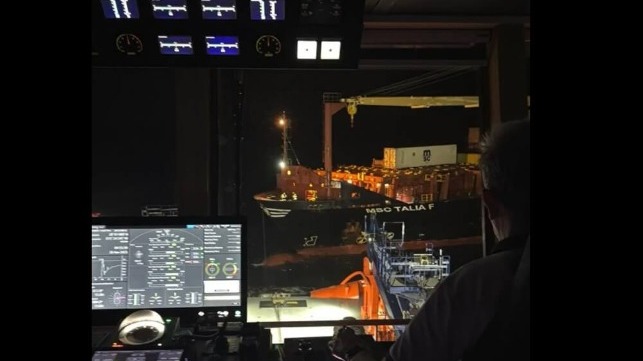
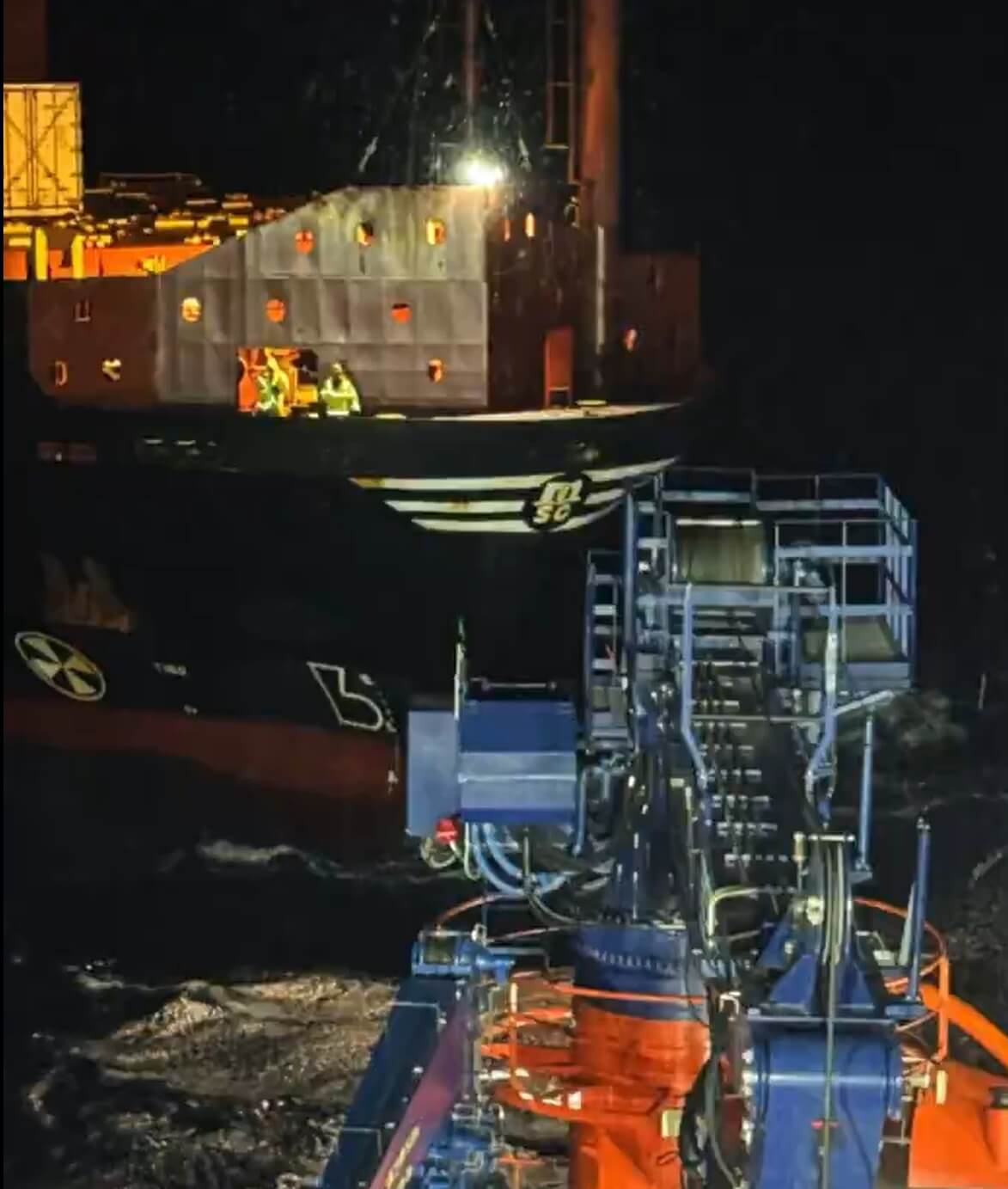
DP operator maneuvers a Salvamento Maritimo rescue tug close to MSC Talia F's bow to pass a towline (Salvamento Maritimo)
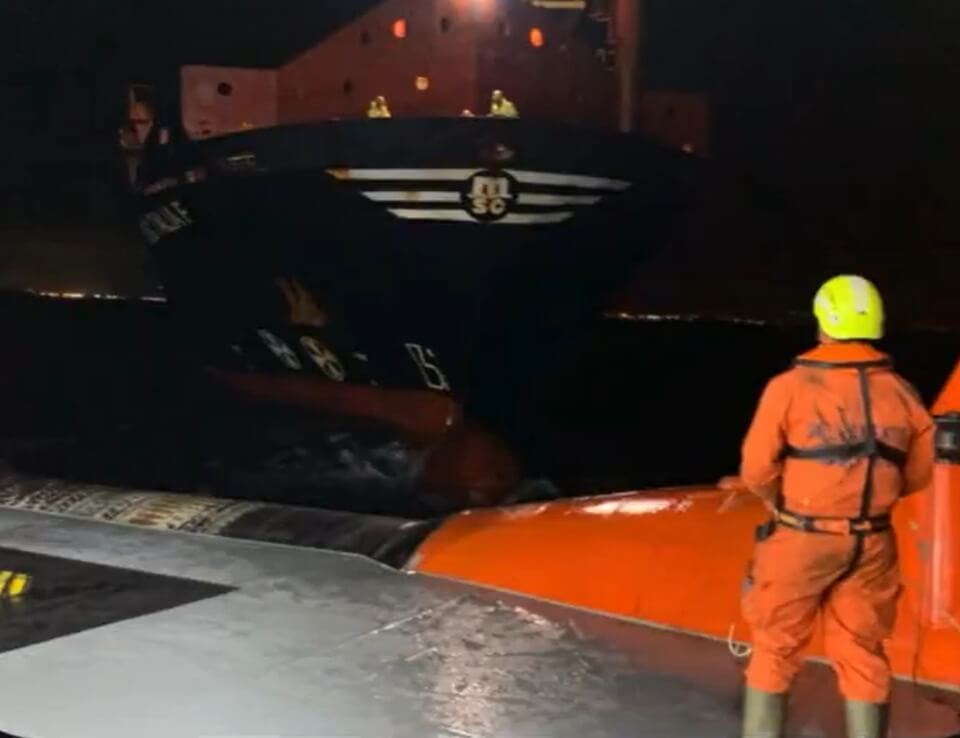
Over the weekend, Spanish first responders rescued a disabled MSC boxship that was adrift just off Gran Canaria, according to the Salvamento Maritimo rescue service.
On Saturday, the 1,000 TEU feeder MSC Talia F broke down about eight nautical miles to the east of Punta Melenara, Gran Canaria. The vessel was drifting south at about two knots, parallel to shore. Winds were NNE at about 25-30 knots, with rough seas, but the response crew got the small container ship in tow and brought her safely to Las Palmas. The boxship resumed her commercial voyage on Monday and is back under way.
Images courtesy Salvamento Maritimo
MSC Talia F is a 12,000 dwt feeder built in 2005. She is owned in Liberia and operated by MSC, the world's largest container liner. Her most recent inspections were conducted last year, and found issues with corrosion and piping - none serious enough to warrant a detention.
It is second breakdown involving an older boxship in two months for MSC. The company expanded its fleet rapidly during the late-pandemic era by acquiring or keeping older tonnage, avoiding scrap sales and paying well for used boxships that would not have commanded high prices a few years earlier.
In February, the 2003-built MSC Baltic III lost power and drifted aground on the west coast of Newfoundland in a winter storm, forcing the crew to abandon ship. The vessel is still aground on a rocky ledge, and small quantities of tar balls have been found on nearby shores.
ALT. FUEL
Japan Engine Starts Co-Firing Ammonia Engine Ahead of October Delivery
J-Engine reports it started co-firing a full-scale ammonia engine due to be delivered in October (Japan Engine)
Japan Engine Corporation reports key progress in the race among the major engine manufacturers to complete the certification and delivery of the first ammonia-fueled commercial shipping engine. The company reports it will be ready to ship the engine in October for installation in a gas carrier as other major companies including MAN and WindGD have also reported they were in the final stages of certification before shipping their first ammonia engines.
The company reports that the first Japanese-developed and manufactured commercial unit of a large, low-speed, two-stroke engine recently started co-firing operation with ammonia. It is being labeled the first full-scale commercial engine based on ammonia. J-ENG reports its first development is a large, low-speed, ammonia-fueled 2-stroke engine (50 cm cylinder bore).
The project was launched under the auspices of the “Green Innovation Fund Project: Next-generation Ship Development” project of the New Energy and Industrial Technology Development Organization (NEDO). Since May 2023, when J-ENG started the world's first ammonia co-firing operation of a large, low-speed, two-stroke engine in a test engine, the company reports it has obtained many results and knowledge. This includes insights into stable operation at high ammonia co-firing rates and safe handling of ammonia, through various test operations over about a year and a half.
J-ENG says it will conduct verification operations on the full-scale engine and plans to ship the engine in October of this year. The engine will be installed on an Ammonia-Fueled Medium Gas Carrier (AFMGC) and then demonstration operations of the vessel will be carried out. Concurrently, the company says it is also developing an ammonia-fueled engine with a cylinder bore of 60 cm for several promising follow-on projects.
Seeking to be a first mover for next-generation fuel engines J-Engine says it has also decided to construct a new plant with the support of a subsidy project by the Ministry of the Environment and the Ministry of Land, Infrastructure, Transport and Tourism through the GX Economic Transition Bonds. The plant, which is scheduled for completion in 2028, will be used to expand the production of ammonia fuel engines (in the product mix with fuel oil engines) and promote the spread and expansion of zero-emission ships.
Testing and demonstrations of the first ammonia-fueled vessels began in 2024. Japan’s NYK is at the forefront with a converted tug that previously ran on LNG and was rebuilt with an ammonia-fueled engine. DNV calculates that there currently are 33 vessels on order to be fueled by ammonia due for delivery by the end of this decade.
IMF: Trump's Tariffs Could Slow Global Trade Growth by Half in 2025
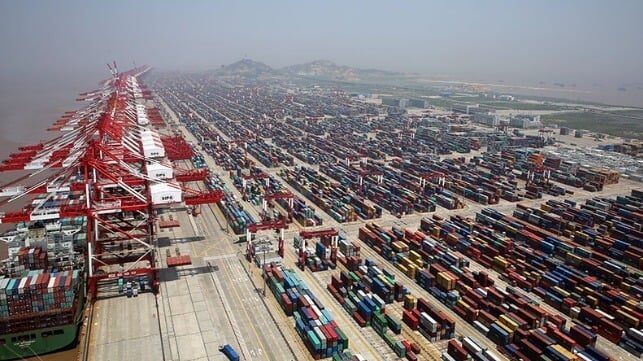
Port of Shanghai's sprawling Yangshan terminal complex (file image)
Global trade volume and global economic growth will both be reduced if new U.S. tariff policies continue on their current course, according to the International Monetary Fund's latest World Economic Outlook forecast.
Compared to its last update in January, the IMF has cut back its 2025 trade growth forecast by half, from an expected 3.2 percent down to 1.7 percent. It also pared back its economic growth forecast from 3.3 percent in 2024 to 2.8 percent in 2025 - a global slowdown, but not a recession. IMF predicts that the most affected OECD country will be the nation at the center of the tariff negotiations: the United States, which will see growth for 2025 reduced by half (from 1.8 percent down to 0.9 percent).
However, the IMF's forecast assumes that the Trump administration holds course on its current tariff plans, including the "reciprocal" tariff list affecting most foreign trade partners. That prediction appears uncertain, and the White House has repeatedly changed its position on what the final bundle of tariffs should look like after all talks are completed.
On Tuesday, following Monday's sharp selloff in the U.S. markets, Treasury Secretary Scott Bessent told a private meeting of JP Morgan investors that the growing trade war with China is "unsustainable." Trump's 145 percent top tariff rate on Chinese goods is the steepest on any U.S. trading partner, and China has imposed a retaliatory tariff of 125 percent.
Bessent predicted that these tariff tensions would de-escalate in the "very near future," even though formal talks with Beijing have not started. Immediately after his closed-door comments, public markets soared, and the Dow recovered Monday's losses by the close of trading Tuesday.
Separately, White House press secretary Karoline Leavitt told reporters on Tuesday that the administration is already reviewing 18 trade proposals, and there will be trade meetings with 34 other countries this week alone. She confirmed that as of yet, there have been no formal talks between President Donald Trump and Chinese President Xi Jinping on tariffs.
“We're going to be very nice [with China]. They're going to be very nice. And we'll see what happens," Trump said Tuesday. "But ultimately, they have to make a deal because otherwise they're not going to be able to deal in the United States."
Trump also suggested that he is not going to "play hardball" with China, despite his longstanding complaints that Chinese industrial policies have "ripped off" America.
Trump's plan for one-on-one, nation-by-nation dealmaking has an additional challenge: China has threatened anyone who sits down to talk with the White House if the outcome is bad for Beijing.
"China firmly opposes any party reaching a deal at the expense of China’s interests," the nation's commerce ministry said in a statement. "For one’s own temporary selfish interests, sacrificing the interests of others in exchange for so-called exemptions is like seeking the skin from a tiger. It will ultimately only fail on both ends and harm others without benefiting themselves."
Shipping Stocks Begin to Regain Losses After Hints of a Tariff Reprieve
Clear signals that the Trump administration wants to pare back its new tariffs have prompted a market recovery, and key stocks in cruise and commercial maritime have begun to regain the losses they suffered after the April 2 levy announcements - but the course ahead is still far from certain.
Trade with China has been hit hardest with a 145 percent blanket tariff rate. Container booking data for mid-May shows that shipments for inbound cargo from China to LA-Long Beach will be down by more than 40 percent, according to CNBC, an unprecedented and sudden drop.
On Tuesday, Trump told the press that he would not "play hardball" with China and would be "nice" in negotiations going forward. He added that the current rate would be coming down "substantially," though not all the way to zero.
On Wednesday, the Wall Street Journal reported that Trump's team is aiming at average tariffs of 50-65 percent on Chinese goods, possibly lower for noncritical items and higher for strategic industries. A final decision has not been made, the WSJ said.
Later in the day, Treasury Secretary Scott Bessent denied that the White House is considering cutting tariff rates on China without getting something in return. But he said that both sides are motivated to walk back from current levels. "Neither side believes that these are sustainable [tariff] levels," he said. "This is the equivalent of an embargo, and a break between the two countries in trade does not suit anyone's interests."
Stocks have rallied on the news of a likely tariff rollback, including some key shipping stocks. AP Moller-Maersk, the largest publicly-listed ocean carrier (and second-largest overall) saw its shares jump up eight percent in a day. It has now regained most of its losses since April 2, buoyed by expectations of lower trade barriers.
Jones Act carrier Matson, which operates an express service between China and the United States, has been hit hard by the tariff disruption: its stock has lost nearly a quarter of its value since April 2. It began to recover from those losses on Tuesday, reflecting rising expectations of an eventual return to higher booking levels on transpacific routes.
As a discretionary expense, cruising is sensitive to swings in economic outlook, and it has tracked the recovery of the rest of the market. Carnival rebounded 3.5 percent over the past five days, Royal Caribbean is up by 7.5 percent, and Norwegian Cruise Line is up by 5 percent. However, all of the big three cruise stocks - like the markets overall - are still well below where they were last month.
Argentine Responders Rescue Crew of Sinking Tug on Rio de la Plata
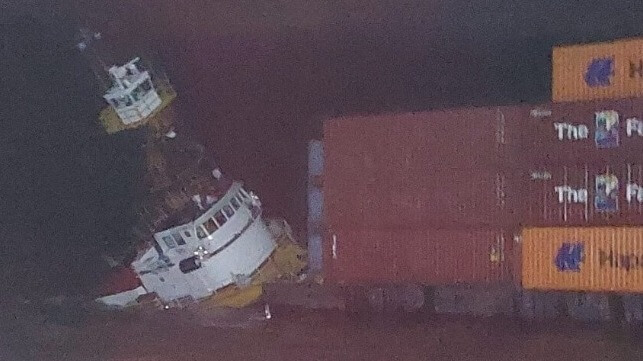
Papu Mar sinking by the stern while still attached to her container barge (Argentine Naval Prefecture)
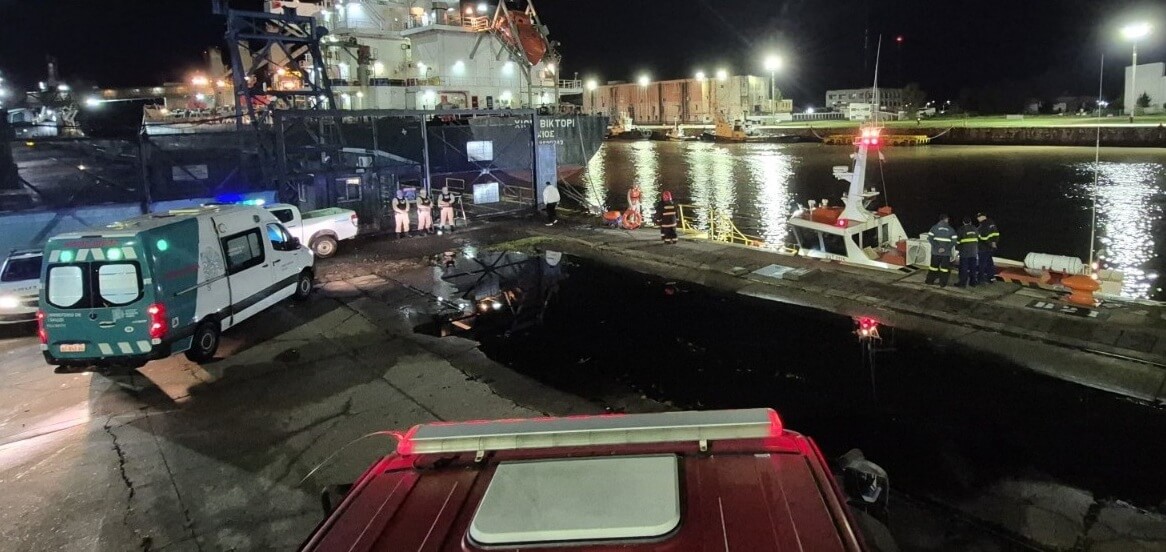
Last week, the Argentine Naval Prefecture rescued the crew of a tug that flooded and partially sank while pushing a container barge off the coast of Buenos Aires.
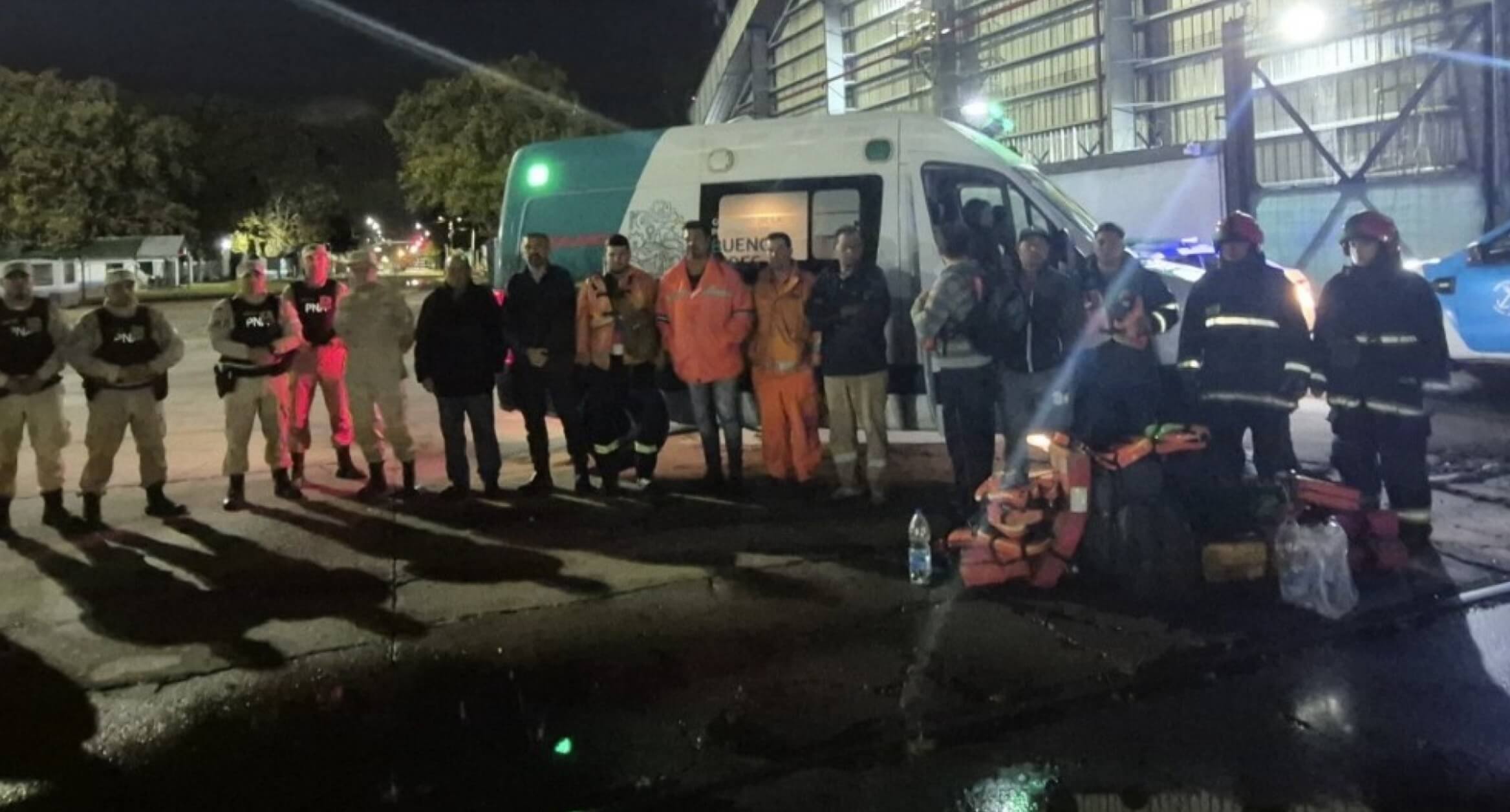
On Friday, the captain of the Paraguayan-flagged tug Papu Mar made a mayday call to report flooding on board at a position off Atalaya in the Paso Banco Chico, the inner bay of the Rio de la Plata. All crewmembers safely abandoned ship onto their own barge and were rescued by first responders. They were taken ashore for medical checkups.
Courtesy Argentine Naval Prefecture
The tug Papu Mar is still partially sunken, but does not pose a hazard to navigation, the agency said in a statement. The barge has 153 containers aboard, and it is still lashed to the tug. No cargo losses or damage have been reported.
To monitor for environmental impact, Argentina's naval prefecture continues to monitor the area with occasional overflights. A commercial tug, the Ona Don Lorenzo, is keeping the barge out of the channel while salvors prepare for next steps.
Egypt Launches First Domestically-Built Tugs for Suez Canal
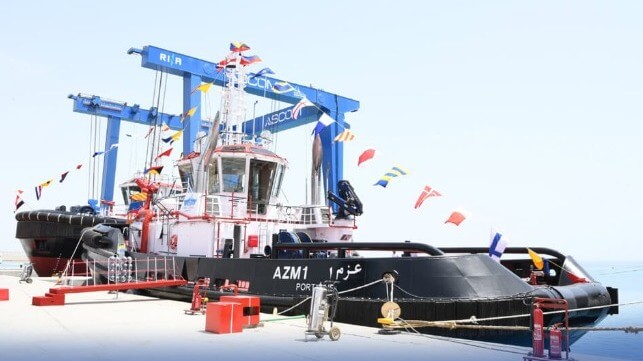
Egypt launched the first of 10 new domestically-built tugs for the Suez Canal (SCA)
Egyptian officials celebrated the launch of the first two domestically-built tugboats on April 23, which will be used for the Suez Canal. They highlighted it was part of a broader effort to expand Egypt’s maritime community and support the capabilities of the Suez Canal Company.
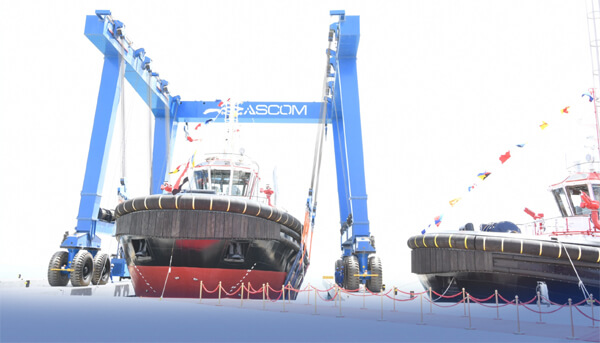
In a public-private partnership, new shipyard capabilities were established at the southern port of Safaga where the tugs were launched. The development of the yard included a new marine quay with mooring bollards, a quay for lifting vessels, and an 850-ton winch for lifting and unloading equipment and vessels.
During the speeches, it was highlighted that Egyptian President Abdel Fattah El-Sisi is supporting the effort. The president outlined the vision of localizing various marine capabilities in Egypt. In addition to the tug construction, the president directed the development of a new fishing fleet which will include 12 deep-sea vessels as well as the construction capabilities for tourist vessels.
New cranes and berths were built to increase Egypt's shipbuilding capabilities (SCA)
The first of 10 new tugs planned for the Suez Canal Authority were officially launched during the ceremony. They highlight the tugs have a pulling power of 90 tons and incorporate advanced navigational capabilities and environmentally friendly technologies. Each tug is 32 meters (105 feet) in length and with a top speed of 12 knots. They were designed by the international firm Robert Allan.
Among the features incorporated into the new tugs are main engines from the Belgian company ABC that will provide increased operating power and longer service life. They have also been designed to reduce carbon emissions. Incorporated into the design is a special external fire extinguishing system, using a separate engine from the main engines, which helps to provide better control and maneuvering during fire emergencies, and a water capacity of up to 2,400 cubic meters.
The first two vessels, Azm 1 and Azm 2, were launched while work is underway on units number 3 through 6. The hulls are completed and outfitting is underway on the mechanical, electrical, and piping work. A total of 10 tugs will be built in this class.
The Suez Canal Authority highlights an ambitious strategy to develop and modernize its maritime fleet by incorporating the latest technologies. The new tugs will be part of the fleet both for the guidance of vessels and to respond to emergencies. Work is also underway at the Alexandria Naval Yard on the Authority’s largest tug which will have a reported pulling force of 190 tons.
U.S. Forces Ordered Airstrike on Smuggling Vessel off Somalia
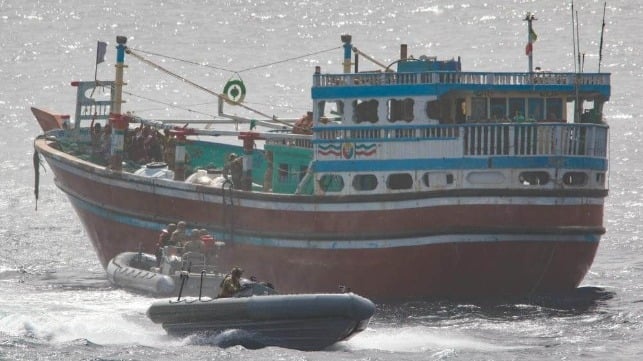
A typical U.S. Navy dhow interdiction in the Mideast. This time, no boarding occurred (USN file image)
In a little-noticed action last week, U.S. African Command (Africom) took the rare step of bombing a stateless vessel that was suspected of smuggling arms into Somalia.
The boat was allegedly delivering "advanced conventional weapons" to al-Shabaab militants in Somalia. Al-Shabaab ("The Youth") is an Islamic militant movement with roots in al-Qaeda, and has been fighting the Somali government since the early 2000s. More recently, Western analysts suggest, al-Shabaab has developed ties to Yemen's Houthi terrorist group - based in part on shared interests in arms smuggling.
U.S. special forces have contributed to the counterinsurgency campaign against al-Shabaab for years, but have not dealt the group a decisive defeat. The conflict has recently heated up, with Al-Shabaab fighters making gains near the capital city of Mogadishu, and the Somali government's allies have responded with new urgency. Turkey's army delivered 500 troops into Mogadishu earlier this week, and Africom has launched a new round of airstrikes on remote Al-Shabaab positions.
Within this urgent context, Africom opted to use revised Pentagon engagement policies to order a rapid airstrike on the inbound smuggling vessel, according to The War Zone. "They have to do things quickly. They did not have time to pull in boats [for a boarding]," a U.S. official told the outlet.
The Somali government said in a statement that the strike targeted an unflagged ship and a smaller support craft that were operating in Somali territorial waters. It added that in Africom's assessment, "all individuals aboard both vessels were neutralized."
Africom did not provide further details, but suggested that no civilians were harmed.
Historically, suspected smuggling boats in the Mideast and Horn of Africa have been interdicted in search and seizure boardings, often by U.S. Coast Guard teams with law enforcement training; kinetic weapons have almost never been used against cargo vessels in the area, at least in publicized actions.
Tanker Boarded and Robbed in First Incident in Four Years Off Nigeria
A product tanker was robbed as incidents continue across West Africa and the Gulf of Guinea region (file photo)
A product tanker traveling more than 100 nautical miles south of the Nigerian coast was boarded earlier this week. Security services are saying the crew was well prepared and remained safe and while it was the first recent incident, the risks remain high across the Gulf of Guinea and in West Africa.
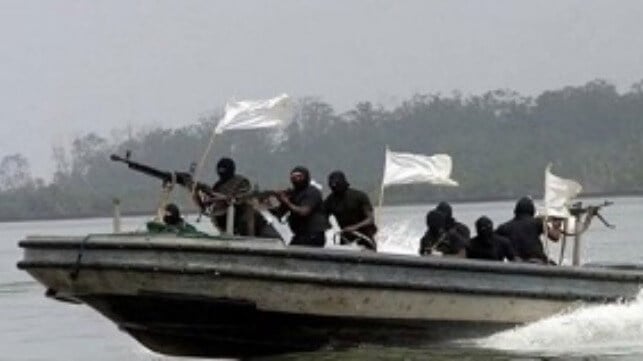
The official report from Maritime Domain Awareness for Trade – Gulf of Guinea (MDAT-GoG) says the boarding took place on April 21 and involved four individuals. They reportedly approached the vessel at high speed in a black-hulled craft and remained aboard for nearly four hours taking personal property and equipment from the vessel before fleeing.
Security consultants Neptune P2P Group is highlighting that the captain and crew were well-prepared and followed mitigation recommendations quickly fleeing to the citadel where they remained during the incident. The perpetrators may have tried to enter the citadel or Martin Kelly, Head of Advisor at EOS Group, speculates it was a possible attempt at kidnapping because the pirates remained aboard for nearly four hours. The crew was unharmed according to the authorities.
The official reports did not name the vessel involved, but in an unconfirmed report, Neptune P2P says it was the Sea Panther, a 13,000 dwt chemical tanker with Greek ownership and registered in the Marshall Islands. The vessel’s AIS shows it departed Lomé on April 20 and arrived on April 23 at Douala, Cameroon.
While it is the first reported incident involving a commercial vessel near Nigeria in years, the dangers remain high in the region. Yesterday, the Nigerian authorities confirmed that a well-known fashion designer from Port Harcourt had been murdered by pirates. The individual named Hope Georgewill was kidnapped on March 26 and his family reportedly paid a ransom of approximately $1,250. The police reported they recovered his body and that they also raided the pirates' hideout killing four individuals and recovering a stash of weapons, outboard motors, and other equipment.
The Nigeria Security and Civil Defence Corps also reported on April 19 that one of its personnel was killed during a shootout with a pirate group. The incident took place in the Niger Delta Region.
MDAT-GoG’s data shows that in April alone there have been four incidents including an attempted robbery off Monrovia, Liberia, and boardings near Accra, Ghana, and Abidjan in Cote d’Ivoire. Security services have also warned of continuing pirate group activity to the south in the region between Equatorial Guinea and São Tomé e Principe.
The current incident is reported by Neptune P2P as the fifth boarding in the Gulf of Guinea in 2025. The group highlights a 30 percent increase in activity over the same period in 2024.
Wind Industry Installs Record Capacity in 2024 Despite Policy Instability
Installation of wind power is continuing globally despite growing instability (file photo)
The Global Wind Energy Council is out with its annual report highlighting that 2024 was a record year for new capacity, with 117 GW of wind energy installed across the world. However, it also pointed out that although 2024 was another record year for wind installations the headline numbers mask big disparities in terms of the pace of deployment across global markets, and now trade wars and political instability threaten the progress for the sector.
The lion’s share of installations in 2024 however also took place in a small number of key mature markets, including China and Europe. Much of the progress also came onshore where 109 GW was added while just 8 GW was installed offshore. Globally it reports capacity has reached 1,136 GW, spread across all continents and with 55 countries installing wind turbines in 2024.
China led the way for new installations in 2024 with 79824 MW of new capacity while surprisingly despite growing opposition the U.S. was second (4058 MW) edging out Germany. India and Brazil rounded out the Top 5 in 2024.
There was record growth in other regions, including Asia-Pacific (7 percent), while Africa & Middle East saw a 107 percent growth rate, driven by Egypt installing 794 MW and Saudi Arabia’s 390 MW. North America, LATAM, and Europe experienced a decline in new installations compared with 2023.
“Once again, the wind industry has broken new installation records, despite more challenging macroeconomic headwinds over the last few years,” said Ben Backwell, CEO of GWEC. “The aggressive stoking of tariff wars adds further uncertainty to international investment decisions and threatens to disrupt the international supply chains which the wind industry relies on. The full costs on our industry of the wide array of declared and threatened tariffs we have seen – both general and on specific commodities such as steel - have yet to be fully calculated.”
GWEC, however, warns of increasing policy instability in some markets and points to the need to improve permitting, grid transmission, and auctioning mechanisms. It says these steps are critical to keep pace with the global trend for electrification, meet countries’ energy and climate targets, and lessen reliance on volatile fossil fuels. It also sees this as critical to fulfilling globally agreed ambitions to triple renewable energy capacity by 2030.
“It's vitally important that policymakers around the world don’t take their eyes off the prize, ensure stable and predictable market frameworks, work within multilateral frameworks to ensure free and fair trade,” says Blackwell. He says governments must work with investors and the industry to enable rapid deployment of clean, efficient wind power to support economic growth, resilience, and prosperity.
The report forecasts a compound average growth rate of 8.8 percent for the wind industry, projecting an additional 981 GW of wind energy capacity across the globe by 2030. GWEC’s Market Intelligence service sees consecutive record years through to 2030, with 138 GW of new capacity in 2025, 140 GW in 2026, 160 GW in 2027, 167 in 2028, and a leap in 2029 and 2030 to 183 GW and 194 GW respectively.
GWEC’s forecast for 2025-2030 sees offshore wind rise from 16 GW in 2025 to 34 GW, with offshore moving from 11.8 percent of new capacity to 17.5 percent of new capacity by the end of the decade.
This year’s Global Wind Report focuses on four key challenges the market faces, including financial and macroeconomic headwinds, trade barriers and market fragmentation, inadequate procurement and auctioning frameworks, and challenging investment conditions in the global wind energy supply chain.
 Courtesy Royal Navy

 Images courtesy Salvamento Maritimo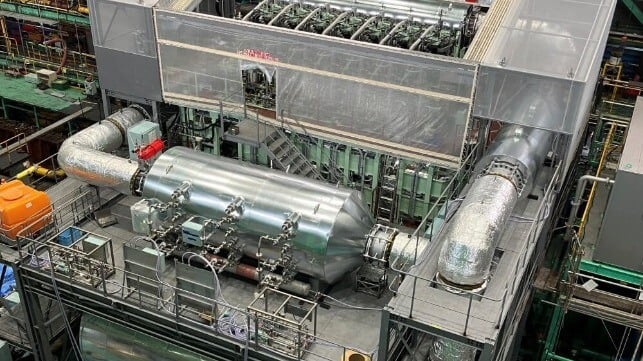

 Courtesy Argentine Naval Prefecture