It’s possible that I shall make an ass of myself. But in that case one can always get out of it with a little dialectic. I have, of course, so worded my proposition as to be right either way (K.Marx, Letter to F.Engels on the Indian Mutiny)
Thursday, April 24, 2025
A Chinese Jackup Rig off South Korea Raises Suspicions of Expansionism
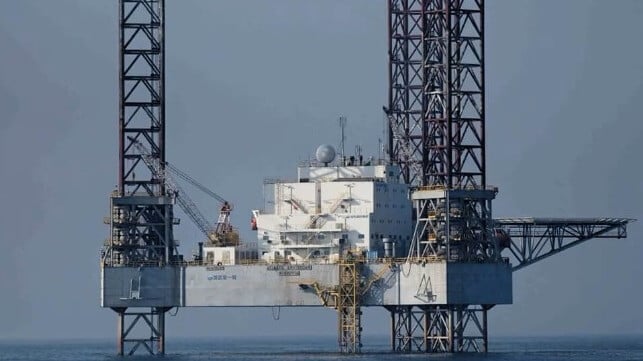
Atlantic Amsterdam in the Yellow Sea (Korea Institute of Ocean Science and Technology / Um Tae-young)
China's drills around Taiwan and its ambitions in the South China Sea get plenty of attention, but officials in South Korea warn that it is also encroaching on a contested space in the Yellow Sea - and may be attempting to move in with a durable presence.
According to South Korean officials, Chinese interests have moved an older jackup platform into an area known as the Provisional Measures Zone, a region where the two nations' exclusive economic zone claims overlap. The former rig is in use for aquaculture, according to China, but South Korea's government believes that there is more to the story. Chinese authorities intervened to stop a Korean research vessel from investigating the rig in February, raising security concerns in Seoul. Korean diplomats plan to raise the issue with China at an upcoming maritime dialogue, officials said.
"We are treating this issue with utmost seriousness from the standpoint of protecting our maritime territory," Korean minister of oceans and fisheries Kang Do-hyung told reporters on Monday.
The jackup platform has been identified as the Atlantic Amsterdam. It began life in 1984 as a drill rig, but in 2013 it was refitted for use as a floatel. In service with Northern Offshore - a subsidiary of state-owned Shandong Shipping Corporation - it has capacity for up to 70 people, plus a helipad and vertical gangway for access.
Atlantic Amsterdam was listed as available for commercial charter as recently as 2023, but according to Korean intelligence it has been emplaced in the Yellow Sea since early 2022.
Korean political commentators - particularly in the opposition People Power Party - have drawn comparisons between the rig and China's South China Sea bases. The vast land reclamation projects in the Spratly Islands and Paracels started under civilian descriptions, then evolved into strategic naval air stations within a few years' time.
"China’s method of installing the structure [Atlantic Amsterdam] is similar to its tactic of creating artificial islands in the South China Sea," People Power Party floor leader Rep. Kweon Seong-dong told Korea Herald.
Hanwha Markets Building LNG Carriers in Pennsylvania to Meet USTR Rules
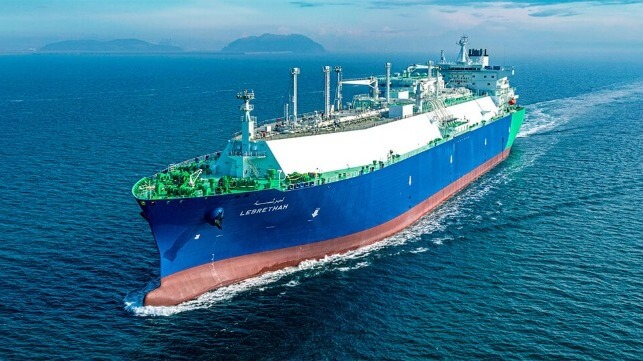
Hanwha Ocean building on the DSME legacy delivered its 200th LNG carrier in 2025 (Hanwha Ocean)
South Korea’s Hanwha Ocean is reported to be looking to leverage its long expertise in LNG carriers and its unique position through the ownership of a shipyard in Pennsylvania in response to the new U.S. Trade Representative’s fees for Chinese-built ships. Bloomberg quotes an executive from Hanwha highlighting its unique capabilities and the pending need for the first modern U.S.-built LNG carriers.
While much of the attention on the USTR fee structure released last week has been on the aspects of Chinese-build ships, Chinese vessel operators, and the foreign companies operating Chinese-built ships, another key provision of the fee structure picks up an idea that had been circulating in Washington D.C. for years to require a portion of LNG exports to leave the U.S. on U.S.-built and operated vessels.
The U.S. emerged as the leading exporter of LNG in the past few years rivaling Qatar and Australia, in part driven by Europe’s need to replace Russian supplies of gas. The Trump administration has promised to accelerate the LNG market and already moved to license new projects and terminals.
“To incentivize U.S.-built liquified natural gas (LNG) vessels, limited restrictions on transporting LNG via foreign vessels,” proposed USTR outlining its fee structure. “These restrictions will increase incrementally over 22 years,” notes the announcement.
USTR calls for introducing a requirement starting April 2029 that one percent of U.S. LNG exports must travel on U.S.-flagged and U.S.-operated vessels. Starting in 2031, it would step up to two percent, reaching seven percent by the 2040s, and ultimately 15 percent in 2047. USTR says it may direct the suspension of LNG export licenses if the percentages are not met.
The requirement for U.S. vessels calls for vessels built in the U.S. where all the major components of the hull or superstructure are manufactured in the U.S. as well as key components in propulsion, cargo handling, and alike. Many in the industry have called the USTR requirement unrealistic noting the lack of commercial shipbuilding capacity in the U.S. and the lack of experience specifically with LNG carriers.
Bloomberg is quoting Ryan Lynch, vice president of commercial shipping at Hanwha Shipping who says “as many as five to seven US-flagged, US-operated LNG carriers would be required before the end of the decade.”
South Korea’s Hanwha Group entered the shipbuilding sector in 2023 when it acquired control of Daewoo Shipbuilding & Marine Engineering (DSME) in an agreement with the South Korean government-controlled banks. Then in December 2024, it completed its $100 million acquisition of Philly Shipyard, highlighting its role in building commercial U.S. Jones Act ships as well as its work for MARAD.
Earlier this year, building on DSME’s legacy, Hanwha Ocean highlighted it had become the first shipbuilder to deliver 200 LNG carriers. The vessel was the Lebrethah, built by the company for SK Shipping, and which will be deployed and operated in Qatar Energy’s North Field Expansion Project.
The company reports it made history in 1995 by successfully delivering its first LNG carrier and 21 years later, in 2016, delivered its 100th LNG carrier. Over the next nine years, it built another 100 LNG carriers claiming a 57 percent market share. It noted that between 2022 and 2024 it received orders for 31 ships for the second Qatar project.
Hanwha, according to Bloomberg, is now positioning itself to share the Korean expertise with its Philly Shipyard. As such, it could become the first to build a modern U.S. LNG carrier.
AWOL
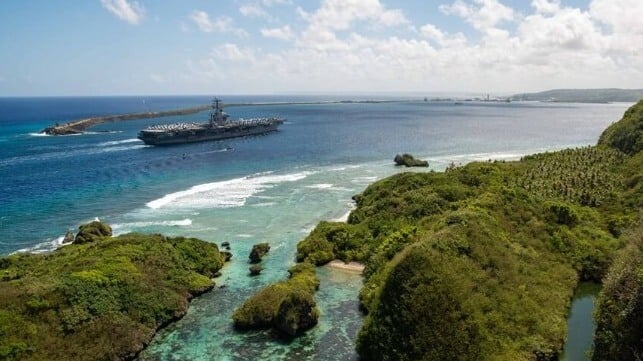
Crewmember From Carrier USS Nimitz Goes Missing on Guam
A sailor from the carrier USS Nimitz has gone missing in Guam, and his ship has sailed without him, according to the Navy.
Sailor Gabriel D. Holt was off base when he was last seen late on April 18, the same day as Nimitz's arrival in Guam. At around midnight, he was spotted in the Tumon district, in between Hotel Nikko and Gun Beach - about 10 miles northeast of the base at Apra Harbor. He was reported missing on April 19. The search for Holt is still active, and the local police are looking for public tips.
"At this time, all available agencies are actively engaged in efforts to locate the missing sailor," Nimitz spokesman Lt. Cmdr. Tim Pietrack told Navy Times. "The search is ongoing, and we are committed to fully cooperating with local authorities while search and rescue efforts continue."
On April 21, USS Nimitz sailed from Guam to resume her deployment in the Western Pacific. She is accompanied by the destroyers USS Gridley and USS Lenah Sutcliffe Higbee; the Zumwalt-class destroyer USS Michael Monsoor also deployed as part of the carrier strike group, and called at Guam on April 17.
USS Nimitz is 50 years old this year and is on her final deployment before decommissioning. She is expected to end her service in April 2026 and begin the long process of nuclear vessel deactivation.
Nimitz commissioned in 1975, and was the first of a successful class of supercarriers that have defined naval power projection ever since. Her itinerary on this voyage is not disclosed, but USNI reports that she could transit to the Mideast; sister ships USS Carl Vinson and USS Harry S. Truman are already in the region and involved in high-intensity operations against targets in Yemen, and Truman is due for relief.
Jury Awards $2.8M to Crewmembers of Superyacht That Sank a Tanker
Tanker Tropic Breeze settles in the water after she was struck by Utopia IV (NTSB)
Three former crewmembers of a yacht that hit and sank a tanker in 2021 have won millions of dollars in damages in a suit against the yacht's owners.
On the evening of December 23, 2021, the product tanker Tropic Breeze got under way from New Providence Island in the Bahamas with about 150,000 gallons of petroleum products aboard. The vessel's AIS transceiver was not working, according to the NTSB.
At 2030 hours, the Italian-built superyacht Utopia IV departed New Providence Island with 12 crewmembers and seven passengers, making 20 knots. The yacht's bosun - who was on watch alone in the wheelhouse at the time of the collision - told the NTSB that the spray at the bow made it harder to see, and the S-band radar display was out. Only the X-band was available, and it was set to a range of three nautical miles.
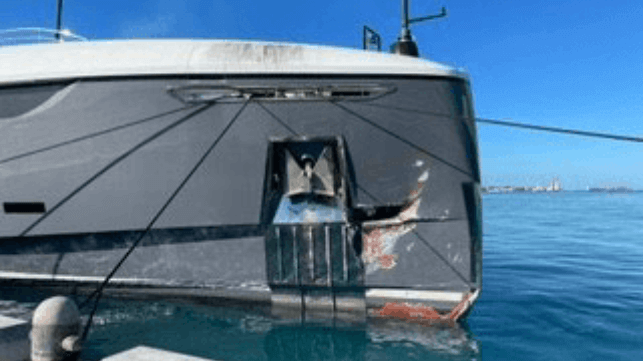
At about 2200 hours, Utopia IV hit Tropic Breeze's transom, penetrating the hull. The tanker's crew abandoned ship, and the stricken vessel sank in about 2,000 feet of water. The yacht suffered minor damage at the bow (below left) and stayed afloat. Three injuries were reported aboard Utopia IV, but no fatalities on either vessel.
NTSB concluded that the casualty occurred because both vessels' crews failed to keep a proper lookout by all available means. "Although the Utopia IV bore responsibility as the overtaking vessel to manoeuvre away from the tank vessel, once the yacht’s intentions were unclear and a close-quarters situation had developed, the tank vessel should have taken action," NTSB found.
In late 2022, three former Utopia IV crewmembers - identified by yachting media as the vessel's deckhand, ETO and chief engineer - filed a negligence and unseaworthiness suit against the yacht's owners, seeking maintenance and cure plus damages. The ETO reported a fractured left ankle and PTSD; the chief engineer reported whiplash and PTSD, among other injuries; and the deckhand reported a fractured right foot and PTSD. A Florida jury awarded them a combined $2.8 million for medical bills and wages, plus punitive damages.
Utopia IV was refitted after the casualty and is currently listed for sale with Fraser Yachts. The asking price is $44 million, all U.S. import duties paid.
Utopia IV (file image courtesy Rossinavi)
Workers Injured by Fire Aboard Petrobras Platform Pending Sale to Perenco
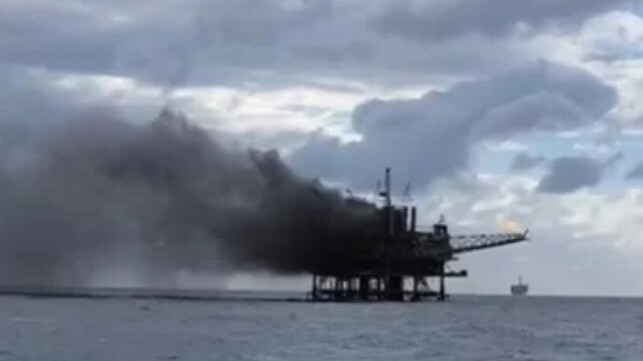
The workers' union released a photo of the fire (Sindipetro-NF)
Multiple injuries are being reported as fire hit one of the offshore platforms owned by Brazil’s Petrobras which is part of a pending sale to Perenco. The workers’ union was first to report the fire which it says took four hours to control. The incident was later confirmed by Petrobras.
The fire started Monday morning, April 21, on the platform PCH-1 in the Cherne field in the Campos basin approximately 80 miles offshore. The union, Sindipetro-NF, is saying that it began around 0720. It reported there was likely an explosion on one of the production decks located below the housing (where the workers' cabins and food areas are located). Reports indicate heavy smoke and flames with the union saying it took till 1125 for the fire to be extinguished.
There were 176 workers aboard the platform when the fire broke out with tankers standing by for the loading of gas. Sindipetro-NF is saying that one worker was burnt and fell from the platform being rescued by the Locar XXII vessel, suffering from burns, but remained conscious. Petrobras confirmed the worker was treated on an offshore support vessel and later transferred to a hospital.
Petrobras listed 13 additional workers as having been injured. Sindipetro-NF however says as of Monday night, 32 oil workers had been identified as injured with 14 due to burns and the rest due to smoke inhalation. It is also saying that all non-essential personnel were evacuated from the platform on Monday afternoon.
It is one of Petrobras’ older platforms and oil and gas production was suspended in 2020 after it was identified among a series of mature and non-lucrative assets in Brazil. The platform has continued to operate in a relay capacity transferring gas from other assets in the basin to tankers.
Perenco announced in 2024 an agreement to acquire assets from Petrobras in the Cherne and Bagre fields including the deactivated platforms PCH-1 and PCH-2. The company said it would complete the deal in 2025 and then begin a redevelopment project to revitalize the assets, restart oil production, and unlock gas reserves.
Petrobras is promising to launch a commission to investigate the cause of the fire.
AI is Influencing Operational Planning: Need to Improve Digital Readiness
Survey shows significant gaps in technology integration and adoption, highlighting the need for stronger foundational technology
As AI and automation continue to dominate industry and IT conversations, new survey findings from Tideworks Technology® Inc. (Tideworks), a full-service provider of intermodal and marine terminal operating system (TOS) solutions, and Port Technology International (PTI) reveal a significant disconnect between the industry's appetite for innovation and the foundational technology currently in place at many terminals.
To assess the current state of technology adoption, Tideworks and PTI, using User Evidence, surveyed intermodal operators across North America, Europe, Asia and Latin America. Respondents represented a wide range of terminal sizes and operating models. 107 Respondents represented a broad range of intermodal rail terminals, including newly constructed terminals, single-site operations and networks of intermodal terminals.
The findings reveal a gap between strategic priorities and actual adoption, reflecting persistent operational, infrastructure and integration challenges. According to the data, while 73% of terminals with a network of 11 or more view AI, automation and digital transformation as critical to future competitiveness, only 36% are currently using AI to collect and analyze operational data.
The survey revealed operational pain points that are directly obstructing the systems, processes and mindset shifts required for digital transformation. Capacity and yard utilization were ranked as the number one operational challenge across 63% of intermodal terminal respondents with real-time visibility, data accuracy and limited analytics expertise also cited as major barriers to progress. Notably, 60% of intermodal terminal respondents cited integration challenges with external partners and customers as their top data management pain point, underscoring the critical role of seamless connectivity in managing and leveraging data effectively. Together, these issues point to a demand for foundational systems that address today’s operational pressures and better support real-time visibility, smooth integration and smarter capacity management across terminal networks.
“The appetite for AI and automation is growing, but readiness is the real hurdle,” said Chad Van Derrick, vice president of software product management at Tideworks. “To unlock the value of these technologies, terminals need to invest in the basics: a modern data platform, clear governance and optimization tools that turn information into action. That’s what creates smarter, more resilient operations.”
The survey uncovered insights that highlight progress, challenges and opportunities in technology adoption. Other findings from the PTI/Tideworks Emerging Tech Survey include:
84% of intermodal terminals with a network of 10 or less say digitalization is their top technology goal, yet 54% still rely on spreadsheets and manual entry to collect and analyze operational data.
14% of intermodal terminal respondents are using AI to collect and analyze data, though 42% of intermodal terminals cited ongoing challenges with data accuracy and 40% cited limited staff expertise in data analytics.
44% of respondents cite sustainability/green tech as a top priority technology initiative.
65% of intermodal terminals respondents report using TOS and 73% report using data dashboards and reporting, but 44% lack real-time visibility in managing data.
Adoption of software is growing with 64% of terminals using automated gate systems, 51% using optical character recognition (OCR)/ optical feature recognition (OFR) and 53% using vehicle booking systems.
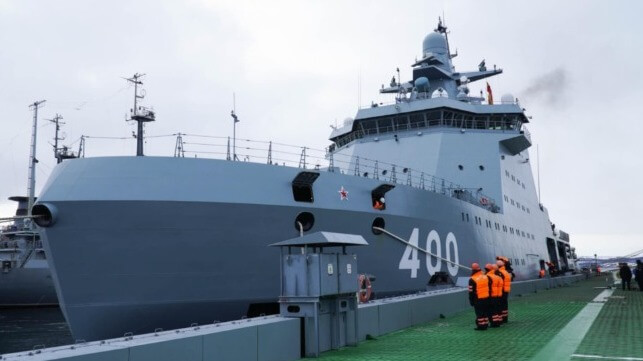
As the U.S. looks for new ways to expand its small icebreaker fleet on a short timetable, Russia has begun testing its first "combat icebreaker," a rare gray hull vessel purpose-built for Arctic service.
The newly-delivered Ivan Papanin is the first of two Project 23550 conventional icebreakers delivered by United Shipbuilding Corporation (USC) for the Russian Navy's Northern Fleet. It launched in 2019, began sea trials last year and has now completed ice testing in the Arctic.
As a lightly armed patrol vessel, Papanin carries one 76mm cannon and several crew-served weapons. It also has provisions to mount optional containerized launchers for eight Kalibr antiship cruise missiles (not seen during recent testing). These would be mounted on the fantail, based on illustrations from the shipbuilder; other containerized payloads could be substituted as well.
The new ship carries permanent gear for surveillance, rescue and interdiction missions, consistent with a patrol or law enforcement role. She has dedicated space for one helicopter, one hovercraft and two pursuit boats. A robust fairlead at the stern suggests preparations for emergency towing duty.
Launch of sister ship Nikolay Zubov, December 2024 (Russian state media)
Like most non-nuclear icebreakers, Papanin has diesel-electric propulsion, and can generate up to 20,000 horsepower through two shaftlines. Her hull is designed to push through ice of up to 5.5 feet thick, and it shares the same Arc7 ice class notation as Novatek's icebreaking LNG carriers.
There are few comparable naval vessels in service with other nations, and none as deliberately marketed for surface warfare. If fitted with Kalibr launchers as planned, Papanin would be the only icebreaker capable of carrying out long-range missile strikes at targets hundreds of miles away.
After Ivan Papanin and sister ship Nikolai Zubov, USC is building two hulls to a similar design for the FSB's border service, the future Purga and Dzerzhinsky.
Royal Navy Carrier Departs on Eight-Month Deployment
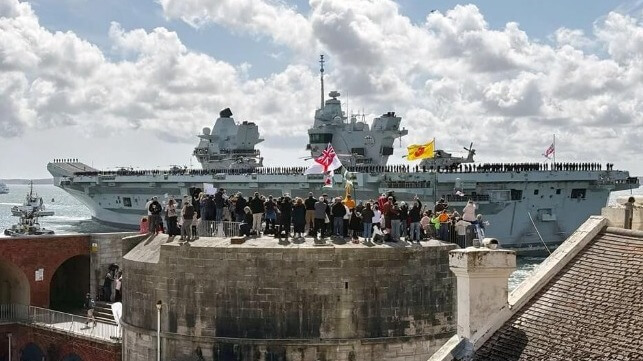
HMS Prince of Wales departs Portsmouth (Royal Navy)
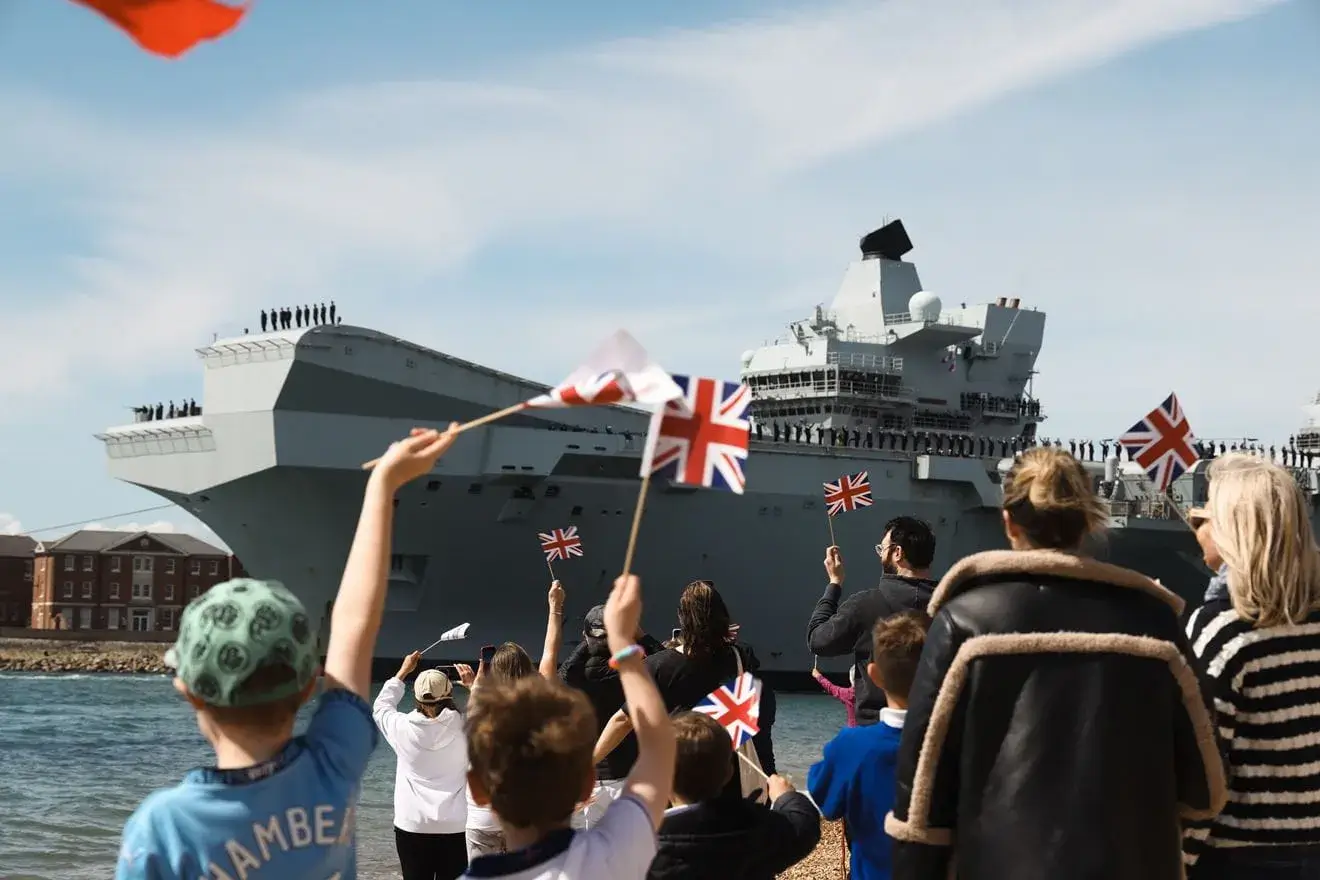
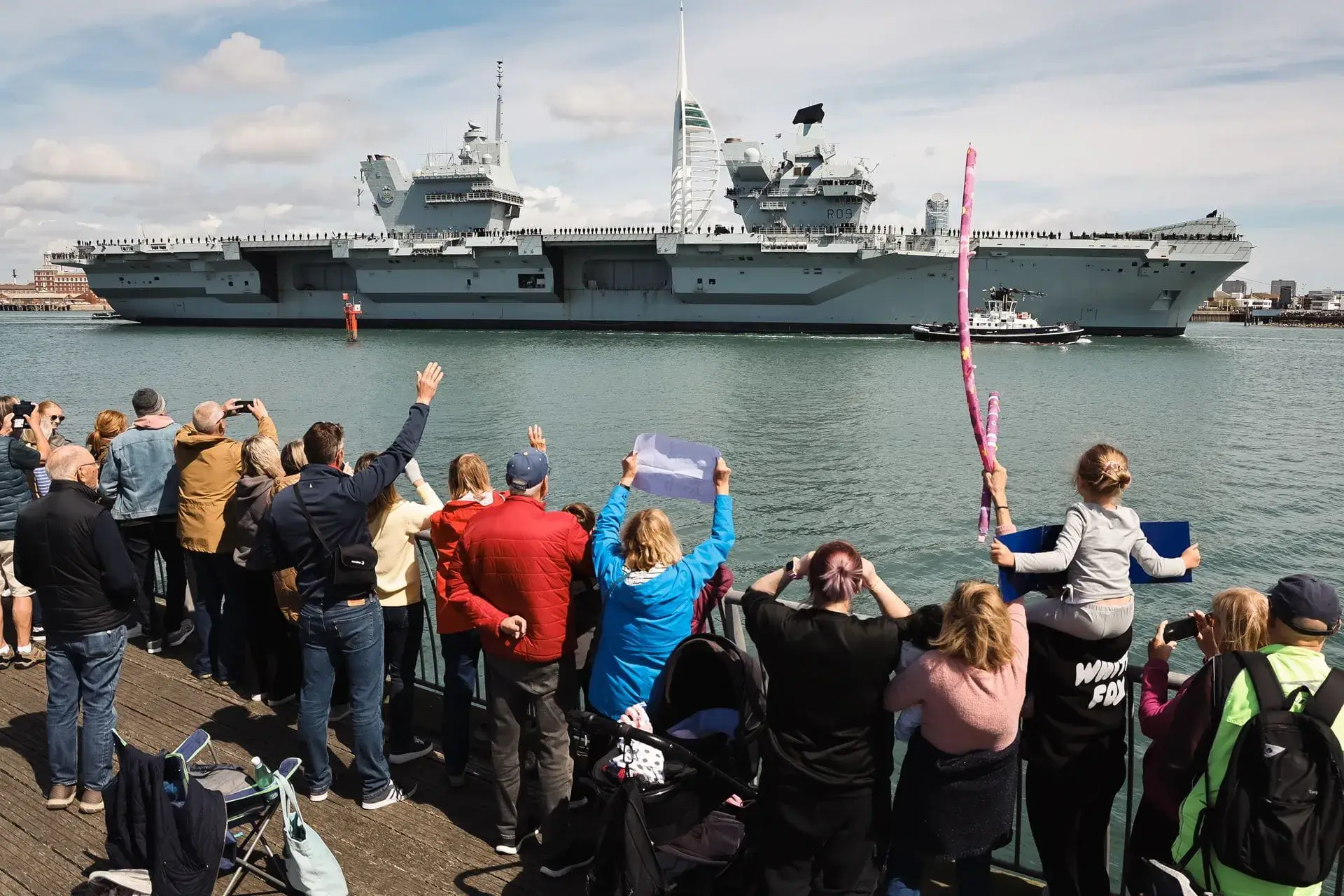
On Tuesday, the Royal Navy carrier HMS Prince of Wales got under way from Portsmouth for an eight-month deployment that will take her - and her airwing of F-35B fighters - all the way to the Pacific. The Royal Navy has named the mission "Operation Highmast."
"Working closely with partners from across the globe, Operation Highmast will demonstrate credible deterrence and our support to NATO and the rules-based international order," said Commodore James Blackmore, the strike group's commander. "This will reaffirm that the UK is secure at home and strong abroad and reinforce the UK’s commitment to the Indo-Pacific."
HMS Prince of Wales will be escorted by destroyer HMS Dauntless, frigate HMS Richmond, oiler RFA Tidespring and an unnamed Astute-class attack submarine. The Royal Canadian Navy and the Spanish Navy are each contributing a frigate, and the Norwegian Navy is sending two frigates for the full voyage, according to Navy Lookout. U.S. Navy vessels often join British deployments but are not on the current public roster.
Courtesy Royal Navy
HMS Prince of Wales will conduct joint exercises off France, then transit into the Mediterranean for more drills with the Italian Navy. After this workup, she will transit the Suez Canal and the Red Sea, bound for points east. It is as-yet unknown whether or how much she will be involved in the U.S. bombing campaign over Yemen during the transit; British forces have participated in the effort before, but the operation has intensified and its scope has broadened under the current U.S. administration.
It is the second time that the Royal Navy has deployed a carrier strike group on a long-distance mission in recent years. The last was in 2021, when HMS Queen Elizabeth departed Portsmouth for a seven-month voyage at the height of the COVID-19 pandemic. Propulsion system issues affected HMS Prince of Wales in August 2022, taking the carrier out of service for a year. HMS Queen Elizabeth went into drydock for similar repairs for an extended period in 2024.
VIKING & Offshore Wind Safety Leaders Launch 1st Immersion Suit for Women
VIKING Life-Saving Equipment has launched the first Crew Transfer Vessel (CTV) immersion suit in the world designed for women working in offshore wind energy, using guidance on diversity and inclusivity from industry leaders Ørsted, Siemens and Vestas.
The VIKING YouSafe™ Cyclone suit joins a growing portfolio of VIKING PPE whose fit and features reflect the safety needs of female seafarers, pilots and technicians in the marine and offshore industries.
The most recent UK Government Industrial Strategy Offshore Wind Sector Deal study included a “minimum target” for one third of the industry’s workforce to be by 2030 (2018 – 16%). In UK waters, and elsewhere, getting the right PPE in place to best serve the safety needs of women offshore has become a focus for equity and inclusivity strategy at Ørsted, Siemens and Vestas.
“As a young industry, offshore wind offers a huge opportunity to change attitudes in the workplace, and to encourage the diversity, equity and inclusion women are entitled to expect,” said Lasse Hansen, Senior HSE Manager, PPE and TMSE, Ørsted. “Ørsted has identified female-specific PPE as part of the critical infrastructure we need for women to work safely offshore today and a necessity to attract more of them into this industry. We were delighted to work with VIKING as one of our key safety solution providers to take a significant step in the right direction.”
Delivered in high-vis GORE-TEX® NARVIK™, the female-fit YouSafe™ Cyclone suit is approved to the same dual SOLAS/MED and CE/ISO standard as the male version and is available in multiple sizes. Common features include compatibility with all standard offshore harnesses, durable Neoprene cuffs and neck seal, retro-reflective piping for increased visibility in dark surroundings, and a maintenance free zipper.
However, ratios and cut are redesigned for shorter torsos, and different hip and chest proportions, and for a range of smaller sizes that avoid the risk of snagging in fixtures and fittings. The sleek looking design also offers a high level of comfort and enhances the safety of women when stepping or jumping to/off the platform, climbing the tower or moving around the nacelle. In addition, the suit includes integral braces, which hold suit pants for free leg movement when climbing and allow the wearer to doff its top part to move around freely.
Poul Parning, Senior EQS PPE Specialist, Siemens Gamesa said the Cyclone suit was a welcome contribution to its efforts to attract more women to offshore wind, ensuring that outdated practices did not frustrate career progress. “There has been an intense focus on PPE as a diversity, equity and inclusion issue at Siemens Gamesa for the last two years; we have already adopted a new safety harness for women. The Cyclone CTV suit supports corporate goals.”
Speaking for Vestas Wind Systems, HSE Manager Peter Armstrong-Cribb added: “At Vestas, we believe that diversity and inclusion go hand in hand with innovation, and that everyone must feel safe, valued, and that their voice is heard. The right PPE puts these beliefs into practice.”
VIKING built on its internal design work by interviewing women working offshore in the wind industry to develop the new suit, before trialing prototypes at a test day with Ørsted, Siemens and Vestas in Liverpool, UK earlier this year. After further tests offshore and customer feedback, the YouSafe™ Cyclone was launched in October.
“Bringing Cyclone to market has been a joy because we have worked with customers whose competitive position did not stand in the way of our common goal to deliver a safety necessity and level the playing field for women working offshore” said Bettina Kjærgaard, Global Sales Manager Offshore Wind, VIKING Life-Saving Equipment. “Their response in spreading the word has also been phenomenal.”
The products and services herein described in this press release are not endorsed by The Maritime Executive.
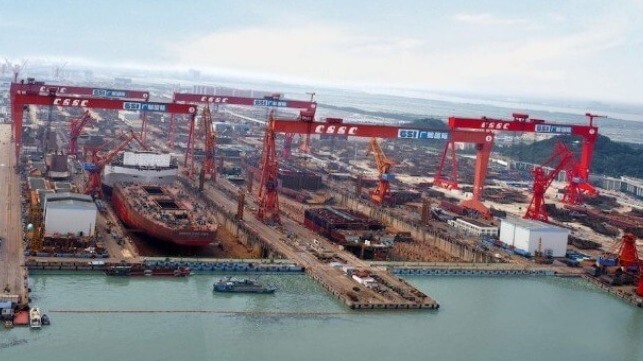
Chinese Shipbuilders Feel "Big Relief" After US Softens Port Fee Plan
The revised, less stringent terms of the U.S. Trade Representative's fee plan for Chinese-built ships are an encouragement for China's shipbuilders, multiple shipping sources have told SCMP this week. Though the USTR's initial proposal dampened foreign owners' interest in buying Chinese-made tonnage in the first quarter, the recalibrated financial penalties and the full exclusion of many vessels in the new version gives China's shipbuilding yards reason for optimism - especially as the White House is now signaling its willingness to negotiate down its demands on trade.
The new, more detailed version of the USTR's proposed rule covers much less of the world fleet than the first version. Most importantly, it now exempts most non-Chinese vessels from the fee structure. Before, an owner with Chinese ships anywhere in its fleet would get billed for every U.S. port call, even if using its non-Chinese ships to call in the United States. Under the revised USTR plan, the owner can separate out its Chinese-built ships for use in overseas trade, use all its other ships for port calls in the U.S. market, and avoid any of the fees - while still buying and using Chinese tonnage.
The revision also contains broad exemptions. Most vessels arriving in ballast will not be charged, and all vessels smaller than a Panamax (55,000 dwt, 4,000 TEU for a boxship, or 80,000 dwt for a bulker) are fully exempt.
For Chinese ships that do get billed, the fees are also less onerous: they are now assessed once per visit to the U.S., not for each port call in a string, and only up to five times per ship per year. The charges are also calibrated by vessel size now, removing a disproportionate impact on smaller vessels.
"[It] is a big relief for Chinese shipbuilders, as it significantly alleviates clients’ concerns about placing orders," a senior analyst at a Chinese state shipping firm told SCMP, estimating that about 60 percent of China's current orderbook would not be subject to tariffs.
The relief comes just in time for China's yards, notably in the dry bulk segment. Bulker orders dropped by more than 90 percent in the first two months of the year, according to BIMCO. Top shipbroker Howe Robinson reports just 39 newbuild bulker contracts signed in the first quarter anywhere in the world, down from 213 the year before. Chinese yards received just 13 of these orders, according to Xinde.
The day after the USTR's revised plan was released, specialist yard China Merchants Industry Group announced plans to start building general-purpose bulk carriers and boxships through the purchase of an existing shipyard, Qingdao Yangfan Shipbuilding Co.
Navantia Accelerates Investments in Harland & Wolff and UK Shipbuilding
Investments are underway at the famed shipyard in Belfast with the iconic gantry crane in the background (Navantia UK)
Three months after completing the acquisition of the bankrupt Harland & Wolff shipyard in Belfast and the other yards of the group, Spain’s Navantia outlined its plans for increased investment to create what it is calling one of the “UK’s most advanced shipyards.” The investments that are intended to improve productivity, provide faster delivery, and more sustainable manufacturing processes as designed to position the UK group as the UK and European governments are increasing defense spending.
Navantia partnered with Harland & Wolff in 2023 to win a UK contract to build three naval support ships for the Royal Navy Auxiliary. As part of that program, the companies committed to an investment of £77 million ($100 million) to modernize the yards and increase capabilities for the Fleet Solid Support (FSS) contract. The Spanish group stepped in in late 2024 to save the UK shipyard group from liquidation and maintain the FSS program reporting that it would increase the planned investment in the yards.
“The modernization program will significantly enhance the Belfast yard’s ability to build the FSS vessels and support future programs,” said Navantia UK detailing its plans. “The investment is designed to deliver a comprehensive regeneration of UK shipbuilding capabilities, leveraging the opportunity presented by the FSS program.”
Assembly work and outfitting for the three FSS vessels is slated to take place at the yard in Belfast. The Appledore shipyard is producing the bow sections for the vessels. Work on the upgrades had begun in 2024, but was suspended due to the group’s financial troubles. Navantia UK reports that work resumed in March.
According to the group, the modernization focuses on maximizing productivity, creating jobs, and implementing sustainable manufacturing. Phase one focuses on enhancing capabilities for building vessel hulls, with improvements to delivery systems, stockyard management, and cutting technologies. It includes a comprehensive upgrade both for infrastructure development and advanced equipment installation. It will feature new lifting cranes, robotic plasma cutting systems, and automated quality control processes. A fully mechanized panel line for flat panel units will be installed, while the Belfast shipyard’s iconic Samson and Goliath gantry cranes will continue to play a vital role in operations.
The investment program extends beyond Belfast, with significant upgrades at the Appledore shipyard in Devon. The company has already committed to purchasing an advanced plasma cutter with expanded bed dimensions and sophisticated bevel-cutting capabilities, replacing machinery that has served the facility for more than 20 years.
Navantia UK’s investment strategy also encompasses the Scottish facilities at Arnish and Methil, which specialize in the energy industries. At Arnish, investment has begun including on skills development infrastructure, featuring a new welfare facility, dedicated training center establishment, office space improvements, and enhanced security and parking provisions.
Juan de la Cueva, CEO of Navantia UK, called the investments a “watershed moment” for UK shipbuilding. He said it was part of a long-term commitment to UK shipbuilding. Harland & Wolff they said will be transformed into a cutting-edge facility capable of delivering the highest quality vessels. The Belfast yard was once an industry leader but entered a long decline delivering its last new build in 2009 and saved from a prior bankruptcy in 2019. Similarly, the Appledore shipyard went into receivership in 2003 and finally closed in 2019 before being acquired by Harland & Wolff Group in 2020. The group acquired the two smaller yards in Scotland in 2021.


 NTSB concluded that the casualty occurred because both vessels' crews failed to keep a proper lookout by all available means. "Although the Utopia IV bore responsibility as the overtaking vessel to manoeuvre away from the tank vessel, once the yacht’s intentions were unclear and a close-quarters situation had developed, the tank vessel should have taken action," NTSB found.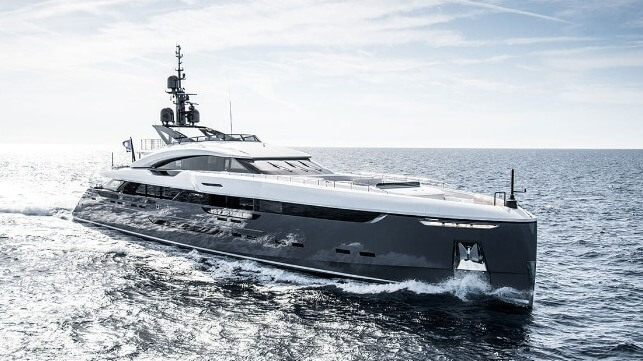

 Courtesy Royal Navy