Thursday, April 24, 2025


Paladin Energy reports higher uranium output; shares soar

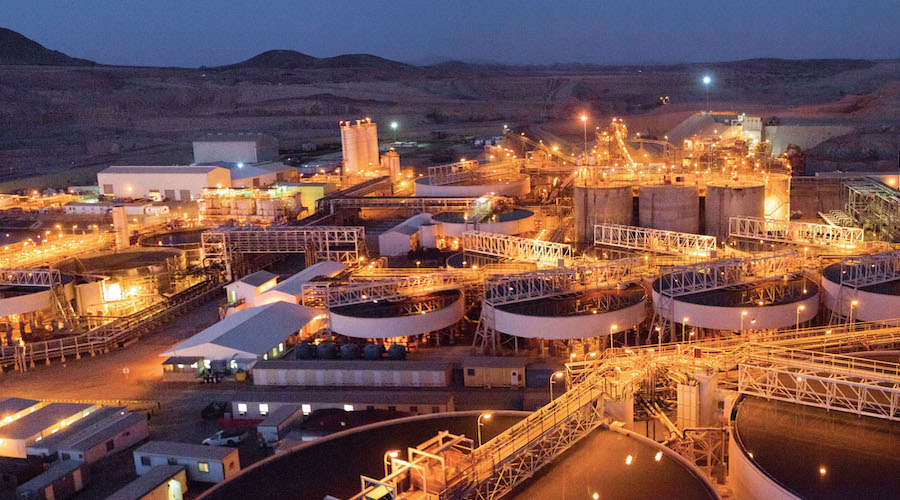
Paladin Energy’s 75%-owned Langer Heinrich uranium mine in western Nambia’s Namib desert. (Image courtesy of Paladin Energy.)

ustralia’s Paladin Energy on Wednesday reported a 17% sequential increase in uranium production for the March quarter, sending its shares sharply higher.

The company said it produced 745,484 pounds of uranium oxide from its Langer Heinrich mine in Namibia, the highest since the mine resumed operations in March 2024.

The company also reported uranium sales of 872,435 pounds, compared to 500,143 pounds in the previous quarter.

Its shares were last up 26.5% at A$5.035, set for their highest one-day gain since February 2021.

The stock was also the top percentage gainer on the S&P/ASX 200 index, which was up 1.5%.

The average realized price of which uranium sales was about $69.9/pound, beating Citi’s expectation of about $60/pound.

The surge in Paladin drove a wider boost in uranium miners in Australia.

Shares of Boss Energy and Deep Yellow rose 10% and 11.4%, respectively, rebounding from sharp declines on Tuesday.

(By Adwitiya Srivastava; Editing by Varun H K)

BATTERY ELECTRIC VEHICLES

Sandvik to supply its largest-ever BEV fleet to South32

Image: Sandvik.

Globally diversified miner South32 has selected Sandvik Mining and Rock Solutions to supply 22 battery-electric vehicles as part of a 42-unit underground equipment fleet for its greenfield Hermosa critical minerals project in Arizona.

The BEV fleet order, Sandvik’s largest ever, includes six Sandvik DS412iE bolters, five Sandvik DD422iE development drills, four Sandvik DL422iE longhole drills, four Toro LH518iB loaders and three Toro TH665iB trucks. It also includes 20 units of conventional equipment: five Toro TH551i trucks, five Sandvik DS422i cable bolters, four Toro TH663i trucks, four Toro LH517i loaders and two Sandvik DU412i longhole drills.

Several of the conventional units ordered may ultimately be manufactured and delivered as BEVs, Sandvik said.

The order is booked in the second quarter of 2025. Deliveries are expected to begin in the fourth quarter of 2026 and continue through 2030.

“We’re proud that Sandvik BEVs will help contribute to an increased supply of critical minerals, supporting the continued electrification of society and global green transition,” said Mats Eriksson, president of Sandvik Mining and Rock Solutions.

“Lower fuel expenses and maintenance costs coupled with longer equipment lifespan will enable a more efficient, economical and sustainable mining operation at Hermosa.”

With Hermosa, South32 is expected to become a globally significant producer of critical minerals vital to a low-carbon future.

The polymetallic underground development project is located in a historic mining district in southern Arizona’s Patagonia Mountains, about 80 km southeast of Tucson and less than 20 km north of the US-Mexico border. It is currently the only advanced US mine development project that could produce two federally designated critical minerals essential for powering a clean energy future, manganese and zinc.

South32 is developing Hermosa’s zinc-lead-silver deposit to be a multi-decade operation, with first production expected in 2027.

“Zinc is essential for national security as there is a growing zinc gap worldwide,” said Pat Risner, president of South32 Hermosa. “We estimate a 4-million-metric-ton gap by 2033 and only six percent of zinc is currently mined in the United States.

“Our zinc deposit is the only deposit of its size discovered in the past 10+ years. Zinc is used to galvanize steel which is needed for wind turbines, solar panels and other energy infrastructure like transmission routinely exposed to the elements.”

Beyond the zinc deposit, Hermosa also includes a battery-grade manganese deposit and a highly prospective land package with extensive exploration potential, including a copper-lead-zinc-silver target and further polymetallic and copper mineralization.

South32 is designing Hermosa to be its first ‘next generation mine,’ harnessing automation and technology to drive efficiencies, minimize environmental impact and ultimately to target a carbon-neutral operation in line with the miner’s goal of achieving net zero operational carbon emissions.

“Technology and innovation play an essential role in helping to improve safety and performance, and reduce our emissions,” Risner said. “We’re committed to sustainable development of the resources at Hermosa, which we’re designing as a small footprint underground mine with dry-stack tailings and reduced water consumption to minimize environmental impact.

“A battery-electric underground equipment fleet supports our ambition for Hermosa to set a new standard for sustainable mining. Sandvik BEVs will meet our safety, reliability, range and capability requirements.”

Headquartered in Perth, Western Australia, South32 produces bauxite, alumina, aluminum, copper, zinc, lead, silver, nickel and manganese from operations in Australia, Southern Africa and South America.
 

Australian Prime Minister pledges to set up critical minerals strategic reserve

Australia Prime Minister Anthony Albanese. Image source: Australian Government under the CC-BY-4.0 licence

Australia’s ruling centre-left Labor government on Thursday pledged an initial investment of A$1.2 billion ($763 million) to set up a strategic reserve of critical minerals as it looks to create a separate supply chain in a market dominated by China.

Prime Minister Anthony Albanese, holding a slender lead in polls ahead of a national election nine days away, said the reserve would make use of the country’s mineral deposits and boost its economic resilience.

“We need to do more with the natural resources the world needs, and that Australia can provide,” Albanese said in a statement.

The push comes after China placed export restrictions on several minerals, vital to make everything from smartphones and EV batteries to infrared missiles, squeezing supply to the West, after President Donald Trump imposed tariffs on Chinese goods.


China is a top global producer of 30 of the 50 minerals considered critical by the US Geological Survey, while Australia has some of the largest critical minerals deposits.

Albanese said the government would buy critical minerals from commercial projects or set up an option to buy at a given price, holding security over the assets. The government will also establish stockpiles of some minerals produced under offtake agreements.

“It will mean we can deal with trade and market disruptions from a position of strength, because Australia will be able to call on an internationally significant quantity of resources in global demand,” Albanese said.

Minerals held by the strategic reserve would be made available to domestic industries and key international partners.

A task force will be created to consult and finalize the scope and design of the strategic reserve, which is expected to be operational in the second half of 2026, Albanese said.

($1 = 1.5721 Australian dollars)

(By Renju Jose; Editing by Sonali Paul)


China asks Korea not to export products using rare earths to US defense firms – reports

That reliance on China for minerals with critical uses across a wide spectrum of civilian and military applications is becoming ever more problematic as Sino-U.S. relations deteriorate. Stock image.

Beijing recently asked South Korean companies not to export products containing China’s rare earth minerals to US defense firms, the Korea Economic Daily reported on Tuesday, citing government and company sources.

The report said China’s commerce ministry delivered the message in letters to Korean companies which make power transformers, batteries, displays, electric vehicles, aerospace and medical equipment, all of which use the key materials.

The letters said Korean companies could face sanctions if they violate the export restrictions, the report said.

South Korea’s Industry Ministry was not immediately available for comments outside business hours.

Early this month, China placed export restrictions on rare earth elements as part of its sweeping response to US President Donald Trump’s tariffs, squeezing supply to the West of minerals used to make weapons, electronics and a range of consumer goods.

(By Hyunjoo Jin; Editing by Kim Coghill)

BHP prepares to start succession process for mining’s top job


Bloomberg News | April 22, 2025 |


BHP CEO Mike Henry (Credit: BHP)


BHP Group is preparing to begin looking for a new chief executive officer in the coming months, with key lieutenants already jostling for position to succeed boss Mike Henry at the top of the world’s biggest miner.


The understanding at BHP is that Henry is now heading toward the end of his tenure, according to company insiders. They emphasized that no decision has been made. But some people close to the company say a change could come as soon as early next year, and some top executives have begun increasing their interaction with investors and other stakeholders ahead of a likely succession process.

The internal frontrunners for the role are seen to be Geraldine Slattery, who heads the company’s Australian mines, chief financial officer Vandita Pant, and Ragnar Udd, who runs the commercial team. However, the CEO search is also likely to include external candidates, according to people familiar with the matter, who asked not to be identified discussing private information.


A change of leadership would come at a pivotal time for both BHP and the wider mining sector. The company and its biggest rivals spent the past couple of years pursuing a series of failed mega deals, while President Donald Trump’s trade war has cast a new level of uncertainty over future demand for key commodities.

BHP itself is embarking on a slew of expensive growth projects and Henry’s successor is likely to face some tough questions about capital allocation, including whether the company can pursue its aggressive spending plans while sustaining its dividend and debt policies.

The miner is already tightening its belt and has significantly sharpened its focus on cost cutting across its business, some of the people said.

BHP declined to comment.

The process to find a replacement for Henry is likely to kick-start in earnest in the coming months, the people said, making it one of the first major tasks of new chairman Ross McEwan. Henry has led BHP since January 2020, which means that an early 2026 departure would mean he has completed a six-year tenure — roughly in line with his most recent predecessors.

During that time, the 59-year-old BHP veteran has reshaped the company. Within the first two years of his leadership, the miner announced plans to sell its oil and gas business and dismantle a dual listing structure, as well as approving a giant potash mine in Henry’s native Canada.

Henry also led BHP through a return to dealmaking after years on the sidelines, culminating in the company’s ambitious but ultimately unsuccessful bid for Anglo American Plc. The $49 billion takeover attempt sent shockwaves through the mining industry but was rebuffed by the smaller company as too complex and risky.

Slattery — previously operator of BHP’s offshore oil and gas assets, which it spun off to Woodside Energy Group Ltd. — was placed in the far more public role of president of the Australian unit in 2022.

Pant, a former banker, has been at BHP since 2016. She served as chief commercial officer before becoming CFO last year. Udd has a technical past but was put in more operational roles and has proven success across BHP’s important copper business in the Americas.

The appointment of either Pant or Slattery would mark the first time that the world’s biggest mining company is led by a woman, in an industry notorious for the lack of diversity in its top ranks. Of the three dozen miners in the ASX200 index, just one has female CEO
.

And Henry’s successor will inherit some thorny challenges. Despite recent years of record profits, BHP is looking financially stretched — already trending toward the top of its self-imposed debt target before it starts to pay for the series of hugely expensive growth projects.

The company is planning to spend billions of dollars to halt a decline in copper production at its crucial Escondida copper mine, further expand the Canadian potash mine, as well as develop copper projects in Argentina and Australia.

BHP isn’t alone. Capital allocation is likely to be a focus across the largest miners this year, according to analysts from Citigroup Inc. and Jefferies Financial Group Inc.

In BHP’s case, the company has ramped up its focus on cost reduction. Wage inflation is just one contributing factor: In Australia’a iron-ore rich Pilbara region unions are organizing to navigate salaries, something not seen in over two decades, adding further pressure to other areas of the business.

The company has already lowered its dividend to the minimum payout under its current policy and insiders said they don’t expect the policy to change. Unless commodity prices rise significantly, the company may have to change its debt policy or move to stagger some of its growth plans as a result, they said.


(By Paul-Alain Hunt, Thomas Biesheuvel and Archie Hunter)


Panama President rules out new mining contract law with First Quantum

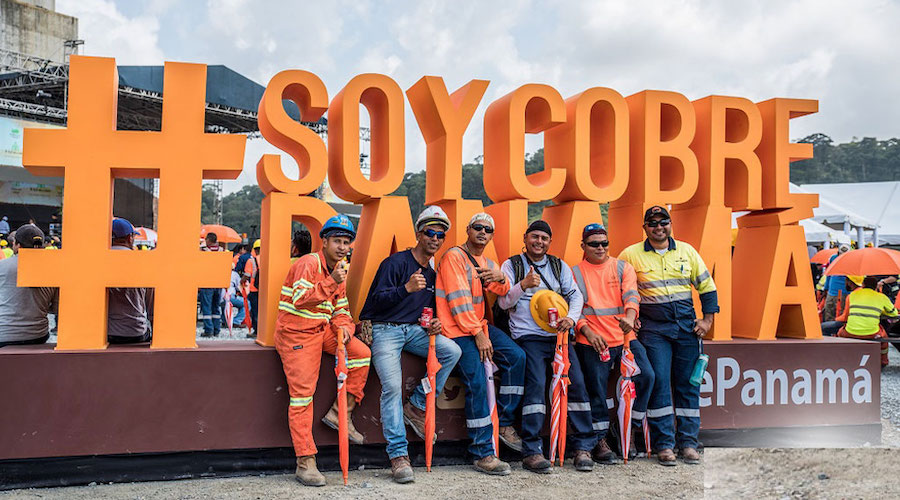
Cobre Panama was the biggest foreign investment in the Central American nation, supporting over 40,000 jobs. (Image courtesy of Minera Panama.)

Panama will not offer a new mining contract law to Canada’s First Quantum Minerals (TSX: FM), President José Raúl Mulino said amid an ongoing dispute that has kept the company’s $10 billion Cobre Panamá copper mine shuttered since late 2023.

Speaking at an industry event in Panama City, Mulino said the path forward remained uncertain, but noted he was open to forming an association with First Quantum. 

“I cannot yet tell you what the path forward will be; the only path that will not exist is a contract law, and I announce that here: There will be no mining law contract, period,” Mulino said, according to local media.

He stressed that any new mining law tied to a contract, such as the 406 law deemed unconstitutional by the previous government, would require approval from the national assembly. He said the assembly was not willing to back such a deal. Instead, he proposed a “real partnership” — a structure that would make clear the mine belongs to Panama and its people.


Mulino noted that if the decision is made to close the mine permanently, the process could take up to 15 years due to its scale.

“Let’s be smart and get the most benefit as Panamanians from a mine we already have,” he said.

The president has not yet met with First Quantum’s executives, though the company dropped its arbitration case against Panama—one of Mulino’s conditions for resuming talks.

Cobre Panamá, Central America’s largest open-pit copper mine, produced over 330,000 tonnes of copper in 2023 before operations were halted

The mine was on track to become a 100-million-tonne-per-year operation by the end of 2024, which would have placed it among the world’s largest copper producers.

Cobre previously accounted for roughly 5% of Panama’s GDP.


NTSB: Not Following Maintenance Recommendations Led to Cruise Ship Fire

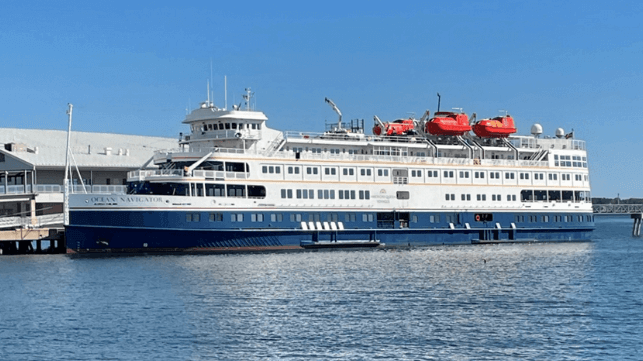
coastal cruise ship Ocean Navigator
Small cruise ship Ocean Navigator docked in Portland after the fire (NTSB)

Published Apr 22, 2025 6:12 PM by The Maritime Executive


An explosion and fire aboard the coastal cruise ship Ocean Navigator in October 2023 was likely caused by not following maintenance recommendations and infrequent changes of lube oil and oil filters concluded the National Transportation Safety Board. One crewmember was seriously injured in an explosion and fire in the engine room of the ship when one of its auxiliary engines failed and parts were ejected during an explosion followed by a fire.

The Ocean Navigator, which was built in 2001 as a modern version of an American coastal cruise ship, was operating at the time for Hornblower’s American Queen Voyages and had just docked in Portland, Maine on its next to last scheduled cruise when the explosion occurred. Earlier in the year, AQY announced it would be removing the ship and her sister ship from service at the conclusion of the Canadian cruise season.

Engineers reported that the machinery was working properly as they navigated into the port and docked around 0630. There was a total of 210 people aboard, 128 passengers and 82 crewmembers. After shutting down the propulsion system, the third engineer and a motorman were assigned to troubleshoot a high exhaust temperature issue in the no. 1 auxiliary engine while the vessel was using its no. 2 auxiliary engine to provide electric power for the ship.

The third engineer reported smelling oil and found a small lube oil leak from a crankcase cover door on the running no. 2 auxiliary engine. He went to tighten a bolt, but before he could there was an explosion and fire along with low lube oil pressure and oil filter plugged alarms. Both the engineer's and motorman’s overalls were on fire with the motorman more seriously injured.

NTSB commends the quick response of the crew in sealing the engine room by closing watertight doors, shutting off ventilation fans, closing dampers, and activating quick-closing fuel valves to effectively starve the fire of fuel and oxygen. They prevented the spread of the fire and the fire self self-extinguished. 

The captain saw thick smoke coming from the funnel and immediately returned to the bridge. The passengers were mustered and evacuated without injury. Local fire crews responded but found the situation controlled.


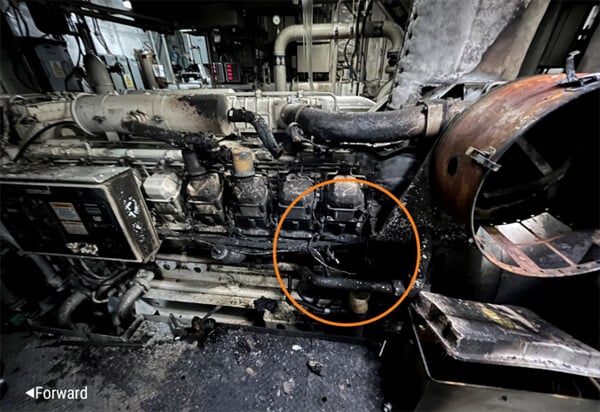
Fire damage to the no. 2 auxiliary (NTSB report)


The subsequent investigation found that the no. 2 engine was damaged beyond repair. The engine block had cracked, and investigators found a 10-inch high and 16-inch wide hole and reported one of the connecting rods had been ejected. There was damage to the no. 1 auxiliary engine from the fire as well as the turbocharger, piping, cables, and electrical wires and lighting in the engine room. The NTSB reports the cost of the casualty at $2.4 million.

The NTSB investigators concluded that the engine failure was caused by debris in the engine’s lube oil system—possibly due to the crew exceeding manufacturer-recommended intervals for changing the lube oil and oil filter elements—which caused catastrophic mechanical damage to the engine and subsequent fire from the ignition of atomize lube oil released through the engine’s ruptured crankcase.

The crew had last changed the entire quantity of lube oil for the no. 2 auxiliary engine in September 2022—about 13 months before the engine failure—but the engine had operated more than 5,000 hours with this lube oil in the engine, five times longer than the manufacturer’s recommendation. Additionally, since the last change of the lube oil filter elements in May 2023, the engine had run over 3,000 hours. The engine manufacturer’s recommendation is to replace filter elements at every oil change or after the filter elements had been used for 1,000 hours.

“Manufacturers provide maintenance recommendations and intervals (schedules) to ensure equipment operates safely, optimally, and reliably throughout its service life,” the NTSB writes in its report. “By regularly reviewing equipment manufacturer manuals and guidance, operators can ensure conformance with recommended maintenance plans and mitigate the risk of equipment malfunction or failure.”

The analysis of the lube oil in the no. 2 engine identified abnormally high levels of aluminum and iron. It had increased significantly since the last in-service sample was taken in September. There was also an increase in lead and tin. 

The vessel was sold during the bankruptcy of American Queen Voyages and Hornblower. The subsequent survey for the repairs showed that the engine block, crankshaft, several main bearings, connecting rod bearings, and the no. 14 fuel injector were all damaged during the explosion and fire with the plunger of the no. 14 fuel injector broken off, pistons and pins and other components from the nos. 13 and 14 cylinders “totally destroyed.” They also observed “heavy local wear” in main bearings and signs of cavitation that were not typical and also suggested oil quality or other lube oil issues.

NTSB concluded that debris in the system would have caused scratching or scoring of the inner layer of the bearings as the debris circulated. The wear would have permitted more lube oil to flow out the sides of the bearings, reducing pressure, and generating excessive heat. The lack of changing out the filter elements made the filter less effective or it could have clogged and a bypass value would have permitted more debris into the system.

These factors they believe contributed to the failures and catastrophic mechanical damage to the engine. The hot oil spewing out started the fire.

Repairs were made to the ship and it returned to service under its new owners in April 2025. The complete report is available online.


U.S. Navy Plans to Order U.S. Army Landing Ship for the Marine Corps

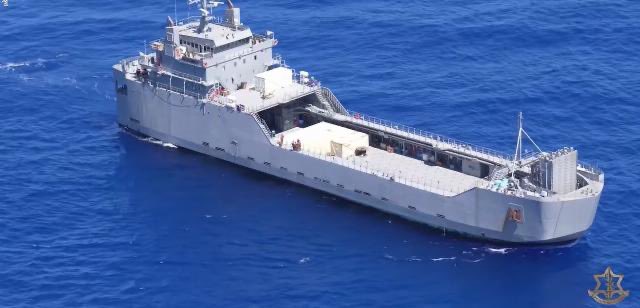
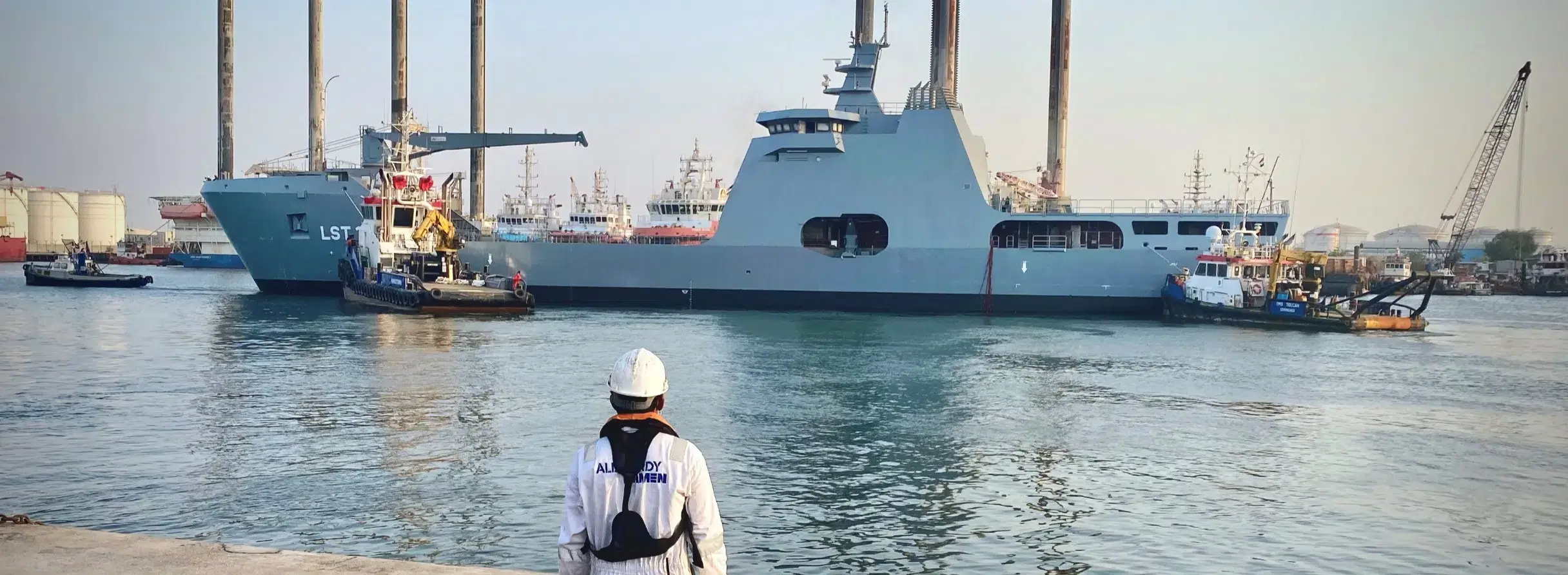
The Navy plans to order a landing ship of the same design as the Israeli Navy's INS Nahshon and INS Komemiyut (right and left center). The design is derived from the U.S. Army's Besson-class (IDF photo)

Published Apr 21, 2025 9:46 PM by The Maritime Executive


The U.S. Navy is preparing to resolve its long debate with the Marine Corps over the fate of the Landing Ship Medium (LSM), the amphibious force's small transport for inter-island warfare in the Pacific. On April 7, Naval Sea Systems Command quietly issued notice that it plans to award Bollinger a sole-source contract to build one lead-ship LSM based on the U.S. Army's Gen. Frank S. Besson-class

The ship that the U.S. Navy plans to buy is based on a revised version of the Army design that Bollinger-owned VT Halter built for the Israeli Navy. In Israeli service, this variant makes 14 knots with a cargo of up to 2,000 tonnes in deep-draft pier-to-pier mode, with a lesser payload for beaching operations. The design has a bow visor for better seakeeping in open water, rather than the original Besson-class' flat ramp.  

INS Nahshon (IDF image)

The class also has a stern ramp that can be used to load and offload while Med-moored at a pier. In U.S. Army service, the ramp facilitates drive-through ro/ro cargo transloading for the complex Joint Logistics Over The Shore (JLOTS) transfer system. 

Unless it is to be heavily modified, the IDF's Besson variant does not have a suite of high-end air defense or surface warfare weaponry. The long Navy-Marine Corps fight over the LSM's fate hinged on whether there would be a few highly survivable and very expensive hulls - the Navy's preference - or whether there would be a large number of less expensive ships built to a less stringent standard, as the Marine Corps demanded. The Besson-class appears to land further towards the Marine Corps' version: it is serviceable enough to be the primary landing and logistics ship for the U.S. Army, and for the Israeli Navy, but it is not an exquisite naval weapons platform (unless up-armed).

As first reported by USNI, NAVSEA is also buying the technical data package for the Damen LST 100, a popular landing ship design of comparable size and specifications - but equipped with an enclosed foredeck and an aft helideck. The LST 100 is in use by the Nigerian Navy and was recently ordered by the Australian Army.

A Nigerian Navy Damen LST 100 on delivery (Damen)

A rendering of the LST 100 design for Australia's armed forces (Damen)


U.S. Navy Plans to Order U.S. Army Landing Ship for the Marine Corps

The Navy plans to order a landing ship of the same design as the Israeli Navy's INS Nahshon and INS Komemiyut (right and left center). The design is derived from the U.S. Army's Besson-class (IDF photo)

Published Apr 21, 2025 9:46 PM by The Maritime Executive


The U.S. Navy is preparing to resolve its long debate with the Marine Corps over the fate of the Landing Ship Medium (LSM), the amphibious force's small transport for inter-island warfare in the Pacific. On April 7, Naval Sea Systems Command quietly issued notice that it plans to award Bollinger a sole-source contract to build one lead-ship LSM based on the U.S. Army's Gen. Frank S. Besson-class

The ship that the U.S. Navy plans to buy is based on a revised version of the Army design that Bollinger-owned VT Halter built for the Israeli Navy. In Israeli service, this variant makes 14 knots with a cargo of up to 2,000 tonnes in deep-draft pier-to-pier mode, with a lesser payload for beaching operations. The design has a bow visor for better seakeeping in open water, rather than the original Besson-class' flat ramp.  

INS Nahshon (IDF image)

The class also has a stern ramp that can be used to load and offload while Med-moored at a pier. In U.S. Army service, the ramp facilitates drive-through ro/ro cargo transloading for the complex Joint Logistics Over The Shore (JLOTS) transfer system. 

Unless it is to be heavily modified, the IDF's Besson variant does not have a suite of high-end air defense or surface warfare weaponry. The long Navy-Marine Corps fight over the LSM's fate hinged on whether there would be a few highly survivable and very expensive hulls - the Navy's preference - or whether there would be a large number of less expensive ships built to a less stringent standard, as the Marine Corps demanded. The Besson-class appears to land further towards the Marine Corps' version: it is serviceable enough to be the primary landing and logistics ship for the U.S. Army, and for the Israeli Navy, but it is not an exquisite naval weapons platform (unless up-armed).

As first reported by USNI, NAVSEA is also buying the technical data package for the Damen LST 100, a popular landing ship design of comparable size and specifications - but equipped with an enclosed foredeck and an aft helideck. The LST 100 is in use by the Nigerian Navy and was recently ordered by the Australian Army.

A Nigerian Navy Damen LST 100 on delivery (Damen)

A rendering of the LST 100 design for Australia's armed forces (Damen)


Iran Seizes Two Ships and Issues Jail Sentences in Fuel Smuggling Crackdown

Iranian patrol boat
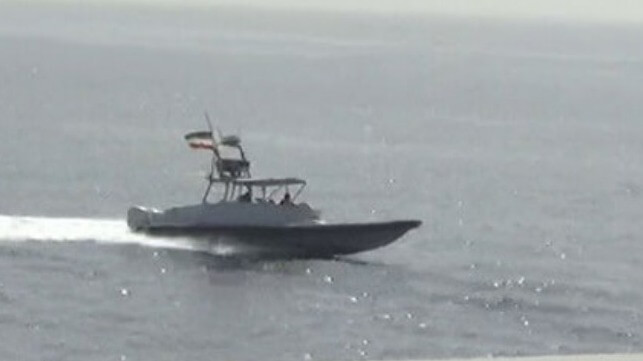
Iran says it is stepping up efforts to stop smugglers (file photo)

Published Apr 22, 2025 4:05 PM by The Maritime Executive


Iran’s efforts at stopping fuel smuggling are continuing with local media outlets citing additional cases of vessels being seized and crews prosecuted. An Iranian court is reported to have handed down stiff jail sentences in two cases today and hours later the semi-governmental news agency Fars reported two more vessels have been apprehended.

According to the media reports, Iran claims that it has seized 4.5 million liters of smuggled diesel fuel alone this year. The country’s low price of diesel and gasoline is reported to encourage smuggling in the Persian Gulf region. Iran offers lower prices for the fuels than its neighboring Arab states.

Fars reports two vessels registered in Tanzania, which it names as Sea Ranger and Salama, were stopped today, April 22. The vessels were reported to be near the central district port city of Bushehr on the Persian Gulf.  A total of 25 “foreign crew” were reportedly detained and 1.5 million liters of diesel fuel seized. Both vessels were being directed back to the Bushehr Port where the media said the vessels were being handed over by the Iran Navy for “legal proceedings.”

Separately, Iranian media reported a court in the southern Iranian province of Hormozgan issued judgment today, April 22, on two other foreign crews. It said one of the unnamed vessels was caught with 4.25 million liters of smuggled fuel and that the captain and two “deputies” were each sentenced to five years in jail. Collectively a fine of $5.37 million was also ordered.

The second captain and his two top “deputies” were also sentenced to five years in jail for smuggling 1.7 million liters of fuel. They were ordered to pay a total of $3 million in fines. In both cases, Iran said the vessels would be released once the fines were paid.

The reports also highlight that on March 31, Iran confiscated two vessels, Star 1 and Vintage. They were stopped in the Persian Gulf with a total of 3 million liters of diesel fuel.

Iranian forces have previously said they increased the monitoring of vessel activity. They have vowed to crack down on fuel smuggling.