Tuesday, April 29, 2025


Trump Demands Free Transits for U.S. Ships on Suez Canal
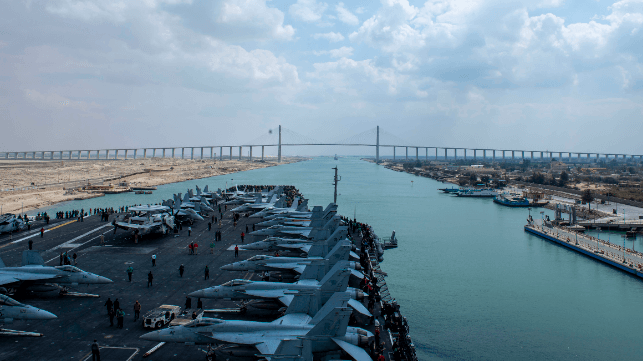
Supercarrier USS Dwight D. Eisenhower during a Suez Canal transit (USN file image)

Published Apr 28, 2025 9:02 PM by The Maritime Executive


On Saturday, U.S. President Donald Trump called for the Suez Canal and the Panama Canal to provide no-cost transits for all U.S. naval and merchant vessels. The remarks on Panama reflect his previous statements, but this is the first time that Trump has made equivalent demands about access to the Suez Canal. 

In a social media post, Trump claimed that the French- and Egyptian-built Suez Canal "would not exist without the United States of America," and said that he has instructed Secretary of State Marco Rubio to "immediately take care of, and memorialize, this situation." The remarks drew outrage from Egypt's political class - but not its rulers, who have remained quiet. 

The Suez Canal was built by French diplomat Ferdinand de Lesseps' Compagnie Universelle du Canal Maritime de Suez during the period of the U.S. Civil War, supported by participation from international shareholders. The privately-funded work started in 1859, and it initially depended upon forced labor. Despite the warnings of naysayers, and a substantial number of casualties during construction, the canal opened in late 1869 and was an immediate commercial success. It passed into British hands in 1882, and British troops defended it from attack until Egypt nationalized it in 1956. Under the current Egyptian administration, it has been widened and expanded, with new parallel channels for two-way traffic. 

According to Al Jazeera, U.S. traffic accounts for about 10-20 percent of the volume on the Suez Canal, and generates fees of $400-700,000 per vessel traffic for the Egyptian government's Suez Canal Authority. Waiving these fees would be a significant blow to the SCA's already-reduced finances. 

Egyptian commentators have expressed surprise at Trump's demand, and have questioned whether the canal's existence depended on the U.S., given its French, British and Egyptian operating history. 

"[Egypt] refused the presence of any military bases from the Americans and before them the Russians," said Egyptian member of parliament Mahmoud Badr in a social media statement. "The Suez Canal was built by Egyptians with their blood, nationalized by Egyptians, and is protected by the Egyptian army."

Egypt's Civil Democratic Movement, which includes several of the country's political opposition parties, accused Trump of "a lack of historical awareness and unacceptable arrogance."

"The Egyptian people consider the Suez Canal a red line and will never accept any infringement on Egypt's sovereignty and national security," the group said in a statement. "They will follow in the footsteps of their fathers and grandfathers in defending their nation's freedom and territorial integrity."

Red Sea security

Over the course of the past year, the Suez Canal's traffic levels have fallen drastically due to the Houthi threat in the Red Sea. The militant group carried out more than 100 attacks and caused two sinkings off Yemen in 2024; merchant shipping is now taking a cautious approach to the Suez route, and traffic on the canal has fallen by 60 percent since 2023.

The Houthis' stated objective - a Gaza ceasefire - briefly occurred with U.S. support in January; Israel ended that ceasefire in March, and the U.S. has turned to an intensive campaign of airstrikes to suppress the Houthis' capacity to interfere with shipping. If successful, this campaign would benefit Egypt and the Suez Canal.

While the Houthis' operational tempo has fallen, the group still has the ability to launch drones and missiles - for now, focused on U.S. Navy and Israeli targets. Merchant shipping traffic levels remain low in the Red Sea, and most top shipping companies have said that they would wait until long after hostilities have ended before bringing their ships back to the area.


 

Shipping Stocks Begin to Regain Losses After Hints of a Tariff Reprieve

White House
File image courtesy of the White House

Published Apr 23, 2025 8:35 PM by The Maritime Executive


Clear signals that the Trump administration wants to pare back its new tariffs have prompted a market recovery, and key stocks in cruise and commercial maritime have begun to regain the losses they suffered after the April 2 levy announcements - but the course ahead is still far from certain.

Trade with China has been hit hardest with a 145 percent blanket tariff rate. Container booking data for mid-May shows that shipments for inbound cargo from China to LA-Long Beach will be down by more than 40 percent, according to CNBC, an unprecedented and sudden drop.

On Tuesday, Trump told the press that he would not "play hardball" with China and would be "nice" in negotiations going forward. He added that the current rate would be coming down "substantially," though not all the way to zero. 

On Wednesday, the Wall Street Journal reported that Trump's team is aiming at average tariffs of 50-65 percent on Chinese goods, possibly lower for noncritical items and higher for strategic industries. A final decision has not been made, the WSJ said. 

Later in the day, Treasury Secretary Scott Bessent denied that the White House is considering cutting tariff rates on China without getting something in return. But he said that both sides are motivated to walk back from current levels. "Neither side believes that these are sustainable [tariff] levels," he said. "This is the equivalent of an embargo, and a break between the two countries in trade does not suit anyone's interests."

Stocks have rallied on the news of a likely tariff rollback, including some key shipping stocks. AP Moller-Maersk, the largest publicly-listed ocean carrier (and second-largest overall) saw its shares jump up eight percent in a day. It has now regained most of its losses since April 2, buoyed by expectations of lower trade barriers. 

Jones Act carrier Matson, which operates an express service between China and the United States, has been hit hard by the tariff disruption: its stock has lost nearly a quarter of its value since April 2. It began to recover from those losses on Tuesday, reflecting rising expectations of an eventual return to higher booking levels on transpacific routes. 

As a discretionary expense, cruising is sensitive to swings in economic outlook, and it has tracked the recovery of the rest of the market. Carnival rebounded 3.5 percent over the past five days, Royal Caribbean is up by 7.5 percent, and Norwegian Cruise Line is up by 5 percent. However, all of the big three cruise stocks - like the markets overall - are still well below where they were last month.


Oil Spill Response Under Way Near Pass a Loutre, Louisiana

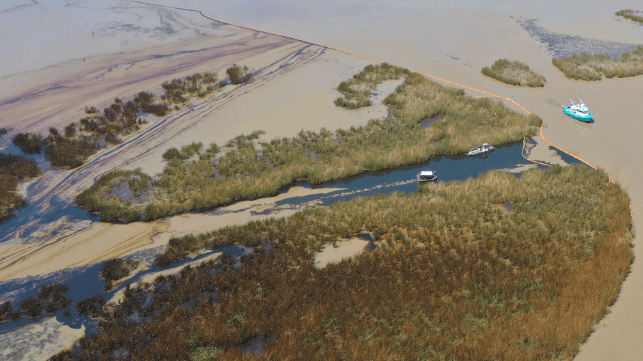
A containment boom (upper center) has been deployed to keep the spill from spreading (USCG)

Published Apr 27, 2025 8:05 PM by The Maritime Executive


On Sunday, the U.S. Coast Guard launched a response to a spill near an oil production site in the Bird's Foot of the Mississippi Delta. 

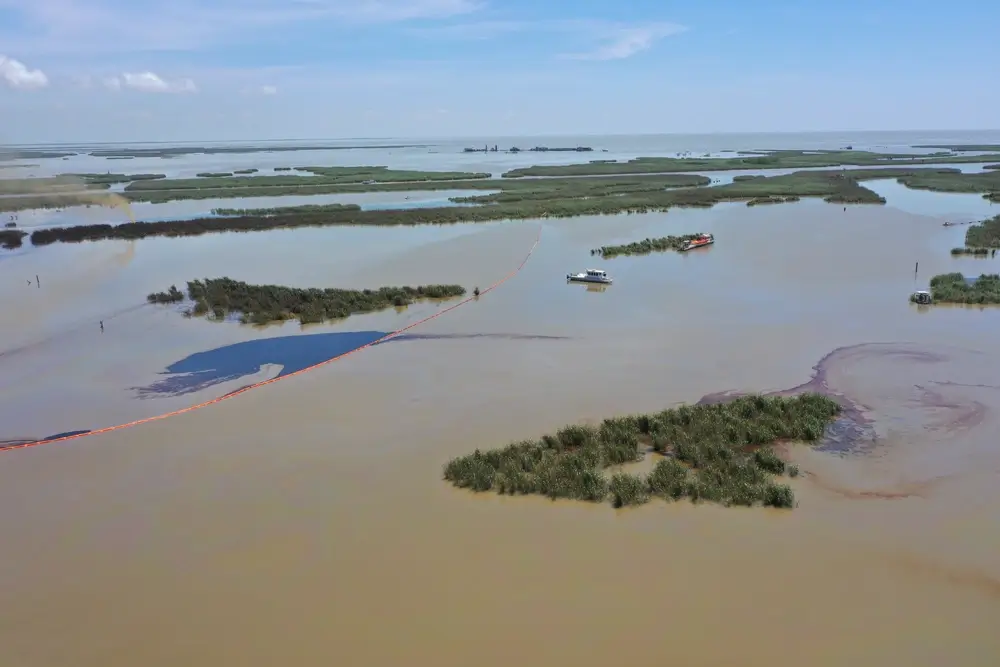
The spill is located near the Garden Island Bay Production Facility, a marshland well collection point near Pass a Loutre. Operator Spectrum OpCo LLC, the Coast Guard and the Louisiana Oil Spill Coordinator's Office (LOSCO) have set up a unified command to address the mixed oil and gas release. A LOSCO overflight confirmed the spill, and first responders are on scene to help mitigate the damage. At least one containment boom has been deployed. 

The operating company has hired in three firms - Forefront Emergency Management, Environmental Safety & Health Consulting Services, and Clean Gulf Associates - in order to address the spill. 

Courtesy USCG

The volume of the spill has not been assessed yet, but overflight assessments are scheduled daily. There have been no reports of injuries or wildlife impacts, and the affected area is well outside of the Mississippi's main shipping channel. 

The Pass a Loutre area is the end point of the Mississippi Flyway bird migration route, a key travel corridor for a large number of familiar American bird species. In an adjacent wildlife management area just to the south, the state and federal governments have spent millions of dollars on marshland and habitat restoration for the benefit of migratory birds. 

RWE is Latest to Stop U.S. Offshore Wind Activities

offshore wind farm installation
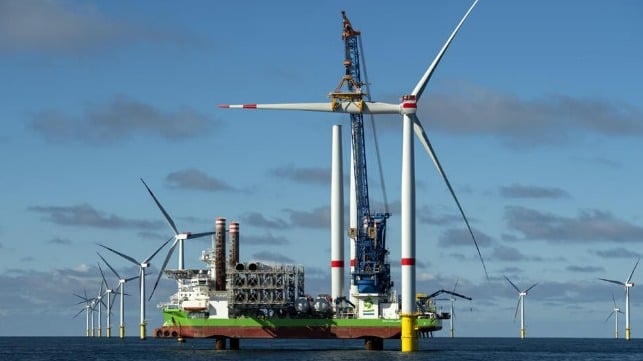
RWE is proceeding with offshore wind farms in Europe while it has stopped offshore activities in the U.S. (RWE file photo)

Published Apr 25, 2025 12:36 PM by The Maritime Executive\


German renewable energy giant RWE is set to announce that it has stopped its offshore activities in the United States and setting higher requirements for future investments because of the “political developments.” The company follows TotalEnergies, Shell, and BP which previously announced they were backing away from projects in the U.S., and Equinor which last week said it is considering “legal remedies” after Trump’s Department of Energy suspending offshore work on a full-permitted wind farm off New York.

RWE released a manuscript of the speech Dr. Markus Krebber, CEO of RWE, will deliver next week, April 30, during the company’s annual meeting. In the speech, he will highlight the company’s many successes in 2024 and the progress being made on the Sofia wind farm for the UK and with the Danish wind farm Thor. He notes RWE has a combined offshore wind farm capacity currently of 3.3 GW and a further four projects with a capacity of 4.4 GW under construction.

Turning to the U.S. market environment, Krebber will tell shareholders, “We have stopped our offshore activities for the time being,” while the company has also introduced “higher requirements for future investments in the U.S.” He says despite the company’s success with onshore wind, solar energy, and battery storage, “Nevertheless, we remain cautious given the political developments.”

RWE became the largest leaseholder in the New York Bight with a potential 3-gigawatt area it won in the hotly contested 2022 offshore auction. At the end of the same year, RWE won a lease area to develop up to 1.6 GW off the coast of Northern California, which it projected would be one of the first commercial-scale floating wind farms in the country. It is also working with Greater New Orleans and GNOwind Alliance for regional opportunities. It launched site investigations off California in 2024 and proposed the Community Wind project with 1.3 GW of capacity to New York State.

The company in November 2024 warned it was delaying investments citing higher risks for offshore wind in the U.S. and a slower ramp-up of the European hydrogen economy. Krebber will tell shareholders next week the company has raised its threshold expectations for new investments. For future projects, he says they will increase the average return requirement from 8 percent to more than 8.5 percent.

For the U.S., he notes while the company surpassed 10 GW of generation capacity from renewable energy at the start of 2025, RWE will enforce higher requirements for future investments. This includes having all necessary federal permits in place, tax credits being safe harbored, and all relevant tariff risks mitigated. Only if these conditions are met for future investments, for the time being in onshore wind and solar, will it “be possible given the political environment.”

Developers of U.S. offshore wind projects remain concerned after the moves by the Trump administration including launching a review of the leasing process, pulling permits for projects in New York and New Jersey, and stopping funding on a research project in Maine. At the beginning of the month, four offshore projects were reported to be proposing to delay their state-level regulatory reviews. Shell reported in November 2024 that it would take a $1 billion charge as it moved away from U.S. offshore wind projects and Equinor said if a full-stop ensues for its Empire Wind project, it would have to repay $1.5 billion in financing and would be exposed to termination fees from its suppliers.


Trump Administration Suspends Funding for UMaine Floating Wind Research

floating wind turbine prototype
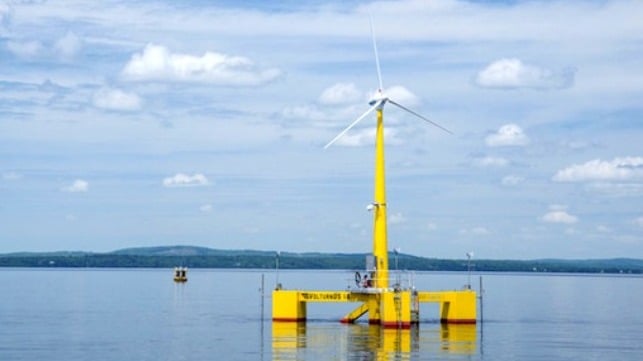
Maine previously demonstrated other prototypes for its offshore wind farms (New England Aqua Ventus)

Published Apr 24, 2025 2:20 PM by The Maritime Executive


In its latest move against the offshore wind energy sector, the Trump administration suspended funding for a research project developing prototypes for floating offshore wind turbines. The move came days after the research project being undertaken by the University of Maine launched the base for its test system which was due to begin operations this summer.

In a letter released online by Maine State Representative Reagan Paul, the U.S. Department of Energy’s Advanced Research Projects Agency (ARPA-E) accuses the university of “failure to comply with one or more of the National Policy Assurances” in its ongoing grants. It is informed that ARPA-E “is suspending all activity” effective this date (April 11) for a period of up to 90 days. The suspension could be canceled or extended by ARPA-E and the university has the right to object and provide information and documentation challenging this suspension.

A university spokesperson told the media in Maine they had not been aware of any issues or investigations. It is being pointed out that the letter does not make specific allegations of the nature of failures or violations of rules. 

The state of Maine and the Trump administration have been feuding since February. State Governor Janet Mills openly rejected Trump policies including on transgender rights during a White House event. The governor cited state law to which Donald Trump said “You better comply,” and later “See you in court.” Maine Public Radio is saying that two other grants were also suspended and that the university has had several pools of federal aid suspended, cut, and reinstated since February.

The university’s Advanced Structures and Composites Center has been leading the research into floating offshore wind turbines for more than a decade and in 2024 won grants which are reportedly valued at $12.5 million. The project was to build and test a prototype in the Gulf of Maine.

The researchers successfully floated a 375-ton concrete base on March 30 as the first step in the prototype project. The base was towed to Searsport, Maine where it was docked. The work called for the installation of the tower, turbines, and blades in the coming week. The prototype is a 56-foot square base that stands 32 feet high. It is a quarter-size research prototype for the tests.

By the end of May, the prototype was to be towed into position in Penobscot Bay near Castine, Maine. It was scheduled to undergo 18 months of testing and data collection from more than 200 sensors.

Maine proposed a research site for floating offshore wind in 2021 and won approval from the Bureau of Offshore Energy Management (BOEM) in 2023. A research lease was awarded in August 2024 for a project that ultimately proposes to place up to 12 floating turbines that would have a capacity based on current designs for up to 144 MW of electricity.


Updated: At Least 1,200 Injured in Blast at Bandar Abbas, Iran

Iran port blast
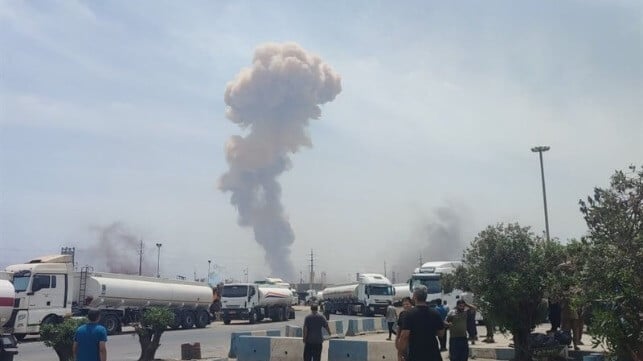
Blast rocked the port city of Bandar Abbas (Tasnim News Agency - CC BY 4.0)

Published Apr 27, 2025 1:19 PM by The Maritime Executive


[Updated] A huge explosion in the commercial port of Bandar Abbas in Iran at 12.00 on the morning of April 26 has injured at least 1,000, according to Iranian state media.  First reports suggested that four people have been killed, a toll which had risen to 40 overnight.  Office buildings in the port have been damaged and glass blown out of windows, although the immediate neighborhood is a commercial rather than a residential area.  Explosions were still occurring in the area several hours after the initial explosion.


The explosion is believed to have started in a container stored in the hazardous and flammable section of the container park.  An extensive container storage park lies immediately to the north of the port’s container loading quays.

Russia's emergency ministry said Sunday that it would be dispatching two aircraft to help Iranian officials address the fire, including a Beriev Be-200 amphibious firefighting plane and an Ilyushin Il-76 transport aircraft. 

The Shahid Rajaei commercial port handles about 85% of Iran’s non-oil and gas exports and imports, and is connected to Iran’s transnational rail network.  The Iranian authorities have for some years been planning an expansion of the port to increase throughput.  The commercial port lies 10 miles to the west of the Bandar Abbas Naval Harbor, which is the homeport to most of Iran’s regular Navy.

In February and March, the Maritime Executive tracked the progress from China of two sanctioned ships owned by Islamic Republic of Iran Shipping Lines (IRISL), MV Golbon and MV Jairan, which then unloaded their cargoes of sodium perchlorate at Bandar Abbas.  Sodium perchlorate is processed into ammonium perchlorate rocket fuel at the Iranian facilities at Parchin south of Tehran and Khojir.  Ammonium perchlorate makes up 70% of the standard fuel load of most of Iran’s solid-fueled ballistic missiles, such as medium range Khybar-Shikan and Fattah missiles, and the shorter range Fateh-110 and Zolfaghar missiles.  It is not known if containers unloaded from the two ships were, several weeks after unloading, still in the Sina container port at the time of the explosion, or whether the containers formed the seat of the explosion. 

As would be expected, an Israeli spokesman denied any knowledge of the explosion, although the Times of Israel was the first media organization to point out a possible connection.  Washington Institute missile expert Farzin Nadimi has said that he believes the yellow character of the explosive fireball is indicative of the presence of sodium.  Within Iran, newspapers are split on the cause of the explosion, conservatives blaming safety failures and reformists blaming sabotage, implicity accepting the target was the sodium perchlorate.

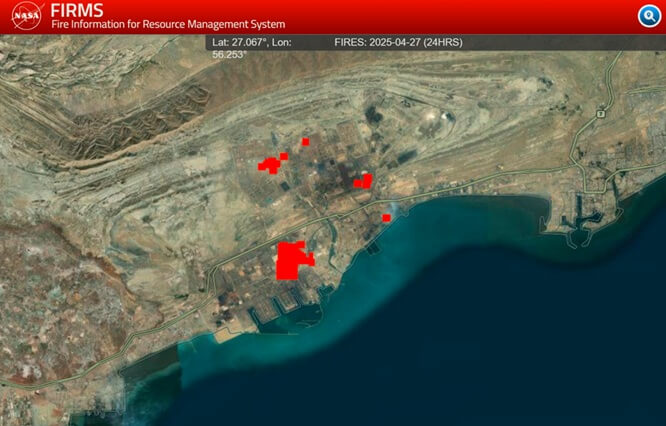
The fire/heat source detected by the NASA fire-detecting system FIRMS grew in size throughout April 26, inicating that the fire continued to burn into nightfall;  other heat spots initially detected were from oil refineries and the Hormozgan steel works (FIRMS/CJRC). 

The NASA FIRMS system which monitors fires and heat sources initially detected only a small fire, which grew as the day wore on.  On the afternoon of April 27, the fire was still spreading.  Other regular heat spots to the north of the fire, namely oil refineries and the Hormozgan steel works, have since yesterday gone cold, suggesting that these industrial facilities have been closed down, possibly because workers have been evacuated.  At least 10,000 containers hve been destroyed, and there is likely to be long-term damage to the port, with operations likely to be disrupted for some time.


Unprecedented Bleaching Event Affects 84 Percent of World's Corals

Thailand
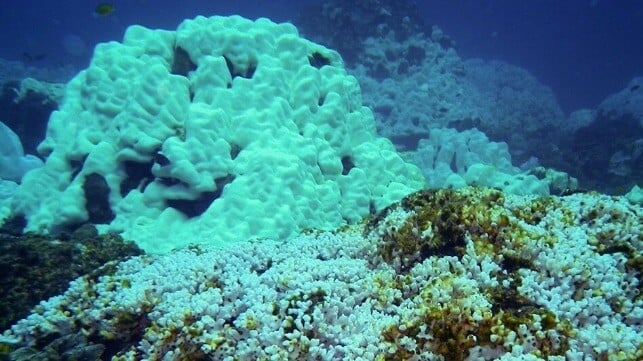
Coral bleaching off Thailand, 2010 (NOAA file image)

Published Apr 27, 2025 5:35 PM by The Maritime Executive


One year after the official declaration of the fourth global coral bleaching event, NOAA and the International Coral Reef Initiative (ICRI) have updated the initial impact of the catastrophe. From January 2023 to March 2025, the bleaching event has impacted 84 percent of the world’s reefs, with 82 countries and territories reporting damage.

As sea surface temperatures continue to rise, bleaching-level heat stress has been extensively reported across the Atlantic, Pacific and Indian Ocean basins. Bleaching occurs when corals lose their colorful photosynthetic algae (Zooxanthellae), revealing the white calcium carbonate skeleton. When this occurs, the corals are left without their primary energy source, which could lead to death unless temperatures drop. This time, though, scientists are concerned that bleaching will simply be a state of being going forward.

"We just may never see the heat stress that causes bleaching dropping below the threshold that triggers a global event. So this may be the last one," marine scientist and former NOAA Coral Reef Watch coordinator Dr. Mark Eakin told PBS. 

The first global coral bleaching event was declared in 1998, with 21 percent of reefs experiencing bleaching-level heat stress. This rose to 37 percent in the second event in 2010 and 68 percent during the third event (2014-2017).

Scientists have called the fourth event unprecedented, starting with some bleaching episodes from May 2024. This has seen a widely-used bleaching prediction platform adding three new levels (Level 3-5) to its Bleaching Alert Scale, which indicates heightened risk of mass coral mortality. The previous highest level, Level 2, indicates risk of mortality to heat sensitive corals. The new level now, Level 5, indicates the risk of over 80 percent of all corals on a reef dying due to prolonged bleaching.

The fourth bleaching event is happening at a time that the global average temperature is rising. NASA confirmed 2024 as the warmest year on record. The average surface temperature in 2024 was 1.28 degrees Celsius above NASA’s 20th-century baseline (1951-1980), topping the record set in 2023. This contributed to record-breaking ocean temperatures, and triple the previous record number of marine heatwaves around the world.

“The fact this most recent, global-scale coral bleaching is ongoing, takes the world’s reefs into uncharted waters,” said Dr. Britta Schaffelke, Coordinator of the Global Coral Reef Monitoring Network (GCRMN). “In the past, many coral reefs around the world were able to recover from severe events like bleaching and storms. We need to continue to observe and measure if and how reefs will recover and change, to help inform the combination of conservation measures most suited for a particular reef.”


NTSB Cites Inexperienced Pilot Using Cell Phone in Ohio River Tow Incident

Ohio River McAlpine Locks
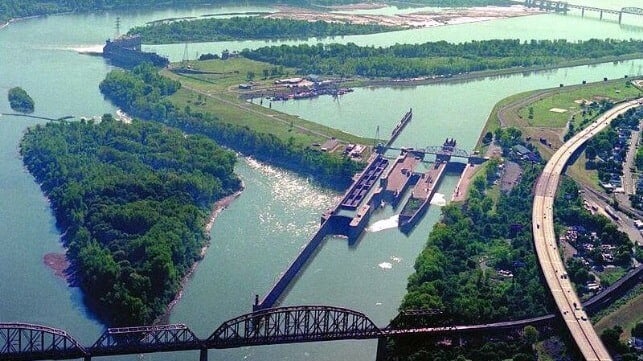
McAlpine Locks is a complicated area where the incident took place in 2024 (Army Corps file photo)

Published Apr 24, 2025 5:25 PM by The Maritime Executive


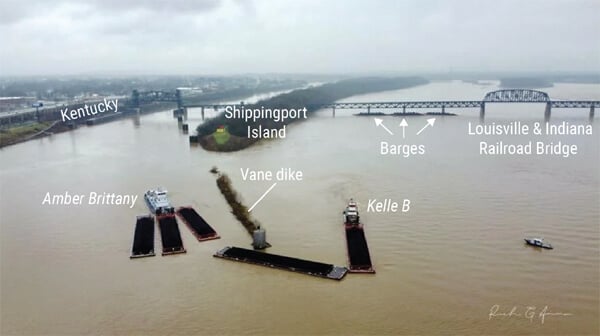
The NTSB released a report on a 2024 incident in which a towing vessel moving coal barges struck a vane dike on the Ohio River resulting in an estimated $1.3 million in damages to the barge, cargo, and dam rates. It found that the pilot did not effectively compensate for the outdraft current while navigating out of the locks near Louisville, Kentucky, but that a lack of communication, an inexperienced pilot, and the use of a personal cell phone contributed to the incident.

The report recognizes that the upstream section of the McAlpine Locks and Dam is uniquely difficult to navigate, even under ideal circumstances. It highlights that there have been nine reported incidents in the area involving tow vessels since January 2020, totaling over $2.7 million in property damage.

“Lock canal entrances near dams present unique hazards for vessels transiting inland rivers,” the report said. “Fast moving river water near low-flow canal waters can produce outdraft currents. Mariners should thoroughly assess the potential impact of outdraft currents when entering or exiting locking channels. Vessel horsepower and vessel handling should be carefully considered.”

In this instance, the towing vessel Amber Brittany, built in 1982 and 138 feet in length, was pushing 15 loaded coal barges along the Ohio River. On March 8, 2024, the vessel was waiting its turn to enter the McAlpine Locks when the captain was relieved by the pilot. The captain and pilot discussed the upcoming locking procedure and transit strategy. The captain recommended favoring the left descending bank to avoid the effects of outdraft. He also warned of shoaling on the left descending bank.

During the investigation, it came out that the company personnel was under the impression that the pilot had previous experience operating tows on the Ohio River. However, the pilot told the Coast Guard and NTSB investigators that he had not previously operated on the Ohio River. This led the NTSB to the conclusion that the pilot’s inexperience in a challenging location contributed to the contact. 


(Source NTSB)


An analysis of the AIS signal showed that as the tow vessel was exiting the lock area its course alerted appreciably to port. The pilot blamed an outdraft current saying he had attempted to counter it and then realizing the tow was going to contact the vane dike, attempted to land as softly as possible.

The second barge contacted the vane dike mooring cell and the tow broke apart. Ten of the 15 barges broke free and floated downstream. One of the barges ultimately sank. Another barge began taking on water and was pushed to the bank.

Further investigation however revealed that the pilot was also on his personal cell phone. Records indicated the pilot was using the phone just before the contact. The first in a series of outgoing and income text messages coincided with the Amber Brittany’s departure from the sailing line. In all, the NTSB reports that the pilot sent 16 messages starting before the contact and continuing afterward over a 20-minute period and made two outgoing calls after the contact happened. In the three minutes prior to the contact, the pilot sent three messages and received three incoming messages.

The NTSB warns that mariners should avoid using mobile devices, especially while maneuvering in unfamiliar areas of restricted navigation. 

“Using cell phones and other wireless electronic devices has been demonstrated to be visually, manually, and cognitively distracting. Talking on cell phones can have serious consequences in safety-critical situations, and sending or reading text messages is potentially even more distracting than talking because texting requires visual attention to the display screen of the device,” the report highlights.

It is not the first time personal cell phone usage has been documented during incidents. The NTSB said the pilot on the containership Ever Forward was busy on his personal cell phone when the boxship grounded in the Chesapeake Bay.  That same year a bulker and an OSV were in a collision 66 miles south of Port Fourchon, Louisiana. The master of the OSV later admitted to the NTSB that he had made a personal call using his cell phone, and was using dictation to send personal text messages. At the same time, the second officer on the bridge of the bulker was also distracted while he had begun printing updates for electronic navigation charts and digital publications.

NTSB in its role can only conclude the probable cause of the incidents. The U.S. Coast Guard and other local authorities are responsible for the regulations and disciplinary actions. The Coast Guard has also issued warnings against using personal devices which could cause distractions while navigating.


Massive Container Explosion Was Caused By Self-Heating Chemical Cargo

CMSA
Courtesy CMSA

Published Apr 24, 2025 10:24 PM by The Maritime Executive


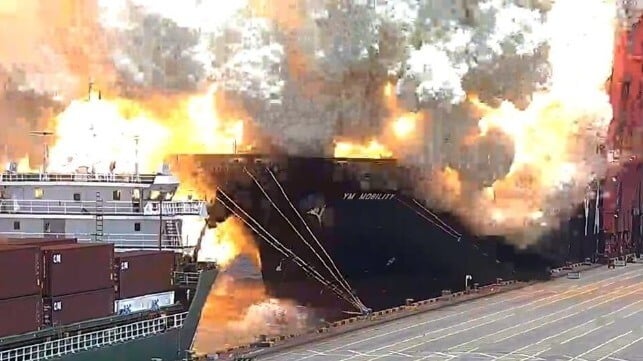
The dramatic container explosion aboard the boxship YM Mobility at Ningbo last year was caused by thermal runaway in a cargo of organic peroxides, according to China's Maritime Safety Administration (CMSA). It is the latest in a long string of container accidents involving this class of dangerous chemicals, notorious for self-heating, decomposition, fires and explosions.  

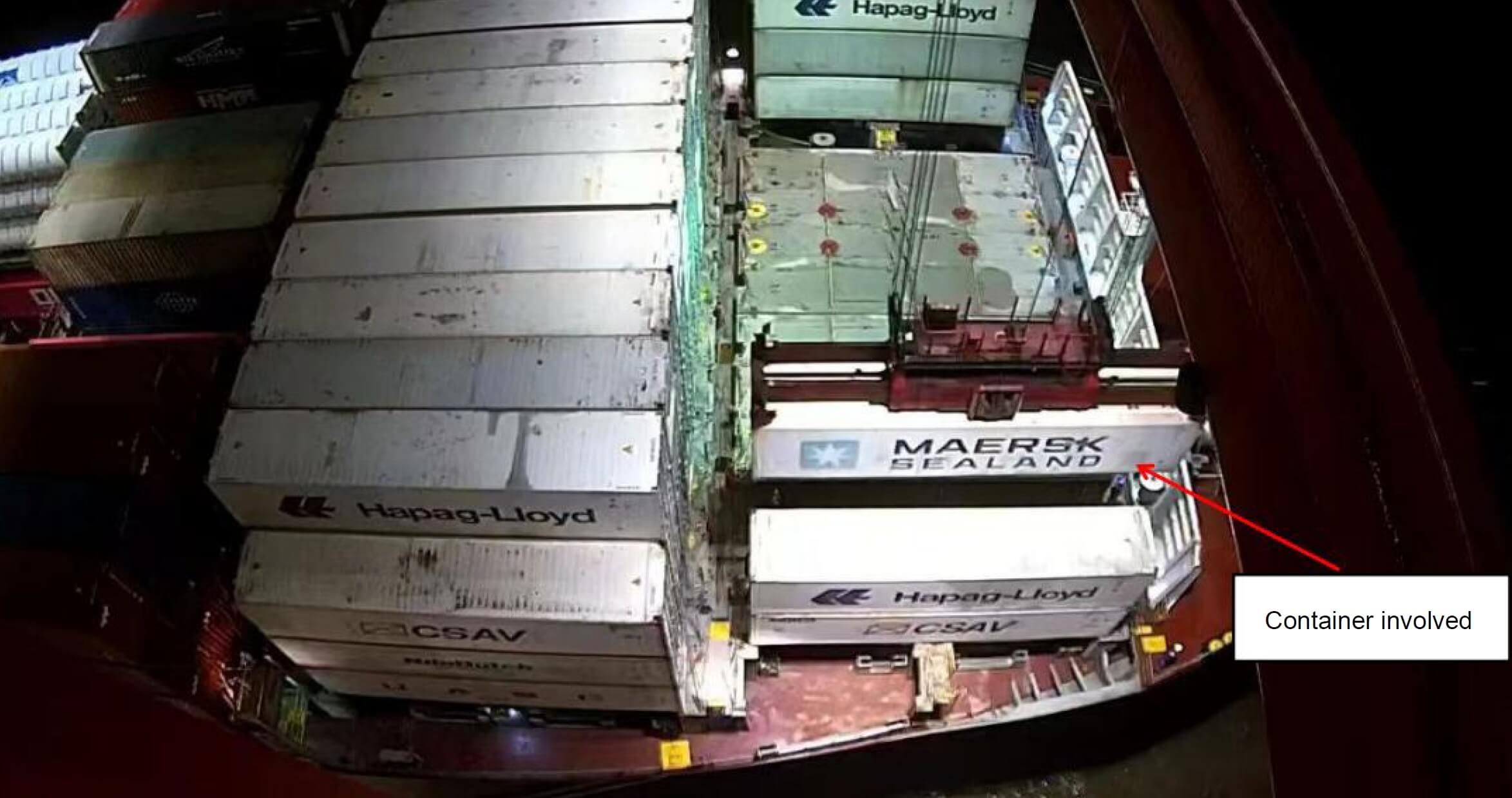
The container in question was a reefer box filled with tert-butyl perbenzoate (TBPB), a common activator for making plastics like polyethylene and polyester. It is unstable at high temperatures, and has a thermal tipping point of about 140 degrees Fahrenheit, above which its self-heating tendency accelerates until combustion or explosion. This particular shipment was headed for Jebel Ali, where the terminal requires refrigerated storage for TBPB, so the manufacturer packed it in a reefer box in order that it could be plugged in on arrival.

YM Mobility's operator did not require the box to be plugged in while under way. When the container was loaded aboard YM Mobility in Shanghai on August 6, it was stowed as deck cargo on the starboard bow, packed in a reefer but unplugged and unrefrigerated. Ambient summertime temperatures were about 95 degrees Fahrenheit. 

Courtesy CMSA

YM Mobility left Shanghai August 7 and transited to Ningbo. On August 9, a crewmember on duty smelled an "irritating odor" while up on the bow. At about 1331, he inspected the container involved and noticed a hissing noise, white smoke and a yellow liquid dripping from the door - characteristic of TPBP decomposition. Over the next six minutes, the smoke increased. The crewmembers up on the bow realized the danger and evacuated the area, and the captain sounded the fire alarm to muster the crew.

By 1338, white smoke obscured most of the starboard bow, and within minutes, it was billowing all over the foredeck. At 1346:30, the reefer box exploded violently, blowing six containers over the side and disintegrating three more. No injuries were reported, and all crewmembers safely evacuated onto the dock a few minutes later. 

First responders from shore took over firefighting efforts, and the blaze was under control by the next morning. It took another day to fully put out the last hot spots in adjacent containers. 

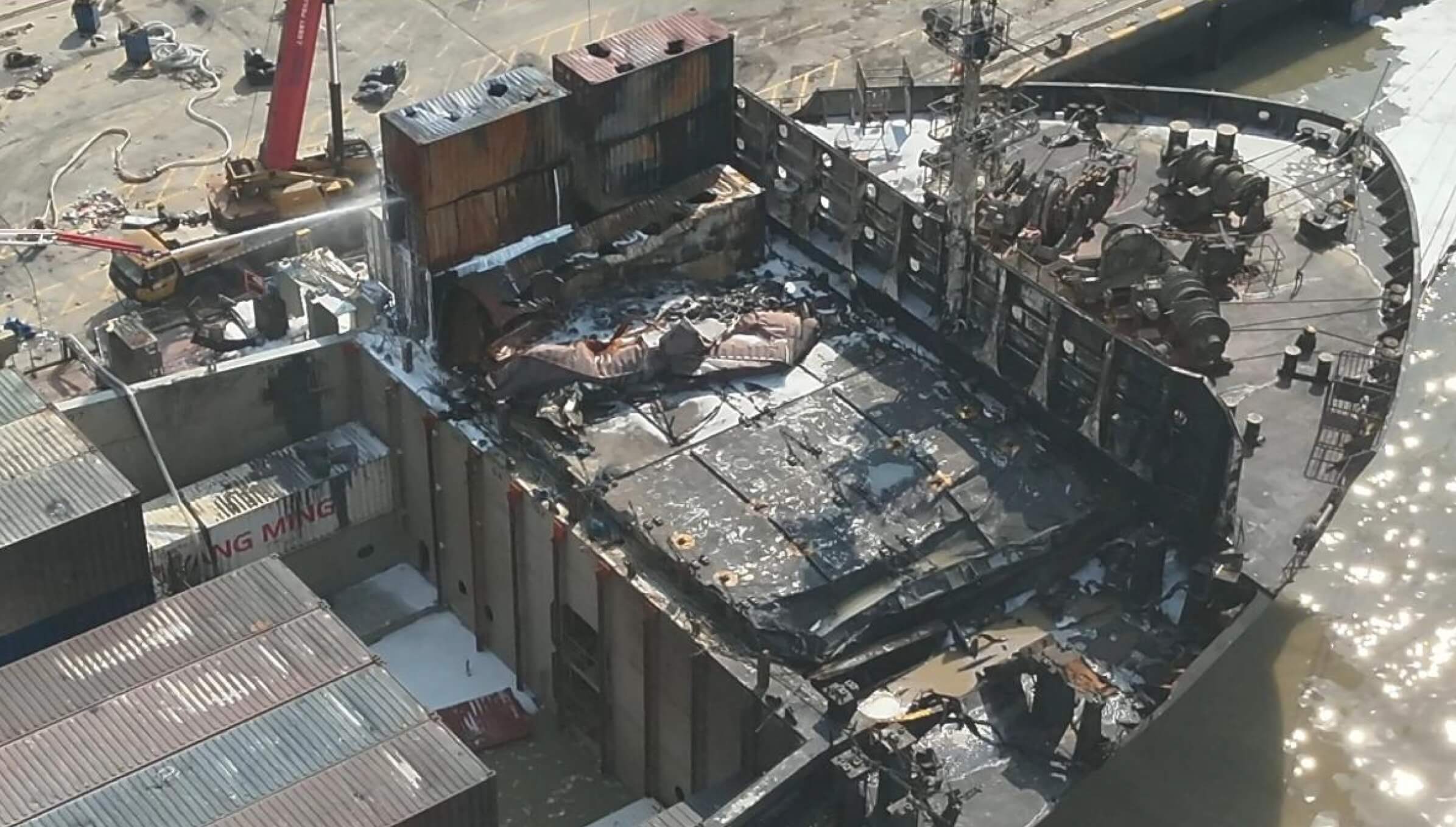
A post-accident inspection found that the force and heat from the blast were enough to warp the hatch coaming, hatch cover and adjacent structures. More than a dozen containers were burned, blown up or had their contents ruined. 

Courtesy CMSA

CMSA noted that reefer boxes are airtight and thermally insulated, and any heat from a self-heating substance like TBPB would accumulate inside the container, particularly in hot weather. Under these conditions, the cargo could get hotter and hotter until it went into thermal runaway and exploded. 

"No attention was paid to the temperature changes in the box during transportation," CMSA concluded, calling the arrangement negligent. "The transportation plan of transporting TBPB in unplugged refrigerated containers during the hot season is inappropriate.   . . . TBPB shippers failed to take into account the thermal insulation and airtightness of unplugged reefers in hot weather."


ILWU Slams White House's Tariffs

Port of Los Angeles
File image courtesy Port of LA

Published Apr 28, 2025 11:06 PM by The Maritime Executive


The International Longshore and Warehouse Union (ILWU) has come out swinging in opposition to the White House's recently-imposed tariffs on foreign goods. ILWU members work at the main container ports on the U.S. West Coast, and the volume of arriving import cargo is set to plummet because of the cost effects of the administration's 145 percent tariff on Chinese goods. 

In a statement, the ILWU said that it expects to see massive job losses as a result of the tariffs. "These tariffs are nothing more than a direct attack on the working class and should be opposed outright," the union said. 

Carriers have already begun to blank sailings in expectation that future demand for ex-China shipping routes will be reduced by the steep tariffs. Hapag Lloyed has reported a 30 percent cancellation rate for shipments out of China, and Bloomberg reports that the number of boxships en route from China to the U.S. is down by about 40 percent since the tariff announcement in early April. Some amount of substitution is expected as importers find new supply chain alternatives in Southeast Asia, but some products may become hard to find on store shelves, retailers have cautioned.

The ILWU warned that scarcity and inflation will impose a new burden on working families, citing estimates of a baseline cost of living increase of about $1600 per household per year. "We refuse to accept policies that destroy jobs, inflate costs, and sell out the working class," said ILWU. 

The tariffs depend on the White House's negotiating process, and could change at any time. The administration has already rolled back tariffs for electronics and semiconductors, reducing the levy for these key categories to ____. It is also reportedly finalizing a plan to cut the total effective rate on foreign car parts, which are essential for U.S. automotive manufacturers. 

China has retaliated with tariffs of 125 percent on U.S. goods, along with a de facto suspension of heavy rare earth element exports. It is pressing the White House for substantial (or total) tariff relief as a precondition for talks. Beijing insists that there is no ongoing negotiation, despite the president's recent claims of high-level phone calls and meetings.

"As far as I know, there have not been any calls between the two presidents recently," said Chinese Foreign Ministry spokesperson Guo Jiakun. "If a negotiated solution is truly what the U.S. wants, it should stop threatening and blackmailing China, and seek dialogue based on equality, respect and mutual benefit."

Magic Mushroom Use Is Soaring in the U.S. With More Americans Turning to Psilocybin Than Cocaine or Meth

Use is up across all age groups, with rising poison calls and shifting perceptions


byTudor Tarita
April 25, 2025
Edited and reviewed by Tibi Puiu


In 2019, the city of Denver became the first in the United States to decriminalize psilocybin, the hallucinogenic compound in so-called magic mushrooms. What began as a local experiment has now rippled across the country.

According to a new study, the use of psilocybin has surged nationwide in recent years. Researchers from the University of Colorado Anschutz Medical Campus and Rocky Mountain Poison and Drug Safety combed through five major national datasets and found that more Americans than ever are turning to psilocybin, particularly those struggling with depression, anxiety, and chronic pain.


“We found that since 2019, the number of people using psilocybin has gone up sharply,” Karilynn Rockhill, co-lead author of the study, said in a press release. “This seems to line up with when some U.S. states began to decriminalize or legalize it.”


Psylocibe Tampanensis. Credit: Wikimedia Commons


From Taboo to Therapy


Psilocybin is a Schedule I drug, classified as having no accepted medical use and a high potential for abuse. But mounting research, much of it from respected institutions like Johns Hopkins and Imperial College London, is putting this designation into question.


Studies have shown that psilocybin, under carefully controlled conditions, may help people with treatment-resistant depression, post-traumatic stress disorder, or substance use disorders. Enthusiasts like Michael Pollan, whose bestselling book How to Change Your Mind familiarized Americans with psychedelic science, have helped normalize the idea that mushrooms could have medical properties.

“The growing interest in psilocybin is largely fueled by increasing evidence of its therapeutic potential,” Dr. Alexander Joshua Eisenberg, a Florida-based physician, told Newsweek. “These findings have opened the door for many individuals, across age groups, to explore alternative approaches to managing emotional distress.”

And the numbers reflect that shift. Lifetime psilocybin use among adults rose from 10% in 2019 to 12.1% in 2023—an increase of more than six million people. Among young adults aged 18 to 29, past-year use jumped by 44%. Among adults over 30, the increase was even more dramatic: 188%.

Perhaps more strikingly, the data suggests that people nowadays take psilocybin more commonly than cocaine, LSD, methamphetamine, or illegal opioids. According to a 2016 medical survey, magic mushrooms are the safest recreational drug; just 0.2% of 12,000 participants who reported taking psilocybin in the past year said they needed emergency medical treatment – a rate at least five times lower than that for MDMA, LSD and cocaine.

Risks Down the Rabbit Hole

But this newly found appreciation for the psychedelic is not just fun and games.

Emergency calls related to psilocybin exposure have skyrocketed. Between 2019 and 2023, poison center calls rose 201% among adults, 317% among teens, and a staggering 723% among children under 11. In 2023 alone, more than 1,500 people sought medical care because of psilocybin exposure. Bad trips?

“The calls to poison control for the children under 11 in the report were almost certainly due to kids getting into psilocybin edibles that were not meant for them,” Dr. Todd Korthuis of Oregon Health and Science University told NBC News. “An unregulated market of edibles can lead to people ingesting things other than psilocybin, even if the packaging does not list them.”

Despite its promising safety profile in clinical settings, psilocybin in the wild is a different story. Without guidance or dosage control, some users—especially those with underlying psychiatric conditions—may experience acute psychological distress.

“It can lead to acute psychological distress, particularly in those with pre-existing mental health conditions,” warned Eisenberg. “As interest grows, it’s important that people approach its use thoughtfully, ideally in structured, supportive settings that prioritize safety and integration.”


Health systems, the researchers argue, are playing catch-up. Poison centers may be fielding more calls, but hospitals often don’t code cases properly, meaning psilocybin-related issues are undercounted in emergency department data. “If hospitals and public health systems aren’t seeing the full picture, they can’t respond appropriately,” said Joshua Black, PhD, the study’s co-lead author.


The number of calls per 100,000 in population for each age group is shown. Credit: Rocky Mountain Poison & Drug Safety


A Cultural Crossroads

Psilocybin is still illegal in most of the country—33 states in total—but that hasn’t stopped cities and states from pushing boundaries. Oregon has legalized it for medical use. California and several municipalities in Michigan and Massachusetts have decriminalized it. Colorado, where the trend began, extended decriminalization statewide in 2022.

With legal penalties waning and curiosity rising, psilocybin is gaining traction in the American psyche. Still, only 2% of adults reported using it in the past year, suggesting that while the numbers are rising fast, the overall prevalence remains modest.

Researchers say they’re watching closely as adolescents join the wave. Among 12th graders, past-year use increased by 53% from 2019 to 2023.

“It is interesting to see the rise in adolescents,” said Andrew Yockey, an assistant professor of public health at the University of Mississippi. “I want to see where they are getting it from, why they are taking it.”

Those are questions that health officials and educators will need to answer quickly, before psilocybin, like cannabis before it, becomes a permanent fixture of the American landscape.

“We saw a similar phenomenon with cannabis when it started to be legalized,” Rockhill noted. “There is probably a stigma around this that is going down.”

But she and her colleagues stress caution. In the race to embrace psilocybin’s promise, society may be outpacing the systems designed to manage its risks.


The findings were reported in the Annals of Internal Medicine.