Wednesday, May 28, 2025


New study highlights health risks of ultrasonic cigarettes


UC Riverside researchers find harmful metals in u-cigarettes’ liquids and aerosols


University of California - Riverside

Prue Talbot and Esther Omaiye 

image: 

Photo shows Prue Talbot (left) and Esther Omaiye.

view more 

Credit: Talbot Research Group, UC Riverside.


RIVERSIDE, Calif. -- A study by scientists at the University of California, Riverside shows ultrasonic cigarettes, or u-cigarettes, marketed as a less harmful alternative to traditional e-cigarettes, may pose significant health risks due to the presence of harmful metals in their liquids and aerosols. 

U-cigarettes have a “sonicator” that vibrates a liquid solution, usually containing nicotine, flavorings, and propylene glycol or vegetable glycerin, to produce microscopic droplets (aerosol). The technology uses high-frequency ultrasonic vibrations instead of heating coils used in traditional electronic cigarettes, or e-cigarettes. 

The study, published in Environmental Health Perspectives, quantified chemical elements and metals in various flavors of SURGE u-cigarettes, JUUL e-cigarettes, and other pod-style e-cigarettes.

“U-cigarettes claim to be less harmful than e-cigarettes,” said Esther Omaiye, a postdoctoral researcher in the Department of Molecular, Cell and Systems Biology and the paper’s first author. “Since this novel technology has limited evidence-based data, we were interested in investigating this claim to understand the chemistry and toxicology involved and the potential impact on user behavior.”

Using advanced analytical techniques, such as scanning electron microscopy and inductively coupled plasma optical emission spectroscopy, the study identified 16 elements in at least one fluid or aerosol sample. 

“We found u-cigarette fluids and aerosols generally had higher concentrations of metals compared to fourth-generation e-cigarettes,” Omaiye said. “Metals in u-cigarettes are not essential for the functioning of the device. However, they are usually present as unintended contaminants. Their presence is a health concern.”

The researchers found that the products they tested, including SURGE, contained silicon, while nickel was found in low concentrations across all fluids, except for the KWIT Stick, which showed levels of up to 66,050 micrograms per milliliter of e-fluid. Additionally, the researchers found SURGE u-cigarettes have copper and zinc in their fluids, with minimal transfer to aerosols.

“The most concerning results were the elevated levels of arsenic and selenium in SURGE products, both of which are listed on the FDA’s Harmful and Potentially Harmful Constituents List,” said senior author Prue Talbot, a professor of the graduate division. “Our study underscores the urgent need for regulations to limit arsenic and selenium in these products and calls for routine surveillance to identify rogue products with abnormally high metal levels.” 

According to Talbot and Omaiye, the data raises serious concerns about the long-term health risks associated with u-cigarette use, including potential cancer and neurotoxicity. They note that inhalation of high levels of these elements can have severe health consequences, including lung diseases such as silicosis and metal fume fever, organ damage, and cancer, particularly from carcinogens like nickel and arsenic. 

“Even metals like zinc and selenium, essential for life in small amounts, can become toxic at high levels, highlighting the potential danger of inhaling contaminated aerosols,” Omaiye said. “As fine particles or aerosols, these elements can bypass body defenses and reach deep into lung tissues. Users should stay informed about what is in their devices and exercise caution when evaluating claims about safety. For non-vapers, it is best not to start, but if they choose to, they must understand the risks involved.”

Talbot and Omaiye plan to build on their findings to deepen their understanding of emerging tobacco products and technologies, as well as their impact on public health. 

“Regardless of the vaping technology, inhalation of metals like arsenic, nickel, lead, or chromium is always hazardous—even at low concentrations over time,” Talbot said. “These metals are not filtered by the lungs the way they might be by the digestive system, making inhalation exposure particularly concerning.” 

Omaiye emphasized that researchers must continue conducting independent studies on vaping technologies to assess metal exposure risks, focusing on device design, materials, and long-term effects. 

“Stricter manufacturing regulations and accountability are needed to ensure the safety of device components and vaping liquids,” she said. “Medical professionals, regulatory agencies, and the public must stay informed and proactive as new vaping technologies emerge, recognizing that changes in components may not eliminate health risks.”

The research was supported by the National Institutes of Health, California’s Tobacco-Related Disease Research Program, and UC Riverside. Omaiye is a recipient of a UC President’s Dissertation Year Fellowship.

The title of the paper is “Quantification of 16 Metals in Fluids and Aerosols from Ultrasonic Pod-Style Cigarettes and Comparison to Electronic Cigarettes.”

The University of California, Riverside is a doctoral research university, a living laboratory for groundbreaking exploration of issues critical to Inland Southern California, the state and communities around the world. Reflecting California's diverse culture, UCR's enrollment is more than 26,000 students. The campus opened a medical school in 2013 and has reached the heart of the Coachella Valley by way of the UCR Palm Desert Center. The campus has an annual impact of more than $2.7 billion on the U.S. economy. To learn more, visit www.ucr.edu.

LGBTQ Rights

New Oral History Captures Decades of Trans Life in the Words of Elders of Color

Amid the current anti-trans backlash, let’s heed the wisdom and perspective of the trans elders in our communities

May 23, 2025

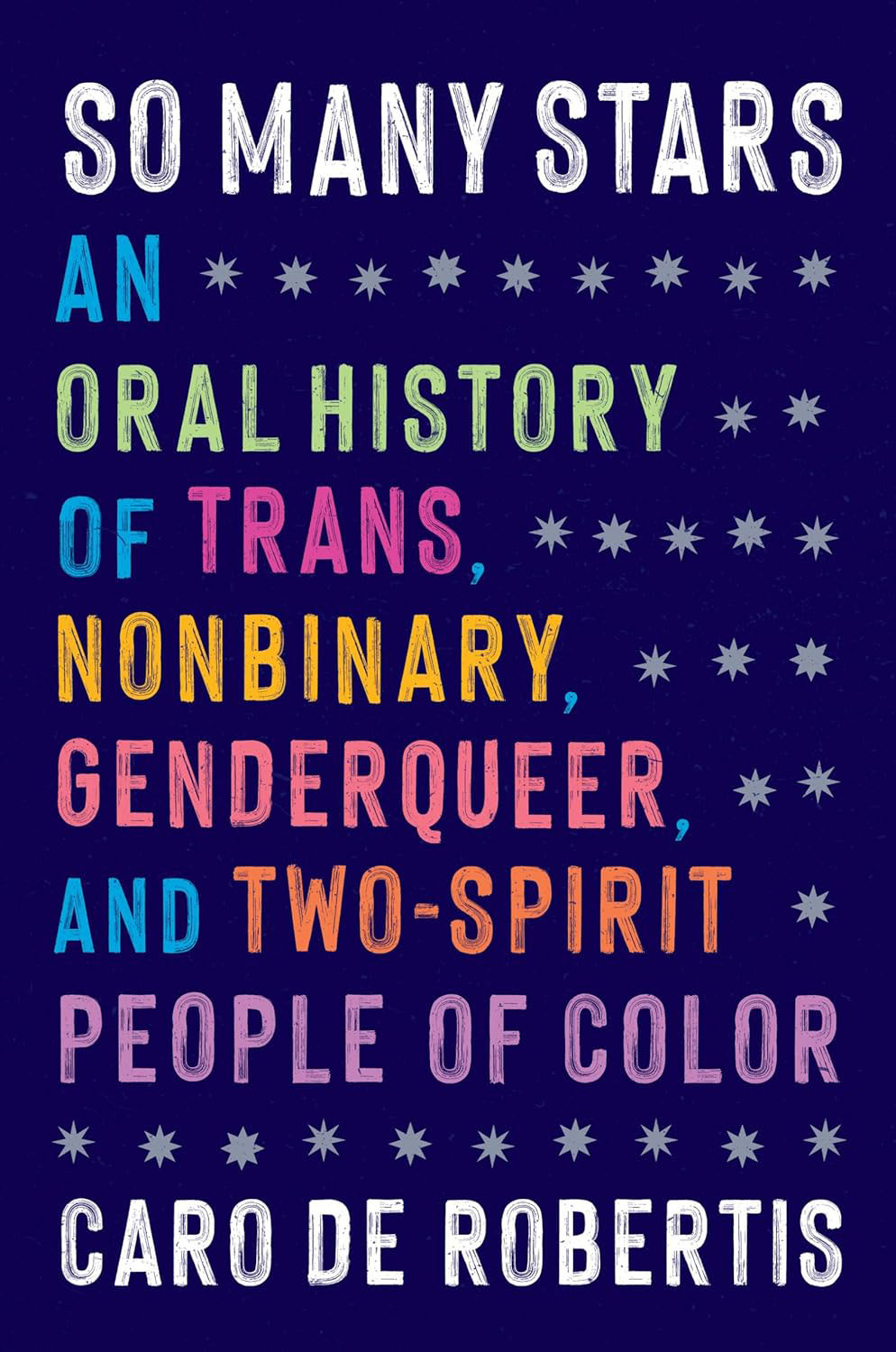
Cover image for So Many Stars: An Oral History of Trans, Nonbinary, Genderqueer, and Two-Spirit People of Color (2025).Algonquin Books

We are living in a time of intense anti-trans backlash. Almost every day now, we get news of another attempt to criminalize trans and gender-nonconforming people — our government denying gender affirming care to trans youth, banning schools from teaching about gender identity, barring trans athletes from competing in sports, prohibiting Medicaid reimbursement for gender-affirming care, rejecting changes to legal name and gender marker on government identification, and challenging the very existence of trans and nonbinary people while simultaneously promoting sensationalized and pathologized portrayals of trans existence to justify exclusion.

Trans people of color, especially trans women of color, have long borne the brunt of systemic violence. As genderqueer novelist Caro De Robertis told me recently when we discussed their first nonfiction book, So Many Stars: An Oral History of Trans, Nonbinary, Genderqueer, and Two-Spirit People of Color, “The criminalization of queerness and transness is not new. And, in the history of this country, authoritarianism isn’t new either — just look at Jim Crow, enslavement, Japanese internment camps and the genocide of Native people — but, fortunately for us, neither is the beautiful power source of gender euphoria.”

So Many Stars is an in-depth look at this power source, through interviews with trans and gender-nonconforming elders of color who share mesmerizing stories of survival, resistance and community-building from Havana to Texas to New York to Oklahoma to Buenos Aires to San Francisco, from the 1940s to the present. Filled with intimate conversations that reveal fascinating historical details left out of the public record, this book is refreshing in its range, candor and resonance. In this interview, De Robertis discusses what they learned in the process of writing the book, and how everyday acts of courage throughout history can inspire us in these frightening times.

Mattilda Bernstein Sycamore: One thing I love about this book is that it does not feel burdened by our current moment of anti-trans backlash — it feels like an internal conversation, by and for trans, nonbinary, genderqueer and two-spirit people of color — and I think this enriches the experience for anyone who reads it, since the narrative is on the speakers’ terms. I wonder if you could talk about this intention.

Caro De Robertis: I’m so glad the book lands this way to you. I think one of the reasons this mood is possible is embedded in the nature of oral history. As a genre, oral history is by definition intimate, unrushed and capacious. There’s room for nuance and complexity, for the surprising anecdote that sheds extraordinary light on seemingly ordinary moments of life.

Related Story

Trans-Led Advocacy Wins Hard-Fought Victory in Colorado Legislature
“Other states must follow the lead of Colorado and enshrine transgender rights into law,” one trans activist said. By Zane McNeill , Truthout May 7, 2025


Part of what I learned in the excellent oral historian training I received as a Baldwin-Emerson Fellow was the understanding that, unlike with other modes of interview, there’s room to take your time, to go deep. There’s something deeply human about this practice, and when it comes to a community as kaleidoscopic as that of trans and gender-nonconforming people, it allows for a deeper dive, beyond the headlines, into the dazzling range of who we are and can be. Or at least, that was my hope with this project.

The form of the book is really fascinating, because you draw from 20 separate interviews, but then you place excerpts from the interviews alongside one another as if the interviewees are in conversation. It feels so intimate, and I know it must’ve taken a lot of work to make the book legible in this form.

Once I committed to this narrative structure, it was a really exhilarating and gorgeous process for me. As a novelist, I found such joy in shaping a narrative arc that could hold these disparate yet overlapping stories and voices, drawing connections without conflating people’s experiences.

Bearing witness to these remarkable people’s personal stories was a conduit to expanding my deeper understanding of who we are, of our inheritance.

Of course, it was also painstaking! First, I went through all the transcripts, gathering pieces that sang or stood out and placing them in a file of thematic “buckets” — childhood experiences, migration, transition, activism, and more. Then, within those buckets, I took to sculpting those pieces and arranging them. Sort of the way a visual artist might craft a collage out of lots of tiny and larger magazine cut-outs, seeking something greater than the sum of its parts.

In the chapter on the AIDS crisis, Sharyn Grayson talks about how Black trans women were actively prevented by a Black gay service organization from accessing resources for HIV in the early years of the HIV/AIDS pandemic. Honestly, it shocked me to learn of this blatant exclusion at the hands of Black gay men, not just white service providers. And I think this is the potential of anecdotal history, that you learn something you didn’t know before, and this opens doors to making other connections.

I’m so glad you brought that up, because the experience of Black trans women in the AIDS crisis — from the transphobia they faced in queer spaces to their role in spearheading change — was one of the elements I learned about, too, during the course of this project. I didn’t know before that Black and Latinx trans women had been pressured to detransition in order to access services. And that leaders like Sharyn Grayson and Adela Vázquez responded by blazing trails for trans women to find not only services, but dignity, and to build movements of their own.

How could I have been a queer activist for 25 years, and not known that history? That’s just one example of how bearing witness to these remarkable people’s personal stories was a conduit to expanding my deeper understanding of who we are, of our inheritance.

Another part that really struck me was the stories of survival under dictatorship, such as Andrés Ozzuna talking about being taken into prison with everyone in a gay bar in Argentina, or Nelson D’Alerta Pérez, who was tortured by the Cuban government for throwing drag shows. These stories of crisis are told alongside everyday survival — it’s everything at once. Was this your intent: to show the multiplicity of trans lives in this way?

Definitely. It felt essential to me, in writing this book, to portray the vast range of ways that we as trans and gender-nonconforming people have always existed — in every culture, region and period of history. Given the world we live in, that is going to include life under authoritarian regimes — that’s part of the broad spectrum of human experience, and therefore of trans experience too. Of course, with the brutal authoritarian reality we’re currently living through in the United States, stories like these become essential parts of our legacies to know and remember.


There’s a kind of tapestry of thousands of acts of blazing courage that make marginalized lives more possible.

One of the things I cherish about Pérez’s story is that, even as she describes being arrested and tortured for her drag shows, she also speaks of the art she created with incredible joy. I, for one, can feel myself there with her in those Havana mansions, watching these glorious queens descend a grand staircase toward an adoring crowd, all in defiance of the regime. That, too, is our history, and might have medicine for us in our current times.

All of that said, putting these stories alongside others was also a way of affirming the worth and depth of all trans and genderqueer life stories. It took courage for Ozzuna to survive his terrifying arrest in Argentina, and for Pérez to stage her shows in hostile Cuba. But the everyday steps other narrators in this book took to live their authentic selves, and to affirm and uplift their communities? These are acts of blazing courage, too. There’s a kind of tapestry of thousands of acts of blazing courage that make marginalized lives more possible. I very much hope this book can help illuminate that tapestry.

I also love how sometimes interviewees appear to contradict one another, such as when Donna Personna says she knows she would have died if she stayed in Texas, and Sharyn Grayson says she was always accepted there. These are two trans women born in Texas in the 1940s, describing radically different experiences, and this is right at the beginning of the book. Talk about the way you weave these differing opinions throughout and what this accomplishes.

No identity is a monolith, and when we write from marginalized identities, we often feel the burden of representation — the pressure for the story we’re telling to somehow speak for our whole identity. That’s an enormous amount of pressure and can lead to a flattening of our collective truths. There’s power in affirming the range of experiences in a community and creating a symphonic rather than reductive portrait.

Another example of where this comes up in the book is in the chapter on transition. There are narrators who enthusiastically celebrate and discuss what certain gender-affirming care has meant for them, while others reflect on their decision not to engage with this or that physical approach to transition. There is no right or wrong way — as Ms. Billie Cooper says, “In my life, I have the right to transition any way I want.” I hope that, in hearing the true and nuanced stories of these different people’s journeys, readers can find both mirrors of their own experience and windows into the experiences of others.


Most of these interviewees lived in the San Francisco Bay Area at the time of your conversations, even though many grew up elsewhere, so I think this book also offers a fascinating portrait of the Bay Area. What did you learn about the Bay Area that you didn’t know before?

Of course, I’d always known that the San Francisco Bay Area is a queer mecca. I myself came here for that reason, at the age of 21, seeking signs of queer life and more room to live and breathe. As a person separated from my family of origin by familial homophobia, and later transphobia, and as an immigrant, that search for belonging felt essential to making a life, and the Bay Area caught me, helped me feel more possible.

And yet, delving into these stories from generations that preceded me, I learned new layers of the great epic story of the queer and trans Bay Area, which is also a great epic story of queer and trans migration. The people in this book who claimed the Bay as home hail from all over the country, and the world. I also learned a great deal more about the racial richness of those stories: the Black, Latinx, Native and Asian layers of the queering and transing of this region, which are less visible in the white queer mainstream.

In the intro, you identify as “a Latinx immigrant who’s had their long journey to claiming the many gender terms that personally resonate: genderqueer, gender fluid, nonbinary, transmasculine, butch, and woman.” How has working on this book influenced your own journey?

As a person with an expansive gender identity, it took me a long time to feel permission to claim space for my whole authentic gender. It felt radical, and still feels radical, to fully embrace and name all of what I am and who I am, embracing the man in me along with the genderqueer butch woman in me, without apology. Of course, I want to do that while wholeheartedly affirming the gender of those who identify as binary trans women or trans men. All our genders are amazing! I want room for all of us, in all of our radiantly varied selves, to be whole and safe and free.

Working on this book, then, was one of the most affirming and powerful experiences of my life. These narrators are all incredible people — bold and loving, witty and thoughtful, visionary and salty and generous and full of stories and ideas that expanded me, that amazed me, that blew open my mind and heart. In these people’s presence, I felt grace. I felt that I myself, in all my unique genderqueerness, had more room to exist and flourish thanks to their voices.

Nothing could give me greater joy than for readers to experience the same.


Copyright © Truthout and Mattilda Bernstein Sycamore. May not be reprinted without permission.


Mattilda Bernstein Sycamore
Mattilda Bernstein Sycamore is the author, most recently, of Touching the Art, a finalist for a Pacific Northwest Book Award and a Washington State Book Award. Her new novel, Terry Dactyl, will be out from Coffee House in November 2025.
US Elites Want to Turn Schools Into Factories of Hopelessness. We Can’t Let Them.

“End times schooling” risks turning schools into graveyards for hope — but they can also be greenhouses for resistance.


May 26, 2025

Ayo Walker / Truthout

What happens when the most powerful people give up on the future — but still control the schools?

To understand what’s happening in education today — the banning of books, the rise of AI that surveils and dehumanizes learning, the outlawing of honest lessons on race and gender, and the criminalization of critical thought — we must look beyond the classroom and name the dystopia being built around us.

Prophetic storytellers have long warned us about this moment. What once read as science fiction is fast becoming science nonfiction. In Parable of the Sower, Octavia Butler envisioned a nation unraveling under climate collapse and corporate rule, where the wealthy retreat to walled-off company towns protected by private security. Neill Blomkamp’s film Elysium imagined a world where the elite flee the earth to an orbital fortress.

What Butler and Blomkamp warned of in fiction, Naomi Klein and Astra Taylor now name in fact. In a searing essay for The Guardian, they call this era end times fascism: a grim convergence of white supremacist nationalism, billionaire bunker fantasies, apocalyptic Christian Zionism and a pandemic response that treats mass death as collateral for profit.

At the heart of this strategy is a billionaire exodus — a flight from accountability and from the world they set ablaze. Plutocrat preppers like Elon Musk envision colonizing Mars through SpaceX, building a self-sustaining city governed by AI and populated by a select few. Jeff Bezos talks of offloading Earth’s industry to space. Peter Thiel has invested in luxury bunkers in New Zealand and backed “seasteading” projects aimed at building floating, privately governed city states in international waters beyond the reach of democratic regulation. This isn’t science fiction. It’s class war — the ultrarich abandoning the rest of us to climate collapse and surveillance capitalism, while shielding themselves behind fortress walls, digital firewalls and ideologies that sanctify abandonment.

Related Story

Texas Voters Oust Several Book-Banning Incumbents in School District Elections
Texas school districts have banned hundreds of titles over the past few years, leading the country in banning books. By Chris Walker , Truthout May 7, 2025


Consider the world they’re trying to escape: 2024 was the hottest year ever recorded. Wildfires in Los Angeles revealed the scale of the unfolding climate catastrophe, causing rising sea levels, crop failures and mass displacement. The AI arms race is accelerating, with experts warning of mass labor displacement, autonomous weapons and systems beyond human control. Nuclear tensions are rising. And the U.S. government is funding the bombing of schools, universities, hospitals and mosques in Gaza — while punishing teachers who allow students to even debate the morality of genocide and ethnic cleansing in Palestine. Schooling is being recast as a tool not just for compliance and surveillance, but for instilling hopelessness and surrender.

This is end times schooling — and we must decide whether to be its instruments or its interruption.

Armageddon Academics


It’s not just that schools are impacted by end times fascist policy; teaching young people to accept the end of the world is a prerequisite to bringing it about.

That means teaching students that history is made by elites, not everyday people; that the climate disasters they see either don’t actually exist or are unstoppable; that unregulated AI is benevolent and beyond challenge; that genocide in Gaza is too “complicated” to name; and that questioning power is dangerous, while submission to it is safety.

You can see it in the criminalization of truth. Today, nearly half of U.S. public school students attend schools where teachers are banned from teaching honestly about race, gender or sexuality. Texas law prohibits teachers from giving credit for student civic engagement. The statute reads: “[A] teacher may not require, make part of a course, or award a grade or course credit … for a student’s … efforts to persuade members of the legislative or executive branch at the federal, state, or local level to take specific actions by direct communication.” Laws like this are about crushing the idea that education can empower students to make change.

You can see it in the rise of AI tutors and scripted lessons that sever learning from human relationships. AI is being used to justify fewer teachers, larger class sizes and automated discipline — where algorithms decide who gets flagged, suspended or punished. The result is a digital caste system: Rich youth get mentorship and creativity; the rest get automation and monitoring.

You can see it in the crackdown on teaching and protesting the genocide in Gaza: educators disciplined, students arrested and campus groups disbanded for daring to name the violence.

And you see it in what we could call “armageddon academics”: the near-total erasure of climate crisis education. For example, McDougal Littell’s Modern World History limited climate change to just three paragraphs, claimed “not all scientists agree,” and blamed the Global South for inaction — without quoting a single person affected by climate collapse.

This is schooling for extinction.

The fascist project has no room for young people who think critically, question authority, or imagine a world beyond border walls, binaries and bunkers.
An Unshakable Belief in the Future

The danger of naming end times fascism is that it can feel paralyzing, like the system is so powerful and cruel that resistance is futile. That’s exactly the point. This project feeds on despair.

The antidote is not denial; it’s defiant hope and collective action. As the editors of Rethinking Schools remind us, “To step into a classroom is to express confidence in young people’s capacity to learn, to grow, to change, to make a difference — to do good in the world.”

We need to say this out loud. Because everything about end times schooling tells young people their lives don’t matter — that nothing they do will make a difference.

But history tells us otherwise.

Every major movement for justice — abolition, labor, civil rights, anti-colonial uprisings — was built during hard times, under hostile regimes. The Montgomery Bus Boycott began just months after Rosa Parks told fellow organizers she didn’t believe anything big would happen in her city. Then she acted — and history turned. Before that, the 1936–37 Flint Sit-Down Strike erupted at the height of the Great Depression, when autoworkers faced brutal conditions and mass unemployment — and still seized General Motors’ Fisher Body plants, holding them for 44 days until they forced the company to recognize their union.

If end times fascism tells students there’s no future, we must teach as if the future is ours to shape. If schools are being weaponized to train youth for extinction, then education must become a form of survival — rooted in truth, care, resistance and imagination.

And that kind of education is already happening — in walkouts for Gaza, in classrooms defying book bans, in radical reading groups and mutual aid projects. Just listen to Alex Ames, one of the founding members of the Georgia Youth Justice Coalition (GYJC), speaking at the “Our Freedom to Learn” forum hosted by HEAL Together:

It has been an incredible three years at GYJC since we first started building young people’s power toward education justice and toward multiracial democracy. Just this spring, we defeated the largest voucher bill in Georgia’s history. We stopped “Don’t Say Gay” legislation for the second time in two years — they keep coming back. We halted policies criminalizing librarians or banning gender-affirming medical care. And we won $25 million for public school counselors that our students need. And last year we halted every book ban in the state. … I also should mention we just won the largest public school budget in the entire history of the state of Georgia.

This is what end times fascists fear most: the imagination of a generation not willing to disappear quietly.

Educating against end times schooling doesn’t mean offering shallow optimism; it means helping students confront the world as it is — and insisting it doesn’t have to stay that way.


The Struggle for New Beginnings

In their essay on end times fascism, Klein and Taylor invoke the Jewish tradition of Doikayt, Yiddish for “hereness” — a call to stay and struggle for justice where you are, rather than escape to imagined sanctuaries.

I share that ethic. But I’d argue we can’t fully commit to the here and now without first journeying through time and space, using the people’s true futuristic technologies: memory, study and imagination.

We must travel back in time — through conversations with elders, research and engagement with study groups — to remember what has been stolen and to gather lessons from the people and movements who dared to fight back. Then we must travel to the future — through the power of radical imagination — to glimpse a world where housing is a right, where we feed people instead of bombing them, where freedom isn’t gated, policed or sold. (If you need a high-powered time machine: the Zinn Education Project offers free people’s history lessons; Molly Crabapple paints revolutionary futures into being; and Afrofuturists like Octavia Butler, Sun Ra and Ryan Coogler carry us forward beyond today’s limits.) Only then can we return to the present, with new perspectives and strategies, ready to fight.

Billionaires know this. That’s why they are trying to smash the curricular “flux capacitors” of social justice classrooms — curricular devices that allow students to travel through history, with freedom to dream about the future and act in the present.

They know they cannot inflict end times fascism without turning classrooms into graveyards for hope. That’s why they’re attacking schools with such ferocity.

But if we refuse to surrender the schools, they cannot win.

The 2018–19 Red State Revolt showed us how to fight back. Educators in GOP-controlled states like West Virginia, Oklahoma and Arizona won dramatic gains by shutting down their entire school systems until funding for public education was substantially increased.

The Chicago Teachers Union’s (CTU) recent contract victory shows what that resistance can build. CTU not only won higher wages, but also protections for teaching the truth about race, gender and sexuality; investments in housing and mental health; immigrant protections; and groundbreaking environmental initiatives, from installing solar panels to launching composting programs.

This is social justice unionism: bargaining for the common good.

And here is the inconvenient truth for billionaires: even in their bunkers or space stations, they still need labor — because they won’t be cleaning their shelters, caring for the sick, or repairing technology on their own.

But while billionaires need us, we don’t need them.

The world would do quite well without them — and that means we hold power. We can refuse. We can refuse to code their surveillance, fly their rockets, or educate the next generation for extinction. That spirit lives in the growing call for a general strike in 2028. After its 2023 strike victory, the UAW aligned all contracts to expire on May Day and invited other unions to do the same. CTU’s new contract expires in 2028 and they have joined with the UAW to launch an organizing initiative to prepare.

While the oligarchs are doing everything they can to make this the era of end times fascism, we are not at the end; we are at the start of a process of revealing what this country truly is and what we must overcome to achieve a new beginning — the one our ancestors dreamed of and that our children deserve.


This article is licensed under Creative Commons (CC BY-NC-ND 4.0), and you are free to share and republish under the terms of the license.

Jesse Hagopian

Jesse Hagopian is a Seattle educator, the director of the Zinn Education Project’s Teaching for Black Lives Campaign, an editor for Rethinking Schools, and the author of the book, Teach Truth: The Struggle for Antiracist Education. You can follow him at IAmAnEducator.com, Instagram, Bluesky or Substack.


RELIGION IN THE CLASSROOM


As Hurricane Season Looms, FEMA Is Being Torn to Shreds

Trump is underfunding FEMA, leaving states that rely on it dangerously unprepared for severe storms.
May 27, 2025

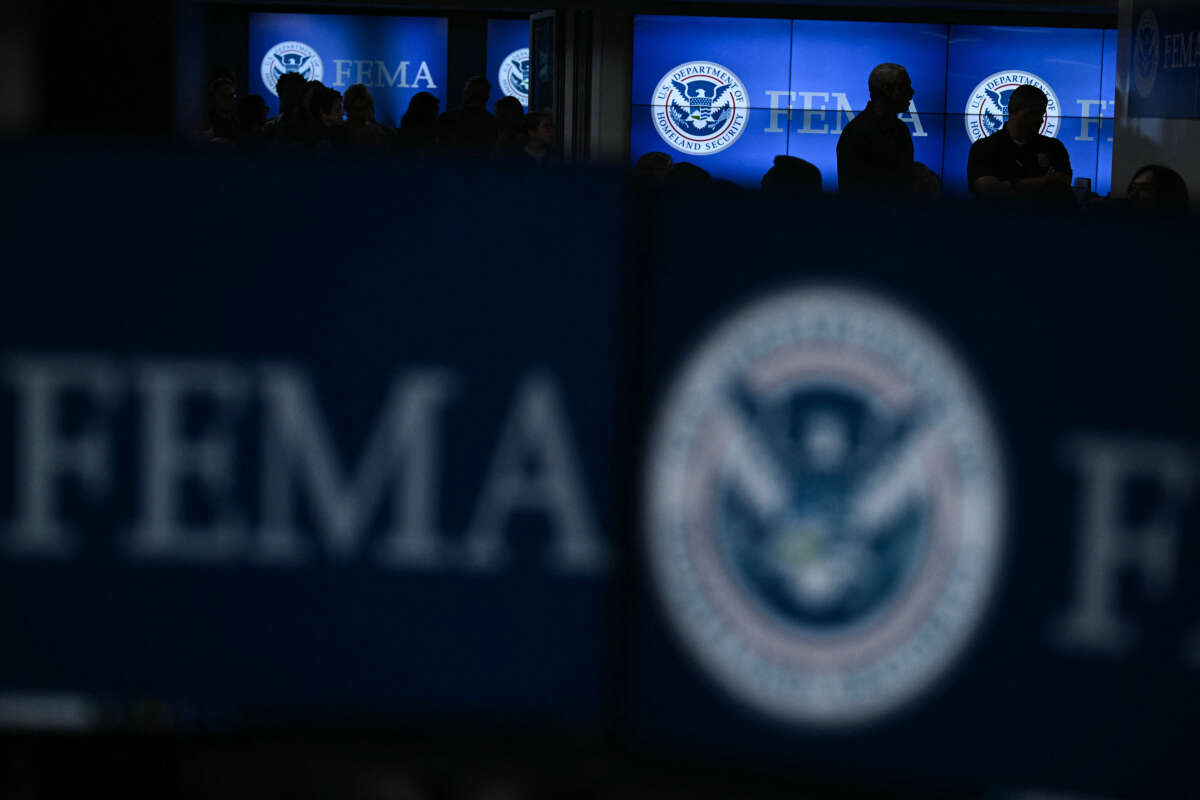
A view inside FEMA headquarters as then-Vice President Kamala Harris attends a briefing about the impacts of Hurricane Helene and updates on the federal response, at Federal Emergency Management Agency (FEMA) headquarters in Washington, D.C., on September 30, 2024.Brendan Smialowski / AFP via Getty Images

With the official start of hurricane season less than a week away, the Federal Emergency Management Agency (FEMA) is facing a storm of its own.

Donald Trump’s administration has begun gutting the agency, slashing budgets and cutting staff. The president has made clear from the start of his term that he wants to shift the financial burden for disaster relief from the federal government to states — the same vision outlined in the far right Project 2025 playbook — if not eliminate FEMA entirely, as Homeland Security Secretary Kristi Noem has pledged. While emergency management experts agree that states should play a role in funding their disaster relief efforts, recent government leaks have raised concerns that the Trump administration is leaving FEMA dangerously underfunded — and leaving the states that rely on it unprepared in the face of upcoming severe storms.

In a May budget draft, Trump proposed slashing FEMA grants by $646 million, even as the agency is projected to run out of disaster relief money by this summer for the third consecutive year. The administration also canceled a grant program called Building Resilient Infrastructure and Communities, which funds community-level emergency preparedness efforts. The popular program had enjoyed bipartisan support.

In internal meetings, newly appointed FEMA head David Richardson admitted himself that the agency isn’t ready for hurricane season. Like many of the efforts undertaken by the Trump administration this term, FEMA’s transition to a “smaller footprint” has been hasty and disorganized. An internal review found that understaffing and other issues had derailed FEMA’s usual processes for hurricane season preparedness. The agency is also scrambling as it adjusts to new leadership after the Trump administration fired acting FEMA head Cameron Hamilton earlier this month. The sudden firing was in response to Hamilton’s public testimony at a House Appropriations subcommittee hearing, during which he said he does not “believe it is in the best interests of the American people to eliminate the Federal Emergency Management Agency.” White House Press Secretary Karoline Leavitt later told reporters that Hamilton had been dismissed because he said “something that was contrary to what the president believes.”

Scientists say that warming ocean temperatures are causing more intense and destructive hurricanes. And many months later, states are still reeling from last year’s devastating season: In North Carolina, where Hurricane Helene killed at least 100 people last September and caused nearly $60 billion in damage, residents and town leaders are still waiting for disbursements of federal funds. Data released this month by North Carolina’s Office of State Budget Management found that $5.95 billion has been allocated by federal and state governments for Helene recovery — only about 10 percent of the total amount needed to rebuild homes and public infrastructure. But just because money has been earmarked doesn’t mean it’s been disbursed. “The money is there,” Zeb Smathers, the mayor of Canton, North Carolina, told The Charlotte Observer. “It’s the will to act. I’m very tired of excuses.”

Related Story

What Hurricane Helene Relief Taught Me About Preparing for Trump’s Second Term
We can mobilize mutual aid to feed and shelter people all the time, not just after major environmental disasters. By Schuyler Mitchell , Truthout  December 25, 2024


In April, FEMA denied North Carolina’s request for the federal government to continue matching 100 percent of the state’s spending on Helene debris removal for another six months. “The need in western North Carolina remains immense — people need debris removed, homes rebuilt, and roads restored,” North Carolina Gov. Josh Stein said in a statement. “I am extremely disappointed and urge the President to reconsider FEMA’s bad decision, even for 90 days. Six months later, the people of western North Carolina are working hard to get back on their feet; they need FEMA to help them get the job done.”

It’s clear that FEMA needs reforms. Bureaucratic red tape and procedural lags have left vulnerable people in limbo. Ironically, as the Trump administration has preached streamlining the agency, a memo obtained by southwest Virginia outlet Cardinal News outlined new, additional “manual review processes” implemented by FEMA that were slowing Helene recovery efforts in the region. John Scrivani, the acting state coordinator of the Virginia Department of Emergency Management (VDEM) wrote to local emergency managers on April 11, that FEMA had provided “revised guidance” on how documentation should be submitted for grant programs. After submitting the requested documentation, Scrivani wrote, VDEM still had not received feedback from FEMA, leaving the state agency without guidance as it awaited payment for a range of disaster reimbursements and emergency preparedness funds — seven months after the storm.

“Unfortunately, at this time, we do not have an update as to when and if these funds will be made available,” wrote Scrivani. “We are asking for your patience and understanding as we navigate this together.”

In a statement to Cardinal News, Sen. Tim Kaine (D-Virginia) voiced his opposition to the new procedures, noting that allocated federal funds had already undergone a thorough review process. “FEMA and DHS’s announcement to conduct additional reviews of grants, including for emergency management and disaster assistance, is ridiculous. These communities need funding as soon as possible, and the Trump Administration is unnecessarily making it harder for these communities to rebuild,” said Kaine.

Similarly, in North Carolina, state lawmakers are wrangling over what to do as they await clarity on federal relief funds. “The continual line from the Republicans in the North Carolina legislature is ‘Well, we got to wait and see what the feds are going to do,’” North Carolina Rep. Eric Ager told The Assembly. “We’ve been doing that for six months now, right? And it’s still not completely clear what the feds are gonna pay for and what they’re not.”
Billionaire investor warns Trump policies 'remarkably like' 1930s 'hard-right' leaders

May 27, 2025
ALTERNET

Ray Dalio, founder of hedge fund investment firm Bridgewater Associates, said President Donald Trump carries every characteristic of a 1930s-era Mussolini or German fascist leader, particularly regarding his methods for expanding presidential power.

“When I say that the policies President Trump is using to ‘make America great again’ are remarkably like the policies that those of the hard-right countries in the 1930s used, that should not be controversial,” writes Dalio, who predicted the 2008 financial crash and subsequent recession.

“It would be fair to argue that his attempts to maximize the power of the presidency by bypassing the other branches of government are analogous to the ways that Andrew Jackson (of the right) and Franklin D Roosevelt (of the left) did, though he is even more aggressive than they were.”

Dalio writes that in times of conflict, aggressive leaders like the ones who devastated the lives of millions in the last world war always begin by eliminating opposition in their own government. This usually involves changing their nation’s laws to assume special powers and seizing control of the media to produce pro-government propaganda. This could describe Trump signing more than 150 executive orders, concentrating federal power in the White House and virtually turning the Republican Congress into a mouthpiece.

“Are there effective regulators in place? If so, it is not clear to me who they are,” said Dalio.

Trump also defies court orders pertaining to habeas corpus and detains legal residents without due process, and he has personally sued CBS News while also siccing the formerly independent FCC upon the company, which completes the comparison.

Additionally, the businessman also condemns the Trump administration’s cost-cutting measures as likely to have negative consequences because “valuable support systems will be weakened or eliminated”.

Read the full Guardian report here.
Chemical Plants Near Black Neighborhoods Pollute While Hiring Few Black Workers

“People don’t have the jobs here, but people do have cancer,” one Louisiana-based organizer told Truthout.
May 27, 2025

A house sits along the long stretch of River Road by the Mississippi River and the many chemical plants in Baton Rouge, Louisiana, on October 12, 2013.Giles Clarke / Getty Images

Anew study confirms what locals and environmental activists across the Gulf South and beyond have said for years: Black, Brown and Indigenous workers do not benefit equitably from jobs offered by the petrochemical industry despite their communities often bearing the brunt of its pollution.

In Louisiana, for example, residents and activists say jobs promised to Black communities located near refineries and chemical plants often go to white workers who commute from their homes a safer distance away from the toxic smokestacks, chemical fires, explosions, leaky pipelines and sky-high cancer rates that make the region notorious.

Published in the Ecological Economics journal by a team of environmental experts last month, the study examines employment at chemical and petroleum manufacturers nationwide. The researchers also conducted a case study of Louisiana’s petrochemical corridors, where local and state politicians lure industrial developers with lucrative tax breaks in the name of creating jobs and revenue.

The study cites years of research showing that the pollution and climate risks associated with the fossil fuel and petrochemical industry disproportionately fall on Black, Brown, Indigenous and poor white communities. Most of the wealth extracted from and created in these communities does not stay there, one reason why academics and activists call them fossil fuel “sacrifice zones.”

Researchers say the latest findings “reveal systemic inequality” in the petrochemical workforce across the United States. At plants that manufacture chemicals or products made from petroleum and other fossil fuels, people of color were “consistently underrepresented among the highest-paying jobs and overrepresented among the lowest-paying jobs in both subsectors,” the authors wrote.

Related Story

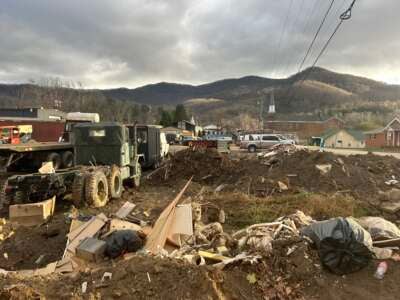
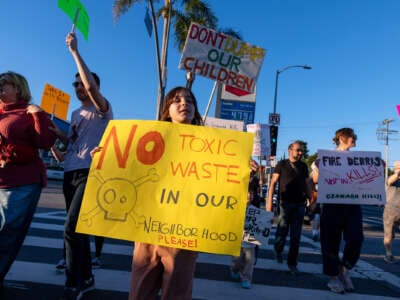
Trump’s EPA Is Botching Removal of Toxic Waste From the Los Angeles Fires
The federal government is prioritizing speed over public health, refusing to test ash from LA for toxicity.  By Schuyler Mitchell , Truthout March 5, 2025


For decades, Black residents of the Gulf South fighting against the expansion of refineries and chemicals plants near their historic neighborhoods — or virtually right on top of them — have been met with promises of jobs and other economic benefits. And for decades, residents have told visitors to Louisiana’s “Cancer Alley” and other industrial corridors that the jobs and benefits touted by petrochemical companies and supporters of their expansion rarely materialize after those corporate polluters receive permission from the government to set up shop.

Instead, residents are left to wonder about the long-term health impacts of pollution when they get sick or are forced to evacuate their homes due to a release of toxic chemicals from the plant, refinery or storage tanks located on the other side of the fence, according to Roishetta Ozane, a Louisiana-based organizer and founder of the Vessel Project, a mutual aid and environmental justice group.

“We are screaming at the top of our lungs about all the promises the industry makes to our communities that they don’t keep, and about those burdens that come from industry,” Ozane told Truthout in an interview. “We are constantly carrying those burdens.”

Ozane lives in the small town of Sulphur outside of Lake Charles in southwest Louisiana, where she counts 14 petrochemical facilities within miles of her house. Her family’s home is walking distance from a chemical plant that caught fire and produced a massive plume of toxic gas after Hurricane Laura made landfall in 2020, Ozane said.

“When we go by these facilities, the license plates on these vehicles are from Alabama, Georgia, Florida — wherever but from Louisiana,” Ozane said. “People don’t have the jobs here, but people do have cancer, and children do have asthma.”

Ozane says her community is already overburdened with pollution, but the fossil fuel industry is aggressively pushing to build new infrastructure in the region, including massive terminals for liquifying cheap fracked gas and exporting it overseas. Despite becoming the world’s top fossil gas producer, the price U.S. households pay for natural gas skyrocketed by 52 percent between 2016 and 2023. In Louisiana, enough methane gas was flared and leaked from existing infrastructure in 2019 to cover energy bills for two-thirds of households in the state. Methane pollution is a major contributor to global warming, which intensifies hurricanes and flooding in the Gulf South.

“We get the jobs that are most dangerous — temporary work, construction — and then those jobs go away and we’re back to figure out how to survive and thrive in this community that is now more polluted to begin with,” Ozane said, adding that workers worry about exposing their children to chemical residues.

Ozane said her community remains impoverished despite the vast industrial development, with a large portion of the population depending on food assistance and other safety net programs. Lake Charles has a poverty rate of 23 percent, more than twice the national average. People struggle to pay bills while also contending with health threats from petrochemical pollution.

“It’s critical that policy makers speak with frontline folks to get our perspective,” Ozane said. “People of color were significantly underrepresented in jobs at these oil refineries and chemical plants in particular here in Louisiana, which is a very racist place for lack of a better term. There are still state laws based on the Jim Crow era, so it’s nothing new to us.”

American Fuel & Petrochemical Manufacturers, a national trade association for the industry examined in the study on racial disparities in hiring, did not respond to a request for comment.

David Cresson, president of the Louisiana Chemical Industry Alliance, said the study does not consider the role of the chemical industry in workforce development in the state, including by supporting STEM programs for elementary and high school students, and working with universities and trade schools to provide scholarships and career paths toward high-paying science and engineering jobs in chemical manufacturing.

“We are committed to closing the training gap in Louisiana by investing in early education, STEM training and technical scholarships to ensure that all members of our communities are represented among our industrial workforce,” Cresson said in a statement to Truthout.

However, potential opportunities for students in the future offer little condolence to the people already living in the shadow of industry. In Cancer Alley, the petrochemical corridor along the Mississippi River located between New Orleans and Baton Rouge, residents of the rural, majority-Black communities in St. James Parish are fighting a historic legal battle in federal court.

St. James and the surrounding area is packed with the fossil fuel and petrochemical facilities that give Cancer Alley its name. Residents of majority-Black neighborhoods face increased risks of cancer, respiratory ailments and newborn health harms. After a multiyear fight to prevent a Taiwanese company from building another massive plant on land where the community’s ancestors were enslaved, worked and eventually buried after death, St. James residents sued the parish government, arguing that a land use policy slating residential areas for industrial development is unconstitutional and discriminatory.

Activists fighting environmental racism in St. James originally filed the lawsuit in 2023, seeking a moratorium on construction of new sources of pollution in their community. On April 9, the Fifth Circuit Court of Appeals ruled that advocacy groups representing residents of St. James can proceed with the lawsuit, a major victory after a series of legal setbacks.

“The pendulum of Justice has swung in our favor,” said Gail LeBoeuf, a St. James resident and organizer with Inclusive Louisiana, in a statement last month, after the ruling. “We have been sounding the alarm for far too long that a moratorium is needed to halt the expansion of any more polluting industries in our neighborhoods, and too many lives have been lost to cancer.”
'It's happening to me again!' South African president mocks Trump to laughing audience


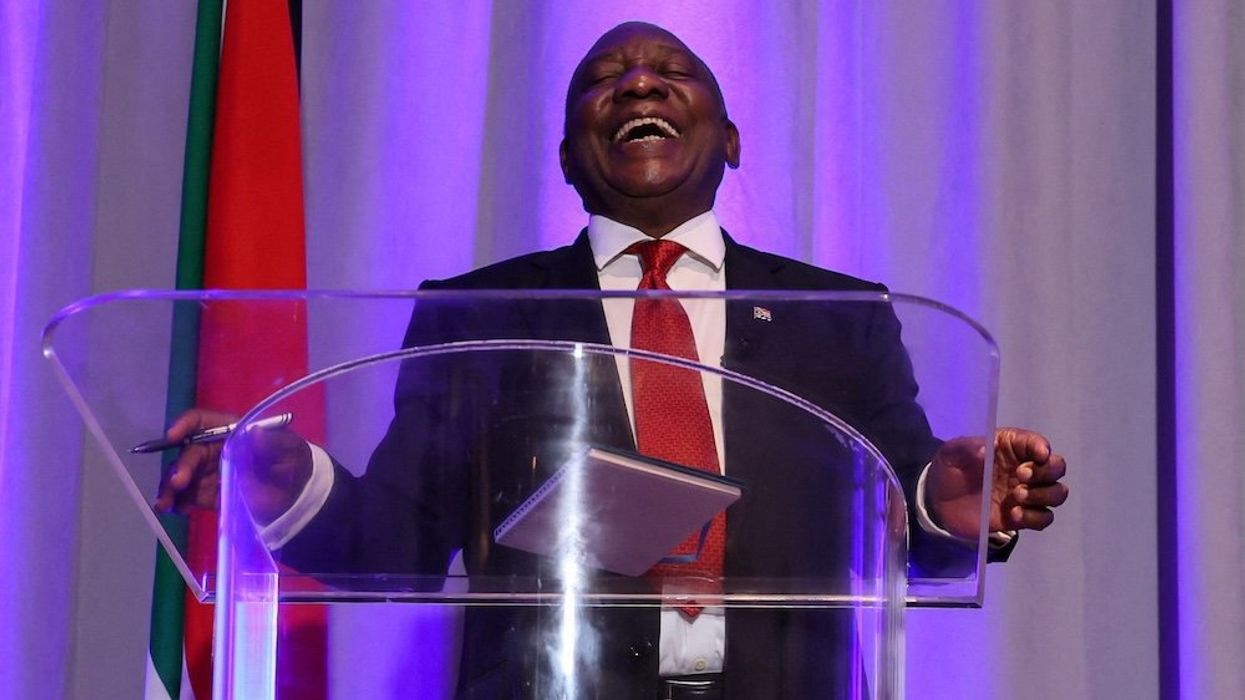
South African President Cyril Ramaphosa reacts as he attends a press conference, after his White House meeting with U.S. President Donald Trump, in Washington, D.C., U.S., May 21, 2025. REUTERS/Leah Millis

May 27, 2025
 ALTERNET

South African President Cyril Ramaphosa recently used a speech as an opportunity to make a dig at President Donald Trump, and got the audience to join in with him.

Politico reported Tuesday that during a speech to the 2025 Sustainable Infrastructure Development Symposium in Cape Town, South Africa, Ramaphosa recalled the viral moment from his Oval Office meeting with Trump earlier this month. During one moment at the event, the venue dimmed the house lights. This prompted Ramaphosa to openly wonder if he were about to watch a video purportedly showing crimes against South African farmers.

“When I came in, I saw the room going a bit dark,” Ramaphosa said as the crowd laughed. “They darkened the room. And for a moment I wondered, ‘what is this! It’s happening to me again!’”

The South African leader told the assembled audience that while he was under the impression that he and Trump were having a productive conversation, he was caught off-guard when Trump asked a staffer to turn off the Oval Office lights and play a video he had cued up. The footage — which CBS said was recorded in 2020 — showed rows of white crosses in a field that Trump asserted were meant to represent white Afrikaner farmers who had been killed, though CBS said that the crosses actually were part of a demonstration for farmers of all races.

"Each one of those white things you see is a cross. And there's approximately a thousand of them. They're all white farmers, the family of white farmers ...Those people are all killed," Trump told Ramaphosa as the video played.

Trump also showed news articles to Ramaphosa that he alleged were of reports on white South African farmers being murdered, though at least one of the article printouts he held up featured a screenshot of the Democratic Republic of Congo. Ramaphosa said he was "bemused" by the encounter.

“I was beginning to get into a groove of, you know, interacting with this man,” Ramaphosa said. “And I suddenly hear him say, no, ‘dim the lights.’ And I must say, a number of people have said, ‘this was an ambush, this was an ambush.’ And I was bemused, I was like, ‘what’s happening!’”

Click here to read Politico's report in full.
Maryland Lawmaker Denied Access to Abrego García During El Salvador Visit

The Supreme Court ordered the White House to facilitate Kilmar Abrego García's return to the United States more than a month ago.


Democratic Rep. Glenn Ivey of Maryland speaks during a press conference to share details of his trip to El Salvador on May 26, 2025.
(Photo: Marvin Recinos/AFP via Getty Images)

Julia Conley
May 27, 2025
COMMON DREAMS 


"If there is nothing to hide, cut the crap," said a Maryland congressman late Monday after being denied a visit with his constituent, Kilmar Abrego García, who is being held in a prison in El Salvador after being wrongly expelled by the Trump administration to the Central American country.

Rep. Glenn Ivey, a Democrat, said he had made contact with the Salvadoran ambassador before making the trip to El Salvador and had made a formal request to see Abrego García—more than a month after the U.S. Supreme Court ordered the Trump administration to "facilitate" the Maryland resident's return to the United States.

"We came here to visit him today, and now they're telling us we've got to go all the way back to San Salvador to get a permit," said Ivey. "That's ridiculous... They knew we were coming, they knew why we were coming, and they know we have the right to do this."


Abrego García, a Salvadoran national with no criminal record, entered the U.S. without authorization in 2011 and had been living with his wife and children and working as a sheet metal worker in Maryland.

He was one of more than 100 migrants who were swiftly expelled to El Salvador's Terrorism Confinement Center (CECOT) in March under a $6 million deal with Salvadoran President Nayib Bukele.

He was accused of being a member of the gang MS-13, which Abrego García's family has denied. The Trump administration based its actions on an accusation from an anonymous police informant who said in 2019 that Abrego García's Chicago Bulls cap was indicative of his gang membership after he was detained for loitering. That year, a judge ruled that Abrego García should not be deported to his home country because he had a credible fear of torture by a local gang.

The White House has spread misinformation about Abrego García, including an image that was edited to make it appear like his tattoos signified MS-13 membership.

Last Friday, U.S. District Judge Paula Xinis said her repeated efforts to get the Trump administration to disclose information about Abrego García's case has been "an exercise in utter frustration."

Department of Justice lawyers told the judge that details about the case are protected under "state secrets" privileges.

Xinis called on the government to provide legal reasoning for invoking those privileges and said she would issue an official order.

Administration officials have alternately claimed they have no way of returning him to the U.S. after he was deported due to an "administrative error," and Bukele has said the same. But Chief Judge James Boasberg of the U.S. District Court in Washington, D.C. questioned a Department of Justice lawyer earlier this month about President Donald Trump's claim that he could bring Abrego García back to the U.S. with a phone call.

Abrego García was initially sent to CECOT, which is notorious for its poor conditions and reports of torture and physical abuse, but just before U.S. Sen. Chris Van Hollen (D-Md.) visited him in April, he was moved to a lower-security prison.

Ivey said Monday that he had planned to assess the conditions of the facility during his visit, noting the Democrats in Congress have not received information about how U.S. taxpayer dollars are being spent to house Abrego García.

"We need to get that," Ivey said in a press briefing. "We've got the power in the purse. We've got a constitutional obligation to make sure that money is being used in the right way, but we can't figure that out if we don't even know how much is being spent."