Friday, May 30, 2025

Frozen Frog Embryos Could Deport Kseniia Petrova to Russia

Vermont Federal District Court orders ICE to free a Harvard scientist in the “most valued and needed field in current medical research,” but her fate remains uncertain.
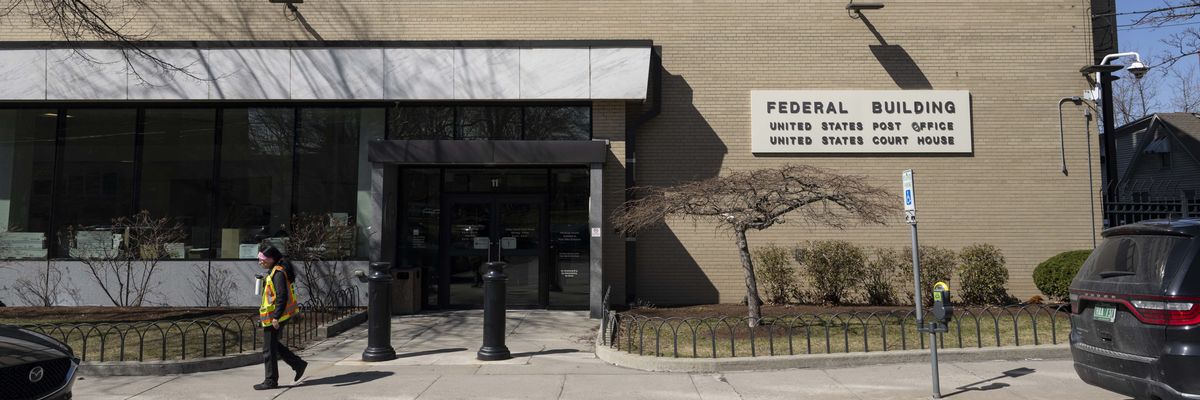

A view of the U.S. District Court of Vermont in Burlington, Vermont is shown on April 7, 2025.
(Photo: Mostafa Bassim/Anadolu via Getty Images

Mary Dingee Fillmore
May 30, 2025
Common Dreams

Much more is at stake in Kseniia Petrova’s case than a handful of frozen French frog embryos. The latest scene in the drama played out Wednesday morning at Vermont District Court with 50 or so supporters. In contrast to the hundreds of signs for the Madhawi and Ozturk hearings, just one older woman held a small brown cardboard square she must have made herself: “Free Kseniia Petrova.”

“Do you have a connection to this case?” I asked her. Her faded T-shirt looked so different from the fashionable garb of the city scientists and allies.

“I’m just an American who’s fed up with what’s going on,” she said. She understood the importance of this moment, and so did District Judge Christina Reiss. Why were we in this Vermont courtroom again? Yet another person detained in Boston by Immigration and Customs Enforcement (ICE) was whisked away and jailed in Vermont, where their attorney filed for habeas corpus, the process for challenging wrongful detention. Wednesday’s hearing was primarily on the question of whether bail would be granted.

At every stage, this case has been handled as if a neighbor who let his dog poop on someone’s lawn was put in jail for a month and charged with criminal trespassing and environmental endangerment.

Ten minutes before the hearing began, Petrova herself appeared on two big screens, a diminutive figure imprisoned in a small white room. Alone, not even an interpreter. Her dark brown hair and eyes stood out against her pale skin. She wore prison garb, an ill-fitting, short-sleeved khaki shirt with a white tee beneath it. Even so, she looked cold, holding herself.

By noon, the rule of law had won again in Vermont. Judge Reiss ruled that customs officers do not, in her words, have the power of the Secretary of State to revoke a visa on the spot. This was done to Petrova with no factual or legal basis. A customs violation is not a reason for being inadmissible to the United States. The judge brushed aside the government’s notion that there had been any undue delay in filing for habeas corpus. She ordered that Petrova be freed from ICE custody on bail, telling the government to propose release conditions by May 30. She did stop short of granting Petrova’s request that ICE be ordered not to rearrest her as soon as she is free, although her lawyer pointed out that there is strong reason to be apprehensive.

Kseniia Petrova did her boss a favor by agreeing to carry a package of frog embryos back from France for another lab leader. Perhaps she expected to be in the hands of a more rational system than she faced in Russia, which she fled after her arrest for opposing the war in Ukraine. Text exchanges after her plane landed in Boston show her light mood about the fertilized eggs: “I can’t swallow them!” she replied when asked what her plan was for getting the items through customs. But what should have been a light comedy of errors turned into a Chekovian plot with shocking escalations.

When a dog identified something unusual in Petrova’s suitcase, she was taken aside, and the scientific samples were revealed. The customs official said they had revoked her visa, meaning she was in the country illegally; she was told she could return to France and reapply to the U.S., or be sent to Russia. She chose France, an offer which was then revoked, and ICE locked her up in Vermont, then Louisiana. At every stage, this case has been handled as if a neighbor who let his dog poop on someone’s lawn was put in jail for a month and charged with criminal trespassing and environmental endangerment.

Just how serious was Petrova’s infraction? And is the person who committed it a danger to society? A flight risk?

In court Wednesday, the founder of the field of regenerative medicine, Dr. Michael West, testified that the samples were “inert, nontoxic, nonliving,” in no way a hazard. When he said they had no commercial value, Petrova visibly chuckled. He likened them to “shoe leather” as a source of potential biological hazards.

When asked about Petrova’s science, Dr. West said that she is doing excellent work in the “most valued and needed field in current medical research.”

“Would you hire her?” Dr. West was asked.

“In a heartbeat,” he replied. That got a big smile from Petrova—and a garbled objection from the government.

Prof. Marc Kirschner, Petrova’s ultimate boss, came personally to testify from the laboratory which bears his name at Harvard Medical School. He spoke of Petrova’s “significant impact” on his laboratory. Her absence is keenly felt. Her particular contribution was finding ways to quantify the “amazing pictures of tissues” from the lab’s newly invented microscope. Dr. Kirschner too was unable to imagine that she would be a danger to society. Petrova’s scientific peers also testified that she loves her job, and misses her work, her friends, and colleagues. Petrova wrote that the lab was a “paradise.” Is that the word of someone who wants to flee?

Would it have been better judgment for Petrova to submit paperwork for the preserved frog eggs? Of course. But has anyone who has ever crossed an international boundary not quietly carried at least one dubious item at some point? The government’s response to this minor offense has been Orwellian. Judge Reiss said, “The government is essentially saying, ‘We revoked your visa, now you have no documentation and now we’re going to place you in removal proceedings.’” Then the government detained her. When a bail hearing was scheduled that could result in Petrova’s release, the government only took two hours to trump up criminal charges against her. It was an obvious ploy to keep her in custody even if the judge released her.

Behavior which usually results in a small fine suddenly became criminal—subject to fines of up to $250,000 and up to 20 years in prison. Comparable cases involve boots made of endangered sea turtles or living birds smuggled in panty hose.

Do these twists and turns sound like the United States of America, or like Vladimir Putin’s Russia? At this point, Petrova will only go free if the Massachusetts Criminal Court also grants bail—and if ICE doesn’t snap her up again, or deport her to Russia. As Judge Reiss said, “Ms. Petrova’s life and well-being are in peril if she is deported to Russia,” and she is serving our national interests in research where answers are desperately needed.

So far, this drama has been something of a farce. Let’s not allow it to end in tragedy.


Targeting foreign students, Trump hits a US lifeline


By AFP
May 29, 2025


A Chinese student wearing a New York marathon t-shirt walks at Beijing Foreign Studies University - Copyright AFP Jade GAO


Shaun TANDON

On the campaign trail last year, then-candidate Donald Trump proposed handing US residency cards automatically to international students when they earn diplomas, bemoaning that they were leaving to form successful companies in China and India.

Now back at the White House, Trump’s message has changed drastically.

Hoping to crush an academic establishment he sees as his enemy, Trump has launched unprecedented actions against international students that experts warn are likely to decrease enrollment and could trigger a brain drain of top talent.

In a matter of days, the Trump administration has sought to bar all foreign students from Harvard University, one of most prestigious US institutions, and Secretary of State Marco Rubio has vowed to “aggressively” revoke visas to students from China, long the top source of students to the United States although recently eclipsed by India.

Rubio has already yanked thousands of visas, largely over students’ involvement in activism critical of Israel’s offensive in Gaza but also over minor traffic violations and other infractions.

“The US, historically, has a reputation around the world of having a very open atmosphere for scientific and technical research, and that draws a lot of people, especially people from countries that don’t necessarily have that kind of openness,” said Phoebe Sengers, a professor in information science and science and technology studies at Cornell University.

She said it’s certain the number of international students will “plummet in the coming years.”

“The challenge with that is that students who would come here don’t just disappear. They will stay in their home countries or go to other countries where they can get a technical education, and they’re going to be building businesses in those countries and competing directly with our firms,” she said.


– Universities as ‘enemy’ –


US universities have long been reputed to be among the world’s best, and among the most expensive to attend.

International students who pay full tuition are vital sources of revenue, as are federal research grants, which the Trump administration is also slashing.

The State Department has justified its crackdown by pointing to “theft” of US technology by China, and Trump has spoken of making more spots for US-born students.

But Trump’s inner circle has long made clear its intentions to battle universities — whose often left-leaning faculties, high costs and selectivity make them perfect foils for a presidency centered on countering elites and foreigners.

Vice President JD Vance stated in no uncertain terms his hope to destroy the power of academe in a 2021 speech entitled, “The universities are the enemy.”

Yet Vance himself rose from poverty to power through Yale Law School, one of the country’s most elite institutions.

Universities have an outsized influence on the economy, with international students directly contributing $50 billion to the US economy in 2023, according to the US Commerce Department.

Many top US entrepreneurs are immigrants who came as students, including Trump’s ally Elon Musk, with around half of the Fortune 500 companies founded by immigrants or their children.

Krishna Bista, a professor at Morgan State University who studies international student mobility, said the tone set by the Trump administration “could deter even the most qualified applicants” from the United States.

“It’s not just a visa issue — it affects students’ sense of safety, belonging and academic freedom,” he said.

“Other nations are building policies to recruit talent — it’s irrational for the US to push it away.”

The Hong Kong University of Science and Technology recently offered fast-track admissions to Harvard students whom Trump wants to force to transfer.


– Growing competition –


The United States across administrations has wooed international students, although the number also declined following the September 11, 2001 attacks due to greater curbs of all visas.

A world-record 1.1 million international students studied in the United States in the 2023-24 academic year, according to a State Department-backed report of the Institute of International Education.

But international students on average make up just under six percent of the US university population — far below Britain, the second top destination for international students, where the figure is 25 percent.

The opportunity to change course may have already slipped away.

“Even if everything was turned around tomorrow, our reputation as an open and welcoming society has already taken significant damage,” Sengers said.

“It would take a concerted effort to bring things back to where they were four months ago.”

Democratic Socialist Mamdani Puts Dent in Cuomo's Lead in NYC Mayoral Race

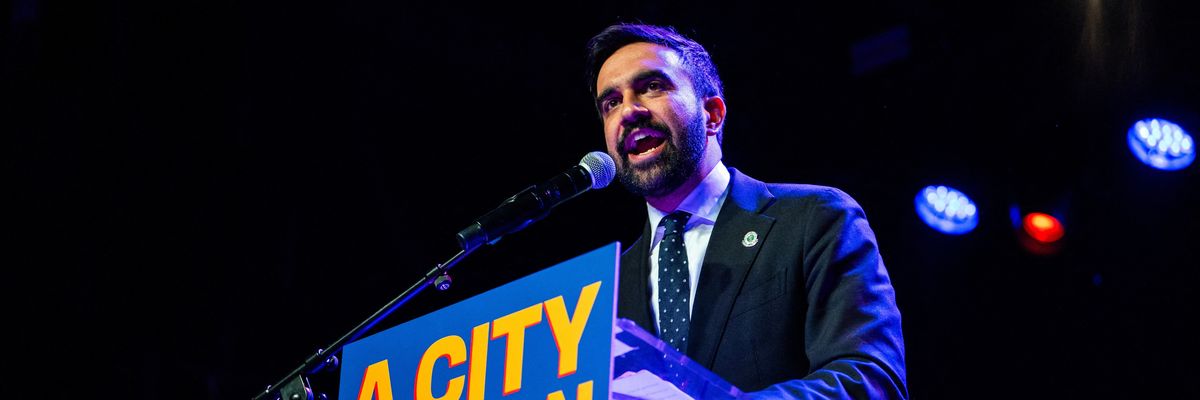
"We're now 8 points away from sending Andrew Cuomo back to the suburbs," said mayoral candidate and state Assemblymember Zohran Mamdani.


New York City mayoral candidate Zohran Mamdani speaks enthusiastically into the microphone at a rally at Brooklyn Steel in Brooklyn, New York on May 4 2025.
(Photo: Madison Swart/Hans Lucas/AFP via Getty Images)

Eloise Goldsmith
May 29, 2025
COMMON DREAMS

New York City mayoral candidate and state Assemblymember Zohran Mamdani, a democratic socialist who is running on a platform focused on affordability, is chipping away at former Democratic New York Gov. Andrew Cuomo's lead in the race head of the June 24 primary, which will be conducted via ranked choice voting.

Results of a poll from Emerson College Polling, PIX11, and The Hillreleased on Wednesday found that in the first round of voting, 35% of voters support Cuomo, 23% support Mamdani, a democratic socialist, and 11% support city Comptroller Brad Lander.

The new poll shows other candidates, such as former city Comptroller Scott Stringer, state Sen. Jessica Ramos, and state Sen. Zellnor Myrie, earning less than 10% of the vote. The survey was conducted from May 23-26 among 1,000 registered voters, including 606 Democratic primary voters.

In the tenth round of rank choice simulation, Cuomo wins with 54% of the vote and Mamdani earns 46%, a gap of 8 points, according to the poll.

A Marist poll from earlier in May had Cuomo prevailing over Mamdani in the fifth round by 24 points, when excluding undecided voters.

"We're now 8 points away from sending Andrew Cuomo back to the suburbs," Mamdani wrote on X on Wednesday, reacting to the most recent poll results.

According to The Hill, Cuomo's spokesperson downplayed the results of the poll and emphasized that Cuomo remains the frontrunner.

Cuomo resigned as governor in 2021 following the release of a report which found that he had sexually harassed several women. He denies wrongdoing. He officially entered the mayoral race in March.

Waleed Shahid, a communications and political strategist, offered his analysis of the poll on Thursday, writing that "to break through, Mamdani has to become the default progressive choice—not just for the left, but for the white liberals who likely backed [Elizabeth] Warren, [Pete] Buttigieg, and [Joe] Biden in 2020," speaking of the 2020 Democratic presidential primary. "And it also means making real inroads into Cuomo's base—especially Black voters and moderate Manhattanites."

Shahid appeared to direct other candidates who are broadly considered to the left of Cuomo to drop out.

"If you're nowhere near 2nd (Stringer, Ramos, Myrie, etc.), work through your five stages of political grief. Take one for the team... and stop wasting time to protect your pride. This city's bigger than any one person," he wrote.

Bill Neidhardt, a political strategist, who, according to Gothamist, is an adviser for New Yorkers for Lower Costs, a political action committee supporting Mamdani, referenced the polling results and wrote on Thursday: "Democrats need to CONSOLIDATE behind Mamdani."

The most recent poll came a day after Mamdani announced the top lines of an internal poll that has him earning 27% in the first round while Cuomo notches 40% of the vote. In the final round, that internal poll has Cuomo prevailing in the final round of voting with 56% of the vote compared to Mamdani's 44%.

Mamdani has become a viable contender in the race in part because of an impressive ground game. Volunteers with his campaign have knocked on 600,000 doors around the city, according to a statement sent to multiple outlets this week.


6 Truths About Medicaid Work Requirements the GOP Doesn’t Want You to Share


Republicans are spouting lies about a work requirement for Medicaid because they’re really trying to push eligible people off it—to help finance their big tax cut mainly for the rich.


A participant holds a Medicaid Cuts Kill sign at a rally.
(Photo: Erik McGregor/LightRocket via Getty Images)

Robert Reich
May 29, 2025
Inequality Media

One of my purposes in sending you this daily letter is to give you the truth about an important issue that U.S. President Donald Trump and his lapdogs in Congress are demagoguing—so you can spread the truth.

Right now, the Senate is taking up Trump’s “Big Beautiful budget bill” (really a Big Bad Ugly Bill) that just emerged from the House.

If enacted, it would be the largest redistribution of income in the nation’s history—from the poor and working class to the rich and super-rich.

The entire work requirement would affect 7% at most. In reality, a work requirement would cause many more who are eligible to lose their Medicaid coverage. The current estimate is at least 8.6 million people.

How? The tax cut mainly benefits the wealthy. A major source of funding is at least $715 billion of cuts in healthcare spending, mostly from Medicaid.

It also contains a poison pill that would remove the power of federal courts to hold officials in contempt of court—fining or imprisoning them if they fail to follow court orders. As the courts push back against Trump, this is a critical power.

The bill cuts Medicaid spending by requiring Medicaid recipients to work.

Republicans are spreading lies about this work requirement.

Here are the facts you need to know—and share:

1. 64% of adult Medicaid recipients already work.

Many recipients work in jobs that don’t typically offer health insurance and pay little—which makes Medicaid vital. These people aren’t freeloaders mooching off the system, as Republicans claim. They’re barely scraping by.

2. Adults on Medicaid who aren’t working have good reasons not to.12% are primary caregivers.
10% have an illness or disability.
7 % are attending school.

3. So, 93% of all Medicaid recipients either already working or having good reason not to.

The entire work requirement would affect 7% at most. In reality, a work requirement would cause many more who are eligible to lose their Medicaid coverage. The current estimate is at least 8.6 million people.

4. The work requirement kicks eligible people Medicaid because of its burdensome and confusing reporting requirements.

It’s not really meant to put people to work. It’s a shady way of kicking people off Medicaid to fund tax cuts mainly for the wealthy.

In Arkansas, which tried a work requirement for Medicaid, more than 18,000 people who were eligible lost coverage mainly because of the paperwork reporting hoops they had to jump through.

5. When Arkansas enacted work requirements, there was no significant change in employment rates.

Because, again, Medicaid recipients already have high rates of employment to begin with.

6. If Republicans really want to put people to work, they’d make it easier to get Medicaid—not harder.

After Ohio expanded Medicaid, enrollees had an easier time finding and holding down a job.

Access to healthcare means people can manage chronic conditions, afford medication, or receive mental health treatment—all of which helps people keep their jobs.

Republicans are spouting lies about a work requirement for Medicaid because they’re really trying to push eligible people off it—to help finance their big tax cut mainly for the rich.

Senate Republicans can afford to lose only three Republican votes. Otherwise, the Big Bad Ugly Bill is dead. Please share these facts.


© 2025 Robert Reich


Robert Reich
Robert Reich, is the Chancellor's Professor of Public Policy at the University of California, Berkeley, and a senior fellow at the Blum Center for Developing Economies. He served as secretary of labor in the Clinton administration, for which Time magazine named him one of the 10 most effective cabinet secretaries of the twentieth century. His book include: "Aftershock" (2011), "The Work of Nations" (1992), "Beyond Outrage" (2012) and, "Saving Capitalism" (2016). He is also a founding editor of The American Prospect magazine, former chairman of Common Cause, a member of the American Academy of Arts and Sciences, and co-creator of the award-winning documentary, "Inequality For All." Reich's newest book is "The Common Good" (2019). He's co-creator of the Netflix original documentary "Saving Capitalism," which is streaming now.
Full Bio >


What comes next in Trump’s legal battle over tariffs?


By AFP
May 30, 2025


Walmart warned that it will not be able to absorb all the effects from tariffs - Copyright GETTY IMAGES NORTH AMERICA/AFP/File JUSTIN SULLIVAN

Beiyi SEOW

A US federal appeals court has temporarily halted a ruling that found many of President Donald Trump’s tariffs illegal, but the chance it could ultimately back the original decision looms over the White House.

What is in the US Court of International Trade’s original ruling — which the Trump administration is appealing — and what options does the administration have?


– Which tariffs were affected? –


The three-judge trade court ruled Wednesday that Trump overstepped his authority in imposing blanket tariffs by invoking emergency economic powers.

The judgment — although temporarily halted — affected levies unveiled on April 2, which involve a 10-percent tariff on most trading partners and higher rates on dozens of economies including China and the European Union. These higher levels are currently suspended while negotiations take place.

The ruling also applies to tariffs imposed on Canada, Mexico and China over their alleged roles in allowing an influx of drugs into the United States.

But it left intact sector-specific levies like those on steel, aluminum and auto imports.


– Why a pause? –


The ruling by the little-known court, which has nationwide jurisdiction over tariff and trade disputes, initially gave the White House 10 days to complete the process of unwinding the levies.

But the US Court of Appeals for the Federal Circuit on Thursday granted a temporary stay “until further notice” while the Trump administration’s appeals process plays out.

This means the tariffs can remain in effect for now, while a longer-term outcome is yet to be determined.

National Economic Council director Kevin Hassett told Fox News the administration is “very pleased with the ruling,” dubbing it a victory.


– What are Trump’s alternatives? –


The appeals court could eventually uphold the trade court’s original decision to block Trump’s sweeping tariffs.

The president, however, has other means to reinstate his tariff agenda, said Thibault Denamiel, a fellow at the Center for Strategic and International Studies.

These include Section 122 of the Trade Act of 1974, “which is intended to deal with a balance of payments emergency but does not require a formal investigation,” Denamiel told AFP.

The authority restricts tariffs to 15 percent and they can only last 150 days.

But it is among the policy levers that Trump could pull as he seeks a “bridge” towards more lasting actions, said KPMG chief economist Diane Swonk.

Another option is Section 338 of the Trade Act of 1930, allowing the administration to impose tariffs of up to 50 percent on countries that discriminate against the United States, Denamiel said.


– Does this affect trade talks? –


The US trade court’s ruling did not remove the threat of US tariffs for Europe or end the need for negotiations, said Andrew Kenningham, chief Europe economist at Capital Economics.

This is because the threat of reciprocal tariffs remains if the White House wins its appeal, he said.

Trump could also turn to sector-specific means as he did in his first term or seek congressional approval for tariffs, though this is less likely, Kenningham said.

It is not clear if negotiations will lose steam, Swonk added, given that the administration wants to leverage the threat of tariffs “very aggressively.”

Even if the original ruling is eventually upheld, US officials could still buy time to exert pressure on other economies including the European Union and China.


– What about the broader economy? –


The court process “introduces greater ambiguity around the future direction of US trade policy,” especially because the appeal is ongoing, said EY chief economist Gregory Daco.

“This legal development amplifies longer-lasting uncertainty for businesses navigating cross-border supply chains,” he added in a note.

US stocks closed higher Thursday, but economic fallout has already occurred in recent months with Trump’s see-sawing approach to unveiling tariffs and pausing them selectively.

Financial markets have been roiled by policy shifts, and shipping halts due to high tariffs bring disruptions that cannot be cleared overnight, analysts said.

“The fate of the economy remains precarious even if we avert a recession,” Swonk said on social media.

Op-Ed: Tariffs vs government powers — The courts will win eventually.


By Paul Wallis
DIGITAL JOURNAL
May 29, 2025


The administration of US President Donald Trump has argued that judges do not have the authority to block his tariffs regime - Copyright AFP/File Brendan SMIALOWSKI

A government can only pass laws if it’s empowered under a constitution. The Trump administration is raising tariffs under the Emergency Powers Act. The tariffs were initially blocked by a Federal appeals court but have been allowed to continue by another federal appeals court.

The original court finding was that the president cannot unilaterally impose tariffs, and that tariffs have to be approved by Congress. The appeals court has said that tariffs can continue under the emergency powers legislation for now.

The administration has stated that the US “cannot function” with constant blocking by the courts. That’s almost funny. It’s not functional due to the self-inflicted problems the administration created for itself. The administration has also been monotonously losing very large numbers of critical court cases.

There are more than a few major issues here. Bad policy is the main reason:

What’s the emergency? Trade deficits? The fact that the US outsourced all its own manufacturing 30 years ago? The US trade deficit position is a result of unbelievably myopic business deals, not foreign countries. The whole premise of these tariffs is effectively fake to the bone.

The US economy does not depend on buying iPhones and toasters. A trade deficit is a number, not an instant analysis of real trade and business. It’s not even competent accountancy.

Main Street businesses are dependent on disposable income, which is already under lethal stress due to cost-of-living increases. Raising prices with added tariffs will make things much worse.

US revenue will not achieve much, if anything, with tariffs anyway. The current 2025 budget includes raising the debt ceiling by $4 trillion in the next year or so. That indicates that the tariffs aren’t expected to deliver revenue.

Critically – All 50 US states have been left high and dry and without direction solely because of erratic edicts from Washington. California is taking multiple hits to its economy as shipping dries up and the agricultural sector loses business as a direct result of the tariffs. These factors alone will have a direct impact on the shelves nationwide.

Politically, the tariffs have been an ongoing disaster for the administration, antagonizing trading partners, causing imports and exports to reposition, and baffling US importers.

Imports have declined, notably from Canada and China. The net impact on US domestic trade hasn’t yet been quantified, but the outlook is very blurry.

More expensive goods will lead to a black market pulling money out of the economy in huge volumes. The cartels might move into groceries instead.

US courts have been put into overdrive by the sheer number and scope of lawsuits the tariffs have created.

Let’s keep this simple.

The legal black hole arises from this administration’s constant totally avoidable conflict with existing laws.

If trade collapses due to tariffs, the Federal revenue base will be obliterated and even the very rich will be hit extremely hard, perhaps for years. Capital assets can devalue overnight, as with the market crash earlier this year.

If big businesses lose revenue due to trade shortfalls, their credit balances, many of which are already huge, will be nuked. Debt will skyrocket.

As we’ve seen, just one contrary court decision can totally derail national policy. Imagine another four years of that.

Now try and convince the rest of the world you’re not out of your minds. It won’t be easy.

__________________________________________________
Disclaimer
The opinions expressed in this Op-Ed are those of the author. They do not purport to reflect the opinions or views of the Digital Journal or its members.
SPACE/COSMOS

Universe's greatest mysteries will remain unsolved thanks to Trump: scientists

Travis Gettys
May 29, 2025
ALTERNET


The active galaxy Centaurus A, with jets emanating from the central black hole. ESO/WFI (Optical); MPIfR/ESO/APEX/A.Weiss et al. (Submillimetre); NASA/CXC/CfA/R.Kraft et al. (X-ray), CC BY

President Donald Trump's proposed cuts to NASA's budget could throw away decades of research and leave the universe's greatest mysteries unsolved forever, a chorus of scientists warn.


The Trump administration intends to slash the space agency's budget by 24 percent – to $18.8 billion, the lowest figure since 2015 – and those cuts would decimate space and Earth science missions, with a 53 percent drop in funding since what they received last year, reported The Guardian.

“An extinction-level event is when something like an asteroid hits Earth, and life that has been otherwise perfectly well-functioning, healthy ecosystems that have been balanced and functioning, are wiped out in large numbers," said Casey Dreier, chief of space policy at the Planetary Society. "That’s functionally what this budget is."

The Planetary Society has been rallying lawmakers to oppose the budget, which scientists say would end research that has been ongoing for years and halt new discoveries.

“Projects that are functioning, that are on budget and on time, that are already paid for and returning good science, would be decimated," Dreier said. "You’d see missions turned off mid-flight, extended missions put into hibernation or left to tumble in space. You’d see projects that could launch next year canceled summarily, and hundreds if not thousands of scientists and engineers and others laid off due to loss of research money and technology investments."

The cuts could end NASA's search for signs of life on Mars and kill the Davinci+ and Veritas projects announced during Joe Biden's presidency and would have sent spacecraft to study Venus for the first time since 1989.

“What this does is turn off the spigot of discovery, the investments we’re making now that are going to pay off in five years, 10 years, maybe 20 years, that may fundamentally reshape our understanding of our place in the cosmos, our origins," Dreier said.

“Is Mars habitable for life, is Venus?" the scientist added. "How many Earth-like planets are there? Those types of questions will not be answered because we just decided not to answer them. We’re abandoning literally decades of debate and discussion and justification.”

Billions of dollars have already been spent on some projects on the chopping block, and Dreier asked why the administration would throw away research that has already been paid off.

“It’s just like we’re giving up and turning away. Instead of looking up we’re turning down and inwards,” Dreier said. “This is a budget of retrenchment, this is a budget of retreat. It’s basically the equivalent of hunching over a cellphone and swiping through pictures of the Grand Canyon while you’re sitting at the edge of it in reality and not even bothering to look.”

Other experts say the administration is sending a clear message that science is no longer important to the U.S., and scientists say that could drive away researchers to other countries.

“Is the U.S. going to be left behind?" said Ehud Behar, a high-energy astrophysicist at TechnionIsrael Institute of Technology. "It might take time, this is not going to happen tomorrow, but China has enough people, they have enough scientists. If they are going to invest much more in science and technology development, they’re going to be more competitive, and they’re going to achieve things within five to 10 years that today maybe only NASA can achieve.”


The hunt for mysterious ‘Planet Nine’ offers up a surprise


By AFP
May 29, 2025


Does our solar system have a mysterious ninth planet? The discovery of a new dwarf world suggests not - Copyright AFP Eyad BABA


Daniel Lawler

It’s an evocative idea that has long bedevilled scientists: a huge and mysterious planet is lurking in the darkness at the edge of our solar system, evading all our efforts to spot it.

Some astronomers say the strange, clustered orbits of icy rocks beyond Neptune indicate that something big is out there, which they have dubbed Planet Nine.

Now, a US-based trio hunting this elusive world has instead stumbled on what appears to be a new dwarf planet in the solar system’s outer reaches.

And the existence of this new kid on the block could challenge the Planet Nine theory, the researchers have calculated.

Named 2017 OF201, the new object is roughly 700 kilometres (430 miles) across according to a preprint study, which has not been peer-reviewed, published online last week.

That makes it three times smaller than Pluto.

But that is still big enough to be considered a dwarf planet, lead study author Sihao Cheng of New Jersey’s Institute for Advanced Study told AFP.


– Distant traveller –


The object is currently three times farther away from Earth than Neptune.

And its extremely elongated orbit swings out more than 1,600 times the distance between the Earth and the Sun, taking it into the ring of icy rocks around the solar system called the Oort cloud.

It goes so far out, it could have passed by stars other than our Sun in the past, Cheng said.

During its 25,000-year orbit, the object is only close enough to Earth to be observed around 0.5 percent of the time, which is roughly a century.

“It’s already getting fainter and fainter,” Cheng said.

The discovery suggests “there are many hundreds of similar things on similar orbits” in the Kuiper Belt beyond Neptune, Cheng said.

After taking a risk spending more than half a year sorting through a difficult dataset in search of Planet Nine, Cheng said he was “lucky” to have found anything at all.

The researchers are requesting time to point the James Webb, Hubble and ALMA telescopes at their discovery.

But Sam Deen, a 23-year-old amateur astronomer from California, has already been able to track the dwarf planet candidate through old datasets.

“OF201 is, in my opinion, probably one of the most interesting discoveries in the outer solar system in the last decade,” Deen told AFP.


– What about Planet Nine? –


The icy rocks discovered in the Kuiper belt tend to have a clustered orbit going in a particular direction.

Two decades ago, astronomers proposed this was due to the gravitational pull of a world up to 10 times larger than Earth, naming it Planet Nine and kicking off a debate that has rumbled since.

It is also sometimes called Planet X, a name proposed for a hypothetical world beyond Neptune more than a century ago.

Back in 1930, astronomers were searching for Planet X when they discovered Pluto, which became our solar system’s ninth planet.

But Pluto turned out to be too tiny — it is smaller than the Moon — and was demoted to dwarf planet status in 2006.

There are now four other officially recognised dwarf planets, and Cheng believes 2017 OF201 could join their ranks.

When the researchers modelled its orbit, they found it did not follow the clustered trend of similar objects.

This could pose a problem for the Planet Nine theory, but Cheng emphasised more data is needed.

Samantha Lawler of Canada’s University of Regina told AFP that this “great discovery” and others like it mean that “the original argument for Planet Nine is getting weaker and weaker”.

The Vera Rubin Observatory, which is scheduled to go online in Chile this year, is expected to shed light on this mystery, one way or another.

Deen said it was discouraging that no sign of Planet Nine has been found so far, but with Vera Rubin “on the horizon I don’t think we’ll have to wonder about its existence for much longer”.

For Cheng, he still hopes that this huge planet is out there somewhere.

“We’re in an era when big telescopes can see almost to the edge of the universe,” he said.

But what is in our “backyard” still largely remains unknown, he added.
This 'celebration' could launch Trump's final assault on freedom

Thom Hartmann
May 29, 2025 
COMMON DREAMS


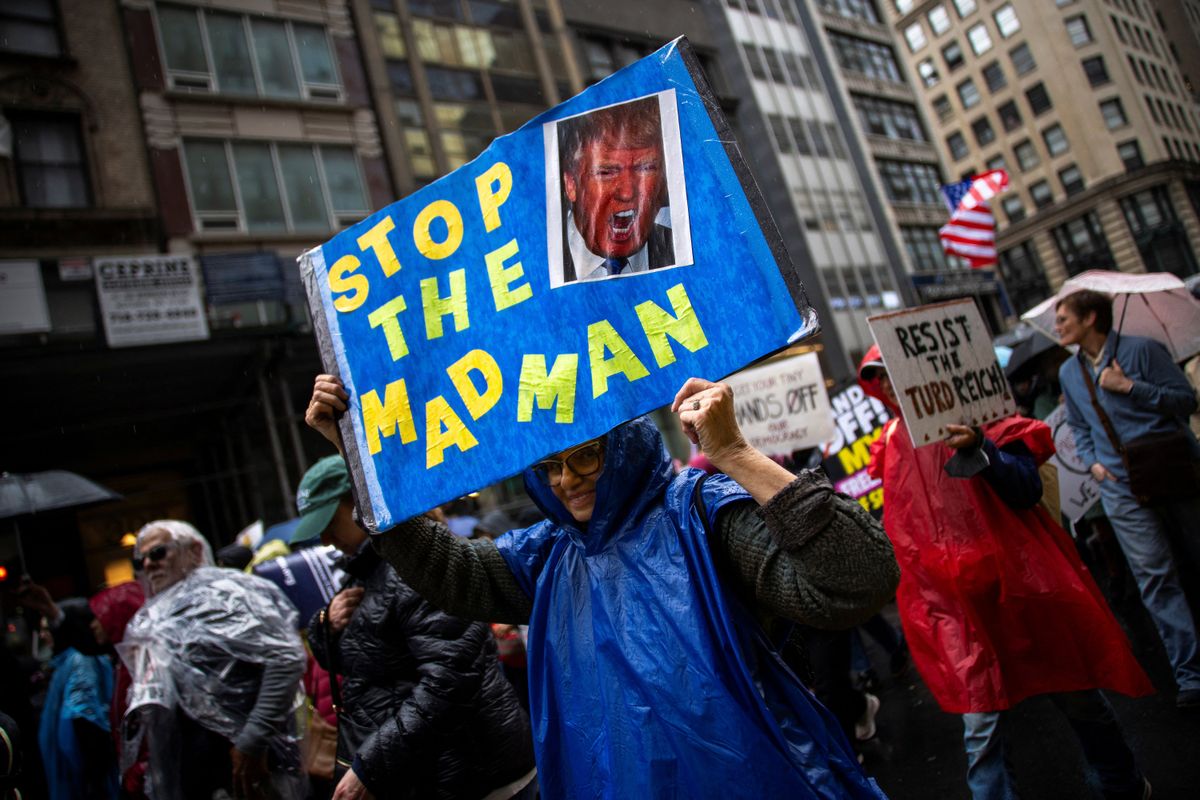
People take part in nationwide anti-Trump protests, in New York City in April. REUTERS/Eduardo Munoz

It’s axiomatic that dictators are corrupt. But understanding the inevitable relationship between corruption and dictatorship — and how it flows in both directions — is essential to understanding the direction the Trump Crime Family is taking America.

First, it’s important to know that there’s no such thing as a dictator who’s not corrupt. Every dictator in world history, with the possible exception of Cincinnatus, has been massively corrupt.

To defy public opinion while skimming wealth out of the state’s coffers and public commons, national leaders must use the typical tools of dictatorship to intimidate good government advocates into silence: violence, threats, capture of police agencies and courts, intimidation of the press, cowing politicians, and prisons.

I’ve worked in and negotiated with governments in multiple countries where this was the plain reality: Uganda under Amin, Haiti, the Philippines under Marcos, Thailand during the military coup, Colombia, Peru, Russia, South Sudan, China in the 1980s, and a handful of others.

In every case the media was cowed, courts were run by sycophants loyal to Dear Leader, and the police were largely unaccountable to the people while kleptocrats shoveled fortunes into offshore banks and American or British real estate (we are only one of two developed countries in the world that allows anonymous shell companies to “invest” in real estate).

Less obvious, though, is how politicians in functioning democracies become dictators in order to protect their own corrupt attempts to profit off their leadership roles and loot the national purse.

Americans are particularly blind to this, as we’ve never had a president who publicly attempted to use his position of power to enrich himself (even Richard Nixon had the good sense to try to hide the bribes he took from the milk lobby and Jimmy Hoffa).


Looking at how this works in other countries, however, reveals the pattern.

First, the democratically elected leader takes power, like Vladimir Putin did in Russia and Viktor Orbán did in Hungary.

In the beginning, things seem relatively normal, although there’s an apparent zeal for “reforms” that seem questionable like replacing government functions with private contractors close to the leader, appointing incompetent but totally loyal toadies to run major essential agencies, and changes to election laws making it easier for wealthy people to buy elections and harder for democracy advocates to vote.


Those “reforms” are the early warnings that, if not stopped quickly, a dictatorship is being birthed.

Next come loud complaints about “fake news,” “enemies within the government,” and “activist judges”: This is the second major warning that the newly elected leader is trying to move the country toward authoritarianism.

Once the public is inured to these signals, the next step is for the leader to actively convert his position of political power into cash for himself, his family (inevitably: remember Saddam Hussein’s sons Uday and Qusay?), and the oligarchs he’s brought into his circle of power.


He sells access to himself and the senior levels of his government using barely-legal schemes, bestows favors to corrupt foreign nations and their leaders in exchange for their enriching his family, and systematically replaces judges and agency heads with people whose first loyalty (and, often, financial interest) is to him personally rather than the nation or the rule of law.

This last point is key, and why virtually every senior official in every corrupt foreign government I’ve ever met or negotiated with wasn’t particularly bright and definitely wasn’t qualified to hold the position of power they did.

This is where we are now in America. Our:


— Secretary of Homeland Security doesn’t know what habeas corpus is
— Secretary of State refuses to call Putin a war criminal (after demanding, years ago, that Rex Tillerson in that same position do so)
— Secretary of Education is a billionaire wrestling promoter

— Lead negotiator with Putin about Ukraine is a real estate billionaire friend of Trump with no diplomatic experience
— Secretary of Transportation is a reality TV star with no experience in that field
— Secretary of Defense is an alleged drunk and accused sexual abuser who ran two tiny veterans’ organizations into the ground

— Secretary of Health is a conspiracy-nut lawyer with no training in medicine
— Social Security Commissioner is a former Wall Street executive who had to Google his own new job description
— EPA Administrator is a former congressman with deep connections to the fossil fuel industry
— Secretary of the Interior was heavily invested in fossil fuels

— US Attorney for New Jersey is a former parking garage lawyer, etc.


During his first term, Donald Trump followed the advice of people entrenched in the federal bureaucracy and repeatedly appointed people with reasonable qualifications for their jobs. One after another, from James Comey to Tillerson to Jeff Sessions and beyond, when they refused to swear personal loyalty to Trump or help him promote corrupt schemes, he fired them.

This time, following what could be called the “Putin Rule,” Trump has put 13 of his billionaire buddies in his cabinet and stocked his senior-most roles in critical federal agencies with incompetent but reliably loyal bootlickers.

This illustrates how a wannabe dictator becomes a real dictator. If he’s committed to enriching himself at the public trough (as all dictators are), he really has no choice: he must crack down when his corruption and violations of law are called out.


This is how dictators are always created, at least every one in countries I’ve interacted with.

First, he sets up the infrastructure of corruption and rids himself of the “cops on the beat” (Trump fired 18 Inspectors General whose job is to prevent corruption in major federal agencies) who could stop or slow him down.

Then he fills his administration with people who put personal loyalty or avarice above public service or the rule of law.

Then he opens attacks on the press and the judiciary.

And finally he begins to openly engage in the type of behavior most people first associate with dictators: throwing people in prison or bankrupting them for defying him or speaking out against him.

The problem is that it’s generally only at that final stage that the country begins to realize they’re dealing with a man who wants to be a dictator and is moving quickly in that direction.

This is also typically the moment when Dear Leader is “forced” to use citizen armed militia violence, the legal system, and the military to crush his opponents and terrorize the general public.

Given how fast events are moving in this second Trump administration, June 14 could well be that inflection point, the moment when Trump drops what’s left of the mask of civility and begins what he’ll consider a “necessary” crackdown to protect himself from being held to account for his corruption and lawbreaking.

If the protests coinciding with his birthday celebration in DC are large enough, and, especially, if his people can infiltrate them to provoke violence and property damage like what happened during a tiny handful of the George Floyd protests, it could be the moment when the final threads holding our republic together are broken.

He’s already put into place an executive order preparing the military to turn their guns on civilians. He’s already put otherwise unqualified or even outright neofascist loyalists in charge of federal police agencies. And he’s already ignoring court orders that might restrain him.

This could be the final test of America’s will to democracy. (And, if not this June, it’ll almost certainly come over the following year.)

We sacrificed blood, treasure, and lives to stop the King of England, the fascists of the Confederacy, and the Nazis of Europe. Do we still have the will, the determination, and the courage to fight one more battle on behalf of democracy?

Stay tuned.
THE GRIFT

1 in 5 Trump pardons since J6 spree went to people financially tied to him: ABC


Matthew Chapman
May 29, 2025 
RAW STORY


U.S. President Donald Trump speaks to reporters at the White House in Washington, D.C., U.S., April 23, 2025. REUTERS/Kevin Lamarque


A startling new report by ABC News reveals that out of the 60 pardons and commutations President Donald Trump issued since his massive, 1,500-person spree for everyone involved in the January 6 attack, one in five of them went to people who have some sort of either financial or political connection to him.

Many of these pardons went to rich, white-collar criminals who defrauded people of millions — and a common thread is that Trump has broadly justified these pardons by claiming, often with no evidence, that they were victims of political persecution.

"Beyond the nearly 1,600 'Day 1' pardons and 14 commutations handed out to those charged in the Jan. 6, 2021, attack on the U.S. Capitol, Trump has, at this point in his second presidency, pardoned or commuted more than 60 individuals according to the Department of Justice Office of the Pardon Attorney and White House officials," said the report, noting that "In previous administrations, presidents have typically issued the majority of their pardons in their final weeks in office."

Among the people handed Trump pardons include Trevor Milton, an entrepreneur who defrauded investors about a clean energy truck that didn't exist; Imaad Zuberi, a venture capitalist convicted of campaign finance crimes; Paul Walzcak, a Florida nursing home tycoon who was busted for tax crimes; and Brian Kelsey, a former GOP Tennessee state senator who engaged in fraudulent campaign finance. All four of them contributed money to Trump or aligned GOP causes.

Others given pardons include Scott Jenkins, a Virginia sheriff who traded bribes for badges; Michele Fiore, a Nevada GOP official who pocketed money fundraised for a fallen law enforcement officer monument; Rod Blagojevich, the former governor of Illinois who was caught trying to sell former President Barack Obama's Senate seat; and Michael Grimm, a former New York congressman found guilty of tax crimes. These individuals all either endorsed or promoted the Trump campaign in some way, or worked with the Trump administration on policy.

Trump recently appointed Ed Martin, a longtime GOP activist who controversially served as interim U.S. Attorney for the District of Columbia, as the Justice Department pardon attorney, where he has been advising on clemency orders.


Martin is reportedly reviewing petitions by militia leaders convicted of seditious conspiracy for their roles in January 6 to have their commutations upgraded to full pardons.
CRIMINAL CAPITALI$M

US judge sentences ex-Goldman Sachs banker to two years over 1MDB scandal


By AFP
May 29, 2025


Timothy Leissner is the former chief of Southeast Asia operations for Goldman Sachs - Copyright AFP ANGELA WEISS

A US judge on Thursday sentenced a former Goldman Sachs banker central to the 1MDB scandal to two years in prison after prosecutors argued for leniency due to his cooperation.

Timothy Leissner, a key architect of the massive bribery and kickback scheme involving a Malaysian sovereign wealth fund, will begin serving a 24-month sentence in September, according to a spokesman for the US Department of Justice.

Leissner, who previously pleaded guilty to US bribery and money laundering counts, faced a maximum sentence of 25 years.

The 1MDB conspiracy involved billions of dollars that were raised to support energy and infrastructure projects but were instead pilfered or used to purchase yachts, jewelry and other luxury items.

The case resulted in “the only criminal case filed against Goldman Sachs in its 156-year history,” the firm said in a filing to the court that endorsed a tough sentence.

But prosecutors argued for leniency, citing Leissner’s “extraordinary” assistance to the probe after federal agents ambushed the defendant in June 2018 after he deplaned an international flight in Washington.

The government’s brief cited “marathon meetings” with Leissner in which he turned over electronic devices and “displayed remarkable recall and spoke with precision about what he knew about the scheme,” which included repeatedly lying to colleagues at Goldman about his actions, the Justice Department said.

Leissner testified against Ng Chong Hwa, or “Roger Ng,” another former Goldman banker, at a New York trial in February 2022. Ng has been sentenced to 10 years after being found guilty, but has yet to begin his sentence, the Justice Department said.

Leissner also provided details that led to US charges against Low Taek Jho, a Malaysian financier known as “Jho Low” who remains at large.

In a letter to the court, Leissner, 55, called his crime “terrible” and expressed regret at time lost with children and ageing parents.

“I have had to publicly face the fact that I helped steal billions of dollars not just from individuals, but from an entire nation,” Leissner said.

But Goldman Sachs dismissed Leissner’s cooperation.

“Whatever personal and professional consequences Mr. Leissner may himself have experienced in recent years, those consequences are a natural and direct result of his brazen and audacious criminal conduct, not his cooperation,” Goldman said.

Remains of Mayan city nearly 3,000 years old unearthed in Guatemala


By AFP
May 29, 2025


The city takes its name, 'Los Abuelos,' from two human-like sculptures of an 'ancestral couple' found at the site - Copyright Guatemalan Ministry of Culture and Sports/AFP Handout

Archaeologists have unearthed the remains of a Mayan city nearly 3,000 years old in northern Guatemala, with pyramids and monuments that point to its significance as an important ceremonial site, the Central American country’s culture ministry said Thursday.

The Mayan civilization arose around 2000 BC, reaching its height between 400 and 900 AD in what is present-day southern Mexico and Guatemala, as well as parts of Belize, El Salvador and Honduras.

The city named “Los Abuelos,” Spanish for “The Grandparents,” once stood some 21 kilometers (13 miles) from the important archaeological site of Uaxactun, in Guatemala’s northern Peten department, the ministry said in a statement.

It is dated to what is known as the “Middle Preclassic” period from about 800 to 500 BC, and is believed to have been “one of the most ancient and important ceremonial centers” of the Mayan civilization in the jungle area of Peten near the Mexican border, it added.

“The site presents remarkable architectural planning” with pyramids and monuments “sculpted with unique iconography from the region,” said the ministry.

The city takes its name from two human-like sculptures of an “ancestral couple” found at the site.

The figures, dated to between 500 and 300 BC, “could be linked to ancient ritual practices of ancestor worship,” said the ministry.

– ‘Unique canal system’ –

The city, which covers an area of about 16 square kilometers (six square miles) was discovered by Guatemalan and Slovak archaeologists in previously little-explored areas of the Uaxactun park.

Nearby, they also found a pyramid standing 33 meters (108 feet) high with murals from the Preclassic period and “a unique canal system,” according to the statement.

“The set of these three sites forms a previously unknown urban triangle… These findings allow us to rethink the understanding of the ceremonial and socio-political organization of pre-Hispanic Peten,” said the ministry.

In April, scientists discovered a 1,000-year-old altar from Mexico’s ancient Teotihuacan culture at Tikal, elsewhere in the Peten department.

That find was interpreted as proof of ties between the two pre-Hispanic cultures, which lived about 1,300 km apart.

Tikal, about 23 km from Uaxcatun, is the main archaeological site in Guatemala and one of its biggest tourist attractions.