DEC 14, 2025
By Jesus Mesa
Politics Reporter
Newsweek
As José Antonio Kast emerged victorious in Chile’s presidential election this week, analysts across the region pointed to a defining feature of his campaign—the growing influence of U.S. President Donald Trump’s political playbook across Latin America.
The rhetoric was familiar—tough on crime, hostile to undocumented migrants, heavy on nationalism—and so was the strategy, built on populist messaging and rejection of establishment politics.
Kast, a 58-year-old lawyer and founder of Chile’s far-right Republican Party, has long positioned himself as a cultural conservative and law-and-order hardliner. His admiration for Trump is matched by his well-documented praise for former Chilean dictator Augusto Pinochet whose regime he has defended as necessary to restore order.
This election, Kast leaned heavily on those themes—security, sovereignty, and the promise of control.
Experts consulted by Newsweek said Kast’s victory was less a shock than the culmination of Chile’s political shift over the past several years.
“This result has nothing to do with the incumbent government,” Marta Lagos, director of Latinobarómetro, a regional polling firm, said. “The Chilean electorate had already shifted to the right during the constitutional referendums, and that shift was confirmed in the 2024 municipal elections. For Chileans, this outcome was expected. It’s only surprising to the outside world.”
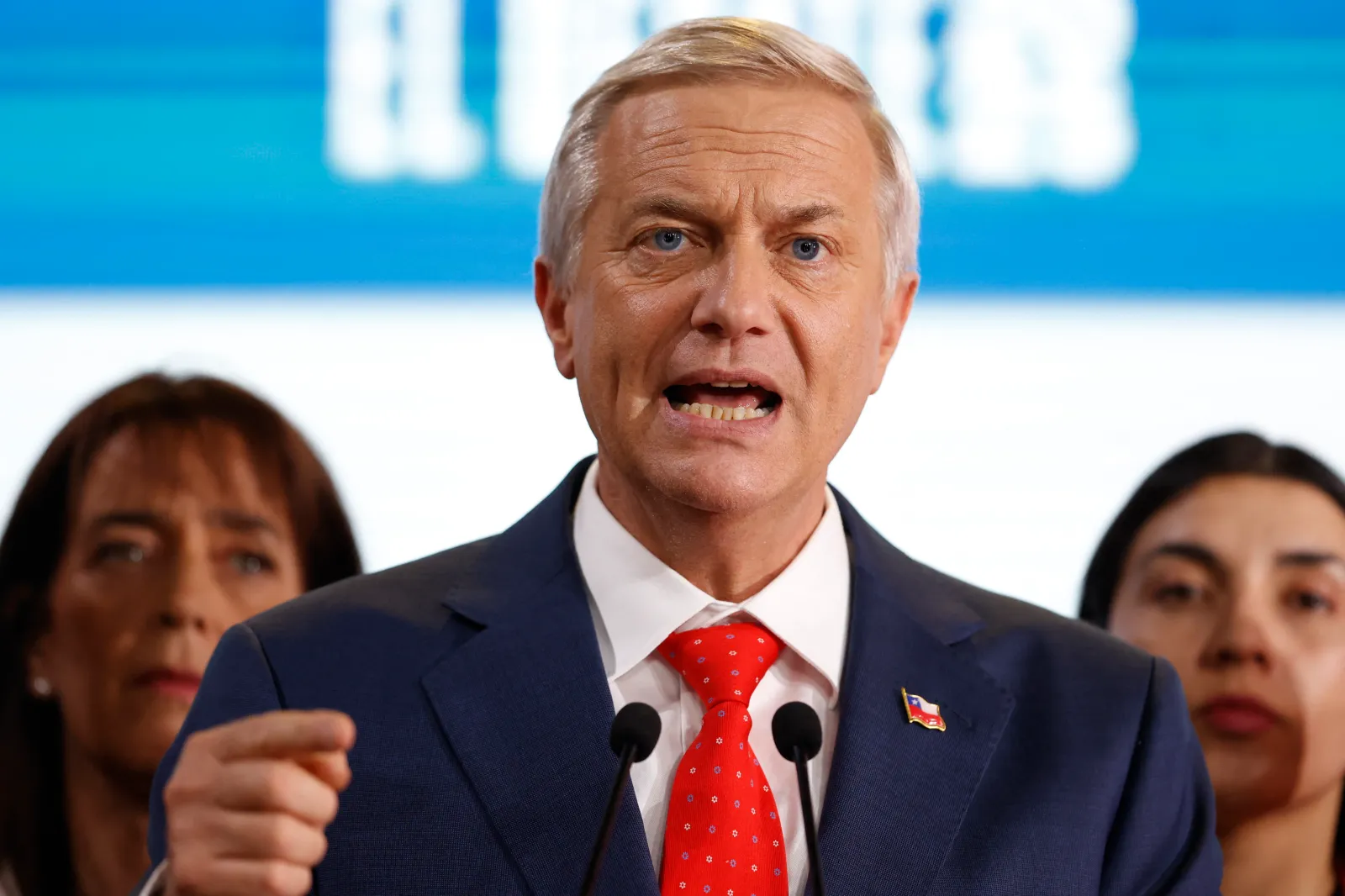
Chile's presidential candidate Jose Antonio Kast of the Republican Party is seen in Santiago on October 26. (Photo by Raul BRAVO / AFP) (Photo by RAUL...Read More
Lagos cited a mix of unfulfilled promises from the 2019 social uprising, deepening distrust in institutions, and growing public anxiety about crime and migration—even as Chile maintains one of the lowest homicide rates in Latin America.
“There’s a contradiction between reality and fiction,” she said. “Ninety percent of the population says they’re afraid to go outside, but the numbers don’t justify that fear. It’s the narrative that wins, not the data.”
Migration has become a central force in shaping Chile’s political mood. Drawn by the country’s economic stability, tens of thousands of Haitians and Venezuelans arrived over the past decade in search of better opportunities. Today, Venezuelans are the largest foreign-born population in Chile, numbering around 669,000—roughly 38 percent of the country’s 1.9 million immigrants, according to the latest census.
As in other countries across the region—Peru, Ecuador, Argentina and Colombia—the influx has triggered a backlash. On the campaign trail, Kast seized on those tensions. In one viral video, he confronted a Venezuelan migrant and told him to “leave the country and come back the right way,” a moment that echoed Trump-era immigration politics and spread quickly across Chilean social media.
A Region Tilting Right
Kast’s win may have happened in Santiago, but the political shift he embodies is regional. Across Latin America, a new class of conservative leaders is rising on a wave of voter frustration, channeling public anger over crime, corruption, and migration into decisive electoral wins.
“There are signs that the political winds in Latin America are blowing to the right,” Michael Shifter, former president of the Inter-American Dialogue, a Washington, D.C.-based think tank, said. “Trump is lucky that more leaders and governments are becoming more closely aligned with his administration and its policies.”
In Bolivia, Rodrigo Paz ended nearly two decades of leftist rule by defeating the ruling socialist party. In Ecuador, Daniel Noboa secured reelection in April with a tough-on-crime platform focused on military crackdowns. And in Argentina, President Javier Milei not only held on to power but expanded it—after the Trump administration conditioned a $20 billion U.S.-Argentina currency swap and broader financial support on the success of his party in the October midterm elections.
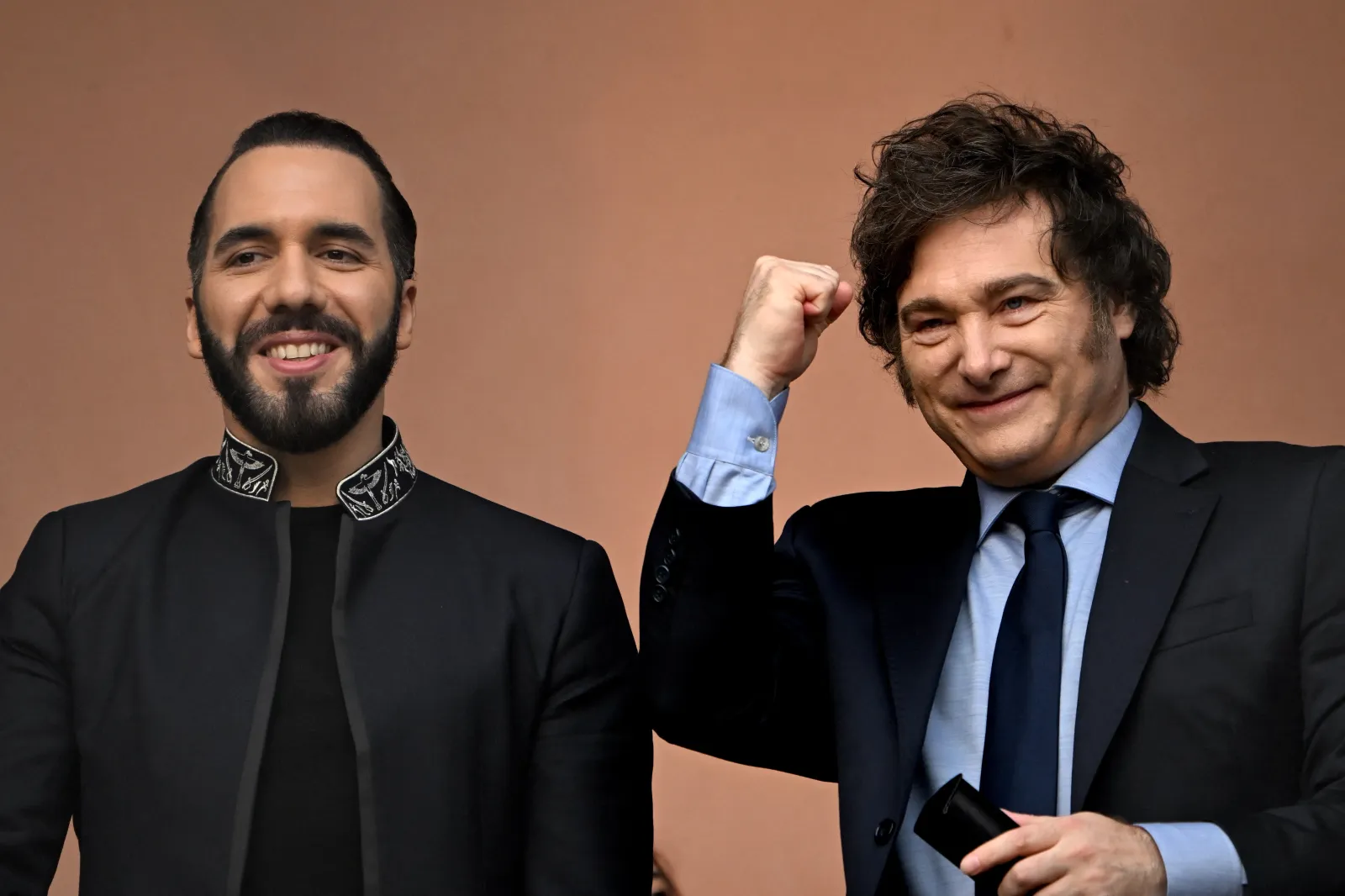
Argentina's President Javier Milei (right) gestures next to El Salvador's President Nayib Bukele on the balcony of the Casa Rosada presidential palace...Read More | Luis Robayo/AFP via Getty Images
“The lurch to the right is real,” Benjamin Gedan, director of the Latin America Program at the Wilson Center, told Newsweek. “For now, the region’s political trends favor the United States. That will make it easier to compete with China for influence and in the scramble for minerals.”
While electoral trends matter, U.S. policy is also reinforcing the shift. Trump’s second term has deepened American engagement across Latin America, driven in large part by Secretary of State Marco Rubio.
Rubio, long a hawk on the region, has pushed for an aggressive posture—embracing military strikes on suspected drug boats, deportation deals with authoritarian leaders, and the designation of criminal groups as terrorist organizations. His admiration for El Salvador’s Nayib Bukele has helped elevate Bukele’s hardline security policies into a regional model.
After visiting Bukele in February, Rubio praised the Salvadoran president for turning a nation “known for violence” into “one of the most secure in the hemisphere.” That endorsement has resonated among leaders across Latin America facing similar crime concerns—and looking for U.S. backing.
In the words of the White House's own new National Security Strategy, "we want to ensure that the Western Hemisphere remains reasonably stable and well-governed enough to prevent and discourage mass migration to the United States; we want a Hemisphere whose governments cooperate with us against narco-terrorists, cartels, and other transnational criminal organizations; we want a Hemisphere that remains free of hostile foreign incursion or ownership of key assets, and that supports critical supply chains; and we want to ensure our continued access to key strategic locations."
Momentum Meets Uncertainty
Kast learning from his previous two failed presidential runs, managed to avoid topics that fire up his critics such as his German-born father’s Nazi past, nostalgia for Pinochet’s dictatorship and opposition to same-sex marriage and abortion.
Instead, he leaned into immigration and security-heavy messaging, floating proposals modeled on Bukele’s mass incarceration campaign and backing stricter enforcement against migrants, particularly Venezuelans. And while Chile’s homicide rate has declined in recent years—now roughly on par with the United States—public fear remains high. Only 39 percent of Chileans say they feel safe walking alone at night, according to a recent Gallup survey.
Analysts, meanwhile, warn that the regional shift may reflect a cycle of voter backlash rather than a deep, lasting realignment to the right.
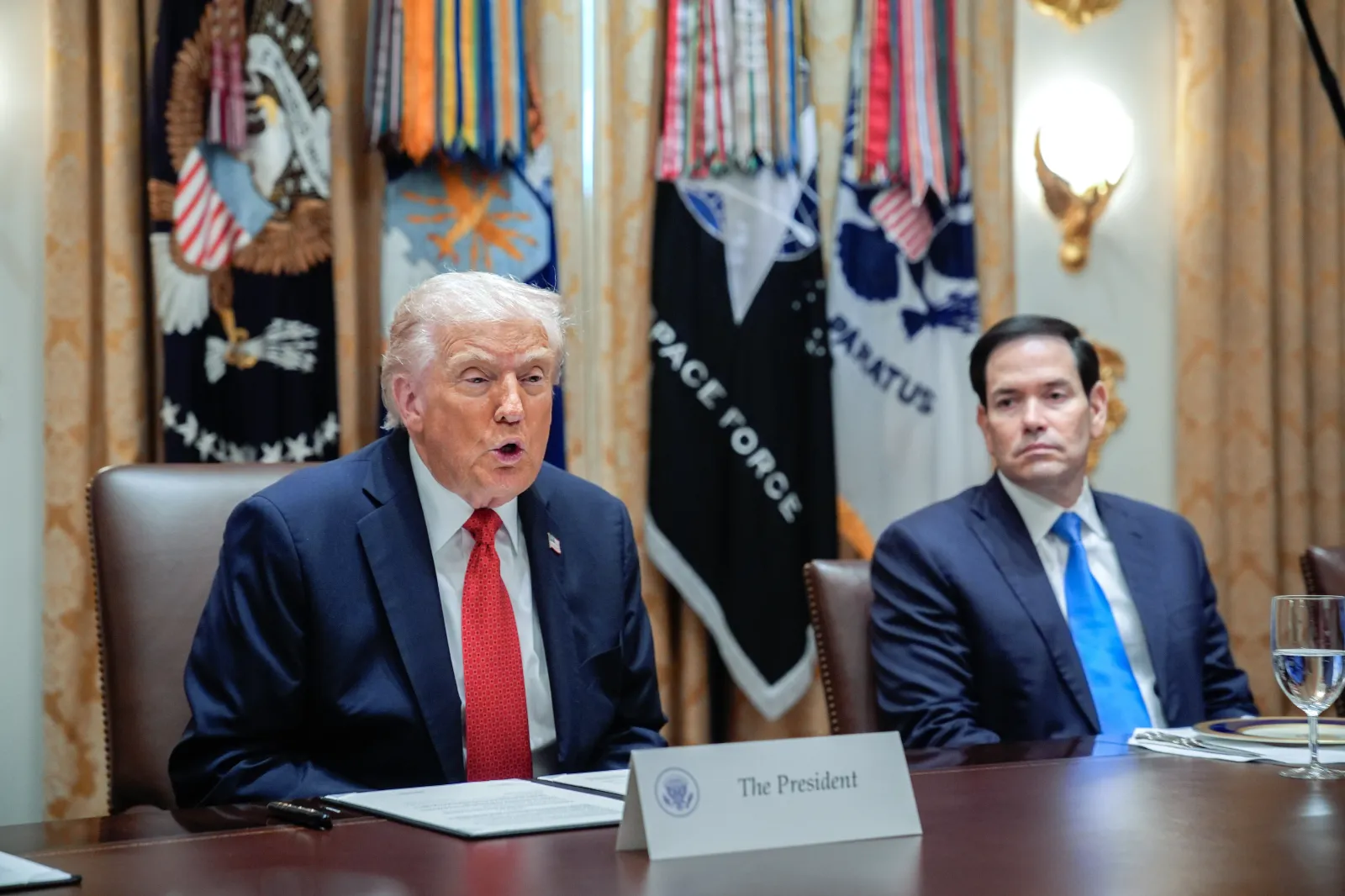
President Donald Trump makes remarks as he meets with Prime Minister Anthony Albanese of Australia in the Cabinet Room of the White House in Washingto...Read More
“Trumpism can help in some circumstances, but these new governments will have to perform effectively—on crime, on the economy, on governance. If they don’t, the left will come back,” Shifter said.
That volatility will be tested again soon. Colombia and Brazil, two of Latin America’s largest democracies, hold elections next year. In both countries, leaders have positioned themselves in direct opposition to Trumpism.
Colombian President Gustavo Petro and Brazilian President Luiz Inácio Lula da Silva have leaned into anti-Trump messaging, portraying themselves as bulwarks against authoritarianism and economic chaos. And recent polling suggests their strategy may be paying off. Petro’s approval ratings, once sagging, have rebounded amid a wave of nationalist sentiment. Lula retains a strong lead over potential right-wing challengers, buoyed by expanded social programs and grassroots support.
“The lurch to the right has momentum,” Gedan said. “But it’s not inevitable. These are volatile electorates. A misstep or a stalled economy can change the political winds fast.”

No comments:
Post a Comment