Thursday, June 12, 2025

Kyiv’s Fears Come True: US Defense Slashes Military Aid in Proposed Budget

“It’s completely opposite to President Trump’s intention to end the war,” Odesa lawmaker Oleksiy Goncharenko said.

by Kyiv Post | June 12, 2025

US soldiers on an Abrams tank take part in a NATO military exercise in Korzeniewo, northern Poland, March 4, 2024 (Photo by Wojtek Radwanski / AFP)

While he admitted that Russia was the aggressor in the war, US Secretary of Defense Pete Hegseth on Wednesday said, as far as his department is concerned, military aid to Ukraine will be reduced in the 2026 budget.

When pressed on Capitol Hill about whether the Defense Department intends to increase or decrease spending for Ukraine vis-à-vis previous administrations in its proposed budget to Congress, the Pentagon chief said, “It is a reduction in this budget.”

Leaders in Kyiv have publicly worried that his would be the case.

Oleksandr Merezhko, head of Ukraine’s parliamentary foreign affairs committee told Newsweek magazine on Wednesday that “such a reduction will lead to more casualties on the Ukrainian side, including casualties among civilians.”

“Anyone in the US who is acting in support of the reduction of the military aid to Ukraine becomes morally responsible for the increased casualties among civilians.”

Precise details of the department’s proposed 2026 budget to Congress were not made public.

For the first time time in the history of the Ukraine Defense Contact Group, the US Secretary of Defense declined to attend, when Hegseth took a pass on the June 4 meeting in Ramstein, Germany.

In March, the US administration ordered a pause to aid shipments to Ukraine. In an interview with Fox News two weeks later, President Donald Trump noted, “The money,” the president said, “what bothered me — I hated to see the way it was, you know, excuse me, pissed away.”

Other Topics of Interest
Russia Likely Used 600 kph Jet-Powered Kamikaze Drone in Strike on Kyiv
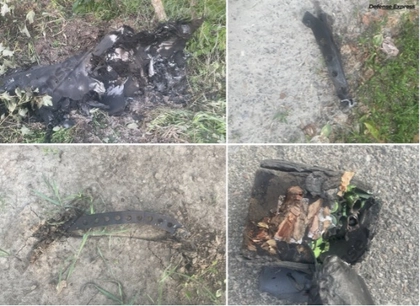
Ukraine says Russia used a new 600 kphh jet-powered kamikaze drone over Kyiv, the debris of which experts said it was to a Russian-made version of the Iranian Shahed-238.

The statement was rather misleading in that military aid for Ukraine does not arrive in the form of money, but rather weapons for US stockpiles that are later replenished by congressionally approved funds to US arms manufacturers.

Eliminating aid for Ukraine will only embolden Putin, said Oleksiy Goncharenko, a member of parliament for the Odesa region.

“It’s completely opposite to President Trump’s intention to end the war,” he told Newsweek.


Describing his position in the Capitol Hill hearings, Hegseth said, “The alternative of endless war that is largely funded by the United States and fought by Ukrainians, for which the Russians have unlimited resources to continue to pour in, does not make sense strategically for the United States.”

Ranking member of the Senate Defense Appropriations subcommittee, Chris Coons (D-DE) was one of several lawmakers on the panel to caution Hegseth against abandoning aid to Ukraine.

“It seems to me concerning that the 2026 request eliminates aid to Ukraine entirely,” he said. “We cannot abandon Ukraine. That would put us significantly at a strategic disadvantage.”


Kyiv Post
Kyiv Post is Ukraine’s first and oldest English news organization since 1995. Its international market reach of 97% outside of Ukraine makes it truly Ukraine’s Global – and most reliable – Voice.
US federal court upholds White House restrictions on Associated Press


The White House, Public domain, via Wikimedia Commons

Bekim Bruka | JURIST Staff, US
JUNE 8, 2025

A US federal appeals court ruled on Friday that President Donald Trump’s administration can bar the Associated Press (AP) from some events and spaces in the White House.

The opinion follows an AP lawsuit claiming the administration infringed upon the outlet’s First Amendment rights. Written by US Circuit Judge Neomi Rao, the 2-1 ruling stated that the government can limit speech or grant access to its property depending on where the speech occurs. Contrary to AP’s claim that they were excluded based on viewpoint, the court argued that access rules are judged based on the nature of the location and not just “press pool membership.”

Additionally, the court clarified that the First Amendment does not prevent the president from choosing which journalists to engage with, as he is free to grant interviews or briefings to reporters based on personal preference or viewpoint. The president’s private choices about interviews are not subject to the First Amendment.

Taylor Budowich, a White House deputy chief of staff, applauded the ruling as a “victory for democracy,” claiming that AP’s “irresponsible and dishonest reporting” gives them no entitlement to an “unfettered access to limited spaces.”

After the ruling announcement, AP spokesman Patrick Maks said, “[W]e are disappointed in the court’s decisions and are reviewing our options.” Maks suggested an “expedited review of the full case on its merits” to fast-track the case in upper courts instead of waiting through the appeals process.

The case began when AP was notified that the administration barred reporters from covering several White House events in February 2025. The administration cited the media’s reluctance to use “Gulf of America”—instead of “Gulf of Mexico”—as a reason for implementing the restriction. The AP sued, arguing that the exclusion violated the First Amendment. Prior to Friday’s ruling, the AP saw partial success in the case after a lower court temporarily blocked the press ban.

Press pool membership is a small and select group of journalists who have special access to cover events with high-level government officials and in places where access is limited, including Air Force One and the Oval Office.


US federal judge approves landmark settlement allowing NCAA athlete pay

A US federal judge granted approval Friday of a landmark $2.6 billion class action 

settlement that transforms college athletics by allowing schools to directly pay student-athletes for the first time in National Collegiate Athletic Association (NCAA) history.

In a released statement, NCAA president Charlie Baker said, “This is new terrain for everyone… Opportunities to drive transformative change don’t come often to organizations like ours. It’s important we make the most of this one.”

The settlement resolves antitrust claims brought by  Division I student-athletes in a class action lawsuit challenging NCAA restrictions on Name, Image, and Likeness (NIL) compensation and athletic services payments. The case affects over 389,000 class members comprised of current and former student-athletes dating back to 2016.

The settlement creates multiple funds to pay out damages, the majority of which will be paid to class members made up of football, men’s basketball, and women’s basketball players. Within each sport, damages will be paid out based on the sport, conference, years played, recruitment ratings, and various performance metrics.

Friday’s settlement also requires the NCAA to enact new rules for student-athlete compensation over the next 10 years. Schools in the NCAA’s five largest (“Power 5”) conferences will supply benefits and direct compensation to student-athletes in amounts worth up to 22% of the average annual athletic revenue for participating schools. Revenue is estimated to be more than $20 million per school in the 2025-26 school year and over $19 billion in total for the 10-year period.

Shortly after Friday’s court ruling, it was announced that former Major League Baseball executive Bryan Seeley had been appointed to run the College Sports Commission, a newly formed organization that will oversee student-athlete revenue distribution for the Power 5 schools.

The case involves a contentious legal history starting with O’Bannon v. NCAA. The 2015 case established that NCAA amateurism—a doctrine purported to maintain the fundamental character of collegiate sports—did not exempt the NCAA from federal antitrust laws. However, the court still allowed the NCAA to limit student-athlete payments to the full cost of attending college.

In 2019, California approved Senate Bill 206allowing for student-athletes playing in-state to accept NIL compensation, and several other states passed similar laws the following year. A 2021 Supreme Court ruling further established that the NCAA was violating antitrust regulations by restricting athlete pay. In July 2021, the NCAA adopted an interim policy that allowed student-athletes to receive NIL payments while maintaining amateur eligibility. NIL payments are made by “Collectives”—independent organizations that fundraise money for the universities. 

Friday’s judicial approval came from Senior Judge Claudia Wilken of the US District Court for the Northern District of California. Wilken is the same judge who originally heard O’Bannon v. NCAA.


Japan high court overturns Fukushima disaster compensation ruling


The Tokyo High Court on Friday overturned a district court ruling against the former executives of Tokyo Electric Power Company (TEPCO) which had ordered them to pay compensation of 13 trillion yen ($90 billion) for their failure to prevent the 2011 disaster at the Fukushima Daiichi nuclear plant.

The High Court’s ruling centered around TEPCO management’s failure to implement countermeasures following the government’s long-term earthquake assessment in 2002, which predicted a possible tsunami of up to 15.6 meters. The court ruled in favor of the executives, finding that the massive tsunami of up to 15 meters that caused the disaster was not foreseeable. Presiding Judge Toshikazu Kino emphasized that the government’s assessment did not provide a sufficient basis for the management to efficiently safeguard against the huge tsunami.

The ruling runs contrary to the National Diet Investigation Commission’s (NAIIC) report in 2012, which concluded that the accident was a “manmade disaster,” resulting from the “collusion between the government, the regulators and Tokyo Electric Power Co.” The report further stated that the “root causes were the organizational and regulatory systems that supported faulty rationales for decisions and actions.” The NAIIC criticized TEPCO for its poor governance and lack of safety culture, particularly regarding the risk of a predicted station blackout due to flooding. The report also recommended amending nuclear power laws and regulations in Japan to emphasize the primary responsibility of operators for safeguarding their nuclear facilities.

The civil suit was brought by 48 shareholders against the former executives of TEPCO over the nuclear disaster, which was triggered by a massive earthquake and tsunami on March 11, 2011. Although the plant’s systems detected the earthquake and automatically shut down the nuclear reactors, the subsequent tsunami overwhelmed the facility, causing massive chemical explosions. This occurred after the floodwater disabled emergency generators, leading to the reactors overheating. The incident had killed more than 180,000 people along Japan’s north-east coast.

The Tokyo District Court in July 2022 ruled that the former executives were liable for compensation after finding that the government’s assessment was “scientifically credible” and that a massive tsunami hitting the plant was foreseeable.

The High Court ruling follows Human Rights Now’s recent submission to the UN Human Rights Council’s 59th session, which noted that more than 30,000 people displaced by the Fukushima disaster are still designated as internally displaced persons (IDPs) and face persistent human rights violations.


Peru dispatch: kidnapping and killing of miners blamed on criminal gangs


Peruvian law students from the Facultad de Derecho, Universidad Nacional de San Antonio Abad del Cusco are reporting for JURIST on law-related events in and affecting Perú. All of them are from CIED (Centro de Investigación de los Estudiantes de Derecho), a research center in UNSAA’s faculty of law dedicated to spreading legal information and improving legal culture through study and research, promoting critical and reflective debate to contribute to the development of the country. Cintya Rubi Oquendo Escarcena is a law student from UNSAAC and a member of CIED. She files this dispatch from Cusco.

On April 26, in Pataz, La Libertad, Peru, the kidnapping of 13 men was reported. The victims were identified as workers from the artisanal mining company R&R, who were providing services for Minera Poderosa, one of the country’s leading gold mining companies.

A week later, they were found bound, naked, tortured, and executed inside a mine tunnel. Their remains were recovered by a team sent by the mining company, which attributed the crime to illegal miners (informal miners) linked to criminal gangs operating in the area.

This was not the first such incident. In December 2023, the kidnapping and murder of nine workers from the same mining company were also reported. In fact, the province of Pataz had already been declared under a state of emergency (correct term in English) since August 2023, as a measure to combat the high levels of crime and public insecurity.

The incident has captured national attention, as it has exposed the deep criminal network tied to illegal gold mining. This was not an accident or an isolated event—it was a brutal method of trading gold for human lives.

An investigation by Ojo Público into the case revealed:

When someone wants to negotiate a level [an underground mine shaft], they ‘plant’ people [security workers] by contacting parqueros. They say: ‘Give me this amount, and I’ll give you access to that level. I’ll send a few people in, they’re killed, and that’s that.’ But there’s always money involved.

In this system, underground mining shafts are controlled not only through violence but also through economic arrangements that sacrifice workers’ lives as part of the “negotiation” with these parqueros. Thus, gold—a symbol of wealth and development—has become the fuel for a parallel economy dominated by criminal organizations that disregard human life.

According to the Peruvian Institute of Economics (Instituto Peruano de Economía – IPE) (2024)illegal mining in Peru has increased sevenfold over the past 20 years. By the end of 2023, it was estimated that nearly 80 tons of illegally sourced gold were exported—equivalent to approximately 4.833 billion USD. Today, illegal mining accounts for more than 45% of the country’s total gold exports, a shocking increase compared to just 10% two decades ago.

This rapid growth has turned illegal mining into one of the country’s most profitable industries, creating fertile ground for the expansion of organized crime, which sees it as a key opportunity for consolidating power and territorial control.

Adding to this crisis is the leniency of the mining formalization process and the weakening of existing regulations. The recent enactment of Law N° 32213, which extends the deadline for the formalization of small-scale and artisanal mining until June 30, 2025, has prolonged the widespread informality.

The Comprehensive Mining Formalization Registry (REINFO) allows thousands of informal miners — including those with suspended registrations — to continue operating without facing penalties or criminal prosecution. This legal loophole has seriously weakened oversight and control mechanisms, revealing the troubling influence of illegal mining interests within both the executive and legislative branches of government.

The current government has shown a clear disconnect from the country’s reality. Its initial response to the massacre was slow and inadequate, reflecting deep-seated incompetence. Moreover, the lack of effective state control continues to facilitate the expansion of organized crime — not only in areas like Pataz but also in many other regions of the country that remain overlooked and dominated by illegal mining.

What happened in Pataz must be understood as a clear warning of the high price of state indifference in the face of illegal economies that operate with impunity, sustained by informality and fed by corruption.


Rights group rebukes use of Pakistan blasphemy laws to expropriate land, persecute religious minorities


Human Rights Watch (HRW) Sunday warned that Pakistan’s “blasphemy laws” are being applied in a discriminatory manner toward non-Muslim minorities, resulting in entire communities being forced from their homes.

In its 29-page report, HRW claimed that individuals and communities affiliated with religious minorities are denied equality before the law. The organization alerted that communities in particular have been exploited for economic motives such as “land grabs.”

Under sections 295-298 of the Pakistani Penal Code, acts such as derogatory remarks against “holy personages” or defiance of the Qur’an can lead to fines, imprisonment for life, or even capital punishment. HRW said that “although no one has been executed for blasphemy… vigilantes have killed dozens of people in mob violence following blasphemy accusations.” Most of the targeted groups are claimed to be Christians and Ahmadis, who, faced with threats, were forced to flee their homes.

Patricia Gossman, Asia director of HRW, stressed that urgent reform is needed, and failure to prosecute the perpetrators would further embolden similar activity:

The Pakistan government’s indifference to the abuses under the blasphemy law and the violence it provokes is discriminatory and violates the rights to fundamental freedoms. The authorities’ failure to hold those responsible for violence against religious minorities to account only encourages extremists and reinforces fear and insecurity among all minorities.

The report cited several examples in support of the alarming developments. In 2017, a journalism student in Mardan was reportedly “dragged out of his hostel room, stripped, beaten and then shot dead.” The student was accused by the mob of promoting the “Ahmadi faith on Facebook, thereby guilty of blasphemy.” HRW stated that police and authorities are hesitant to act against these events and are generally reluctant to offer protection to the affected individuals.

In another instance, HRW interviewed a salon owner who claimed that a mob “vandalized her premises.” Neighbors accused the woman of blasphemy after a local boy found pages of the Qur’an in her trash. Another interviewed individual, head of a private school with both Muslims and Christians, received arson threats after a teacher allegedly made blasphemous comments.

In total, HRW interviewed and recorded the experiences of 14 individuals.

Alongside the alleged human rights infringements in the context of blasphemy laws, the Pakistani government has been criticized by several NGO’s concerning its judicial independencerepression of peaceful protests, as well as censorship and prosecution of journalists.


UN report finds economic and social barriers drive declining birth rates


The United Nations Population Fund (UNFPA) released its annual “State of the World Population” report Tuesday, revealing how social and economic barriers affect global fertility decline.

The report, titled “The Real Fertility Crisis: The pursuit of reproductive agency in a changing world,” collected research from 14 countries that together represent over a third of the global population. Within each country, researchers interviewed a number of individuals who recounted their views and experiences related to fertility.

The research challenged current rhetoric tied to global birthrate decline and instead drew attention to the systemic issues and institutional failures that prevent people from having children. These include, most notably, a lack of respect and enforcement for reproductive rights, gender-based discrimination, economic insecurity, and a lack of access to affordable childcare and effective healthcare.

Summarizing its findings, the UNFPA stated:

This crisis is not rooted in individual reproductive decisions that fail to align with the needs of a state or economy. Rather it is a crisis rooted in environments and policy choices that are misaligned with the desires of individuals, which have failed to create the economic security and personal empowerment that people say are preconditions for realizing their family formation goals—whether that goal is to have many children, few children or none at all.

Financial considerations represented the leading category of reported reasons people gave as to why they declined to have children, with 39 percent of interviewees citing economic constraints as a fertility barrier. Respondents also cited fears about the future as a significant reason for not having children, most commonly referring to climate change and increasing ecological collapse.

The report underscored how marginalized communities disproportionately experience fertility issues and lack reproductive agency. The report found that “roughly a quarter of women are unable to say no to sex,” and the same amount “cannot make their own healthcare decisions.” Availability of proper contraception, access to maternity/paternity leave, and affordable childcare also continue to burden reproductive agency.

The report concluded that strengthening reproductive agency will help to solve the fertility decline. This includes bolstering reproductive rights and the freedom to choose when, and with whom, to start a family. However, researchers additionally emphasized the need to orient policy decisions around improving the material conditions for new families through investing in housing, labor rights (namely maternity and paternity leave), support for gender equality, and broader economic stability.


Human rights organizations demand release of Egypt activist Ibrahim Metwally


Amnesty International, in conjunction with numerous nongovernmental organizations (NGOs), released a statement Monday calling for Egyptian authorities to immediately set free lawyer and activist Ibrahim Metwally after nearly seven years in pre-trial detention.

The statement recounted the series of injustices that have befallen Metwally since his arrest. NGOs claimed Metwally has been tortured, mistreated by police, and denied access to his family and legal representation:

Following his arrest, he was held incommunicado for two days until he appeared before the Supreme State Security Prosecutor (SSSP) in Cairo. He told his lawyers that during this period, National Security Agency (NSA) officers stripped him naked, gave him electric shocks in various parts of his body, doused him in water, and beat him, in violation of the absolute prohibition of torture and other ill-treatment.

The SSSP, a branch of the Egyptian government, has also allegedly subjected Metwally to “rotation” — a practice that keeps arrestees in pre-trial detention through a series of dropped charges followed by new charges on similar grounds. This is despite a prohibition of the practice in the Criminal Code of Egypt. NGOs state that the SSSP charged Metwally with communicating with foreign entities and spreading false information in 2017 then dropped charges in 2019. SSSP then allegedly charged him with the same offense and repeated the cycle in 2020.

According to the released statement, a new trial began on June 1, and prosecutors now claim Metwally has funded terrorism activities. To date, his lawyers have not been granted access to case files. The trial will continue on June 11.

The Egyptian authorities arrested Metwally in 2017 at Cairo International Airport en route to a speech at a conference in Switzerland about losing his son to enforced disappearances in 2013. He was initially held in solitary confinement for two years.

Last month, UN Special Rapporteur on the situation of human rights defenders Mary Lawlor commented on the human rights violations suffered by Metwally, calling for adherence to international laws and government accountability. Lawlor pressed the Egyptian government to abide by the Universal Declaration of Human Rights and the International Covenant on Civil and Political Rights, both of which guarantee the rights of arrested persons and the right to a fair hearing.

The special rapporteur contended that Metwally’s arrest and detention are haphazard, unlawful, and demonstrate Egypt’s penchant for retaliation against individuals who cooperate with the UN and other international organizations. Lawlor based her critique in part on the findings of the UN Working Group on Arbitrary Detention.

Metwally, 61, is currently detained in Badr 3 prison and suffers from multiple health conditions. In December 2024, his family requested his transfer to a specialized hospital to undergo doctor-recommended surgery. The Egyptian government has not yet responded to the request.


Armed Forces Judge Advocate Stand Between Law and Anarchy—Will they Stand Firm?Commentary
US Armed Forces Judge Advocate Stand Between Law and Anarchy—Will they Stand Firm?


The role of judge advocates in the armed forces is a critical one, particularly in times of tension and unrest within the United States, such as the current demonstrations in Los Angeles regarding immigration policy. Sworn to uphold the Constitution and provide legal guidance to military commanders, judge advocates find themselves in a precarious position when the deployment of military forces is considered to address domestic issues.

The Posse Comitatus Act, enacted in 1878, is a cornerstone legal barrier that limits the use of federal military forces in domestic law enforcement activities. This statute was implemented to prevent the military from acting as a police force against US citizens, reflecting a fundamental commitment to civilian oversight and the rule of law. Military personnel can only provide support to law enforcement and state assets in non-direct roles, which underscores the reluctance of the judicial and legislative branches of government to involve the military in domestic governance.

In this context, any directive from the president to federalize the California National Guard to address demonstrations raises significant constitutional questions. Federalizing the National Guard places its members under federal command and, consequently, under the scope of the Posse Comitatus Act, restricting their capacity to engage in law enforcement actions. This creates a legal hazard for military commanders and judge advocates advising on such deployments. By not involving the Governor of California in the decision to deploy federal troops, the president actually subverts the law, as well as policy and procedure.

As legal advisors, judge advocates have a duty to make commanders aware of legal limitations imposed by existing statutes, such as the Posse Comitatus Act and other applicable laws regarding the use of force and the protection of civil rights. Their guidance is essential in navigating the complex relationship between military authority and civilian law enforcement—particularly in high-stakes situations where the potential for conflict and escalation is significant.

The Secretary of Defense’s decision to fire all Judge Advocates General (JAGs) within our armed forces raises additional concerns about the continuity and integrity of legal advice within the military ranks. It certainly sends the wrong signal to commanders related to following the law. Judge advocates are crucial in reminding leadership of their obligations to the Constitution and the principles of lawful conduct, even against the backdrop of political pressure or public unrest. Their absence or diminished influence could result in a disconnection between military operations and the legal frameworks that govern them.

As we commemorate the 250th anniversary of the US Army and its Judge Advocate General’s Corps, this moment serves not only as a reflection on the historical contributions of JAG officers, but also as an imperative for the corps to reaffirm its commitment to its founding principles. Judge advocates must embrace their role as defenders of the Constitution, steadfast in providing impartial legal guidance even in challenging circumstances.

The challenge before them is twofold: they must provide clear, legally informed advice to their commanders while also standing firm against potential executive overreach that might arise in politically charged environments. Ensuring that their advice is both actionable and consistent with the law is paramount. Silence or acquiescence in the face of unlawful orders undermines not only their oath as judge advocates and officers, but also the fundamental values upon which the armed forces are based.

In an era where the lines between enforcement and protection are increasingly blurred, the necessity for robust legal counsel within the military cannot be understated. The armed forces’ judge advocates face an urgent and critical role at a crossroads—balancing the need for national security with a steadfast commitment to constitutional principles. In this historically significant moment, it is vital for them to step forward, articulate their legal responsibilities with clarity, and ensure that any actions taken are firmly grounded in law, thereby safeguarding the fundamental liberties of all Americans.

David M. Crane is the Founding Chief Prosecutor of the UN Special Court for Sierra Leone, the Founder of the Global Accountability Network, and a retired US Army Judge Advocate.

Opinions expressed in JURIST Commentary are the sole responsibility of the author and do not necessarily reflect the views of JURIST's editors, staff, donors or the University of Pittsburgh.

 

From Haven to Hostility: India’s Changing Immigration Policy on Rohingya RefugeesCommentary
From Haven to Hostility: India’s Changing Immigration Policy on Rohingya Refugees
Edited by: Alanah Vargas | JURIST Staff, US

India has long been hailed as a moral and material sanctuary for displaced populations in South Asia. Despite not being a party to the 1951 Refugee Convention or its 1967 Protocol, the country has crafted a robust historical identity as a haven for persecuted communities. From the Zoroastrians fleeing Iran in the 8th century, to the Tibetans escaping Chinese repression in 1959, and the Chakmas and Hajongs from East Pakistan (now Bangladesh) in the 1960s, India has welcomed diversity with open arms. During World War II, India also hosted Polish refugees fleeing Nazi persecution. In the 1980s and 1990s, the country welcomed Tamil refugees arriving from Sri Lanka, which allowed them to settle in southern India with relative administrative tolerance.

India’s migration policy was based on more than cultural ethos; it was rooted in customary international law, constitutional protections, and the GandhianNehruvian vision of human dignity and asylum, and was often exercised through executive discretion and judicial compassion. India’s judiciary has traditionally defended refugee rights by invoking Article 21 of India’s Constitution which guarantees the right to life and personal liberty, through which the country has implicitly recognised the international legal principle of non-refoulement—most notably in the landmark judgment National Human Rights Commission v. State of Arunachal Pradesh (1996). In recent years, this moral high ground has slowly begun to erode. This erosion is increasingly evident in the government’s treatment of the Rohingya, a stateless Muslim minority displaced by ethnic cleansing in Myanmar.

Indias Response to the Rohingya Crisis: The Early Years

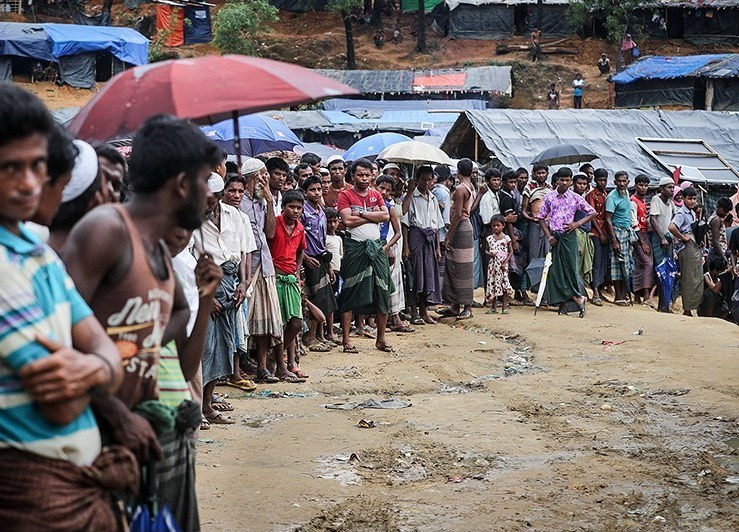
Having faced systemic discrimination in Myanmar for decades, violence toward the Rohingya people reached genocidal levels during the 2012 Rakhine State riots, and later escalated to the 2017 military-led operations that forced over 700,000 Rohingya out of Myanmar and into neighbouring countries such as Bangladesh and India. An estimated 40,000 Rohingya fled to India, settling in urban slums in the areas of Assam, Jammu, Delhi, Hyderabad, and Mewat (Haryana).

In the early days, India maintained a measured silence by allowing United Nations High Commission for Refugees (UNHCR) to both register and issue refugee status cards to Rohingya immigrants entering Delhi. At that time, UNHCR’s mandate recognized approximately, 17,500 Rohingya. Unlike the Tibetan or Tamil refugees, the Rohingya never received official refugee status by the government, nor were they socially integrated into communities. Indian officials publicly referred to them as “illegal immigrants” and “potential security threats,” greatly departing from India’s treatment of other refugee groups in the past.

By 2017, the shift became all the more apparent when the Ministry of Home Affairs announced that all Rohingya would be identified and immediately deported to Myanmar. The government cited to national security concerns and alleged terror group affiliations to justify its decision—a claim that has never been substantiated with public evidence.

May 2025 Maritime Deportation

On 6 May, Delhi police officers arrested a group of 43 refugees from Delhi under the pretext of “biometric data collection.” Among them were women, children, elderly, and individuals battling cancer—many of whom possessed valid UNHCR cards. Authorities then detained the refugees in various police stations across New Delhi for over 24 hours, denying them family visits and access to lawyers.

Later that night, authorities blindfolded the detainees, binding their hands and shuttling them to Indira Gandhi International Airport via chartered busses. From there, the detainees were flown to Port Blair in the Andaman and Nicobar Islands—approximately 2,500 kms from Delhi. Upon landing, police transferred the blindfolded detainees aboard an Indian naval vessel berthed offshore. Survivors reported being tortured, sexually abused, and accused of terrorism while onboard.

In the early hours of 8 May, and after depriving detainees of food, water and medical care for nearly two days, naval personnel threw the detainees overboord into the Andaman Sea near Myanmar. Naval personnel ordered them to swim toward a “safe” international refuge, stranding them in open water with only life jackets. While unaccompanied children and those battling illnesses faced a high risk of drowning, there are no reports to show how many survived. Of those who did, survivors later reported that they reached Myanmar shores by sheer luck given their exhausted states. According to some reports, detainees had asked the naval authorities to take them closer to the Bangladesh border due to persecution fears in Myanmar.

These events were disclosed to a Supreme Court of India bench (Justices Surya Kant, Dipankar Datta & N. Kotiswar Singh) on 8 May during ongoing the Rohingya litigation, yet the court declined to grant interim relief, adjourning the matter to 31 July 2025.

On 13 May, two of the deportees filed Mohammad Ismail v. Union of India (Diary No. 25892/2025), seeking an immediate return to Indian custody, release from unlawful detention, compensation of ₹5 million per person, and formal recognition of their UNHCR refugee status.

The parties’ petition asserts that Indian authorities subjected them to the physical brutality of being blindfolded, bound, and forced swim in international waters, referencing the procedural cruelty towards stateless persons cast adrift without due process.

Recently, Chief Minister Himanta Biswa Sarma of Assam—a border State in India—publicly acknowledged that his government would begin “pushing back” Rohingya refugees held in detention centres to Bangladesh instead of processing them through India’s legal system. He described this method as a “new approach” to immigration in which the government would use expedited returns in lieu of formal arrests and prosecution. This government action emphasizes the state’s shift from judicial oversight to summary expulsion in the handling of non-citizens.

On 15 May 2025, UN Special Rapporteur on the situation of human rights in Myanmar Tom Andrews condemned the reported maritime deportation as “nothing short of outrageous” and opened a formal inquiry into what he called “unconscionable, unacceptable acts” by Indian authorities. In the UN press release, Andrews referenced credible reports of Indian authorities blindfolding Rohingya refugees, transferring them to naval vessels in Port Blair, and then forcing them into the Andaman Sea, which he said represents a “blatant disregard for the lives and safety of those who require international protection.” Andrews implored the Indian government to “provide a full accounting of what happened,” urging the government to gather first-hand testimonies and to refrain from any inhumane or life-threatening treatment of refugees. He further warned that such acts would violate the principle of non-refoulement under international law.

In an earlier communication sent on 3 March 2025, Andrews urged New Delhi to end the arbitrary and indefinite detention of Rohingya asylum seekers, including those previously held in Assam and Delhi, and to allow UNHCR and other independent monitors full access to detention facilities. He stated that any forced repatriation of the Rohingya to Myanmar—where they face a grave risk of torture, persecution, and death—must cease immediately, and that officials responsible for these reported violations must be held accountable. This call by the Special Rapporteur is crucial to reaffirming India’s customary international law obligations and the government’s obligations under the International Covenant on Civil and Political Rights (ICCPR) to protect all individuals from refoulement and inhuman treatment.

National and International Legal Frameworks

Although India does not have a national refugee law, the Constitution offers some protection to noncitizens. Article 14 guarantees equality under the law, Article 21 protects life and liberty, and Article 51(c) provides that the government must respect both international laws and treaty obligations.

In the landmark judgements Maneka Gandhi v. Union of India and NHRC v. State of Arunachal Pradesh, the Supreme Court extended constitutional protections to all persons and not just citizens. Despite these precedents, the executive circumvented these principles by labeling the Rohingya “illegal migrants” under the Foreigners Act, 1946 and The Passport (Entry into India) Act, 1920. These laws predate the Constitution and grant the government discretionary powers to detain and deport noncitizens.

Turning to international frameworks, even though India is not a party to the 1951 Refugee Convention and its Protocol, it is still bound by customary international law and the principle of non-refoulement, which prohibits states from returning migrants to countries where they face heightened persecution risks. India is also a party to the Convention Against Torture (CAT)—which it has signed, but not ratified—and to the ICCPR, both of which prohibit states from arbitrarily detaining, torturing, and subjecting people to inhumane treatment. Article 7 of the ICCPR prohibits states from refouling migrants if such return would result in torture or degrading treatment, as this constitutes a violation of international law. Similarly, Article 9 of the ICCPR obligates India to protect a person’s liberty and security rights. Deporting migrants at sea without due process violates all of India’s international legal obligations, as does the country’s ongoing deportations of Rohinya to Myanmar despite repeated, urgent appeals from UN Special Rapporteurs and UNHCR.

Maktoob Media reports have touched on the social impacts of India’s maltreatment and deportation practices of Rohingya groups, which include social marginalisation, digital exclusion due to the government’s denial of Aadhaar and Unique Identity cards, elevated school dropout rates, and increasing economic hardship.

Many Rohingya detainees report being held indefinitely by Indian authorties and being denied access to counsel for years on end. Some had UNHCR refugee cards, which were dismissed by Indian authorities as invalid. One detainee testified that her infant daughter died due to denial of medical care after Indian authorities tear-gassed a group of Rohingya detainees trying to escape the center.

These incidents violate several fundamental legal protections, including Article 6 of the ICCPR, which guarantees the inherent right to life; Article 14, which ensures the right to a fair and public hearing; and Article 24 of the Convention on the Rights of the Child, which guarantees children’s access to medical care. They also contravene Article 21 of the Indian Constitution, which guarantees the right to life and personal liberty. UNHCR and other UN bodies have issued regular reports and updates noting India’s increasing reliance on detention and refoulement despite the UNHCR’s mandate registration of many Rohingya.

Indias Retreat from Moral Leadership

India has long positioned itself on the global stage as a moral leader—an advocate for the oppressed and a vanguard of South-South cooperation. In 1959, first Prime Minister of India Jawaharlal Nehru said of Tibetan refugees, “…we have considered it our duty to receive these Tibetan people who have come to India and to help them to rehabilitate themselves.” This political sentiment reemerged during the 1971 Bangladesh Liberation War, where India sheltered over 10 million refugees.

However, the Indian government’s current approach to Rohingya refugees marks a steep moral and strategic departure from the government’s previous mentality. Communal politics, security narratives, and majoritarian nationalism all have eclipsed India’s historical traditions of welcoming refugees. The 2019 Citizenship Amendment Act (CAA)—which explicitly excludes Muslims from fast-tracked citizenship—has further undermined India’s secular refugee policy and its commitment to upholding international law.

India’s longstanding decision not to ratify the 1951 Refugee Convention, combined with the government’s refusal to explain this stance or enact a domestic refugee law, has shifted from a posture of strategic ambiguity to one of legal hostility. Official government statements and public policy shows that refugees, especially Muslim minorities like the Rohingya, are now viewed as demographic threats instead of victims. If India continues this trajectory, it not only endangers thousands of vulnerable lives, but also forfeits its historic identity as a nation that stood quietly, but firmly, on the side of the displaced. If authorities fail to investigate the government’s recent deportation of Rohingya refugees, fail to restore legal protections, and prioritize political expedience over constitutional values, India will not merely be turning away refugees—it will be turning away from itself. The May 2025 maritime deportation marks the culmination of a policy that prioritizes majoritarian nationalism over constitutional morality. The ongoing case of Mohammad Ismail v. Union of India offers the Supreme Court a chance to reaffirm India’s Article 21 constitutional protections and its international legal obligations. There is an urgent need for judicial intervention to restore India’s asylum ethos and prevent further erosion of human dignity.

Opinions expressed in JURIST Commentary are the sole responsibility of the author and do not necessarily reflect the views of JURIST's editors, staff, donors or the University of Pittsburgh.