Monday, June 16, 2025

Meet The Bird That Soars Higher Than Any Other. Hint: It Flies Higher Than Commercial Airplanes


By Scott Travers,
Contributor. I write about the world of biology.
Jun 14, 2025,
FORBES
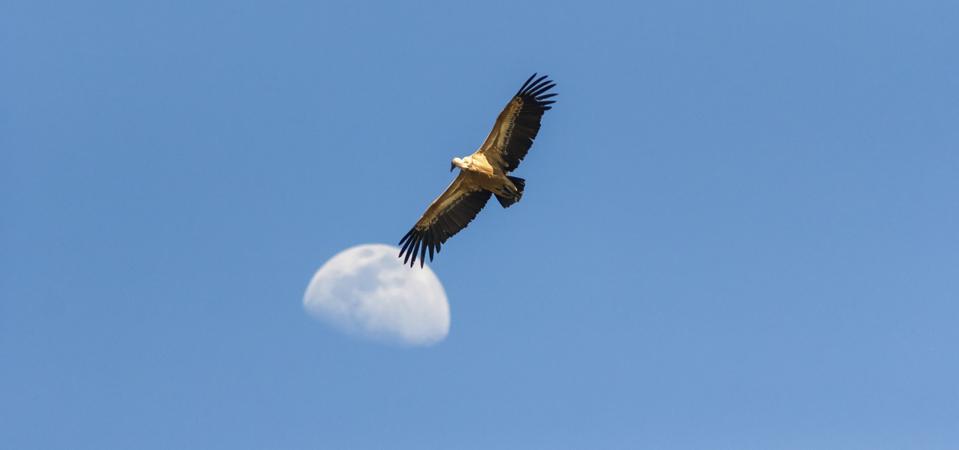


Most bird species don’t fly above a few thousand feet in the air. But there are a few outliers. Here ... Moregetty

Most birds don’t fly that high in the air. In fact, some birds – such as the emu or the cassowary – don’t fly at all. They have wings, but only in the “vestigial” sense, meaning that their wings are non-functional remnants of their flying ancestors. Evolution went even further in New Zealand’s moas, which were completely wingless.

Yet there are some flight-capable bird species with a knack for soaring really high in the air. While this may sound like a matter of choice, it’s actually quite complicated. Flying at high altitudes requires birds to be more efficient in their movement and energy production.

For instance, research published in the Journal of Experimental Biology suggests that high-altitude birds have developed unique specializations such as more effective breathing patterns, larger lungs and blood with a higher oxygen affinity.

These adaptations, according to the research, allows birds to “improve the uptake, circulation and efficient utilization of oxygen during high-altitude hypoxia.”

High-flying birds also tend to have larger wings than their low-flying cousins, presumably to allow the birds to soar without expending as much energy.

Research has identified a handful of bird species that are known to soar at altitudes of 20,000+ feet – the most notable and highest soarer being the Ruppell’s griffon. Here is more detail on the record-setting, “Chuck Yeager’s” of the bird world.


Ruppell’s Griffon (37,000+ ft.)


Ruppell's griffon, the highest-flying bird ever recorded, shown in flight.

This African vulture holds the record for the highest known bird flight. In fact, a Ruppell’s griffon collided with a commercial aircraft over western Africa at an altitude of 37,000 feet, higher than the cruising height of most airliners. The species is uniquely adapted to extreme altitudes, with hemoglobin that binds oxygen more effectively than that of almost any other bird. These vultures rely on powerful soaring techniques and can cover vast distances in search of carrion, making use of rising thermal currents to stay aloft with minimal energy expenditure.

Bar-Headed Goose (27,000+ ft.)


This bird is known for its grueling migrations over the Himalayas, including Mount Everest. Bar-headed geese have been recorded flying at elevations above 27,000 feet during their seasonal journeys between Central Asia and the Indian subcontinent. To cope with the thin air, they possess a high lung capacity and their muscles are particularly efficient at using oxygen. These physiological traits allow them to flap continuously, rather than just soar, even in oxygen-starved environments.


Alpine Chough (25,000+ ft.)


The alpine chough, a member of the crow family, lives in mountainous regions across Europe, North Africa and Asia. Though not migratory in the same way as the bar-headed goose, this species regularly forages and nests at high altitudes. Observations have documented Alpine choughs flying at over 25,000 feet. Their strong, curved wings and acrobatic flight style allow them to navigate rugged terrain with ease, making the most of updrafts and wind currents that sweep over alpine cliffs.

Whooper Swan (25,000+ ft.)


Known for their distinctive trumpet-like calls, whooper swans are powerful, long-distance migrants. These swans have been spotted by pilots at heights of up to 25,000 feet during their transcontinental migrations between Europe and Asia. Despite their large size, their strong wings and streamlined bodies help them maintain high-altitude flight over long distances. They often travel in V-shaped formations that improve aerodynamic efficiency and conserve energy among the flock.

Steppe Eagle (24,000+ ft.)


The steppe eagle is a bird of prey that breeds in the open plains and steppes of Central Asia. These eagles are skilled soarers, often riding thermal updrafts to reach extreme heights. Their broad wings and keen eyesight make them efficient hunters and scavengers, capable of spotting prey from great distances. Their long-distance migratory routes take them across mountainous regions where such high-altitude flights are essential.

Lammergeier (24,000+ ft.)


Also known as the bearded vulture, the lammergeier is a striking bird that thrives in mountainous regions from Europe to the Himalayas. It has been recorded flying at heights of up to 24,000 feet, gliding on thermals. Unique among vultures, lammergeiers primarily feed on bone marrow, often dropping large bones from great heights onto rocks to crack them open. Their adaptations for high-altitude flight include long, narrow wings and a lightweight frame, enabling them to maneuver with precision in thin air.


Demoiselle Crane (24,000+ ft.)


Despite their delicate appearance, demoiselle cranes are among the toughest migratory birds in the world. Each year, they make a perilous journey over the Himalayas to reach their wintering grounds in India. Flying at altitudes up to 24,000 feet, they endure fierce winds, cold temperatures and low oxygen levels. These cranes are known for their resilience and strong familial bonds, often migrating in flocks that include young birds guided by their experienced elders.




U$  Senior care insurance costs double over a decade with steepest risks for SNFs

KIMBERLY MARSELAS
@KIMMARSELAS

KIMBERLY BONVISSUTO
JUNE 14, 2025

Falls continue to be the most frequent source of liability claims in senior care facilities. (Photo: Getty Images)


The average payment for senior care liability claims doubled in the decade ending in 2024, with skilled nursing and other higher-acuity settings facing the highest increases.

Liberty Mutual highlighted courtroom tactics as one reason for the steep rise in its recent 2025 senior care claims study.

“Factors contributing to the increase in average indemnity payments include legal system abuse and plaintiffs’ counsel use of reptile theory courtroom tactics to inflame the jury,” the report noted. “By focusing on the providers’ chronic understaffing and payment of low employee wages, plaintiffs claim gross negligence in an effort to circumvent damage caps.”

While some states are targeting tort reform as a result, the insurance company offered other insights about the current market and where providers can make improvements to protect themselves from incidents, claims and liability.

Its study analyzed 2,500 closed claims reported under Liberty Mutual/Ironshore policies resolved within the past 12 years.

Overall, the average claim rose to $226,028 across senior care sectors by the end of 2024.

Falls drive claim volumes


Falls-related injuries (45% of all claims, the biggest percentage by far) consistently drove the overall volume of claims, pressure ulcers and abuse — although less frequent — led to higher claims costs.

“Although fall-related injuries generate more claims overall, the financial severity (average gross incurred) is notably greater for pressure ulcers, abuse, and elopements,” the study found. “These categories, while fewer in number compared to falls, present significant financial consequences, particularly in skilled nursing facilities, where residents’ mobility is often limited due to comorbidities.”

In addition, 40% of closed claims contained wrongful death allegations, a large drive of claim frequency.
(Source: Liberty Mutual 2025 Senior care claims study)

Failure to treat/prevent pressure ulcers resulted in 331 claims in skilled nursing, 30 claims in assisted living, and just one claim in independent living.

For falls, nursing homes experienced 557 claims, with 209 in assisted living and 75 in independent living.

The report authors said that the data underscore the need for “consistent and meticulous” documentation regarding resident assessments for care plans, falls risks and wound care management, as well as the “critical” need for comprehensive safety plans. The report also emphasized the importance of implementing resident monitoring systems, employee training on safety protocols and comprehensive care plan interventions to prevent elopements.
Costs vary by care level

Skilled nursing providers saw the highest average claims cost at $210,000 per incident, followed by assisted living communities at $159,000 and independent living settings at $74,000.

Those costs often were doubled when indemnity was involved, due to the associated expenses to launch a “robust defense.”
(Source: Liberty Mutual 2025 Senior care claims study)

The report authors attributed the cost disparities to the inherent vulnerabilities of residents in higher levels of care. In addition, as the level of care escalated, so did the complexity and expense of defending and settling claims, including the need for specialized expert witnesses, extensive medical records reviews and in-depth analysis of comorbidities.

Failure to protect residents from abuse led to the highest claims costs. Four claims in independent living had an average cost of $568,000, compared with 23 claims in assisted living at an average cost of $227,000 and 28 claims in skilled nursing settings costing an average of $286,000.

“The financial liabilities linked to allegations of abuse and elopement are viewed through a lens of perceived preventability, particularly in settings with vulnerable populations,” the report read. “This emphasizes the critical importance of regular staff training on the facility’s abuse policies, safety protocols, de-escalation techniques and thorough pre-employment screening to mitigate risks.”
Sri Lanka’s elephant corridor plan ‘unscientific’


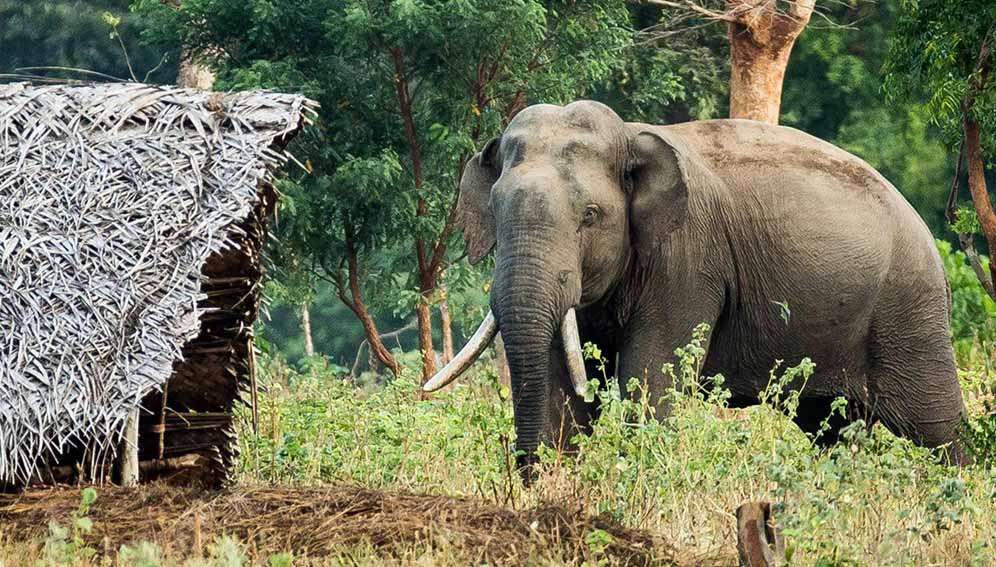
An elephant near a 'guard hut' in Chena farmland, in Sri Lanka. Nearly 5,000 elephants and 1,600 people in the country have been killed in the last 15 years by human-elephant conflict. Copyright: Rajiv Welikala


Speed read

Sri Lanka’s human-elephant conflict is costing lives 
(BOTH HUMAN AND ELEPHANT)

Government plans to adopt ‘elephant corridors’

But experts say approach is unscientific


By: Malaka Rodrigo
13/06/25
 SciDev.Net


[COLOMBO, SciDev.Net] Wildlife experts question the wisdom of adopting “elephant corridors” in Sri Lanka to end the country’s deadly human-elephant conflict, calling instead for a more science-based approach.

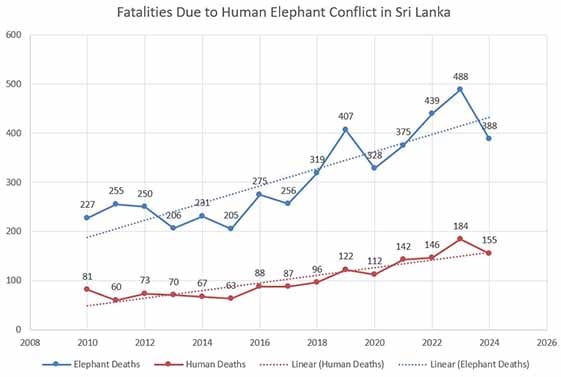
Nearly 5,000 elephants and 1,600 people have been killed in the last 15 years in clashes between elephants and humans in Sri Lanka, home to one of the largest remaining populations of Asian elephants, according to official figures seen by SciDev.Net.

Gunshots, electrocution and homemade explosives hidden in food, called hakka patas or jaw bombs, are the leading causes of elephant deaths.

Human deaths occur mostly when elephants raid crops and homes in search of food and water. But they are sometimes also caused by irresponsible behaviour such as approaching wild elephants, especially under the influence of alcohol, and harassing or chasing them.


Graph showing fatalities in human-elephant conflict in Sri Lanka

To try to end the conflict, the Sri Lankan government plans to introduce elephant corridors, based on long-distance migration models used in other countries.

According to Sri Lanka’s deputy minister of environment, Anton Jayakody, four major elephant corridors have been selected as first step. Sources close to the ministry say these will be designated as protected areas to mark World Environment Day on 5 June.

However, Prithiviraj Fernando, chief scientist and top official at Sri Lanka’s Centre for Conservation and Research, thinks the strategy ignores the basic behaviour of the country’s elephants.

‘Wishful thinking’


“Sri Lanka’s elephants are non-migratory, so corridors don’t work when elephants don’t move between parks,” Fernando tells SciDev.Net.

Fernando, who used GPS tracking to study elephant movements for decades, says that 70 per cent of Sri Lanka’s less than 6,000 remaining elephants live outside protected areas, and many stay outside these areas even when roaming for food.

“The idea of confining elephants to parks is based on wishful thinking, not science,” he says.

Last year, Sri Lanka’s Department of Wildlife Conservation recorded 157 human deaths and over 200 injuries linked to elephant encounters. Property and crop damage claims exceeded 3,700 cases, costing the government Rs385 million (US$1.3 million) in compensation.

“Most of the victims are poor farmers in rural Sri Lanka,” says E.G. Wickramasinghe, divisional secretary of the town of Galgamuwa in the North Western Province — one of the hardest-hit areas.

Government compensation stands at one million Sri Lankan rupees (around US$3,330) per human fatality. But for many families, this does little to replace the loss of a breadwinner, says Wickremasinghe.

Failed attempts


In the first four months of this year, 150 elephants and 50 humans had already died, leading authorities to resume traditional tactics such as elephant drives. In one such effort, rangers attempted to drive the elephants into Wilpattu National Park in northwestern Sri Lanka. But the operation resulted in elephants congregating in a village, intensifying conflict in that area.


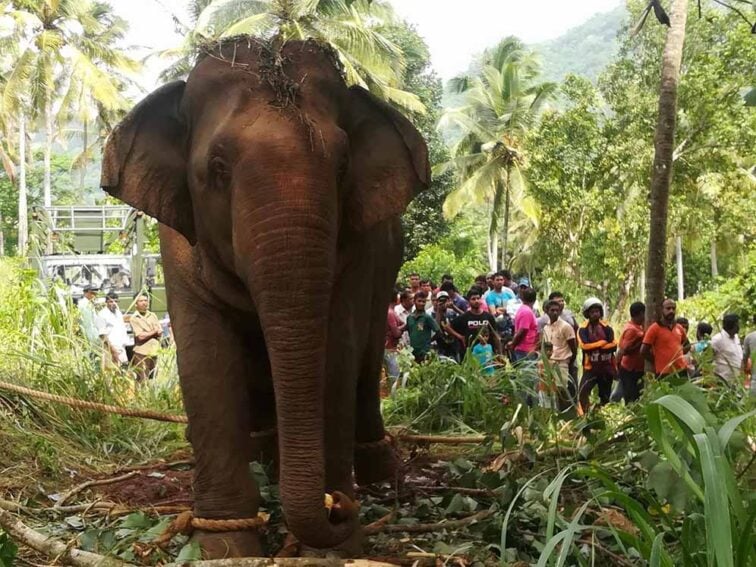
Attempts to relocate elephants have failed to end clashes between the animals and local populations. Photo courtesy of DWC.

A controversial elephant holding ground, established in 2013 to detain rogue elephants, ended in failure, with most animals unaccounted for after relocation.

“There is no record of a successful elephant drive in Sri Lanka as elephants return and they’re more aggressive because they associate humans with trauma,” says Sumith Pilapitiya, elephant biologist and former head of the Department of Wildlife Conservation.

In Sri Lanka, electric fences designed to deter elephants often fail due to poor maintenance, misplacement and limited community involvement. Elephants are also intelligent enough to learn techniques to breach the fences, making them less effective.

Despite mounting evidence, successive governments have ignored scientific advice looking for instant results, according to Fernando.

“The science is clear. Protected areas are at carrying capacity, [meaning the area can’t support any more of the species] so the elephant conflict mitigation must adapt,” he says.

Science-based plan


One attempt to shift towards evidence-based solutions was Sri Lanka’s National Action Plan for the Mitigation of human-elephant conflict, developed by a presidential committee chaired by Fernando in 2020. The plan proposes community-managed electric fences, mobile fencing around seasonal farmland, and managed elephant ranges to allow elephants to roam freely in specific landscapes.


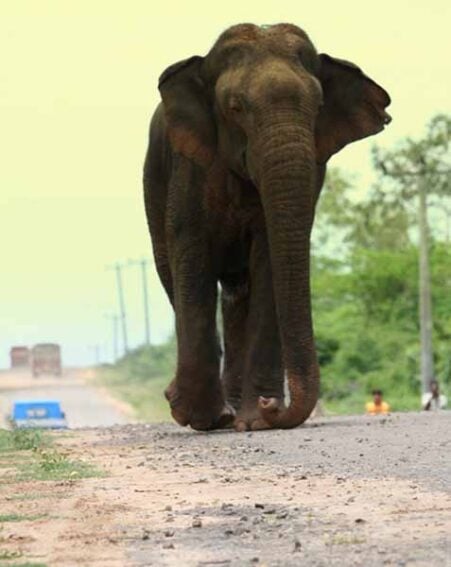
An elephant walking on a road in Sri Lanka. Photo courtesy of CCRSL.

These interventions proved successful when piloted last year and both elephant and human fatalities declined. However, since a change in government in late 2024, the action plan has been set aside.

Conservationists warn that abandoning science-based policy could reverse recent gains.

“The National Action Plan is a scientifically grounded, peer-reviewed framework and Sri Lanka’s best chance to reduce conflict gradually and sustainably,” Pilapitiya tells SciDev.Net.

“The human-elephant conflict doesn’t have instant solutions, so it is of utmost importance to carry out science-based solutions to get results.”

Emerging from its worst economic crisis, Sri Lanka has cut conservation budgets, impacting wildlife efforts. But the real obstacle to implementing evidence-based solutions is weak political will and poor understanding, says Pilapitiya.

Hemantha Withanage, executive director and senior environmental scientist at the Centre for Environmental Justice, says that unplanned development — particularly agricultural encroachment — is a major driver of the conflict.

Withanage also stresses the need to use science and technology to improve yields from existing farmlands, to lessen the need for new areas to be cleared. He urges authorities to declare any remaining forest patches that are important elephant habitats as protected areas.

“Unless land use is regulated and wilderness preserved, the problem will only escalate,” he adds.

This piece was produced by SciDev.Net’s Asia & Pacific desk.
India-Pakistan water pact ‘outdated’ in climate era


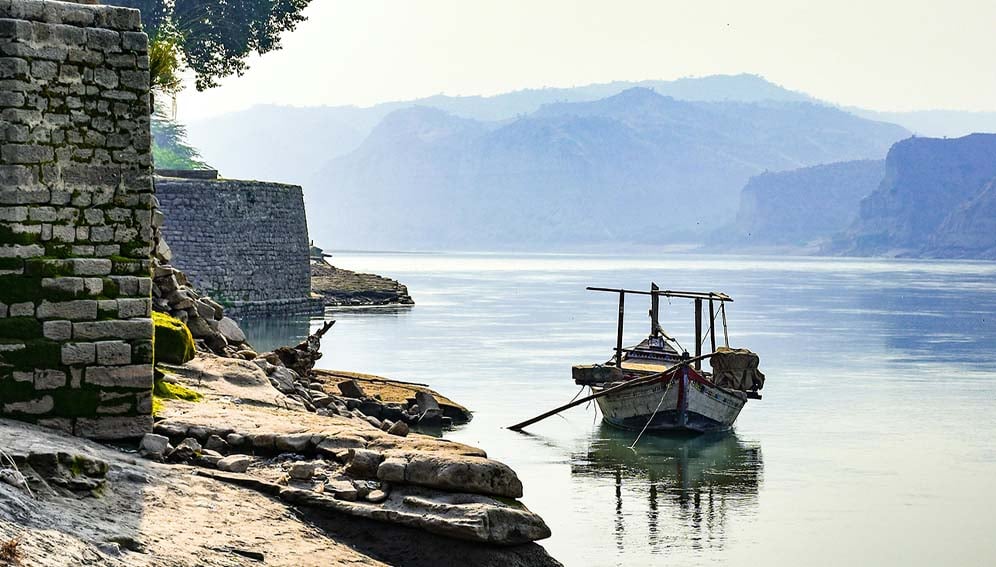
A boat on the Indus River in Makhad, Punjab, Pakistan. Water experts have suggested that the India-Pakistan water treaty (which governs the sharing of the Indus River) should be strengthened to factor in challenges such as climate change or be scrapped entirely.
Copyright: Iqbal Khattak (Pexels)


Speed read

India unilaterally suspended the 1960 Indus Water Treaty with Pakistan

It cited cross-border terrorism but had already been demanding changes

Treaty needs updating to cover climate change, population growth, say experts


By: Ranjit Devraj
13/06/25
 SciDev.Net


[NEW DELHI, SciDev.Net] A disputed India-Pakistan water treaty should be strengthened to factor in challenges such as climate change or scrapped entirely, say water experts amid heightened tensions between the two countries.

The Indus Water Treaty has governed the sharing of the Indus River for 65 years, with Pakistan and northern India heavily dependent on its waters.

But the bilateral agreement was suspended by India following the killing in April of 26 tourists in Indian-administered Kashmir by militants who allegedly crossed over from Pakistan.

India’s foreign minister S. Jaishankar said the treaty would be put on hold until Pakistan “credibly and irrevocably” stopped supporting cross-border terrorism, leaving experts to speculate on the future of the Indus waters.

Shakil Ahmad Romshoo, vice chancellor of the Islamic University of Science and Technology, Srinagar and expert in hydrology and glaciology, says the suspension of the treaty might not significantly alter Indus water flows in the short-term.

“However, over the long term, spanning a decade or more, the upstream country (India) could develop the capacity to regulate flows more assertively, potentially affecting water availability downstream (in Pakistan) if the present impasse continues,” Romshoo told SciDev.Net.

A fresh treaty involving all basin countries, including China and Afghanistan, “seems unlikely” to Romshoo, given the political tensions.

“A more practical approach would be to strengthen the existing Treaty by addressing common concerns like climate change, groundwater availability, pollution and water variability within its current framework,” he said.


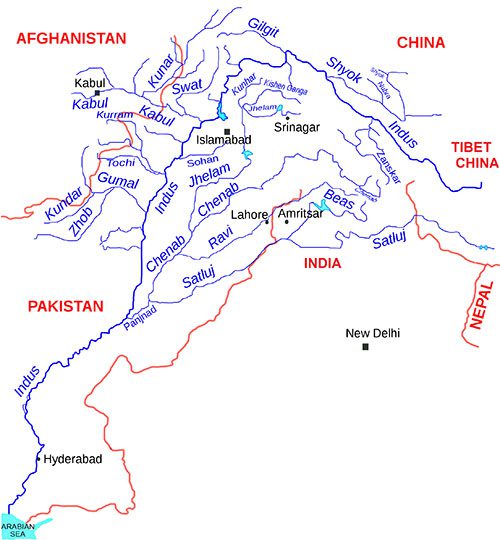
Map showing Indus River Basin without boundaries of disputed region. (By Kmhkmh and boundaries of disputed regions removed by Fowler&fowler).

Dan Haines, associate professor at the department of risk and disaster reduction of University College, London, said renegotiation of the treaty is the most likely path to resolving the situation. The other possible options are conditional reinstatement of the existing treaty or scrapping it permanently, he said.

Nine in every ten Pakistanis live within the Indus Basin and major cities like Karachi and Lahore rely on the Indus River and its five tributaries for drinking water. About 80 per cent of the country’s irrigated agriculture depends on its waters.

For more than a decade, India has been pressing for changes to the Treaty to incorporate new engineering techniques, climate change and faster melting of the Himalayan glaciers and snow. Pakistan has brushed off India’s requests, resulting in a breakdown of data exchanges and communication mandated by the treaty.

“It is a horrible treaty,” said Daanish Mustafa, professor in critical geography at King’s College, London.

“It is outdated, and a fresh agreement taking in the views of all stakeholders, including the Kashmiris, is the best way forward.

“It has already enabled the ecocide of the Indus Rivers’ fragile ecology and deprived millions of fisherfolk of their livelihoods.”

The treaty has been overshadowed by the dispute between the neighbours over Kashmir, through which most of the waters flow.

The agreement was signed in 1960 after lengthy negotiations mediated by the World Bank, with the five tributaries divided between India and Pakistan.

The eastern Sutlej, Beas and Ravi rivers were allocated for India’s exclusive use while the waters of the western rivers, Indus, Jhelum and Chenab, were given to Pakistan.

India had limited rights to non-consumptive uses such as navigation, power generation and agriculture, leading to long-running wrangles.

Antagonism and separation “are written into the DNA of the treaty”, says Mustafa.

“Unlike the 1947 partitioning of the land between the two countries, water does not lend itself to partition,” he added, referring to the division of British-ruled Indi, which preceded the treaty.

“The results are there to see in terms of catastrophic floods, environmental degradation in the delta and high rates of malnourishment in Pakistan’s irrigated districts.”

If renegotiated, the treaty could potentially benefit from the 2014 UN Watercourses Convention, which codifies international law on transboundary water resources.

“If India and Pakistan agree to go back to first principles and entirely reimagine how water-sharing works across borders in the Indus Basin, then the UN Water Convention could be a starting point,” said Haines.

However, he added: “I do not think that is very likely because both countries are heavily locked into the existing model of water use in the basin.”

Mustafa said that giving India exclusive rights to the eastern rivers was inconsistent with international law, which may have given some rights to Pakistan as the lower riparian.

“India cannot easily divert the waters of the eastern rivers as this could result in flooding (in India), especially during the monsoons,” he said.

Pakistan has denied involvement in the 22 April killings and described the suspension of the Treaty as an “act of war”.

India retaliated with bombing raids on suspected militant training camps in Pakistan triggering four days of fierce clashes involving frontline fighters, missiles and drones that ended with a ceasefire on 10 May.

This piece was produced by SciDev.Net’s Asia & Pacific desk.
Namibia’s green hydrogen scheme grows veg in the desert


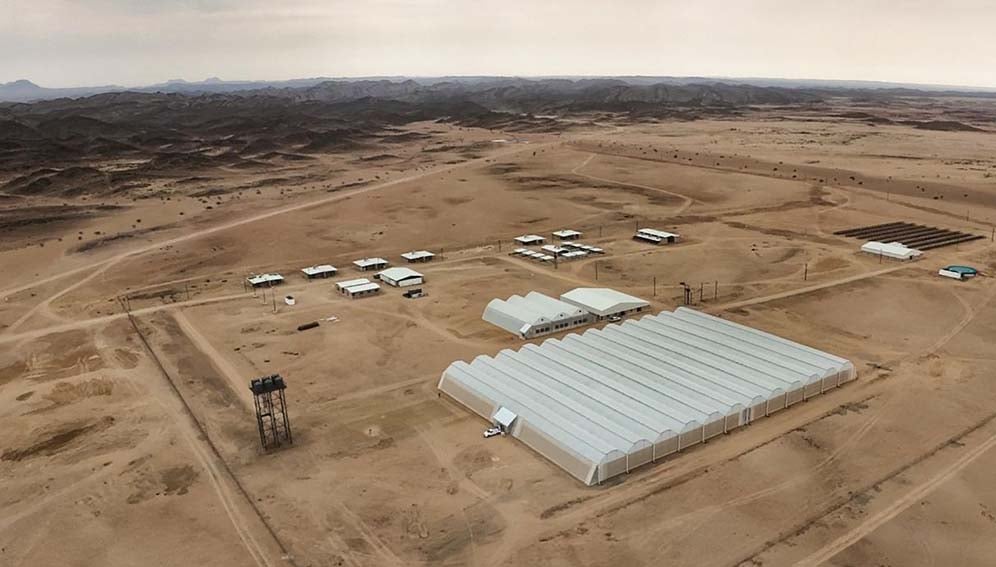
Aerial view of the Daures Green Hydrogen Village in Namibia. Copyright: Jonah Musheko / Green Hydrogen


Speed read

Hydroponic system used to grow vegetables in Namibian desert

Green hydrogen project is set to become Africa’s first Net Zero village

Market viability questioned amid rising competition


By: Vitalio Angula
13/06/25
https://www.scidev.net


[WINDHOEK, SciDev.Net] Researchers in Namibia are growing vegetables in the desert using fertiliser made from green hydrogen, in a project pitching to be Africa’s first Net Zero village.

The Daures Green Hydrogen Village is part of Namibia’s strategy to establish itself as a green hydrogen leader while tackling domestic challenges including dependence on imported fertiliser and mounting food insecurity in a water-stressed environment.

In the pilot phase, renewable energy is being used to generate hydrogen and green ammonia to produce fertiliser for growing tomatoes, cucumbers, peppers, and leafy greens.

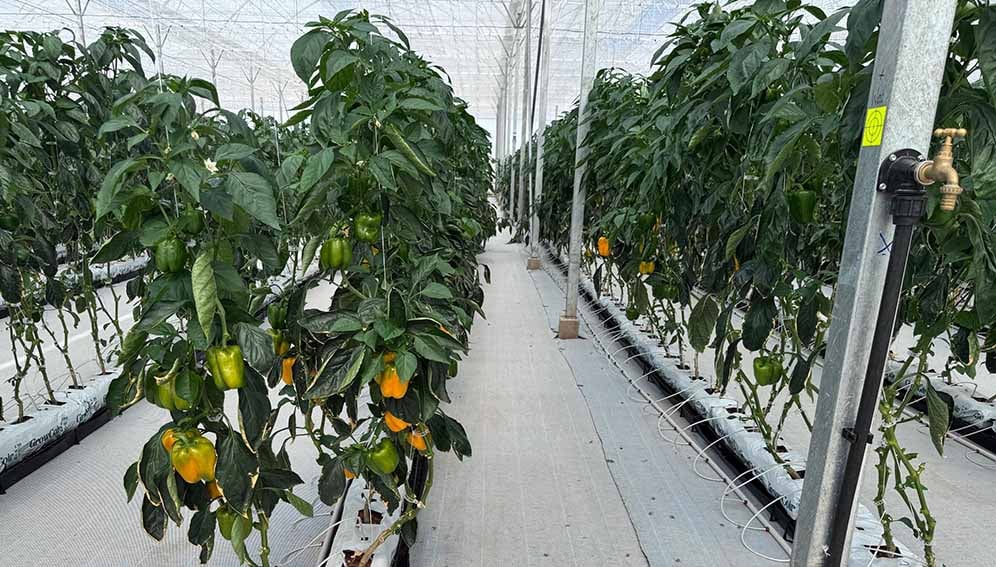
The plants grow in a hydroponic system, which means they feed off mineral salts dissolved in water, rather than being grown in soil. Advanced desalination and water recycling systems ensure sustainable water use, according to project leaders.

The next phase will see the scale-up of renewable energy infrastructure, including solar and wind power, to support increased green hydrogen and green fertiliser production.

Jerome Namaseb, chief executive officer of the Daures Green Hydrogen Village, told SciDev.Net: “The concept for this project is that we intend to demonstrate the nexus between green hydrogen and agriculture.

“Eighty per cent of all ammonia that we use [globally] is actually used for fertiliser production, hence this project aims to demonstrate the full circular economy where we are producing hydrogen [and ammonia] on-site,” Namaseb added.

The facility, in Namibia’s Erongo region, is powered by a 0.75-megawatt solar farm and two wind turbines that supply energy to an electrolyser, which splits water from boreholes into hydrogen and oxygen.


Vegetables grown at the Daures Green Hydrogen greenhouse in April 2025, in Daures, Namibia. Copyright: Vitalio Angula

The hydrogen is then converted to ammonia using nitrogen from the air — a process traditionally dependent on fossil fuels but accomplished here with clean energy.

The project’s agricultural manager, Jason Angula, told SciDev.Net that the process can generate excellent yields from plants.

“Due to the greenhouse sterilising method, one cucumber plant in the Daures greenhouse can produce up to 18 fruits at a time, which is above average yield when compared to cucumbers planted by conventional means,” he said.
Spaghetti irrigation

A special “spaghetti irrigation system” collects any water from the fertiliser that is not used by the plant and pumps it back into the greenhouse to avoid wastage, says Angula.

“We are in the desert so we are trying to save as much water as possible,” he added.

The fully automated greenhouse is also designed to work well in the hot, dry environment.

“It is called a butterfly greenhouse because it has wings that open and close allowing air to come in and out — it’s a natural ventilated house,” explained Angula.

By 2026, the project aims to produce 100 tonnes of green ammonia and 500 tonnes of food a year, says Namaseb. It is projected to create sustainable jobs and food security for more than 1,000 people in the local area.

James Mnyupe, Namibia’s Green Hydrogen Commissioner and a former economic advisor in the Office of the President, said the project was focusing initially on Namibia’s needs, enabling it to become less reliant on imports.

“Namibia intends to meet its own demand for fertiliser before exploring opportunities for export to other countries within the Southern African region and the broader continent,” he said.

“The key thing with this project is that it is allowing Namibia to start learning gradually about the global fertiliser market while also deploying technologies to meet local food security.”

While other African nations including Egypt, Morocco, and Uganda are pursuing similar green hydrogen initiatives, most are oriented toward export markets, particularly Europe, Mnyupe explained.

He believes the Daures project stands out for its direct connection to local food systems.
White elephant?

Some environmentalists have raised concerns about long-term viability.

Environmental analyst Hans-Christian Mahnke questions whether Namibia’s fertiliser or hydrogen will be competitive on global markets, particularly compared to producers closer to Europe, like Egypt and Morocco.

He says: “It’s a good thing that Namibia has positioned itself as a producer of a sought-after commodity, but […] will Namibia’s produce really fetch competitive prices on the international market or will this project become a white elephant with no customers for its produce?”

Yuri Shimweefeleni, a specialist in green hydrogen and ammonia infrastructure, believes Namibia can compete globally due to what he describes as “exceptional renewable energy potential, political stability, and vast unoccupied land”.

“Instead of simply exporting ammonia, Namibia needs to invest in value addition industries such as green fertiliser production, synthetic fuels, and steel industries” to maximise economic returns and create local jobs, he told SciDev.Net.

He acknowledges that projects such as Daures may carry environmental risks including land use conflicts and a strain on water resources, but says these can be mitigated with proper planning and site selection in low-biodiversity areas.


AMERIKA

Most counties lose if Congress cuts SNAP to boost farm subsidies, fund tax breaks

EWG


Millions of American families could lose access to food assistance if funds are diverted to pay for tax cuts from the wealthy and increased farm subsidies, leading to a funding loss for more than three-quarters of counties, a new EWG analysis finds.

The House Republicans’ proposed budget could result in net loss of funding in nearly 80 percent of U.S. counties, deepening poverty and inequality. It would particularly harm rural areas, especially in the very places whose voters – many of them recipients of food assistance – would be hardest hit.

Under one scenario, Congress might cut $300 billion in food assistance from SNAP, the Supplemental Nutrition Assistance Program, and use part of it to fund higher price guarantees for major crops. EWG’s new analysis finds that such cuts would cause a net loss in federal assistance to 78 percent of counties. The tradeoff would come at a high human cost, stripping vital food assistance from millions of families.

The increase in farm price guarantees funded by the SNAP cuts would be a windfall for the largest and most successful farms in a handful of states and counties.

Taking food off the table


EWG’s analysis aims to better understand the impact of potential budget changes. It looks at what would happen if House Republicans cut SNAP by $300 billion over the next 10 years to deliver $230 billion in savings, as required by the House budget resolution, and redirected $35 billion of the savings to increase crop price guarantees.

EWG found that 78 percent of counties could see a net reduction in federal support for residents. Additionally, 90 percent of counties could see fewer people receiving benefits. This plan would take food off the tables for millions of families, just to increase subsidies to major crop producers.

Many counties that backed President Donald Trump in the 2024 election, including counties in Arizona, California, Florida, Pennsylvania and Texas, stand to lose billions in federal funding. The change would hurt not only people living in cities, but also those in farm country – the very communities that helped elect Republican leaders.

Losses in farm country

The analysis of this scenario shows that more than 1,217 rural counties that supported Trump in 2024 could have a net loss in federal funding. That’s even after accounting for farm subsidies that would go up in those counties. Farm country would still lose more than it would gain.

Florida, a stronghold of Trump support, would be among the hardest hit. Nearly every county in the state would lose funding, with EWG’s analysis projecting Hillsborough, Miami-Dade and Polk counties to each lose more than $1 billion in spending across 10 years.

In Pennsylvania, every county would lose funding, including those represented by Republican House Agriculture Committee Chair G.T. Thompson and Republican Reps. Ryan Mackenzie, Scott Perry and Rob Bresnahan. The state as a whole, under this scenario, would lose nearly $13 billion in federal spending over the next decade, EWG finds.

All of California’s counties would lose funding, including those represented by Republican Reps. David Valadao, Young Kim and Ken Calvert. These cuts would leave countless families in one of the most expensive states in the country struggling to put meals on the table.

Michigan would fare no better. Every county would see reductions in federal support, including all of those represented by Republican Rep. Tom Barrett.

Meanwhile, in New Jersey and New York, every county would lose funding, hitting working-class households in districts represented by Republican Reps. Tom Kean (N.J.), and Mike Lawler (N.Y.).
Table: Possible county level changes in federal funding
View here
Proposals for reducing SNAP spending

SNAP is widely recognized as one of the most effective anti-poverty programs in the U.S. A 2021 update to SNAP was the first of its kind in nearly 60 years and lifted more than 2 million people out of poverty, including more than 1 million children.

To reduce SNAP spending, policymakers are considering options that would take food assistance away from millions of Americans. That could mean slashing recent benefit increases, changing eligibility requirements to cut millions of people from the SNAP program, or shifting more of the cost burden to already strained state budgets.

Rolling back the 2021 update to SNAP benefits and slowing the growth of future benefits could help meet the House budget resolution’s savings target, according to the Congressional Budget Office. Some lawmakers also want to expand existing work requirements, a change the CBO says could reduce SNAP spending by as much as $120 billion.

But cuts to SNAP spending would do real harm: Weakening local economies, driving up hunger, and hitting children and seniors the hardest, studies show.

Meanwhile, increasing farm subsidies does little to reduce poverty or strengthen rural economies. Unlike SNAP, these payments are not based on need and rarely reach the Americans most in need of support.

Unlike SNAP, farm subsidies are not subject to any work requirements. They overwhelmingly benefit the largest and most successful operations. EWG recently found that nearly 80,000 people living in cities collected $2.3 billion in farm subsidies between 2019 and 2023. These “city slickers” often do not contribute to on-the-farm labor. Further, about one-third of all crop insurance spending never reaches farmers at all. Instead it goes to major corporations and insurance agents.

Increasing price guarantees for crops does not benefit most farmers. Only 40 percent of farmers grow crops eligible for payments linked to reference prices. The top 10 percent of those farmers collected nearly three-quarters – 73 percent – of all payments linked to reference prices in 2023.

The amounts of these subsidies are based on how much limited and highly coveted land and crop production a farmer has. As a result, the biggest payouts go to the biggest operations.

Very few farmers would benefit significantly from higher reference prices. In 2023, fewer than 200 farms received more than $10,000 from the main federal program that uses reference prices. The bottom 80 percent of program recipients received just $513 on average. This means the majority of farms will continue to not receive meaningful support and instead the largest, most successful farms would reap the benefits.

Net farm income is expected to increase in 2025, thanks to lower production costs and higher market prices. Cuts to SNAP to fund bigger subsidies for the largest farms is not just unfair – it’s a net loss for the entire country. The budget proposal would deepen poverty and inequality while weakening rural economies, especially in the very places whose voters would be hardest hit.

This article has been updated to correct the list of House GOP representatives in Pennsylvania.
Pacific Ocean life at risk from noisy deep-sea mining


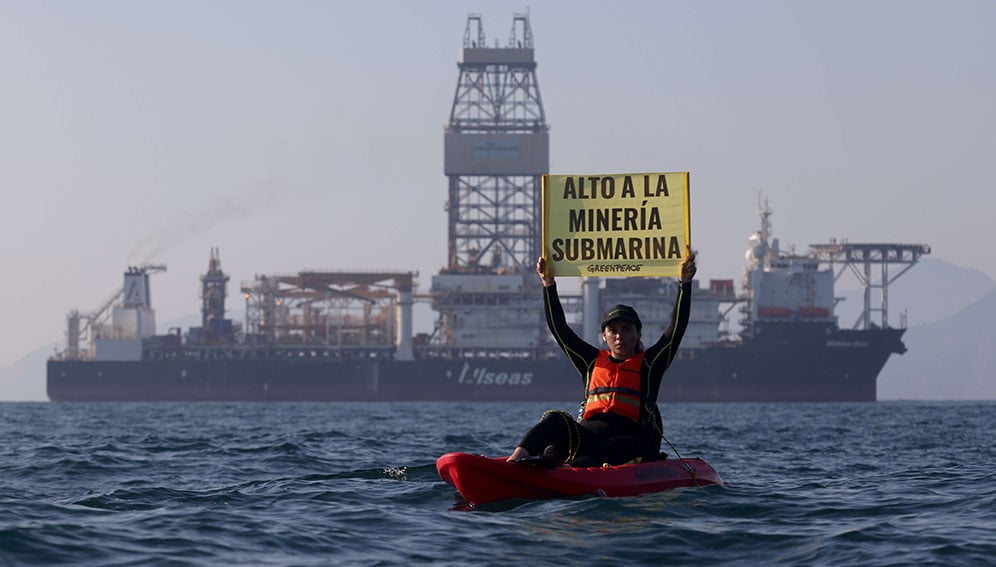
A Greenpeace activist protesting deep sea mining which researchers say will bring unpredictable ecological consequences to the Pacific Ocean. Copyright: Greenpeace


Speed read

Noise from deep-sea mining industry threatens marine life

Knowledge gaps highlight need for data sharing

Global coalition launched to tackle underwater noise pollution


By: Carmina de la Luz

13/06/25
https://www.scidev.net


[MEXICO CITY, SciDev.Net] Noise pollution from deep-sea mining carries an invisible risk for sea-life, warn researchers, urging greater transparency from the industry to help mitigate the harms.

Noise in the deep ocean can lead to a cascade of ecological consequences, altering biodiversity and the behaviours and physiology of many species, research has shown.

This could impact a food chain and ecosystem relied upon by Latin American coastal communities, according to marine experts.

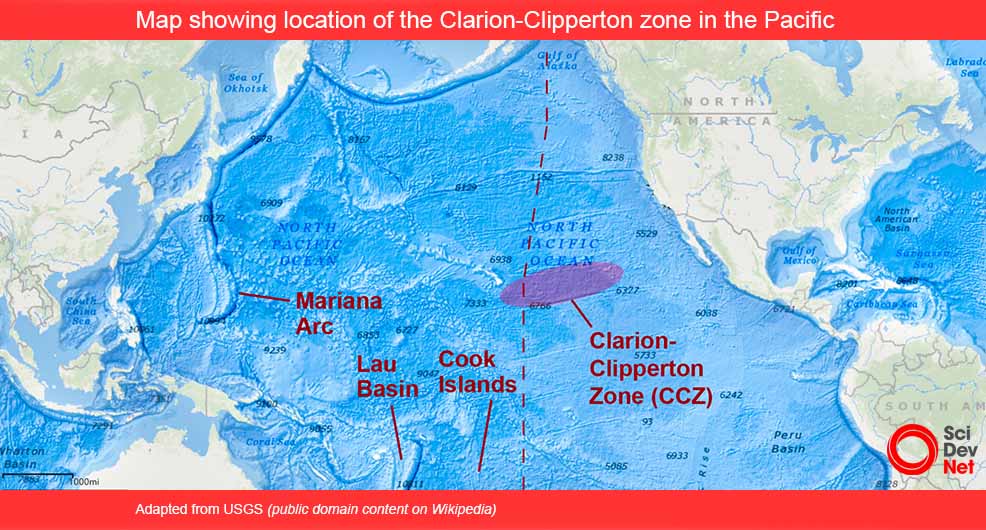
An analysis of more than 2,800 investigations conducted in the Clarion-Clipperton zone (CCZ) — a vast underwater plain twice the size of India located in the Pacific Ocean between Hawaii and Mexico — revealed that most of the types of animals that inhabit it are sensitive to sound.

“The challenge now is to get humanity to agree to protect a heritage that belongs to everyone.”
Alejandro Olivera, Center for Biological Diversity, Mexico

Much of marine life, including invertebrates, fish, and mammals, rely on sound for communication, navigation, and predator avoidance.

However, the effects of noise pollution have only been studied in 35 per cent of species, according to the article to be published in the September issue of Marine Pollution Bulletin. Researchers say more data sharing is needed to understand the true impacts.

Travis Washburn, an assistant professor at Texas A&M University, in the US, and one of the authors of the paper, told SciDev.Net: “We knew there wouldn’t be data on the deep sea, but I was surprised [at how little] data there was on even the shallow stuff.”

“It’s just a big question mark a lot of time,” he said.

It comes as 37 countries launched the first ever global political coalition to reduce harmful underwater noise pollution at the UN Ocean Conference in Nice, southern France, this week.

The High Ambition Coalition for a Quiet Ocean commits to support policies that promote quieter ship design, establish marine protected areas, and support capacity-building to assess and reduce ocean noise.

Speaking at the conference, UN Secretary-General António Guterres warned that unregulated deep-sea mining could turn the ocean into a lawless “Wild West”.


Mineral riches

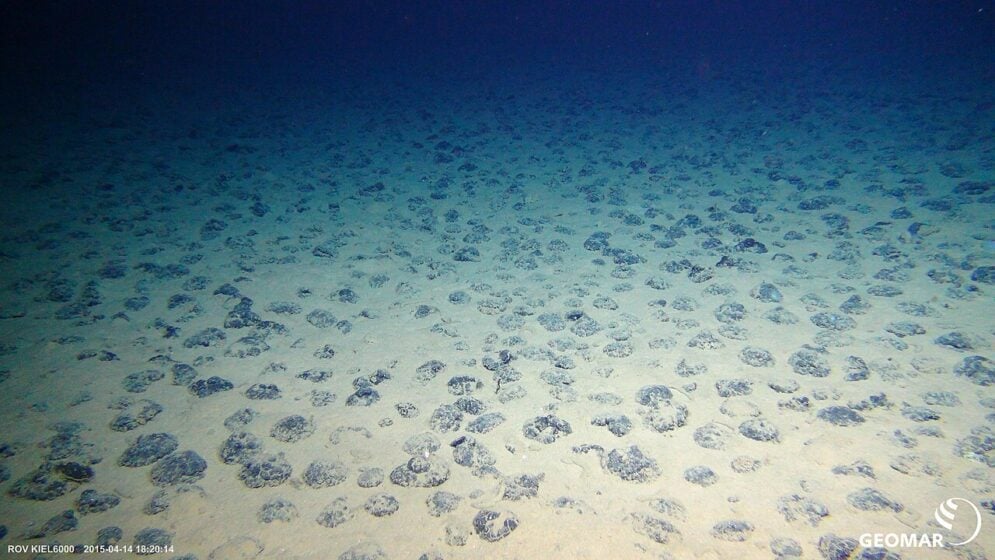
The CCZ, dotted with shiny black rocks, is the world’s largest mineral exploration region, full of mineral-rich deposits of cobalt, nickel, manganese and rare earths.

For industry, exploiting these deposits is the key to the energy transition. For governments, it is the epicentre of a global dispute.

Meanwhile, for many in the scientific community it is an issue that, considering mounting evidence, demands a precautionary approach.

According to the study, up to one third of fish species in the CCZ may be soniferous, meaning they produce or carry sound. Noise pollution can lead to changes in the physiology and behaviour of such species.

“They use it for everything: communication, finding mates, avoiding predators, finding food,” explained study co-author Lucille Chapuis, an expert in marine bioacoustics at La Trobe University in Melbourne, Australia.

“If we add noise into the system, then these functions are just masked or disrupted.”

Around three quarters of the publications reviewed in the study focused on mammalian and fish species, underscoring a major knowledge gap.

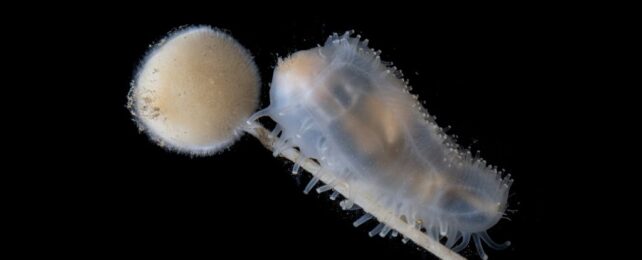
“Invertebrates are massively underrepresented, and the problem is that a lot of the CCZ biodiversity is actually invertebrates,” said Chapuis.

“We know very little about what the responses of these animals are to sound, or whether they can perceive sound.”


A GEOMAR image of manganese nodules on the seafloor in the CCZ. The zone is the world’s largest mineral exploration region, full of mineral-rich deposits of cobalt, nickel, manganese and rare earths. Source: Wikimedia Commons (CC BY 4.0).

A lack of transparency from mining companies also means that data on noise is lacking.

“There’s literally no published data out there on what the sound levels on actual mining activities are going to be — it’s all proprietary,” added Washburn.

“So, we actually used a lot of coastal proxies to get a rough estimate.”
Food chains

For Daniel Cáceres, a Peruvian specialist in ocean governance who did not participate in the research, the study shows that the impact of mining in the CCZ is neither distant nor abstract.

“The sound waves could affect migratory species, regional food chains and ecosystems that have ecological connections with the coasts of Latin America,” he said.

Cáceres told SciDev.Net in an email that the study highlighted the biological and evolutionary dimensions of sound, something that previous evaluations have not considered in depth.

The marine biologist and regional representative of the Sustainable Ocean Alliance says the research “helps to clearly explain why deep-sea mining is incompatible with conservation commitments … and emphasises, for the umpteenth time, the need for the moratorium that Latin America has been leading”.

With deep sea mining on the rise, the research comes at a critical time.

To date, the International Seabed Authority has granted 31 exploration licenses — 17 of them in the CCZ — and is under pressure to approve a code that would allow commercial exploitation.

Moratorium

In April, US President Donald Trump issued an executive order for the country — which is not a member, but an observer in the International Seabed Authority — to advance the exploitation of minerals in international waters.

However, more than 30 countries, including several in Latin America, oppose this extractive activity and call for a moratorium, according to the Deep Sea Conservation Coalition.

Opponents argue that high-impact industrial activity should not be allowed without solid scientific evidence to guarantee that there will be no irreversible damage.

Alejandro Olivera, Mexico representative of the Center for Biological Diversity, told SciDev.Net: “The challenge now is to get humanity to agree to protect a heritage that belongs to everyone.

“These are ecosystems that we don’t even know about, where we would be destroying forms of life that we have not yet discovered.”

This piece was produced by SciDev.Net’s Latin America and Caribbean desk.
Researchers study southern right whale nursery off WA coast as population recovery stalls

By Mark Bennett and John Dobson
ABC Great Southern


A white whale calf with its mother near Point Ann on Western Australia's south coast. (Supplied: Brett Peake)

In short:

WA's southern coastline is a key breeding ground for southern right whales, but numbers are stalling in their recovery from whaling.

Numbers of other species, such as humpback whales, have boomed.
What's next?

Researchers are trying to understand why whale breeding time frames are changing.


Each winter, southern right whales arrive on Western Australia's southern coast to birth their young.

In a remarkable natural habit, the mothers return to their place of birth to deliver their calves.

It offers scientists a chance to study the species' breeding habits as they travel to the crystal clear bay at Point Ann, on the edge of the Fitzgerald National Park, 520 kilometres south-east of Perth.

The study is key to understanding why the population has not bounced back like other species of whales since the end of commercial whaling in the 1970s.


Max Fabry's drone monitoring a southern right whale and calf. (ABC Great Southern: Mark Bennett)


Southern right whales calving less

University of WA researcher Max Fabry said there were still very few southern right whales "compared to what there used to be and what there should be".

The latest strategy for the research is to use drones and aircraft to help find answers.

Mr Fabry and Katy Fannei run this leg of the project, each year surveying a 450km section of coast from Albany to the national park.


Volunteer marine researchers Holly Butterworth and Max Fabry photographing southern right whales at Point Ann. (ABC Great Southern: Mark Bennett)

Each year, they spot 30-70 mother and calf breeding pairs.

"Unlike humpbacks, which have recovered from whaling to quite significant extent, southern right whales are still struggling to establish their pre-whaling population," Mr Fabry said.

"Studies have shown that in the last 10 years, southern right whales are calving less and less, from every three years to every five years."

The group hopes keeping records of mother and calf pairs along the coast will aid understanding of these developments.

Researcher Kimberley Johnson and pilot David Ellett fly along WA's south coast spotting southern right whales as part of the project. (ABC Great Southern: Mark Bennett)

Species' health a 'message' from south coast

Photos and video will be added to international catalogues and shared with researchers across the world who study the species only found in the southern hemisphere.

"We can put together a much more comprehensive idea of what southern right whales are doing, how they're recovering and what the health of the population is," Mr Fabry said.

"Southern right calving rates and their body conditions are really just a message in a bottle from the south coast, Antarctic waters and offshore waters.

"It could be a lack of prey availability, it could be anthropogenic impacts, it could be all manner of things, both human-made and natural processes."


Researcher Kimberley Johnson and pilot David Ellett identifying southern right whales. (ABC Great Southern: Mark Bennett)

A study by the Institute for Marine and Antarctic Science (IMAS), the University of Tasmania and the Australian Antarctic Division found their population recovery seems to have recently stalled at a level far below pre-whaling.

Researchers questioned whether it might be the "end of an era for southern right whale recovery".

There are estimated to be about 2,000-3,500 southern right whales in the Australian population, but that is a long way off the estimated pre-whaling numbers of 70,000-160,000.

Comparatively, there are an estimated 60,000 humpbacks in Australia's east and west populations.

Point Ann is one of three large aggregation areas for the whales in Australia.
Challenges to long-term understanding

Establishing long-term data sets to better understand the animals' recovery has proven difficult because the breeding patterns for each whale are not annual, making tracking numbers challenging.

In 2021, the group spotted 70 mother and calf pairs.

That dipped to 30 in 2023 and 60 last year.


WA's south coast has become a nursery for whales each winter. (Supplied: Brett Peake)

"There is no clear pattern as to whether they're increasing or declining, it's very fluctuating," Ms Fannei said.

"They give birth every three to five years.

"That's elevating in recent years … individuals don't visit the coast every year."

Ms Fannei and Mr Fabry said the project relied on volunteers and the support of local business to continue its work.

"For long-term studies, having local support is so important — we need to know in the next three or five years [whether] we can keep doing this," Ms Fennai said.
Deep-Sea Wonderland Found Thriving Where Humans Have Never Been

Nature14 June 2025
ByJess Cockerill
In our eyes, this very hungry sea cucumber stole the show. (Jialing Cai/The Nippon Foundation – Nekton Ocean Census/Schmidt Ocean Institute, CC BY-NC-SA)


A deep-sea expedition to one of Earth's most remote island chains has surfaced stunning pictures of the vibrant ecosystems surrounding hydrothermal vents that scientists didn't even know were there.


The 35-day journey aboard Schmidt Ocean Institute's Falkor (too) research vessel was part of the Ocean Census's race to document marine life before it is lost to threats like climate change and deep sea mining.


This expedition took an international team of scientists to the South Sandwich Islands, in the South Atlantic near Antarctica, which boasts the Southern Ocean's deepest trench.


Despite facing subsea earthquakes, hurricane-force winds, towering waves, and icebergs, the crew was rewarded with a trove of incredible new discoveries.

You might have already watched the expedition's world-first footage of a live colossal squid, but some of their other finds deserve a moment in the spotlight.


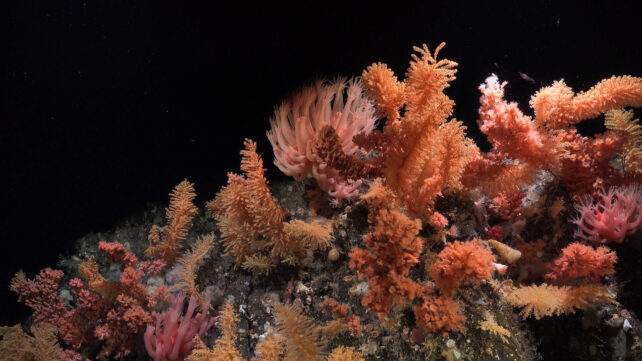
Like this vermillion coral garden thriving on Humpback Seamount, near the region's shallowest hydrothermal vents at around 700 meters deep (nearly 2,300 feet).

Tropical reefs aren't the only vibrant coral gardens the ocean has to offer. (ROV SuBastian/Schmidt Ocean Institute, CC BY-NC-SA)

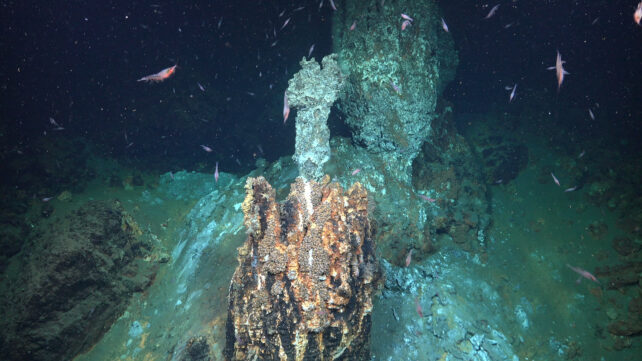
The tallest vent chimney stood four meters (13 feet) tall, proudly sporting an array of life, including barnacles and sea snails. Like drones in a New Year's Eve sky, a fleet of shrimp whizzed round these submarine skyscrapers.

Hydrothermal vents are hubs of life in the deep sea. (ROV SuBastian/Schmidt Ocean Institute, CC BY-NC-SA)

These hydrothermal vents, on the northeast side of Quest Caldera, are the only South Sandwich Island vents explored via remotely operated vehicle (ROV) thus far; we can't wait to see what future expeditions uncover.


"Discovering these hydrothermal vents was a magical moment, as they have never been seen here before," says hydrographer Jenny Gales from the University of Plymouth in the UK.


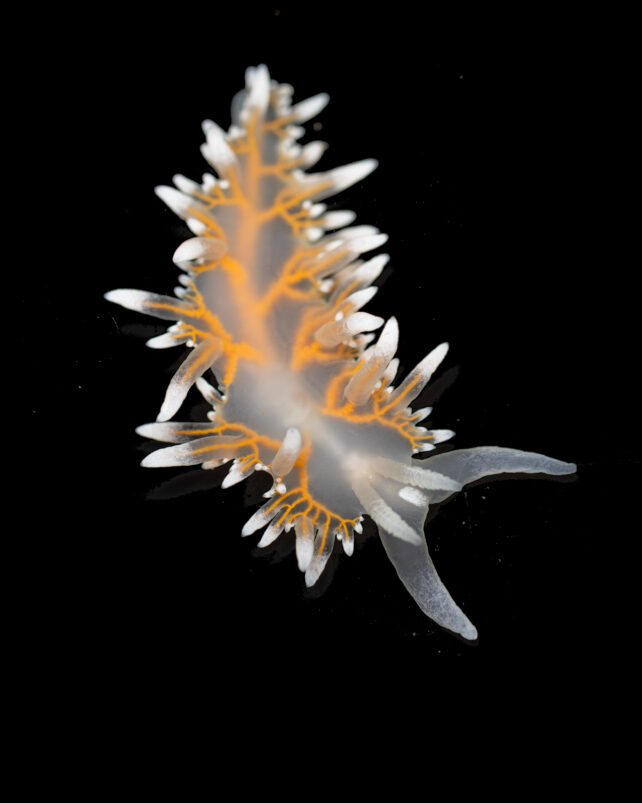
But certain specimens deserve a close-up: like this exquisite nudibranch, unspecified, which blackwater photographer Jialing Cai snapped at 268 meters deep in the near-freezing waters east of Montagu Island

.
Nudibranchs are soft-bodied marine gastropods known for their vivid colors and intricate forms. (Jialing Cai/The Nippon Foundation – Nekton Ocean Census/Schmidt Ocean Institute, CC BY-NC-SA)

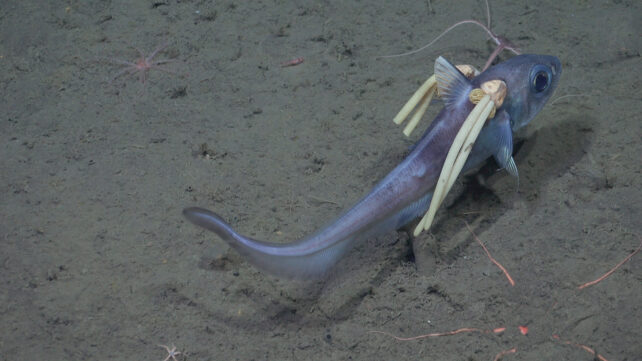
Nearby, a slightly more upsetting moment was captured: a grenadier fish with parasitic copepods – likely Lophoura szidati – tucked into its gills like horrid pigtails.
You'd at least hope they give the fish compliments throughout its day. (ROV SuBastian/Schmidt Ocean Institute, CC BY-NC-SA)

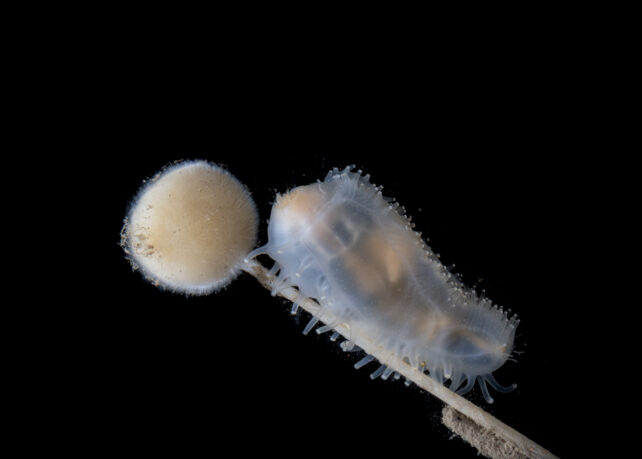
And this stout little sea cucumber, recorded 650 metres below the sea surface at Saunders East, with a gob full of what we will informally dub a deep-sea puffball.

Behold, the most adorable monster of the deep. (Jialing Cai/The Nippon Foundation – Nekton Ocean Census/Schmidt Ocean Institute, CC BY-NC-SA)
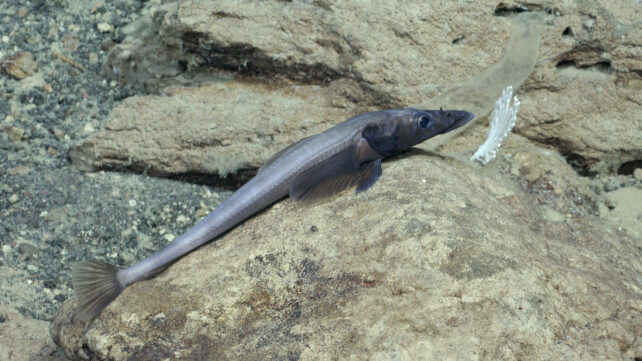
Now, brace yourself for the first ever image of Akarotaxis aff. gouldae, a species of dragonfish that has evaded our cameras for two years since its discovery.
This is probably the first time you've ever seen the banded dragonfish. They're a bit camera-shy. (ROV SuBastian/Schmidt Ocean Institute, CC BY-NC-SA)

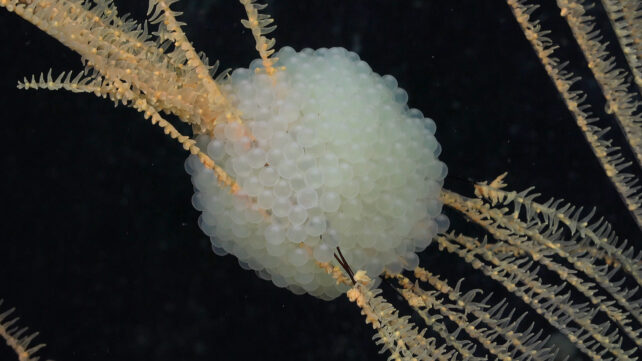
Something else that nobody's seen before? Snailfish eggs on a black coral. Not even marine biologists knew this was a thing, until now.

Snail eggs on a black coral. (ROV SuBastian/Schmidt Ocean Institute, CC BY-NC-SA)

"This expedition has given us a glimpse into one of the most remote and biologically rich parts of our ocean," says marine biologist Michelle Taylor, the Ocean Census project's head of science.

"This is exactly why the Ocean Census exists – to accelerate our understanding of ocean life before it's too late. The 35 days at sea were an exciting rollercoaster of scientific discovery, the implications of which will be felt for many years to come as discoveries filter into management action."

Look behind-the-scenes aboard the Falkor (too) research vessel here.
Race to mine metals for EV batteries threatens marine paradise

Victoria Gill
Science correspondent, BBC News

Global Witness
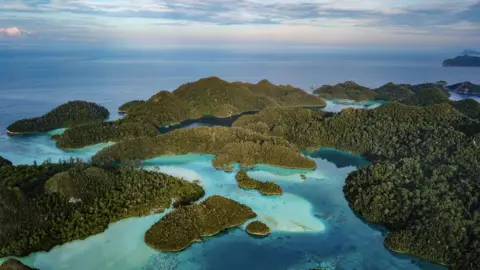
The Raja Ampat archipelago in Indonesia is sometimes referred to as the 'Amazon of the Seas'


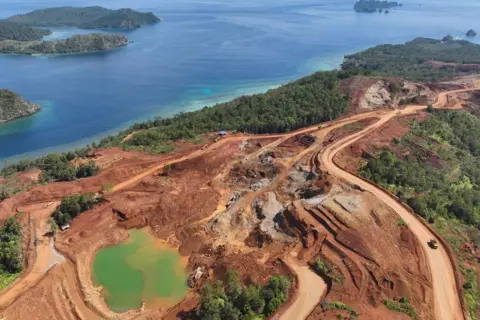
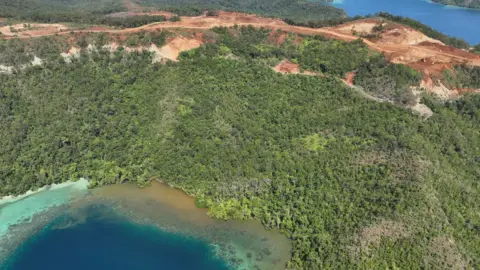
Stark images, captured from a drone by environmental campaigners and shared with the BBC, appear to show how nickel mining has stripped forests and polluted waters in one of the most biodiverse marine habitats on Earth.

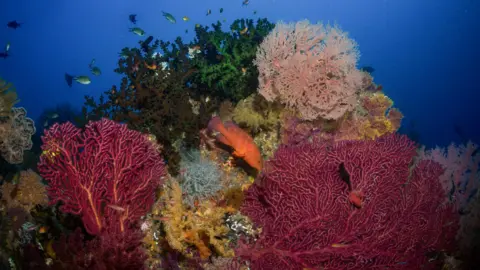
The Raja Ampat archipelago - a group of small islands in Indonesia's Southwest Papua Province - has been dubbed the "Amazon of the Seas".

But mining for nickel - an ingredient in electric vehicle batteries and in stainless steel - has ramped up there in recent years, according to the organisation Global Witness.

In a move that was welcomed by campaigners, the Indonesian government this week revoked permits for four out of five mining companies operating in the region.
Advertisement

Global Witness
A photograph taken in December 2024 shows mining activity on Kawei island, in Raja Ampat


In a statement published online, Indonesia's Ministry for the Environment said: "Raja Ampat's biodiversity is a world heritage that must be protected.

"We pay great attention to mining activities that occur in the area."

But photographs - taken by Global Witness as part of an investigation - appear to show environmental damage already done.

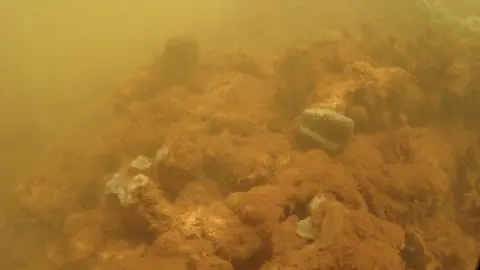
Aerial images show forest loss and sediment run-off into waters that are home to biodiverse coral reefs.

Global Witness told the BBC that land use for mining, across multiple small islands in the archipelago, increased by 500 hectares - equivalent to about 700 football pitches - between 2020 and 2024.
Advertisement

Global Witness
A photograph of mining on Kawei island in Raja Ampat, appears to show sediment running into the coastal water


Some conservationists, including the organisation Greenpeace, are concerned that the government's decision could be reversed by legal action by the mining companies.

And one company that operates on Gag island, which has particularly rich deposits of nickel, has been allowed to continue its operations. The government said it would order the "restoration of the ecological impacts that occur" there.

Coral reef conservationist and ecologist Dr Mark Erdmann told BBC News that he was "blown away, and so happy" about the government's decision to revoke the mining permits.

"This is the global epicenter of marine biodiversity," he told BBC News.

Dr Erdmann has worked in Raja Ampat for more than two decades and helped set up the network of marine protected areas there. He is one of the founders of a shark rewilding project, called Reshark, based in the region.

He added: "It was a voice of outrage from the Indonesian people that made the government pay attention."

But this ecological controversy is an example of how the demand for the metals needed to power battery technology - for electric cars and other low carbon energy sources - can damage the environment.

Global Witness
Because of the biodiversity of its coral reefs, the Raja Ampat is a hotspot for diving


Indonesia now accounts for more than half of the world's nickel mine production, according to a report last year by the Institute for Energy Economics and Financial Analysis.

And while the beauty and biodiversity of the Raja Ampat has drawn attention to mining activity there, mining has been linked to ecological damage elsewhere too.

A 2024 study by Forest Watch Indonesia found a link between the loss of forests associated with mining activity and increased local flooding and landslides.
Advertisement

Global Witness
Underwater images show sediment on the reefs around the islands


Increasing demand for so-called critical minerals is shaping economic decisions around the world. It was the driving force for President Trump's recent executive order to jumpstart the mining of metallic nodules from the deep sea in international waters. It is a move that China has called illegal.

Dr Erdmann pointed out that balancing economic growth with environmental protection was a particular dilemma for Indonesia. "It has a lot of nickel - one way or the other, some of it's going to come out of the ground," he said.

Dr Michaela Guo Ying Lo, from the Durrell Institute of Conservation and Ecology (Dice) and the University of Kent, led a study in 2024 of the impact of mining on local communities in Sulawesi. The large Indonesian island has most of the country's nickel deposits.

The research showed that mining activity reduced poverty slightly, but that there was significant "worsening of environmental well-being" including increased local water and air pollution.

"Indonesia is positioning itself globally in the nickel market," Dr Lo told BBC News. "But it's important not to forget what's happening locally."
Advertisement

Global Witness
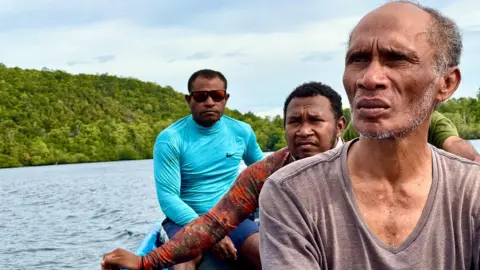
Local activists say mining activity is harming farming and fishing livelihoods


Imam Shofwan, an environmental campaigner from an organisation called Jatam, based in Jakarta, told BBC News: "They say nickel is a solution to the climate crisis. But it's causing deforestation and destroying farmland."

He also pointed out to the BBC that low-lying coastal areas, where some nickel deposits are found, are some of the places most vulnerable to the effects of climate change, including rising sea levels.

Dr Erdmann commented: "The nickel dilemma is a horrible one.

"Mining is always going to be environmentally impactful and we all tend to think that electrification is a good idea. But what is the acceptable damage that we're willing to see?"

The BBC contacted the Indonesian government for comment, but did not receive a reply.