Monday, June 23, 2025

Pride and prejudice: Trump casts shadow on 10 years of gay marriage


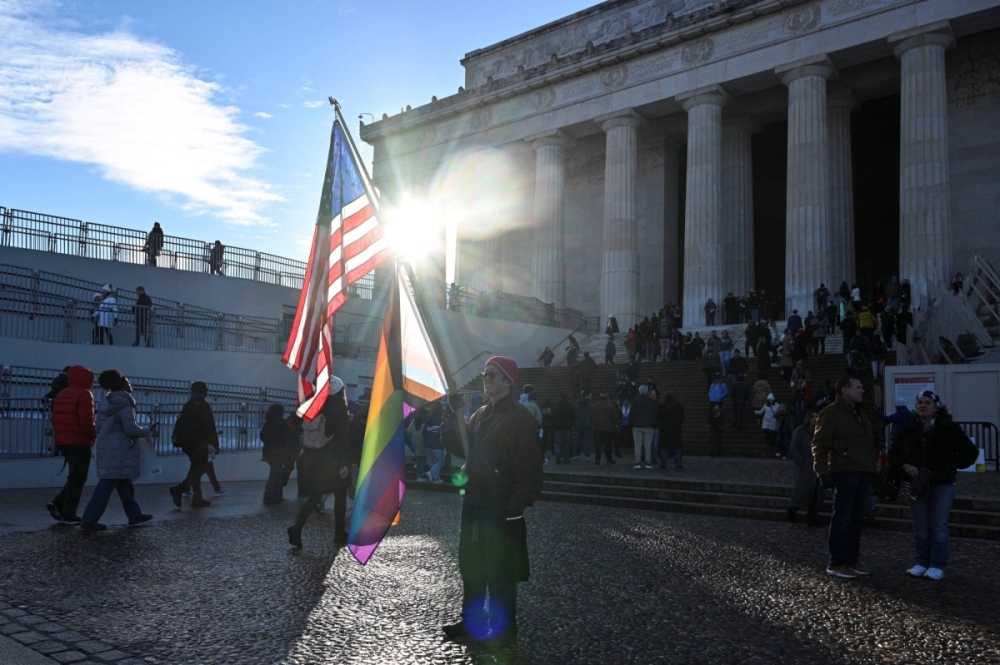
A person holding U.S. and LGBTQ+ flags stands in front of the Lincoln Memorial, ahead of the presidential inauguration of U.S. President-elect Donald Trump, in Washington on Jan. 18. | REUTERS


By Lucy Middleton
Thomson Reuters Foundation

LONDON –

When Zach Bolen proposed to his partner Derrick Dobson in 2017, he chose a place that meant a lot to them; the hiking trail where the couple had first met, with a view over their entire home city of Boise, Idaho.

"I drove him to the top, claiming it would be a fun last-minute adventure as we had not been there in a while. I proposed with all of our friends and family behind us to surprise him after," said Bolen, 33.

Now, the couple's long-awaited wedding plans are uncertain.

In January, lawmakers in Idaho passed a resolution urging the Supreme Court to overturn Obergefell v. Hodges, the ruling that legalized same-sex marriage across the United States.

On June 26, the United States will mark 10 years since that landmark decision.

But with LGBTQ+ rights increasingly under fire from President Donald Trump, Bolen is not only considering getting married in another state, but leaving Idaho altogether.

"We are not going to be in a place where we are not welcomed," said Bolen, who is on the board of directors for the Boise division of LGBTQ+ advocacy group PFLAG.

"It's heartbreaking, because we love our city of Boise and Idaho so much."

Since the 2015 decision, the Supreme Court has shifted to the right, and conservative judges now hold a 6-3 majority, heightening concern for the future of marriage equality.

At least two sitting justices have indicated they want to revisit Obergefell, among other cases.

Along with Idaho, Republican lawmakers in Michigan, Montana, Oklahoma, South and North Dakota have all introduced resolutions seeking to reverse Obergefell this year.

Texas, Missouri, Oklahoma and Tennessee have also introduced bills to create a type of marriage only open to heterosexuals.

"What this political moment has done is really let us know that nothing is safe," Harrison Guy said by phone from Austin, Texas, where he lives with his husband Adrian Homer.

"It makes it feel more fragile than we thought originally," said Guy, who is president of a Black, gay fraternity called Delta Phi Upsilon.
'Pride and anxiety'

If Obergefell were overturned, the decision of marriage equality would fall to individual states.

More than 30 states have laws or constitutional amendments — or both — blocking same-sex marriage.

At least one in two Americans has supported marriage equality since 2012, but that approval rating has dipped 3% since 2023, a yearly survey by analytics company Gallup showed.


Supporters of same-sex marriage in Washington in 2015 celebrate outside the U.S. Supreme Court following the announcement of the ruling on same-sex marriage. | Doug Mills / The New York Times

LGBTQ+ Americans also risk a record run of new anti-LGBTQ+ laws — covering everything from ID laws to child custody rights — being introduced this year.

Since January, the Trump administration has also rolled back LGBTQ+ rights on multiple fronts, be it nonbinary recognition or gender-affirming care for under 19-year-olds.

Trump said he was "fine" with same-sex marriage during an interview in 2016. As to his opinion now — the White House did not respond to a request for comment.

Project 2025, a set of conservative policy proposals from The Heritage Foundation think tank, said same-sex marriages involved "higher levels of instability" than heterosexual relationships and had "poor behavioral, psychological, or educational outcomes" for children.

Trump repeatedly distanced himself from Project 2025 during the presidential campaign, but his administration has since implemented several policies from the 900-page wish list.

Nancy Lyons, a tech CEO based in Minneapolis, Minnesota, married her partner Laura in 2018.

The couple adopted their son Merrick, now 18, in 2006.

"I feel pride and anxiety. There hasn't been a moment in this entire journey that hasn't had some amount of anxiety in it," Lyons said of marriage equality in a video call.

"We've made so much progress and yet we live in a time when rights that we thought were settled are being debated all over again."
Future families

The number of same-sex married couples in the United States has more than doubled since 2015, according to the Williams Institute at UCLA School of Law.

More than half are in states with statutes or constitutional amendments prohibiting marriage equality, it said.

Married LGBTQ+ couples were also found to earn 18% more than those who hadn't married.

"Being married has improved the health and economic stability of same-sex couples and those raising kids, as it does for other married people," said Mary Bonauto, who was an attorney in the landmark 2015 Obergefell case and is now a senior director for legal rights organization GLAD Law.

Bonauto said fears for Obergefell's survival were not "unreasonable."

"However, we are going to fight with everything we have to preserve it, and we are confident we will win," she said.

The Respect for Marriage Act, which passed in 2022, provides federal recognition to same-sex marriages, as long as they were legal in the states where they were performed.

It is intended to serve as a backstop, should Obergefell be struck down — but only protects couples who are already married.

"My concern is for the families that don't yet exist," said 35-year-old Jordan Wilson, who is director of Colage, an organization supporting LGBTQ+ parents.

"In a lot of states, you are just not eligible to adopt if you're unmarried," said Wilson, who married his partner Cedric last year in part due to anticipation of a second Trump term.

"If you're suddenly not able to get married anymore, then you might be locked out of having children."


A Media Corruption Case in Shanghai

Local police allege that a WeChat account extorted hundreds of thousands of yuan from companies — revealing how corruption persists in China’s tightly controlled information landscape.

Jun 23, 2025


In the latest case underscoring the persistent challenge of media corruption in China’s tightly controlled information environment, local district authorities in Shanghai reported this week that they had dismantled a “news extortion” (新闻敲诈) operation using a WeChat public account to blackmail companies for exorbitant “service fees” in order to make negative exposure disappear.

The case, authorities said, involved the exploitation of “supervision by public opinion” (舆论监督) — a concept that has typically been used officially in China to refer to the media’s power to expose malfeasance through reporting, with the proviso that this work does not directly criticize the Party. In this case, authorities allege, the WeChat public account in question exploited critical reporting to press companies into what were labelled “market promotion contracts.”

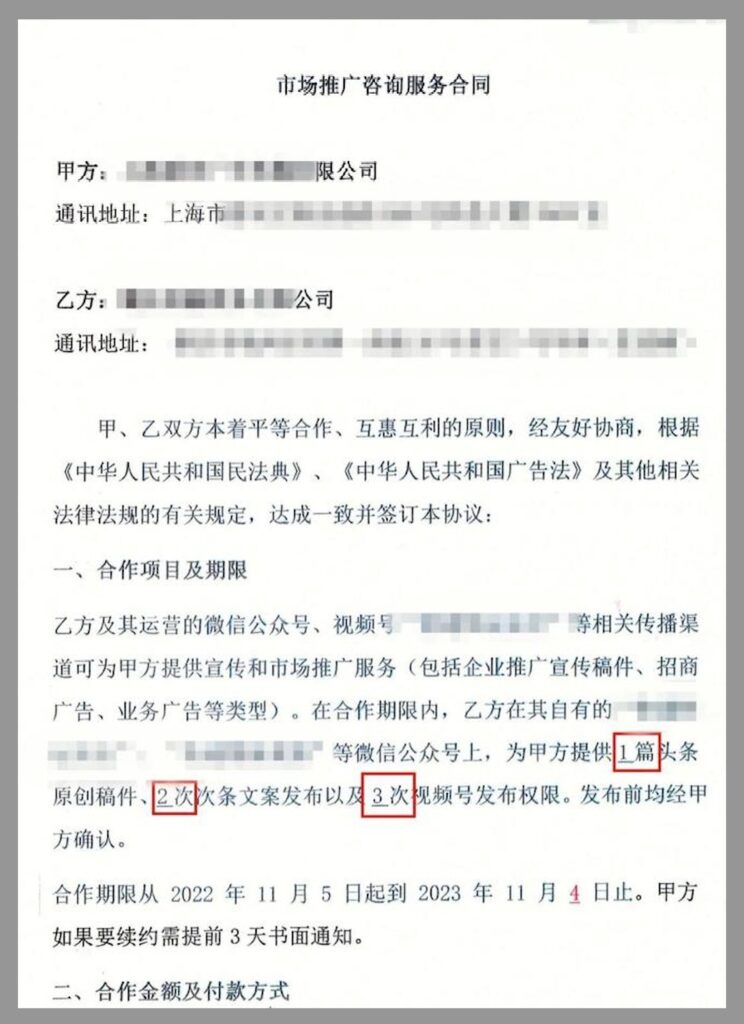
A copy of a contract from Ding’s public account to an allegedly extorted client. The contract looks like an advertising and promotion arrangement, but authorities say it was used to extract profit in exchange for withholding negative exposure.

During the heyday of investigative reporting in China’s commercializing media in the early to mid 2000s, the phrase “supervision by public opinion” came to mean for some Chinese journalists something more akin to “watchdog journalism” in the West, with the idea of keeping power in check through reporting. Since 2012, Xi Jinping has moved to rein in these more professional and idealistic strains of “supervision,” emphasizing a more compliant and less oppositional approach in which “supervision by public opinion and positive propaganda are united” (舆论监督和正面宣传是统一的). Critical journalism has been radically restrained, even as the leadership has also stressed the need for internal supervision.

The Shanghai case follows patterns documented in previous alleged cases of news extortion across China.

On June 23, police in Qingpu announced the arrest of a suspect identified only as “Ding” (丁某), who operated a public account identified in official accounts as “X X Safety” (某某安全) — the name redacted, they said, for legal reasons. The account reportedly had 191,000 followers and daily views exceeding 8,000. After leaving his industry job in 2018, said an official release, Ding had leveraged his knowledge of the sector to establish the public account, which “initially focused on publishing industry-related company developments and analytical intelligence, accumulating a certain number of followers,” according to an official release.

Beginning in 2021, however, Ding was allegedly “no longer satisfied with objective reporting” (不再满足于客观报道), according to the police account. He deliberately sought “negative information” (负面信息) about target companies, then manipulated content, they said, through “clickbait headlines” (标题党), misattribution, and deceptive editing, colorfully referred to as “grafting flowers onto trees”( 移花接木). In one case this May, Ding published an article claiming a company had been shut down for illegal activities, then spliced in unrelated video footage from a separate criminal case in another province, creating false associations that damaged the company’s reputation.

Text messages exchanged between Ding and a company seem to show pressure to finalize “cooperation” on condition of dropping coverage.

As described by police, the alleged extortion scheme followed a clear pattern. Ding would first publish damaging content about a company. He would then approach the company offering to sign what he called a “market promotion contract,” which essentially came with a promise to cease coverage. These contracts generally were for between 20,000 and 100,000 yuan annually, or about 2,750 to 14,000 dollars. The fee structure was calibrated, said police, based on a company’s size and “tolerance capacity” (承受能力) — essentially referring to what Ding deemed companies would be able to pay.

Ding’s operation reportedly netted multiple companies, with one executive telling police he was forced to pay over 100,000 yuan annually to stop the attacks, only to face renewed pressure after the expiration of “market promotion” contracts.

This latest case in Shanghai reflects the broader phenomenon of news extortion that has plagued China’s commercialized media landscape since at least the mid-1990s. Despite periodic crackdowns and isolated cases like this one, the practice persists — in large part because it exploits fundamental vulnerabilities in China’s heavily controlled information ecosystem. In this environment, media can have extraordinary power through perceived connections to the state press system, turning this authority to profit, while the media control policies of the Chinese Communist Party normalize the practice of removing “negative” or “sensitive” reporting. At the same time, there are no independent professional associations to advance ethical conduct within the media.

The investigation in Shanghai continues, police say, and Ding likely faces criminal charges for extortion.

David Bandurski
CMP Director
Tesla rolls out robotaxis in Texas test


Published : June 23, 2025 


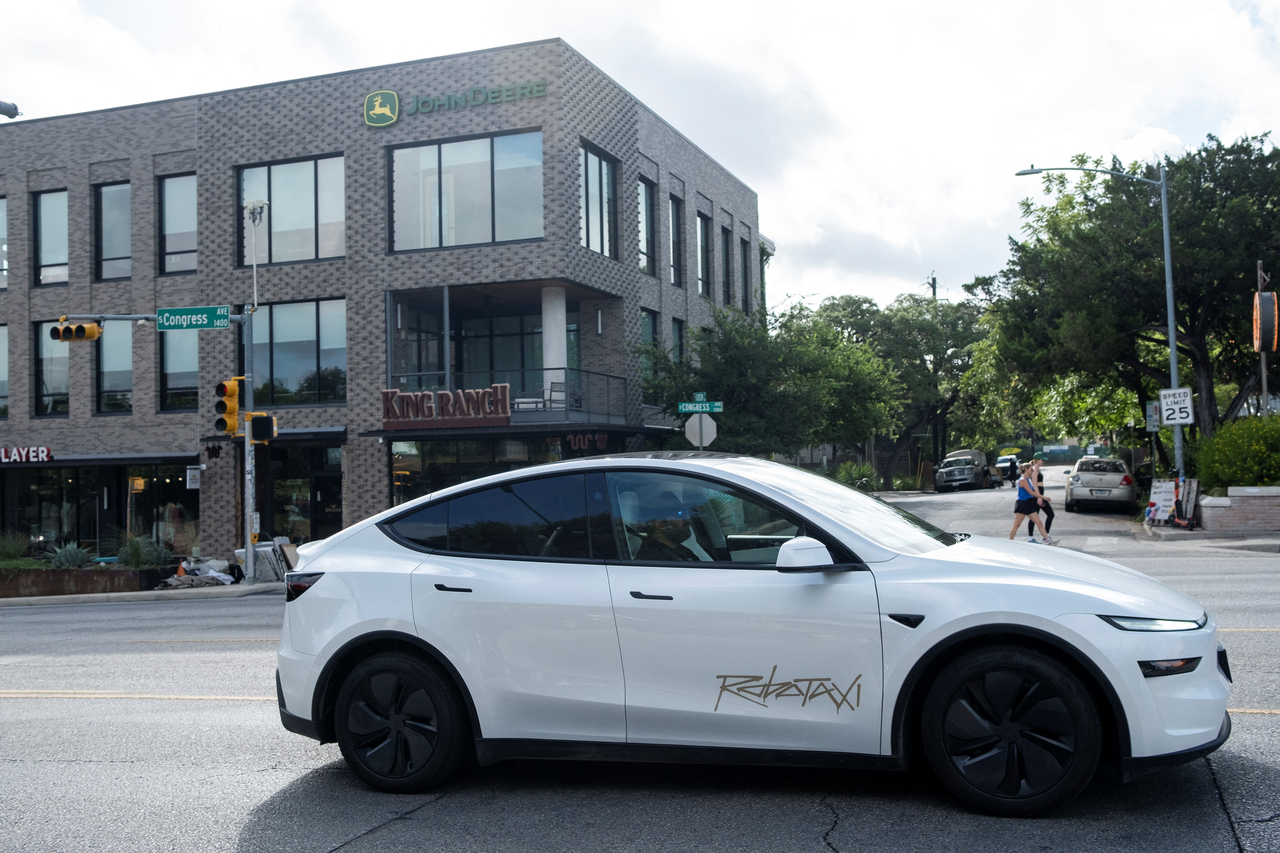
A Tesla robotaxi drives on the street along South Congress Avenue in Austin, Texas, Sunday. Reuters-Yonhap

AUSTIN, Texas (Reuters) -- Tesla deployed a small group of self-driving taxis picking up paying passengers on Sunday in Austin, Texas, with CEO Elon Musk announcing the "robotaxi launch" and social media influencers posting videos of their first rides.

Musk called the moment the "culmination of a decade of hard work" in a post on his social media platform X and noted that "the AI chip and software teams were built from scratch within Tesla."

Teslas were spotted early Sunday in a neighborhood called South Congress with no one in the driver's seat but one person in the passenger seat. The automaker planned a small trial with about 10 vehicles and front-seat riders acting as "safety monitors," though it remained unclear how much control they had over the vehicles.

In recent days, the automaker sent invites to a select group of influencers for a carefully monitored robotaxi trial in a limited zone. The rides are being offered for a flat fee of $4.20, Musk said on X.

Tesla investor and social media personality Sawyer Merritt posted videos on X Sunday afternoon showing him ordering, getting picked up, and taking a ride to a nearby bar and restaurant, Frazier's Long and Low, using a Tesla robotaxi app.

If Tesla succeeds with the small deployment, it still faces major challenges in delivering on Musk's promises to scale up quickly in Austin and other cities, industry experts say.

It could take years or decades for Tesla and self-driving rivals, such as Alphabet's Waymo, to fully develop a robotaxi industry, said Philip Koopman, a Carnegie Mellon University computer-engineering professor with expertise in autonomous-vehicle technology. A successful Austin trial for Tesla, he said, would be "the end of the beginning — not the beginning of the end."

Most of Tesla's sky-high stock value now rests on its ability to deliver robotaxis and humanoid robots, according to many industry analysts. Tesla is by far the world's most valuable automaker.

As Tesla's robotaxi rollout date approached, Texas lawmakers moved to enact autonomous-vehicle rules. Texas Governor Greg Abbott, a Republican, on Friday signed legislation requiring a state permit to operate self-driving vehicles.

The law, which takes effect Sept. 1, signals that state officials from both parties want the driverless vehicle industry to proceed cautiously.

Tesla did not respond to requests for comment. The governor's office declined to comment.

The law softens the state's previous anti-regulation stance on autonomous vehicles. A 2017 Texas law specifically prohibited cities from regulating self-driving cars.

The new law requires autonomous-vehicle operators to get approval from the Texas Department of Motor Vehicles before operating on public streets without a human driver. It gives state authorities the power to revoke permits for operators they deem a public danger.

The law also requires firms to provide information on how first responders can deal with their driverless vehicles in emergencies.

The law's permit requirements for an "automated motor vehicle" are not onerous but require firms to attest their vehicles can operate legally and safely. It defines an automated vehicle as having at least "Level 4" autonomous-driving capability under a recognized standard, meaning it can operate with no human driver under specified conditions. Level 5 autonomy is the top level and means a car can drive itself anywhere, under any conditions.

Compliance remains far easier than in some states, notably California, which requires submission of vehicle-testing data under state oversight.

Bryant Walker Smith, a University of South Carolina law professor who focuses on autonomous driving, said it appears any company that meets minimum application requirements will get a Texas permit, but could also lose it if problems arise.

"California permits are hard to get, easy to lose," he said. "In Texas, the permit is easy to get and easy to lose."

The Tesla robotaxi rollout comes after more than a decade of Musk's unfulfilled promises to deliver self-driving Teslas.

Musk has said Tesla would be "super paranoid" about robotaxi safety in Austin, including operating in limited areas.

The service in Austin will have other restrictions as well. Tesla plans to avoid bad weather, difficult intersections, and will not carry anyone below age 18.

Commercializing autonomous vehicles has been risky and expensive. GM's Cruise was shut down after a serious accident. Regulators are closely watching Tesla and its rivals, Waymo and Amazon's Zoox.

Tesla is also bucking the young industry's standard practice of relying on multiple technologies to read the road, using only cameras. That, Musk says, will be safe and much less expensive than lidar and radar systems added by rivals.
Emaciated after 5 years in prison, Belarusian dissident Tsikhanouski vows to fight on

June 23, 2025
By The Associated Press


Syarhei Tsikhanouski, a Belarusian opposition activist released from a prison by Belarusian authorities, speaks during an interview with the Associated Press in Vilnius, Lithuania, Sunday, June 22, 2025.Mindaugas Kulbis/AP

VILNIUS, Lithuania — Siarhei Tsikhanouski is almost unrecognizable. Belarus' key opposition figure, imprisoned in 2020 and unexpectedly released on Saturday, once weighed 135 kilograms (298 pounds) at 1.92 meters (nearly 6'4") tall, but now is at just 79 kilos (174 pounds).

On Saturday, Tsikhnaouski was freed alongside 13 other prisoners and brought to Vilnius, the capital of neighboring Lithuania, where he was reunited with his wife, exiled Belarusian opposition leader Sviatlana Tsikhanouskaya, and their children. Speaking to The Associated Press the day after, Tsikhanouski tries to smile and joke, but struggles to hold back heavy sighs recalling what he endured behind bars.

"This is definitely torture," Tsikhanouski told The Associated Press in the first sit-down interview since his release. Prison officials "kept telling me: 'You will be here not just for the 20 years we've already given you.' We will convict you again,'" he said. "They told me that 'You would never get out.' And they kept repeating: 'You will die here.'"

One of Belarus's most prominent opposition figures, Tsikhanouski said he "almost forgot how to speak" during his years in solitary confinement. He was held in complete isolation, denied medical care, and given barely enough food.


Belarus has released 3 from prison, including an American and a journalist

"If you had seen me when they threw only two spoons of porridge onto my plate, two small spoons …" he said, adding that he couldn't buy anything anything in the prison kiosk. "They would sometimes give me a little tube of toothpaste, a little piece of soap as charity. Sometimes they would, sometimes they wouldn't."
A prominent voice of dissent

Now 46, Tsikhanouski, a popular blogger and activist, was freed just hours after Belarusian authorities announced that authoritarian President Alexander Lukashenko met with U.S. President Donald Trump's envoy for Ukraine in the Belarusian capital, Minsk. Keith Kellogg became the highest-ranking U.S. official in years to visit Belarus, Moscow's close and dependent ally.

Tsikhanouski, known for his anti-Lukashenko slogan "stop the cockroach," was arrested after announcing plans to challenge the strongman in the 2020 election and shortly before the campaign began. He was sentenced to 19 years and six months on charges widely seen as politically motivated. His wife ran in his stead, rallying crowds across the country. Official results handed Lukashenko his sixth term in office but were denounced by the opposition and the West as a sham.

Lukashenko has since tightened his grip, securing a seventh term in disputed January 2025 elections. Since mid-2024, his government has pardoned nearly 300 prisoners — including U.S. citizens — in what analysts see as an attempt to mend ties with the West.

Tsikhanouski credited U.S. President Donald Trump with aiding his release.

"I thank Donald Trump endlessly," Tsikhanouski said. "They (the Belarusian authorities) want Trump to at least, a little bit, somewhere, to meet them halfway. They are ready to release them all. All of them!"
Many are still behind bars

Tens of thousands of people poured into the streets in the aftermath of the August 2020 vote. Thousands were detained, many beaten by police. Prominent opposition figures either fled the country or were imprisoned.

At least 1,177 political prisoners remain in custody, according to Viasna, the oldest and most prominent human rights group in Belarus. Among them is Viasna's founder, human rights activist and Nobel Peace Prize Winner Ales Bialiatski.

Also behind bars are Viktor Babaryka, a former banker who was widely seen in 2020 as Lukashenko's main elecoral rival, and Maria Kolesnikova, a close ally of Tsikhanouskaya and charismatic leader of that year's mass protests.
A surprise release and an emotional reunion

Tsikhanouski called his release "a dream that's still hard to believe." On Saturday, he said, guards removed him from a KGB pretrial detention center, put a black bag over his head, and handcuffed him before transporting him in a minibus. He and other prisoners had no idea where they were going.

"To be honest, I still can't believe it. I was afraid I'd wake up and everything would still be the same. I don't believe it, I still don't believe it," he said, pausing frequently and wiping away tears.

Tsikhanouski's children — his daughter, aged 9, and 15-year-old son — didn't recognize him when they were reunited.


Syarhei Tsikhanouski, left, Belarusian opposition activist released from a Belarusian prison, embraces his wife, Belarusian opposition leader Sviatlana Tsikhanouskaya, after a news conference in Vilnius, Lithuania, Sunday, June 22, 2025.Mindaugas Kulbis/AP


"We came in and my wife said to my daughter, 'Your dad has arrived,'" he said, crying. "At first she couldn't understand, and then she rushed in — she was crying, I was crying ... for a very long time. My son too! These are emotions that cannot be described."

Tsikhanouski, who says his health has deteriorated behind bars, plans to undergo a medical examination in Lithuania. He says cold and hunger were "the main causes of illness" that affected nearly all political prisoners in Belarus, who were subjected to "especially harsh conditions."

"There were skin diseases, and everyone had kidney problems from the cold — and no one really understood what was happening," Tsikhanouski said. "Blood came out of my mouth, from my nose. Sometimes I had convulsions — but it was all because of the cold, that terrible cold when you sit in those punishment cells."

"There is no medical care in prison — none at all, just so you know …" he said.

Tsikhanouski said conditions slightly improved after the February 2024 death of Russian opposition leader Alexei Navalny in a prison colony.

"When Alexei Navalny died, I thought, that'll probably be me soon … And then something changed. It was clear that someone at the top said, 'Make sure he doesn't die here. We don't need that problem.' It got just a bit softer ... At some point, word came down: Tsikhanouski must be kept alive, not killed."
Pointing the finger at Putin

Tsikhanouski blames Russian President Vladimir Putin for propping up Lukashenko, both during the 2020 protests and to this day.

Russia supports Belarus's economy with loans and subsidized oil and gas. In return, Belarus has allowed Moscow to use its territory to launch troops and weapons into Ukraine, and hosts Russian forces and nuclear weapons.

Tsikhanouski expressed strong support for Ukraine, calling the Kremlin a common evil for both countries.

"If it weren't for Putin, we would already be living in a different country. Putin recognized Lukashenko's victory in the election, he called black white. That is, he refused to see the falsifications," Tsikhanouski said. "They help each other. Because of Putin, this illegal government is still in Belarus."

Some analysts have speculated that by releasing the charismatic and energetic Tsikhanouski, Belarusian authorities may be trying to sow division within the opposition. But Tsikhanouski insists he has no intention of challenging his wife's role as the internationally recognized head of the Belarusian opposition, and he calls for unity.

"Under no circumstances do I plan to criticize any Belarusians, condemn or complain about anyone," he said.

Tsikhanouski says he will not stop fighting and wants to return to active work as both a political figure and a blogger. But he is skeptical that Lukashenko, now 70, will step down voluntarily, despite his age.

"I don't know anymore — will he go or won't he?" Tsikhanouski said. "Many people say nothing will change until he dies. But I'm still counting on democratic forces winning."

Air India Kanishka bombing: Canada identifies bomb-tester Mr X after 40 years

Even as the world marks the 40th anniversary of the 1985 Air India Kanishka bombing, Canada's RCMP has finally identified the mysterious 'Mr X' linked to the terror attack that killed 329 people. Mr X tested a bomb with the Khalistani mastermind weeks before the blast, but died without facing charges.


On the 40th anniversary of the Kanishka Air India bombing, RCMP confirms identity of the long-unknown bomb tester. (Image: File)


India Today World Desk
New Delhi,UPDATED: Jun 23, 2025 
Written By: Priyanjali Narayan


The Royal Canadian Mounted Police (RCMP) finally identified 'Mr X', a man who was involved in testing a bomb just weeks before the deadly Kanishka Air India bombing on June 23, 1985. However, the RCMP did not reveal his name, citing privacy laws. This came on the eve of the 40th anniversary of the attack in which 329 people were killed. What is shocking is that Mr X died without facing any charges.

On June 21, RCMP Assistant Commissioner David Teboul confirmed the death of the mysterious Mr X during an event commemorating the anniversary of the Kanishka bombing. Dozens of relatives of the victims attended the memorial.

On June 23, 1985, a bomb was detonated midair by Khalistani terrorists on Air India Flight 182, killing all 329 people on board. The plane was flying from Montreal to Mumbai with a stopover in London. The passengers were mostly Canadians of Indian origin.

The explosion, which took place off the coast of Ireland, is recorded as the worst terror attack against Canadians.

WHAT WE KNOW ABOUT MR X OF AIR INDIA KANISHKA BOMBING

Teboul, along with several other RCMP officers, was part of the Canadian delegation present at the memorial to mark the 40th anniversary of the bombing.
advertisement

He is the commander of federal policing in British Columbia, stated that despite the acquittals of two key suspects in the bombing case in 2005, investigators continued to pursue the case "to tie up some loose ends and discover more truth that’s independent of judicial process."

This persistent investigation ultimately led to the discovery of the identity of the mystery man referred to as 'Mr X', who had travelled to Duncan, British Columbia, on June 4, 1985, with Talwinder Singh Parmar, a terrorist of Babbar Khalsa and mastermind of the terror plot.

The two men then met up with Inderjit Singh Reyat, an electrician, who was later found guilty of making and planting bombs.

The trio entered the woods and tested a bomb, while agents from the Canadian Security Intelligence Service (CSIS) were following them. They then joined Inderjit Singh Reyat and entered a wooded area to test an improvised explosive device (IED).

CSIS agents had been surveilling the trio and heard the blast, but mistakenly believed it to be the sound of gunfire. As a result, they did not pursue any charges at the time.

CANADIAN AGENCIES AND LOOSE ENDS OF KANISHKA BOMBING

For decades, investigators referred to one of the men involved in testing the bomb as 'Mr X', as they were unable to confirm his identity. According to the RCMP, he died not long ago, without ever facing any charges.
advertisement

In his address at the memorial on Saturday, David Teboul reiterated that following the 2005 acquittals, the investigation continued in hopes of resolving "loose ends", eventually identifying the man who helped test the type of bomb that brought down the Air India flight 40 years ago.

Inderjit Singh Reyat was the only individual ever convicted in connection with the bombing.

He pleaded guilty to helping build the bomb that exploded on AI-182 but claimed he did not know the identity of 'Mr X'. Reyat later committed perjury during the trial, which led to a longer prison sentence. He has since served his time and been released.

Talwinder Singh Parmar, the alleged mastermind behind the bombing and founder of the Babbar Khalsa terrorist group, was killed in a shootout with Punjab Police in 1992.

During the memorial, David Teboul acknowledged that, although the investigation continued for many years, "there was very little realistic chance of seeing the matter go to another trial". He emphasised that the Kanishka bombing was the "largest act of terrorism" in Canada's history.
advertisement

"So we, RCMP, have an obligation to memorialise it and pay respect every year," Teboul told those gathered.

UK

 Palestine Action ban: Trolls on parade

Palestine Action ban: Trolls on parade

The government’s attempt to brand non-violent direct activists as “terrorists” has already backfired

Tabitha Troughton ~

This was the week when language in the UK temporarily gave up. At the bombing of Iran, the British people fell silent, or lapsed into incoherence, or sat in corners, clutching their heads. Trump and Netanyahu were classifiable, recognisable. But their own government’s behaviour—it was incomprehensible, indescribable. A word cloud of the British public’s mental state would have revealed, in flaming red letters: “Why?”

“War is peace. The attacker is the victim and non-violence is now terrorism” is no answer, but it’s the only one the public has been given. Gibberish is the inevitable result of attempts to justify a “defensive” attack by two nuclear armed states on a country which has no nuclear weapons, and was already negotiating. Blair took the long route to lie the country into an illegal war: his heirs are pressed for time, their bosses impatient, the propaganda correspondingly more bloodthirsty.

Into the baffled, horrified silence have whirled the screeching war trolls, on cue. “The enemy is within! Lock them up for life! Deport them! Kill them on sight”! The enemy being, in this case, for now, the non-violent direct action group Palestine Action, or anyone who expresses support for Palestine Action—while the US and its allies continue to ensure the need for its continued existence.

No-one believes that two peace activists spraying paint is “terrorism”, or that supporting them merits imprisonment, no matter which inanimate object they spray. Public nausea is not due to the government resorting to this nonsense—well, it would try, wouldn’t it—but due to the fact that people are expected to swallow it, just as they were told to swallow genocide or lose their jobs. “They’re traitors! They’re foreign agents! Iran’s a threat! Yes, it was Russia and China last week! Look over there – a non-violent terrorist”!

The squid ink of fantasy, lies, disinformation and confusion complements a reality where the government can no longer bear to speak about the genocide it continues, incredibly, to support. “We are all Palestine Action”, runs a current meme, which is something of an exaggeration. Kemi Badenoch and Nigel Farage are not Palestine Action, for example. But even they may, if there is another election, come to regret their gleeful support for Trump, whose initial bombing of Iran is already splitting the MAGA hierarchy, and further repulsing its voter base.

For the rest of us, the thought of the next election simply begs the question: are another four years of this tolerable? Is a day more of this tolerable? The answer—as emergency rallies break out nationwide, and London, like cities worldwide, continues to fill with vast, peaceful armies, and the Guardian’s letter page is taken over by politely furious correspondents expressing wholehearted support for Palestine Action—is clearly, “no”. It has never been tolerable. The system grinds barbarously and laboriously on, but its cogs are increasingly exposed; it falters: there are universal spanners in its works.

'Traditional Gender Norms Are the Exact Opposite' of What UK Economy Needs, New Report Finds


A gender equality study shows that gender inequality is worsening financial hardship in deprived regions


Byline Times
Kate Bermingham
23 June 2025


Buttershaw, a residential area of Bradford, West Yorkshire, is pictured above. Yorkshire was one of the regions the report found had low levels of gender equality. Photo: Windmill Images / Alamy


As the far right movement gathers pace in the UK, and violence and hostility towards women deepens, a new study has found that gender inequality is worsening financial hardship in economically deprived regions.

The findings, from Kings College London, come weeks after polling by IPSOS for JOE Media Group of Gen Z voters revealed that over half of men believe they’re expected to do too much to support gender equality and that it has gone “too far”, and that 54% of Reform voters – many of whom are young men – believe that males are being discriminated against, as do 44% of Brexit voters.

Some of the most gender unequal regions in Britain are “left behind” communities in the north and midlands, where Reform UK saw significant gains in the May local elections.

The UK Is Failing to Tackle Violence Against Women Amid Rise of Misogynistic Influencers

Reduced budgets, rising online hate and the lack of an effective national strategy, are deepening the threat faced by women and girls, warn MPs

David Hencke


Report author Dr Caitlin Schmid told Byline Times: “We’re seeing a lot of narratives that try to take us back to more traditional gender norms, even though our research shows that is the exact opposite of what we need, and will not address the legitimate grievances that women and men have, across the country, which have come out of decades of austerity.”

Yorkshire and the Humber, Wales and Northern Ireland have the lowest levels of gender equality, researchers found, while London and the north-west of England are the most gender equal. No local authority in the UK has achieved gender equality.

Women shouldering a larger burden of childcare and domestic work, and being under-represented in politics and leadership roles are key factors blocking regional progress towards gender equality.

‘For Too Long, Men Have Been Invisible in a Media Conversation Focusing on “Violence Against Women”, Not “Male Violence”

The latest episode of the hit Media Storm podcast focuses on how journalism is still failing to challenge the structural forces of patriarchy and misogyny
Mathilda Mallinson and Helena Wadia

The report also found that gender inequality leads to poor outcomes for both women and men, such as lower wages for women, and poorer health outcomes for men.

Dr Schmid stresses that investment in childcare infrastructure is critical if we want to “unlock greater productivity” in these deprived regions, particularly in rural areas.

In regions where men are more actively involved in childcare and domestic work, they tend to experience positive health outcomes such as higher fertility and a lower risk of suicide.


The point I always want to come back to is that it’s not a zero sum game: women’s progress does not mean men’s regress, our society and our economy depends on both doing wellDr Caitlin Schmid, report author

Young men captured by the ‘manosphere’ often rely on this narrative to counter claims of misogyny, which was a central theme in Netflix’s Adolescence series which ignited public debate after its release in March, made UK TV history, and led to its creators meeting with the Prime Minister about how best to “protect our children”.

According to The Centre for Countering Digital Hate, the world’s largest incel online forum received 2.7 million visits between January and March 2025 which illustrates the scope of the problem impacting young men, and the role of the internet in spreading the message.

Netflix’s series, Adolescence dealt with the themes of misogyny Photo: Netflix

Laura Bates, author of ‘The New Age of Sexism’, also found that it takes just 30 minutes for TikTok to show extreme misogynistic content to teenage boys when they set up a new account.

But while the media focuses on young men and their far-right leanings, and painstakingly tracks the rise of Reform and its leader, Nigel Farage, little attention is paid to young women and their move to the political left. As The Guardian noted in May, ‘The real story isn’t young men supposedly voting far right. It’s what young women are up to’.

In the 2024 General Election, nearly a quarter of women aged 18-24 voted for the Green Party, around twice the number of 18-24 year old men who voted Reform.

‘The Media’s Role in Contributing to a Culture that Humiliates Victims of Rape and Sexual Assault’

The latest episode of the hit Media Storm podcast focuses on the most common mainstream myths around women and sexual assault that are perpetuated through journalism

Mathilda Mallinson and Helena Wadia


Political scientist Cas Mudde observes: “That the media chooses nevertheless to focus on young men illustrates the male gaze that continues to dominate society, which not only means that whatever men do or think is deemed inherently important and worthy of both academic and political attention, but also sets men as the norm. This ends up strengthening the far right’s political prospects.”

Keir Starmer’s attempts to appeal to right wing voters, with anti-immigration and war-mongering policies – leading to claims that Labour are Reform-lite – hasn’t helped.

Frank Riot, a political artist from south London, told Byline Times: “I think this government has no interest in doing anything materially helpful to solve gender inequality … if they try to present themselves as being a party for women I think that’s exposed by the way they’ve treated Palestinians and trans women … the gall that they have to ride this anti-trans moment and say that it’s for the safety of women and the rights of women, while they are actively participating in a genocide in Gaza.”

The 35-year-old notes that issues like period poverty and funding for endometriosis care, “are completely ignored because they’re not politically interesting, they’re not part of the culture wars, they don’t ‘rev people up’”.

Green Party Deputy Leader Zack Polanski Says UK Must Leave NATO Because of Trump

The frontrunner to become the next leader of the Green Party of England and Wales tells Byline Times the UK must now form new alliances for “peace” instead
Adam Bienkov

Emily Gulliksen, a postgrad international affairs student from north London, is deeply concerned about Labour’s role in the Gaza conflict. After voting Labour previously, she switched to the Greens in the last election.

The 26-year-old told Byline Times: “Even if all their other policies were super left, I still think (Gaza) would make me lose support for them…

“Housing is also a massive issue. Rent prices. How it’s impossible to live in London. If you’ve grown up in London and then it feels like you’re being pushed out of the city, you can’t live in the place you’ve grown up in anymore.

“… It seems so hard now, even if you go to uni and you get a really good job, that doesn’t guarantee you stability or certainty in the future, so those prospects … this is something that people in my circles talk about a lot.”
Deputy leader of the Green Party, Zack Polanski. Photo: Thomas Krych/ZUMA Press Wire

Phoebe Franklin recently joined the Green Party, “(after) being inspired by Zack Polanski’s leadership bid, especially at a time when the Labour Government seem determined to alienate the very voters who put them into power”.

Franklin, 26, said she was most concerned about economic inequality, the genocide in Gaza and trans rights.

We’re not funded by a billionaire oligarch or an offshore hedge-fund. We rely on our readers to fund our journalism. If you like what we do, please subscribe.

The increasing Gen Z gender voting gap is not unique to the UK. Recent elections across Europe, North America and Asia have seen similar trends of disengaged young men shifting to the far right, and disillusioned young women leaning to the left.

For both groups in the UK, political neglect and economic exclusion has led to alienation and resentment.

Culture wars aside, however, the data from Kings College London suggests a return to traditional gender norms – the dream of the far right – could run the UK’s economically deprived regions even further into the ground.

Written by
Kate Bermingham


Welsh aeronautical apprentice flies the flag for women in engineering

23 Jun 2025     NATION CYMRU
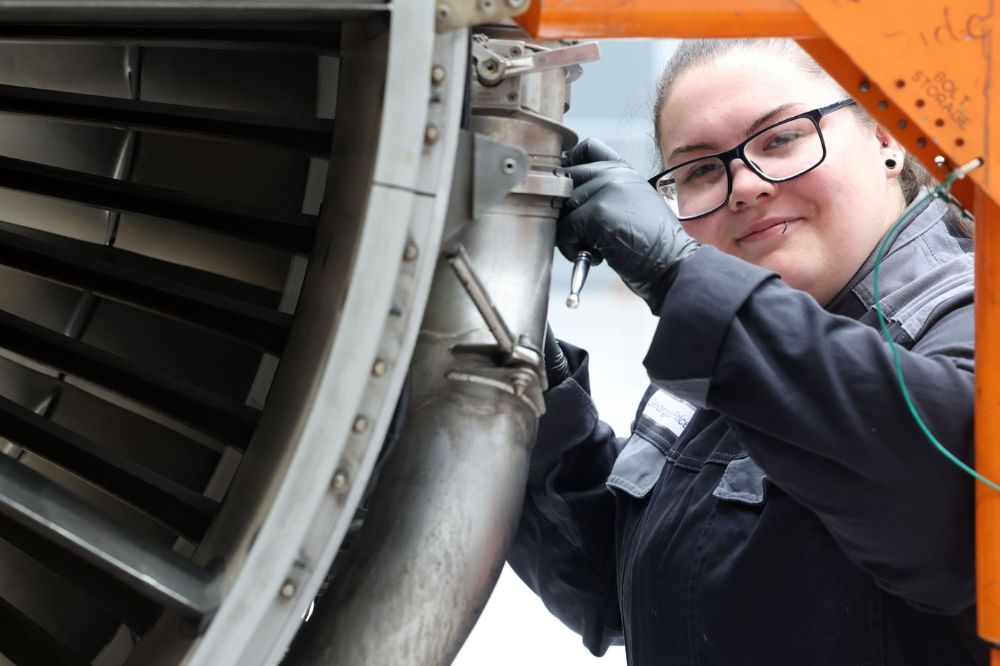
Georgia Price – Image: Welsh Government

A young apprentice from Llantrisant is breaking barriers in the aerospace industry as Wales celebrates Women in Engineering Day.

Georgia Price, 21, was the first female aeronautical engineering apprentice at Newport-based AerFin Ltd, a global aviation company specialising in aircraft and engine component support services.

Currently studying for a degree in Aeronautical Engineering at the University of South Wales, Georgia is blazing a trail for women in STEM careers.


Medals

Her achievements include winning bronze and gold medals at the Inspiring Skills Competition Wales Manufacturing Team Challenge and the Skills Academy Wales Tomorrow’s Talent Award.

Georgia said: “My advice to other women considering an engineering career is to go for it. It’s not as daunting as it may look, and everyone is so supportive and welcoming.”

Minister for Culture, Skills and Social Partnership Jack Sargeant said: “Georgia’s success story is a beacon to all young women who may today be considering a career in engineering.

“Her achievements also illustrate the value of apprenticeships as a pathway into employment and further education.”


Funding

The Welsh Government has increased its support for apprenticeships despite financial challenges and the loss of European funding.

Core funding has risen from £97m in 2020 to £144m in the most recent budget. Latest data published by Medr shows nearly 73,795 new apprenticeship starts have been supported during this Senedd term.

Georgia’s employer, AerFin, now has three female apprentices and is committed to developing local talent in the thriving aerospace sector.

Simon Bayliss, AerFin’s chief operating officer said: “Georgia is a great asset to the business.

“Apprenticeships provide the company with a great opportunity to take on and develop local talent which allows us to grow organically.”


SCOTLAND

OPINION


Making a manifesto for people and planet


23 June 2025
by Charis Chittick

Charis Chittick: a reminder that real change is possible

Like many organisations right now, at the Wellbeing Economy Alliance Scotland (WEAll Scotland), we are thinking ahead to the 2026 Scottish Parliament election.

Last month, we gathered organisations, academics and individuals together in Glasgow to co-create our manifesto for the economy.

As Scotland’s network of organisations and individuals committed to transforming our economy, it was important to us to include our members in the process of creating our manifesto.

We believe there is power in coming together. By sharing our collective expertise and experiences we can create a manifesto for our economy that has breadth and depth. A manifesto for the economy that is backed by the people of Scotland.

Working in the third sector, it’s easy to feel discouraged and deflated right now. Many times this year I have felt angry as we hear news of policy decisions that put pressure on those of us who are already struggling to survive. I am fed up with short-sighted decision making that prioritises the wrong things and puts our natural environment at risk.

Right now people in Scotland are feeling overlooked and ignored by politicians. Let down by a system that is stacked against them. For too many of us, the economy isn’t working and we are left on shaky ground. Too many of us struggle to pay our bills, heat our homes, or even buy enough to eat. We can and must do better.

As I sat in our manifesto workshops on a rare sunny day in Glasgow, my sense of hope for a better future and determination to keep going was reignited. I spend most of my time working from a small corner of my bedroom at my ‘home office’. It’s easy to forget that we are part of something bigger.

Being in that workshop, filled with people from a diverse range of organisations and backgrounds, was exactly what I needed. There was a buzz and anticipation in the room as we worked together and a reminder that change is possible.

I’m now back in my bedroom office and we are beginning to draft our manifesto for the economy. We are still in the early stages of writing it and we’ll continue to work with our members to co-create our manifesto for the economy.

But one thing is clear, the next parliamentary term is an opportunity for politicians to rebuild trust through their actions. To act on the issues that matter most to people.

We must deliver real and lasting change for people in Scotland that ensures everyone has enough to live with dignity. We must act to restore and protect our beautiful natural environment for future generations.

It’s time for our politicians to invest in a better future for Scotland by getting today’s decisions right. To commit to redesigning our economy.

If you want to join us, why not become a member of WEAll Scotland and add your voice to our manifesto for the economy.

Together, we can build a wellbeing economy where people and planet can thrive.

Charis Chittick is campaigns and communications lead at WEAll Scotland.

How we’re showing cities can be a home to people and nature

This post is by Mete Coban, deputy mayor of London for environment and energy.


For the start of London Climate Action Week, the mayor of London, Sadiq Khan, has launched a new £12 million Green Roots Fund to boost London’s green and blue spaces. This isn’t just about parks and rivers, it’s about giving Londoners the chance to shape the places where we live. Together, we can create and restore parks, community gardens, wetlands and waterways across our city.

We’re doing this not just because nature is vital for tackling climate change and making our city more resilient to extreme weather, but because we believe all Londoners deserve the physical and mental health benefits that come with access to nature. And of course, we believe all Londoners deserve safe, secure housing too.

We don’t have to choose between homes and natureLike the mayor, I had the good fortune to grow up in secure, affordable social housing. That gave me the foundation to stay close to my family, friends and school, to feel part of my community. But today, too many young Londoners don’t have that stability. Over 90,000 children in London are homeless right now, many living in inadequate temporary accommodation because of years of underinvestment in social housing.

That is why we are using planning powers to drive up affordable housing in major developments to 42 per cent. Over 25,000 affordable homes were built in London last year, the most since GLA records began.

And here’s the important thing: we know this doesn’t have to come at the cost of nature. London is already one of the greenest cities in the world and we’re determined to make it even greener as we build the homes people need.

We won’t shy away from the challenges. Our priority will always be brownfield sites first. But the scale of the housing crisis means we have to be honest. Some developments will involve land currently classed as green belt. Let’s be clear: the green belt was never an environmental policy, it was designed to stop cities spreading outwards. Some of it is magical. But some of it is concrete; much of the land that is green is damaged by pollution and pesticides.

We have a huge opportunity here: where development happens, we’ll work to make these places rich in biodiversity again. Any land released will have to follow strict rules. We won’t just protect nature, we’ll improve it. And we’ll do it in partnership: with London’s brilliant environmental groups, with housing developers, and with communities themselves.

London is already showing how it can be doneIf you think you can’t build homes and boost nature, I’d invite you to Woodberry Down in Hackney, where families in social homes look out on the beautiful East Reservoir nature reserve. Or come to Barking Riverside, where we’re creating safe habitats for seals and water voles alongside homes for Londoners.

And if you think development always means harming nature, take a walk in Camley Street Nature Park, once a coal yard, now a haven for wildlife. Or visit Maxilla Gardens, created by Tayshan Hayden-Smith and local people beneath the Westway, a powerful reminder that when communities lead, change happens.

We know that people from Black, Asian and minority ethnic communities are more than twice as likely to live in areas deprived of green space. That’s not right. The Green Roots Fund will help tackle this injustice by supporting Londoners to create the green spaces they want to see.

The Hackney I grew up in had far less nature than it does now. It would have been hard to imagine back then that car parks would become wildflower meadows, or that old reservoirs would be places to swim or spot wildlife. But we’ve shown what’s possible. With Green Roots, we’ll go further, creating more and better housing, more and better nature because, as the great reforming architect Berthold Lubetkin said, “nothing is too good for ordinary people.”

Polluter must pay, say UK voters

Zero Hour environmental campaign poll reveals four in five British voters want major polluters to pay higher taxes.


Brendan Montague | 23rd June 2025 |
THE ECOLOGIST
Creative Commons 4.0


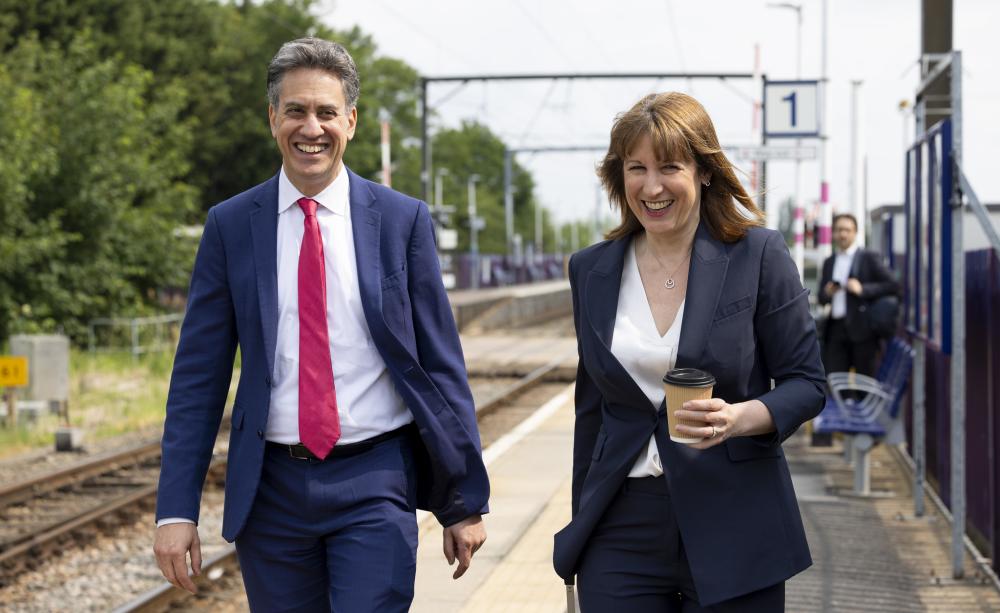
Rachel Reeves, the British chancellor, and Ed Miliband, secretary of state for energy and climate change.

The overwhelming majority of people in Britain want the most polluting companies to face tax hikes in order to fund frontline public services, a snap poll has found.

The research, polling 2,000 UK adults was conducted by Yonder, on behalf of the Zero Hour environmental campaign, and brings into question the public’s faith in ministers’ spending plans.

Zero Hour argues that properly addressing Britain’s economic challenges and improving living standards can only be done through addressing the climate and nature crises.

Polluter

Dr Amy McDonnell, co-director of the Zero Hour climate and nature campaign, said: "These findings show the government must urgently get to grips with the cost-of-living crisis, alongside taking bold action to hold the nation’s big polluting companies to account while setting out clear plans for a fair transition to net zero.

“We know we cannot address both our economic and environmental challenges in isolation. We need more investment into our crumbling public services alongside the rapid development of cleaner energy infrastructure to lower bills, alongside strong safeguards to protect nature.

“We know the climate and nature crises threats we face pose the biggest risk to those on the lowest incomes. Ministers would be wise to redouble their efforts to address these head on by adopting the level of ambition set out in the Climate and Nature Bill.”

A total of 80 per cent want major polluters to pay higher tax, which can cover public sector spending. Two-thirds believe that building new homes and infrastructure projects should not come at the expense of the environment.

Insulation

Meanwhile, half say strengthening the UK’s protections for nature and renewable energy infrastructure will boost the UK’s national security.

Seven in 10 voters also believe the Government should consult the public on their plans to reach net zero and boost biodiversity across the country.

The findings come as ministers were under fire for cutting DEFRA’s budget by 2.7 per cent in last week’s Spending Review.

Plans set out by Ed Miliband to boost funding for home insulation, in an effort to lower household energy bills, were, however, protected by Rachel Reeves.

Restore

Campaigners say the British Government’s economic plans should not come at the expense of the environment, and that polluting industries should be hit with harsher taxes to help the world reach net zero.

In a blow for Labour, just 15 per cent of voters say the party understands the challenges working people face.

The snap poll comes ahead of the return of the landmark Climate and Nature Bill, which is set to be debated in Parliament on 11 July 2025.

The private members’ bill includes measures to restore nature, protect workers and curb emissions. Although it effectively put on ice by government whips back in January, it holds record support across the Commons, including from almost 90 Labour MPs.

This Author

Brendan Montague is editor of The Ecologist. This article is based on a press release from Zero Hour.