Monday, June 23, 2025

'Hands off Iran': Demonstrations break out in US cities after Trump strikes on Iran

'Hands off Iran': Demonstrations break out in US cities after Trump strikes
Iranian authorities say more than 400 people have been killed since Israel's attacks began, mostly civilians. Much of Tehran, a capital city of 10 million people, has emptied out

Our Web Desk, Reuters Published 23.06.25
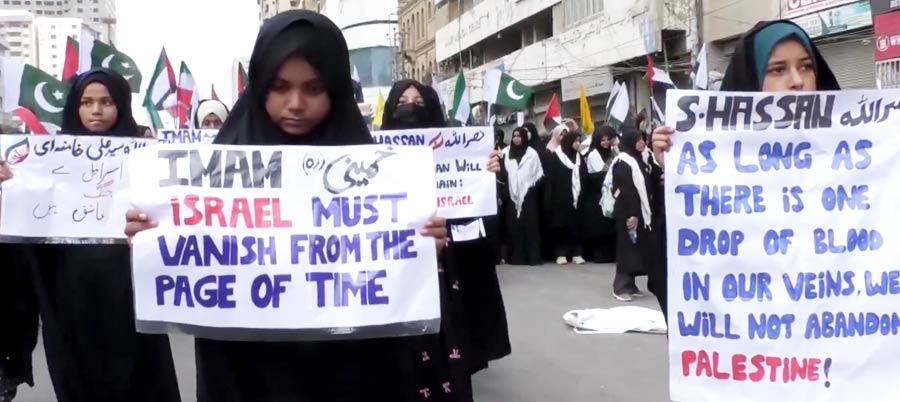

Video grab from Reuters.

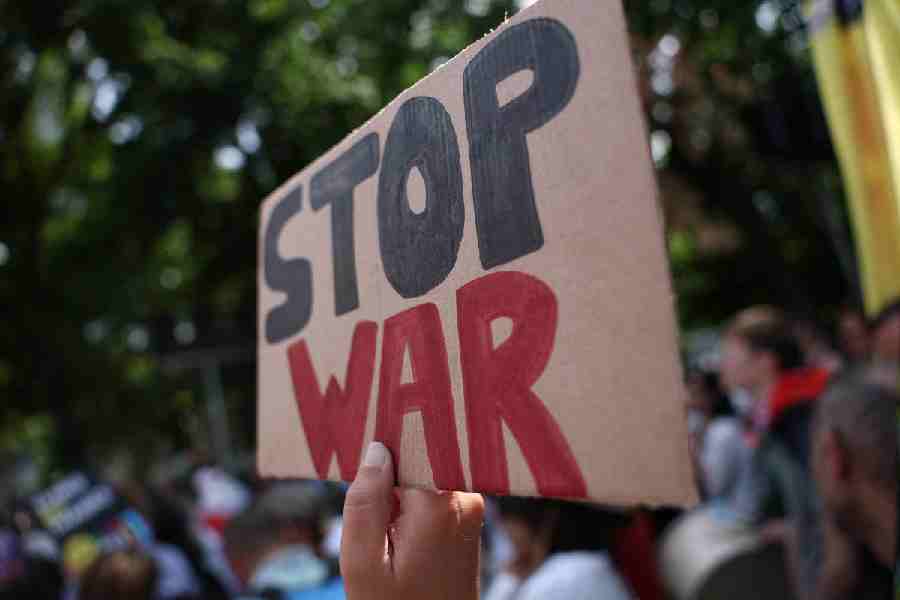
Anti-war activists organised demonstrations on Sunday in New York, Washington and other U.S. cities, with signs carrying messages such as "hands off Iran."

Meanwhile, some Iranians said they feared the prospect of an enlarged conflict involving the U.S.
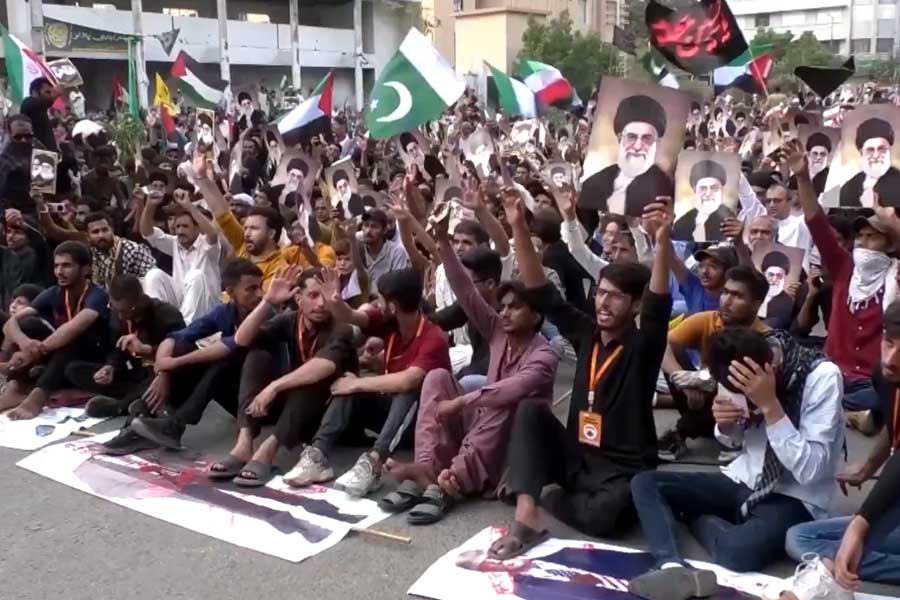

Video grab from Reuters.

"Our future is dark. We have nowhere to go - it's like living in a horror movie," Bita, 36, a teacher from the central city of Kashan, said before the phone line was cut.

Much of Tehran, a capital city of 10 million people, has emptied out, with residents fleeing to the countryside to escape Israeli bombardment.

Several killed

Iranian authorities say more than 400 people have been killed since Israel's attacks began, mostly civilians. Israel's bombardment has decimated much of Iran's military leadership with strikes targeted at bases and residential buildings where senior figures slept.
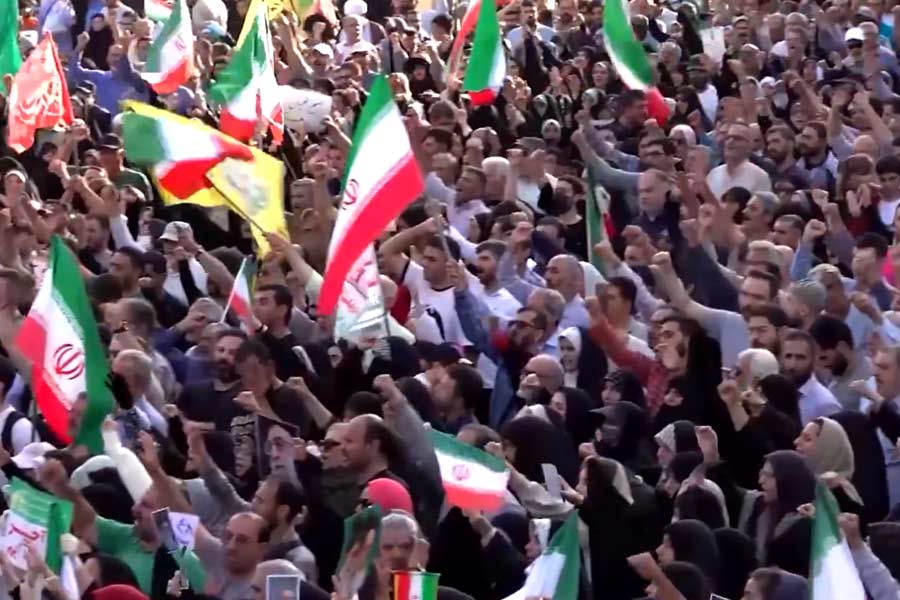

Video grab from Reuters.

Speaking in Istanbul, Iranian Foreign Minister Abbas Araqchi said his country would consider all possible responses. There would be no return to diplomacy until it had retaliated, he said."

The U.S. showed they have no respect for international law. They only understand the language of threat and force," he said.
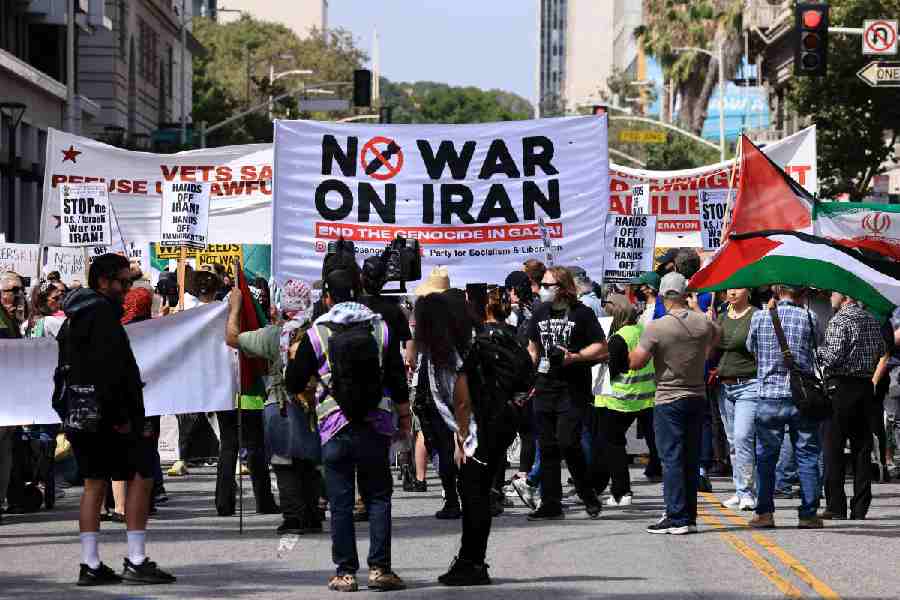

Reuters picture.

Trump, in a televised address, called the strikes "a spectacular military success" and boasted that Iran's key nuclear enrichment facilities had been "completely and totally obliterated."

The world braced on Sunday for Iran's response after the US attacked key Iranian nuclear sites, joining Israel in the biggest Western military action against the Islamic Republic since its 1979 revolution.

Iran vowed to defend itself a day after the US dropped 30,000-pound bunker-buster bombs onto the mountain above Iran's Fordow nuclear site while American leaders urged Tehran to stand down and pockets of anti-war protesters emerged in U.S. cities.
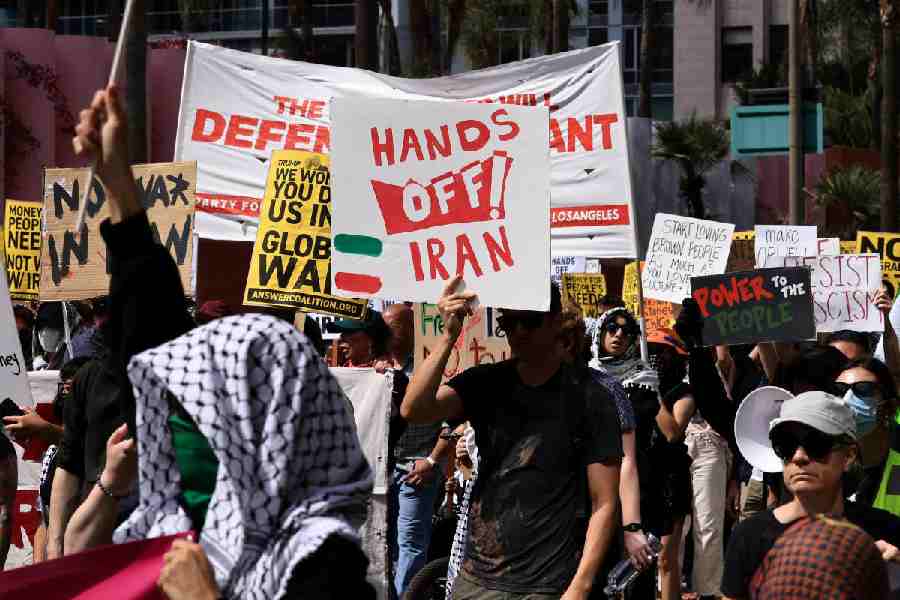
Reuters picture.

Iran and Israel continued to trade volleys of missile attacks. An Israeli military spokesperson said Israeli fighter jets had struck military targets in western Iran. Earlier, Iran fired missiles that wounded scores of people and flattened buildings in Tel Aviv.

Tehran has, so far, not followed through on its threats of retaliation against the United States - either by targeting U.S. bases or trying to choke off global oil supplies - but that may not hold.

Reuters picture.

Iran has been launching missiles back at Israel, killing at least 24 people over the past nine days.

Air raid sirens sounded across most of Israel on Sunday, sending millions of people to safe rooms.

In Tel Aviv, Aviad Chernovsky, 40, emerged from a bomb shelter to find his house had been destroyed in a direct hit. "It's not easy to live now in Israel (right now), but we are very strong," he said. "We know that we will win."

Polling on Iran attack shows Donald Trump faces uphill battle to win public support

US 'deeply distracted' by domestic issues, expert warns


Polls taken before US President Donald Trump decided to join Israel's war with Iran showed little US appetite for military strikes on the country. AFP

Cody Combs
Washington
June 22, 2025
THE NATIONAL

Polling conducted before the US attack on Iranian nuclear sites suggests US President Donald Trump could face an uphill battle to convince a majority of Americans to support the military strikes.

A survey from The Washington Post before Saturday's attack found 45 per cent of respondents opposed the idea of US air strikes against Iran, 25 per cent supported strikes, while 30 per cent were unsure.


“We are deeply distracted by our own issues here at home,” said Brian Katulis, a senior fellow of the Washington-based Middle East Institute, pointing to economic and cultural issues preoccupying many Americans.

Recent “No Kings” protests against Mr Trump's sweeping use of his executive authorities has also helped consolidate opposition to his Iran plans.

“These were protests that had deep concerns about President Trump overreaching on executive authority, and this action last night will continue those debates on that,” Mr Katulis said.

He added that the crucial thing for Mr Trump, based on the Post's polling, would be to convince the 30 per cent who were unsure about the idea of US strikes on Iran.


Republican Congressman Thomas Massie has described Mr Trump's military action on Iran as “not constitutional”.

But Republicans sharing that view were almost non-existent on Sunday, with most supporting Mr Trump's actions.

The White House said the strikes did not attack Iranian troops or civilians. During an appearance on NBC on Sunday, Vice President JD Vance echoed that message.

“We're not at war with Iran, we're at war with Iran's nuclear programme,” he said. “We actually want peace, but we want peace in the context of them not having a nuclear weapons programme.”

Despite Mr Trump initially claiming “spectacular” success, Pentagon officials cautioned that an in-depth assessment of Saturday's strikes on Iran would take some time.

If it becomes apparent that the strikes were not as effective as initially advertised, support for Mr Trump's decision to attack Iran could falter, Mr Katulis said.

“At the [Pentagon] news conference, they hedged a bit more,” Mr Katulis said, referring to Gen Dan Caine, Chairman of the Joint Chiefs of Staff, who urged patience while the US studies long-term battle damage assessments of the attacks.

Updated: June 22, 2025
Explainer

Why Israel has long been believed to have a nuclear weapons programme


Benjamin Netanyahu accuses Iran of seeking to develop a nuclear bomb but Israel itself has long been believed to have a nuclear weapons programme - this is why.

Michael Drummond
Foreign news reporter 
Sky News
@MikeRDrummond
Monday 23 June 2025, UK


Israeli Prime Minister Benjamin Netanyahu has long warned that Iran is secretly looking to develop a nuclear bomb - but for decades there have also been suspicions about Israel's own nuclear programme.

US and Israeli strikes in the last week have aimed to destroy Iran's nuclear capability, despite Iran insisting that it has no plans to develop an atomic weapon.

But, meanwhile, has Israel harboured a secret nuclear arsenal for decades?

"It's very opaque, there's very little detailed information about it," says Professor Nick Ritchie, an expert on international security and nuclear proliferation at the University of York.

But he adds: "There's no debating whether Israel has nuclear weapons and a nuclear weapons programme. Everybody knows it does."

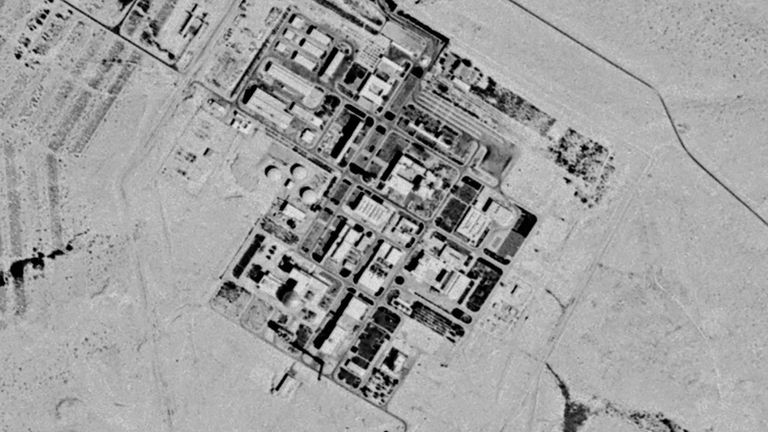
A declassified photograph by a US spy satellite shows an Israeli nuclear research centre near Dimona. Pic: AP

When did Israel supposedly get nuclear weapons?

It's believed Israel began building a stockpile of nuclear weapons in the early 1960s, according to a research document for the UK parliament.

"Israel developed nuclear weapons because of fear of encirclement and attack by the Arab states, potentially supported by the Soviet Union, that opposed its existence," Prof Ritchie tells Sky News.

"There was a sense of acute threat to the existence of the Jewish state after the Holocaust. Back then it was not the regional power that it is now."

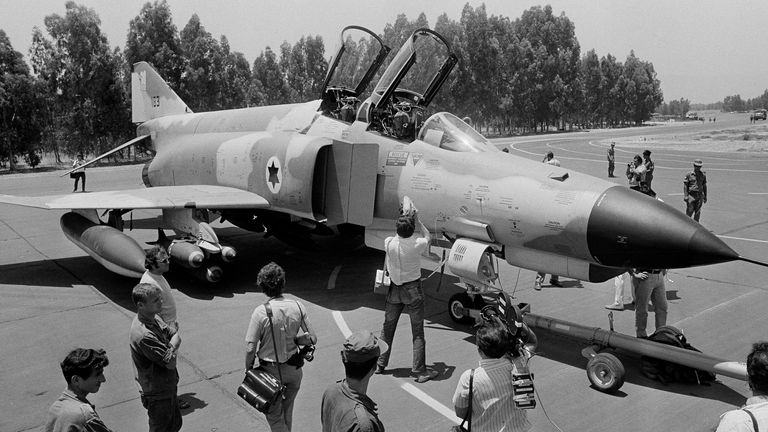
An Israeli Phantom fighter bomber seen in 1970. Pic: AP

In a declassified memo to President Richard Nixon in 1969, US Secretary of State Henry Kissinger discussed the recent purchase by Israel of American Phantom fighter aircraft - which were capable of carrying nuclear weapons.

He told the president that Israel had committed "not to be the first to introduce nuclear weapons" to the Middle East.

Kissinger added: "But it was plain from the discussion that they interpreted that to mean they could possess nuclear weapons as long as they did not test, deploy, or make them public."

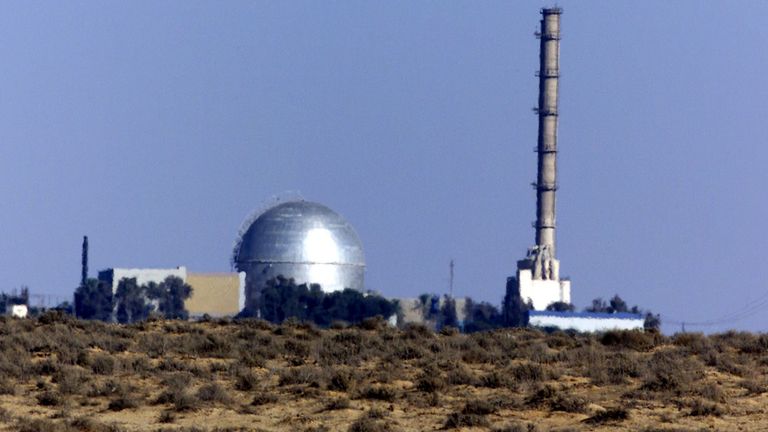
An Israeli nuclear facility in the Negev Desert outside Dimona seen in 2000. Pic: Reuters

Whistleblower describes working at Israeli nuclear reactor

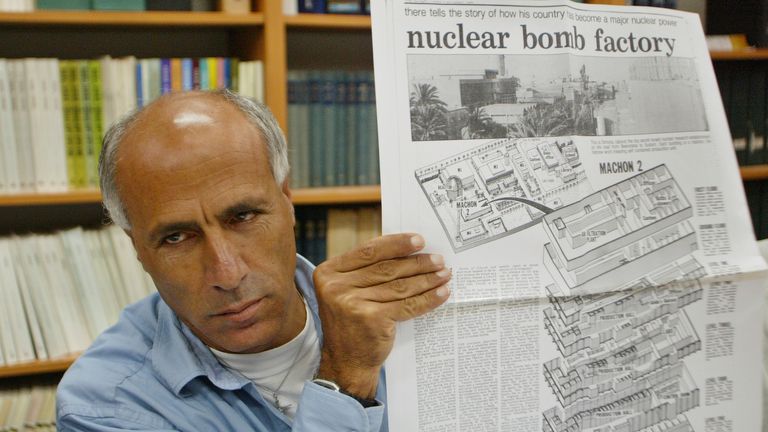
In the late 1980s, an Israeli former nuclear technician revealed information about his work at Israel's Dimona reactor to a British newspaper, which led foreign experts to conclude that Israel had produced enough material for up to 200 nuclear warheads.

Mordechai Vanunu was later kidnapped by Mossad and brought back to Israel, where he was sentenced to 18 years in prison, the UK parliament document said.

I
Former nuclear technician Mordechai Vanunu holds a copy of the original newspaper in which he revealed Israel's alleged nuclear secrets. Pic: AP

When asked on CNN in 2011 whether his country has nuclear weapons, Mr Netanyahu responded: "Well, we have a longstanding policy that we won't be the first to introduce nuclear weapons into the Middle East, and that hasn't changed."

Prof Ritchie says: "Senior Israeli officials, including prime ministers such as Ehud Barak, have acknowledged that Israel has a nuclear weapons programme, more often when they have retired."

While it has repeatedly criticised Iran for what it claims is a pursuit of nuclear weapons, Israel itself is not signed up to the Nuclear Non-Proliferation Treaty, which commits countries that don't have nuclear arms not to build or obtain them.

What nuclear weapons might Israel have?

Given Israel's policy of ambiguity in relation to its alleged nuclear weapons programme, it's hard to precisely estimate how many nuclear warheads it may possess - and what type.

The Stockholm International Peace Research Institute (SIPRI), an independent organisation that provides analysis about conflict, says Israel likely has 90 warheads and they are made from plutonium.

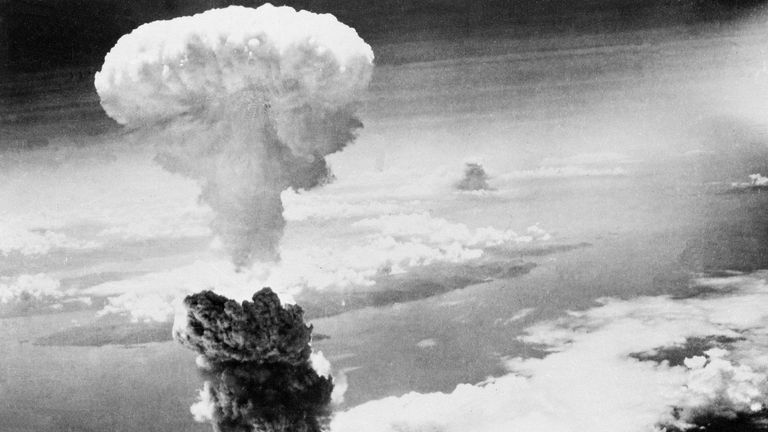
Prof Ritchie says it is difficult to be certain but it is believed Israel has fission-based nuclear weapons - like the kind dropped on Hiroshima and Nagasaki by the US.

The mushroom cloud over Nagasaki, Japan, after a second bomb to hit was dropped in 1945. Pic: AP

Whether they have thermonuclear fusion weapons - more powerful bombs like those in the arsenals of the US, Russia and the UK - is "difficult to say with certainty".

"But of course Israel is a very geographically small state," Prof Ritchie says, adding that in the event of an existential attack on the country, any use of its nuclear weapons against the armed forces of attackers in the region could result in Israel facing "extensive fallout" from the blasts.

How would Israel launch any potential nuclear attack?

There is the question of how Israel would deliver any nuclear strike.

The UK parliament document says: "Based on unconfirmed reports, Israel could be in possession of the nuclear triad, making it capable of delivering a nuclear capability via land, air and/or sea."

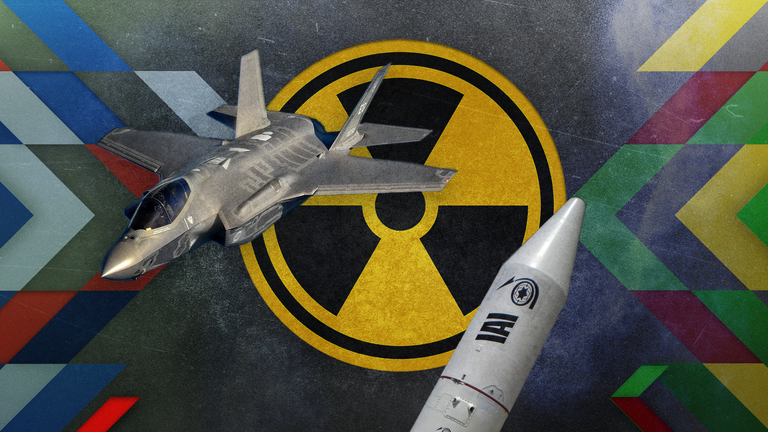
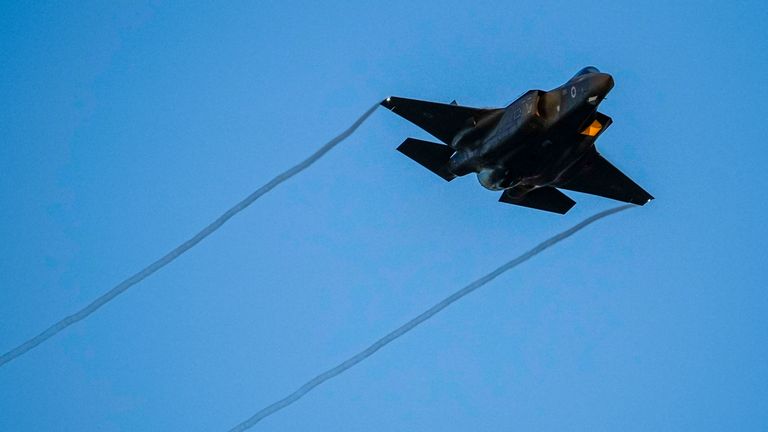
It is possible that Israel's fleet of F-35 jets could be capable of launching nuclear weapons. Pic: AP

The IDF operates several planes that could be capable of launching nuclear weapons, including the American-made F-16 and F-35 fighter jets.

Around 30 of Israel's nuclear warheads are estimated to be gravity bombs (unguided munitions dropped from aircraft) for delivery by fighter jets, SIPRI has said.

It also reportedly has the ground-launched Jericho ballistic missile family, reportedly with ranges that could exceed 5,500km (3,400 miles), according to the UK parliament document.

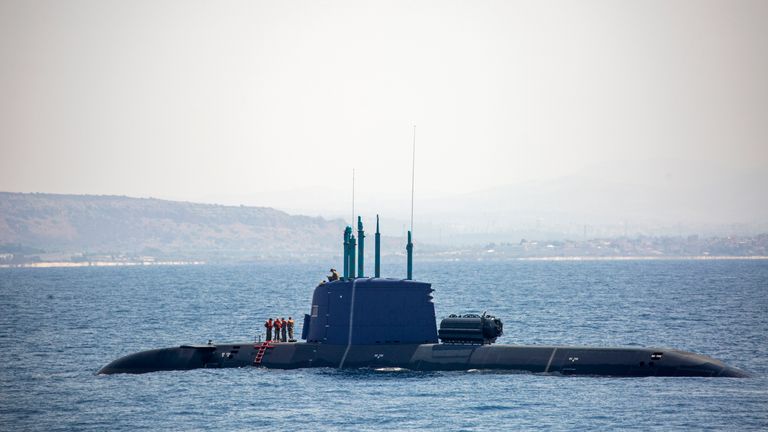
An Israeli Navy submarine seen in 2021. Pic: AP

It's thought that up to 50 nuclear warheads are assigned for land-based missile delivery, SIPRI said.

The Israeli government has never confirmed that it possesses Jericho missiles.

Finally, Israel operates five Dolphin-class submarines which may also be capable of carrying nuclear warheads.

"Given that Israel does not officially acknowledge its apparent possession of nuclear weapons, the circumstances under which it would use them are highly unclear," SIPRI said.

Debate over nuclear weapons


👉Listen to The World with Richard Engel and Yalda Hakim on your podcast app👈

Discussion of Israel's alleged nuclear weapons programme raises questions about which countries - if any - should possess them and how this is enforced.

"The argument that nuclear weapons are acceptable for Israel but not for other states in the region is widely viewed as Western hypocrisy that is difficult for a number of countries to accept," says Prof Ritchie.

"If it's not acceptable for Iran to have nuclear weapons, why is it acceptable for Israel to have them? This is why many countries in the region, like Egypt, have pushed for the negotiation of a treaty to ban all weapons of mass destruction in the region, covering chemical, biological and nuclear weapons."

Sky News has approached the Israeli government for comment.
Kashmir: The identity crisis at the heart of the three-way territorial contest
 THE INTERPRETER
LOWY INSTITUTE
Published 23 Jun 2025 

Rich resources and vital rivers make Kashmir a prize worth
fighting for, but neither India, Pakistan nor China will give ground.


An Indian paramilitary soldier stands guard in Srinagar, Jammu and Kashmir (Firdous Nazir/NurPhoto via Getty Images)

The rivers of the Kashmir region feed into the Indian subcontinent, including the Indus and its tributaries – Jhelum, Chenab, Ravi, Beas, and Sutlej. India and Pakistan are heavily reliant on these rivers for agriculture and hydropower, while China controls key headwaters.

The 1960 Indus Waters Treaty, mediated by the World Bank, has long helped prevent conflict over water. However, following the 2025 Pahalgam terror attack, India’s threat to withdraw from the treaty has heightened tensions. Islamabad views any attempt to block the Indus, Jhelum, or Chenab as an act of war (since these rivers have been allocated to Pakistan via the treaty).

Further complicating matters, the Indus and Sutlej originate in Tibet. Given China’s close ties with Pakistan, Islamabad could urge Beijing to restrict India’s access to these waters, threatening New Delhi.

These water management challenges are illustrative of why Kashmir has remained a complex and stubborn geopolitical flashpoint. Kashmir is also endowed with rich natural resources. It contains vast forests that could yield timber from deodar cedar and pine, as well as medicinal plants that treat a wide range of ailments. Mineral wealth includes bauxite and coal, gypsum, precious stones, graphite, lithium, and magnesite – key materials for the digital age. The region also produces high-value crops such as apples, walnuts, and saffron, while its pristine landscapes hold immense potential for tourism.

These economic benefits remain largely unrealised due to the ongoing territorial dispute.

Kashmir’s mountainous terrain makes it a vital vantage point for surveillance and military exercises, meaning the territory is intertwined with national security for the three countries.

Until identity-driven narratives give way to pragmatic diplomacy and economic cooperation, Kashmir will likely remain a flashpoint.

China currently controls Aksai Chin (acquired during the Sino-Indian War of 1962) and Shaksgam (ceded by Pakistan in 1963 through a boundary agreement). Unlike India and Pakistan, China does not claim the entire region of Kashmir. It considers Aksai Chin and Shaksgam as historical territories of the Qing Dynasty, rejecting the British-drawn Macartney-MacDonald Line of 1899. For Beijing, these areas are integral to Xinjiang and Tibet and thus have nothing to do with the ongoing Indo-Pak dispute over Kashmir.

India, however, claims all of Kashmir, based on the 1947 Instrument of Accession signed by Maharaja Hari Singh and the endorsement of the British-era border. For New Delhi, Kashmir is an inseparable part of its secular, federal identity and sovereignty. This is why India does not recognise either Pakistan’s claims to Kashmir or the legitimacy of Pakistan’s cession of Shaksgam to China.

Pakistan views Kashmir as fundamental to its founding Islamic identity. This is even reflected in the country’s name (derived from its five main provinces) where ‘K’ and ‘I’ denote Kashmir (Punjab–Afghan–KashmIr–Sindh–BalochisTAN). Following the logic of the 1947 Radcliffe Line, which partitioned India and Pakistan based on religious demographics, Islamabad argues that Kashmir, being a Muslim-majority region occupied by India, should rightfully belong to Pakistan. Interestingly, Pakistan does not claim Aksai Chin or Shaksgam, suggesting a tacit alignment with China against India — a classic case of “the enemy of my enemy is my friend.”

India remains wary of this Sino-Pakistani partnership. In 1984, India launched Operation Meghdoot to take control of the Siachen Glacier amid intelligence reports that Pakistan intended to occupy the area to link up with Chinese forces. The operation shattered a 12-year peace and ushered in a more violent era marked by secessionist terror groups in India-administered Kashmir – activities New Delhi often attributes to Islamabad.

India is equally suspicious of the China-Pakistan Economic Corridor (CPEC), a flagship component of China’s Belt and Road Initiative, which passes through Pakistan-administered Kashmir. India fears that such infrastructure projects over time will gradually erode its territorial claims and normalize the control of its adversaries over Kashmir’s disputed areas.

The Kashmir conflict cannot be fully understood through the lens of strategic geography or resource competition alone. The region has become a symbolic core of national identity for all three stakeholders. Until identity-driven narratives give way to pragmatic diplomacy and economic cooperation, Kashmir will likely remain a flashpoint – one that continues to cost peace, development, and lives not just for India and Pakistan but also for the people living in Kashmir.

Pride and prejudice: Trump casts shadow on 10 years of gay marriage


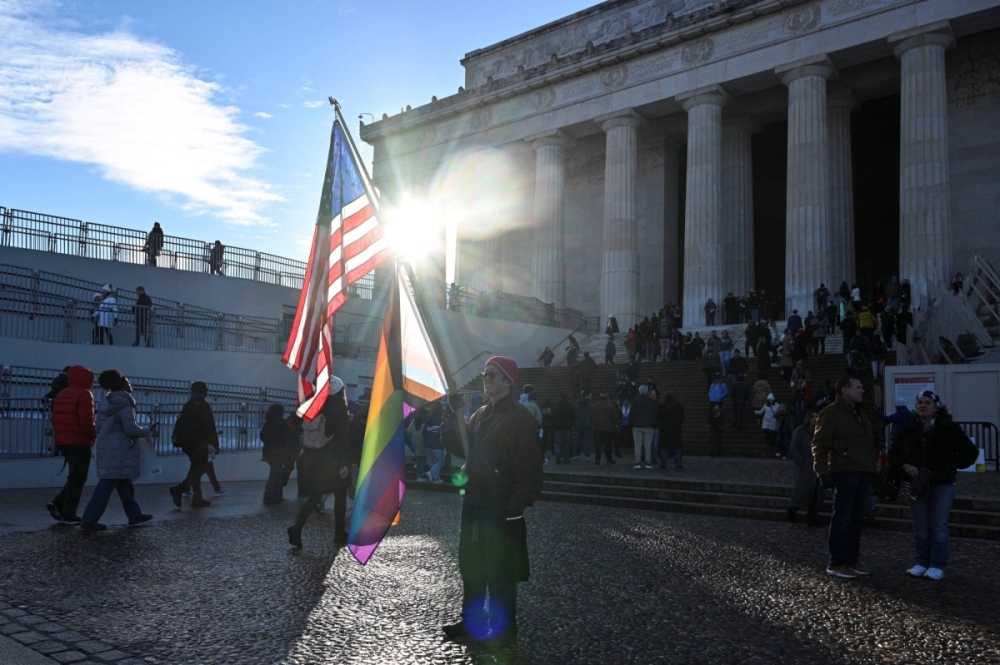
A person holding U.S. and LGBTQ+ flags stands in front of the Lincoln Memorial, ahead of the presidential inauguration of U.S. President-elect Donald Trump, in Washington on Jan. 18. | REUTERS


By Lucy Middleton
Thomson Reuters Foundation

LONDON –

When Zach Bolen proposed to his partner Derrick Dobson in 2017, he chose a place that meant a lot to them; the hiking trail where the couple had first met, with a view over their entire home city of Boise, Idaho.

"I drove him to the top, claiming it would be a fun last-minute adventure as we had not been there in a while. I proposed with all of our friends and family behind us to surprise him after," said Bolen, 33.

Now, the couple's long-awaited wedding plans are uncertain.

In January, lawmakers in Idaho passed a resolution urging the Supreme Court to overturn Obergefell v. Hodges, the ruling that legalized same-sex marriage across the United States.

On June 26, the United States will mark 10 years since that landmark decision.

But with LGBTQ+ rights increasingly under fire from President Donald Trump, Bolen is not only considering getting married in another state, but leaving Idaho altogether.

"We are not going to be in a place where we are not welcomed," said Bolen, who is on the board of directors for the Boise division of LGBTQ+ advocacy group PFLAG.

"It's heartbreaking, because we love our city of Boise and Idaho so much."

Since the 2015 decision, the Supreme Court has shifted to the right, and conservative judges now hold a 6-3 majority, heightening concern for the future of marriage equality.

At least two sitting justices have indicated they want to revisit Obergefell, among other cases.

Along with Idaho, Republican lawmakers in Michigan, Montana, Oklahoma, South and North Dakota have all introduced resolutions seeking to reverse Obergefell this year.

Texas, Missouri, Oklahoma and Tennessee have also introduced bills to create a type of marriage only open to heterosexuals.

"What this political moment has done is really let us know that nothing is safe," Harrison Guy said by phone from Austin, Texas, where he lives with his husband Adrian Homer.

"It makes it feel more fragile than we thought originally," said Guy, who is president of a Black, gay fraternity called Delta Phi Upsilon.
'Pride and anxiety'

If Obergefell were overturned, the decision of marriage equality would fall to individual states.

More than 30 states have laws or constitutional amendments — or both — blocking same-sex marriage.

At least one in two Americans has supported marriage equality since 2012, but that approval rating has dipped 3% since 2023, a yearly survey by analytics company Gallup showed.


Supporters of same-sex marriage in Washington in 2015 celebrate outside the U.S. Supreme Court following the announcement of the ruling on same-sex marriage. | Doug Mills / The New York Times

LGBTQ+ Americans also risk a record run of new anti-LGBTQ+ laws — covering everything from ID laws to child custody rights — being introduced this year.

Since January, the Trump administration has also rolled back LGBTQ+ rights on multiple fronts, be it nonbinary recognition or gender-affirming care for under 19-year-olds.

Trump said he was "fine" with same-sex marriage during an interview in 2016. As to his opinion now — the White House did not respond to a request for comment.

Project 2025, a set of conservative policy proposals from The Heritage Foundation think tank, said same-sex marriages involved "higher levels of instability" than heterosexual relationships and had "poor behavioral, psychological, or educational outcomes" for children.

Trump repeatedly distanced himself from Project 2025 during the presidential campaign, but his administration has since implemented several policies from the 900-page wish list.

Nancy Lyons, a tech CEO based in Minneapolis, Minnesota, married her partner Laura in 2018.

The couple adopted their son Merrick, now 18, in 2006.

"I feel pride and anxiety. There hasn't been a moment in this entire journey that hasn't had some amount of anxiety in it," Lyons said of marriage equality in a video call.

"We've made so much progress and yet we live in a time when rights that we thought were settled are being debated all over again."
Future families

The number of same-sex married couples in the United States has more than doubled since 2015, according to the Williams Institute at UCLA School of Law.

More than half are in states with statutes or constitutional amendments prohibiting marriage equality, it said.

Married LGBTQ+ couples were also found to earn 18% more than those who hadn't married.

"Being married has improved the health and economic stability of same-sex couples and those raising kids, as it does for other married people," said Mary Bonauto, who was an attorney in the landmark 2015 Obergefell case and is now a senior director for legal rights organization GLAD Law.

Bonauto said fears for Obergefell's survival were not "unreasonable."

"However, we are going to fight with everything we have to preserve it, and we are confident we will win," she said.

The Respect for Marriage Act, which passed in 2022, provides federal recognition to same-sex marriages, as long as they were legal in the states where they were performed.

It is intended to serve as a backstop, should Obergefell be struck down — but only protects couples who are already married.

"My concern is for the families that don't yet exist," said 35-year-old Jordan Wilson, who is director of Colage, an organization supporting LGBTQ+ parents.

"In a lot of states, you are just not eligible to adopt if you're unmarried," said Wilson, who married his partner Cedric last year in part due to anticipation of a second Trump term.

"If you're suddenly not able to get married anymore, then you might be locked out of having children."


A Media Corruption Case in Shanghai

Local police allege that a WeChat account extorted hundreds of thousands of yuan from companies — revealing how corruption persists in China’s tightly controlled information landscape.

Jun 23, 2025


In the latest case underscoring the persistent challenge of media corruption in China’s tightly controlled information environment, local district authorities in Shanghai reported this week that they had dismantled a “news extortion” (新闻敲诈) operation using a WeChat public account to blackmail companies for exorbitant “service fees” in order to make negative exposure disappear.

The case, authorities said, involved the exploitation of “supervision by public opinion” (舆论监督) — a concept that has typically been used officially in China to refer to the media’s power to expose malfeasance through reporting, with the proviso that this work does not directly criticize the Party. In this case, authorities allege, the WeChat public account in question exploited critical reporting to press companies into what were labelled “market promotion contracts.”

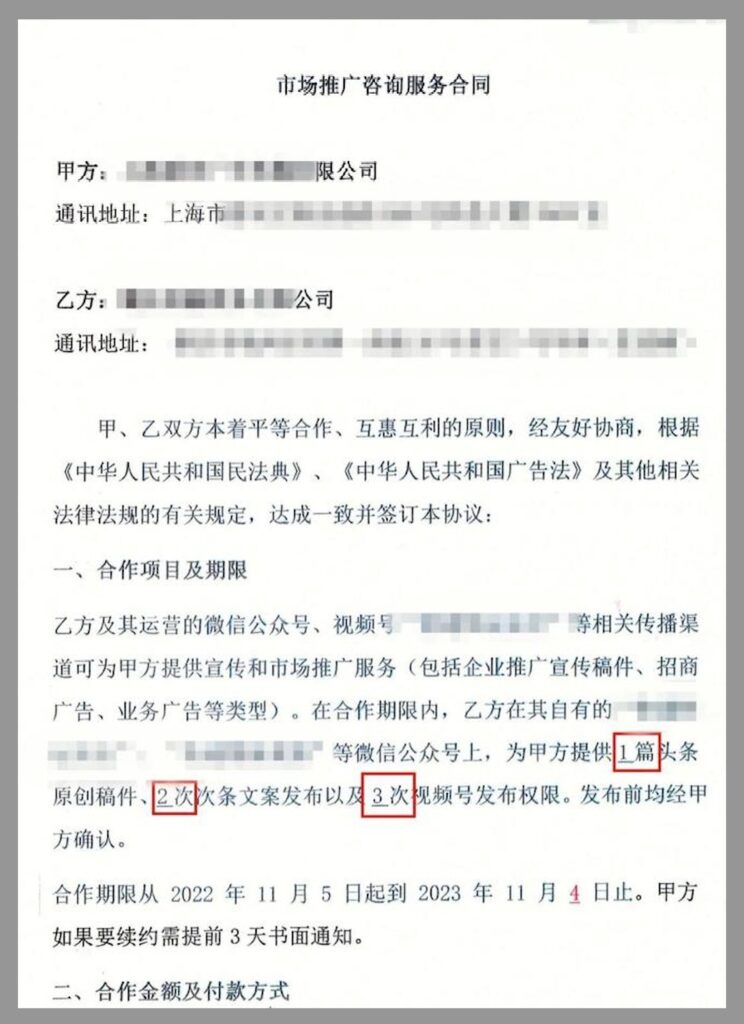
A copy of a contract from Ding’s public account to an allegedly extorted client. The contract looks like an advertising and promotion arrangement, but authorities say it was used to extract profit in exchange for withholding negative exposure.

During the heyday of investigative reporting in China’s commercializing media in the early to mid 2000s, the phrase “supervision by public opinion” came to mean for some Chinese journalists something more akin to “watchdog journalism” in the West, with the idea of keeping power in check through reporting. Since 2012, Xi Jinping has moved to rein in these more professional and idealistic strains of “supervision,” emphasizing a more compliant and less oppositional approach in which “supervision by public opinion and positive propaganda are united” (舆论监督和正面宣传是统一的). Critical journalism has been radically restrained, even as the leadership has also stressed the need for internal supervision.

The Shanghai case follows patterns documented in previous alleged cases of news extortion across China.

On June 23, police in Qingpu announced the arrest of a suspect identified only as “Ding” (丁某), who operated a public account identified in official accounts as “X X Safety” (某某安全) — the name redacted, they said, for legal reasons. The account reportedly had 191,000 followers and daily views exceeding 8,000. After leaving his industry job in 2018, said an official release, Ding had leveraged his knowledge of the sector to establish the public account, which “initially focused on publishing industry-related company developments and analytical intelligence, accumulating a certain number of followers,” according to an official release.

Beginning in 2021, however, Ding was allegedly “no longer satisfied with objective reporting” (不再满足于客观报道), according to the police account. He deliberately sought “negative information” (负面信息) about target companies, then manipulated content, they said, through “clickbait headlines” (标题党), misattribution, and deceptive editing, colorfully referred to as “grafting flowers onto trees”( 移花接木). In one case this May, Ding published an article claiming a company had been shut down for illegal activities, then spliced in unrelated video footage from a separate criminal case in another province, creating false associations that damaged the company’s reputation.

Text messages exchanged between Ding and a company seem to show pressure to finalize “cooperation” on condition of dropping coverage.


As described by police, the alleged extortion scheme followed a clear pattern. Ding would first publish damaging content about a company. He would then approach the company offering to sign what he called a “market promotion contract,” which essentially came with a promise to cease coverage. These contracts generally were for between 20,000 and 100,000 yuan annually, or about 2,750 to 14,000 dollars. The fee structure was calibrated, said police, based on a company’s size and “tolerance capacity” (承受能力) — essentially referring to what Ding deemed companies would be able to pay.

Ding’s operation reportedly netted multiple companies, with one executive telling police he was forced to pay over 100,000 yuan annually to stop the attacks, only to face renewed pressure after the expiration of “market promotion” contracts.

This latest case in Shanghai reflects the broader phenomenon of news extortion that has plagued China’s commercialized media landscape since at least the mid-1990s. Despite periodic crackdowns and isolated cases like this one, the practice persists — in large part because it exploits fundamental vulnerabilities in China’s heavily controlled information ecosystem. In this environment, media can have extraordinary power through perceived connections to the state press system, turning this authority to profit, while the media control policies of the Chinese Communist Party normalize the practice of removing “negative” or “sensitive” reporting. At the same time, there are no independent professional associations to advance ethical conduct within the media.

The investigation in Shanghai continues, police say, and Ding likely faces criminal charges for extortion.

David Bandurski
CMP Director
Tesla rolls out robotaxis in Texas test


Published : June 23, 2025 


A Tesla robotaxi drives on the street along South Congress Avenue in Austin, Texas, Sunday. Reuters-Yonhap

AUSTIN, Texas (Reuters) -- Tesla deployed a small group of self-driving taxis picking up paying passengers on Sunday in Austin, Texas, with CEO Elon Musk announcing the "robotaxi launch" and social media influencers posting videos of their first rides.

Musk called the moment the "culmination of a decade of hard work" in a post on his social media platform X and noted that "the AI chip and software teams were built from scratch within Tesla."

Teslas were spotted early Sunday in a neighborhood called South Congress with no one in the driver's seat but one person in the passenger seat. The automaker planned a small trial with about 10 vehicles and front-seat riders acting as "safety monitors," though it remained unclear how much control they had over the vehicles.

In recent days, the automaker sent invites to a select group of influencers for a carefully monitored robotaxi trial in a limited zone. The rides are being offered for a flat fee of $4.20, Musk said on X.

Tesla investor and social media personality Sawyer Merritt posted videos on X Sunday afternoon showing him ordering, getting picked up, and taking a ride to a nearby bar and restaurant, Frazier's Long and Low, using a Tesla robotaxi app.

If Tesla succeeds with the small deployment, it still faces major challenges in delivering on Musk's promises to scale up quickly in Austin and other cities, industry experts say.

It could take years or decades for Tesla and self-driving rivals, such as Alphabet's Waymo, to fully develop a robotaxi industry, said Philip Koopman, a Carnegie Mellon University computer-engineering professor with expertise in autonomous-vehicle technology. A successful Austin trial for Tesla, he said, would be "the end of the beginning — not the beginning of the end."

Most of Tesla's sky-high stock value now rests on its ability to deliver robotaxis and humanoid robots, according to many industry analysts. Tesla is by far the world's most valuable automaker.

As Tesla's robotaxi rollout date approached, Texas lawmakers moved to enact autonomous-vehicle rules. Texas Governor Greg Abbott, a Republican, on Friday signed legislation requiring a state permit to operate self-driving vehicles.

The law, which takes effect Sept. 1, signals that state officials from both parties want the driverless vehicle industry to proceed cautiously.

Tesla did not respond to requests for comment. The governor's office declined to comment.

The law softens the state's previous anti-regulation stance on autonomous vehicles. A 2017 Texas law specifically prohibited cities from regulating self-driving cars.

The new law requires autonomous-vehicle operators to get approval from the Texas Department of Motor Vehicles before operating on public streets without a human driver. It gives state authorities the power to revoke permits for operators they deem a public danger.

The law also requires firms to provide information on how first responders can deal with their driverless vehicles in emergencies.

The law's permit requirements for an "automated motor vehicle" are not onerous but require firms to attest their vehicles can operate legally and safely. It defines an automated vehicle as having at least "Level 4" autonomous-driving capability under a recognized standard, meaning it can operate with no human driver under specified conditions. Level 5 autonomy is the top level and means a car can drive itself anywhere, under any conditions.

Compliance remains far easier than in some states, notably California, which requires submission of vehicle-testing data under state oversight.

Bryant Walker Smith, a University of South Carolina law professor who focuses on autonomous driving, said it appears any company that meets minimum application requirements will get a Texas permit, but could also lose it if problems arise.

"California permits are hard to get, easy to lose," he said. "In Texas, the permit is easy to get and easy to lose."

The Tesla robotaxi rollout comes after more than a decade of Musk's unfulfilled promises to deliver self-driving Teslas.

Musk has said Tesla would be "super paranoid" about robotaxi safety in Austin, including operating in limited areas.

The service in Austin will have other restrictions as well. Tesla plans to avoid bad weather, difficult intersections, and will not carry anyone below age 18.

Commercializing autonomous vehicles has been risky and expensive. GM's Cruise was shut down after a serious accident. Regulators are closely watching Tesla and its rivals, Waymo and Amazon's Zoox.

Tesla is also bucking the young industry's standard practice of relying on multiple technologies to read the road, using only cameras. That, Musk says, will be safe and much less expensive than lidar and radar systems added by rivals.
Emaciated after 5 years in prison, Belarusian dissident Tsikhanouski vows to fight on

June 23, 2025
By The Associated Press


Syarhei Tsikhanouski, a Belarusian opposition activist released from a prison by Belarusian authorities, speaks during an interview with the Associated Press in Vilnius, Lithuania, Sunday, June 22, 2025.Mindaugas Kulbis/AP

VILNIUS, Lithuania — Siarhei Tsikhanouski is almost unrecognizable. Belarus' key opposition figure, imprisoned in 2020 and unexpectedly released on Saturday, once weighed 135 kilograms (298 pounds) at 1.92 meters (nearly 6'4") tall, but now is at just 79 kilos (174 pounds).

On Saturday, Tsikhnaouski was freed alongside 13 other prisoners and brought to Vilnius, the capital of neighboring Lithuania, where he was reunited with his wife, exiled Belarusian opposition leader Sviatlana Tsikhanouskaya, and their children. Speaking to The Associated Press the day after, Tsikhanouski tries to smile and joke, but struggles to hold back heavy sighs recalling what he endured behind bars.

"This is definitely torture," Tsikhanouski told The Associated Press in the first sit-down interview since his release. Prison officials "kept telling me: 'You will be here not just for the 20 years we've already given you.' We will convict you again,'" he said. "They told me that 'You would never get out.' And they kept repeating: 'You will die here.'"

One of Belarus's most prominent opposition figures, Tsikhanouski said he "almost forgot how to speak" during his years in solitary confinement. He was held in complete isolation, denied medical care, and given barely enough food.


Belarus has released 3 from prison, including an American and a journalist

"If you had seen me when they threw only two spoons of porridge onto my plate, two small spoons …" he said, adding that he couldn't buy anything anything in the prison kiosk. "They would sometimes give me a little tube of toothpaste, a little piece of soap as charity. Sometimes they would, sometimes they wouldn't."
A prominent voice of dissent

Now 46, Tsikhanouski, a popular blogger and activist, was freed just hours after Belarusian authorities announced that authoritarian President Alexander Lukashenko met with U.S. President Donald Trump's envoy for Ukraine in the Belarusian capital, Minsk. Keith Kellogg became the highest-ranking U.S. official in years to visit Belarus, Moscow's close and dependent ally.

Tsikhanouski, known for his anti-Lukashenko slogan "stop the cockroach," was arrested after announcing plans to challenge the strongman in the 2020 election and shortly before the campaign began. He was sentenced to 19 years and six months on charges widely seen as politically motivated. His wife ran in his stead, rallying crowds across the country. Official results handed Lukashenko his sixth term in office but were denounced by the opposition and the West as a sham.

Lukashenko has since tightened his grip, securing a seventh term in disputed January 2025 elections. Since mid-2024, his government has pardoned nearly 300 prisoners — including U.S. citizens — in what analysts see as an attempt to mend ties with the West.

Tsikhanouski credited U.S. President Donald Trump with aiding his release.

"I thank Donald Trump endlessly," Tsikhanouski said. "They (the Belarusian authorities) want Trump to at least, a little bit, somewhere, to meet them halfway. They are ready to release them all. All of them!"
Many are still behind bars

Tens of thousands of people poured into the streets in the aftermath of the August 2020 vote. Thousands were detained, many beaten by police. Prominent opposition figures either fled the country or were imprisoned.

At least 1,177 political prisoners remain in custody, according to Viasna, the oldest and most prominent human rights group in Belarus. Among them is Viasna's founder, human rights activist and Nobel Peace Prize Winner Ales Bialiatski.

Also behind bars are Viktor Babaryka, a former banker who was widely seen in 2020 as Lukashenko's main elecoral rival, and Maria Kolesnikova, a close ally of Tsikhanouskaya and charismatic leader of that year's mass protests.
A surprise release and an emotional reunion

Tsikhanouski called his release "a dream that's still hard to believe." On Saturday, he said, guards removed him from a KGB pretrial detention center, put a black bag over his head, and handcuffed him before transporting him in a minibus. He and other prisoners had no idea where they were going.

"To be honest, I still can't believe it. I was afraid I'd wake up and everything would still be the same. I don't believe it, I still don't believe it," he said, pausing frequently and wiping away tears.

Tsikhanouski's children — his daughter, aged 9, and 15-year-old son — didn't recognize him when they were reunited.


Syarhei Tsikhanouski, left, Belarusian opposition activist released from a Belarusian prison, embraces his wife, Belarusian opposition leader Sviatlana Tsikhanouskaya, after a news conference in Vilnius, Lithuania, Sunday, June 22, 2025.Mindaugas Kulbis/AP


"We came in and my wife said to my daughter, 'Your dad has arrived,'" he said, crying. "At first she couldn't understand, and then she rushed in — she was crying, I was crying ... for a very long time. My son too! These are emotions that cannot be described."

Tsikhanouski, who says his health has deteriorated behind bars, plans to undergo a medical examination in Lithuania. He says cold and hunger were "the main causes of illness" that affected nearly all political prisoners in Belarus, who were subjected to "especially harsh conditions."

"There were skin diseases, and everyone had kidney problems from the cold — and no one really understood what was happening," Tsikhanouski said. "Blood came out of my mouth, from my nose. Sometimes I had convulsions — but it was all because of the cold, that terrible cold when you sit in those punishment cells."

"There is no medical care in prison — none at all, just so you know …" he said.

Tsikhanouski said conditions slightly improved after the February 2024 death of Russian opposition leader Alexei Navalny in a prison colony.

"When Alexei Navalny died, I thought, that'll probably be me soon … And then something changed. It was clear that someone at the top said, 'Make sure he doesn't die here. We don't need that problem.' It got just a bit softer ... At some point, word came down: Tsikhanouski must be kept alive, not killed."
Pointing the finger at Putin

Tsikhanouski blames Russian President Vladimir Putin for propping up Lukashenko, both during the 2020 protests and to this day.

Russia supports Belarus's economy with loans and subsidized oil and gas. In return, Belarus has allowed Moscow to use its territory to launch troops and weapons into Ukraine, and hosts Russian forces and nuclear weapons.

Tsikhanouski expressed strong support for Ukraine, calling the Kremlin a common evil for both countries.

"If it weren't for Putin, we would already be living in a different country. Putin recognized Lukashenko's victory in the election, he called black white. That is, he refused to see the falsifications," Tsikhanouski said. "They help each other. Because of Putin, this illegal government is still in Belarus."

Some analysts have speculated that by releasing the charismatic and energetic Tsikhanouski, Belarusian authorities may be trying to sow division within the opposition. But Tsikhanouski insists he has no intention of challenging his wife's role as the internationally recognized head of the Belarusian opposition, and he calls for unity.

"Under no circumstances do I plan to criticize any Belarusians, condemn or complain about anyone," he said.

Tsikhanouski says he will not stop fighting and wants to return to active work as both a political figure and a blogger. But he is skeptical that Lukashenko, now 70, will step down voluntarily, despite his age.

"I don't know anymore — will he go or won't he?" Tsikhanouski said. "Many people say nothing will change until he dies. But I'm still counting on democratic forces winning."

Air India Kanishka bombing: Canada identifies bomb-tester Mr X after 40 years

Even as the world marks the 40th anniversary of the 1985 Air India Kanishka bombing, Canada's RCMP has finally identified the mysterious 'Mr X' linked to the terror attack that killed 329 people. Mr X tested a bomb with the Khalistani mastermind weeks before the blast, but died without facing charges.


On the 40th anniversary of the Kanishka Air India bombing, RCMP confirms identity of the long-unknown bomb tester. (Image: File)


India Today World Desk
New Delhi,UPDATED: Jun 23, 2025 
Written By: Priyanjali Narayan


The Royal Canadian Mounted Police (RCMP) finally identified 'Mr X', a man who was involved in testing a bomb just weeks before the deadly Kanishka Air India bombing on June 23, 1985. However, the RCMP did not reveal his name, citing privacy laws. This came on the eve of the 40th anniversary of the attack in which 329 people were killed. What is shocking is that Mr X died without facing any charges.

On June 21, RCMP Assistant Commissioner David Teboul confirmed the death of the mysterious Mr X during an event commemorating the anniversary of the Kanishka bombing. Dozens of relatives of the victims attended the memorial.

On June 23, 1985, a bomb was detonated midair by Khalistani terrorists on Air India Flight 182, killing all 329 people on board. The plane was flying from Montreal to Mumbai with a stopover in London. The passengers were mostly Canadians of Indian origin.

The explosion, which took place off the coast of Ireland, is recorded as the worst terror attack against Canadians.

WHAT WE KNOW ABOUT MR X OF AIR INDIA KANISHKA BOMBING

Teboul, along with several other RCMP officers, was part of the Canadian delegation present at the memorial to mark the 40th anniversary of the bombing.
advertisement

He is the commander of federal policing in British Columbia, stated that despite the acquittals of two key suspects in the bombing case in 2005, investigators continued to pursue the case "to tie up some loose ends and discover more truth that’s independent of judicial process."

This persistent investigation ultimately led to the discovery of the identity of the mystery man referred to as 'Mr X', who had travelled to Duncan, British Columbia, on June 4, 1985, with Talwinder Singh Parmar, a terrorist of Babbar Khalsa and mastermind of the terror plot.

The two men then met up with Inderjit Singh Reyat, an electrician, who was later found guilty of making and planting bombs.

The trio entered the woods and tested a bomb, while agents from the Canadian Security Intelligence Service (CSIS) were following them. They then joined Inderjit Singh Reyat and entered a wooded area to test an improvised explosive device (IED).

CSIS agents had been surveilling the trio and heard the blast, but mistakenly believed it to be the sound of gunfire. As a result, they did not pursue any charges at the time.

CANADIAN AGENCIES AND LOOSE ENDS OF KANISHKA BOMBING

For decades, investigators referred to one of the men involved in testing the bomb as 'Mr X', as they were unable to confirm his identity. According to the RCMP, he died not long ago, without ever facing any charges.
advertisement

In his address at the memorial on Saturday, David Teboul reiterated that following the 2005 acquittals, the investigation continued in hopes of resolving "loose ends", eventually identifying the man who helped test the type of bomb that brought down the Air India flight 40 years ago.

Inderjit Singh Reyat was the only individual ever convicted in connection with the bombing.

He pleaded guilty to helping build the bomb that exploded on AI-182 but claimed he did not know the identity of 'Mr X'. Reyat later committed perjury during the trial, which led to a longer prison sentence. He has since served his time and been released.

Talwinder Singh Parmar, the alleged mastermind behind the bombing and founder of the Babbar Khalsa terrorist group, was killed in a shootout with Punjab Police in 1992.

During the memorial, David Teboul acknowledged that, although the investigation continued for many years, "there was very little realistic chance of seeing the matter go to another trial". He emphasised that the Kanishka bombing was the "largest act of terrorism" in Canada's history.
advertisement

"So we, RCMP, have an obligation to memorialise it and pay respect every year," Teboul told those gathered.

UK

 Palestine Action ban: Trolls on parade

Palestine Action ban: Trolls on parade

The government’s attempt to brand non-violent direct activists as “terrorists” has already backfired

Tabitha Troughton ~

This was the week when language in the UK temporarily gave up. At the bombing of Iran, the British people fell silent, or lapsed into incoherence, or sat in corners, clutching their heads. Trump and Netanyahu were classifiable, recognisable. But their own government’s behaviour—it was incomprehensible, indescribable. A word cloud of the British public’s mental state would have revealed, in flaming red letters: “Why?”

“War is peace. The attacker is the victim and non-violence is now terrorism” is no answer, but it’s the only one the public has been given. Gibberish is the inevitable result of attempts to justify a “defensive” attack by two nuclear armed states on a country which has no nuclear weapons, and was already negotiating. Blair took the long route to lie the country into an illegal war: his heirs are pressed for time, their bosses impatient, the propaganda correspondingly more bloodthirsty.

Into the baffled, horrified silence have whirled the screeching war trolls, on cue. “The enemy is within! Lock them up for life! Deport them! Kill them on sight”! The enemy being, in this case, for now, the non-violent direct action group Palestine Action, or anyone who expresses support for Palestine Action—while the US and its allies continue to ensure the need for its continued existence.

No-one believes that two peace activists spraying paint is “terrorism”, or that supporting them merits imprisonment, no matter which inanimate object they spray. Public nausea is not due to the government resorting to this nonsense—well, it would try, wouldn’t it—but due to the fact that people are expected to swallow it, just as they were told to swallow genocide or lose their jobs. “They’re traitors! They’re foreign agents! Iran’s a threat! Yes, it was Russia and China last week! Look over there – a non-violent terrorist”!

The squid ink of fantasy, lies, disinformation and confusion complements a reality where the government can no longer bear to speak about the genocide it continues, incredibly, to support. “We are all Palestine Action”, runs a current meme, which is something of an exaggeration. Kemi Badenoch and Nigel Farage are not Palestine Action, for example. But even they may, if there is another election, come to regret their gleeful support for Trump, whose initial bombing of Iran is already splitting the MAGA hierarchy, and further repulsing its voter base.

For the rest of us, the thought of the next election simply begs the question: are another four years of this tolerable? Is a day more of this tolerable? The answer—as emergency rallies break out nationwide, and London, like cities worldwide, continues to fill with vast, peaceful armies, and the Guardian’s letter page is taken over by politely furious correspondents expressing wholehearted support for Palestine Action—is clearly, “no”. It has never been tolerable. The system grinds barbarously and laboriously on, but its cogs are increasingly exposed; it falters: there are universal spanners in its works.