Monday, June 23, 2025


International study: AI has little impact on workers’ wellbeing so far, but…


University of Pittsburgh


As artificial intelligence reshapes workplaces worldwide, a new study provides early evidence suggesting AI exposure has not, thus far, caused widespread harm to workers' mental health or job satisfaction. In fact, the data reveals that AI may even be linked to modest improvements in worker physical health, particularly among employees with less than a college degree.

But the authors caution: It is way too soon to draw definitive conclusions.

The paper, “Artificial Intelligence and the Wellbeing of Workers,” published June 23 in Nature: Scientific Reports, uses two decades of longitudinal data from the German Socio-Economic Panel. Using that rich data, the researchers — Osea Giuntella of the University of Pittsburgh and the National Bureau of Economic Research (NBER), Luca Stella of the University of Milan and the Berlin School of Economics, and Johannes King of the German Ministry of Finance — explored how workers in AI-exposed occupations have fared in contrast to workers in less-exposed roles.

“Public anxiety about AI is real, but the worst-case scenarios are not inevitable,” said Professor Stella, who is also affiliated with independent European bodies the Center for Economic Studies (CESifo) and the Institute for Labor Economics (IZA). “So far, we find little evidence that AI adoption has undermined workers' well-being on average. If anything, physical health seems to have slightly improved, likely due to declining job physical intensity and overall job risk in some of the AI-exposed occupations.”

Yet the study also highlights reasons for caution.

The analysis relies primarily on a task-based measure of AI exposure — considered more objective — but alternative estimates based on self-reported exposure reveal small negative effects on job and life satisfaction. In addition, the sample excludes younger workers and only covers the early phases of AI diffusion in Germany.

“We may simply be too early in the AI adoption curve to observe its full effects,” Stella emphasized. “AI's impact could evolve dramatically as technologies advance, penetrate more sectors, and alter work at a deeper level.”

Key findings from the study include:

  • No significant average effects of AI exposure on job satisfaction, life satisfaction, or mental health.
  • Small improvements in self-rated physical health and health satisfaction, especially among lower-educated workers.
  • Evidence of reduced physical job intensity, suggesting that AI may alleviate physically demanding tasks.
  • A modest decline in weekly working hours, without significant changes in income or employment rates.
  • Self-reported AI exposure suggests small but negative effects on subjective well-being, reinforcing the need for more granular future research.

Due to the data supply, the study focuses on Germany — a country with strong labor protections and a gradual pace of AI adoption. The co-authors noted that outcomes may differ in more flexible labor markets or among younger cohorts entering increasingly AI-saturated workplaces.

“This research is an early snapshot, not the final word,” said Pitt’s Giuntella, who previously conducted significant research into the effect of robotics on households and labor, and on types of workers. “As AI adoption accelerates, continued monitoring of its broader impacts on work and health is essential. Technology alone doesn’t determine outcomes —institutions and policies will decide whether AI enhances or erodes the conditions of work.”

# # #


Mapping the gaps: New global assessment reveals stark biases in ocean biodiversity data


University of Plymouth


Despite decades of ocean exploration, humans still lack basic answers to one of the most fundamental ecological questions: where is marine life found, and why?

A new study published in Communications Earth & Environment, highlights just how uneven our knowledge of ocean biodiversity really is.

By systematically processing nearly 19 million records from the Ocean Biodiversity Information System (OBIS), the study reveals that global marine biodiversity data from below 30m are heavily biased towards shallow waters (50% of benthic records come from just the shallowest 1% of the seafloor), the Northern Hemisphere (over 75% of records), and vertebrates, namely fish.

What’s missing from that are vast areas of the deep sea, particularly in the southern hemisphere and Areas Beyond National Jurisdiction (ABNJ), which remain under-sampled. Invertebrates, despite making up the bulk of ocean biodiversity, are also poorly represented.

These findings matter. Biodiversity data underpin everything from habitat protection to climate impact modelling. The current data gaps mean that scientific models and management plans risk being skewed, trained on better-known regions and taxa while overlooking some of the most threatened and least studied parts of the planet.

To elucidate these patterns, the researchers developed a novel pipeline that separates benthic (seafloor) and pelagic (open-water) data – an important but often overlooked distinction. While the technical achievement is notable, the real story here is what the cleaned data reveal: a global call to action.

The authors urge future sampling to focus on four key priorities: the deep ocean (>1500 m); the southern hemisphere; invertebrate taxa; remote areas beyond national jurisdiction.

This work is a major step forward in turning biodiversity ‘big data’ into meaningful insight, with the datasets and code serving as a resource for researchers, policymakers, and conservationists working to meet the goals of the UN Decade of Ocean Science and the 30x30 biodiversity target.

Dr Amelia Bridges, Research Fellow at the University of Plymouth and the study’s lead author, said: “Our findings show just how uneven our knowledge of ocean life really is, and that has major implications for how we protect it. If we want to manage the ocean sustainably, we first need to understand where life exists, and right now, we’re working with an incomplete map. This study provides not only a clearer picture of the gaps, but also a tool to help fix them. It’s a first step toward building a more balanced, global understanding of marine biodiversity.”

Professor Kerry Howell, Professor of Deep-Sea Ecology at Plymouth Marine Laboratory and the University of Plymouth, added: “This research will now help guide the work being done under the UN Ocean Decade Challenger 150 Programme, a global cooperative of deep-sea scientists whose aim is to map life in the deep ocean to support sustainable management. We now know where the gaps are and can focus our efforts on filling them. It’s a first step toward building a more balanced, global understanding of marine biodiversity.”


Research reveals why receiving food before others is a source of discomfort for social diners


New research shows that most diners feel uncomfortable eating before everyone else at the table has been served – even though their fellow diners wouldn't mind if they did.


Peer-Reviewed Publication

City St George’s, University of London


Restaurants and dinner hosts could improve dining experiences and reduce social awkwardness by serving guests at the same time, a new study has found.

We have all faced that situation in a restaurant or at a dinner party: our food has arrived but we find ourselves waiting for others at the table to be served before starting. This long-established norm is the subject of new research co-authored by Bayes Business School, that shows we are more concerned about violating this practice ourselves than we are about others doing so.

WATCH: Authors of the study explain its outcomes

The research by Irene Scopelliti, Professor of Marketing and Behavioural Science, and Janina Steinmetz, Professor of Marketing at Bayes, along with Dr Anna Paley from the Tilburg School of Economics and Management, examined how participants viewed their own compliance of the norm versus their expectations of dining companions across six experiments.

Participants imagined dining with a friend and either receiving food first or watching their co-diner receive theirs. Those ‘receiving’ food first were asked to what extent they should wait or eat on a numerical scale, while those waiting for food were asked what they thought their dining partner should do.

Results displayed a ‘self-other’ difference, in that those receiving food first believed they should wait to a far greater extent than their dining partners expected them to.

Further experiments explored why this happens. Participants were asked how they would feel about their co-diner eating or waiting, and how they would expect their companion to feel about them. Results showed that people expected to feel better about waiting themselves – and worse about starting to eat – if their food arrived first, than they predicted others would feel in the same situation.

The study also tested whether interventions might influence behaviour – such as encouraging participants to consider their co-diner’s perspective or telling them that their dining partner had explicitly invited them to start eating.

The research suggest this is why people would still encourage co-diners to break the norm, and that restaurants should avoid putting diners in this situation where possible.

Professor Steinmetz said:

“The decision of when to start eating food in the company of others is a very common dilemma.

“Norm adherence dictates that we wait until all food is served before starting, and disregarding it feels rude and discourteous to us. Surprisingly, this feeling barely changes even when another person explicitly asks us to go ahead. It occurs because people have greater access to their own internal feelings – such as appearing considerate or avoiding social discomfort – than to others' psychological experiences.

“In these situations, we should be aware that we’re only waiting for our own benefit, and co-diners probably mind far less than we think if we wanted to go ahead and eat.

“People will wait to feel polite, but if the quality of their food is dependent on factors like temperature it may not taste as nice when they finally do start eating.”

Professor Scopelliti added:

“This is not just about politeness: it's about psychological access.

“We can feel our own internal discomfort, guilt, and the positive feelings from appearing considerate, but we can't fully access what others are experiencing internally. So, while we might feel genuinely awful about eating before others get their food, we assume others won't feel as strongly about it.

“Results of our study have implications for restaurants and beyond. Any service where people receive food at different times within a group creates similar psychological dynamics. Providers often optimise for efficiency, without realising that some people experience genuine discomfort when they receive service before others in their group.

“The research shows how much we systematically underestimate others' internal emotional experiences, which contributes to broader understanding of social norms and group dynamics.”

Wait or Eat? Self-other differences in a commonly held food norm’, by Dr Anna Paley, Professor Irene Scopelliti and Professor Janina Steinmetz is published in Appetite.

ENDS

Notes to Editors

  1. The full sample size of this study is 1,907 participants
  2. In a preregistered survey of 625 individuals from 91 countries, 91 per cent of respondents reported that in their country of origin it is expected that the person with the food delays consumption until everyone is served.


1 in 4 LGBTQ+ singles say the political climate is reshaping their dating lives


Kinsey Institute


In 2025, love and politics are colliding for many LGBTQ+ singles. A new Kinsey Institute and DatingNews survey finds 1 in 4 are changing how they date amid the political climate. The State of Us: National Study on Modern Love & Dating in 2025 shows politics are affecting LGBTQ+ singles across demographics, however Gen Z ages 18-25 are feeling the most impact.

Among the overall sample of 302 respondents:

  • 25% of LGBTQ+ singles say politics have changed how they date
  • 35% of LGBTQ+ adults say they don’t feel safe being open about their identity while dating
  • 18% of respondents said they are taking extra measures to protect their identity and privacy in online dating
  • 10% of LGBTQ+ adults say they are less comfortable visiting LGBTQ+ venues

Gen Z appear most affected:

  • 44% of Gen Z adults (aged 18-24) say they don’t feel safe being open about their identity while dating compared to only 5% of LGBTQ+ seniors age 65+
  • 1 in 4 say they are taking extra measures to protect their identity and privacy online in online dating
  • 21% have relocated to more LGBTQ-friendly areas

“These findings provide pretty clear evidence that the current political climate is having a significant impact on the way that many LGBTQ singles are approaching dating. However, the effects seem to be most acute for the youngest LGBTQ persons,” said Kinsey Institute Senior Research Fellow Dr. Justin Lehmiller. “Older LGBTQ Americans appear to be a bit more resilient to the current political challenges, perhaps because they have weathered these kinds of attacks for decades and have found other ways to cope.”

The DatingNews.com and Kinsey Institute State of Us: National Study on Modern Love & Dating in 2025 was led by Kinsey Institute researchers Dr. Justin Lehmiller and Dr. Amanda Gesselman, with data collected and conducted by Prodege.com among a nationally representative sample of 2,000 single U.S. adults ages 18 to 91 via an online survey from April 29, 2025, to May 8, 2025. The sample was balanced to ensure a reliable and accurate representation of the U.S. population in terms of age, gender, household income, geographic region, and race/ethnicity. Overall, 15% of the sample (302 respondents) identified as LGBTQ+. 

Results of any sample are subject to sampling variation. The magnitude of the variation is measurable and is affected by the number of interviews and the level of the percentages expressing the results. For the interviews conducted in this study, the chances are 95 in 100 that a survey result does not vary, plus or minus, by more than 3 percentage points from the result that would be obtained if interviews had been conducted with all persons in the universe represented by the sample.

About the Kinsey Institute

For almost 80 years, the Kinsey Institute at Indiana University has been the global leader in research on sexuality, relationships, and well-being. The Kinsey Institute provides an unbiased, nonpartisan, and multidisciplinary approach, serving as a trusted source for evidence-based information worldwide. The Kinsey Institute's research programs are led by internationally renowned experts across disciplines including neuroscience, psychology, public health, anthropology, biology, history, and gender studies. The Kinsey Institute also houses the world's largest library of materials on human sexuality and offers a dynamic range of art exhibitions, public lectures, and continuing education programs. Visit kinseyinstitute.org to learn more and follow us on LinkedIn.


Wildfires threaten water quality for up to eight years after they burn


A study of 100,000 water samples from 500 river basins found elevated levels of contaminants persist for years after a fire


University of Colorado at Boulder


Years after wildfires burn forests and watersheds, the contaminants left behind continue to poison rivers and streams across the Western U.S. — much longer than scientists estimated. 

A new study, published today in Nature Communications Earth & Environment, analyzed water quality in more than 500 watersheds across the Western U.S., and is the first large-scale assessment of post-wildfire quality.

The research was led by scientists from the Cooperative Institute for Research in Environmental Science (CIRES) at the University of Colorado Boulder.

“We were attempting to look at notable trends in post-wildfire water quality across the entire U.S. West, to help inform water management strategies in preparing for wildfire effects,” said Carli Brucker, lead author and former CU Boulder and Western Water Assessment PhD student. 

The results showed contaminants like organic carbon, phosphorus, nitrogen, and sediment can degrade water quality for up to eight years after a fire. Water managers can use this data to help them plan for the future and respond appropriately when wildfires strike. 

CIRES Fellow and Western Water Assessment Director Ben Livneh was the principal investigator and co-author of the study. Much of his research focuses on hydrology, or water supply, on a continental scale. When he realized he could use the same approach to understand large-scale trends in water quality, he was excited to test the method.

“There’s been a lot of work, for example, in the National Climate Assessment and the International Panel on Climate Change talking about changes in global water supply,” said Livneh, associate professor in the Department of Civil, Environmental and Architectural Engineering. “But those assessments point to this gap in water quality assessments in a continental scale context, whereas people like me in physical hydrology have been thinking about the continental scale challenges for a while.” 

Researchers have long known that fire ash and soil destruction contribute to degraded water quality. Yet, past research has largely been limited to state and municipal studies — cities and towns test water quality in local streams and rivers following large fires.

For the new study, the team analyzed more than 100,000 water samples from 500 sites: half from burned river basins and half from unburned. They measured levels of organic carbon, nitrogen, phosphorus, and sediment as well as turbidity, or cloudiness, of each sample. 

To understand wildfire-driven impacts, the team built data-driven models to measure how much contaminants changed in each basin before and after wildfires. In the final step, they compiled data to find the average across the burned basins for each pre- and post-wildfire year, and then compared those to the unburned basins.

The results showed watersheds take longer to recover after wildfires than previous studies found. Organic carbon, phosphorus, and turbidity are significantly elevated in the first one to five years post-fire. Nitrogen and sediment show significant increases up to eight years post-fire. Fire-driven impacts were worse in more forested areas. 

“It can take two years, up to eight years, for the effect to be fully felt,” Livneh said. “Sometimes it can be a delayed effect, meaning, it's not all happening right away, or sometimes you need a big enough storm that will mobilize enough of the leftover contaminants.”

Each watershed in the study felt the impacts differently. This is likely tied to where the fire struck — a fire closer to the river would be worse than an upstream fire. Different soils, vegetation, and weather also change the impact in each watershed, making it difficult to plan for the future. 

“There's a huge amount of variability in sedimentation rates,” said Brucker, who now works as a consultant. “Some streams are completely clear of sediment after wildfires, and some have 2000 times the amount of sediment.” 

Despite variability across river basins, the study provides concrete numbers that give insight to water managers across the Western U.S. Researchers hope the results provide better direction on informing future planning efforts for increasing wildfire resilience. 

“I'm hoping that providing concrete numbers is very impactful to water managers,” Brucker said. “You can’t fund resilience improvements on general concerns alone. Water managers need real numbers for planning, and that’s what we’re providing,” Brucker said. 

###
 

Repeated exposure to wildfires can incrementally increase heart failure risk


Study shows both the intensity of smoke and how often it happens matter for heart health


American College of Cardiology


Long-term exposure to wildfire smoke may increase the risk of heart failure (HF), especially in older adults, women and vulnerable populations, according to a study published today in JACC, the flagship journal of the American College of Cardiology. In this first national, population-based study to examine how prolonged wildfire smoke exposure impacts HF risk, compared to other types of air pollution, researchers found that as the level of air pollution from wildfire smoke increased over a two-year period, the risk of developing heart failure also increased.

PM2.5 is a type of air pollution that consists of very small, inhalable particles that are 2.5 micrometers or less in diameter. It can come from different sources, including vehicle emissions, industrial activities, burning fossil fuels, construction and wildfires. Wildfire smoke pollution is an increasing global health concern as environmental changes drive more frequent and intense fires. The PM2.5 in the smoke can penetrate deep into the lungs and even enter the bloodstream, posing serious health risks.

“Over time, the average smoke pollution someone breathes in can increase very slightly — but that slight increase matters a lot for heart health, especially for vulnerable populations,” said Hua Hao, PhD, Research Scientist at the Rollins School of Public Health at Emory University and lead author of the study. “Even a small individual risk translates into a large public health impact.”

In addition to overall wildfire smoke PM2.5 levels across the United States, researchers looked at how frequently people were exposed to it. They counted how many days in a year the wildfire smoke pollution was higher than certain levels — 1 or 2.5 micrograms per cubic meter.

Among a study cohort of all Medicare beneficiaries enrolled in the Fee-For-Service program from 2007 to 2018, researchers found that each time the level of PM2.5 in wildfire smoke increased by just 1 microgram per cubic meter over a two-year period, their risk of heart failure went up by 1.4%. They estimate that this level of smoke exposure could be linked to over 20,000 additional heart failure cases each year in the U.S. among older adults.

“We also found that the association between smoke PM2.5 and HF was stronger in women, Medicaid eligible individuals and those living in lower income areas, indicating higher susceptibility,” Hao said.

Compared to the same increase in air pollution from non-smoke sources, the increase in heart failure risk rose only 0.5%. Researchers said this means there’s a potential greater relative toxicity of wildfire smoke per unit of measure compared to other types of air pollution.

“By century's end, under a high greenhouse gas emission scenario, we expect 74% of the globe to experience substantial increases in the length of wildfire season and the frequency of wildfire events,” said Joan A. Casey, PhD, Associate Professor of epidemiology at the University of Washington’s Department of Environmental and Occupational Health Sciences and an author of the accompanying editorial comment. “This is already the case in the United States, where wildfire smoke days, once rare, now happen several times per year.”

“This study highlights a growing and underappreciated threat to heart health,” said Harlan M. Krumholz, MD, SM, Harold H. Hines Jr. Professor at Yale School of Medicine and Editor-in-Chief of JACC. “As wildfire smoke becomes more frequent and intense, we are learning that even small, long-term exposures can raise the risk of heart failure, especially among the most vulnerable. These findings elevate the urgency of protecting communities through both environmental policy and health care preparedness.”

Study limitations include potential measurement errors of predicted smoke PM2.5 concentrations, potential outcome misclassifications due to the reliance on Medicare claims data, and potential unmeasured confounding due to the inability to fully control for individual-level heart failure risk factors, such as lifestyle habits or family history. Geographical confounding may have also been a limitation.

For an embargoed copy of the study “Long-term Wildfire Smoke Exposure and Increased Risk of Heart Failure in Older Adults” publishing in JACC, contact JACC Media Relations Manager Olivia Walther at owalther@acc.org.

The American College of Cardiology (ACC) is a global leader dedicated to transforming cardiovascular care and improving heart health for all. For more than 75 years, the ACC has empowered a community of over 60,000 cardiovascular professionals across more than 140 countries with cutting-edge education and advocacy, rigorous professional credentials, and trusted clinical guidance. From its world-class JACC Journals and NCDR registries to its Accreditation Services, global network of Chapters and Sections, and CardioSmart patient initiatives, the College is committed to creating a world where science, knowledge and innovation optimize patient care and outcomes. Learn more at www.ACC.org or connect on social media at @ACCinTouch.

The ACC’s JACC Journals rank among the top cardiovascular journals in the world for scientific impact. The flagship journal, the Journal of the American College of Cardiology (JACC) — and specialty journals consisting of JACC: Advances, JACC: Asia, JACC: Basic to Translational Science, JACC: CardioOncology, JACC: Cardiovascular ImagingJACC: Cardiovascular InterventionsJACC: Case Reports, JACC: Clinical Electrophysiology and JACC: Heart Failure — pride themselves on publishing the top peer-reviewed research on all aspects of cardiovascular disease. Learn more at JACC.org.

###

Hundreds protest in The Hague against NATO, days before the Dutch city hosts alliance summit


A woman holds a placard during a demonstration ahead of the NATO summit in The Hague, Netherlands, Sunday, June 22, 2025. (AP Photo/Peter Dejong) 

By Mike Corder - Associated Press - Sunday, June 22, 2025

THE HAGUE, Netherlands — Hundreds of people protested Sunday against NATO and military spending and against a possible conflict with Iran, two days before a summit of the alliance in The Hague that is seeking to increase allies’ defense budgets.

“Let’s invest in peace and sustainable energy,” Belgian politician Jos d’Haese told the crowd at a park not far from the summit venue.

Although billed as a demonstration against NATO and the war in Gaza, protesters were joined by Iranians who held up banners saying “No Iran War,” the day after the United States launched attacks against three of Iran’s nuclear sites.

“We are opposed to war. People want to live a peaceful life,” said 74-year-old Hossein Hamadani, an Iranian who lives in the Netherlands. Look at the environment. “Things are not good. So why do we spend money on war?” he added.

The Netherlands is hosting the annual meeting of the 32-nation alliance starting Tuesday, with leaders scheduled to meet Wednesday.

The heads of government want to hammer out an agreement on a hike in defense spending demanded by U.S. President Donald Trump. The deal appeared largely done last week, until Spain’s Prime Minister Pedro Sánchez wrote to NATO Secretary General Mark Rutte that committing Madrid to spending 5% of its gross domestic product on defense “would not only be unreasonable, but also counterproductive.”

PHOTOS: Hundreds protest in The Hague against NATO, days before the Dutch city hosts alliance summit

U.S. allies have ramped up defense spending since Russian President Vladimir Putin ordered a full-scale invasion of Ukraine more than three years ago, but almost a third of them still don’t meet NATO’s current target of at least 2% of their gross domestic product.

The summit is being protected by the biggest ever Dutch security operation, code-named “Orange Shield,” involving thousands of police and military personnel, drones, no-fly zones and cybersecurity experts.


___

Associated Press writer Molly Quell in The Hague contributed.
Seven charged after protest outside Iranian embassy in London

Police officers responded to reports of a fight in Knightsbridge on Friday, with two men being taken to hospital.


Sunday 22 June 2025
 Sky News

Police outside the embassy. File pic: PA

Seven men have been charged after two people were injured during a protest outside the Iranian embassy in west London.

The Metropolitan Police said officers responded to reports of a fight in Knightsbridge shortly after 9.50am on Friday.

Two men involved in an altercation outside the embassy in Prince's Gate, which borders Hyde Park, were taken to hospital.

The men, aged 37 and 39, sustained serious but not life-threatening injuries.

Eight men were arrested in connection with the incident, including the injured 39-year-old

Seven of them were charged with causing grievous bodily harm with intent, a spokesperson for the force said.

The men, who are all Iranian nationals, have been remanded into custody to appear at Westminster Magistrates' Court on Monday.

Those charged are: Mohammad Nadiri, 30, of Islington; Pourrezaei Vahid, 41, of Cricklewood; Armin Hasanlov, 35, of Liverpool; Esmaeil Balouchy, 50, of Brentford; Saeed Hosseingholipoor, 34, of Mitcham; Farzin Suleimani, 31, of Birmingham; Aref Yazdan Parast, 31, of Isleworth.


The Metropolitan Police previously said the incident is thought to have involved both "pro and anti-Iranian" government protesters.

The force imposed conditions to stop protesters from gathering in the area until 1pm on Sunday.
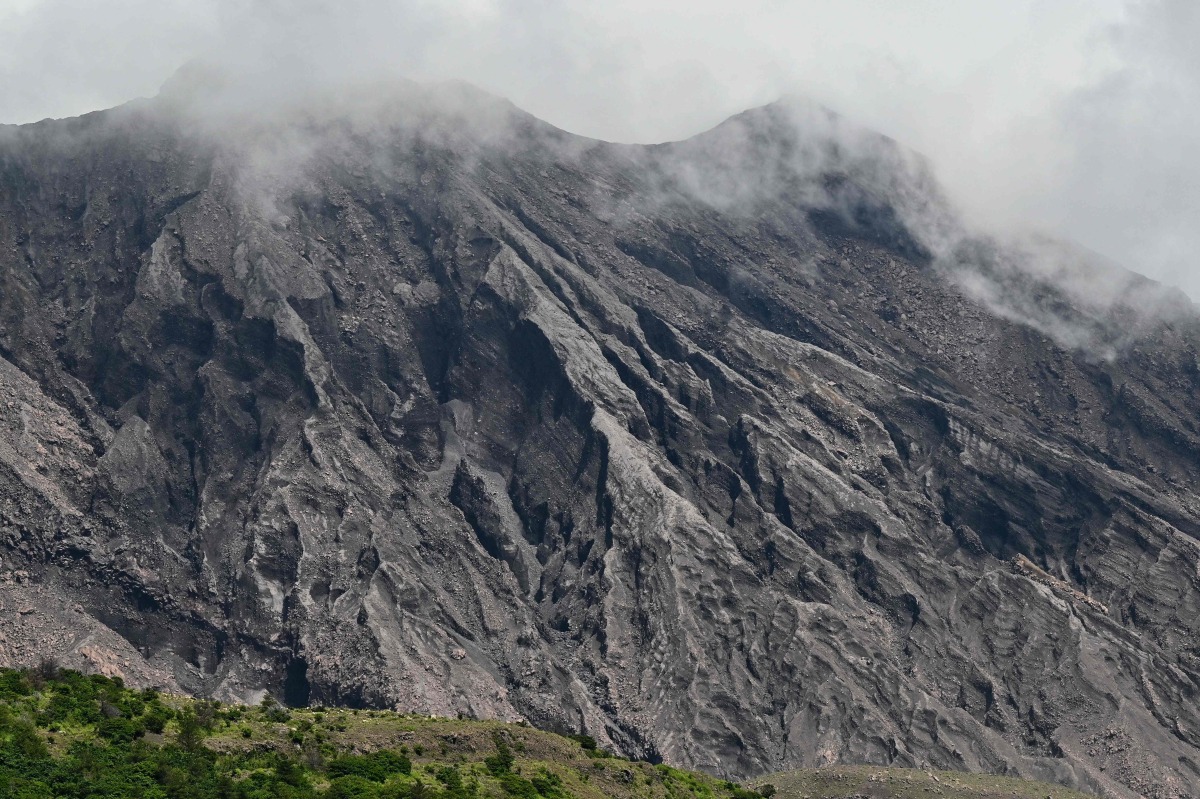
Japan's Shinmoedake volcano erupts, alert level remains at 2


(Photo by Richard A. Brooks / AFP)

Xinhua
Published: 22 Jun 2025 

TOKYO: Shinmoedake, a volcano in the mountain range on the border of Japan's Kagoshima and Miyazaki prefectures, erupted on Sunday, marking its first eruption since 2018.

The Japan Meteorological Agency (JMA) reported that the eruption occurred at around 437 p.m. local time, sending a plume of ash over 500 meters above the crater.

The smoke drifted eastward toward Miyazaki prefecture, and no falling volcanic rocks have been confirmed so far, national broadcaster NHK reported.

Volcanic alert level 2, which restricts entry near the crater, remains in effect for the region. Authorities urge caution within a 2-km radius of the crater due to the risk of large volcanic rocks and pyroclastic flows within approximately 1 kilometer.

Residents are advised to stay alert, especially on the downwind side, where ash and small rocks may be carried over long distances.