Saturday, June 28, 2025

Brexit has blown £40 billion tax hole in public finances, confirming OBR predictions

23 June, 2025 
Left Foot Forward

Nine years on, it seems as though those who had rubbished ‘experts’ for warning about the dire impact of Brexit on the economy, could do with some quiet reflection.


On the ninth anniversary of the vote to leave the European Union, the Office for Budget Responsibility’s projections in terms of the negative impact it would have on state of the public’s finances have materialised, despite pro-Brexit economists questioning its findings at the time.

Today marks nine years since the EU referendum took place, amid a divisive campaign that saw the Vote Leave campaign accused of peddling untruths and sensationalist claims. While economic experts warned at the time of the adverse impact Brexit would have on the UK economy, Brexiteers poured scorn on the findings.

Now a forecasting audit finds that the OBR’s projections were correct.

The Times reports: “On the ninth anniversary of the leave vote, the OBR’s estimate of a 4 per cent loss in the UK’s long-run productivity has been borne out by declining investment and trade volumes, according to John Springford, an associate fellow at the Centre for European Reform.

“The 4 per cent productivity loss translates to an approximate £40 billion tax loss for the exchequer between 2019 and 2024, a period in which the government raised taxes by £100 billion. “A large chunk of [the tax rises] would not have been necessary if the UK had voted to remain in the EU or chosen a softer form of Brexit,” Springford said.”

At a time of economic uncertainty and trade wars triggered by Trump’s tariffs, the UK has sought closer alignment with the EU under the current Labour government to boost trade and investment.

The OBR has also warned that the full impact of leaving the EU would be felt over the course of 15 years and estimated a drop of 15 per cent in trade volumes, compared with if the UK had stayed in the bloc.

Nine years on, it seems as though those who had rubbished ‘experts’ for warning about the dire impact of Brexit on the economy, could do with some quiet reflection.

Basit Mahmood is editor of Left Foot Forward
How the BBC dismantles the left without us noticing


24 June, 2025 


BBC right-wing bias is peculiarly dangerous precisely because it is subtle and exploits the corporation’s reputation for impartiality


BBC news impartiality is a vexed question. The corporation has long been the locus of a left-right tug of war with each side accusing it of favouring the other.

The BBC’s attempt to defend its neutrality by pointing to accusations of bias from both the left and the right isn’t valid. These opposing directions of criticism don’t mean the BBC enjoys an impartial resting point in the middle. The accusations are perfectly compatible with one, not the other, being correct.

There is a strong case for the view that BBC news coverage has a predominantly right-wing bias though.

First, consider projection which, as a typically far-right trait, describes the (Trumpian) strategy of distancing oneself from a position by attributing it to the ‘enemy’: ‘It’s Europe, not the US, that suppresses free speech’; ‘It’s the woke left, not the right that’s maliciously undermining democracy’, etc. The right-wing insistence that BBC bias is ‘left, not right-wing’ can plausibly be seen as another preposterous case in point.

The BBC’s right-leaning tendencies show in its board members. These include Robbie Gibb, appointed by Boris Johnson and described by Emily Maitlis as an “active agent of the Conservative party”. Its director general, Tim Davie, is a former Conservative party councillor and deputy chairman of a London branch. The chairman, Richard Sharp, donated over £400,000 to the Conservative Party. Sharp resigned after failing to disclose his role in an £800,000 loan to Johnson. The current chairman, Samir Shah co-authored a Race Report with Johnson dismissing institutional racism in the UK.

Research also highlights these rightward tendencies, corroborating the evidence of our own eyes. Cardiff University found a clear preponderance of right-wing panellists in BBCs Question Time. During the referendum the BBC failed in its duty to inform the public about Brexit’s implications. BBC news platforms now give disproportionate coverage to Reform over the Lib Dems, a party with over fourteen times as many MPs, and the BBC is currently exploring how to attract more Reform supporters. There are further causes for concern but these points alone suggest that the latest ‘Reform’ plan isn’t a valiant attempt at greater balance, but just another instance of right-wing positioning.

Behind the words


The right-wing gutter press wears its prejudices on its face. The red meat it blatantly dangles is spotted easily. Whereas the subtlety and sophistication of BBC bias makes its influence more insidious.

News bias research covers many types of variables. But it’s useful to explore the qualitative aspects of BBC textual meaning and significance by putting the day-to-day linguistic tactics used by BBC journalists under the microscope. Adopting this fine-grained approach, text samples can be highlighted that display subtle nuances of insinuation, subtext and alternative meaning at play.

To this end, I’ve selected two sample articles from high-profile, influential BBC journalists (Laura Kuenssberg and Chris Mason). Both concern Labour’s recent Spending Review, with Kuenssberg’s written just before, and Mason’s just after its delivery on 11 June. Whilst the observations here aren’t generalisable to all BBC news articles, they do represent common trends.

Little digs

An antipathy towards Labour in much of Mason’s writing features in his Spending Review account. He informs us that, in the presentation, the numbers were delivered: “After plenty of words about the government’s priorities”

This wording sounds innocent enough. But in ‘plenty of’ there’s a quiet allusion to ‘empty words’. This, in turn, signals suggestively that the government fails to fulfil promises. It’s a gentle, ambiguous insinuation but the first step in Mason’s veiled drip-feed of discreditation.

He goes on to say that: “We can expect ministers to claim that much of what it has done in its first year in office has been about fixing the foundations. This is code for the tricky stuff”.

Again, this sentence sounds carefully neutral. But using the word “claim” takes it uncomfortably close to the aspersion that “ministers are pretending to have fixed the foundations” the convenient invisibility of which explains a seeming lack of progress. The subsequent reference to “codes about tricky stuff” also insinuates that truths are perhaps being concealed from us.

Similarly, Kuenssberg wields her knife deftly at the start of her article by describing: “Huge fights inside government about the Spending Review”.

Competitive tension over the departmental allocation of resources is inevitable. But the inflated notion of “huge fights” serves a different purpose by conveying a ‘rats in a sack’ vision of Labour as internally unstable and damagingly disputatious.

What train crash?

At this juncture, both writers could pause to outline the unprecedented hurdles facing Labour. But the BBC rarely explores the enormity of the train-crash legacy Labour inherited. The party’s deep conundrum is how to present a positive future whilst trying to salvage a nation devastated by 14 years of austerity.

Labour’s spending task is to allocate funds across a jostling range of institutions: courts, prisons, the NHS, education, policing, social care, housing, special educational needs, security, migration, defence, councils, transport, further education, etc, all trashed and all gasping for life-saving injections of funds. Labour is squaring this circle whilst simultaneously attempting to resuscitate a nation stuck in an economic doom loop of stubbornly low living standards and growth.

This is not to say that Labour has handled its allocations brilliantly, only that it would be a reasonable moment to acknowledge the truly existential magic-trick required by any governing party in 2025.

Hyperbole and innuendo

Instead, Mason reminds readers swiftly and forcefully about Labour’s unpopularity, noting the “whack suffered”, shifting it “a long way backwards” from its “whopping” majority, a descent so bad it’s “rare”. Labour’s popularity has declined since coming to power. But there’s an added dimension of unseemly relish here in Mason’s lavish iterations.

It’s as if this hyperbole has been gratuitously added to remind readers about ‘how disliked the party is’ and to keep them negatively disposed towards the aims of the spending review.

Kuenssberg’s account is similarly laced with phrases that stealthily mock and impugn these aims. The Treasury is: “Already trying to convince the public the review is about significant investment … Reeves boasted of funnelling billions more taxpayers’ cash … You can bet they’ll want to use every chance they have to say they are spending significantly more than the Tories planned”.

Here Kuenssberg could simply have said the review concerns significant investment. But the preface “already trying to convince” gives the sentence multiple new layers of meaning. “Trying” implies possible motives of desperation and deception. We use the phrase “try to convince” when there’s resistance and likely failure. And “convince” is itself loaded. It means ‘to make someone believe that something is true’ or ‘persuade’. Common synonyms are ‘cajole’ and ‘wheedle’.

The ’boasted’ tag gives Reeves an air of Truss-style egocentric rashness; whilst ‘already’ implies that Labour habitually pushes Kuenssberg’s insinuated deceptions onto the public.

Equally, she could have stated simply that Labour plans to spend more than the Tories. But her preface ”You can bet they’ll want to use every chance”, overlays her exposition with a tone of fevered gossip that undermines Labour’s competence and intentions, painting it again as desperate (”needing every chance”) and predictably opportunistic (“you can bet”).

As the article progresses, the condemnatory phrases become more explicit. “Frankly”, we’re told “Sir Keir Starmer arrived in government without having worked out what he really wanted to do.” “Maybe”, she continues with sarcastic optimism, “the idea of this lacklustre government that didn’t have a plan will be blown away by July?”

Damning defeatism then takes over: the “rosy view of how the chancellor might be able to play a difficult hand … might not be reality.” Along the way, she alludes to a “whiff” of “mutiny” within Labour ranks, whilst taking further potshots at Reeves as a chancellor in whom city confidence is both “diminished and diminishing”.

She ends with a last stab at portraying Labour as insufficient, incompetent and dysfunctional: “A senior Labour source said, Wednesday will be ‘the moment this government clicks into gear, or it won’t’. There’s no guarantee.”

Here Kuenssberg’ journalistic use of overblown cliff-hangers to engage readers is framed by negativity. Her chosen source lends her sentence authority whilst portraying Labour as still not functioning properly (clicked into gear), and whose odds for success are essentially precarious.

Power trip

Why is this kind of bias so destructive?

Emotive hyperbole, insinuation and ambiguity isn’t mere journalistic licence, i.e. the use of colourful terminology and suspense to keep readers engaged. These devices are doing considerable extra work in the articles considered by portraying Labour as incompetent, unstable, untrustworthy and weak.

This messaging has considerable reach. Beyond the spending review, a similar tone of muted discreditation features in the BBC’s coverage of other issues now rendered ‘infamous’ such as Labour’s ‘U turns’, EU and migration policies.

The analysis here is just a tiny snapshot of the steady, daily injection of anti-left-wing nuance that pervades much BBC news output, the subtlety of which helps it evade detection. Taken individually the phrases look innocuous, but they contribute to setting a tone, across articles, topics and time, that is cumulatively formidable.

This nuance surely plays a self-fulfilling role in Labour’s low popularity? When articles relentlessly insinuate in veiled language that a party is incompetent, deceptive, disliked, not in control, this ‘attack drip-feed’ spreads into the political water supply, working its way into public reaction and the polling data. The BBC’s commentary on Labour’s low polling is, arguably, a reflection on a predicament partly of its journalist’s own making.

The right-wing nuance in BBC news content is also safeguarded by the BBCs long-standing, powerful reputation for impartiality where it excuses surface readings of articles whilst masking their subtleties. But this stubborn reputation is seriously outdated, hinders proper scrutiny of BBC content and would be blown away by further in-depth qualitative research.

Image credit: Stuart Pinford – Creative Commons

The Mayor of Greater Manchester 
backs plans to give 16 year olds the right to vote


25 June, 2025 


TweetShareWhatsAppMail


The Mayor of Greater Manchester Andy Burnham has backed the government’s plans to give 16 year olds the right to vote, after fears that the policy had been side-lined.


Labour had included in its manifesto a pledge to reduce the voting age from 18 to 16 in UK general elections, however the plans were not included in the King’s speech last year.

Nonetheless, Prime Minister Keir Starmer has reassured MPs that the manifesto promise will be implemented by 2029. Commons leader Lucy Powell has previously told the BBC votes for 16 and 17-year-olds remained a commitment, and she hoped they would be able to vote in the next general election.

Now Andy Burnham has also thrown his weight behind the policy.

London Economic reports the Mayor of Greater Manchester as saying: “Young people in Manchester and across the country are already shaping our society. They’re making their voices heard, building communities and driving change.

“It’s time that we updated our democracy to reflect all that. That’s why I’m proud to be supporting a new national effort led by My Life My Say and partners from across the country to lower the voting age to 16 in all UK elections, V16. The campaign seeks to update democracy by installing votes at 16, trusting young people to have a say in the decisions that shape their lives.

“When 1 in 10 young people feel as though their voice isn’t considered by decision makers, we know things need to change. V16 is needed to rebuild trust between young people and politicians and bring them into the system. It’s about giving them a voice, hearing their perspectives and refreshing our democracy in doing so.”

Basit Mahmood is editor of Left Foot Forward
RIGHT WING WATCH

US-inspired Great British PAC is ‘packed with extremists’, Hope not Hate finds


26 June, 2025


Thirteen members of its team have promoted far-right views and conspiracy theories online


The Great British Political Action Committee (PAC) is “packed with extremists”, according to anti-extremism group Hope Not Hate.

Formed in September last year, the Great British PAC is inspired by similar right-wing groups in the US that donate large amounts of money to fund candidates and campaigns.

Analysis by Hope not Hate has revealed that the involvement of peers, former MPs and councillors “might give GB PAC a veneer of respectability”, several members have promoted far-right views and conspiracy theories online.

The GB PAC’s East Midlands Director, Edward Oakenfull, was dropped as a Reform candidate a week before the 2024 general election, after posting anti-Muslim and racist comments about the IQ of people from ethnic minorities.

He said on X: “The gene pool decline is another interesting area. By importing loads of sub Saharan Africans plus Muslims that inter breed the IQ is in severe decline.”

Others, such as the group’s Northamptonshire Director Antony Antoniou, who was also dropped as a Reform parliamentary candidate last year, shared posts on X defending Adolf Hitler and spreading anti-semitic conspiracy theories.

West Midlands Director of GB PAC, Donna Edmunds, was the first Reform councillor to be suspended after the local elections for saying she would defect to whatever party Ben Habib and Rupert Lowe formed.

In the past, she said that businesses should be able to refuse services to women and gay people. She is also a fan of Stephen Yaxley Lennon (Tommy Robinson), and said he is “a national hero”.

This is despite him stoking the Southport riots with misinformation last July and serving a seven-month prison sentence for repeating false and defamatory allegations about a Syrian refugee.

When contacted by HOPE not hate for comment last week, the pressure group’s chair Ben Habib responded: “We don’t care what our members have said in the past – they haven’t broken any laws.”

He then added: “We will stand by our people without hesitation.”

Members of the pressure group include arch Brexiteer and Tory peer Lord Dan Hannan, who is on its advisory board, as is fellow Conservative Lord Stephen Greenhalgh.

Two ex Tory MPs – Brendan Clarke-Smith and David Jones, who now supports Reform, are also on the board. Jim Allister, a sitting MP, who founded the Traditional Unionist Voice, is also a board member and the group’s Northern Ireland envoy.

Olivia Barber is a reporter at Left Foot Forward
UK

Corporate vs human welfare: The story of Drax


Opinion
Columnist
JUNE 27, 2025
Left Foot Forward.


There is no means-testing for corporate welfare payments.


The class war is deeply embedded in UK politics. Major political parties have declared war on low and middle income families, the old, sick, poor and disabled. Real wages are depressed. Millions are condemned to misery as governments are ruthlessly cutting social security benefits. However, hardly any questions are asked about corporate welfare and payment of free money to corporations.

Demand for social security benefits is fuelled by inequitable distribution of income and wealth, poverty, low income, lack of healthcare, corporate profiteering and many others factors. Yet UK governments have obsessively pushed austerity and low wages. Median gross wage (May 2025) of an employee is £30,252 a year; £25,293 after paying income tax and national insurance. Despite economic growth average real wage is stuck at the 2008 level. Work doesn’t pay enough. 37% of Universal Credit claimants are in work. Some 16m people, including 5.2m children, are living in families in poverty. Some 9.3m people, including 3m children, face hunger and hardship, and increasingly rely upon food banks, charities and social security benefits for survival. As a result of insecurity, anxiety and depression, one in four 16-24 olds in England have a mental health condition.

At the same time, 1% of the population has more wealth than 70% of the UK population combined. Just 50 families have more wealth than 34m people. Governments are averse to taxing corporations and the rich, and target low and middle income families. The richest fifth pay 30% of their gross household income in direct taxes; the poorest fifth pay 16%. The richest fifth pay 11% of disposable household income in indirect taxes; the poorest fifth pay 27%. Altogether, the poorest pay a higher proportion of income in taxes than the richest.

The squeeze on incomes is accompanied by unchecked corporate profiteering. Corporate executives are incentivised to increase profits and regulators are required to promote growth of industries. Welfare of citizens is the inevitable casualty. Just consider the energy sector. Since 2020, the 20 biggest energy companies have reported operating profits of over £514bn. 6.1m households have been pushed into fuel poverty. Some 128,000 people, including 110,000 pensioners, a year die in fuel poverty. Yet governments want to cut benefits.

Social security benefits provide safety net for the old, sick, poor, disabled and the unfortunate, but it has been eroded, particularly under the 2010-2024 Conservative administration. Over the years, the amount of benefits has been frozen and their real value eroded whilst the cost of living has risen sharply. Through the Universal Credit and Personal Independence Payment Bill (known as the Welfare Bill), the Labour government is seeking to cut welfare budget by £5bn a year. Around 800,000 disabled people are likely to lose some of their benefits. Last year, the Labour decided to continue with the previous government’s two-child benefit cap which has pushed 350,000 children into deep poverty and another 700,000 into less deep poverty. As part of a psychological war the government is taking powers to snoop on the bank accounts of millions of benefit claimants, ostensibly to combat benefit fraud. The equivalent powers are not being taken to deal with beneficiaries of tax fraud, illicit financial flows, corporate frauds or price gouging.

The determination to cut welfare budget is not matched by focus on cutting corporate welfare in the form of grants, subsidies and guarantees. Billions of Pounds have been handed to agriculture, arts, auto, banks, capital markets, energy, gas, oil, rail, steel, telecom, water and more without any means-testing. The state could support industry by acquiring an equity stake or by providing repayable loans, but instead money is freely given. Unsurprisingly, the bosses of Avanti described the handouts as “free money”. This is supplemented by numerous tax concessions and turning a blind eye to corporate profiteering.

Subsidies for companies producing electricity from biomass provide an example of how free money is showered on highly profitable companies.
Corporate Welfare: Biomass Subsidies

The UK experiences energy shortfalls at times of high demand and when weather is not conductive to production of energy from solar, wind and other renewable sources. This could be addressed by better transmission and storage facilities, and investment in alternative sources such as nuclear, gas and hydro power. But the privatised energy sector has not done so. At times of high winds, the government pays wind farms vast sums to turn-off turbines because the national grid does not have the capacity to store or transmit electricity.

Biomass has been chosen to produce electricity even though wood burning power plants emit 150% the CO2 of coal, and 300 – 400% the CO2 of natural gas, per unit energy produced. Biomass produces around 5% of the UK electricity.

Companies producing electricity from biomass have long been subsidised. A 2025 report by the Public Accounts Committee noted that: “Since 2002, the government has provided some £22 billion of support for businesses and households using biomass to generate power and heat including £6.5 billion for Drax, the biggest single recipient”.

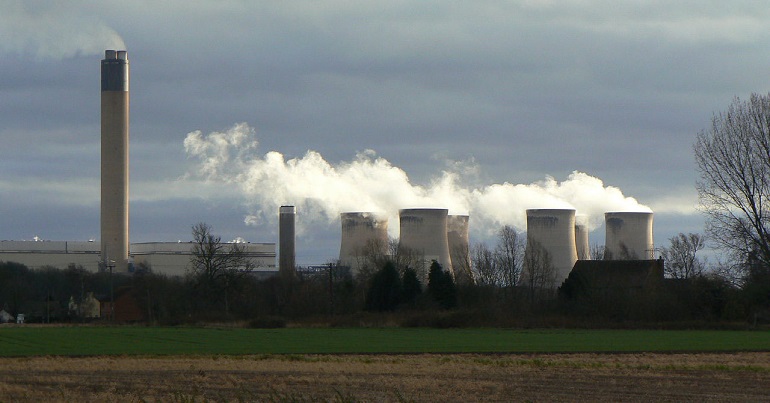
Drax is estimated to have burnt over 300 million trees. The contract with Drax comes to end in 2026/27, and is being renewed (see below). Unlike coal and gas power generators, biomass power generators do not pay for their carbon emissions because successive governments have classified biomass-fuelled electricity generation as a renewable energy source. Even if true it would take 50-100 year for a tree to grow and absorb carbon created by wood burning, assuming that there is sufficient suitable land and labour. Drax benefits from multiple subsidy schemes. Altogether, subsidy for Drax for the period 2012 to 2027 alone is around £11bn.

In 2023, Drax emitted 11.5m tonnes of carbon and is the biggest single UK polluter. It imports wood pellets from North America for its power station in North Yorkshire. Every megawatt-hour of electricity produced from biomass costs around £160, which is double the price of electricity produced from gas, which many think is the most costly resource for producing electricity. The Public Accounts Committee concluded: “We are not convinced the transitional support agreement between DESNZ [the Department for Energy Security and Net Zero] and Drax provides good value for money for consumers.”

Regardless, the government has extended the contract with Drax and other biomass producers until 2031 even though it does not provide energy security. Reliance on foreign imports comes with market, pricing and political risks. Mega profits are guaranteed even though annual subsidies are reduced. Total subsidies for Drax alone could be another £2.5bn.

Free money is showered on Drax even though it has not been truthful. In August 2024 Ofgem, the energy regulator, investigated Drax after whistle-blowers accused it of burning wood from unsustainable sources. Drax was fined £25m and Ofgem said: “There are no excuses for Drax’s admission that it did not comply with its mandatory requirement to give Ofgem accurate and robust data”.

Despite promises BBC reported that the company is “still burning rare forest wood”. In 2015, Drax was fined £28m for failing to meet environmental targets; £7m in 2024 for overcharging; £6.1m in 2023 for breaching of its Electricity Generation Licence. It has been a serial offender.

People and businesses have not benefitted from Drax subsidies. The UK has the fourth highest electricity price in the world for households, and the highest electricity price for industry in the developed world. People are hit twice. Firstly, higher energy bills; secondly, higher taxes to cover subsidies and the high energy bills for all government departments.

The only beneficiaries from free money are Drax shareholders and executives. In 2024, Drax reported operating profits of £1.06bn; and £1.06bn in 2023. The 2024 profits were boosted by subsidy of £869m or more than £2m a day, and £539m in 2023. It paid £97m dividend in 2024 and £89m in 2023. The company is also handing £300m to shareholders through a share buyback programme.

There is sharp contrast between the way governments approach human welfare and corporate welfare. The sick, old, poor and disabled are demonised and scapegoated for the country’s economic problems. They need benefits because of inequitable distribution of income and wealth, poor healthcare system, low wages and unchecked corporate profiteering. Governments focus on social security benefits and do little about the factors that push people into poverty and the need for benefits.

There is no means-testing for corporate welfare payments. As the case of Drax shows, highly profitable companies are handed subsidies even though they are serial offenders, huge polluters, produce electricity at sky-high prices and mislead regulators. Free money from the neoliberal magic tree flows directly from the public purse to shareholders and executives.

Governments can support companies such as Drax by taking an equity stake or by giving repayable loans. At least, that way there is something for the people. But money is freely handed even when parliamentary committees say that it is a bad deal.

Such partisan policies draw attention to corporate capture of the state and cannot promote confidence in the institutions of government.

Prem Sikka is an Emeritus Professor of Accounting at the University of Essex and the University of Sheffield, a Labour member of the House of Lords, and Contributing Editor at Left Foot Forward.

UK

Don’t reduce fare-free travel – expand it

JUNE 22, 2025

Free public transport should be extended, not scrapped, Fare Free London said today, in response to a newspaper campaign against free travel for the over-60s.

The TelegraphDaily Mirror and MyLondon all published stories last week, reporting sympathetically claims that free passes for the over-60s are “unsustainable”. The Daily Mail highlighted “critics” who said the passes are “difficult” to justify.

Simon Pirani of Fare Free London said: “The idea that there is a small pot of money to fund free public transport, and that it is running out, is nonsense. There is no reason why public transport should be funded from the fares that people pay. It can be funded from general taxation. In most of the world’s big cities, fares make up a much smaller share of the money used to pay for the system than they do in London.

“Public transport is already free in Luxemburg, Tallinn (the capital of Estonia), Montpellier and other European towns and cities. And in more than 130 municipalities in Brazil and a good few in the United States, too.”

Fare Free London says taxes on wealth and property could fund free public transport and other public services. Development rights around stations (used in Hong Kong), land value capture, and progressive taxes on companies (used in France) are some obvious ideas.

The TelegraphMirror and Mail feign horror that £135 million a year is spent on the 60+ Oyster Card, and £350 million/year on the Freedom Pass in London. But a consistent approach to taxing wealth, and clamping down on corporate tax evasion, would raise billions, not millions.

The Telegraph, Mirror, Mail and MyLondon repeated unsourced, and apparently erroneous, figures, to claim that over-60s passes are mostly used by employees earning “nearly double” what their colleagues in their early 20s earn (£42,000 a year, compared to £24,000 a year).

“We do not recognise these figures,” Pirani said. “Over-60s in full-time jobs in London earn on average 14% more than their colleagues in their 20s, not ‘nearly double’.” In its Annual Survey of Hours and Earnings 2024, the Office for National Statistics estimated median gross annual pay for employees in full-time jobs in London was £37,607 for those aged 22-29, and £42,886 for those over 60 – 14% higher. Median gross hourly pay for all employees was £18.45 for those aged 22-29, and £20.00 for those over 60 – 8.5% higher. 

Pirani added: “Why are these newspapers trying to turn one section of working people against the other? And what about the millions of Londoners, of all ages, who are not in full-time work and struggle to pay their fares? What about the low-income families for whom it is a burden second only to paying the rent?”

Fare Free London also wonder how these stories, with whole paragraphs worded identically, ended up in four newspapers. One clue, perhaps, is that they all quote the Institute for Economic Affairs, the extreme right-wing think tank.

The ‘free market’ dogmatists at the Institute advocate privatising the National Health Service, support zero-hours contracts, oppose most business regulation and support offshore tax havens for the rich. So it is no surprise that they are targeting the benefits of public transport as a public service.

More information at farefreelondon.org.

Image: 1967 Stock train at Finsbury Park in 2010. Creator: Tom Page  Copyright: Creative Commons Attribution-Share Alike 2.0 Generic


Why are British companies still involved in the transport and sale of Russian energy?

The Stop Seapeak Coalition is stepping up its campaign to block a key income stream for Russia’s war on Ukraine.

JUNE 24, 2025

Seapeak Maritime Glasgow Ltd is shipping $5.5 billion of Russian Liquefied Natural Gas (LNG) each year, in its six ice-breaking LNG tankers,  from the Yamal gas field in the Russian Siberian Arctic to third countries. Russian LNG exports are a major source of:

  • Finance for  Russia’s illegal invasion of Ukraine. Their value equals the total value of UK economic and military aid to Ukraine (£15.5 bn).
  • Global heating. Yamal contains 20% of known global gas reserves.
  • Arctic heating (up 5 degrees in 20 years). This in turn releases methane, an even more lethal greenhouse gas, from the melting permafrost. LNG produces 33% more CO2 than coal per megawatt-hour, including the processes of extraction, liquefication, and shipping.
  • Destruction of the herding way of life of the Nenets people, forcing its young men to ‘volunteer’ for the Russian army to fight in Ukraine, a double whammy.

The Stop Seapeak Coalition has been recently set up by Ukraine Solidarity Campaign Scotland together with allies in the Scottish University Ukrainian student movement, trade unions  and the environmental movement. In April, Unison Scottish Council passed a motion opposing Russian LNG shipping.  Together with the London-based USC, the Stop Seapeak Coalition is also campaigning for the UK government to sanction the insurance of these vessels by City firms, North Standard and Skud. Its actions have included three pickets of Seapeaks Clydeside HQ. 

So far, the UK government has ignored the campaign, despite it receiving significant support within the Scottish Parliament. 20 MSPs signed a Members’ Business Motion.  In the UK  Parliament 34 MPs have so far signed an Early Day Motion (EDM) tabled by Chris Law MP (SNP) calling for sanctions on Russian LNG.  Signatories include SNP, Green Party (England and Wales), John McDonnell MP, Lib Dems, Plaid Cymru and DUP MPs. Get in touch with your MP and get them to sign the EDM .

The government has made a great play of sanctioning the Russian ‘shadow fleet’ of rust-bucket oil tankers. These sanctions have zero consequences as the tankers would be stopped only if they entered British waters or ports, which of course they will never do.

The EU picture is (slightly) more optimistic. For the first time, under pressure, the European Commission has announced a requirement on EU companies to reveal their contracts for Russian LNG, a ban on  Russian LNG ‘spot contracts’ from the end of 2025, and on long term contracts from the end of 2027. These measures are welcome.  But aside from their leisurely pace of implementation, over two and a half years, they may well be subject to legal challenge, delaying  matters even further, and opposition from France and Belgium. 

Meanwhile the war rages on in Ukraine.  The grassroots campaign for LNG sanctions is more necessary than ever. There would have been no EU Russian LNG sanctions of any kind without the campaign led by Belgian colleagues in the European Network for Solidarity with Ukraine (ENSU).

As Svitlana Romanko of Ukrainian environmental NGO Razom We Stand remarks: “What’s missing? Political courage.”  

Write to your MP and join the campaign to back Ukraine, help save the planet by banning Russian LNG. Join the Stop Seapeak Coalition at its stall on 28th June at the Edinburgh Climate Change Festival  

Image: Destructions in Kyiv after Russian attack. Attribution:  Dsns.gov.ua Source: Рятувальники продовжують аварійно-відновлювальні роботи у Святошинському районі міста. Author: State Emergency Service of Ukraine, licensed under the Creative Commons Attribution 4.0 International license.

UK

Charities urge MPs not to be swayed by government’s welfare bill concessions

JUNE 27,2025

‘If current protections are right for disabled people now, why are they not right for disabled people in the future?’


TweetShareWhatsAppMail


Disability charities are calling on MPs not to be swayed by the government’s last-minute concessions on disability benefit cuts, and vote down the bill.

Earlier this week, over 120 Labour MPs signed a reasoned amendment opposing the Universal Credit and Personal Independence Payment (PIP) bill. This prompted the government to offer concessions to Labour rebel MPs last night.

Charities have welcomed the changes for those currently receiving PIP and Universal Credit, but have warned the reforms will harm future claimants.

They have also said that MPs will be voting on the cuts without knowing the full impact of the changes. The Office for Budget Responsibility will not publish an assessment of the labour market impact of the disability benefit changes until it publishes its autumn forecast in October.

Jemima Olchawski, Executive Director of Social Change at Mind, says: “These changes will bring huge relief to the hundreds of thousands of disabled people, including those with mental health problems, currently receiving these benefits.

“But this bill remains fatally flawed. If current protections are right for disabled people now, why are they not right for disabled people in the future?

“Next week MPs are being asked to vote on a bill without knowing the full impact of the changes; they are being asked to vote without having seen the outcome of the consultation on changes to the PIP assessments; and they are being asked to vote on a bill that risks pushing disabled people in the future into poverty.”

Olchawski says the government must “radically rethink” its proposed cuts.

Charlotte Gill, head of campaigns and public affairs at the MS Society, says: “The government is finally being forced to reckon with the crisis that their proposed benefits cuts would present to disabled people, including many with MS. But instead of meaningful action, all they’re doing is kicking the can down the road and delaying an inevitable disaster.

“Down the line, these cuts will still push more people into poverty and worsen people’s health. We urge MPs not to be swayed by these last ditch attempts to force through a harmful bill with supposed concessions. The only way to avoid a catastrophe today and in the future is to stop the cuts altogether by halting the bill in its tracks.

Principal policy advisor at The Joseph Rowntree Foundation, Katie Schmuecker, said that “as things stand, new disabled claimants from next year will continue to be pushed into deep hardship by these cuts, which should be opposed.”

Helen Barnard, director of policy at Trussell, said: “The significant concessions made by the UK government are welcome, but proposals still present a bleak future for future claimants and still risk placing the government’s commitments to end the need for emergency food and tackle poverty in serious jeopardy.”

Barnard emphasised that “being disabled isn’t a choice” and “our fears remain the same”.

She added that “MPs will still be voting without a full picture of the impact on their constituents, particularly of the proposed ‘4 point rule’ for PIP claims – which are expected to impact nearly half a million people, and force more disabled people to the doors of food banks.”

Olivia Barber is a reporter at Left Foot Forward

Who is holding Labour’s moral compass?

JUNE 26, 2025


Julian Vaughan explains why Labour MPs are right to oppose government cuts to disability benefits.

Solidarity with the 100-plus Labour MPs who are taking a stand against the government to support the most vulnerable people in our communities.

I can confirm that if I were in their position, I would have also put my name to their amendment to the Universal Credit and Personal Independence Payment Bill, which is due to have its Second Reading next Tuesday. Perhaps it is with this knowledge that I was offered the candidacy (politely declined) for the seventh safest Tory seat in the UK at the last General Election.

However, it is not just those on the ‘left’ of the Party who have signed the amendment, but a cross-section of the Parliamentary Labour Party. The decision to cut Winter Fuel Payments was not just morally wrong, but also a complete disaster politically.

That those advisors in Labour’s inner circle could not see how this decision was going to play out is very concerning. While the decision has been reversed, the die has been cast and the tone of this Labour government has been set, perhaps irrevocably.

More than ever, we need people in politics who genuinely understand the lives of ordinary people, not those more comfortable in the company of corporate lobbyists.

There comes a point in any government that, no matter what good or even brilliant things they do, and the Labour government has done some good things, people stop listening. This point has come to this government very early, not helped by an electorate radicalised by apathy, distrust in the political system, and the crystal-clear messaging of the hard right.

Labour’s mantra about ‘growth’ has failed to give hope to the public, besides which its reliance on trickle-down economics is dubious at best.

I do not believe it is at all clear to the public what Labour now stands for, especially when it appears to have abandoned the values of equality and social justice it once held so dear. Its attempt to outflank the hard right on immigration is as misguided as it is ugly – people will always choose the genuine article.

Even if people disagreed with Labour, there would be a grudging respect for their principles. The seeming absence of principles is being clocked by the public and resulting in a deep lack of trust.

We need a government that has the backs of ordinary people and particularly the most vulnerable in our society. As a Labour supporter all my life, who has dedicated a fair bit of time standing up for Labour and Labour values, it is gut-wrenching that we now seek to punch down on disabled people.

Labour’s current approach is a gift to the Reform Party. The public won’t give two hoots about the railways being nationalised if it doesn’t lead to cheaper fares and decent services. After lending their vote to Labour, many will never do so again if their local councils continue to cut services to the bone and the government continues to support water companies more than people.

The hubris of Starmer’s shadowy inner circle of advisors, seemingly now devoid of any political antennae, is bad news for Labour and bad news for the UK. It’s not too late to change direction, starting with a reversal in the cuts to the benefits of disabled people. It’s time to be bold – I’ll back that 100%.

Julian Vaughan was Labour Parliamentary candidate for NE Bedfordshire in 2017 and 2019. and a Labour NEC candidate in 2020. A train driver, he is currently a member of Hitchin CLP and ASLEF and blogs here This post appeared here originally.  Twitter: @julian_vaughan_https://twitter.com/julian_vaughan_

Image: c/o Labour Hub


UK Security and the new militarism


JUNE 27, 2025

Labour’s military spending priorities ignore the real dangers Britain faces and merely serve the interests of the defence establishment, argues Mike Phipps.

“Britain will commit to spending 5% of its GDP on defence by 2035 after weeks of diplomatic pressure and intense negotiations with allies,” reports the Guardian. It might have added: once again, the Labour Government appears to have caved in to pressure from the Trump Administration.

Consequence of militarism

Rachel Reeves, in her recent Spending Review, talked up the benefits of increased defence spending in terms of more jobs and economic growth. This looks unlikely. A Business Matters analysis of this claim was damningly conclusive: “Military expenditure in Europe has historically been a poor driver of economic expansion. A European Commission study found no clear growth effects from defence spending across 15 countries over five decades. Even in the UK, while real-terms defence spending has crept up since the 1980s, employment in the sector has halved. Today, only around 0.9% of UK jobs are supported by Ministry of Defence contracts.”

This leaves aside the sheer wastefulness of military investment – the lavishing of vast sums on weapons systems that hopefully will never be used, compared to the far more modest outlays on environmental, educational or health infrastructure which can produce tangible improvements in the quality of people’s lives.

There will, however, be some worrying consequences of the new militarism. If anyone doubted the connection between the rise of authoritarian militarism and the erosion of civil liberties – even in a stable democracy like the UK – look no further than the government’s proposal to ban the direct action group Palestine Action. And this is just the most recent in a series of measures to curtail and criminalise protest.

Nearly thirty years ago, a group of peace activists broke into a BAE factory in Lancashire and disarmed a warplane intended and to be delivered to Indonesia and used against the people of illegally occupied  East Timor. But, despite spending six months in jail awaiting trial and facing heavy sentences if found guilty, the defendants were allowed to put their case to the jury who eventually acquitted them.

Changes in the law are making such options increasingly unavailable in today’s authoritarian climate. The designation as ‘terrorist’ of direct action groups that commit criminal damage – which begins with Palestine Action, but which could be extended to cover a host of environmental campaigns and would have included the suffragettes historically – is a major step in the repression of political dissent.

National security priorities

As I have argued before, socialists cannot ignore the issue of national security. Voters want governments to keep them safe – from both internal threats, such as poverty, illness, unemployment – and external threats, such as terrorism, cyber-attacks, climate crisis or pandemics.

We are, Keir Starmer tells us, living in “an era of radical uncertainty” and this is used to justify the proposed hike in defence spending. The line about uncertainty may well resonate with many people. But part of that uncertainty arises from the unpredictable and volatile behaviour of the Trump Administration.

People are legitimately concerned about the effects on European security of current US policy. It is hard not to be, when Trump echoes Putin’s justifications for his aggression against Ukraine and when Vice President Vance openly parrots the talking points of the European far right. Trump may seem to be one of a kind but his reduced commitment to European peace and security – isolationism – did not begin with him and may well outlast him. Would a change at the White House see the USAID budget fully reinstated? No – just as electing a Labour government did not see the return of the Department for International Development, axed by Boris Johnson.

Of course, many socialists will not lament cuts to UK or US ‘aid’. Much of the US’s spend, in particular, was aimed at promoting ‘soft power’ and skewed towards helping US corporations develop markets in poorer countries. But in the short term, the impact of terminating much of this expenditure will be devastating – including in Europe. Part of the Dayton peace process that ended the bloody war in former Yugoslavia, for example, earmarked considerable sums of US aid money to help fund a public sector in some of the newly-created statelets, including education, healthcare and social security; when that goes, the conflict could again flare up quickly in some areas.

European security is more endangered by authoritarian states in some regions than others. Russia’s war on Ukraine is more of a concern for former Soviet states than in Western Europe. There is already growing Russian interference in Moldova, Romania and other eastern European countries. In Britain, the risk from authoritarian states like Russia is far less, and any serious look at defence spending has to start from an honest assessment of what the real threats might be.

Don’t increase spending, reassess priorities

What should the left be saying about defence? Firstly, that we don’t need to increase defence spending. Instead we need a thorough reordering of Uk defence priorities.

That starts, as Paul Rogers has argued, with “an honest assessment of Britain’s abject failures in recent wars, especially Afghanistan, Iraq and Libya. The UK armed forces have been integral to the coalitions involved in all three of those wars, just as it has been a close partner to the United States in the devastating 2014-18 air war against ISIS and is far more involved in Israel’s current wars than it will acknowledge.”

As I have argued elsewhere: “It’s estimated that 940,000 people died in post-9/11 wars directly as a result of war violence, and four times that number indirectly. Some 38 million people were displaced in wars that cost $8 trillion. And it should be remembered that these wars – particularly in Afghanistan, Iraq and Libya, where new instabilities and terrorist threats were generated – were failures.”

Secondly, we need to recognise that there are serious global threats ahead. But the biggest, including climate breakdown and the likelihood of more pandemics, cannot be solved by military means – any more than the challenge of increased immigration can be effectively dealt with by increased security and calls to ‘stop the boats’, ‘smash the gangs’, etc.

Unsurprisingly, these issues were absent from the Government’s recent Strategic Defence Review. To look at the political roots of these challenges – the West’s reliance on fossil fuels, its exploitation and subordination of poorer countries, often by force – would challenge its entire economic order.

Instead, the Review produced the usual conventional banalities, as one would expect from a process led by traditional pillars of the defence establishment, including former Minister of Defence and NATO Secretary General George Robertson.

Nukes, as usual

Overarching everything is the continued commitment to unusable nuclear weapons. Upgrading Trident will cost at least £200 billion over the lifetime of the new system. Additionally, as Tom Stevenson points out, the Review recommends that the UK “consider ordering F-35A jets capable of carrying B61 nuclear bombs. As a signatory of the Non-Proliferation Treaty, the UK is supposed to be taking measures ‘in good faith’ towards nuclear disarmament. Instead, the government appears to be entertaining the expansion of its nuclear weapons programme.”

This week, the Government confirmed that it would indeed buy at least twelve F-35 stealth jets that can carry nuclear warheads. The step was described as the most significant strengthening of the UK’s nuclear capability in a generation. Whether it will make UK citizens ‘safer’ is highly doubtful.

The deal means that US bombs will return to British soil for the first time since 2008. It comes at a cost of an eye-watering £900 million.

Nuclear war is not of course the biggest threat facing Britain, but it certainly gets the most money. The same could be said for war in general. The distortions introduced into defence spending priorities by the power of commercial lobbyists, pushing for high-prestige, expensive projects are notorious. They neither make Britain safer nor address the real threats we face, but they do pay generous dividends to the shareholders of arms companies. Defence contractor Babcock International’s share price has more than doubled this year.

Britain’s return to the ‘nuclear frontline’ will not take place without largescale protests, potentially on a scale not seen since the Greenham Common mass protests of the early 1980s. it’s in this context that the Government’s crackdown on public dissent can be fully understood.

The Campaign for Nuclear Disarmament has already organised a big campaign around RAF Lakenheath, where a new round of nuclear bombs are expected to be stored. They are encouraging supporters to email their MP about the stationing of US nuclear weapons at the base, without any public consultation or parliamentary debate.

CND have also produced an Alternative Defence Review, which challenges the dominant war narrative, cultivated by political elites in thrall to the military-industrial complex.

It “examines how militarisation has distorted national priorities, fuelled global instability, undermined international law, harmed the environment, and diverted investment from public services and social infrastructure. It shows that increased military expenditure will be economically inefficient, environmentally destructive, and socially regressive, offering limited job creation while stifling a more sustainable and just economy. The review calls for a shift toward a significantly demilitarised defence strategy rooted in human security and common security—prioritising diplomacy, global cooperation, conflict prevention, and investment in health, education, climate resilience, social care, and the creation of well-paid, secure, unionised and socially useful jobs.”

More military spending does not just distract from the real challenges we face – it worsens them.  A the Peace Pledge Union argues, “Militarism isn’t the solution to climate change, but a major cause. The carbon footprint of militaries worldwide accounts for around 5.5% of global carbon emissions, which governments, including the UK, routinely fail to disclose.”

To end on a note of caution. There are many issues  – pubic ownership, austerity, social spending, wealth taxes – where socialist ideas have widespread popular support. Opposition to the new militarism may not be one of them: nearly two-thirds of people support increasing defence spending at the expense of overseas aid. This includes a majority of Labour voters. Campaigners will need to make the argument patiently and persistently as widely as possible as to why the Government’s new defence policy is a decisive step in the wrong direction.

Mike Phipps’ book Don’t Stop Thinking About Tomorrow: The Labour Party after Jeremy Corbyn (OR Books, 2022) can be ordered here.

Image> c/o CND