Tuesday, August 05, 2025

Gabon, Global Fishing Watch Team Up To Fight IUU Fishing
Sea Trawler Boat Fishing Ship Sky Water Ocean

By 

Gabon has signed a memorandum of understanding with Global Fishing Watch, a nonprofit organization, that aims to enhance the West African country’s ability to monitor, control and surveil its waters by leveraging satellite technology and data analytics.


This will support Gabon’s efforts to combat illegal, unreported and unregulated fishing, particularly in the country’s exclusive economic zone, where intrusions by foreign vessels have been a challenge for decades. Gabon signed the memorandum and an agreement with Global Fishing Watch partner Trygg Mat Tracking on June 25.

“Gabon has chosen transparency, control and compliance with international standards,” Laurence Mengue-Me-Nzoghe Ndong, Gabon’s minister of the sea, fisheries and blue economy, said in a report by Hook and Net Magazine.

The deals will provide technical cooperation on Gabon’s initiative to equip its artisanal fishing fleet — about 1,000 canoes — with tracking devices. More than 300 units have been installed. Data captured through the initiative is expected to help develop Gabonese fisheries policies and regulations concerning industrial and small-scale fisheries management.

The partnership also is expected to strengthen Gabon’s efforts to expand the use of Automatic Identifications Systems (AIS) by vessels operating in the country’s economic zone. AIS helps identify and track ships, assist in search and rescue operations, simplify information exchange and improve maritime domain awareness.

“By formalizing this agreement, Gabon is reinforcing its leadership in regional fisheries transparency and ocean governance,”


Dame Mboup, Global Fishing Watch’s manager for Africa, said in a news release. “This partnership enables smarter, more effective management of Gabon’s marine resources, benefiting both local communities and the broader West African ecosystem.”

“Together, we’re working to put data at the heart of decision-making for healthier oceans,” Mboup added. “With transparency as the foundation, Gabon is setting a standard for others to follow.”

Continental Collaboration

Global Fishing Watch and Trygg have collaborated with coastal African countries for years to combat illegal fishing. In 2021, they partnered with Côte d’Ivoire, Ghana, Kenya, Senegal and the Fisheries Committee for the West Central Gulf of Guinea on a project to provide authorities with satellite tracking data, analysis and training to assess  fishing vessels’ recent operations and compliance risk.

This collaboration helps port authorities and fisheries officials monitor the movements of fishing and carrier vessels, identify illegal activity, and target inspections and enforcement where they are needed most.

“Implementing strong port controls is the best and most effective opportunity to ensure that illegal catch has no market, and illegal fishing operators are cut off from their profits,” Duncan Copeland, former Trygg executive director, said in a news release at the time. “To do so requires the ability to make rapid risk assessments to inform the key decisions on whether to let a vessel into port, and where to target inspections.”

Global Fishing Watch, the International Monitoring, Control and Surveillance Network and Trygg in 2022 created the Joint Analytical Cell, an initiative that aims to provide authorities with fisheries intelligence, analysis and capacity building to combat illegal fishing.

Bad Actors from Beijing

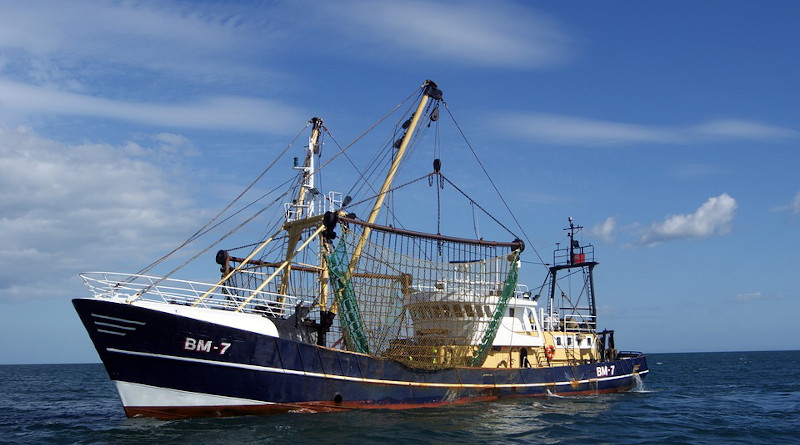
Gabon and other coastal West African nations have for decades been victimized by industrial fishing trawlers, particularly from China, which engage in a variety of illegal fishing activities. China is the world’s worst illegal fishing offender, according to the IUU Fishing Risk Index. Of the top 10 companies engaged in illegal fishing globally, eight are from China.

Throughout West Africa, Chinese bottom trawlers catch an estimated 2.35 million tons of fish per year, accounting for 50% of China’s total distant water catch and worth about $5 billion, the Environmental Justice Foundation reported. Bottom trawling involves dragging a huge net along the ocean floor, indiscriminately scooping up all manner of marine life. The practice kills juvenile fish, leading to declining fish stocks, and destroys ecosystems critical to the survival of marine life.

The illegal activities by trawlers from China and other foreign countries costs West Africa up to an estimated $10 billion per year, according to a September 2023 report by the Stimson Center, while the Financial Transparency Coalition found that the region attracts 40% of the world’s illegal trawlers.

China also has a well-documented practice of using its fishing fleet as a maritime militia in East and West Africa. Its vessels double as military auxiliaries trained by the People’s Liberation Army Navy. According to Carnegie Endowment for International Peace researchers, they are equipped with sophisticated surveillance equipment like subsea lasers and cameras, and some also carrying military grade equipment. The vessels operate under military command and are tasked with gathering data that can support the operations of underwater military assets.


Africa Defense Forum

The Africa Defense Forum (ADF) magazine is a security affairs journal that focuses on all issues affecting peace, stability, and good governance in Africa. ADF is published by the U.S. Africa Command.

New Standards For Economic Data Aim To Sharpen View Of Global Economy – Analysis


By  and 

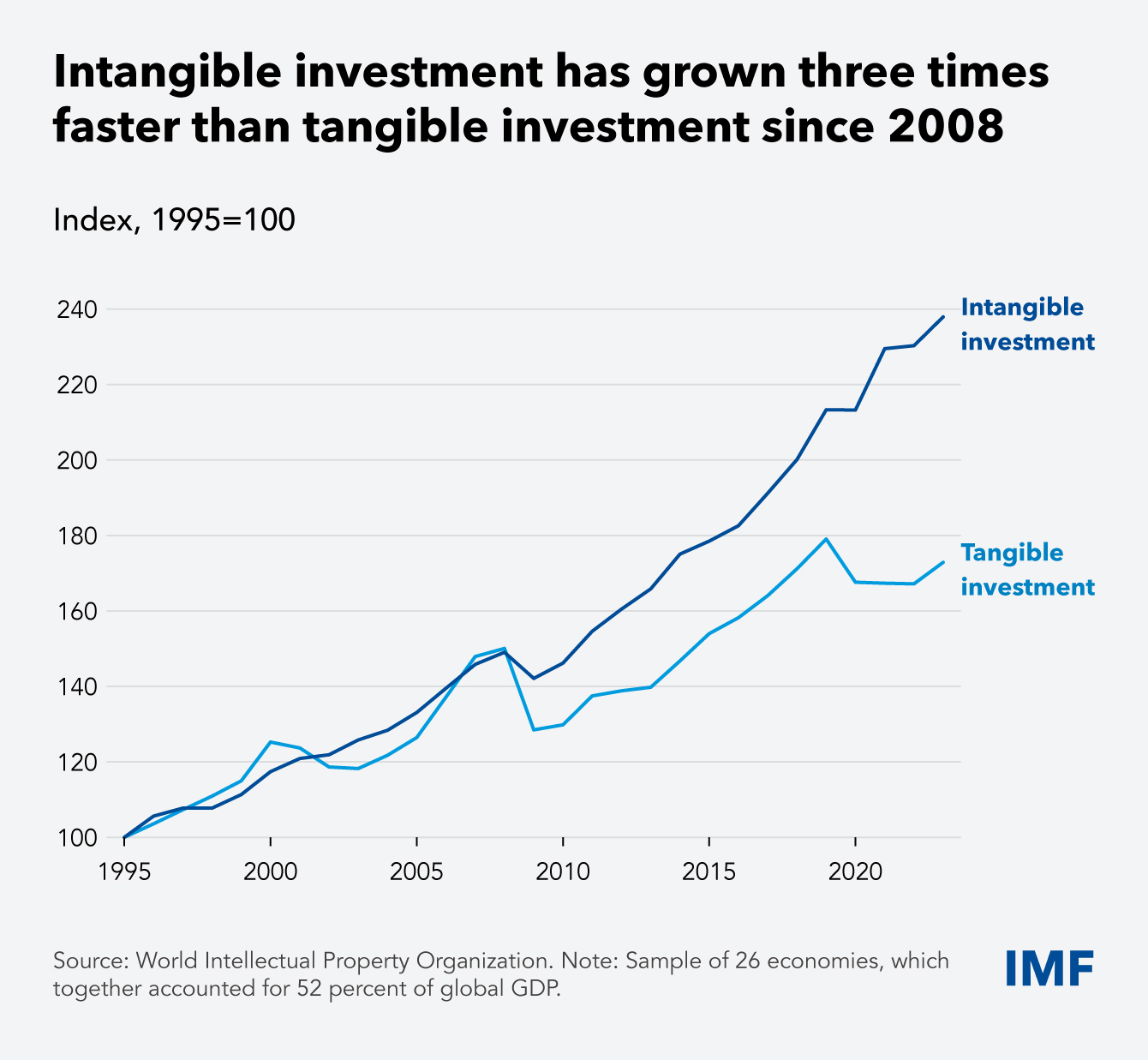
The cornerstones of our digital world—from smartphone apps to new digital assets and artificial intelligence tools—didn’t exist back in 2008, the last time the world’s statistical community overhauled its approach to standardizing how countries measure the economy.


Now, an updated System of National Accounts—the global standard for producing measures of economic activity—more fully incorporates emerging technologies, digital services, and intangible assets.

Remarkably, despite increasing geoeconomic fragmentation, the United Nations Statistical Commission in March unanimously approved the wide-ranging and comprehensive update. It’s the sixth iteration in the almost nine-decade history of the SNA, a global standard for national metrics including production, income, consumption, capital investment and financial activities, as well as national wealth. Updating the SNA is a global effort coordinated by the International Monetary Fund, United Nations, World Bank, European Commission, and Organisation for Economic Co-operation and Development.

The IMF contributed significantly to the SNA update in areas such as digitalization, trade, government finances, and financial innovation. These contributions help ensure that governments have the tools to make more informed decisions about how to grow their economies, create jobs, and respond to shocks. Accurate economic statistics are vital for effective policymaking. And measurement across the $114 trillion global economy must keep up even as the pace of change accelerates. If it doesn’t keep pace, central banks and finance ministries will end up setting monetary or fiscal policy based on incomplete, outdated, or inaccurate information.

This is why the revised SNA focuses on digitalization. For example, despite rapid advances in digital technologies, reported productivity growth in many advanced economies has remained sluggish. That has led some researchers to suggest that this could partly reflect gaps in how digital activity was measured.

Another important driver of the SNA update is the growing importance of crypto assets, which was among the most challenging to address. Bitcoin, for example, has a tangible economic impact, including because it consumes large amounts of energy to produce. Yet because it doesn’t involve the creation of goods or services in the traditional sense, it isn’t counted in gross domestic product.


Measuring crypto is crucial from a public policy perspective because, while it may account for a relatively small share of global assets, it could have significant implications for future financial stability, tax policy, and regulatory oversight. Now, statisticians have found a way to classify certain crypto assets as “non-produced nonfinancial assets,” which are reflected in national wealth. Ensuring that the new SNA can guide countries on how to report crypto is one way to future-proof standards.

Crypto, of course, is only one consideration among many for digital transformations across a range of industries and products. To better reflect the digital economy, the SNA recommends that countries develop a suite of indicators covering areas such as AI, cloud computing, digital intermediation platforms, and e-commerce. It also provides a definition of AI to use in national accounts and make it clearly visible.

Beyond digitalization, the updated SNA also responds to lessons from the global financial crisis by recommending ways to better capture financial risks and vulnerabilities. As financial innovation accelerates and non-bank financial institutions play a larger role, these risks can become more complex. To address this, the updated SNA calls for more detailed breakdowns of financial assets and liabilities, by both instrument type and institutional subsector.

Another important improvement is that the updated SNA offers a deeper understanding of how large corporations with international operations produce goods and services and distribute profits. By doing so, national accounts can better capture production and income generated by multinational enterprises that outsource manufacturing to other countries but retain control over design, branding, and intellectual property. These changes are closely aligned with revisions to the Balance of Payments Manual, or BPM, to ensure consistency in how cross-border transactions and global value chains are recorded.

This important harmonization makes economic data more accessible and practical, enabling governments, businesses, and researchers to navigate global financial complexities with a more consistent set of statistics.

The updated framework also gives greater visibility to net domestic product, or NDP, as a complement to GDP to better reflect sustainability. NDP subtracts not only the depreciation of fixed capital but also the depletion of natural resources, which are not captured in traditional GDP figures. NDP is typically 10 percent to 25 percent lower than GDP, according to IMF estimates. Subtracting the depletion of nonrenewable natural resources will have a relatively small impact on NDP in most countries, but a substantial one in those in which mining and other extractive industries play a big role.

We recognize that these changes are ambitious, complex, and demanding for statistical agencies in terms of time and resources, especially under tighter budgets. Yet they are critical to ensure that economic data remains reliable in a rapidly changing world. As countries work to better capture economic activity through data, it’s important for policymakers to provide national statistical offices with the resources needed to implement the new standards and, more broadly, to produce quality statistics to guide the best policies.

The IMF will provide guidance, technical assistance, and training to support the transition toward implementing the updated SNA and BPM standards by 2029-30.

About the authors:

  • Vladimir Klyuev is Advisor in the Statistics Department at the International Monetary Fund (IMF). In that role, his primary focus is on communication, on supporting country teams, and on analytical work in the department.
  • James Tebrake is the Deputy Director of the Statistics Department (STA) of the IMF. His main responsibilities include overseeing the Statistics Department’s Economic data program, and the development of macroeconomic statistical standards.

Source: This article was published at IMF Blog

Vladimir Klyuev

Vladimir Klyuev is Advisor in the Statistics Department at the International Monetary Fund (IMF). In that role, his primary focus is on communication, on supporting country teams, and on analytical work in the department


The Spirit Of A Pioneering Pilot – OpEd

Harriet Quimby in her Bleriot monoplane, 1911 (Library of Congress).


By 

By Lawrence W. Reed


The best-known female aviator (“aviatrix” in the parlance of bygone years) is undoubtedly Amelia Earhart. A record-setting pilot and the first woman to fly solo across the Atlantic, she is assumed to have died in 1937 in the Pacific while attempting to circumnavigate the globe.

But before Amelia Earhart, there was Neta Snook, who taught Earhart how to fly. And before Snook there was Bessie Coleman, the world’s first black woman and first Native American to earn a pilot’s license. See more on Snook and Coleman in the suggested readings below.

And before those three women, there was Michigan-born Harriet Quimby. One hundred and fourteen years ago today—on August 1, 1911—she made history. It was not yet eight years after the Wright Brothers flew for the first time.

A fountain in Burbank, California, serves as a shrine to Quimby. The fountain’s plaque reads as follows:

Harriet Quimby became the first licensed female pilot in America on August 1, 1911. On April 16, 1912, she was the first woman to fly a plane across the English Channel. She pointed the direction for future women pilots including her friend, Matilde Moisant, buried at the Portal of the Folded Wings. The number of licensed female pilots increased to 200 total by 1930 and between 700 to 800 by 1935.


In the same month that journalist Quimby earned her pilot’s license, she authored an article in Leslie’s Illustrated Weekly titled “The Dangers of Flying and How to Avoid Them.” She wrote:

Every new invention of note has to go through its own trying experience. Some would not ride on the first steamboat because they were sure the boiler would explode. Some bitterly opposed the construction of the first railroad because they said it would be deadly to run trains at full speed. Some old farmers insisted that it would be impossible for them to keep cows off the tracks and were serious about it.

Quimby went on to point out that the fears accompanying those new inventions proved largely unfounded. By the time she was writing, and despite a few accidents, people in great numbers and safety were riding on steamboats and railroads.

Further along in her article, she wrote some lines that a few months later seemed hauntingly prophetic:

The fatalities of the air come so quickly and unexpectedly and the end is so sudden that the cause of the catastrophe is obviously left to surmise, so we have as many causes as there may be conjectures. None of them may be right. The aviator who falls a thousand feet or more rarely survives to tell of his misfortune.

On July 1, 1912, Quimby participated in an aviation contest in Massachusetts. Riding with her was the event organizer, a man named William A. P. Willard. Suddenly and for some reason never discovered, the plane pitched violently. Both Quimby and Willard were ejected. They fell to their deaths from an altitude of a thousand feet, the very height she referenced in her article the year before. Quimby was just 37 years old.

Some might say Harriet Quimby should never have left the ground. Flying in planes less than a decade since their invention was immensely dangerous. Why take risks you don’t have to?

Harriet Quimby knew that flight was a risky endeavor. She even wrote about that fact but pursued her dream anyway. That is precisely the spirit that animates every worthwhile journey into the unknown. I don’t know about you, but I am profoundly grateful for it. If every human craved safety over uncertainty, we might never have ventured forth from the cave.

From what I’ve learned of Harriet Quimby, she was a fearless never-quitter. Indeed, Fearless is in the title of a biography of her. I think she would love the following lines from the popular American poet Edgar Guest, titled “Don’t Quit”:

When things go wrong, as they sometimes will, when the road you’re trudging seems all uphill;

When the funds are low and the debts are high, and you want to smile but you have to sigh;

When care is pressing you down a bit—rest if you must, but don’t you quit.

Life is queer with its twists and turns, as everyone of us sometimes learns. And many a fellow turns about when he might have won had he stuck it out.

Don’t give up though the pace seems slow. You may succeed with another blow.

Often the goal is nearer than it seems to a faint and faltering man; often the struggler has given up when he might have captured the victor’s cup; and he learned too late when the night came down, how close he was to the golden crown.

Success is failure turned inside out—the silver tint of the clouds of doubt. And when you never can tell how close you are, it may be near when it seems afar.

So stick to the fight when you’re hardest hit—it’s when things seem worst, you must not quit

  • About the author: Lawrence W. (“Larry”) Reed is FEE’s President Emeritus, Humphreys Family Senior Fellow, and Ron Manners Global Ambassador for Liberty. He previously served as president of FEE from 2008-2019. He chaired FEE’s board of trustees in the 1990s and has been both writing and speaking for FEE since the late 1970s.
  • Source: This article was published by FEE

FEE

The Foundation for Economic Education's (FEE) mission is to inspire, educate, and connect future leaders with the economic, ethical, and legal principles of a free society. These principles include: individual liberty, free-market economics, entrepreneurship, private property, high moral character, and limited government. FEE is a tax-exempt, 501(c)3 educational foundation


Experts Call For Science- And Evidence-Based AI Policy


artificial intelligence eye medicine

By 

In a Policy Forum, Rishi Bommasani et al. argue that successful artificial intelligence (AI) policy must be grounded in solid evidence and scientific understanding rather than hype or political expediency.


“AI policymaking should place a premium on evidence: Scientific understanding and systematic analysis should inform policy, and policy should accelerate evidence generation,” write Bommasani et al. 

Although developing sound AI policy hinges on clearly defining and effectively using credible evidence, the authors note that what is considered to be valid or credible varies across AI policy domains, leading to uncertainty in governance. This uncertainty creates a policy challenge: act too soon and risk overregulation; wait too long and risk real harm.

Here, Bommasani et al. call for developing mechanisms that allow AI policy to evolve alongside emerging scientific understanding, which would ensure that governance remains both effective and grounded in the current state of the technology.

To achieve evidence-based AI policy, the authors suggest that governments should incentivize rigorous pre-release model evaluations, increase public transparency around safety practices, and establish systems to monitor post-deployment harms.

Protecting independent researchers through safe harbor provisions is essential to expand the evidence base. Policies should also prioritize interventions supported by strong evidence across the broader sociotechnical landscape.


Finally, fostering expert consensus through credible, inclusive scientific bodies will help guide responsible AI governance amid uncertainty and disagreement, say the authors.


By 

By Rafael Cardoso


A joint effort led by the Rio de Janeiro State Environmental Institute (Inea), in partnership with the NGO Somos Natureza, identified solid waste in the Praia do Sul State Biological Reserve on Ilha Grande. Packaging from China, Argentina, and Ethiopia was found.

According to Cleber Ferreira, environmental engineer and director of Biodiversity, Protected Areas, and Ecosystems at Inea, this is yet another indication of a globally scaled problem with major local impacts.

“This waste is improperly disposed of and ends up in our water bodies—whether it’s a river, the sea, or a lagoon. This happens all over the world. We have real islands of solid waste in the ocean. Often, parts of this waste break away from those islands and wash up on our beaches and along much of the country’s coastline,” said the engineer.

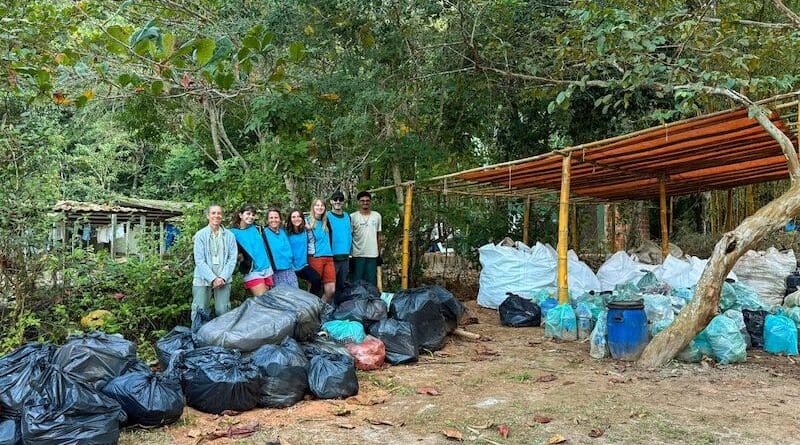
Between July 13 and 16, 242 kg of recyclable materials carried to the beaches by ocean currents were removed. The work was done manually, using tools such as mechanical grabbers and eco-sifters. The team sorted the materials and delivered them to recycling cooperatives in the city of Angra dos Reis.

Waste such as plastic and glass poses risks to local biodiversity. Plastic can be ingested by turtles and seabirds, leading to suffocation and death. Glass waste can take over 4,000 years to decompose in the environment.


“The sense we have is that this type of waste is becoming increasingly common and causing greater harm to our fauna. We’re seeing a clear rise in waste. I can carry out as many cleanup operations as needed, and in each one, I’ll remove at least one ton—or 500 kg—of waste, depending on the size of the team,” said Ferreira.

The partnership between Inea and Somos Natureza includes monthly joint cleanup efforts on the beaches of Ilha Grande. The goal is to encourage volunteers to take an active role in the initiatives. In the most recent cleanup, participants included tourists from São Paulo, Spain, Argentina, and Iceland.

They received information about Inea’s conservation units and shared experiences in combating marine pollution in their home countries.

The Rio Secretary for the Environment and Sustainability, Bernardo Rossi, believes that all international actors must advance policies for the control and proper disposal of waste.

“We have no control over what arrives in Rio de Janeiro from other countries, but we act directly in the collection and disposal of waste that appears in our conservation units. It is also gratifying to see visitors from outside joining our conservation mission,” said Rossi.

Conservation Unit

The Praia do Sul State Biological Reserve is a conservation unit covering 3,309.63 hectares. Its mission is to preserve biodiversity and archaeological sites. According to Inea, it is the only reserve in the state of Rio de Janeiro that contains all coastal ecosystems. As a biological reserve, recreational visits are not allowed; only scientific research and environmental education activities are authorized.

ABr

Agência Brasil (ABr) is the national public news agency, run by the Brazilian government. It is a part of the public media corporation Empresa Brasil de Comunicação (EBC), created in 2007 to unite two government media enterprises Radiobrás and TVE (Televisão Educativa).