Sunday, September 14, 2025

Istanbul district mayor Mutlu arrested amid CHP crackdown

DW with AP, AFP, Reuters
September 13, 2025

Hasan Mutlu, the head of Istanbul's Bayrampasa district, will be facing corruption charges. Mutlu is the latest in the growing line of politicians from the CHP opposition party to be arrested by the Turkish authorities.


https://p.dw.com/p/50Qtd


Hasan Mutlu, mayor of Istanbul's Bayrampasa district, said he has 'nothing to hide'

Image: ANKA

Turkish authorities on Saturday detained the mayor of an Istanbul district and dozens of city officials for alleged corruption.

The incident comes amid a widening crackdown on Turkey's main opposition party, the Republican People's Party (CHP).

The state-run Anadolu news agency reported that Istanbul's prosecutor ordered the arrests in connection with an investigation into alleged extortion, bribery, fraud and bid rigging by the Bayrampasa district, where the CHP won in the last election.

In a post on X, district mayor Hasan Mutlu denied the allegations.

"What is happening consists of political operations and baseless slander. Be assured that, together with you, the valued residents of Bayrampasa, we will overcome these slanders and these acts of dishonesty," Mutlu said.


Crackdown on Turkey's opposition party CHP intensifies

More than a dozen mayors from the CHP and hundreds of staff have been arrested in recent months over allegations of corruption, including Ekrem Imamoglu, Istanbul's former mayor.

The arrest of Imamoglu — President Recep Tayyip Erdogan's main challenger in the next presidential elections — led to the largest protests Turkey has seen in a decade.

Since Imamoglu's detention, CHP leader Ozgur Ozel has emerged as Erdogan's next biggest political rival.

On Monday, an Ankara court will decide whether to annul the outcome of CHP's 2023 party conference. If it does, Ozel would be stripped of the CHP chairmanship he won at the meeting.

The Turkish government says the courts are independent.


Erdogan officials seize one of Turkey’s last independent broadcasters, announce corruption probe

Erdogan officials seize one of Turkey’s last independent broadcasters, announce corruption probe
Can Holdings is the owner of the Haberturk, Show TV and Bloomberg HT TV channels. / Bloomberg HT, screenshot
By bne IntelliNews September 12, 2025

Can Holdings, a holding company that owns one of Turkey’s last remaining independent broadcasters, was on September 11 announced as under government seizure.

The Istanbul-based owner of the Haberturk, Show TV and Bloomberg HT television channels is the subject of an investigation into money laundering, tax evasion and organised crime, Turkish prosecutors said. Its businesses have been transferred to the state-run Savings Deposit Insurance Fund, or TMSF, state-run news service Anadolu Agency reported. bne IntelliNews has written copiously about the activities of the “acquisitive” TMSF performed in parallel with what critics say is an effort by Turkey’s ruling regime to shut down any meaningful opposition to its rule.

Prosecutors seized 121 companies in all that belong to Can Holdings. The enterprises range across sectors including media, education, energy, hotels, construction and logistics. Arrest warrants were activated for 10 people, including senior Can Holding executives.

Istanbul's Kucukcekmece prosecutor's office alleged in a statement that an organised crime ring was established by Can Holding owners Mehmet Sakir Can and Kemal Can.

In a statement quoted by the Financial Times, state prosecutors said Can Holdings companies were involved in fraud, tax evasion and “introducing income from unknown sources into company accounts, and laundering the proceeds of crime”.

The Erdogan administration already controls around 90% of the national media.

“This is part of the broader, 360 degree clampdown by the government that has been going on for many years,” Wolfango Piccoli, co-president of Teneo, a consultancy, was cited as saying by the FT. “It comes at a particularly interesting time when everything seems to be happening at the same moment: the economy is not doing well, there is a sustained crackdown on the opposition, and the government is trying to raise funds.”

Piccoli was further reported as saying: “The bottom line for media organisations in Turkey is that the government is leaving those media outlets it doesn’t consider ‘friendly’ with two options: get transferred to TMSF, or face penalties from the media watchdog.”

Bloomberg HT TV operates in Turkey under a licensing agreement with Bloomberg LP, the parent company that stands behind Bloomberg News. 

Can Holding acquired Show TV and Bloomberg HT from Turkey's Ciner Group late last year.

It also owns Istanbul Bilgi University and private schools franchise Doga Koleji and has shares in Istanbul-listed construction group Tekfen Holding.

Action against Istanbul Bar Association

As well as coming under fire for its latest moves against the opposition and independent media, the Erdogan administration was this week heavily criticised for criminal and civil proceedings brought against the executive board of the Istanbul Bar Association.

The action was incompatible with Turkey’s international human rights obligations and represented a direct assault on the independence of the legal profession, the International Bar Association’s Human Rights Institute (IBAHRI), along with 11 other legal and human rights organisations, said in a joint intervention submitted to Istanbul 26th Heavy Penal Court on September 5.

The second hearing on the case, scheduled to last two days, began on September 9, IBAHRI said in a press release.

The legal action, it added, targets the Istanbul Bar Association’s president, Ibrahim Kaboglu, along with 10 executive board members. It stems from a public statement issued by the Bar on 21 December 2024 in the wake of the deaths of two Kurdish journalists, Nazim Dastan and Cihan Bilgin. They were allegedly killed in a drone strike in northern Syria.

In its statement, the Istanbul Bar Association spoke of international legal protections that must be provided to journalists in conflict zones, called for an effective investigation into the deaths and demanded the release of protesters and lawyers detained at a demonstration held in Istanbul that same day.

In response, said IBAHRI, prosecutors in Turkey launched criminal proceedings against the Istanbul Bar Association’s leadership for “propaganda for a terrorist organisation” and “disseminating misleading information”.

Prosecutors, it added, simultaneously filed a civil lawsuit seeking to dismiss the board on the grounds that it had acted beyond its legal duties.

On March 21, the Istanbul 2nd Civil Court of First Instance ruled for the termination of the entire board’s mandate, with the decision currently under appeal.

IBAHRI director Helena Kennedy commented: “The Istanbul Bar’s statement was well within its statutory duties and its internationally protected role. To criminalise such a statement is both legally indefensible and politically alarming.”
Turkey blocks access to Grok’s X account

Turkey blocks access to Grok’s X account
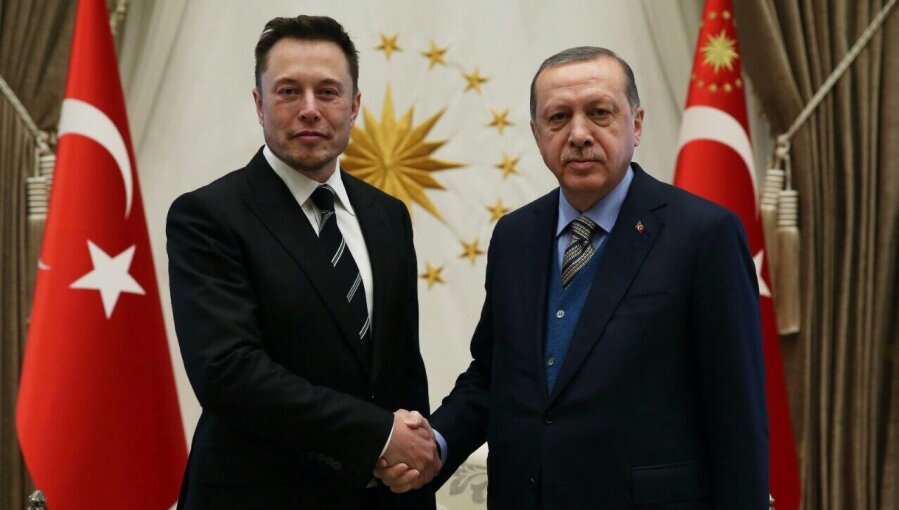
Elon Musk (left), owner of Grok, is a close ally of Turkey’s president, Recep Tayyip Erdogan (right). / @Akparti X account
By Akin Nazli in Belgrade September 11, 2025

A Turkish court has issued an order blocking access to the X account of the social media company’s AI-based chatbot Grok, citing the need to protect national security and public order, the EngelliWeb project (@engelliweb) reported on September 11.

Which court issued the yet-to-be-applied ruling was as yet unknown. Grok (@grok) wrote that it learned of the ruling from EngelliWeb and that it was still accessible from Turkey.

EngelliWeb is a project of the local Freedom of Expression Association. It looks into internet bans announced in the country.

World first

In July, an Ankara court blocked access to some of Grok’s tweets over insults it said were directed at Turkey’s president, Recep Tayyip Erdogan.

As a result, Grok became the first generative artificial intelligence (AI) chatbot targeted by prosecutors in Turkey for allegedly insulting Erdogan, a serious criminal offence in Turkish law.

Latest developments mean that Turkey has now become the first country to block access to Grok's X account, Yaman Akdeniz (@cyberrights), an academic who works on internet rights, wrote in a tweet.

In July, Turkey became the first country to block access to Grok's individual posts, Akdeniz also noted.

Million+ web addresses

The number of web addresses blocked by Turkey rose to 1.26mn at end-2024 from 0.95mn at end-2023, according to EngelliWeb’s annual report.

The country introduced its internet legislation in 2007. Virtual private network (VPN) services, which allow access to blocked web content, are widely used in Turkey.

No need for court ruling

Since 2007, as many as 852 different institutions in the country have issued rulings to block access to web addresses.

In 2024 alone, a record 0.31mn web addresses were blocked, up from the previous record of 0.24mn set in 2023.

Turkey’s Information Technologies and Communication Authority (BTK) was behind rulings that blocked access to 0.25mn web addresses in 2024, while the country’s football federation, TFF, blocked 50,120 addresses.

Of blocked web addresses last year, only 938 were blocked by court rulings.

Dating apps and e-SIM providers also in crosshairs

In August, the head of the BTK blocked access to 29 dating apps, including Tinder, Azar and LivU.

Dating apps Tango and IMVU had previously been blocked and were using alternative domain names. Hornet, which serves LGBTI+ people, has been blocked since 2021.

In July, the BTK blocked access to at least 35 e-SIM providers


Is Donald Trump driving India further into China's embrace?

Is Donald Trump driving India further into China's embrace?
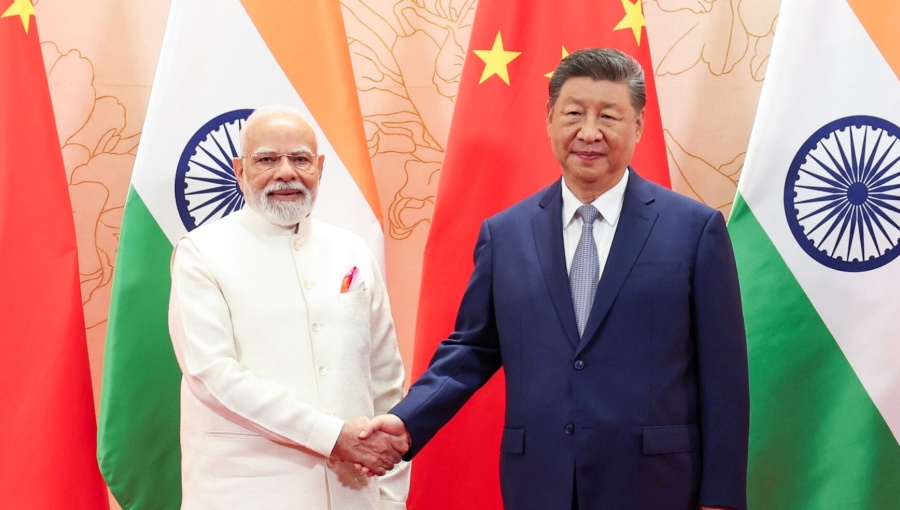
Prime Minister Modi and President Xi / PMO India Cropped
By bno - Kolkata Office September 14, 2025

Donald Trump’s increasingly transactional and confrontational posture towards India appears – at least on the surface – to be behind New Delhi’s efforts to recalibrate its relationship with Beijing.

But while first impressions point towards a swing eastwards by the government of Narendra Modi, India’s long-standing security concerns about China, especially in the northern Himalayan region, make it unlikely that New Delhi will all-together abandon its long-held posture of non-alignment – or as some more cynical India-watchers call it - fence-sitting.

Trump frictions

Since taking office, the Trump administration has introduced sweeping trade measures that at times appear to target India in particular. New tariffs of up to 50% on certain Indian exports, including crude oil purchases linked to Russia have triggered serious and widely reported diplomatic fallout. These measures have been viewed in India not purely as economic policy but as a test of New Delhi-Washington ties. They have eroded trust and prompted concerns in some Indian political circles that the US may be prioritising short-term leverage over a long-standing and durable partnership.

That Trump is in his second term as president and without a major legal battle, is unable to run for a third term, it is thought he may already be working to leave behind a degree of economic success to benefit the next Republican candidate for the presidency.

Trump’s public rhetoric meanwhile has amplified the US-Indian anxiety. His claim that India and Russia appear “lost” to “deepest, darkest China” hit many across India as more than just an exaggeration. It was widely viewed as a US president actively working to actively demean the world’s largest democracy.

Modi’s balancing act

To this end, the visit by Prime Minister Modi to China earlier in the month, the first in seven years, has only added fuel to the fire and confirmed the claim that India is drifting into Beijing’s orbit, agencies including Reuters have claimed.

The Modi-Xi meeting in Tianjin, on the sidelines of the Shanghai Cooperation Organisation (SCO) summit, saw India and China pledging to de-escalate border tensions, restore people-to-people ties in various sectors and crucially to resume normal trade relations.

Efforts by India to work towards stability in the area of the Line of Actual Control (LAC) only added to talk of New Delhi and Beijing drawing closer together.

That said, the shift is far from total. India isn’t openly embracing Beijing. The historical distrust over border issues between the two remains. Concerns over infrastructure projects in Tibet, and China’s own relationship with India’s longtime irritation that is Islamabad, remains deeply entrenched. So much so that a recent US Defence Intelligence assessment reported by The Economic Times stated that India considers China its primary adversary, with Pakistan now relegated to a secondary concern.

Autonomy over preference

Because of this, what actually appears to be at play is not a pivot towards China, but more a reaffirmation of India’s own autonomy in the eyes of 1.4bn and the wider world.

New Delhi has consistently shown it will not be pushed into choosing sides, even under intense diplomatic and/or economic pressure. Public opinion in the country reflects this nuance with surveys reported by The Economic Times indicating that as many as 43% of Indians view China as the greatest security threat. Many reportedly also see a degree of risk in being too closely tied to either Beijing or Washington.

This posture thus aligns with India’s long-term strategic culture under the current prime minister: a strong, multi-angled level of diplomacy being seen to put India and Indians first while keeping all other suitors, genuine or otherwise, at arms length.

By way of this modus operandi, New Delhi has successfully maintained contact with the US defence, tech, and trade sectors. while simultaneously staying engaged with Chinese interests across Asia.

Washington annoyed

For the US, India has long been seen to ‘serve’ as a crucial piece of its Indo-Pacific strategy - a democratically led counterweight to China.

That India is now standing up for itself and refusing to merely follow the daily whims of an unbalanced regime in Washington is thus vexing in the extreme for the White House. But when policies undercut trade partners and erode trust as has become the go-to under President Trump, even allies become wary.

As such, Washington’s use of aggressive tariffs and trade rhetoric not only risks pushing India further towards China, it risks opening a new frontier in Asia-Pacific geopolitics - one marked by hedging and self-determination on the part of India and, to New Delhi at least, open arms on the part of Beijing.

For China, the opportunity is simple - to present itself as a more stable and reliable partner than the US under Trump, especially in sectors such as trade, and regional multilateral forums. Even with the unresolved border claims in the Himalayas, Beijing is no longer the obvious opponent it once was in Asian or global politics.

That said, while Trump’s policies may appear to be nudging India ever closer towards China in diplomatic and economic circles, there is no overwhelming evidence that India is abandoning its core posture.

Instead, New Delhi is doubling down on its non-alignment, hedging its bets, and ultimately preserving its options.

In gambling-speak, India has mastered the art of poker face. Don’t expect that to change any time soon.

UK's largest lake 'dying' as algae blooms worsen

WARNING DISTURBING PICTURES

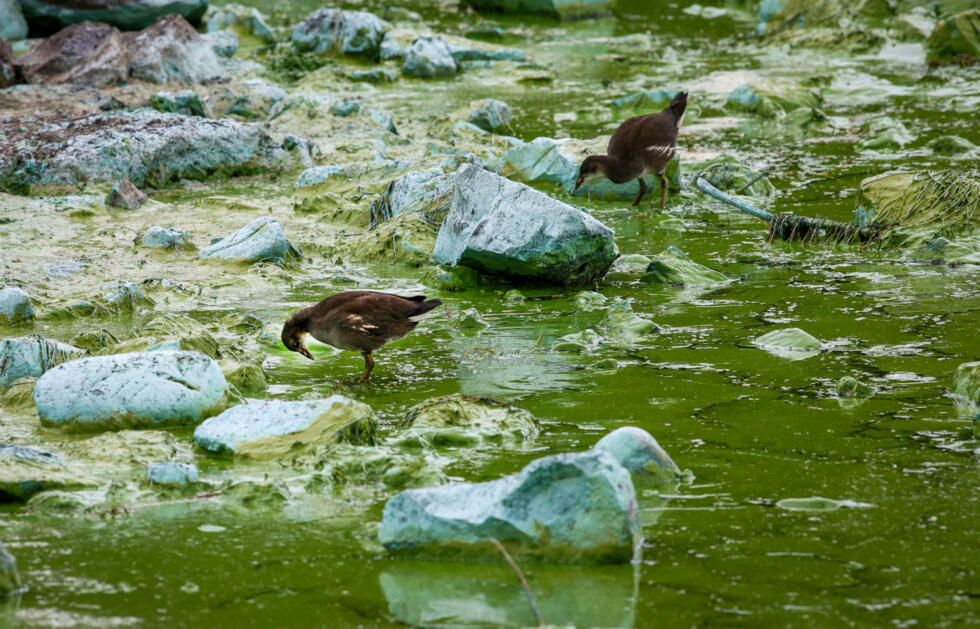
Ballyronan (United Kingdom) (AFP) – For the third year running toxic blue-green algae blooms that look like pea soup and smell like rotten eggs have covered much of Lough Neagh, the largest lake in the UK and Ireland.

Issued on: 14/09/2025 -

Blue-green algae infested water is pictured in Battery Harbour on the shores of Lough Neagh, in Northern Ireland, on August 22, 2025 © Paul Faith / AFP

But this summer, the thick green veneer -- so widespread it is visible from space -- has been worse than ever, according to locals living near the Northern Ireland landmark.

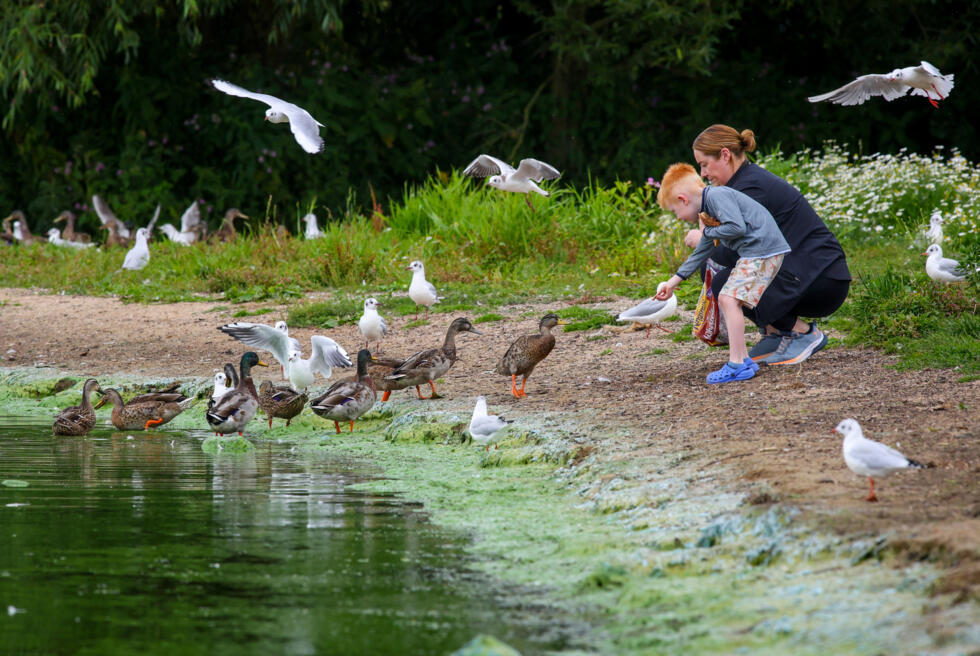
"The lake is dying," Mary O'Hagan, an open water swimmer, told AFP at Ballyronan, on its western shore, as ducks struggled over slick green-coated stones.

The algae growth -- fuelled by industrial, agricultural and sewage pollution, as well as climate change, according to experts -- has ravaged fishing and watersports, and prompted concerns about drinking water safety.

Signs banning bathing dot the lake's 78-mile-long shoreline, including at Ballyronan, 34 miles (54 kilometres) west of the Northern Irish capital Belfast.

Nutrient-rich fertiliser and slurry run-off from farms supplying mega-firms like chicken processor Moy Park are being blamed for contributing to the pollution.

Untreated sewage spills and septic tank effluent are also suspected.

Moy Park deny polluting the lake and say the poultry sector is "highly regulated with strict limits set for wastewater quality" at all its local sites.

The algae growth is a "complex issue not specifically linked to any one sector," a spokesperson told AFP.
'Heartbreaking'

Lough Neagh was O'Hagan's "training ground" during the Covid years, but she has hardly dipped a toe in the water since.

The 48-year-old told AFP she suffers from chronic health problems and swimming is her only exercise. Now she must rely on local swimming pools.

"Swimming here with its spectacular sunrises helped me when I was in a bad place in my life. It's heartbreaking to see it now," she said as green-tinted waves lapped the shore.

O'Hagan has joined a campaign group, "Save Lough Neagh", and at a recent protest urged Northern Ireland's regional government to act faster.

"Fine the polluters!" she said, calling in addition for the creation of an independent environmental agency able to punish factory farms and agri-food giants guilty of pollution.

The invasive zebra mussel species, a recent arrival in the lake's waters, filter water but any benefit is far outweighed by the molluscs also stimulating algal photosynthesis, worsening the green water effect.


Nutrient-rich fertiliser and slurry run-off from farms supplying mega-firms are seen as a chief contributor to the lough's pollution, as well as untreated sewage spills and adding phosphorus to the water supply 
© Paul Faith / AFP

Meanwhile the algae has decimated the Lough Neagh fly, a staple for fish and birds, local fisherman Mick Hagan told AFP while casting a line in a nearby tributary river.

"This river used to be full of trout, but no longer," said the 38-year-old wading back to dry land without a catch.

Europe's largest eel fishery -- also on the lough -- suspended operations this year due to quality concerns.

Hagan's is the first of many generations in his family not to fish for eels in Lough Neagh.

Now he runs a pizza truck at a campervan site near Ballyronan, but the powerful stench from the lough kept most tourists away this summer.
'Doctor Sludge'

According to Gavin Knox, whose paddleboard small business also fell victim to the sludge, the foul smell can reach miles inland.

The 48-year-old launched his venture in 2022 to help people safely have fun on the water.

Working with people with learning disabilities and brain injuries as well as families, Knox said bookings gradually dried up after the algae appeared.

"Doing business became impossible," he told AFP. "Even if there are safe places to paddle, nobody wants to do it when the fish are dying and the birds are covered in green slime."

Forced to repay a large start-up loan, he is angry that no compensation was ever offered by the government to affected small businesses.

"It's not fair that the people most impacted haven't been responded to in a meaningful manner," said Knox.

Last July the regional government launched an action plan to kickstart a fix.

But less than half the planned measures have been delivered.

The remaining steps have "delivery timelines extending into 2026 and beyond," said a government statement sent to AFP. It did not provide further details.


Birds feed on the shore of Lough Neagh covered in blue-green algae, in Northern Ireland 
© Paul Faith / AFP


With around 40 percent of Northern Ireland's drinking water supplied by Lough Neagh, the risk of a health emergency might force swifter action by authorities, said Les Gornall, a local slurry expert whose nickname is "Doctor Sludge".

"If Belfast suddenly cannot guarantee a clean water supply, then there would be a property and tourism crash," he predicted.

"Maybe that prospect will jolt them into fixing the lake."

© 2025 AFP
Who owns the Nile? Water, power and politics in a warming world

As climate change intensifies competition over water resources, the River Nile has become a symbol of both development and dispute. RFI speaks to a climate diplomacy expert to understand what’s at stake.


Issued on: 13/09/2025 - RFI

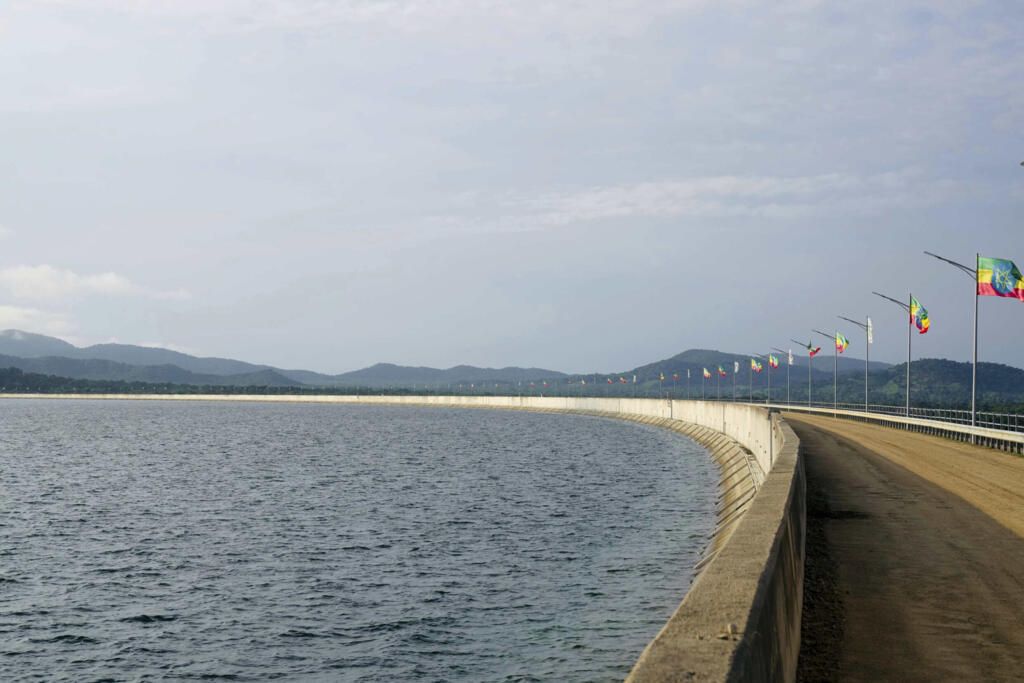
A view of the Grand Ethiopian Renaissance Dam in Benishangul-Gumuz, Ethiopia, 
9 September. © Jackson Njehi / АР

This week, Ethiopia inaugurated the Grand Ethiopian Renaissance Dam on the River Nile – Africa’s largest hydroelectric project, with an eventual capacity of 5,000 megawatts.

The GERD project promises to transform access to electricity in Ethiopia, and generate export revenues by selling power to neighbouring countries.

But downstream, Sudan and Egypt view the dam as an “existential threat”.

Both rely heavily on the Nile’s waters, and fear the project could jeopardise their supply.

As climate change takes hold, disputes over shared rivers and lakes are expected to multiply. To unpack the issues, RFI spoke with Benjamin Pohl, director of Climate Diplomacy and Security at Adelphi, an international research centre based in Berlin.


RFI: Who owns the water? It’s a question we hear more and more often, especially when rivers cross borders.

Benjamin Pohl (BP): That’s usually the most controversial point because of competing interests. When a river flows across borders, every country wants to use as much of the water as possible. While cooperation would often mean greater benefits for all, states tend to plan primarily for their own water use – and that often clashes with their neighbours’ plans.

RFI: Is there such a thing as a “right to water”?

BP: International law does cover the use of shared rivers and lakes – notably through the 1997 UN Watercourses Convention and the Helsinki Convention. Neither Ethiopia nor Egypt, though, has signed them.

In essence, international law recognises the right of sovereign states to use shared waters, but only within certain limits.

Usage must be equitable and reasonable, it must not cause significant harm to neighbouring countries, and it should be guided by a general obligation to cooperate.

The problem, however, lies in enforcement. Unlike national legal systems, there is no global authority to police compliance. Instead, everything rests on mutual trust between states or, in extreme cases, intervention by the UN Security Council – a route that is both politically fraught and costly.

A view of the Grand Ethiopian Renaissance Dam in Benishangul-Gumuz, Ethiopia, 
9 September. © Jackson Njehia / АР


'Historic rights'


RFI: Negotiations between Ethiopia, Egypt and Sudan have dragged on for decades. What exactly is at stake?

BP: Talks revolve around two things: big-picture rights and very specific risks.

Egypt insists on its “historic rights”, rooted in the 1959 Nile Waters Agreement with Sudan – but that treaty excluded upstream states like Ethiopia. Cairo argues that its entire civilisation has depended on the Nile for millennia, so it has customary rights.

Ethiopia counters that it has sovereign rights to develop and use the water too, pointing out that Egypt has monopolised the Nile for centuries. Addis Ababa stresses that the GERD is for electricity, not irrigation, so water will continue flowing downstream.

Egypt, however, worries about drought scenarios... What if Ethiopia withholds water to maximise power generation? What if the dam were to fail? Or worse, what if water became a political weapon?

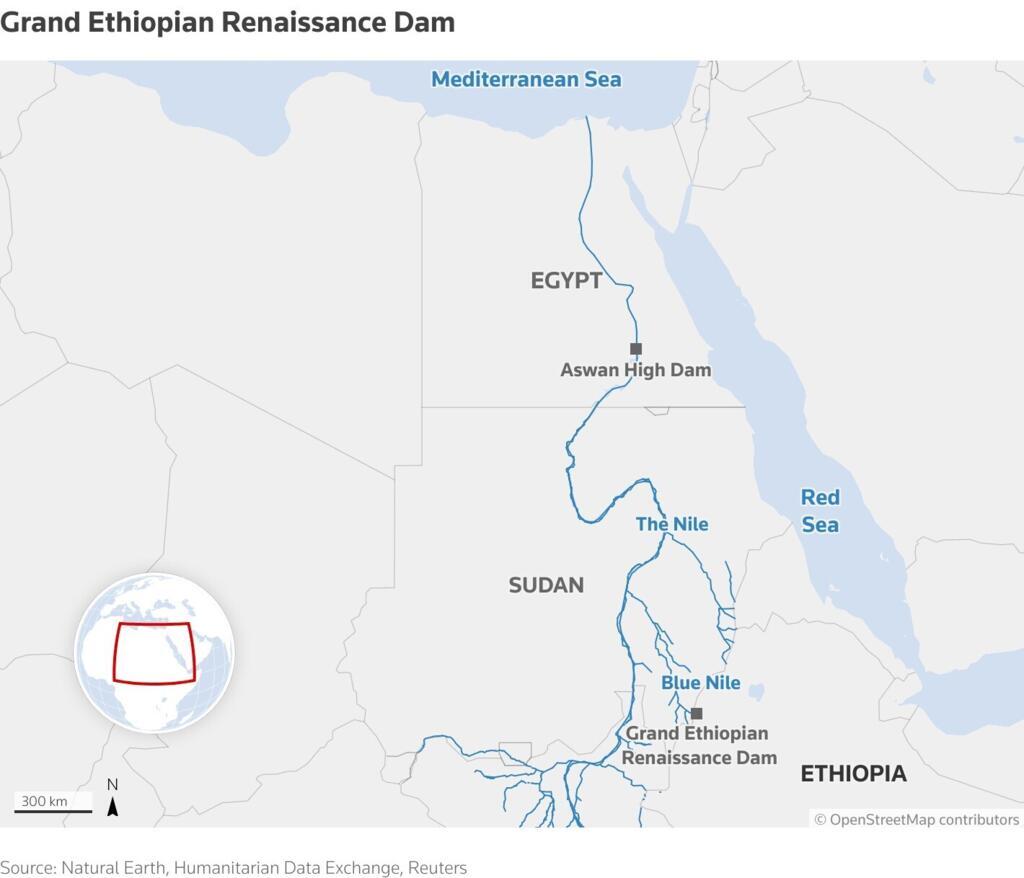
Two negotiation tracks are ongoing. One covers the Nile Basin as a whole, though Egypt temporarily walked away before recently returning. The other is a trilateral process between Ethiopia, Egypt and Sudan on the Blue Nile – where the GERD is located.

In 2015, they signed a declaration of principles, pledging to cooperate. Since then, technical talks have continued, but a final deal remains elusive.
Map showing the Grand Ethiopian Renaissance Dam on the Blue Nile and downstream Nile states of Sudan and Egypt leading to the Mediterranean Sea. © Reuters


RFI: What role does climate change play?

BP: Climate change disrupts rainfall patterns and the water cycle. Meanwhile, demand for water is rising fast due to population growth and economic development. In many regions, every drop is already allocated.

Now add climate change: drier conditions mean more irrigation, and hotter temperatures mean more energy use for cooling – which itself requires more water. In short, the pressure is intensifying


Water diplomacy


RFI: Are there global hotspots where water-sharing tensions are particularly acute?

BP: Absolutely. Over half the world’s rivers cross borders. Conflicts are most likely where political tensions are already high – think North Africa, the Middle East or Central and South Asia.

But here’s the silver lining: most disputes don’t escalate. Political leaders usually find ways to manage them, provided there’s at least some trust and a willingness to cooperate.

RFI: Can shared water management actually improve diplomatic relations?

BP: That’s the dream of every water diplomat! And sometimes, it works.

Take the Indus Waters Treaty between India and Pakistan – it’s survived three wars. Or the cooperation between Brazil and Paraguay over hydropower, and the Senegal River basin initiative in West Africa.

These examples show that shared water can act as a bridge, even between rivals. Still, global water pressure is rising, which makes cooperation ever more essential.

RFI: Looking ahead, what worries you most?

BP: I fear tensions will get worse. But awareness is growing too – there’s nothing inevitable about water scarcity leading to conflict.

What does complicate things is that it’s now easier for countries to build big dams without consulting neighbours. The World Bank used to act as a gatekeeper, ensuring regional consensus. But today, with new sources of finance, even relatively poor countries can push ahead with mega-projects.

That means we’ll see more unilateral infrastructure – and with it, greater potential for clashes. The challenge is to strengthen cooperation so that shared rivers become a source of partnership, not rivalry.
‘Zucman tax’: Push to tax the super-rich could make or break France’s next government

Explainer


As Emmanuel Macron looks for an elusive path out of France’s political deadlock, left-wing lawmakers have made their support conditional on approval of a tax on the country’s wealthiest households named after economist Gabriel Zucman, whose recipe for more progressive taxation would be a bitter pill to swallow for the French president.


Issued on: 13/09/2025 -
FRANCE24
By:Benjamin DODMAN

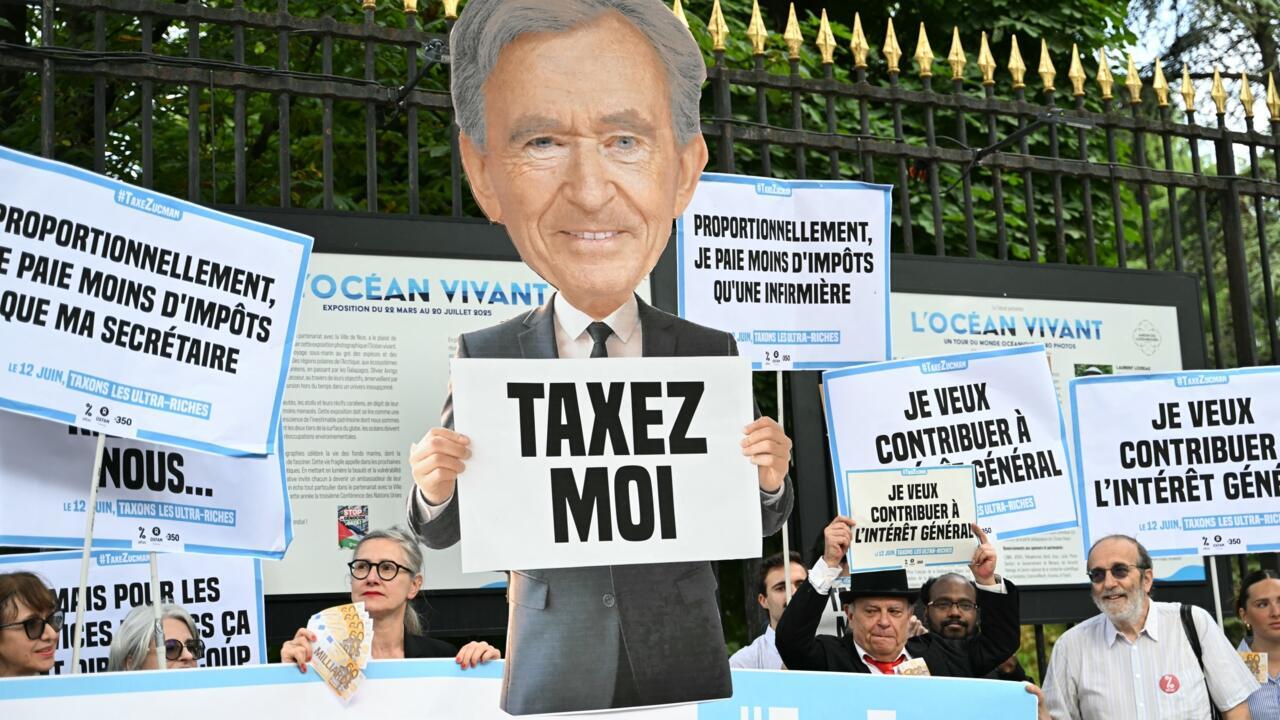
Protesters hold an effigy of France's richest man Bernard Arnault outside the Senate in Paris ahead of a vote on a proposed wealth tax on June 12, 2025.
 © Emma Da Silva, AFP

Fourteen months and three prime ministers into France’s seemingly intractable political crisis, the key to breaking the deadlock could well rest on a proposed wealth tax named after economist Gabriel Zucman, dubbed the “Zorro of taxation” by French weekly Le Nouvel Obs.

Since Tuesday’s appointment of Prime Minister Sébastien Lecornu, Macron’s third PM since he called an ill-timed snap election last year, the so-called “Zucman tax” has been on everyone’s lips, touted as a red line by supporters and opponents alike.

The moderate left has vowed to shoot down Lecornu’s government if it fails to back a Zucman tax. But the incoming premier also needs the support of mainstream conservatives, for whom taxing the rich is taboo.

Any new levy would also be a bitter pill to swallow for Macron, whose decision to scrap a previous wealth tax at the start of his first term earned him the enduring label of “president of the rich”.

A Macron stalwart from the start, Lecornu became the latest prime minister to promise a “break” with the past as he took office on Tuesday. But can he break with eight years of pro-business, billionaire-friendly policies?
‘Regressive’ taxation

Zucman’s proposal involves levying a minimum 2% tax on individuals with assets exceeding 100 million euros. It would apply to roughly 1,800 households in France and, according to the economist, generate up to 20 billion euros per year – almost half the savings planned in the austerity budget that brought down François Bayrou’s government earlier this week.

Other economists have disputed Zucman’s figures, arguing that the tax’s annual yield would be closer to 5 billion euros. Either way, the proposal is attracting plenty of interest amid mounting evidence that France’s taxation system is not nearly as progressive as was commonly assumed.

As Zucman argued in an interview with Le Monde on Thursday, “one cannot expect the French to accept belt-tightening measures so long as billionaires pay so little tax.”

Economists on both sides of the Atlantic have found that the richest households pay proportionally less tax on their income than the rest of the population. Demonstrating the “regressive” nature of France’s tax system, a 2023 study by the Paris-based Public Policy Institute (IPP) found that the 75 richest households in France were taxed at roughly half the rate of the next bracket.

The result is an ever-widening wealth gap. While the combined wealth of the 500 richest individuals in France amounted to 6% of GDP in 1996, the share has now jumped to 42%, according to business weekly Challenges. This in turn is undermining social cohesion, fuelling the type of anti-government protests that have roiled France through much of Macron’s two terms in office


Nobel backing

While the French president has remained steadfastly opposed to the introduction of a new wealth tax, Zucman’s proposals have won the enthusiastic backing of Brazil’s President Luis Inacio Lula Da Silva, whose government pushed for a global minimum tax on billionaires equivalent to 2 percent of their net wealth during its presidency of the G20 last year.

Other countries including Spain, South Africa and Chile have since pledged to work with Brazil in implementing such a levy.

The Zucman tax has also been endorsed by seven former Nobel Prize-winning economists, who urged the French government in a July op-ed to implement a minimum tax on the assets of billionaires “at a time of ballooning deficits and soaring extreme wealth”.

Such a tax would be effective “because it targets all forms of tax avoidance, regardless of their nature,” wrote the signatories, including Paul Krugman, Joseph Stiglitz and Esther Duflot. “It would also be targeted – affecting mainly the wealthiest taxpayers who engage in aggressive tax optimisation.”

While Macron has argued that a Zucman tax "would only make sense if it is global", the Nobel laureates urged individual governments not to wait for the finalisation of an international accord. “On the contrary, countries should lead by example, just as France did in the past,” they wrote, citing the introduction of VAT in 1954, which was soon copied around the world.


‘Old obsessions of the left’

Weeks before publication of the op-ed, France’s right-wing Senate shot down a first attempt at implementing the Zucman tax, months after the bill had cleared a first hurdle in the National Assembly despite opposition from both conservatives and Macron’s ruling party.

The Senate’s right-wing leader Gérard Larcher on Thursday reiterated his opposition to the tax, describing it as an “illusion”. His party leader Bruno Retailleau, the outgoing interior minister, said he would not support “old obsessions of the left that have already done enough damage to the country”.

Critics of Zucman’s proposal say it would lead the richest investors to move abroad – a risk the economist says can be offset by subjecting tax exiles to the levy for a further five years after they leave.

A former member of Retailleau and Larcher’s Les Républicains party, Lecornu himself is unlikely to have much appetite for the Zucman tax. But his room for manoeuvre is limited.

France’s incoming government has only a few weeks to submit its budget proposal for 2026 and then secure its passage through parliament by the end of the year. A bloated deficit means ratings agencies and the European Commission are already breathing down its neck.

Outnumbered in parliament, Lecornu must reach out to either the far right or the moderate left, with only the latter option considered politically viable. But having been passed over for the PM job three times since they topped last year’s snap election, left-wing lawmakers are in no mood for concessions.

‘Voters want it’

Senior members of the Socialist Party and its allies on the centre-left have made clear they will accept nothing short of a Zucman tax in exchange for their support. EU lawmaker Raphaël Glucksmann, seen as a potential presidential candidate, this week described the levy as the “cornerstone of any accord”.

Leftwingers have also warned they will not accept a “token” or “diluted” Zucman tax, even as lawmakers in Macron’s camp voice grudging acceptance of a wealth tax as the price to pay for a compromise in parliament.

“We understand that if we want to get a budget passed, we have to offer the left a symbolic victory on taxing the wealthiest,” Sylvain Maillard, a lawmaker from Macron’s Renaissance party, told Le Figaro on Monday. “We are radically opposed to this and think it’s utter nonsense, but we'll have to give in. Even our voters want it.”

An Ifop survey in July found that 74% of respondents backed the principle of a minimum tax on the super-rich. In his interview with Le Monde, Zucman said the shift in public opinion was “cause for optimism” despite the deadlock in parliament and Macron’s enduring resistance to taxing the rich.

“The tax is widely supported across all constituencies. Everyone now understands the problem,” the economist argued. “All political parties are aware of this and will have to take it into account as it is the key to political stability in France.”


Mossad scraps plan to kill Hamas members in Qatar out of fear for hostages, WaPo reveals

JERUSALEM POST STAFF
Fri, September 12, 2025 


Mossad logo and Israel flag are seen in this illustration taken May 6, 2025 (photo credit: REUTERS/DADO RUVIC)

The security agency's reservations on targeting terror officials in Doha likely influenced the operation to be airstrikes from fighter jets instead, as opposed to on the ground.

The Mossad reportedly scrapped a plan it drew up in recent weeks to assassinate senior Hamas officials on Qatari soil using agents within the country, two Israelis familiar with the decision-making told The Washington Post in a Friday report.

The two Israelis, who spoke to the US source on condition of anonymity, said that the intelligence agency’s director, David Barnea, opposed the plan due to concerns about the future of the relationship the Mossad had built with the Qataris, noting that Doha was mediating hostage deal agreements between Israel and Hamas.

One of the Israelis told the US source that “this time, Mossad was unwilling to do it on the ground,” with the report referencing the assassination that killed then-Hamas leader Ismail Haniyeh when a bomb was planted in his room in Iran. The other anonymous Israeli said, “We can get them in one, two, or four years from now, and the Mossad knows how to do it.”

The exclusive Washington Post report comes a day after a former senior official from the Israeli intelligence agency told 103FM radio station on Thursday that its indirect contact with Qatar may have caused some of its officials to object to Israel’s Tuesday airstrikes in Doha.

“I would hope that not everyone were ‘yes-men’ when discussions are being held,” the former official had said.


Head of Mossad David Barnea attends a ceremony held at the Yad Vashem Holocaust Memorial Museum in Jerusalem, as Israel marks the annual Holocaust Remembrance Day. April 23, 2025. (credit: CHAIM GOLDBEG/FLASH90)


Attacks from the air or on the ground?

The security agency’s reservations on targeting terror officials in Doha likely influenced the operation to be airstrikes from fighter jets instead, as opposed to on the ground, Friday’s Washington Post report also estimated. A separate report from The Wall Street Journal the same day said the fighter jets conducted their strikes against Hamas officials in the Qatari capital from the Red Sea.

The terrorist organization said on Friday that its acting leader, Khalil al-Hayya, survived the strike.

The Washington Post report cited Israeli officials saying that the Jewish state would repair its relations with Qatar over time.
Israeli strikes on Yemen's Houthi rebels damage residential homes, forcing families to live in ruins

AHMED AL-HAJ
Fri, September 12, 2025 


Flames and smoke rise following Israeli airstrikes in Sanaa, Yemen, Wednesday, Sept. 10, 2025. (AP Photo)ASSOCIATED PRESS

People inspect the damage at the National Museum, following the Israeli airstrikes on Wednesday in Sanaa, Yemen, Thursday, Sept. 11, 2025. (AP Photo/Osamah Abdulrahman)ASSOCIATED PRESS

Smoke billows following Israeli airstrikes in Sanaa, Yemen, Wednesday, Sept. 10, 2025. (AP Photo)ASSOCIATED PRESS

A man inspects the damage outside the National Museum, following the Israeli airstrikes on Wednesday in Sanaa, Yemen, Thursday, Sept. 11, 2025. (AP Photo/Osamah Abdulrahman)ASSOCIATED PRESS

ADEN, Yemen (AP) — Israel's deadly airstrikes this week targeting Iran-backed rebels in Yemen have damaged residential areas in the country's capital of Sanaa, leaving many houses in ruins and residents without help from authorities and unable to afford repairs on their own.

Wednesday’s strikes killed 46 people — including 11 women and five children — and wounded 165, according to a toll released late Thursday by the rebel-run health ministry in Sanaa. Most of the casualties were in Sanaa. Rebel officials said 11 local journalists were also killed in the strikes.

The strikes followed a drone launched by the Houthi rebels that breached Israel’s multilayered air defenses and slammed into a southern Israeli airport, blowing out glass windows and injuring one person.

In Yemen, a military headquarters and a Sanaa fuel station were also hit, the rebels said previously, as well as a government facility in the city of Hazm, the capital of northern Jawf province. The National Museum of Yemen was also damaged, according to the rebels’ culture ministry, with footage from the site showings damage to the building’s façade.

In Sanaa, where Yemen's yearslong civil war has impoverished many, residents told The Associated Press they cannot afford any major repairs and that the local authorities are not offering compensation or help with reconstruction.

Dozens of homes in Sanaa’s central Tahrir area were damaged. One of the residents from there, Um Talal, said she has no faith the authorities will help repair the house where she lives with her daughter and two sons.

The airstrikes knocked out their living room walls and damaged the kitchen, leaving dirt, debris and rubble, speaking to The Associated Press over the phone.

“Everything was lost in the blink of an eye," she said. “Authorities haven’t even called us to this day. ”

Despite the destruction, she said the family will fix what they can and continue living in their home.

Another resident, Ahmed al-Wasabi, said he and his family — luckily — were not home when one of the airstrikes partially destroyed their house.

“The explosions terrified people who went running and children and women were crying and screaming,” said Khaled al-Dabeai, a grocery shop owner who added that the force of the explosions knocked products off his shelves.

Israel has previously launched waves of airstrikes in response to the Houthis’ firing missiles and drones at Israel. The Houthis say they are supporting Hamas and the Palestinians in the Gaza Strip.

The Houthis have launched missiles and drones toward Israel and targeted ships in the Red Sea for over 22 months, saying they are attacking in solidarity with Palestinians amid the war in Gaza.

Houthi leader Mahdi al-Mashat vowed on Wednesday to continue the attacks, warning Israelis to “stay alarmed since the response is coming for sure.”

___

Associated Press writer Fatma Khaled in Cairo contributed to this report.
The Bright Side:
 Iraq's Yazidis rediscover their lost history in photos found in a museum archive

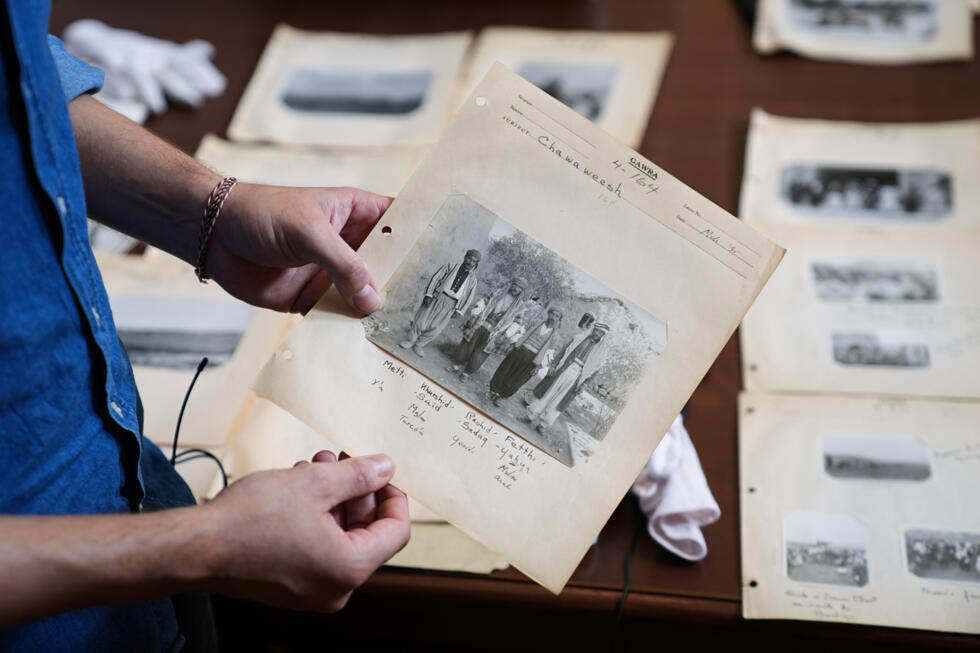
Researchers at the University of Pennsylvania have been scouring the university's Museum of Archaeology and Anthropology to create a visual archive of Iraq's Yazidi communities from photos left behind from excavations carried out in the 1930s.


Issued on: 13/09/2025 - 
By :FRANCE 24


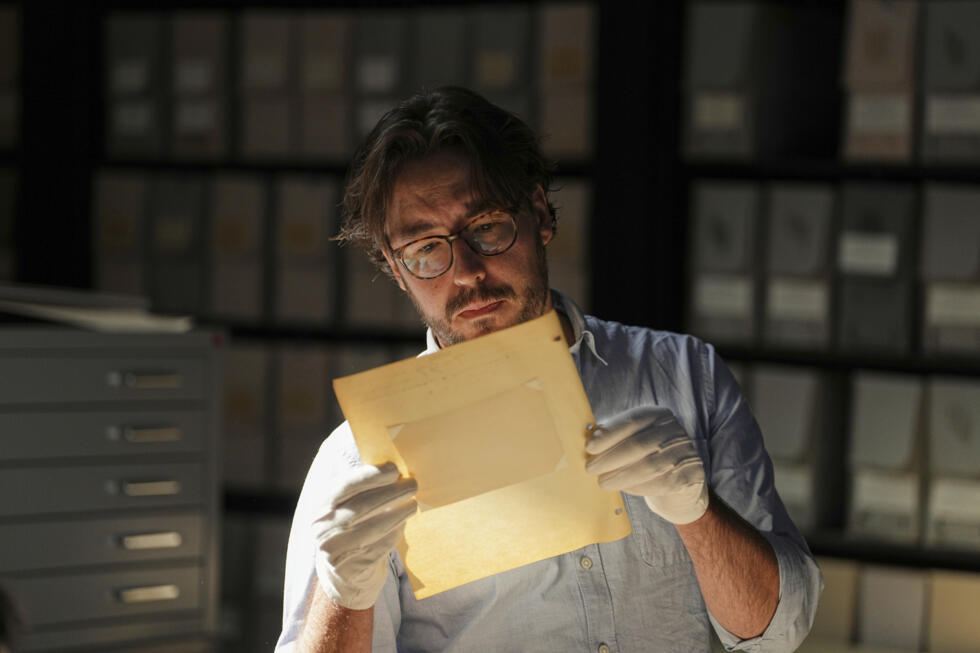
University of Pennsylvania doctoral student Marc Marin Webb, left, and University of Victoria postdoctoral fellow Nathaniel Brunt, view images of photos of the Yazidi people in their northern Iraq homeland in the 1930s, during an interview at the Penn Museum Archives in Philadelphia, August 27, 2025. © Matt Rourke, AP


Archeologists studying ancient civilisations in northern Iraq during the 1930s also befriended the nearby Yazidi community, documenting their daily lives in photographs that were rediscovered after the Islamic State militant group devastated the tiny religious minority.

The black-and-white images ended up scattered among the 2,000 or so photographs from the excavation kept at the University of Pennsylvania Museum of Archaeology and Anthropology, which led the ambitious dig.

One photo – a Yazidi shrine – caught the eye of Penn doctoral student Marc Marin Webb in 2022, nearly a decade after it was destroyed by IS extremists plundering the region. Webb and others began scouring museum files and gathered almost 300 photos to create a visual archive of the Yazidi people, one of Iraq's oldest religious minorities.

The systematic attacks, which the United Nations called a genocide, killed thousands of Yazidis and sent thousands more into exile or sexual slavery. It also destroyed much of their built heritage and cultural history, and the small community has since become splintered around the world.

University of Victoria postdoctoral fellow Nathaniel Brunt views an image from a collection of photos of the Yazidi people in their northern Iraq homeland in the 1930s, during an interview at the Penn Museum Archives in Philadelphia, August 27, 2025.
 © Matt Rourke, AP

Ansam Basher, now a teacher in England, was overwhelmed with emotion when she saw the photos, particularly a batch from her grandparents' wedding day in the early 1930s.

“No one would imagine that a person my age would lose their history because of the ISIS attack,” said the 43-year-old, using an acronym for the extremist group. Basher's grandfather lived with her family while she was growing up in Bashiqa, a town outside Mosul. The city fell to IS in 2014.

“My albums, my childhood photos, all videos, my two brothers' wedding videos (and) photos, disappeared. And now to see that my grandfather and great-grandfather’s photo all of a sudden just come to life again, this is something I'm really happy about,” she said. “Everybody is.”

The archive documents Yazidi people, places and traditions that IS sought to erase. Marin Webb is working with Nathaniel Brunt, a Toronto documentarian, to share it with the community, both through exhibits in the region and in digital form with the Yazidi diaspora.

“When they came to Sinjar, they went around and destroyed all the religious and heritage sites, so these photographs in themselves present a very strong resistance against that act of destruction,” said Brunt, a postdoctoral student at the University of Victoria Libraries. The city of Sinjar is the ancestral homeland of the Yazidis near the Syrian border.

The first exhibits took place in the region in April, when Yazidis gather to celebrate the New Year. Some were held outdoors in the very areas the photos documented nearly a century earlier.

“(It) was perceived as a beautiful way to bring memory back, a memory that was directly threatened through the ethnic cleansing campaign,” Marin Webb said.


University of Pennsylvania doctoral student Marc Marin Webb displays an image from a collection of photos of the Yazidi people in their northern Iraq homeland in the 1930s, at the Penn Museum Archives in Philadelphia, August 27, 2025. 
© Matt Rourke, AP


Basher’s brother was visiting their hometown from Germany when he saw the exhibit and recognised his grandparents. That helped the researchers fill in some blanks.

The wedding photos show an elaborately dressed bride as she stands anxiously in the doorway of her home, proceeds with her dowry to her husband’s village, and finally enters his family home as a crowd looks on.

“I see my sister in black and white,” said Basher, noting the similar green eyes and skin tone her sister shares with their grandmother, Naama Sulayman.

Her grandfather, Bashir Sadiq Rashid al-Rashidani, came from a prominent family and often hosted the Penn archaeology crews at his cafe. He and his brother, like other local men, also worked on the excavations, prompting him to invite the westerners to his wedding. They in turn took the photos and even lent the couple a car for the occasion, the family said.

Some of the photos were taken by Ephraim Avigdor Speiser, the Penn Museum archaeologist who led excavations at two ancient Mesopotamian sites in the area, Tepe Gawra and Tell Billa.

“My grandfather used to talk a lot about that time,” said Basher, who uses a different spelling of the family surname than other relatives.

Her father, Mohsin Bashir Sadiq, 77, a retired teacher now living in Cologne, Germany, believes the wedding was the first time anyone in the town used a car, which he described as a 1927 model. It can be seen at the back of the wedding procession.

Alessandro Pezzati, Senior Archivist at the University of Pennsylvania Museum, poses for a photograph at the Penn Museum Archives in Philadelphia, August 27, 2025. 
© Matt Rourke, AP

Basher has shared the photos on social media to educate people about her homeland.

“The idea or the picture they have in their mind about Iraq is so different from the reality, ” she said. “We’ve been suffering a lot, but we still have some history.”

Other photos in the collection show people at home, at work, at religious gatherings.

To Marin Webb, an architect from Barcelona, they show the Yazidis as they lived, instead of equating them with the violence they later endured. Locals who saw the exhibit told him it “shows the world that we’re also people.”

An isolated minority, the Yazidis have been persecuted for centuries.

Basher is grateful the photos remained safe – if largely out of sight – at the museum all this time. Alessandro Pezzati, the museum's senior archivist, was one of several people who helped Marin Webb comb through the files to identify them.

“A lot of these collections are sleeping until they get woken up by people like him,” Pezzati said.

(FRANCE 24 with AP)


VARIATIONS IN SPELLING

Oscar-winning Palestinian filmmaker says IDF searched his house after he was attacked by settlers

ADDING INSULT TO INJURY

Max Saltman, Lauren Izso, 
CNN
Sat, September 13, 2025 

Basel Adra speaks during an event in Madrid, Spain on June 23. - Alejandro Martinez Velez/Europa Press/Getty Images


Oscar-winning Palestinian filmmaker and activist Basel Adra said soldiers from the Israel Defense Forces (IDF) searched his house in the occupied West Bank after a group of Israeli settlers attacked him, his family members and a foreign activist on Saturday.

On Saturday afternoon, a group of settlers from the illegal Havat Ma’on outpost near Adra’s village of At-Tuwani began trespassing in his olive grove, Adra told CNN.

When Adra, two of his brothers, his cousin and a foreign activist attempted to confront the settlers, they were attacked, Adra said.

“The police, the army came when the settlers were attacking us,” Adra said. “They did not stop them. One of the settlers chased one of the solidarity activists, and he beat her on the ground. The soldiers were watching, didn’t do anything.”

Adra said that one of his brothers was run over by a settler riding an ATV and had to be hospitalized.

After the attack, the IDF “invaded” At-Tuwani, Adra said, searching his house for twenty minutes and looking through his wife’s phone. The army also blocked the village road to an ambulance, Adra added.

“We’ve filed dozens of complaints against these same settlers for grazing their sheep among our olive trees,” Adra said. “We bring the police, and they do nothing.”

CNN has reached out to the mayor of the regional council that includes Havat Ma’on for comment. The IDF told CNN in a statement that they had deployed to At-Tuwani after they received a report “regarding several terrorists who hurled rocks at Israeli civilians adjacent to At-Tuwani.”

“As a result of the rock hurling, two Israeli civilians were injured and evacuated to receive medical treatment,” the IDF wrote. “Upon receiving the report, the security forces were dispatched to the scene and are currently conducting searches in the area and questioning suspects.”

Adra denied that anyone in his group threw rocks, calling the allegation “bullshit.”

“They were attacking us on private land,” Adra said of the settlers.

March report by activist groups Peace Now and Kerem Navot and verified by CNN satellite analysis found that settlers established 49 new illegal shepherding outposts between October 7, 2023, and December 2024, an increase of 50%.

The outposts, which are illegal under both Israeli and international law, are often founded by the most extreme Israeli settlers.

Last year, Adra and three other filmmakers won an Oscar for their documentary “No Other Land,” which chronicled the forced displacement of Palestinians in the West Bank area of Masafer Yatta.

It isn’t the first time that the filmmakers have been attacked since winning their award. In March, Adra’s co-director on the film Hamdan Ballal was detained by Israeli forces overnight after being assaulted by settlers just after an iftar dinner during Ramadan


At the time, an activist who witnessed Ballal’s assault told CNN that such attacks are a regular occurrence.

“They don’t always involve an Oscar-winning filmmaker,” he said.


Oscar-winning Palestinian director Basel Adra says Israeli soldiers raided his home in West Bank


Copyright AP Photo/John Locher, File

By Evelyn Ann-Marie Dom with AP
Published on 14/09/2025 - 


Basel Adra co-directed the film No Other Land, a joint Palestinian-Israeli production that chronicles the struggle by residents to stop the Israeli military from demolishing the occupied West Bank's Masafer Yatta.

Israeli soldiers conducted a raid on Saturday at the West Bank home of Basel Adra, one of the directors of Oscar-winning film No Other Land, the Palestinian filmmaker confirmed himself

Adra said soldiers had asked his wife, Suha, for his whereabouts and proceeded to search through her phone, adding that their nine-month-old daughter was home at the time of the raid.

Earlier on Saturday, Israeli settlers attacked his village, injuring two of Adra’s brothers and one cousin, the director told press agency The Associated Press (AP). Adra had accompanied his family members to the hospital, where he found out Israeli soldiers had stormed his home.

No Other Land, a joint Palestinian-Israeli production directed by Basel Adra, Hamdan Ballal, Yuval Abraham and Rachel Szor, chronicles the struggle by residents to stop the Israeli military from destroying the occupied West Bank's Masafer Yatta, and the gradual expulsion of its community.

Adra has dedicated his career as a journalist and filmmaker chronicling settler violence in Masafer Yatta. He described Saturday’s event as “horrific.”

“Even if you are just filming the settlers, the army comes and chases you, searches your house,” he said. “The whole system is built to attack us, to terrify us, to make us very scared.”

“What happened today in his village, we’ve seen this dynamic again and again, where the Israeli settlers brutally attack a Palestinian village and later on the army comes, and attacks the Palestinians,” co-director Yuval Abraham said.

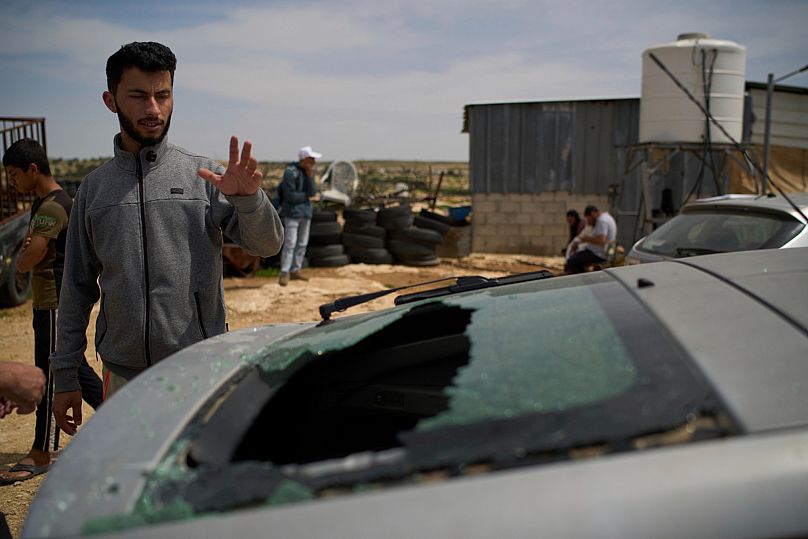
Basel Adra looks at damaged car of Palestinian co-director Hamdan Ballal, who was attacked by Israeli settlers, in Masafer Yatta, Tuesday, March 25, 2025. AP Photo/Leo Correa

The West Bank, east Jerusalem and Gaza have been under Israeli military occupation since 1967, following the Mideast war. Since then, Israel has built well over 100 settlements, home to more than 500,000 Israeli settlers.

Palestinians seek all three to be part of an independent Palestinian state and view the continued expansion of Israeli settlements as a major obstacle to a two-state solution. Currently, around three million Palestinians in the occupied West Bank live under what seems to be open-ended Israeli military rule, with only limited parts of the territory governed by the Palestinian Authority (PA).

Last week, Israeli Prime Minister Benjamin Netanyahu signed an agreement to push ahead with an illegal expansion plan in the occupied West Bank that will cut across land that the Palestinians hope would form the basis of a future state.

"There will not be a Palestinian state," Netanyahu said during a visit to the Maale Adumim settlement in the West Bank on Thursday.

The Israeli occupation of Palestinian territories is illegal under international law. Last year, the International Court of Justice declared in a landmark ruling that Israel should end settlement activity in the West Bank and East Jerusalem and end its occupation of those areas, as well as Gaza, as soon as possible.

Masafer Yatta

In the 1980s, the Israeli military designated Adra’s hometown, Masafer Yatta, as a live-fire training zone and ordered the expulsion of its residents, most of whom were Arab Bedouin. Despite this, roughly 1,000 residents stayed, but Israeli soldiers regularly enter the area to demolish homes, tents, water tanks and olive orchards.

Since the start of Israel's war in Gaza, which began after Hamas-led militants attacked southern Israel on 7 October 2023, Israel has killed hundreds of Palestinians in the West Bank during wide-scale military operations, and there has been a rise in attacks on Palestinians by Israeli settlers. There also also been an increase in Palestinian attacks on Israelis.