Thursday, September 18, 2025


Two more journalists jailed in Kyrgyzstan in fresh blow to press freedom

Two more journalists jailed in Kyrgyzstan in fresh blow to press freedom
During his five years of power, President Sadyr Japarov has tightened control over the media in Kyrgyzstan. / Official publication
By Alexander Thompson for Eurasianet September 18, 2025

Two former journalists for the investigative media outlet Kloop received five-year prison sentences on September 17 after being found guilty of participating in calls for mass disorder. The convictions mark another severe blow to press freedom amid an ongoing campaign by President Sadyr Japarov’s administration to tighten control over the flow of information in the country.

Prosecutors alleged that Joomart Duulatov, 22, and Alexander Alexandrov, 27, participated in the creation of five episodes that appeared on the YouTube channel Temirov Live, run by exiled journalist and government critic Bolot Temirov. The prosecution maintained the five episodes contained content intended to incite mass unrest.

Bishkek District Judge Cholponay Umetalieva also found two former Kloop accountants, Olesya Nesterenko, 58, and Elena Kojanova, 69, guilty on the same charges, but sentenced them to three years of probation due to their age.

The courtroom, packed with friends and relatives of the defendants, was enveloped in silence as the judge read out the verdicts. Alexandrov motioned stoically to his wife through the glass of the witness box as Duulatov wiped his eyes. Nesterenko and Kojanova appeared relieved the judge had not given them the six years of jail time the prosecutor had requested. The prosecution sought eight-year terms for Duulatov and Alexandrov.

All four defendants testified they did not help film or produce Temirov’s videos, nor had they ever spoken to him. “I saw the videos for the first time yesterday,” Kojanova said in her final appeal to the judge.

Bolot Temirov, in comments made earlier, insisted he never had any contact with the defendants.

The defendants’ lawyers indicated they would appeal the ruling. Duulatov’s attorney, Nurgazy Sydykov, said in his closing argument that the government’s case was designed to muzzle independent journalism in Kyrgyzstan.

“After we’ve gone through all this evidence, I’ve just got one impression left. That it’s as if these indictments were just to scare other Kyrgyz journalists,” Sydykov said.

Since rising to power in 2020, Japarov, along with state security services chief Kamchybek Tashiev, have acted to quash critical voices in the press. Kloop, the investigative news site for which Duulatov and Alexandrov worked, was shuttered by a court decision in February 2024. Last October, four journalists working for Temirov Live were convicted – and two jailed. Both outlets published content detailing government malfeasance.

This year, Kanyshay Mamyrkulova was sentenced to four years of probation over Facebook posts, and a court closed down April TV, a critical news outlet, allegedly for undermining state authority with “sarcasm and mimicry.”

The case against the Kloop four began in May, when the State Committee for National Security rounded up current and former employees of the outlet, which now operates in exile, and interrogated them for hours without legal representation. Duulatov, Alexandrov, Nesterenko and Kojanova ended up being criminally charged, and the two journalists were held in jail over the summer.

None of the witnesses during the four-day trial provided testimony that the defendants collaborated with Temirov, or called for mass disorder. Prosecutors did not present evidence or forensic analysis from laptops, cell phones, hard drives or financial documents seized by police that could help prove their case.

Umetalieva did not provide any reasoning for her decision from the bench but noted that all four defendants had signed confessions “to their crime” during interrogations by the State Committee for National Security.

During the trial, all four recanted those confessions. The journalists said they made the confessions under duress, adding that security forces led them to believe they would be released from jail to house arrest if they complied. “I was very afraid. It was the first time I’d been in an interrogation cell,” Duulatov testified, adding he felt ill and at one point lost consciousness. “[I signed] out of fear I would end up behind bars.”

Meanwhile, the two accountants said they believed they were confessing to having worked for Kloop, not to a criminal charge of calling for mass disorder. 

The prosecution largely stayed quiet throughout the trial. Prosecutor U. Akmatov asked Alexandrov only two questions during cross examination, and his closing argument consisted of reading the indictment. 

“He didn’t even open up one single document. You know what the reason is? Because in those documents there is not a single piece of evidence,” Sydykov, one of the defense lawyers, told the judge.

An expert-linguist for the prosecution, Taalaybek Abdykojoev, testified that a slogan (“Freedom is not given, freedom is won”) that is featured in the five Temirov Live videos named in the indictment can be interpreted as a call to mass disorder. But on cross examination, Abdykojoev admitted he saw no evidence that any of the defendants were involved in the creation of the videos. 

All the witnesses who testified at the trial stated that they had never seen or heard of the four defendants working with Temirov Live or calling for mass disorder.

Asked by a defence lawyer whether she had ever heard the defendants talk about overthrowing the government, former Kloop reporter Ayday Erkebaeva told the court she had not.

“As journalists we don’t have the right to do that. We just collect and distribute information. They were good journalists,” she said, looking to Duulatov and Alexandrov. “And that’s what they did.”

Alexander Thompson is a journalist based in Bishkek, Kyrgyzstan, reporting on current events across Central Asia. He previously worked for American newspapers, including the Charleston, S.C., Post and Courier and The Boston Globe.

This article first appeared on Eurasianet here.

Indonesia’s Raja Ampat - tourism hub or den of corruption?

 Indonesia’s Raja Ampat - tourism hub or den of corruption?
/ Johnny africa - Unsplash
By bno - Surabaya Office September 18, 2025

In recent years, Indonesia has doubled down on promoting Raja Ampat, a remote archipelago in West Papua famed for its biodiversity, as a global eco-tourism icon. In an effort to do so, the government is increasing entry fees for foreign visitors, tightening tourism regulations, and positioning the region in international conservation diplomacy. However, a sinister motive lies behind the green façade, as critics argue that the development may also include revenue extraction, political control, and international image management.

Mining permits and environmental backlash

In mid-2025, the government revoked the mining permits of four nickel companies operating in or near Raja Ampat, citing environmental violations after widespread public protests and concern from NGOs. Despite the situation, Mongabay has reported that PT Gag Nikel, part of state-owned enterprise Antam, was allowed to continue operations on Gag Island, which lies just outside the officially designated UNESCO Global Geopark.

This selective revocation suggests multiple motives. Government officials justify allowing Gag Nikel’s operations by pointing to “green” ratings under environmental performance programmes, existing contracts, and “outside geopark” status. But Global Witness reported that critics see this as a way to preserve strategic economic interests (nickel being crucial for global electric vehicle and battery supply chains) while placating environmental outrage.

Moreover, environmental damage claims, including sedimentation harming reefs, dust and health issues in local communities, deforestation of tropical forests on small islands, have raised the stakes. Mongabay also reported that NGOs warn that once coral and reef ecosystems are degraded, both biodiversity and tourism incomes suffer.

It was reported earlier this week that the government has permitted state-owned miner PT Gag Nikel to resume operations on Gag Island in Raja Ampat, one of the world’s most biodiverse marine regions, despite company-funded research showing damage to the environment and community health, according to Mongabay. Work resumed on September 3 after a moratorium imposed in June was lifted.

Tourism fees, local communities, and government revenue

Another front in the controversy is the system of entry and conservation fees for Raja Ampat. Foreign visitors must pay for official permits (sometimes called tariffs) for environmental services, which are valid for a year. KWR Global reported that local communities in some areas also impose additional, unofficial fees or charges for access — a source of frustration for tourists who see them as arbitrary.

These fees bring in funds which the government says are used for reef protection, marine park management, and infrastructure, but transparency is criticised. Many locals claim they see little of the revenue, or don’t know how funds are allocated. This feeds into perceptions that the government benefits are disproportionately distributed. Additionally, collecting fees from tourists helps the government to monetise “conservation” in Raja Ampat in global tourism marketing, KWR Global added.

Motives: sovereignty, foreign image, and economic strategy

Beyond environmental protection and tourism, there are deeper political and strategic motives behind the Indonesian government's policy in Raja Ampat. Sovereignty plays a central role.

West Papua has been a politically sensitive region for decades, with periodic independence movements. By investing in infrastructure, tourism, regulation, and conservation branding, the Indonesian government strengthens its presence and control, both physically and symbolically. Conservation zones, entry permits, and mining regulations function as tools for consolidating central authority over land, sea, and natural resource rights.

International image is another key driver. Promoting Raja Ampat as a world-class geopark and marine biodiversity hotspot helps Indonesia project itself as a leader in environmental conservation globally. That supports its position in climate negotiations, biodiversity conventions, and an increasingly green global economy. Revoking mining permits in highly visible areas after public outcry also wins international praise, Mongabay reported.

At the same time, economic strategy underpins the policy. On one side, nickel is in high demand for use in EV batteries and other green technologies, and Indonesia has some of the world’s richest reserves. On the other hand, environmental degradation threatens tourism, fisheries, and indigenous livelihoods. The government appears to be trying to capture economic benefit through mining revenues and fees from high-spending tourists while mitigating negative fallout, both ecological and political. The decision to retain the Gag Nikel permit, Mongabay revealed, despite environmental concerns shows how economic value influences policymaking.

What next?

These overlapping motives create tensions that are difficult to resolve. Local communities often feel sidelined in decision-making. While some benefit from mining or tourism, BATS Consulting’s investigation revealed many claim their rights, income, or customary usage of land and sea are undermined by central government control.

Legal contradictions also complicate the picture. Indonesian law contains provisions against mining on small islands, but enforcement has been uneven. Some mining concessions predate certain protected statuses, leading to disputes over whether revocations can be applied retroactively, as reported by Bird’s Head Seascape.

Finally, the environmental risks remain significant. Studies warn that sedimentation from mining, deforestation, and pollution can degrade coral reefs irreversibly, affecting species, fisheries, and tourism. Even where sites are outside officially protected areas, ecological impacts can cross boundaries through currents and watersheds.

The government’s approach to Raja Ampat appears to combine genuine environmental and conservation concerns with revenue generation, political integration, and global environmental branding. The selective revocation of mining permits, maintenance of strategic mines like Gag Nikel, and relatively high entry fees for tourists suggest that the government is trying to strike a balance, preserving enough of Raja Ampat’s natural capital to sustain its tourism and environmental credibility, while still leveraging its other economic potential.

SPORTS

Canada confident of dethroning New Zealand in Women's World Cup semis

London (AFP) – Canada are full of belief they can end New Zealand's bid for a third successive Women's Rugby World Cup title in the semi-finals on Friday, with France taking on England in the other last-four clash this weekend.


Issued on: 18/09/2025 -FRANCE24

Canada wing Alysha Corrigan scores her second try in a 46-5 Women's Rugby World Cup quarter-final win over Australia in Bristol © Paul ELLIS / AFP/File


The top four in the world rankings unsurprisingly make up the semi-final line-up in Bristol.

New Zealand have beaten England in five of the last six World Cup finals and haven't lost a match in the tournament since 2014 -- the year England last lifted the trophy by defeating Canada in the showpiece match in Paris.

But it is Canada, not New Zealand, who are second in the world rankings behind tournament favourites and hosts England.

Canada are also unbeaten in their last two games against the Black Ferns after a thrilling 27-27 draw during the Pacific Four series in Christchurch in April followed their 22-19 win at the same venue last year.


The North Americans, who have won plaudits for their quick handling play, have retained the same matchday 23 that hammered Australia 46-5 in the quarter-finals.

"We have shown over the past two years that we are one of the best teams in the world, and our last two results against New Zealand support that," said Canada coach Kevin Rouet.

"We have every reason to believe that we can win this game."


New Zealand's Jorja Miller (R) has been one of the leading players at the Women's Rugby World Cup © ISAAC LAWRENCE / AFP/File


New Zealand will be without star back-row Jorja Miller because of injury.

Miller, playing with a heavily strapped left knee, went off in the 46th minute of their 46-17 quarter-final win over South Africa.

Black Ferns co-captain Kennedy Tukuafu, who replaces Miller at openside flanker, said: "She's an incredible person who's done a lot for our team off the field, she's done a lot for me. She's an incredible player."

Guarding against complacency appears to be the biggest challenge for an England side who have not lost since the Covid-delayed 2022 World Cup final.

The Red Roses are one game away from running out in front of an already sold-out crowd of over 80,000 in next week's title-decider at Twickenham.

France, however, pushed England desperately close before eventually losing 43-42 at Twickenham in this season's Women's Six Nations.

England full-back Ellie Kildunne © Paul ELLIS / AFP/File


England full-back Ellie Kildunne, the reigning world player of the year, is set to return after missing last week's 40-8 win over Scotland with a concussion suffered in the closing pool match against Australia.

"Ellie is tracking really well," said England attack coach Lou Meadows. "She is very keen to get back as you can imagine."

France came from 13-0 down at half-time to beat Ireland 18-13 in a last-eight thriller.

"I get really excited about playing France because you never quite know what they're going to bring," said Meadows.

"They're always extremely physical, but they've also got a lot of style to the way that they attack."

France, however, have lost their last 16 Tests against England.

Les Bleues' hopes of ending that streak were hampered when both co-captain Manae Feleu and flanker Axelle Berthoumieu were banned from the rest of the tournament for acts of foul play against Ireland.

Berthoumieu was hit with a nine-game ban for biting Ireland's Aoife Wafer, with lock Feleu failing to overturn a three-game suspension after she was yellow-carded for a high tackle.

Fly-half Lina Queyroi is also set to miss the England clash with concussion.

"We've known for a long time that if we got to the semis, it would probably be England," said France full-back Morgane Bourgeois. "We've had this game in our heads for a while."

Semi-final fixtures (both at Ashton Gate, Bristol, times GMT):

Friday

New Zealand v Canada (1800)

Saturday

England v France (1430)

© 2025 AFP


Dodgers ponder using Ohtani as relief pitcher


Los Angeles (United States) (AFP) – The Los Angeles Dodgers will consider using two-way star Shohei Ohtani as a relief pitcher to shore up their struggling bullpen, manager Dave Roberts said Wednesday.


Issued on: 18/09/2025 - RFI


Los Angeles Dodgers two-way star Shohei Ohtani of Japan pitches in a Major League Baseball game against the Philadelphia Phillies
 © RONALD MARTINEZ / GETTY IMAGES NORTH AMERICA/AFP/File


The Japanese superstar has been superb on the mound as a starting pitcher this year after not pitching at all in 2024 as he recovered from elbow ligament surgery.

He has also continued to shine at the plate, with 50 home runs going into Wednesday's home game against the Philadelpia Phillies, and while Roberts confirmed the team is willing to rethink Ohtani's role he is also wary of knocking him off his stride.

"I know that we are going to be talking about it," Roberts told reporters on Wednesday when asked if Ohtani might pitch in relief.

But Ohtani hasn't pitched on less than five days' rest this season, and Roberts said the differences in scheduling and workload for relievers coming out of the bullpen might be a stumbling block.

"He's a very methodical, disciplined, routine-driven person," Roberts said. "The 'pen is the complete opposite, right?

"You potentially could be taking on risk, and we've come this far, certainly with the kid gloves and managing.

"So it's a very fair question. I just don't know how it could play out. But it's something we're all talking about."

Just how careful the Dodgers are being with Ohtani and his surgically-repaired right elbow was clear on Tuesday, when he pitched five no-hit innings against the Phillies but was taken out of the game by Roberts even though he had thrown just 68 pitches.

Ohtani said he had had "different conversations with different people" and the idea of pitching in relief had come up.

He also floated the idea of playing in the outfield, saying he was willing to contribute in any way the Dodgers thought he could.

"As a player, if I'm told to go somewhere, I want to be prepared to do so," he said.

Under major league rules, if Ohtani starts a game as a pitcher and is replaced on the mound he can continue batting as a designated hitter.

But if he pitches out of the bullpen and is the designated hitter, the Dodgers would lose the designated hitter when he is replacd on the mound.

Roberts didn't rule out the possibility of Ohtani playing in the outfield, but didn't make it sound likely.

"I don't know if it's a pipe dream, but it's very commendable from Shohei," Roberts said. "I think that what happens is that there's a lot of moving parts, too.

"He would have to take on more load, as far as kind of being an outfielder to then pitch.

"There's a lot of variables," Roberts said. "But to know that he can potentially run out there, it's great. Maybe just in theory. But again, I love him for even throwing that out there."

© 2025 AFP

The Bright Side: Paris auction house unveils never-before-seen Picasso painting
France


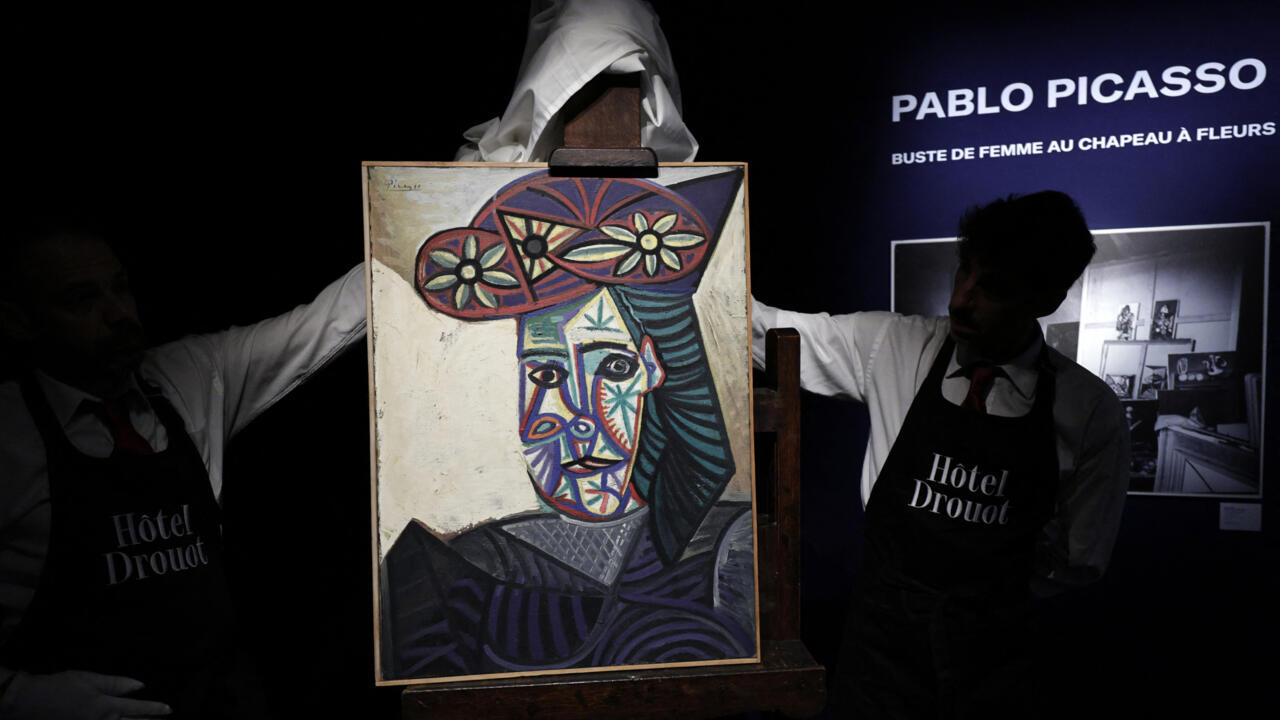
An "exceptional" painting by Pablo Picasso from 1943 depicting his lover Dora Maar and kept by the family of its first owner since 1944 was unveiled Thursday at the Hôtel Drouot auction house in Paris, where it will be sold off to the highest bidder on October 24.


Issued on: 18/09/2025 - 
By: FRANCE 24

Employees unveal a painting by French artist Pablo Picasso at the Hôtel Drouot auction house in Paris on September 18, 2025. © Stéphane de Sakutin, AFP

A previously unknown portrait by Pablo Picasso of one of his lovers was revealed on Thursday after being put up for sale at auction in Paris with a reserve price of €8 million euros ($9.5 million).

Entitled "Bust of a woman with a flowery hat", it depicts Dora Maar, a French photographer, painter and poet who was Picasso's best-known muse.

Painted with oil, the colourful work measuring 80 x 60 centimetres (31 x 24 inches) "is valued at around eight million euros, a reserve price that could soar," according to auctioneer Christophe Lucien at Parisian auction house Drouot.

It was painted by Picasso on July 11, 1943, and acquired in August 1944 by a French collector who is the grandfather of the current owners.


Agnès Sevestre-Barbé, a Picasso specialist present during the unveiling of the work, said it was "unknown to the public and never exhibited, except in the Spanish master's studio in Paris".

She added that it was "quite exceptional and marks a milestone in the history of art and in that of Picasso."

It shows Maar with a melancholy but harmonious face, wearing a colorful flowery hat, at a moment when the macho Spanish painter was abandoning her for a younger artist, Françoise Gilot.

Maar was Picasso's most important model and muse, with some 60 works based around her.

His "The Weeping Woman" portraits depict her and they collaborated on his masterpiece "Guernica", with Maar photographing the black and white anti-war work and Picasso using her images to develop the canvas.

Other famed cubist renderings of her include "Portrait of Dora Maar" and "Bust of a Woman".

Their tumultuous nine-year affair, conducted almost entirely in Spanish, began in 1936 and is credited by some with helping Picasso rekindle his creative spark.

Their messy break up saw Maar plunge into depression.

The sellers are divesting the painting as part of an inheritance settlement, Lucien said.

Pablo Picasso sales are used as a leading indicator for the art market as a whole, which has slumped in recent years.

Sales totaled $223 million in 2024, around a third of the $597 million spent on the Spanish master the previous year, auction data from consultancy Artprice showed in March.

Picasso's "Homme assis", a painting of a seated musketeer from 1969, sold for $15.1 million, at Sotheby's in New York on May 13.

The record sale for one of his works was "The Women of Algiers (Version O)," a 1955 oil painting which sold for $179.4 million at Christie's in New York in 2015.

A major show at the Pompidou Centre and Tate Modern gallery in 2019 sought to spotlight Maar's own creative talent and drag her out from Picasso's considerable shadow.

(FRANCE 24 with AFP)


Australia vows to cut emissions by 62 to 70% by 2035

Sydney (AFP) – Australia pledged Thursday to slash greenhouse gas emissions by 62 to 70 percent from 2005 levels over the next decade, after warnings that homes and livelihoods are under threat.


Issued on: 18/09/2025 - RFI


A national climate risk assessment warned rising oceans and flooding caused by climate change would threaten the homes and livelihoods of more than a million Australians by 2050 © PETER PARKS / AFP/File

Under the Paris accord, each country must provide a headline figure to the United Nations for cutting heat-trapping emissions by 2035, and a detailed blueprint for how to achieve this.

"We listen to the science and we act in Australia's national interest," Prime Minister Anthony Albanese said as he unveiled the goal.

Australia's goals are above those of Canada and neighbouring New Zealand, but below the United Kingdom which is one of the most ambitious in the world.

Global emissions have been rising but need to almost halve by the end of the decade to limit global warming to safer levels agreed under the Paris deal.


Australia's previous 2030 commitment was to cut emissions by 43 percent of 2005 levels.

Countries were meant to submit updated targets earlier this year but only 10 of nearly 200 countries required under the Paris Agreement did so on time, according to a UN database tracking the submissions.

The Climate Change Authority warned the world was on track for 2.9C of warming this century based on previous 2030 commitments.

Australia's pledge follows the release this week of a national climate risk assessment that found rising temperatures will have "cascading, compounding, concurrent" impacts on life in Australia, home to more than 27 million people.

It warned rising oceans and flooding caused by climate change would threaten the homes and livelihoods of more than a million Australians by 2050.

The country has poured billions into solar power, wind turbines and green manufacturing and pledged to make the nation a renewable energy superpower.

But Australia's green ambitions are at odds with its deep entanglement with lucrative fossil fuel industries.

It remains one of the world's biggest coal exporters and continues to heavily subsidise fossil fuel sectors.

The sun-kissed country has attempted to burnish its green credentials by bidding to host next year's UN climate summit alongside Pacific island neighbours threatened by rising seas.

© 2025 AFP
Is the Greece-Cyprus-Israel subsea power cable in jeopardy?

Kaki Bali (in Athens)
DW
18/09/2025 


The Great Sea Interconnector subsea electric cable project seeks to connect Greece, Cyprus and Israel. But will it ever be completed?


A subsea cable being laid 


Is the Great Sea Interconnector (GSI) submarine power cable project dead in the water?

The GSI project, which is worth €2 billion ($2.36 billion), seeks to build a subsea electric cable connecting Greece and Cyprus and later Israel.

The aim is to integrate the Republic of Cyprus into the European electricity transmission system and bolster the energy security of EU member states Greece and Cyprus.

But although the project was launched in October 2022 with the aim of completing it by the end of 2023, it is currently not clear whether it will ever actually come to fruition.
Project faces multiple challenges

There are several reasons for the current uncertainty. Not only is the GSI an expensive project, it is also technically difficult and faces massive geopolitical challenges. What's more, the European Public Prosecutor's Office has launched an investigation into possible criminal offences relating to the project.

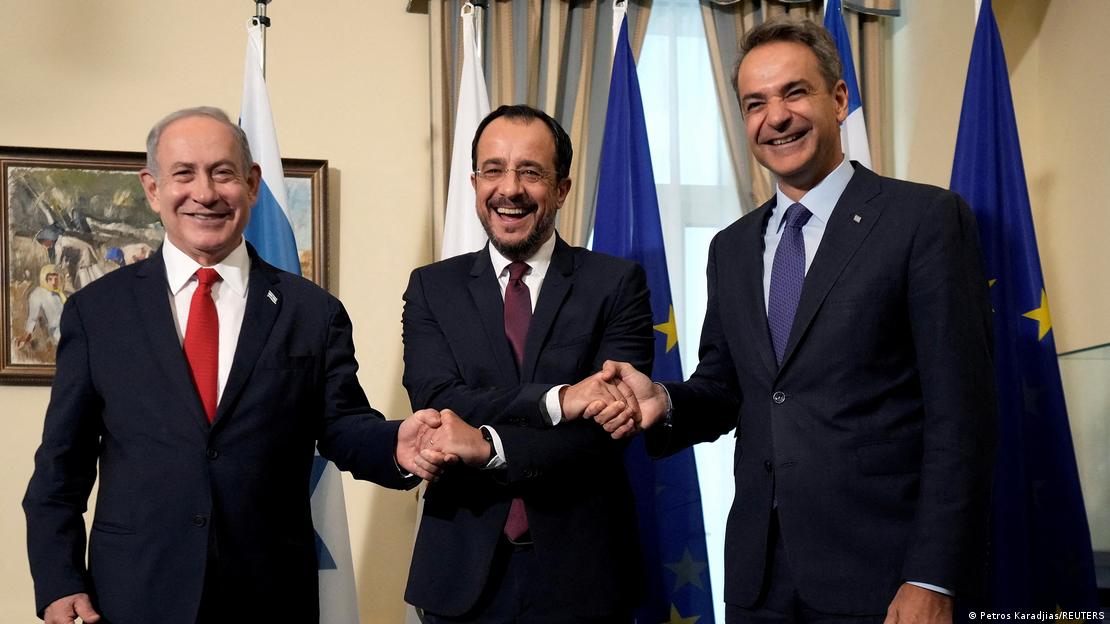
The current situation is in stark contrast to the launch of the project in October 2022 when everything seemed so promising. Back then, representatives of Greece, Cyprus and Israel came together for a ceremony to launch the project to lay a 1,208-kilometer-long (760 miles) power cable across the Mediterranean along the sea bed between the three countries.

From left: Israeli Prime Minister Benjamin Netanyahu, Cypriot President Nikos Christodoulides and Greek Prime Minister Kyriakos Mitsotakis in Nicosia on September 4, 2023
Image: Petros Karadjias/REUTERS

At a depth of over 2 kilometers, it was to be one of the deepest and longest submarine power cables anywhere in the world.

In addition to integrating Cyprus into the European electricity transmission system, the project sought to link energy markets in the EU and Asia.

The EU has pledged to provide some €650 million of the €2 billion required for the project.
Tension between countries in the region

A brief look at the map is enough to understand how difficult it is to navigate the tricky situation in the eastern Mediterranean.

Syria and Libya are both unstable countries. Israel is conducting a prolonged war in the Gaza Strip and separate military operations in both Lebanon and Syria. While Turkey seeks to improve its relations with Egypt, relations between Turkey and Israel are at a low.

There is also considerable tension between Greece and Turkey, both members of NATO. Cyprus is a divided island, with the northern part occupied by Turkey.

All this means that it is very difficult to secure the consensus required to implement major international projects in the eastern Mediterranean.
Unclear maritime borders

Furthermore, the maritime borders in this region are not always clearly defined, nor are countries' exclusive economic zones.

Greece does not have an agreement concerning the delimitation of maritime zones with Turkey and Libya.

Cyprus doesn't have an agreement with Turkey either. Indeed Turkey doesn't even recognize the Republic of Cyprus as a state.

Turkey and Libya signed a treaty in 2019 that ignores the existence of Crete and the Dodecanese islands. This treaty is considered "illegal" by Greece and is not recognized by the EU either.

Egypt has had a partial agreement with Greece since 2020, which overlaps with some of the area covered by the Turkish-Libyan treaty.

Turkey wants a say

All of this has an impact on the bathymetric surveys that have to be carried out before the GSI subsea cable can be laid.

The first stage of the project is to connect Crete and Cyprus. In May, the Greek island of Crete was connected to the Greek mainland grid by a subsea cable. The connection with Israel is due to be added later.

Last summer, Turkey dispatched warships to prevent surveys being carried out in the waters around the Greek island of Kasos. Ankara was of the opinion that it should be consulted on the matter.

Greece rejects this and has said that according to international law, Turkey is not required to give its approval for the power cable project to go ahead, because there are no plans to drill on the seabed, just to lay a cable on it.

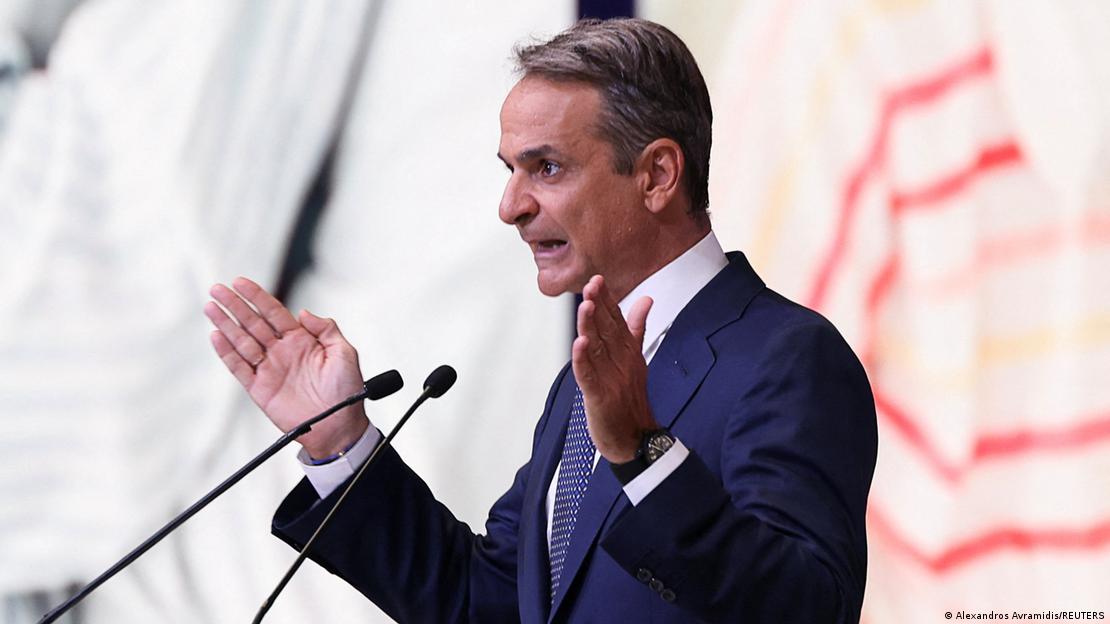
Greek Prime Minister Kyriakos Mitsotakis addressed the issue of the GSI at the Thessaloniki International Fair on September 9
Image: Alexandros Avramidis/REUTERS

But Ankara is insistent that nothing can happen in this area without its consent. So far, this tactic has had the desired effect: There has been no progress on the surveys since the summer of 2024.

Reservations in Cyprus

However, Ankara's objections have not been the only cause of the major delays in the implementation of the GSI project. The government in Nicosia has also unexpectedly voiced reservations.

Cyprus recently said that it considers the project to be too expensive and unprofitable.

Cypriot Finance Minister Makis Keravnos said in an interview with the newspaper Kathimerini Cyprus on September 2 that he has "two studies by independent, reputable organizations that come to the conclusion that this project is not viable under the current circumstances." Keravnos also called into question the Cypriot contribution to the financing of the project.

His comments caught the Greek government in Athens completely off guard.

Greece's Foreign Minister Giorgos Gerapetritis, who has repeatedly emphasized that the "project will be implemented," initially tried to ignore what the press called the Cypriot "bomb."

He then went on the offensive, accusing Nicosia of having certain unspecified "economic interests."

Gerapetritis claimed that the Cypriot government was opposed to the energy link between Cyprus and Greece so as to protect its dominant position on the Cypriot energy market.

Mitsotakis still backs the project

Speaking at his annual press conference at the Thessaloniki International Fair (TIF) recently, Greek Prime Minister Kyriakos Mitsotakis said that a concrete commitment from Cyprus would be needed to take the project forward.

Mitsotakis described the GSI as a very important energy project that will above all benefit Cyprus and would help end the country's energy isolation.

He went on to say that the European Union has recognized the strategic significance of the project and approved generous financial support of over €650 million to ensure that Cyprus is connected to the European electricity system.

No concrete commitment from Nicosia was forthcoming. It was announced that Nikos Christodoulides, the president of Cyprus, was in agreement with Mitsotakis about the necessity of implementing the project, which, he said, is also of European interest.


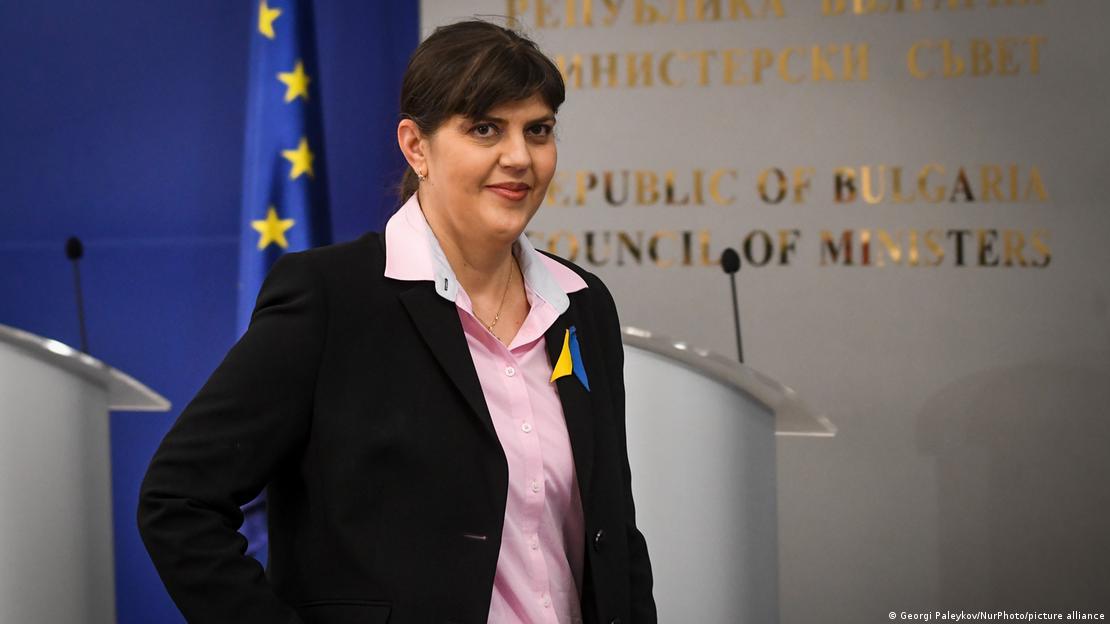
European Chief Prosecutor Laura Codruta Kovesi has launched an investigation into possible criminal offences in relation to the GSI projectImage: Georgi Paleykov/NurPhoto/picture alliance

Nevertheless, the president gave no firm pledge that Cyprus would pay the requisite €25 million a year to ADMIE (or IPTO), the company tasked with delivering the project.
Investigation into possible criminal offences

In short, the future of the project is up in the air, not only because of the threats from Ankara and the objections from Nicosia, but also because of an investigation by the European Public Prosecutor's Office (EPPO).

As President Christodoulides announced on September 3, European Chief Prosecutor Laura Codruta Kovesi has opened an investigation into possible criminal offences in relation to the GSI project.

The EPPO is initially focusing on the period before the project was sold to the Greek power grid operator ADMIE by the Cypriot private company EuroAsia Interconnector.

This company, which launched the project, did not have the necessary expertise but was supported and financed by the Republic of Cyprus and the European Commission.

Just a few months after joining the project, the EU's Directorate-General for Energy pushed for the removal of EuroAsia Interconnector from the project because the company was unable to secure the requisite loans.

It was at this point that Greek operator ADMIE came on board, buying the project from EuroAsia Interconnector in 2023 for about €48 million.

The EU investigators are focusing on at least one high-ranking political figure, members of his or her family, a civil servant at the European Commission and several Cypriot civil servants.

This article was originally published in German.

Kaki Bali DW correspondent in Athens
How Chinese rare-earth mining threatens the Mekong River

David Hutt
DW
18/09/2025 


Rare-earth mining in Myanmar is polluting the Mekong River with toxic metals, threatening ecosystems, food security, and water supplies across mainland Southeast Asia.


China controls about 60% of global rare-earth production and nearly 90% of refining
Image: Supplied by a Global Witness partner

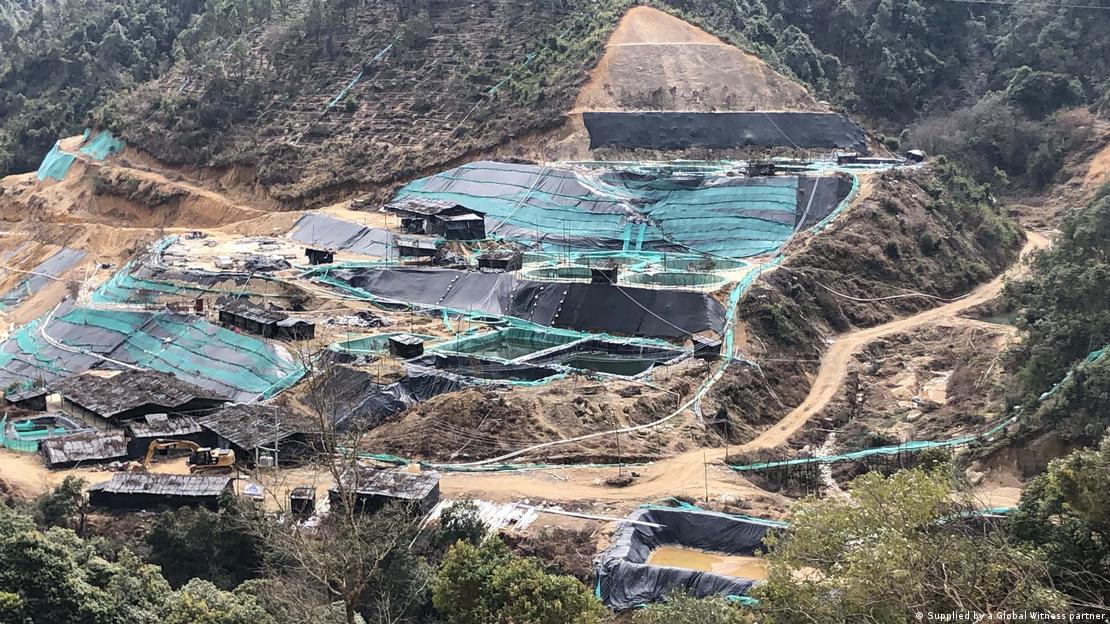
Ecologists are warning that mainland Southeast Asia faces a looming ecological disaster unless urgent steps are taken to address the rare-earth mining boom in war-torn Myanmar.

According to Global Witness, a London-based watchdog, Myanmar has become the world's largest source of heavy rare-earth elements. These minerals are essential for manufacturing high-tech products like wind turbines, electric vehicles and medical devices.

Most of these mines are located in Shan state, where civil war has raged since the 2021 military coup.

Earlier this year, Thailand's Department of Pollution Control found arsenic levels nearly four times higher than World Health Organization (WHO) limits in parts of the Kok River, a Mekong tributary flowing into Thailand from Myanmar. Other toxic metals were also detected at dangerous levels.

Rare-earth mining has exploded in Myanmar's Kachin region, making it the world's largest source of supplyImage: Supplied by a Global Witness partner

The Kok runs through northern Thailand's Chiang Rai province before merging with the Mekong, where arsenic concentrations have also reportedly been detected.

The Mekong is Southeast Asia's longest river, which provides a lifeline for millions. Experts fear the contamination could seep into irrigation systems that feed vast stretches of the region's farmland and drinking water supplies. The WHO has reportedthat prolonged exposure to arsenic and other metals can cause cancer, neurological disorders and organ failure.

"What we see now is just the beginning," Pianporn Deetes, campaigns director at International Rivers, a conservation NGO, told DW.

"If left unchecked, the situation could deteriorate rapidly — potentially hundreds of unregulated mines upstream, heavy contamination spreading through the Mekong and its tributaries, and ultimately acidification of waters reaching as far as the seas," she said.

Limited options


After petitions from local communities in June, Thai authorities proposed building underwater sediment barriers or mini-dams on the Kok to trap toxic deposits before they reach villages.

Environmental groups say such infrastructure will take years to complete, while the crisis is already unfolding.

Bangkok has few options. The problem lies largely within Myanmar's borders, particularly in Shan state, where new mines are located in territory controlled by the United Wa State Army (UWSA), a powerful China-backed militia that oversees two semi-autonomous enclaves.

Reuters has reported that the UWSA provides armed protection for Chinese-run mining operations there. Neither Myanmar's military rulers nor international organizations exert meaningful control over the region.

Currently, it is unknown whether the pollution has remained concentrated in northern Thailand or whether it has already leached into the Mekong, potentially affecting downstream nations.


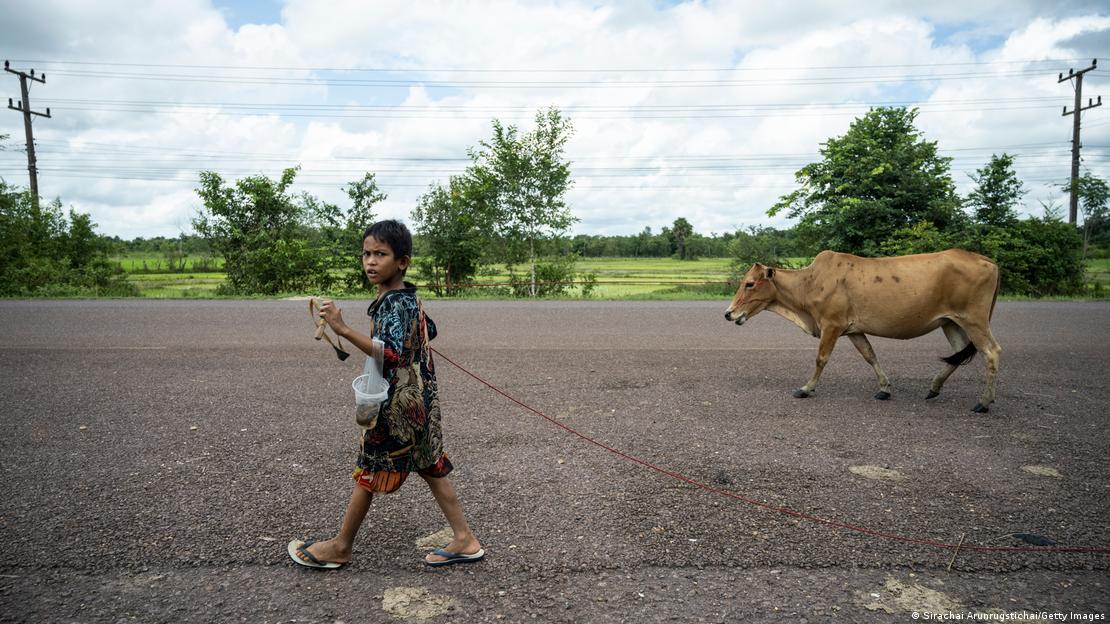
The Mekong river sustains agriculture, fishing, transport and commerce — and supports life in small villages and towns along its banks
Image: Sirachai Arunrugstichai/Getty Images

It is "extremely likely" that toxic metals and chemicals are already detectable in Cambodia, where 60% of the country's protein intake comes from wild-caught fish from the Mekong River, Brian Eyler, director of the Stimson Center's Southeast Asia Program, told DW.

In recent weeks, civil society groups have called for stronger action from the Mekong River Commission (MRC), an intergovernmental body set up by Cambodia, Laos, Thailand and Vietnam in the 1990s to manage the shared waterway.

"The MRC should urgently establish monitoring stations for heavy metals and ensure that communities across the basin have timely access to accurate and transparent information," Pianporn urged.

But the MRC has so far downplayed the threat. In July, it reported arsenic levels above safety limits at four of five sampling sites in Thailand and Laos, yet described the situation only as a "moderately serious transboundary environmental issue."

Many analysts agree that ultimate responsibility lies with Beijing, which controls about 60% of global rare-earth production and nearly 90% of refining.

China, the world's largest user of rare-earth minerals, outlawed many forms of rare-earth mining at home in the 2010s because of concerns about the environmental damage it brings.

However, these environmental safeguards triggered many Chinese companies to move south and set up their operations across the border in Myanmar's Kachin and Shan states.


In 2018, Myanmar's civilian-led government had banned exports and ordered Chinese miners to wind down operations, but since 2021, extraction has continued amid a widening civil conflict.

Beijing has "effectively exported demand for rare-earth mineral extraction to other countries. And now the practice has proliferated in Myanmar's ethnic autonomous regions next door, where it is booming in an unregulated fashion," said Eyler.


Could the situation worsen?

Beijing should guarantee that all rare-earth imports come only from mines that comply with its laws and environmental standards, Pianporn told DW.

"If China is serious about leading on 'ecological civilization,' it must act in an accountable and transparent way," she added.

However, a tougher response from Beijing would work against China's own self-interest, as the global race for rare earths is intensifying geopolitical struggle for control of these critical materials.

It would also go against the way China typically conducts foreign policy in regions like Southeast Asia, noted Assistant Professor Dulyapak Preecharatch, lecturer in Southeast Asian Studies at Thammasat University.

In bilateral dealings, China always emphasizes the principle of state sovereignty, in which Beijing stresses that it does not interfere in the affairs of another country, including its environmental legislation.

As such, Beijing can say that it has no influence over rare-earth mining in Myanmar because oversight of environmental damage falls within Myanmar's sovereignty, nor is there a need for China "to consider problems for other downstream states," Preecharatch told DW.


The rare-earth rush is not limited to Myanmar. At least 15 mines have been identified along tributaries of the Mekong in Laos. Cambodia currently lacks active large-scale rare-earth mines, but exploration is ongoing.

Environmentalists fear a regional chain reaction of pollution on the Mekong.

"This situation is likely going to get much worse before it gets any better," Eyler of the Stimson Center told DW.

"It's possible that the entire river's fish population becomes contaminated, and the floodplains, which are an agricultural production zone for the world, are unusable for a long period of time," he added.

For now, the Mekong is still seen as one of the world's great clean rivers. But experts fear that reputation may soon be lost.

Edited by: Keith Walker

David Hutt Journalist covering Europe-Southeast Asia relations
Microsoft seizes websites linked to Nigeria-based phishing

UPDATED NIGERIAN PRINCE EMAIL SCAM

DW with Reuters
18/09/2025 


More than 330 websites have been linked to a phishing operation that stole over 5,000 Microsoft user credentials.

Microsoft said on Tuesday that it seized 338 websites linked to a Nigerian-based service that allowed users to carry out phishing campaigns

The service, called "Raccoon0365," allowed users to engage in phishing campaigns that involved thousands of emails at a time, according to Steven Masada, assistant general counsel for Microsoft's Digital Crimes Unit.

The phishing operation ended up stealing at least 5,000 Microsoft user credentials.

Phishing is a cybercrime in which criminals impersonate trustworthy domains to deceive users into revealing sensitive information like passwords or banking details.
How did the phishing scheme work?

Raccoon0365 operates through a private Telegram channel with over 850 subscribers.

The service enables users to impersonate trusted brand names and get targets to enter Microsoft login details on fake Microsoft platforms. According to Microsoft's Masada, the service has generated at least $100,000 (€84,425) in cryptocurrency payments for its operators since launching in July 2024.


Raccoon0365 users targeted a wide range of industries, a significant number of which are organizations based in New York City, Masada said.
How did Microsoft seize Raccoon0365?

According to Masada, Microsoft identified what it said was a Raccoon0365-related effort using tax-themed phishing emails to target more than 2,300 organizations, mostly in the US, in February this year, according to a company blog posted in April.

Earlier this month, Microsoft obtained an order from the US District Court in Manhattan to seize domains associated with Raccoon0365. The seizure of the websites occurred over a period of days earlier this month.

"Cybercriminals don't need to be sophisticated to cause widespread harm," Masada said. "Simple tools like Raccoon0365 make cybercrime accessible to virtually anyone, putting millions of users at risk," he added.

Raccoon0365 operators used Cloudflare services to help conceal the service's backend infrastructure. Cloudflare worked with Microsoft and the US Secret Service to take down Raccoon0365 operations and prevent the operators from establishing new accounts.

Blake Darche, the head of threat intelligence at Cloudflare, said that while Raccoon0365 operators made some operational security mistakes, they were highly effective.

"They're in people's accounts, they compromise lots of people, and it needs to obviously be stopped," he said.


Hauwau Samaila Mohammed Nigerian writer and journalist

LGBTQ RIGHTS ARE HUMAN RIGHTS

'Raped, jailed, tortured, left to die': the hell of being gay in Turkmenistan


Warsaw (AFP) – Two men who escaped one of the world's most secretive and repressive states have told AFP how they were tortured, beaten and raped in Turkmenistan for the "crime" of being gay.


Issued on: 18/09/2025 - RFI

LGBTQ people live in constant fear of arrest in Turkmenistan, with regular crackdowns in the capital Ashgabat © Natalia KOLESNIKOVA / AFP/File

When the oil- and gas-rich Central Asian republic makes the headlines, it is usually for the eccentricities of its "National Leader" and "Hero Protector" Gurbanguly Berdymukhamedov.

The dentist-turned-autocrat who writes poems about his horse -- and whose football team has never lost a game in the local league -- is a health freak. So much so that his son Serdar, the president, plans to "eradicate smoking" there by the end of the year.

But behind the monumental statues and the marble city of Arkadag built in Berdymukhamedov's honour, opponents and minorities are mercilessly persecuted, say Amnesty and Human Rights Watch, none more so than LGBTQ people, who are often jailed or sent to psychiatric hospitals.

Arslan, who is now in hiding abroad, told AFP how he was raped five times in jail -- where HIV-positive prisoners are condemned to a slow death from lack of treatment -- while David was beaten and raped by his torturers, who wore gloves "to avoid touching my blood".

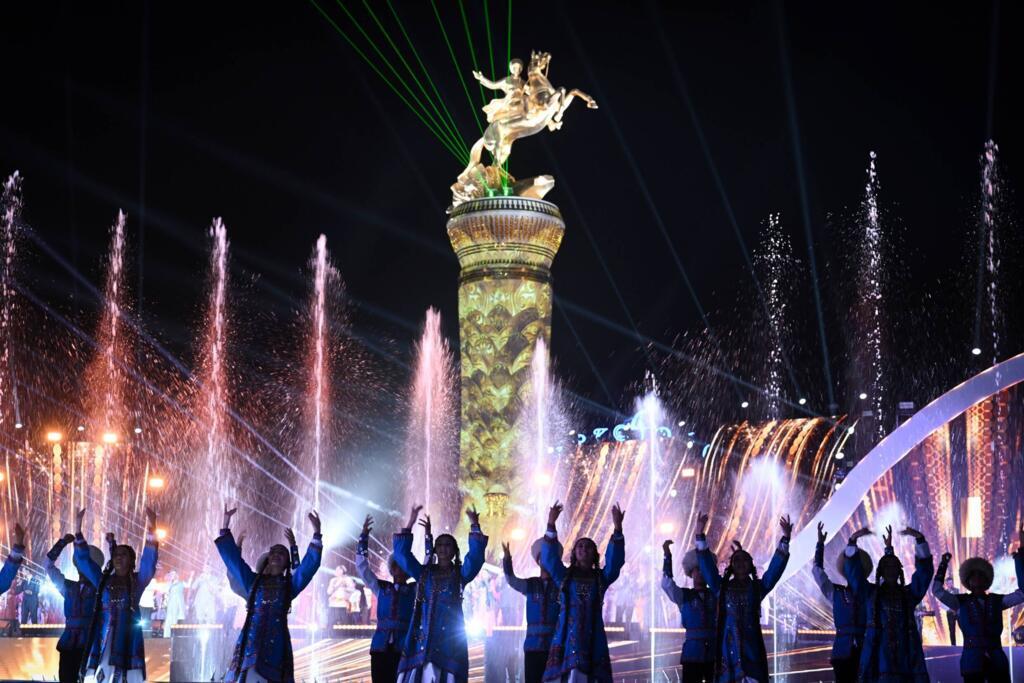
A giant golden equestrian statue of Turkmenistan's 'Hero Protector' Gurbanguly Berdymukhamedov in Arkadag, the new city named in his honour © Natalia KOLESNIKOVA / AFP


Their rare testimonies, supported by official documents and confirmed by NGOs, reveal a hidden side of the reclusive regime, which tolerates no independent media or rights groups.

The authorities refuse to comment on all such allegations. But last year at the UN they insisted that "all discrimination" was illegal in Turkmenistan.

Homosexual relations are a crime, they said, because they run counter to the "traditional values" of the Turkmen people.

- Arslan's story -


Arslan -- whose name AFP has been changed to protect him -- grew up in poverty in the second largest city of Turkmenabat, near the Uzbek border. "We had neither bread nor basic clothes," said the 29-year-old, who comes from the Uzbek minority.

When he moved to the capital Ashgabat at 18, he was taken aback by the pomp of the white marble edifices built by the country's first post-Soviet president Saparmurat Niyazov and Berdymukhamedov, who took power in 2006.

He also discovered a small gay community and formed a secret relationship with a man. But three years later he was arrested with about 10 other "suspected homosexuals".

He believes his boyfriend was forced to denounce him.

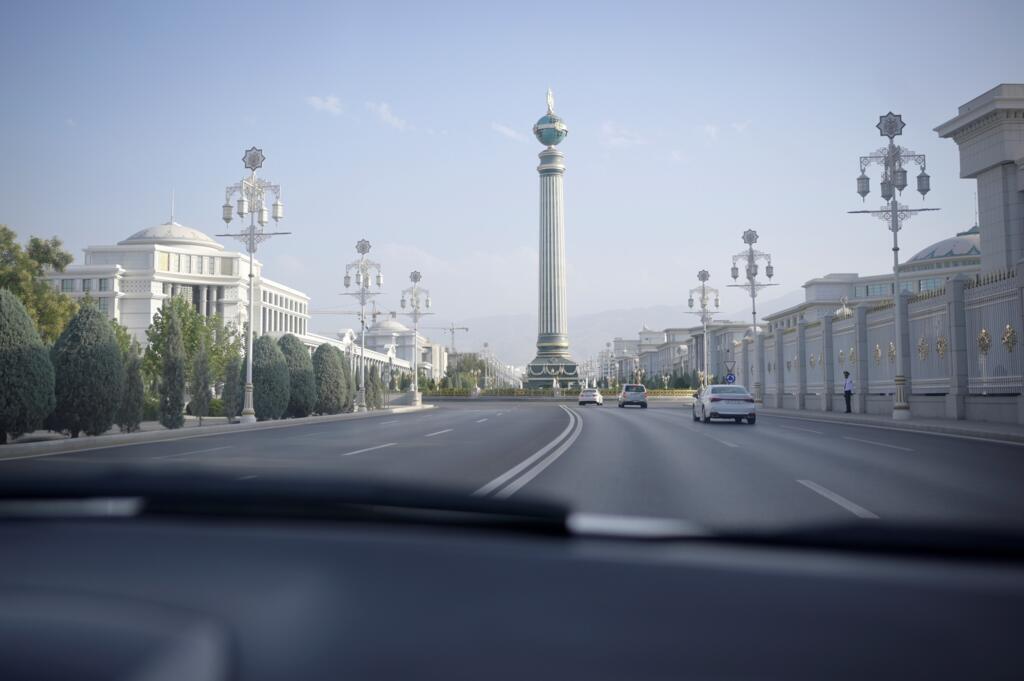
An avenue in the tightly-controlled capital Ashgabat © Natalia KOLESNIKOVA / AFP/File

Arslan was beaten by the police and jailed for two years for sodomy at a closed-door hearing in January 2018. He spent nine months in a penal colony before being pardoned.

Of the 72 men in his barracks, around 40 were there for their sexual orientation. One day, the leader of the barracks, a murderer -- "who was sleeping with lots of the prisoners" -- turned his attention to him, raping him repeatedly after plying him with sedatives.

"It was abominable," said Arslan, who tried to kill himself by taking "a bunch of pills". When he told the prison director about the rapes from hospital, "he laughed, saying I was there for that".

After his release, Arslan got work and tried to rebuild his life, but the stigma was overwhelming. People recognised him and threatened him, "yelling at me in the street".

He was twice sent to a psychiatric unit after being arrested again in 2021 and 2022. "They wanted to cure me because to them I have a disease."

He decided to leave the country, but with authorities trying to curb a mass exodus of Turkmens fleeing hardship and repression, he was refused a passport.

Eventually after circumventing tight internet controls, he got help from the NGO EQUAL PostOst, which assists LGBTQ people in the former communist bloc, and was able to buy a passport.

"Everything is settled through corruption" in Turkmenistan, he said. Transparency International has declared the country one of the 15 most corrupt on the planet.

Finally he was finally able to flee to one of the few countries that allow Turkmens to enter without a visa.

- Screams go unheard -


David Omarov, 29, has been HIV-positive since he was a teenager, with education about the virus and preventive measures almost nonexistent in Turkmenistan.

'No one hears your screams': Turkmen activist David Omarov, who says he was arrested and tortured for being gay © Wojtek RADWANSKI / AFP

From a middle-class background in the capital, his life was turned upside down in 2019 when he was summoned by the security services during one of the frequent crackdowns on LGBTQ people. He was held for several days and tortured to give the names of other men.

"They knew I was HIV-positive," he told AFP.

"So they hit me with gloves and kicked me to avoid touching my blood. But I started bleeding profusely. Maybe that saved me.

"The worst is that no one hears your screams," he said, adding that he was raped by his torturers but cannot yet bear to tell what they did to him. "Those are wounds that haven't healed," he said.

Omarov said Turkmenistan justifies the persecution as a defence of its "traditional values".

"They're folk fascists," he said.

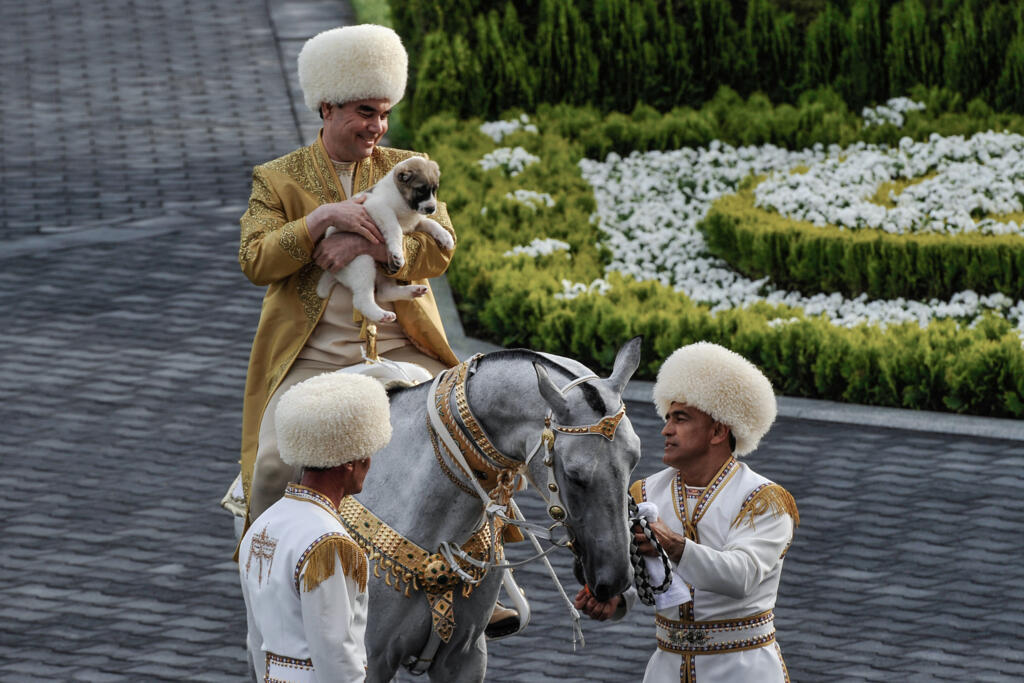
Turkmenistan's 'Hero Protector' Gurbanguly Berdymukhamedov holds an Alabai puppy as he rides one of his Turkmen Akhal-Teke horses © Igor SASIN / AFP

While Turkmenistan is predominantly Muslim, the government is secular, with huge emphasis on the veneration of Turkic folklore and traditions.

Gurbanguly Berdymukhamedov, 68, and his son, Serdar, 43, are portrayed as guardians of this steppe culture with personality cults akin to those of Stalin or the Kims in North Korea.

They have also put the Turkmen Akhal-Teke horse and the Alabai dog on a pedestal as national symbols, dotting the country with statues of the animals.

- Father disappeared -


The sheer "cruelty" of the Turkmen regime marks it out from other authoritarian Central Asian states, argues Omarov, who has been granted asylum in Poland.

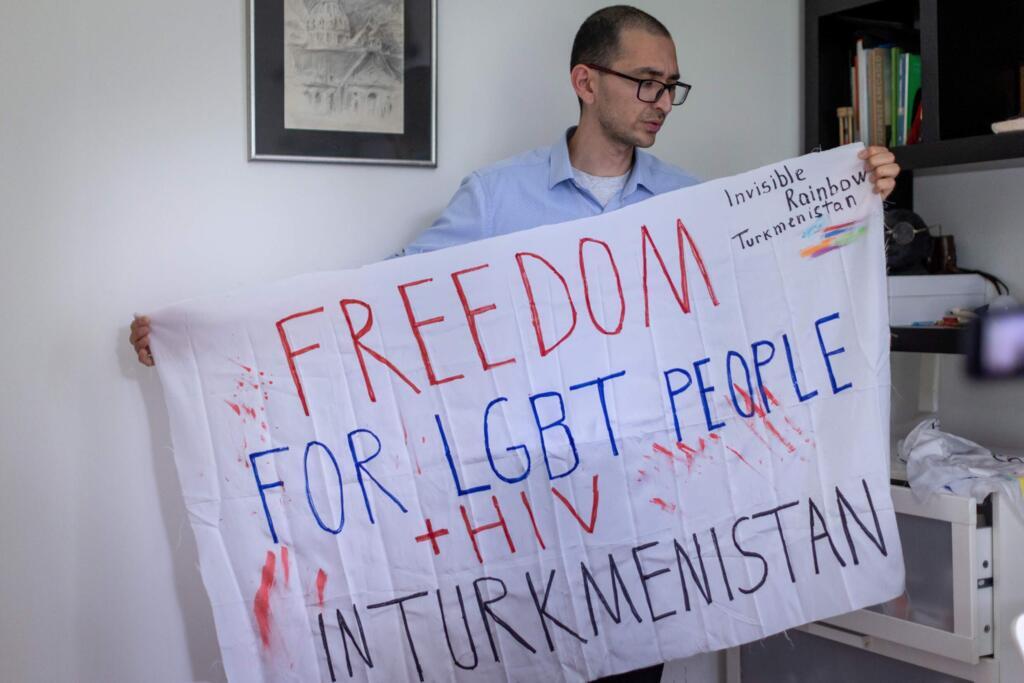
Omarov holds a flag with the name of his support group, Invisible Rainbow Turkmenistan
 © Wojtek RADWANSKI / AFP

The only Turkmen LGBTQ activist to speak openly, Omarov has received death threats online.

Back home he said his family are being punished in his stead, with his father disappeared and his brother stabbed.

The persecution has been such that he avoids contacting them for fear of further reprisals.

Having secretly set up the support group The Invisible Rainbow of Turkmenistan while still in the country, he continues the struggle in exile on a shoestring, funding his activism by working in a Polish supermarket.

"You are not the shame of a nation," he tries to tell LGBTQ people back home. "You deserve to be loved and you are not a mistake."

ONE OF THE STANS


- The trap -

Emir first fell for another boy when he was about 12. He thought he was the "only one like that" until he later learnt of the existence of gay people from watching Russian television before satellite dishes were banned in Turkmenistan.

Growing up in a poor family in Turkmenabat, he liked wearing pink clothes and he soon became the target of homophobic slurs.

His fear and paranoia grew. "I thought the police could read my thoughts," he said. But in 2018 he left after getting a study visa for Russia.

Despite hostile laws, Russia was a first point of refuge for LGBTQ people escaping former Soviet republics for a long time -- until the full invasion of Ukraine in 2022.

In 2019 Emir moved to a small disputed territory in Europe that AFP cannot disclose for his safety.

But he discovered he was HIV-positive in April last year and his new life collapsed. He lost his job and was threatened with deportation back to Turkmenistan, where he is certain "they will abuse me and let me die because of my illness".

To escape that fate, he needs to renew his old passport but that would mean returning to Turkmenistan and risking being locked up.

- Jailed for being HIV-positive -


The law allows Turkmen authorities to imprison anyone who is HIV-positive for "sodomy" or for "exposing others" to the virus.

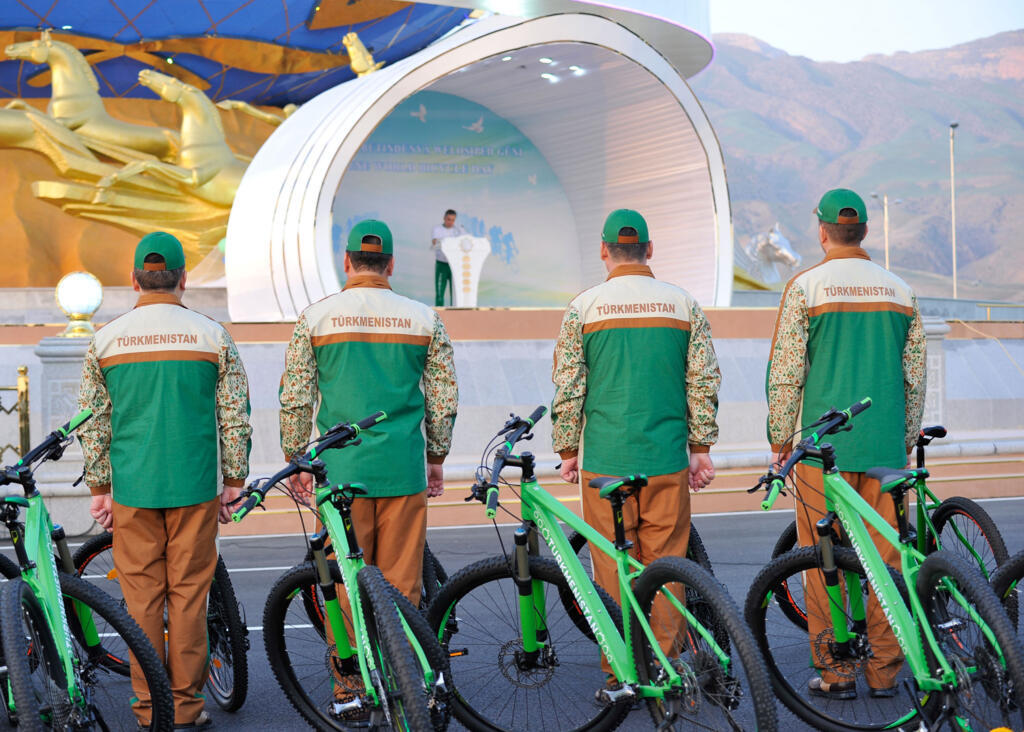
Turkmenistan's fitness fanatic former president Gurbanguly Berdymukhamedov leads a World Bicycle Day event in Ashgabat © Igor SASIN / AFP

"When gay men seek treatment for HIV, they risk being turned into the police," said Anne Sunder-Plassmann of the International Partnership for Human Rights.

While the government relentlessly promotes a healthy lifestyle, it does not provide statistics on HIV infections and "refuses to acknowledge a crisis, with doctors often concealing infections", said Sunder-Plassmann.

Emir has only had intermittent access to antiviral treatment and worries he will end up with AIDS. Like Arslan, he lives in constant terror of being recaptured by Turkmen authorities.

His fears are not unfounded. Turkmen dissidents Alisher Sakhatov and Abdulla Orusov disappeared from a Turkish deportation centre in July despite a court order for their release, with rights groups fearing they were taken to Turkmenistan.

© 2025 AFP


NGOs sue France for failing to recall millions of rigged diesel cars

Three NGOs are taking the French state to court over its failure to remove millions of diesel cars fitted with cheating software from the roads, nearly a decade after the so-called “dieselgate” scandal first broke.


Issued on: 17/09/2025 - RFI

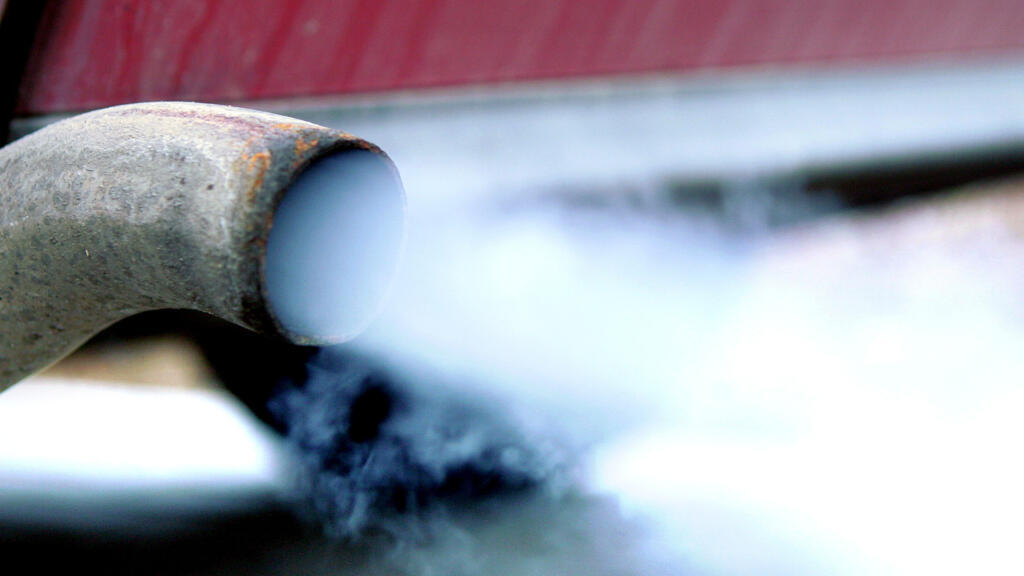
Millions of diesel cars fitted with cheating software are still on French roads, emitting toxic gases far above legal limits. ASSOCIATED PRESS - Michael Probst

France Nature Environnement (FNE), the consumer group CLCV (Consumer Affairs, Housing and Living Environment) and international environmental law group ClientEarth on Wednesday filed a case before the Paris administrative court.

The action, revealed by Radio France and the centrist daily Le Monde, accuses the government of “serious failings” for not recalling cars with fraudulent devices, despite a constitutional duty to guarantee citizens the right to a healthy environment.

The software was designed to detect official emissions tests and switch on pollution controls only during those checks. On the road, cars emitted nitrogen oxides far above legal limits – sometimes between two and 10 times more than allowed.

These gases are linked to thousands of premature deaths.

The three NGOs want the court to recognise the state’s failure and order it to act, with a financial penalty of €50 million every six months if it does not.


Millions of cars still on roads

The lawsuit follows a formal warning sent in July to then-transport minister Philippe Tabarot and Ecological Transition Minister Agnès Pannier-Runacher.

In the letter, seen by Radio France, FNE, CLCV and ClientEarth wrote: “Everything suggests that the French car fleet still contains a large number of vehicles fitted with illegal devices and continues to produce dangerous levels of pollution.”

In 2023, the International Council on Clean Transportation estimated that more than 3.2 million of these vehicles were still in use in France. By this year, that figure had fallen to 2.7 million, covering more than 200 different models sold between 2009 and 2019.

Volkswagen was the first carmaker exposed when the scandal broke in 2015, but inquiries later showed most major manufacturers – including Renault, PSA, Fiat Chrysler and Opel – had sold models with cheating devices.

Deadly consequences

A study published in May by the Centre for Research on Energy and Clean Air linked excess diesel emissions in France to 16,000 premature deaths since 2009.

The group warned that without corrective measures, a further 8,000 deaths and thousands of new childhood asthma cases could occur by 2040. The economic cost is estimated at €45 billion.

“These vehicles can emit between two and 10 times more nitrogen oxides than they are supposed to,” Anne Lassman-Trappier, air quality spokesperson at FNE, said.

“We have been formally urging the French authorities to act since 2023, and now we have no option left but to go to court. It is staggering that the state is prioritising the economic interests of carmakers over the health of the French people.”


Limited recalls

Since 2018, European Union rules have required countries to create a body to check suspect vehicles and enforce recalls. France set up the Vehicle and Engine Market Surveillance Service (SSMVM) in 2020.

But Radio France found that the authority completed only 16 tests for cheating software in 2023 and 20 in 2024. Just four car models were subject to corrective decisions, and only two recalls were actually carried out – covering a total of 16,459 vehicles.

One recall – for 12,800 Peugeot 308 cars – was announced in September, after tests showed the exhaust system allowed excess emissions over time.

“We ask owners to contact their approved dealer so our services can recalibrate the software concerned,” Peugeot said.

Other cases demonstrate how slowly action has been taken. The recall of the Opel Meriva, covering 3,659 vehicles, was not published until a year after excess emissions were detected.

In another case involving the Volvo V40, authorities decided not to extend corrective measures to other models despite identifying high nitrogen oxide levels.

These two cases were among the four models that the SSMVM says have triggered corrective decisions.

Criminal investigations

In the United States, Volkswagen was forced to buy back affected cars and pay billions in compensation soon after the scandal emerged.

In France, several criminal investigations are still underway, with prosecutors seeking fraud charges against Volkswagen, Peugeot-Citroën, Renault and Fiat Chrysler, but no trials have yet begun. All the manufacturers contest the charges.

“We cannot just wait for the courts to act,” said Lassman-Trappier. “The state must remove these vehicles from the market and make the carmakers fix them at their own expense. France has a legal duty. But by protecting the car industry, it is putting lives at risk.”

(with newswires)