It’s possible that I shall make an ass of myself. But in that case one can always get out of it with a little dialectic. I have, of course, so worded my proposition as to be right either way (K.Marx, Letter to F.Engels on the Indian Mutiny)
Monday, October 06, 2025
Scientists blaze new path to fighting viral diseases
Mapping vulnerabilities in the SARS-CoV-2 genome, made of RNA, reveals a path to fighting more than COVID-19
Chemist Matthew Disney, Ph.D., reviews disease-causing RNA structures and possible binding pockets with his lab members at The Wertheim UF Scripps Institute in Jupiter, Florida.
JUPITER, Fla. — In a quest to develop new antiviral drugs for COVID-19 and other diseases, a collaboration led by scientists at The Wertheim UF Scripps Institute has identified a potential new drug against the virus that causes COVID-19.
In the process, the team devised a powerful new platform for finding medicines to fight many types of infectious diseases.
Writing in the Journal of the American Chemical Society, in an online article posted on Monday, Oct. 6, 2025, the scientists said they began by seeking “druggable pockets” in the stable structures of viral genetic material. Like keyholes, these pockets offer promising spaces to intervene with a precise medication. The team then used systematic chemistry, computational, and robotic drug discovery methods to find and perfect compounds able to function like the keys.
Their refined and optimized compound, dubbed Compound 6, led SARS-CoV-2 viral proteins to misfold, malfunction, and ultimately, be destroyed and removed by cells, in lab tests. Notably, their work could benefit other viral diseases, too, said Matthew D. Disney, Ph.D., Institute Professor and Chair of the chemistry department at The Herbert Wertheim UF Scripps Institute for Biomedical Innovation & Technology.
“The method we have developed can be applied to any number of RNA-based viruses that burden society and have limited treatment options, including influenza, norovirus, MERS, Marburg, Ebola, Zika and more,” Disney said. “We have already started work on several of these.”
Disney’s collaborators included Arnab Chatterjee, Ph.D., senior vice president of medicinal chemistry at the Skaggs-Calibr Institute for Innovative Medicines, in LaJolla, Calif., and Sumit Chanda, Ph.D., who headed the Center for Antiviral Medicines & Pandemic Preparedness at Scripps Research, part of the National Institutes of Health’s initiative to rebuild the nation’s antiviral medicine cabinet.
“This platform represents a transformative way of thinking about drug discovery,” Chatterjee said. “It has given us a roadmap not only to design antivirals for coronaviruses, but to rapidly extend this strategy to other high-priority RNA targets across infectious disease and beyond.”
The co-first authors were Sandra Kovachka, Ph.D., and Amirhossein Taghavi, Ph.D., of The Wertheim UF Scripps Institute, and Jielei Wang, a graduate student in Disney’s lab.
The SARS-CoV-2 virus is so tiny it would take 1,000 of them lined end-to-end to equal the width of a typical human hair. Still, its string-like genome packs instructions that trick infected cells into making 27 proteins.
One of them, a mechanism called a frameshift element, enables efficient use of the tight viral real estate. The frameshifter looks like a lever and functions much like an engine’s clutch or a 10-speed bike’s derailer. It causes the cell’s protein-building machines to pause while reading the virus’s genome. It then forces the machines to shift their protein-construction starting point, thus directing the cell to assemble a brand new protein for viral replication.
Disney reasoned that this frameshift element, conserved across the many variants of SARS-CoV-2, would serve as an ideal target for an RNA-focused drug.
Until recently, RNA structures have been viewed by scientists as especially challenging drug targets. Disney’s group has long focused on finding RNA structures that are readily druggable, as well as technologies and compound libraries to accomplish that goal, enabling them to make rapid progress.
In the new paper, Disney’s team used both computational and experimental approaches to find the right chemical probes that would allow the team to map the frameshift element’s binding pockets and mutations. Those methods included one Disney invented called Chem-CLIP, or Chemical Cross-Linking and Isolation by Pull-down, helpful for mapping drug-binding pockets.
Further analysis and experimentation revealed that a known compound, mirafloxacin, interfered with assembly of the frameshift element, though not optimally. Robotic high-throughput compound discovery revealed eight related chemical scaffolds that could bind to the mapped structures in a similar fashion. Their antiviral activity was confirmed through experiments on live cells infected with SARS-CoV-2. They found Compound 6 had the optimal impact. Ahead, the team is developing strategies to boost the potency and effectiveness of Compound 6.
Most gratifying about this collaboration, Disney said, is that the team showed how blending expertise and technologies systematically produced a powerful new way to attack viral diseases that have RNA as their genetic basis.
“This strategy offers a directed and unbiased way to rationally design RNA-targeting antiviral small-molecule medications,” said Disney, who directs the institute’s center of excellence, RNA: From Biology to Drug Discovery. “By linking deep structural biology expertise with drug discovery capabilities, we are accelerating the path from basic RNA biology to potential medicines.”
Chanda, whose team conducted the cell-based tests, said this project also demonstrated the rapid, high-impact work accomplished in just the first three years of the NIH’s Antiviral Drug Discovery Centers for Pathogens of Pandemic Concern program, or AViDD for short.
“This work illustrates exactly what AViDD was designed to do — push forward innovative strategies that expand the antiviral arsenal,” Chanda said. “By showing that RNA can be systematically targeted with drug-like molecules, the team has opened doors for medicines against many viruses, not just SARS-CoV-2.”
HeatiodA team of scientists led by Matthew Disney, Ph.D., of The Wertheim UF Scripps Institute (center), mapped the druggable pockets (violet, green, red, orange, yellow)of a key RNA from the SARS-CoV-2 virus, its frameshift element, and then designed a potential medicine able to prevent viral replication. Collaborators included Arnab Chatterjee of the Skaggs-Calibr Institute for Innovative Medicines (left) and Sumit Chanda, Ph.D., of Scripps Research (right).
Credit
Illustration by Stacey DeLoye, Cryo-EM model of frameshift RNA by Sandra Kovachka, Ph.D.
Sandra Kovachka, Ph.D., works on isolating RNA in the lab of Matthew Disney, Ph.D.
Credit
Nathaniel Guidry, UF Health
HeadAmirhossein Taghavi, Ph.D., goes over computer simulations with Matthew Disney, Ph.D., at The Wertheim UF Scripps Institute in Jupiter, Florida.
Governments and investors are revisiting nuclear power as a clean energy solution, but high upfront costs and project delays remain major challenges.
Tech companies are striking deals with nuclear providers to secure clean electricity for AI and data centers, adding urgency to nuclear development.
The IEA projects nuclear investment must double by 2030, with small modular reactors offering a potential pathway to cheaper and faster deployment.
As several governments aim to battle climate change by shifting away from fossil fuels and pursuing a green transition, many are revisiting a long-overlooked energy source – nuclear power. Nuclear power was at the top of many countries’ energy agenda for several decades before a few notable nuclear disasters shifted the public perception of the clean energy source, and several governments halted development for years. Now, as studies show that nuclear power is one of the safest forms of energy, so long as strict oversight mechanisms are in place, we are seeing a revival in the clean energy source. However, one of the major constraints to development is the high cost of project development.
Nuclear power plants are relatively cheap to run, but the cost of developing a new plant and reactor is extremely high, costing several billion dollars to set up. Many governments are funding the development of nuclear energy facilities through public-private partnerships to alleviate the financial burden on the state. In addition, private investors are often more willing to fund nuclear projects that have the political and financial backing of the government as a reassurance.
Over the last year, several tech companies have signed agreements with nuclear companies to gain access to a vast amount of nuclear power once projects come online, as they aim to find a cleaner way to power advanced technologies, such as data centres and artificial intelligence (AI). The widescale deployment of these technologies is expected to drive up the world’s energy demand significantly over the coming decades, and governments are increasingly shifting the burden to tech companies to find clean energy sources to power their operations instead of relying on the existing grid.
In September, representatives from some of the world’s biggest uranium and nuclear energy firms, as well as nuclear experts and investors, met for the annual World Nuclear Association (WNA) symposium to discuss the potential for nuclear investments, with investments in the nuclear value chain expected to increase to $2.2 trillion by 2050 from $1.5 trillion in 2024, according to Morgan Stanley.
Many investors are hesitant to invest in nuclear power due to the uncertainties involved in project development. The construction of new nuclear plants and reactors is extremely complex, and projects can often run over budget and take years longer than anticipated to develop, as seen with EDF’s Sizewell C nuclear power plant in the U.K. The cost of developing Sizewell C has almost doubled to $51.9 billion since it was first proposed, which will result in higher bills for consumers. This is largely due to the lack of nuclear power construction in recent decades, which has driven up the costs of new project development, compared to countries such as China, where projects are generally delivered on time and within budget.
One investor, Arfa Karani, emphasised the change in the nuclear power investment environment in recent years. She explained how the U.K. government has adopted a more hands-on approach to supporting nuclear power and related tech startups in securing investors. “The regulation has to figure itself out. It’s no longer a question of where do we get the capital from? ...because now suddenly it’s become a matter of national security and global power and global dominance,” Karani said. “All the insolvable problems suddenly become solvable, which is very exciting for nuclear,” she added.
The International Energy Agency’s (IEA) 2025 publication “The Path to a New Era for Nuclear Energy” explores the new policies, projects, investments, and technological advances driving the development of new nuclear power. The report shows that, in a rapid growth scenario, annual investment would need to double to $120 billion by 2030. This means that the rollout of new nuclear projects cannot rely exclusively on public finances. The IEA highlights the importance of bringing down financing costs and attracting private capital to the nuclear power sector. Related: Russia to Import Gasoline from Asia as Drone Hits Cripple Refineries
The IEA’s Executive Director Fatih Birol stressed that “governments and industry must still overcome some significant hurdles on the path to a new era for nuclear energy, starting with delivering new projects on time and on budget – but also in terms of financing and supply chains.”
The IEA also suggests that the introduction of small modular reactors (SMRs) could help reduce costs and that with the right support, SMR installations could reach 80 GW by 2040, accounting for 10 percent of overall nuclear capacity globally. However, the report states that the success of the technology and speed of adoption will hinge on the industry’s ability to bring down costs by 2040 to a similar level to those of large-scale hydropower and offshore wind projects.
With support from several state governments, we can expect to see a wide-scale rollout of nuclear power capacity in the coming decades. However, the extent of the capacity growth will depend largely on how much private funding governments can attract to the nuclear power market through the introduction of favourable policies and regulations, as well as public funding into new projects.
By Felicity Bradstock for Oilprice.com
Italian government introduces draft bill on nuclear energy
Italy's Council of Ministers, at a meeting chaired by President Giorgia Meloni, has approved for final consideration a bill delegating responsibility for the reintroduction of nuclear energy in the country to the government.
Chigi Palace, the seat of the Council of Ministers (Image: ScareCriterion12 - Wikipedia)
The bill empowers the government to comprehensively regulate the introduction of 'sustainable' nuclear power, within the framework of European decarbonisation policies by 2050 and energy security objectives. The mandate includes, among other things, the development of a National Programme for Sustainable Nuclear Power, the establishment of an independent Nuclear Safety Authority, the strengthening of scientific and industrial research, the development of new skills, and the implementation of information and awareness campaigns.
The implementing legislative decrees must be adopted within 12 months of the law's entry into force.
"The bill aims to comprehensively address the production of energy from sustainable nuclear and fusion sources, incorporating it into the Italian energy mix to achieve energy independence and decarbonisation goals," the Council of Ministers said. "The measure transcends previous nuclear experiences and focuses on the use of the best available technologies, including modular and advanced ones. The bill takes into account the opinion expressed by the Joint Conference."
Italy operated a total of four nuclear power plants starting in the early 1960s but decided to phase out nuclear power in a referendum that followed the 1986 Chernobyl accident. It closed its last two operating plants, Caorso and Trino Vercellese, in 1990.
In late March 2011, following the Fukushima Daiichi accident, the Italian government approved a moratorium of at least one year on construction of nuclear power plants in the country, which had been looking to restart its long-abandoned nuclear programme. In a poll held in June of that year, 94% of voters rejected the construction of any new nuclear reactors in Italy. However, a poll conducted in June 2021 showed that one-third of Italians were in favour of reconsidering the use of nuclear energy in the country, with more than half of respondents saying they would not exclude the future use of new advanced nuclear technologies.
In May 2023, the Italian Parliament approved a motion to urge the government to consider incorporating nuclear power into the country's energy mix. In the September of that year, the first meeting was held of the National Platform for Sustainable Nuclear Power, set up by the government to define a time frame for the possible resumption of nuclear energy in Italy and identify opportunities for the country's industrial chain already operating in the sector.
Welcoming the approval of the draft law, Minister of the Environment and Energy Security Gilberto Pichetto said: "With this measure, Italy equips itself with a fundamental tool to look to the future with realism and ambition. We want to be leaders in new technologies, from SMR and AMR to fusion, within the framework of technological neutrality and the European energy transition. Sustainable nuclear power is a choice based on innovation, safety, and responsibility toward citizens, businesses, and the environment.
Arkansas to consider nuclear new-build
The US State of Arkansas has formally engaged consultancy firm Excel Services Corporation to conduct a comprehensive feasibility study on the development of new nuclear energy generation within the state.
The Arkansas Nuclear One plant (Image: Entergy)
The scope of the study encompasses a rigorous evaluation of the advantages and disadvantages associated with nuclear power in Arkansas, including economic, environmental, and workforce considerations. The assessment will further address optimal siting, safety protocols, advanced technology options, including large, small modular, and micro reactors.
Other areas of consideration include critical infrastructure requirements, such as transmission and transportation capabilities. Rockville, Maryland-based Excel Services will provide interim findings, a draft report, and a final report within a ten-month period.
"We are honoured by the confidence placed in us by the Arkansas legislature," said Excel Services founder, President and CEO Donald Hoffman. "Nuclear power presents a significant opportunity to enhance the state's energy independence, support industrial growth, and foster long-term workforce development. We are committed to delivering an assessment that is both practical and forward-looking."
Representative Jack Ladyman commented: "Arkansas is committed to exploring every avenue to secure our energy future. This feasibility study will ensure that our decisions are informed by the best available expertise and analysis. We selected Excel because of its experience and expertise and look forward to reviewing the findings on how nuclear energy can contribute to our state's prosperity and resilience."
Arkansas is currently home to two pressurised water reactors at the Arkansas Nuclear One plant - near Russellville in Pope County - which is owned and operated by Entergy. The plant provides about 24% of the state's electricity. Arkansas Nuclear One units 1 and 2 are licensed to operate until 2034 and 2038, respectively.
UK consultation begins on Rolls-Royce SMR design
The UK government has opened a public consultation on the Nuclear Industry Association's application for regulatory justification for Rolls-Royce SMR's small modular reactor design. Justification is an early regulatory step required for the operation of a new nuclear technology in the country.
How a Rolls-Royce SMR might look (Image: Rolls-Royce SMR)
The Nuclear Industry Association (NIA) applied in July 2024 to the Department for Environment, Food and Rural Affairs (DEFRA) for a justification decision for the Rolls-Royce SMR, marking the first ever application for justification of a UK reactor design.
It said it is seeking views on: whether the proposed practice belongs to a new, or to an existing class or type of practice; whether the proposed practice is a suitably defined class or type of practice for a justification decision; and whether the information in the application and supplementary information is suitable for DEFRA to make an appropriate assessment of the balance of benefits and detriments of the proposed practice.
"The Justifying Authority (DEFRA's Secretary of State) will consider all responses to the consultation questions before producing a draft decision document for further public consultation," DEFRA said. "The draft decision document will give the Justifying Authority's view on whether or not the Rolls-Royce SMR reactor should be justified in the UK and, if it should be justified, propose the most suitable definition of the class or type of practice."
The NIA welcomed the launch of a public consultation, noting: "The NIA's application makes the case that the benefits of clean, firm, flexible power from the reactor would far outweigh any potential risks, which are in any event rigorously controlled by robust safety features, including passive safety systems, built into the design, in line with the UK's regulatory requirements."
The Rolls-Royce SMR is a 470 MWe design based on a small pressurised water reactor. It will provide consistent baseload generation for at least 60 years. 90% of the SMR - measuring about 16 metres by 4 metres - will be built in factory conditions, limiting on-site activity primarily to assembly of pre-fabricated, pre-tested, modules which significantly reduces project risk and has the potential to drastically shorten build schedules.
In June this year Rolls-Royce SMR was selected as the UK government's preferred technology for the country's first SMR project with the goal of signing contracts later this year and forming a development company. Great British Energy - Nuclear, which ran the selection, will also aim to allocate a site later this year and connect projects to the grid in the mid-2030s. A final investment decision is expected to be taken in 2029.
The NIA, as the representative body of the UK civil nuclear industry, often makes justification applications, because justification is a generic decision that can be relied upon by anyone and are not personal to individual reactor vendors or project developers. The NIA has previously applied for justifications for HiRolls-Royce SMR named as UK's selected technologytachi's Advanced Boiling Water Reactor, Westinghouse's AP1000 and Framatome's EPR.
Belgian waste storage extension approved
Belgoprocess has received a permit to build and operate a new building on the Dessel site to store waste released during the final shutdown and dismantling of the country's nuclear power plants.
The third and last unit at Doel is due to close in November (Image: Engie)
A licence application was submitted in September 2024, with no objections submitted during a one-month public consultation earlier this year.
The permit was granted by Royal Decree on 29 August and published in the Belgian Official Gazette on 26 September. Storage will take place in "thick-walled, armoured packaging, pending a final disposal solution", according to Belgium's Federal Agency for Nuclear Control (FANC).
Belgoprocess, which is responsible for the storage and processing of radioactive waste in Belgium, said the project aims to construct a new building as an "extension" of existing building 136X.
The new building has a rectangular floor plan, and is about 64.5 metres long, 19.5 metres wide and with a height of about 12.4 metres.
"The size of the storage hall is designed for the stacking of 397 thick-walled storage packages and there is space provided to place several dozen 2001 transport packages (with EOP samples). The waste is in a non-immobilised form in the storage packaging so that all options for subsequent processing and conditioning remain possible," according to a FANC report on the project.
Belgium manages high-level waste from its operating and recently closed nuclear reactors at the Doel and Tihange plants, along with low- and intermediate-level radioactive waste from the production and use of radiation sources in medical, industrial and science and research activities.
Belgium's federal law of 31 January 2003 required the phase-out of all seven nuclear electricity generation reactors in the country. Under that policy, Doel 1 was originally set to be taken out of service on its 40th anniversary - 15 February 2015. However, the law was amended in 2013 and 2015 to provide for Doel 1 to remain operational for an additional ten years and it was retired in February this year. Duel 3 was closed in September 2022 and Tihange 2 at the end of January 2023. Tihange 1 shut last week and unit 2 of the Doel plant is set to shut in November.
Global Nuclear Fuel unveils new GNF4 product
Global Nuclear Fuel, a GE Vernova-led alliance with Hitachi, said the first lead use assemblies of the new generation GNF4 boiling water reactor fuel have been contracted for deployment in 2026, with full reload quantities from 2030.
(Image: GE Vernova)
The company said GNF4 builds on GNF3 (which was released in 2015) and features Ziron cladding and aluminosilicate doped uranium dioxide pellets - both advanced components licensed by the US Nuclear Regulatory Commission.
The company added: "Ziron cladding was developed to better resist corrosion, ensuring that fuel remains safe and reliable and is an enhancement to the Zircaloy 2 cladding that has been utilised in more than 175,000 GNF fuel assemblies worldwide. Aluminosilicate doped uranium dioxide pellets add an extra layer of reliability."
Craig Ranson, Installed Base CEO, GE Vernova Hitachi Nuclear Energy, said: "GNF4 is engineered to provide plant operators with lower fuel costs per megawatt hour through increased performance and reliability."
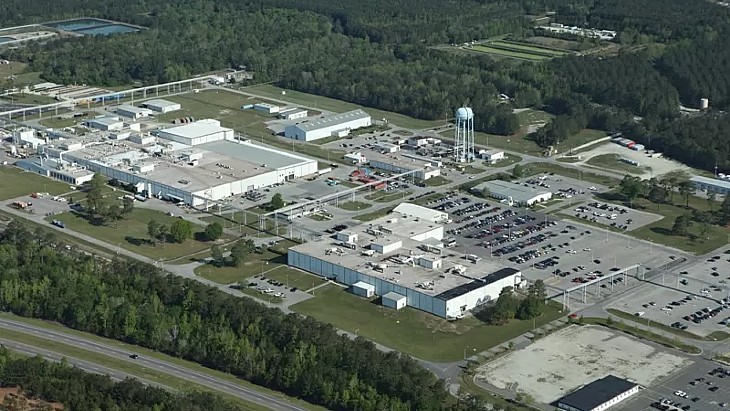
GNF4 is being fabricated at the Global Nuclear Fuel (GNF) manufacturing facility at Wilmington in the USA.
Ultrasonic monitoring system tested for BN-800 reactor core
Preliminary testing has taken place of an ultrasound system which is designed to provide an additional picture of the BN-800 fast neutron reactor core at Beloyarsk Nuclear Power Plant.
Beloyarsk unit 4 (Image: Rosenergoatom)
The BN-800 unit at the Beloyarsk plant is sodium-cooled, which means it does not use the same control systems as pressurised water reactors. "This introduces some operational peculiarities and adds a number of advantages, such as increased safety and reliability due to the physical and technical properties of sodium," Rosatom said.
Testing of the Vizuz system took place over a week on a rig five storeys high, with the control software and the precision of the system assessed by a team which included representatives from six Russian nuclear organisations.
It was judged to be effective, with reactor testing now set to be the next step - "the ultrasonic transducer will be inserted into the reactor core by a manipulator, aimed at specified coordinates, or automatically scan the space above the core, and then removed from the scanning zone".
Ilya Filin, Chief Engineer of the Beloyarsk Nuclear Power Plant, who led the team, said: "During the scheduled maintenance in 2026, a sound-monitoring system is planned to be installed in the reactor. Once the system is confirmed to be operational on the BN-800, a package of documents will be submitted to Rostekhnadzor (Russia's nuclear regulator) to amend the licence conditions, and operating instructions and repair documentation will be developed."
The technology is being considered for future BN-1200M units.
The background
The sodium-cooled BN-series fast reactors are part of Rosatom's project to develop fast reactors with a closed fuel cycle whose mixed-oxide (MOX) fuel will be reprocessed and recycled.
In addition to the BN-600 reactor at Beloyarsk unit 3, which began operation in 1980, the 789 MWe BN-800 fast at Beloyarsk unit 4 entered commercial operation in October 2016.
This is essentially a demonstration unit for fuel and design features for the larger BN-1200M, which will be unit 5 at Beloyarsk. It entered the preparation stage for construction in July and has a target completion date of 2034.
Blykalla, Studsvik and Evroc and have signed a memorandum of understanding to explore the development of Sweden's first nuclear-powered data centres at Studsvik's licensed nuclear site in Nyköping on the country's east coast.
(Image: Blykalla)
The MoU sets out a framework for collaboration between the three parties. The goal is to assess the commercial and technical viability of co-locating data centres and small modular reactors (SMRs) at Studsvik's licensed site, engage with municipalities and landowners, and define what a future commercial power purchase agreement structure could look like.
The parties will now establish a joint steering committee to evaluate the Nyköping site and business model, with the goal of entering formal partnership negotiations later this year.
"This collaboration is an opportunity for Sweden to be a leader in digital infrastructure," said Jacob Stedman, CEO of lead-cooled SMR technology developer Blykalla. "It allows us to demonstrate how SMRs can provide the stable, fossil-free energy that is required for the AI revolution. Studsvik's site and Evroc's ambitions offer the right conditions for a groundbreaking project."
Blykalla - formerly called LeadCold - is a spin-off from the KTH Royal Institute of Technology in Stockholm, where lead-cooled reactor systems have been under development since 1996. The company - founded in 2013 as a joint stock company - is developing the SEALER (Swedish Advanced Lead Reactor). A demonstration SEALER (SEALER-D) is planned to have a thermal output of 80 MW. Blykalla's goal is for its first 140 MWt SEALER-55 commercial reactor to be ready for operation in the early 2030s.
Karl Thedéen, CEO of nuclear technical services provider Studsvik, added: "Studsvik provides a unique platform of site infrastructure and unique competence to combine advanced nuclear with next-generation industry. This MoU is an important step in evaluating how such synergies can be realised in Sweden."
Studsvik has previously said its Nyköping site is in a strategic location and houses the company's broad expertise in nuclear technology, including fuel and materials technology, reactor analysis software and fuel optimisation, decommissioning and radiation protection services as well as technical solutions for handling, conditioning and volume reduction of radioactive waste.
"The ever-growing demand for AI underscores the urgent need to rapidly deploy massive hypserscale AI infrastructure," said Evroc founder and CEO Mattias Åström. "Through our collaboration with Blykalla and Studsvik, we are exploring a model where Sweden can lead in building climate-neutral digital infrastructure."
Headquartered in Stockholm, Sweden, and with development offices in Sophia Antipolis, France, and London, UK, Evroc provides cloud infrastructure, software and services. By 2030, Evroc aims to operate 10 hyperscale data centres, employing thousands of people across Europe.
Nuclear fusion holds the potential for clean, greenhouse gas-free baseload power, but challenges in controlling plasma have hindered its commercial viability.
Recent breakthroughs, particularly with AI tools like Diag2Diag, are significantly advancing fusion development by improving plasma monitoring and control, specifically addressing issues like Edge Localized Mode (ELM).
Despite these advancements, commercial nuclear fusion remains decades away, leading some experts to question whether it's a realistic "silver bullet" solution for growing energy demands, especially from AI.
Nuclear fusion could be the holy grail of clean energy if scientists can crack the code of maintaining and controlling plasma for more efficient reactions. Nuclear fusion could provide critical amounts of baseload power all while producing zero greenhouse gas emissions and zero hazardous nuclear waste...someday. We’re still a long way away from being able to create the conditions for nuclear fusion to take place on a scale that’s anywhere close to energy-efficient or commercially viable. But a series of breakthroughs in the past few years have exponentially increased the speed of nuclear fusion development, bringing this potential green energy silver bullet much closer to reality than ever before.
This achievement can’t come fast enough. As runaway AI integration ratchets up energy demand growth projections across the world, tech sector bigwigs are increasingly looking to fusion research as a potential solution. Sam Altman, the founder and CEO of OpenAI, the firm behind ChatGPT, has personally invested hundreds of millions of dollars into nuclear fusion research. He sees fusion as a necessary development to meet the future needs of data centers. “There’s no way to get there without a breakthrough, we need fusion,” Altman said in a January interview.
But while the advancement of artificial intelligence has made the need for baseload clean energy more dire than ever, it could also be the key to unlocking the technology’s commercial potential. A new machine learning tool called Diag2Diag has made major steps forward in this effort. The tool can be used to help monitor and control plasma in fusion experiments, and particularly to avoid what is known as the Edge Localized Mode (ELM), a condition of instability that rapidly breaks down the materials around the plasma, causing major issues for huge and costly fusion plasma experiments like Europe’s ITER and China’s EAST.
Most nuclear fusion experiments use electromagnetic fields to control superheated plasma to mimic the conditions of our own sun and stars, which are powered by naturally occurring fusion reactions. This plasma, which can reach temperatures of 100 million degrees Celsius, is extremely unruly and difficult to control. When the plasma breaks out of its confines, it often signals the end of the fusion experiment and one more barrier to unlocking the potential of nuclear fusion as an earthbound clean energy source.
ITER and EAST use enormous magnets to control plasma for their fusion experiments inside of massive donut-shaped reactors called tokamaks. But the “magnetic islands” created by this method are hard to observe and monitor. Diag2Diag provides a revolutionary solution to this issue. In layman’s terms, “the technology functions by analyzing the measurements from existing sensors to generate new, synthetic data for another sensor that may be failing or too slow to capture key events” according to a recent report from Interesting Engineering.
“With super-resolution diagnostics, we can experimentally verify theoretical models of magnetic islands for the first time, providing insights into their role in ELM stabilization,” the researchers write in a scientific paper detailing their breakthrough. “This advancement supports the development of effective ELM suppression strategies for future fusion reactors like ITER and has broader applications, potentially revolutionizing diagnostics in fields such as astronomy, astrophysics, and medical imaging.”
Despite this latest in a series of nuclear fusion breakthroughs, commercial nuclear fusion still remains decades out of reach – and some experts doubt whether it will ever be the silver bullet solutions that its backers promise. A narrow focus on fusion as a cure-all for AI’s drastic energy demand growth may be wishful thinking and even a misallocation of resources that would be better spent on proven clean energy technologies. According to Alex de Vries, a data scientist and researcher at Vrije Universiteit Amsterdam. “It would be a lot more sensible to focus on what we have at the moment, and what we can do at the moment, rather than hoping for something that might happen.”
What’s Next for Energy Markets?
A new conflict in the Middle East... a surprise OPEC+ decision... a massive shift in Chinese demand. Most investors only react to the headlines.
Oilprice Intelligence brings you the signals before they become front-page news. This is the same expert analysis read by veteran traders and political advisors. Get it free, twice a week, and you'll always know why the market is moving before everyone else.
You get the geopolitical intelligence, the hidden inventory data, and the market whispers that move billions—and we’ll send you $389 in premium energy intelligence, on us, just for subscribing. Join 400,000+ readers today. Get access immediately by clicking here.


_60883.jpg)
_61234.jpg)

_98108.jpg)
_85466.jpg)
_64549.jpg)