Monday, November 10, 2025

Ukraine faces deepening humanitarian crisis as 37% live in poverty, 65% of children affected
Ukraine faces deepening humanitarian crisis as 37% live in poverty, 65% of children affected
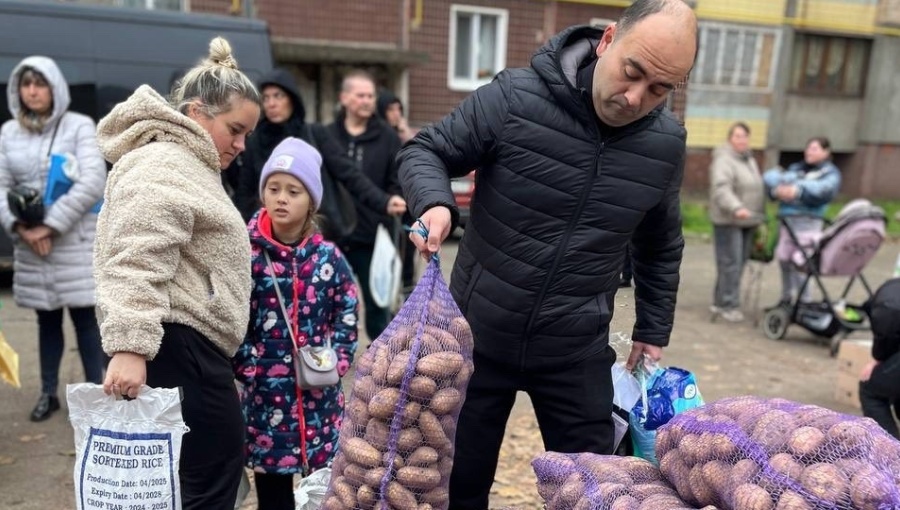
Hope for Ukraine distributes potatoes to internally displaced people in Kherson. / Hope for Ukraine
By bne IntelliNews November 10, 2025

Nearly 37% of Ukrainians are now living in poverty as the war continues to devastate the country’s economy, according to humanitarian groups, a fourfold increase compared with pre-war levels that highlights the scale of the crisis as another winter approaches, according to Hope for Ukraine, a major humanitarian organisation operating in the country.

The sustained fighting and large-scale displacement have pushed millions into hardship, with more than a quarter of Ukrainian households now including an internally displaced person (IDP), a veteran, or a family member disabled by the war. Over 65% of children are living below the poverty line, leaving the country’s social fabric under severe strain as dependence on public transfers and humanitarian aid deepens.

“The situation has become systemic — not a temporary shock,” said Yuriy Boyechko, CEO of Hope For Ukraine. “Low-income families are suffering the most, and inequality is widening fast.”

Regional disparities have also intensified. In front-line and recently liberated areas, nearly half of all households report damage to homes or assets, while many struggle with severe food insecurity and limited access to basic services. By contrast, wages in safer, higher-skilled sectors in western and central Ukraine have continued to rise, fuelling what analysts describe as a “two-tier recovery” that risks further marginalising war-affected communities.

As Ukraine braces for another harsh winter and continued hostilities, humanitarian groups warn that the deepening poverty crisis — especially among children and displaced families — could have long-lasting consequences for the country’s recovery and stability.


Russia unleashes massive overnight assault on Ukraine’s energy grid, crippling thermal plants and gas sites
Russia unleashes massive overnight assault on Ukraine’s energy grid, crippling thermal plants and gas sites
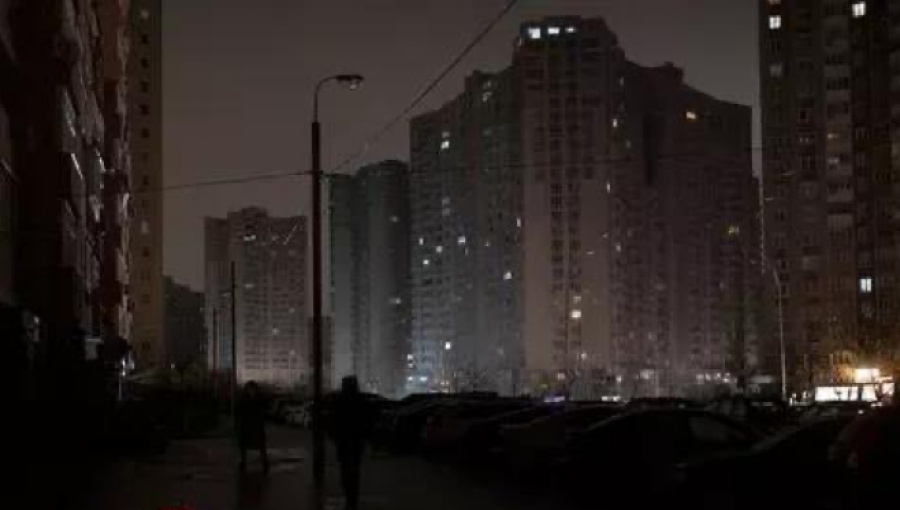
Russia launched a massive missile and drone strike on Ukraines's power sector in an attempt to black the country out as winter gets underway. / bne IntelliNews
By bne IntelliNews November 10, 2025

Russia launched one of its heaviest air assaults in months overnight on November 8, striking Ukraine’s energy infrastructure with missiles and drones and causing widespread blackouts across major cities, including Kyiv and Kharkiv, reported Ukraine Business News.

The state-owned energy company Ukrenergo reported that in some regions there was “zero” generating capacity operating as of November 9. On the ground reports posted on social media said that rolling blackouts were affecting towns during the day but by the following night power had been restored in some regions.

According to Ukrainian authorities, the attack was the ninth major strike on the country’s civilian gas infrastructure since early October. Missiles and unmanned aerial vehicles (UAVs) targeted key facilities operated by state energy company Naftogaz, which supply heating to households during the winter. One employee was injured and production equipment sustained damage, the company said.

“All thermal power plants operated by state-owned Centrenergo are down following the largest Russian attack, which targeted all of them,” the company said in a statement. It added that plants previously restored after 2024’s strikes were hit again, with Russian drones “attacking each minute” through the night.

The Ukrainian Air Force reported that Russia launched 458 drones — more than 300 of them Iranian-made Shaheds — and 45 missiles, including 32 ballistic. Ukraine’s authorities reported that most of the drones were brought down by air defences but a significant number got through to hit their targets.

Naftogaz CEO Sergii Koretskyi condemned the strikes as “another cynical Russian attack aimed at depriving Ukrainians of gas, heat and electricity during the winter.”

Ukraine’s government said rescue operations were ongoing and that restoration work would begin as soon as security conditions allowed. Officials warned that millions could face the coming winter without heating, light, or running water as Russia continues what Kyiv describes as a campaign to systematically destroy the country’s energy system.

Previously, Russia targeted Ukraine’s thermal generating capacity, knocking out half the countries non-nuclear power stations. The current campaign is also hitting substations and transmission lines and destroying them faster than Ukraine’s utility companies can repair them.

“In recent weeks, the enemy has changed its tactics, shifting from massive strikes on Ukraine’s energy system as a whole to targeting specific elements in individual oblasts. Under these conditions, support for our energy workers from international partners has become even more critical,” Ukrenergo CEO Vitalii Zaichenko said, as cited by The New Voice of Ukraine.

In a new development Foreign Minister Andrii Sybiha said the enemy is deliberately targeted substations that supply electricity to the Khmelnytskyi and Rivne nuclear power plants, which they need to run their cooling systems and will force the nuclear power stations to be shut down without power supplies. The Minister said that these strikes were not random, but carefully planned and constitute a danger to nuclear safety across the entire European continent.

Analysts say the assault is in retaliation for Ukraine’s campaign of bombing Russia’s oil refineries, which has reduced production between 10% and 20% since August.

"Kyiv, Kharkiv, and other cities endured massive blackouts after one of the largest Russian strikes on Ukraine’s energy grid since 2022. Kyiv faced 12+ hours without power as missiles and drones hit grids, gas sites, and thermal plants," Tymofiy Mylovanov, President of the Kyiv School of Economics, posted on X.

The International Criminal Court has opened proceedings into Russia’s attacks on civilian infrastructure, classifying them as potential crimes against humanity. Pro-Russia sources point out that Nato ran a similar campaign against Serbia during the Yugoslav war, knocking out 80% of Serbia’s power capacity.

The attacks on Ukraine power facilities come as the heating season starts. As many Ukrainians live in Soviet-era apartment blocks, these will be extremely hard to heat during the depths of winter.

Kazakh farmers put Starlink on horses and dogs to herd livestock

Kazakh farmers put Starlink on horses and dogs to herd livestock
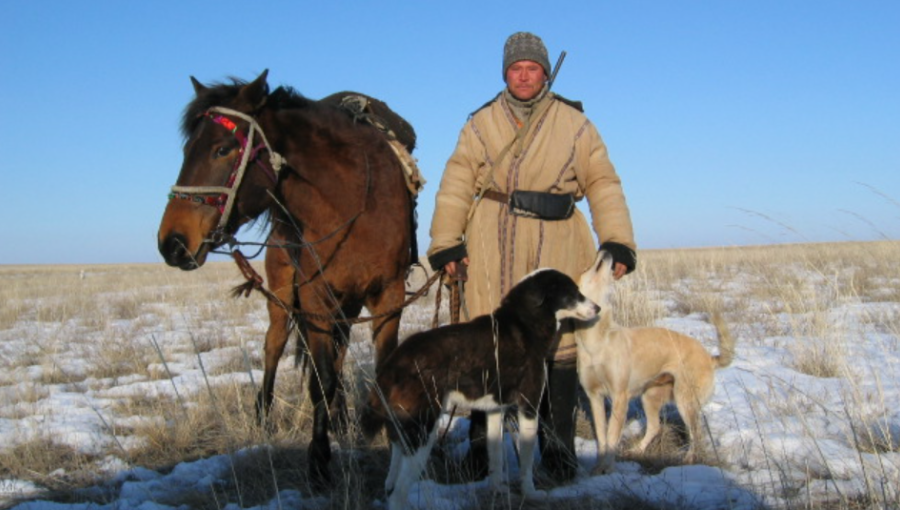
Shepherd online. Herders on the vast Kazakh steppe are increasingly using digital tools to manage their animals. / AirUNP, CC Attrib-Share Alike 3.0 Unported licence
By Clare Nuttall in Astana November 10, 2025

On the vast steppes of Kazakhstan, where herders have guided sheep and horses across the grasslands for centuries, a quiet technological revolution is taking place. Farmers are now using artificial intelligence, drones and even Starlink satellite internet to monitor and herd livestock — sometimes attaching terminals to their horses and dogs.

Kazakhstan’s Deputy Foreign Minister Alibek Kuantyrov told a briefing in Astana that herders are increasingly adopting digital tools to manage their animals across the country’s immense territory, which ranks as the world’s ninth largest.

“Now in Kazakhstan we have large areas of land rented by farmers who are using AI technology and drones,” Kuantyrov told reporters on October 30. “They herd animals with cars, and they are also using Starlink antennas on their vehicles, on their horses and sometimes on their dogs. Everything is monitored through screens — there’s no need for a person to be physically present because it’s managed electronically.”

He added that the growing use of artificial intelligence could transform multiple sectors of Kazakhstan’s economy, from agriculture to transport and public administration.

The innovation coincides with Kazakhstan’s rollout of Starlink, the satellite internet service operated by Elon Musk’s SpaceX, which aims to bring high-speed broadband to remote and rural areas.

Starlink began offering full commercial services to the public in Kazakhstan in the third quarter of 2025, as announced by the new Ministry of Digital Development, Innovation and Aerospace Industry earlier this year. The government and SpaceX signed earlier this year allowing the legal import and operation of Starlink terminals, which were previously restricted to a pilot programme connecting rural schools.

“Starlink was not previously available to the public,” Digital Development Minister Jaslan Madiev said in June. “Now, after reaching this agreement, the company has committed to fully comply with our legislation on information security and communications.”

The partnership is part of President Kassym-Jomart Tokayev’s Accessible Internet initiative, which seeks to close the connectivity gap in rural areas by extending broadband to remote villages, schools and healthcare facilities.

Starlink’s low-Earth orbit satellite constellation, positioned about 550 kilometres (342 miles) above ground, enables internet coverage even in the country’s most isolated regions, including the huge stretches of grassland in Kazakhstan where herders still graze their flocks.

Kazakhstan first engaged with Starlink in 2023, following government frustration over the slow pace of domestic telecom expansion. The project initially connected 2,000 rural schools, and by mid-2024 nearly 1,800 had access to satellite internet.

Authorities briefly considered banning satellite internet services operated from abroad late last year, citing national security concerns, but withdrew the proposal after a public backlash.

Meanwhile, competition in the country’s nascent satellite internet market is heating up. In September 2024, Kazakhstan signed an agreement with Amazon to bring its Project Kuiper satellite network to the country, setting up a future rival to Starlink. Prime Minister Olzhas Bektenov said the move would help improve affordability and service quality.

Chinese firm Spacesail Kazakhstan, a subsidiary of Spacesail International, has also registered at the Astana International Financial Centre (AIFC) with $17mn in capital, positioning itself as another potential player in the mega-constellation internet sector.

The government sees the digital transformation of agriculture as part of a broader effort to develop Kazakhstan’s AI ecosystem. According to the Astana Hub innovation centre, the country plans to train 14,000 AI specialists by 2029, and artificial intelligence is already being used by major state-owned enterprises such as KazakhInvest and Kazakhstan Temir Zholy (KTZ), the national railway operator.

Kuantyrov said the application of AI across industries could be as transformative for Kazakhstan as the Industrial Revolution was for Britain in the 19th century.

From nomadic horsemen of the past to satellite-connected herders of the future, Kazakhstan’s farmers are blending centuries-old traditions with cutting-edge innovation. Even on the remote steppe, the digital age has arrived.

Trump pardons Rudy Giuliani, more than 70 others linked to efforts to overturn 2020 election


US President Donald Trump has pardoned scores of his political allies accused of having tried to overturn the results of the 2020 election following Democrat Joe Biden's victory. Trump's former lawyer Rudy Giuliani was among the list of more than 70 people named.


Issued on: 10/11/2025 
By: FRANCE 24

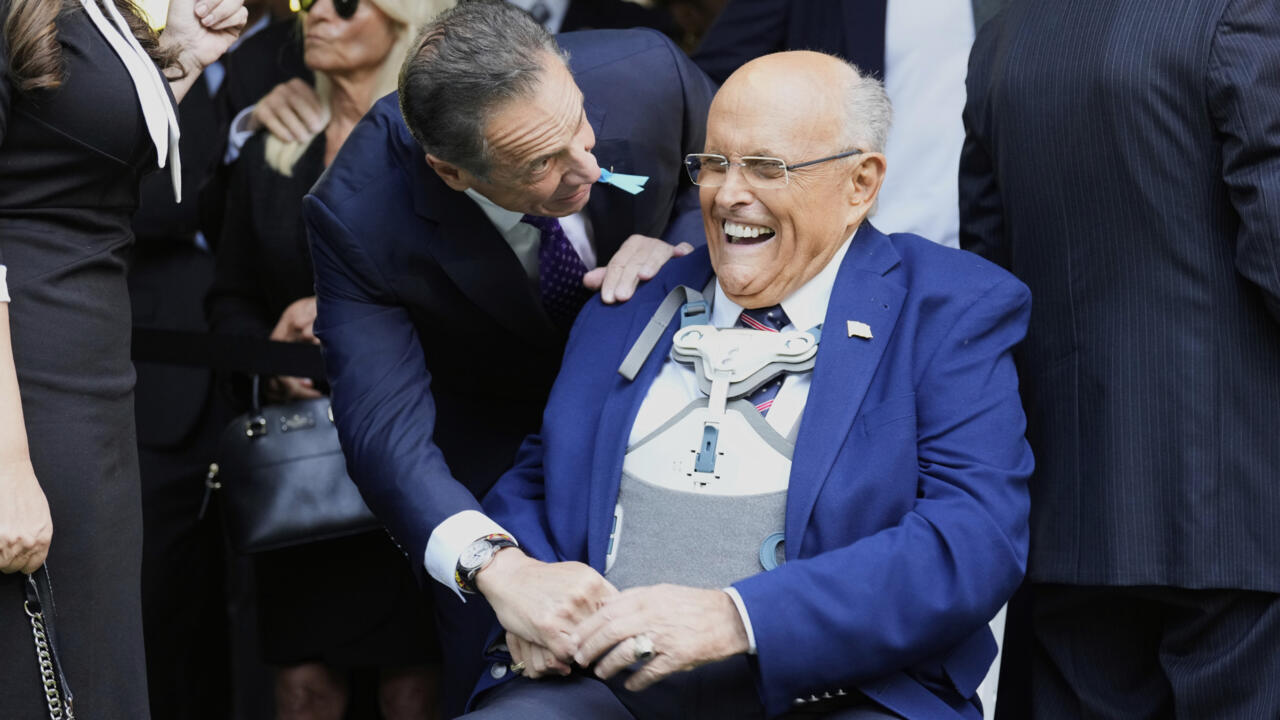
Former New York City mayor Rudy Giuliani photographed during a ceremony commemorating the anniversary of the 9-11 terror attacks in New York, Thursday, September 11, 2025. © Seth Wenig, AP

US President Donald Trump has granted sweeping pardons to top allies accused of attempting to subvert the 2020 election, the administration's pardon attorney Ed Martin said Sunday.

Martin shared a list on X of more than 70 people, including the president's former lawyers Rudy Giuliani and Sidney Powell, and Trump's former chief of staff Mark Meadows, who were granted "full, complete and unconditional" pardons.

Giuliani, a former New York City mayor, was one of the most vocal supporters of Trump's unsubstantiated claims of large-scale voter fraud after the 2020 election.

He has since been disbarred in Washington, DC, and New York over his advocacy of Trump's bogus election claims and lost a $148 million defamation case brought by two former Georgia election workers whose lives were upended by conspiracy theories he pushed.

The names on the list were embroiled in a scheme to alter slates of electors in battleground states, including Arizona, Georgia and Michigan, which Joe Biden had secured in his successful 2020 presidential run.


That plot, supported by Trump and his allies, helped fuel a demonstration that turned into a rioting mob attacking the US Capitol on January 6, 2021.

Presidential pardons apply only to federal crimes, and none of the Trump allies named were charged in federal cases over the 2020 election. But the move underscores Trump's continued efforts to promote the idea that the 2020 election was stolen from him even though courts around the country and US officials found no evidence of fraud that could have affected the outcome.

The directive could prevent future administrations from prosecuting the alleged co-conspirators.

The names also include John Eastman, a lawyer who proposed strategies to prevent the certification of the election results, and longtime Trump advisor Boris Epshteyn.

Also pardoned were Republicans who acted as fake electors for Trump in 2020 and were charged in state cases of submitting false certificates that confirmed they were legitimate electors despite Biden's victory in those states. Another key figure on the list is Jeffrey Clark, a former Justice Department official who championed Trump's efforts to challenge his election loss.

The directive follows the sweeping pardons of the hundreds of Trump supporters charged in the January 6, 2021, riot at the US Capitol, including those convicted of attacking law enforcement.

Trump has long insisted he has the power to pardon himself for federal crimes, but he has yet put the theory to the test.

In the missive granting pardons for actions "in connection with the 2020 Presidential Election" or relating to "efforts to expose voting fraud", Trump said that "this pardon does not apply to the President of the United States".

Trump himself was indicted on felony charges accusing him of working overturn his 2020 election defeat, but the case brought by Justice Department special counsel Jack Smith was abandoned in November after Trump's victory over Democrat Kamala Harris because of the department's policy against prosecuting sitting presidents.

(FRANCE 24 with AFP and AP)


Lebanon vows crackdown on illicit finance after US sanctions Hezbollah members


Lebanese President Joseph Aoun told visiting US officials Sunday that Beirut was combating money laundering and terrorism financing, days after Washington sanctioned three Hezbollah members. The US delegation visited as Washington moves to curb funding for Iran-backed Hezbollah and push for its disarmament.

Issued on: 10/11/2025
By: FRANCE 24

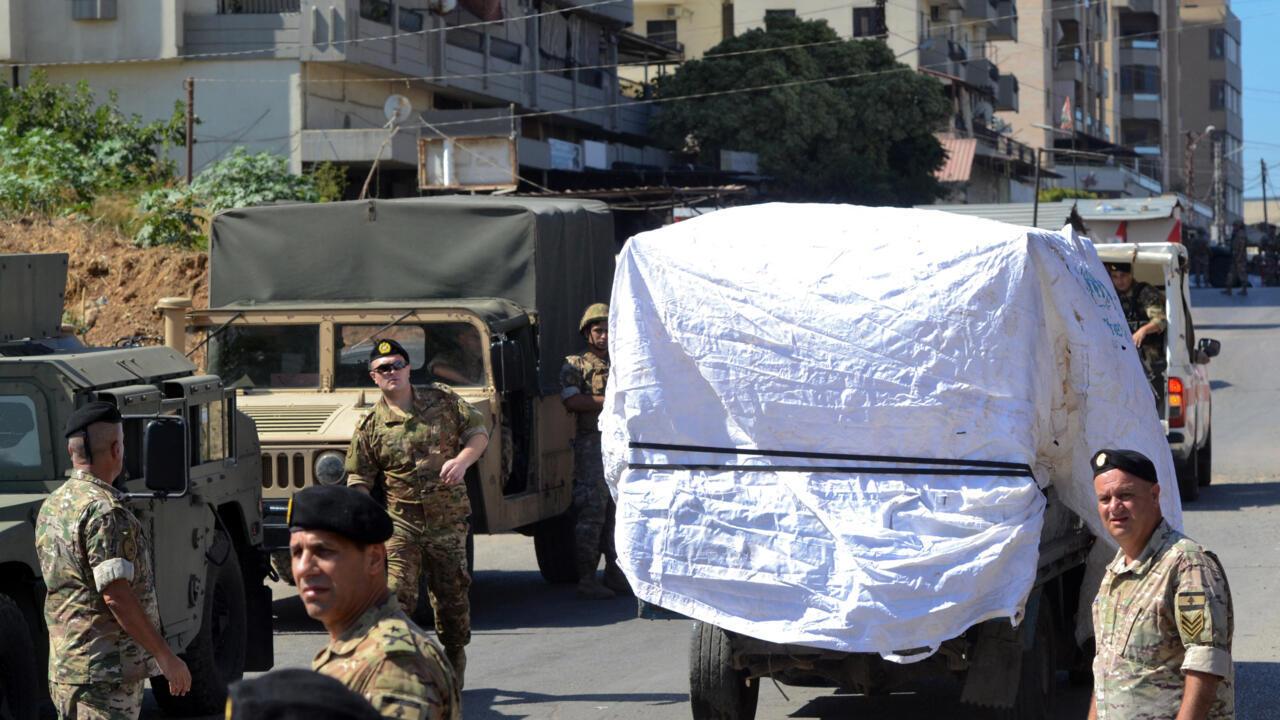
Lebanese army soldiers stand guard as a truck loaded with weapons leaves the Palestinian refugee camp of Beddawi, near the northern city of Tripoli on September 13, 2025. © AFP

Lebanon's President Joseph Aoun told US officials on Sunday his country was tackling money laundering and the financing of terrorism, days after Washington imposed sanctions on three Hezbollah members.

The trio were accused of money laundering to fund Lebanon's Hezbollah militant group, designated a terrorist organisation by the United States and other Western powers.

The US delegation's visit to Beirut, headed by senior director for counterterrorism Sebastian Gorka, came as Washington works to cut off Iran-backed Hezbollah's funding and Lebanon's government tries to disarm it.

The group was severely weakened in its most recent war with Israel, which was halted by a November 2024 ceasefire.

"Lebanon strictly applies the measures adopted to prevent money laundering, smuggling, or its use in financing terrorism, and severely punishes financial crimes of all kinds," Aoun said he had told the delegation.

On Thursday, the US imposed sanctions on three Hezbollah members allegedly involved in the transfer of tens of millions of dollars from Iran, the group's main sponsor.


Part of the funding was via money exchange businesses that operate in cash, said a US Treasury statement.

Since January 2025, Iran's Revolutionary Guards have "transferred over $1 billion" to Hezbollah, "mostly through money exchange companies", it added.

"Lebanon has an opportunity to be free, prosperous and secure – but that can only happen if Hezbollah is fully disarmed and cut off from Iran's funding and control," deputy director for counter-terrorism John Hurley said Thursday.

Hurley later posted on X that he, Aoun and Gorka had "discussed ways in which we can partner together to stop the flow of money from Iran to Hezbollah and create a safer and more prosperous Lebanon".

Israel on Sunday carried out new strikes in south Lebanon, killing two people according to the health ministry, putting the toll from Israeli strikes since Saturday at five.

Aoun called on Sunday for "pressure on Israel to stop its ongoing attacks".

(FRANCE 24 with AFP)
How the 2015 Paris attacks increased police powers and eroded civil liberties

ANALYSIS


In the wake of the November 13, 2015, Paris terror attacks, the French government declared a nationwide state of emergency that gave the authorities sweeping powers to fight terrorism – at the expense of some civil liberties. Ten years later, some of these exceptional legal powers have now passed into everyday law and even greater surveillance measures have been introduced.


Issued on: 10/11/2025 - FRANCE24
By: Romain BRUNET

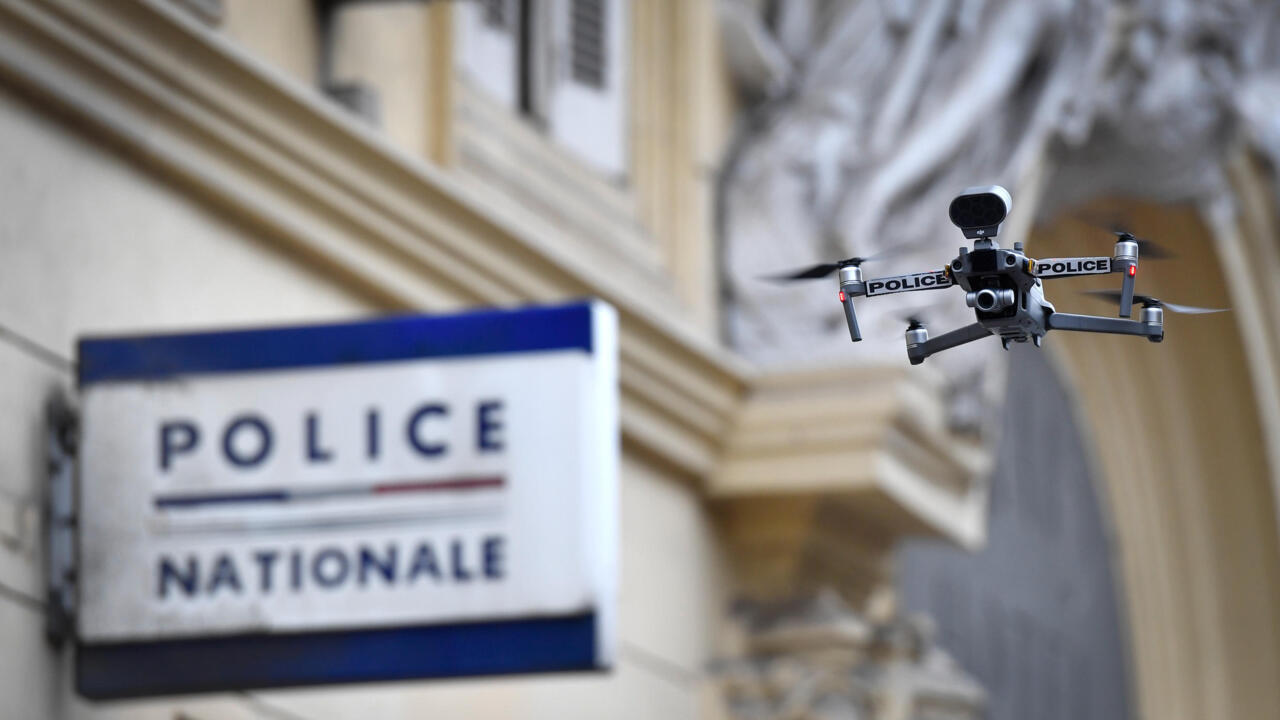
A Police drone flies over Marseille's Capucins market during the nationwide COVID lockdown on March 24, 2020. © Gerard Julien, AFP

In a matter of hours after the November 13 Paris attacks, the government declared a state of national emergency in France. This had only happened a handful of times before – during France’s conflict with Algeria in the 1950s and '60s, in New Caledonia in 1984 and in 2005 when three weeks of violent riots swept the nation’s suburbs.

Such was the scale of the deadly attacks in Paris and the northern suburb of Saint-Denis that it pushed then president François Hollande to introduce an exceptional legal framework – giving the authorities more power to pursue terrorists and starting a rollback on civil liberties that is still under way today.

The sweeping new laws enacted in the wake of the attacks were far-reaching and supposed to be temporary.

Police were given the power to place anyone under house arrest, without trial, if there were “serious grounds” to believe they posed a threat to public safety or order.

The authorities could order a search on any location used by someone thought to pose the same threat – with a few exemptions for spaces used by politicians, legal professionals and journalists.

Administrative authorities gained the right to seize legally owned weapons and ammunition from owners.

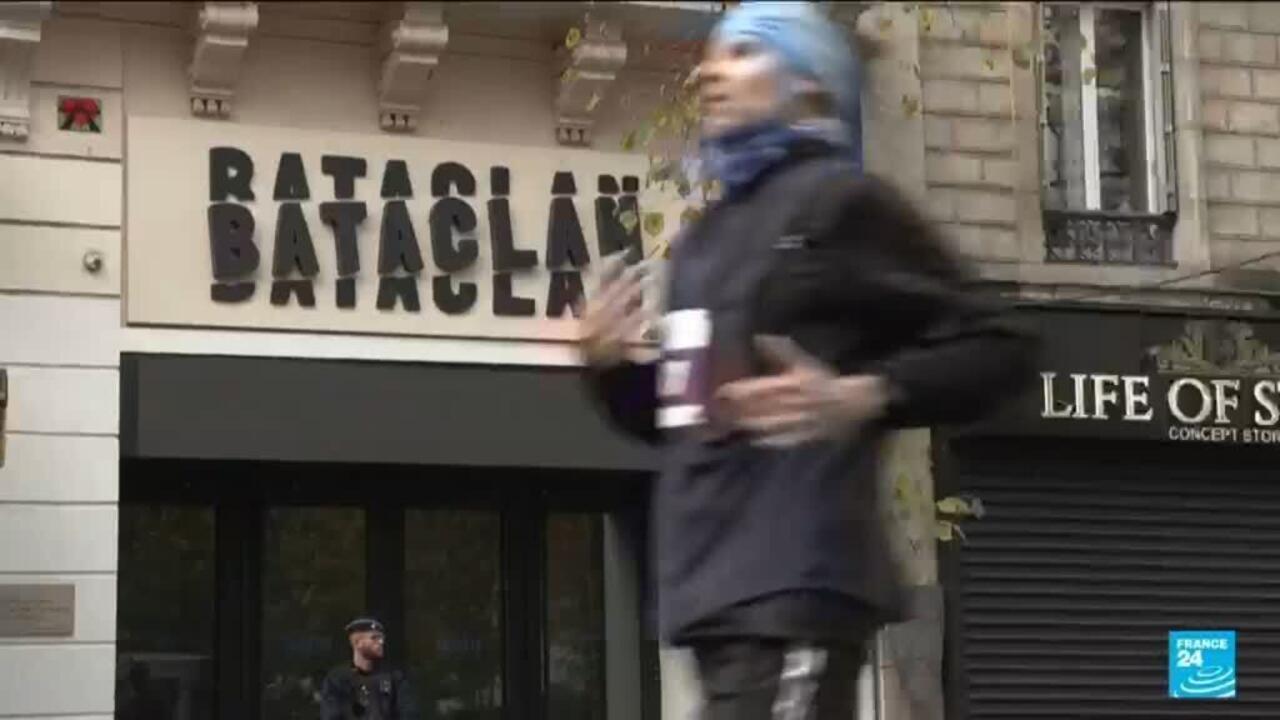
France marks ten years since its worst terrorist attack with solidarity race

© France 24
01:44


And the government was allowed to block any websites thought to be promoting or inciting terrorism and to dissolve charitable organisations that it judged undermined public order.

“In the name of terrorism, which justified everything, extensive powers were given to the executive branch,” says Nathalie Tehio, president of rights organisation la Ligue des droits de l’Homme.

The new expansive powers enabled the French authorities to get quick results when tracking down the perpetrators of the Paris attacks in the weeks following the incident – but they were soon used for other purposes.

“There were an enormous amount of police searches that were not necessarily linked to terrorism but that the police used for other investigations, for legal purposes, but without approval from a judge,” adds Tehio.

The legal framework provided by the state of emergency gave the French government the power to ban protests and deter other forms of activism, even if they had no connection to the attacks.

As France prepared to host the COP21 environmental summit in December 2015, several dozen climate activists found that they had been placed under house arrest for the duration of the conference.
‘Exceptional measures’

The state of emergency was initially supposed to last for three months, but was soon extended to May 2016. After more terrorist attacks in Nice on July 14, 2016, it was extended three more times before finally being lifted on November 1, 2017, almost two years after it was first introduced.

“The problem is that the longer the delay in ending the state of emergency, the harder it is to decide to stop,” says Tehio.

During the two years the legal framework was in place, “the public became accustomed to the idea that these exceptional measures were possible and they went from something that should be exceptional to something that is used to manage the public”, she added.

Shortly before France ended its state of emergency, the government decided to hang on to some of the powers it enabled. An October 2017 anti-terrorism law known as Silt (la loi Sécurité intérieure et Lutte contre le terrorisme) “integrated measures introduced during the state of emergency into every day law”, says Tehio.

House arrest orders were renamed control and surveillance measures, or Micas (mesures individuelles de contrôle administratif et de surveillance), and administrative searches became known as home visits (visites domiciliaires).

Under the law, local authorities were granted the additional rights to control access by establishing security perimeters around locations they considered prime targets for terrorist acts.

The Micas, in particular, demonstrate how the law has eroded the rights of people in France. “The safeguards that are supposed to exist on paper are very relative in practice,” says specialist Nicolas Klausser, le Centre de recherches sociologiques sur le droit et les institutions pénales (Cesdip), a legal research organisation.

“Ninety percent of Micas are approved by administrative judges, who almost never question intelligence reports sent to them by the interior ministry. Before 2015, the interior ministry could only impose asset freezes or travel bans on French nationals, but now it has a considerably wider range of measures at its disposal," he adds.

Today, having any kind of connection to individuals convicted of terrorism-related offenses could be enough to prompt a Micas or a home visit, as security figures from the 2024 Paris Olympic games indicate.

A parliamentary security report on the games reported 626 home visits and 547 Micas were implemented during the Olympic period, equivalent to “a level four to five times higher than the annual average observed since 2017”.

The figure is evidence of “the extended scope” of the amount of police interventions the type of person the law is able to target, the researcher says, with serious consequences for those involved who may find themselves unable to work and at risk of losing their income.
‘Neutralising internal enemies’

A steady influx of new laws since 2017 have reinforced France’s legal arsenal to fight against terrorism and expanded the reach of the intelligence services and the military.

In this timeframe, major events, such as the Olympics and the Covid pandemic, have provided unique contexts that have accelerated an overall restriction on individual freedoms.

In the past three years, a 2021 law obliged charities receiving public subsidies to sign a “commitment contract”, reinforcing compliance with the principles of the Republic; a 2022 law authorised the use of surveillance drones on internal security grounds; and a 2023 law, brought in for use during the Olympics, allowed the use of algorithmic video surveillance on an experimental basis until March 2025.

Critics claim Paris using 2024 Games to introduce Big Brother video surveillance

“First they say it’s experimental, then it becomes normal,” says Tehio. “It’s a maddening engine of repression that never has enough. First it's drones, then AI, then facial recognition. For a long time we pointed the finger at China and said it was a dictatorship [for using such surveillance methods] but now France finds itself doing the same thing.”

The government insists that such measures are necessary to counter terrorism, which is still a high-level threat in France according to the intelligence services.

The director of France’s anti-terror unit, la Direction générale de la sécurité intérieure, said in February 2025 that 79 planned attacks had been prevented in France since 2015.

“It’s a standard bit of rhetoric from the interior ministry. These measures were initially intended to ‘remove doubts' and in practice they are often not directly linked to imminent threats,” says Klausser.

“The existence of these measures clouds the classic boundary between administrative and criminal law. The State is drawing on the same mechanisms used in former colonies or immigration law to neutralise its internal enemies,” he adds.

The researcher notes the potential danger of a future far-right government being tempted to expand the scope of individuals targeted by such tools.

But the far-reaching power of the judiciary is increasingly woven into life in France, even for law-abiding citizens. An Amnesty International report found that of around 11,000 people arrested during France’s Yellow Vest protests in 2018-19, just 3,000 led to convictions.

When President Emmanuel Macron was travelling the country in spring 2023 amid contested pension reforms, protesters who wanted to show opposition by banging pots and pans were blocked from approaching areas where the president might have been.

"The risk is that we become accustomed to the loss of freedom, surveillance and an increasingly authoritarian state,” says Tehio. “It’s a dangerous trend that is currently under way, leading towards the dismantling of all dissent. Many people are now giving up on protesting, including advocacy organisations. We are in the process of diminishing our democracy.”

This article was adapted from the original in French by Joanna York.
What the Democrats' resurgence in US elections spells for the 2026 midterms

The United States' Democratic Party make decisive gains in local elections last week, hinting at new political fault lines in an unsettled electorate. Political scientist Charles Bullock of the University of Georgia, a veteran observer of US elections, analyses the implications for the 2026 midterms.


Issued on: 10/11/2025 - RFI

Zohran Mamdani speaks after winning the mayoral election, in New York on 4 November, 2025. © Yuki Iwamura / AP

By:Jan van der Made


The 4 November elections were the first major test of voter sentiment since President Donald Trump’s re-election and the turbulence that followed his second inauguration.

The early months of Trump’s new term, marked by policy reversals, federal job cuts and social discord, have shifted the political mood.

Against this backdrop, left-winger Zohran Mamdani’s surprise win in the New York mayoral race and Democratic advances in Virginia and New Jersey speak to an electorate growing weary of economic strain and political instability.

While it is too soon to say whether the party can maintain the momentum ahead of midterms next November, the results suggest that voters may be looking for steadier leadership.


Bullock told RFI what explains the Democrats' success, and what lessons both they and the Republicans can take from it.

RFI: What are the implications of Zohran Mamdani's victory in New York?

Charles Bullock: It certainly ended the career of former Governor [Andrew] Cuomo. But does this suggest that the Democratic Party is shifting significantly to the left nationally? I don’t think it does. The New York electorate is hardly representative of the electorate across the country.

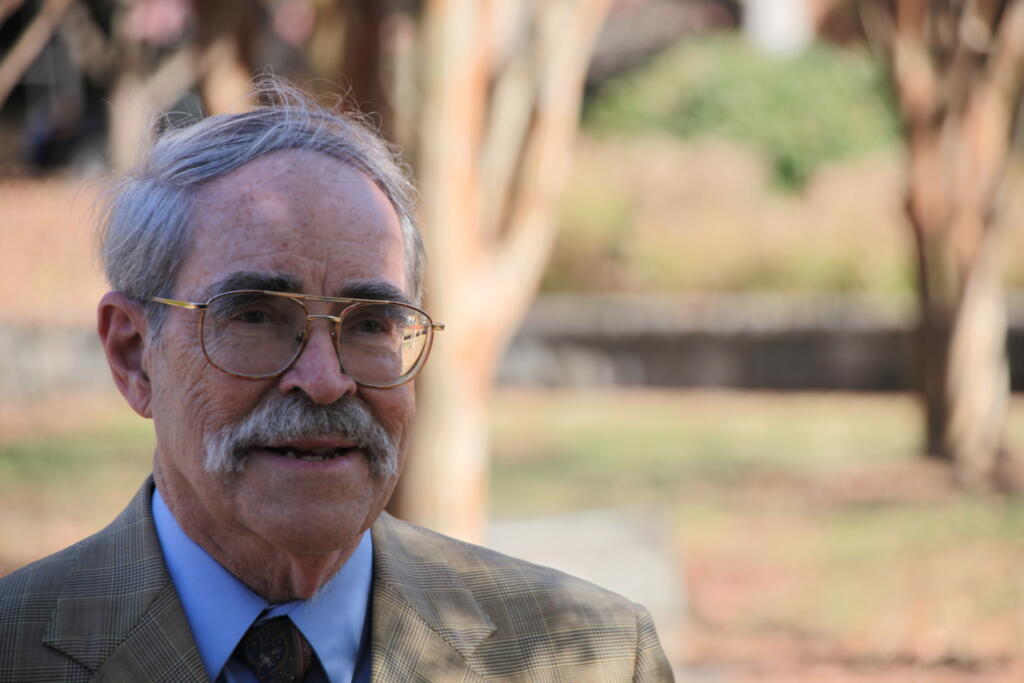
Political science professor Charles S. Bullock III of the University of Georgia.
 © RFI/Jan van der Made

A problem for the Democrats is that Republicans have been trying to make him the face of the Democratic Party. We’ve seen this before: regardless of where you stood as a Democrat, Republicans linked you to Ted Kennedy, and more recently to Nancy Pelosi.

So Mamdani is likely to become, in Republican eyes, the face of what they would call “socialism” or even “communism”, and they will try to make more moderate Democrats in other parts of the country carry that burden.


Mamdani is going to become, in Republican eyes, the face of 'socialism' or maybe even 'communism'.

05:16

INTERVIEW with Charles Bullock III on US 4 Nov elections

Jan van der Made

What underlying trends do the Democratic victories in Virginia and New Jersey's governor elections reveal heading towards the 2026 midterms?

Virginia is an interesting case, as it almost always votes for the nominee of the party that does not control the White House – and it followed that pattern again. But beyond that, [Governor-elect] Abigail Spanberger was such a strong candidate, winning by more than a dozen points.

Further down the ballot, Democrats picked up 15 seats in the state legislature, leaving only 35 Republicans, down from 49 – the lowest number of Republicans in the House of Delegates in 40 years.

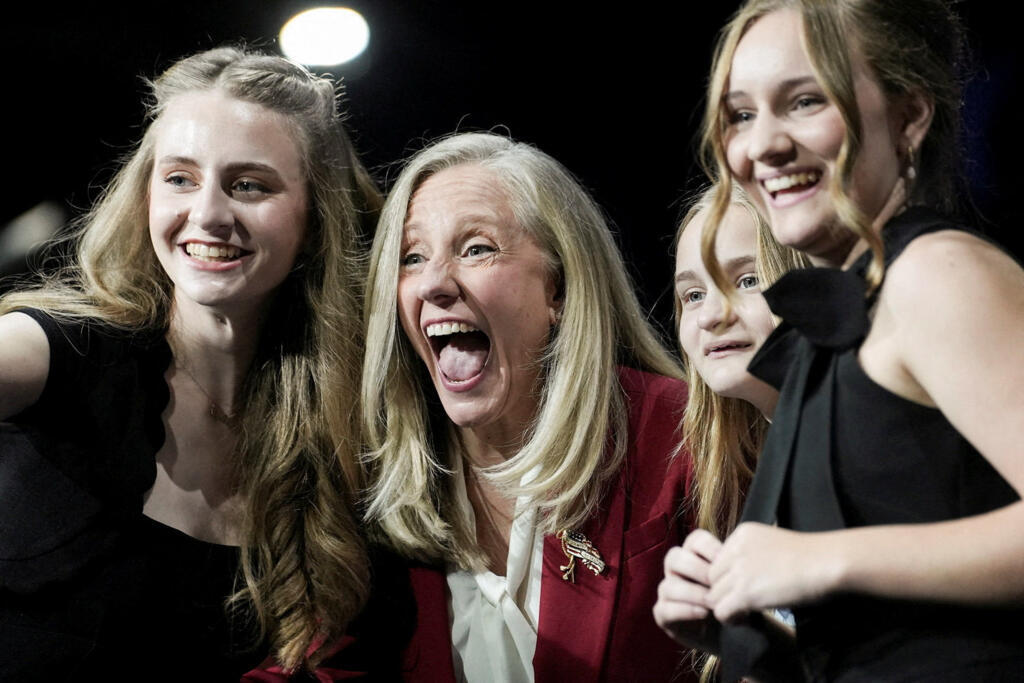
Democrat Abigail Spanberger on stage with her family after her victory in Virginia's race for governor on 4 November, 2025. © Jay Paul / Reuters

This was a real wipe-out for Republicans in Virginia, the bluest state in the South, and one with a large number of federal employees, many of whom are currently unpaid or were dismissed as a result of cuts by Elon Musk.

This suggests that, going into 2026, states with large numbers of federal employees may take out their frustrations on the Republicans.

How significant is the mobilisation of Democratic voters in traditionally competitive races? And do you see this as a genuine shift or a reaction to specific national events?

Several factors are driving the Democratic Party at the moment, particularly the cost of living. This puts Republicans in a difficult position because part of the reason Donald Trump did so well and won the seven swing states was his promise to tackle inflation.

Prices haven’t gone down. And as of Saturday, people on Obamacare – the healthcare plan for those without employer coverage – began receiving bills that have doubled, tripled or even quadrupled. This reinforces the public perception that costs are spiralling, and that blame is likely to fall on the Republican Party.

This fits into a broader pattern: presidents tend to lose ground in their midterm elections. The midterms act as a check on how the president and his party are performing. You can’t vote against the president directly, but if you’re unhappy, you take it out on his party.

Why America's Democrats aren't as wounded as you might think

Based on the 4 November election results, what warning signs are there for both Democrats and Republicans as they begin preparing for next year’s midterms?

The Democrats might risk getting carried away by these successes, though it will certainly make fundraising easier. For Republicans, it’s a moment to reflect and consider whether changes are needed.

I don’t think the results will have any effect on Maga supporters – the people in the red hats who remain firmly committed to Donald Trump. Their minds won’t change.

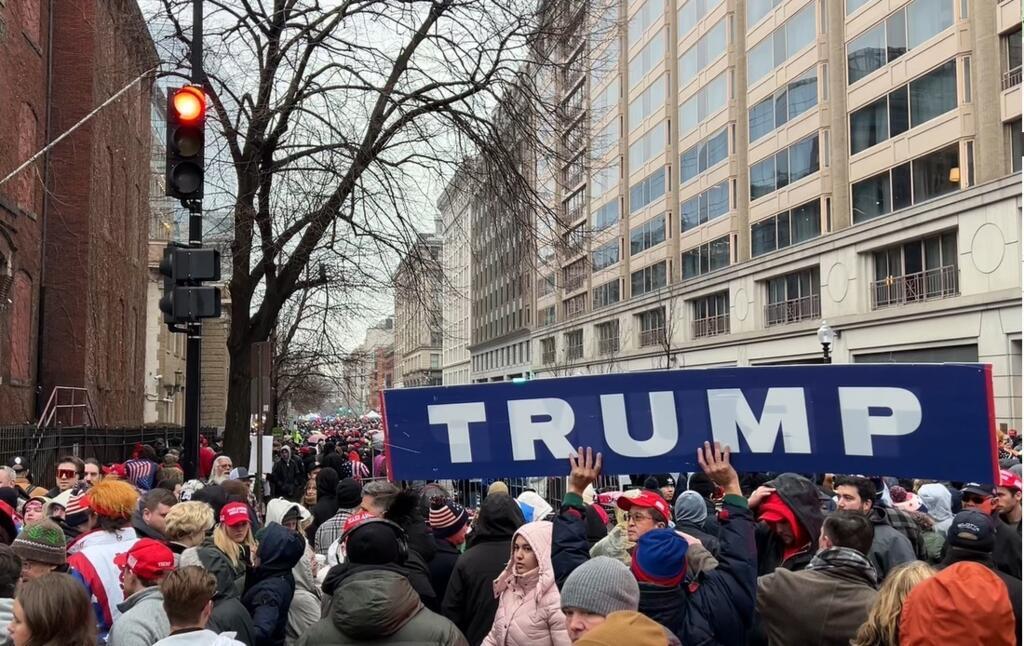
Supporters of US President Donald Trump on his second inauguration day, 20 January 2025. © RFI/Jan van der Made


So in Republican primaries, the incentive is still to seek Trump’s endorsement, or at least to avoid criticising him. But given that Trump’s approval ratings are now in the low 40s nationally – and even in the 30s in some states – this could be a double-edged sword.

His backing may help a Republican win a nomination but could hurt them in the general election. You’ll always get the Republican vote, but in most states that’s not enough; you need independents, and maybe even some Democrats. What we saw on 4 November is that independents have largely turned against Trump.

What do these results suggest about the current national mood, and how might they shape party messaging for next year?

The Democrats performed well in these elections, but in some ways they are still swimming against the tide, as many voters remain dissatisfied with both parties.

We are also seeing an ever-wider divide between urban and rural America. Urban areas lean Democratic, but rural ones are now overwhelmingly Republican.


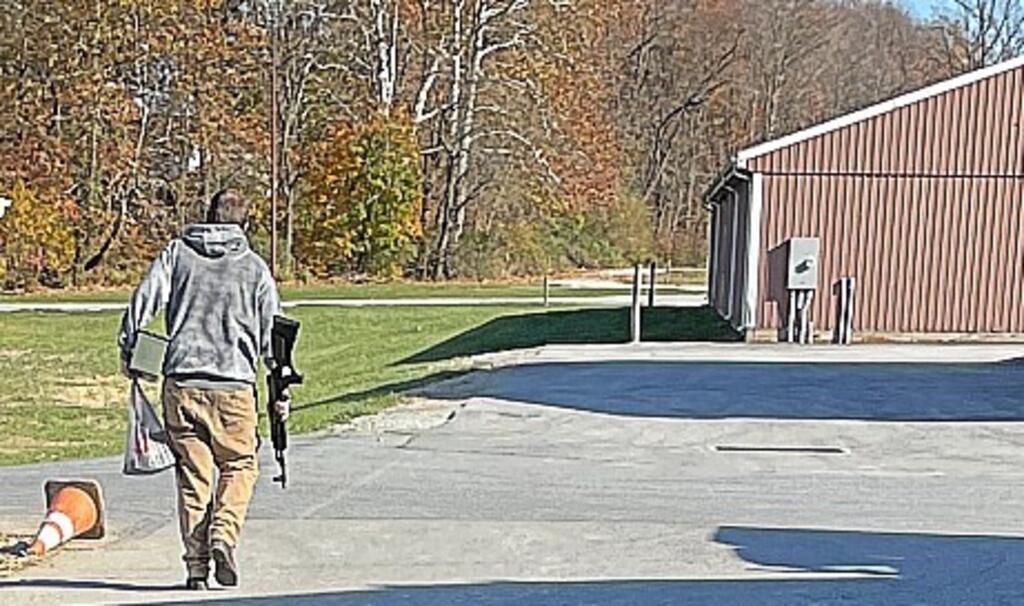
A man in November 2024 leaving a gun show in Quarryville, rural Pennsylvania, a region that predominantly votes for Trump. © RFI/Jan van der Made


If Democrats focus only on their urban strongholds and neglect outreach in rural communities, they could underperform there badly enough to cancel out their urban gains. That’s something they need to keep in mind going into 2026.

US gun culture alive and kicking in battleground state of Pennsylvania

Do you see any special issues emerging during the midterms, or is it too early to tell?

There’s growing disaffection among Latino voters. Trump made notable gains with them in 2024, but this year’s vote in New Jersey shows a clear shift away from the Republican candidate for governor, Jack Cittarelli, who closely tied himself to Trump.

Latinos who supported Trump when he promised to deport criminal elements might accept that if it targets genuinely dangerous offenders, but they’re not willing to see relatives or neighbours with minor offences deported.

If there’s a significant swing of Hispanic voters back towards the Democrats, that could change the outcome in marginal congressional districts in states such as Texas and Florida.

Democrats seemed completely at a loss in the months that followed Trump's re-election, unable to find a clear strategy to counter him. Will they now be able to organise themselves better to challenge the Republican candidate in the 2028 presidential election?

They should now have a clearer sense of the issues they can campaign on. Much of what Trump ran on is proving less popular in practice.

His plans to reduce the size of the federal government have alienated large numbers of federal employees who have been laid off, as well as their families and communities.

The cuts have created widespread frustration, with people struggling to reach services such as Social Security or the Internal Revenue Service.

The policies Trump promised to implement are turning out to be far less popular than he anticipated with the broader electorate.
Montenegro protests expose fragile balance in Serbia-Turkey relations


Issued on: 10/11/2025 - RFI

Anti-Turk protests in Montenegro have added to rising tensions between Serbia and Turkey. The unrest was set off by anger over Ankara’s sale of weapons to Kosovo, and growing fears of Turkish influence in the Balkans.


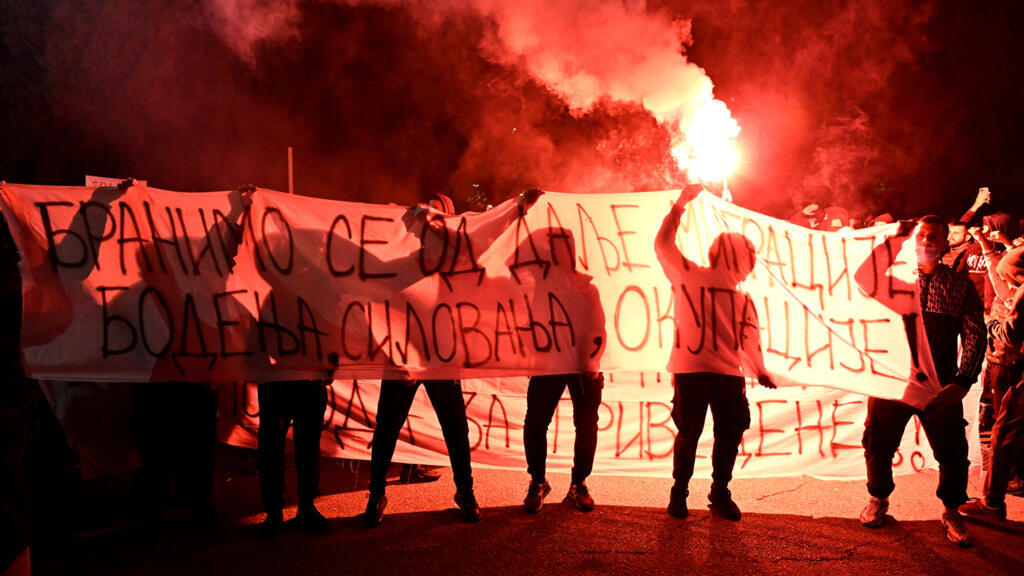
Demonstrators hold a banner reading "Defending ourselves from further migration, stabbings, rape and occupation" during protest in Montenegro's capital, Podgorica, on 28 October 2025, following the stabbing of a Montenegrin national. AFP - SAVO PRELEVIC

“Turks out!” shouted protesters as they marched through Podgorica, the Montenegrin capital. Several Turkish-owned businesses, among the country’s largest investors, were ransacked during last month’s violence.

The clashes were sparked by a knife attack on a Montenegrin citizen by Turkish nationals.

After the unrest, Montenegro imposed visa requirements on Turkish visitors. Some opposition parties accused Serbia of stoking the protests, pointing to rising friction between Belgrade and Ankara over the arms sale to Kosovo.

“There are those accusing the Serbian region of being behind it,” Vuk Vuksanovic, of the Belgrade Centre for Security Policy, told RFI. “Although I have seen no material evidence.”


Widening rift

While Serbia has not commented on the accusations, it has the capacity to incite such unrest given its strong influence in Montenegro, Vuksanovic said. “The drama involving Montenegro has built up to this difficult atmosphere in Serbian-Turkish relations,” he said.

Serbian President Aleksandar Vucic last month accused Turkey of trying to resurrect the Ottoman Empire through the sale of sophisticated drones to Kosovo, which broke away from Serbia in 1999.

Analysts say the weapons deal could shift the balance of power in the region.

“There are the kamikaze drones, which are posing a threat, and there are also strategic drones likely to be used to secure the border itself and more as a show of force,” said Zoran Ivanov, a security expert from the Institute of National History in Skopje, North Macedonia.

“So it poses a direct security threat to Serbia and Serbia has to react to this.


Changing alliances


The tension marks a sharp turnaround. In recent years, Turkish President Recep Tayyip Erdogan had built a close relationship with his Serbian counterpart, and Turkish companies became major investors in Serbia.

However the arms sale to Kosovo reveals a shift in Turkey’s relations with Belgrade, explained international relations professor Huseyin Bagci, of Ankara’s Middle East Technical University.

“Turkey has more leverage than Serbia,” Bagci said. “The relations between Turkey and Serbia, we understand each other, but it is not as happy as before.”

Analysts say the shift reflects Ankara’s wider ambitions in the Balkans.

“Ankara is trying to increase its influence and will do it,” said Bagci, adding that Turkey’s historical and cultural ties to the region run deep – with millions of families tracing their roots back to the former Ottoman territories.

“The Ottoman Empire was a Balkan empire. The Turkish influence is getting bigger, and of course, they don’t like it. But Turkey is the big brother in the Balkans.”

Turkish Cypriot vote could force shift in Erdogan’s approach to divided island


Turkish expansion

Last month, Turkish forces took command of NATO’s KFOR peacekeeping mission in Kosovo. At the same time, Turkish businesses continued expanding across the region.

“They’re expanding their markets; they’re expanding their capabilities; they’re expanding their influence,” Ivanov said.

Turkey’s renewed focus on the Balkans was unsurprising given historical ties, he added. “That’s natural for the Turks to come to invest in the region and now looking for their old roots."

However its expanding presence might feel like history repeating itself, Ivanov warned.

As “a man who is coming from the Balkans,” he said, he sees “the Turks coming as they were in history” – a reminder of a past many in the region have not forgotten.

The European Union has praised Ankara for supporting peacekeeping operations and economic aid in Kosovo. But analysts caution that Turkey must avoid alienating its Balkan neighbours.

“Ankara also has to be mindful of its own limitations of its own Balkan ambitions," Vuksanovic. said. "Because otherwise it can push majority Christian Orthodox nations like the Serbs, Greeks and Bulgarians to work against the Turks if the Turks are perceived to be too provocative or aggressive.”
By:Dorian Jones

Vibe coding' named Word of the Year by Collins Dictionary

'Vibe coding' named Word of the Year by Collins Dictionary
Copyright Canva

By David Mouriquand
Published on 

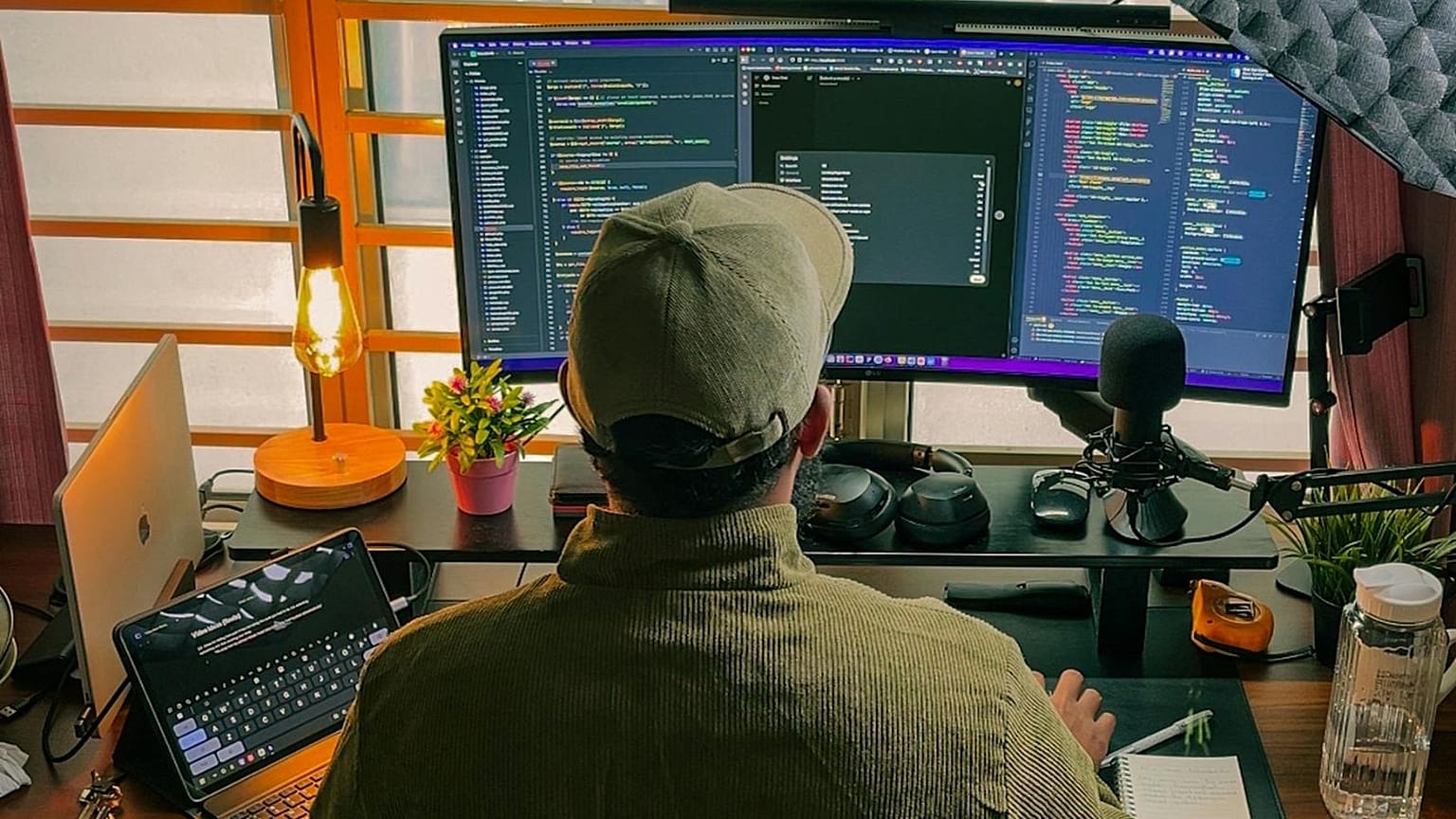
“Vibe coding”, an emerging software development that turns natural language into computer code using AI, has been named Collins Dictionary’s Word of the Year for 2025.

The lexicographers at Collins Dictionary monitor the 24-billion-word Collins Corpus, which draws from a range of media sources to create the annual list of new and notable words that "reflect our ever-evolving language and the preoccupations of those who use it".

For 2025, Collins Dictionary has chosen as their Word of the Year - which is technically two words - the term “vibe coding”, which is the art of turning language into computer code using artificial intelligence.

Coined by Andrej Karpathy, former AI director at Tesla and founding engineer at OpenAI, the term describes how someone can use AI to create a new app while forgetting "that the code even exists” - a practice which has allowed non-coders to create digital platforms.

Collins Dictionary defines it as “the use of artificial intelligence prompted by a natural language to assist with the writing of computer code”, and noted a large uptick in the usage of "vibe coding" since its first appearance in February 2025.

"The selection of ‘vibe coding’ as Collins’ Word of the Year perfectly captures how language is evolving alongside technology," said Collins MD Alex Beecroft. "It signals a major shift in software development, where AI is making coding more accessible.”

He added: “The seamless integration of human creativity and machine intelligence demonstrates how natural language is fundamentally changing our interaction with computers."

“Vibe coding” follows on from last year's "brat", which was popularised by British singer Charli XCX. It was one of 10 words on a shortlist to reflect the mood, language and preoccupations of 2025.

Here are the ones that nearly made it – many of which also appeared in Dictionary.com’s shortlist for their Word of the Year:

  • Aura farming: the deliberate cultivation of a distinctive and charismatic persona
  • Biohacking: the activity of altering the natural processes of one's body in an attempt to improve one's health and longevity
  • Broligarchy: a small clique of very wealthy men who exert political influence
  • Clanker: a derogatory term of a computer, robot, or source of artificial intelligence (a word popularised by Star Wars: The Clone Wars)
  • Coolcation: a holiday in a place with a cool climate
  • Glaze: to praise or flatter someone excessively or undeservedly
  • HENRY: acronym for "high earner, not rich yet", or a person who has not accrued substantial wealth from their high income
  • Micro-retirement: a break taken between periods of employment in order to pursue personal interests
  • Taskmasking: the act of giving a false impression that one is being productive in the workplace

And in case you wanted a trip down memory lane, here are Collins Dictionary’s Words of the Year for the last five years:

  • 2020: Lockdown: chosen in the height of the COVID-19 pandemic - "the imposition of stringent restrictions on travel, social interaction, and access to public spaces"
  • 2021: NFT: non-fungible token - a unique digital identifier that is recorded on a blockchain, used to certify ownership and authenticity
  • 2022: Permacrisis: "an extended period of instability and insecurity"
  • 2023: AI: the abbreviation of artificial intelligence
  • 2024: Brat: popularised by British singer Charli XCX - a lifestyle "characterised by a confident, independent, and hedonistic attitude".

Super typhoon Fung-wong leaves four dead and 1.4 million evacuated as it hits the Philippines
Copyright AP PhotoBy Euronews
Published on 10/11/2025 - 

Typhoon Fung-wong killed at least four people, forced the evacuation of over 1.4 million residents, and exposed 30 million to hazards in the Philippines.

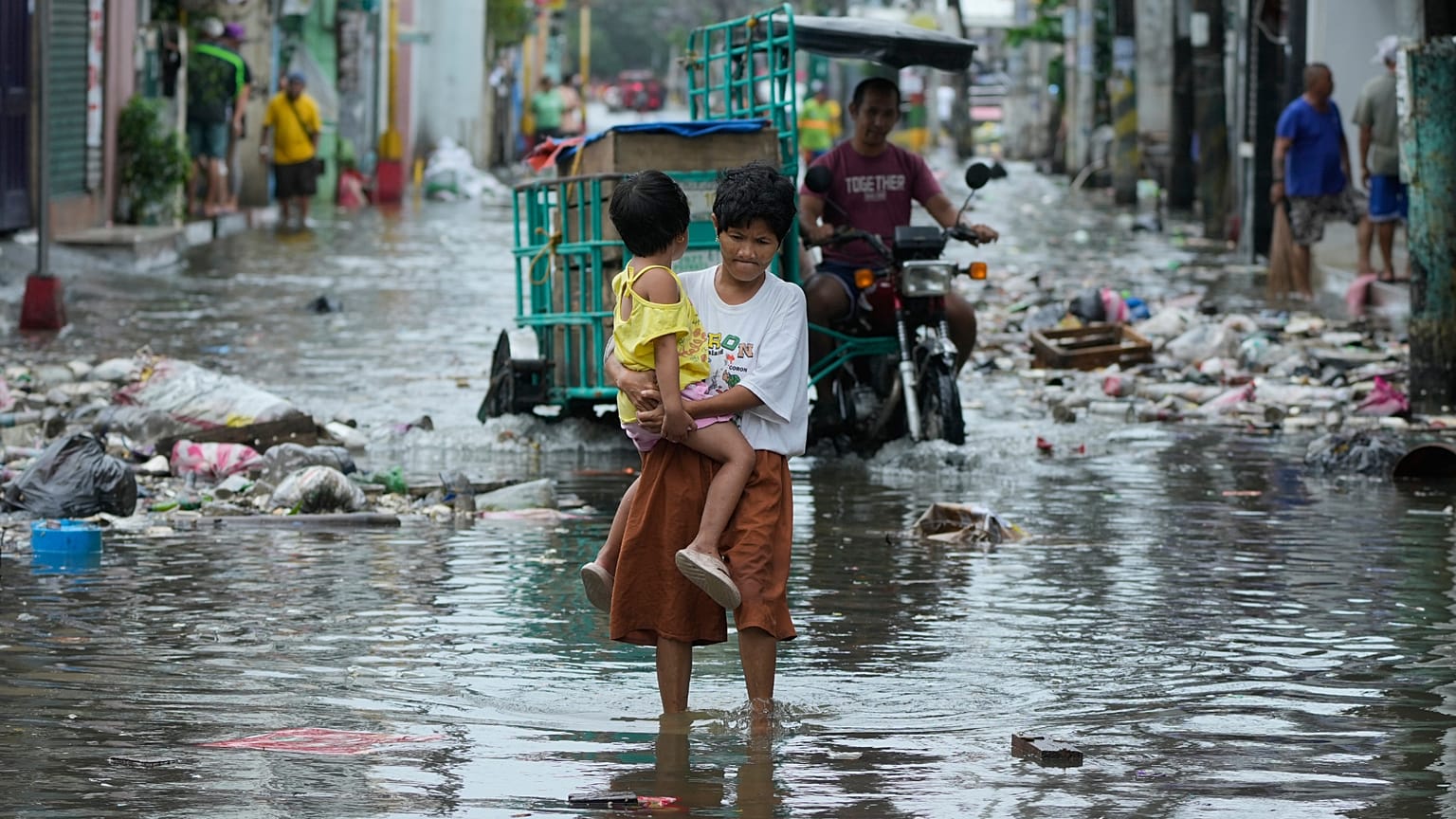
Typhoon Fung-wong killed at least four people and forced evacuation of over 1.4 million residents before making landfall as a super typhoon in Aurora province Sunday night, exposing more than 30 million people to hazards, the Office of Civil Defence said.

One person drowned in flash floods in Catanduanes province, whilst another died in Catbalogan City when her house collapsed. Two landslides in Nueva Vizcaya province towns Kayapa and Kasibu killed three children and injured four others, police said.

The 1,800-kilometre-wide typhoon weakened as it crossed mountainous northern provinces and agricultural plains overnight before moving into the South China Sea from La Union province, state forecasters said.

Fung-wong sustained winds of up to 185 kph with gusts reaching 230 kph when it struck the eastern town of Dinalungan. The storm arrived days after Typhoon Kalmaegi killed 224 people in the country.

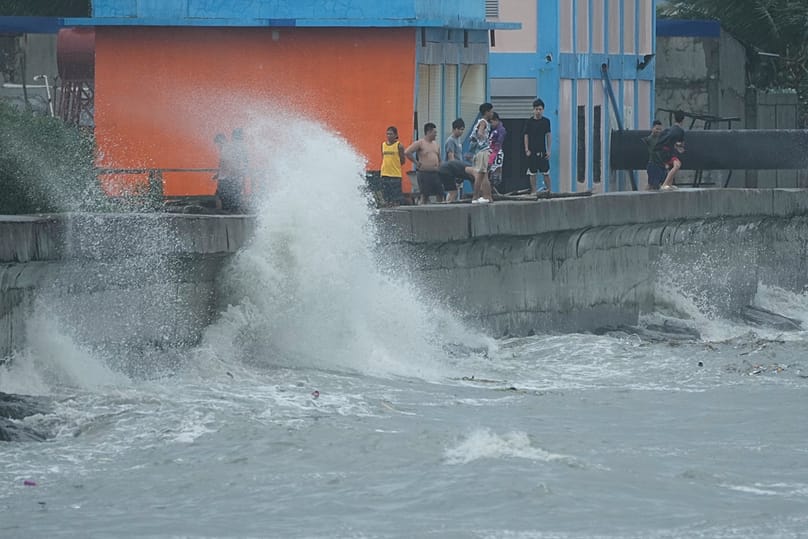
People stand as strong waves due to Typhoon Fung-wong hit the seawall along a coastal village on Monday, Nov. 10, 2025, in Navotas, Philippines. Aaron Favila/Copyright 2025 The AP. All rights reserved

President Ferdinand Marcos Jr declared a state of emergency Thursday due to extensive Kalmaegi devastation and expected Fung-wong damage. The typhoon is called Uwan in the Philippines.

Authorities closed schools and most government offices Monday and Tuesday after fierce winds and rain triggered flooding in at least 132 northern villages, including one where residents were trapped on roofs as floodwaters rapidly rose.

More than 325 domestic and 61 international flights were cancelled over the weekend. Around 6,600 commuters and cargo workers were stranded in ports after the coast guard prohibited ships from venturing into rough seas.

The Philippines categorises tropical cyclones with sustained winds of 185 kph or higher as super typhoons.

The Asian island country experiences about 20 typhoons and storms annually and has more than a dozen active volcanoes, making it one of the world's most disaster-prone countries.

Manila has not requested international assistance following the Kalmaegi devastation, though the US and Japan are ready to assist, officials said.

Three dead and 15 injured in Tenerife as bad sea conditions grip Spanish watersCopyright x.com 112CanariasJesús MaturanaPublished on 09/11/2025 - 

A tragic Saturday in Tenerife left three people dead and at least 15 injured as exceptionally high waves gripped the Canary archipelago. Officials are reporting waves that can reach as high as four metres.

The island of Tenerife experienced one of the most tragic days related to coastal phenomenon on Saturday. Three people lost their lives and a further 15 were injured in different parts of the island, while the Canary archipelago remained on pre-alert for coastal hazards due to bad sea conditions.

The first incident took place on the Roque de Las Bodegas beach, in Taganana, where six French tourists fell into the water after being hit by large waves. Local police sources confirmed that those affected were swept away after ignoring a preventive buoy installed in the area.

One woman suffered moderate injuries and was airlifted to the Nuestra Señora de la Candelaria University Hospital by helicopter. Four others also required hospitalisation and a fifth was treated at the scene.

On the El Cabezo de Granadilla de Abona beach, in the south of the island, the lifeless body of a man was found floating in the sea. Lifeguards and personnel from the Canary Islands Emergency Service carried out cardiopulmonary resuscitation (CPR) manoeuvres, but unfortuntately failed to revive him.

Puerto de la Cruz tragedy

The most serious incident occurred on the quayside of Puerto de la Cruz, in the north of Tenerife, where ten people were swept into the water.

Local police officers and several members of the public helped to rescue the victims. One woman was found in cardiorespiratory arrest and despite medical intervention from five ambulances that reported to the scene, was confirmed dead.

Of the other victims, three suffered critical injuries, four sustained moderate injuries and two minor only suffered minor wounds. All of the victims were hospitalised in different health centres on the island.

Late in the afternoon, at around 4:42 pm local time, the Emergency and Security Coordination Centre received a new alert for another man who had fallen into the sea in the area of Charco del Viento, in the municipality of La Guancha.

A Canary Islands Government helicopter located and pulled the man to the Santa Cruz de Tenerife dock, where medical staff confirmed his death due to the severity of his injuries.

Canary Islands remain on heightened alert

The Canary Islands have been on pre-alert for coastal phenomenon since Friday, due to exceptionally large waves, that can reach up to four metres high, and fierce winds.

Authorities had warned of dangerous sea conditions, though several incidents occurred due to incompliance with safety warnings and barriers.

The sea storm has highlighted the need for extreme caution in coastal areas when weather conditions are adverse, especially in the face of warnings issued by the emergency services.

Officials are urging civilians to heed advice and warnings, exercise increased caution and stay inland as much as possible until the threat subsides.