Friday, November 14, 2025

'No way we're going back': Canadians are flying just about anywhere but the US

Ewan Gleadow
November 12, 2025 
RAW STORY
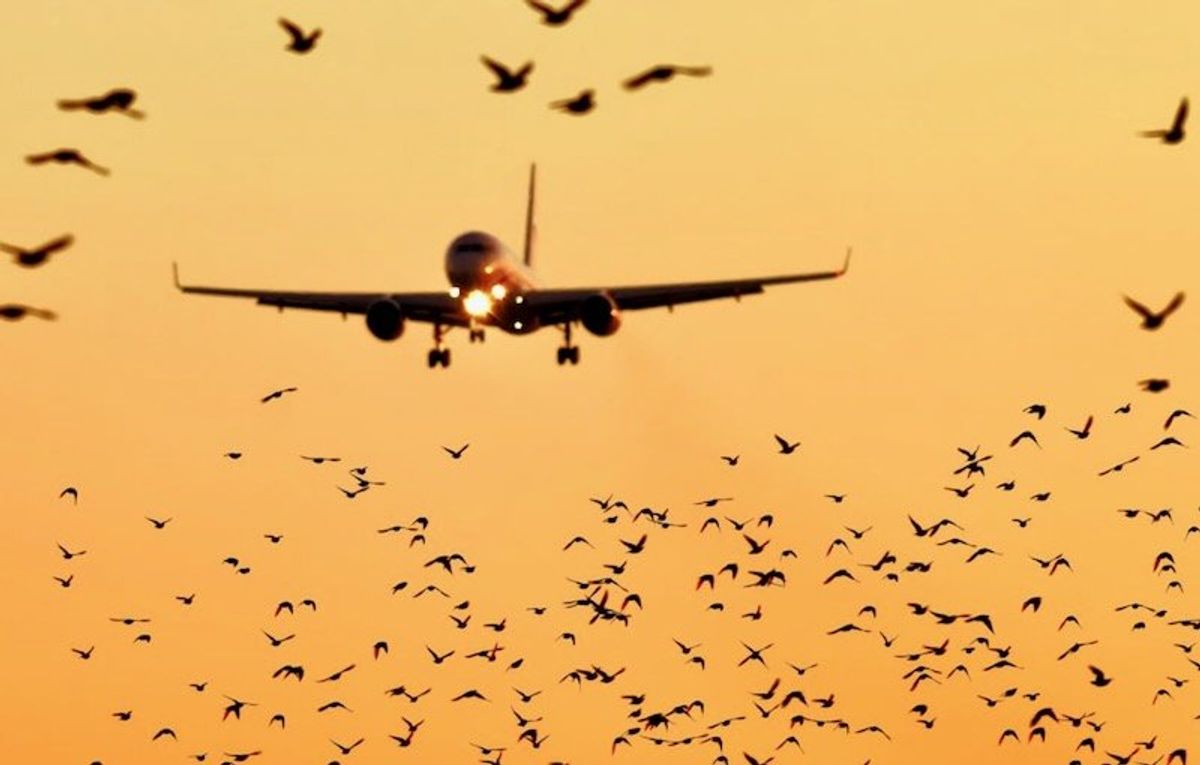

Plane surrounded by Birds (Vaalaa / Shutterstock)

Canadians are still boycotting travel to the United States and say there's "no way we're going back" while Donald Trump is in power.

10 months on from the start of Trump's second term and it seems Canadians are still being cautious about holidaying in the US. Both last-minute holidaymakers and planned breaks abroad see members of the public avoiding the States, as they instead head further afield for their trips. The number of Canadians returning from the US by car and plane in September dropped by a third compared to the same month last year, according to The Economic Times.

Canadian holidaymakers have since shed some light on why they are avoiding the US, with some fearing ICE Agents and rising travel costs. Nathalie Morisseau says the US is currently "not attractive" as a place to holiday in, and she even considers it "scary." She added, "With my father being Haitian, there’s a certain fear around being able to go to the United States."

Americans are trying to appeal to Canadians with little success. Governor Gavin Newsom launched the "California loves Canada" drive, but Senior VP of Visit California Ryan Becker says it hasn't worked. Figures show a drop of $700 million on the expected spend from Canadian visitors to California.

Becker said, "That's a gut punch to the industry." Canadian services are suffering too as a result of the travel downturn. Will McAleer, executive director of the Travel Health Insurance Association of Canada, said, "Canadians are really choosing destinations other than the US to travel." The group found that just 10% of baby boomers have plans to head to the US this winter, a drop of two-thirds compared to last year.

Not all Canadians are avoiding the US though, with younger residents heading to the States but not publicly profiling their trip as they once would have. Travel blogger Barry Choi explained this quieter change is because travelling to the US is still "cheaper" than holidays to other continents.

Choi said, "Going to Orlando Disney is probably cheaper than going to Tokyo Disney." Weather could play a part in bringing Canadians down to the US, with Jill Wykes, editor of Snowbird Advisor, suggesting the first snowstorm of the year will be a major factor in changing Canadian travel plans.

She said, "We haven't even had the first snowstorm yet. That normally makes people want to go."
Trump just sent an ominous warning with his latest manufactured crisis

Medea Benjamin And Nicholas J.S. Davis, 
Common Dreams
November 12, 2025 


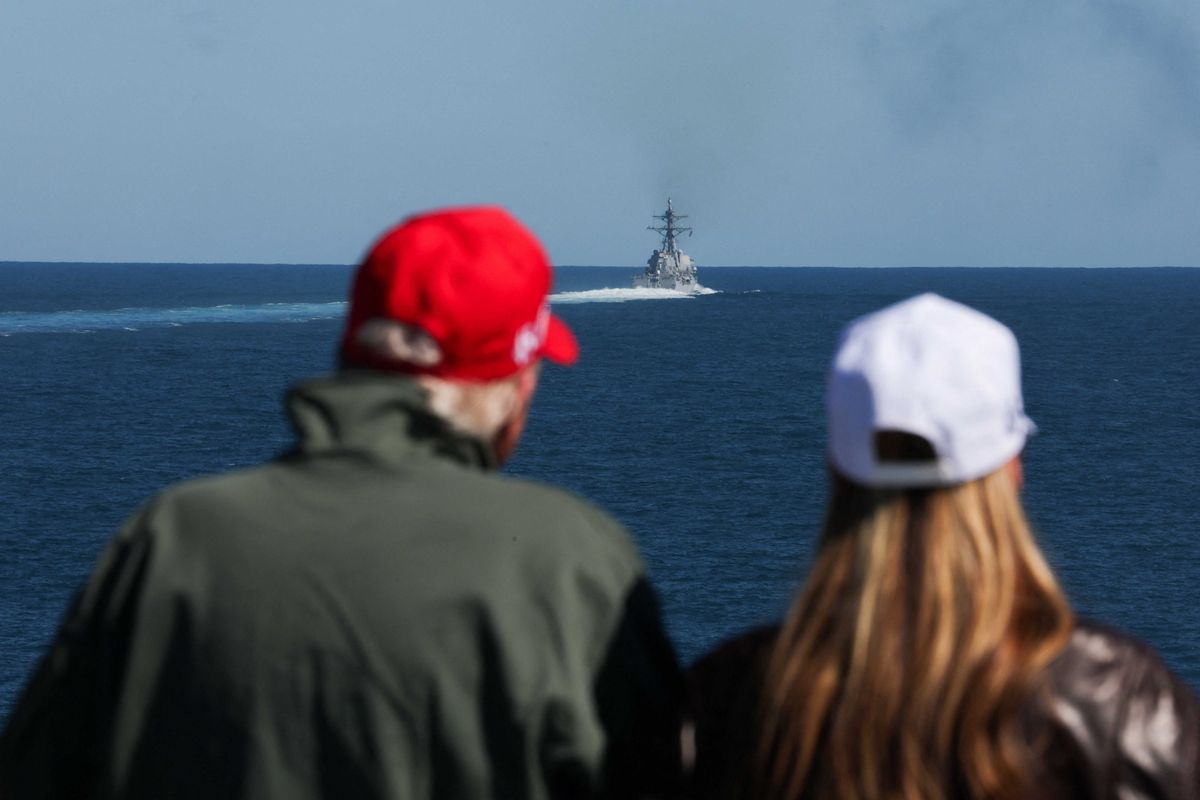
Donald and Melania Trump observe a vessel during U.S. Navy sea power demonstrations. REUTERS/Jonathan Ernst

For decades, Washington has sold the world a deadly lie: that “regime change” brings freedom, that US bombs and blockades can somehow deliver democracy. But every country that has lived through this euphemism knows the truth — it instead brings death, dismemberment, and despair. Now that the same playbook is being dusted off for Venezuela, the parallels with Iraq and other US interventions are an ominous warning of what could follow.

As a US armada gathers off Venezuela, a US special operations aviation unit aboard one of the warships has been flying helicopter patrols along the coast. This is the 160th Special Operations Aviation Regiment (SOAR) — the “Nightstalkers” — the same unit that, in US-occupied Iraq, worked with the Wolf Brigade, the most feared Interior Ministry death squad.

Western media portray the 160th SOAR as an elite helicopter force for covert missions. But in 2005, an officer in the regiment blogged about joint operations with the Wolf Brigade as they swept Baghdad, detaining civilians. On Nov. 10, 2005, he described a “battalion-sized joint operation” in southern Baghdad and boasted, “As we passed vehicle after vehicle full of blindfolded detainees, my face stretched into a long wolfish smile.”

Many people seized by the Wolf Brigade and other US-trained Special Police Commandos were never seen again; others turned up in mass graves or morgues, often far from where they’d been taken. Bodies of people detained in Baghdad were found in mass graves near Badra, 70 miles away — but that was well within the combat range of the Nightstalkers’ MH-47 Chinook helicopters.

This was how the Bush-Cheney administration responded to Iraqi resistance to an illegal invasion: catastrophic assaults on Fallujah and Najaf, followed by the training and unleashing of death squads to terrorize civilians and ethnically cleanse Baghdad. The United Nations reported over 34,000 civilians killed in 2006 alone, and epidemiological studies estimate roughly 1 million Iraqis died overall.

Iraq has never fully recovered — and the US never reaped the spoils it sought. The exiles Washington installed to rule Iraq stole at least $150 billion from its oil revenues, but the Iraqi parliament rejected US-backed efforts to grant shares of the oil industry to Western companies. Today, Iraq’s largest trading partners are China, India, the UAE, and Turkey — not the United States.

The neocon dream of “regime change” has a long, bloody history, its methods ranging from coups to full-scale invasions. But “regime change” is a euphemism: the word “change” implies improvement. A more honest term would be “government removal” — or simply the destruction of a country or society.

A coup usually involves less immediate violence than a full-scale invasion, but they pose the same question: Who or what replaces the ousted government? Time after time, US-backed coups and invasions have installed rulers who enrich themselves through embezzlement, corruption, or drug trafficking — while making life worse for ordinary people.

These so-called “military solutions” rarely resolve problems, real or imaginary, as their proponents promise. They more often leave countries plagued by decades of division, instability, and suffering.

Kosovo was carved out of Serbia by an illegal US-led war in 1999, but it is still not recognized by many nations and remains one of the poorest countries in Europe. The main US ally in the war, Hashim Thaçi, now sits in a cell at the Hague, charged with horrific crimes committed under cover of NATO’s bombing.

In Afghanistan, after 20 years of bloody war and occupation, the United States was eventually defeated by the Taliban — the very force it had invaded the country to remove.

In Haiti, the CIA and US Marines toppled the popular democratic government of Jean-Bertrand Aristide in 2004, plunging the country into an ongoing crisis of corruption, gang rule, and despair that continues to this day.

In 2006, the US militarily supported an Ethiopian invasion of Somalia to install a new government — an intervention that gave rise to Al Shabab, an Islamic resistance group that still controls large swaths of the country. US AFRICOM has conducted 89 airstrikes in Al Shabab-held territory in 2025 alone.

In Honduras, the military removed its president, Mel Zelaya, in a coup in 2009, and the US supported an election to replace him. The US-backed president Juan Orlando Hernandez turned Honduras into a narco-state, fueling mass emigration — until Xiomara Castro, Zelaya’s wife, was elected to lead a new progressive government in 2021.

Libya, a country with vast oil wealth, has never recovered from the US and allied invasion in 2011, which led to years of militia rule, the return of slave markets, the destabilizing of neighboring countries, and a 45 percent reduction in oil exports.

Also in 2011, the US and its allies escalated a protest movement in Syria into an armed rebellion and civil war. That spawned ISIS, which in turn led to the US-led massacres that destroyed Mosul in Iraq and Raqqa in Syria in 2017. Turkish-backed, al-Qaeda-linked rebels finally seized the capital in 2024 and formed a transitional government, but Israel, Turkey, and the US still militarily occupy other parts of the country.

The US-backed overthrow of Ukraine’s elected government in 2014 brought in a pro-Western leadership that only half the population recognized as a legitimate government. That drove Crimea and Donbas to secede and put Ukraine on a collision course with Russia, setting the stage for the Russian invasion in 2022 and the wider, still-escalating conflict between NATO and Russia.

In 2015, when the Ansar Allah (Houthi) movement assumed power in Yemen after the resignation of a US-backed transitional government, the US joined a Saudi-led air war and blockade that caused a humanitarian crisis and killed hundreds of thousands of Yemenis — yet did not defeat the Houthis.

That brings us to Venezuela. Ever since Hugo Chavez was elected in 1998, the US has been trying to overthrow the government. There was the failed 2002 coup; crippling unilateral economic sanctions; the farcical recognition of Juan Guaido as a wannabe president; and the 2020 “Bay of Piglets” mercenary fiasco.

But even if “regime change” in Venezuela were achievable, it would still be illegal under the UN Charter. US presidents are not emperors, and leaders of other sovereign nations do not serve “at the emperor’s pleasure” as if Latin America were still a continent of colonial outposts.

In Venezuela today, Trump’s opening shots — attacks on small civilian boats in the Caribbean — have been condemned as flagrantly illegal, even by US senators who routinely support America’s illegal wars.

Yet Trump still claims to be “ending the era of endless wars.” His most loyal supporters insist he means it — and that he was sabotaged in his first term by the “deep state.” This time, he has surrounded himself with loyalists and sacked National Security Council staffers he identified as neocons or warhawks, but he has still not ended America’s wars.

Alongside Trump’s piracy in the Caribbean, he is a full partner in Israel’s genocide in Gaza and the bombing of Iran. He has maintained the global empire of US military bases and deployments, and supercharged the US war machine with a trillion-dollar war chest — draining desperately needed resources out of a looted domestic economy.

Trump’s appointment of Marco Rubio as secretary of state and national security adviser was an incendiary choice for Latin America, given Rubio’s open hostility to Cuba and Venezuela.

Brazilian President Luiz Inácio Lula da Silva made that clear when he met Trump in Malaysia at the ASEAN conference, saying: “There will be no advances in negotiations with the United States if Marco Rubio is part of the team. He opposes our allies in Venezuela, Cuba, and Argentina.”

At Lula’s insistence, Rubio was excluded from talks over US investments in Brazil’s rare earth metals industry, the world’s second largest after China’s.

Cuba bashing may have served Rubio well in domestic politics, but as secretary of state it renders him incapable of responsibly managing US relations with the rest of the world. Trump will have to decide whether to pursue constructive engagement with Latin America or let Rubio corner him into new conflicts with our neighbors. Rubio’s threats of sanctions against countries that welcome Cuban doctors are already alienating governments across the globe.

Trump’s manufactured crisis with Venezuela exposes the deep contradictions at the heart of his foreign policy: his disastrous choice of advisers; his conflicting ambitions to be both a war leader and a peacemaker; his worship of the military; and his surrender to the same war machine that ensnares every American president.


If there is one lesson from the long history of US interventions, it’s that “regime change” doesn’t bring democracy or stability. As the United States threatens Venezuela with the same arrogance that has wrecked so many other countries, this is the moment to end this cycle of imperial US violence once and for all.

 Trump DOJ poised to dramatically expand Texas 'antifa' prosecution

Investigative Reporter
November 14, 2025 
RAW STORY


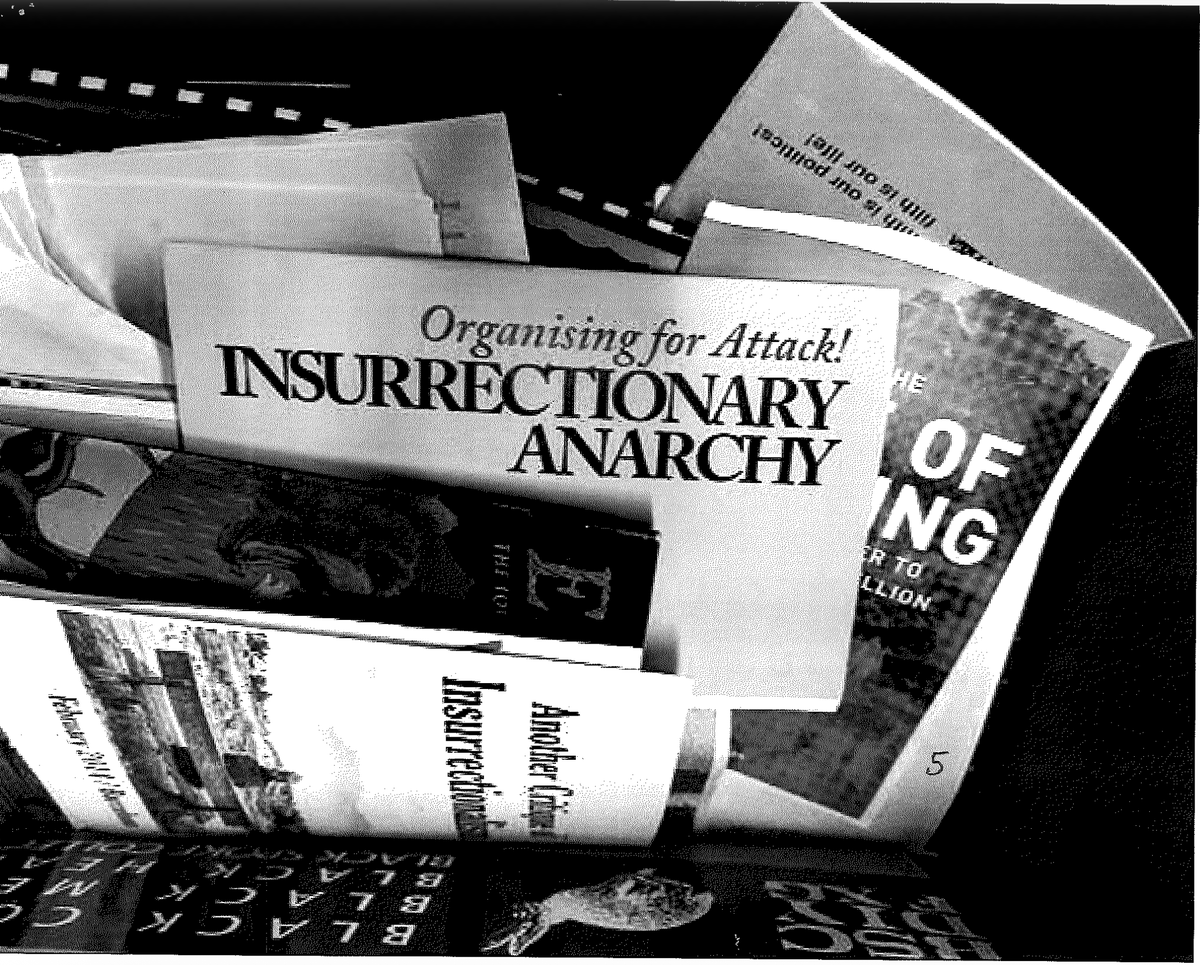
A box of 'antifa materials' described as 'incriminating evidence.' Picture: U.S. Department of Justice

The U.S. government plans to dramatically expand its Texas “antifa” prosecution by adding new defendants to its “militant enterprise” case against two individuals charged with terrorism conspiracy related to a summer attack on an immigration enforcement facility.

Federal prosecutors said in a court filing earlier this month they plan to seek a superseding indictment that would add new defendants to the case against Zachary Evetts and Summer Hill, who are among 15 individuals charged in connection to the July 4 attack on the Prairieland ICE facility in Alvarado, Texas, in which a local police officer sustained a gunshot wound.

The 15 defendants made their first appearances in federal court in Fort Worth on Sept. 23 — one day after President Donald Trump declared “antifa” (short for “anti-fascist”) groups to be “a militarist, anarchist enterprise” and less than two weeks after the assassination of conservative influencer Charlie Kirk prompted a frenzied mobilization by the administration and its allies to crack down on the political left.

Antifa is a decentralized movement with roots in militant opposition to fascism in Europe during the run-up to World War II. Contemporary antifascists typically operate individually or in small, local affinity groups to infiltrate, disrupt and expose violent Nazis, while providing support to marginalized groups targeted by them. Drawing on anarchist and Marxist beliefs that the state is an unreliable partner in protecting people from fascist violence, antifascists are often willing to act outside the bounds of the law.

Among the 15 defendants in Texas, Evetts and Hill were the only two who refused to go along with the government’s motion to continue, forcing prosecutors to take their evidence before a grand jury to obtain a separate indictment. That indictment alleges that those involved in the Prairieland attack were members of “a North Texas Antifa Cell.”

Evetts’ lawyer, Patrick McLain, has said his client went to the ICE facility on July 4 with the intention of protesting and shooting fireworks, and has emphatically denied that Evetts fired a gun at authorities or was even carrying a firearm.

The only defendant the government has identified as an alleged shooter is Benjamin Song, a former Marine Corps reservist with a history of providing firearms training to pro-LGBTQ+ and antifascist activists in north Texas.

Described by the government as “a leader” of “the antifa cell,” Song is among the 13 defendants who went along with the government’s request to continue the cases.

The government has offered plea deals to Song and the other 12 defendants, and prosecutors said in the motion filed on Nov. 3 that they expect “a fair number of the offers will be accepted.”

Any who refuse the plea offers can be expected to be added to the “antifa enterprise” indictment against Evetts and Hill, the motion said.

A federal judge has agreed to the government’s motion to designate the prosecution as a complex case, allowing the government additional time to prepare and pushing back Evetts and Hill’s trial date, originally set for Nov. 24. A new date will be set after the government obtains a superseding indictment, according to the order.

McLain appealed the decision in a federal court filing on Monday, arguing that the government’s request for a complex case designation is motivated by a desire to try all the defendants together rather than give Evetts and Hill a separate trial.


The lawyer argued that the maneuver amounts to “a government effort to make cooperating witnesses better available … by handling their plea agreements first and making their cooperation a condition of their agreement.”

The motion also noted that the case has been widely publicized as the first “antifa” prosecution.

One former Department of Justice counterterrorism lawyer has warned that the government’s choice to define “antifa” as an “enterprise” raises concerns about a potential “dragnet” that could implicate people who may align ideologically but are not involved in violent activity.


“The public has a strong interest in understanding where their constitutional rights end and their exposure to novel criminal prosecution begins,” McLain wrote in the motion.

“While it is pending, this prosecution cannot help but chill the public’s exercise of its constitutional rights.”

Judge Mark Pittman disagreed, turning down Evetts’ request in an order issued on Wednesday.


Pittman has likewise denied requests by McLain to prohibit the government from using the terms “antifa” and “socialist” during jury selection and opening statements, and making reference to any firearms seized.

McLain argued that the charges against his client “are heavily dependent on the actions of others, particularly Coconspirator-1,” whose described actions in the indictment align with the government’s allegations against Song.

The government should prove its case by presenting evidence of Evetts’ “overt acts… in furtherance of a conspiracy or aiding and abetting it,” McLain argued, “rather than through evidence amounting to the exercise of his constitutionally protected rights of assembly and speech under the First Amendment and gun ownership under the Second Amendment.”


The Prairieland defendants’ alleged membership in “antifa” is likely to play a central role in the government’s case.

Prosecutors notified the court earlier this month that in addition to expert witness testimony on gun-shot residue, DNA analysis and fingerprints, the government plans to call an expert witness on counterterrorism “to testify about antifa, its origins and beliefs, and how the attack on Prairieland bore hallmarks of an antifa attack.”

Kyle Shideler, the expert witness, is director and senior analyst for homeland security and counterterrorism at the right-leaning Center for Security Policy. Last month, he testified at a hearing on political violence held by the Senate Subcommittee on the Constitution.

During the Senate hearing, Shideler endorsed the description of “antifa” in the indictment against Evetts and Hill as “a good working definition.”

‘Incriminating evidence’

In a related case, prosecutors have described a box seized by law enforcement that “contained numerous Antifa materials” as “incriminating evidence.”

An indictment unveiled last month alleges that the defendant, Daniel Rolando Sanchez Estrada, conspired with “Coconspirator-1,” understood to be Song, by moving the box from the Fort Worth home of his girlfriend, who had been arrested in connection with the Prairieland attack, to an apartment in Denton.


The government describes the “antifa materials” as “insurrection planning, anti-law enforcement, anti-government, and anti-immigration enforcement documents and propaganda.”

Sanchez is accused of moving the materials with the intent “to conceal the contents of the box and impair its availability for use in a federal grand jury and federal criminal proceeding.”

The materials include a collection of photocopied, staple-bound booklets. Among the titles, according to the complaint, are War in the Streets: Tactical Lessons from the Global Civil War and Another Critique of Insurrectionalism, February 2014/Barcelona.

The preface of War in the Streets, published in 2016, describes a “series of situated and intelligent reflections on black blocs, street clashes and related tactics of confrontation,” intended as a practical guide for refining tactics as they relate “to the larger insurrectional process.”

The collection offers a profusion of passages that prosecutors might reference to make the case that the Prairieland defendants were part of an “antifa enterprise.”

“The practice of conspiracy, of strategic thought, of breathing together,” one reads, “must be a commons of skills and new forms that we all draw from.”


Jordan Green is a North Carolina-based investigative reporter at Raw Story, covering domestic extremism, efforts to undermine U.S. elections and democracy, hate crimes and terrorism. Prior to joining the staff of Raw Story in March 2021, Green spent 16 years covering housing, policing, nonprofits and music as a reporter and editor at Triad City Beat in North Carolina and Yes Weekly. He can be reached at jordan@rawstory.comMore about Jordan Green.


US designates four European anti-fascist groups as terrorist organisations

FILE: The US State Department seal is seen on the briefing room lectern at the State Department HQ in Washington, 31 January 2022
Copyright AP Photo

By Euronews
Published o

The US State Department labelled four European far-left groups as terrorist organisations, including Germany's Antifa Ost and Italy's International Revolutionary Front.

The US government designated four European anti-fascist groups as terrorist organisations as part of President Donald Trump's crackdown on the far left following the assassination of conservative activist Charlie Kirk.

US Secretary of State Marco Rubio said on Thursday that Washington would designate German-based Antifa Ost, Italy-based International Revolutionary Front, and two other groups in Greece, Armed Proletarian Justice and Revolutionary Class Self Defence, as "Specially Designated Global Terrorists".

"Groups affiliated with this movement ascribe to revolutionary anarchist or Marxist ideologies, including anti-Americanism, 'anti-capitalism,' and anti-Christianity, using these to incite and justify violent assaults domestically and overseas," Rubio said.

"The United States will continue using all available tools to protect our national security and public safety and will deny funding and resources to terrorists, including targeting other Antifa groups across the globe," he added.

These groups are accused of "conspiring to undermine the foundations of Western civilisation through their brutal attacks," according to a US State Department statement.

Antifa is short for "anti-fascist," a broad umbrella of loosely affiliated, decentralised activists on the far left of the political spectrum.

Who are the groups Washington blacklisted?

The State Department said the German-based Antifa Ost "committed numerous attacks against people it perceives as 'fascists' or part of the 'right-wing scene' in Germany between 2018 and 2023."

The organisation is also accused of having "conducted a series of attacks in Budapest in mid-February 2023." Hungary had already placed the group on its national terror list at the end of September.

The Italy-based International Revolutionary Front, also known as the Informal Anarchist Federation, first came to public attention in 2003 and 2004, when it sent explosive packages to then-European Commission President Romano Prodi.

The group also sent letter bombs and explosive packages to former Deutsche Bank chief Josef Ackermann, politicians, newspaper offices and foreign embassies in Italy.

Armed Proletarian Justice is the name of a Greece-based group that took responsibility for planting a bomb, which failed to explode, outside the Athens riot police building in December 2023.

Two months later, a bomb detonated at Greece's labour department, and a new network calling itself Revolutionary Class Self-Defence claimed credit.

It also took credit for an explosion earlier this year outside the offices of the country's main train company.

The designation comes into effect on 20 November, according to Rubio.


US State Department Designates European Antifa Groups Foreign Terror Organizations


November 14, 2025 
The Center Square
By Sarah Roderick-Fitch


(The Center Square) – The U.S. State Department officially designated four foreign Antifa groups as foreign terrorist organizations, nearly two months after President Donald Trump designated Antifa a domestic terror organization.

The designations pave the way for the State Department to target individuals or groups by cutting off or freezing their access to global financial systems to curb potential attacks.

The designations come after The Center Square asked the president if he would designate the group a foreign terror organization during a roundtable at the White House on Antifa, comprised of independent journalists, to which Trump responded, “Let’s get it done.”

The State Department identified four European-based organizations, which either claimed or have been accused of carrying out a series of violent attacks in a handful of countries.

The groups include German-based Antifa Ost, which the State Department says has been known for “wielding hammers in premeditated attacks.” The group was designated a terror organization in Hungary in September after a “series” of attacks in Budapest occurring in February 2023. The group has also been accused of several attacks in Germany between 2018 and 2023.


The second group, The International Revolutionary Front, an Italian-based group, is described as a “coalition of violent anarchists,” which has claimed responsibility for a shooting and injured several people after the group “sent a series of bombs” to political leaders, embassies, and civilians. The State Department stated that, despite the group operating out of Italy, it has “proclaimed affiliates” in Europe, South America and Asia.

The third group, a Greek-based organization, the Armed Proletarian Justice group, is described as anarchists who have waged “armed conflict against police officers and state infrastructure.” State said in a failed attack, the group planted a homemade dynamite bomb near a riot police headquarters in 2023.

The final group, also a Greek-based anarchist organization, known as the Revolutionary Class Self Defense, claimed responsibility for an attack on the Greek Ministry of Labor in 2024 and recently targeted major railway offices in April. The State Department says that the group used improvised explosive devices in those attacks.

“Today, building on [President Donald Trump’s] historic commitment to uproot Antifa’s campaign of political violence, the Department of State is designating four Antifa groups as Foreign Terrorist Organizations and Specifically Designated Global Terrorists. The United States will continue using all available tools to protect our nation from these anti-American, anti-capitalist, and anti-Christian terrorist groups,” Secretary of State Marco Rubio posted on X.

The State Department indicated that there could be more organizations designated as the Trump administration continues to “identify and disrupt Antifa’s terror networks across the world.”

The foreign designations are essential in “denying them access to the U.S. financial system and resources,” which can aid in attacks.

“All property and property interests of designated individuals or groups that are in the United State or that are in possession or control of a U.S. person are blocked,” according to a fact sheet from the State Department. “U.S. persons are generally prohibited from conducting business with sanctioned persons. It is also a crime to knowingly provide material support or resources to those designated, or to attempt or conspire to do so.”

The latest designation comes less than two months after The Center Square asked the president in the Oval Office if he would designate the leftist group a domestic terror organization, which he agreed to do. A week later, the group was officially designated a domestic terror organization.

Attorney General Pam Bondi said the federal government is committed to pursuing violent Antifa members but also their funders, in line with the expansion of designating some of the groups as foreign terror organizations.

“We’re not going to stop at just arresting the violent criminals we can see in the streets,” Bondi said. “Fighting crime is more than just getting the bad guy off of the street. It’s breaking down the organization brick by brick. Just like we did with cartels. We’re going to take this same approach, President Trump, with Antifa. Destroy the entire organization from top to bottom.”

The designations follow a recent rise in violent protests in cities like Portland and Chicago, with immigration and customs enforcement facilities and agents being targeted by leftist groups, including Antifa. Most recently, the group has been accused of taking part in a violent protest at Berkeley University during a Turning Point USA event. The protests are now under investigation by the U.S. Department of Justice.


The Center Square

The Center Square was launched in May 2019 to fulfill the need for high-quality statehouse and statewide news across the United States. The focus of their work is state- and local-level government and economic reporting.


The shutdown's true costs are chilling

The Conversation
November 13, 2025


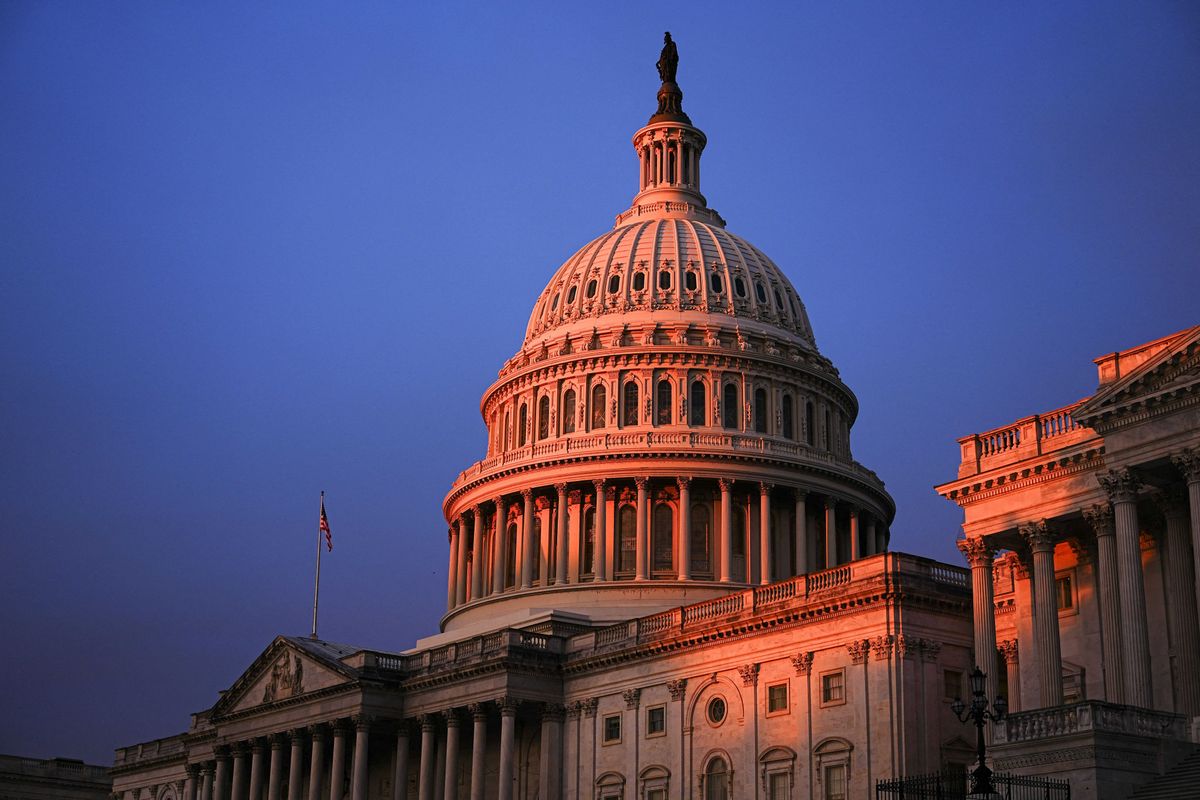
The Capitol Building, seen during the U.S. government shutdown. REUTERS/Aaron Schwartz

After 43 days, the U.S. government shutdown finally came to an end late on Nov. 12, 2025, when Congress voted through a long-overdue funding bill, which President Donald Trump promptly signed.

But the prolonged gap in government-as-usual has come at a cost to the economy.

The Conversation spoke with RIT economist Amitrajeet A. Batabyal on the short- and long-term impact that the shutdown may have had on consumers, on the gross domestic product and on international trust in U.S. stewardship of the global economy.

What is the short-term economic impact of the shutdown?

Having some 700,000 government workers furloughed has hit consumer spending. And a subset of those workers believed they may not have a job to come back to amid efforts by the Trump administration to lay them off permanently.

In fact, the University of Michigan’s monthly index on consumer sentiment tumbled to a near record low in November — a level not seen since the depth of the pandemic. Because lower consumer sentiment is related to reduced spending, that has a short-term impact on retailers, too.

And because parks and monuments have been closed throughout the shutdown, tourism activity has been down — a decline no doubt worsened by the reduction in flights enforced due to shortages in air traffic controllers.

The effect was particularly pronounced in places like Washington D.C. — one of the most popular destinations for tourists — and Hawaii. This short-term effect will likely extend to secondary businesses, such as hotels. Indeed, prior to the shutdown, the U.S. Travel Association warned that such an event would cost the total travel industry around US$1 billion a week.

And the longer-term impact?


Estimates range, but the nonpartisan Congressional Budget Office has said that the cost to America’s gross domestic product in lost productivity is in the range of $7 billion to $14 billion — and that is a cost from a self-imposed wound that will never be recovered.

And from an international macroeconomic point of view, trust in the U.S. has been hit. Even before the shutdown, political dysfunction in Washington contributed to a downgrade in the U.S. credit rating — something that could result in higher borrowing costs.

The shutdown further erodes the United States’ standing as the global leader of the free market and rules-based international order. Accompanied by the economic rise of China, this shutdown further erodes international investors’ impression of the U.S. as an arbiter and purveyor of the established trade and finance system — and that can only hurt Washington’s global economic standing.

Has the economic pain been felt evenly?

Certainly not. Large numbers of Americans have been hit, but the shutdown affected regions and demographics differently.

Those on the lower end of the income distribution have been hit harder. This is in large part due to the impact the shutdown has had on the Supplemental Nutrition Assistance Program, also known as food stamps. Some 92 percent of SNAP benefits go to American households below the federal poverty line.


More than 42 million Americans rely on SNAP payments. And they were caught up in the political maelstrom — left not knowing if their SNAP payments will come, if they will be fully funded and when they will appear.

There is also research that shows Black Americans are affected more by shutdowns than other racial groups. This is because traditionally, Black workers have made up a higher percentage of the federal workforce than they do the private sector workforce.

Geographically, too, the impact of this shutdown has been patchy.


California, Washington D.C. and Virginia have the highest proportion of federal employees, so that means a larger chunk of the workers in those regions were furloughed. Hawaii has also been disproportionately hit due to the large number of military there. One analysis found that with 5.6 percent of people in the state federally employed, and a further 12 percent in nonprofit jobs supported by federal funding, Hawaii was the second-hardest-hit state during the shutdown.
How easy is it for the US to recover from a shutdown?

Because shutdowns are always temporary, recovery depends on how long it has gone on for. Traditionally, the long-term economic trend is not badly affected by the short-term pain of shutdowns.


But it may be slightly different this time around. This shutdown went on longer than any other shutdown in U.S. history.

Also, the nature of this shutdown raises some concerns. This was the first shutdown in which a president said that backpay was not a sure thing for all furloughed federal employees. And the uncertainty over those threatened with layoffs again broke from past precedent. Both matters seemed to have been settled with the deal ending the shutdown, but even so, the ongoing uncertainly may have affected the spending patterns of many affected.

And we also do not know what the economic impact of the reduction of domestic flights will be.
Have other economic factors exacerbated the shutdown affect?


While the shutdowns in Trump’s first administration did take place while tariffs were being used as a foreign policy and economic tool, this year is different.

Trump’s tariff war this time around is across the board, hitting both adversaries and allies. As a result, the U.S. economy has been more tentative, resulting in greater uncertainty on inflation.

Related to that is the rising grocery prices that have contributed to an upward tick in inflation.


This all makes the job of the Federal Reserve harder when it is trying to fine-tune monetary policy to meet its dual mandates of full employment and price stability. Add to that the lack of government data for over a month, and it means the Fed is grasping in the dark a little when it comes to charting the U.S. economy.


India’s Green Hydrogen Ambitions Face Reality Check

Uncertain demand signals and high costs are holding back India’s green hydrogen goals and plans, the Institute for Energy Economics and Financial Analysis (IEEFA) said in a briefing note on Friday, days after a senior Indian official warned the country would miss its 2030 green hydrogen production target. 

Most projects to produce green hydrogen – via electrolysis using renewable electricity – in India are struggling to reach financial closure as buyer hesitancy amid high costs, uncertainty about long-term demand, and inadequate infrastructure slow project development, the Ohio-based think tank IEEFA said in its note

India’s National Green Hydrogen Mission (NHGM), launched in 2023 with a budget of $2.2 billion, aims to produce five million metric tonnes per annum (mmtpa) of green hydrogen by 2030.  

As of August 2025, the country had 158 green hydrogen projects at various stages of development. But a massive 94% of the planned capacity is yet to move beyond the announcement stage, and just 0.1% is under construction. Only 2.8% of the planned capacity is operational, highlighting the slow pace of project commissioning, IEEFA said. 

“Although the announced capacity is nearly 2.4 times the government’s target—reflecting strong investor interest in India’s green hydrogen story—there are concerns about how much of this capacity will materialise, given the challenges surrounding its adoption and uptake,” said Charith Konda, Energy Specialist at IEEFA and one of the authors of the note. 

Earlier this week, Santosh Kumar Sarangi, secretary at the Ministry of New and Renewable Energy, said that India would likely miss its 2030 goal of producing 5 million tons of green hydrogen per year, amid global policy shifts.  

Globally, the green hydrogen drive is losing momentum as start-ups face rising costs and uncertain demand while energy majors back out of multi-billion-dollar projects as they return to their core oil and gas business.  

By Tsvetana Paraskova for Oilprice.com


Canada and India to Partner in Critical Minerals Supply Chain

Faced with difficult trade negotiations with the United States and American tariffs on their products, Canada and India pledged to encourage long-term supply chain partnerships in critical minerals and clean energy. 

At a trade summit in India, Canada and the host country agreed to revive their stalled bilateral relations and “reiterated their commitment to deepening bilateral cooperation through sustained dialogue, mutual respect, and forward-looking initiatives,” the countries said in a joint statement. 

Canada and India have borne the brunt of U.S. President Donald Trump’s flip-flopping trade policy this year. 

President Trump last month called off all trade negotiations with Canada, the main U.S. trade partner, over a Canadian advert against the tariffs in which former U.S. President Ronald Reagan says tariffs “hurt every American”. 

India, for its part, has been singled out by the Trump Administration as a key enabler of Russian budget revenues for buying large quantities of Russian crude oil. Due to the oil purchases from Russia, President Trump in August doubled the tariff on Indian imported goods to 50%.

Both Canada and India have ambitions in the critical minerals sector, and collaboration and partnerships would benefit the clean energy and manufacturing goals of both countries.  

Canada’s new budget includes a plan for a US$1.4 billion (C$2 billion) “critical minerals sovereign fund” over five years for equity investments, loan guarantees, and offtake agreements. 

This week, Canada’s Finance Minister François-Philippe Champagne said that Canada should work to refine its critical minerals. 

“Exploration, extraction is something. But what we need is refining. That's the key,” Champagne told business leaders in Calgary. 

Canada’s Prime Minister Mark Carney has vowed to make Canada an energy superpower and the partner of choice for critical minerals supply. 

India has just announced a new royalty payment scheme for a list of critical minerals in a bid to motivate miners to ramp up local production, while it is also looking to develop cobalt and copper in Zambia, and lithium and copper assets in Chile.   

By Tsvetana Paraskova for Oilprice.com