Friday, November 14, 2025

Starbucks baristas launch strike on chain’s ‘Red Cup Day’


By AFP
November 13, 2025


Starbucks workers protest outside one of the chain's coffee shops in New York in October 2025 - Copyright AFP/File TIMOTHY A.CLARY

Hundreds of unionized Starbucks baristas kicked off an indefinite strike Thursday in cities across the United States, protesting working conditions and stalled labor negotiations.

Like last year, the work stoppage came on the coffee chain’s popular Red Cup Day, when Starbucks gives reusable cups to customers who purchase holiday-themed drinks.

The “Red Cup Rebellion” will see rallies at 4 pm local time in more than a dozen US cities, and a work stoppage by about 1,000 baristas, according to Starbucks Workers United.

More than 65 cafes in over 40 cities are part of this first phase of the strike, which the union said could expand to include more than 550 unionized locations representing over 10,000 employees.

The baristas are demanding better wages, improved working conditions, and stable and adequate hours.

“It’s hard to get more than 19 hours a week, which isn’t enough to qualify for the health care,” said Dachi Spoltore, who has worked as a barista for five years in Pittsburgh, Pennsylvania.

In the United States, health insurance is commonly provided by employers, and Starbucks only gives the benefit to employees working more than 20 hours per week.

For Lynne Fox, president of Workers United, which represents more than 90,000 employees across all industries in the United States, Starbucks management has refused to negotiate in good faith.

Founded in 2021, the Starbucks union is trying to develop a “foundational framework” on key issues such as wages, scheduling policy and access to health care.

Talks have been deadlocked since April.

In the United States, Starbucks owns nearly 10,000 cafes and has more than 7,000 franchise locations.

The company told AFP it was experiencing very little disruption on Thursday morning, ahead of the work stoppage.

“We’re disappointed that Workers United, who represents less than four percent of our partners, has called for a strike instead of returning to the bargaining table,” spokesperson Jaci Anderson said, adding that less than one percent of cafes were experiencing disruptions.

“We’ve been very clear — when the union is ready to come back, we’re ready to talk,” she added.

Organizing for a Breakout


Organizing for a Breakout

There is a military axiom that if your positions are encircled by far superior forces, you will inevitably be annihilated,  unless you break out. I have been a member of our labor movement and left wing since I got out of high school in 1979. For every one of those 46 years our labor movement has been under heavy attack, and at the end of every year we were smaller and more exhausted than when it began. This year will be no exception.

With only a few scant exceptions the U.S. labor movement continues to avoid the key question of new organizing. The call to “Organize the Unorganized!” is no longer heard. Embattled unions must draw to their support the masses of unorganized – or face destruction. As the left, we had better face up to the fact that unorganized workers do not get organized by themselves. That’s our job. William Z. Foster taught us the simple fact that, “The left wing must do the work.”  

New union organizing today continues to dwindle in scale and in degree of success, with only a few contrary examples. Much of today’s labor journalism – what little remains – tries mostly to rally the faithful by extolling mythic breakthroughs and upsurges. Readers of this good-news-only reporting might not realize that our labor movement has already been exterminated from entire industries and regions of this vast country.  They might not know that most of the unions do little to organize the unorganized.

But the recent UAW win at Volkswagen, the Staten Island Amazon success, the Teamsters’ Corewell Health East victory, UE’s addition of 35,000 new members, or the remarkable 13,000 workers in the 650+ store Workers United organizing wave at Starbucks, are all proof that large numbers of workers can be organized even in today’s hostile climate. Public opinion polls blare that overwhelming majorities of working people strongly support unions. Who among us is surprised by this fact? But why, at such a moment, are the unions doing so little to make new organizing any sort of top priority?

The only force capable of reversing labor’s decline is a unified, activated, and focused left.  A labor left which works diligently to bring the healthy center elements inside the unions to the realization that mass campaigns of new organization are not just vital to our very survival, but actually possible today. A left that comprehends the consequences of further inaction. With the legality of the NLRA now headed for our thoroughly corrupted and Trump-controlled “Supreme” Court – there is no time to waste.

Scattered but expanding efforts such as the Emergency Workers Organizing Committee (EWOC), the Inside Organizer School (IOS), various Workers Assemblies, numerous salting initiatives, and other assorted left organizing projects are reflections of the wide support for labor organizing among workers. These efforts cannot substitute for the labor unions lacking coherent organizing programs, but they are adding greatly to the process of training members and organizers in the push towards new organization.

The broad labor leadership must be challenged on this key question. Only the left possesses an understanding of the significance of new organizing. We are part of the most financially wealthy labor movement in the history of the world, yet our small organizing efforts putter along as ineffective as ever. Some unions make sporadic forays into new organizing, but timid and erratic approaches doom much new union organizing long before the employers begin their bombing.

Yes, some unions are organizing and winning, but it is largely disconnected and scattered. Sitting atop this failed organizing situation is the AFL-CIO itself, both incapable and unwilling to show leadership on this life-and-death question. My own extensive efforts to generate organizing leads, to salt, to train organizers, and to initiate real organizing campaigns ends up too often searching in vain for even a single union interested in new organizing. An end must be put to this situation.

Faced with this crisis it’s time to turn the members loose!  Members in great numbers can be trained and deployed with little delay. Then mobilized to reach out to the unorganized workers who surround us on all sides. There is no need for more complicated “studies” to find them, or expensive conferences to delay the task. New organizers must be trained basic-training style, and sent to the workplaces. Older and retired organizer talent must be tapped and mobilized, offsetting today’s dire experience deficit. It’s time for salting to be deployed on a massive scale in multiple industries, joining those salts already in place.

There is no time to wait for perfect targets to be discovered or developed. The unions who come forward can be pushed to do more. Those who sit it out will be bypassed. The labor left must mobilize, to stimulate individual participation as well as to place pressure on the unions to take this necessary action. A left obsessed with a grab-bag of disparate issues must set them aside. To the workplaces! Organize the unorganized!

Such a push will bring new drives, some wins, some losses, and valuable experience will be gained. It will certainly stimulate the employers and governments to combine and counterattack. The class struggle battle will be joined. We bet on the mood of the masses, workers across many sectors hopeful for progress, fed-up with the status quo, and tired from decades of backward steps. There are real signs that such a strategy has merit. The Starbucks organizing phenomenon itself offers one example.

Such a course of action – even if only launched in a few sectors or regions – would be electrifying. Thousands even tens of thousands would be put into motion. And the unions, now being decimated, will begin to move forward. The unorganized will join in small detachments at first, but in larger numbers as momentum builds. Breakout will become a possibility.

Is success guaranteed? Of course not. But we can proceed with the knowledge that with history as our guide, labor organizing upsurges are made possible by this chemistry. If you want to play a part in saving and rebuilding the labor movement you must jump-in and help row. It’s as simple as that. A labor left that complains, daydreams, waits on complacent labor leaders, or chooses to avoid the working class with 101 peripheral issues, will accomplish nothing.

To sum up; if we do not get out of this encirclement, and move forward towards break out, the labor movement will be annihilated. It’s that simple. All of us have a role to play, old and young, experienced and new. The labor left has a role to play, directly in the workplaces and within the unions themselves. As volunteers of all types, as organizers, as salts, and as community supporters. It’s time to go for broke and push as hard as we can on the labor leadership to either lead, or get out of the way.

Chris Townsend spent two entire careers in the U.S. labor movement, in both ATU and UE. He has organized many thousands in several hundred campaigns.  He founded the Inside Organizer School (IOS) along with Richard Bensinger and Larry Hanley in 2017. He may be reached at: cwtownsend52@gmail.comRead other articles by Chris, or visit Chris's website.
Striking Boeing defense workers to vote on latest contract

By AFP
November 13, 2025


Image: - © AFP/File JUSTIN TALLIS
John BIERS

More than 3,000 striking Boeing defense workers will vote Thursday on a revised contract proposal that comes closer to their demands.

Boeing’s latest offer — which has been endorsed by IAM District 837 union leaders behind the strike — includes an upfront “ratification bonus” of $6,000.

If accepted, striking workers in the midwestern states of Missouri and Illinois would return to work after walking off the job on August 4.

The offer replaces the prior proposal of a $3,000 signing bonus plus $3,000 in restricted stock.

The earlier contract, which was narrowly rejected by workers on October 26, also included a $1,000 “retention bonus” in year four that has been dropped in the latest version.

Boeing has said previously it was recruiting replacement workers for striking staff, and while the company is proceeding with that plan, it confirmed that workers would still have a job if they ratified the latest contract.

“We will guarantee that all IAM 837 members will be returned to work if this offer is ratified. No one would be displaced,” said a statement released by Steve Parker, president and CEO of Boeing Defense, Space and Security. “This is not something we will be able to guarantee moving forward.”

– Union leaders back offer –

Union leaders with the International Association of Machinists and Aerospace Workers (IAM) had pressed for a higher bonus more in line with the one achieved by IAM members in the Pacific Northwest last November, following a strike that lasted more than seven weeks.

In that dispute, Seattle-area IAM members won a signing bonus of $12,000 following a strike that lasted more than seven weeks. The Seattle strike shuttered two major Boeing commercial airline manufacturing plants.

IAM representatives recognized that they were unlikely to garner a $12,000 bonus for midwestern workers in light of the higher cost of living in the Seattle region compared with St. Louis, leading union representatives to push for $10,000 at one point in the negotiations.

But IAM District 837 leaders have backed the latest proposal from Boeing, saying in a message to members it “recommends acceptance of the offer” in light of the shift on the bonus proposal to a $6,000 up-front payment.

“If ratified, return-to-work would begin with the third shift on Sunday, Nov. 16,” the IAM message said.

The Boeing machinists work on F-15 and F-18 combat aircraft, the T-7 Red Hawk Advanced Pilot Training System and MQ-25 unmanned aircraft in factories in Missouri and Illinois.
‘Reckless and Irresponsible’: Trump Plans Deep Housing Cuts That Could Leave 200,000 Homeless

“HUD’s current path risks causing a dangerous spike in street homelessness,” warned a group of Senate Democrats.


A woman points to a note on her tent alerting her of a scheduled encampment cleanup on August 14, 2025 in Washington, DC.
(Photo by Anna Moneymaker/Getty Images)

Jake Johnson
Nov 14, 2025
COMMON DREAMS

Democratic lawmakers and advocates are voicing grave warnings after the Trump administration on Thursday unveiled its plan to slash funding for long-term housing programs, cuts that could leave nearly 200,000 people at risk of becoming homeless.

The New York Times reported that the administration’s new proposal for Continuum of Care (CoC) funding “shifts billions to short-term programs that impose work rules, help the police dismantle encampments, and require the homeless to accept treatment for mental illness or addiction.”

“By cutting aid for permanent housing by two-thirds next year, the plan risks a sudden end of support for most of the people the Continuum places in such housing nationwide, beginning as soon as January,” the Times added. “All are disabled—a condition of the aid—and many are 50 or older. The document does not explain how they would find housing.”

Shortly before the administration released its plan, which was first detailed by Politico in late September, a group of more than 40 Senate Democrats wrote in a letter to Housing and Urban Development (HUD) Secretary Scott Turner that the administration “must immediately reconsider these harmful and potentially illegal changes that could result in nearly 200,000 older adults, chronically homeless Americans with disabilities, veterans, and families being forced back onto the streets.”

“HUD’s current path risks causing a dangerous spike in street homelessness,” the lawmakers wrote. “We implore you to make the better choice and expeditiously renew current CoC grants for fiscal year 2025 as authorized by Congress to protect communities and avoid displacing thousands of our nation’s most vulnerable individuals.”

A HUD spokesperson responded dismissively to the letter, telling Politico in a statement that “Senate Democrats are doing the bidding of the homeless industrial complex.”

The Trump administration’s cuts come after more than 771,000 people across the US experienced homelessness on a given night in 2024, an 18% increase compared to 2023 and the highest level ever recorded.

Ann Oliva, CEO of the National Alliance to End Homelessness, said in response to the Trump administration’s plan that “people all over this nation have overcome homelessness and stabilized in HUD’s permanent housing programs.”

“Many are just beginning that process and getting a shot at a new life,” said Oliva. “HUD’s new funding priorities slam the door on them, their providers, and their communities. Make no mistake: Homelessness will only increase because of this reckless and irresponsible decision.”
Under Trump, Inflation Is Costing Average US Family $700 More Per Month

“While President Trump claimed that he would bring down prices, the reality is that Americans have seen their costs soar even higher since he took office.”


A Doral, Florida resident checks out at a Walmart on October 10, 2025.
(Photo by Jeffrey Greenberg/Universal Images Group via Getty Images)

Jake Johnson
Nov 13, 2025
COMMON DREAMS

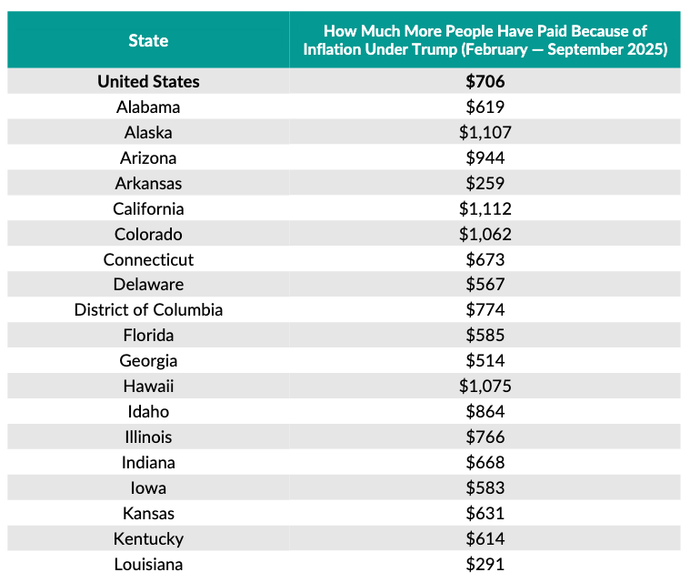
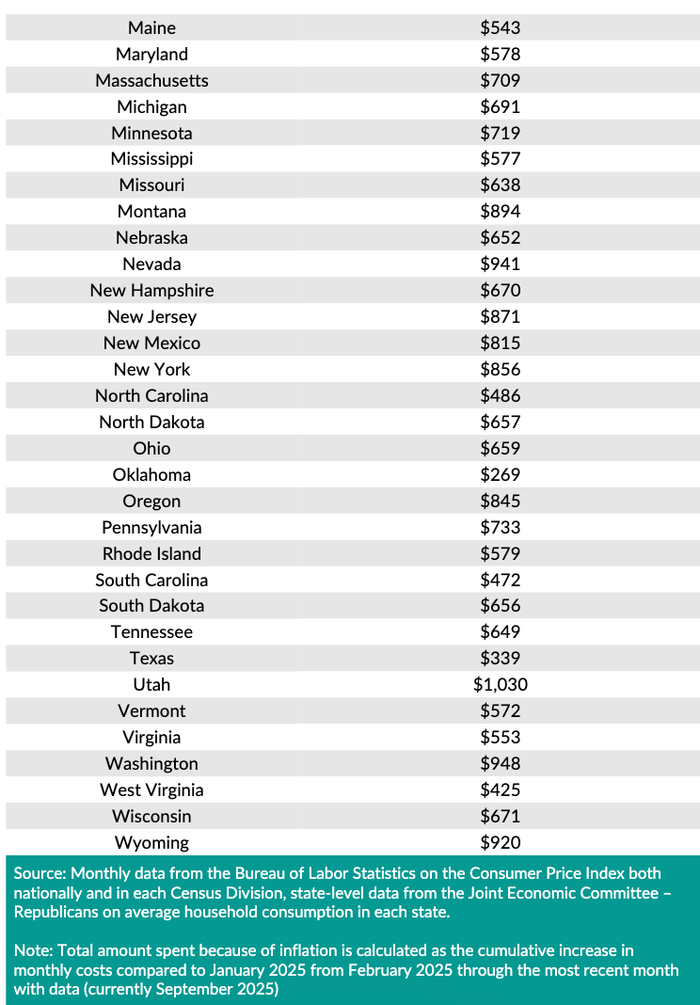
Democrats on the congressional Joint Economic Committee released a report Thursday detailing how much more the average American family in every US state is having to spend monthly to cover the rising costs of food, shelter, energy, and other necessities under the leadership of President Donald Trump.

The panel released its report on the same day the Trump administration was supposed to publish the October Consumer Price Index (CPI) data. The closely watched CPI report was delayed by the shutdown, and the Trump White House said Wednesday that it’s likely the figures will never be released.

Deploying the same methodology that Republicans used to track cost increases under former President Joe Biden, JEC Democrats found that the average US family is spending roughly $700 more per month on basic items since Trump took office in January, pledging to bring prices “way down.”

“While President Trump claimed that he would bring down prices, the reality is that Americans have seen their costs soar even higher since he took office,” said Sen. Maggie Hassan (D-NH), the JEC’s ranking member. “As families across the country spend more to pay their bills and put food on the table, Democrats and Republicans should be working together to lower costs. Instead, President Trump is pushing ahead with reckless tariffs that continue to fuel inflation and drive prices up even higher.”

In some states—including Alaska, California, and Colorado—average families are spending over $1,000 more per month to maintain their living standards as costs continue to rise, in part due to Trump’s erratic tariff regime.


The report’s findings run directly counter to Trump’s triumphant rhetoric on inflation and the US economy more broadly.

CNN‘s Daniel Dale noted earlier this week that Trump has been on a “lying spree about inflation,” falsely claiming that “every price is down” and that “everybody knows that it’s far less expensive under Trump than it was under Sleepy Joe Biden.”

“None of that is true,” Dale wrote. “Prices are up during this administration. Average prices were 1.7% higher in September than they were in January, according to the most recent figures from the federal Consumer Price Index, and 3% higher than they were in September 2024. There has been inflation every month of the term, and far more products have gotten costlier than cheaper.”

“Inflation not only very much continues to exist but has been accelerating since the spring,” Dale added. “As of September, the year-over-year inflation rate had increased for five consecutive months.”
POSTMODERN GUNBOAT DIPLOMACY

US announces ‘Southern Spear’ mission amid naval buildup in Latin America


US Defence Secretary Pete Hegseth on Thursday announced “Operation SOUTHERN SPEAR” to target “narco-terrorists", as regional tensions rose over a US naval buildup in Latin American waters. Hegseth gave no details on the mission or how it differs from existing military operations.


Issued on: 14/11/2025
By: FRANCE 24

The US strikes have now destroyed at least 20 vessels so far – 19 boats and a semi-submersible. © Handout/US Secretary of Defence Pete Hegseth's X Account/AFP

US Defence Secretary Pete Hegseth announced Thursday a military operation to "remove narco-terrorists", amid growing concerns that a US naval build-up in Latin American waters could presage land strikes and a wider conflict.

"Today, I'm announcing Operation SOUTHERN SPEAR," Hegseth posted on X. "This mission defends our Homeland, removes narco-terrorists from our Hemisphere, and secures our Homeland from the drugs that are killing our people."

The post gave no details of what the operation would entail or how it might differ from military actions already being undertaken.

President Donald Trump's administration is conducting a military campaign in the Caribbean and eastern Pacific, deploying naval and air forces for what it calls an anti-drugs offensive.

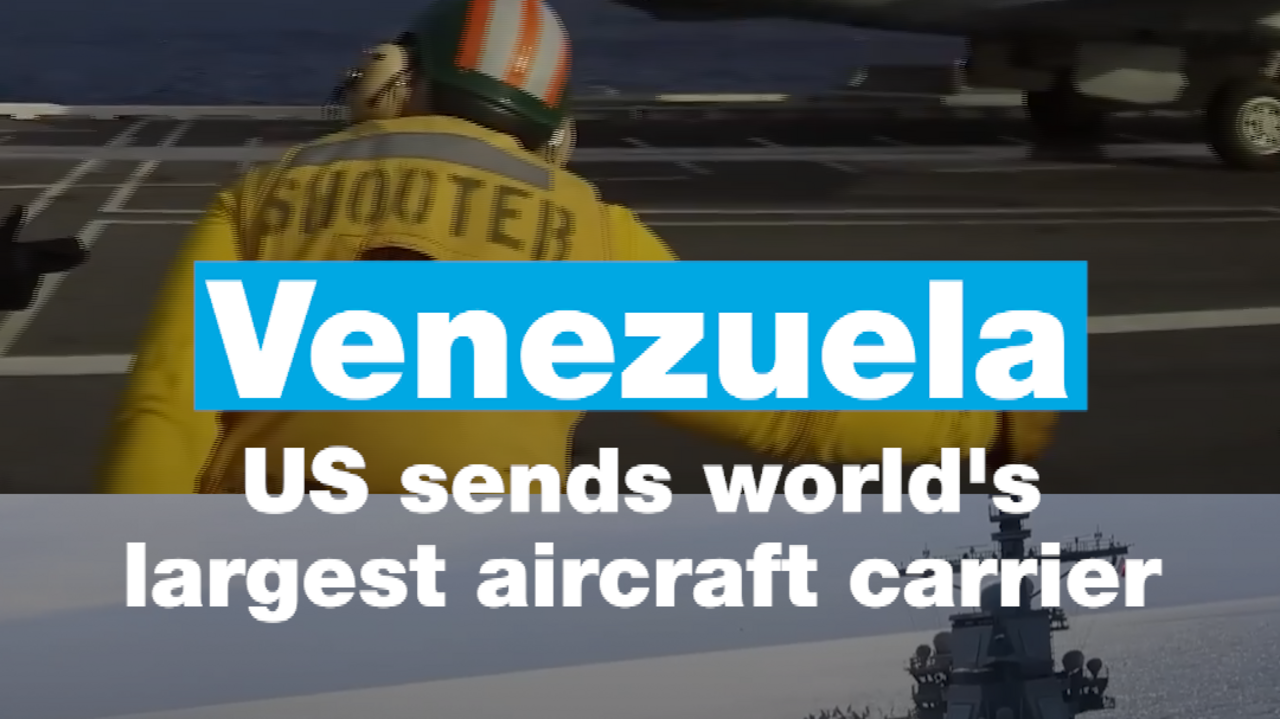
Venezuela: Tensions rise as US sends world's largest aircraft carrier © France 24
01:09


US forces have carried out strikes on about 20 vessels in international waters in the region since early September, killing at least 76 people, according to US figures.

Asked for clarification on the precise nature of Operation Southern Spear, a Pentagon spokesperson simply referred inquiries back to Hegseth's post on X.

CBS News on Wednesday cited multiple sources as saying senior military officials had presented Trump with updated options for potential operations in Venezuela, including strikes on land.

Venezuela announced Tuesday what it called a major, nationwide military deployment to counter the growing US naval presence off its coast – including a newly arrived US aircraft carrier strike group in the region.

Caracas fears the deployment, which also includes F-35 stealth warplanes sent to Puerto Rico and six US Navy ships in the Caribbean, is a regime change plot in disguise.

(FRANCE 24 with AFP)


Report: U.S. Military Destroys 20th Suspected Drug Boat

File image: the Pentagon's 15th boat strike (Pete Hegseth / X)

Published Nov 13, 2025 11:37 PM by The Maritime Executive


The U.S. military has killed another four suspects in its new airstrike campaign against suspected smuggling boats off Latin America, according to CBS and the New York Times. The strike is the 20th in the series, and brings the total number of deceased to 80 people. 

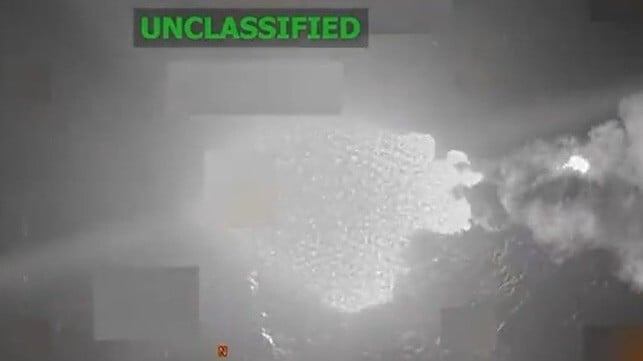
Pentagon officials confirmed the attack to both outlets, but a formal announcement of the action is still pending, reportedly because top officials are awaiting video footage.

The attacks are controversial in legal circles, both for its compliance with American law and for compliance with international human rights law, and have attracted scrutiny. "The US must halt such attacks and take all measures necessary to prevent the extrajudicial killing of people aboard these boats, whatever the criminal conduct alleged against them," said UN High Commissioner on Human Rights Volker Turk last week. 

Colombia has ceased sharing intelligence with U.S. forces over its concerns about the strikes, and the United Kingdom has decided to stop reporting the movements of suspicious boats in the Caribbean to the U.S.-led counternarcotics consortium, Joint Interagency Task Force West. The family of one of the deceased, Colombian fisherman Alejandro Carranza, has promised to sue the administration in U.S. courts for wrongful death; they have already retained an American attorney.

Out of 20 strikes, only two survivors have been rescued, one Colombian and one Ecuadorian national. Both have been repatriated, and the Ecuadorian national has been released without charges because of lack of evidence. 

The Pentagon has pledged that the attacks will continue. In addition, it is building up a substantial task force near Venezuela's coast, consistent with a large-scale military action. Sources within the department have told CBS that while no decision has been made to move ahead, the president has been briefed on possible strike options, to include attacks on land targets. The carrier USS Gerald R. Ford is now approaching the staging area, bringing four squadrons of F/A-18 Super Hornet strike fighters and three additional destroyers - enough capacity to consider a sustained air campaign. 


Secret DOJ memo justifying Trump's lethal

boat strikes hinges on his own words: report


Robert Davis
November 13, 2025 
RAW STORY


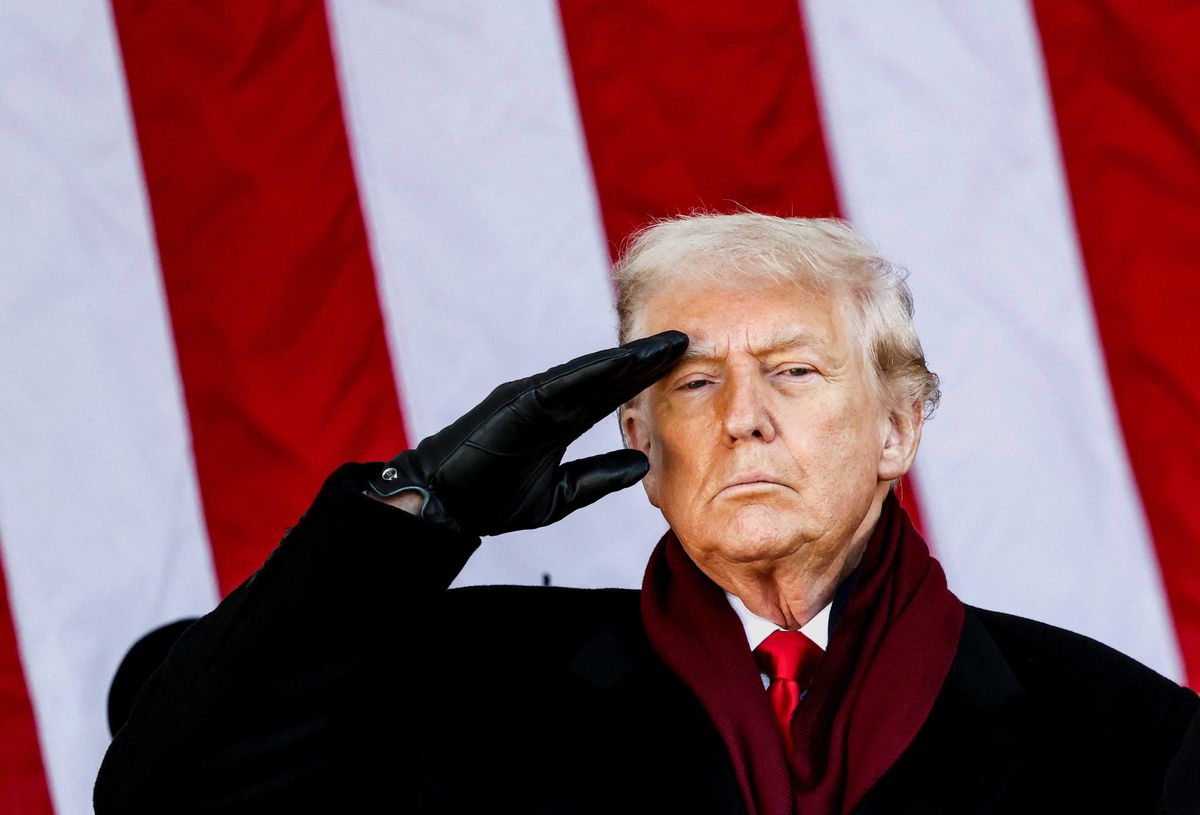
U.S. President Donald Trump salutes during a Veterans Day ceremony at Arlington National Cemetery in Arlington, Virginia, U.S., November 11, 2025. REUTERS/Kevin Lamarque

The Justice Department authored a secret memo saying it is relying on President Donald Trump's own words to justify the lethal boat strikes that have been carried out in international waters, according to a new report.

The New York Times reported on Thursday that the memo was written by the Justice Department Office of Legal Counsel, and is about 40 pages long. The report indicates that it "contradicts" experts in several ways, like suggesting the strikes are in response to an armed conflict.

About 80 people have been killed in the strikes, although the Trump administration has provided little evidence justifying the attacks.

"The memo, which was completed in late summer, is said to open with a lengthy recitation of claims submitted by the White House, including that drug cartels are intentionally trying to kill Americans and destabilize the Western Hemisphere," the report reads in part. "The groups are presented not as unscrupulous businesses trying to profit from drug trafficking, but as terrorists who sell narcotics as a means of financing violence."

"Based on such claims, the memo states that Mr. Trump has legitimate authority to determine that the United States and its allies are legally in a formal state of armed conflict with 'narco-terrorist' drug cartels, according to the people who have read the document," it adds. "The rest of the memo’s reasoning is based on that premise."

Read the entire report by clicking here.

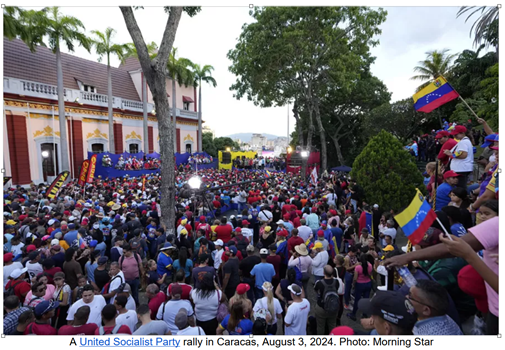
‘No More Endless Wars,’ Maduro Says to American People, Calling for ‘Peace’ in Face of Trump Threats

“No more unjust wars. No more Libya. No more Afghanistan. Long live peace,” said the president of Venezuela.


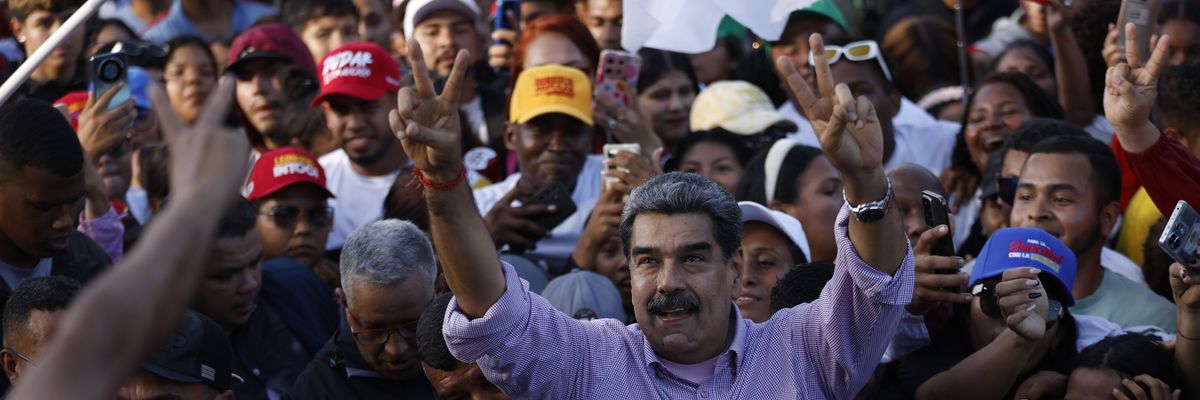
Venezuela’s President Nicolas Maduro waves to supporters during a demonstration on Youth Day in Caracas, Venezuela on November 13, 2025.
(Photo by Pedro Mattey/Anadolu via Getty Images)

Jon Queally
Nov 14, 2025
COMMON DREAMS

Just as Secretary of Defense Pete Hegseth announced new branding for the US military campaign in Latin America, now known as “Operation Souther Spear,” the president of VenezuelaNicolas Maduro, on Thursday offered a message of peace directly to the people of the United States as he warned against further conflict.

In an exchange with a CNN correspondent during a rally for the nation’s youth in Caracas, Maduro urged President Donald Trump not to prolong the region’s military engagement. Asked if he had a message for the people of the United States, Maduro said in Spanish: “To unite for the peace of the continent. No more endless wars. No more unjust wars. No more Libya. No more Afghanistan.”


‘They’re Going to Be, Like, Dead’: Trump Says Land Strikes on Venezuela Are Next


UN Experts Decry Trump Warmongering Against Venezuela as ‘Extremely Dangerous Escalation’

Asked if he had anything to say directly to Trump, Maduro replied in English: “Yes peace, yes peace.”

Hegseth’s rebranding of operations in Latin America, which has included a series of extrajudicial murders against alleged drug runners both in the Caribbean and in the Pacific, also arrived on Thursday.

He said that attacks on boats, which have now claimed the lives of at least 80 people, are part of President Donald Trump’s targeting of “narco-terrorists.” However, the administration has produced no evidence proving the allegations against these individuals nor shared with the American people the legal basis for the extrajudicial killings that deprive victims of due process.

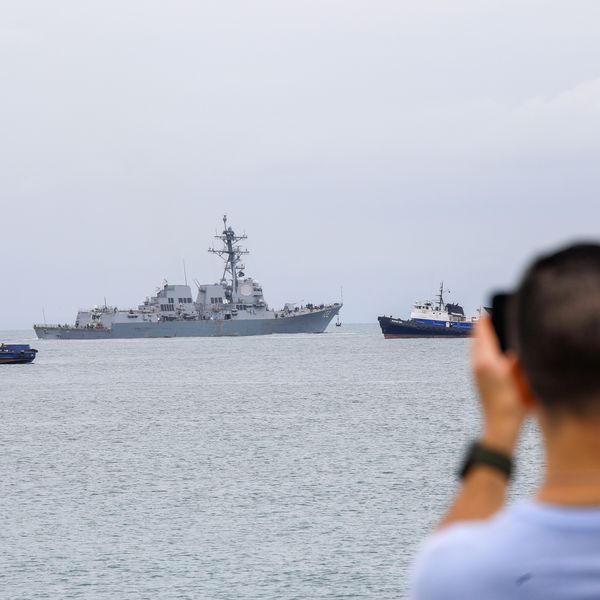
With a significant military buildup that includes the world’s largest aircraft carrier, the USS Gerald R.Ford, fears have grown that Trump is considering a wider military attack on targets inside Venezuelan territory, despite having no congressional authorization for such use of force against a nation with which the US is not at war.

CBS News reports that Trump has been briefed on possible military “options” for an assault on Venezuela, while anti-war voices continue to warn against any such moves.


“Regime Change” in Venezuela Is a Euphemism for U.S.-Inflicted Carnage and Chaos


For decades, Washington has sold the world a deadly lie: that “regime change” brings freedom, that U.S. bombs and blockades can somehow deliver democracy. But every country that has lived through this euphemism knows the truth—it instead brings death, dismemberment, and despair. Now that the same playbook is being dusted off for Venezuela, the parallels with Iraq and other U.S. interventions are an ominous warning of what could follow.

As a U.S. armada gathers off Venezuela, a U.S. special operations aviation unit aboard one of the warships has been flying helicopter patrols along the coast. This is the 160th Special Operations Aviation Regiment (SOAR) — the “Nightstalkers” — the same unit that, in U.S.-occupied Iraq, worked with the Wolf Brigade, the most feared Interior Ministry death squad.

Western media portray the 160th SOAR as an elite helicopter force for covert missions. But in 2005, an officer in the regiment blogged about joint operations with the Wolf Brigade as they swept Baghdad detaining civilians. On November 10, 2005, he described a “battalion-sized joint operation” in southern Baghdad and boasted, “As we passed vehicle after vehicle full of blindfolded detainees, my face stretched into a long wolfish smile.”

Many people seized by the Wolf Brigade and other U.S.-trained Special Police Commandos were never seen again; others turned up in mass graves or morgues, often far from where they’d been taken. Bodies of people detained in Baghdad were found in mass graves near Badra, 70 miles away — but that was well within the combat range of the Nightstalkers’ MH-47 Chinook helicopters.

This was how the Bush–Cheney administration responded to Iraqi resistance to an illegal invasion: catastrophic assaults on Fallujah and Najaf, followed by the training and unleashing of death squads to terrorize civilians and ethnically cleanse Baghdad. The UN reported over 34,000 civilians killed in 2006 alone, and epidemiological studies estimate roughly a million Iraqis died overall.

Iraq has never fully recovered—and the U.S. never reaped the spoils it sought. The exiles Washington installed to rule Iraq stole at least $150 billion from its oil revenues, but the Iraqi parliament rejected U.S.-backed efforts to grant shares of the oil industry to Western companies. Today, Iraq’s largest trading partners are China, India, the UAE, and Turkey—not the United States.

The neocon dream of “regime change” has a long, bloody history, its methods ranging from coups to full-scale invasions. But “regime change” is a euphemism: the word “change” implies improvement. A more honest term would be “government removal”—or simply the destruction of a country or society.

A coup usually involves less immediate violence than a full-scale invasion, but they pose the same question: who or what replaces the ousted government? Time after time, U.S.-backed coups and invasions have installed rulers who enrich themselves through embezzlement, corruption, or drug trafficking—while making life worse for ordinary people.

These so-called “military solutions” rarely resolve problems, real or imaginary, as their proponents promise. They more often leave countries plagued by decades of division, instability, and suffering.

Kosovo was carved out of Serbia by an illegal US-led war in 1999, but it is still not recognized by many nations and remains one of the poorest countries in Europe. The main U.S. ally in the war, Hashim Thaçi, now sits in a cell at the Hague, charged with horrific crimes committed under cover of NATO’s bombing.

In Afghanistan, after 20 years of bloody war and occupation, the United States was eventually defeated by the Taliban—the very force it had invaded the country to remove.

In Haiti, the CIA and U.S. Marines toppled the popular democratic government of Jean-Bertrand Aristide in 2004, plunging the country into an ongoing crisis of corruption, gang rule, and despair that continues to this day.

In 2006, the U.S. militarily supported an Ethiopian invasion of Somalia to install a new government—an intervention that gave rise to Al Shabab, an Islamic resistance group that still controls large swaths of the country. U.S. AFRICOM has conducted 89 airstrikes in Al Shabab-held territory in 2025 alone.

In Honduras, the military removed its president, Mel Zelaya, in a coup in 2009, and the U.S. supported an election to replace him. The U.S.-backed president Juan Orlando Hernandez turned Honduras into a narco-state, fueling mass emigration—until Xiomara Castro, Zelaya’s wife, was elected to lead a new progressive government in 2021.

Libya, a country with vast oil wealth, has never recovered from the U.S. and allied invasion in 2011, which led to years of militia rule, the return of slave markets, the destabilizing of neighboring countries and a 45% reduction in oil exports.

Also in 2011, the U.S. and its allies escalated a protest movement in Syria into an armed rebellion and civil war. That spawned ISIS, which in turn led to the U.S.-led massacres that destroyed Mosul in Iraq and Raqqa in Syria in 2017. Turkish-backed, Al Qaeda-linked rebels finally seized the capital in 2024 and formed a transitional government, but IsraelTurkey, and the U.S. still militarily occupy other parts of the country.

The U.S.-backed overthrow of Ukraine’s elected government in 2014 brought in a pro-Western leadership that only half the population recognized as a legitimate government. That drove Crimea and Donbas to secede and put Ukraine on a collision course with Russia, setting the stage for the Russian invasion in 2022 and the wider, still-escalating conflict between NATO and Russia.

In 2015, when the Ansar Allah (Houthi) movement assumed power in Yemen after the resignation of a U.S.-backed transitional government, the U.S. joined a Saudi-led air war and blockade that caused a humanitarian crisis and killed hundreds of thousands of Yemenis—yet did not defeat the Houthis.

That brings us to Venezuela. Ever since Hugo Chavez was elected in 1998, the U.S. has been trying to overthrow the government. There was the failed 2002 coup; crippling unilateral economic sanctions; the farcical recognition of Juan Guaido as a wannabe president; and the 2020 “Bay of Piglets” mercenary fiasco.

But even if “regime change” in Venezuela were achievable, it would still be illegal under the UN Charter. U.S. presidents are not emperors, and leaders of other sovereign nations do not serve “at the emperor’s pleasure” as if Latin America were still a continent of colonial outposts.

In Venezuela today, Trump’s opening shots—attacks on small civilian boats in the Caribbean—have been condemned as flagrantly illegal, even by U.S. senators who routinely support America’s illegal wars.

Yet Trump still claims to be “ending the era of endless wars.” His most loyal supporters insist he means it—and that he was sabotaged in his first term by the “deep state.” This time, he has surrounded himself with loyalists and sacked National Security Council staffers he identified as neocons or warhawks, but he has still not ended America’s wars.

Alongside Trump’s piracy in the Caribbean, he is a full partner in Israel’s genocide in Gaza and the bombing of  Iran. He has maintained the global empire of U.S. military bases and deployments, and supercharged the U.S. war machine with a trillion dollar war chest—draining desperately needed resources out of a looted domestic economy.

Trump’s appointment of Marco Rubio as Secretary of State and National Security Advisor was an incendiary choice for Latin America, given Rubio’s open hostility to Cuba and Venezuela.

Brazilian President Lula made that clear when he met Trump in Malaysia at the ASEAN conference, saying: “There will be no advances in negotiations with the United States if Marco Rubio is part of the team. He opposes our allies in Venezuela, Cuba, and Argentina.” At Lula’s insistence, Rubio was excluded from talks over U.S. investments in Brazil’s rare earth metals industry, the world’s second largest after China’s.

Cuba-bashing may have served Rubio well in domestic politics, but as Secretary of State it renders him incapable of responsibly managing U.S. relations with the rest of the world. Trump will have to decide whether to pursue constructive engagement with Latin America or let Rubio corner him into new conflicts with our neighbors. Rubio’s threats of sanctions against countries that welcome Cuban doctors are already alienating governments across the globe.

Trump’s manufactured crisis with Venezuela exposes the deep contradictions at the heart of his foreign policy: his disastrous choice of advisers; his conflicting ambitions to be both a war leader and a peacemaker; his worship of the military; and his surrender to the same war machine that ensnares every American president.

If there is one lesson from the long history of U.S. interventions, it’s that “regime change” doesn’t bring democracy or stability. As the United States threatens Venezuela with the same arrogance that has wrecked so many other countries, this is the moment to end this cycle of imperial U.S. violence once and for all.

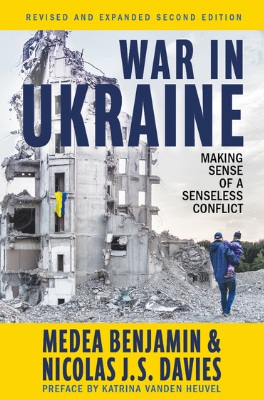
Medea Benjamin and Nicolas J.S. Davies are the authors of War in Ukraine: Making Sense of a Senseless Conflict, published by OR Books, November 2022.  Medea Benjamin is the cofounder of CODEPINK for PEACE, and the author of several books, including Inside Iran:  The Real History and Politics of the Islamic Republic of Iran. Nicolas J.S. Davies is an independent journalist, a researcher for CODEPINK and the author of Blood on our Hands:  The American Invasion and Destruction of IraqRead other articles by Medea Benjamin and Nicolas J.S. Davies.


Cash-strapped Kennedy Center letting FIFA use facilities rent-free for weeks: report


Tom Boggioni
November 13, 2025 
RAW STORY


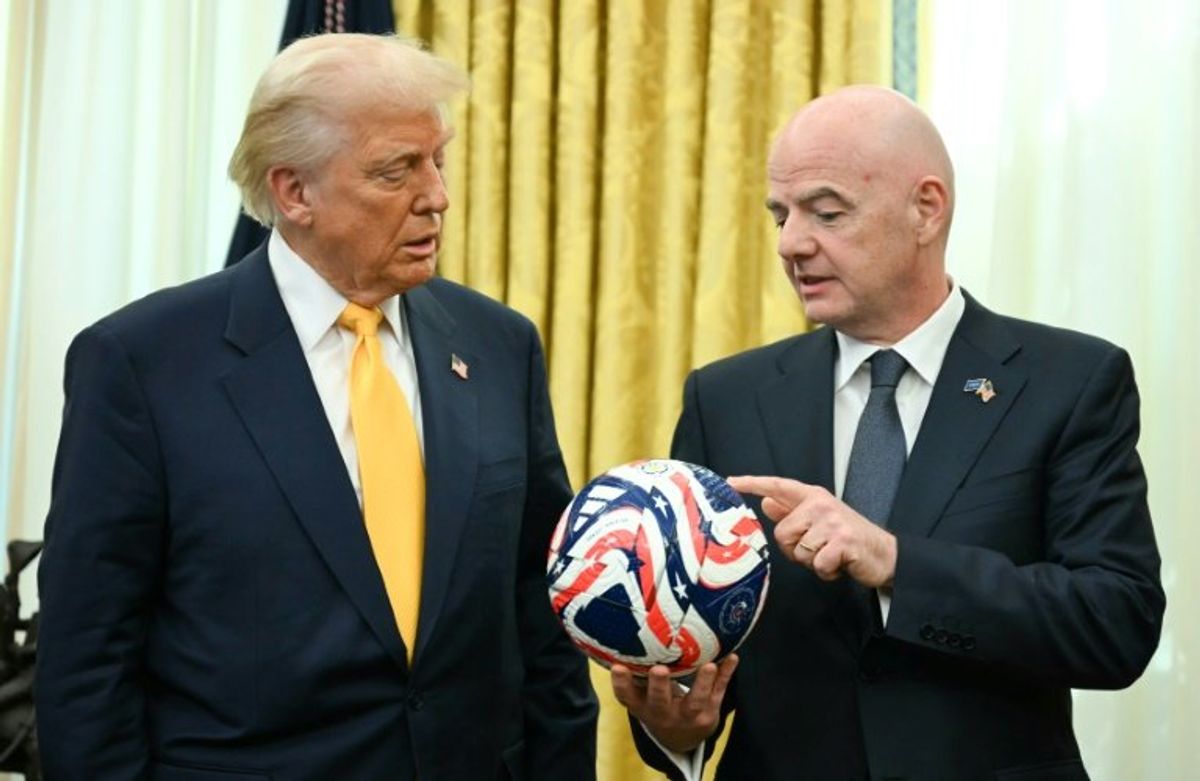
FIFA president Gianni Infantino (R) presents US President Donald Trump with the new FIFA Club World Cup official ball in the Oval office. (AFP)

The John F. Kennedy Memorial Center for the Performing Arts will be postponing previously booked events so the Donald Trump administration can let FIFA, the cash-rich governing body of international soccer, use the facilities for free in late November into early December.

According to a report from the Washington Post, the televised draw for the 2026 World Cup will occur at the nation’s cultural center which has been reeling from poor ticket sales and longtime donors cutting off funds since the president fired the board, took over control and installed his own people.

Since the takeover, major acts have cancelled after the president complained the Kennedy Center offerings were “woke,” with ticket sales collapsing, and acts that did fulfill their contractual obligations playing before a sea of empty seats.

Despite the cash crunch, Trump’s people have agreed to waive rent for FIFA, which has had the effect of putting off or cancelling previously scheduled shows that would provide much-needed revenue.

The Post’s Janay Kingsberry and Rick Maese are reporting the FIFA World Cup draw scheduled for Dec. 5, “... will occupy performance spaces and other sections of the Kennedy Center for almost three weeks, according to the documents and a center employee who spoke on the condition of anonymity because they were not authorized to discuss the agreement.”

The report notes that the event was originally planned for Las Vegas before Trump swooped in and convinced FIFA President Gianni Infantino, a frequent guest at White House events, to move it to Washington D.C.

According to the report, “The Kennedy Center currently quotes a standard rate of $39,000 to rent the Concert Hall and $18,000 for the Eisenhower Theater. Those are rates for single nights, suggesting a multiweek rental of much of the campus, such as FIFA’s, could cost significantly more.”

The popular Kennedy Center Honors program is slated to take place just two days after the FIFA takeover, with staffers worried about the limited amount of time to pull together the annual televised event.

According to a report in September from the Guardian, artists have been facing halls with up to 80 percent of seats unoccupied creating a major financial shortfall.

Less than a week ago it was reported that the Washington National Opera was looking into moving to a new location with Artistic Director Francesca Zambello stating, "It is our desire to perform in our home at the Kennedy Center. But if we cannot raise enough money, or sell enough tickets in there, we have to consider other options."

You can read more on the FIFA handover here.