Friday, December 12, 2025

Wyden Says Trump’s $12 Billion Farmer Bailout Exposes Folly of ‘Destructive Tariff Spree’

“Donald Trump’s trade war is taxing families, killing markets for our farm goods, and driving farmers into bankruptcy,” said Democratic Sen. Ron Wyden.
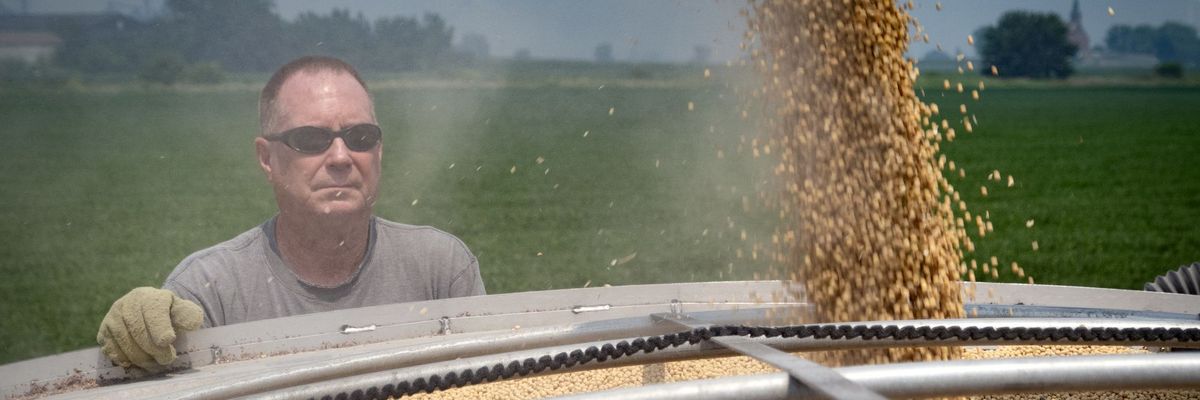


A farmer loads soybeans from grain bins into a truck on August 1, 2025 in Dwight, Illinois.
(Photo by Scott Olson/Getty Images)


Jake Johnson
Dec 08, 2025
COMMON DREAMS

Democratic US Sen. Ron Wyden was among those who emphasized Monday that President Donald Trump’s erratic tariff policies have helped create the very conditions the White House is now citing to justify its new $12 billion relief plan for American farmers.

“Instead of proposing government handouts, Donald Trump should end his destructive tariff spree so American farmers can compete and win on a level playing field,” said Wyden (D-Ore.), the top Democrat on the Senate Finance Committee. “Donald Trump’s trade war is taxing families, killing markets for our farm goods, and driving farmers into bankruptcy.”


Farmers Say Trump Tariffs Crushing Operations, Forcing Higher Prices Ahead of Holiday Season

“Trump’s plan to bail out farmers won’t even get agriculture communities back to even,” the senator added. “They’re still paying more for fertilizer, equipment, and seeds, while grown-in-the-USA farm goods are facing more obstacles than ever in foreign markets. Don’t forget that all of this trade destruction and taxing was to raise money for Trump’s massive handouts to billionaires and the ultra-wealthy.”

Trump formally unveiled the relief plan Monday afternoon at a White House roundtable with top officials, lawmakers, and farmers of corn, soybeans, and other crops. Reuters reported that up to $11 billion of the funds are “meant for a newly designed Farmer Bridge Assistance program for row crop farmers hurt by trade disputes and higher costs.” The other $1 billion is earmarked for commodities not covered by the program.

“Quite an admission that his policies have hurt Americans,” economist Justin Wolfers wrote in response to the plan.

Farm Action, a farmer-led agricultural watchdog group, welcomed the relief package but said it’s not enough to end suffering caused by “tariffs, soaring input costs, and years of volatile markets.”

“The current problems facing our agriculture system have been decades in the making due to failed policy that prioritizes commodity crops for export, which only benefits global grain traders and meatpackers,” said Joe Maxwell, Farm Action’s co-founder and chief strategy officer. “Without addressing the root causes of this issue, farmers will be left to continue relying on government assistance into the future. That is why Congress must take action and fix our failed subsidy system in the next farm bill.”

Rebecca Wolf, senior food policy analyst at Food & Water Watch, said that “bailouts are a denigrating Band-Aid to farmers whom decades of misguided domestic policy have left vulnerable to trade wars.”

“Trump’s tariff tantrum and belittling bailouts will deepen agricultural sector consolidation, funneling money to a powerful few corporations, while running farmers further into the ground,” said Wolf. “If Trump is serious about helping farmers, lowering sector consolidation and dropping food prices, he needs to look in the mirror. Chaotic tariff tantrums are no way to run farm policy. US farmers need fair prices, regional food markets, and policies that reward sustainable, humane production models—not trade wars.”

The $12 billion relief program comes after months of Trump tariffs and retaliatory actions by key nations—particularly China—that have amplified challenges facing US farmers, a key political constituency for the president.

Farmers and organizations representing them have been vocal in their criticism of Trump’s tariffs and his proposed policy responses to the problems that the duties have intensified. As the Washington Post summarized:
Earlier this spring, Trump’s tariffs on China prompted the country to halt purchases of US soybeans. Then, the president offered a $20 billion bailout to Argentina, whose soybean crop sales to China have replaced those from US farmers. Later, Trump announced that the United States would buy beef from Argentina to bring down prices for US consumers, opening a new rift between Trump and cattle ranchers.

The new assistance package is particularly aimed at helping soybean farmers, who have seen a precipitous drop in sales this year, leaving them with extra supply, as the price of soybeans fell.

In October, Illinois soybean producer John Bartman said in a message to the Trump administration that “we don’t want a bailout, we want a market.”

“Bailouts don’t work. Bailouts are band-aids,” Bartman added. “What Trump is doing is destroying our markets, and when those markets disappear, we’re not gonna get them back.”

Ryan Mulholland and Mark Haggerty of the Center for American Progress echoed that sentiment in an analysis last month, noting that “writing a check to farmers helps in the short term, but even in the most optimistic scenario, input costs are likely to remain high, demand volatile, the climate ever-changing, and corporate consolidation and investor ownership of land firmly entrenched.”

“Planning for next year’s planting season will be extremely difficult, but without a comprehensive plan to make farming a more sustainable, more prosperous enterprise, planning in subsequent years likely will not be any easier,” they added. “President Trump’s ‘solution’ is to simply pay off farmers. Farmers want trade, not aid. And they want government policy that supports farmers and the communities where they live over the long term.”

Calls to mental health hotlines rise as US  farmers buckle under stress



Photo by Heather Gill on Unsplashed

December 07, 2025

As farmers face historic headwinds and market hardships, calls to the national Farm Aid hotline and the Iowa Concern hotline — where farmers can get support in times of mental health crisis or need — are increasing.

This fall, the Iowa Concern hotline saw four to five times the number of calls it had in the same months last year, said Tammy Jacobs, the hotline’s manager.

The Farm Aid hotline is also seeing a change in the urgency of calls.

“We’re seeing more established farmers calling in — people who know how to play the game and how to access programs. They’re calling more often now, because even with all that institutional knowledge, they’re still running into issues for the first time that are more complex and difficult to solve,” said Lori Mercer, a Farm Aid hotline operator. “The system that’s in place is simply letting them down. There’s just no further safety net.”

Research shows farmers die by suicide at least twice as often as people in the general population, so there’s urgency to address the uptick in need.


“It’s a huge issue. I mean, we’ve known at least three families this year whose loved ones died by suicide,” said Emma Yerkey, who’s part of the Ag Chapter of Gray Matters, a monthly meetup for ag producers around the Quad-Cities to talk about their struggles.

Farmers experience a lot of stressors and uncertainty that they can’t control — isolation, weather changes, and financial pressures — along with low access to mental health care in rural areas and stigma that may make them keep their pain to themselves. Market conditions made worse by a trade war and inflation are adding to the stress. Mental health professionals are thinking outside the box to get producers care.

Understanding the stress

Yerkey’s family farms corn, soybeans, and hay in Geneseo, Illinois, on land they’ve owned since the Civil War. The farm is filled with memories, especially of her dad, Tim Yerkey.

She played baseball with him in their driveway, the family ate meals together in the home, and, one year, her father helped her raise a ribbon-winning calf.

“That was a really good memory that I have with him,” Yerkey said.

But the farm could be stressful, too. Tim Yerkey worked the land with his family, but at times had to take outside jobs to make ends meet. In 2011, he’d been struggling for about a year when spring floods left fields underwater. He’d reached out to friends and visited the emergency room seeking help, only to be told there were no beds, Yerkey said. He died by suicide in June 2011.

“I miss my dad, and I don’t want anybody else — or any other family — to go through that,” Yerkey said.

But many farming families experience similar pain. Between 2003 and 2017, more than 1600 farmers died by suicide, the majority older white men.

Experts say factors that contribute to stress and higher suicide rates among farmers include isolation, easy access to guns, a cultural expectation of toughness, stigma around seeking mental health care, worries about who will take over the farm, and a lack of recognition for their hard work.

Financial losses and stress are also significant risks for depressive symptoms. And right now, times are tough for farmers.

Producers have endured high inflation and growing input costs on farms since at least 2020. The spread of COVID and, more recently, policy decisions like President Donald Trump’s tariffs and increases in immigration enforcement have all increased operating costs. At the same time, prices for major commodities are low — lower than the cost to grow them. Corn prices are about $0.85 below the break even point and soybeans are about $2 below.

This year, many states are expecting a record corn crop, but farmers aren’t celebrating.

“It’s very discouraging for farmers to think that they’ve done all the things right in their fields and have put innovations in place and made good decisions, but yet, even with strong yields, they’re gonna be facing a loss on what they’re producing,” said Aaron Lehman, president of the Iowa Farmers Union.


In 2024, the U.S. exported about 42% of its soybeans, most of it to China. With China not buying in the midst of the trade war, some farmers who usually send their crop abroad have struggled to find new markets. The U.S. in November struck a new deal with China, potentially extending a lifeline to producers still scrambling to move their harvest, but it remains to be seen what China will actually buy.

Some programs that helped connect farmers to domestic markets, like the Local Food Purchase Assistance initiative, have also been cut by the USDA.

“Since the beginning of the year, the farmers have just been thrown into a different level of uncertainty with policy things like losing access to some markets through tariffs, losing access to staff and programming with the government shutdown, and the funding freezes. A big one we’re hearing about is losing access to labor with the ICE raids, etcetera,” said Mercer, with Farm Aid. “I was just speaking to a farmer the other day who was basically watching his crops rot on the vines because his usual labor support was just too afraid to show up this year.”

In addition to all of the financial stress, farmers say they feel the work can be thankless.


“This work is incredibly hard, and nobody understands where their food comes from. Nobody knows that [farmers] work 20 hours a day so that they can have a strawberry,” said Anna Scheyett, a retired professor of social work who studied farmer stress and suicide at the University of Georgia.

Meeting farmers where they are

Despite the many struggles, some families are finding hope and community in turbulent times. To honor her dad, Yerkey joined the new Ag Chapter of Gray Matters, a Quad-Cities nonprofit that provides mental health resources, education, and safe spaces.Tim Yerkey and his grandfather, Clifford Rahn, who farmed the family land starting in the 1940s. (Photo courtesy of Emma Yerkey)

Gray Matters hosts monthly Barn Talks, where participants can share what’s weighing on them, whether it’s stress, depression, anxiety, or other struggles, and receive support from others. The organizers hope to build a sense of community and normalize talking about mental health.

“Feeling comfortable and safe to say that — ‘Hey, I am stressed out, or I am really hurting right now. Maybe I am depressed, maybe I have some anxiety,’ — whatever it might be,” said Heather Gritton, one of the group leaders.

Offering spaces where farmers can meet and take some of that load off their shoulders can help break down the stigma around getting help, said Sara Kohlbeck, assistant professor of psychiatry and behavioral medicine at the Medical College of Wisconsin.

It’s key for those spaces to be easily accessible to farmers.

“Bringing that support to the farmers — or to the rural communities — rather than expecting those folks to come and get those resources for themselves is really important,” Kohlbeck said. “Otherwise, you know, we’ve got folks that are kind of suffering in silence because they just don’t have the time. Sometimes there’s stigma, and there’s kind of that pride issue.”

There are also practical barriers. Telehealth isn’t a viable option for many farmers, as cell and internet reception in rural areas are limited. Driving long distances to see a counselor can also be impractical, especially during the busy harvest season.

Another approach to reaching farmers has been to train people who farmers trust and regularly interact with — such as suppliers, lenders, large animal veterinarians, and spouses — to recognize when someone may be dealing with mental health challenges and teach them how to support them and direct them to resources.

For example, Scheyett has trained agricultural lenders to recognize warning signs of suicide ideation and taught them how to respond. She’s also trained extension agents to take a few minutes at the beginning of agricultural production meetings to talk about stress and offer resources, something she says can make a real difference for farmers.

In one study, Scheyett and her co-authors found that farmers who were present at meetings where about 10 minutes were dedicated to talking about stress management walked away with new ideas for managing stress and a higher level of commitment to doing it.

Sometimes, offering practical and logistical solutions to big problems can be a part of mental health services, too.

“If a farmer has not really looked and done a deep dive into their farm financial system, we have a program that’s called farm financial associates, and they’ll come out to the farm, do a big evaluation over the farming operation to see where the hard points are and is there a way to switch things around, diversify, in order to help offset some of the farming losses and costs,” Jacobs, with the Iowa Concern hotline, said.

For farmers facing grain storage challenges, Jacobs suggested partnering with other farmers as an alternative to traditional co-op arrangements.

Scheyett suggests everybody can help by thanking farmers the same way we do with the military.

“Every time I see a farmer, I say thank you — thank you for your service, because what you do keeps us healthy, fed, and clothed,” Scheyett said.

It’s all in the hopes of providing care and saving lives.

“Even if you can save one life, I mean, that’s so worth it,” Yerkey said. “I feel very passionate about it.”

This story is a product of the Mississippi River Basin Ag & Water Desk, an independent reporting network based at the University of Missouri in partnership with Report for America, with major funding from the Walton Family Foundation.

Robert Reich 

This is what happens when a bonkers president takes over the private sector


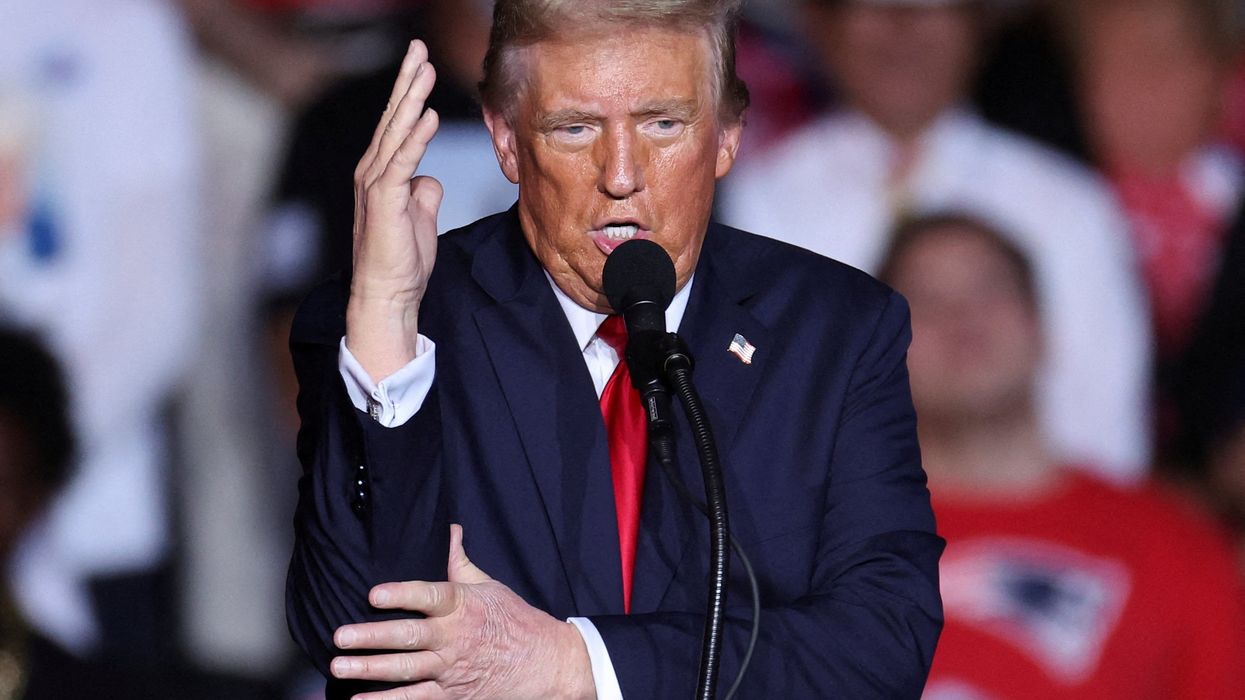
Republican presidential nominee and former U.S. President Donald Trump speaks during a rally, in Henderson, Nevada, U.S. October 31, 2024. 
REUTERS/Mike Blake TPX IMAGES OF THE DAY

December 12, 2025 

What’s really at stake in the fight between Netflix and Paramount for Warner Bros Discovery?

Let me make it clear I’m against Netflix acquiring Warner Bros Discovery. That would concentrate corporate power in ways that harm consumers and distort American politics.

But Paramount’s acquisition of Warner Bros would be just as bad, if not worse.

What’s at stake in all of this is Trump’s — or any president’s — power over the private sector of the American economy.

The back story here is that Warner Bros Discovery owns CNN, and Trump loathes CNN. He frequently complains that its coverage of him has been too negative. He’s termed those running CNN “corrupt and incompetent” and has told top aides he wants new ownership of CNN, along with changes in CNN programming and personnel.

Last week, Trump declared he would involve himself in any proposed sale of Warner Bros, and on Wednesday he said it was “imperative” that the transaction result in the sale of CNN and replacement of its leadership.

Another part of the back story involves Larry Ellison — one of the richest people in America and the largest individual shareholder of Paramount, whose son runs it, and whose operation on Monday launched an unfriendly tender offer for Warner Bros Discovery, to counter Netflix’s friendly offer.

Ellison is an ally of Trump. He has assured Trump and his top aides that if Paramount gains control of Warner Bros and CNN, it will get rid of CNN personnel whom Trump apparently detests, including Erin Burnett and Brianna Keilar. (Paramount already owns CBS.)

Paramount is portraying itself as the best bid for Warner Bros Discovery because it will have an easier time “getting regulatory approval” of the deal than will Netflix — even though Paramount is relying on financial backing from three Middle East sovereign-wealth funds (along with Jared Kushner).

Who in their right mind would give Middle East wealth funds any leverage over CBS and CNN? Answer: Trump, whose family business is already deeply dependent on financing from the Middle East.

Trump trusts the Ellisons because they pushed Paramount to settle Trump’s frivolous $16 million lawsuit against CBS and cancel Stephen Colbert — much to Trump’s delight.

Trump loyalist flak Brendan Carr, the chairman of the Federal Communications Commission, then promptly approved the $8 billion merger of Paramount with Skydance Media.

Trump’s alliance with Larry Ellison goes back to 2020, when Ellison hosted a fundraiser for Trump at his home. According to court records, after the 2020 election, Ellison participated in a phone call to discuss how Trump’s defeat could be contested. In June 2025, he and his firm, Oracle, were co-sponsors of Trump’s military parade in Washington.

Now in charge of Paramount and its CBS division, Larry’s son, David Ellison, has gutted DEI policies at CBS, put right-wing hack Kenneth R. Weinstein into a new “ombudsman” role there, and made anti-“woke” opinion journalist Bari Weiss editor-in-chief of CBS News, despite her lack of experience in either broadcasting or newsrooms.

The FCC’s Carr has already effectively blessed the Paramount deal. What other “regulatory approval” might be needed? Theoretically, the Federal Trade Commission could object on antitrust grounds. But, as Trump did at the FCC, he planted loyalists at the FTC to do his bidding. (Pam Bondi has asserted that she and the Justice Department’s antitrust division will oversee the merger.)

This past week, the Supreme Court heard arguments about whether Trump had a right to fire an FTC commissioner (the FTC, like the FCC, is supposed to be an “independent” regulatory agency).

Chief Justice John Roberts — who believes that the framers of the Constitution intended a “unitary” executive rather than one whose authority might be shared with independent regulatory agencies established by Congress — suggested during the oral argument that Trump’s removal power should be the norm.

But if Trump’s maneuvers over Warner Bros Discovery has any lessons for the future, the independence of regulatory agencies may be more important than ever before. Otherwise, a wannabe tyrant sitting in the Oval Office can interfere in any business transaction he wishes, to enlarge his own power and stifle criticism.

Robert Reich is a professor of public policy at Berkeley and former secretary of labor. His writings can be found at https://robertreich.substack.com/
New Unemployment Claims Jump to Highest Level in Months as Trump Economy Teeters

“While President Trump calls affordability a ‘hoax,’ countless families are being forced into impossible tradeoffs every day.”


Job seekers attend a career fair in Harlem on December 10, 2025, in New York City.
(Photo by Spencer Platt/Getty Images)

Jake Johnson
Dec 11, 2025
COMM0N DREAMS


Federal data released Thursday shows that the number of Americans filing for unemployment benefits surged last week, another indication of growing instability in President Donald Trump’s economy as corporations lay off workers en masse and prices continue to rise.

For the week ending December 6, new unemployment claims jumped to 236,000—an increase of 44,000 from the previous week, according to figures from the US Labor Department.


In Trump Economy, Holiday Spending Plans Plummet and Layoffs Hit Highest Level Since Covid Pandemic


‘Yikes’: New Jobs Data Further Undermines Trump Fiction of Thriving Economy

Andrew Stettner, an unemployment insurance expert at The Century Foundation (TCF) noted that new unemployment claims are now at their highest level since early September.

“These totals don’t include an additional 12,732 former federal workers who are also now relying on unemployment benefits, as the number of federal workers on UI has stayed at levels not seen since the pandemic, even after the government shutdown has ended,” Stettner said.

“This disappointing news comes on the heels of other troubling labor market data,” he continued, pointing to private-sector payroll figures showing the US economy lost 32,000 jobs in November. “With hiring still so weak, it is no surprise that the percentage of workers feeling confident enough to quit their job dropped to its lowest level since the beginning of the pandemic in April 2020. In fact, our polling shows that 27% of Americans said they took on a ‘second job, side hustle, or gig work’ in the past year to help make ends meet.”

The updated unemployment numbers come as Trump is on an economic messaging tour during which he has dismissed the notion that his policies have worsened the country’s affordability crisis, calling such claims a Democratic “hoax” even as polling shows Americans—including a significant percentage of his own voters—increasingly blame the president for rising costs groceries and other necessities.

“We inherited the highest prices ever, and we’re bringing them down,” Trump said, falsely, during a stop in Pennsylvania earlier this week.

“We’re crushing it, and you’re getting much higher wages,” the president added, another falsehood.

Survey data released Thursday by The Century Foundation shows that Americans are increasingly skipping meals and doctor visits as prices rise.

“Roughly three in 10 voters delayed or skipped medical care in the past year due to cost, while nearly two-thirds switched to cheaper groceries or bought less food altogether,” the group noted in a summary of its findings. “About half tapped into their savings to cover everyday expenses.”

Julie Margetta Morgan, president of The Century Foundation, said in a statement that “while President Trump calls affordability a ‘hoax,’ countless families are being forced into impossible tradeoffs every day as a result of Trump’s disastrous policies that are jacking up prices.”

“Working-class Americans are living in a different, harsher economy under Trump,” Morgan added, “and they feel the impacts of financialization—and the added risks and costs that come with it—most severely.”
How the Past 25 Years of Big Oil’s Lie-Filled Ads Have Delivered ‘Climate Catastrophe’

“Big Oil’s climate deception has evolved from lying about the problem to lying about solutions,” said the head of the Center for Climate Integrity.


Sunny Isles Beach, FL, USA - August 04, 2024: An Exxon gas station with 7-Eleven branding is seen against modern high-rise buildings, palm trees, and a passing black SUV.
Getty Images

Jessica Corbett
Dec 11, 2025
COMMON DREAMS

A group that supports communities’ efforts to hold Big Oil accountable for decades of deception related to the climate emergency released a report on Thursday after reviewing more than 300 advertisements from four fossil fuel giants since 2000.

Over the past decade, people across academia, civil society, Congress, and journalism have examined the evolving lies of oil and gas giants, which have long been accused of using Big Tobacco’s playbook.


Washington Homeowners Sue Big Oil Over Soaring Insurance Costs

“Using evidence from congressional investigations, advertising, and public relations documents, independent journalism, and watchdog reports,” the new analysis states, “Big Oil’s Deceptive Climate Ads explains how the pervasive and misleading messaging in BP, Chevron, ExxonMobil, and Shell’s advertisements has not only misrepresented the companies’ business practices, but, over the span of two and a half decades, effectively cultivated a larger, deceptive narrative that oil and gas companies are leaders in the fight against climate change, when in fact they are actively fueling climate catastrophe around the globe.”

The Center for Climate Integrity (CCI) report notes that “while oil and gas companies and their trade associations publicly denied the risks and realities of climate change for decades, growing public understanding of climate science around the turn of the 21st century eventually meant that outright denial was no longer sufficient to protect their bottom line.”


“During this period, major oil and gas companies began to reposition themselves publicly as active partners in the fight against climate change, even while they continued to increase fossil fuel production, invest minimally in clean energy, oppose energy efficiency initiatives, and promote technically or economically infeasible solutions,” the document details.

“To convey this misleading image to the public,” the publication continues, “Big Oil companies carried out extensive advertising campaigns, inundating the public with messaging that creates an overall deceptive portrait of their true role in the climate crisis.”

CCI sorted the ads across seven categories of deception: emissions reductions, renewables investments, individual action, natural gas, carbon capture and storage, hydrogen, and algae biofuels. The group found that “these skillfully crafted advertisements often include partially truthful statements but omit relevant contextual information to create an inaccurate or incomplete representation of the initiative, product, or technology they promote.”

“For instance, advertisements that portray natural gas as beneficial for the climate because it ‘lowers emissions’ are misleading by omission, because although gas produces less CO2 and other pollutants than coal when burned, it still emits significant quantities of greenhouse gases, including CO2 and methane, that pose a serious threat to the climate,” the publication points out. “This tactic, known as paltering, has been at the core of Big Oil companies’ climate advertisements for the past 25 years.”


(Image: Big Oil's Deceptive Climate Ads)

The report also acknowledges the public response: “Market research shows BP’s ‘Beyond Petroleum’ campaign increased brand favorability among US and UK audiences, leading viewers to associate the oil giant with efforts to reduce carbon emissions at a time when it was the largest producer of fossil fuels in the UK and North America. Chevron’s ‘Real Issues’ campaign, which promoted its energy conservation initiatives and renewables investments, improved the company’s reputation among ad-exposed audiences.”

The publication comes as the climate emergency continues to worsen, with deadly impacts, and world leaders fail to take adequate steps toward “a just, equitable, fossil-free future.” Meanwhile, communities continue to call for not only action to limit future global warming but also consequences for the big polluters that created the global crisis.

The report similarly concludes that “oil and gas companies—including BP, Chevron, ExxonMobil, and Shell—must be held accountable for the damages their deception has caused. As climate accountability lawsuits filed by communities across the US make their way through the courts, ongoing advertising deception by the four oil majors’ in this report demands further scrutiny and investigation.”

CCI president Richard Wiles echoed that demand in a Thursday statement: “Big Oil’s climate deception has evolved from lying about the problem to lying about solutions. For two-and-a-half decades now, these companies have sold the public a false and misleading image of their industry as working to solve the climate crisis, all while doubling down on fossil fuels and making the problem worse.”

According to Wiles, “Any business that floods consumers with such brazenly deceptive advertising must be held accountable.”
‘A Forceful Stand for Our Constitution’: Judge Orders Release of Kilmar Ábrego García

Judge Paula Xinis found that the Trump administration redetained the Salvadoran father of three “without lawful authority.”


Kilmar Ábrego García speaks alongside CASA’s Lydia Walther-Rodríguez in Baltimore on August 25, 2025.
(Photo by Roberto Schmidt/AFP via Getty Images)

Brett Wilkins
Dec 11, 2025
COMMON DREAMS

A federal judge on Thursday ordered the immediate release of Kilmar Ábrego García—who was wrongfully deported to El Salvador by the Trump administration earlier this year—from US Immigration and Customs Enforcement custody.

“Since Ábrego García’s return from wrongful detention in El Salvador, he has been redetained, again without lawful authority,” US District Judge Paula Xinis wrote in her ruling. “For this reason, the court will grant Ábrego García’s petition for immediate release from ICE custody.”


‘A Good Day for Our Democracy’: Judge Orders Trump to End National Guard Deployment in LA


In early April, Xinis—an appointee of former President Barack Obama—ordered the Trump administration to facilitate Ábrego García’s return to the United States after he was deported in March to the abuse-plagued Terrorism Confinement Center (CECOT) maximum security prison in El Salvador. This, after the US Department of Justice (DOJ) admitted in a court filing that Ábrego García was wrongfully deported due to what it called an “administrative error.”

The US Supreme Court also weighed in on the case in favor of Xinis’ ruling. However, the Trump administration refused to comply with the judge’s order, arguing that it had no legal obligation to return Ábrego García to the US and could not force El Salvador’s government to free him.

The DOJ dubiously contended that Ábrego García—a 30-year-old Salvadoran father of three who entered the US without authorization when he was a teenager—was a member of the gang MS-13, an allegation based on a statement from an anonymous police informant. The Trump administration deported him despite a judge’s 2019 ruling that he could not be removed to El Salvador because he could be tortured there.

An attorney representing Ábrego García said at the time that his client suffered beatings and “psychological torture” while imprisoned at CECOT.


Ábrego García was transferred to a lower security Salvadoran prison before being sent back to the US on June 6 to face DOJ charges for allegedly transporting undocumented immigrants, to which he pleaded not guilty. He was immediately taken into custody and sent to an immigration detention facility in Tennessee.

On July 23, federal Magistrate Judge Barbara Holmes in Tennessee ruled that Ábrego García must be released from custody pending his trial. That same day, Xinis issued a simultaneous ruling in Ábrego García’s wrongful deportation case blocking ICE from immediately seizing him once released in Tennessee and ordering the government to provide at least 72 hours’ notice before attempting to deport him to any third country.

As Ábrego García was released on August 22, the US Department of Homeland Security (DHS) informed him that he could be deported to Uganda—one of several nations to which the administration has sought to send him. A bid by Ábrego García to reopen a previous bid for asylum in the US was denied in early October by an immigration judge.

Ábrego García is currently being held in an immigration detention center in Pennsylvania. Responding to Xinis’ latest ruling, DHS spokesperson Tricia McLaughlin said Thursday that “this is naked judicial activism by an Obama-appointed judge.”

“This order lacks any valid legal basis and we will continue to fight this tooth and nail in the courts,” she added.

Advocates for Ábrego García welcomed Thursday’s ruling.

“For months, the Trump administration has sought to deny Kilmar Ábrego García his rights to due process and fair treatment by our justice system,” US Sen. Chris Van Hollen (D-Md.)—who met with Ábrego García in El Salvador in April—said on social media.

“Today’s ruling by Judge Xinis—requiring the government to immediately release him—is a forceful stand for our Constitution and all of our rights,” he added.

Lydia Walther-Rodríguez, chief of organizing and leadership at CASA, hailed what she called “a moment of joy and relief.”

“Kilmar finally gets to return home to his family, where he belongs,” she said. “No one should be separated from their loved ones while fighting for justice.”
Autopsy Says Corporate Capture, Support for Genocide Were Key Factors in Democrats’ 2024 Disaster

“Harris and the Democratic Party leadership prioritized the agendas of corporate donors and gambled on a centrist path, while largely abandoning working-class, young, and progressive voters.”


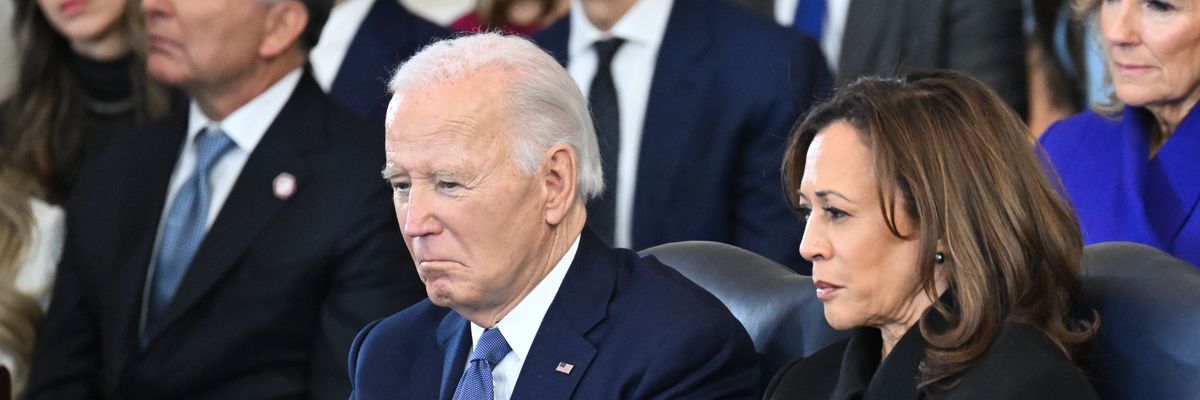
Joe Biden and Kamala Harris attended the inauguration ceremony of President Donald Trump on January 20, 2025.
(Photo by Saul Loeb/Pool/Getty Images)

Jake Johnson
Dec 11, 2025
COMMON DREAMS


As the Democratic establishment slow-walks its own assessment of what went wrong in last year’s elections, an outside autopsy released Thursday argues the party’s failure to sufficiently appeal to and mobilize working-class voters as well as its complicity in Israel’s genocide in Gaza were key factors behind the failure to prevent President Donald Trump from securing a second White House term.

The report, authored by journalist Christopher D. Cook and published by the progressive advocacy group RootsAction, argues there were five primary reasons for former Vice President Kamala Harris’ loss to Trump:Harris’ loss of nearly 7 million voters who backed Joe Biden in 2020;
Biden’s refusal to exit the top of the ticket until just months before the election;
The Democratic Party’s decision to prioritize courting so-called moderate Republicans and corporate donors over organizing working-class voters;

Support for Israel’s genocidal assault on Gaza; and
The loss of young-voter support.

Cook acknowledges that certain “external factors” impacted the 2024 contest beyond the Democratic Party or the Harris campaign’s control, including “immense special-interest spending to manipulate voters’ information and perceptions on social media platforms” such as Elon Musk’s X and racism and sexism, which “certainly disadvantaged” the former vice president.

But ultimately, Harris’ campaign and the leadership of the Democratic Party “bear responsibility for Trump’s return to the White House,” the report says.

“This was a preventable disaster, but Harris and the Democratic Party leadership prioritized the agendas of corporate donors and gambled on a centrist path, while largely abandoning working-class, young, and progressive voters,” Cook said in a statement.

The report places significant emphasis on the Harris campaign’s fateful decision to openly appeal to Republican voters in the hope that some would abandon Trump—a strategy that Hillary Clinton pursued during her 2016 presidential bid, to disastrous effect.

Cook points to the Harris campaign’s embrace of former Rep. Liz Cheney (R-Wyo.) as the most galling example of this strategy.

“Harris and Cheney—a Republican who had become a pariah in her own party—campaigned for several days together,” the report observes. “On the campaign trail, they repeatedly hit high-minded themes about the threat that Donald Trump posed to American democracy, while scarcely speaking to voters’ more urgent concerns about the state of the economy.”

The campaign’s gamble that it could appeal to potential GOP swing voters while keeping the Democratic base intact “proved to be a huge mistake,” the report says, arguing the approach muddied “Democrats’ message about economic inequality” while “consuming valuable campaign resources that should have been spent on a more robust base turnout operation.”

The report cites a “glaring instance” in the critical battleground state of Pennsylvania, which Trump ended up winning by fewer than two percentage points:
As the New York Times reported, Harris campaign staffers in Pennsylvania were so concerned about poor outreach to Black and Latino voters in crucial areas of Philadelphia, they met secretly at a donut shop and formed a “rogue” voter turnout operation to reach these core Democratic constituents. In this clandestine operation, hastily conceived in the waning days of the campaign, members of Harris’s team set out to knock on the doors of as many Black and Latino voters as possible in a desperate dash to shore up Harris’ numbers among what should have been core constituencies.

The Harris campaign also received guidance and support from corporate interests and prominent billionaires, which Cook names as a “likely factor for why more working-class voters walked away from the Democrats.”

“Due to these corporate influences, including from billionaire Mark Cuban and others, the Harris campaign avoided any bold policy proposals confronting corporate power, instead adopting ‘marginal pro-business tweaks to the status quo that both her corporate and progressive allies agreed never coalesced into a clear economic argument,’” Cook wrote, citing the Times.

On Gaza, the postmortem notes that Harris “offered no substantive changes from Biden’s unpopular policies backing Israel,” fueling a sharp drop-off in support among Arab Americans and young voters.

“Extensive polling suggests that Biden, and later Harris, could have inspired and mobilized these voters by campaigning on policies such as cancelling student debt, expanding healthcare access, curbing support for Israel’s siege of Gaza, and boldly promoting economic populist policies,” the report says, pointing to the success of progressive ballot measures even in red states where Harris struggled.

In coming elections, the report concludes, Democrats must learn from their recent failures and embrace highly popular “economic populist policies”—from Medicare for All to higher corporate taxes to a long-overdue federal minimum wage hike—to build a lasting working-class coalition.

“The Democratic Party must show voters that it has a spine and can stand up to corporate and big-money interests,” the report says.
Trump’s Billionaire Education Secretary Makes ‘Backroom Deal’ to Shaft Low-Income Borrowers

Amid a cost-of-living crisis, millions of low-income borrowers may now be forced to spend several hundred more dollars a month paying for student loans.


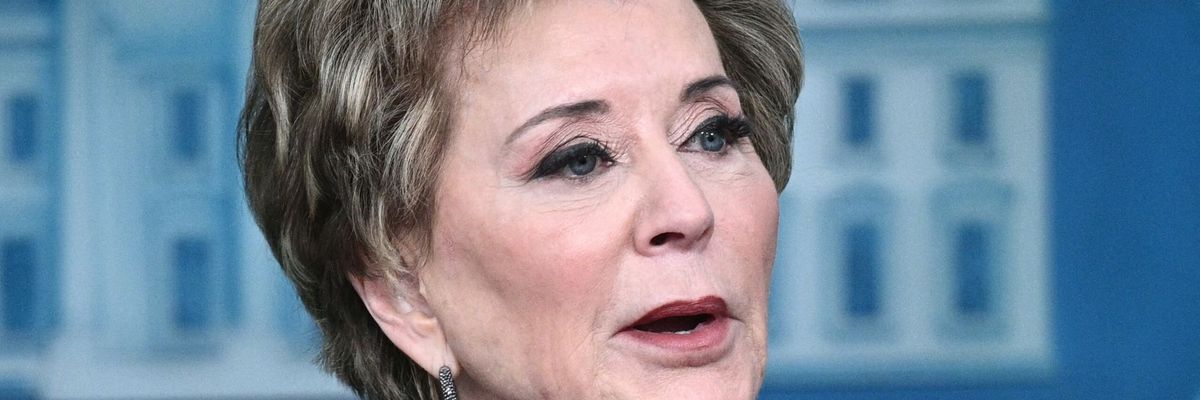
US Secretary of Education Linda McMahon speaks during the daily briefing in the Brady Briefing Room of the White House in Washington, DC, on November 20, 2025. 
(Photo by BRENDAN SMIALOWSKI/AFP via Getty Images)\

Stephen Prager
Dec 09, 2025
COMMON DREAMS

As student debt exacerbates the financial struggles of millions of Americans, the Trump administration has taken a major step toward killing the Biden administration’s student loan forgiveness program.

On Tuesday, the Department of Education announced that it had reached a settlement with the state of Missouri to end the Saving on a Valuable Education (SAVE) program, which allowed more than 7 million mostly low-income Americans to reduce their federal student loan payments.


Trump Plan to Privatize Student Loans Denounced as ‘Giveaway to Wealthy Insiders’

Rather than setting monthly payments based on income, the SAVE program bases them on how much borrowers earn and the size of their families, which is referred to as an income-driven repayment option, or IDR. SAVE cut most enrollees’ monthly loan payments in half and left 4.5 million of them, mostly those earning between 150–225% of the federal poverty level, paying $0 per month.

In March 2024, a coalition of 11 states led by Kansas Attorney General Kris Kobach sued in federal court to stop the SAVE plan. The next month a similar lawsuit was filed by another coalition of seven states led by Missouri’s former attorney general, Andrew Bailey.

In February, the 8th Circuit Court of Appeals ruled in favor of the states, blocking 8 million borrowers from accessing lower payments under the program. Now President Donald Trump’s administration which aggressively opposes student loan forgiveness, has agreed to settle the lawsuit, effectively killing SAVE.

“For four years, the Biden administration sought to unlawfully shift student loan debt onto American taxpayers, many of whom either never took out a loan to finance their postsecondary education or never even went to college themselves, simply for a political win to prop up a failing administration,” said Undersecretary of Education Nicholas Kent. “The Trump administration is righting this wrong and bringing an end to this deceptive scheme. The law is clear: if you take out a loan, you must pay it back.”

The settlement also includes a provision requiring that, for the next 10 years, the Department of Education notify the state of Missouri at least 30 days in advance before instituting broad-based student debt relief.

As the Debt Collective, a membership-based debtors’ union, explained in a post on social media: “30 days is enough notice that Missouri will find standing to sue for relief before it even happens. So not only is Trump gutting the SAVE plan, they’re essentially putting a moratorium on cancellation for the next 10 years with this agreement.”

“What Republicans admit is that the executive administration does have authority to cancel federally held student debt,” the group added. “They just want to make it so that it will be administratively and practically impossible to deliver it because of this technicality. It’s stealing in advance.”

SAVE was already slated to end in 2028 following July’s passage of Republicans’ One Big Beautiful Bill Act, which replaced it with a pair of less generous income-based repayment plans that require many debtors to pay hundreds more per month. The deadline to switch to one of the new plans will now move up, though the administration has not yet clarified when borrowers will have to switch.

The Debt Collective predicted that the end of SAVE “means many more debtors will likely be forced to default on their loans,” which the group added “is bad for millions of families and our economy.”

According to an analysis of federal student loan data from the American Enterprise Institute, a libertarian think tank, more than 12 million borrowers in the US are already in default or otherwise behind on their student loan payments.

Since their introduction, former President Joe Biden’s student loan forgiveness policies have been chipped away at bit by bit through litigation. In 2023, the conservative US Supreme Court struck down the administration’s plans to forgive up to $20,000 in student loan debt for millions of Americans, ruling that the plan exceeded the administration’s executive authority. A year later, it halted SAVE as well while it considered the merits of the Missouri lawsuit.

The group Protect Borrowers, which supports student loan forgiveness, argues that SAVE is “not a novel use of executive power,” noting that Congress gave the Education Department the authority to create IDRs in 1993 and that several other programs have been created since.

“This settlement is pure capitulation—it goes much further than the suit or the 8th Circuit order requires,” said Persis Yu, the group’s deputy executive director and managing counsel. “The real story here is the unrelenting, right-wing push to jack up costs on working people with student debt.”

A September survey by Data For Progress found that student loans make it more difficult for many borrowers to keep up with other bills amid a growing cost-of-living crisis: 42% of respondents said their debt payments had a negative impact on their ability to pay for food or housing. More than a third, 37%, said it had a negative impact on their ability to cover healthcare costs for themselves or their dependents, while the majority, 52%, said it had a negative impact on their ability to save for retirement.

“While millions of student loan borrowers struggle amidst the worsening affordability crisis as the rising costs of groceries, utilities, and healthcare continue to bury families in debt,” Yu said, “billionaire Education Secretary Linda McMahon chose to strike a backroom deal with a right-wing state attorney general and strip borrowers of the most affordable repayment plan that would help millions to stay on track with their loans while keeping a roof over their head.”


Richest 0.001% Now Own Three Times More Wealth Than Poorest Half of Humanity Combined

“The choices we make in the coming years will determine whether the global economy continues down a path of extreme concentration or moves toward shared prosperity.”


People attend a demonstration in support of taxing the super-rich in São Paulo, Brazil on July 10, 2025.
(Photo by Miguel Schincariol/AFP via Getty Images)


Jake Johnson
Dec 10, 2025
COMMON DREAMS

A landmark report on global inequality published Wednesday shows that the chasm between the richest slice of humanity and everyone else continued to expand this year, leaving the top 0.001%—fewer than 60,000 multimillionaires—with three times more wealth than the poorest half of the world’s population combined.

The global wealth gap has become so staggering, and its impact on economies and democratic institutions so corrosive, that policymakers should treat it as an emergency, argues the third edition of the World Inequality Report, a comprehensive analysis that draws on the work of hundreds of scholars worldwide. Ricardo Gómez-Carrera, a researcher at the World Inequality Lab, is the report’s lead author.
RECOMMENDED...


Global System ‘Rigged for the Wealthy’ Delivers World With ‘More Billionaires Than Ever’

“Inequality has long been a defining feature of the global economy, but by 2025, it has reached levels that demand urgent attention,” reads the new report. “The benefits of globalization and economic growth have flowed disproportionately to a small minority, while much of the world’s population still face difficulties in achieving stable livelihoods. These divides are not inevitable. They are the outcome of political and institutional choices.”

The richest 10% of the global population, according to the latest data, own three-quarters of the world’s wealth and capture more income than the rest of humanity. Within most countries, it is rare for the bottom 50% to control more than 5% of national wealth.

“This concentration is not only persistent, but it is also accelerating,” the report observes. “Since the 1990s, the wealth of billionaires and centimillionaires has grown at approximately 8% annually, nearly twice the rate of growth experienced by the bottom half of the population. The poorest have made modest gains, but these are overshadowed by the extraordinary accumulation at the very top.”

“The result,” the report adds, “is a world in which a tiny minority commands unprecedented financial power, while billions remain excluded from even basic economic stability.”

The report comes as the world’s richest and most powerful nation, led by President Donald Trump, abandons international cooperation on climate and taxation and works to supercharge inequality by slashing domestic and foreign aid programs while delivering massive handouts to the wealthiest Americans.

Jayati Ghosh, a member of the G20 Extraordinary Committee of Independent Experts on Global Inequality and co-author of the forward to the new report, said in a statement that “we live in a system where resources extracted from labor and nature in low-income countries continue to sustain the prosperity and the unsustainable lifestyle of people in high-income economies and rich elites across countries.”

“These patterns are not accidents of markets,” said Ghosh. “They reflect the legacy of history and the functioning of institutions, regulations and policies—all of which are related to unequal power relations that have yet to be rebalanced.”

Reversing the decadeslong trend of exploding inequality will require the political will to pursue obvious solutions, including fair taxation of the mega-rich and bold investments in social programs and climate action, which is disproportionately fueled by the wealthy.

“The choices we make in the coming years,” the report says, “will determine whether the global economy continues down a path of extreme concentration or moves toward shared prosperity.”


ANTI-FA

Leaked Memo Shows Pam Bondi Wants List of ‘Domestic Terrorism’ Groups Who Express ‘Anti-American Sentiment’

“Millions of Americans like you and I could be the target,” warned journalist Ken Klippenstein of the new memo.


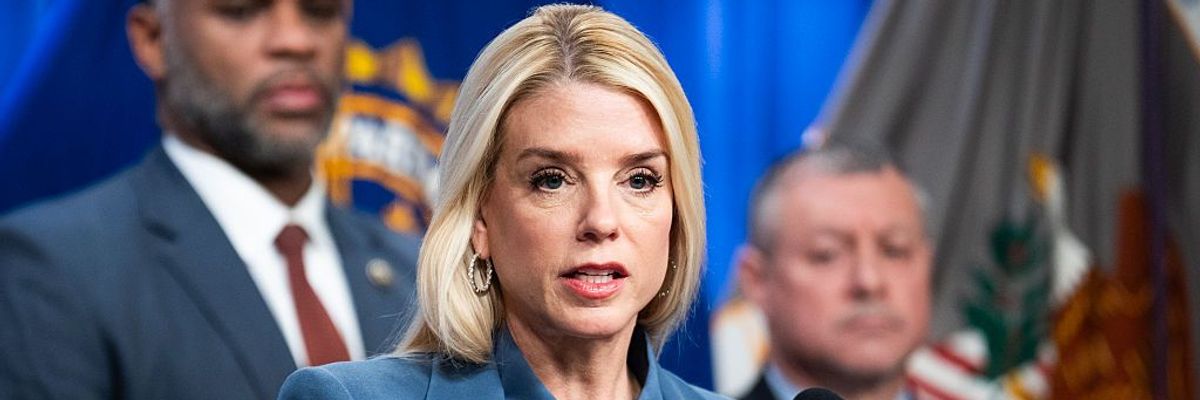
Attorney General Pam Bondi conducts a news conference at the Department of Justice on Thursday, December 4, 2025.
(Tom Williams/CQ-Roll Call, Inc via Getty Images)

Brad Reed
Dec 07, 2025
COMMON DREAMS

A leaked memo written by US Attorney General Pam Bondi directs the Department of Justice to compile a list of potential “domestic terrorism” organizations that espouse “extreme viewpoints on immigration, radical gender ideology, and anti-American sentiment.”

The memo, which was obtained by journalist Ken Klippenstein, expands upon National Security Presidential Memorandum-7 (NSPM-7), a directive signed by President Donald Trump in late September that demanded a “national strategy to investigate and disrupt networks, entities, and organizations that foment political violence so that law enforcement can intervene in criminal conspiracies before they result in violent political acts.”


Broadening Assault on the Left, Trump Designates EU Anti-Fascist Groups as ‘Foreign Terrorist Organizations’

The new Bondi memo instructs law enforcement agencies to refer “suspected” domestic terrorism cases to the Joint Terrorism Task Forces (JTTFs), which will then undertake an “exhaustive investigation contemplated by NSPM-7” that will incorporate “a focused strategy to root out all culpable participants—including organizers and funders—in all domestic terrorism activities.”

The memo identifies the “domestic terrorism threat” as organizations that use “violence or the threat of violence” to advance political goals such as “opposition to law and immigration enforcement; extreme views in favor of mass migration and open borders; adherence to radical gender ideology, anti-Americanism, anti-capitalism, or anti-Christianity; support for the overthrow of the United States Government; hostility towards traditional views on family, religion, and morality.”

Commenting on the significance of the memo, Klippenstein criticized mainstream media organizations for largely ignoring the implications of NSPM-7, which was drafted and signed in the wake of the murder of right-wing activist Charlie Kirk.

“For months, major media outlets have largely blown off the story of NSPM-7, thinking it was all just Trump bluster and too crazy to be serious,” he wrote. “But a memo like this one shows you that the administration is absolutely taking this seriously—even if the media are not—and is actively working to operationalize NSPM-7.”

Klippenstein also warned that NSPM-7 appeared to be the start of a new “war on terrorism,” but “only this time, millions of Americans like you and I could be the target.”


Billionaire Palantir Co-Founder Pushes Return of Public Hangings as Part of ‘Masculine Leadership’ Initiative

“Immaturity masquerading as strength is the defining personal characteristic of our age,” said one critic in response.


Joe Lonsdale speaks onstage at TechCrunch Disrupt NY 2013 at The Manhattan Center on May 1, 2013 in New York City.
(Photo by Brian Ach/Getty Images for TechCrunch)

Brad Reed
Dec 07, 2025
COMMON DREAMS

Venture capitalist Joe Lonsdale, a co-founder of data platform company Palantir, is calling for the return of public hangings as part of a broader push to restore what he describes as “masculine leadership” to the US.

In a statement posted on X Friday, Lonsdale said that he supported changing the so-called “three strikes” anti-crime law to ensure that anyone who is convicted of three violent crimes gets publicly executed, rather than simply sent to prison for life.

“If I’m in charge later, we won’t just have a three strikes law,” he wrote. “We will quickly try and hang men after three violent crimes. And yes, we will do it in public to deter others.”

Lonsdale then added that “our society needs balance,” and said that “it’s time to bring back masculine leadership to protect our most vulnerable.”

Lonsdale’s views on public hangings being necessary to restore “masculine leadership” drew swift criticism.

Gil Durán, a journalist who documents the increasingly authoritarian politics of Silicon Valley in his newsletter “The Nerd Reich,” argued in a Saturday post that Lonsdale’s call for public hangings showed that US tech elites are “entering a more dangerous and desperate phase of radicalization.”

“For months, Peter Thiel guru Curtis Yarvin has been squawking about the need for more severe measures to cement Trump’s authoritarian rule,” Durán explained. “Peter Thiel is ranting about the Antichrist in a global tour. And now Lonsdale—a Thiel protégé—is fantasizing about a future in which he will have the power to unleash state violence at mass scale.”

Taulby Edmondson, an adjunct professor of history, religion, and culture at Virginia Tech, wrote in a post on Bluesky that the rhetoric Lonsdale uses to justify the return of public hangings has even darker intonations than calls for state-backed violence.

“A point of nuance here: ‘masculine leadership to protect our most vulnerable’ is how lynch mobs are described, not state-sanctioned executions,” he observed.

Theoretical physicist Sean Carroll argued that Lonsdale’s remarks were symbolic of a kind of performative masculinity that has infected US culture.

“Immaturity masquerading as strength is the defining personal characteristic of our age,” he wrote.

Tech entrepreneur Anil Dash warned Lonsdale that his call for public hangings could have unintended consequences for members of the Silicon Valley elite.

“Well, Joe, Mark Zuckerberg has sole control over Facebook, which directly enabled the Rohingya genocide,” he wrote. “So let’s have the conversation.”

And Columbia Journalism School professor Bill Grueskin noted that Lonsdale has been a major backer of the University of Austin, an unaccredited liberal arts college that has been pitched as an alternative to left-wing university education with the goal of preparing “thoughtful and ethical innovators, builders, leaders, public servants and citizens through open inquiry and civil discourse.”


U.S. Navy Hires Palantir to Reorganize Shipbuilding Supply Chain With AI

Electric Boat
GD Electric Boat will be among the participants in the program (Courtesy USN)

Published Dec 10, 2025 7:20 PM by The Maritime Executive


The U.S. Navy has awarded a contract worth nearly $450 million to the technology company Palantir to reorganize the submarine supply chain with advanced AI tools. 

Palantir is a leading defense tech contractor with tools for analyzing and organizing manufacturing activity, sorting through intelligence, and aiding the process of targeting. It built the mission command platform for U.S. Special Operations Command,  and it has carried out countless sensor integration and data projects for the U.S. Army. For the Navy, it will be building Ship OS, a system to organize parts ordering and delivery for the nuclear sub prime contractors (Huntington Ingalls and GD Electric Boat) and three public shipyards that conduct submarine repairs. More than 100 suppliers will be hooked up to the company's inventory management system in the initial rollout. 

"This investment provides the resources our shipbuilders, shipyards, and suppliers need to modernize their operations," Navy Secretary John Phelan said. "By enabling industry to adopt AI and autonomy tools at scale, we're helping the shipbuilding industry improve schedules, increase capacity, and reduce costs."

The rollout builds on early trials funded by the BlueForge Alliance at GD Electric Boat and HII Newport News, initially dubbed "Warp Speed for Warships" and based on Palantir's Foundry product. The Navy said that these testbed applications yielded hundreds of hours in labor savings for production scheduling and material reviews. 

The Ship OS program will be overseen by the Navy's Maritime Industrial Base (MIB) program, a government initiative to support, subsidize and reorganize private industry in support of Navy needs. The most pressing need is in the overstressed submarine supply chain, and MIB hopes that Palantir's help will yield cost and efficiency savings that will offset the expense of the initial investment. More importantly, it hopes to shave critical months off of the delayed production timetable for submarine programs and help get manufacturing and repair work back on schedule - a key consideration for national security. Once proven in the sub supply chain, Ship OS will be rolled out for surface ship programs as well. 

Last year, the Navy also announced plans to award Palantir a $920 million, five-year IDIQ contract for a variety of software, hardware and consulting services.