Wednesday, December 17, 2025

Sri Lanka floods trigger balance-sheet shock

Sri Lanka floods trigger balance-sheet shock
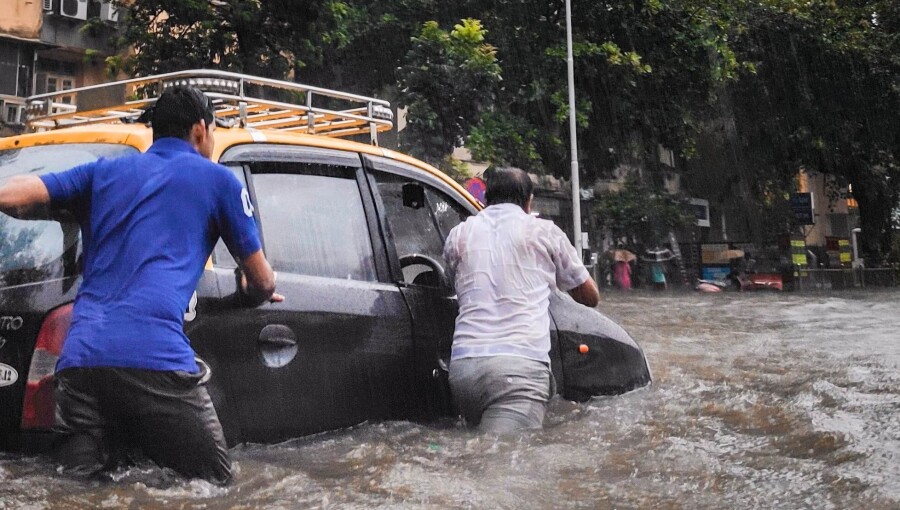
/ Saikiran Kesari - Unsplash
By bno - Mumbai bureau December 18, 2025

Sri Lanka’s recent floods have delivered one of the most widespread economic disruptions the country has faced in years, evolving rapidly from a regional disaster into a national balance-sheet event. With more than 25 districts impacted, the crisis is now reshaping risk across households, businesses and the financial system. Dr Kenneth D, Chief Executive Officer and Managing Director of Lanka Rating Agency Ltd, said in a social media post that the banking system is exposed because financial sector assets mirror real-economy liabilities, turning the disaster into a high-risk balance-sheet shock rather than a standalone climate event.

The worst-affected districts together account for roughly 82% to 84% of national gross domestic product, amplifying the economic fallout. The Western Province, which contributes about 40% of GDP, has seen damage across industrial hubs, logistics networks and financial services. North Western and Central provinces, generating close to 20% of GDP, have experienced disruptions to industrial zones, paddy cultivation, dairy farming and plantation activity. The Southern and Sabaragamuwa regions, contributing around 16% of GDP, have been hit across tourism, fisheries and rubber production. Eastern, North Central and Uva provinces, responsible for around 8% of national output, have suffered extensive damage to agriculture and irrigation-dependent economies.

From a balance-sheet standpoint, physical assets have been heavily affected. Damage has been reported to roads, bridges and transport links, housing stock, factories, warehouses, power grids and telecommunications infrastructure. Property, plant and machinery in industrial facilities, as well as water and sanitation systems, schools, food crops and farmland, have also been impacted. These asset losses are already feeding into rising liabilities across the economy. Households are facing growing debt stress, small and medium enterprises are under pressure to meet repayments, and banks are confronting a higher risk of non-performing loans. The insurance sector is similarly under strain as claims rise.

Income losses are compounding the problem. Production stoppages, supply chain delays and service disruptions have reduced output and mobility, while higher dependence on consumer imports and rising transport costs is pushing up expenses across sectors.

Preliminary estimates suggest total economic losses in the range of LKR210bn ($680mn) to LKR320bn, equivalent to about 0.75% to 1.0% of GDP. Production losses are estimated at LKR70 bn to 110bn, agricultural losses at LKR35bn to 50bn, infrastructure damage at LKR55 bn to 75bn, and household and SME asset losses at LKR50bn to 85bn.

The floods have heightened macroeconomic risks, including food supply disruptions and inflationary pressures, increased import demand for consumer goods and reconstruction materials, and renewed depreciation risks for the Sri Lankan rupee. Fiscal pressures are set to rise due to relief and rebuilding costs, while banking sector credit quality and liquidity are likely to be tested. Constraints on money supply growth and central bank policy flexibility add further complexity.

The crisis has exposed structural weaknesses, including outdated flood control systems, low insurance penetration and long-standing dependence on food imports and external financing. Without a modern approach to climate and balance-sheet management, these vulnerabilities are expected to intensify.

Sri Lanka now faces the urgent task of rebuilding with smarter, more resilient planning frameworks to reduce future climate and economic risk.

Colombo approaches IMF again

Sri Lanka is thus moving towards a fresh engagement with the International Monetary Fund, even as it continues under its current reform framework. The government is preparing for what could become the country’s 18th IMF-supported programme, reversing earlier expectations that the ongoing Extended Fund Facility would mark the final long-term arrangement. The renewed outreach comes amid mounting economic pressures from earlier interest rate easing and the fiscal stress created by recent natural disasters, according to EconomyNext.

President Anura Kumara Dissanayake said an IMF mission is due to visit Sri Lanka in January, following which a new review of the existing programme will be undertaken, a plan the IMF has since confirmed. He also indicated that the 2025 Budget will allocate an additional LKR500bn ($1.6 bn) to fund flood and cyclone recovery, a move likely to complicate adherence to fiscal targets agreed under the current staff-level arrangement.

As such, Sri Lanka is expected to secure around $200mn through the IMF’s Rapid Financing Instrument, an emergency facility that provides one-off support with lighter conditionality, no regular reviews and limited access, used typically when balance-of-payments pressures are urgent but temporary.

But the country already remains bound by an Extended Fund Programme that requires tight policy discipline and structural reforms, even as repayment pressures persist - all the while hoping the rains don't return, or at least not to the same degree. 

PETTY TYRANT

Disparaging plaques for Biden, Obama appear in Trump's White House 'Walk of Fame'

US President Donald Trump has added partisan and subjective plaques to his White House presidential "Walk of Fame", taking personal swipes at his predecessors Joe Biden and Barack Obama and repeating false claims about his 2020 election defeat.

Issued on: 17/12/2025
By: FRANCE 24

Former US president Joe Biden, who defeated Trump in the 2020 presidential election, is the only president not to have a portrait and is instead represented by a photo of an autopen. © Mark Schiefelbein, AP

US President Donald Trump, who has made no mystery of his enmity for his Democratic predecessors, recently took things a step further with unorthodox White House plaques repeating his long-standing grievances against the former leaders.

The 79-year-old Republican had previously caused a stir by installing a gallery of former presidents' portraits outside the Oval Office, but replacing Joe Biden's photograph with an autopen.

The substitution is a reference to Trump's claim that Biden, who left office in January aged 82, was so senile that he did not know what was being signed in his name.

On Wednesday, journalists allowed access to the famed West Colonnade noted that new plaques had been installed under the presidents' photos.

The descriptions for Biden and former president Barack Obama were strikingly negative.

The inscription below Obama, the first Black president in US history, calls him "one of the most divisive political figures in American history".

It also includes his middle name, Hussein, as Trump often does when referring to his Democratic predecessor, after having stoked conspiracy theories about the 44th president's birthplace.

Biden is described as "by far, the worst President in American history".

The plaque also repeats Trump's false claim that the 2020 election was stolen from him.

As for the current officeholder, the provided biography is expectedly glowing.

It states that he ended eight conflicts in eight months, a figure viewed as inaccurate, and that he attracted an unverifiable sum of trillions of dollars in investment to the United States.

The new plaques are the latest White House alteration since Trump's return in January.

The billionaire real estate developer has torn down the entire East Wing to make way for an extravagant ballroom, added copious amounts of gold decor to the Oval Office and other rooms, and hung portraits of himself – contrary to the custom of the president's image only being displayed after leaving office.

(FRANCE 24 with AFP)
Bus carrying mineworkers pelted by stones in DR Congo


Issued on: 17/12/2025 


In the Democratic Republic of Congo, a bus transporting company mineworkers was pelted by stones by artisanal miners in early November. We spoke to several locals who said this was not an isolated incident, blaming the tensions on a lack of space for the artisanal miners.

A video shared online on November 9, 2025, shows a bus being pelted by stones in the Democratic Republic of Congo. The scene took place on a road often used by mining companies in Kolwezi, in the south of the country. The bus was attacked by artisanal miners, small operators with basic equipment, known locally as "diggers".

Didier Katshongo, an engineer at a mining company, told our team that this is not an isolated incident:

“When our workers' buses take that road, the artisanal miners throw stones at the buses. Attacks like this have become more frequent in 2025.”

These incidents took place along a road near the KOV open-pit mine, operated by the joint venture KCC. But it's not just the KOV mine that causes tensions.


‘The few sites where artisanal mining is tolerated are not enough’

Artisanal mining is legal in DR Congo. This means mining is performed both by artisanal miners and big companies.

Diggers are supposed to work in "artisanal mining zones” established by authorities or in areas belonging to mining companies, provided the latter tolerate their presence.

But there aren't enough mines open to artisanal miners. That is why they often force their way onto mines operated by companies.

Schadrack Mukad Mway End Naw, national coordinator of the platform “Understanding and Acting in the Industrial, Artisanal Mining, and Governance Sectors” (CASMIA-G ASBL), explained:

“There are more than 250,000 artisanal miners in Lualaba province [where Kolwezi is located]. This sector helps tackle youth unemployment. They need access to the mines to make a living. But there's not enough territory. The few sites where artisanal mining is tolerated are not enough. That's why they break down company fences.”

The authorities announced the creation of 64 artisanal mining zones in Lualaba in November.
Imprisoned Iranian Nobel laureate hospitalised twice after ‘heavy’ blows, family says

In a phone call from prison, Iranian Nobel Peace Prize laureate Nargis Mohammadi said she endured blows during her incarceration that were so "heavy, forceful and repeated" that she had to be hospitalised twice, the family-run Narges Foundation said Monday. Mohammadi was re-arrested in Tehran on Friday.


Issued on: 15/12/2025 
By: FRANCE 24

Nobel Prize laureate Narges Mohammadi was arrested in Iran, her support committee announced on December 12, 2025. © Reuters


Nobel Peace Prize laureate Narges Mohammadi was taken to the hospital emergency room twice after suffering blows from security forces who arrested her on December 12, her family told the Narges Foundation on Monday.

The human rights activist won the award whilst in prison in 2023, following her three-decade campaign for women's rights and the abolition of the death penalty in Iran.

She was re-arrested on Friday – having been released late last year – after denouncing the suspicious death of lawyer Khosrow Alikordi.

Mashhad prosecutor Hasan Hematifar had told reporters on Saturday that Mohammadi and Alikordi's brother had made provocative remarks at the lawyer's memorial ceremony in the northeastern city of Mashhad and encouraged those present "to chant norm-breaking slogans" and "disturb the peace".

The family-run Narges Foundation said Mohammadi had made a call to her family late on Sunday.

"Narges Mohammadi said in the call that the intensity of the blows was so heavy, forceful, and repeated that she was taken to the hospital emergency room twice ... Her physical condition at the time of the call was not good, and she appeared unwell," the foundation said in a post on X.

Award-winning Iranian filmmaker Jafar Panahi on Monday joined other civil society activists in calling for Mohammadi's "immediate and unconditional release".

Mohammadi had been released in December last year from Tehran's Evin prison after the suspension of her jail term to undergo medical treatment.

She told her family she was accused of "cooperating with the Israeli government" and received death threats from security forces, prompting her to request her legal team to file a formal complaint against the detaining security body and the violent manner of her arrest.

There was no immediate comment from the Iranian authorities.

(FRANCE 24 with AFP and Reuters)


PUTIN'S PUPPET

US 'pressuring' EU not to use frozen Russian assets for Kyiv, Ukraine official says

The Trump administration is seeking to discourage European countries from using frozen Russian assets to support Ukraine's war effort, a senior Ukrainian official said Wednesday, adding that President Volodymyr Zelensky would lobby Kyiv's European allies to tap the Russian assets at an EU summit in Brussels on Thursday.


Issued on: 17/12/2025
By: FRANCE 24
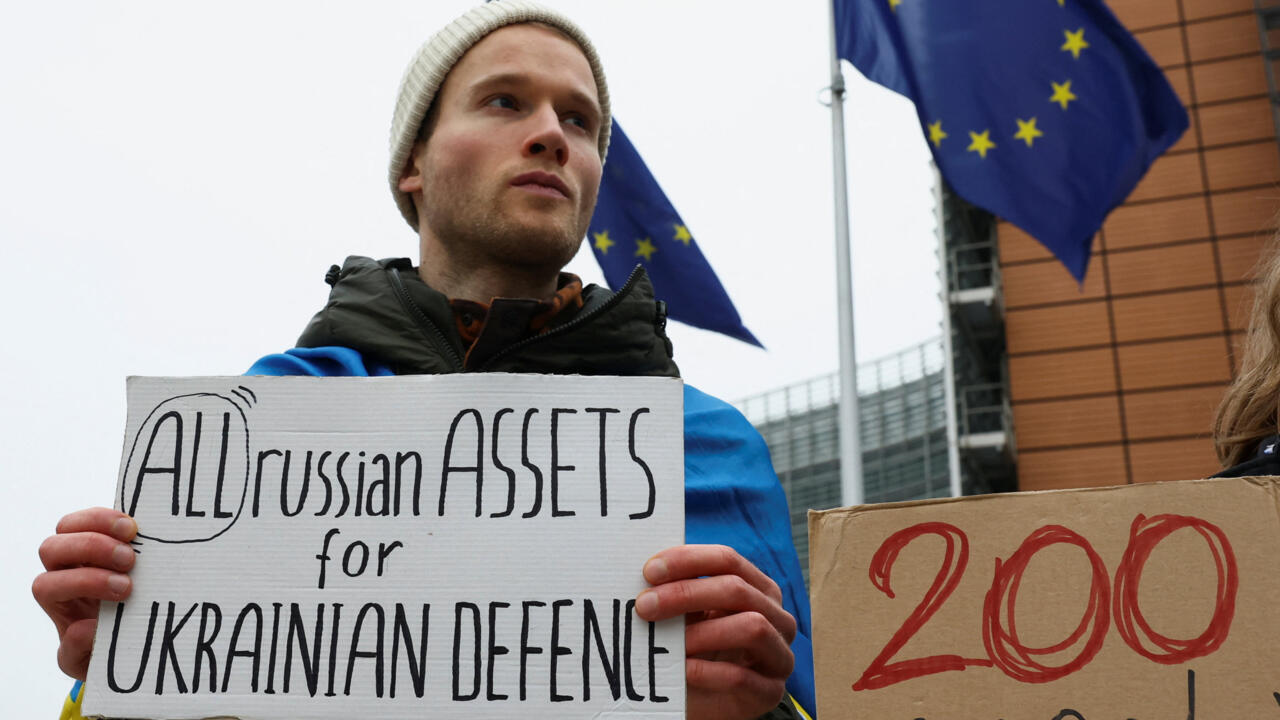
A protest outside the European Commission in Brussels in support of using frozen Russian assets to finance Ukraine, on December 17, 2025. © Yves Herman, Reuters

Ukraine's President Volodymyr Zelensky will be in Brussels on Thursday to convince European partners to use frozen Russian assets to support Ukraine, despite Washington pressuring EU countries against the plan, a Ukrainian official told AFP.

The European Union has laid out a plan to use the frozen assets to harness €90 billion ($105 billion) for a loan to help Ukraine repel Moscow's forces, with the money to be paid back by any eventual Russian reparations to Ukraine.

"The US administration is pressuring European countries to abandon the idea of using Russian assets to support Ukraine," a senior Ukrainian official said Wednesday.

The plan has the strong backing of many member states, including Germany, but has drawn opposition from others, including Belgium – home to international deposit organisation Euroclear, which holds most of the assets – whose leaders fear Russian reprisals.


Europe needs help funding Ukraine. So why can't it agree on using frozen Russian assets?

The Ukrainian official said that seven countries so far opposed the plan.

Zelensky "is going to Brussels to motivate European countries to adopt this decision" and tap the frozen assets, the source said.

Belgian Prime Minister Bart De Wever has been in the spotlight over his opposition to using Russian assets for Ukraine, but there had been speculation that US President Donald Trump's administration was also weighing in on the debate.


€200 billion in frozen assets


Washington appears to view the assets as a key bargaining chip and has looked to tempt Moscow to play ball by dangling the prospect it could get back some of the cash.

A US official, speaking on condition of anonymity, on Wednesday said that the Europeans were "quietly asking us to intervene on this matter as they do not want to be publicly against it".

"They are afraid of the long-term damage it will do to long-term investments in their system and the credibility of their institutions," they added.

A previous version of Trump's plan to end the war also provided for Washington to use some frozen Russian assets for a US-led reconstruction of the war-torn country.

Around €200 billion in Russian central bank assets were frozen over Moscow's February 2022 invasion of Ukraine.

White House deputy press secretary Anna Kelly said: "Both the Ukrainians and the Russians have clearly stated positions regarding the frozen assets, and our only role is to facilitate a back-and-forth that can ultimately result in a deal."

(FRANCE 24 with AFP)
SPACE/COSMOS

Kazakhstan launches satellite into orbit with Chinese help

Kazakhstan launches satellite into orbit with Chinese help
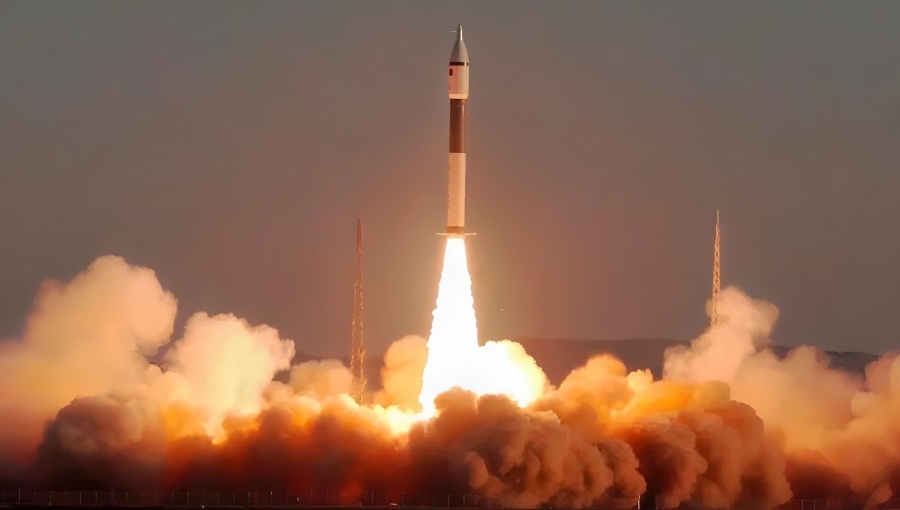
The launch of China’s Kuaizhou 11 carrier rocket on December 13 that deployed the Kazakh-Chinese satellite into space. / gov.kz
By Eurasianet December 17, 2025

The bell may be tolling for the longstanding Russian-Kazakh space programme following the launch of a “nanosatellite” jointly developed by Kazakhstan and China and launched into orbit by a Chinese rocket.

The launch of the Dier-5 spacecraft on December 13 placed the satellite into an orbit roughly 330 miles (531 kilometres) above earth, according to a Kazakh government statement. It took a team of specialists from Kazakhstan’s Al-Farabi University and Northeastern Polytechnical University in Xi’an, China, just a little over one year to develop the satellite, which will carry out scientific experiments, the statement added.

Kazakh officials touted the satellite as cost-effective and reliable for gathering and transmitting data. 

“This collaborative work opens up new opportunities for space research, training qualified specialists, and developing joint satellites,” the government statement noted. “In addition, the project provides the possibility of remote sensing of Earth using a microsatellite.”

Not only did the launch mark a milestone for Kazakhstan’s space programme, it also gave a boost to Chinese efforts to capture a larger share of the commercial satellite launch market. The Dier 5 craft has a payload capacity estimated at about 660 lbs (299 kilograms).

Some observers see the Kazakh-Chinese initiative as a tacit vote of no-confidence in the more than two-decade-long Kazakh-Russian venture, dubbed Baiterek, to develop Kazakhstan’s space programme. Baiterek involves the adaptation of Kazakhstan’s Baikonur Cosmodrome to accommodate a new low-cost rocket design, the Soyuz-5. 

The rocket, designed by Roscosmos, the Russian state space agency, has faced lengthy production delays. Originally intended to compete with SpaceX Falcon 9 rocket in the commercial satellite launch market, some experts now wonder whether the Soyuz-5 will be effectively obsolete before one ever gets off the ground.

In October, Russian Foreign Minister Sergei Lavrov gave an assurance that the Soyuz-5 was in its “final phase” of development. A month later, during a visit by Kazakh President Kassym-Jomart Tokayev to Moscow, Russian officials indicated that a Soyuz-5 would be ready to launch before the end of year. With just days left in 2025, there is no sign of a launch taking place.

As part of the Tokayev visit, Kazakh and Russian officials signed a protocol intended to infuse fresh momentum into the Baiterek programme. But the Chinese launch makes it clear that Astana is hedging its bets.

Russia’s share of the launch market has steadily declined since the start of the 21st century. In 2005, Russia led the world with 26 orbital launches, commanding a near-50% share of the global total that year. A decade later, the overall number of launches increased dramatically around the world, while the number of Russian launches remained comparatively stagnant, resulting in a drop of its share of the market to 33%. 

This year, Russia’s share has cratered to under 5% of 312 total launches. The United States now enjoys a 57% share of the market.

This article first appeared on Eurasianet here.

Europe’s Ariane 6 rocket puts EU navigation satellites in orbit

By AFP
December 17, 2025


Europe's Ariane 6 rocket carrying two Galileo navigation satellites launches from Kourou, French Guiana - Copyright AFP Ronan LIETAR

Florian Royer

Europe’s new Ariane 6 rocket successfully placed two satellites into orbit to join the EU’s rival to the GPS navigation system on Wednesday after the mission blasted off from French Guiana.

It was the fourth commercial mission of the Ariane 6 launch system since the long-delayed single-use rockets came into service last year.

The rocket launched into cloudy skies from Europe’s spaceport in Kourou on the northeastern coast of South America at 2:01 am local time (0501 GMT).

It was carrying two more satellites of the European Union’s Galileo programme, a global navigation satellite system that aims to make the bloc less dependent on the US’s Global Positioning System (GPS).

Applause rang out at the spaceport minutes before 7:00 am local time (1000 GMT) as it was confirmed that the satellites had been successfully deployed into orbit 23, 000 kilometres (14,000 miles) above Earth’s surface.

They will bring to 34 the number of Galileo satellites in orbit.

This addition will also “improve the robustness of the Galileo system by adding spares to the constellation to guarantee the system can provide 24/7 navigation to billions of users”, according to the European Space Agency (ESA) which oversees the programme.

According to the EU, Galileo is four times more accurate than GPS, providing navigation accuracy of up to one metre.

The “successful” launch also reinforces “Europe’s resilience and autonomy in space”, the ESA said on X.


– Reusable rockets wanted –


Previous Galileo satellites were primarily launched by Ariane 5 and Russian Soyuz rockets from Kourou.

After Russia’s invasion of Ukraine, Europe halted space cooperation with Moscow.

The loss of Russia’s Soyuz rockets — and repeated delays to Ariane 6 — left Europe without an independent way to blast missions into space for several months.

Before Ariane 6’s first commercial flight in March this year, the ESA resorted to contracting billionaire Elon Musk’s SpaceX to launch two Galileo satellites in September 2024.

Ariane 6 also blasted a weather satellite into orbit in August followed by a satellite for the EU’s observation programme Copernicus last month.

Arianespace, the operator of the rocket system, in September reduced by one the number of commercial launches on Ariane 6 this year, vowing to roughly double its number of missions in 2026.

The next mission, planned for the first quarter of 2026, will be the first to use a four-booster version of Ariane 6, rather than the current two.

It is scheduled to launch 34 satellites for the constellation of billionaire Jeff Bezos’s Amazon. The constellation, formerly known as Project Kuiper, was recently renamed Amazon Leo.

SpaceX has risen to dominate the booming commercial launch industry by developing rockets that are reusable — which Ariane 6 is not.

“We have to really catch up and make sure that we come to the market with a reusable launcher relatively fast,” ESA director Josef Aschbacher told AFP in October.

Several European aerospace firms are now bidding to develop the system for the ESA.

Saturn's largest moon contains slushy ice layers but habitable zones might exist, study finds


Copyright NASA

By Euronews with AP
Published on 17/12/2025 


"There is strong justification for continued optimism regarding the potential for extraterrestrial life," said one of the study's authors.


New research suggests Saturn's largest moon contains slushy ice layers rather than a vast liquid sea, according to NASA.

It calls into question a decade-old theory about a hidden ocean beneath the surface of Saturn's moon Titan.

Instead of a vast underground ocean, Titan may contain deep layers of ice and slush similar to Arctic sea ice or aquifers, according to a study published on Wednesday in the journal Nature. The finding suggests pockets of liquid water could exist within these layers—environments where life might potentially survive.

Researchers at NASA's Jet Propulsion Laboratory reexamined data collected years ago by the Cassini spacecraft and reached conclusions that contradict the widely accepted ocean theory.

"Instead of an open ocean like we have here on Earth, we're probably looking at something more like Arctic sea ice or aquifers, which has implications for what type of life we might find, but also the availability of nutrients, energy and so on," said Baptiste Journaux, a University of Washington assistant professor who co-authored the study.

Journaux noted that any life forms would likely be microscopic, adding that "nature has repeatedly demonstrated far greater creativity than the most imaginative scientists".

No signs of life have been detected on Titan, which spans 3,200 miles and ranks as the solar system's second-largest moon. Shrouded by a hazy atmosphere, Titan is the only world apart from Earth known to have liquid on its surface, though at temperatures around -297 degrees Fahrenheit, that liquid is methane, not water, forming lakes and falling as rain.

While the absence of a full ocean might seem like a setback for the search for life, researchers say it actually broadens the possibilities. "It expands the range of environments we might consider habitable," said Ula Jones, a UW graduate student in Journaux's lab who worked on the study.

The researchers found that pockets of freshwater on Titan could reach temperatures of 21 degrees Celsius.

Nutrients would be more concentrated in these small water pools, potentially creating richer conditions for life than a diluted ocean would provide. If life exists on Titan, it may resemble polar ecosystems on Earth.

A Dynamic Interior

Lead author Flavio Petricca, a postdoctoral fellow at JPL, said Titan's subsurface water may have frozen in the past and could now be melting, or the moon's hydrosphere might be gradually freezing solid.

Computer models indicate these ice, slush and water layers extend more than 340 miles deep. An outer ice shell about 100 miles thick covers layers of slush and water pools that reach down another 250 miles.

The breakthrough came from improved analysis of how Saturn's gravity affects Titan. Because Titan is tidally locked to Saturn—always showing the same face to the planet—Saturn's gravitational pull deforms the moon's surface, creating bulges up to 30 feet high.

In 2008, scientists first proposed that Titan must possess a huge ocean beneath the surface to allow such significant deformation. But the new study introduces a crucial detail: timing.

Petricca's team measured a 15-hour delay between the peak gravitational pull and the rise of Titan's surface. Like a spoon stirring honey, it takes more energy to move a thick, viscous substance than liquid water. A liquid ocean would respond immediately, Petricca explained, but the delay indicates a slushy ice interior with liquid water pockets.

"Nobody was expecting very strong energy dissipation inside Titan. That was the smoking gun indicating that Titan's interior is different from what was inferred from previous analyses," Petricca said.

Journaux's planetary cryo-mineral physics laboratory at UW helped ground the results by simulating the extreme pressures found deep inside Titan.

"The watery layer on Titan is so thick, the pressure is so immense, that the physics of water changes. Water and ice behave in a different way than seawater here on Earth," he said.

Skepticism Remains

Sapienza University of Rome’s Luciano Iess, whose previous studies using Cassini data indicated a hidden ocean at Titan, is not convinced by the latest findings.

While “certainly intriguing and will stimulate renewed discussion ... at present, the available evidence looks certainly not sufficient to exclude Titan from the family of ocean worlds," Iess said in an email to AP.

NASA’s planned Dragonfly mission — featuring a helicopter-type craft due to launch to Titan later this decade — is expected to provide more clarity on the moon’s innards. Journaux is part of that team.

The mission should arrive at Titan in 2034, becoming the second flying vehicle on another world besides Earth, after Ingenuity, the Mars helicopter. Dragonfly's surface observations are hoped to reveal more about where life may be lurking and how much water might be available for organisms. Journaux is part of that mission team.

Titan joins other moons suspected of harbouring water beneath their surfaces. Jupiter's moon Ganymede is slightly larger than Titan and may have an underground ocean. Saturn's Enceladus and Jupiter's Europa are also believed to be water worlds, with geysers erupting from their frozen crusts.

Saturn has 274 known moons, the most in the solar system.

The Cassini mission began in 1997 and lasted nearly 20 years, orbiting the ringed planet and studying its moons before intentionally diving into Saturn's atmosphere in 2017.

Saturn’s biggest moon might not have an ocean after all


University of Washington
Titan's surface 

image: 

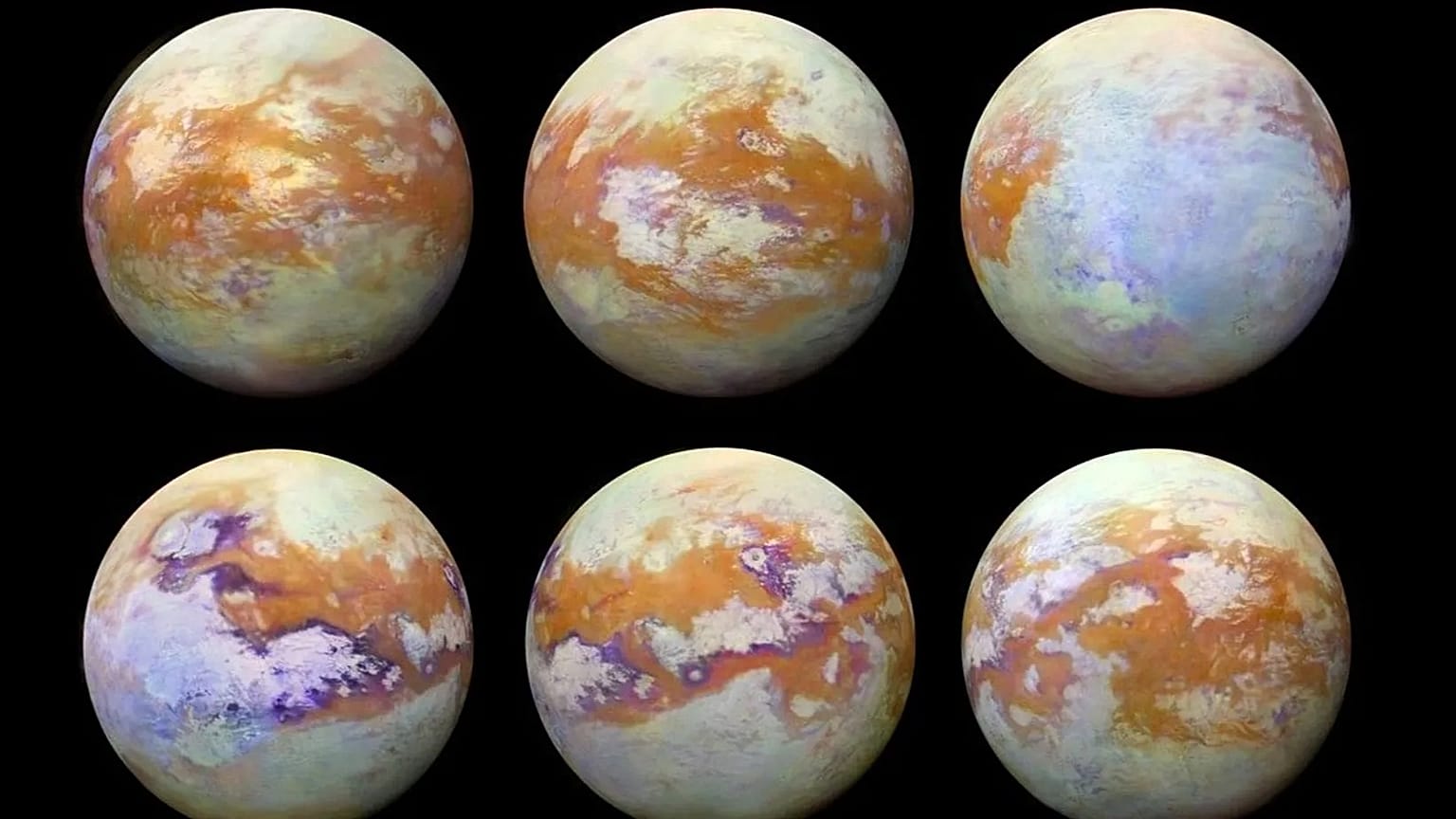
The six infrared images of Titan above were created by compiling data collected over the course of the Cassini mission. They depict how the surface of Titan looks beneath the foggy atmosphere, highlighting the variable surface of the moon.

view more 

Credit: NASA - https://science.nasa.gov/image-detail/amf-7c2a49e6-2a2d-4cac-ba34-9cdf257db3ec/


Careful reanalysis of data from more than a decade ago indicates that Saturn’s biggest moon, Titan, does not have a vast ocean beneath its icy surface, as suggested previously. Instead, a journey below the frozen exterior likely involves more ice giving way to slushy tunnels and pockets of meltwater near the rocky core. 

Data from NASA’s Cassini mission to Saturn initially led researchers to suspect a large ocean composed of liquid water under the ice on Titan. However, when they modeled the moon with an ocean, the results didn’t match the physical properties described by the data. A fresh look yielded new — slushier — results. The findings could spark similar inquiries into other worlds in the solar system, and help narrow the search for life on Titan.

“Instead of an open ocean like we have here on Earth, we’re probably looking at something more like Arctic sea ice or aquifers, which has implications for what type of life we might find, but also the availability of nutrients, energy and so on,” said Baptiste Journaux, a University of Washington assistant professor of Earth and space sciences. 

The study, published Dec. 17 in Nature, was led by NASA with collaboration from Journaux and Ula Jones, a UW graduate student of Earth and space sciences in his lab. 

The Cassini mission, which began in 1997 and lasted nearly 20 years, produced volumes of data about Saturn and its 274 moons. Titan — shrouded by a hazy atmosphere — is the only world, apart from Earth, known to have liquid on its surface. Temperatures hover around -297 degrees Fahrenheit. Instead of water, liquid methane forms lakes and falls as rain.

As Titan circled Saturn in an elliptical orbit, the researchers observed the moon stretching and smushing depending on where it was in relation to Saturn. In 2008, they proposed that Titan must possess a huge ocean beneath the surface to allow such significant deformation.

“The degree of deformation depends on Titan’s interior structure. A deep ocean would permit the crust to flex more under Saturn’s gravitational pull, but if Titan were entirely frozen, it wouldn’t deform as much,” Journaux said. “The deformation we detected during the initial analysis of the Cassini mission data could have been compatible with a global ocean, but now we know that isn’t the full story.”

In the new study, the researchers introduce a new level of subtlety: timing. Titan’s shape shifting lags about 15 hours behind the peak of Saturn’s gravitational pull. Like a spoon stirring honey, it takes more energy to move a thick, viscous substance than liquid water. Measuring the delay told scientists how much energy it takes to change Titan’s shape, allowing them to make inferences about the viscosity of the interior. 

The amount of energy lost, or dissipated, in Titan was much greater than the researchers expected to see in the global ocean scenario.

“Nobody was expecting very strong energy dissipation inside Titan. That was the smoking gun indicating that Titan’s interior is different from what was inferred from previous analyses,” said Flavio Petricca, a postdoctoral fellow at NASA’s Jet Propulsion Laboratory, who led the study. 

The model they propose instead features more slush and quite a bit less liquid water. Slush is thick enough to explain the lag but still contains water, enabling Titan to morph when tugged.

Petricca arrived at this conclusion by measuring the frequency of radio waves coming from the Cassini spacecraft during Titan fly-bys, and Journaux helped ground the results with thermodynamics. Journaux studies water and minerals under extreme pressure to gauge the potential for life on other planets. 

“The watery layer on Titan is so thick, the pressure is so immense, that the physics of water changes. Water and ice behave in a different way than sea water here on Earth,” Journaux said. 

His planetary cryo-mineral physics laboratory at UW has spent years developing the methods to simulate extraterrestrial environments in the lab. He was able to provide Petricca and colleagues with a dataset describing the anticipated physical properties of water and ice deep inside Titan.

“We could help them determine what gravitational signal they should expect to see based on the experiments made here at UW,” Journaux said. “It was very rewarding.”

“The discovery of a slushy layer on Titan also has exciting implications for the search for life beyond our solar system,” Jones said. “It expands the range of environments we might consider habitable.” 

Although the notion of an ocean on Titan invigorated the search for life there, the researchers believe the new findings might improve the odds of finding it. Analyses indicate that the pockets of freshwater on Titan could reach 68 degrees Fahrenheit. Any available nutrients would be more concentrated in a small volume of water, compared to an open ocean, which could facilitate the growth of simple organisms. 

While it is unlikely that the researchers discover fish wriggling through slushy channels, if life is found on Titan, it may resemble polar ecosystems on Earth.

Journaux is on the team for NASA’s upcoming Dragonfly mission to Titan, scheduled for launch in 2028. The data collected here will guide the mission and Journaux hopes to return with some evidence of life on the planet and a definitive answer about the ocean.

Co-authors include Steven D. VanceMarzia ParisiDustin BuccinoGael CascioliJulie Castillo-RogezMark Panning and Jonathan I. Lunine from NASA; Brynna G. Downey at Southwest Research Institute; Francis Nimmo and Gabriel Tobie from the University of Nantes; Andrea Magnanini from the University of Bologna; Amirhossein Bagheri from the California Institute of Technology and Antonio Genova from Sapienza University of Rome.

This research was funded by NASA, the Swiss National Science Foundation and the Italian Space Agency. 

For more information, contact Journaux at bjournau@uw.edu or Petricca at flavio.petricca@jpl.nasa.gov.  

This story was adapted from a press release by NASA.


Japan faces lawsuit over 'unconstitutional' climate inaction

Tokyo (AFP) – Hundreds of people across Japan will sue the central government Thursday to seek damages for its "unconstitutional" inaction on climate change, the country's first such litigation.


Issued on: 18/12/2025 - FRANCE24


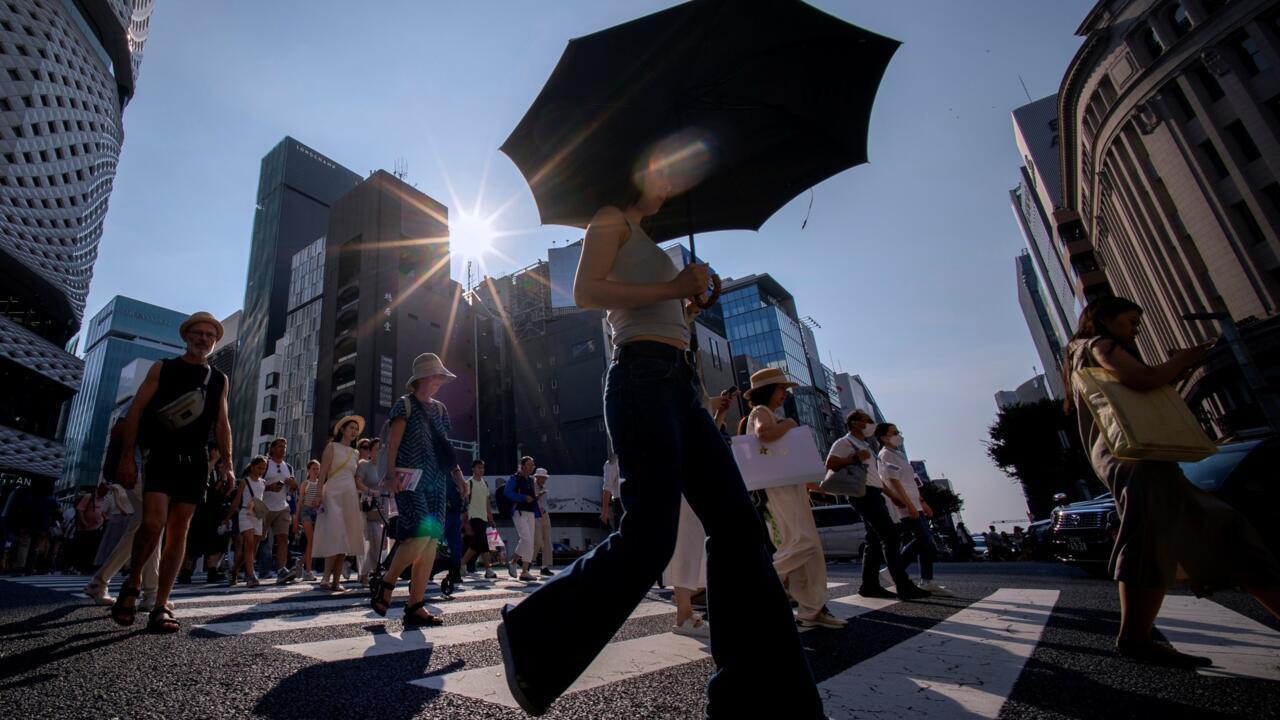
This year, Japan sweltered through its hottest summer since records began © Kazuhiro NOGI / AFP/File

The landmark lawsuit criticises Japan's "grossly inadequate" fight against the climate crisis, saying it jeopardises the health and livelihoods of the approximately 450 plaintiffs.

Plaintiff Kiichi Akiyama, a construction worker, told AFP that relentless heat forced his team to work slower, causing "huge losses" to his business.

There have also been cases where "people collapse out in the field, or have dropped dead after they return home", the 57-year-old said.

In the past, five climate-related lawsuits have been filed with Japanese courts, including against coal-fired power plants, said Kyoto University assistant professor Masako Ichihara, who has followed climate lawsuits in the country.


But Ichihara -- as well as lawyers working on the suit -- say this is the first compensation claim against the state over climate change.

"The defendant's climate change measures are grossly inadequate, and as a result, the plaintiffs' rights to a peaceful life and to the enjoyment of a stable climate are being violated," said the complaint summary, which was obtained by AFP ahead of the filing.

This year, Japan sweltered through its hottest summer since records began in 1898, and the plaintiffs argue such heatwaves cause economic losses, ruin crops and put many at risk of crippling heatstroke.

Akiyama, who frequently works outside in the searing heat, said it now takes his team triple the estimated time to finish their projects.

"I can barely dig with a shovel for 10 minutes without sitting down to rest," he added.

"We wouldn't be in this terrible situation if the government had taken more initiative in implementing policies."
Burning hot playgrounds

Similar legal moves are underway globally, including a key victory handed last year to young South Korean environment activists in the first such case in Asia.

A South Korean court ruled that much of the country's climate goals were unconstitutional, while in Germany, too, climate targets were ruled insufficient and unconstitutional in 2021.

But Japan's case is bolder than previous lawsuits in the country in that it seeks to directly hold the state accountable for climate inaction, academic Ichihara said.

Another plaintiff, who only gave her surname Saito, was spurred into action by concerns over her six-year-old son.

She said recent record temperatures were robbing him of opportunities to play outdoors, with public pools sometimes declared off-limits due to heatstroke alerts.

"Not just in pools, but playing outside generally is becoming difficult in summer. The playground equipment is burning hot and that scares me," Saito told AFP.

Thursday's lawsuit criticises Japan's latest emissions target as incompatible with the Paris Agreement's goal of limiting long-term warming to 1.5C.

Japan's nationally determined contributions aspire to cut its greenhouse gas emissions by 60 percent by 2035 and 73 percent by 2040 compared with 2013.

But the targets "fall significantly short" of the global reduction targets outlined in the latest assessment report by the UN Intergovernmental Panel on Climate Change (IPCC), and they are not legally binding, the complaint summary said.

"This legislative omission is unmistakably unconstitutional."

© 2025 AFP
Migrants forced to leave Canada after policy change feel 'betrayed'

the situation in Canada was "in no way comparable" to developments in Europe or the United States, where politicians have achieved electoral successes fueled in large part by anti-immigration messaging.


Montreal (AFP) – After accepting a job near Montreal, Mansef Aloui packed up his life in Tunisia, hopeful his children would thrive in Canada -- but his pathway to settle in the country has been shut down.


Issued on: 18/12/2025 - RFI

Pro-immigration protesters in front of the Quebec Immigration Ministry in Montreal, Canada © DaphnĆ© LEMELIN / AFP

"I'm broken. My life has been upended. My daughter is in her room, she cries day and night," the 50-year-old told AFP, his voice faltering over an impending departure from a country where he had hoped to stay.

For decades, Canada was viewed as one of the world's most coveted destinations for immigrants, especially among people from the developing world.

Liberal Prime Minister Mark Carney has tightened immigration levels, echoing moves by his predecessor Justin Trudeau, who conceded last year that Canada had let in too many people to address labor shortages caused by the Covid-19 pandemic.

Carney's budget, narrowly approved last month, said: "We are taking back control of our immigration system and putting Canada on a trajectory to bring immigration back to sustainable levels."


Aloui was hired two years ago to be a supervisor at a factory in Laval, near Montreal, in Canada's French-speaking Quebec province.

A program for skilled workers that would have allowed him to apply for permanent residency, known by its French acronym PEQ, was scrapped by the provincial government last month.

"Everything is blurry for me," Aloui said, a month before the expiration of his legal rights to remain in Canada.

Canadian values

Canada plans to authorize 380,000 new permanent residents in 2026, down from the 395,000 approved this year and a substantial decrease from the half-million people given rights to settle in 2024.

Temporary resident permits are set to be trimmed nearly by half, with the 2026 target set at 385,000, compared to 673,650 this year, as the government massively curbs foreign student visa slots.

The national statistics agency reported Wednesday that Canada's population declined by 0.2 percent in the third quarter of 2025 -- currently standing at 41,575,585 -- the first contraction since 2020, and caused primarily by foreign student departures.


A pro-immigration demonstrator in Montreal, Canada holds a sign that reads in French: 'We're not just passing through, we're already part of Quebec' © DaphnĆ© LEMELIN / AFP

For Gauri Sreenivasan, co-executive director at the Canadian Council of Refugees, "there has been no fundamental shift in Canadian values" broadly supportive of immigration.

But she accused Canadian politicians of exploiting "a global current" surrounding immigration, where newcomers are blamed for a range of challenges, including housing shortages and overstretched healthcare systems.

"Canada's population is declining and immigration is essential to our future prosperity," she said, warning against the use of "toxic and xenophobic narratives" that can harden attitudes against newcomers.

Data also points towards shifting public sentiment.

In 2022, 27 percent of Canadians believed the country was accepting too many migrants, a figure that has risen to 56 percent, according to the Environics Institute.
'The consensus has frayed'

Sergio da Silva told AFP he feels "betrayed" by the cancellation of Quebec's PEQ program.

"We studied, we speak French. We meet all the conditions to stay," said the 36-year-old Brazilian, who is also set to lose his Canadian residency rights.

University of Montreal immigration expert Catherine Xardez said Canada had established a uniquely pro-immigration consensus, with cross-party support for welcoming people and bureaucratic processes that allowed migrants to stay.

"Canadian exceptionalism in immigration has been shaken," she told AFP. "The consensus has frayed, that's obvious."

She said a central challenge is that Canada's system was built to accommodate candidates for permanent residency.

But the influx of temporary immigrants, especially hundreds of thousands of foreign students, has caused friction in multiple communities.

Xardez said the situation in Canada was "in no way comparable" to developments in Europe or the United States, where politicians have achieved electoral successes fueled in large part by anti-immigration messaging.

© 2025 AFP