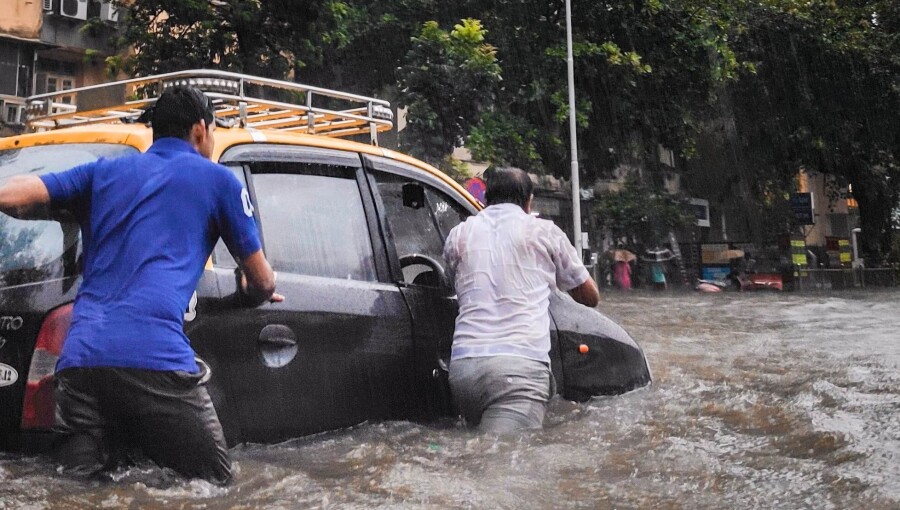
Sri Lanka’s recent floods have delivered one of the most widespread economic disruptions the country has faced in years, evolving rapidly from a regional disaster into a national balance-sheet event. With more than 25 districts impacted, the crisis is now reshaping risk across households, businesses and the financial system. Dr Kenneth D, Chief Executive Officer and Managing Director of Lanka Rating Agency Ltd, said in a social media post that the banking system is exposed because financial sector assets mirror real-economy liabilities, turning the disaster into a high-risk balance-sheet shock rather than a standalone climate event.
The worst-affected districts together account for roughly 82% to 84% of national gross domestic product, amplifying the economic fallout. The Western Province, which contributes about 40% of GDP, has seen damage across industrial hubs, logistics networks and financial services. North Western and Central provinces, generating close to 20% of GDP, have experienced disruptions to industrial zones, paddy cultivation, dairy farming and plantation activity. The Southern and Sabaragamuwa regions, contributing around 16% of GDP, have been hit across tourism, fisheries and rubber production. Eastern, North Central and Uva provinces, responsible for around 8% of national output, have suffered extensive damage to agriculture and irrigation-dependent economies.
From a balance-sheet standpoint, physical assets have been heavily affected. Damage has been reported to roads, bridges and transport links, housing stock, factories, warehouses, power grids and telecommunications infrastructure. Property, plant and machinery in industrial facilities, as well as water and sanitation systems, schools, food crops and farmland, have also been impacted. These asset losses are already feeding into rising liabilities across the economy. Households are facing growing debt stress, small and medium enterprises are under pressure to meet repayments, and banks are confronting a higher risk of non-performing loans. The insurance sector is similarly under strain as claims rise.
Income losses are compounding the problem. Production stoppages, supply chain delays and service disruptions have reduced output and mobility, while higher dependence on consumer imports and rising transport costs is pushing up expenses across sectors.
Preliminary estimates suggest total economic losses in the range of LKR210bn ($680mn) to LKR320bn, equivalent to about 0.75% to 1.0% of GDP. Production losses are estimated at LKR70 bn to 110bn, agricultural losses at LKR35bn to 50bn, infrastructure damage at LKR55 bn to 75bn, and household and SME asset losses at LKR50bn to 85bn.
The floods have heightened macroeconomic risks, including food supply disruptions and inflationary pressures, increased import demand for consumer goods and reconstruction materials, and renewed depreciation risks for the Sri Lankan rupee. Fiscal pressures are set to rise due to relief and rebuilding costs, while banking sector credit quality and liquidity are likely to be tested. Constraints on money supply growth and central bank policy flexibility add further complexity.
The crisis has exposed structural weaknesses, including outdated flood control systems, low insurance penetration and long-standing dependence on food imports and external financing. Without a modern approach to climate and balance-sheet management, these vulnerabilities are expected to intensify.
Sri Lanka now faces the urgent task of rebuilding with smarter, more resilient planning frameworks to reduce future climate and economic risk.
Colombo approaches IMF again
Sri Lanka is thus moving towards a fresh engagement with the International Monetary Fund, even as it continues under its current reform framework. The government is preparing for what could become the country’s 18th IMF-supported programme, reversing earlier expectations that the ongoing Extended Fund Facility would mark the final long-term arrangement. The renewed outreach comes amid mounting economic pressures from earlier interest rate easing and the fiscal stress created by recent natural disasters, according to EconomyNext.
President Anura Kumara Dissanayake said an IMF mission is due to visit Sri Lanka in January, following which a new review of the existing programme will be undertaken, a plan the IMF has since confirmed. He also indicated that the 2025 Budget will allocate an additional LKR500bn ($1.6 bn) to fund flood and cyclone recovery, a move likely to complicate adherence to fiscal targets agreed under the current staff-level arrangement.
As such, Sri Lanka is expected to secure around $200mn through the IMF’s Rapid Financing Instrument, an emergency facility that provides one-off support with lighter conditionality, no regular reviews and limited access, used typically when balance-of-payments pressures are urgent but temporary.
But the country already remains bound by an Extended Fund Programme that requires tight policy discipline and structural reforms, even as repayment pressures persist - all the while hoping the rains don't return, or at least not to the same degree.

No comments:
Post a Comment