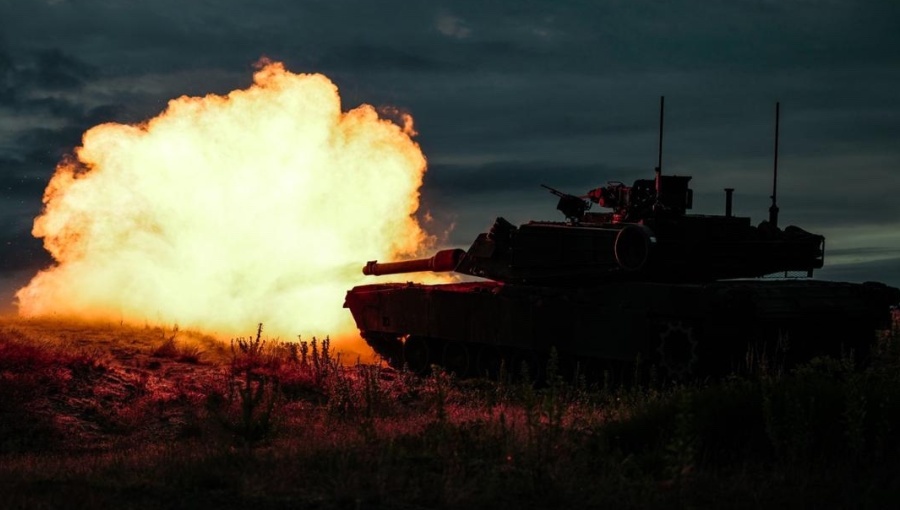
Countries across Central and Southeast Europe are sharply increasing defence spending to meet Nato commitments and respond to heightened regional security risks, a shift that is placing growing pressure on public finances and widening budget deficits, particularly in smaller economies with limited fiscal buffers.
In northeast Europe, Poland and the Baltic states are set to become some of Nato’s highest defence spenders relative to gross domestic product by 2026, while governments from Central Europe to the Balkans are grappling with the trade-off between military investment and fiscal discipline.
This is partly alleviated by a range of measures rolled out by the European Commission to help member states step up defence spending in response to the deteriorating security environment.
Central to this effort is a temporary emergency funding scheme worth up to €150bn, delivered through a loan facility known as Security Action for Europe (SAFE). In parallel, governments are being granted greater fiscal leeway through the activation of the national escape clause, which allows countries to temporarily depart from standard budget rules in exceptional circumstances, provided long-term debt sustainability is preserved.
This flexibility has been triggered by heightened geopolitical risks, chiefly Russia’s continued war against Ukraine, which gave an impetus to expand Europe’s defence industrial capacity. Under the EU’s revised economic governance framework, member states can raise public spending or tolerate higher deficits without breaching the Stability and Growth Pact.
Defence outlays by EU member states reached €343bn in 2024 and are forecast to climb to €381bn in 2025. Spending is expected to rise to 2.1% of GDP in 2025, up sharply from 1.6% in 2023, according to European Council data.
Still, economists and credit rating agencies warn that while defence outlays may support short-term economic activity, sustained increases risk crowding out public services, pushing up borrowing costs and complicating compliance with EU fiscal rules once temporary exemptions expire.
Surge in defence spending in Northern Europe
Under the figures approved in early December in the 2026 budget bill, Poland’s total defence spending is planned at PLN200bn (€47.5bn), which is equal to about 4.8% of the Polish GDP.
That makes Poland Nato's top spender in relative terms and has earned Warsaw praise from the US, which otherwise accuses many other European Nato member states of "freeloading" by not meeting their defence spending commitments.
The defence component is one of the largest expenditure items in the 2026 budget, as Poland has long grown extremely wary of possible Russian aggression after — and if — Moscow manages to bring Ukraine to heel.
There are similarly large commitments to defence spending in the Baltic states, whose governments also see Russia as an existential threat. They are set to be among Nato’s highest defence spenders relative to economic output, reflecting structural security priorities rather than cyclical budget expansion. The wider defence budgets, and resulting higher deficits, are expected to significantly increase public borrowing in all three countries.
In 2026, Lithuania’s defence spending will rise to €4.8bn, equivalent to 5.38% of GDP, including €700.3mn from the Defence Fund. Defence outlays will increase by almost €1.6bn and account for nearly 14% of total government expenditure.
Lithuania is heading for a wider budget deficit and rising public debt in 2026, the International Monetary Fund (IMF) warned in November, naming defence commitments as one of the factors expected to lead to a deterioration in the fiscal outlook next year.
The country’s national audit office projects public debt rising to 42.6% of GDP this year and exceeding 50% by 2028, faster than previously expected. Updated estimates put debt at 53.8% of GDP by 2028, breaching targets in the medium-term fiscal plan.
“If we want security – an increase in defence spending to 5% of GDP – while maintaining the quality of public services, we must urgently create sustainable sources of revenue,” auditor general Irena Segaloviciene said in November, warning that debt could approach the 60% of GDP risk threshold.
Lithuania’s central bank governor Gediminas Simkus has proposed developing state-backed retail investment products to help finance defence needs, while political leaders have stressed that the 5.38% of GDP defence commitment is non-negotiable.
Latvia’s defence budget for 2026 is planned at around €2.16bn, equivalent to approximately 4.8-5.0% of GDP. In Latvia, the general government deficit is expected to rise from 2.9% of GDP in 2025 to 3.3% in 2026, remaining around 3.6% in the medium term, largely due to defence spending, the finance ministry said.
Rating agency S&P said on December 5 that Latvia’s policy framework should allow deficits and debt to remain manageable, assuming the war in Ukraine does not spill into Nato territory.
However, economists have issued warnings. Citadele Bank chief economist Karlis Purgailis described the draft budget as a “weak compromise”, noting that cuts outside defence were limited, leaving a structurally high deficit. SEB Banka’s Dainis Gaspuitis warned that rising debt and fiscal unpredictability could pose longer-term risks, arguing that difficult decisions had merely been postponed.
Estonia’s defence budget is projected at around €2.4bn, or roughly 6% of GDP. The budget deficit is projected to widen to 4.5% of GDP in 2026, driven largely by higher defence spending. The government plans to raise an additional €500mn through bond issuance to help cover the gap.
The conservative Isamaa party has criticised the fiscal trajectory, proposing amendments to reduce the deficit to 3% of GDP and warning that discipline will be required once temporary exemptions for defence spending expire.
Estonia has also struggled to restart economic growth, compounding concerns over the sustainability of higher borrowing.
Higher spending in Central Europe
The new Czech government led by populist billionaire Andrej Babiš has announced it will review the 2026 budget prepared by its predecessor, meaning the country will begin the year under a provisional budget regime.
Former Prime Minister Petr Fiala’s cabinet approved a 2026 budget with a deficit of CZK286bn (€11.8bn), deepening from this year’s CZK241bn shortfall. The wider deficit reflects higher defence spending and a loan to expand the Dukovany nuclear power plant, both exempt from budget responsibility rules.
Economists warn that repeated reliance on exemptions risks weakening fiscal credibility, particularly as defence commitments under Nato continue to rise.
Slovakia’s defence budget for 2026 amounts to €2.87bn, or 2% of GDP, marking a year-on-year increase of €90.4mn. The country is set to meet Nato’s minimum defence investment target.
The draft budget is expected to pass parliament despite the government’s narrow majority. While defence allocations remain modest compared with Baltic peers, analysts caution that Slovakia’s limited fiscal space leaves little margin for further expansion without cuts elsewhere.
Hungary’s parliament approved the 2026 state budget with a projected deficit target of 3.7% of GDP back in June, a goal that analysts widely consider unsustainable given the country's current fiscal trajectory. The budget targets a deficit of HUF4.2 trillion (€10.4bn).
Defence expenditures are targeted at HUF2 trillion, in line with Hungary's commitment to Nato to keep defence spending at 2% of GDP. However, it is spending on electorally popular areas such as the government’s family policy measures that will leave a huge gap in the budget. Election years have consistently seen a worsening of the fiscal balance, and with the ruling Fidesz now heading into a closely contested race, the government is likely to roll out further spending measures or tax cuts to bolster voter support.
Delayed adoption
Romania’s 2026 defence budget plan has been delayed and is unlikely to be finalised until January due to fiscal consolidation talks. The Romania’s four-party ruling coalition is gradually moving closer, agreeing on December 17 on the final bills to be included in a second package of budgetary measures, HotNews reported, citing a coalition press release.
According to the European Commission’s latest forecast, Bucharest’s defence expenditure is projected to gradually increase from 1.6% of GDP in 2024 to 2.0% of GDP in 2027.
The government plans to rely more heavily on non-market funding sources, including EU resilience funds, the SAFE defence facility and loans from international financial institutions, Stefan Nanu, head of the Public Debt Management Agency, told Reuters in early December.
Adoption of Bulgaria’s 2026 budget has been delayed, first by mass protests against some of the provisions in the draft budget, and later by the collapse of Prime Minister Rosen Zhelyazkov’s government in December.
On December 17, the parliament approved a temporary extension of the 2025 budget to cover the first three months of 2026, ensuring government spending and revenue collection can continue until a full 2026 State Budget is adopted.
The OECD warned on December 2 that Bulgaria faces fiscal pressure from weaker-than-expected VAT revenues, potentially forcing cuts in capital spending to keep the deficit within EU limits. Defence spending is set to rise gradually under Nato commitments, reaching 5% of GDP by 2035.
Spending increases planned in Southeast Europe
Croatia’s 2026 budget projects higher defence spending, economic growth and a declining debt ratio. Prime Minister Andrej Plenković said defence outlays would rise gradually towards 3.5% of GDP by 2035.
Croatia plans to procure military equipment worth nearly €2bn, financed partly through the EU’s SAFE instrument. However, the European Commission has warned Zagreb that projected spending increases risk breaching EU fiscal guidelines once temporary flexibility expires.
Slovenia’s defence spending is estimated at €906mn in 2024 and over €1.4bn in 2025 in current prices.
Slovenian Prime Minister Robert Golob warned in May that allocating 5% of GDP to defence would undermine Slovenia’s competitiveness unless defence spending could be effectively connected with the development of other sectors.
On June 23, Golob announced that Slovenia will devote 2% of GDP to core defence capabilities. An additional 1.5% of GDP is planned for broader defence-related areas, including healthcare, infrastructure, cybersecurity and artificial intelligence, while a further 1.5% could be channelled into strengthening national resilience, such as civil protection, shelters, research and development and other supporting capacities. These allocations form part of a long-term, gradual strategy extending to 2035.
In 2025, Slovenia is already spending 2% of GDP on defence, with plans to raise this to 2.2% in 2026 and to increase it by a further 0.2% each year thereafter. A mid-term review scheduled for 2029 will evaluate whether continued increases remain justified.
Public support for a sharp rise in defence spending is limited. Most Slovenians oppose increasing defence expenditure to 5% of GDP, according to a survey commissioned by the daily Delo.
At the same time, Slovenia plans to allocate around €43mn by the end of the year to support Ukraine’s air defence capabilities under the PURL initiative.
On July 23, the government adopted a new strategy for the development of the defence industry and technological base, including plans to establish a holding company to invest in domestic projects and firms. Slovenia has also launched a new state-owned company, Dovos, focused on defence, security and resilience.
Public support for sharp increases remains limited, and a mid-term review in 2029 will reassess the pace of spending growth.
Aspiring EU members
Nato members outside of the EU are also boosting defence spending. North Macedonia's defence spending is estimated at $315mn in 2024, with plans to raise it to $358mn in 2025, according to a Nato document.
The country's defence spending has remained above the 2% of GDP benchmark for some time and is set to rise further due to ongoing army modernisation and infrastructure projects, Prime Minister Hristijan Mickoski said in May.
“We have long been above that 2% threshold,” Mickoski said, adding that with army modernisation programmes and infrastructure projects under way, these expenditures are expected to increase further.
As part of the modernisation effort, a new artillery battery comprising six 105mm Boran howitzers and related equipment was officially presented at an army barracks in Prilep on July 18, the defence ministry announced.
The howitzers, manufactured in Turkey, represent a key element of the continued upgrade of North Macedonia’s armed forces. Their acquisition underlines the country’s commitment to strengthening its defence capabilities and to meeting Nato standards, while also reinforcing strategic cooperation with Nato allies, particularly Turkey.
Montenegro has also stepped up defence spending in line with Nato guidelines, surpassing the 2% of GDP benchmark in 2024 and 2025, with outlays reaching €127mn last year, up 19.8% from 2023, and plans in place to increase spending to €161mn.
A significant share of the budget is directed towards modernisation, with 30.4% allocated to major equipment in 2024, placing Montenegro above the Nato median.
The sustained rise in defence investment is seen as progress towards the country’s longer-term objective of meeting core capability requirements by 2035, and has been positively assessed by Nato as a sign of Montenegro’s commitment to collective security.
In Albania, the parliament provisionally approved the 2026 defence budget in November, which Defence Minister Pirro Vengu called a milestone for modernising the Armed Forces, revitalising the domestic defence industry, and enhancing civil emergency capabilities.
The budget rises by 12% from 2025 to ALL58.9bn (€603mn or 2.12% of GDP), reflecting a strategic commitment to national security beyond Nato requirements. It allocates ALL13bn for personnel, improving salaries, living conditions, and career opportunities, and ALL16.3bn for operational readiness, including equipment, training, and international missions. Capital investments receive ALL29bn, focusing on technological upgrades, digitalisation, and expanding the Made in Albania defence sector, which now produces ammunition, drones and armoured vehicles.
“For the first time, defence is not only an expenditure, but also a source of income and development,” Vengu said, according to a defence ministry statement.
Investment boost?
The EU and its member states are facing growing fiscal strain, driven not only by rising domestic defence budgets but also by the continuing need to support Ukraine. Although European countries have stepped up military assistance this year, the increase has not been sufficient to compensate for the withdrawal of US backing, and the largest EU economies still lag well behind Nordic donors.
According to the Kiel Institute for the World Economy, European military support for Ukraine dropped sharply in the second half of 2025. New pledges have failed to make up for the pause in US aid, with total commitments expected to fall to their lowest level since Russia launched its full-scale invasion in 2022. The institute warned that without a substantial late-year surge in assistance, Ukraine risks entering 2026 with a serious funding and capability gap.
At the same time, Europe must address deeper structural weaknesses highlighted in Mario Draghi’s recent competitiveness report, including weak productivity growth, ageing populations, high energy costs and intensifying global rivalry. The green and digital transitions further add to investment pressures. Draghi estimates that an extra €800bn annually will be needed for green, digital and defence priorities,.
Meanwhile, the Commission’s ReArm Europe/Readiness 2030 plan, which seeks to mobilise another €800bn in defence spending.
There is also expected to be a positive impact from higher defence spending. With foreign direct investment inflows into Central and Eastern Europe at their lowest level in a decade, defence spending is now seen as a key driver of public investment.
The EU support for defence spending, initially through the €150mn SAFE instrument, is kicking in ahead of the expiry of the Recovery and Resilience Facility, launched in February 2021 to repair the economic damage caused by the COVID-19 crisis, which is due to conclude at the end of 2026.
Defence investment spending has been rising rapidly. In 2024, defence investment surged by 42% from the previous year to an all-time high of €106bn. This momentum is expected to carry into 2025, with investment projected to approach €130bn, according to European Council data.
Spending patterns are also shifting. For the sixth consecutive year in 2024, EU member states exceeded the collective benchmark that calls for at least 20% of defence budgets to be devoted to investment. That year, nearly a third of total defence expenditure — 31% — was channelled into investment, the highest proportion on record. Current forecasts suggest this share climbed further in 2025
LA REVUE GAUCHE - Left Comment: Search results for PERMANENT ARMS ECONOMY

No comments:
Post a Comment