Friday, December 26, 2025

How Africa is asserting itself globally — despite Trump

DW
26/12/2025 


2025 was a year heavily dominated by US President Donald Trump's disruptive policies. While some of his actions caused harm, African governments also managed to improve their geo-political position.


G20 host and South African President Cyril Ramaphosa proved to the world that even without US' participation, the leading nations of the world can chart a course together
Image: Jerome Delay/AP Photo/picture alliance


January 20 was a turning point for the entire world: The day that Donald Trump moved back into the White House marked a significant change in the course of global politics.

Within a few months, Trump had introduced punitive tariffs and restrictive visa policies, had withdrawn the US from major international structures such as the Paris climate agreement and the World Health Organization (WHO), and had dismantled most of the work of US development agency, USAID.

The message that the US remains the world's foremost superpower was heard loud and clear. But to what extent can Washington dictate its terms to the rest of the globe?
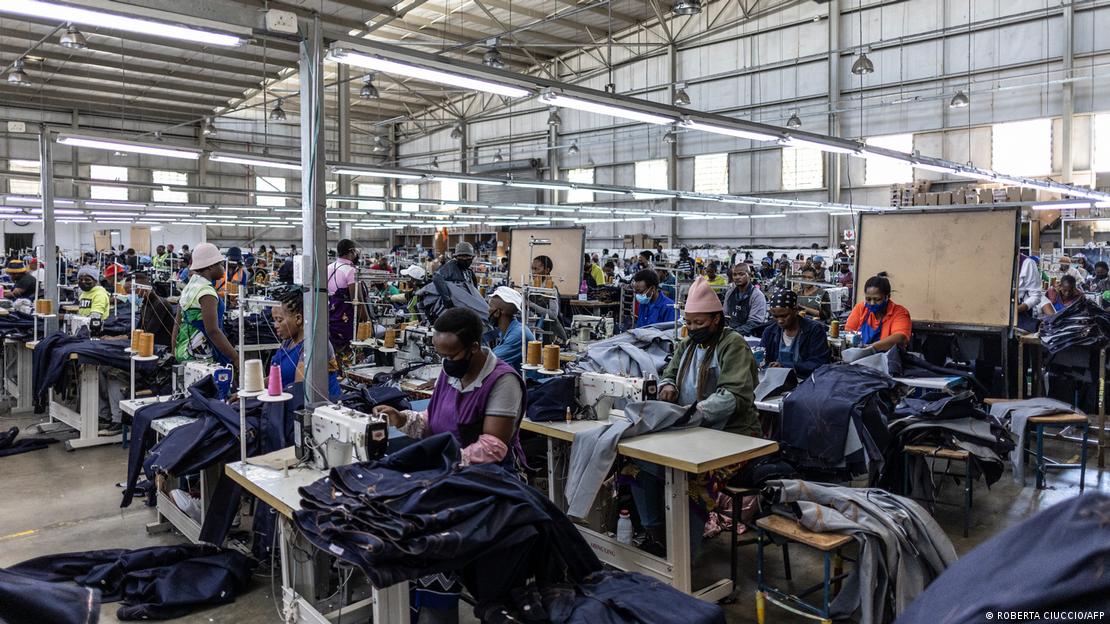
Lesotho's textile industry faces major challenges in light of hefty US tariffs
Image: ROBERTA CIUCCIO/AFP


Africa's indifferent response to Trump


Despite all the turmoil Trump's policies caused around the world, the impact of the his tariffs on everyday life in African countries was limited, according to Ovigwe Eguegu, an analyst working for the independent consulting firm Development Reimagined

"The continent is still on the right track. Africa does not have a large export market for processed products to the US. Only raw materials such as oil, gas, critical raw materials and metals are exported," Eguegu explained, stressing that often there are no tariffs levied at all for those exports.

Even when the AGOA trade agreement expired at the end of September, which had the intention of fostering growth and opportunity between the US and African countries, the reaction on the continent was quite muted.

The hardest-hit African countries by Trump's policies were Lesotho, which for years has been manufacturing denim for the US market and now has to pay 50% in tariffs, and car exporter South Africa, which faces a 30% tariff hike.
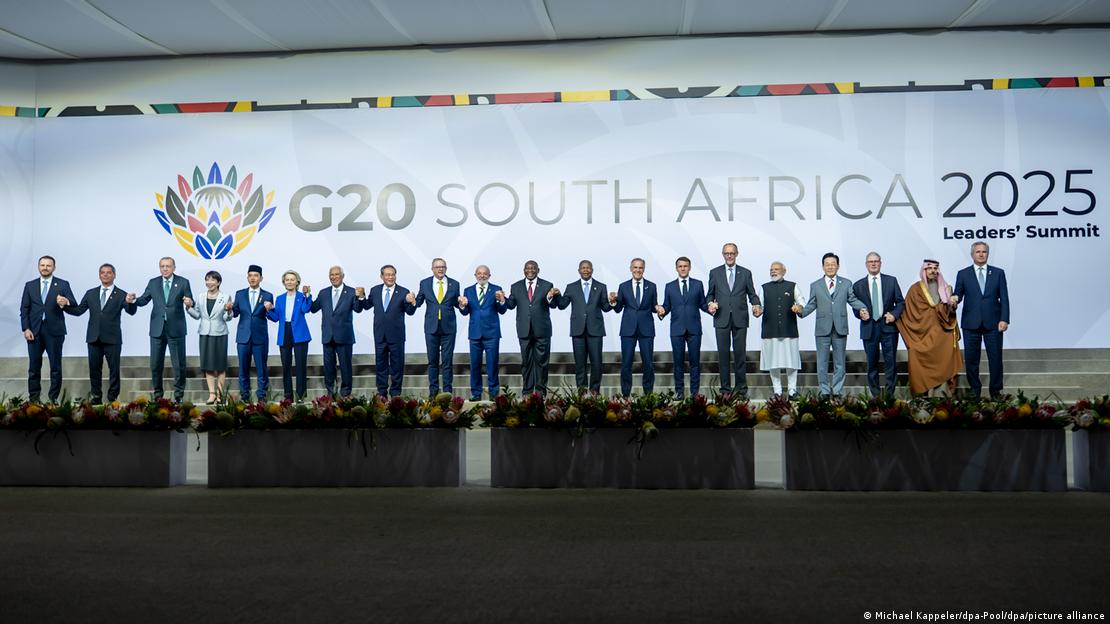
United but without US President Trump: The G20 heads of state and government displayed a sense of unity in Johannesburg, at least during this photo-op
Image: Michael Kappeler/dpa-Pool/dpa/picture alliance


South Africa: G20 success


South Africa's relations with Washington grew particularly sour over the course of 2025. Two weeks into his presidency, Trump announced that "terrible things" were happening to white farmers in the country, referring to alleged massacres of the country's white minority, in particular farmers.

While violent crime rates remain high throughout South Africa, claims of targeted killings against white farmers orchestrated by the government have repeatedly been debunked — not enough for the US leader though.

Pretoria was further upset when, soon thereafter, Trump started granting fast-track political asylum to a group of white South African farmers , which cast South Africa in a bad light the year it took over the rotating chairmanship of the G20.


When the country finally got around to hosting the first G20 summit on African soil in November, the US president and his administration refused to attend;. Trump has continued to single out South Africa as his pariah state of choice, going as far as not extending an invitation to the country to come to the next G20 summit, due to be held in Miami next year.

Still the G20 summit in Johannesburg was a success, says Noncedo Vutula, a researcher at the Nelson Mandela School of Public Governance. "The discussions were rich and took into account all the different points of view that had been debated in the run-up to the summit," Vutula told DW.

For South Africa, it was particularly gratifying that a joint summit declaration committed the G20 to multilateralism — much to the ire of Washington, which had tried to prevent a declaration from being formulated without US participation.

The declaration of intent also expressed a commitment to further strengthening "Africa's voice in the G20 and all other international forums."
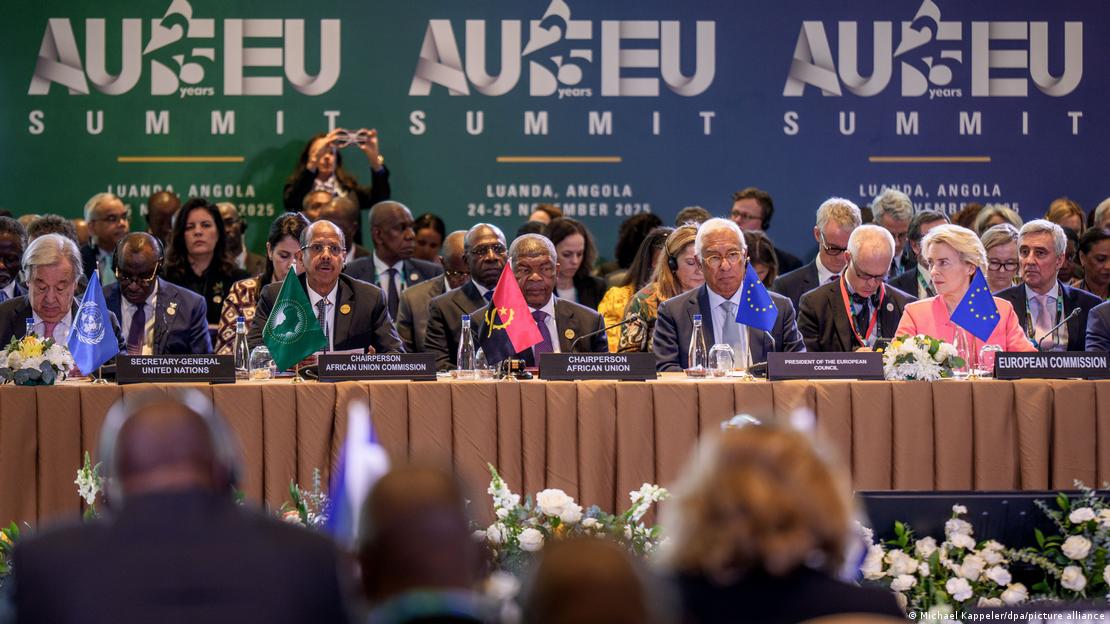
Cultivating closer cooperation: The EU-AU summit held in Luanda in November 2025 was a success for the African continent
Image: Michael Kappeler/dpa/picture alliance


G20 declaration echoes throughout Africa — and beyond

The symbolic power of such a declaration of intent, placing Africa firmly on the world stage, cannot be underestimated for a continent that has been striving for decades to emerge from the shadow of its colonial past.

It set the stage for the African Union-European Union summit which was held just days later in the Angolan capital Luanda. As host of the event, President Joao Lourenco doubled down on the G20 message, saying that "the world does not consist of just one or two countries. We work with anyone who is open to us," and firmly casting Africa as the maker of its own destiny.

At the meeting in Luanda, Africa's European partners reaffirmed their support for major infrastructure projects — such as further improving the Lobito Corridor in Angola, a major economic route that connects the Port of Lobito to the DRC and Zambia. This was seen as a further sign that European nations and other partners are beginning to realize that they cannot dictate one-sided terms to the continent.


"What is needed is a dynamic in which cooperation is structured to benefit both sides," said Eguegu, adding that due to centuries of shared history, Europe remains a desirable partner for many African countries.

However, he also highlighted that there is some competition, that Europe has to catch up to, as African nations are still expanding their relations with China, Russia and smaller players such as Turkey and the United Arab Emirates.

This became even more apparent at the AU-EU summit. While those talks were taking place, China concluded another billion-dollar agreement with Zambia to expand the East African rail network, showing that Beijing is ready to compete with the planned infrastructure upgrades on the Lobito Corridor.

Wars and military rule slow down development

However 2025 was not a year of success in all corners of the continent. Africa's role in the world continues to be dampened by major crises and conflicts, such as the civil war in Sudan, which is now well into its third year, and tensions in eastern Congo, which continue despite multiple international mediation efforts — including those spearhaded by the US.

In addition, there are now eight African countries currently under military rule, with little to no prospect of a return to democracy. In 2025, Madagascar and Guinea-Bissau were added to the list of African countries, where coups and subsequent junta leaderships made the future uncertain for citizens, observers and investors alike.

A more peaceful Africa would contribute significantly to overall economic development, says researcher Vutula, while Eguegu argues that part of the problem is the fact that Africa remains dependent on the influence of foreign powers to this day.

"That is the political reality of weak states. Because the continent is full of weak states, and weak states have neither the capacity nor the political experience [to succeed]," he says. "Their national circumstances make them vulnerable to external influences," he explained, arguing that this is why across so many parts of the continent, militaries have opted to dictate the future direction of their respective countries instead.
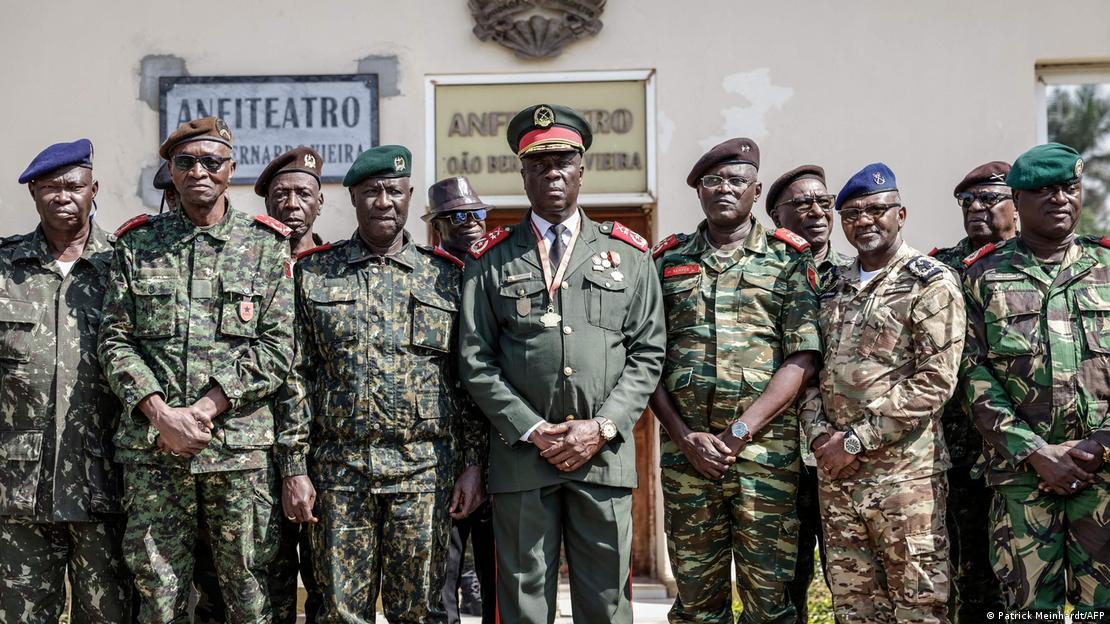

Guinea-Bissau's transitional president, General Horta N'Ta, and his military government claim that "normalcy" will return to the country within a year
Image: Patrick Meinhardt/AFP


Moving forward together with developing countries

Many African countries, meanwhile, are also still being held back in their economic development due to high levels of national debt on their balance sheets, especially in low-income countries.

This was also recognized during the G20 meeting with the summit declaration noting "with concern that interest payments on total external debt have increased significantly and more than doubled for low-income countries over the past decade."

Noncedo Vutula believes that the African Continental Free Trade Area (AfCFTA) could serve as a pathway to greater economic independence, emphasizing that while most African countries have already ratified the agreement, there are still some challenges to overcome.

"It gives Africa hope that we can trade with each other. We can build regional value chains in Africa and ensure that Africa's economies develop," she told DW, adding that Africa has to go beyond its continental borders and reach out to other nations and regions in the Global South to make progress together.


Edited by: Sertan Sanderson

Philipp Sandner
JAPANESE JINGOISM & SINOPHOBIA

Japan Cabinet approves record defense budget to deter China
DW with AFP, AP
 25/12/2025 

Japan is seeking to bolster its defense capabilities in the face of "the most severe" security environment since the end of World War II.

PM Takaichi had said in November that Japanese military could get involved if China were to take action against Taiwan 
(FILE: October 21, 2025)Image: Kazuhiro Nogi/AFP/Getty Images

The Japanese Cabinet on Friday approved a record budget for the upcoming fiscal year.

The 122.3-trillion-yen ($782 billion) budget will include more than 9 trillion yen for defense, setting an all-time record.

This comes as Tokyo looks to strengthen its coastal defense due to the rising tensions in the region, while seeking to double its spending on weapons to 2% of its gross domestic product.

The draft budget for 2026, which will officially begin in April and still requires the parliament's approval, is up 9.4% from 2025.
Why is Japan increasing its defense budget?

The Japanese government pledged to reach its 2% goal by March, two years earlier than planned, also due to pressure from its ally the US.

A briefing document by the Japanese Defense Ministry states that Tokyo "faces the most severe and complex security environment" since the end of the Second World War, adding the situations required to "fundamentally strengthen" its defense capabilities.

Due to Japan's struggles with manning its military, the country sees unmanned weapons as essential to its defense efforts, with drones playing a vital role.

To ensure quick weapons procurement, Tokyo plans on relying on imports, potentially from allies Turkey or Israel.

Tensions with China

The background to the country's arms race is the risk of China taking military action against Taiwan, with Japanese Prime Minister Sanae Takaichi saying Tokyo could intervene should Beijing's statements about forcing its rule on the self-governing island come to fruition.

Earlier this month, Chinese aircraft carrier military drills near the southwestern part of Japan resulted in protest as a Chinese jet locked their radar on a Japanese jet, which is considered possible preparation for firing.

Tokyo's current defense strategy from 2022 names China as the country's biggest strategic challenge.


Edited by: Farah Bahgat

Felix Tamsut Reporter for DW News
CRIMINAL CAPITALI$M
Malaysia: Ex-PM Najib sentenced to 15 years on new charges
DW with AP, AFP, Reuters
26/12/2025 


Former prime minister Najib Razak had already been convicted for graft and money laundering linked to the 1MDB investment fund. The latest verdict, however, is likely to rock Malaysia's ruling coalition to the core.

The 72-year-old Razak has been convicted for illegally receiving funds from Malaysia's investment fund and started serving his sentence in 2022
Image: Mohd Rasfan/AFP


A Malaysian court on Friday found Najib Razak guilty on multiple charges of abuse of power and money laundering tied to multibillion-dollar looting of the Malaysia Development Berhad, better known as the 1MDB investment fund.

Najib was sentenced to 15 more years in prison and fined 13.5 billion ringgit ($2.8 billion or €2.4 billion) after being convicted.

The latest verdict comes on top of a 2020 trial which also found the politician guilty of abuse of power, criminal breach of trust and money laundering for his role in the affair.

The jailed former prime minister has offered an apology for mishandling the scandal but consistently denied any other wrongdoing, insisting he had been misled by fund officials and fugitive businessman Jho Low, once considered a close associate of Najib.
Court rejects Najib's defense as 'pure fantasy'

On Friday, the judge reading the verdict noted the "unmistakable bond" between Najib and Low.

"It must be appreciated that the accused... stood at the very apex of the decision-making process with regard to matters in 1MDB," Judge Collin Lawrence Sequerah said.

"To entertain the belief that officers subordinate to him in the hierarchy would willingly and knowingly conspire against a sitting prime minister of the day, together with Jho Low who did not even hold an official position in 1MDB, would be to stretch the imagination into the realms of pure fantasy."

Investigators have claimed Najib received hundreds of millions of dollars from 1MDB.


The court also dismissed the narrative presented by Najib's defense, which insisted that the defendant believed funds in his account were donations from the Saudi royal family. Judge Sequerah noted that Najib, while serving as prime minister, would have had all the necessary resources to verify this claim.

Najib said he would said he would continue his "struggle" ‌and demand his rights ‌through ⁠legal channels.

"I call upon all Malaysians to assess ‍this matter calmly and rationally, not ​merely ​from the perspective of my fate as an individual, but for the sake of the future of the ‍nation's institutions and the principles that we uphold together," ​he said in a statement read out by his ⁠lawyer, ​who said Najib planned to appeal the ‌ruling.

What does this mean for the Malaysian government?

The ruling could have far-reaching political consequences. It is likely to test the survival of the ruling coalition led by current Prime Minister Anwar Ibrahim, which also includes Najib's UMNO party.

Najib is already serving time for charges linked to the theft of billions from 1MDB. He was due to leave jail in 2028 after his original 12-year term was cut in half.
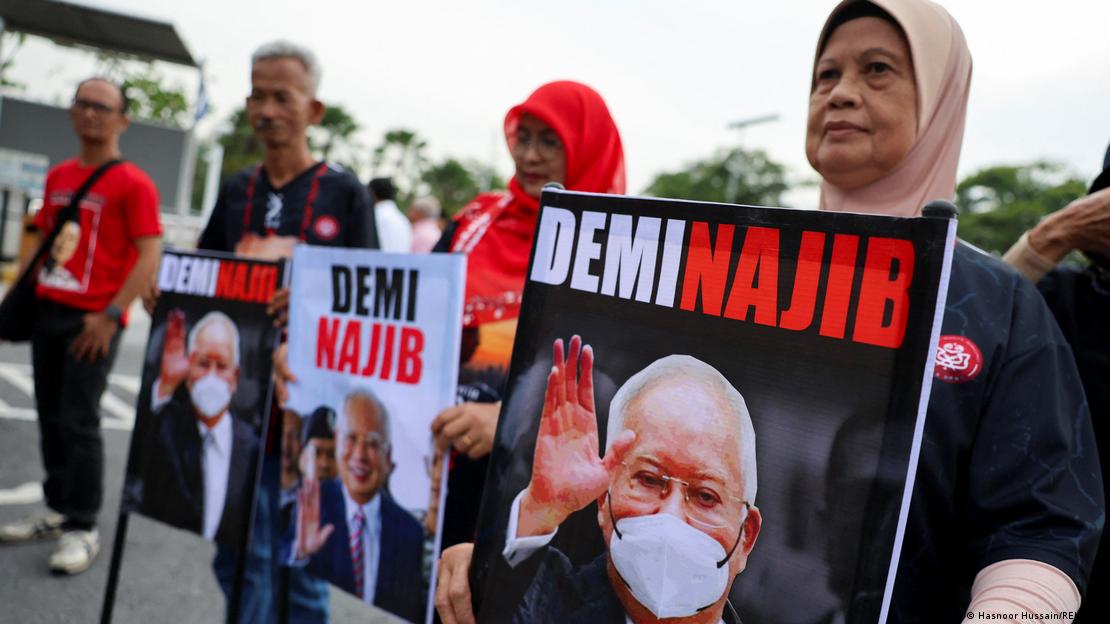
Najib still has a lingering influence within Malaysian politics
Image: Hasnoor Hussain/REUTERS

Tensions within the coalition had already risen this week when a Malaysian court denied Najib's bid to serve the remainder of his sentence at home. Multiple UMNO leaders decried the decision and complained about Anwar's supporters celebrating the ruling.

On Monday, UMNO youth leader Akmal Saleh called on his party to break the coalition and serve as "dignified opposition" instead.

Prime Minister Anwar has insisted that he does not interfere with Malaysia's judiciary. At the same time, Anwar — who campaigned on an anti-corruption platform — is also facing pressure from his own camp over the acquittal of Najib's wife Rosmah Mansor.


What is the 1MDB scandal?


Najib launched 1MDB in 2009, when he assumed office, to promote economic development and investment.

But senior officials and their associates ended up stealing more than $4.5 billion (€3.84 billion) from the fund between 2009 and 2013, according to the US Justice Department. The money was laundered through layers of bank accounts in the United States and other countries.

Much of that money ended up in Najib's bank accounts.

The affair also involved Goldman Sachs, which raised billions for the fund. Two of its former bankers ended up in prison after facing charges of bribing officials, giving false statements to authorities, and misappropriating funds.

The 1MDB scheme is considered one of the largest corruption and embezzlement scandals in living memory.

Edited by Louis Oelofse, Dmytro Hubenko

Richard Connor Reporting on stories from around the world, with a particular focus on Europe — especially Germany.
'No winner': Kosovo snap poll unlikely to end damaging deadlock

Pristina (AFP) – Before the first vote is even cast in Kosovo's snap election on Sunday, experts predict it is unlikely to end the political crisis that has been gripping Europe's youngest country for almost a year.

26/12/2025 - FRANCE24

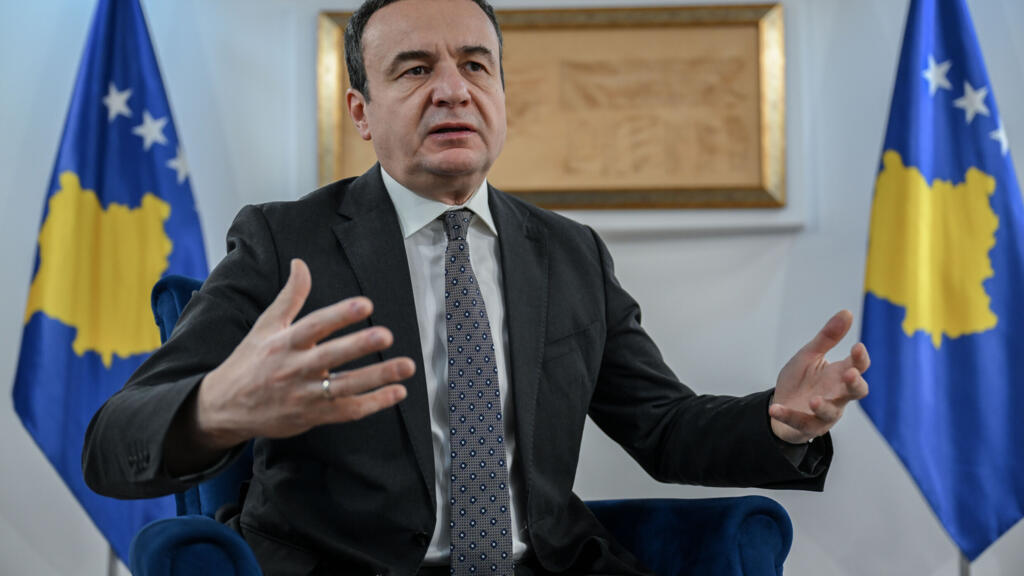
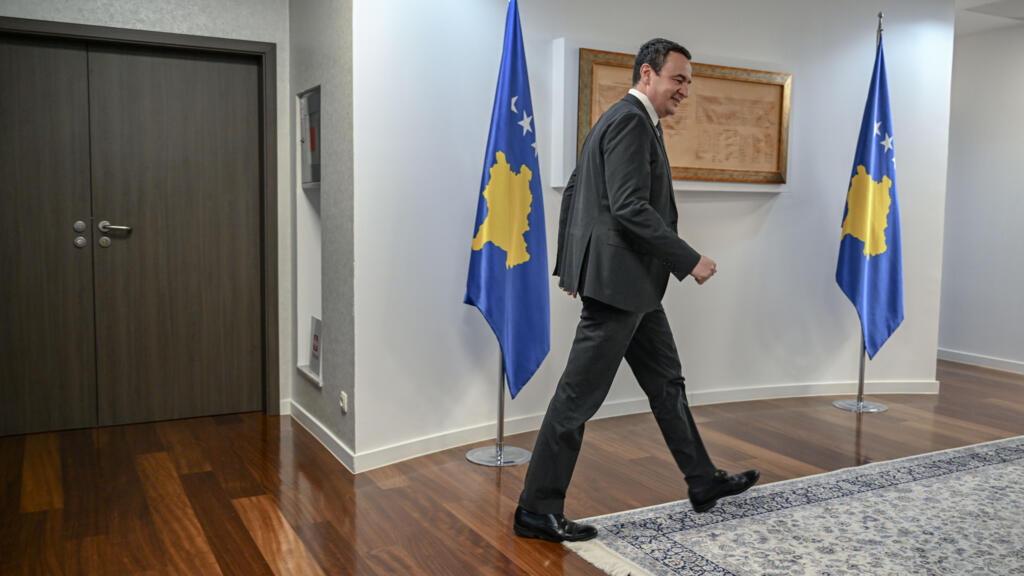
Fated favourite? Kosovo's acting premier Albin Kurti may win the election but not end up as PM © Armend NIMANI / AFP

The Balkan nation has been politically deadlocked since the inconclusive vote in February, which outgoing premier Albin Kurti's Vetevendosje (VV) party won but without enough seats to form a government.

After months of wrangling in a stalled parliament, the caretaker prime minister is going back to the electorate in a vote that analysts say will change very little.

"I think that the December 28 elections will not bring any clarity," economist Mehmet Gjata told AFP as he predicted Kurti's party would come out on top again.

Political analyst Fatime Hajdari agreed that "chances were high" that VV would secure the most votes, but said little else was clear.

Charismatic Kurti


If anyone can secure a majority, Kurti, once dubbed Kosovo's Che Guevara for his radical past, has a rare record.

His party swept to power in 2021 in the largest electoral victory since the country's independence from Serbia in 2008, taking over 50 percent of the vote.

From a student radical to a political prisoner, Kurti's long path to the prime ministership has made him one of the most recognisable and influential politicians in Kosovo.

His blend of nationalism and a reform agenda has proven popular in a country whose sovereignty is still contested by Serbia, more than two decades after its war for independence ended.

But Gjata says things may have changed since Kurti's last term.


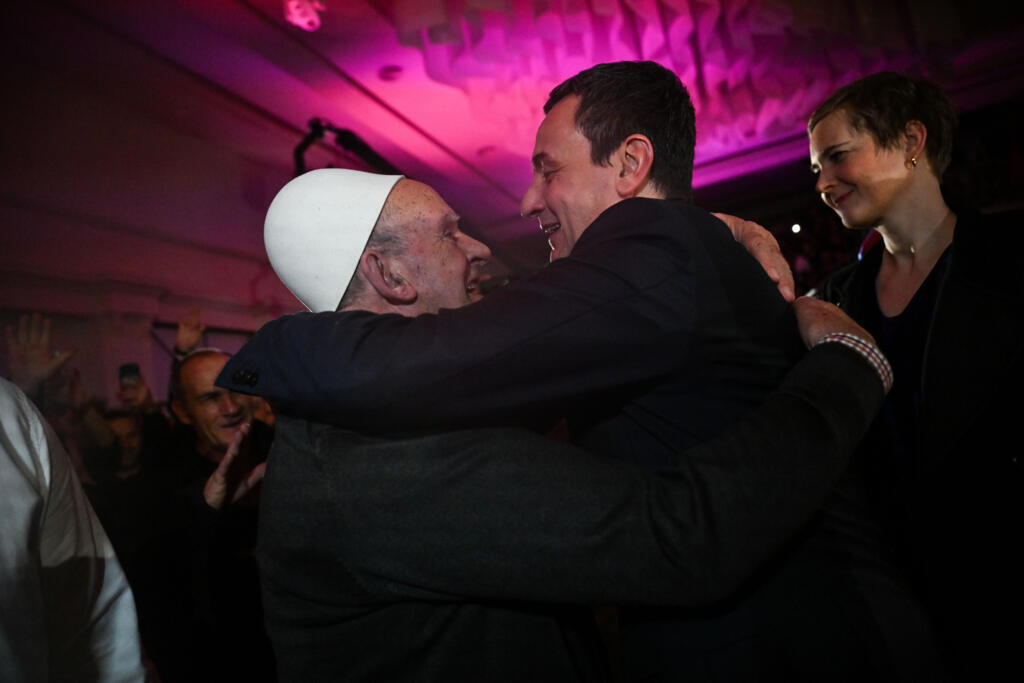
Kurti (R) embraces a supporter during a campaign rally in Podujevo © Armend NIMANI / AFP

"I'm afraid that the current political crisis will repeat itself, because VV will not get more than 50 percent of the votes," the economist said.

"We will have no winner again."

The largest opposition parties have refused to join a Kurti coalition, all but assuring a fragmented parliament.

The only realistic challenge to VV would be "cooperation" between the three major opposition parties, former foreign minister and opposition candidate Enver Hoxhaj said.

"I think that only they can offer stability," Hoxhaj said.
Popular Serb policy blamed for 'instability'

For Kurti and his party, countering Serbian influence in Kosovo has long been a focus, drawing support at home but criticism abroad.

When Serbian forces withdrew under NATO bombardment in 1999, it left many of its state structures in place for ethnic Serbs who live mainly in the north.


Kosovo Serb voters in Gracanica queue to vote in the last general election in February © Armend NIMANI / AFP

Kurti has labelled these services "instruments of intimidation, threat and control" and spent nearly his entire second term uprooting the system -- and angering Belgrade in the process.

The resulting tensions in the north, which last flared into violence in 2023, have drawn sanctions from the European Union and caused Washington to accuse Kurti's government of increasing "instability".

But among his voters, the removal of Serbian influence remains popular, Hajdari said.

"The extension of sovereignty there is perceived by the citizens as a major success," Hajdari said.

Most opposition parties avoid the issue, but the Serb List -- which contests and retains most of the ten reserved Serb seats in parliament -- regularly clashes with Kurti's agenda in the north.

The minor party, with close ties to Belgrade, has previously called the government's moves in the north "ethnic cleansing" and has said they are willing to work with other parties to keep Kurti out of power.

A year of 'colossal damage'


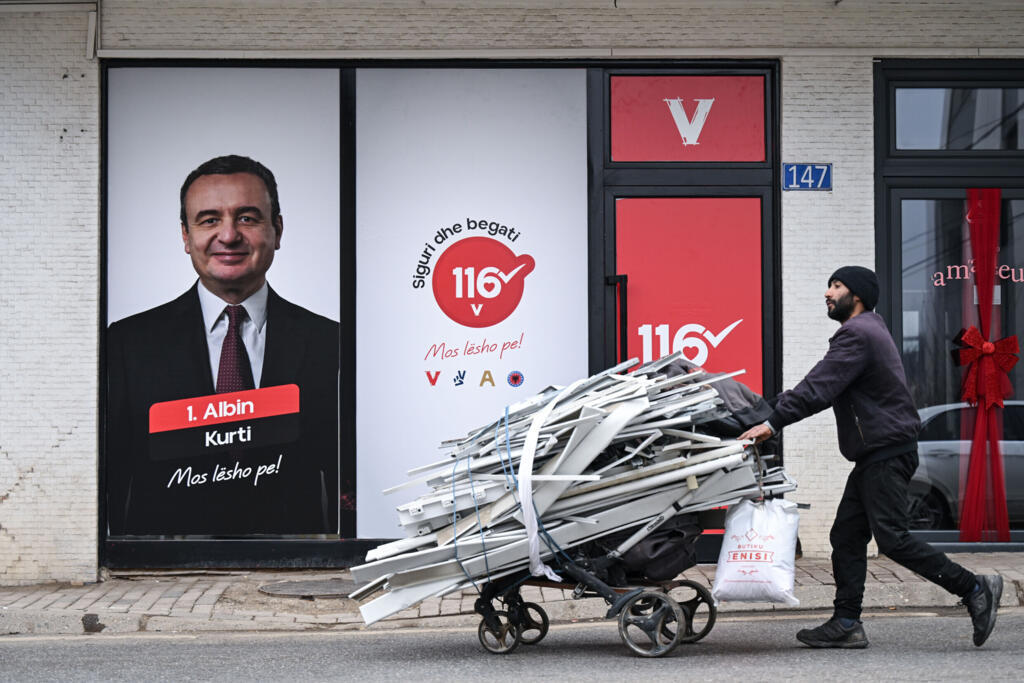
A man pushes a cart past an election poster for Kosovo's outgoing premier Albin Kurti © Armend NIMANI / AFP


Without a parliament, key international agreements have not been ratified, putting hundreds of millions of euros in assistance funds at risk.

Two national polls and a local election have cost one of Europe's poorest nations at least 30 million euros ($35 million) this year.

Over a dozen government institutions and agencies have also been left leaderless, as the mandates of their managers expired without new ones being appointed.

Gjata said "colossal damage" had been done to the economy by divided lawmakers over the past months.

"They have put Kosovo in a state of anarchy," he said.

While lawmakers bickered, the cost of the crisis would be felt by the Balkan nation's citizens, Hajdari warned.

"That is precisely why Kosovo needs a stable and functional government that would focus on development and welfare."

© 2025 AFP


Main contenders in Kosovo's snap election

Pristina (AFP) – Kosovo is heading for early elections Sunday after months of political deadlock and failure to form a government -- the only solution its deeply divided parties could agree on to break the stalemate.


26/12/2025 - FRANCE24

Serial winner: Kosovo's acting premier Albin Kurti © Armend NIMANI / AFP

Here are the main contenders to be the Balkan nation's next prime minister:


Albin Kurti: eyeing fourth win

Kosovo's caretaker prime minister, Albin Kurti, is widely seen as the unbeatable frontrunner in the race—even after a year of political paralysis during which he failed to form a coalition.

If he wins, it will mark the fourth consecutive time the 50-year-old left-wing leader has crossed the finish line first, securing his position at the helm of the small, landlocked country.

Kurti has left nothing to chance, pouring enormous energy into a two-week snap election campaign, travelling extensively and lobbying across the country.

Once nicknamed "Che Guevara" for his youthful radicalism, Kurti boasts long political experience rooted in Kosovo's independence movement during the war-torn 1990s and later in parliament.

After a brief first term as prime minister from February to June 2020, Kurti's party, Vetevendosje (VV) -- which blends a leftist agenda with fervent nationalism -- won the 2021 snap elections with over half the vote.

He then became the first prime minister to complete a full term since Kosovo's independence. However, in February's election, his party fell short of the numbers needed to govern alone and failed to secure a coalition partner, triggering months of deadlock that ultimately led to Sunday's snap vote.

Kurti and VV still enjoy strong voter support, thanks largely to their reformist and anti-corruption platform. But if Kurti wins on Sunday, he will face intense international pressure to revive dialogue with Serbian President Aleksandar Vucic on normalizing relations between the two neighbours.

Bedri Hamza: the challenger

Former central bank governor Bedri Hamza greets his supporters during an election rally © Armend NIMANI / AFP

Bedri Hamza, a former central bank governor and newly elected president of the Democratic Party of Kosovo (PDK), is seen as Kurti's strongest challenger.

Born out of a guerrilla movement during the war against rule from Belgrade, the PDK dominated Kosovo's political scene for years, riding the wave of wartime popularity. But its influence gradually waned as the country moved beyond the conflict.

The party has since reinvented itself with figures like Hamza, who blends national values with liberal economic policies championing free markets, economic growth, a stronger private sector and social protection.

The 62-year-old graduated from the Faculty of Economics at the University of Pristina and began his career in the late 1980s as head of accounting and finance at a lead metallurgy plant in Mitrovica.

More than three decades later, Hamza returned to the ethnically divided city as mayor of its Albanian-majority south. His tenure is remembered for successfully implementing multi-ethnic projects with the Serb-majority north, including regulating the Ibar River. If elected prime minister, this experience could prove invaluable in building trust with Kosovo's Serb minority, which remains loyal to Belgrade.

A prominent economist, Hamza has served as finance minister, central bank governor and has been a three-term MP.

Knowing that in pro-American Kosovo, political ambitions often hinge on US support, Hamza's first major move after announcing his candidacy was a trip to Washington, where he met senior US officials.

Generally regarded as a man of integrity, Hamza declared after his election as PDK leader that the party "is ready for victory".

Lumir Abdixhiku: young pretender

The LDK's youthful leader Lumir Abdixhiku © Armend NIMANI / AFP

Lumir Abdixhiku is the youngest candidate for prime minister but leads the country's oldest political party, the Democratic League of Kosovo (LDK).

The 42-year-old economist was an academic focusing on tax evasion in transition economies before entering politics and served as Kosovo's infrastructure minister.

Abdixhiku also spent several years as a newspaper columnist, penning the well-known "Letters from Limbo" column in the daily Koha Ditore.

He became LDK leader in 2021, just a month after the party suffered a crushing parliamentary defeat. Abdixhiku pledged reform and delivered, replacing much of its leadership with younger activists. Now the third-largest party in parliament, the LDK could play kingmaker in these elections, as both left and right seek its support for a coalition.

Abdixhiku declared that LDK aims to "take the leadership of Kosovo" and offer "a dignified and European government" if it wins.

© 2025 AFP
Syria: 8 killed in first major mosque attack since Assad
DW with AFP, AP, dpa, Reuters
26/12/2025 

A deadly blast tore through an Alawite mosque during Friday prayers in the western city of Homs. A little-known militant group has claimed responsibility as Syria's sectarian tensions erupt again.


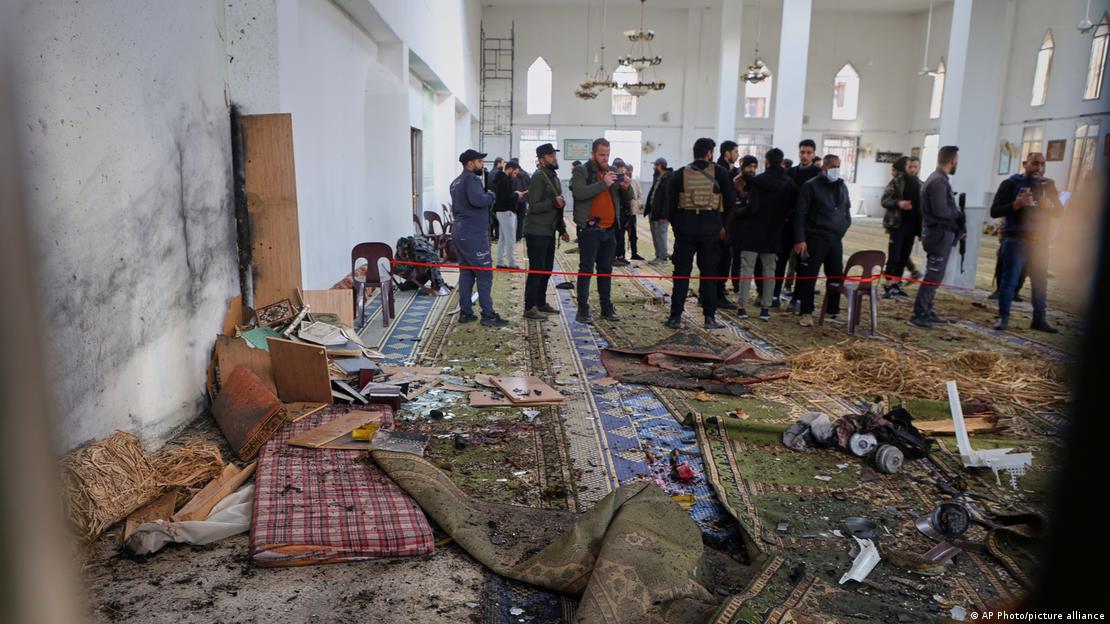
An Alawite group labeled the blast "a continuation of the organized extremist terrorism specifically targeting the Alawite community"
Image: SANA/AP Photo/picture alliance

At least eight people were killed on Friday when an explosion struck a mosque used by Syria's Alawite minority in Homs, state media reported.

The blast, believed to be the first attack on a mosque since the overthrow last year of longtime leader Bashar Assad, himself an Alawite.

The blast was claimed by an Islamist militant group formed shortly after Assad's ouster.


What do we know?


The Interior Ministry labeled the explosion at the Imam Ali Mosque in Homs, Syria's third‑largest city, a "terrorist bombing."

According to the Syrian Observatory for Human Rights, the mosque is attended primarily by members of the Alawite community.

State news agency SANA, citing a security source, reported that the blast was caused by explosives planted inside the mosque.

A government official said the devices detonated during the crowded Friday prayer service.

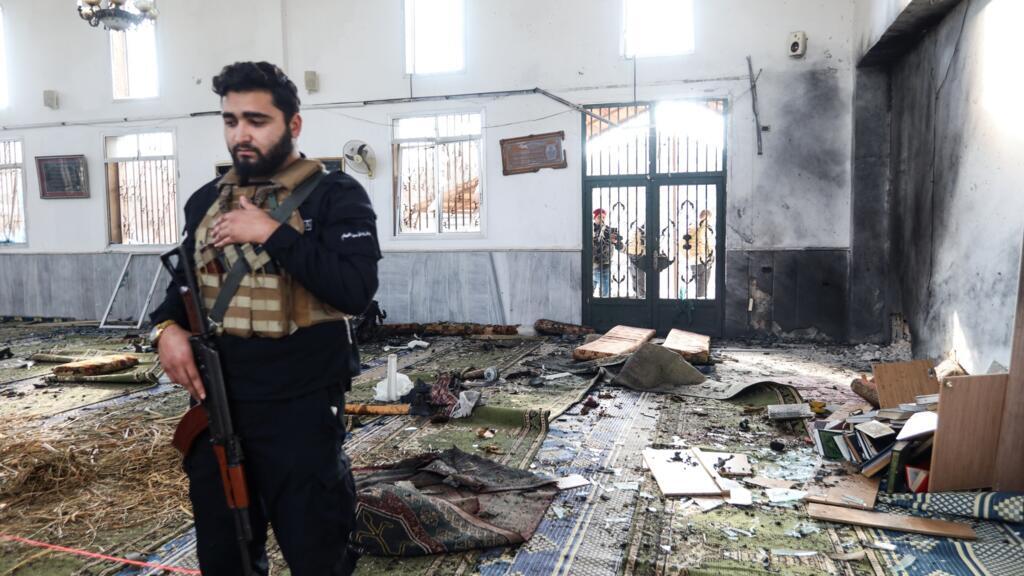
Photos released by SANA showed extensive destruction and bloodstains inside the prayer hall.

In addition to the eight fatalities, Health Ministry official Najib al‑Naasan told SANA that 18 people were injured.

The official said ⁠the figures were not final, indicating that the death toll could rise.


The Syrian government blamed the church attack on a cell of the Islamic State (IS) group
Image: AP Photo/picture alliance


Islamist group claims responsibility

A local security official told SANA that investigators had not yet identified the attacker or confirmed any link to armed groups.

However, in a statement on Telegram, the Islamist militant group Saraya Ansar al-Sunna said later Friday that its fighters had "detonated a number of explosive devices" at the mosque.

The group was formed after the ouster of Assad, who is a member of the Alawite community.

Syria has faced multiple episodes of sectarian bloodshed since Assad was driven from power by a rebel offensive last year and replaced by a Sunni‑led interim government.

After his ouster, Assad fled to Russia, and since then, Alawite communities have faced a series of crackdowns.

The Syrian government has recently stepped up security campaigns against Assad loyalists and the self-declared Islamic State (IS) terrorist group.

On December 19, the United States launched strikes aimed at IS targets in Syria, not the Syrian state, in retaliation for an attack which killed two American servicemen and an interpreter a few days earlier.

Edited by: Dmytro Hubenko

Nik Martin is one of DW's team of business reporters.

Deadly blast hits mosque in Alawite area of Syria's Homs


Homs (Syria) (AFP) – An explosion killed at least eight worshippers at a mosque in a predominantly Alawite area of Syria's Homs on Friday, state media said, with an Islamist militant group claiming responsibility.


Issued on: 26/12/2025 - RFI

Authorities said at least eight people were killed in the blast at the Imam Ali Bin Abi Talib Mosque in the central Syrian city of Homs 
© Omar HAJ KADOUR / AFP

The attack during Friday prayers is the latest on the Alawite community, and the second blast in a place of worship since Islamist authorities took power a year ago, after a suicide bombing in a Damascus church killed 25 people in June.

In a statement on Telegram, extremist group Saraya Ansar al-Sunna said its fighters "detonated a number of explosive devices" in the Imam Ali Bin Abi Talib Mosque in the central Syrian city.

The group formed after the ouster last year of longtime ruler Bashar al-Assad, himself a member of the Alawite community, and had claimed responsibility for the June church bombing, though authorities blamed the Islamic State group.

State news agency SANA reported an explosion in the mosque in Homs's Wadi al-Dahab neighbourhood and gave a preliminary toll of at least eight dead and 18 wounded, citing a health ministry official.

An AFP photographer saw security forces cordoning off the area around the mosque while inside, personnel stood guard as red tape encircled the blackened, debris-strewn corner where the blast went off.

Usama Ibrahim, 47, who was being treated in hospital for shrapnel wounds to his head and back, said he was at Friday prayers when he heard was a loud explosion.

"The world turned red... and I fell to the ground. Then I saw blood flowing from my head," he told AFP.

'Shrapnel all around'

Syria's interior ministry said in a statement that "a terrorist explosion" targeted the mosque and that authorities had "begun investigating and collecting evidence to pursue the perpetrators of this criminal act".

SANA quoted a security source as saying that initial investigations indicated that "explosive devices planted inside the mosque" caused the blast.

As victims' families gathered at the hospital, wounded bookseller Ghadi Maarouf, 38, told AFP that the explosion occurred "just before the imam was to ascend the minbar to deliver the sermon", referring to the imam's raised platform.

"It was a huge explosion, and I saw shrapnel flying all around me," said Maarouf, whose leg was wounded in the blast.

Syria's foreign ministry condemned a "cowardly criminal act", saying it came "in the context of repeated desperate attempts to undermine security and stability and spread chaos among the Syrian people".

The ministry statement reiterated its "firm stance in combating terrorism in all its forms", vowing to hold the attackers accountable.

Several countries including Saudi Arabia, Lebanon, Turkey and Jordan condemned the attack.

Most Syrians are Sunni Muslim, and Homs city is home to a Sunni majority but also has several predominantly Alawite areas, a community whose faith stems from Shiite Islam.

Since Assad's fall, the Syrian Observatory for Human Rights monitor and Homs province residents have reported kidnappings and killings targeting members of the minority community, while the country has seen several bloody sectarian episodes.

Detainees released


Syria's coastal areas saw the massacre of Alawite civilians in March, with authorities accusing armed Assad supporters of sparking the violence by attacking security forces.

A national commission of inquiry said at least 1,426 members of the minority were killed, while the Syrian Observatory for Human Rights monitor put the toll at more than 1,700.

Late last month, thousands of people demonstrated on the coast in protest at fresh attacks targeting Alawites in Homs and other regions.

Before and after the March bloodshed, authorities carried out a massive arrest campaign in predominantly Alawite areas, which are also former Assad strongholds.

On Friday, Syrian state television reported the release of 70 detainees in the coastal city of Latakia "after it was proven that they were not involved in war crimes", saying more releases would follow.

Despite assurances from Damascus that all Syria's communities will be protected, the country's minorities remain largely wary of their future under the new Islamist authorities.

In July, sectarian clashes in southern Syria's Druze-majority Sweida province saw more than 2,000 people killed, including hundreds of Druze civilians who the Observatory said were "summarily executed by defence and interior ministry personnel".

In a speech this month marking a year since the fall of Assad, Syrian President Ahmed al-Sharaa emphasised the importance of all Syrians unifying efforts to "to build a strong Syria".

Despite major achievements in relaunching Syria's foreign standing, Sharaa faces the major domestic challenge of maintaining security and unity nationwide.

Trust issues: 'Islamic State' supporters in the Syrian army?
DW
12/23/2025

The attack on US troops by a Syrian security forces member who was a supporter of the extremist "Islamic State" group in mid-December has consequences well beyond the four deaths that resulted.


In retaliation for an attack on Americans by a supporter of the 'Islamic State' group, the US conducted Operation Hawkeye Strike in Syria, using fighter jets, attack helicopters and artillery against the group
 U.S. Air Force/Getty Images

One question continues to arise after the recent killing of two US soldiers and a civilian translator in central Syria by a follower of the extremist "Islamic State" group.

The killer had infiltrated the Syrian security forces. How many others in the Syrian security forces might hold similarly extreme opinions?

The attack "exposes holes in the Syrian government's intelligence capabilities, a known vulnerability given the shortages of personnel and resources, and the country's geographic instability," Syrian researcher and journalist Subhi Franjieh wrote for London-based media outlet Al Majalla shortly afterward.

"The Palmyra attack may be used to argue that the Syrian government is compromised and cannot be trusted in key areas like counterterrorism."

Franjieh points out that, although Syria joined the US-led global coalition fighting the "Islamic State" in November, the international coalition is so far only cooperating with the Syrian Ministry of Interior, not the local Ministry of Defense. The latter is seen as not yet fully established and secure.

Just under a week after the killings of the Americans in Palmyra, the "IS" group published a message on its Telegram channel describing the deaths as a "blow" to the US and to any Syrians opposed to it. It did not, however, claim direct responsibility, and it seems that — similarly to the two men who recently targeted a Jewish gathering in Australia — the attack may have been "inspired" by the extremist group.

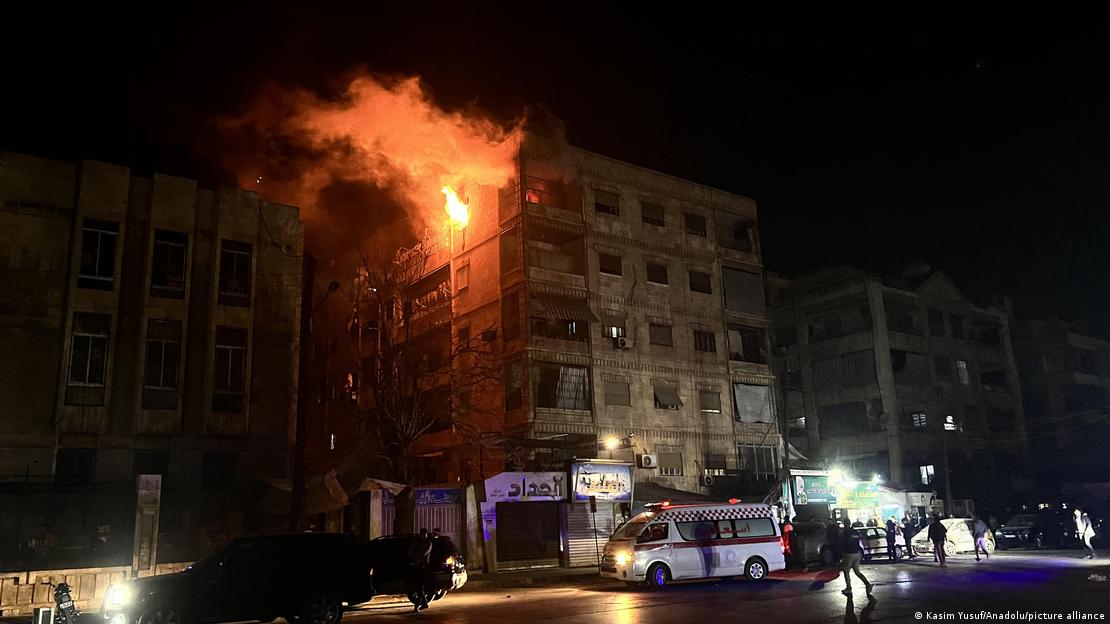
Security issues and violence, such as that which occurred between Syrian Kurds and Syrian security forces over the weekend in Aleppo (pictured), has been exploited by the 'IS' group in the past, experts sayI
mage: Kasim Yusuf/Anadolu/picture alliance


Soldiers who sympathize with 'IS'?


Experts agree that there could be more individuals in the Syrian security forces who sympathize with or are inspired by the "IS" group.

They say one of the main problems is that the Syrian government has been trying to establish a new military at speed following the ouster of the country's Bashar Assad dictatorship in December 2024.

Shortly after the Palmyra attack, a spokesperson for the Interior Ministry said that 5,000 new recruits were added to its forces in the area where the attack happened. When the "IS" group was at the height of its power, it controlled large swathes of Syria and Iraq, including Palmyra.

The spokesperson also said there were weekly evaluations of those personnel and that the "IS" supporter who killed the Americans and a Syrian officer had already been on a watchlist. He was to be dismissed the day after the attack.


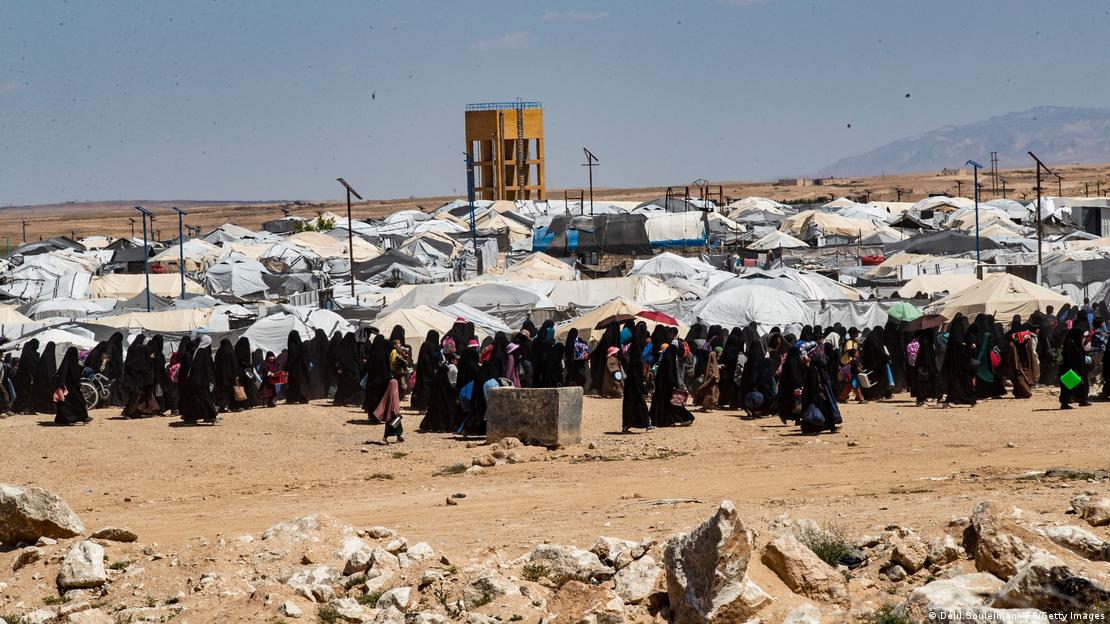
There are several camps in Syria where members of the 'Islamic State' group and their families are interred; they're acknowledged as very dangerous places
Delil Souleiman/AFP/Getty Images

The new Syrian authorities were forced to choose between recruiting more people fast or undertaking a slower, more intensive vetting process, Jerome Drevon, an expert on Islamist militancy the International Crisis Group, a think tank, explained last week. The authorities went for the faster option, but, as Drevon told UK-based publication The Arab Weekly, some of their recruits may be "more radical, willing to fight US troops, because they oppose the government's decision to reach out to Western countries."

Additionally, as Masood Al Hakari, a researcher at the Peace Research Institute Frankfurt, wrote earlier this yearHayat Tahrir al-Sham, or HTS, the militia Syria's Interim President Ahmad al-Sharaa headed, was previously linked to both the "IS" group and al-Qaeda. Over time, HTS severed links with those groups and even fought "IS" in the territory it controlled, but, as Al Hakari says, HTS likely "still harbors extremists with sympathies for 'IS' ideology."

'IS' hiding in Syrian desert


There are estimated to still be around 2,500 "IS" fighters in Iraq and Syria, mostly in hiding or in sleeper cells. Because of the difficulty of ensuring security, the remote Syrian desert has long been a favored location for them.

Over the weekend, the US conducted over 70 strikes in Syria, mostly on remote areas north of Palmyra. The US raids were a "very serious retaliation" for the Palmyra attack, US President Donald Trump said. Reports say five people were killed as result.

There are thousands of former "IS" members in prison camps in northern Syria who pose a danger, PRIF's Al Hakari explains. But the most significant factor that makes the "IS" group such a threat is the economic, political and security environment in the country, he and other experts say.

The Syrian dictatorship was toppled after 14 years of civil war, and the new Syrian authorities don't yet have complete control of security in the country. In some areas, there's been fighting between the new authorities and minority communities, which has added to the security issues. The very difficult economic environment also creates discontent.


All these "create fertile ground for 'IS' to exploit governance voids and public unrest, positioning itself as an alternative form of governance and expanding its influence," notes Al Hakari.

"IS" attacks on government areas have increased since the change of government, and other experts note that the group's followers now seem to want to deliberately undermine the new authorities.

For example, Syrian security forces say that in late November, they found an "IS" cell in Latakia. Latakia is actually populated mainly by the Alawite minority, a group "IS" followers might usually classify as infidels. The Alawites are perceived as linked to the former dictatorship because the Assad family was also Alawite and has been targeted as a result of that. Alawite neighborhoods remain volatile and ripe for unrest.


Over the past weekend, two gunmen randomly fired at people on a street in a fairly remote village in central Syria, near Salamiyah city. The area is home mainly to another minority, the Ismailis, and although nobody knows who was responsible, Salamiyah's mayor said he thought the "IS" group could have done it.

However, it will take time to extinguish the threat posed by the "IS" group in Syria altogether, if indeed it is possible to wipe out the extremist ideology at all.

"The threat posed by 'IS' militants in Syria is more severe than in any other country in the region," Al Hakari says.

Cathrin Schaer Author for the Middle East desk.


Religions intersect at Iran's new metro station honouring Virgin Mary

Tehran (AFP) – Shiite Islam may be the official religion in Iran, but entering Tehran's brand-new Maryam Moghaddas metro station, you could be forgiven for feeling as if you're stepping inside a Christian church.

\ 24/12/2025 - RFI


At Tehran's Maryam Moghaddas metro station religious frescoes and artworks honour Christianity's Virgin Mary, the mother of Christ. © ATTA KENARE / AFP

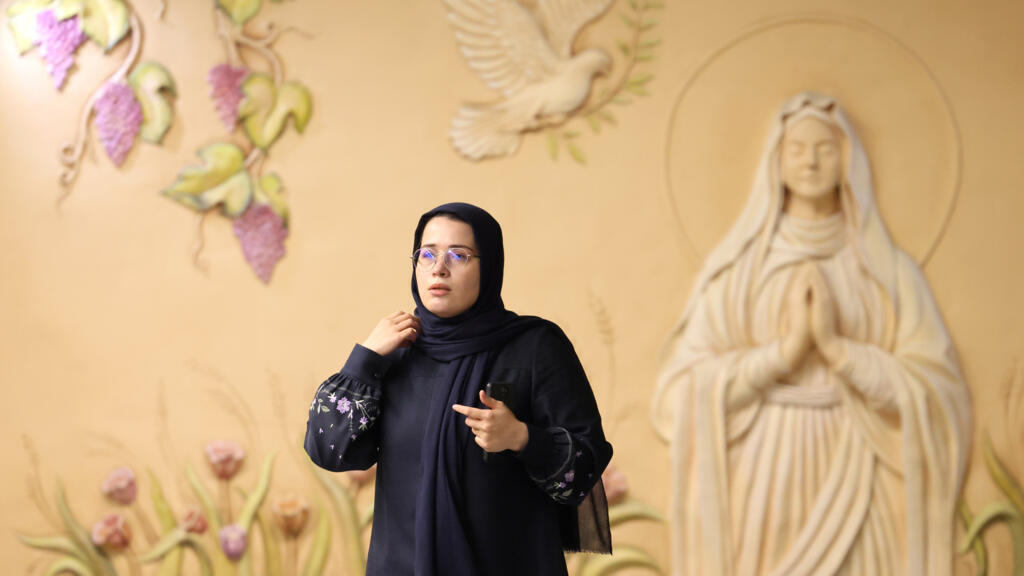
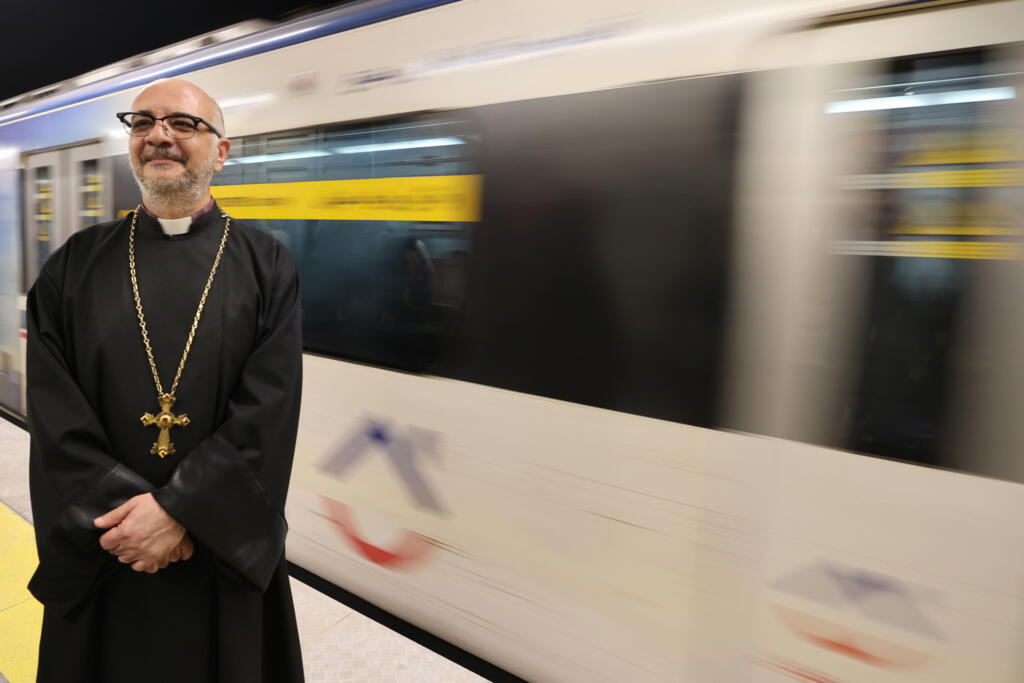
Maryam Moghaddas in Persian translates as "Holy Mary". And the station's vaulted and arched concourse, with a dome decorated with Persian motifs, features religious frescoes and artworks honouring Christianity's Virgin Mary, the mother of Christ.

Mary is also a venerated figure in Islam. And she is depicted here in prayer with her eyes closed, a white dove hovering just above her head.

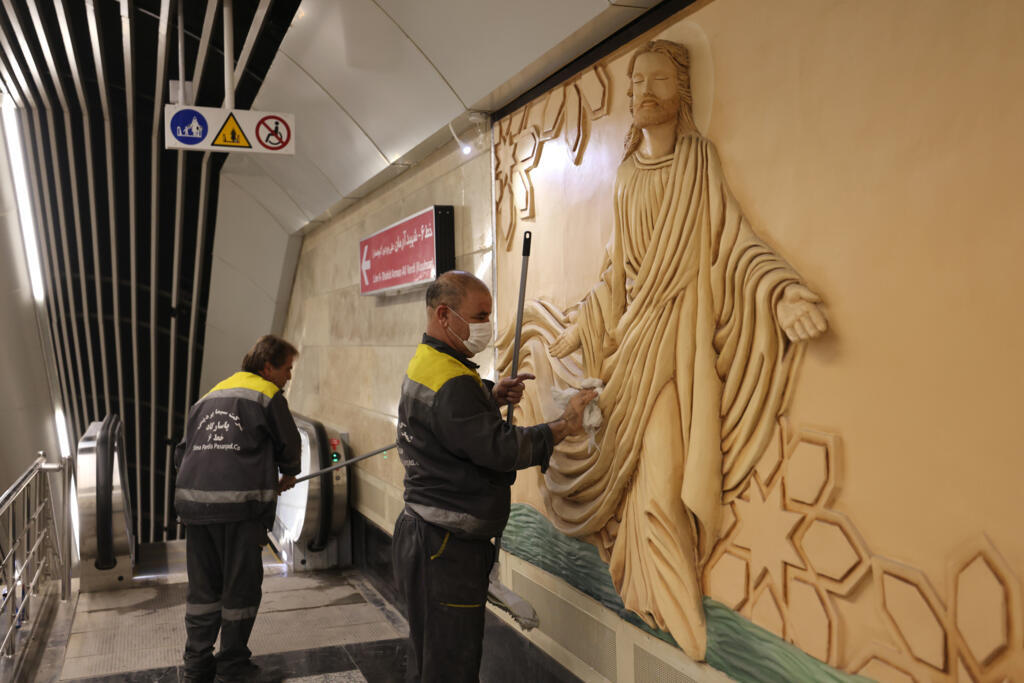
Another artwork, along the platform, depicts her son Jesus Christ, who appears to be watching over passengers as they wait for their train.

Shiite Islam is the official state religion of Iran, but the Constitution recognises Sunni Islam, Zoroastrianism, Judaism and Christianity as minority religions. © ATTA KENARE / AFP

The Virgin Mary enjoys universal respect in Iran, and she is a figure seen to be able to foster ties between believers of whatever religion.

Maryam is also one of the most common female names in the country.

"Every single element you see at this station was designed so that when someone passes through here, they understand that our goal was to respect other religions, Christianity in particular," Tina Tarigh Mehr, the artist behind the works, told AFP.

"This bird (the white dove) is a symbol of the Holy Spirit. The olive tree is a symbol of peace and friendship," she said during a tour organised for the press ahead of the station's public opening at the end of November.


Woman and 'purity'

Another artwork depicts Jesus Christ, who appears to be watching over passengers as they wait for their train. © ATTA KENARE / AFP

In Iran, a vast multicultural country, Shiite Islam is the official state religion. However, the Constitution recognises Sunni Islam, Zoroastrianism, Judaism and Christianity as minority religions, each of which has its own representatives in the Iranian parliament.

Christianity was present in this part of the world long before the rise of Islam during the Arab conquest of Persia in the 7th century AD.


"This station recalls the divine woman who awakened the world through her purity and by nurturing a great prophet," said Tehran Mayor Alireza Zakani on X.

He added that the building was designed to "showcase the coexistence of divine religions in Tehran".

The official number of Christians living in Iran is unknown, but various sources estimate it at between 130,000 and one million.

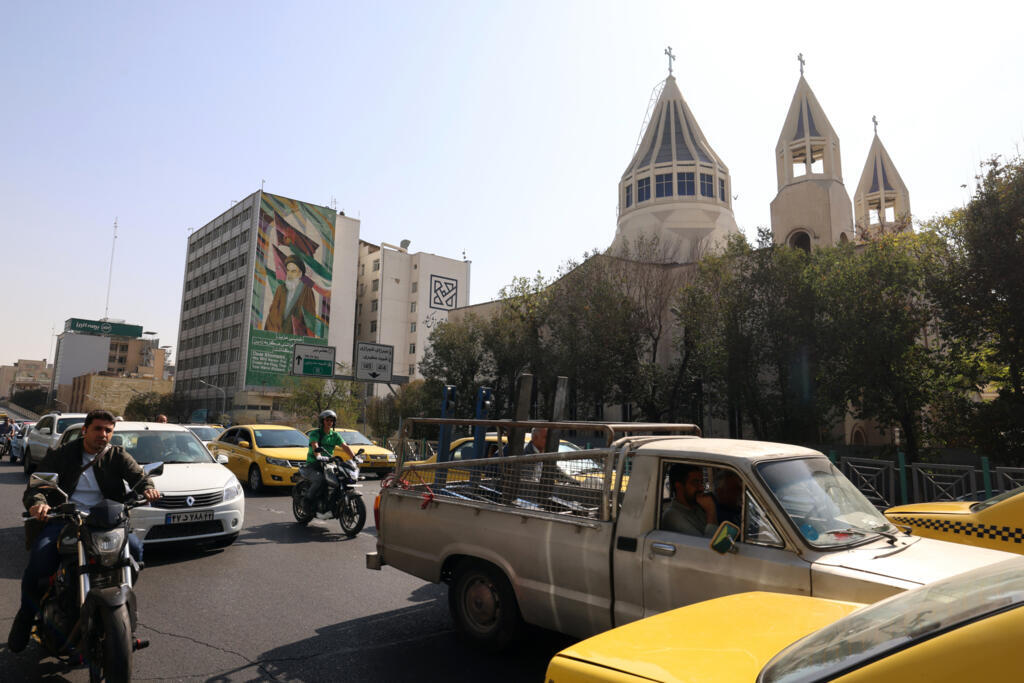
In Tehran, the Saint Sarkis Cathedral of the Armenian Apostolic Church is one of its most visible symbols. © ATTA KENARE / AFP

In Tehran, a metropolis of over 10 million people, the Saint Sarkis Cathedral of the Armenian Apostolic Church is one of its most visible symbols.

It is located near the new station, the construction of which began 10 years ago.

The first metro line in Iran opened in Tehran in 1999 and currently the Iranian capital has approximately 160 operational stations.

Several are renowned for their artistic finesse, a clever blend of modern architecture and traditional Persian elements.

(AFP)


Young West Africans held captive in Ghana in Canadian visa scams

Several families in Senegal say that a number of young people from the north of the country have been held captive in Ghana for several weeks. Lured by the prospect of work visas for Canada, they allegedly fell into the hands of a criminal network. RFI spoke to one of them.


26/12/2025 - RFI

A number of young people from Senegal and other West African countries have been lured by claims they could obtain visas for Canada. © Getty Images/iStockphoto/Manjurul

Canada's decision in 2023 to open its borders to citizens from French-speaking Africa has led to a surge in well-organised scams targeting immigrant hopefuls.

Amadou Fall fell prey to one such scheme. He says he travelled to Ghana after being contacted by a childhood friend, who is also Senegalese.

The friend promised to help him obtain a visa to travel to Canada, which involved him paying 2.5 million CFA francs (€3,811) to cover administrative costs. He managed to raise part of that sum – 1.6 million CFA francs (€2,439) – by selling his belongings.

On arriving in Ghana, he claims he was taken to a house where he met other young men from various African countries. His phone and identity papers were taken from him.

He was told to recruit candidates for Canadian visas and to make them believe he was already there.


Media appeals


Fall describes a highly structured fraud system that exploits young people’s dreams of emigration as a way of extorting money from them.

He told RFI he eventually managed to escape by convincing his captors that he would take part in the scam. His family in Senegal sent him money so he could return home.

At least five young men, all from Kébémer in northern Senegal, are believed to have fallen into the hands of this network.

In recent days, the father of one of them has made repeated appeals to the Senegalese authorities in local media.

He has had no news of his son, Mamadou Seck, since 23 November, despite sending him 2.5 million CFA francs for the same administrative procedure to secure a visa from the Canadian authorities.


Cheikh Touré case

Ghana has been identified as one of the central hubs for such emigration scams in West Africa.

Last October, Senegal was shaken when 20-year-old Senegalese footballer Cheikh Touré died in Ghana after being lured by the promise of a professional career by someone close to him.

He believed he was joining a football club, but is said to have fallen into the hands of a network of fake recruiters, who allegedly kidnapped and extorted him before killing him.

In response, Ghanaian authorities have stepped up operations in recent months to dismantle such networks.

This article was adapted from the original version in French by Juliette Dubois.

WAIT, WHAT?!

Ruble world’s best-performing currency in 2025 despite sanctions and weak oil prices

Ruble world’s best-performing currency in 2025 despite sanctions and weak oil prices
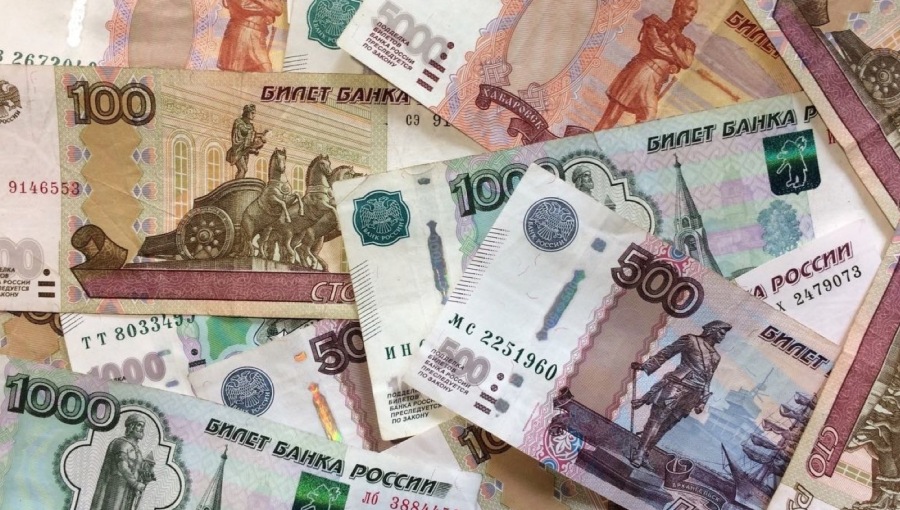
The Russian ruble was the best performing currency in the world in 2025, beaten only by gold and silver prices amongst the major traded commodiites. / bne IntelliNews
By Ben Aris in Berlin December 26, 2025

The Russian ruble surged 44% against the dollar in 2025, becoming the world’s best performing currency, being only beaten by gold (72%) and silver (159%) prices amongst the major traded commodities, The Bell reported on December 24.

The appreciation, which took the exchange rate from RUB103 to RUB79 per dollar in less than twelve months, has occurred in defiance of conventional economic indicators, amid international sanctions, falling oil revenues and continued war in Ukraine.

According to the Central Bank, the ruble has been steadily strengthening since the beginning of 2025. In less than nine months, the exchange rate has weakened by almost 20% – from RUB103.4 at the beginning of the year to RUB83.35 per dollar on September 24. The last time the dollar exceeded RUB100 rubles was on January 21 (RUB101.9 per dollar), and exceeded RUB90 rubles on February 20 (RUB90.4 rubles).

At the heart of the ruble’s rally lies a confluence of domestic policy, suppressed imports, and Russia’s on the battlefield bringing the end of the almost four-year long war into sight.

The historically high key interest rate — averaging 19% over the year and cut to 16% in December — also played a central role in curbing demand for foreign currency while encouraging ruble-denominated savings. “This is one of the highest rates among developing economies,” The Bell noted, citing data from the Central Bank of Russia.

Imports declined by 2.4% in the first ten months of the year, compared to the same period in 2024, further easing demand for foreign exchange. Although exports dropped more sharply — down 4.2% y/y largely due to falling oil prices — Russia maintained a positive trade balance. The ruble's use in international transactions also rose sharply, with 54.6% of imports now paid in rubles, up from 30.4% at the start of the year. In December, Russian President Vladimir Putin said that almost all Russia’s foreign trade with China and the Eurasian Economic Union (EUU) is now settled in national currencies and not dollars.

Exporters sold $85.7bn in foreign exchange revenues during the same ten-month period, down from $121.5bn a year earlier. Nonetheless, the lower demand for foreign currency helped sustain the ruble's strength in a restricted market.

Speculation over a shift in US foreign policy under President Donald Trump, who released a new aggressive National Security Strategy (NSS) in December, has also contributed to the ruble's appreciation. “Geopolitical factors played in favour of the Russian currency,” said Natalia Orlova, Chief Economist at Alfa-Bank, citing market optimism about Russia’s potential reintegration into the global economy.

Analysts at Alfa-Bank also pointed to robust domestic demand for quasi-currency bonds — debt instruments tied to foreign currencies but settled in rubles — as another factor supporting the exchange rate. Issuance of such bonds reached RUB1.7 trillion ($18.4bn) in ruble equivalent this year, according to the Central Bank of Russia.

The downside to a strong ruble is that it negatively impacts the federal budget revenues. Oil revenues in the budget are denominated in dollars, but expenditure is in rubles, so a stronger ruble reduces the number of rubles available for spending. The Finance Ministry has not commented publicly on whether any adjustments to the fiscal rule are under consideration.

The strength of the ruble remains an important factor in Russia’s economy which is export orientated thanks to its raw material production. In 2024, exports of goods and services accounted for 21.9% of GDP. The sectors most vulnerable to ruble appreciation are oil and gas, forestry and wood processing, and transport engineering. Federal oil and gas revenues fell by 22% compared to 2024 on FX effects alone.

However, at the same time, a stronger ruble has helped slow inflation in Russia by making imported goods and services cheaper for Russian consumers, according to CBR. Inflation has been one of the major economic headaches for the CBR, but inflation fell faster than expected in 2025 and by late November had dropped from over 10% at the start of the year below 7%, which has allowed 500bp of rate cuts in 2025 – probably the most important macroeconomic management action of the year.

It is highly unlikely that 2026 will be as favourable for the ruble as 2025, The Bell said in a commentary. Oil prices tumbled in the last months of 2025, with the price of Brent dropping below $60 a barrel and the price of the Russian Urals blend falling below $40 on deep discounts offered following the Trump administration harsh new oil sanctions. At the same time, a record surplus in global oil supply is forecast for 2026 due to OPEC production increases. The International Energy Agency forecasts an average Brent crude price of $52 per barrel for the coming year that will cut into the current account surplus.

“In this configuration, I would call the ruble overvalued. It’s not a classic bubble, but the margin of safety in terms of fundamental flows is no longer very strong. Some momentum for appreciation is still possible, but the balance of risks is shifting toward a weaker ruble over the coming months,” Vladimir Chernov of Freedom Finance Global told The Bell. Chernov expects the dollar to trade in the range of RUB77–82 by year-end.

Factors weighing on the ruble in 2026:

  • Weak oil and gas revenues: Brent near or below $60 per barrel would reduce foreign exchange earnings and worsen the current account balance; a global oil surplus limits price recovery prospects.
  • Central Bank rate cuts: Planned reduction of key interest rate to 13–15% will make ruble assets less attractive, increasing demand for foreign currency.
  • Reduced foreign currency sales from the National Wealth Fund: Lower oil price thresholds and a more balanced budget will limit currency interventions, per Central Bank Governor Elvira Nabiullina.
  • Growth in imports and domestic demand: Rising business purchases of equipment and consumer goods may boost demand for foreign currency and widen the import-export gap.
  • Possible new sanctions: Lack of progress in Ukraine ceasefire talks may lead to further sanctions, fuelling investor risk aversion and demand for safe-haven currencies.

On September 24, the Russian Ministry of Economic Development revised its ruble exchange rate forecast. The average annual value for 2025 is expected to be RUB86.1 per dollar, compared to RUB94.3 per dollar in the April version. 

For 2026, the forecast has improved to RUB92.2 per dollar, up from RUB100.2 per dollar. 

In 2027, the ministry predicts the ruble will weaken to RUB95.8 per dollar, and in 2028, to RUB100.1 per dollar. Previously, the forecasts were RUB103.5 and RUB106 per dollar, respectively.