Monday, December 29, 2025

WATER IS LIFE

‘It’s getting worse year after year’: Could water from Hungary’s thermal spas save arid farmland?
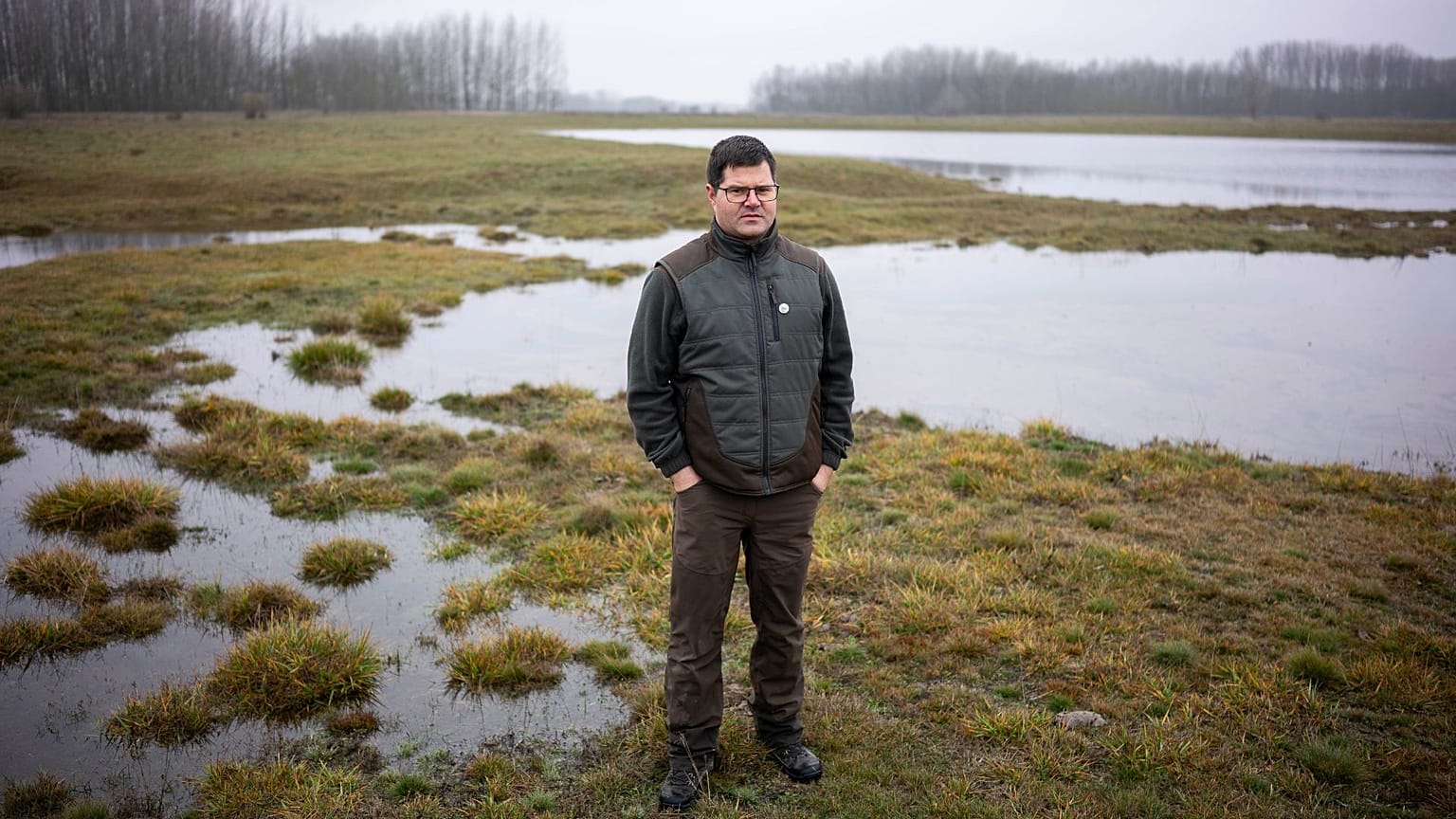
Oszkár Nagyapáti, farmer and member of the volunteer water guardians group, stands by an artificial lake in Kiskunmajsa, Hungary, 29 July 2025.
Copyright AP Photo/Denes Erdos

By Justin Spike with AP
Published o 

These volunteers are on a mission to save the Great Hungarian Plain from desertification.

Oszkár Nagyapáti climbs to the bottom of a sandy pit on his land on the Great Hungarian Plain and digs into the soil with his hand, looking for a sign of groundwater that in recent years has been in accelerating retreat.

“It’s much worse, and it’s getting worse year after year,” he says as cloudy liquid slowly seeps into the hole. ”Where did so much water go? It’s unbelievable.”

Nagyapáti has watched with distress as the region in southern Hungary, once an important site for agriculture, has become increasingly parched and dry. Where a variety of crops and grasses once filled the fields, today there are wide cracks in the soil and growing sand dunes more reminiscent of the Sahara Desert than Central Europe.
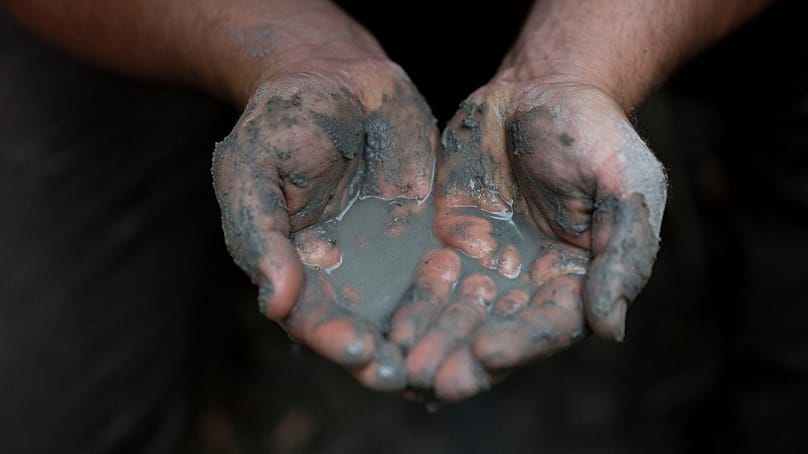
Oszkár Nagyapáti, farmer and member of the volunteer water guardians group, holds water in his hands in Kiskunmajsa, Hungary, 29 July 2025. AP Photo/Denes Erdos

What's behind Hungary's emerging 'semiarid' region?

The region, known as the Homokhátság, has been described by some studies as semiarid - a distinction more common in parts of Africa, the American Southwest or Australian Outback - and is characterised by very little rain, dried-out wells and a water table plunging ever deeper underground.


In a 2017 paper in European Countryside, a scientific journal, researchers cited “the combined effect of climatic changes, improper land use and inappropriate environmental management” as causes for the Homokhátság's aridification, a phenomenon the paper called unique in this part of the continent.

Fields that in previous centuries would be regularly flooded by the Danube and Tisza Rivers have, through a combination of climate change-related droughts and poor water retention practices, become nearly unsuitable for crops and wildlife.
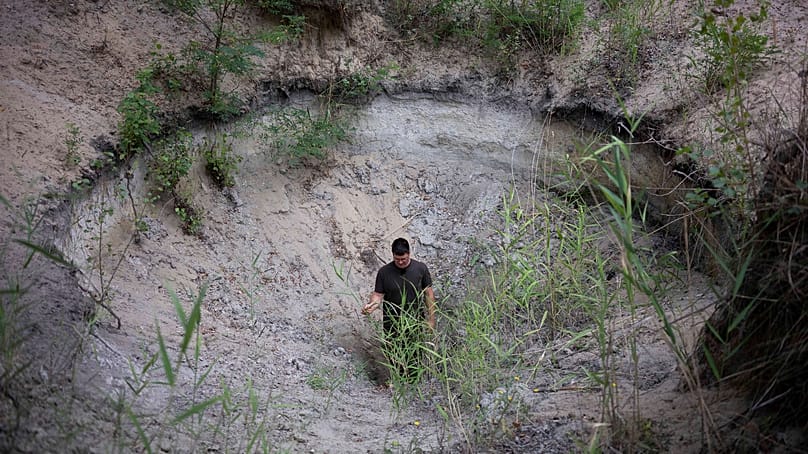
Oszkár Nagyapáti, farmer and member of the volunteer water guardians, stands in a hole in Kiskunmajsa, Hungary, 29 July 2025. AP Photo/Denes Erdos

‘Water guardians’ are on a mission to save the region

Now a group of farmers and other volunteers, led by Nagyapáti, are trying to save the region and their lands from total desiccation using a resource for which Hungary is famous: thermal water.

“I was thinking about what could be done, how could we bring the water back or somehow create water in the landscape," says Nagyapáti. "There was a point when I felt that enough is enough. We really have to put an end to this. And that's where we started our project to flood some areas to keep the water in the plain.”

Along with the group of volunteer “water guardians”, Nagyapáti began negotiating with authorities and a local thermal spa last year, hoping to redirect the spa's overflow water - which would usually pour unused into a canal - onto their lands. The thermal water is drawn from very deep underground.
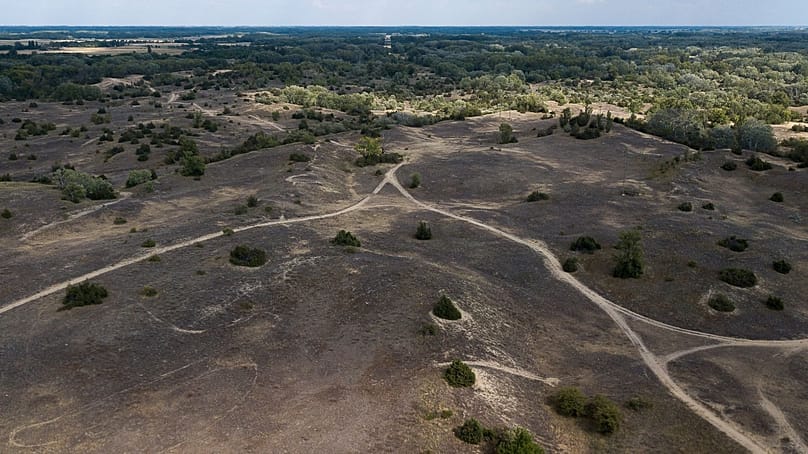
Hills of sandy terrain are visible in the Kiskunsag region of Hungary, 30 July 2025. AP Photo/Denes Erdos

Could thermal water be used to mimic natural flooding?

According to the water guardians' plan, the water, cooled and purified, would be used to flood a 2.5-hectare low-lying field - a way of mimicking the natural cycle of flooding that channelising the rivers had ended.

“When the flooding is complete and the water recedes, there will be 2.5 hectares of water surface in this area," Nagyapáti says. "This will be quite a shocking sight in our dry region.”

A 2024 study by Hungary’s Eötvös Loránd University showed that unusually dry layers of surface-level air in the region had prevented any arriving storm fronts from producing precipitation. Instead, the fronts would pass through without rain, and result in high winds that dried out the topsoil even further.

Artificial flooding could also create a microclimate

The water guardians hoped that by artificially flooding certain areas, they wouldn't only raise the groundwater level but also create a microclimate through surface evaporation that could increase humidity, reduce temperatures and dust and have a positive impact on nearby vegetation.

Tamás Tóth, a meteorologist in Hungary, says that because of the potential impact such wetlands can have on the surrounding climate, water retention “is simply the key issue in the coming years and for generations to come, because climate change does not seem to stop.

"The atmosphere continues to warm up, and with it the distribution of precipitation, both seasonal and annual, has become very hectic, and is expected to become even more hectic in the future,” he says.
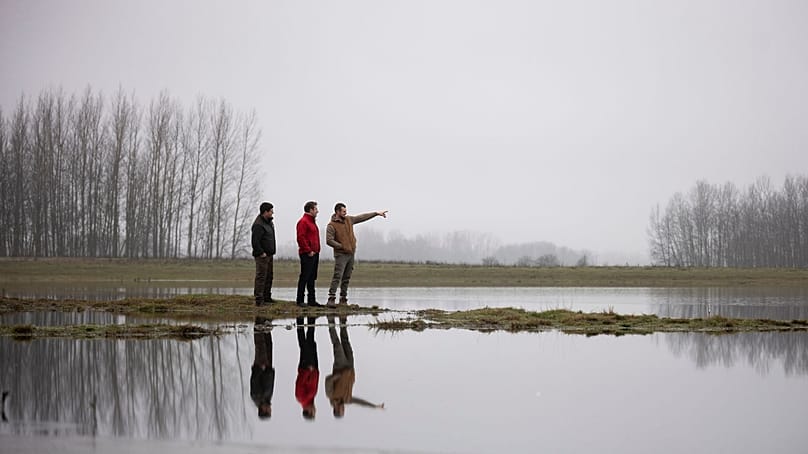
Members of the water guardians group talk next to an artificial lake in Kiskunmajsa, Hungary, 12 December 2025. AP Photo/Denes Erdos

‘Immense happiness’: Water guardians put plans into action

Following another hot, dry summer this year, the water guardians blocked a series of sluices along a canal, and the repurposed water from the spa began slowly gathering in the low-lying field.

After a couple of months, the field had nearly been filled. Standing beside the area in early December, Nagyapáti says that the shallow marsh that has formed "may seem very small to look at it, but it brings us immense happiness here in the desert.”

He says the added water will have a “huge impact” within a roughly 4-kilometre radius, "not only on the vegetation, but also on the water balance of the soil. We hope that the groundwater level will also rise.”
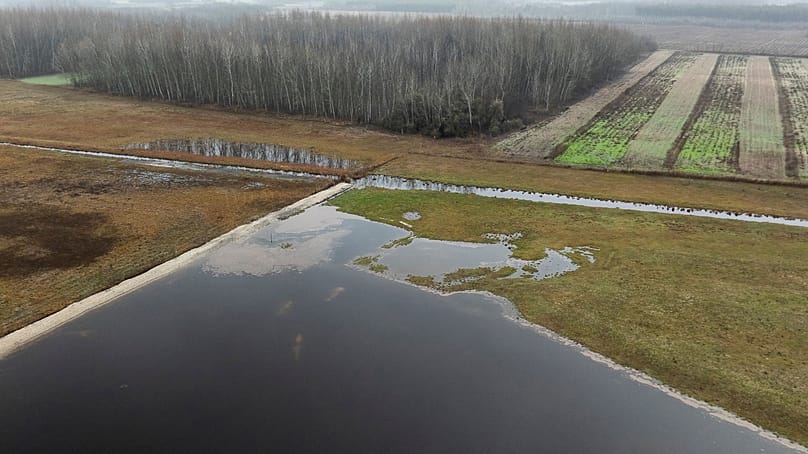
Water floods an area and an artificial lake in Kiskunmajsa, Hungary, 29 July 2025. AP Photo/Denes Erdos

Hungary has appointed a drought task force

Persistent droughts in the Great Hungarian Plain have threatened desertification, a process where vegetation recedes because of high heat and low rainfall. Weather-damaged crops have dealt significant blows to the country’s overall gross domestic product, prompting Prime Minister Viktor Orbán to announce this year the creation of a “drought task force” to deal with the problem.

After the water guardians' first attempt to mitigate the growing problem in their area, they said they experienced noticeable improvements in the groundwater level, as well as an increase of flora and fauna near the flood site.
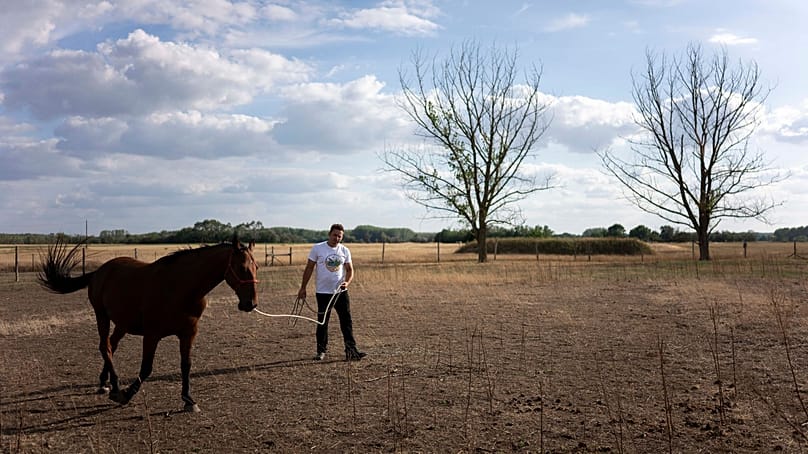
Szilárd Zerinváry member of the volunteer water guardians group walks his horse in his parched backyard in Kiskunmajsa, Hungary, 28 July 2025. AP Photo/Denes Erdos

The group, which has grown to more than 30 volunteers, would like to expand the project to include another flooded field, and hopes their efforts could inspire similar action by others to conserve the most precious resource.

“This initiative can serve as an example for everyone, we need more and more efforts like this," Nagyapáti says. "We retained water from the spa, but retaining any kind of water, whether in a village or a town, is a tremendous opportunity for water replenishment.”

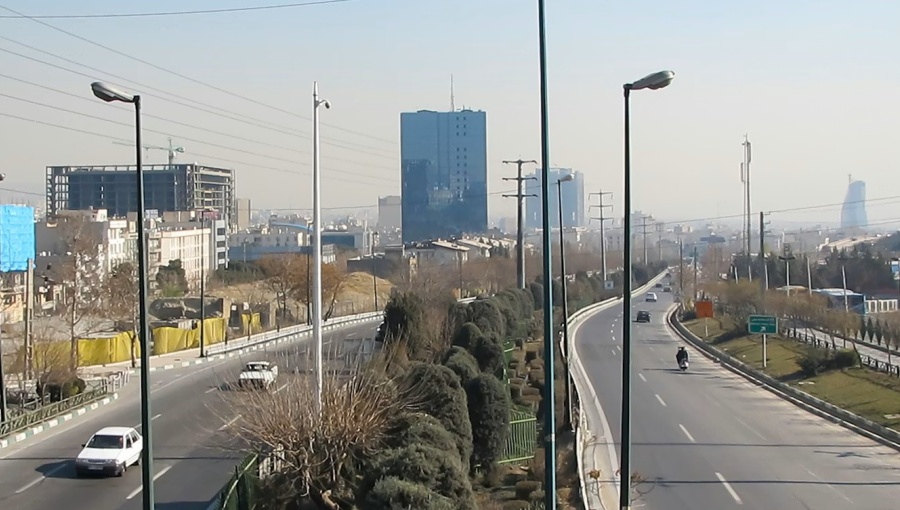
 Head of the Central Bank of Iran steps down as protests break out over a currency in free fall

Head of the Central Bank of Iran steps down as protests break out over a currency in free fall
The Central Bank of Iran - centre / Alireza Akhlaghi - Unsplash
By bno - Taipei Office December 30, 2025

Protests broke out across Iran on December 29 after the rial slid to a fresh record low against the US dollar, intensifying public anger over soaring prices and prompting the resignation of the central bank governor.

According to AP, demonstrations were reported in central Tehran, including along Saadi Street and in the Shush district near the Grand Bazaar, a commercial hub whose merchants played a pivotal role in the 1979 revolution. State media and multiple local sources confirmed that Mohammad Reza Farzin had stepped down as head of the Central Bank of Iran, following days of speculation about his future amid mounting pressure over the currency’s collapse.

Witnesses cited by the agency said traders shut their shops and urged others to follow suit, disrupting business in parts of the capital. Protests were also reported in several major cities, including Isfahan, Shiraz and Mashhad. It was reported by AP that in some areas of Tehran, police used tear gas to disperse crowds.

The unrest marks the most significant street mobilisation since 2022, when nationwide demonstrations erupted after the death of Mahsa Jina Amini while in police custody, an episode that exposed deep social and political tensions within the country.

The immediate trigger in the past week has been the sharp fall in the rial, which briefly touched about 1.42mn to the dollar on December 28, before recovering slightly to around 1.38mn a day later. When Farzin took office in 2022, the currency was trading at roughly 430,000 to the dollar, underlining the scale of the decline during his tenure.

The currency’s weakness has fuelled already severe inflationary pressures. According to Iran’s official statistics centre, annual inflation reached 42.2% in December, up from November. Food prices were reported to be more than 70% higher than a year earlier, while health and medical costs rose by about half, further eroding household incomes. Economists and critics have warned that the figures point to the risk of hyperinflation.

Concerns have been compounded by reports that the government is considering tax increases in the new Iranian year starting on March 21, as well as recent changes to fuel pricing that are expected to push living costs higher.

The longer-term backdrop remains bleak. The rial traded at about 32,000 to the dollar when the 2015 nuclear agreement was signed, before the deal unravelled following the US withdrawal in 2018 and the reimposition of sanctions. More recently, uncertainty has been heightened by fears of renewed regional conflict after a brief war involving Iran and Israel earlier this year, and by the UN’s decision in September to reinstate nuclear-related sanctions, freezing assets and tightening restrictions on trade and defence.

Iran’s currency collapse sparks second day of trader protests


By Una Hajdari with AP
Published on 

Protesters closed shops for a second day as the rial hit new lows on the free market, amplifying inflation fears and highlighting the widening gap between official and street exchange rates.

Iranian traders and shopkeepers staged a second day of protests Monday after the country’s currency plummeted to a new record low against the US dollar.

Videos on social media showed hundreds taking part in rallies in Saadi Street in downtown Tehran as well as in the Shush neighbourhood near Tehran's main Grand Bazaar, which played a crucial role in the 1979 Islamic Revolution that ousted the monarchy and brought Islamists to power.

Traders shut their shops and asked others to do the same. The semiofficial ILNA news agency said many businesses and merchants stopped trading even though some kept their shops open.

There were no reports of police raids though security was tight at the protests, according to witnesses.

On Sunday, protest gatherings were limited to two major mobile markets in downtown Tehran, where the demonstrators chanted anti-government slogans.

Rapidly devaluing currency

Iran's rial on Sunday plunged to 1.42 million to the dollar. On Monday, it traded at 1.38 million rials to the dollar.

Exchange rates for Iran’s currency vary sharply depending on whether official or free-market figures are used. On international forex platforms, the euro trades at around 49,000 rials, a rate that reflects Iran’s tightly controlled official exchange system that is largely inaccessible to ordinary Iranians.

In contrast, the free-market rate — commonly cited by local traders and international media — is far weaker, with the euro trading at well over a million rials, or around 150,000 tomans, highlighting the gap between state-set rates and the real value of the currency on the street amid inflation, sanctions and capital flight.

The rapid depreciation is compounding inflationary pressure, pushing up prices of food and other daily necessities and further straining household budgets, a trend that could worsen by a gasoline price change introduced in recent days.

Is hyperinflation around the corner?

According to the state statistics center, inflation rate in December rose to 42.2% from the same period last year, and is 1.8% higher than in November. Foodstuff prices rose 72% and health and medical items were up 50% from December last year, according to the statistics center. Many critics see the rate a sign of an approaching hyperinflation.

Reports in official Iranian media said that the government plans to increase taxes in the Iranian new year that begins on 21 March have caused more concern.

Iran’s currency was officially trading at 32,000 rials to the dollar at the time of the 2015 nuclear accord that lifted international sanctions in exchange for tight controls on Iran’s nuclear program.

US tensions strain the economy

That deal unraveled after US President Donald Trump unilaterally withdrew the United States from it in 2018. There is also uncertainty over the risk of renewed conflict following June’s 12-day war involving Iran and Israel.

Many Iranians also fear the possibility of a broader confrontation that could draw in the United States, adding to market anxiety.

In September, the United Nations reimposed nuclear-related sanctions on Iran through what diplomats described as the “snapback” mechanism. Those measures once again froze Iranian assets abroad, halted arms transactions with Tehran and imposed penalties tied to Iran’s ballistic missile program.


Iranian shopkeepers protest, shut stores as


currency hits record low

Iranian traders and shopkeepers protested for a second day Monday after the country’s currency plummeted to 1.42 million to the US dollar. Many shut shop and asked others to do the same as prices of food and other daily necessities put further strain on household budgets.


Issued on: 29/12/2025 
By: 
FRANCE 24


A street money exchanger poses for a photo without showing his face as he counts Iranian banknotes at a commercial district in downtown Tehran, Iran on December 23, 2022. © Vahid Salem (Archive), AP

Iranian traders and shopkeepers staged a second day of protests Monday after the country’s currency plummeted to a new record low against the US dollar.

Videos on social media showed hundreds taking part in rallies in Saadi Street in downtown Tehran as well as in the Shush neighborhood near Tehran's main Grand Bazaar, which played a crucial role in the 1979 Islamic Revolution that ousted the monarchy and brought Islamists to power.

Witnesses told The Associated Press that traders shut their shops and asked others to do the same. The semiofficial ILNA news agency said many businesses and merchants stopped trading even though some kept their shops open.

There was no reports of police raids though security was tight at the protests, according to witnesses.

On Sunday, protest gatherings were limited to two major mobile market in downtown Tehran, where the demonstrators chanted anti-government slogans.

READ MORELooking back at Israel and Iran's ‘12-day war’: Direct conflict breaks out between arch-enemies

Iran's rial on Sunday plunged to 1.42 million to the dollar. On Monday, it traded at 1.38 million rials to the dollar.

The rapid depreciation is compounding inflationary pressure, pushing up prices of food and other daily necessities and further straining household budgets, a trend that could worsen by a gasoline price change introduced in recent days.

According to the state statistics center, inflation rate in December rose to 42.2% from the same period last year, and is 1.8% higher than in November. Foodstuff prices rose 72% and health and medical items were up 50% from December last year, according to the statistics centre. Many critics see the rate a sign of an approaching hyperinflation.

Reports in official Iranian media said that the government plans to increase taxes in the Iranian new year that begins March 21 have caused more concern.

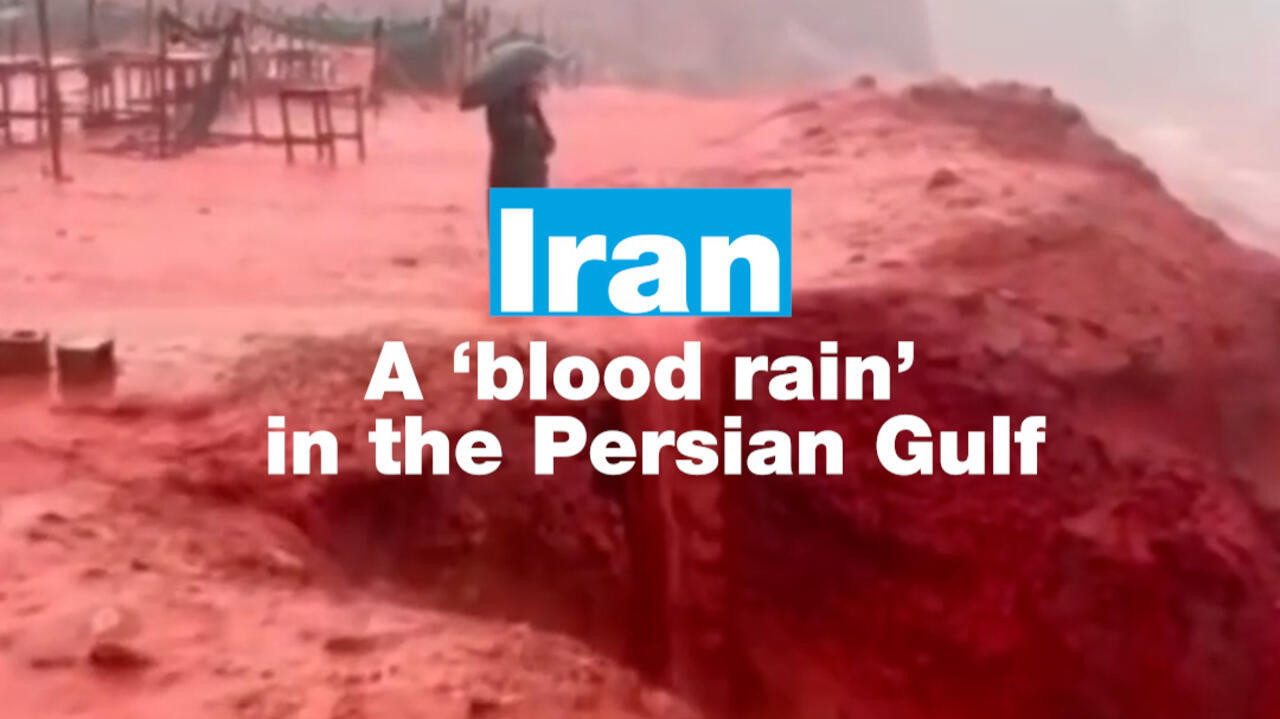
Heavy #rains washed iron-oxide-rich soil and rocks across an “Iranian island, creating this intense, almost unreal red. Seen in the Persian Gulf on December 16, the phenomenon was nicknamed ‘blood rain’ by visitors, despite having nothing to do with biology. © France 24
00:18


Iran’s currency was trading at 32,000 rials to the dollar at the time of the 2015 nuclear accord that lifted international sanctions in exchange for tight controls on Iran’s nuclear programme. That deal unraveled after US President Donald Trump unilaterally withdrew the United States from it in 2018.

There is also uncertainty over the risk of renewed conflict following June’s 12-day war involving Iran and Israel. Many Iranians also fear the possibility of a broader confrontation that could draw in the United States, adding to market anxiety.

In September, the United Nations reimposed nuclear-related sanctions on Iran through what diplomats described as the “snapback” mechanism. Those measures once again froze Iranian assets abroad, halted arms transactions with Tehran and imposed penalties tied to Iran’s ballistic missile programme.

(FRANCE 24 with AP)


2026 in space: Moon missions return, eclipses sweep Europe and auroras continue

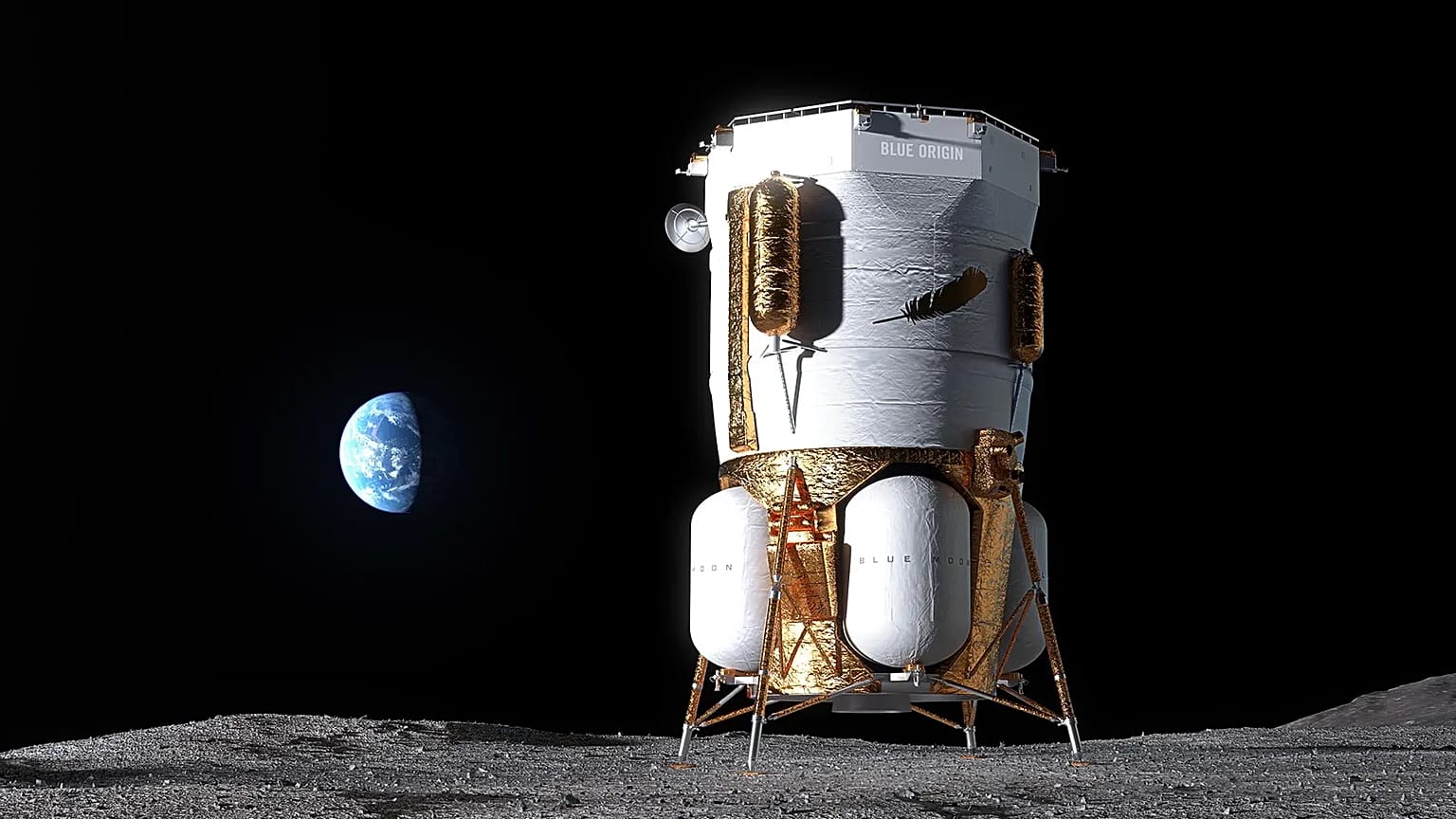
This illustration provided by Blue Origin depicts the company's Blue Moon MK1 spacecraft on the surface of the moon.
Copyright Blue Origin via AP

By Roselyne Min with AP
Published on 

Euronews Next gives a rundown of what the universe has in store for us in 2026.

From a visiting comet from another starto the return of stranded NASA astronauts to a record number of satellite launches, 2025 was full of extraordinary space events.

That momentum carries straight into 2026, with some of the most ambitious exploration plans for decades, rare eclipses and continued chances to see the Northern Lights.

Here’s a rundown of what the universe has in store for us in 2026.

Lunar exploration looms in the new year

Interest in the Moon is growing again after decades of relative quiet, with several launches and tests planned for the year ahead. More than half a century after the Apollo missions first carried humans to the lunar surface, astronauts are once again preparing to venture deep into lunar space.

In April, NASA will send a crew of four astronauts - three Americans and one Canadian - on a 10-day mission that will skim past the Moon. Their spacecraft will loop behind the lunar far side before heading back to Earth.

Although they will not land, their flight is expected to offer fresh views of regions that even the Apollo missions never saw directly, information that could shape future landings under NASA’s Artemis programme, according to Reid Wiseman, the Chief of the Astronaut Office at NASA.

Uncrewed spacecraft will also be heading for the Moon in large numbers.

One of the most eye-catching projects is a new oversized lunar lander called Blue Moon, being developed by Blue Origin, the space company founded by Amazon’s Jeff Bezos.

The prototype lander, designed to carry NASA astronauts to the lunar surface, is scheduled to be tested in 2026. At about eight metres tall, it will be almost twice the height of the Apollo 12 lunar module that landed on the Moon in 1969.

Other US space companies, including Astrobotic Technology, Intuitive Machines and Firefly Aerospace, are also targeting lunar landings in 2026 as part of a growing commercial push to deliver payloads to the Moon.

China is planning its own lunar exploration as well. The Chang’e 7 probe is expected to target the Moon’s south pole, an area where frozen water may be hidden inside permanently shadowed craters, according to China Media Group.

Such ice could one day support human missions by providing drinking water and rocket fuel.

Eclipses and supermoons in 2026

Back on Earth, skywatchers will have plenty to look forward to.

In February, a 'ring of fire' solar eclipse will be visible over Antarctica, with partial views from parts of the southern hemisphere, including South Africa, Chile and Argentina.

A ring of fire eclipse, also known as an annular eclipse, occurs when the Moon passes in front of the Sun but appears slightly too small to completely cover it, leaving a bright ring of sunlight around its edge.

Europeans will have a particularly dramatic sight in August, when a total solar eclipse will sweep from the Arctic across Greenland and Iceland before reaching Spain, briefly turning day into night for those along its narrow path.

The Moon itself will look especially impressive at several points during the year.

Three supermoons are expected in 2026, when a full Moon coincides with its closest approach to Earth.

The year’s first supermoon in January will coincide with a meteor shower, although the bright moonlight is likely to obscure many of the fainter shooting stars. The second supermoon will arrive on 24 November, while the final one, falling on Christmas Eve, will be the largest and brightest of the year.

Where to see Northern and Southern Lights in 2026

The Sun is expected to continue producing eruptions in 2026 that could lead to geomagnetic storms on Earth, giving rise to displays of the aurora borealis in the north and aurora australis in the south.

After a peak that helped fuel the intense auroral displays of 2024 and 2025, the current solar cycle is, however, expected to slowly ease, due to the 11-year solar cycle finally on the downslide.

Even so, eruptions from the Sun may still trigger geomagnetic storms, meaning Northern and Southern Lights could continue to appear farther from the poles, though likely less often than in the previous year.

Space weather forecasters like Rob Steenburgh at the National Oceanic and Atmospheric Administration can’t wait to tap into all the solar wind measurements coming soon from an observatory launched in the fall.

“2026 will be an exciting year for space weather enthusiasts,” he said in an email, with this new spacecraft and others helping scientists “better understand our nearest star and forecast its impacts”.


Exclusive: Price distortions in EU energy market must end, Portuguese minister tells Euronews

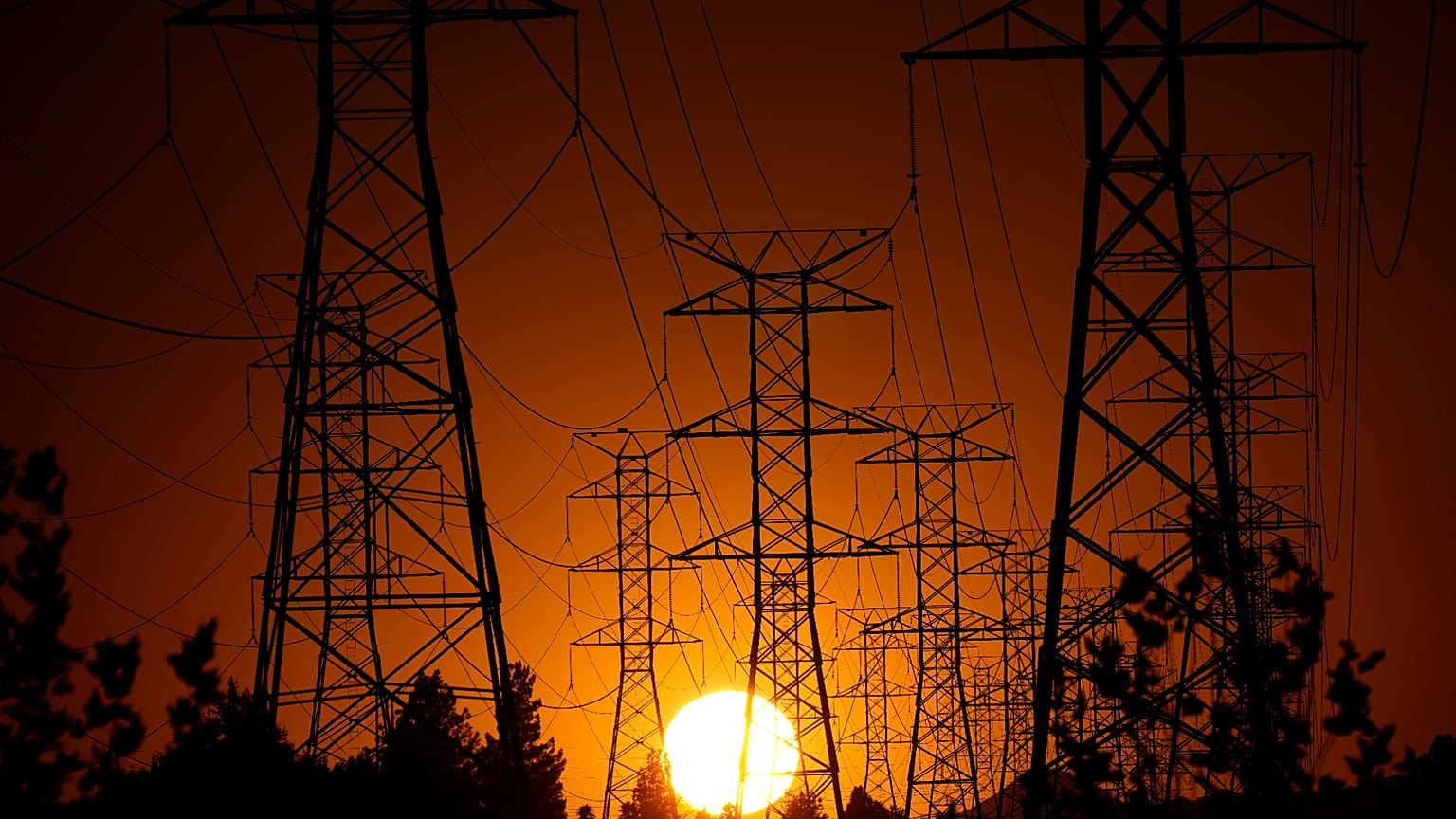
The sun sets behind high tension power lines, Monday, Sept. 23, 2024.
Copyright AP Photo / Mark J. Terrill

By Marta Pacheco
Published on 

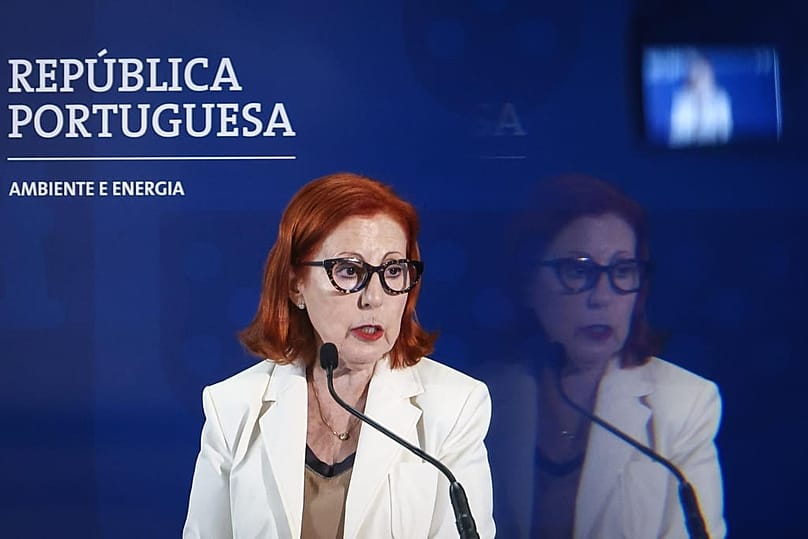
In an exclusive interview with Euronews, Portugal's Energy and Environment Minister Maria da Graça Carvalho said ensuring a level playing field among member states will be "essential" to lowering electricity prices across the bloc in 2026.

The European Commission must play a key role in ensuring fair competition among EU countries as they upgrade their power grid infrastructure to keep prices stable, Portuguese Energy and Environment Minister Maria da Graça Carvalho told Euronews.

The Portuguese minister, who notably led political talks on the electricity market law, said that ensuring a level playing field will be "essential" to lowering electricity prices evenly across the EU.

If electricity becomes much cheaper through artificial means in one country, it will inevitably impact the others and put their industries at risk of unfair competition, according to Carvalho.

The Commission's duty is to ensure the single market according to common rules, she said. Carvalho added that government support for energy companies across EU countries requires "clear and transparent rules to avoid distortions in competition law" and that the Commission needs to oversee such a task.

"This is something that worries us, because countries that can invest much more — a way to reduce competition by injecting public finance into the electric system — artificially lower the price of electricity and thus help their industries more than others," Carvalho told Euronews.

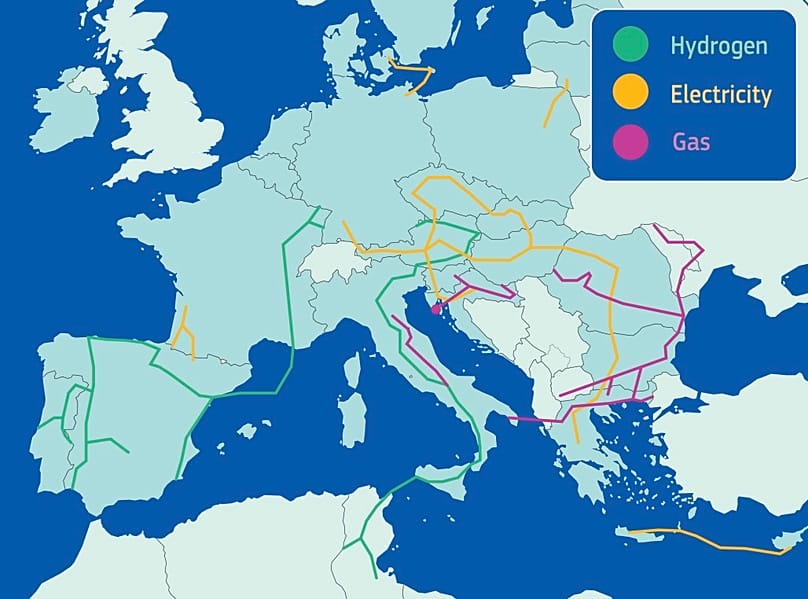
Portugal was listed in three of the eight key projects highlighted in the Commission's recent plan to increase resilience in the bloc's electricity infrastructure by 2040 and lower energy prices — two electricity interconnections across the Pyrenees and one hydrogen project connecting Portugal and Germany.

The plan aims to ensure a more robust electricity flow across EU countries and to increase the uptake of renewable energy to power the electricity grid. EU countries will need to invest substantially in this venture, but some may be better positioned due to their stronger ability to tap public funds.

Seizing the political momentum, Portugal and Spain are joining forces with other countries to promote fair competition and prevent market distortions in the energy sector.

Recently, a group of countries — Austria, Belgium, the Czech Republic, Estonia, Finland, France, Greece, Ireland, Luxembourg, and the Netherlands — joined Portugal and Spain to continue working on competition issues to prevent laws that contradict free competition, targeting projects under the Commission's grid package.

Portuguese Energy and Environment Minister Maria da Graça Carvalho in August 2025. Portugal's Energy and Environment Ministry

Grid upgrading will require 'significant EU investment'

The Commission forecasts that a mammoth €1.2 trillion will be needed to revamp the bloc's grid infrastructure by 2040. The structure of financing remains unclear.

In theory, the EU could tap into a range of options, including EU funds, national budgets, private investment, and cost-sharing, especially given the scale of the required investment. But that will require political consensus and the European energy market, as well as its components, remains highly fragmented.

"There is a small part coming from EU funding, which is what worries me," Carvalho said.

In Portugal, part of the infrastructure investment comes from the government-set tariff. The system feeds into the national electric system, which is then distributed to all consumers.

Access to the networks and investments in the networks are included in the tariff, the Portuguese minister explained. When the electricity bill includes a production component and a network access component, it covers the network's investment over the years.

"That's why when we authorise an investment in the networks, we always have to worry about its impact on the tariff because it does not come out of the state budget but out of the pockets of everyone who pays electricity bills," said Carvalho. "The more we go after the European funding, the less we get into the tariff."

The European Connecting Facility, which will partly finance the Commission's grid plan, will cover a part of the three projects, while the remaining could be funded through the European annual budget. To prop up funding, the Portuguese government is also considering making a loan to the bank to invest in networks.

The former MEP, who hails from the centrist European People's Party (EPP), said that financial tools such as Power Purchase Agreements (PPAs) and Contracts for Difference (CfDs) are good examples of mechanisms to address competitiveness among EU countries that need to upgrade their grid infrastructure.

PPAs and CfDs are usually between a public party and a private party. The CfDs are contracts with a cap and a floor that may be unrelated to government support, but they may be backed by a state guarantee.

"Some countries want to promote electricity investment by using CfDs where there is a guarantee from the state to protect investments," Carvalho said.

"But once again, and as written in the report on the electric market, the competition must supervise the quantity of CfDs that have state protection or state guarantees, to avoid major disruptions to the competition," she cautioned.

Portugal big bet on clean energy but connectivity issues remain

Portugal is on track to become a clean power nation, with hydropower, solar, and wind accounting for roughly 71% of its energy mix in 2024, according to the Portuguese agency for external trade and investment.

But an obsolete power grid, which recently left around 60 million people in the dark after an incident that originated in neighbouring Spain in April, is blocking Portugal's full integration with the rest of Europe and undermining climate goals.

Looking ahead, Portugal's priority is to reinforce the internal network, the minister said. Gas storage and offshore energy projects are also in sight for the future.

Lisbon has a 10-year plan for the transmission networks of an investment of four billion euros. However, while the interconnection to Spain is close to 25%, above the 15% target set by the Commission for 2030, the Iberian interconnection (Portugal and Spain jointly) with France is only 2-3%. A source of frustration for the two Iberian nations.

"To better integrate the Iberian Peninsula with Europe, we need to be part of these two projects — the electricity interconnection crossings across the Pyrenees," Carvalho said. "That's the difficulty, we have to work a lot to get there."

European Commission's 'Energy Highways' presented on 10 December 2025, in Brussels. European Commission Audiovisual Service

After the April blackout in Portugal and Spain, the two countries and the Commission held talks with France to insist on the urgency of increasing electricity interconnection among the three countries, the minister said, since Paris has long been reluctant to invest in interconnection points with the Iberian Peninsula.

Critics argue the main reason for the lack of progress is the French push for nuclear energy rather than solar and wind power; something that Paris denies, pointing out that the two countries at times, import, rather than export, energy from France.

Still, French authorities signed an agreement with the European Investment Bank for the two Pyrenees interconnections in June, raising hopes that the southern countries would increase their energy resilience with the rest of the bloc.

"France agreed with the two interconnection points in the Pyrenees from the grids package proposed by the Commission," Carvalho said, noting that the EU executive would not put forward these three projects with such strong French participation without their consent. This could be a point of friction in the new year.

Lisbon targets exports of green hydrogen

In addition to vast volumes of clean power, Portugal wants to compete too in producing green hydrogen, with the EU looking to producing 10 million tonnes domestically by 2030.

The hydrogen project, H2Med, a partnership between Portugal, Spain, France and Germany signed in 2022, is meant to transport renewable hydrogen from 2032.

The Portuguese minister said the project, also part of the Commission's grids plan, "might take a little longer" due to its new and complex technology.

"Our priority is to produce hydrogen to attract industries to Portugal, especially for large chemical industries and petrochemicals that need a lot of hydrogen in their industrial processes," Carvalho said.

Since transporting hydrogen over long distances remains difficult today, she said, it is more plausible that over the next five or six years, the industries that need hydrogen will be relocated closer to where hydrogen is produced.

"Our goal is to show Europe, outside of Europe, or the world, that Portugal has plenty of green renewable energy and the potential to produce green hydrogen in large quantities at a reasonable price, and hence all the interest in attracting and fixing industries in Portugal," Carvalho said.