Tuesday, December 30, 2025


OPINION


‘This Is an Act of War’: CIA Carried Out Drone Strike on Port Facility Inside Venezuela

One expert called the reported drone strike a “violation of Article 2(4) of the UN Charter and the Take Care Clause of the Constitution.”
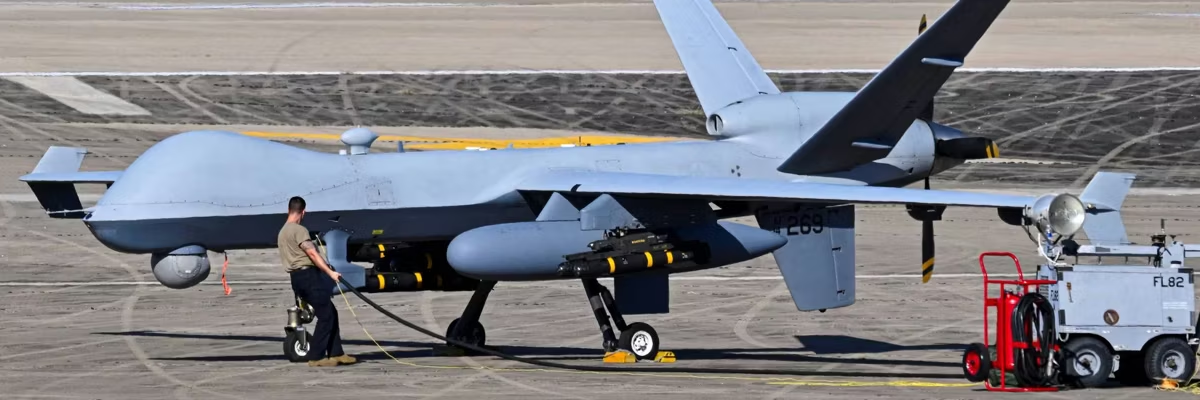


US Air Force personnel prepare an MQ-9 Reaper drone for a mission on the tarmac at Rafael Hernandez Airport in Aguadilla, Puerto Rico on December 27, 2025.
(Photo by Miguel J. Rodriguez Carrillo/AFP via Getty Images)


Jake Johnson
Dec 30, 2025
COMMON DREAMS

The US Central Intelligence Agency reportedly carried out a drone strike earlier this month on a port facility inside Venezuela, marking the first time the Trump administration launched an attack within the South American country amid a broader military campaign that observers fear could lead to war.

CNN on Monday was first to report the details of the CIA drone strike, days after President Donald Trump suggested in a radio interview that the US recently took out a “big facility” in Venezuela, prompting confusion and alarm. Trump authorized covert CIA action against Venezuela in October.

Trump ‘Choosing From the War Crimes Menu’ With ‘Quarantine’ on Venezuela Oil Exports

‘Unquestionably an Act of War’: Trump Declares Naval Blockade Against Venezuela

According to CNN, which cited unnamed sources, the drone strike “targeted a remote dock on the Venezuelan coast that the US government believed was being used by the Venezuelan gang Tren de Aragua to store drugs and move them onto boats for onward shipping.”

To date, the Trump administration has not provided any evidence to support its claim that boats it has illegally bombed in international waters were involved in drug trafficking. No casualties were reported from the drone strike, and the Venezuelan government has not publicly commented on the attack.

“This is an act of war and illegal under both US and international law, let’s just be clear about that,” journalist Mehdi Hasan wrote in response to news of the drone strike.

Brian Finucane, senior adviser with the US Program at the International Crisis Group, called the reported drone attack a “violation of Article 2(4) of the UN Charter and the Take Care Clause of the Constitution.”

“Seemingly conducted as covert action and then casually disclosed by POTUS while calling into a radio show,” he added.

CNN‘s reporting, later corroborated by the New York Times, came after the Trump administration launched its 30th strike on a vessel in international waters, bringing the death toll from the lawless military campaign to at least 107.

The Times reported late Monday that “it is not clear” if the drone used in last week’s mission “was owned by the CIA or borrowed from the US military.”

“The Pentagon has stationed several MQ-9 Reaper drones, which carry Hellfire missiles, at bases in Puerto Rico as part of the pressure campaign,” the Times added.

The Venezuela Escalation Ignores a Long History of U.S. Hypocrisy on Drugs


 December 30, 2025

Image by Jon Tyson.

Every accusation is a confession. This is clearly true of the Trump administration’s insistence that Venezuela operates as a “narco-state,” exporting terrorism to the U.S. via fentanyl, now labeled as a “weapon of mass destruction.” The charge is not only false, given that virtually no fentanyl enters the country from Venezuela, but transparently political and pretextual.

This hypocrisy was made unmistakable with Trump’s recent pardon of former Honduran president Juan Orlando Hernández, who was convicted in 2024 in a U.S. federal court on drug trafficking charges. Hernández presided over a regime long treated as a strategic ally within Washington’s regional security architecture, a reminder that the label of “narco-state” is applied not according to fact but according to the shifting imperatives of U.S. imperial power.

This accusation collapses further when placed in broader historical context. For decades, the most powerful state actors facilitating and protecting narcotics trafficking have not been Washington’s adversaries but Washington itself. Throughout the Cold War and the so-called War on Drugs, the United States, above all through the CIA, repeatedly subordinated drug enforcement to geopolitical priorities, enabling narco-networks so long as they advanced perceived U.S. interests.

These dynamics became especially pronounced in the 1980s, with disastrous consequences both at home and abroad. The decade marked an intensification of the Cold War under Ronald Reagan. His administration insisted that communist “advances” could not only be contained but rolled back. Upon taking office, Reagan launched his promised global offensive, intervening wherever alleged Soviet influence appeared. Turning a blind eye to drug trafficking became a central feature of this crusade, as anti-communism consistently took precedence over anti-narcotics efforts.

Carter and the Crisis of Confidence

Reagan’s rise followed a brief but meaningful thaw. In the wake of Watergate and the Vietnam War, Americans’ faith in political institutions had been profoundly shaken. Years of economic stagnation, inflation, and the reverberations of the 1973 OPEC oil embargo convinced many that the postwar promise of endless upward mobility, the ideological core of the American dream, was collapsing.

It also became impossible to ignore that the U.S. was not only failing to deliver on its economic promise but had also long abandoned the democratic values it claimed to champion. In 1975, the Church Committee laid bare what much of the Global South had known for decades: the United States had been operating as a global anti-democratic force, orchestrating coups and assassinations, sabotaging leftist movements (at home and abroad), and imposing political outcomes that served the interests of American capital rather than the aspirations of people around the world.

Then, in 1977, came Jimmy Carter. Carter promised a new foreign policy rooted not in reflexive anti-communism but a commitment to human rights. In doing so, he broke, at least in his rhetoric, with decades of bipartisan Cold War orthodoxy. For the first time, a president openly challenged the axiomatic belief that every leftist movement was a Kremlin proxy that demanded immediate U.S. intervention.

As Carter put it, “we are now free of that inordinate fear of communism which once led us to embrace any dictator who joined us in that fear,” acknowledging that “for too many years, we’ve been willing to adopt the flawed and erroneous principles and tactics of our adversaries, sometimes abandoning our own values for theirs.” Washington, he admitted, had “fought fire with fire, never thinking that fire is better quenched with water,” a strategy that had ultimately backfired.

Carter would also come to critique not only the misguided zealotry of U.S. foreign policy but, to an extent, capitalism itself. As he turned toward the root causes of the nation’s intersecting crises, he warned that “too many of us now tend to worship self-indulgence and consumption,” and that “human identity is no longer defined by what one does, but by what one owns.” Conservatives responded with derision, quickly dubbing it the “malaise speech,” a framing that captured many Americans’ refusal to confront the deeper structural problems Carter had identified.

The Reagan Rollback

Reagan ran on this response. He rejected everything Carter had come to represent. Carter, for his part, presided over a series of perceived foreign policy blunders, not all of them self-inflicted, including the Sandinista Revolution in Nicaragua, the Iran Hostage Crisis, and the Soviet invasion of Afghanistan, and his actual record was far less radical than his rhetoric suggested. But Reagan seized the moment, casting Carter as weak, naïve, and insufficiently committed to American power and the American way of life, and he won in a landslide.

When Reagan assumed office in 1981, he claimed a mandate to pursue his promised program of unfettered capitalism at home and militant anti-communism abroad, raising the military budget to what were then unprecedented levels. Yet even with this political momentum, he faced constraints. Among them was a public skepticism toward foreign intervention, labeled “Vietnam syndrome,” which posed a direct challenge to his effort to reassert American military primacy on the global stage.

Reagan, however, was not inclined to let public sentiment, democratic constraints, or questions of legality impede his objectives. This saw its most notorious expression in the Iran-Contra Affair, in which administration officials sold weapons to Iran, then in a war of attrition with Saddam’s Iraq, whom the U.S. was backing, in exchange for assistance pressuring Hezbollah to release American hostages in Lebanon, while simultaneously generating funds to support the Contras in Nicaragua. Both were illegal: Congress barred aid to the Contras with the 1982 Boland Amendment, and arms sales to Iran violated U.S. law once it was designated a state sponsor of terrorism in 1984.

Drug Traffickers and “Freedom Fighters”

Another method in which Reagan sought to bypass political constraints on his policies was through the funding of “freedom fighters” in covert proxy wars, an expensive endeavor financed not only by taxpayer dollars but also by enabling allies to engage in drug trafficking. The tactic was hardly new. Imperial powers had long leveraged drugs to consolidate geopolitical control, from alcohol’s role in Indigenous dispossession to Britain’s forced export of opium into China.

Nor was this unprecedented for the United States. During the American war in Vietnam, U.S. intelligence enabled local traffickers to fold an existing regional drug trade in support of their counterinsurgency effort. As historian Alfred McCoy has demonstrated, this helped transform the Golden Triangle into the world’s largest opium-producing region. Estimates during the conflict suggested that up to 25% of U.S. troops stationed in Southeast Asia used heroin in some units, and thousands returned home with addictions seeded with the complicity of Washington.

Under Reagan, such complicity only grew. As the administration aggressively expanded punitive anti-drug policing at home under the banner of the “War on Drugs,” it tolerated and indirectly facilitated the cultivation and transport of narcotics when doing so served Cold War priorities. This dynamic was most visible in two of the bloodiest proxy wars of the Reagan era: the Soviet-Afghan War and the Contra War in Nicaragua.

After the 1979 Soviet invasion of Afghanistan, the United States funneled billions of dollars to the mujahideen in an attempt to mire the Soviets in a Vietnam-like quagmire, ultimately producing the most expensive covert operation in U.S. history. It was clear at the time that this policy risked significant “blowback,” although the result was much worse than imagined, but the chance to bleed the Soviets was not one Reagan was willing to forgo.

The extent of U.S. support, indispensable to sustaining the anti-Soviet insurgency, led political scientist Mahmood Mamdani to refer to the insurgency as an “American Jihad.” But the flow of money and arms was not enough on its own, and drug trafficking helped to supplement the effort. Before the war, heroin production in Afghanistan was negligible. By 1989, Afghan-Pakistan supply routes dominated global markets, destabilizing the country and region and creating the conditions for a catastrophic CIA and drug-money enabled, warlord-led civil war that ultimately led to the Taliban’s consolidation of power in 1996.

This heroin not only fueled death and destruction in Afghanistan, where the American-Afghan victory was paid for with the lives of millions of Afghan civilians, but it also boomeranged back. As Mamdani documents, during the Soviet-Afghan jihad, this heroin came to account for some 60 percent of the heroin circulating on U.S. streets. The consequences were immediate and severe. As a White House drug-policy adviser acknowledged at the time, New York City witnessed a 77 percent increase in drug-related deaths.

In Central America, a parallel “logic” emerged. The Contras needed cash, and cocaine networks supplied it. The Contras needed cash, and cocaine networks supplied it. The Kerry Committee, convened in the wake of Iran-Contra, and tasked with investigating these links, concluded in 1989 that there was substantial evidence the Contras engaged in drug smuggling and that U.S. officials allowed them to operate without interference.

This support for traffickers unfolded at the very moment the U.S. was intensifying its domestic crackdown on cocaine. During this period, lawmakers and prosecutors entrenched and weaponized legal asymmetries between crack and powder cocaine, driving the militarization of policing and expanding infrastructure of mass incarceration, a campaign that disproportionately targeted and destabilized Black communities across the country.

When Gary Webb, an investigative journalist for the San Jose Mercury News, revealed in 1996 an even more direct connection between CIA awareness of Contra-linked cocaine profits entering the United States and the simultaneous domestic “War on Drugs,” the backlash was swift. Government officials and major media outlets launched a concerted campaign to discredit him, all but ending his career. Nonetheless, many of his findings would soon be corroborated, at least in part, by internal investigations conducted by the CIA and DOJ.

The Failures of the “War on Drugs”

Trump’s latest invocation of drugs as a pretext for war with Venezuela is unconvincing on its face. But situated within the long historical record of U.S. complicity in, or calculated indifference to, drug trafficking when it served strategic ends, even when those decisions inflicted direct harm on Americans, it becomes little more than farce. For decades, Washington has treated narcotics not as a public health challenge but as a political instrument, inflating them into an existential national security threat when expedient and minimizing them when inconvenient.

The “war on drugs” has never been a genuine campaign to curb the sale or use of narcotics or to protect Americans. Rather, it has functioned as a mechanism for advancing American power. This history makes clear that the U.S. cannot credibly condemn other nations for their entanglements in the drug trade until it reckons with its own record as a facilitator of state-sponsored terrorism and narco-trafficking.

Eric Ross is an organizer, educator, researcher, and PhD Candidate in the History Department at the University of Massachusetts Amherst. He is a coordinator of the national Teach-In Network sponsored by the RootsAction Education Fund.


Chinese Oil Tankers Challenge US Blockade off Venezuela


NEWSWEEK
DEC 30, 2025 
By Amira El-Fekki‎
Middle East News Reporter

Chinese oil tankers are pressing ahead with Venezuela-linked voyages despite a U.S. blockade and an escalating campaign of tanker seizures.

Two Chinese-flagged VLCCs are operating near Venezuelan waters, with the Thousand Sunny due to arrive in mid-January and the Xing Ye waiting off French Guiana, according to a new report by Lloyd's List.

Newsweek has reached out to the U.S. State Department for comment.


Why It Matters


The movements come as China said it opposed U.S. oil seizures and naval pressure on Venezuela. President Donald Trump is tightening maritime enforcement to choke off oil revenues to Caracas, which has in turn said the blockade won’t deter its oil shipments, and is reportedly deploying vessels to escort commercial vessels carrying petroleum products.

President Nicolás Maduro accused Washington of illegally targeting its sovereign oil exports and natural resources, calling the move "utterly irrational," but Trump vowed to expand the U.S. military presence, claiming Venezuela is using oil revenues to fund drug trafficking and crime.

The U.S. has conducted more than 20 military strikes on alleged Venezuelan drug-smuggling boats in international waters since September and appears headed toward more military escalation against Maduro's regime in the coming weeks.


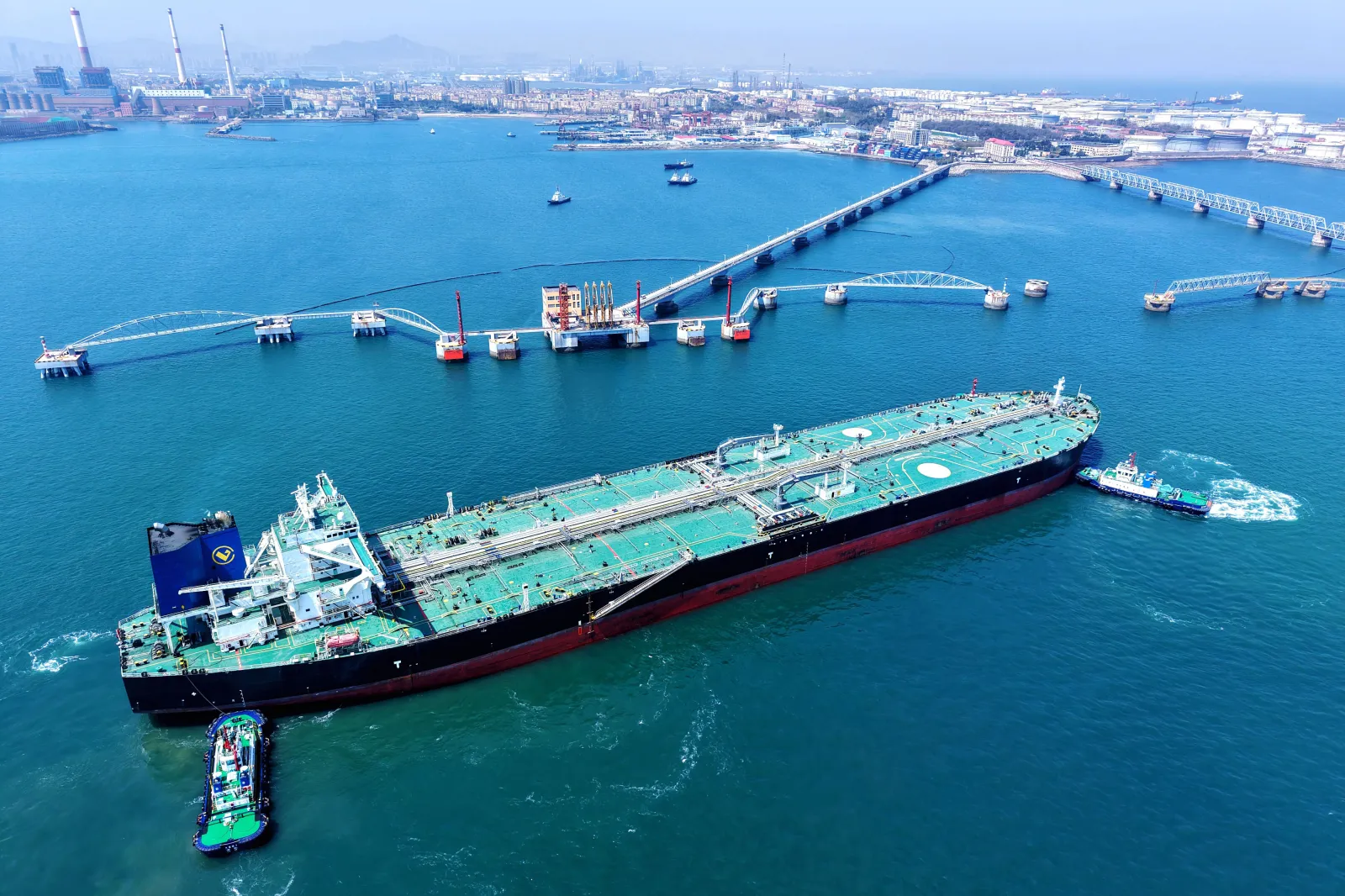
The crude oil tanker New Odyssey arrives at the port in Qingdao, in China's eastern Shandong province on April 15, 2025. | Photo by STR/AFP/Getty Images
What To Know

The report published Tuesday said Thousand Sunny was in the southern Atlantic on Monday, having sailed around the Cape of Good Hope without cargo, and has not diverted or slowed since Trump announced an oil blockade on Venezuela in mid-December. The Chinese-flagged tanker of unknown origin is not sanctioned by the U.S. and has been transporting Venezuelan Merey crude to China for a half-decade.


Meanwhile, the second unsanctioned Chinese-flagged VLCC, Xing Ye, is currently slow-steaming off French Guiana as it waits to load crude at Venezuela’s Jose Terminal. Like the Thousand Sunny, its ownership remains undisclosed, and its post-Venezuela destination is unclear. The tanker last loaded crude in Venezuela in August.

China has extended tens of billions of dollars in loans to Venezuela over the years, repaid by Caracas largely through oil shipments, and backed Venezuela in an emergency meeting of the U.N. Security Council on Tuesday.

Stepping up its blockade on Venezuelan oil, the U.S. seized the Panama‑flagged Centuries and the VLCC Skipper while pursuing the Bella 1, which officials say is a sanctioned Venezuelan vessel flying a false flag under a judicial seizure order.

Venezuelan gunboats have begun escorting vessels carrying oil and petroleum products but their coverage appears limited to the nation’s territorial waters, according to The New York Times.

Petroleos de Venezuela SA (PVDSA) has begun shutting oil wells in the Orinoco Belt as storage fills and exports are squeezed by the U.S. blockade, Bloomberg reported Monday, adding that it aims to reduce production by at least 25% to 500,000 barrels a day. At the same time, U.S. company Chevron has continued exporting Venezuelan crude under a special U.S. government license.


What People Are Saying


China's ambassador to the U.N. Sun Lei said during a Security Council meeting last week: "The US actions and rhetoric have led to continued tensions in the region, raising serious concerns among regional countries and the international community…We call the United States to heed the just call of the international community, immediately halt relevant actions, and avoid further escalation of tensions."

Russia's U.N. representative Vassily Nebenzia told the meeting: "For several months now, the entire world has been watching the United States deliberately fomenting tensions around Venezuela, which is a friend of ours…The illegal US blockade of Venezuela's coastline is a genuine act of aggression…Unfortunately, there is every reason to believe that these are not one-off acts by the US vis-à-vis Venezuela…"

What Happens Next

As the Thousand Sunny nears Venezuela's Jose Terminal in weeks and the Xing Ye waits nearby, the U.S. enforcement or otherwise of the declared blockade will shape whether the standoff will develop into a wider geopolitical confrontation.


Trump’s Attack on Birthright Citizenship Seeks to Further Codify White Supremacy

A Supreme Court case that could potentially undo and restrict citizenship rights shows that the border is everywhere.
December 30, 2025

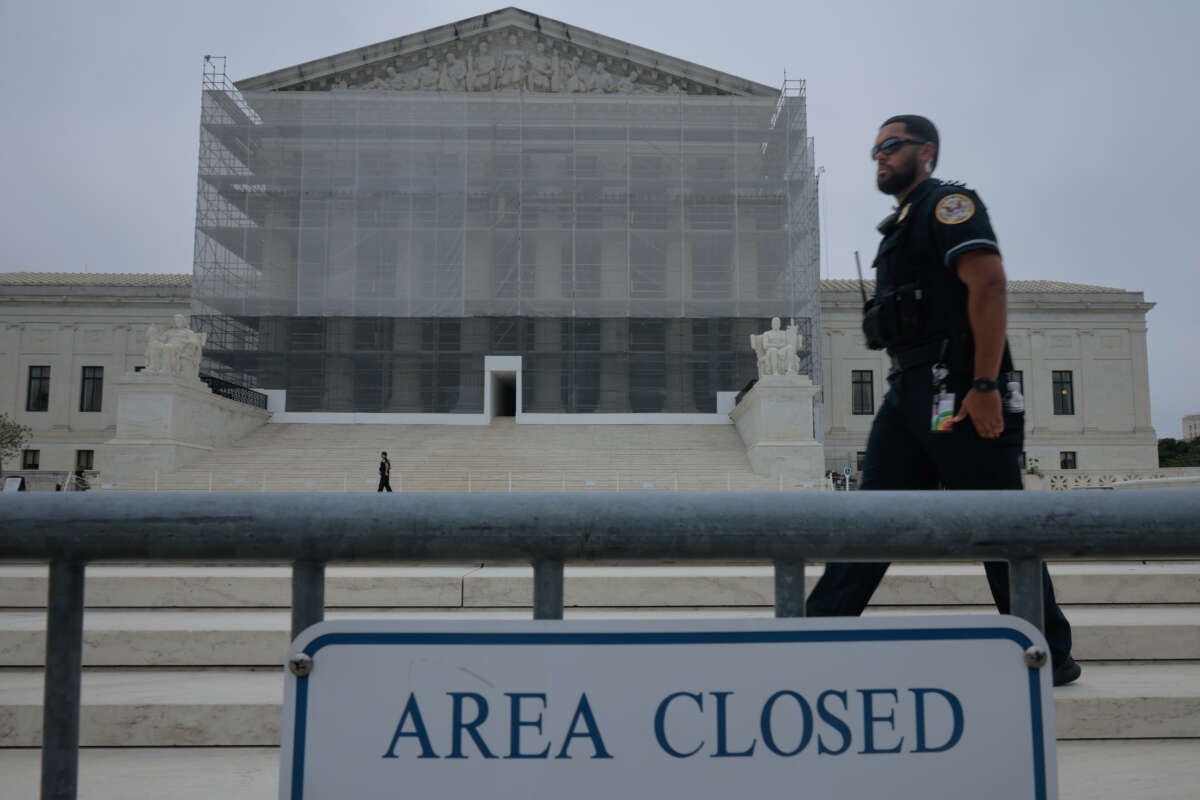
The plaza in front of the U.S. Supreme Court building is seen to be closed on June 27, 2025, in Washington, D.C.Chip Somodevilla / Getty Images


As we produce journalism that combats authoritarianism, censorship, injustice, and misinformation, your support is urgently needed. Please make a year-end gift to Truthout today.

The Supreme Court has scheduled a hearing early next year regarding historic challenges to the Trump administration’s attempt to undermine the Fourteenth Amendment’s longstanding guarantee of birthright citizenship, which was enacted in 1868. The administration proposed to get rid of birthright citizenship by means of an executive order issued on inauguration day, and not through a proposed constitutional amendment, which most scholars argue is legally required.

The administration’s assault on birthright citizenship firmly anchors its campaign of terror against migrant communities in a white supremacist framework, one that extends the militarization and politics of racial subordination of the U.S-Mexico border region throughout the country.

Now, more than ever, it is clear that the border is present wherever immigrant communities are present — wherever our sisters and brothers live, work, and struggle.

This is why immigrant rights groups like Witness at the Border decided to launch our “Blue Trianglecampaign in response to the Trump administration’s criminalization of migrants. This initiative highlights the connection between Nazi persecution of migrants and political exiles as a distinct category — first in forced labor camps in the 1930’s and eventually in the Holocaust — and the repressive logic of the Trump administration’s targeting of our communities through measures such as mass detention and mass deportation, the negation of internationally protected rights to asylum and refuge, the reactivation of the Alien Enemies Act and Insurrection Act, and related abuses.

Immigrant rights groups, human rights defenders, and their allies throughout the U.S. are mobilizing in defense of birthright citizenship in the lead up to the Supreme Court’s consideration of these issues. We organized in the spirit of observances here and around the world of International Human Rights Day on December 10 and International Migrants Day on December 18. For us, these are days of conscience, solidarity, and resistance, without borders, in defense of the universal right to freedom of movement in search of a dignified life.


Our understanding and defense of birthright citizenship is within this overall framework of reaffirmation of a broader vision and commitment to the full range of rights recognized by the Universal Declaration of Human Rights in 1948 and those of migrants, refugees, asylum seekers and displaced persons throughout the world. But ultimately, ours is a fight for a world without borders.


An Attack on Birthright Citizenship


The constitutionally protected right to birthright citizenship, embodied in what is known as the “Citizenship Clause” of the Fourteenth Amendment, is grounded in the Reconstruction Era’s abolition of slavery and the broader constitutional changes undertaken in the wake of the Civil War. These measures sought to give substantive content to the empty promises of equal rights affirmed in the Declaration of Independence and the Bill of Rights, contradicted in practice by constitutional protections for slavery, the slave trade, and the policing and hunting of fugitive slaves.

The constitutional amendments passed during this period for the first time extended rights of citizenship not only to formerly enslaved Black people but also to “all persons” [emphasis added] born on U.S. soil, including those born to non-citizens. This is crucial in terms of our understanding of the context and origins of birthright citizenship; prior to the adoption of the Fourteenth Amendment in 1868, naturalization for immigrants as citizens had been limited by previous laws exclusively to “free white persons” (in effect, white male property owners).

The express purpose of the radical reforms enacted during Reconstruction in the 1860s and 1870s was to reverse the Supreme Court’s denial of citizenship rights to Black Americans, both enslaved and free, on the basis of their race in the Dred Scott case in 1857. This decision and its implications became a tipping point which sharpened the deep divisions that accelerated the conditions culminating in John Brown’s rebellion, the Civil War itself, and finally, emancipation.

The Dred Scott case shares key traits with other Supreme Court decisions such as Plessy v. Ferguson in 1896, which upheld Jim Crow laws in the deep South pursuant to the “separate but equal” doctrine, and Korematsu v. U.S. in 1944, which affirmed the constitutionality of racially discriminatory detention policies imposed on people of Japanese origin, including tens of thousands of U.S. citizens, under the guise of “national security” during the Second World War.

These are particularly egregious examples of Supreme Court decisions that restrict rights within a white supremacist landscape, rather than expanding them. The pending case regarding birthright citizenship poses the same kind of challenge for the court today.

The Trump administration’s efforts to undo the birthright citizenship guarantees of the 14th Amendment come with high stakes. Today’s court, for example, will have to confront the Supreme Court’s own historic ruling in 1898 in United States v. Wong Kim Ark, which upheld the Fourteenth Amendment’s guarantee of birthright citizenship for a Chinese cook born in San Francisco who had been denied reentry to the U.S. in the wake of the passage of a series of laws targeting Chinese immigrants.

Trump’s executive order seeks to deny citizenship rights to any child born in the U.S. to a mother who is either here without papers or only temporarilypresent in the country, and whose father is not a U.S. citizen or legal permanent resident (for example, migrants holding student or work visas). The order directs federal agencies to stop issuing citizenship papers to these children. The Brennan Center suggests that this probably means the children would still be issued birth certificates, but those would not serve as proof of citizenship.

Though Trump’s order has until now been tied up in the courts — and still has to go through the Supreme Court — one can already see how this might play out in states and localities where officials could consider themselves empowered to refuse to issue or facilitate the processing of official documents or benefits on discretionary grounds, based on their interpretation, understanding, or perception of the immigration status of the parents applying for this kind of vital documentation. Aggressive community-based organizing and court actions to resist encroachments on birthright citizenship have been crucial in resisting abuses of this kind.

Trump 2.0’s Anti-Immigrant Strategy

The Trump administration’s initiative to undo and restrict existing rights to citizenship aims to perpetuate the demographic effects of Trump 2.0’s overall weaponization and normalization of an overtly white supremacist reframing of immigration and border policy.

The intended result is a kind of extreme civic exclusion imposed on racially and ethnically targeted, policed, and subordinated immigrant communities relegated to the kind of permanent second class status or “social death” envisioned for Black Americans in the majority’s ruling in Dred Scott. This is also what the Supreme Court sought to avoid through its narrow decision in the Plyler v. Doe case in 1982, that affirmed the constitutional right of undocumented immigrant children to free public education, which the Trump administration has also sought to undermine.

The underlying political and ideological goal is to combine the ongoing practices of racially and ethnically targeted mass detention and mass deportation, such as the raids we have seen on the streets of cities across the country, with racial and ethnic engineering to limit who is entitled to citizenship, voting, and representation, and ultimately to “social membership” in the broadest sense. Trump has normalized the kind of militarization of immigration enforcement which has long been accepted as a standard practice in the U.S.-Mexico border region, extending the border together with the Border Patrol and its historic, ingrained violence and abuses throughout the country. The administration has further coupled these moves with a convergent series of measures to restrict the rights of permanent residents (non-citizens with green cards, people holding student and work visas, etc.), and of refugees and asylum seekers.

The Trump administration’s policies and practices of mass detention and mass deportation echo past abuses at the same time as they normalize new forms of persecution, cruelty, and terror against migrant families, communities, and countries of origin. These measures constitute an essential component of the overall weave of MAGA’s version of neo-fascist authoritarianism (or “late fascism”) that has undermined the rule of law within the U.S., driven by militarism, nationalism, and supposed “populism” grounded in racism, hatred, and xenophobia.

Their concrete expressions include the proliferation of militarized, inhumane detention camps characterized by conditions equivalent to torture in settings such as the Everglades (“Alligator Alcatraz”), Fort Bliss (“Camp East Montana”), and beyond U.S. borders in settings such as Guantánamo Bay, on illegally occupied Cuban national territory.

This overall archipelago of Trumpian terror also includes systematic, recurrent patterns of forced disappearances and torture through third country deportations to settings such as CECOT in El Salvador and complicity in persecution and terror against migrants in contexts ranging from Mexico, Panama, Costa Rica, and Peru to Eswatini, Djibouti, South Sudan, Rwanda, and Ghana, as well as the racist targeting and collective punishment of Afghan, Somali, and Haitian migrants and communities and of their countries of origin.

This immigration policing is the other side of the coin of the rekindled imperialist interventionism that has become rampant in contexts such as the illegal airstrikes on boats in the Caribbean and Pacific, the potentially imminent threats of intervention against Venezuela and Colombia, and ongoing U.S intervention in the Honduran elections.

This is a historical moment that shares important political, ethical, and spiritual dimensions with previous eras when illegitimate forms of power had to be challenged by people of good will as a duty of collective, conscientious citizenship on a local, national, and global scale.

Today, we must stand with immigrants everywhere, within the U.S. and beyond, without walls, in the spirit of the abolitionist movement of the 1850’s and the civil rights and anti-war movements of the 1960’s and their successors. This is part of the community-based struggles needed for what amounts to a “Third Reconstruction” in the tradition of “abolition democracy,” including the abolition of ICE, the Border Patrol, and ultimately of borders themselves — as part of a revolutionary configuration of existing nation-states throughout the world.


This article is licensed under Creative Commons (CC BY-NC-ND 4.0), and you are free to share and republish under the terms of the license.

Camilo Pérez-Bustillo
Camilo Pérez-Bustillo is former executive director of the San Francisco Bay Area chapter of the National Lawyers Guild; member of the leadership team at Witness at the Border; a fellow at the Institute for the Geography of Peace in Juárez, Mexico/El Paso, Texas, and at the University of Bergen, Norway’s, Global Research Programme on Inequality; co-chair of the National Lawyers Guild’s Task Force on the Americas; professor of law and ethnic studies at St. Mary’s College of California; visiting chair professor of human rights at National Taiwan University’s College of Law; and co-founder of the International Tribunal of Conscience of Peoples in Movement.
'Cracks beginning to show': Social security 'in turmoil' under Trump

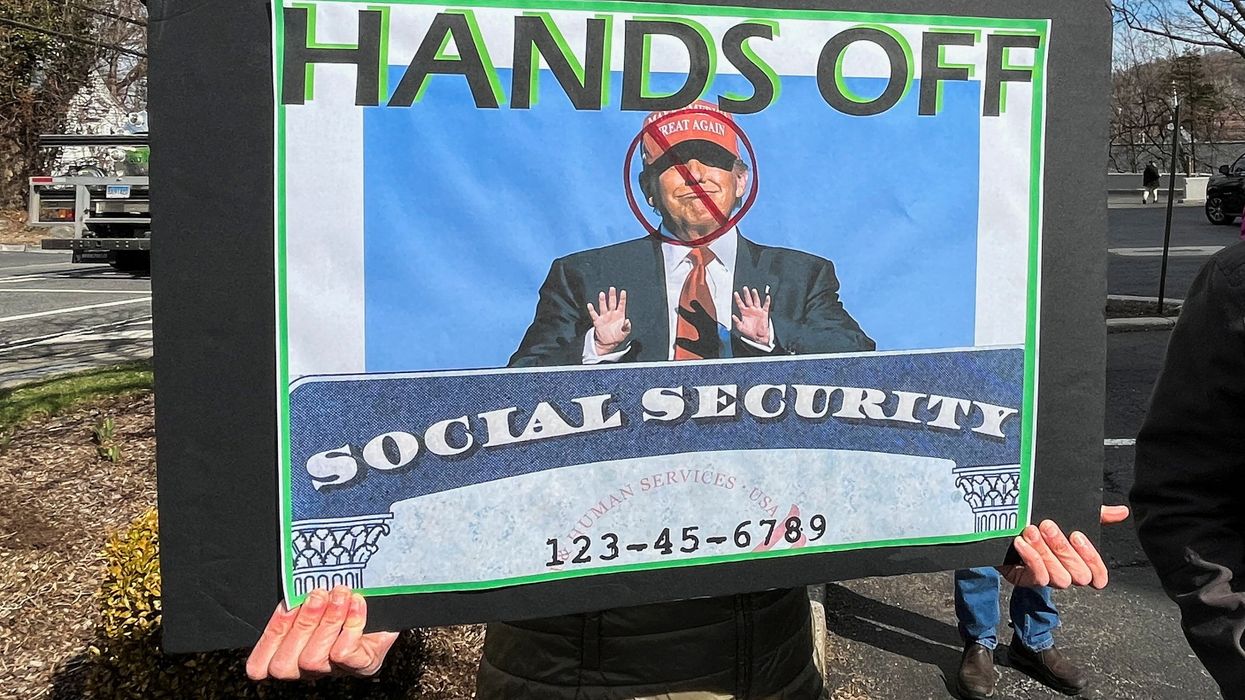
A person holds a sign during a protest against cuts made by U.S. President Donald Trump's administration to the Social Security Administration, in White Plains, New York, U.S., March 22, 2025. REUTERS/Nathan Layne/File Photo

December 30, 2025 
ALTERNET

The Social Security administration was not in a stellar place to begin with when Donald Trump returned to the White House, but according to a new breakdown from the Washington Post, after one year of his presidency the agency is "in turmoil" with "cracks more than beginning to show" as its reduced workforce struggles to handle its backlog while dealing with haphazard leadership.

The SSA is responsible for handling retirement, disability, and survivor benefits payments to roughly 74 million Americans, a task it has already been struggling with for years. While the agency has been the target of Republican lawmakers for decades, things have gotten substantially worse under Trump, with thousands of employees fired or driven to quit by the massive DOGE firing waves, the Post explained in a report from Tuesday. All told, the agency shed around 7,000 employees earlier in 2025, or around 12 percent of its total workforce.

The remaining employees left at the SSA are left to handle "record backlogs," with 6 million pending cases and 12 million pending transactions in various field offices. "Hasty policy changes and reassignments" have also left inexperienced staff members in charge of key duties.

“It was not good before, don’t get me wrong, but the cracks are more than beginning to show,” John Pfannenstein, a claims specialist outside Seattle and president of Local 3937 of the American Federation of Government Employees union, explained to the Post in an interview. “It is a great amount of stress on our employees that remain on the job, who haven’t jumped ship.”

Claims of fraud and abuse in the Social Security system have also become more widespread from Trump and his GOP allies, despite being largely baseless or overblown.

"Exaggerated claims of fraud, for example, have led to new roadblocks for elderly beneficiaries, disabled people and legal immigrants, who are now required to complete some transactions in person or online rather than by phone," the Post explained. "Even so, the number of calls to the agency for the year hit 93 million as of late September — a six-year high, data shows."

The agency is working to combat its mounting backlog, with Commissioner Frank Bisignano approving millions in overtime pay for employees working around the clock. It also touted a number of improvements to its system in the last year, claiming to have "reduced the processing center backlog by 1 million cases this fall, cut pending disability claims by a third and kept the website live 24/7 after a series of outages earlier this year."

Social Security beneficiaries remain unconvinced by these claims of improvements, however, and Democrats have stepped up efforts to defend the program, which has long been one of the most popular in the entire US government.

“We’ve kept up the pressure and held Donald Trump, Elon Musk and Frank Bisignano accountable for the chaos they’ve caused,” Sen. Elizabeth Warren said.
ANTI-D.E.I.

DOJ’s push to weaponize 1863 law to 'bully' companies panned by critics

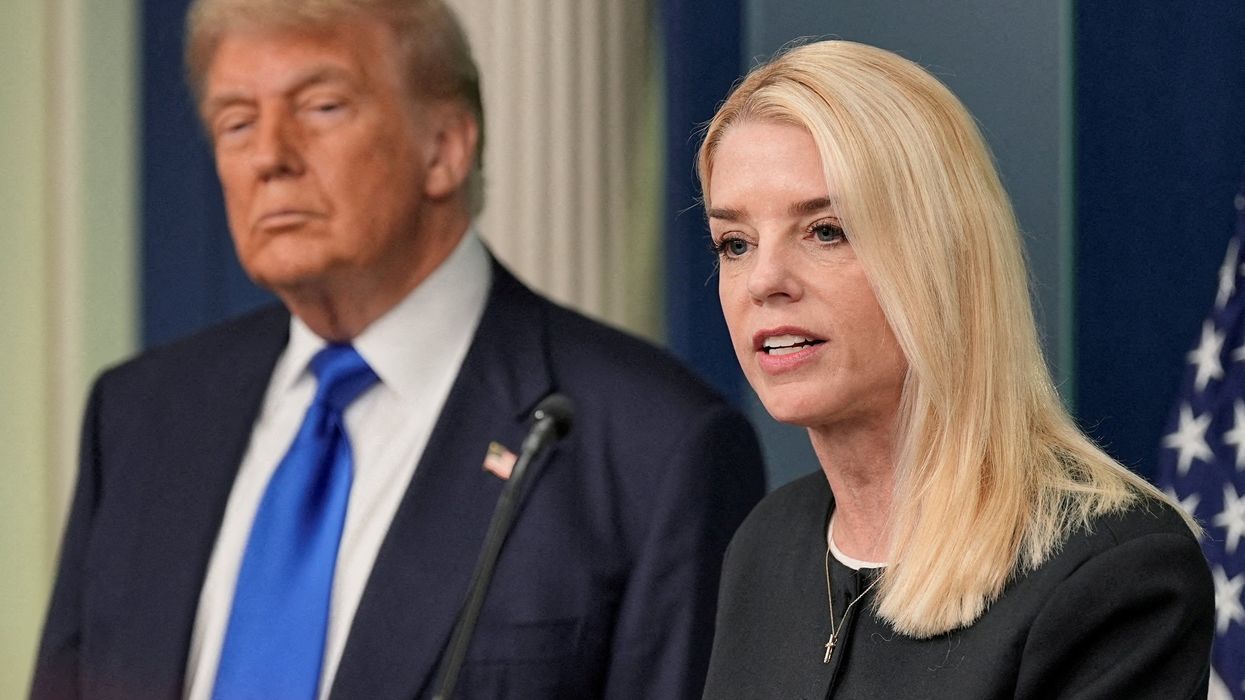
FILE PHOTO: U.S. Attorney General Pam Bondi speaks to the media, in the Press Briefing Room at the White House in Washington D.C., June 27, 2025. REUTERS/Ken Cedeno/File Photo/File Photo

December 30, 2025 
ALTERNET

Donald Trump's Department of Justice is getting in on the push to force diversity programs out of American businesses with a "novel" interpretation of an 1863 fraud law, but an analysis from MS NOW found that this new "bullying" tactic amounts to "a complete waste of resources."

According to a recent report from the Wall Street Journal, the DOJ is now attempting to use the 1863 False Claims Act to go after companies that receive government money through federal contracts to make sure they do not have "diversity, equity and inclusion" programs in place. The report specifically singled out Verizon and Google's parent company, Alphabet, as some of the initial targets.


Trump issued an executive order in March calling for the end of all DEI initiatives in the federal government. His administration has also been aggressive in targeting such programs at private businesses with any means available to it, and major companies like Amazon, Target and Paramount opted to roll them back in response.

Examining the new legal tactic at the heart of this push, MS NOW's Hayes Brown explained that the False Claims Act was first introduced to take on defense contractors attempting to bilk the Union government for more money during the Civil War. Recently, it's mostly been used to go after healthcare companies suspected of overcharging the federal government.

This new intended use of the law by the Trump administration, holding companies liable and potentially leveling fines against them for having DEI programs in place while taking government money, would be a "novel" interpretation, Brown wrote, and one that "hasn’t been tested in court and could easily fall flat." Still, he argued, "the mere fact that DOJ is pursuing this route is chilling in and of itself."


Brown also noted that, by utilizing this novel approach to the False Claims Act, the Trump administration is shifting responsibility for its anti-DEI crusade onto the DOJ from the department's civil rights division to its fraud division, which has been ordered to "aggressively" pursue the matter. Aside from being "clear politicization of the legal system," Brown also argued that it represents "a major waste of resources" for the DOJ, which has recently "been struggling with its workload" under Attorney General Pam Bondi's remaking of the department.

"Even if the cases go nowhere, or don’t result in charges, businesses with less money than Google may step up efforts to roll back their diversity programs," Brown concluded. "MAGA pours a lot of resources into achieving its goals, but it prefers that its targets for bullying comply in advance."
MAGA will soon 'be relegated to the dustbin of history': Nobel economist

WISHFUL THINKING 
THEY ARE THE CONFEDERACY 


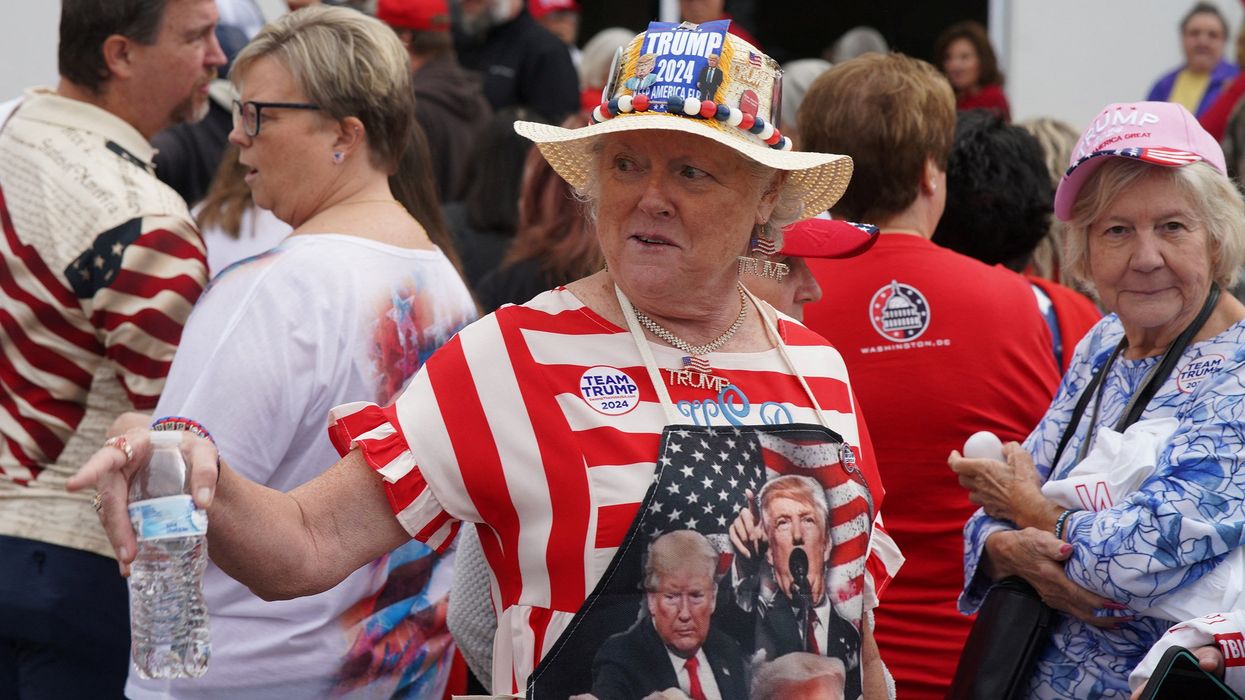
A supporter wears an apron with Trump's picture before Donald Trump speaks during a campaign rally at the Rocky Mount Event Center in Rocky Mount, North Carolina, U.S., October 30, 2024. REUTERS/Jay Paul
December 30, 2025
ALTERNET

In a Tuesday column, Thomas Krugman noted that even the most powerful organizations, like the Heritage Foundation, can fall and it's emblematic of what could also happen next to MAGA.

The anti-fan of Heritage, Krugman noted that the far-right group has gotten far worse over the past several months with the group's embrace of neo-Nazi Nick Fuentes.

However, Krugman continued, "It turns out that even at a fundamentally corrupt institution like Heritage, there are lines you can’t cross.”

In the last month, the organization has experienced a flood of staff resignations from what Krugman calls "the marginally competent" and those who have "a reputation to protect."

Heritage President Kevin Roberts remains in his role. Krugman observed Roberts thinks that he can "ride out this storm," though he added: "I don't believe they can."

The Nobel Prize-winning economist asserted that the Heritage Foundation isn't exactly known for its credibility in the broader political world. Until now, he wrote that its role in the conservative movement had been "provide an intellectual gloss by producing what looked to the gullible — i.e., many people in the news media — like credible research.”
But now even the group's perceived credibility has disappeared, Krugman said.
"Now that its illusion of credibility is gone, what is Heritage good for?” Krugman wrote, noting that there was little point for the group's millionaire and billionaire donors to continue funding the organization. He added that the MAGA movement doesn't need "any genuine policy research," and argued that voters instead go off their gut. President Donald Trump doesn't need.

Krugman wrote that neither President Donald Trump nor the next leader of the MAGA movement needs "expertise, or even the illusion of expertise."

“What the debacle at Heritage suggests, however, is that many of these fellow-travelers have limits," he explained. "There are lines even corrupt institutions can’t cross without provoking mass defections. And such defections are, I believe, how MAGA will eventually be relegated to the dustbin of history."

He fantasized about what a MAGA takedown might look like: a mass exodus of Republicans who trash-talk Trump behind his back, finally finding the pluck to go public and withdraw their support.

"I don’t know what form their defection would take," Krugman confessed. "Would it involve a serious effort to wrest control of the G.O.P. back from extremists? Would it involve elected Republicans cooperating with Democrats? Would it mean leaving the G.O.P. altogether? America hasn’t seen a new major political party emerge since, well, the rise of the Republican Party in the 1850s, but this doesn’t mean it can never happen again."

But what he can say is that he doesn't believe it wise to assume that MAGA will survive after Trump. The non-MAGA Republicans likely won't stay quiet forever, particularly "in the face of ever more extreme corruption and bigotry at the top of their party.”

Read his full column here.
A war within a war: Yemen’s latest conflict

By AFP
December 30, 2025


A Saudi air strike damaged military vehicles in the port of Makalla, but the UAE inisisted there were no weapons aboard - Copyright AFP STRINGER
David STOUT, Haitham EL-TABEI

Yemen has been fighting a crippling war with itself since Iran-backed Houthi rebels ousted the government in 2014, triggering a Saudi-led military intervention.

Now, a new conflict is brewing within the conflict, involving rival armed factions loosely grouped under the government but separately backed by the United Arab Emirates and Saudi Arabia.

The confrontation could tear apart the already-fractured government and threaten slow-moving peace negotiations with the Houthis, including a UN-brokered ceasefire that has largely held since 2022.

It began earlier this month when the Southern Transitional Council (STC) — a UAE-backed secessionist group and key government partner — seized military bases, checkpoints and oil fields and captured in most of resource-rich Hadramawt province and swaths of neighbouring Mahrah.

Saudi Arabia, Yemen’s wealthy neighbour and chief supporter of the government, has hit back, striking what it called a weapons shipment from the UAE to the separatists on Tuesday.

The UAE denied sending weapons to the STC, saying it was shipping vehicles to its own forces in Yemen.

Here’s a guide to the latest events and what could happen next.


What’s happening now?


Tensions escalated on Tuesday when the Saudi-led military coalition attacked a shipment of weapons and combat vehicles that it said was sent from the UAE for the separatists.

STC positions were also hit by airstrikes on Friday, following calls from Riyadh for a withdrawal from Hadramawt and Mahrah.

A Yemeni military official said around 15,000 Saudi-backed fighters were amassed near the Saudi border, but had not been given orders to advance.

“The standoff risks upending Yemen’s fragile three-and-a-half-year truce, renewing a war that has repeatedly played to the advantage of the Iran-backed Houthis,” wrote April Longley Alley, a senior fellow at the Washington Institute, in an analysis.

“It could also further strain relations between key US allies Saudi Arabia and the UAE.”

Abu Dhabi is key supporter of the STC, with UAE flags reguarly seen at the separatists’ rallies.


What does the STC want?


The STC appears to be launching a bid for greater self-determination over territories it controls or even outright independence, according to observers.

Headed by Aidaros Alzubidi, the STC is a coalition of groups that want to bring back South Yemen, which existed from 1967 to 1990, when it reunified with North Yemen.

They now control almost all of South Yemen’s former territory.

“The Southern Transitional Council is betting that if the South can be united under a single leadership –- its own, of course –- it can cordon the South off from the Houthis in the North, utilise oil and gas revenue, and create a stable and functioning state,” wrote Gregory D. Johnsen, a non-resident fellow at the Arab Gulf States Institute, in a recent analysis.

Such a move “is a tall order, and it will likely be contested both internally and externally”, Johnsen added.


Why is Saudi ‘sleepless’ over Hadramawt?


Hadramawt is Yemen’s largest province — compromising roughly a third of the country’s territory — and its wealthiest.

It home to most of the country’s petroleum deposits that are vital to government revenues, and borders Saudi Arabia to the north.

And its ports are away from the Red Sea hotspot that regularly comes under Houthi fire.

But, for the Saudis, the province that abuts its southern border is about more than just land and wealth.

For generations, Hadramawt families have been a force in the Saudi economy and make up a sizeable portion of the business community.

Seen as having entrepreneurial skills and grit, migrants from Hadramawt have long flourished in Saudi Arabia — from running family restaurants to starting multi-billion dollar construction consortiums.

Losing control and influence over Hadramawt to a militia backed by the UAE would be both a psychological and strategic blow to Riyadh.

“If I’m Saudi Arabia, I’d be sleepless if I lose Hadramawt,” said Farea al-Muslimi, a research fellow at Chatham House’s Middle East and North Africa Programme.


Can the Saudis stop the separatists?


The latest conflict pits the Saudi alliance against a militia keen to exert control over territory that it sees as historically distinct from the rest of Yemen.

The decade-long, largely fruitless fight against the Houthis may not give Riyadh much cause for optimism.

Despite spending billions in a decade-long campaign including withering air strikes, the Saudi-led campaign has failed to bring the Houthis to heel.

Military experts cite the south’s more open terrain as playing to Saudi Arabia’s possible advantage. An air campaign alone, however, is unlikely to dislodge their forces.

Airstrikes “can never make a significant difference in battles if there is no ground war”, said Muslimi.

What do we know about deadly conflict in Yemen?

The war in Yemen, now in its second decade, is one of the world’s most devastating conflicts, involving local factions, regional powers and international interests.


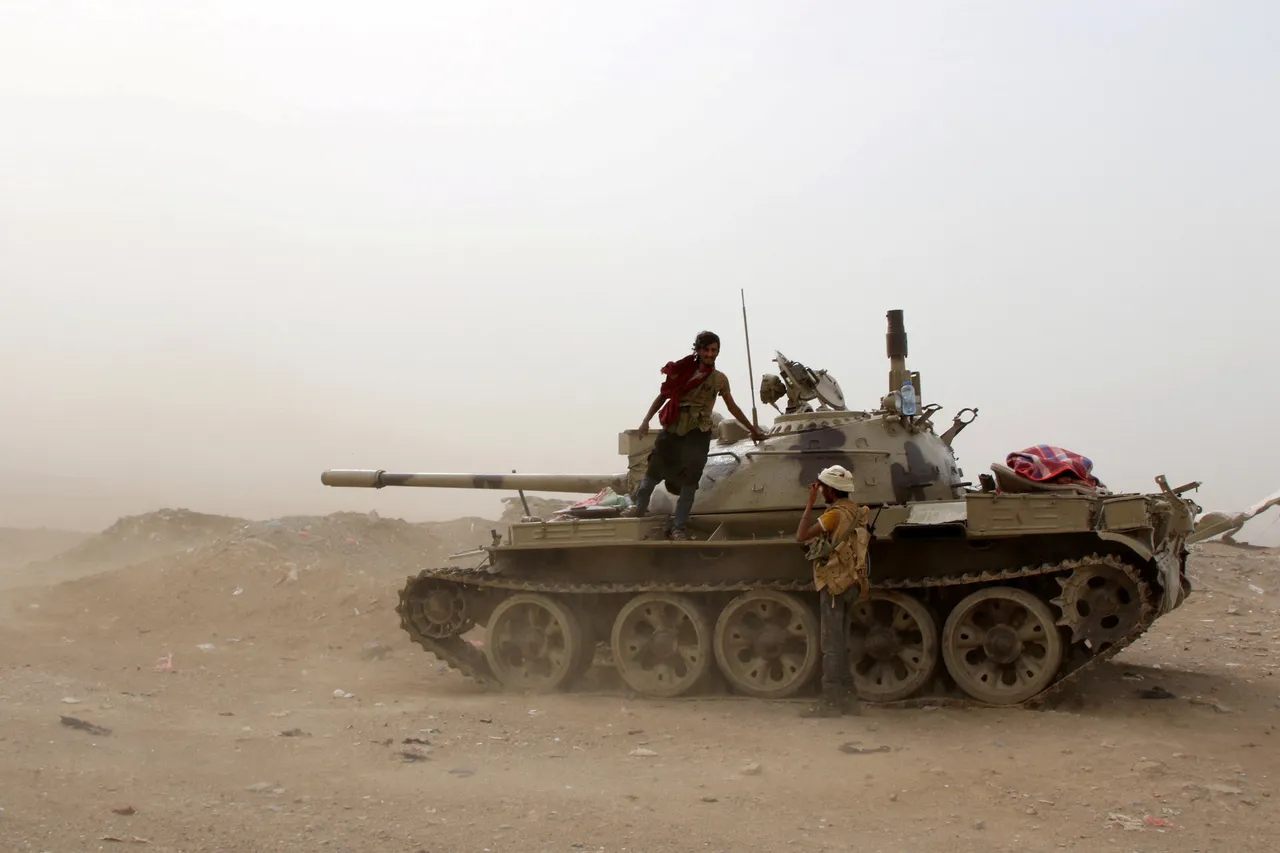
 Members of UAE-backed southern Yemeni separatist forces stand by a tank during clashes with government forces in Aden / Reuters

TRT WORLD
12/30/2025

On Tuesday, a Saudi-led coalition targeted a large quantity of weapons and combat vehicles — destined for UAE-backed separatist Southern Transitional Council (STC) forces —that were being offloaded from ships at a port in Yemen.

Historically its ally, Saudi Arabia slammed the UAE for backing STC, which has recently claimed control over swathes of territory in southeastern Yemen. This marked the most significant escalation between the two Gulf nations.

The STC has been part of the coalition fighting alongside the internationally recognised government against the Iran-backed group Houthis, which holds Yemen's capital, Sanaa, and the heavily populated northwest.

The Houthis gained global prominence after the start of Israel’s genocidal war on Gaza in October 2023, when they started attacking commercial vessels in the Red Sea in what they said was solidarity with Palestinians in Gaza, prompting the US and Israel to carry out strikes on Houthi targets. The Houthis have stopped their strikes since an October 10 ceasefire came into effect between Israel and Hamas.

The over two-decade conflict in Yemen has led to a devastating humanitarian crisis, with the UNICEF reporting in March 2025 that one in two children under five in Yemen is malnourished.

What is behind the current escalation in Yemen?

The unification

Yemen, situated between Saudi Arabia and an important shipping route on the Red Sea, was split into northern and southern states until 1990.

South Yemen agreed to unification with the north after a factional civil war in 1986 that wiped out its political leadership, and as its main financial patron, the erstwhile Soviet Union, collapsed.

Meanwhile, in the north, the Houthis emerged in the late 1990s, fighting guerrilla wars against the government.

The vast majority of Houthis are followers of Zaidi Shiaism and are backed by Iran.

In 2004, the group's founder launched a rebellion against the state, leading to six wars between 2004 and 2010. The group is led by Abdul Malik al Houthi.

Arab spring

Protests erupted across Yemen in January 2011, calling for an end to President Ali Abdullah Saleh’s 33-year rule.

Key tribal groups and military commanders defected to the opposition, triggering clashes in the capital, Sanaa.

Saleh was seriously wounded in a June bombing and flown to Saudi Arabia for treatment before returning months later.

In November 2011, Saleh finally signed a deal transferring power to his deputy, Abdrabbuh Mansour Hadi.

In late 2014, the Houthis seized control of much of Sanaa after weeks of protests.


Houthis take control

By early 2015, the group had placed President Hadi under house arrest, prompting his resignation.

He later fled to the southern city of Aden, rescinded his resignation, and denounced the Houthi takeover as a coup.

As Houthi rebels advanced south, President Hadi fled Yemen for Saudi Arabia.

Later that month, a Saudi-led coalition launched Operation Decisive Storm, citing a request from Hadi to restore his government.

In May 2015, former president Saleh formally allied with the Houthis, despite years of rivalry.

UAE-backed STC

By 2017, the war had triggered what aid agencies described as one of the world’s worst humanitarian crises, with widespread displacement, cholera outbreaks and growing fears of famine.

In December 2017, fighting erupted in Sanaa between the Houthis and Saleh’s forces after Saleh broke with the group.

Saleh was killed, consolidating Houthi control over much of northern Yemen.

In January 2018, the UAE-backed STC seized control of Aden after clashes with forces loyal to President Hadi.

The STC and the Hadi government, however, formalised a new power-sharing agreement in Aden in December 2020.

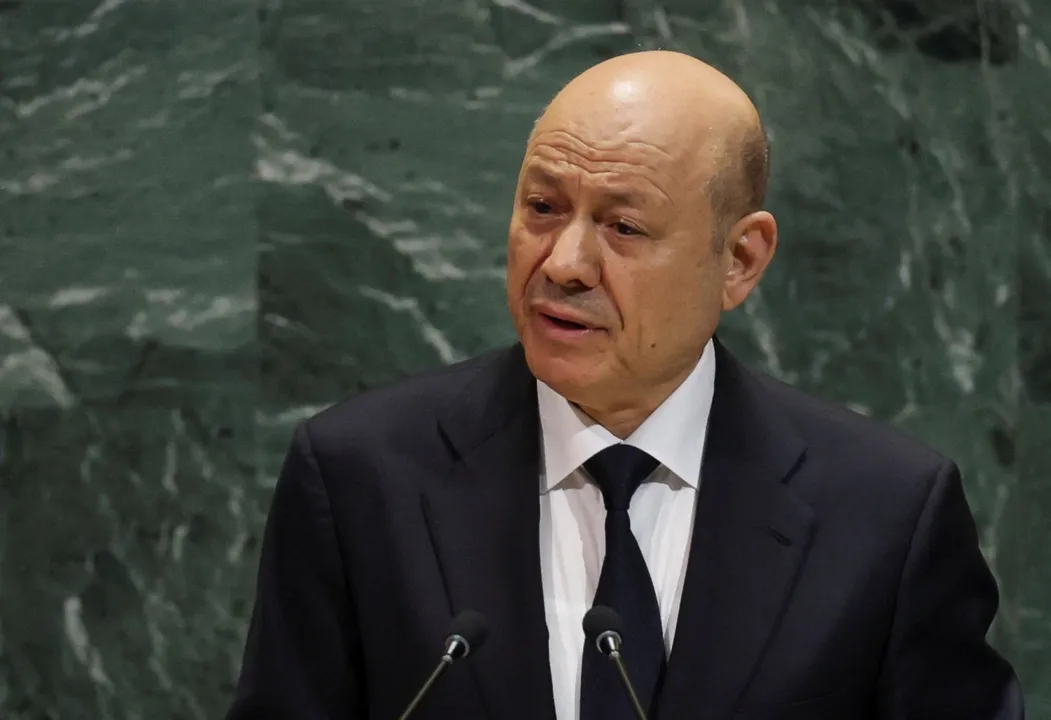
On 7 April 2022, Hadi announced in a televised speech that he was resigning from office and transferring power to the newly formed eight-member Presidential Leadership Council, chaired by Rashad al-Alimi.

While the internationally recognised government has formally been based in Aden since fleeing the Houthis in early 2015, it has spent much of that time operating from the Saudi capital, Riyadh.

Its head, Rashad al-Alimi, and Prime Minister Salem Saleh Bin Braik both left Aden for Riyadh when the STC took over.

Since the April 2022 UN-brokered truce between Saudi-backed coalition forces and the Iran-backed Houthis, open warfare has paused, but peace has remained elusive.

Yemen tells UAE forces to leave as tensions escalate

The UAE-backed STC, which seeks a separate state in Yemen's south, has in recent weeks swept through swathes of the country.


12/30/2025
TRT/AA


Fighters from Yemen’s UAE-backed Southern Transitional Council during a military operation in Abyan province, southern Yemen, Dec. 15, 2025. / Reuters

Yemen's presidential council has ordered all forces of the United Arab Emirates to leave the country within 24 hours, and cancelled a security pact with the UAE as tensions rise in the years-long infighting in which regional powers back different factions.

The Presidential Leadership Council on Tuesday also imposed a state of emergency and a 72-hour ban on all border crossings into the territory they hold.

"The Joint Defence Agreement with the United Arab Emirates is hereby cancelled," according to a statement from Yemen’s Presidential Leadership Council head Rashad al-Alimi on Tuesday. At the same time, a separate decree from him announced a 90-day state of emergency, including a 72-hour air, sea, and land blockade.

The statement came as the Saudi-led coalition said it targeted a large quantity of weapons and combat vehicles destined for Southern Transitional Council (STC) forces that were being offloaded from ships at Mukalla port in Yemen.

In remarks reported by the Saudi Press Agency, Coalition Forces spokesperson Major General Turki al-Maliki said two vessels arriving from the UAE port of Fujairah entered the port of Mukalla on December 27-28 without securing official authorisation from the coalition’s Joint Forces Command.

The UAE-backed STC, which seeks to revive the formerly independent state of South Yemen, has in recent weeks swept through swathes of the country, expelling government forces and their allies.


Yemen’s Presidential Leadership Council head Rashad al-Alimi orders UAE forces out within 24 hours. / AA


Tensions escalated after the STC took control of the Hadramaut and Al-Mahra provinces in December after clashes with government forces.

Alimi ordered the STC to hand over the territory, calling their advance an "unacceptable rebellion" in a televised address.

Meanwhile, Saudi Arabia has said the UAE should respond positively to Yemen’s demand to withdraw its forces within 24 hours and to cease any military or financial support to any party.

A Saudi foreign ministry statement also expressed regret over the pressure exerted by the UAE on STC forces, pushing them to carry out military operations near the southern borders of Saudi Arabia.

Yemen’s presidential council government is a patchwork of groups that also includes STC members and is held together by shared opposition to the Iran-aligned Houthis.

The Houthis pushed the government forces out of Yemen's capital, Sanaa, in 2014 and secured control over most of the north.


Saudi Arabia slams UAE's backing of STC in Yemen as a 'red line' and national security threat

Saudi Arabia said the UAE should respond positively to Yemen’s demand to withdraw its forces within 24 hours and to cease any military or financial support to any party.

12/30/2025
TRT/AA

Tensions escalated after the STC took control of the Hadramaut and Al-Mahra provinces. / Reuters


Saudi Arabia has said the UAE's support for the separatist Southern Transitional Council's (STC) offensive in Yemen is a threat to it and regional security and called for it to respond positively to the Yemeni Presidential Leadership Council's demand to withdraw its forces from Yemen within 24 hours.

The UAE's actions in Yemen "constitute a threat to the Kingdom's national security, as well as to security and stability in the Republic of Yemen and the region," read a statement by the Saudi foreign ministry published online on Tuesday, which added that the "steps taken by the brotherly United Arab Emirates are extremely dangerous.”

“The Kingdom stresses that any threat to its national security is a red line, and the Kingdom will not hesitate to take all necessary steps and measures to confront and neutralise any such threat.”

The statement came as the Saudi-led coalition said it targeted a large quantity of weapons and combat vehicles destined for Southern Transitional Council (STC) forces that were being offloaded from ships at Mukalla port in Yemen.

According to the Saudi-led coalition, the ships came from the UAE port of Fujairah and entered the port of Mukalla on December 27-28.

Meanwhile, Yemen's presidential council ordered all forces of the UAE to leave the country within 24 hours and cancelled a security pact with Abu Dhabi as tensions rose in the years-long infighting in which regional powers back different factions.

Saudi Arabia said the UAE must cease military or financial support to any party.


“The Kingdom stresses the importance that the brotherly United Arab Emirates accept the Republic of Yemen’s request for all its forces to leave the Republic of Yemen within twenty-four hours and halt any military or financial support to any party within Yemen.”

The UAE-backed STC, which seeks to revive the formerly independent state of South Yemen, has in recent weeks swept through swathes of the country, expelling government forces and their allies.

Tensions escalated after the STC took control of the Hadramaut and Al-Mahra provinces in December after clashes with government forces.

Yemen’s presidential council government is a patchwork of groups that also includes STC members and is held together by shared opposition to the Iran-backed Houthis.

The Houthis pushed the government forces out of Yemen's capital, Sanaa, in 2014 and secured control over most of the north.


Saudi Arabia bombs Yemen over shipment of weapons for separatists that arrived from UAE

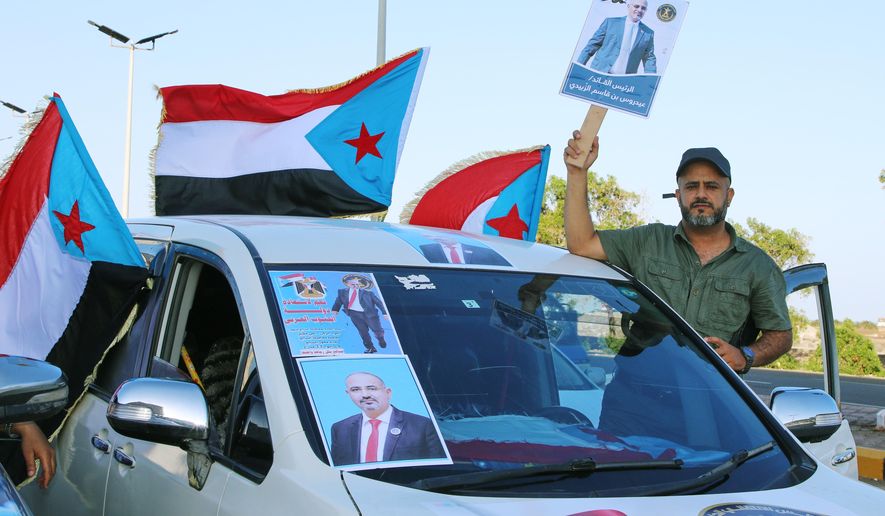
Supporters of the Southern Transitional Council (STC), a coalition of separatist groups seeking to restore the state of South Yemen, hold South Yemen flags and a poster of their leader, Aidarous al-Zubaidi during a rally, in Aden, Yemen, Dec. 25, …more >

By Associated Press - Monday, December 29, 2025

DUBAI, United Arab Emirates — Saudi Arabia on Tuesday said it bombed the port city of Mukalla in Yemen over a shipment of weapons for a separatist force there that arrived from the United Arab Emirates.

The attack signals a new escalation in tensions between the kingdom and the Southern Transitional Council, which is backed by the Emirates. It also further strains ties between Riyadh and Abu Dhabi, which had been backing competing sides in Yemen’s decadelong war against the Iranian-backed Houthi rebels.


A military statement carried by the state-run Saudi Press Agency announced the strikes, which it said came after ships arrived there from Fujairah, a port city on the UAE’s eastern coast.

“Given the danger and escalation posed by these weapons, which threaten security and stability, the Coalition Air Forces conducted a limited military operation this morning targeting weapons and combat vehicles unloaded from the two ships at the port of al-Mukalla,” it said.

There was no immediate comment from the UAE.
ECO-REVANCHISM

France pushes back plastic cup ban by four years


By AFP
December 30, 2025


France has gradually rolled out bans on single-use plastic products over the past decade as environmental campaigners have stepped up warnings about the impact on rivers and oceans - Copyright AFP/File DAVID GRAY

The French government on Tuesday postponed a ban on plastic throwaway cups by four years to 2030 because of difficulties finding alternatives.

The ban was meant to start on January 1. But the ministry for ecological transition said that results from a recent review into the “technical feasibility of eliminating plastic from cups” justified pushing back the deadline.

It said in an official decree that a new review would be carried out in 2028 of “progress made in replacing single-use plastic cups”. It added that the ban would now start January 1, 2030, when companies would have 12 months to get rid of their stock.

France has gradually rolled out bans on single-use plastic products over the past decade as environmental campaigners step up warnings about their impact on rivers and oceans.

A 2020 law set a deadline of 2040 to eliminate all single-use plastics. A ban on plastic bags for loads of less than 1.5 kilogrammes (3.3 pounds) of 30 fruit and vegetables was introduced in 2022 and has dramatically changed supermarket habits.

The postponement marks “yet another step backwards in the fight against plastic pollution, under pressure from lobby groups,” said Manon Richert, a spokeswoman for the environmental group Zero Waste France

She said “the argument put forward about technical feasibility is shaky” because solutions exist but haven’t been widely adopted due a lack of investment and an inadequate regulatory framework.

Environmental campaigners say the phase out of single-use plastics has been too slow.

At the start of 2024 the groups Zero Waste France, Surfrider Foundation Europe, Les Amis de la Terre, France Nature Environnement and No Plastic in my Sea issued a failing grade in their report card for implementation of the 2020 law.

They pointed to measures which had not been implemented and government decrees which limited the impact of the law.

Meanwhile, the government’s DGCCRF consumer protection agency said in a report released last year that almost a fifth of about 100 companies it checked in 2023 were breaching regulations on the production or use of single-use plastic items.

Its investigators said some marketed plastic-free products that in reality contained plastic, and some changed the name of the item in a bid to get around the ban.