Saturday, January 03, 2026

PAKISTAN

Trapped in sham austerity

Published January 3, 2026 
DAWN


SINCE 2022, the installed government has imposed, under the watch of the IMF, a crushing burden on ordinary Pakistanis via austerity policy. A large fiscal adjustment has been carved out through massive taxation and cuts in subsidies instead of any hint of restraint in spending by the government either on itself or on its constituents and backers. On the contrary, the spending valves have been opened like never before. Discretionary expenditure has skyrocketed, much of it ‘pork barrel’ in nature, with public funds being lavishly used for patronage and cementing loyalties towards the making of a new political order.

In the process, the entire burden of adjustment has been placed on ordinary Pakistanis and tax-compliant firms. As a result, the country is experiencing permanent economic ‘scarring’, with businesses shutting down, unemployment surging, and nearly one out of every two Pakistanis now estimated to be below the poverty line. Even the country’s farmers have not been spared, with rural poverty now estimated to be significantly higher than the rest of the country. Worse, the IMF’s orthodoxy is set to consign Pakistan to a low-growth trap for years.


An examination of public finances since 2022 is revealing. A cumulative fiscal adjustment of 5.5 per cent of GDP has taken place, the largest over a similar period in Pakistan’s history. Much of this adjustment has come from new taxation measures. The government has imposed taxes and levies totalling over Rs50.4 trillion since 2022-23 (including federal as well as provincial taxes and the petroleum levy). This is equivalent to the cumulative tax collection over the 17-year period prior to 2022. Repeating the past pattern of failure, the additional taxation has not come through tax broadening but by placing demands on existing taxpayers.

At the same time, while the government has been imposing unprecedented levels of predatory taxation, it has been unable or unwilling to rein in its spending. Overall government expenditure (centre and provinces combined) has increased 60 per cent in nominal terms between FY2023 and 2026. Non-interest expenditure has ballooned 70pc during this period.


Much of the increase in government expenditure has been in the form of political favours and patronage — large increases in salaries, allowances and pensions for the civil and military bureaucracy, parliamentarians, and the judiciary, in addition to allocation of generous discretionary funds for MNAs and MPAs. Pork barrel-ridden ‘development’ spending, a surrogate way of handing out taxpayer money to ruling coalition politicians, has surged from Rs 1.9 trillion in 2022-23 to a budgeted Rs 3.1tr in 2025-26, inclusive of federal PSDP and provincial ADPs.


Pakistanis have been crushed by fiscal austerity while the ruling elite has never had it better.

Expenditure on new fleets of cars, all-paid overseas trips for embarrassingly large delegations to different parts of the world, lavish spending on offices and official residences, etc, is on top of the foregoing. Personnel-related expenditure (salaries, allowances and pensions of the civil bureaucracy and military) alone has shot up from Rs 3.7tr to Rs 5.9tr in the past four years, cumulatively accounting for 38pc of the taxes squeezed from the economy over this period.

The massive increase in government spending on its own constituents and institutional backers since 2022 has occurred under the watch of the architect of the fiscal austerity policies — the IMF. Either the IMF is a witting party to this regime-supporting and system-legitimising operation, or it has been completely negligent in its fiduciary responsibility to ordinary citizens of a member country. Either way it should be held accountable.

A key question is whether there was a better alternative to the approach adopted, one that would have placed a lower and more bearable burden on the economy and ordinary Pakistanis. The answer is an unequivocal yes. Spreading the burden of adjustment more widely and more fairly through equitable taxation and non-essential spending cuts would have lessened the hardship.

Unfortunately, the IMF has chosen to turn a blind eye to the government’s spending profligacy and unwillingness to broaden the tax base. As a result, the entire burden of adjustment has fallen on the already taxed — salaried individuals, compliant firms, less affluent Pakistanis. Worse, under the IMF’s cookie-cutter method, fiscal consolidation is the only way to treat a public debt overhang. This approach to achieve a sustainable public debt level, however, will consign Pakistan to a low-growth trap for years without an exit.

As an illustration, using the standard debt equation, and fairly benign assumptions about economic growth and real interest rates, reaching a targeted level of public debt at 60pc of GDP will require a primary surplus of between 1.4 and 2pc of GDP each year for the next five years. Under the current IMF methodology and forbearance, this primary surplus will be achieved by even more taxation on existing taxpayers.

A singular reliance on fiscal consolidation is precisely the approach ‘the troika’ took in the case of Greece in the aftermath of the latter’s 2009 crisis, with the IMF under Christine Lagarde being a conscientious objector. Recognising that without significant debt restructuring, Greece’s economy and population will suffer catastrophic consequences for decades, the IMF proposed a sovereign debt write-off. However, Germany, as one of the largest creditors of Greece, overruled the idea and insisted on imposing fiscal austerity. The result has been the decimation of the Greek middle class, a dramatic decline in overall per capita income and widespread impoverishment.

To put Greece’s fiscal austerity-created misery into context, at its lowest point after the start of fiscal austerity, per capita income had declined by 27pc and only recovered to its pre-crisis level after 16 years.

In our case, the IMF has kept debt restructuring off the table, even though if done right it can provide much-needed fiscal space while reducing the pain and suffering inflicted on citizens. Without a fundamental rethink of the current strategy, and a change in the sham nature of the fiscal austerity being imposed, the economy will continue to be impaired for the long term, while ordinary Pakistanis will continue to suffer needlessly.

The writer has been a member of several past economic advisory councils under different prime ministers.


Published in Dawn, January 3rd, 2026

Fresh talks on Gaza stabilisation force to focus on mandate as Pakistan maintains caution

Published January 3, 2026 
DAWN


Palestinian women walk among piles of rubble and damaged buildings, in Gaza City, November 24, 2025. — Reuters

WASHINGTON: A fresh round of diplomatic talks on the formation of a proposed International Stabilisation Force (ISF) in Gaza is expected to be held in a Middle Eastern capital in the coming days, diplomatic sources told Dawn as Muslim countries, including Pakistan, continue to press for clarity on the force’s mandate, operational scope, and political objectives.

The ISF, a central element of a US-brokered Gaza peace plan, is envisioned to stabilise the territory following over two years of Israeli atrocities in the Gaza Strip, protect civilians and humanitarian corridors, and assist in establishing transitional governance through a proposed “Board of Peace”.

However, several core issues remain unresolved, including the force’s legal authority, chain of command, funding, duration, and whether it would play a role in disarming Hamas or other Palestinian groups.

Pakistan, Indonesia, Egypt, and other states have expressed willingness to participate in a stabilisation effort that genuinely restores order and facilitates humanitarian access.

“They are prepared to join any credible international force that brings stability to Gaza,” a diplomatic source said. “But they will not be part of a mission whose primary focus is disarming Palestinian resistance groups.”

Hamas has rejected the idea of an international force tasked with disarmament, warning that such a deployment would be considered a party to the conflict rather than a neutral stabilising presence.

This stance complicates efforts to secure broad regional participation and raises concerns about the safety and legitimacy of any deployed troops.

Last month, Reuters reported that international troops could be deployed in the Gaza Strip as early as 2026 to form a UN-authorised stabilisation force.
US signals gratitude, Pakistan remains cautious

Three weeks ago, United States Secretary of State Marco Rubio described Pakistan’s willingness to consider particpating as “key” to the initiative and expressed gratitude for Islamabad’s engagement.

Pakistani officials, however, emphasise that no final decision has been taken yet, and that Islamabad has neither committed troops nor received a formal request.

In December 2025, Pakistan also attended a US Central Command–hosted conference in Qatar, with representatives from nearly 45 countries, where the operational framework of the ISF was discussed.

Reports suggesting Pakistan might deploy up to 3,500 troops remain speculative. Diplomatic sources stressed that any troop commitment would depend on a mandate that is fully transparent, politically neutral, and focused on humanitarian stabilisation rather than disarmament or law enforcement inside Gaza.
‘2025 saw positive trends in Pak-US ties’

Meanwhile, in a press briefing at the Pakistan Embassy in Washington on Friday, Pakistan’s Ambassador to the US Rizwan Saeed Sheikh framed discussions on the ISF alongside broader Pak–US relations.

He said that 2025 had been a year of positive trends in bilateral ties and that 2026 would be a year where concrete results were expected.

“The opportunities are positive and clear but 2026 will be a critical year for translating these possibilities into practical outcomes across every sector of our bilateral partnership,” he said.


The ambassador highlighted economic cooperation in minerals, energy, information technology, health, education, and counterterrorism as areas of particular promise.

Ambassador Sheikh also emphasised Pakistan’s competitive advantages, noting that the country’s production costs were lower than China’s. He drew attention to the skills of Pakistan’s youth, particularly in technology and English-language proficiency, which have earned global recognition.

Highlighting trade relations, he said Pakistan’s goods trade with the US rose 16.3pc in 2025, exports increased by 11.5pc, and services trade grew by 39.7pc.

Remittances from the US also rose by 5.4pc.

He stressed that while these achievements were commendable, sustained effort and institutional coordination would be required to translate potential into tangible results.

“Our partnership with the US is not just a matter of choice or convenience; it is a strategic necessity rooted in geography, economics, population, and shared interests,” the ambassador said.
Strategic and operational considerations

The ISF discussions, combined with Pakistan’s broader engagement with Washington, reflect the delicate balancing act Islamabad faces: supporting humanitarian stabilisation in Gaza while safeguarding Pakistan’s principles on Palestinian sovereignty.

Analysts say that unless a mandate acceptable to all stakeholders is clearly defined, the force may struggle to attract broad participation and could encounter operational and political obstacles on the ground.

Experts also note that the involvement of countries like Pakistan is politically significant.

Islamabad has traditionally played a mediating role in Middle Eastern conflicts, balancing ties with Arab states, the US and the broader Muslim world.

Any misstep in defining the ISF’s role could complicate Pakistan’s regional diplomacy, affect its credibility with partners in the Gulf, and influence its perception among Palestinians.

The coming meetings will be closely watched by both regional actors and Washington, as they may determine the pace at which the ISF is deployed.

While humanitarian objectives remain central, the debates over mandate, command, and responsibilities illustrate the inherent complexity of deploying a multinational stabilisation force in a highly contested environment.

Israel has banned 37 foreign humanitarian organizations from accessing the Gaza Strip after they had refused to share lists of their Palestinian employees with government officials, a move that the United Nations Secretary General Antonio Guterres has said will “further exacerbate the humanitarian crisis facing Palestinians”.

It is worth mentioning that eight Muslim-majority countries, including Pakistan, have expressed concern over the deteriorating humanitarian situation in the Gaza Strip, saying that severe winter weather has further worsened conditions and stressing the need to immediately initiate and scale up early recovery efforts.

In a joint statement, Pakistan, Egypt, Qatar, Indonesia, Jordan, Turkiye, Saudi Arabia, and the United Arab Emirates — which had also worked with US President Donald Trump’s administration last year on a plan to end Israel’s genocide and invasion in Gaza — have demanded that Israel ensure the UN and international NGOs can operate in Gaza and the West Bank in a sustained, predictable and unrestricted manner, given their integral role in the humanitarian response in the Strip.

Additional input from AFP, Reuters


The year of Gen Z

While history has often only recognised generations after they have altered the course of things, 2025 hints at a time when recognition and impact arrived simultaneously.


Published January 1, 2026 
DAWN


Every time I open my “For You” feed on Instagram, I’m ushered into a parallel classroom: informal, intimate, and oddly generous. Young girls and boys who look my age and live inside the same algorithmic present lean into their cameras, handing me bite-sized context to systemic injustices, climate disasters, and political upheavals.

One tells me why women stay in abusive relationships long after the myth of “choice” collapses, unpacking trauma bonds and survival instincts with the precision of a psychology lecture delivered from a bedroom floor. Another explains the systematic oppression of women in Afghanistan and how bans on their work, movement, and education have collapsed into sanctioned violence, compressing years of repression into three lucid minutes of a GRWM (get ready with me) reel.

I first learned the language of geopolitics and settler colonialism here as a lived, continuous process instead of an abstract academic concept. Someone casually recommended ‘Decolonisation is not a metaphor’ by Eve Tuck — a paper that entirely reorganised how I understand land, justice, and the limits of liberal empathy. These, for lack of a better word, ‘Gen Z influencers’ speak as interlocutors, inviting me into analysis rather than performing it at me.

As they translate dense theory, buried histories, and ongoing atrocities into language that is undiluted and travels far, they prove that authority no longer rests with legacy media outlets but in the ability to bridge the personal and the political.

While history has often only recognised generations after they have altered the course of things, 2025 hints at a time when recognition and impact arrived simultaneously.

This year, across continents, youth-led movements shared neither language nor ideology, yet converged in one unmistakable way: acts of resistance. Gen Z presented itself as a digital subculture, and more importantly, a political force willing to rupture the present to reclaim a future systematically denied to it.
Collapse of patience

In Nepal, the draconian ban on 26 social media platforms was the final miscalculation of a ruling government that underestimated the power of a digitally mobilised generation. Officially framed as a tax-enforcement measure, the ban was understood as an attempt to suffocate dissent, particularly a viral, youth-led “nepo-kid” campaign that exposed the extravagant lives of politicians’ children against the material hardships confronting most young Nepalese: unemployment and forced migration.

Protests soon engulfed Kathmandu, and the parliament building was set ablaze. It was a symbolic indictment of a political class that had insulated itself from accountability. The prime minister’s resignation and the formation of an interim government followed, signalling a generational rupture with the long-held belief that political power in Nepal was beyond challenge.

Madagascar followed a parallel arc. What began as frustration over chronic water and electricity outages quickly became an uprising against corruption and state failure. Organised largely through social media, young protesters mobilised without traditional party leadership. Tensions were further inflamed by President Andry Rajoelina’s attempt to use large-scale urban infrastructure projects as a means of consolidating power.

The movement met with curfews, clashes, and repression, yet it succeeded in toppling the government. Madagascar’s Gen Z proved that networked protest can transform survival grievances into a systemic critique, capable of reshaping the very contours of national politics.


Digital mobilisation

What distinguished 2025 from earlier cycles of unrest was infrastructure: Gen Z repurposed social media as a powerful political tool. In Morocco, a wave of youth-led contestation emerged under the banner of “Gen Z 212” (named after the country’s international dialling code). Sparked by public outrage following a series of maternal deaths in Agadir on September 14, the movement quickly scaled into a nationwide challenge to long-standing structural grievances, demanding quality public healthcare and education, an end to corruption, and a dignified life.

The movement was coordinated through Discord, transforming what is typically a gaming platform into a decentralised command centre. Members shared protest routes, synchronised demonstrations, and documented arrests in real time while evading state surveillance. The Moroccan state, accustomed to tracking dissent through conventional channels, found itself reacting to a form of politics that moved faster than repression. In doing so, Gen Z 212 epitomised a mode of political agency rooted in generational values and enabled by digital infrastructures beyond traditional hierarchies.

This pattern repeated elsewhere. In Indonesia, online dissent spilt onto the streets, sparked clashes with police, and tragically, even led to deaths. Nationwide protests under the “Dark Indonesia” (#IndonesiaGelap) movement initially erupted in response to government budget cuts that threatened to raise tuition fees and eliminate scholarships. These demonstrations expanded to broader demands, including the removal of military officials from civilian bureaucratic positions and opposition to revisions of the Indonesian Armed Forces (TNI) bill, which many feared could herald a return of authoritarianism. A parallel digital movement, #KaburAjaDulu (“Just Flee First”), captured young Indonesians’ anxiety about their future, encouraging migration for work and study.

The protests reached a tragic tipping point when 21-year-old driver Affan Kurniawan was killed by a police vehicle in Jakarta, catalysing demonstrations across major cities. Young activists leveraged social media to amplify Affan’s story, galvanise street protests, and exert pressure on authorities, yielding tangible outcomes such as the suspension of lawmakers’ controversial housing allowances. The movement revealed a generation unwilling to accept economic inequality, low wages, and a politically disconnected government.

Without a leader, with a direction

The movements of 2025 were largely leaderless, reflecting a profound scepticism toward traditional political parties and older generations in power perceived as corrupt or out of touch with youth anxieties. A defining feature of these uprisings was their deliberate refusal to elevate singular leaders. Older political commentators, framed this absence as a weakness. When, in fact, it was a calculated strategy, guiding a new kind of political action.

Gen Z has grown up watching movements co-opted, leaders jailed or assassinated, and revolutions reduced to photo-ops. Their distrust of hierarchy is not naïveté; it is historical learning. In Peru, at least 19 people were injured during protests against the government of Peruvian President Dina Boluarte and Congress. Hundreds of people marched toward government seats in central Lima under heavy police presence, with groups of young protesters throwing stones, petrol bombs, and fireworks, while law enforcement responded with tear gas and rubber bullets.

The online and offline dimensions of the protest together exemplify decentralised activism: participants acted autonomously yet in alignment with a common direction, responding to unfolding events while maintaining focus on systemic change.

This leaderlessness unnerved political establishments. Who do you negotiate with when the movement is a network? Who do you arrest when outrage is distributed?

Housing allowances for lawmakers in Indonesia, World Cup spending in Morocco, pension reforms in Peru, each symbolised the same insult: money exists, but not for you. For a generation facing precarious work, unaffordable housing, climate anxiety, and the slow erosion of social contracts, this was intolerable. Gen Z changemakers did not merely seek to replace one elite with another; they made active attempts to alter the terms of legitimacy itself.

One generation, many frontlines

In 2025, Greta Thunberg yet again exemplified why she remains one of the most influential voices of her generation. No longer confined to climate activism alone, she broadened her focus to global human rights and humanitarian crises. This year, she joined two Gaza aid flotillas — actions that resulted in her detention and deportation by Israeli authorities — speaking about the mistreatment of Palestinians and demanding concrete international intervention without an ounce of fear. She also accepted the Right Livelihood Award on behalf of Myanmar’s Justice for Myanmar (JFM), using the platform to challenge the junta’s funding networks and highlight the broader implications of oppression worldwide.

Greta’s evolution from climate campaigner to a vocal advocate for interconnected struggles illustrates a rare clarity of purpose: she sees climate, justice, and human rights as inseparable. At 22, she continues to defy expectations, using moral authority and global attention to shine a light on the world’s most pressing injustices. In doing so, she embodies the defining spirit of Gen Z activism: fearless, principled, and unafraid to confront power wherever it exists.

Greta’s politics do not exist in isolation. The same moral clarity, shaped by early confrontation with power, appeared in another corner of the world. In Hong Kong, it has taken the form of Joshua Wong.

At 28, Wong has spent more than half of his adult life on the frontlines of Hong Kong’s pro-democracy movement, embodying a generation that refuses to bow to oppression. First rising to global prominence at 15 during the 2014 “Umbrella Movement”, Wong helped organise massive student strikes demanding democratic reforms, earning a spot on TIME’s Most Influential Teens list. His activism came at tremendous personal cost: multiple stints in prison, including four years and eight months under the national security law, and ongoing legal battles for allegedly seeking international support for Hong Kong’s democracy.

In 2025, he faced fresh charges for allegedly seeking international support for democracy (offences carrying potential life imprisonment), but his resolve remains unshaken.

Just as Thunberg addressed geopolitical violence and Wong resisted authoritarian erasure, a Pakistani changemaker challenged power closer to home.

Mahnoor Omer, a 25-year-old Gen Z lawyer with little patience for institutional silence, took Pakistan to court over menstruation. In a country where activism is often expected to be (and generally even is) male-led or safely abstract, Omer chose a far more confrontational route. By challenging the taxation of sanitary products, she reframed a “women’s issue” as a constitutional one, forcing the law to confront how equality and access are denied through negligent policies. She identified a pressure point where stigma, economics, and governance intersect. And pushed.

Unlike older models of activism that often relied on policy memos or closed-door advocacy, Gen Z’s interventions tend to emerge from frustration that translates into action. For Omer, that frustration crystallised around period poverty. “My friend Ahsan Jehangir Khan, also a lawyer, and I had a discussion about how helpless we feel and how the law can be used as a tool to bring about change,” she said.

They used the tools immediately available to them to expose how the state normalises gendered deprivation. In doing so, they punctured a stigma with confidence. This is Gen Z activism at its most effective: grounded in lived reality and willing to institutionalise dissent.

In a culture that routinely writes off young women’s anger as excess or conveniently blames it on “hormones” and treats their demands as nuisance, Omer refused to shrink herself. Similar to her global counterparts, she did not dilute her politics to make them easier to swallow. The discomfort, after all, was the point.
Gen Z is hard to ignore, even harder to stop

What is most disarming about this generation is its refusal of escapism. The next time you’re scrolling your “For You” page and stumble upon a video dissecting how capitalism and pop-culture feminism make a spectacularly insufferable duo — say, via a critique of Katy Perry and other celebrity women popping off to space — know this: that analysis is intentional.

In an online ecosystem engineered to numb and distract, Gen Z keeps insisting on return: to the body, to the street, to the material world. If information overload is meant to paralyse, this cohort works against it; Gen Z annotates it, memes it, dismantles it, and sends it back sharpened.

While previous generations sought escape online, Gen Z seems determined to use the internet to come back to the world. More literate in power and more suspicious of optics.

This is not a generation that believes history will save it, or that time alone delivers justice. It is one that keeps asking: what is happening, who benefits, how does this connect to me, and what, exactly, am I going to do about it?

Header image: The image is created via generative AI.

The author is a Social Development and Policy major who aims to amplify the voices of underrepresented communities and challenge the status quo through storytelling.

This woman from Lahore moved New York Mayor Zohran Mamdani to tears


A video of their emotional conversation in Urdu is making us tear up too!

Images Staff
03 Jan, 2026
DAWN

New York City’s newly appointed mayor, Zohran Mamdani, spent the days before his January 1 inauguration meeting the people who helped elect him to run one of the biggest and most consequential cities in the world.

On December 14, the then-mayor-elect met with 142 New Yorkers to ask them about their hopes for the incoming administration. One of those New Yorkers was an adorable woman from Lahore who gave him enough well wishes to make a grown man cry.

The conversation started as so many do for Pakistanis who go abroad, with Samina apologising for her broken English and telling Mamdani she’d brought notes on what to say. He assured her it was fine. She then congratulated him on his electoral victory, telling him, “Your empathy deserves to lead [sic].”

She thanked the mayor-elect for “creating softness in people’s hearts in a world that is not united” and asked him to “continue to be our light and hope during this difficult time”. Samina said when she and her family go outside, they see happier faces now that Mamdani has been elected.

When the mayor asked her name, she also told him she was originally from Pakistan, to which he responded immediately with “Aap Pakistan se ho?” or you’re from Pakistan?

Then, as if a great burden had been lifted off her shoulders, Samina began to open up, first asking the mayor if he spoke Urdu — he said he could speak but wasn’t able to write — then telling him her daughter had mentioned he could but that she couldn’t believe it initially.

When Mamdani asked where in Pakistan she was from, Samina said she was from Lahore and he said he had visited once, calling it “a beautiful city”. She countered, saying, “[Lahore] is a beautiful city, but people like you make New York a beautiful city. It already had beautiful buildings, but you’ve put beauty in people’s hearts.”

Telling him his ability to change hearts was a gift from God, Samina said she was so happy to sit and talk to him that she didn’t even know what to say. He chuckled and told her, “Jo bhi bolna hai” (Whatever you’d like to say).

Mamdani‘s eyes welled up as Samina told him he couldn’t hide the truth and goodness in them from anyone and that she’d pray for his success. After the interaction, he needed a minute to wipe away his tears before talking to another person.

Mamdani even mentioned the sweet conversation in his inaugural speech. “I spoke to a Pakistani aunty named Samina, who told me this movement had fostered something too rare, softness in people‘s hearts. As she said to me in Urdu, logon ke dil badal gaye hain (people’s hearts have changed).”


Pakistan International Airlines (PIA) 

Lessons from PIA’s privatisation

Nadeem-ul-Haque | Shahid Kardar 
Published January 3, 2026
DAWN

THE transfer of Pakistan International Airlines (PIA) to private ownership is, on balance, a welcome development. Yet much of the public discussion has focused narrowly on the headline sale price and the promise of improved efficiency, obscuring more fundamental issues. In a recent podcast, we and two other analysts examined the transaction in detail and noted concerns about the post-sale ownership structure, which appears likely to be dominated by Fauji Fertiliser, raising questions about whether this represents genuine privatisation or a form of quasi-nationalisation.

This article steps back from the headlines to distil the broader lessons of the PIA episode. Four reform-related lessons stand out.

First, privatisation did not create the cost; it revealed it. The sale of PIA is being marketed as reform, yet little attention has been paid to the bill already paid by taxpayers to make the sale possible. Before privatisation, the state absorbed the airline’s accumulated debt and liabilities — over Rs670 billion (roughly $3bn) — so that a buyer could inherit a cleaner balance sheet.

PIA is not an isolated case. It is simply the most visible example of a systemic failure in how Pakistan governs its state-owned enterprises (SOEs). The common thread linking PIA, the previously privatised banks, and smaller cases such as First Women Bank is not bad luck or exogenous shocks. It is bureaucratic and patronage-protected control exercised through boards of directors that enjoy prestige and perks but face no personal or reputational downside when value is destroyed.

The central lesson from PIA is that the real reform is not the sale itself but fixing the governance structure.

In the private sector, directors pay a reputational price for failure. In Pakistan’s public sector, enterprises collapse, losses are socialised, and those who presided over the failure move on — often to another board. Responsibility is ceremonial; accountability is absent. The system signals clearly that oversight failures carry no consequences. In such an environment, delay becomes rational. Hard decisions are postponed because the costs can be shifted to successors, even as the eventual taxpayer bill grows.

This is why privatisation in Pakistan so often appears ‘expensive’. The state seeks privatisation not as a timely reform, but as a late-stage exit strategy, after years of misgovernance have already inflicted massive damage. The taxpayer then absorbs these losses to make the enterprise saleable. Privatisation merely exposes the cost; it does not cause it. This absence of reputational damage is not an accident; it is how the system is designed. The central lesson from PIA, therefore, is that the real reform is not the sale itself but fixing the governance structure that allows losses to accumulate without consequence. Without this, Pakistan will repeat the same cycle: failure, bailout, privatisation, amnesia.

Second, privatisation must mean exposure to competition. A genuine transfer to the private sector implies that the enterprise must survive on its ability to compete, without protection, preferential treatment, or recurring subsidies. If the post-privatisation environment continues to shield the firm from competition or quietly socialises losses, the reform is hollow. The test of PIA’s privatisation will lie less in ownership and more in whether it is allowed to operate — and fail — like a private firm. In some cases, this will pose a real challenge, for example, the privatisation of Discos.

Third, most SOEs are simply not privatisable! The vast majority of SOEs are not commercially viable, even if the state were to replicate PIA’s template by parking all debt and liabilities in holding companies. The years it took to privatise PIA, and the continuing inability to offload Pakistan Steel Mills, illustrate the point. Prolonged attempts to privatise non-viable entities merely allow losses to accumulate further, eventually to be borne by the taxpayer. For such enterprises, the least costly option is not privatisation but liquidation. Winding them up promptly would stem ongoing losses and avoid compounding the burden on citizens, especially the poor, who ultimately foot the bill.

Fourth, clarity of purpose is essential. Going forward, the state must be explicit about the objective of any privatisation. Is the goal to maximise immediate fiscal receipts, extracting as much money as the market can bear? If so, asset-by-asset disposal may, in some cases, yield higher revenues than selling a going concern. Or is the objective to transfer the enterprise as an operating entity to a buyer with sectoral expertise and a credible track record, which is an inherently more subjective and demanding exercise, particularly in Pakistan’s low-trust political economy? The failure to clearly articulate this choice breeds confusion, controversy and mistrust.

Beyond these substantive issues, the PIA privatisation also exposes serious procedural weaknesses. The process was marked by opacity, which is an all-too-familiar feature of our bureaucratic mindset, as well as an abysmally poor communication strategy. There was no publicly available information memorandum that explained the eligibility criteria for bidders; how the reserve price of Rs100bn was determined after cleaning up the balance sheet; the estimated valuation of each asset transferred; how the proceeds would be allocated between the government and the company; the payment schedule for the Rs135bn commitment (between the two-thirds of the amount to be paid earlier and the balance later); or the post-sale obligations and enforcement mechanisms.

Much of this information presumably exists in the sale agreement. If so, there is no justification for not placing it in the public domain. The lack of transparency unnecessarily fuelled speculation and distrust. This could easily have been avoided. A handful of slides published alongside the auction announcement in newspaper ads would have sufficed. These slides could even have been run imme­­diately after the auction results were announced.

Transparency is not a cosmetic add-on. It is essential for building trust in the process, protecting and promoting the credibility of the government and the Privatisation Commission, and supporting the development of capital markets. With­out it, even well-intentioned reforms will continue to be viewed with suspicion — often rightly so.

Nadeem-ul-Haque is former VC PIDE and deputy chair of the Planning Commission. He is currently director at the think tank Socioeconomic Insights and Analytics.

Shahid Kardar is a former governor of the State Bank of Pakistan.


Published in Dawn, January 3rd, 2026
Revolution today

Aasim Sajjad Akhtar
Published January 2, 2026 
DAWN

IT is New Year’s Day, 2050. Pakistan’s 400 million people make it the world’s third most populous country. A four-decade-long youth bulge is as intense as ever, with half of the labour force between the ages of 15 and 29. Daily life is a rat race, punctuated by climate breakdown events and insurgencies. The state plays Leviathan under the guise of order.

As thought experiments go, projecting 24 years into the future on the basis of where we find ourselves today is no grand act of imagination. Only government propagandists and some mainstream commentators still argue that ‘Pakistan is turning a corner’. Most serious analyses acknowledge that the pace of economic, political, and social decay is hastening. Why engage in such gloomy scenarios? They compel us, I think, to imagine trajectories which are not only hopeful, but even revolutionary.

The idea of revolution has taken a beating since the end of the Cold War. US imperialism has backed a host of ‘coloured revolutions’ to roll back the legacies of the historic socialist revolutions and national liberation struggles of what Eric Hobsbawm called the short 20th century.

Here in Pakistan, where the left has been criminalised from the get-go, the meaning of revolution has been hollowed out further since the turn of the century by dictators like Musharraf and parachuted charlatans like Tahirul Qadri. Yet, a large number of digitally savvy youth consciously desire political transformation. The term ‘Gen Z revolt’ has gained great currency recently, following events in Bangladesh, Nepal, Madagascar, and Sri Lanka, where young people have exercised collective agency to overthrow incumbent regimes.

There is something heady about the fact that an otherwise amorphous, digitally connected cross-section of young people can crystallise into such a powerful force. But experience confirms that popular mobilisations can easily be co-opted, corrupted, or thwarted by the absence of a shared vision for substantive transformation.


The idea of revolution has taken a beating.

The recently scripted ‘Gen Z revolt’ in Mexico that reads like a Washington-backed ‘coloured revolution’ is only the most prominent example. Closer to home, Bangladesh’s ‘revolution’ has increasingly turned sour, perhaps unsurprisingly given the dubious politics of figureheads like Muhammad Younus.

How, then, do we make sense of this contradictory political landscape? Young political subjects are certainly willing and able to name structures of power, and even challenge them. But without romanticising the socialist revolutions and decolonisation movements of the past, what we miss today are organised mass parties with a clear ideological agenda. It is one thing to coalesce around the wrongs of the system on digital networks, but quite another to organise at the grassroots to put in place an alternative socioeconomic and political system.

We may not see another era of mass parties, featuring trade unions and popular peasant organisations. Successful political entities that claim mass membership today largely rely on effective digital mobilisation strategies without necessarily sustaining parallel grassroots organisation. The PTI is the most obvious example. Indeed, it embodies many of the fundamental contradictions of the prototypical online Gen Z subject. Despite all that has happened since April 2022, is the ‘youth’ that catapulted the PTI to prominence 15 years ago now decisively opposed to Pakistan’s militarised and imperialised structure of power? Or is it still liable to co-option in intra-elite factional struggles?

Whatever the PTI’s future, there are still enough reasons to believe that Pakistan’s young working masses can come together to avert the dystopic scenario outlined at the outset. The crucial ideological pillars of a collective political project would read like this: 1) a developmental trajectory beyond capitalism featuring mass redistribution, job-creating industrialisation, and ecological regeneration; 2) an end to the brutalisation of ethnic peripheries and the crafting of a new, multinational identity; 3) ending the hegemony of the national security apparatus, decolonisation of Pakistani statecraft, and enshrining people’s needs as the object of state policy; 4) a commitment to redressing patriarchal violence — structural and physical — at all levels of state and society; 5) articulation of anti-imperialism and principles of non-alignment in foreign ties by discontinuing the state’s historical policies of auctioning the country’s geostrategic location, its natural resources, and labour for imperialist rents.

We are far from realising such an ideological agenda at present. But no matter how intellectually pessimistic we must be in the face of dark realities, we can retain a modicum of hope that such revolutionary horizons can still exist.

Published in Dawn, January 2nd, 2026


The writer teaches at Quaid-i-Azam University, Islamabad.

Revolution Wind Moves to Block U.S. Federal Lease Suspension in Court


Revolution Wind LLC, a joint venture between Global Infrastructure Partners’ Skyborn Renewables and Denmark’s Ørsted, has moved to formally challenge a lease suspension order issued by the U.S. Bureau of Ocean Energy Management (BOEM) on December 22, 2025. The company filed a supplemental complaint in the U.S. District Court for the District of Columbia and plans to seek a preliminary injunction to block enforcement of the order.

The developer argues that the suspension violates applicable law and poses immediate and substantial harm to a project that is already 87% complete and was expected to begin generating electricity as early as January 2026.

Revolution Wind is among the most advanced offshore wind projects in the United States. All offshore foundations are installed, 58 of 65 turbines are already in place, export cable installation is complete, and both offshore substations have been installed. The project has secured all required federal and state permits, most of them finalized in 2023 after a review process spanning more than nine years.

At the time of the suspension, the project was on the cusp of initial power generation and remains on track, absent further delays, to deliver electricity in 2026.

Under 20-year power purchase agreements with utilities in Connecticut and Rhode Island, Revolution Wind is expected to supply electricity to more than 350,000 homes. Regional grid operator ISO New England has warned that halting the project could increase electricity costs and undermine reliability at a time of rising demand, particularly from data centers and AI-driven load growth.

According to the company, the project underwent extensive interagency review, including consultations with the U.S. Department of Defense’s Military Aviation and Installation Assurance Siting Clearinghouse. These discussions resulted in a formal mitigation agreement with the Department of the Air Force addressing national security and operational concerns.

In addition to defense-related reviews, the project received approvals from the U.S. Coast Guard, U.S. Army Corps of Engineers, National Marine Fisheries Service, and other federal bodies. Revolution Wind says it has invested and committed billions of dollars in reliance on these approvals.

The December lease suspension follows an earlier stop-work order issued in August 2025, which the company has also contested. Revolution Wind says continued administrative intervention at this stage introduces legal uncertainty into projects that have already cleared the federal permitting process.

The legal challenge highlights growing tensions in the U.S. offshore wind sector, where developers face rising costs, supply chain pressures, and increasing regulatory risk. While offshore wind remains central to Northeast decarbonization and grid reliability plans, recent federal actions have raised concerns among investors about policy consistency once projects move into construction.

The dispute also has labor and industrial implications. Revolution Wind has supported thousands of jobs across construction, manufacturing, shipbuilding, and operations, including more than 1,000 union positions that have already logged roughly 2 million work hours. The project is part of Ørsted’s broader U.S. investment footprint, which spans grid upgrades, port infrastructure, and domestic manufacturing across more than 40 states.

Ørsted confirmed that Sunrise Wind LLC, a separate wholly owned subsidiary that also received a lease suspension order on December 22, is evaluating its options, including potential legal action and continued engagement with federal agencies.

For Ørsted and its partners, the outcome of the Revolution Wind case could set an important precedent for how far federal authorities can intervene in late-stage offshore wind projects that have already secured full permitting and financing.

By Charles Kennedy for Oilprice.com


U.S. LNG Exports Break 100 Million Tons in Record 2025

U.S. liquefied natural gas exports set new records in 2025 as new capacity came online and existing terminals ran at high utilization, pushing annual shipments past levels previously thought years away.

Preliminary data from LSEG show the United States exported 111 million metric tons of LNG last year, making it the first country to surpass the 100-million-ton threshold in a single year. That volume puts U.S. exports nearly 20 million tons ahead of Qatar and about 23 million tons above 2024 levels, reinforcing the country’s position as the world’s largest LNG supplier.

The growth was driven primarily by new projects entering service and a rapid ramp-up at recently commissioned facilities. Plaquemines LNG shipped 16.4 million tons in 2025 after starting exports at the end of last year, according to LSEG data. U.S. export terminals remained highly utilized through most of the year, with December exports reaching a record 11.5 million tons.

Europe remained the dominant destination for U.S. LNG as the region continued to replace Russian gas and manage winter demand. About 9 million tons were shipped to Europe in December alone. Turkey sharply increased its purchases late in the year, buying more U.S. LNG in December than the entire Asian market. Asia took 1.23 million tons during the month, while Egypt remained a notable buyer amid domestic supply shortages.

The scale of the shift is difficult to overstate. In less than a decade, the United States has moved from no LNG exports to supplying roughly a quarter of global trade. The approach — flexible contracts, free-on-board pricing, and access to abundant shale gas — has made U.S. cargoes increasingly attractive to buyers seeking supply security.

More capacity is set to come online in 2026. Plaquemines is targeting full output, several smaller projects are still ramping up, and the first train at Golden Pass LNG is expected to begin production later this year.

By Julianne Geiger for Oilprice.com

Top Chinese Offshore Gas Field Ships 100th Oil Cargo

China’s largest and deepest offshore gas field has shipped its 100th cargo of condensate, China National Offshore Oil Corporation (CNOOC), China’s top offshore crude oil and natural gas producer, said on Friday. 

Production of the first phase of the gas field, Deep Sea No. 1, began in 2021, with the second development phase commencing in 2025, said the company quoted by Chinese state news agency Xinhua. 

In 2025, total oil and gas output at Deep Sea No. 1 topped 4.5 million tons of oil equivalent, which would be comparable to production from a medium-sized onshore oilfield.

Deep Sea No. 1, China’s deepest offshore gas development, currently produces 15 million cubic meters of natural gas and more than 1,600 tons of condensate per day. 

Its operator, CNOOC, earlier this week announced the discovery of a major new oilfield in the Bohai Sea.  

The Qinhuangdao 29-6 discovery in the shallow Neogene formations of the Bohai Sea is yet another oilfield estimated to hold more than 100 million tons of crude, or about 730 million barrels, and discovered by CNOOC recently, the company said.  

Through continued exploration, the proved in-place volume of Qinhuangdao 29-6 Oilfield has exceeded 100 million tons of oil equivalent. 

The oil property of the major new discovery is medium-heavy crude, the Chinese major added.  

Similarly to all other state majors in China, CNOOC is boosting domestic oil and gas production and exploration per orders by the Chinese authorities who seek to reduce China’s dependence on imported oil and gas.

CNOOC has managed to post record high production in recent years, with an all-time high output in 2024, and another record-high expected for 2025.

Outside China, CNOOC is a minority partner in many major offshore developments, including in the Exxon-led consortium that has found more than 11 billion barrels of oil equivalents offshore Guyana and is currently the only producing consortium in the South American country.   

By Tsvetana Paraskova for Oilprice.com

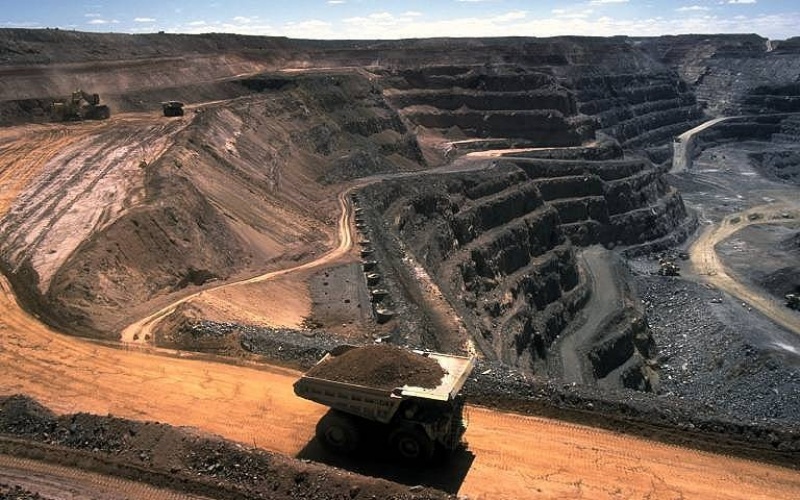
 Coal Remains King in India While Exports Optimize Domestic Stock

Coal India Limited, the biggest coal producer in the world’s second-biggest coal user, opened this year its online coal supply auctions directly to buyers in Bangladesh, Bhutan, and Nepal, as Indian coal supply has swelled amid weaker-than-expected demand in recent months. 

Amid an oversupply of coal and weaker demand, India and its top state coal producer are looking to optimize domestic supply and monetize exports to neighboring countries.
Until 2026, only middlemen could bid in Coal India’s online supply auctions. This has now changed with the new policy. 

“In a first, effective January 1, 2026, CIL has permitted coal consumers located in the neighbouring countries like Bangladesh, Bhutan and Nepal, who wish to import coal from India, to directly participate in the Single Window Mode Agnostic (SWMA) auctions conducted by the company,” Coal India said in a statement on Friday, as carried by The Economic Times.

“Opening SWMA e-auctions to foreign buyers reflects CIL's calibrated approach to market expansion while fully safeguarding domestic coal requirements. This step enhances transparency, competition and global market integration,” a senior company official told the publication

Opening the e-auctions directly to buyers sent Coal India’s shares rallying by 7% on the local stock exchange at close on Friday. 

Coal-fired power generation and capacity installations in India continue to rise and coal remains a key pillar of India’s electricity mix with about 60% share of total power output.

Despite booming renewable capacity additions, India continues to rely on coal to meet most of its power demand as authorities also look to avoid blackouts in cases of severe heat waves.

Coal will still be a key part of India’s power system for the next two decades, Rajnath Ram, adviser for energy NITI Aayog, said in September. 

“We cannot be subjective about coal. The question is how sustainably we can use it,” the official noted.  

By Tsvetana Paraskova for Oilprice.com


India’s coal supply glut forces top miner to explore exports

Stock Image

Coal India Ltd. has allowed consumers in neighboring countries like Nepal and Bangladesh to participate in its auctions, the miner’s first strategic push for exports as it looks to ease a deepening glut at home.

The decision came into effect Jan. 1, the state-owned firm said in an emailed statement. Its shares extended gains to as much as 7% in Mumbai following the news, the biggest intraday rise since June 2024.

Coal India has been sitting on bloated inventories of unsold fuel after a milder-than-expected summer subdued demand for electricity last year. It has also seen its sales squeezed by intensifying competition from rival miners as well as growing output from renewables.

Stockpiles at Coal India’s mines rose to a record last year, and have remained close to that level, weighing on the company’s performance. Inventories at power stations, the nation’s biggest coal users, rose 17% last year, enough to last an average 18 days, government data show.

The firm’s latest effort to offload supplies follows the government’s decision last month to allow companies to export half the coal they buy from miners through a new auction system.

Exports can help offset some of the losses that Coal India is making in the local market, according to Rupesh Sankhe, senior vice president for research at Elara Capital India Pvt.

“Based on calorific value, Coal India’s coal will be cheaper than supplies from other nations, such as Indonesia or Australia. That could be a draw for some overseas consumers,” Sankhe said.

High ash content can make Indian coal less competitive in international markets and Coal India’s shipments have faced scrutiny over quality.

“This can work only if Coal India offers the quality that can compete with other seaborne supplies available,” Sankhe said.

Coal India’s production during the nine months through December declined 2.6% from a year earlier, while shipments dropped 2.2%, according to the latest data released by the company.

(By Rajesh Kumar Singh)