Saturday, January 03, 2026

'Through attacks on Alawites and black propaganda, the SDF is wanted to be drawn into the war'

Reacting to the massacres against Alevis, Celal Fırat said, "The SDF is wanted to be drawn into the war through attacks on Alevis and black propaganda. Because when the SDF is drawn into the war, Alawites are presented as a 'security problem' and their demands for rights are suppressed."


ANF
ISTANBUL
Friday, January 2, 2026


After HTS came to power in Syria, massacre attacks against Alawites continue to increase. The attacks of HTS and affiliated jihadist gangs under the leadership of Ahmed Shara continue despite the reactions.

With the effect of Turkey's policy of turning a blind eye to the HTS administration, the gangs continue to openly massacre Alevis and occupy residential areas. By not complying with the March 10 Agreement signed with the SDF, the HTS administration insists that it will threaten other peoples living in Syria and wants to continue the war in the country.

DEM Party Istanbul Deputy Celal Fırat made evaluations to ANF regarding the massacres of HTS.

'TURKEY EXPLAINED WHAT HAPPENED AS POLITICAL MANIPULATION'

Stating that the government in Turkey has done nothing against HTS's attacks, Fırat said that Turkey's statements are considered insufficient for Alevi institutions and said:

"In early 2025, there were heavy violence targeting the Alawite population in the western coastal regions of Syria, particularly in Latakia and Tartus. Numerous reports of the massacre of hundreds of Alevi civilians, the systematic targeting of villages, and the abduction of women, children and the elderly have been made public. These events should now be indisputably considered as a massacre and a gross violation of human rights; As a matter of fact, evaluations are made in this direction in international circles.

In Turkey, the government wing contented itself with verbally condemning the attacks targeting the sect; on the other hand, he made statements emphasizing that what happened should not be turned into 'political manipulation' or 'domestic political material'. As Alevi institutions and the Alevi community, we openly state that this approach overshadows the real humanitarian tragedy on the ground, makes the bloodshed invisible and produces a language that relieves consciences but does not save lives.

As an Alevi citizen, I have openly condemned the massacres against Alevis in Syria without any hesitation. We have repeatedly stated that Turkey should use its diplomatic power and international influence more effectively to stop these massacres. We have also insistently emphasized that the exclusion of minorities in the region from political processes, leaving them unprotected and ignored feeds this environment of violence."

'REPORTS OF THE UN AND HUMAN RIGHTS ORGANIZATIONS ARE INSUFFICIENT'

Emphasizing that the UN and independent human rights commissions have published reports on human rights violations against Alevis, Fırat continued as follows:

"Today, the United Nations and independent human rights commissions are preparing reports that these attacks on civilian targets constitute human rights violations. Violations against Alevi communities in particular are included in these reports. However, unfortunately, the reports prepared are not enough to stop the Alawite blood flowing in Syria. Every recorded death, every attack that cannot be stopped shows that the international system has failed in the test of conscience.

We see these events not only as a security problem; We define it as an open sectarian hate attack, a social execution and even a genocide process. As we raise our voices, we associate these massacres with the historical traumas we have experienced in the past. Because these attacks are not new for Alevis; there is a chain of pain in our memory stretching from Maraş to Çorum, from Dersim to Sivas. What is happening in Syria today is a new link that shows that the Alevi identity is systematically targeted and wanted to be destroyed."

'IT IS INCOMPLETE TO SHOW WHAT IS HAPPENING AS A STATE OF CIVIL WAR OR GENERAL CHAOS'

Referring to the mistake of defining what is happening only as a civil war or a general state of chaos, Fırat continued his words as follows:

"Some countries and some circles say that this violence should not be explained only by sectarian hatred; points to factors such as internal political power vacuums, the growing influence of radical groups, and post-state chaos. Of course, these elements exist. However, at the end of all these analyses, the fact that what happened was presented as 'only the result of a civil war' or 'a general state of chaos' makes the dimension of the massacre against Alevis invisible. This approach hurts us deeply. Because the truth is obvious:

It is the Alevis who are targeted; it is Alevi civilians who are killed, it is Alevi life that is ignored.

Therefore, we will not be silent. For this reason, we will insist on naming these massacres correctly. Because every oppression that we do not name invites the next one."

'ALEVIS' REACTIONS IN TURKEY REMAIN SCATTERED AND INCOMPLETE'

Referring to the reactions of the Alevi community living in Turkey, Fırat said that there are reactions to the massacre in Syria; however, he stated that these were scattered reactions rather than a collective reaction and continued as follows:

"Actions and written statements are being made; reactions are rising on social media and some institutions are issuing press releases; individual Alevi intellectuals, grandfathers and academics speak. However, all these reactions remain fragmented, scattered and discontinuous.

In my opinion, the main reason for this is that the Alevi community has a very fragmented organizational structure in Turkey. Of course, there are many reasons for this fragmented structure; however, the most decisive one is that the state has systematically dismantled the Alevi organization through its own institutions and policies.

This is part of a conscious assimilation process. Therefore, it becomes difficult to produce common reflexes. A common crisis desk cannot be established, a common language cannot be developed, and a common calendar cannot be created. Everyone is talking; but it cannot be spoken at the same time, from the same place and with the same power.

On the other hand, Alevi institutions do not want the Alevi community to be targeted again. Many Alevi institutions act with the concern of "not being a target again"; This concern leads to the establishment of a language that is as measured as possible, but unfortunately ineffective.

We have institutions that are struggling, but the system intervenes effectively there, and the result of this is clear: There is bloodshed, but the rising voice remains low.

In none of the Alevi massacres in our country, the legal processes have not been made truly visible. Under this silence; The memory of a society that has lived through Maraş, Çorum, Sivas, Dersim and Koçgirî lies. This memory lives with a deep uneasiness and the feeling that 'it will be worse if we shout too much' is still strong.

In other words, while we continue to live in uneasiness even in the geography we live in, Alevis can often object to this injustice only with the language of belief and to a limited extent with the language of right, since the state does not use a language that explicitly names the massacres."

'ATTACKS ON ALEVIS CAN ALSO BE READ AS A MEANS OF DRAWING THE SDF INTO THE WAR'

Pointing out that the attacks on Alawites and the reactions to the Alawite community's demand for federation may also be a plan to draw the SDF into the war, Fırat said, "The attacks and systematic targeting of the Alawites' demand for federation or autonomy can be clearly seen today as one of the tools used to draw the Syrian Democratic Forces back into the war.

However, it is not possible to explain this picture with a single title. What is happening is part of a much broader, multi-layered and dangerous geopolitical scenario.

First of all, it should be clearly underlined that:

The demands expressed by the Alawite community in the context of Syria; It is not a separate state request. It is not an armed project or a sectarian quest for power.

The demand of Alevis is very clear: Safety of life, the right to local government, political representation and protection of their collective existence. These demands are; It is expressed with concepts such as federation, autonomy or decentralization, because the suffering experienced has left no other guarantee."

'ALAWITES' DEMANDS ARE CONTRARY TO HTS'S UNDERSTANDING OF GOVERNANCE'

Referring to the reasons for a persistent massacre attack against these demands of the Alawites, Fırat stated that the demands of the Alawites are contrary to the form of government that HTS wants today, and continued his words as follows:

"So why are such legitimate, humane demands targeted so harshly? Because these demands; It contradicts the dream of rebuilding Syria from a single center with a single identity. It limits the dominance of armed groups in the area without rules. It disrupts the ground for radical and sectarian elements to mobilize society.

For this very reason, Alevis' demands for rights are deliberately criminalized with labels such as 'separatism', 'provocation' or 'foreign plan'."

'KURDS ARE WANTED TO BE DRAWN INTO THE WAR WITH ATTACKS ON ALEVIS' DEMAND FOR FEDERATION'

Stating that the SDF's stance is of vital importance, Celal Fırat emphasized that the SDF is also wanted to be drawn into the war with the black propaganda carried out over the Alawites' demand for a federation and continued as follows:

"At this point, the position of the SDF is of vital importance.

Today, the SDF is in a fragile ceasefire balance and is stuck between the US, Russia, Turkey and Damascus. The SDF stands in an equation that will trigger a multi-actor conflict if forced to a new front.

With the attacks on Alevis, the discourse of 'federation' is circulated with the following propaganda language: 'Look, a new division is coming. Look, a new line of autonomy is being established. In that case, armed intervention is legitimate.'

This language does not only target Alevis; it also creates a ground that forces the SDF to take sides unintentionally and legitimizes the war again. It should be made clear that Alawites have not had an organic connection with the SDF until now. But now it is clear that they are paying a heavy price for not creating this. However, with a conscious strategy, these two headings are superimposed. The aim is clear: to create a perception of threat and legitimize armed interventions by matching the Alevi demand with the Kurdish military presence."

'THE ATTACKS ARE THE WORK OF THOSE WHO DO NOT WANT A PLURALISTIC GOVERNMENT IN SYRIA'

Pointing out that the massacre attacks and tensions are beneficial to those who do not want a multi-identity and pluralistic future to be established in Syria, Celal Fırat concluded his words as follows:

"Who benefits from this tension? It benefits radical armed groups, those who advocate a centralist regime approach, and regional actors who do not want Syria to establish a multi-identity, pluralistic future. Because when the SDF is drawn into the war, stability is disrupted; Alevis are presented as a 'security problem' and their demands are suppressed.

The most dangerous point is this: Alevis' right to life, safety of life and demand for equal citizenship are deliberately portrayed as a military threat. This approach is not only for Alevis; It is growing a dark policy targeting Kurds, Druze, Christians and all minorities in Syria.

We object to this; because Alevis do not want war. Alevis do not want power. Alevis only want to live, exist and have a say in their own destiny. And this demand is neither a crime nor a threat; on the contrary, it is the only real ground for peace and coexistence."
Prof. Bezwan: The model proposed by Turkey in Syria is a new civil war plan

Prof. Naif Bezwan stated that the 'individual integration' and 'ultra-centralist' model imposed by Turkey will not lead Syria to peace, but to a deeper fragmentation, and said, "The solution is in the federal administration model shaped by the will of the peoples."


ANF
NEWS CENTER
Saturday, January 3, 2026

Recent military and political developments in the Syrian field; The Aleppo-based clashes point to a new era with the postponement of the SDF-Damascus integration talks, the "individual integration" statements from Turkey and Damascus, and the demands of the Alawites for federal, decentralized administration after the Kurds and Druze.

Prof. Dr. Naif Bezwan, a faculty member at the Faculty of Law at the University of Vienna, evaluated the fractures in the Syrian field, the attitude of regional actors and possible scenarios to ANF.

'TURKEY'S ROLE IN SYRIA IS A DICTATORSHIP MODEL'

Criticizing Turkey's threats against Rojava and the political structure it has built for Syria, Bezwan stated that this approach focuses on conflict rather than solution and said:

"The singular and monistic model that Turkey has assigned to Syria is an extremely centralized and dictatorial policy, that is, it is a policy that disregards the rights and freedoms, future, recognition and constitutional guarantee of fundamental rights and freedoms of the basic components of Syria. Therefore, those who reject a concretely fair, inclusive and negotiated political solution; Therefore, there is an approach indexed to war, conflict and tension. Because the 'ideal order' they have designed for Syria is not a project that can be achieved or implemented without conflict, tension, pressure and the danger of civil war. There is a political and security project that prioritizes war and conflict, thus excluding negotiation and peace, and aims to create a sphere of influence."

'ALEPPO AND TISHRIN ARE DEFENSE BARRIERS'

Emphasizing that the conflict situation in Aleppo is more than a local conflict, but a regional struggle for existence, Bezwan drew attention to the importance of the defense line and said:

"Even if what happened in Aleppo and Tishrin saw a decrease in these conflicts from time to time, a de facto de-escalation situation was created or an agreement was reached, the siege and attacks of the Shara regime and Turkish-backed paramilitary forces continued.

Perhaps it should be said that the defense of Aleppo is the defense of the whole of Rojava.

Although the defense of Tishrin and Aleppo seems to be 'line defense', it is not only the defense of a certain region; It is the defense of Rojava and the whole of Kurdistan. In this sense, line defense and surface defense mean the same thing. Because this is a defense line and from the moment that line is broken, the whole of Kurdistan will come to a point where it will be threatened. The whole of Kurdistan will be deeply and negatively affected by this. Rojhilat is also affected by this; Both Bashur and Bakur. This is why the oppression and siege continued. The vital issue of preventing this is once again revealed for all Kurdistan and other peoples of Syria."

Bezwan said that the imposition of a central solution is pregnant with new conflicts and evaluated the concept of "integration" as follows:

"The solution they call the 'central solution' is nothing but the construction of a new dictatorship regime that will be dependent on Turkey. 'Integration' is defined as so-called individual integration; This is exactly why it is imposed. This is a regime fiction that denies the rights and freedoms of Syria's historical and sociological components and the Kurds' attainment of constitutional status. Therefore, when such a regime construction they have in mind is successful, it will pave the way for a development that will lead to new conflicts and a new civil war, let alone produce any solution. If this succeeds, it will mean that a new civil war will be staged again in Syria."

'THERE IS AN APPROACH THAT DENIES POLITICAL NEGOTIATION'

Bezwan noted that Turkey's recent moves through the Damascus administration and HTS are a "search for legitimacy" aimed at spreading the war, referring to the words of Turkish officials against the SDF, "We will support the Damascus government if it takes the initiative to attack":

"It is said here that instead of Turkey's direct involvement, a proxy power should be used. The approach is this: There is an approach that will encourage the proxy in Damascus and provoke it and produce excuses and excuses to get involved in the war and conflict. This is a policy that drags the Damascus regime into conflict, imposes a new civil war and denies negotiations and a political solution. Turkey encourages and provokes Damascus' attacks in order to produce an excuse and legitimacy for direct military intervention.

However, in the latest statement made by the Ministry of National Defense, it is noteworthy that while it is emphasized that it is ready for all kinds of cooperation if the Syrian government takes concrete steps in line with the principle of 'one state, one army', it is probably deliberately left unclear what kind of steps these steps will be. On the one hand, provoking and encouraging conflict comes to the fore, on the other hand, the negative political consequences and responsibility arising from this are left to the Damascus regime."

'COMPONENTS IN SYRIA, INCLUDING ALEVIS, WANT A FEDERAL SOLUTION'

Bezwan stated that the historical and social reality in Syria requires a federal structure and peace, pointing out that this demand strengthens the legitimacy of the SDF and continued as follows:

"A monist, ethnic and sectarian supremacist regime; In a multi-faith, multi-religious, multi-cultural and multi-national country like Syria, it is appropriate to emphasize that it will not yield any results other than programming a new civil war and dictatorial regime. Different components of Syrian society are becoming aware of this fact day by day. They experience this by paying a great and heavy price. That's why they give great support to the federal solution and unity project. In other words, the Kurds are not alone in these demands. In fact, some social segments and faith groups – now including Alevis – are expressing their demands more openly in a way that takes precedence over the demands of the Kurds. This is an important development.

At the same time, it is a big mistake to reduce all Sunni Arabs in Syria to HTS. The biggest and most concrete proof of this is the experience and reality of SGD itself. We know that more than half of the SDF are Arabs of the Sunni faith. There is a very important will for a decentralized and federal peace in the Syrian geography; It is becoming more and more evident every day that there is no other way to keep Syria together."

'TURKEY IS A PARTY TO THE MARCH 10 AGREEMENT ON BEHALF OF HTS'

Describing Turkey's approach to the March 10 Agreement as a "colonialist policy", Bezwan made the following assessment:

"The March 10 Agreement is a founding partnership agreement signed between the two founding elements. Turkey is not a party to this agreement. The agreement in question expresses a framework signed by the two founding leaders equally. The basis of the agreement is based on a political solution and an 'integration' based on constitutional rights. Declaring non-compliance with an agreement to which Turkey is not even a party, by putting forward the concept of integration based on completely arbitrary interpretations, will not yield any results other than disintegration.

This is an exceptional situation that is rare in diplomatic and political history and should be considered on its own. I invite everyone to think together. You will subject a single concept of an agreement to which you are not even a party, and you will subject the miracle to a self-proclaimed interpretation by taking it completely out of context, and if it is not complied with, you will declare it 'casus belli' to the detriment of one of the parties to the agreement! This is truly a situation that is very rare even in the history of colonialism."

POSSIBILITY OF RUSSIA RETURNING TO THE FIELD

Naif Bezwan, while evaluating the possibility of Russia actively returning to the field in Syria through the distinction of "strategic" and "tactical", stated that this move has a historical background and used the following statements:

"We need to focus well on the issue of Russia coming back to the scene. Russia's approach to Damascus is quite strategic. Since the Tsarist period, including the Soviet Union process, Russia has had a strategy of landing in the Mediterranean, that is, in warm seas, and positioning itself there permanently. For the first time in Syria, in the last 150-200 years, it had the chance to gain a base at such a critical point in the Eastern Mediterranean and to gain strategic depth together with the Assad regime. Therefore, Russia looks at the issue with a long-term perspective."

Stating that other powers on the ground want to involve Russia in the process for tactical reasons rather than a focus on a solution, Bezwan emphasized:

"Powers such as the Damascus regime, Turkey and Israel, which want Russia to enter the field, approach the situation more tactically. These actors see Russia as a backup plan or a counterbalance rather than a negotiated political solution. For example, Damascus sees Russia as a 'lifeline' in case America withdraws its support. The expectations of Israel and Turkey differ according to their own agendas. Russia's presence on the ground stems from the need for the parties to activate plans B or C rather than a real and lasting solution.

I do not think that Russia's landing on the field will yield a positive result in favor of the Kurds in the long and medium term. Immediately after the fall of the Assad regime, Russia has been showing an attitude that gets along well with the current regime in Damascus and prefers it. Because for now, it can only legitimize its presence there through this regime. Nevertheless, Russia can play several games together; In order to strengthen its position, it can activate secret options against Damascus' interim regime and has the potential to produce counter-forces. However, in the end, I do not think that Russia's involvement in the field is good news for a permanent and democratic political solution in Syria."

Evaluating Israel's perspective on the Damascus government through Prime Minister Netanyahu's words, "Half of the current Syrian army is radical groups," Bezwan said, "This is a striking statement. If half of the army is radical, every strategic move you make can result in 50 percent wrong results. In other words, it points to the almost mathematical impossibility of strategic and political investment in the regime."

"Finally, it would be appropriate to emphasize this for the SDF," Naif Bezwan said, pointing out that the SDF is a decisive actor in the Syrian field and made the following assessment:

"The most critical point in this regard in the coming period is that the SDF has no bargaining margin either territorially or politically. The SDF entered the negotiation process with a very reasonable and minimal proposal (a decentralized model) for the Kurds; This narrows its bargaining power, because it is not possible for it to go behind it.

The same is true for Aleppo and Tishreen. In other words, there is no chance of retreating behind this line, neither territorially nor politically. Therefore, strengthening cooperation between Kurdish forces and other Syrian components will be the main task and challenge of 2026."
Transitional justice

Transitional law, or transitional justice, is known as one of the indispensable thresholds of peace processes. This is confronting the violations of rights, fighting to prevent them from happening again and planning the new period jointly.


ANF
NEWS CENTER
Sunday, December 21, 2025

One of the steps that Leader Apo considers most important for the new period is the transitional law laws, because it is a requirement of democratic integration. Leader Apo bases the law of democratic integration on three basic principles.

Although transitional law laws were heard for the first time in Turkey, they were actually heard in the 2nd Amendment. It emerged after World War II. The Nuremberg trials, in which the responsible and commanders of the Nazi Germany period were tried, took their place in history as the first application of transitional law law.

Transitional law laws and democratic integration complement each other. According to the definition of the UN; Transitional justice is all judicial and non-judicial measures to compensate for what happened in the past in a country where human rights violations are intense. Among the measures described here are truth commissions, reforms of security laws in particular, and reparations programs.

In fact, in his message shared on December 3, Leader Apo very clearly defined it as the 'law of transition to the century of peace' and said what he meant by the definition of transitional law. The important thing here is that every step, which should not be considered separately from each other, is reflected to the public as if they are different things.

After the 2nd World War, the process called transitional law, which was initiated to confront crimes against humanity and to have the right sanctions for human rights violations, was tried in many places, and what could happen in practical terms was more or less revealed. The courts, which were symbolized by the crimes of Nazi Germany after the war, and the steps taken against human rights violations were also the first practical steps of this period. Transitional justice refers to a process that is too complicated to be explained only by judicial sanctions and practices. The slightest mistake or incomplete step in this process is important that can lead to the complete destruction of the process.

There are some main topics defined for the transition period. These topics have emerged from the experiences of the transition period so far. We can list them as follows;

* Stop human rights violations

* Investigating past crimes

* Finding those responsible for human rights violations

* Imposing sanctions on those responsible

* Paying compensation to the victim

* Preventing breaches from happening in the future

* Permanent reforms in the security sector

* Peacekeeping and legitimizing

* Ensuring equal citizenship

* Accepting what happened in the past

* To ensure the transition to a better society

These do not mean the defeat or strength of one side; It is also incomplete and wrong to evaluate only through 'criminal law'.

TRANSITIONAL LAW IS NOT 'AMNESTY'

Another mistake that is frequently made in the Turkish public is the discussion of transitional laws under the title of 'amnesty'. However, it is not 'amnesty', it is the confrontation and reckoning with what has happened so far and putting the aftermath on the right ground. Reducing it to only 'amnesty' discussions actually casts a shadow on the seriousness and magnitude of the process being carried out.

In an interview on Nov. 28, KCK Executive Council Co-Chair Besê Hozat said, "PKK cadres do not want amnesty. We did not commit a crime, we fought for the existence and freedom of a people under genocide. These people are honorable people. Their eyes are not simply turning to their families. The 'category by crime' approach discussed is not understanding the process. Our demand is laws of freedom for all. If freedom laws are enacted and the way for democratic politics is opened, everyone from the top of this Movement to the newest fighter will leave. It carries out democratic construction work all over Turkey and Kurdistan. Our understanding of politics is not to be stuck in Ankara, but to build society on a moral and political basis."

REGULATION IN WARTIME LAWS

Transitional law is not a halalization. What is desired is to give an account of what has happened and to confront the suffering, which is the biggest obstacle to the commonality of the peoples. An important pillar of transitional justice is the amendment and abolition of the wartime laws of the state and their reorganization according to the peace process. This is one of the most important steps that the state will take towards peace, it is a guarantee that it will not return to the same period. Otherwise, it does not want to give up on other things as an excuse and sees the peace process as preparation for war.

THEY CAN USE IT TO BE ACQUITTED

If there is no organized struggle on the right political ground, states can use this process to whitewash their own crimes. They could not use it because the popular organization was strong in Argentina. All Nazi officers and commanders tried at Nuremberg pleaded not guilty to any of the charges, stating that they were following orders. A judge reacted by saying, "I didn't see any guilty Nazis here."

The AKP government once opened JİTEM cases in a way that could be handled within the scope of transitional law justice, but used the courts as a tool to acquit the state and ensured that all cases were concluded in favor of the state. No state official who was tried for disappearances in custody, village burnings, acid wells, extrajudicial executions was punished.

THE IMPORTANCE OF TRUTH COMMISSIONS

This is where the Truth Commissions are an important guarantor for transitional justice. These commissions were established in countries where human rights violations were intense; It was decisive in following the investigations into the state's past crimes and the cases related to them. The Truth Commissions were first established in 1983 under the name of the National Commission on the Disappeared (CONADEP) as a result of the struggle of the relatives of those who disappeared in custody in Argentina, where a large-scale dirty war was taking place. Since then, more than 40 Truth Commissions have been established in different parts of the world with different names.

* The Truth Commissions established in Argentina have made great and significant efforts to collect the violations of rights, to announce them to the public and to file lawsuits. It revealed that 8,960 people disappeared and there were 365 illegal detention centers. Some of the lawsuits they filed are ongoing.

* 20 years after the report of the Reconciliation Commission in Peru, former President Alberto Fujimori was sentenced to 25 years in prison for disappearances, torture and executions in the 90s.

* The Guatamala Historical Lighting Commission established in Guatemala determined that 200 thousand people lost their lives in the conflicts between 1960 and 1996 and that the state was guilty in 93 percent of them.

* In South Africa, some criminals were openly made public, thus preventing them from hiding. The commission responded positively to only 849 of the 7,112 people who applied for pardon after the pardon was granted.

TRANSITIONAL JUSTICE AND INTEGRATION

Leader Apo cites democratic integration as one of the most important pillars of the new era. Democratic integration does not only mean the participation of members of the Kurdish Freedom Movement in 'social life' as the government discourses. The democratic integration process is also the process of abandoning the genocidal policies implemented by the state and moving away from racist approaches. The first step necessary for democratic integration is to plan and carry out transitional justice on the right ground.

Regarding democratic integration and transitional justice, Leader Apo said, "Advancing the process we are in requires taking history and sociology more seriously. It is important to determine that the Turkish-Kurdish relationship has come to this day as two thousand-year-old pillars. Unity needs to be strengthened by seeing, understanding and repairing these pillars. We should act not by drawing lines, but by creating a horizon that will include our current problems. We are making a serious effort for a historical issue under limited conditions. We are trying to develop a positive stage, not a destructive and negative one."

THREE BASIC PRINCIPLES EMPHASIZED BY LEADER APO

In his message to the International Conference on Peace and Democratic Society, Leader Apo emphasized that one of the arguments he put forward as the main struggle strategy is democratic integration and its concept of law, and said: "The law of democratic integration, in which the law is restructured in favor of society with individual and universal norms and collective peoples, should also be based on three basic principles;

* Free Citizen Law

* Peace and Democratic Society Act

* Freedom Laws

The law of democratic integration will both transform the state into a norm state and mean that the society will achieve its freedom by institutionalizing the existence it has gained."

Therefore, as long as democratic integration is not implemented in accordance with the principles determined by Leader Apo, transitional justice will not be implemented.
Can Scotland be a model for the Kurdish issue?

Although the Turkish government intervenes even in the existing local governments with trustees, is it conceivable that the Scottish model for the solution of the Kurdish issue is conceivable?


MUHAMMED KAYA
BREMEN
ANF
Monday, December 22, 2025

The Scotland national football team defeated Denmark 4-2 in the 6th and final match of Group C of the 2026 FIFA World Cup Qualifiers on November 19 and finished as the leader of their group. Scotland finished the group as the leader with 13 points as a result of 4 wins, 1 draw and 1 loss, 2 points ahead of Denmark and received a World Cup ticket for the first time since 1998. Turkey has already made its mark in the 2026 FIFA World Cup, which it has not yet received a ticket for.

Is Scotland an independent state that participates in the FIFA World Cup? No, Scotland is not an independent state. It is one of the four countries that make up the United Kingdom, such as England, Wales and Northern Ireland. After this introduction, let's go back to recent history, 2014, by straining our memory.

When the calendars showed September 18, 2014, the Scottish community went to the polls for the independence referendum. Based on the Edinburgh Agreement signed between the United Kingdom and Scotland on October 15, 2012, Scotland held an independence referendum. 85 percent of the total number of voters voted in the referendum. 55 percent of those who voted wanted the continuation of the given legal relationship with the United Kingdom, while 45 percent said they wanted independence. Although the demand for an independent state has continued in the intervening period, Scotland is still within the United Kingdom despite the United Kingdom's exit from the European Union. Now let's take a closer look at the history of this relationship.

ATTACHMENT TO THE UNITED KINGDOM

The history of the confrontation between the Scots and the English dates back to the 13th century. From the 12th century onwards, the British, who developed their military, economic and population superiority, started to advance first to the west and then to the north of the island. The first target was Wales. In the 13th century, Wales was occupied by British rule. The English, who headed north after Wales, had Scotland as their target. After long wars, the King of Scots 3. In the power struggle after Alexander's death, King of England 1. Edward's request for refereeing was an important breaking point for Scotland. 1. Edward appointed John de Bolliol, whom he considered close to him, as king. Over time, secretly or openly, the Scottish nobility collaborated with the English. Scotland, in which the English were constantly involved as arbiters in the struggles for lineage, inheritance and power, signed an ordinance called the Union of Crowns with England on April 5, 1603 and was legally attached to the United Kingdom. Wars, occupations and power struggles that started after 30 years, a union treaty (The Act of Union) was signed in 1702. In 1707, Scotland and England became one kingdom, one parliament. The powers of both countries are now combined within the parliament in London (Westminster). Under the agreement, Scottish law and courts were preserved, and a meager representation of 45 people's representatives and 16 lords was given in the UK Parliament. Separate laws attached to the treaty provided protection against change for the Presbyterian Church of Scotland and the Episcopal Church of England. This system has been preserved with some changes. In the late 20th century, certain powers delegated to governments in the United Kingdom, Scotland, Wales, and Northern Ireland went through a process of devolution called 'devolution'. These regions were allowed to manage certain aspects of their internal affairs, such as education, health and transportation; areas such as defense and foreign affairs were determined to remain under the control of the UK government.

CONSTITUTIONAL TRANSFORMATION

The United Kingdom, formed by England, Scotland, Wales and Northern Ireland, is governed by a system called an unwritten constitution, which does not have a written constitution. In the constitutional system, which consists of laws, customs and jurisprudence, the status of each country is determined by a constitutional law. The relationship between the United Kingdom and Scotland is an administrative-constitutional structure based on 'devolution' within a unitary but multinational state. In the United Kingdom, which is a unitary state rather than a federal state, the asymmetric 'devolution' model is applied. The authorities and institutions of each country are different. The status of Scotland is regulated by the constitutional 'Scotland Act'. In the 1997 referendum, 74 percent of Scots supported the Scottish Parliament. In 1998, the Scotland Act was passed. There are 129 members in the Scottish Parliament; 73 of them are constituency members and 56 are regional members under the additional member system. The largest party or parties form the Executive Board.

DELEGATED POWERS

Although there were some changes to the Scotland Act in 2004 and 2016, broad powers were transferred to Scotland. Education, health care, the justice system and police, local government, agriculture, fisheries, environment, transport and some aspects of domestic economic policy were transferred to the Scottish Parliament. Criminal and civil law were also among the delegated powers. Scotland has a completely separate legal system from England. Even in the agreement in 1702, the legal system was not interfered with. Scotland is the only country within the UK with a separate legal system. In matters such as constitutional law, foreign policy, etc., the UK Supreme Court is the supreme authority. In addition, tax powers were further increased with the regulation in 2016; a significant part of income tax became determinable by Scotland.

TRADITION OF OBTAINING APPROVAL

The UK government's areas of responsibility are "segregated", while the Scottish government's areas of responsibility are "transferred". According to this; The Scottish Parliament cannot make laws outside of its delegated responsibilities. In contrast, there is a tradition that the UK government will seek the approval of the Scottish Parliament when passing legislation that may affect ceded areas.

The relationship between Scotland and the United Kingdom is a model of 'devolution' based on broad constitutionally recognised autonomy within a unitary state, but with Westminster retaining ultimate sovereignty. Scotland has strong administrative and legal autonomy, but constitutional sovereignty rests with the United Kingdom.

HOW CLOSE IS TURKEY?

Can the Republic of Turkey, which sees even the demand for decentralization in North and East Syria as a 'security threat', see the legal and political connection between Scotland and the United Kingdom as a model for the solution of the Kurdish issue?
Syria in 2025 under HTS rule: Violence, attacks and massacres against women increased

Since HTS came to power in Syria on December 8, 2024, 650 women, including 29 children; lost their lives for different reasons such as remnants of war, armed attacks, sectarian attacks, domestic and social violence.


ANF
NEWS CENTER
Thursday, January 1, 2026

After the collapse of the Baath regime, with the support of global powers, a jihadist and misogynistic mentality came to power in Syria this time. This development, which took place in the last month of 2024, once again showed that it is only the names that have changed for women who have been oppressed, persecuted and massacred in Syria for many years.

Women have made very important gains during the revolution in North and East Syria. Despite the heavy wreckage of the Baath regime, women in this region rose from the ashes and took their place at the very center of the revolution.

As we entered 2025, women in Syria aimed to spread the struggle throughout the country as usual, to increase women's gains and to place women at the center of life.

However, this jihadist structure brought to power in Syria has stood as one of the most serious obstacles to these goals. HTS, which has left behind a year in power, has never mentioned women's rights; did not include women in the interim administration. Instead of reducing the massacres of women in Syria, it continued to encourage violence against women. The revelation that Shadi al-Veysi, who was appointed to the Ministry of Justice in the interim administration, was a murderer of women aggravated this picture.

The Turkish state, which is trying to turn the security vacuum caused by the change of power in Syria into an opportunity, increased its attacks on Syria, especially North and East Syria, at the beginning of 2025. Women were the first to be targeted in these attacks.

JANUARY

The first two months of 2025 were marked by the resistance of the Tishreen Dam and the Qereqozaq Bridge. Women led the resistance watches at the Tishrin Dam. The Turkish state carried out attacks targeting the convoy that went to the vigil in order to break the resistance.

On January 8, Kerem Ehmed Shehabî El Hemed, one of the leaders of the Zenubiya Women's Community, was killed in the bombardment of the convoy going to the Tishrin Dam.

On January 11, in an attack on the Koçerat region of Dêrik, Şehnaz Omer, one of the executives of Kongra Star, was murdered.

On January 19, the PYD General Assembly announced that Menice Haco Heyder, a member of the party's General Assembly and Co-Head of the Qamishlo Office, was martyred in the attack carried out by the occupying Turkish state at the Tishrin Dam.

On January 22, the Assembly of Martyrs' Families of North and East Syria announced the martyrdom of Ronîz Mihemed Elî, a young woman who was seriously injured in the attack of the occupying Turkish state on the people at the Tishrin Dam on January 15.

On January 24, the YPJ General Command announced that Commander Arjîn Kobanê was martyred during the resistance against the occupation attack on the Tişrîn Dam.

Women reacted harshly to the participation of the gang leader named 'Abu Hatim Shakra', the murderer of Martyr Hevrîn Xelef, Secretary of the Future of Syria Party, at the ceremony where Jolani declared himself the President of Syria.

FEBRUARY

On February 6, the second day of the Rojava People's Tribunal, where the crimes of the Turkish state were tried, continued with the presentation of evidence on the crimes of torture, massacre and rape against women.

On February 12, thousands of women marched in Qamishlo with the slogan "Jin Jiyan Azadi Philosophy Wins Against Conspiracies" to condemn the international conspiracy and demand the freedom of Leader Apo.

MARCH

As of March, March 8 International Working Women's Day activities have intensified. Women's movements in North and East Syria have started their first preparations for 2025 by setting the program for March 8 Women's Day. In this context, the Joint Action Platform of Women's Organizations and Movements in North and East Syria announced its action program with the slogan "We are Building a Democratic Syria with the Philosophy of Jin, Jiyan, Azadi".

On March 8, final rallies were held in the cantons of Cizîr, Fırat, Reqa, Tebqa and Dêrazor on March 8.

1. The Kurdish Women's Conference ended on March 23 with a final declaration consisting of 12 articles. The declaration called for "the urgent realization of the Kurdistan National Congress, which is the hope and desire of the whole society and Kurdish women."

Women also left their mark on the March 21 Newroz celebrations. The intense participation of women in Newroz celebrations held in many centers drew attention. In the first Newroz held after Leader Apo's February 27 call, women showed that they embraced the process and would fight for it to be successful.

On March 24, the Platform for Joint Action of Women's Movements and Organizations announced the launch of a campaign to support women in the coastal areas of Syria with the slogan "Supporting Syrian women is the basis for stopping the massacres of women in coastal areas".

APRIL

April 4, the birthday of Leader Apo and the anniversary of the founding of the YPJ, was celebrated with enthusiasm under the leadership of women in North and East Syria.

On April 14, representatives of 24 women's organizations and political parties in Kurdistan came together to form the Kurdish Women's Union Platform.

MAY

Thousands of women who came together in Hesekê under the leadership of Kongra Star on May 3 demanded freedom for Leader Apo and gave the message "Freedom and stability cannot be achieved without Leader Apo being free."

On May 8, the appointment of Hatim Abu Shaqra, known as the murderer of Hevrîn Xelef, to a military post by the Damascus regime was protested with simultaneous statements held in many cities of North and East Syria.

JULY

Crimes against women were committed in the attacks launched by the Syrian Transitional Government forces on Suwayda on July 13. On July 30, the Joint Action Platform of Women's Organizations and Movements in North and East Syria organized a campaign in support of women in Suwayda with the slogan "Together to protect women in Suwayda from genocide".

The anniversary of the July 19 Rojava-Women's Revolution was celebrated by many circles, especially women's organizations.

Sara Organization for Combating Violence Against Women launched the "Sexual Abuse is a Crime, No to Cover-Up" campaign at the end of July. The campaign continued until the beginning of October.

AUGUST

On August 3, on the 11th anniversary of the Sinjar Genocide, women's organizations in North and East Syria called on the international community to intervene urgently, drawing attention to the increasing attacks on women in Suwayda.

SEPTEMBER

On September 18, the Women's Delegation for North and East Syria met with the Speaker of the French Parliament, Yaël Braun-Pivet, deputies from the left bloc and representatives of the Green Party.

On September 20, the conference titled "Women's Unity is the Foundation of the Establishment of a Decentralized and United Syria" organized by Kongra Star and Zenûbiya Women's Community in Hesekê ended. Approximately 700 women, including politicians, lawyers, intellectuals and activists from different cities of Syria, attended the conference.

On September 22, the Women's Delegation for North and East Syria met with representatives of Women For Women International in Berlin, the capital of Germany.

Continuing its contacts in Europe, the North and East Syria women's delegation met with many German, Iranian and Kurdish academics and women's rights organizations in Germany.

After completing their meetings in Germany, the Rojava Women's Delegation met with parliamentarians, non-governmental organizations and the public in Switzerland.

The Rojava women's delegation, which went to Switzerland after Germany, met with Assyrian women. The Rojava women's delegation, which met with women's organizations in Zürich, called for international solidarity for a democratic solution in Syria. The women's delegation discussed the developments in Rojava and Syria and the situation of women at the panel held in St. Gallen, Switzerland. The delegation's diplomatic activities ended with a meeting event held in Aarou, Switzerland.

OCTOBER

On October 2, Heyva Sor a Kurd, in cooperation with the Cizre Canton Health Committee and the Syrian Free Women's Foundation, launched a campaign with the slogan "Early Diagnosis, New Life".

On October 8, the PYD Women's Assembly launched a campaign to fight against violence against women.

Thousands of women from Cizîrê Canton organized a march in the city of Tirbespiyê with the slogan "Leader Apo's physical freedom is the key to solution and peace". The march was held to condemn the October 9 International Conspiracy against Leader Apo.

On October 12, Kongra Star and the Zenubiya Women's Community launched a campaign demanding the establishment of a free and democratic Syria with the slogan "We will build a free, democratic, decentralized Syria with the solidarity of women." The campaign ended on November 12.

On October 25, the Women's Assembly of Martyrs' Families held its 3rd conference with the slogan "Let's make democracy and peace permanent and ensure the physical freedom of Leader Apo with the spirit of the martyrs of freedom".

Hêvî Silêman, a member of Kongra Star Afrîn-Shehba Coordination, who served for the Kurdish people and women for many years and played a role in the resistance, died on October 28 due to an illness.

NOVEMBER

On November 5, the YPJ and PYD Women's Assembly held a joint workshop titled "Syrian women's unity for freedom, justice and equality under the umbrella of Women's Protection Units" in Kobane.

On November 8, the 4th Annual General Assembly of the Women Journalists Union (YRJ) was held in Qamishlo. Conference was held.

On November 15, the Joint Action Platform of Women's Organizations and Movements in North and East Syria organized an event with the slogan "Together we build a democratic and social society to end violence".

On November 16, the Cizre Canton Women's Committee launched a campaign to support children on the occasion of World Children's Day (November 20).

The Joint Event Platform of Women's Movements and Organizations in North and East Syria started the November 25 events. The platform announced that this year's events will be held with the slogan 'Let's End Violence by Building a Democratic and Communal Life Together'.

In the final rallies held in four centers of North and East Syria and in the city of Aleppo on November 25, the messages "Let's increase the struggle against the dominant mentality and ensure equality" were given.

HUNDREDS OF WOMEN WERE MURDERED UNDER HTS RULE

Since HTS led by Jolani came to power in Syria on December 8, 2024, 650 women, including 29 children; lost their lives for different reasons such as remnants of war, armed attacks, sectarian attacks, domestic and social violence. It was reported that the highest number of cases were recorded in Aleppo, Damascus, Homs, Hama, Damascus countryside, Daraa, Tartus, Quneitra, Latakia, Suwayda and Damascus-controlled Deirazor.

Aleppo: 31 women, including 2 children

Damascus: 14 women, including 1 child

Homs: 34 women, including 8 children

Hama: 36 women, including 3 children

Daraa: 23 women, including 5 children

Latakia: 16 women

Derazor: 28 women, including 2 children

Suwayda: 34 women, including 2 children

Damascus countryside: 29 women, including 1 child

The Syrian Observatory for Human Rights (SOHR) documented the murder of 127 women by armed groups affiliated with the Syrian Transitional Government. The Syrian Network for Human Rights (SNHR) reported that more than 100 women were killed in coastal massacres alone, while 130 women were killed in Suwayda.
Ordo ab Chao: Order born of chaos in Rojava

The greatest achievement of the mind that governs Rojava and Northern Syria has been not only to resist but also to make life possible in the midst of chaos. What is decisive next is the extent to which this surviving capacity will be defended.


HUSEYIN SALIH DURMUS
ANF
NEWS CENTER
Saturday, January 3, 202

The Syrian civil war has created one of the deepest political and social disintegrations in the modern Middle East. In this geography, where the state apparatus was withdrawn, the law was suspended, and armed groups and foreign interventions determined the field, the prevailing emotion for a long time was only chaos. However, this chaos is not an abstract concept; It expresses a destruction that has a historical scale.

The Syrian crisis, which has been defined as one of the biggest humanitarian disasters of our time since the Second World War, has killed hundreds of thousands of civilians according to United Nations data; It points to a picture where the real loss of life is much higher due to unregistered deaths. Nearly 14 million people are displaced; 6.8 million of them are refugees and 6.7 million live uprooted from their homes in their own country.

More than sixteen million people are in urgent need of humanitarian aid, millions of children are direct victims of war and destruction. These data reveal that what is happening in Syria is not only a civil war, but also one of the deepest social and humanitarian collapses of the modern era.

For this very reason, every attempt at political order that emerges in the midst of destruction of this scale should be considered not only as a choice of governance, but as an existential response to chaos. History is not always written only in the language of destruction. At some moments, order emerges unexpectedly from this very dissolution. Recent world history is more than full of such examples.

The Latin phrase Ordo ab Chao, meaning "order born of chaos", is not a randomly chosen metaphor to describe the experience of Rojava and Northern Syria. The structure that emerged from 2012 onwards is not a premeditated state project; It is the result of the society's effort to protect its own existence and produce continuity in the absence of the state.

This experience, which developed under conditions of security vacuum, sectarian violence and forced migration, was not by suppressing the order; It has tended to establish chaos by recognizing it, internalizing and managing its parameters.

What is being built in Rojava is not a central authority in the classical sense; It is a political mind based on local councils, social participation, women's leadership and multi-ethnic representation. In this respect, Rojava has reversed the understanding of "order first, then society". Society has become the founding subject of the order, not its object. This order, which emerges from chaos, is both innovative and fragile for this very reason.

However, this political order produced by Rojava has been read as a source of uncertainty for the international system, not as an element of stability. Because what hegemonic powers are looking for is not democratic depth or social legitimacy; It is a predictable, negotiable and controllable stability that can be directed when necessary. Rojava, on the other hand, produces value, but cannot be controlled. This has turned it into an experience that needs to be limited rather than a model that needs to be supported. If it were seen as a structure that needed to be liquidated, the orientation of the hegemonic powers would be much more destructive.

This contradiction has been clearly seen in the field. It has been one of the structures with the highest social legitimacy in Syria and also the least protected. On the other hand, centralist, single-interlocutor and negotiable actors have been made "acceptable" options regardless of their background. This choice is the result of the system's own logic rather than a moral deviation.

Not democracy; manageability and manipulability. The de facto exclusion of Hatay and the Golan Heights from the map of Syria is one of the most obvious examples of this approach.

Rojava's dilemma has deepened right here. This order, born out of chaos, has created itself in the field; but he did not have the same power at the table. Under asymmetrical negotiation conditions, political gains were considered as temporary concessions, not rights. Under the headings of "integration", "centralization" and "security", it is aimed to empty this order. The order born of chaos was wanted to be suffocated at the table this time.

Turkey's position has been decisive in this process. Ankara has coded Rojava not as a political experience, but as an existential threat; It continued this approach not only with military operations, but also with diplomatic and political pressures. International actors, on the other hand, saw Rojava as a sacrificial area in order not to directly clash with Turkey. Thus, the discourse of "controllable stability" paved the way for the emptying of what was democratic on the ground under the title of "integration".

However, it would be incomplete to read the order established in Rojava only through security and management headings. Because every political structure that can survive in the midst of chaos must also rely on a social and economic ground that can sustain life. The real success of the mind that governs Rojava and Northern Syria emerges here.

This determination is not only the result of an external reading. The process, which started with the conference held in Amed for the reconstruction of Kobane in 2015 and passed in direct contact with the field until mid-2021, offered the opportunity to concretely observe how this mind works.

The humanitarian aid, health, basic needs and reconstruction works carried out next to the military fronts at that time clearly showed that political claim was only met to the extent that it could sustain daily life. The reality seen on the ground was this: Order is not with slogans; It was carried by health care, the weaving of social networks, the accessibility of the most basic needs, that is, the continuity of life.

For this reason, the economic policies preferred in Rojava and Northern Syria are based on micro-level but extremely decisive steps. Offering consumption items such as sugar, fuel and basic foodstuffs at as accessible and controllable prices as possible; The fact that strategic resources such as oil are not left to market speculation, and most importantly, that health services are organized completely free of charge or without any financial compensation are concrete indicators of this mind.

These are not big ideological claims; they are vital balance tools that prevent the disintegration, migration and dissolution of society.

It should be underlined here that this approach is not a romanticized "alternative economy model". Capitalist reflexes, market relations and irregular practices continue to exist in this geography as well. This is inevitable. What is really decisive is that these reflexes are not allowed to dissolve the political and social fabric. The mind that governs Rojava has focused on maintaining the minimum balance points that will keep the society alive, rather than leaving the economy to the absolute dominance of the free market.

For this very reason, the economic pillar, beyond military and political momentum, is the sustainability test of the order. A ground where people can be treated, access basic needs and are not pushed into absolute uncertainty about tomorrow is the silent but vital carrier of the political order. The reason why Rojava has survived until today is that this carrier mind has been preserved despite all the pressures.

Signs from the field today show that this capacity is directly targeted. The process carried out under the discourse of "integration" is turning into a liquidation line that proceeds with unilateral impositions rather than a mutual and binding reconciliation. Turkey's "multi-tool pressure" strategy, in which diplomacy, security and political pressure are simultaneously activated, aims to be put into readiness for the military, political and social accumulation that has been formed over a decade.

The essence of the initiatives carried out in Turkey under the headings of "Turkey Without Terror" and "National Solidarity, Brotherhood and Democracy" is to take over the gains achieved at great cost in Rojava without a fight. In the final analysis, the cost of a possible war would be heavy for everyone.

The non-implementation of the March 10 Agreement should not be accepted as a calendar of oppression for Rojava and the Kurds. Such time limits are techniques that are loaded from the outside and aim to break the will; it can only be neutralized by a mind that can protect its own internal agenda and political continuity. For this reason, all attacks based on pacifying and breaking the political and military will of Rojava are not only reflexive; It is a vital necessity to systematically refute it with consistent arguments, persuasive political formulations and on legitimate grounds.

In such a situation, the Kurds cannot be expected to remain passive under all circumstances. The issue is not the glorification of war; It is to stand against the normalization of willlessness. A people who are constantly threatened with war cannot be forced to remain silent under all circumstances. Imposed conditions sometimes drag people to thresholds they do not want; This is not a choice, it is a historical squeeze.

And at this point, our duty becomes clear. The purpose of this article is not to give advice to the mind that governs Rojava and Northern Syria. That mind has managed to survive in the midst of war, embargo and siege for more than ten years; He has already produced and proven his own mastery. Our duty is not to applaud this success from afar. The main responsibility is to take a serious and collective political position that can defend this mind under all circumstances, be a voice against attacks targeting it, and speak on its behalf when necessary.

Because some orders survive not because they are recognized from the outside, but because they are not given up from within. The greatest achievement of the mind that governs Rojava and Northern Syria has been not only to resist but also to make life possible in the midst of chaos. What is decisive next is the extent to which this surviving capacity will be defended.


KJAR: The solution to the problems in Iran is democratic consciousness


Eastern Kurdistan Free Women's Community KJAR stated that Iran allocates all its economic resources to military policies and condemns the people to starvation, and emphasized that the only solution to the problems experienced is democratic consciousness and democratic mentality.


KJAR STATEMENT
ANF
NEWS CENTER
Saturday, January 3, 2026 


In the KJAR statement, it was pointed out that women have been fighting against the ruling mentality that has been dominant in Iran throughout history, but it was stated that the Islamic Republic of Iran acted with an anti-democratic understanding instead of solving crises. It was noted that the regime deepened its policies of oppression and coercion instead of paving the way for the solution of the problems.

In the statement, it was stated that due to the racist and monist ideology of the Islamic Republic of Iran, society faces multifaceted crises, which hinders the development of democratic politics and leads to instability not only within Iran but also throughout the Middle East.

"THE REGIME RESPONDS VIOLENTLY TO THE PROTESTS"

Emphasizing that the economic, political and social crises caused mass protests, the statement stated that the Iranian regime resorted to all kinds of illegitimate methods to maintain its power in the face of these actions. KJAR stated that the regime does not avoid arrest, torture and execution policies, and tries to intimidate society through fear.

The statement included the following statements: "The Islamic Republic of Iran emphasizes security rhetoric and further increases militarism in order to legitimize its attacks on demonstrators and legitimate demands of society. It imposes military methods instead of solving problems."

"THE ECONOMY IS SERVED BY MILITARY POLICIES"

KJAR pointed out that Iran is in a deep economic crisis, not only political and social. It was stated that the regime was criticized internationally for its wrong and authoritarian attitude in foreign policy, and the re-imposed sanctions further aggravated the living conditions of the people.

In the statement, it was stated that the Islamic Republic of Iran put all its economic and financial resources at the service of the military policies of the Revolutionary Guards, and it was emphasized that military budgets were increased on the grounds of "defense" and the price of this was made to be paid directly by the people. It was noted that these policies led to an accumulation of anger and reaction in the public.

"THIS UPRISING IS A NEW STEP THAT NEEDS TO BE EMBRACED"

KJAR stated that the wave of protests and uprisings that started in many cities of Iran on December 28, 2025, continues due to the continuation of current policies. In the statement, it was reminded that the protests in Iran are historically continuous, and it was stated that the current uprising represents a new stage that is unique and needs to be embraced, considering the regional conditions.

Emphasizing that the Iranian state can no longer prevent these uprisings due to the deep internal crises it has created, the statement stated that the solution is to listen to and meet the demands of the people with a democratic mentality.

"THE PEOPLE HAVE THE POWER TO DETERMINE THEIR OWN DESTINY"

The KJAR statement included the following assessment: "If these problems are not resolved through democratic means, the Iranian people have the power and consciousness to determine their own destiny. The most democratic way is for the people to reach the power of decision-making and self-government with their own understanding."

KJAR called for the resistance in Iran and Eastern Kurdistan to be expanded on the basis of democratic consciousness and emphasized that the freedom struggle of women and peoples will continue.

Ongoing siege on Aleppo’s Kurdish areas cripples daily life: Official


ERBIL, Kurdistan Region - The ongoing siege on two Kurdish-majority neighborhoods in Syria’s northern city of Aleppo has severely disrupted daily life, with a senior official saying the areas are suffering a complete power blackout, schools have been shut down, and residents face mistreatment by state security forces. 

Late last month, clashes broke out between Damascus-affiliated forces and Kurdish internal security forces (Asayish) in the Kurdish-majority neighborhoods of Sheikh Maqsood and Ashrafiyeh in Aleppo city. Despite a ceasefire, a partial siege on the quarters continues. 

Nouri Sheikho, co-chair of the civilian council administering both neighborhoods, told Rudaw on Saturday that the siege has severely affected daily life, noting that only two of the seven access points connecting the areas to the rest of the city remain open, where security forces frequently mistreat residents at checkpoints. 

“The siege is still ongoing, and due to the severe cold, we were forced to suspend schools,” he said, adding that many residents have fallen ill due to the weather and that a shortage of medicine has put lives at risk.

Sheikho said the power grid has been severely damaged by a series of clashes between both forces, causing a complete blackout. “We contacted them [Syrian authorities] several times so that we could repair it, but they refused. This is a political objective to force the people to retreat further… They do not allow fuel to pass through and say that the [Kurdish] military forces use it for themselves. These are all pretexts so that gas and fuel do not reach the neighborhoods and pressure is put on the people.”

Since the collapse of the former Assad regime last year, Kurdish-led forces - who maintain security control over the two densely populated neighborhoods, home to more than 1.5 million people - have repeatedly clashed state-affiliated armed groups. 

Assad’s regime, which collapsed in December last year, had also imposed sieges on the neighborhood but they did not last long - thanks to Russian mediation. 

Sheikho compared sieges during both governments. 

“At that time there was some understanding and the roads were open. But now all entrances are completely closed and nothing enters the neighborhoods,” he said. 

The latest development comes despite a landmark agreement signed on March 10 between Damascus and the Kurdish administration in northeast Syria (Rojava). The deal called for the integration of all civil and military institutions in Rojava into the Syrian state and included a commitment to a nationwide ceasefire.

Asayish is affiliated with the Kurdish-led Syrian Democratic Forces (SDF), de facto military force in Rojava. 

The SDF chief Mazloum Abdi was scheduled to visit Damascus before the New Year as reports suggest progress in the US-mediated talks to integrate the SDF in the new Syrian army. 


Greek leftist opposition party, former foreign minister strongly condemn US strikes on Venezuela

'US has evolved from global sheriff to global bully,' says former Foreign Minister Nikos Kotzias

Ahmet Gencturk |03.01.2026 - TRT/AA

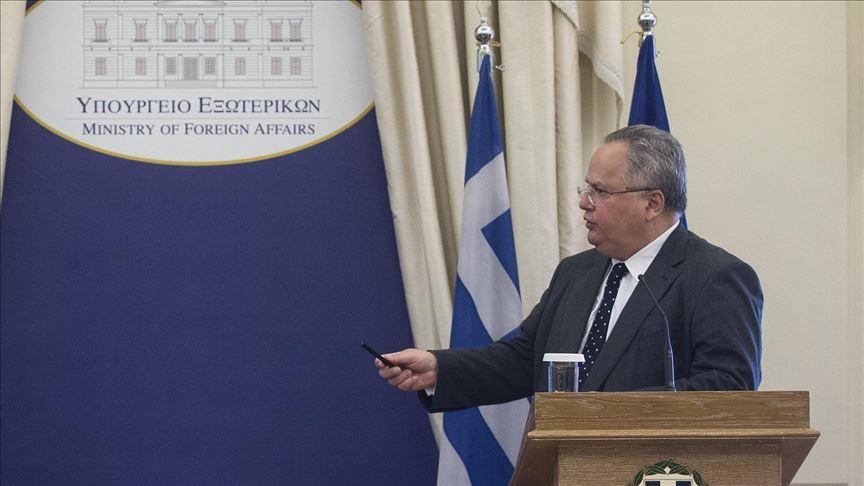
Former minister of foreign affairs of Greece Nikos Kotzias

By Ahmet Gencturk

ATHENS (AA) - The Greek leftist opposition Greek Communist Party (KKE) on Saturday strongly condemned the US attacks on Venezuela.

“The imperialist intervention by the USA has the real aim of seizing the country's energy wealth and aligning the region with their economic and geopolitical interests against their rivals, Russia and China, by overthrowing the (Venezuelan President Nicolas) Maduro government,” said the party in a statement.

Saying the US used drug-trafficking accusations to legitimize its attack on Venezuela, it added: “No one forgets that during the 20-year US occupation, Afghanistan was turned into the world's largest producer and exporter of narcotics.”

The party urged the public to “collectively condemn this new imperialist intervention against Venezuela and to express their solidarity with its people.”

Separately, former Foreign Minister Nikos Kotzias called the attacks "war crime and act of piracy."

"The US has evolved from global sheriff to global bully. They violate international law. They have opened Pandora's box and will not know how to close it," he said.​​​​​​​

Earlier, Venezuela’s government accused the US of attacking civilian and military installations in multiple states, and declared ‌a national ‌emergency.

US President Donald Trump confirmed that the US carried out a "large scale" strike, adding that Maduro and his wife had been captured and flown out of the country.

The attacks came after months of tension with the US, which accused Maduro of being involved in drug trafficking. Maduro denied being a cartel leader and had expressed readiness to hold talks.

France says capture of Venezuelan president violates international law

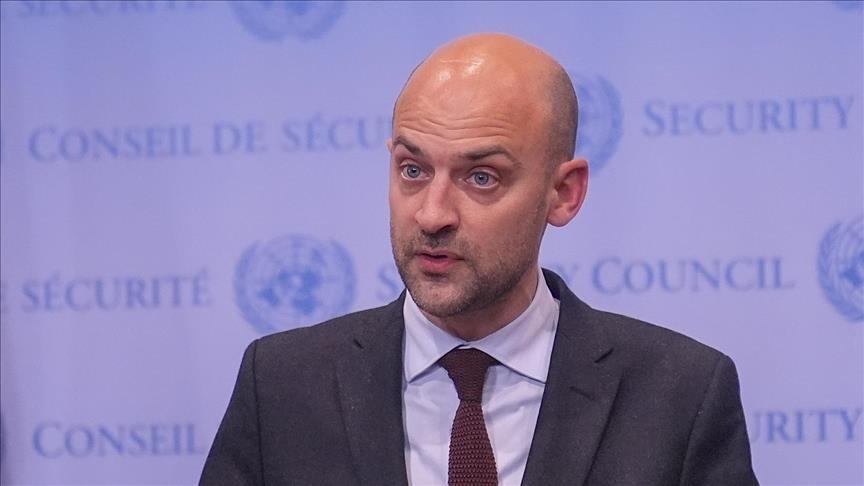
'France recalls that no lasting political solution can be imposed from the outside and that sovereign peoples alone decide their own future,' says Jean-Noel Barrot

Burak Bir |03.01.2026 - 


LONDON

France's foreign minister on Saturday said that the US military operation that led to the capture of Venezuelan President Nicolas Maduro violates the principles of international law on the use of force.

On Maduro’s rule, Jean-Noel Barrot said that by seizing power from the Venezuelan people and depriving them of their fundamental freedoms, Maduro "inflicted a grave violation on their dignity and on their right to self-determination."

On the US social media company X, he said that France has consistently committed itself, notably through its mediation efforts, to upholding respect for the sovereignty of the Venezuelan people, whose voice must prevail.

However, Barrot pointed out the need to act in line with international law.

"The military operation that led to the capture of Nicolas Maduro contravenes the principle of non-use of force that underpins international law," he wrote.

He said: "France recalls that no lasting political solution can be imposed from the outside and that sovereign peoples alone decide their own future."

Barrot also warned that the growing number of violations of this principle by nations entrusted with the primary responsibility of permanent UN Security Council membership will have "serious consequences" for global security, sparing no one.

"France is preparing for this, but cannot bring itself to accept it," he said, adding that France reiterates its commitment to the UN Charter, which must continue to guide the international action of states, "always and everywhere."

French far-right National Rally (RN) leader Jordan Bardella criticized Maduro over "dictatorship" and "endless economic crisis," but said respect for international law and the sovereignty of states" cannot be applied selectively."

"The forcible overthrow of a government from the outside cannot constitute an acceptable response, only exacerbating the geopolitical instability of our time," he wrote on X.

Bardella said France must draw lessons from its strategic and geopolitical vulnerability, adding that it is vital to pursue a resolute effort to rearm the country, strengthen its industrial and military capabilities, and rebuild a diplomatic network "weakened by (President) Emmanuel Macron."

"At this juncture, we can only call for the Venezuelan people to be given the floor as soon as possible, so that they can emerge from this major crisis through a free, transparent, and fair democratic process," he said.

Earlier Saturday, Venezuela’s government accused the US of attacking civilian and military installations in multiple states, and declared ‌a national ‌emergency.

On his social media platform Truth Social, US President Donald Trump confirmed the "large scale" strike, adding that Maduro and his wife were "captured and flown out of the country."

The attacks came after months of growing US pressure on Maduro, who Washington accuses of being involved in drug trafficking. The Venezuelan leader had denied the claims and expressed readiness for talks.

Venezuela's Vice President Delcy Rodriguez said they were "unaware" of Maduro's whereabouts, demanding the Trump administration provide "proof of life” of the president.la said France must draw lessons from its strategic and geopolitical vulnerability, adding that it is vital to pursue a resolute effort to rearm the country, strengthen its industrial and military capabilities, and rebuild a diplomatic network "weakened by (President) Emmanuel Macron."

"At this juncture, we can only call for the Venezuelan people to be given the floor as soon as possible, so that they can emerge from this major crisis through a free, transparent, and fair democratic process," he said.

Earlier Saturday, Venezuela’s government accused the US of attacking civilian and military installations in multiple states, and declared ‌a national ‌emergency.

On his social media platform Truth Social, US President Donald Trump confirmed the "large scale" strike, adding that Maduro and his wife were "captured and flown out of the country."

The attacks came after months of growing US pressure on Maduro, who Washington accuses of being involved in drug trafficking. The Venezuelan leader had denied the claims and expressed readiness for talks.

Venezuela's Vice President Delcy Rodriguez said they were "unaware" of Maduro's whereabouts, demanding the Trump administration provide "proof of life” of the president.

Russia urges US to release Venezuela’s Maduro

Foreign Ministry urges dialogue to resolve disputes between Washington and Caracas

Alperen Aktas |03.01.2026 - 


ISTANBUL

Russia on Saturday urged the US to release Venezuelan President Nicolas Maduro and his wife, who were captured after a military operation, calling for dialogue to resolve disputes.

The Foreign Ministry said it was acting “in light of confirmed reports” that Maduro and his wife are in the US, urging American leadership to “reconsider this position” and to release the “legally elected president of a sovereign country and his wife.”

Russia also stressed the need to create conditions for resolving existing problems between the US and Venezuela through dialogue.

In separate statements, Moscow condemned US strikes on Venezuela as “deeply concerning and condemnable,” saying the actions amounted to armed aggression and violated international law.

The ministry also backed calls for an urgent UN Security Council meeting, warning against further escalation and reiterating that Latin America must remain a zone of peace.

US President Donald Trump earlier said Washington carried out a “large scale strike” against Venezuela and that Maduro and his wife, Cilia Flores, were captured and flown out of the country.

Trump said the operation was conducted “in conjunction with US law enforcement.”

He later told Fox News that Washington could play a direct role in shaping Venezuela’s future following Maduro’s removal.

The US, which has accused Maduro of involvement in drug trafficking, also indicted him and his wife on multiple criminal charges, including narco-terrorism. Venezuela’s government has denied the accusations.

Vice President Delcy Rodriguez said Caracas was unaware of Maduro’s whereabouts and demanded proof that he was alive.

US attacks and Maduro's kidnapping led to international crisis

Large-scale US airstrikes on Venezuela and the alleged detention of President Nicolas Maduro have alarmed the region; As Colombia massed troops on the border line, calls for restraint arose from Europe and the world.


MADURO'S KIDNAPPING

ANF
NEWS CENTER
Saturday, January 3, 2026


The large-scale US airstrikes on Venezuela and the statements that President Nicolas Maduro has been detained by US forces have led to a serious crisis not only in Venezuela but also in the entire region and internationally. US President Donald Trump announced on Truth Social that Maduro and his wife Cilia Flores were "captured and taken out of the country".

CARACAS BOMBED, STATE OF EMERGENCY DECLARED

On the morning of January 3, many explosions occurred in the states of Caracas, Miranda, Aragua and La Guaira. Eyewitnesses reported that military facilities were targeted, and electricity was cut off in large parts of the capital. It was claimed that the La Carlota military airport, the Fuerte Tiuna military complex and some air bases around the capital were hit. The Venezuelan government declared a national state of emergency after the attacks.

Vice President Delcy Rodríguez stated that the government did not have information about the whereabouts of Maduro and his wife and demanded "immediate proof of life". For his part, Defense Minister Vladimir Padrino López announced that all armed forces were mobilized throughout the country and said that Venezuela would "resist foreign military presence".

USA: "NO OTHER MILITARY STEPS ARE PLANNED"

On the US front, Secretary of State Marco Rubio was quoted as telling Republican Senator Mike Lee that Maduro was detained pending trial in the US and that "no further military steps against Venezuela are expected". According to US officials, the operation was carried out by the US military's elite special unit, Delta Force.

Following the developments, Colombian President Gustavo Petro announced that security forces were deployed along the Venezuelan border after the national security council meeting. Petro announced the mobilization of humanitarian aid and emergency response capacity against a possible mass influx of refugees. There is a land border of more than 2 thousand kilometers between Colombia and Venezuela.

Petro called an emergency meeting of the United Nations Security Council, describing the attacks as "an attack on Venezuela's sovereignty".

EUROPE'S CALL FOR RESTRAINT

There were also reactions from Europe to the attacks. The Spanish Foreign Ministry called for de-escalation, restraint and respect for international law in Venezuela, declaring that Madrid is ready to mediate for a peaceful solution.

Italian Prime Minister Giorgia Meloni stated that they are closely monitoring the developments in Venezuela and said that they are collecting information about the situation of approximately 160 thousand Italian citizens living in the country. Meloni stated that they are in constant contact with Foreign Minister Antonio Tajani.

GLOBAL REACTIONS AND ALLIES

Cuba, Iran and Russia strongly condemned the US attacks, describing them as "violation of sovereignty" and "armed aggression". Moscow stated that Washington's step dangerously erodes international law. It was reminded that China and Russia maintain economic and strategic relations with Venezuela, while Cuba and Nicaragua are Caracas' closest allies in the region.

"IT IS UNCLEAR WHAT WILL HAPPEN": CIVIL WAR WARNING

Experts believe that Maduro's detention will not automatically guarantee a political transition in the country. According to analysts, the military may not be willing to hand over control without prior negotiations. Although Maria Corina Machado, a prominent figure in the opposition, is portrayed as a possible Western-backed alternative, a significant part of the opposition also opposes US intervention.

Experts warn that if the current situation continues, Venezuela could face the risk of civil war or a protracted devastating conflict. This move by the USA is considered the largest military escalation in Latin America since the Cold War.

World Reacts After US Strikes In Venezuela And 'Capture' Of President Nicolás Maduro


Governments across Latin America, Europe and beyond respond after Washington says it carried out military strikes in Venezuela and detained its president


Outlook News Desk
Curated by: Saher Hiba Khan
Updated on: 3 January 2026 


US President Donald Trump said Washington had launched a “large scale strike” against Venezuela and detained its leader in an operation conducted “in conjunction with US law enforcement”. Photo: Cristian Hernandez

Summary of this article


The US says it carried out strikes in Venezuela and captured President Nicolás Maduro.


Venezuela has condemned the action as a serious military aggression and violation of sovereignty.


Countries including Colombia, Cuba, Russia, Iran and EU members have reacted, many calling for restraint and respect for international law.


The United States carried out strikes inside Venezuela early on Saturday and claimed it had captured President Nicolás Maduro, triggering sharp reactions from governments across Latin America, Europe and beyond, according to Al-Jazeera.

US President Donald Trump said Washington had launched a “large scale strike” against Venezuela and detained its leader in an operation conducted “in conjunction with US law enforcement”. In a post on Truth Social, Trump claimed that Maduro and his wife had been “captured and flown out of the country”.

Al-Jazeera reported that US media outlets, including Fox News and CBS News, also cited American officials as saying strikes had been carried out on Venezuelan territory, marking a dramatic escalation after weeks of tension.

Washington’s Move Ignites Fear Of War With Venezuela

In a statement posted on X, US Deputy Secretary of State Christopher Landau said Venezuela was entering a “new dawn”. “The tyrant is gone. He will now — finally — face justice for his crimes,” Landau wrote.

Maduro’s government rejected the claims and accused Washington of a serious violation of international law. In an initial statement, it described the action as an “extremely serious military aggression” against Venezuelan territory and people.


Trump Claims Maduro Captured After Reported US Strikes On Venezuela

US Escalation In Venezuela Fits Pattern Of Regime Change Wars In Latin America


Is The US ‘War on Drugs’ A Smokescreen To Pressurise Venezuela?


US Military Deploys Massive Naval Force Near Venezuelan Coast, Escalating Tensions

“Venezuela rejects, repudiates, and denounces before the international community the extremely serious military aggression perpetrated by the current government of the United States of America against Venezuelan territory and people,” the statement said.

According to Al-Jazeera, the developments prompted immediate responses from regional allies and global powers.

In Colombia, President Gustavo Petro said he was alerting the international community to the attack. Writing on X, he said Colombia reiterated its belief that peace, respect for international law, and the protection of life and human dignity must prevail over armed confrontation. In a separate post, Petro said Colombia “rejects the aggression against the sovereignty of Venezuela and of Latin America”. He later announced the deployment of military forces to the Venezuelan border.

Cuba’s President Miguel Díaz-Canel Bermúdez issued a strongly worded condemnation, accusing the United States of a “criminal attack” and calling for an urgent international response. In a post on X, Díaz-Canel said Cuba’s “zone of peace” was being “brutally assaulted” and described the US action as “state terrorism” directed at Venezuela and “Our America”. He ended his message with the slogan: “Homeland or Death, We Shall Overcome.” Cuban embassies worldwide also released a statement denouncing the attack and demanding an urgent reaction from the international community.

Iran’s foreign ministry said it “strongly condemns the American military attack on Venezuela and the flagrant violation of the national sovereignty and territorial integrity of the country”.

Russia said it was deeply concerned by what it called an “act of armed aggression” by the United States. The Russian foreign ministry urged restraint and dialogue to prevent further escalation, saying Venezuela must be guaranteed the right to determine its own destiny without external military intervention. Moscow also reaffirmed its solidarity with the Venezuelan people and support for the country’s leadership in defending national sovereignty.

Within the United States, Republican Senator Mike Lee said the military operation had concluded with Maduro in US custody. Writing on X after what he said was a telephone conversation with Secretary of State Marco Rubio, Lee said the administration anticipated no further action in Venezuela and that Maduro would face criminal charges in the United States.


In Europe, EU foreign policy chief Kaja Kallas said she had spoken with Rubio and the EU ambassador in Caracas. “The EU is closely monitoring the situation in Venezuela,” she said, reiterating that the bloc considers Maduro to lack legitimacy but stressing that international law and the UN Charter must be respected. She added that the safety of EU citizens remained a priority.

Spain called for de-escalation, moderation and respect for international law, offering to act as a mediator to help find a peaceful solution.

"Spain is willing to offer its good offices to achieve a peaceful solution", said the Spanish Foreign Mnistry.

Italy’s Prime Minister Giorgia Meloni said she was closely monitoring developments, particularly to gather information about Italian nationals in Venezuela. She said she remained in constant contact with Foreign Minister Antonio Tajani. Around 160,000 Italians live in Venezuela, most holding dual citizenship.

Al-Jazeera reported that reactions continued to emerge as governments assessed the implications of the US action and the uncertainty surrounding Venezuela’s leadership.


(With inputs from Al-Jazeera)