Monday, January 05, 2026

Killer Whale Communities Near Hokkaido


By 


The species Orcinus orca, generally known as orcas or killer whales, is made up of many genetically distinct populations called ecotypes. Each ecotype indicates an ecological specialization with its own ecological and phylogenetic characteristics. The North Pacific is home to three known ecotypes of killer whales, called the transient, resident, and offshore ecotypes. While transient ecotype killer whales are mammal-eating, the resident and offshore orcas are fish-eating.

Though killer whale populations in the eastern North Pacific near Vancouver Island and Alaska have been studied extensively, populations in the western North Pacific have been less studied, especially around Hokkaido, Japan’s northernmost island. One of these sea areas, Shiretoko, is the best in Japan to spot killer whales and is even home to a UNESCO natural World Heritage site, yet information on its killer whale population has remained limited. Researchers from Kyoto University and collaborating institutions worked together with a shared determination to change that.

“Clarifying the ecological characteristics of killer whales is crucial for achieving coexistence with them, as they are deeply entwined with human activities such as tourism and fisheries in Hokkaido,” says first and corresponding author Momoka Suzuki.

One previous study of this population suggested that orca around Hokkaido belong to both fish-eating and mammal-eating groups. However, the analysis was supported by haplotypesbased on only partial regions of mitochondrial genomes, and was therefore not sufficient to differentiate between the resident and offshore ecotypes. This time, the team analyzed the whole mitochondrial genomes of killer whales sampled around Hokkaido.

The researchers obtained skin samples of 25 killer whales that had been biopsy sampled and stranded around the island, then compared the whole mitochondrial genome sequences of their samples with the known whole sequences of killer whales from around the North Pacific. The team’s phylogenetic analysis revealed that the killer whales living around Hokkaido belong to the resident and transient ecotypes.

This study also helped to further establish the division between these two ecotypes of killer whales. In the eastern North Pacific, the genetic and behavioral differences of the resident and transient ecotypes have raised the possibility that they may be separate species, but currently they are still considered subspecies.

How we categorize animals into ecotypes, subspecies, and even species is constantly changing, but the data that prompts these decisions is crucial both for our coexistence with animals and the protection of vulnerable populations. In countries with advanced research on killer whales, conservation management strategies are often developed for each group based on genetic differences.

“Information on the ecological differences and conservation status of killer whales around Hokkaido remains insufficient,” says Suzuki. “We will continue to collect ecological data using a wide range of methods, including behavioral observation and genetic analysis.”

By 


A group of environmental and public health scientists is sounding the alarm on a largely overlooked but increasingly dangerous group of pathogens: free living amoebae. In a new perspective article published in Biocontaminant, the researchers highlight how these microscopic organisms are becoming a growing global public health threat, fueled by climate change, aging  water infrastructure, and gaps in monitoring and detection.

Amoebae are single celled organisms commonly found in soil and water. While most are harmless, some species can cause devastating infections. Among the most notorious is Naegleria fowleri, often referred to as the brain eating amoeba, which can trigger a rare but almost always fatal brain infection after contaminated water enters the nose during activities such as swimming.

“What makes these organisms particularly dangerous is their ability to survive conditions that kill many other microbes,” said corresponding author Longfei Shu of Sun Yat sen University. “They can tolerate high temperatures, strong disinfectants like chlorine, and even live inside water distribution systems that people assume are safe.”

The authors also emphasize that amoebae act as hidden carriers for other harmful microbes. By sheltering bacteria and viruses inside their cells, amoebae can protect these pathogens from disinfection and help them persist and spread in drinking water systems. This so called Trojan horse effect may also contribute to the spread of antibiotic resistance.

Climate warming is expected to worsen the problem by expanding the geographic range of heat loving amoebae into regions where they were previously rare. Recent outbreaks linked to recreational water use have already raised public concern in several countries.


The researchers call for a coordinated One Health approach that connects human health, environmental science, and water management. They urge stronger surveillance, improved diagnostic tools, and the adoption of advanced water treatment technologies to reduce risks before infections occur.

“Amoebae are not just a medical issue or an environmental issue,” Shu said. “They sit at the intersection of both, and addressing them requires integrated solutions that protect public health at its source.”


Concrete Jungles Vs. Carbon Sinks: How Urbanization Weakens Forests’ Hidden Climate Superpower


By 


A landmark open-access review published in Carbon Research(Volume 4, Article 70) delivers a sobering yet actionable insight: urban forests are losing their capacity to store stable soil carbon, not because they’re gone—but because the soil beneath them is being silently transformed by human activity.

Led by Dr. Xiankai Lu of the Guangdong Provincial Key Laboratory of Applied Botany, South China Botanical Garden, Chinese Academy of Sciences, and the Key Laboratory of Plant Ex-Situ Protection and Utilization in South China, National Forestry and Grassland Administration, this synthesis pulls together global evidence to map how carbon stability shifts across the urban–rural forest gradient.

The Hidden Crisis Beneath City Trees

Soil isn’t just dirt—it’s Earth’s largest terrestrial carbon reservoir. And within it, soil organic carbon (SOC) exists in different forms, some fleeting, others locked away for decades or centuries. The most stable fractions—particulate organic carbon (POC) and mineral-associated organic carbon (MAOC)—act like long-term vaults, shielding carbon from microbial breakdown.

But in urban forests, this vault is cracking.

Dr. Lu’s review shows that SOC stability is consistently lower in urban forest soils compared to suburban and rural counterparts. Why? Because urbanization brings soil compaction, erosion, pollution, and disrupted inputs of leaf litter and root exudates—the very ingredients needed to build and maintain stable carbon pools.


Even MAOC, typically considered highly resistant to decomposition, suffers in cities. “It’s not just about how much carbon is there,” explains Dr. Lu, “but whether the conditions allow it to stay there.” In compacted, nutrient-imbalanced, or polluted urban soils, the processes that bind organic matter to minerals break down—leaving carbon vulnerable to release as CO₂.

Suburban Forests: The Unexpected Carbon Champions

Surprisingly, suburban forests often outperform both urban and rural sites in certain stability metrics. These transitional zones tend to accumulate more non-readily oxidizable carbon (NROC)—a chemically stable form that resists degradation over time.

They also benefit from moderate organic inputs, less extreme disturbance than city centers, and sometimes enhanced management (like mulching or reduced tillage). The result? A sweet spot where human presence doesn’t overwhelm natural processes—but may even support them.

Microbes: More Diverse, But Less Effective

Urban soils often show higher bacterial diversity, likely due to nutrient runoff, varied plantings, and physical disturbance introducing new microbes. But diversity alone doesn’t equal function.

In fact, microbial biomass carbon (MBC)—a key indicator of active, carbon-processing life in soil—declines significantly in urban settings, especially where compaction limits oxygen and root growth. Enzyme activities linked to carbon cycling become erratic, and total microbial abundance drops in polluted or heavily trafficked areas.

“Soil microbes are the engine of carbon stabilization,” says Dr. Lu. “When their habitat is degraded, even a diverse community can’t perform its climate-regulating role.”

Two Worlds, Two Sets of Rules

Perhaps the most crucial insight from this review is the divergence in drivers across the landscape:

  • In urban forests, SOC stability is controlled mainly by anthropogenic stressors: air pollution, altered microclimates, soil sealing, and chemical contamination.
  • In rural forests, natural factors dominate: litter quality, vegetation type, climate, and soil fauna.
  • In suburban forests, it’s a mix—where thoughtful design can tip the balance toward resilience.

“This means we can’t manage all forests the same way,” emphasizes Dr. Lu. “Urban greening strategies must go beyond planting trees—they must protect and restore the living soil beneath them.”

A Call to Rethink Urban Greening

Based at the South China Botanical Garden in Guangzhou—a national hub for biodiversity conservation and ecosystem research—Dr. Lu’s work bridges fundamental science and urban policy. His review doesn’t just diagnose the problem; it maps a path forward, identifying critical research gaps and urging integrated approaches that consider soil health as central to climate mitigation.

And because the article is published open access, city planners, landscape architects, ecologists, and policymakers worldwide can use these findings to design truly climate-smart urban forests—ones that don’t just look green, but function as enduring carbon sinks.

The Bottom Line

Trees in cities do more than beautify—they cool neighborhoods, filter air, and support mental health. But if we ignore the soil, we risk turning these green oases into carbon liabilities.

The next time you walk through a city park, remember: the real climate action might not be in the canopy above—but in the quiet, complex world beneath your feet.

Thanks to the rigorous synthesis by Dr. Xiankai Lu and his team at the Chinese Academy of Sciences, we now understand not only why urban forest soils falter—but where hope lies: in suburban buffers, in restored soil structure, and in reimagining urban ecology from the ground up.

INTERVIEW

The challenges of protecting wildlife from war in eastern DRC

In eastern Democratic Republic of Congo's Maiko National Park, a few committed rangers have succeeded in protecting gorillas, elephants and other animals from the surrounding fighting. RFI spoke to the park's assistant director, Alain Mukiranya, about guarding wildlife in the middle of a war zone.


Issued on: 05/01/2026 - RFI

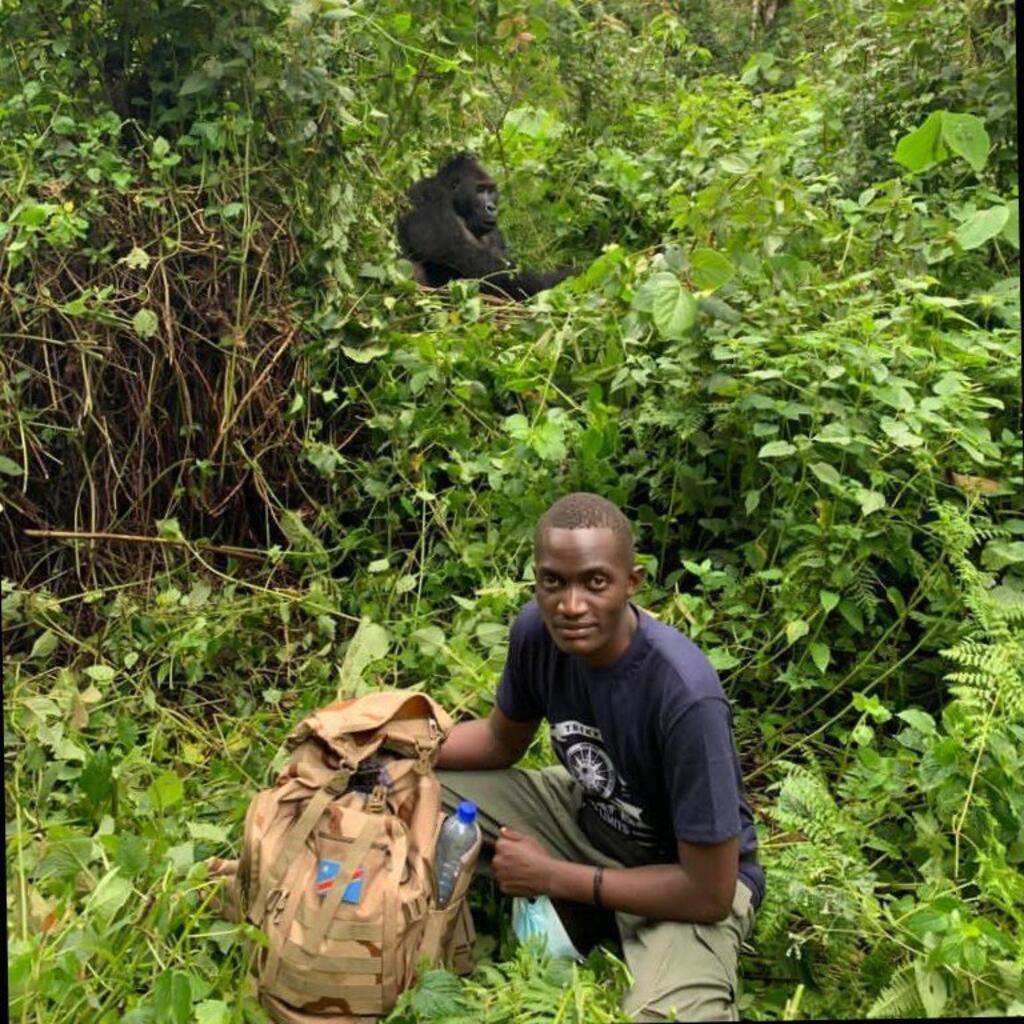
An endangered gorilla in the forest of Kahuzi-Biega National Park in north-eastern Democratic Republic of Congo, on 30 September 2019. © AFP - ALEXIS HUGUET

The Democratic Republic of Congo's mineral-rich east has been ravaged by three decades of conflict.

Since taking up arms again in 2021, the M23 rebel group, backed by Rwanda, has seized swathes of territory, leading to a spiralling humanitarian crisis.

Although Congolese and Rwandan leaders signed a peace deal in Washington on 4 December, fighting has continued. DRC authorities have accused Rwanda of killing more than 1,500 civilians in the Congolese east since early December in their latest offensive.

According to the United Nations, more than 80,000 people have fled across the border to Burundi, while at least half a million have been internally displaced within South Kivu province alone.

But there are those who refuse to leave their posts. They include some of the rangers in national parks like Maiko, on the border of North Kivu and Maniema provinces.

This vast natural haven, stuck in the middle of the conflict, is home to an extraordinary range of animals that park rangers are keen to save at any cost.
Alain Mukiranya, assistant director of Maiko National Park in the eastern Democratic Republic of Congo. © Alain Mukiranya


RFI: Alain Mukiranya, you are a forest ranger in Maiko National Park, in eastern DRC. How do you protect the park's animals in the middle of a war?

Alain Mukiranya: It's a huge challenge... The population, the authorities and even my fellow park rangers were on the verge of fleeing. In fact, people were already fleeing towards Kisangani [capital of Tshopo province, in north-eastern DRC], further west.

And what I did was go back to join our teams in the field. We joined forces to protect the park. We did this against the flow of the population, at our own risk.

RFI: Instead of leaving, you stayed with a team and managed to persuade some colleagues to stay with you?

AM: That was the mission I received from the Congolese Institute for the Conservation of Nature (ICCN): to return, revitalise the teams in the field, boost their morale, encourage them, and continue to monitor and protect the park. I convinced them. Together, we patrolled, and none of us left.

RFI: Did your presence in the park deter people from poaching?

AM: Yes, when people see us there, they can no longer risk prohibited acts like poaching or looting the equipment and other conservation assets we have in the park.

Our presence has also reassured some of the local communities. Some even sought refuge with us because that's where they felt safe. When the chaos erupted, the army was heading west. We stayed, and our presence reassured them. So not everyone in the local community fled. Some took refuge with us, at the park headquarters, and at another station in the area.

RFI: Did you clash with any fighters who tried to enter the park?

AM: The threat was significant, with militias needing to get their hands on weapons and ammunition. We have some here because we use them to protect the park. They wanted to come and seize our equipment to use in their war effort. But we are non-belligerent, apolitical. In times of peace or conflict, we stay and continue our work.

RFI: Did you give them your weapons in the end or not?

AM: We categorically refused. The equipment we have is for protecting wildlife and plants, and nothing else. We categorically refused, despite threats, despite pressure, and we tried to raise their awareness, to make them understand that we are here to do our job and not to interfere in politics or other situations prevailing in the area.

Zimbabwe’s elephant boom fuels conflict alongside conservation wins

RFI: In peacetime, what is the main threat to the animals in your park like gorillas and elephants? Is it professional poachers or is it the local population?

AM: In peacetime, it is poaching carried out by local communities and others who come from elsewhere, who come looking for ways to capture animals for trafficking. It all goes hand in hand.

RFI: As we begin a new year, what do you hope for in 2026?

AM: My wish for this year is the return of peace and good living and working conditions for the people living around Maiko National Park, and for all the Congolese people. For peace to return and the authority of the state to be restored.

My wish is to see the populations of gorillas, okapis, chimpanzees and elephants thrive and continue to multiply so that life can return. Tourism will also help to develop the surrounding communities, because many things will come with it, and even the local economy will benefit.

This article is based on an original interview in French and has been lightly edited for clarity.
French doctors begin 10-day strike over new budget

France's health minister has warned requisitions could be used as self-employed doctors and specialists launch a 10-day strike on Monday to protest measures in the 2026 social security budget. Unions predict the movement will be widely followed.


Issued on: 05/01/2026 - RFI

Healthcare workers take part in a white march called by hospital and private practice doctors' unions "to demand the protection of health budgets" and "adapted responses to the real public health needs", in Paris on 4 October 2025. © Anna Kurth/AFP

Self-employed practitioners and doctors in private clinics will begin a ten-day strike on Monday aimed at denouncing a range of measures in the 2026 Social Security Budget Law.

Unions are calling for private practices to close and consultations to be cancelled or postponed. Operating theatres in private clinics are expected to be shut down, with potential repercussions for public hospitals.

The Confederation of French Medical Trade Unions (CSMF), says it expects the movement to be "extremely well followed”, with 85 per cent of its members saying they plan to strike.

Health Minister Stéphanie Rist said on Sunday that steps had been taken “to organise continuity of care with the regional health agencies, healthcare facilities and professionals themselves, so that our fellow citizens are not put at risk during this mobilisation”.


“We can also resort to requisitions, if necessary,” she said in an interview with La République du Centre, adding that she would ensure that patients can be treated, while respecting the right of professionals to strike.

Dispute over fees and controls

The new Social Security financing law introduces mechanisms to regulate tariffs and supplements to fees charged by liberal doctors, particularly those who exceed base reimbursement rates.

The government wants to control healthcare spending by giving the health insurance fund (CNAM) the power to adjust "excessively profitable" fees and limit how much extra GPs can charge.

Self-employed doctors are opposed to such tighter controls as well as changes to sick leave prescriptions, which from 1 January are limited to a maximum of one month in the first instance.

They claim the authorities are behaving “in an authoritarian manner”, by "bypassing" social dialogue.

They also oppose new digital management tools seen as bureaucratic and poorly adapted to their daily work, and which they deem will worsen workload and contribute to so-called "medical deserts" where healthcare provision is already sparse.

Overall, they claim the changes threaten the viability of private practice and access to care.

Doctors in England begin their longest strike in NHS history

The health minister has defended the government’s approach, citing what she described as an “exponential” rise in extra billing in recent years.

“Even if abuses concern only a minority of doctors, we cannot leave the situation as it is," she said, "because some of our fellow citizens are giving up treatment for financial reasons."
Louvre staff continue strike over conditions, leaving museum partially open

Staff at Paris’s Le Louvre have voted to continue a strike action that started in December over work conditions and management of the museum buildings. Management said the museum would be partially open Monday.


Issued on: 05/01/2026 - RFI

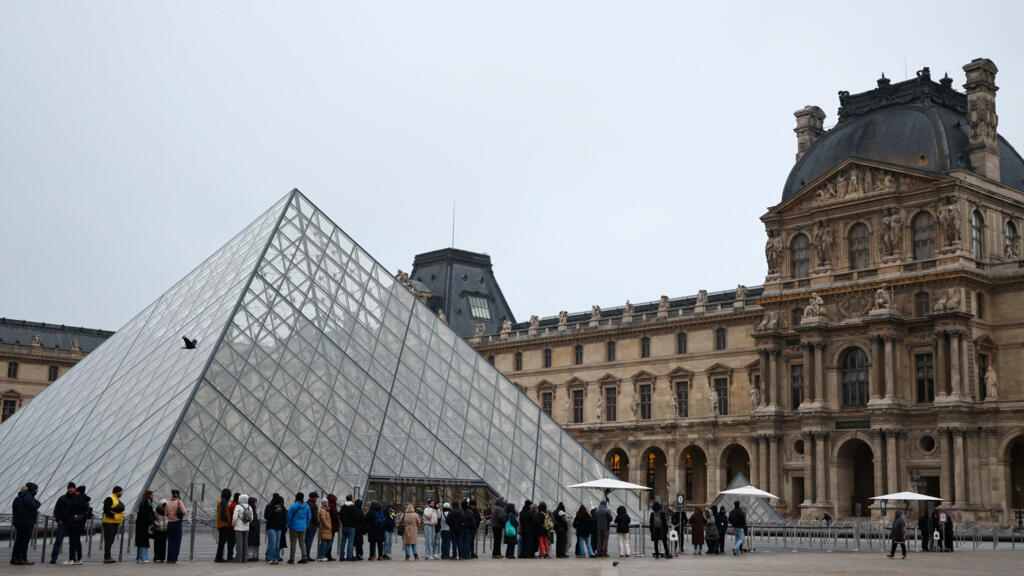
Visitors to Paris' Louvre stand near the glass pyramid, waiting for the museum's opening which was postponed because of staff strike action over work conditions and security, 5 January 2026. © Sarah Meyssonnier/Reuters

Staff at the Louvre voted for another day of strike action on Monday, union representatives told French news agency AFP in Paris, causing fresh disruption at the world's most-visited museum.

Disgruntled staff stopped work for three days last month, causing a complete shutdown on one day and partial closures on two others.

Management told AFP that the tourist hotspot would partially open on Monday, with visitors able to view rooms containing masterpieces such as the Mona Lisa or the Venus de Milo.

Other parts of the 400-room institution would be closed to the public.

More than two months after an embarrassing daylight heist which has heaped pressure on Louvre bosses, staff are calling for more recruitment and better maintenance of the vast complex of buildings.

"Around 350 people from various professions -- operations, conservation, support staff -- voted unanimously" to resume strike action on Monday morning, Valerie Baud from the CFDT union told AFP.

The CGT union confirmed the vote on its Instagram account.

The Louvre workforce totals over 2,000 people.

Questions continue to swirl since the 19 October break-in over whether it was avoidable and why thieves were able to steal crown jewels worth more than $100 million.

Two intruders used a truck-mounted extendable platform to access a gallery containing the jewels, slicing through a glass door with disk-cutters in front of startled visitors before stealing eight priceless items.

As well as the robbery, two other recent incidents have highlighted maintenance problems inside the building which chief architect Francois Chatillon has described as "not in a good state".

A water leak in November damaged hundreds of books and manuscripts in the Egyptian department, while management had to shut a gallery housing ancient Greek ceramics in October because ceiling beams above it risk giving way.

(with AFP)
TRANS SLANDER

Ten people found guilty of cyberbullying France’s First Lady Brigitte Macron


‍A Paris ​court on Monday ⁠found eight men and two ​women guilty for the cyber harassment of ​France's First Lady ‍Brigitte Macron. The court pointed to “particularly degrading, insulting, and malicious” comments referring to false claims regarding alleged trans identity and alleged pedocriminality targeting Brigitte Macron.


Issued on: 05/01/2026 
By: FRANCE 24
Video by: Antonia KERRIGAN


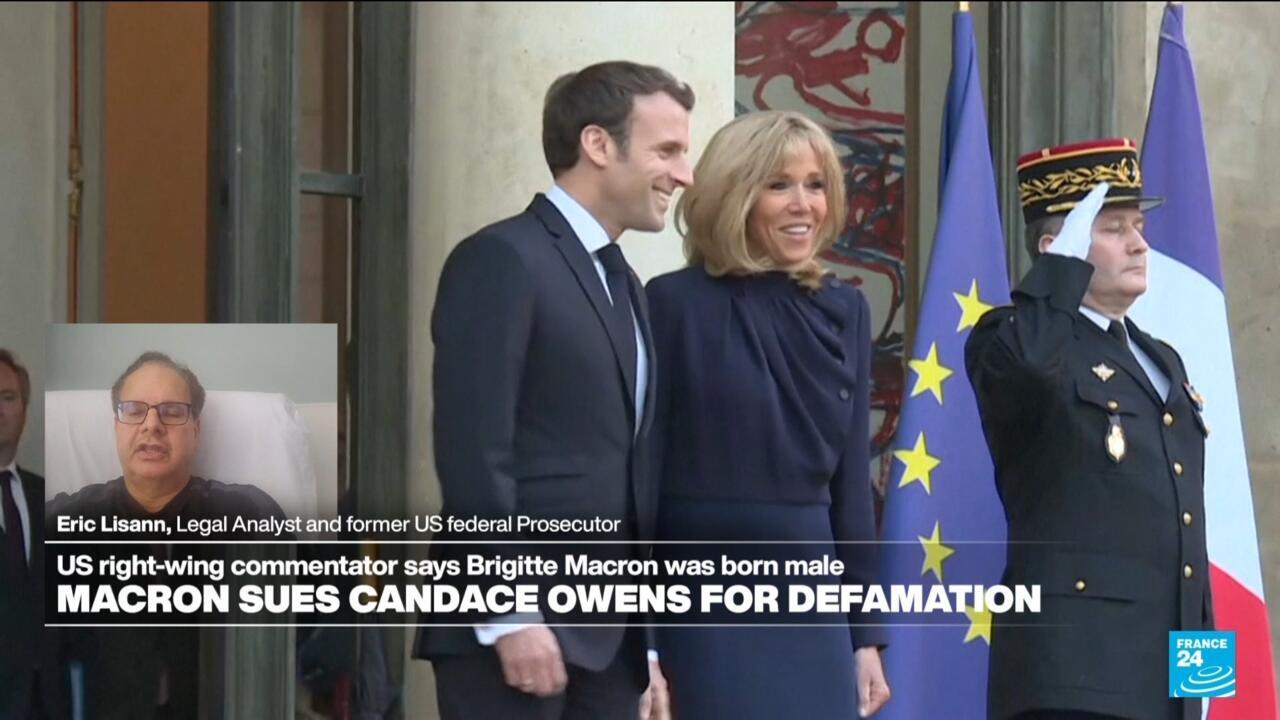
French First Lady Brigitte Macron in Paris on Thursday November 13, 2025. © Ludovic Marin, AP
03:42


A Paris court on Monday found ten people guilty of cyberbullying France’s First Lady Brigitte Macron by spreading false online claims about her gender and sexuality, including allegations she was born a man.

The court convicted all defendants to sentences ranging from a cyberbullying awareness training to 8-month suspended prison sentences.

The court pointed to “particularly degrading, insulting, and malicious” comments referring to false claims regarding alleged trans identity and alleged pedocriminality targeting Brigitte Macron.

The defendants, eight men and two women aged 41 to 65, are accused of having posted “numerous malicious comments” falsely claiming that President Emmanuel Macron’s wife was born a man and linking their 24-year age gap to paedophilia. Some of the posts were viewed tens of thousands of times.


Brigitte Macron did not attend the two-day trial in October. Speaking on TF1 national television Sunday, she said she launched legal proceedings to “set an example” in the fight against harassment.

READ MOREHow did online rumours that Brigitte Macron was born male go viral?

Her daughter, Tiphaine Auzière, testified about what she described as the “deterioration” of her mother’s life since the online harassment intensified. “She cannot ignore the horrible things said about her,” Auzière told the court. She said the impact has extended to the entire family, including Macron’s grandchildren.

Defendant Delphine Jegousse, 51, who is known as Amandine Roy and describes herself as a medium and an author, is considered to have played a major role in spreading the rumour after she released a four-hour video on her YouTube channel in 2021. She was given a 6-month prison sentence.

The X account of Aurélien Poirson-Atlan, 41, known as Zoé Sagan on social media, was suspended in 2024 after his name was cited in several judicial investigations. Poirson-Atlan was given an 8-month prison sentence.

Other defendants include an elected official, a teacher and a computer scientist. Several told the court their comments were intended as humor or satire and said they did not understand why they were being prosecuted.

The case follows years of conspiracy theories falsely alleging that Brigitte Macron was born under the name Jean-Michel Trogneux, which is actually the name of her brother. The Macrons have also filed a defamation suit in the United States against conservative influencer Candace Owens.

FRANCE 24 © 2025
09:51


The Macrons, who have been married since 2007, first met at the high school where he was a student and she was a teacher. Brigitte Macron, 24 years her husband’s senior, was then called Brigitte Auzière, a married mother of three.

Emmanuel Macron, 48, has been France’s president since 2017.

(FRANCE 24 with AP)

PETITE BOURGEOISIE LANDOWNERS

France tightens checks on food imports amid farmers' opposition to Mercosur

The French government has said it is tightening checks on around a dozen food ⁠imports in a bid to ease concerns of farmers who have been protesting at what they say is unfair competition from countries with looser regulations.

Issued on: 04/01/2026 - FRANCE24

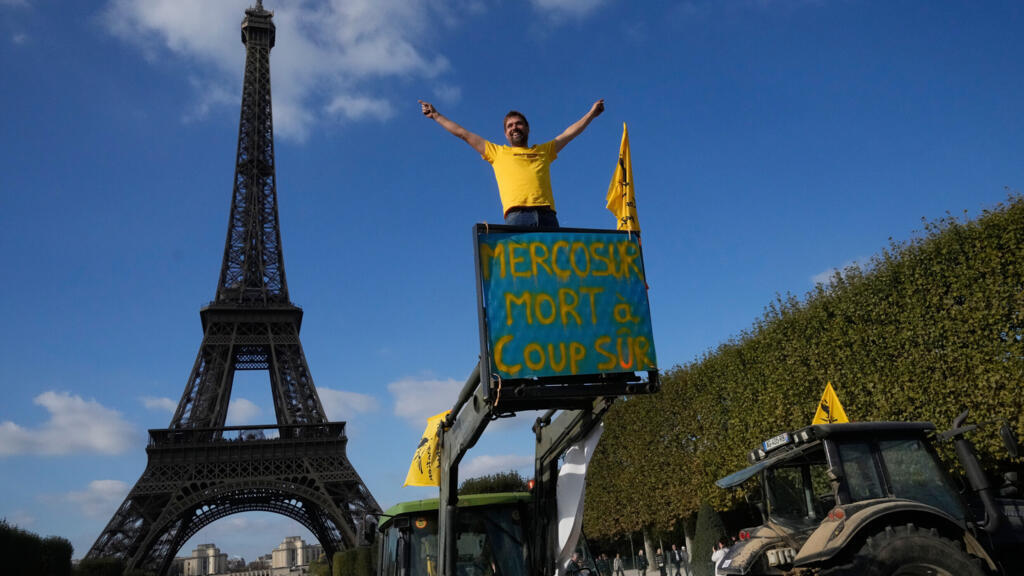
French farmers have been protesting against the Mercosur trade alliance with South America countries, which they see as unfair competition. AP - Michel Euler


French farmers have been protesting over a ​planned European trade deal with the South American Mercosur bloc, and other issues ‍including measures to contain outbreaks of lumpy skin disease which have led to the culling of livestock.

Agriculture Minister Annie Genevard said Sunday that the tighter checks would make sure food coming from ​outside the EU did not include substances banned in food produced in ​the bloc.

A decree would be issued soon announcing the suspension of imports of some food products already known to contain those substances, she added.

"Imports, regardless of from where they come in the world, must comply with our standards. France is setting an example in Europe by issuing this unprecedented decree that concerns more than a dozen food products," wrote Genevard on X.

"Melons, apples, apricots, cherries, strawberries, grapes, potatoes: ‍they will only be on sale in France if they show no residue of these substances banned in our ​country. Other products from South America such as avocados, mangos, guavas, or certain citrus fruits from elsewhere will only be allowed in if they comply with our standards," she added.


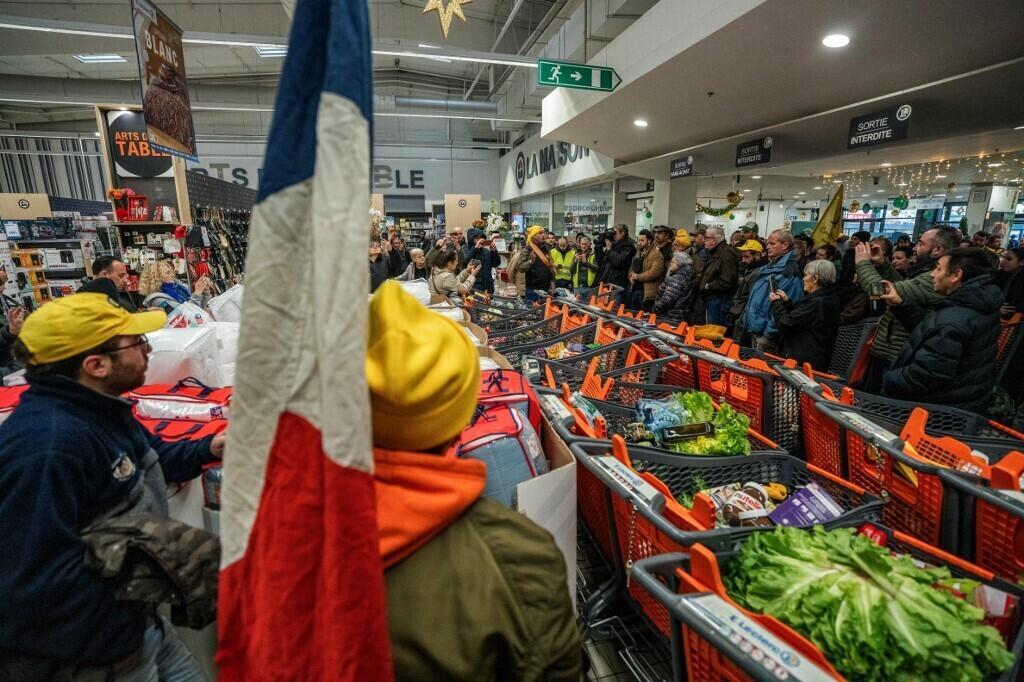
Members of the Confederation Rurale (CR) and Confederation paysanne farmers unions fill shopping carts with imported goods to denounce the import of foreign products at a supermarket in Carcassonne, southern France, on 30 December 30, 2025. AFP - IDRISS BIGOU-GILLES


What to know about the EU-Mercosur deal


'Protecting' French farmers

Prime ‌Minister Sebastien Lecornu said earlier that any imported product showing traces of these weed and fungus killers – namely mancozeb, glufosinate, thiophanate-methyl, and carbendazim ‍which are banned in Europe – will not be allowed in France.

The deal between the 27-member European Union and Mercosur countries Brazil, Argentina, Paraguay and Uruguay was agreed on in 2019, but has stalled as it moves through approval votes in individual countries.

Germany and Spain back the deal, but opponents in France say the trade arrangement would lead to cheap imports of South American commodities, notably beef, that do not meet the European Union's environmental and food safety standards.

"Protecting our farmers, guaranteeing the health of French people and standing up to any form of unfair competition while making ‍sure our rules are respected – this is non-negotiable. It is up to the European Commission to make ‌sure this is generalised ​across the board. If necessary, we will do it again," added Genevard.

A number of diplomats in Brussels have told reporters that the EU is working towards signing the Mercosur deal on 12 January in Paraguay, which is set to take over leadership of Mercosur from Brazil.

(with newswires)