Tuesday, January 06, 2026

A role for orange pigments in birds and human redheads


PNAS Nexus
Zebra Finches 

image: 

Male (left) and female (right) zebra finches. The orange feathers displayed by the male are colored by the pigment pheomelanin, which is also present in human skin and red hair. Pheomelanin is associated with an increased risk of melanoma, but also exerts a beneficial physiological function consisting in the avoidance of toxicity that an excess of the amino acid cysteine in the diet may cause. Female zebra finches, which do not produce pheomelanin like males, experience cellular damage when exposed to high dietary levels of cysteine.

view more 

Credit: Ismael Galván


A pigment that makes feathers and hair orange helps prevent cellular damage by removing excess cysteine from cells. Pheomelanin is an orange-to-red pigment that is built with the amino acid cysteine and found in human red hair and fair skin, as well as in bird feathers. Previous research has shown that pheomelanin is associated with increased melanoma risk, raising questions about why evolution has maintained genetic variants that promote pheomelanin production. Ismael Galván and colleagues studied 65 adult zebra finches divided into treatment and control groups. In the treatment group, male zebra finches received dietary cysteine and ML349, a drug that blocks pheomelanin synthesis. Male birds treated with both cysteine and ML349 showed increased oxidative damage in blood plasma compared to males receiving only cysteine, when the authors controlled for overall expression of the regulator of antioxidants by melanocytes. Female birds, which do not produce pheomelanin, tended to show increased oxidative damage when treated with cysteine alone as compared to female controls. According to the authors, pheomelanin synthesis helps maintain cysteine homeostasis by converting excess cysteine into inert pigment, which may explain why pheomelanin-promoting genetic variants persist despite being associated with increased melanoma risk.


Pathways to net-zero greenhouse gas emissions for Southeast Asia


PNAS Nexus


Could Southeast Asia become carbon neutral by 2050, even as energy demand increases? The region is growing quickly and still relies heavily on fossil fuels. A modeling study by Bin Su and colleagues provides an energy system optimization model with pathways to net-zero emissions by 2050 for the electricity and hydrogen sectors in members of the Association of Southeast Asian Nations (ASEAN): Indonesia, Malaysia, Philippines, Singapore, Thailand, Brunei, Vietnam, Lao PDR, Myanmar, and Cambodia. The model simulates energy production and demand with hourly resolution and includes cross-border electricity transmission through a proposed ASEAN Power Grid. The authors describe two possible pathways to net-zero: the region can accelerate investment in renewables, especially solar and wind, and battery storage—or it can expand investment in Carbon Capture and Storage (CCS) and hydrogen fuel. Hydrogen imports help achieve net-zero in scenarios where there are limited resources to develop renewable energy sources or improve grid connectivity. Technologies to create hydrogen (H2) gas, including solar-to-H2, wind-to-H2, gas-to-H2 with CCS, coal-to-H2 with CCS, and methane pyrolysis-to-H2 would have to become much cheaper over time for this pathway to function. According to the authors, the findings offer policymakers an evidence-based foundation for assessing technological trade-offs as they work toward ASEAN’s net-zero goals.

Mamdani Still Needs The Movement He Built
TRIBUNE
01.03.2026

Zohran Mamdani’s election as New York mayor was built on mass mobilisation. Whether he can govern as a democratic socialist will depend on sustaining that movement beyond the campaign.



Zohran Mamdani and his wife Rama Duwaji after his inauguration as mayor at City Hall. (Spencer Platt/Getty Images

Zohran Mamdani, the 112th mayor of New York City, concluded his inauguration speech with a call to arms. After reassuring the crowd that he was ‘elected as a democratic socialist and will govern as a democratic socialist,’ he went on to say:

‘Before I end, I want to ask all of you, if you are able — whether you are here today or anywhere watching — to stand with me. I ask for you to stand with us now and every day that follows. City Hall will not be able to deliver on its own.’

Inside the ticketed area of City Hall’s plaza, the official space reserved for campaign staff, the transition team, and core volunteers, this was met with whoops of approval. It was brave for Mamdani to end his address with an overt plea. It was also an honest one. Socialism is a movement and should never be about one person. It was refreshing to hear this stated so plainly by the newly inaugurated mayor.

That appeal was also a recognition of how Mamdani came to power in the first place. His election campaign recruited nearly 100,000 volunteers, and there is broad consensus, among both media commentators and his own team, that his victory would have been impossible without them.

For many of those volunteers, it was the first time they had been involved in politics. I know this because I served as a field lead for the campaign in Brooklyn, leading weekly, and sometimes twice-weekly, canvasses from early August through to election day. The people who showed up were of all kinds. Some identified as socialists; many were simply fed up with the sheer cost of living in New York.

I was struck by how many of these volunteers, who had given up hours of their weekends and evenings to trudge through apartment blocks knocking on doors, did not resemble stereotypical lefties. Some worked corporate jobs, admitting this quietly and with reserve. Some were mothers who wanted to return to work but could not because of unaffordable childcare costs. There was almost no type of person I did not encounter during these canvasses.

This breadth should not have been surprising. Mamdani is not simply a progressive figure defined by abstract principles. His popularity is the direct result of an economic populism rooted in material demands, aimed at tackling the cost of living in one of the most expensive cities on earth. On campaign posters and fliers, there was just one sentence beneath his name: ‘For a New York You Can Afford’. His three central pledges — a rent freeze, universal childcare, and fast and free buses — were without question at the heart of his victory. Whether he is ultimately judged a success will depend on the delivery of those commitments.

Governing as a Democratic Socialist

Winning, however, is not the same as governing. The challenge Mamdani now faces is sustaining and organising the wide, diverse movement that brought him to power. Electoral mobilisation does not automatically translate into durable political participation, particularly once the energy of a campaign dissipates.

There are, however, already fledgling offshoots of the movement. The most notable is Our Time, an organisation building on the campaign’s grassroots momentum, though not formally affiliated. Its self-description is principled but thin on detail, promising to ‘organise to win and defend the agenda that resonated with voters: free child care, fast and free buses, freezing the rent and building affordable homes, and more’, while calling for continued participation through ‘door-knocking, phone-banking, communicating, and organising at neighbourhood, city, and state level’.

For now, the left has more than momentum; it has power. And Mamdani, it seems, is insisting that the two cannot be separated.

That power will come with constraints. Mamdani’s manifesto is economically ambitious, and much of it will depend on the support of state legislators, with the compromises required to secure that support uncertain. These pressures will not come only from institutional forces seeking to frustrate his programme, but also from elements of his own base.

To function as an effective mayor at all, Mamdani will also have to work with the NYPD. This lesson was learned the hard way by Bill de Blasio, elected in 2013, who lost the support of the police early in his tenure, a rupture that caused persistent difficulties throughout his administration. Mamdani’s cooperation with the police has already frustrated some on the left. He has been criticised for retaining NYPD commissioner Jessica Tisch, who is known for her role in repressing pro-Palestine protests.

It has been dispiriting to see accusations of failure and betrayal levelled at Mamdani before he has even taken office. It seems there are pockets of the left so accustomed to powerlessness that they appear unwilling to reckon with what power actually entails.

If Mamdani achieves even half of his mandate, it will be an extraordinary victory for the left and will create an opening for socialists not only in the United States but further afield. We must hold him to account, yes, but now that a socialist holds executive power, activism must replace cynicism.

Inside New York City Hall’s plaza on 1 January, cynicism had been left at the door. The atmosphere was electric. The day began chaotically, with different police officers directing us to different entrances, prompting murmurs in the crowd. The confusion quickly subsided, and a freezing but excited line formed. We shouted and whooped as Bernie Sanders walked past, raising a fist. Upon entry, we laughed in disbelief at finding ourselves seated behind Cynthia Nixon. We sang along and danced to the songs played by the DJ before the ceremony began. Well-meaning volunteers repeatedly asked us to sit down. Eventually, we did.

Halfway through Zohran’s speech, I found myself unexpectedly welling up, and a quick glance around confirmed I was not the only one. But it was the new mayor’s final words that felt the most consequential. They were addressed not only to the 4,000 supporters gathered at City Hall, not only to New Yorkers, but to viewers around the world:


‘The work continues. The work endures. The work, my friends, has only just begun.’


Contributor

Lucy Hall is a British writer and activist living in New York, where she is studying fiction writing.
WORD OF THE DAY
The Scouser’s Guide to Radical Feminism

 Tribune
5th January, 2026


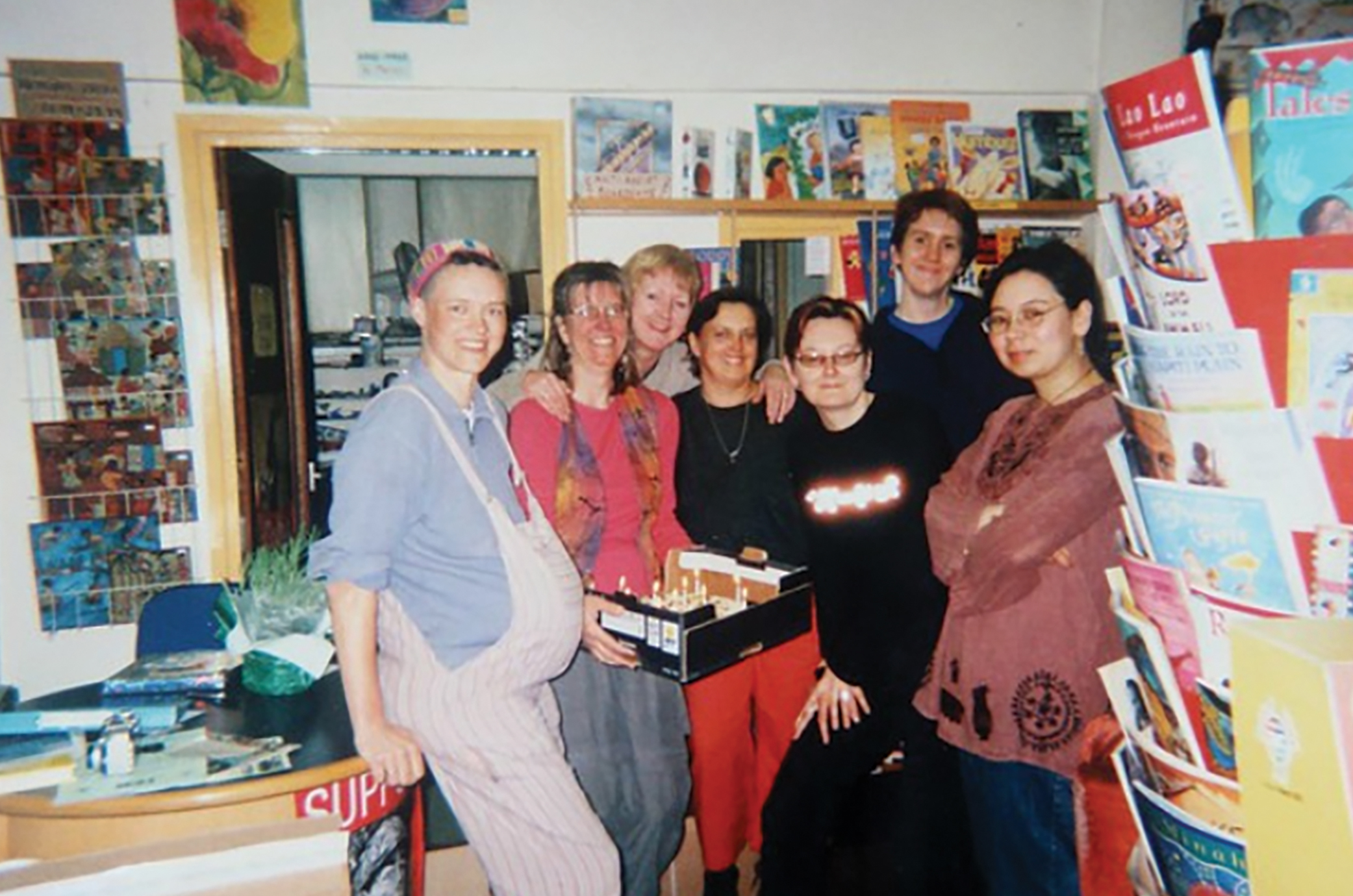
At the tail end of the 1960s, the Merseyside Women’s Liberation Movement was founded in a modest flat in the Liverpool 8 area. Its subsequent rich history offers a vital corrective to clichéd, male-dominated accounts of regionalism.


Members inside News from Nowhere, c.1990s (Copyright News from Nowhere)

On my regular commute from Liverpool Central train station to the University of Liverpool, I pass several physical reminders of the Merseyside Women’s Liberation Movement (MWLM). Walking up Bold Street, I see that the News from Nowhere radical bookshop still stands on my right, a flourishing non-profit women’s co-operative and long-standing focal point for non-sectarian socialist politics. A couple of streets across, a nondescript bar and pizza restaurant on Seel Street carries memories of the first Merseyside Women’s Centre and women’s commune. As I arrive on campus, I catch a quick glimpse of the Liverpool Guild of Students, where feminists hurled flour bombs, stormed the stage, and tore down sound equipment to demonstrate against a charity’s ‘slave girls’ auction in 1972.

While these are just a few reminders of women’s activism in the city, they illustrate just how embedded Liverpool’s feminist past is in the urban landscape. Why then, if people pass these spatial echoes every day, has this important history been largely forgotten?

Described by British historian John Belchem as ‘a city on the edge’, Liverpool’s distinct propensity for political radicalism, industrial militancy, and provincial otherness has formed a key component of its identity throughout the twentieth century. Yet, while the Toxteth riots (1981), the Militant council’s rate-capping rebellion (1985), and, later, the Liverpool dockers’ dispute (1995–8) have endured in popular memory, women’s contributions have been consistently overlooked.

Recovering the MWLM can help us piece together a richer picture of Liverpool’s contestable history. At a time when national and regional identities are being diluted, distorted, and weaponised by far-right agitators, restoring a positive narrative of radical provincialism can also help to initiate a reclaiming of progressive local identity and provide hope for future political mobilisation and development.
Feminism out of Socialism

The MWLM’s origin story is not unlike many others, epitomising the decentralised small-group philosophy of women’s liberation. In late 1969, a group of women and men — many of whom were already friends and neighbours — gathered informally at Princes Park Mansions in the multicultural area of Liverpool 8, in a modest flat belonging to town planner and housing activist Catherine Meredith. Others in the group included trainee speech therapist Anne Neville and her partner Charles Wakstein, teacher Marge Ben-Tovim and her husband Gideon, and radical GP Sheila Abdullah.

Many of these activists were not local but had migrated to Liverpool for work or study, drawn by the city’s radical reputation and its flourishing literary and artistic cultures of the late 1960s. Like many early WLM groups, the women were mostly white, university-educated, young professionals in their twenties and thirties, most were married or partnered with young children, and almost all had come to feminism ‘out of socialism’.

In the months that followed, the women began to develop collective interests and priorities for action, and the group held their first formal meeting soon after, on 12 February 1970. Two weeks later, several members attended the first British Women’s Liberation Conference in Oxford, bringing along two children, and two men who worked in the creche. Within a year, the MWLM had grown into an unusually structured umbrella organisation encompassing several local groups and campaigns across the city, with a rapidly growing membership of over ninety women by 1971.

While the MWLM was part of a wider national (and international) movement, early members decided that their first and foremost concern would be ‘direct action in [their] locality’, eager to adapt their feminism to the city’s working-class culture and existing radical networks. They aimed to support and involve local women as a kind of feminist advisory service, and focus on tackling ‘the most pressing injustices’ and ‘local inadequacies’ affecting the whole community. To do so, different campaign groups were established, and the MWLM formulated its own set of demands in 1970, building on the existing four national demands:

From the outset, women’s reproductive healthcare (or lack of it) formed a major site of feminist activism in response to stark local disparities in abortion and contraception provision in Liverpool. Despite legislative advances since the 1960s, Liverpool remained a stronghold of medical and religious opposition, stemming largely from its deeply embedded Irish Catholic culture. Known as a ‘city against abortion’, Liverpool was reported as the most difficult place in the country to get an NHS abortion.

Several key MWLM activists who had medical backgrounds also introduced a feminist focus on women’s healthcare. Although the WLM eschewed formal leaders officially, certain people clearly emerged as local figureheads with strong influence over campaigning priorities. Abdullah was a passionate defender of abortion rights and, alongside other sympathetic local doctors like Socialist Health Association president Cyril Taylor, used her practice as a site of activism to educate and advocate for women’s health.

Her professional expertise garnered trust from people within and outside the women’s movement, giving credibility to the campaign in Liverpool and helping to establish several early feminist initiatives, including free pregnancy testing, family planning services, and pioneering women’s health pamphlets. As activist Nina Houghton later reflected, ‘It was [Sheila’s] priority, and she made it ours too.’

Women’s health remained a key local priority throughout the 1970s and 1980s, championed by Abdullah and other later activists like Dr Katy Gardner, Linda Pepper, and Sylvia Hikins. Feminists were also galvanised by national struggles against the White (1975), Benyon (1977), and Corrie (1979) anti-abortion bills, as well as the ongoing local campaign for a daycare abortion unit, a new support service for Irish women seeking abortions, and action defending Liverpool’s Women’s Hospital.
Scouse Defiance

Curating a distinct feminist identity through local campaigning priorities equipped the MWLM with a strong basis for outreach endeavours, allowing activists to recruit new members, publicise the movement, and spread feminist ideas into multiple spaces. Alongside public marches, protests, and street campaigning, feminists in Liverpool used both the mainstream and alternative media to promote their ideas and establish the movement locally. They also engaged with existing women’s groups and left organisations, seeing their feminism as part of a broader movement.

Linking up with other groups sparked surprising collaborations and networks in the city. One early example was the unlikely solidarity between Merseyside feminists and striking dustmen, who led a campaign for council workers’ wage increases in October 1970. The women suggested a joint march to show unity between all low-paid workers, and the resulting demonstration saw thirty feminists march side by side with over a hundred dustmen and their wives. While the dustmen carried MWLM placards displaying slogans such as ‘Merseyside WLM demands a basic wage for all’, feminist activists carried dustbins, which they emptied on the steps of Liverpool City Hall in protest. Examples like this demonstrate how, at least on a local level, feminist activism often overlapped and connected with a myriad of different groups in the fight for social equality.

A desire to appeal to ordinary Scousers also prompted the development of a distinctly local style of protest, as the dustmen’s demonstration hints at. Adopting a Scouse blend of ‘truculent defiance, collective solidarity. . . and fatalist humour’ in the face of adversity, feminist activism in Liverpool was bold, creative, irreverent, and dramatic.

Feminist street theatre, for example, functioned as a powerful tool of political engagement and consciousness-raising. It enabled activists in Merseyside to make links with women in different communities and communicate their ideas in humorous and experimental ways, often using cross-dressing, music, caricature, and political satire to deconstruct and critique gender identities and inequalities. The group’s first play, performed outside the Liverpool Women’s Hospital in 1976, highlighted the absurdity of the Benyon abortion bill and featured feminists dressed up as William Benyon and other Conservative politicians in a mock boxing ring. Another play in 1980 featured a ‘cuts monster’ to visualise Thatcher’s ‘gobbling up’ of public services, housing, and local employment, and was written in collaboration with community groups like Dingle Tenants Action Group and the Netherley Flat Dwellers.

Fusing the WLM’s deliberately ostentatious style of protesting and a rich history of avant-garde political performance with Liverpool’s distinctive working-class wit, Merseyside feminist street theatre was a novel strategy that allowed activists to establish a feminist presence in the city and gain political agency through the contestation of physical space.

Reclaiming the urban landscape was also an important impetus for creating specific women’s spaces, which proved a growing necessity as the movement expanded. In late 1973, the first Merseyside Women’s Centre opened at 49 Seel Street in Liverpool city centre, in a derelict Georgian terrace building owned by the council. A group of young feminists took on the lease, including Marianne Sawyer, who was involved in housing co-operatives, and Sue Cartledge, who worked alongside Meredith in the council’s planning department. This expertise and experience with housing was crucial in acquiring and refurbishing the space as a women-only commune and women’s centre.

As in other towns and cities, the women’s centre quickly became the focal point for local feminist activism and communication, operating as an information and advice centre, library, meeting space, and an informal refuge for vulnerable women. Similarly to later spatial experiments of the 1980s (like the Merseyside Trade Union, Unemployed, and Community Resource Centre on Hardman Street), the Merseyside Women’s Centre was an important place for both feminists and women outside the movement to socialise, access help and support, and tentatively explore collective politics. Symbolically, it also provided evidence of a powerful and tangible feminist movement existing within the city, representing the transformation of everyday urban spaces for political uses.
Regionalism Reimagined

The Seel Street centre closed in 1977 due to problems with finances, logistics, and difficult internal dynamics. But this did not mark the end of the mwlm. Local feminism continued to flourish in different spaces, including the Sunnyside women’s housing co-operative (where women from the Seel Street commune moved to in 1975), the News from Nowhere bookshop, and a new women’s centre established at the Rialto Community Centre in 1978.

Like the national movement, the MWLM experienced a widening of feminist ideas and action at this time. While some historians have characterised the late 1970s as a time of turmoil, tension, and fragmentation for the WLM, the movement in Liverpool also saw an influx of women from diverse backgrounds and ages, as well as new campaigns and groups such as Reclaim the Night, Women and Ireland, Merseyside Women Oppose the Nuclear Threat, and the Socialist-Feminist and Women’s Action Group.

Yet, like elsewhere, the MWLM struggled to navigate this diversification. A plurality of ideas and experiences provoked numerous tensions and disagreements from the mid-1970s onwards, over issues concerning class, sexuality, and separatism. One particular area of difficulty was the relationship between black and white feminists, reflecting a wider disjuncture between the Left and the black community in Liverpool. Despite organising in historically multicultural areas like Liverpool 8, white feminists in the MWLM failed to make meaningful links with the black community, leading to the establishment of an entirely separate movement of black feminism led by groups like Liverpool Black Sisters.

It is important to remember that the WLM was not the only women’s movement of the period, but was part of a wider ‘second-wave’ that was fought on many fronts. Alongside WLM groups, women organised in trade unions, tenants groups, political parties, and community groups. Sometimes, as with black women’s groups, these networks were isolated and distinct from the MWLM. However, in many cases, they did converge around various campaigns, particularly those focused on women’s healthcare, housing, and community action. Collaboration between feminists and working-class tenants organising in places like Kirkby and Netherley, for example, resulted in reciprocal and long-lasting networks of solidarity.

This was reflected in the shifting focus of the local feminist magazine Merseyside Women’s Paper, which began in 1977 to provide a ‘Liverpool perspective on feminism and a feminist perspective on Liverpool’. While class politics and broader community activism were emphasised as central to the women’s movement from the paper’s beginnings, by the late 1970s, the editorial collective was keen to cater to a wider readership and foster communication with women outside the MWLM. From this point, Merseyside Women’s Paper acted as a more representative forum for a broader struggle, frequently including reports on women’s strikes and community campaigns, as well as interviews and articles by women from various socialist and communist groups.

Co-ordinating these struggles and forging cross-class, intergenerational, and translocal alliances became increasingly salient with the brutal onslaught of Thatcherism after 1979, which exacerbated Liverpool’s economic decline and brought many working-class communities into extreme deprivation. In the face of intense deindustrialisation, mass unemployment, and public sector cuts, a broad socialist-feminist approach was, as I’ve argued elsewhere, ‘not just an ideological preference but an economic and political necessity’ to defend against closures and job losses, and to reimagine new grassroots alternatives.

While the macho class-reductionist politics of Militant somewhat hindered the development of a ‘municipal feminism’ within Liverpool’s radical Labour council, MWLM activists still managed to play an important role in the city’s broader networks of resistance in the 1980s. Many also forged feminist careers and took their experience of women’s liberation into fields such as education, healthcare, trade unions, and the cultural sector, reflecting wider feminist trajectories in Britain. As my commute hints, the legacy of this in the city is demonstrated by the longevity of feminist spaces like News from Nowhere, Blackburne House, and the Women’s Health Information and Support Centre.

Recovering the MWLM redresses an injustice in the historical memory of radical Liverpool, supplanting the almost folkloric anti-heroes of Derek Hatton and Tony Mulhearn with hitherto unknown feminist activists like Neville and Abdullah. Telling these stories also provides important examples of how the Left can embed itself in local communities by being attuned to regional specificities and being open to adapting, experimenting, and forming alliances across the political spectrum. To overcome its fragmentation and build a truly devolved movement, the Left should look to the radical regionalism of the past for real grassroots examples rooted in (and driven by) the needs of local communities. As Sam Wetherell concludes in his recent book on the ‘making and unmaking’ of Liverpool, ‘the future is less certain and more open to possibilities than we can presently imagine’.


Contributors

Rachel Collett is a PhD student at the University of Liverpool researching the Merseyside Women’s Liberation Movement from 1969 to the 1990s.


‘Tribune – standing between the elite and the people’

Debbie Abrahams, Beccy Cooper, Vicky Foxcroft, Louise Haigh, Justin Madders, Sarah Owen & Yuan Yang

5th January, 2026

©Shutterstock/1000 Words.

In Ancient Rome, the term ‘tribune’ came to define the political office whose purpose was to protec ordinary people – Roman workers – from the excesses and abuses of the political and economic elite.

That’s a job that matters. Advocating for the interests of ordinary people is what many of us in the Labour Party became involved in politics to do. And it’s the relentless mission of the recently relaunched Tribune Group of Labour MPs, which we are proud to lead.

We are fuelled by a mixture of determination that British people be allowed to build a politics and economy that works for them; by intense frustration that this is not the case today; and by hope, that we can and will achieve our mission.
Challenge the failing status quo

It’s easy to talk in tropes about these things. But sometimes a cliche sticks because a cliche is true.

It is true that, right now, too many parents fear that their children will be worse off than they were and will have fewer opportunities than they did.

It is true that we have a labour market that runs on exploitation, denies workers agency, and funnels wealth to those who contribute the least.

It is true that the cost-of-living crisis has exposed and entrenched a frightening level of precarity across society. We might have all grown weary of hearing these things expressed, but they have not yet been fixed. Far from it. Tribune’s mission is to change that.

And in order to move faster and to fix these things we have to be more honest about what has caused them.

The cost-of-living crisis is not simply the result of one-off shocks, whether Covid-19 or Russia’s illegal invasion of Ukraine. It runs deeper, to the way our economy is structured and who it works for. It is not an accident or an act of god, it is the product of systemic negligence and greed.

Our Labour Government has made important progress on how our economy works – raising the Minimum Wage, promoting public ownership, regulating sectors like water and the rental market. But just as we agree with the critique that we haven’t clarified who we stand for, clarity is just as often gained by who we stand against.

We must approach the economy differently. We must challenge the failing status quo. We must change how it is run once and for all.
A Centre-left vision in practice

Since 1966, the Tribune Group of Labour MPs has stood in the tradition of the labour movement rooted in the trade unions – a tradition of solidarity, fairness and shared prosperity. We want Britain to grow again – in a way that raises living standards, not just balance sheets.

Tackling the cost-of-living must remain our central mission. Fair pay, secure work, and ensuring that productivity gains are shared with workers are essential. So too are practical steps that put more money in people’s pockets – from increases in the minimum wage to cutting energy bills. Lowering the cost of essentials like utilities, rent, and housing also drives a virtuous economic circle, allowing interest rates to be lowered even faster, driving more growth and cutting mortgage payments.

Subscribe here to our daily newsletter roundup of Labour news, analysis and comment– and follow us on Bluesky, WhatsApp, X and Facebook.

Opportunity must be spread across the country, not hoarded in a few superficially successful pockets. We want an ambitious Labour Government – one that is serious and credible too. And while the personality-driven Westminster media might want to see every meeting of two or more Labour MPs as a nascent leadership bid, that isn’t what this is about. It is about pooling resources and talents to reinvigorate centre-left thinking and to serve the Party with ideas and energy – in the very best spirit of our movement.

That means using the powers entrusted to us by the British people to build an economy fit for the 21st century; one where working people are better off and wealth and power are not concentrated in the hands of the privileged few.

So what does a centre-left economic vision look like in practice? First, an economy that serves people, communities, and the common good. That’s why measures like bringing our railways back into public ownership matter. When we own essential natural monopolies such as these, we can demand the service we deserve and protect ourselves from predatory practices.

Work should pay. Security should be the norm for those in work and those who can’t. Aspiration should be realistic. That is why we welcome measures such as the Employment Rights Act, which will strengthen workers’ rights across the country and the lifting of the two-child benefit cap.

Of course, the challenges do not stop there. Automation and artificial intelligence are already reshaping the world of work. Our task is to ensure that these changes enhance security and opportunity, rather than erode them, and that working people share in the gains of innovation.

Voters will judge Labour on whether we understand the economic reality they face. If we do not, we will be discarded just as decisively as the Conservatives were. At our relaunch party Ed Miliband quoted Neil Kinnock, describing Tribune as the home of those “with dreams, but who are not dreamers”. In 2026 – Tribune’s 60th year – our ambition is simple: to turn those dreams into real, tangible change for the people we serve.

Share your thoughts. Contribute on this story or tell your own by writing to our Editor. The best letters every week will be published on the site. Find out how to get your letter published.

We will focus on developing practical, credible ideas for economic renewal rooted in equality and solidarity, as well as campaigning across the country. We will work tirelessly to bring the ideas and the energy to this government that allow us to deliver on an idea that is ancient yet radical. That we are all better off when something strong stands between the elite and the people; that a nation is more than the sums on its balance sheet; that a good economy serves the people and that an economy that expects the people to serve it is bad.

Labour wins when – as the Tribunes of Rome were charged with doing – it protects and leads the people. We are here to help the Party to remember that mission and to deliver on it.


Debbie Abrahams

Debbie Abrahams is MP for Oldham East and Saddleworth.@Debbie_abrahamsView all articles by Debbie Abrahams


Beccy Cooper

Dr Beccy Cooper is the MP for Worthing West.View all articles by Beccy Cooper


Vicky Foxcroft

Vicky Foxcroft is Labour MP for Lewisham North.@vickyfoxcroftView all articles by Vicky Foxcroft


Louise Haigh

Louise Haigh is MP for Sheffield Heeley and former Transport Secretary.@LouHaighView all articles by Louise Haigh


Justin Madders

Justin Madders is MP for Ellesmere Port and Bromborough.@justinmaddersView all articles by Justin Madders


Sarah Owen

Sarah Owen is MP for Luton North and Chair of the Women and Equalities Committee.@SarahOwen_View all articles by Sarah Owen


Yuan Yang

Yuan Yang is the MP for Earley and Woodley.View all articles by Yuan Yang
New poll reveals majority of Brits want to reverse Brexit and rejoin the EU

Today
Left Foot Forward

The demand to reverse Brexit continues to grow


A majority of British people would like to see the UK rejoin the EU if another Brexit referendum was held.

Almost a decade on from the 2016 Brexit vote, a new Deltapoll Survey for the Mirror has revealed that nearly six in ten (58%) of people who would vote in a second referendum would vote for the UK to rejoin the EU.

Support for reversing Brexit was highest among 18-24-year-olds, with more than eight in 10 (86%) saying they would vote to rejoin the bloc.

Older voters were less likely to support reversing Brexit. Among 55 to 64-year-olds, 51% to 49% supported remaining outside of the EU, while 58% to 42% of over-65s did not want to rejoin.

Among 55–64-year-olds, a narrow majority (51% to 49%) supported remaining outside of the EU.

Opposition was more pronounced among over-65s, where 58% said they would not support rejoining, and 42% said they would.

A majority of Conservative and Reform voters polled said they were against rejoining the EU, at 66% and 82% respectively.

However, 71% of Labour supporters and 78% of Lib Dem voters backed rejoining the EU.

Every area of the country favoured returning to the bloc, with support highest in Scotland (73%), followed by London (65%) and Wales (65%).

It was lowest in the Midlands (53%) and the North (54%) but both regions still favoured rejoining the EU.

Keir Starmer has said the UK should move towards closer alignment with the single market “if it’s in our national interest” but has ruled out rejoining a customs union with the EU.

In December, the government announced an agreement for the UK to rejoin the Erasmus+ scheme which previously allowed students to study and gain work experience in EU member states.

Over the last month, the justice secretary David Lammy and health secretary Wes Streeting, as well as the boss of the Trades Union Congress, Paul Nowak, have said that the UK should rejoin a customs union with the EU.

Olivia Barber is a reporter at Left Foot Forward
Prime Minister Keir Starmer says he stands with Greenland after Trump threatens to take it over

Yesterday
Left Foot Forward


"I stand with her. She's right about the future of Greenland."


Prime Minister Keir Starmer has backed the Danish Prime Minister over the future of Greenland, after President Trump again suggested the US could take it over.

Trump’s comments came after he used military force in Venezuela to capture its President Nicolas Maduro and his wife. The Trump administration attacked Venezuela on Saturday, saying that the US will now “run” Venezuela until a “safe, proper and judicious transition” can be ensured. The US president has also said US oil companies would also fix Venezuela’s “broken infrastructure” and “start making money for the country”.

Despite senior Democrats criticising the administration’s actions in Venezuela, Trump and his allies have said that Maduro has engaged in state-sponsored drug trafficking with its support of notorious gangs.

Maduro is charged with narco-terrorism, cocaine importation conspiracy, possession of machine guns and destructive devices, and conspiracy to possess machine guns and destructive devices.

Others have condemned Trump’s actions as a violation of international law and fear that the President could use brute military force to secure his demands on other countries too.

Following the US’s capture of the Venezuelan president, Trump has reiterated his desire to take Greenland, saying: “We need Greenland from the standpoint of national security, and Denmark is not going to be able to do it.”

In a statement issued on Sunday, Danish Prime Minister Mette Frederiksen said: “It makes absolutely no sense to talk about the US needing to take over Greenland.

“The US has no right to annex any of the three countries in ​the Danish Kingdom.”

Ms Frederiksen continued: “I would therefore strongly urge the ‌US to stop the threats against a historically close ally and against another country and another people, who have very clearly ​said that they are not for sale.”

Now Starmer has backed the stance of the Danish PM, saying: “Let me be really clear about Greenland – the future for Greenland is for Greenland, the Kingdom of Denmark.

“Denmark is a close European ally, a close NATO ally. And the future therefore has to be for Greenland, for the Kingdom of Denmark, and only for Greenland and the Kingdom of Denmark.”

Asked if he agreed with the Danish PM’s words, Starmer said: “I stand with her. She’s right about the future of Greenland.”


Basit Mahmood is editor of Left Foot Forward