Monday, January 12, 2026

EPA to Stop Counting Public Health Benefits When Setting Air Pollution Standards

“This policy will cause more deaths of vulnerable Americans, like infants and the elderly,” said one critic. “Also, it appears to be a violation of the Clean Air Act.”
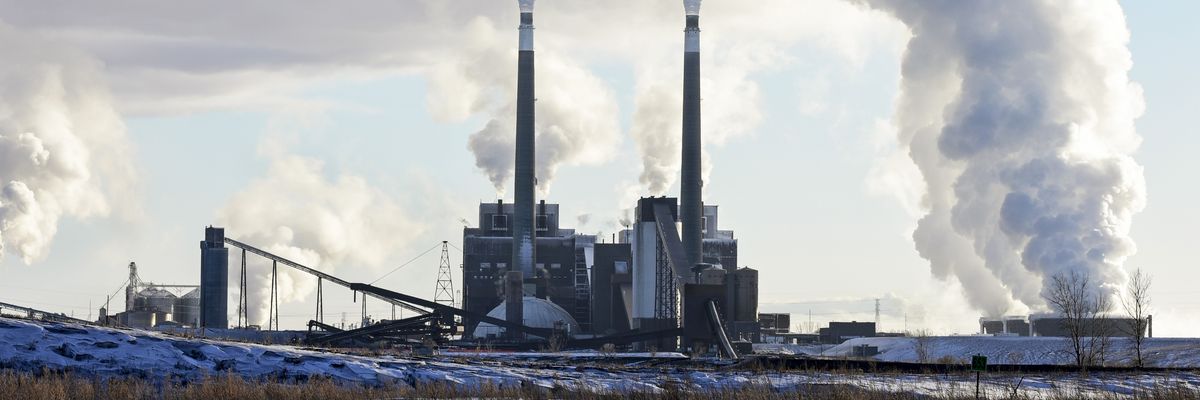

Smoke billows from the Coal Creek Station, a coal-fired power plant located near Underwood, North Dakota, on January 9, 2022.
(Photo by Dan Koeck/Washington Post via Getty Images)

Brett Wilkins
Jan 12, 2026
COMMON DREAMS

The Trump administration plans to stop calculating the monetary value of the public health benefits from reducing air pollution and instead focus exclusively on the cost to industry when setting pollution limits, the New York Times reported Monday.

Intragency emails and other documents reviewed by the Times revealed that the Environmental Protection Agency (EPA) is planning to stop tallying the financial value of health benefits caused by limiting fine particulate matter (PM2.5) and ozone when regulating polluting industries.

Research published in 2023 showed that PM2.5 pollution from coal-fired power plants alone killed approximately 460,000 people in the US from 1999 to 2020.

“This policy will cause more deaths of vulnerable Americans, like infants and the elderly,” American University School of Public Affairs professor Claudia Persico said on X Monday. “Also, it appears to be a violation of the Clean Air Act. This is incredibly foolish.”

The EPA proposal would mark a stark reversal of decades of policy under which the agency cited the estimated cost of avoided asthma attacks and premature deaths to support stronger clean air rules. The change is likely to make it easier to roll back limits on PM2.5 and ozone from coal-burning power plantsoil refineries, steel mills, and other polluting facilities.

“The idea that EPA would not consider the public health benefits of its regulations is anathema to the very mission of EPA,” Richard Revesz, faculty director at the Institute for Policy Integrity at New York University School of Law, told the Times.

“If you’re only considering the costs to industry and you’re ignoring the benefits, then you can’t justify any regulations that protect public health, which is the very reason that EPA was set up,” Revesz added.


The Environmental Protection Network (EPN), an advocacy group, said in a statement Monday that “EPA’s reported decision to ignore prevented deaths is part of a pattern of ignoring or downplaying health effects in the rulemaking process, including in its rulemaking on effluent guidelines for coal-fired power plants and its recent Waters of the United States rulemaking.”

Critics of President Donald Trump’s policies accuse his administration of repeatedly putting polluters—who contributed hundreds of millions of dollars toward reelecting the president and supporting other Republicans—over people.

“EPA should strengthen how it values human life and health, not pretend it doesn’t matter,” Katie Tracy, senior regulatory policy advocate at the consumer advocacy group Public Citizensaid Monday. “By refusing to monetize the benefits of cleaner air, the agency is effectively saying that preventing asthma attacks, heart disease, and early deaths have no dollar value at all.”

“This unconscionable decision by the EPA should be called out for what it really is—a favor to corporate interests at the expense of the environment and public health,” Tracy added. “EPA’s decision is not only shocking—it’s illegal and violates the Supreme Court’s instruction that the government cannot stack the deck to benefit polluters. Accordingly, if this disturbing policy leads to regulatory repeals or weak standards, it will certainly be challenged in court.”

During Trump’s second term, the EPA has moved to repeal or replace the stronger carbon emission limits on fossil-fueled power plants put in place by the Biden administrationrescinded Biden-era fuel efficiency and emissions standards for cars and light trucks, revoked California’s ability to enact stricter vehicle emissions rules, and signaled plans to overturn the agency’s finding that greenhouse gases are a public health hazard.

The EPA has also weakened water and wetland protections, rolled back regulations limiting so-called “forever chemicals” in drinking water, dramatically cut or eliminated environmental justice programs, reduced enforcement of environmental violations, dismantled long-standing advisory and scientific panels, removed all mentions of human-caused climate change from its website, and more.

According to a 2024 EPN analysis, Trump’s rollbacks could cause the deaths of nearly 200,000 people in the United States by 2050.

EPA Administrator Lee Zeldin—a former Republican congressman from New York with an abysmal 14% lifetime rating from the League of Conservation Voters—has also boasted about canceling around $20 billion worth of Biden-era green grants.

“EPA’s current leadership has abandoned EPA’s mission to protect human health and safety,” EPN senior adviser Jeremy Symons said Monday. “Human lives don’t count. Childhood asthma doesn’t count. It is a shameful abdication of EPA’s responsibility to protect Americans from harm. Under this administration, the Environmental Protection Agency is now the Environmental Pollution Agency, helping polluters at the expense of human health.”

'Not The Onion': Internet aghast at Trump admin's 'seismic' pollution change

Nicole Charky-Chami
January 12, 2026 
RAW STORY

The Environmental Protection Agency plans to reverse a longstanding policy that calculated the health benefits of reducing air pollution.

The agency has referred to "estimates of avoided asthma attacks and premature deaths to justify clean-air rules" for decades, and that is now set to end under the Trump administration, according to a New York Times report.

The Times reportedly obtained internal agency emails and documents indicating that the EPA will no longer factor the "gains from the health benefits caused by curbing two of the most widespread deadly air pollutants, fine particulate matter and ozone, when regulating industry."

"It’s a seismic shift that runs counter to the E.P.A.’s mission statement, which says the agency’s core responsibility is to protect human health and the environment, environmental law experts said," The Times reported.

On social media, users responded to the major policy change.

"This reads like an Onion Headline of something a Republican would do," user Conor Rogers wrote on X.


"Capitalism at work once again!" Tech and culture journalist Taylor Lorenz wrote on X.

"Not The Onion," author David Fenton wrote on X.

"Less than ideal," climate analyst Will Nichols wrote on X.

"Making America healthy again?" Activist and president of Leaders We Deserve David Hogg wrote on X.

"This admin literally doesn’t care if you live or die, as long as their billionaire buddies do okay," Sen. Ruben Gallego (D-AZ) wrote on X.

"Your zip code is more determining of your health than your genetic code. Pollution isn’t racist, but policies are," anesthesiologist Ebony Jade Hilton, MD, wrote on X.


"Corruption costs lives, by the way," Tiffany Muller, president of End Citizens United, wrote on X.

"Beyond parody," journalist and editor-in-chief of Zeteo Mehdi Hasan wrote on X.
Trump declares himself president of Venezuela — and sends 'wake-up call' to world

Alexander Willis
January 12, 2026 
RAW STORY

President Donald Trump declared Sunday night that he was the new “acting president of Venezuela” by sharing a doctored image of his online biography bearing the new title — a declaration that produced shockwaves for onlookers.

“He’s spiraling into a singularity of narcissistic terror over [Jeffrey] Epstein, and decompensating with performative dictatoring,” wrote Jim Stewartson, a journalist and podcast host, in a social media post.

“His alternate reality is sealed and the people around him are riding his collapse to get what they want – total destruction of the world order. What a timeline.”

Trump took to his social media platform Truth Social to share the image of himself that's featured in his biography on Wikipedia — edited to list him as Venezuela’s “acting president.” The declaration comes just over a week after his unprecedented U.S. attack on Venezuela, which Trump said shortly thereafter would be run by the United States until a transfer of power could be facilitated.

Trump declaring himself to be Venezuela's interim president was just the latest sign, some critics said, that the president was potentially sparking even more civil unrest across the world.

“Not satire… Zero presidents have ever publicly declared executive authority over a foreign nation,” wrote author and analyst Shanaka Anslem Perera in a social media post on X, where he’s amassed more than 111,000 followers. “The greatest energy realignment since the 1973 embargo is hiding in plain sight as a ‘troll post.’ When the world realizes this isn’t a joke, the repricing won’t be gradual. It will be violent.”

Others, like Brian Berletic, a geopolitical analyst and former U.S. Marine, called Trump’s unprecedented declaration a “wake-up call to the rest of the world.”

“A US president declaring himself president of another nation 1000 miles from his own nation's borders is unhinged criminality,” Berletic wrote in a social media post on X, where he’s amassed nearly 120,000 followers.

“This is done to prime the US public for wider criminality to come. This is a wake-up call to the rest of the world, nations big and small, that this is no longer a matter of diplomacy, international relations, or deal-making.”


Of course Trump has no Venezuela plan — look what made him attack it

John Stoehr
January 12, 2026 

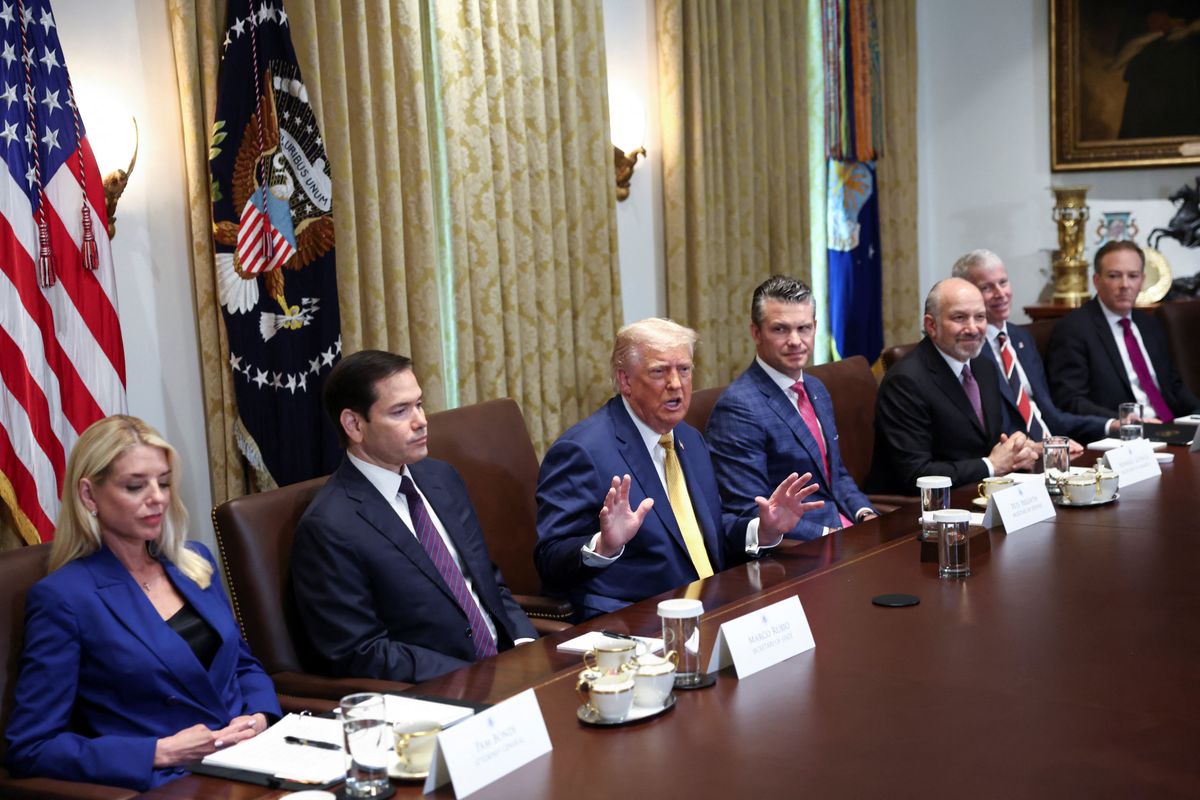
Donald Trump hosts a cabinet meeting at the White House. REUTERS/Kevin Lamarque

Why did Donald Trump invade Venezuela? His id made him.

Look at me, love me — every reason for doing anything is downstream from there.

I was telling you the other day that it’s not really clear why the president ordered the illegal and unconstitutional invasion of Venezuela and the kidnapping of its head of state. Regime officials provided reasons but were often contravened by Trump.

“Aren't We Tired of Trying to Interpret Trump's Foreign Policy Gibberish?” asked Marty Longman in the headline of a piece published after news of the attack. Indeed, we are, and I hasten to add that endless attempts to figure it all out are a form of oppression.

It isn’t normal.


Even if you disagreed with the 2003 invasion of Iraq, you understood the argument for it. George W Bush said Saddam Hussain had weapons of mass destruction. That was a lie, but at least the thinking above and below it was coherent.


In contrast, senior officials in the Trump regime are all over the place about why the US had to violate Venezuela’s sovereignty, giving the impression that no one above the level of military operations actually knows what they’re doing or why they’re doing it.

Meanwhile, critics can’t form a precise counterargument since the original “argument” is, well, no one really knows what it is. So, for the most part, liberals have decided to brush aside the confusion and incoherence to pinpoint two reasons that makes sense to them: Vladimir Putin and oil.

Don’t get me wrong. If you believe Trump is a tool of a Russian dictator, I’m with you. If you think Trump is a criminal president who is willing to use the awesome power of the United States military to commit international crimes, I’m with you.


But I also think these arguments tend to share a flaw.

They make more sense than Trump has ever made.

I’m reminded of that time Susie Wiles seemed to trash other people in the Trump regime. The White House chief of staff called Russ Vought “a rightwing absolute zealot,” for instance.


To savvy observers, she seemed to be looking for a scapegoat for her boss’s troubles. But in this White House, what you see is often what you get — if it looks like chaos, it probably is.

As I said at the time:

“There are no anchoring principles, no moral guideposts, no concept of national interest, no sense of the common good. It’s just mindless impulse and rationalizations after the fact.”


Set aside Putin and oil to consider something Trump values above everything else: “ratings.” He believes the more people watch him, the more they love him. What better way to get everyone’s attention than to be seen as a war president on TV?

Not just any war, though.

In a recent interview with me, the Secretary of Defense Rock (a pen name) said Trump “dislikes large, open-ended occupations that produce visible casualties and political backlash.”


(That’s almost certainly a result of watching coverage of the Iraq War in which images of death and destruction were common.)

Instead, he likes “coercive actions below the threshold of war — air strikes, sanctions, seizures, energy pressure, and threats that generate profit and leverage without requiring public buy-in.”

In other words, he likes one-and-done military ops. Venezuela was one of those. So was the bunker bombing of Iran last June. Though they look good on TV, they looked even better with Donald “War President” Trump at the center of it all.


That’s Trump’s id: look at me, love me.

Every reason for doing anything is downstream from there.

What does it all mean? That’s what everyone is asking, but the question itself is more dignified than the thing it’s questioning.

Trump got his made-for-TV war. He got everyone buzzing about what he’s going to do next about Greenland, MexicoCanada, wherever.


Meanwhile, back in Venezuela, it looks like life is going to go on pretty much as it had been, the difference being that the new leader is even more tyrannical than the last one.

“The idea that she can't rig another election or the opposition will magically take over seems pretty far-fetched, especially because we don't have troops on the ground,” the Secretary of Defense Rock said.

The Secretary of Defense Rock doesn’t use his real name, because Trump is president. He’s the publisher of History Does Us, a newsletter about the intersection of military and civilian life. The last time we spoke, we discussed how the commander-in-chief undermines military discipline.


“The idea that we will launch more air strikes or raids or blockades if she doesn't play ball seems kind of dumb, given where the polling is,” he told me. “At this point, I kinda assume the status quo will hold, and that this entire episode will ultimately amount to little more than content-production and performative-posting.”

Here’s our conversation.
JS: The US now opposes democracies in Europe. We have invaded Venezuela. We are war-drumming about Greenland. Is Vladimir Putin's investment in Donald Trump finally bearing fruit?

SDR: I’d be careful with the phrase “investment bearing fruit,” because it implies command-and-control that we don’t have evidence for. What is clear is something more structural and, frankly, more troubling: Vladimir Putin doesn’t need to control Donald Trump to benefit from him. He benefits from Trump’s own instincts.

Putin’s core objective isn’t territorial conquest in the Cold War sense. It’s the erosion of Western cohesion, legitimacy and confidence. On that score, Trump has been extraordinarily useful without being directed. Attacking allies, casting doubt on democratic norms, treating sovereignty as transactional, and framing international politics as raw deal-making all weaken the post-1945 order that constrains Russia.

On Venezuela specifically, what you’re seeing isn’t a coherent imperial project so much as improvisational, performative power politics — noise that signals disregard for norms rather than a plan to replace them. That norm-breaking itself is the point. It tells allies that rules are optional and tells adversaries that the West no longer believes in its own system.

So no, this isn’t about Putin cashing in some secret investment. It’s about a global environment where authoritarian leaders benefit when the United States abandons restraint, consistency, and democratic solidarity—and Trump does that instinctively. The fruit isn’t conquest. It’s corrosion.
Most of the Democrats in the Congress seem to be pushing back against Trump's imperial overtures. Is that your perspective? If not, what do you think they should do?

There is meaningful pushback from a lot of Democrats (no matter what Democrats are complaining about on background on Axios), more quickly and more openly than during Trump’s first term.

You’re seeing sharper rhetoric and a greater willingness to use oversight, but they don't control any branch of government, so there isn't much they can do.

But with such tight margins, particularly in the House, I don't think it's crazy to shut down the government again (I believe funding expires at the end of the month?), or hold up an NDAA (National Defense Authorization Act). You have senior administration officials openly stating they want Greenland and would use military force, which is so insane that you might as well take extreme measures.
Sad to say, Stephen Miller might be right. 'Nobody is gonna fight the US militarily over the future of Greenland,' he said. If so, NATO could be a paper tiger. Is that what could happen?

I still can't believe this is a thing. Miller is probably right on the narrow, grim point that Denmark isn’t going to “fight the US military” in a conventional war over Greenland. But the leap from that to “NATO becomes a paper tiger” is not automatic — because NATO’s credibility isn’t just “can Denmark win a shooting war with the US.”

It’s whether the alliance remains a political commitment to mutual sovereignty. A US move to seize Greenland would be less a “test of NATO’s tanks” than a self-inflicted alliance-killer that destroys Atlanticism probably forever.

But it is a move that is so outrageous that I think there would be more alarm among congressional GOP's and the military.
Fighting foreign wars is as popular as Jeffrey Epstein's child-sex trafficking ring. Yet Trump continually takes the side of elite interests, in this case, oil companies. What is going on?

I think this is basically Marco Rubio.

I thought he would have very little influence because he came from the internationalist wing of the GOP, but being both secretary of state and national security advisor (and archivist if you care about that) clearly gives Rubio a lot of influence, and Venezuela has been a pet project of his for a while. Add support from Stephen Miller and this was probably an inevitability.

I'm not even sure a lot of the oil companies want anything to do with Venezuela, because of the security concerns, age of infrastructure, and the capital investment that would be required to get any meaningful profit. I also thought the US was supposed to be energy independent?

In addition, Trump’s “anti-war” image is real only in a very narrow sense. He dislikes large, open-ended occupations that produce visible casualties and political backlash. What he’s perfectly comfortable with are coercive actions below the threshold of war — air strikes, sanctions, seizures, energy pressure, and threats that generate profit and leverage without requiring public buy-in.

If a helo goes down, we're having a very different conversation.
There is no followup plan for Venezuela, is there? Trump is just winging it. He has no idea what he's doing. Every choice is made with how it looks on TV in his mind. Am I wrong?

Ya, this is why I never understood all the editorializing about how things have really changed and this is a really great success.

The structures and principals of the Venezuelan government that were set up by Maduro are still intact. From everything I have read, Delcy Rodriguez is a more ruthless political operator than Maduro was, so the idea that she can't rig another election or the opposition will magically take over seems pretty far-fetched, especially because we don't have troops on the ground.

The idea that we will launch more air strikes or raids or blockades if she doesn't play ball seems kind of dumb, given where the polling is. At this point, I kinda assume the status quo will hold, and that this entire episode will ultimately amount to little more than content-production and performative-posting.


Maduro loyalists stage modest rally as Venezuelan govt courts US


By AFP
January 10, 2026


Hundreds of protesters rallied in Caracas - Copyright AFP Juan BARRETO


Javier TOVAR

Supporters of Venezuela’s deposed leader Nicolas Maduro staged protests Saturday, a week after his dramatic capture by US forces, but only hundreds turned out to demand his release as the interim government moved to revive ties with Washington.

Waving flags and placards with the face of the mustachioed ex-leader and his wife Cilia, around 1,000 protesters rallied in the west of Caracas and a few hundred in the eastern Petare district — far smaller than demonstrations Maduro’s camp has mustered in the past.

“I’ll march as often as I have to until Nicolas and Cilia come back,” said one demonstrator, Soledad Rodriguez, 69, of the presidential couple who were taken by US forces to New York to face trial on drug-trafficking charges.

“I trust blindly that they will come back — they have been kidnapped.”

Notably absent from the rallies were top figures from the government, which has said it is reviving diplomatic contact with Washington and discussing possible oil sales to the United States.

Interim president Delcy Rodriguez instead attended an agricultural fair, where she vowed in televised comments she would “not rest for a minute until we have our president back.”

The other two hardline powers in the government, Interior Minister and street enforcer Diosdado Cabello, and Defense Minister Vladimir Padrino Lopez, were not seen at the demos either.


– Diplomatic maneuvers –


Despite the shock of Maduro’s capture during deadly nighttime raids on January 3, signs emerged Friday of cooperation with Washington after US President Donald Trump’s claim to be “in charge” of the South American country.

Washington said US diplomats visited Caracas on Friday to discuss reopening the American embassy.

A State Department official told AFP on Saturday they left again on Friday “as scheduled.”

“The Trump Administration remains in close contact with interim authorities” in Venezuela, the official added.

The Venezuelan government did not reply when asked by AFP whether the US officials had met with Rodriguez.

She has pledged to cooperate with Trump over his demands for access to Venezuela’s huge oil reserves.

But she also moved to placate the powerful pro-Maduro base by insisting Venezuela is not “subordinate” to Washington.

The US embassy in Colombia warned American citizens on Saturday that “the security situation in Venezuela remains fluid” and advised its nationals to leave the country “immediately” as commercial flights become available.


– Anxiety over prisoners –


Anxious relatives meanwhile camped outside jails, awaiting the promised release of political prisoners by the interim government.

Rodriguez’s camp on Thursday began releasing prisoners jailed under Maduro, promising a “large” number would be freed in a gesture of appeasement that Washington took credit for.

However, prisoners’ rights groups said on Saturday that fewer than 20 had been freed, including several prominent opposition figures.

Families slept out overnight under blankets near El Rodeo prison east of Caracas, hoping for the release of their loved ones.

“I am tired and angry,” Nebraska Rivas, 57, told AFP, as she waited for her son to be released.

“But I have faith that they will hand him over to us soon,” she said, after sleeping out on the pavement for two nights.


– Oil talks –


Following Maduro’s capture, Trump vowed to secure access for US companies to Venezuela’s vast oil reserves.

Chevron is currently the only US firm licensed to operate in Venezuela, through a sanctions exemption.

The White House said Saturday Trump had signed an emergency executive order protecting US-held revenues derived from sales of Venezuelan oil, to prevent them from being seized by courts or creditors.

At a White House meeting on Friday, he pressed top oil executives to invest in Venezuela’s reserves, but was met with a cautious reception.

ExxonMobil chief executive Darren Woods dismissed the country as “uninvestable” without sweeping reforms.

Experts say Venezuela’s oil infrastructure is creaky after years of mismanagement and sanctions.

Cuba braces for economic collapse as US blocks Venezuelan oil supplies

Cuba braces for economic collapse as US blocks Venezuelan oil supplies
Analysts believe Cuban President Díaz-Canel, who belongs to the post-revolution generation, does not command the same credibility as the Castro brothers, even if he remains committed to the ideology of the revolution.
By bnl editorial staff January 12, 2026

US President Donald Trump has warned Cuba it will no longer receive oil supplies or financial support from Venezuela, calling on the island's government to negotiate terms with Washington in the aftermath of last week's operation that resulted in Nicolás Maduro's capture.

Writing on Truth Social on January 11, Trump stated no oil or money would reach Cuba from its South American ally, providing no specifics about what kind of agreement he sought or its intended purpose.

Cuban President Miguel Díaz-Canel responded swiftly, rejecting any external interference in his country's affairs and pledging the nation stood prepared to defend itself completely. "Cuba is a free, independent and sovereign nation. No one tells us what to do," Díaz-Canel wrote on X.

The exchange follows the January 3 US commando operation in Caracas that resulted in Maduro's detention alongside his wife. According to Havana's government, 32 Cuban nationals died during the raid, individuals whom Washington claims provided protection services to the Venezuelan leadership.

Trump's threats come as Cuba's communist system shows mounting signs of strain amid deepening economic hardship and crumbling infrastructure. The island has experienced severe food shortages, with an estimated 1.4mn people failing to meet daily caloric requirements in 2023, whilst extreme poverty affected 88% of the population by 2024. Growing numbers of Havana residents have been forced to scavenge through rubbish bins for sustenance as the government's socialist safety net has collapsed.

Trump asserted that Cuba had depended on substantial petroleum deliveries and monetary transfers from Venezuela over many years, receiving these benefits in return for supplying security personnel to Maduro and former president Hugo Chávez. He stated most of these Cuban operatives were killed in the recent American assault.

Foreign Minister Bruno Rodríguez, however, disputed the allegations, insisting Cuba has never accepted payment or material compensation for providing security assistance to foreign governments. He maintained his country possesses full authority to acquire fuel from any exporter willing to conduct business, rejecting Washington's economic restrictions as legitimate constraints on such commerce.

On January 12, Díaz-Canel clarified that bilateral discussions with Washington were limited to technical migration coordination, contradicting Trump's implications about broader negotiations. The Cuban leader specified that meaningful engagement would require "adherence to sovereign equality, reciprocal respect, international legal principles, mutual advantage, non-interference in domestic matters and complete recognition of Cuban independence.”

Trump last week stated Cuba appeared on the verge of collapse, pointing out that the island had depended entirely on Venezuelan petroleum for its income and would struggle without this resource.

Indeed, Cuba faces severe economic difficulties, compounded by long-standing US sanctions and what was an already dwindling supply of subsidised Venezuelan crude oil. The island uses this fuel to operate diesel generators that support an unstable electrical system experiencing regular power failures. The country's power infrastructure has suffered from years of underinvestment and is "literally crumbling", according to Philip Paterson, senior analyst for Latin America at Oxford Analytica, causing frequent nationwide blackouts.

The oil arrangement between ideologically aligned Havana and Caracas dates back to 2000, when Chávez established the subsidised supply agreement. This Venezuelan backing offered a crucial lifeline after the Soviet Union's collapse ended Moscow's economic support to Cuba. However, as Venezuela's own crisis worsened, this aid has largely dried up.

"China is willing to deal with Cuba, but it's not ideologically committed to supporting it the way the Soviet Union or Venezuela were, and it's not keen to deal with charity cases," Paterson said last July during an Oxford Analytica webinar.

American crippling economic sanctions against Cuba have remained in force for over six decades. Washington's reclassification of Cuba as a "state sponsor of terrorism" under Trump's first term has made travel to the United States more difficult for anyone who has visited the island, and placed additional restrictions on companies seeking to do business there. As a result, many tour operators have stopped operating in Cuba, cutting off a critical source of foreign currency.

On January 11, Trump shared a social media post suggesting Marco Rubio might assume leadership of Cuba, voicing his approval of the idea. Rubio, whose parents emigrated from Cuba, currently holds the secretary of state position whilst serving simultaneously as national security adviser and previously heading the US Agency for International Development.

According to analysts, Rubio views Venezuelan regime change as a stepping stone to his ultimate objective of ending communist rule in Cuba. He has long argued that toppling Maduro's government would deal a fatal blow to the communist-run island by undermining Havana's principal supporter.

Another key factor differentiating the current period from earlier crises is leadership. Díaz-Canel, who belongs to the post-revolution generation, does not command the same credibility as the Castro brothers, even if he remains committed to the ideology of the revolution, according to Paterson.

"Expectations of government collapse are writ large now," Paterson said, pointing to reduced external assistance, increasing external pressure, and a leadership that lacks the historic legitimacy of its predecessors.

Maduro's abduction, framed by the White House as law enforcement activity to prosecute the authoritarian leader on narcoterrorism charges, generated widespread international criticism over what critics described as a blatant violation of international law.

The latest warnings to Cuba form part of Trump's broader regional strategy, which he branded the "Donroe Doctrine" in reference to nineteenth-century American foreign policy asserting hemispheric influence. Following the Venezuela operation, Trump has directed threatening statements towards Colombia, Mexico, Iran and Greenland.


Cuba denies being in talks with Trump on potential deal


By AFP
January 12, 2026


Cubans have lived under more than 60 years of US sanctions - Copyright AFP Adalberto ROQUE

Cuba’s leader on Monday reacted defiantly to President Donald Trump’s threats to “make a deal” or pay the price in the aftermath of key ally Nicolas Maduro’s ouster in a US military raid.

Trump has been ramping up pressure on Cuba, one of the few Latin American countries still run by an authoritarian leftist administration after Venezuelan leader Maduro’s capture on January 3.

“We’re talking with Cuba,” Trump said aboard Air Force One on Sunday, hours after urging Havana to do a deal to head off unspecified US actions.

The Republican president, who says Washington is now effectively running Venezuela, earlier vowed to cut off all oil and money Caracas had been providing to ailing Cuba.

“THERE WILL BE NO MORE OIL OR MONEY GOING TO CUBA – ZERO!” Trump said on his Truth Social platform.

“I strongly suggest they make a deal, BEFORE IT IS TOO LATE,” he said, without specifying what kind of deal he was promoting or what would happen if Cuba refused to negotiate.

Cuba, which is struggling through its worst economic crisis in decades, has reacted defiantly to the US threats even as it reels from the loss of a key source of economic support from Caracas.

President Miguel Diaz-Canel denied Monday being in talks with Washington, saying there are “no conversations with the US government except for technical contacts in the area of migration.”


– ‘To the last drop’ –


On Sunday, Diaz-Canel vowed that the Caribbean island’s residents were “ready to defend the homeland to the last drop of blood.”

Cuba has been a thorn in the side of the United States since the revolution that swept communist Fidel Castro to power in 1959.

The deployment of Soviet nuclear missile sites on the island triggered the Cuban missile crisis of 1962, when Washington and Moscow took the world to the brink of nuclear war.

During his first presidential term, Trump walked back a detente with Cuba launched by his predecessor Barack Obama.

Immediately after the US capture of Maduro in a dramatic raid in Caracas, Trump stated that Cuba was “ready to fall.”

He noted that the island, which has been plagued by blackouts due to crippling fuel shortages, would find it hard to “hold out” without heavily subsidized Venezuelan oil.

The Financial Times last week reported that Mexican oil exports to Cuba had surpassed those of Venezuela last year.


– Role for Rubio? –


Trump’s Secretary of State Marco Rubio, a child of Cuban immigrants who is a sworn foe of the communist government, has long had Havana in his sights.

“If I lived in Havana and I was in the government, I’d be concerned at least a little bit,” he told reporters on January 3, after Maduro’s capture and transfer to the United States on drug trafficking and weapons charges.

Aboard Air Force One on Sunday, Trump referred to the generations of Cubans, like Rubio’s parents, who had fled the island to the United States.

“Most importantly, right now, we’re going to take care of the people that came from Cuba, that are American citizens, or in our country,” Trump said, without saying how he would achieve that.

He also reposted a message that jokingly suggested Rubio could serve as president of Cuba.

burs-cb/msp


Trump tells Cuba to ‘make a deal, before it is too late’

By AFP
January 11, 2026


About a quarter of Cuba's citizens are eldery, and many of them are poor
 - Copyright AFP YAMIL LAGE

US President Donald Trump urged Cuba on Sunday to “make a deal” or face unspecified consequences, warning that the flow of Venezuelan oil and money to Havana would now stop.

The communist-run island near Florida has been a US foe and ally of Caracas for decades, but Trump has ramped up his threatening language in recent days — particularly after Washington toppled Venezuela’s leftist leader Nicolas Maduro.

“THERE WILL BE NO MORE OIL OR MONEY GOING TO CUBA – ZERO!” Trump said on his Truth Social platform. “I strongly suggest they make a deal, BEFORE IT IS TOO LATE.”

Trump provided no details about what potential deal he referred to, or what such an arrangement would achieve.

His remarks come a week after US forces seized Venezuela’s authoritarian leader Maduro in a nighttime operation in Caracas that killed dozens of Venezuelan and Cuban security forces.

A week ago, Trump stated that “Cuba is ready to fall,” noting that the island’s economic crisis was worsening and that it would be difficult for Havana to “hold out” without receiving heavily subsidized Venezuelan oil.

Earlier on Sunday the president reposted a message suggesting US Secretary of State Marco Rubio — a child of Cuban immigrants — could become the president of Cuba.


US President Donald Trump is heaping pressure on Cuba, the communist-ruled island nation barely 90 miles (145 kilometers) from the state of Florida – Copyright AFP OMAR HAJ KADOUR

Trump shared that post with the comment: “Sounds good to me!”

In a separate message soon afterwards, Trump said that “Cuba lived, for many years, on large amounts of OIL and MONEY from Venezuela. In return, Cuba provided ‘Security Services’ for the last two Venezuelan dictators, BUT NOT ANYMORE!”

“Most of those Cubans are DEAD from last week’s U.S.A. attack, and Venezuela doesn’t need protection anymore from the thugs and extortionists who held them hostage for so many years.”

Cuba’s communist government rejected the suggestion that Havana had been in the pocket of Caracas.

Cuba has “never received monetary or material compensation for the security services it has provided to any country,” Foreign Minister Bruno Rodriguez posted on X.

He noted Havana has the right to import fuel from any willing exporter, “without interference or subordination to the unilateral coercive measures of the United States.”

– ‘Beginning of the end’ –

Under a US trade embargo, Havana since 2000 has increasingly relied on Venezuelan oil provided as part of a deal struck with Maduro’s predecessor, the firebrand leftist Hugo Chavez.

Trump’s provocative language on Cuba comes as the emboldened American leader has hinted he has other countries in his sights after capturing Maduro.

Trump, who had openly sought last year’s Nobel Peace Prize, has recently threatened Colombia, Mexico, Iran and Greenland.

Some Republican US lawmakers on Sunday lauded Trump for his aggressive comments on Cuba, including Mario Diaz-Balart, a US congressman from Florida.

“We are witnessing what I am convinced will be the beginning of the end of the regime in Havana,” Diaz-Balart posted in Spanish on X.

“The tyranny in Cuba will not survive the second term of President Trump, and Cuba will finally be free after decades of misery, tragedy, and pain.”

Trump vows to cut off Cuba’s oil after toppling Venezuelan ally Maduro

AFP 
Published January 12, 2026 


US President Donald Trump urged Cuba on Sunday to “make a deal” soon, pledging to cut off all oil and money flowing to the communist-run island after the toppling of Havana’s key ally, Venezuelan leader Nicolas Maduro.

The threatening social media post drew an angry retort from Cuban President Miguel Diaz-Canel, who said “no one” would tell his country what to do.

Washington has imposed economy-crippling sanctions on its island neighbour for decades, but Trump has ramped up the pressure in recent days.

US special forces seized Maduro and his wife this month in a lightning raid that left dozens of the ousted Venezuelan president’s security personnel dead — many of whom were Cuban.

Though Maduro’s allies have become interim leaders, Trump has claimed the United States now actually controls Venezuela through a US naval blockade of its vital oil sector.

“THERE WILL BE NO MORE OIL OR MONEY GOING TO CUBA - ZERO!” Trump said on his Truth Social platform.

“I strongly suggest they make a deal, BEFORE IT IS TOO LATE.”

He said, “Cuba lived, for many years, on large amounts of OIL and MONEY from Venezuela. In return, Cuba provided ‘Security Services’ for the last two Venezuelan dictators, BUT NOT ANYMORE!” “Most of those Cubans are DEAD from last week’s U.S.A. attack, and Venezuela doesn’t need protection anymore from the thugs and extortionists who held them hostage for so many years.”


Trump provided almost no details about what potential deal he referred to, or what such an arrangement would achieve.

Asked about it later on Sunday, Trump told reporters travelling with him on Air Force One that he wanted people forced out of Cuba or who “left under duress” to be taken care of.

“Most importantly, right now, we’re going to take care of the people that came from Cuba, that are American citizens, or in our country,” Trump said, without clarifying how this would be achieved under a deal with Havana.


“…THERE WILL BE NO MORE OIL OR MONEY GOING TO CUBA - ZERO! I strongly suggest they make a deal, BEFORE IT IS TOO LATE. Thank you for your attention to this matter.”- President Donald J. Trump


‘Ready to fall’


A week ago, Trump stated that “Cuba is ready to fall,” noting that the island’s economic crisis was worsening and it would be difficult for Havana to “hold out” without receiving heavily subsidised Venezuelan oil.

Earlier on Sunday, the president reposted a message that jokingly suggested US Secretary of State Marco Rubio — a child of Cuban immigrants who concurrently holds the posts of national security advisor, acting head of the US archives, and acting international aid administrator — could also become the president of Cuba.

Trump shared that post with the comment: “Sounds good to me!” Cuba’s president rebuffed Trump’s threatening language, saying the Caribbean island’s residents were “ready to defend the homeland to the last drop of blood.” “Cuba is a free, independent and sovereign nation. No one tells us what to do,” Diaz-Canel wrote on X.

Foreign Minister Bruno Rodriguez also weighed in to stress that Cuba is within its rights to import fuel from any willing exporter, “without interference or subordination to the unilateral coercive measures of the United States.”
‘Talk, talk, talk’

A Cold War-era US trade embargo has cinched Cuba’s economy beginning in 1962, and since 2000 Havana has increasingly relied on Venezuelan oil provided as part of a deal struck with Maduro’s predecessor, the firebrand leftist Hugo Chavez.

On Sunday in the streets of Havana, retiree Mercedes Simon seemed to dismiss the US leader’s latest bluster.

“Trump is not going to touch Cuba,” the 65-year-old told AFP.

“All the presidents talk, talk, talk” about Cuba, for decades, “but they don’t act.” Marcos Sanchez, a 21-year-old working in the restaurant business, said the two countries should find common ground, “without resorting to violence.”

Trump’s provocative language on Cuba comes as the emboldened American leader has hinted he has other countries in his sights after capturing Maduro.

Trump, who had openly sought last year’s Nobel Peace Prize, has recently threatened Colombia, Mexico, Iran and Greenland.

Some Republican US lawmakers on Sunday lauded Trump for his aggressive comments on Cuba, including Congressman Mario Diaz-Balart from Florida.

“The tyranny in Cuba will not survive the second term of President Trump,” Diaz-Balart posted in Spanish on X, “and Cuba will finally be free after decades of misery, tragedy, and pain.”