Support for the People’s Struggle: A Statement on the Developments in Iran
During the current uprising in Iran, the perspectives of labour activists should have been central. Instead, because they ran against the dominant currents of warmongering and Pahlavi monarchist nostalgia, their voices were marginalised in both Persian-language and international media.
As usual, attention was lavished on Iranian figures who openly justify war and are funded by the United States and Israel, or on those who—offering no principled opposition to foreign intervention, monarchist reaction, separatism, or the Mujahedin—treat the mere overthrow of the existing government as a universal remedy.
For this reason, and in order to make clear to a global audience that these views are far from universal, we aim to amplify the voices of labour activists in Iran. We ask you to listen to a different voice: one emerging from the deepest experiences of suffering, exploitation, and class oppression.
The following statement is by the Syndicate of Workers of Tehran and Suburbs Bus Company (Vahed), a trade union in Greater Tehran. It was translated into English by Sepideh Jodeyri.
+++
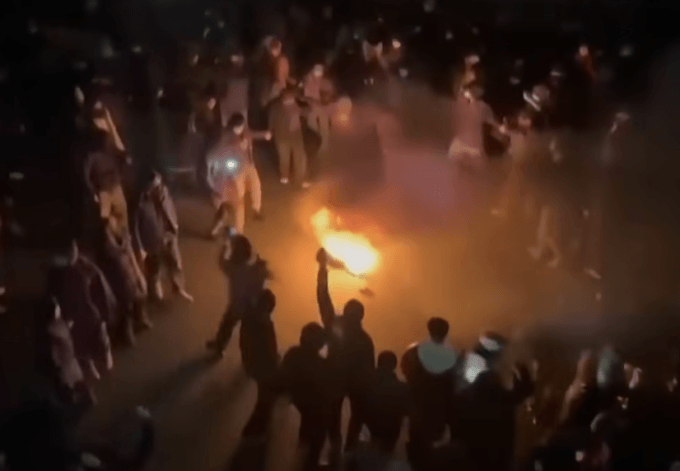
Popular protests and strikes across cities throughout the country have now entered their eleventh day. Despite an intensified security crackdown, the heavy deployment of police and security forces, and widespread violence against protesters, the movement remains broad, dynamic, and diverse. According to reports, protests have taken place at no fewer than 174 locations in 60 cities across 25 provinces, with hundreds of demonstrators arrested. Tragically, at least 35 protesters—including children—have been killed during this period.
From December 2017 to November 2019, and again in September 2022, Iran’s oppressed people have repeatedly taken to the streets to demonstrate their rejection of the prevailing political and economic order and its structures of exploitation and inequality. These movements are not driven by nostalgia for the past, but by the determination to build a future free from the domination of capital—one grounded in freedom, equality, social justice, and human dignity.
While expressing our solidarity with popular struggles against poverty, unemployment, discrimination, and repression, we categorically oppose any return to a past marked by inequality, corruption, and injustice. We believe that genuine liberation can only be achieved through the conscious, organized leadership and participation of the working class and oppressed people themselves—not through the revival of outdated and authoritarian forms of power.
Workers, teachers, retirees, nurses, students, women, and especially young people—despite mass repression, arrests, dismissals, and relentless economic hardship—continue to stand at the forefront of these struggles. In this context, the Syndicate of Workers of Tehran and Suburbs Bus Company (Vahed) stresses the necessity of sustaining independent, conscious, and organized forms of protest.
We have stated repeatedly, and we reaffirm once again: the path to liberation for workers and the oppressed does not lie in the imposition of leaders from above, nor in reliance on foreign powers, nor through factions within the ruling establishment. It lies in unity, solidarity, and the building of independent organizations in workplaces, communities, and at the national level. We must not allow ourselves to once again become victims of power struggles and the interests of the ruling classes.
The Syndicate also strongly condemns any promotion, justification, or support for military intervention by foreign governments, including the United States and Israel. Such interventions lead not only to the destruction of civil society and the killing of civilians, but also provide further pretexts for repression and violence by the state. Past experience has shown that Western hegemonic powers place no value whatsoever on the freedom, livelihoods, or rights of the Iranian people.
We demand the immediate and unconditional release of all detainees and insist on the identification and prosecution of those responsible for ordering and carrying out the killing of protesters.
Long live freedom, equality, and class solidarity.
The path forward for workers and the oppressed is unity and organization.
-Syndicate of Workers of Tehran and Suburbs Bus Company (Vahed)
Monday 12 January 2026, by Sarah Selami

The recent mobilizations in Iran began on Sunday, 28 December 2025, with a strike by traders in the Tehran bazaar, in the face of the dizzying fall of the national currency and hyperinflation making economic activity unpredictable. They quickly spread to students and the popular classes in many cities, expressing a general rejection of poverty, extreme social inequality and tyranny.
Response from the regime
The government has sought to appease the protesters in the bazaar through tax concessions, while closing the protesting universities and strengthening repression and security measures against the youth and the mobilized popular classes. But the movement continues, affecting at least 88 cities, especially small and medium-sized ones, while some large cities are also experiencing mobilizations in certain neighborhoods.
On the ninth day of this mobilization, more than a thousand people were arrested, including many teenagers, and at least thirty-six demonstrators, including two teenagers, were killed. Two members of the repressive forces also died.
Deep social anger
Young people, and especially students, form the heart of these mobilizations, with a notable participation of the inhabitants of small, disadvantaged towns, hard hit by inflation, the fall of the national currency and the rise in prices.
This mobilization reflects a deep and lasting social anger, stemming from decades of injustice, precariousness and repression, and not from a simple currency fluctuation. The worsening of inequality and poverty is the result of a structural crisis in Iran’s political and economic system, reinforced by international sanctions, governance marked by corruption and clientelism, as well as by the policies pursued by the Islamic Republic.
Faced with these mobilizations, the authorities have responded with repression, mass arrests and violence. However, the experience of the movements of 2017, 2019 and 2022 shows that this strategy has never made it possible to impose submission in the long term. The current protests are thus part of a continuity of recurrent protests.
Attempts at instrumentalization and their consequences
The United States and Israel have tried to instrumentalize these mobilizations in the context of their conflict with the Islamic Republic, under the pretext of “defending the Iranian people,” despite their role in unprecedented violence against civilians in the region and beyond.
Finally, recent statements by US and Israeli leaders, as well as intelligence agencies, have provided the Islamic Republic with an additional pretext to intensify repression, justify arrests, and accuse protesters of acting for foreign interests.
At the same time, Reza Pahlavi, the “heir to the crown,” and his reactionary supporters, who favor foreign military intervention, have tried to present themselves as a political alternative to “liberate” Iran. They even manipulated videos and falsified protest slogans in order to present the son of the former Shah as a popular leader. These maneuvers have discredited the monarchist current and reinforced the rejection of the demonstrators, who reaffirm their refusal of any imposed tutelage or authority.
Perspectives and solidarity
As for popular mobilizations, it is difficult to predict their duration or their ability to push back the government, especially since they have not yet entered a structured political phase, despite radical slogans such as “death to the dictator”, and no credible political alternative exists. This widespread anger can only be transformed into an effective force through the convergence of the general protest movement and struggles in the workplaces, working-class neighborhoods and universities.
However, the youth and popular classes of Iran deserve the international support of social and political forces in solidarity in their struggles against the high cost of living, social injustices and tyranny.
9 January 2026
Translated by International Viewpoint
Attached documentsa-new-popular-uprising-in-iran_a9359.pdf (PDF - 952.3 KiB)
Extraction PDF [->article9359]
Sarah Selamiis an activist of Solidarité Socialiste avec les Travailleurs en Iran (Socialist Solidarity with Workers in Iran) in France.

EXPLAINER
Iran has been rocked by nationwide demonstrations for the past two weeks. What began as anger over the country’s ailing economy quickly escalated into violent – even deadly – anti-regime protests, prompting the regime to shut down communications networks. Here is what we know about the unrest.
Issued on: 12/01/2026
By: FRANCE 24
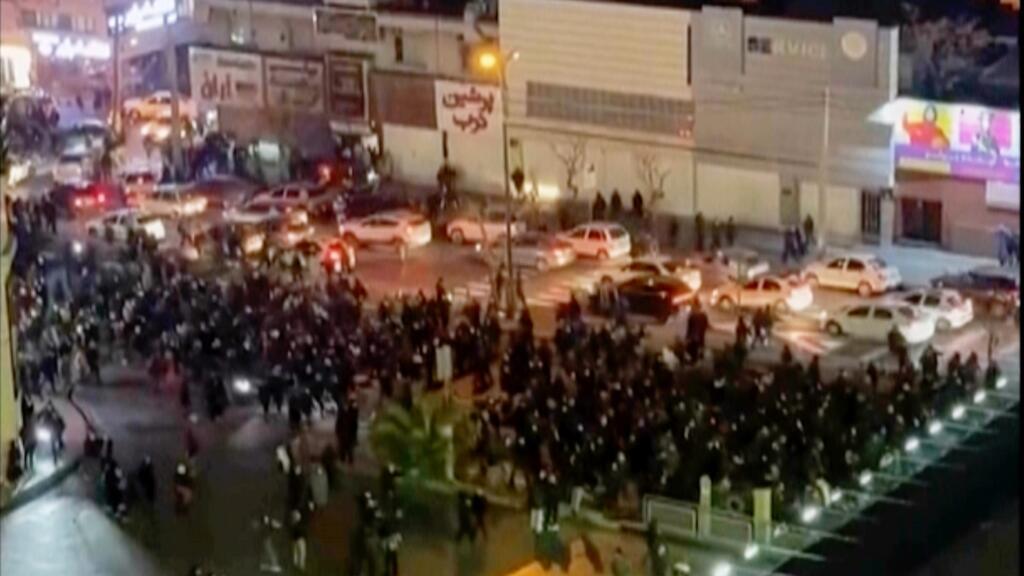
Nationwide protests in Iran sparked by the Islamic Republic’s ailing economy are putting new pressure on its theocracy as it has shut down the internet and telephone networks.
Tehran is still reeling from a 12-day war launched by Israel in June that saw the United States bomb nuclear sites in Iran. Economic pressure, which has intensified since September when the United Nations reimposed sanctions on the country over its atomic programme, has sent Iran’s rial currency into a free fall, now trading at over 1.4 million to $1.
Meanwhile, Iran’s self-described “Axis of Resistance” — a coalition of countries and militant groups backed by Tehran — has been decimated since the start of the Israel-Hamas war in 2023.
A threat by President Donald Trump warning Iran that if Tehran “violently kills peaceful protesters”, the US “will come to their rescue”, has taken on new meaning after American troops captured Venezuela’s Nicolas Maduro, a longtime ally of Tehran.
“We’re watching it very closely,” Trump has warned. “If they start killing people like they have in the past, I think they’re going to get hit very hard by the United States.”
More than 500 protests
More than 500 protests have taken place across all of Iran’s 31 provinces, the US-based Human Rights Activists News Agency reported early Monday. The death toll had reached at least 544, it said, with more than 10,600 arrests. The group relies on an activist network inside of Iran for its reporting and has been accurate in past unrest.
The Iranian government has not offered overall casualty figures for the demonstrations. Foreign media have been unable to independently assess the toll, given that internet and international phone calls are now blocked in Iran.
Understanding the scale of the protests has been difficult. Iranian state media has provided little information about the demonstrations. Online videos offer only brief, shaky glimpses of people in the streets or the sound of gunfire. Journalists in general in Iran also face limits on reporting such as requiring permission to travel around the country, as well as the threat of harassment or arrest by authorities. The internet shutdown has further complicated the situation.
But the protests do not appear to be stopping, even after Supreme Leader Ayatollah Ali Khamenei said “rioters must be put in their place”.
Cost-of-living crisis
The collapse of the rial has led to a widening economic crisis in Iran. Prices are up on meat, rice and other staples of the Iranian dinner table. The nation has been struggling with an annual inflation rate of some 40 percent.
In December, Iran introduced a new pricing tier for its nationally subsidised gasoline, raising the price of some of the world’s cheapest gas and further pressuring the population. Tehran may seek steeper price increases in the future, as the government now will review prices every three months. Meanwhile, food prices are expected to spike after Iran’s Central Bank in recent days ended a preferential, subsidised dollar-rial exchange rate for all products except medicine and wheat.
The downfall of ‘Axis of Resistance’
The protests began in late December with merchants in Tehran before spreading. While initially focused on economic issues, the demonstrations soon saw protesters chanting anti-government statements as well. Anger has been simmering over the years, particularly after the 2022 death of 22-year-old Mahsa Amini in police custody that triggered nationwide demonstrations.
Some have chanted in support of Iran’s exiled Crown Prince Reza Pahlavi, who called for protests Thursday and Friday night.
Iran’s “Axis of Resistance”, which grew in prominence in the years after the 2003 US-led invasion and subsequent occupation of Iraq, is reeling.
Israel has crushed Hamas in the devastating war in the Gaza Strip. Hezbollah, the Shiite militant group in Lebanon, has seen its top leadership killed by Israel and has been struggling since. A lightning offensive in December 2024 overthrew Iran’s longtime stalwart ally and client in Syria, former president Bashar al Assad, after years of war there. Yemen’s Iranian-backed Houthi rebels also have been pounded by Israeli and US airstrikes.
China meanwhile has remained a major buyer of Iranian crude oil, but hasn’t provided overt military support. Neither has Russia, which has relied on Iranian drones in its war on Ukraine.
Iran’s nuclear programme
Iran has insisted for decades that its nuclear programme is peaceful. However, its officials have increasingly threatened to pursue a nuclear weapon. Iran had been enriching uranium to near weapons-grade levels before the US attack in June, making it the only country in the world without a nuclear weapons programme to do so.
Tehran also increasingly cut back its cooperation with the International Atomic Energy Agency (IAEA), the UN’s nuclear watchdog, as tensions increased over its nuclear programme in recent years. The IAEA’s director-general has warned Iran could build as many as 10 nuclear bombs, should it decide to weaponise its programme.
US intelligence agencies have assessed that Iran has yet to begin a weapons programme, but has “undertaken activities that better position it to produce a nuclear device, if it chooses to do so”.
Iran recently said it was no longer enriching uranium at any site in the country, trying to signal to the West that it remains open to potential negotiations over its atomic programme to ease sanctions. But there’s been no significant talks in the months since the June war.
US-Iran ties post-Islamic Revolution
Iran decades ago was one of the United States’ top allies in the Middle East under Shah Mohammad Reza Pahlavi, who purchased American military weapons and allowed CIA technicians to run secret listening posts monitoring the neighbouring Soviet Union. The CIA fomented a 1953 coup that cemented the shah’s rule.
But in January 1979, the shah fled Iran as mass demonstrations swelled against his rule. Then came the Islamic Revolution led by Ayatollah Ruhollah Khomeini, which created Iran’s theocratic government.
Later that year, university students overran the US Embassy in Tehran, seeking the shah’s extradition and sparking the 444-day hostage crisis that saw diplomatic relations between Iran and the US severed.
During the Iran-Iraq war of the 1980s, the US backed Saddam Hussein. During that conflict, the US launched a one-day assault that crippled Iran at sea as part of the so-called “Tanker War”, and later shot down an Iranian commercial airliner that the US military said it mistook for a warplane.
Iran and the US have seesawed between enmity and grudging diplomacy in the years since. Relations peaked with the 2015 nuclear deal, which saw Iran greatly limit its programme in exchange for the lifting of sanctions. But Trump unilaterally withdrew America from the accord in 2018, sparking tensions in the Middle East that intensified after Hamas’s October 7, 2023, attack on Israel.
(FRANCE 24 with AP)