John Casey
January 13, 2026
RAW STORY
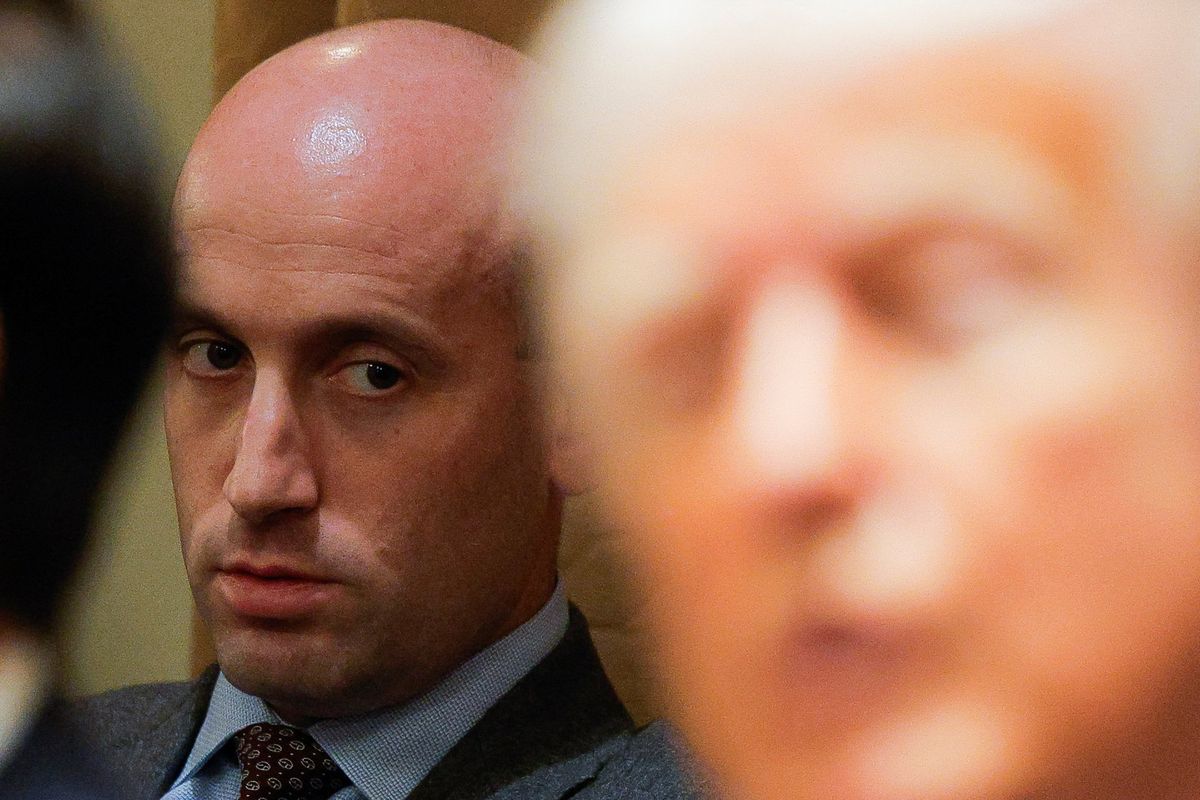
White House Deputy Chief of Staff Stephen Miller listens to Donald Trump. REUTERS/Brian Snyder
At first glance, Roy Cohn, Stephen Miller and Emil Bove share an eerie resemblance, though they hail from distinct eras of American dysfunction.
Cohn was a McCarthy-era fixer and Manhattan attorney who mentored the young Donald Trump then died in disgrace. Miller is Trump’s deputy White House chief of staff, to some his “prime minister,” to all the face and voice of Trump’s tyranny. Bove is now a federal judge, but before that was Trump’s legal counsel while Trump was indicted again and again. Oh, how I long for those days.
Different résumés, yes. But the same moral rot behind the same vicious visage.
They are fraternal, tyrannical triplets. They look alike. They speak alike. They operate alike. And most importantly, they thrive for the same reason: Donald Trump, who is, in the words of South Park, “f—ing Satan,” likes demonic despotic dudes, and asks for nothing more.
The vile Cohn was Trump’s most important early influence, not because he taught him the law, but because he taught him how to abuse it, evade it, and weaponize it against anyone in the way.
Cohn’s worldview was brutally simple: never apologize, never admit error, always counterattack harder. Appeal, appeal, appeal, until justice cries “uncle.” He had a viper tongue and a monstrous leer.
To Cohn, truth was irrelevant, institutions were weapons to be bent or broken, and loyalty to scumbags mattered more than reverence for legal scholars.
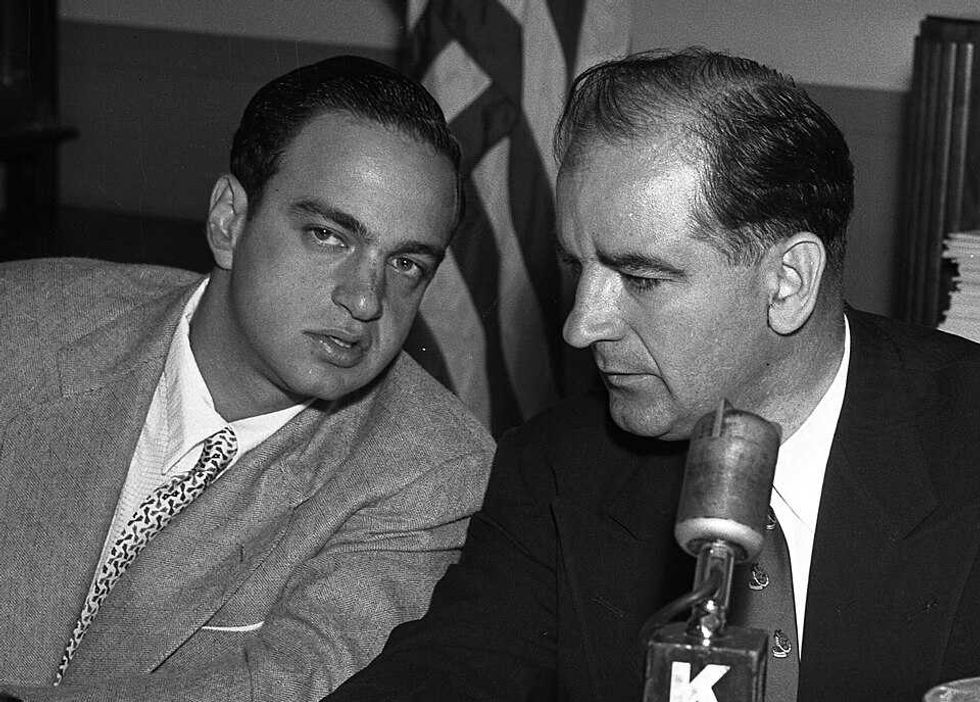
Roy Cohn advises Sen. Joseph McCarthy in 1953. Picture: Los Angeles Times/Wiki Commons.
Like a fly to feces, Trump absorbed this crock of crap. In the decades since, he has surrounded himself with similar people. If Trump is the water pump, Bove and Miller are the outhouse.
Miller and Bove are near-Cohn clones, Cohn-esque pinheads with the same skull, ego, brain, and heart. Cohn preached brute force and illegality in the courtroom. Now Bove practices it while Miller reimagines it through Trump’s immigration and foreign policies, wielding cruelty as part of a 21st-century Lebensraum doctrine.
Trump selects a very specific enforcer archetype: someone who treats politics as destruction, law as an irrelevance, morality as a waste of time. These guys are willing to be hated, feared, and blamed. In fact, those traits aren’t flaws. They’re prerequisites. Miller and Bove crave insolence.
In a normal presidency, these qualities would be blasphemous, jail-inducing and worthy of impeachment. In Trump’s pigpen, they’re just mud to roll around in.
Miller’s role is not merely to craft immigration policy. It is to function as shock-and-awe made flesh. Miller says the quiet parts loud, proposes the harshest version of every policy, and luxuriates in the backlash.
Cruelty is not a byproduct. It is the point of Miller’s existence. While some men obsess over their appearance — clearly not Miller’s concern — he obsesses over wickedness. He feeds Trump’s “rule the world” fantasies and sermonizes imperialism in unblinking media appearances.
Cohn played the same ruthless role. He intimidated judges, threatened reporters, and crossed lines others would not approach. Cohn understood that power depends less on legality than on the willingness to violate norms, fast and furious, before anyone can catch up.
And then there’s Evil — sorry, Emil — Bove. He fits Trump’s corrosive mold perfectly. His value lies in being, as Trump would say, a “sleazebag” attorney. He pushed conspiracy theories disguised as legal arguments to their absolute breaking point. He taunted judges, dared courts to challenge Trump, and lied in depositions and in open court — under oath — just like his client.
Now, astonishingly, he’s a federal judge.
He is plainly, unequivocally unqualified. His entire career showcases the traits the position demands one not have: belligerence, partisanship, a staggering lack of judicial temperament.
A federal judge is supposed to be an independent arbiter, guided by restraint, humility, and respect for the rule of law. Bove laughs at such quaint notions. He is about loyalty and aggression. Always and forever. He disdains the norms that protect judicial independence. The court has adjourned on his petulance and incompetence.
These bozos thrive because they lack honor, decency, humility, or, most glaringly, truth. Loyalty tests are endless. Media outrage is constant. Legal jeopardy is routine. In this ecosystem, they become role models. Like robots, they churn out their own replacements. The insidious Karoline Leavitt, Trump’s White House press secretary, is a Miller disciple.
Cohn ended up disbarred, dying alone, loathed and disgraced. But that was the 1980s. In this Trump era, Cohn would be basking at Mar-a-Lago. Miller is a hero to his MAGA minions. He boasts 1.6 million followers on X. Think about it. So many people hang on his every post, each packed with cruelty, fabrication, and garbage.
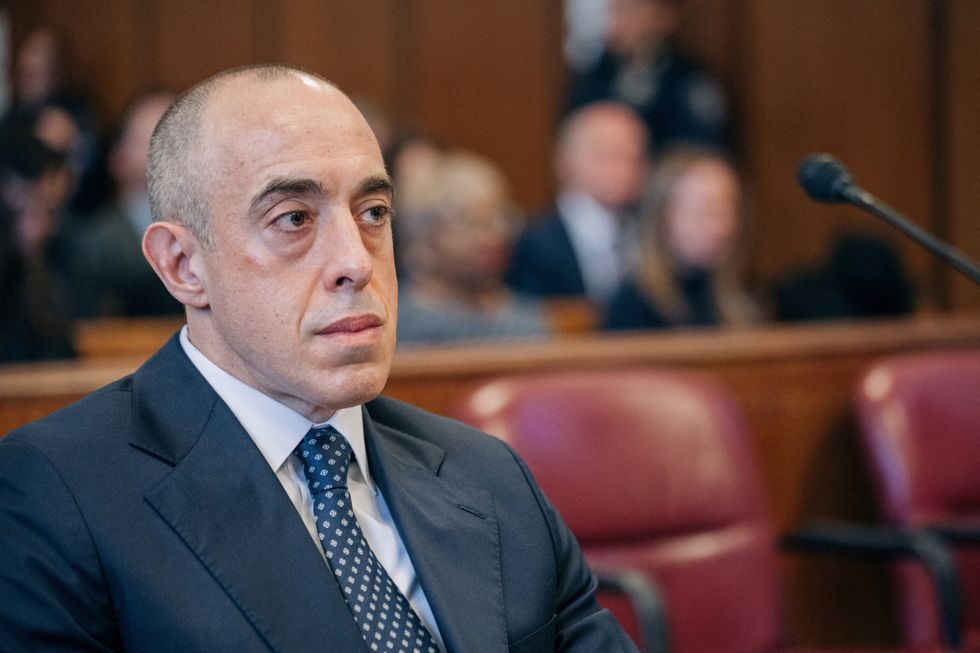
Emil Bove attends Manhattan criminal court in New York. JEENAH MOON/Pool via REUTERS
And Bove? He is Trump’s representative on the federal bench — which is, of course, illegal. But who cares? Bove attends Trump rallies and events, sparking ethics complaints. Critics argue such attendance violates the code of conduct for federal judges, which bars political activity and even the appearance of impropriety, especially so soon after confirmation and despite prior ethical concerns.
A watchdog group has formally asked the Third Circuit’s chief judge to investigate and potentially discipline Bove for placing partisan loyalty above judicial neutrality. Blah, blah, blah. All this protestation matters not, because Bove’s response to all of it is a big FU.
Even the aesthetic similarities between the three matter. The severe expressions, clipped speech, and utter lack of warmth project authority without empathy. These are badges of honor bestowed by their narcissist-in-chief.
The thread, and threat, of their inhumanity proves they are not aberrations. They are continuations. Roy Cohn didn’t disappear when he died. His ethos simply evolved, metastasizing into Stephen Miller and Emil Bove.
There were once the Three Stooges, whose slapstick and bawdiness prompted laughter. Cohn, Miller and Bove are Trump’s three stooges, but they aren’t eliciting laughter. They spur terror.
When cruelty, propaganda, and law enforcement align, comedy dies and horror begins.
White House Deputy Chief of Staff Stephen Miller listens to Donald Trump. REUTERS/Brian Snyder
At first glance, Roy Cohn, Stephen Miller and Emil Bove share an eerie resemblance, though they hail from distinct eras of American dysfunction.
Cohn was a McCarthy-era fixer and Manhattan attorney who mentored the young Donald Trump then died in disgrace. Miller is Trump’s deputy White House chief of staff, to some his “prime minister,” to all the face and voice of Trump’s tyranny. Bove is now a federal judge, but before that was Trump’s legal counsel while Trump was indicted again and again. Oh, how I long for those days.
Different résumés, yes. But the same moral rot behind the same vicious visage.
They are fraternal, tyrannical triplets. They look alike. They speak alike. They operate alike. And most importantly, they thrive for the same reason: Donald Trump, who is, in the words of South Park, “f—ing Satan,” likes demonic despotic dudes, and asks for nothing more.
The vile Cohn was Trump’s most important early influence, not because he taught him the law, but because he taught him how to abuse it, evade it, and weaponize it against anyone in the way.
Cohn’s worldview was brutally simple: never apologize, never admit error, always counterattack harder. Appeal, appeal, appeal, until justice cries “uncle.” He had a viper tongue and a monstrous leer.
To Cohn, truth was irrelevant, institutions were weapons to be bent or broken, and loyalty to scumbags mattered more than reverence for legal scholars.
Roy Cohn advises Sen. Joseph McCarthy in 1953. Picture: Los Angeles Times/Wiki Commons.
Like a fly to feces, Trump absorbed this crock of crap. In the decades since, he has surrounded himself with similar people. If Trump is the water pump, Bove and Miller are the outhouse.
Miller and Bove are near-Cohn clones, Cohn-esque pinheads with the same skull, ego, brain, and heart. Cohn preached brute force and illegality in the courtroom. Now Bove practices it while Miller reimagines it through Trump’s immigration and foreign policies, wielding cruelty as part of a 21st-century Lebensraum doctrine.
Trump selects a very specific enforcer archetype: someone who treats politics as destruction, law as an irrelevance, morality as a waste of time. These guys are willing to be hated, feared, and blamed. In fact, those traits aren’t flaws. They’re prerequisites. Miller and Bove crave insolence.
In a normal presidency, these qualities would be blasphemous, jail-inducing and worthy of impeachment. In Trump’s pigpen, they’re just mud to roll around in.
Miller’s role is not merely to craft immigration policy. It is to function as shock-and-awe made flesh. Miller says the quiet parts loud, proposes the harshest version of every policy, and luxuriates in the backlash.
Cruelty is not a byproduct. It is the point of Miller’s existence. While some men obsess over their appearance — clearly not Miller’s concern — he obsesses over wickedness. He feeds Trump’s “rule the world” fantasies and sermonizes imperialism in unblinking media appearances.
Cohn played the same ruthless role. He intimidated judges, threatened reporters, and crossed lines others would not approach. Cohn understood that power depends less on legality than on the willingness to violate norms, fast and furious, before anyone can catch up.
And then there’s Evil — sorry, Emil — Bove. He fits Trump’s corrosive mold perfectly. His value lies in being, as Trump would say, a “sleazebag” attorney. He pushed conspiracy theories disguised as legal arguments to their absolute breaking point. He taunted judges, dared courts to challenge Trump, and lied in depositions and in open court — under oath — just like his client.
Now, astonishingly, he’s a federal judge.
He is plainly, unequivocally unqualified. His entire career showcases the traits the position demands one not have: belligerence, partisanship, a staggering lack of judicial temperament.
A federal judge is supposed to be an independent arbiter, guided by restraint, humility, and respect for the rule of law. Bove laughs at such quaint notions. He is about loyalty and aggression. Always and forever. He disdains the norms that protect judicial independence. The court has adjourned on his petulance and incompetence.
These bozos thrive because they lack honor, decency, humility, or, most glaringly, truth. Loyalty tests are endless. Media outrage is constant. Legal jeopardy is routine. In this ecosystem, they become role models. Like robots, they churn out their own replacements. The insidious Karoline Leavitt, Trump’s White House press secretary, is a Miller disciple.
Cohn ended up disbarred, dying alone, loathed and disgraced. But that was the 1980s. In this Trump era, Cohn would be basking at Mar-a-Lago. Miller is a hero to his MAGA minions. He boasts 1.6 million followers on X. Think about it. So many people hang on his every post, each packed with cruelty, fabrication, and garbage.
Emil Bove attends Manhattan criminal court in New York. JEENAH MOON/Pool via REUTERS
And Bove? He is Trump’s representative on the federal bench — which is, of course, illegal. But who cares? Bove attends Trump rallies and events, sparking ethics complaints. Critics argue such attendance violates the code of conduct for federal judges, which bars political activity and even the appearance of impropriety, especially so soon after confirmation and despite prior ethical concerns.
A watchdog group has formally asked the Third Circuit’s chief judge to investigate and potentially discipline Bove for placing partisan loyalty above judicial neutrality. Blah, blah, blah. All this protestation matters not, because Bove’s response to all of it is a big FU.
Even the aesthetic similarities between the three matter. The severe expressions, clipped speech, and utter lack of warmth project authority without empathy. These are badges of honor bestowed by their narcissist-in-chief.
The thread, and threat, of their inhumanity proves they are not aberrations. They are continuations. Roy Cohn didn’t disappear when he died. His ethos simply evolved, metastasizing into Stephen Miller and Emil Bove.
There were once the Three Stooges, whose slapstick and bawdiness prompted laughter. Cohn, Miller and Bove are Trump’s three stooges, but they aren’t eliciting laughter. They spur terror.
When cruelty, propaganda, and law enforcement align, comedy dies and horror begins.
John Casey was most recently Senior Editor, The Advocate, and is a freelance opinion and feature story writer. Previously, he was a Capitol Hill press secretary, and spent 25 years in media and public relations in NYC. He is the co-author of LOVE: The Heroic Stories of Marriage Equality (Rizzoli, 2025), named by Oprah in her "Best 25 of 2025.”
'Just a pathetic little man': Stephen Miller lambasted as columnist refuses to hold back
Nicole Charky-Chami
January 13, 2026
RAW STORY

A columnist Tuesday revealed how White House deputy chief of staff Stephen Miller has influenced the policies under the Trump administration — and why he wants people to fear him.
The Guardian's Arwa Mahdawi described how Miller, "the driving force behind the Trump administration’s most extreme policies," is craving immense power, but "is ultimately still just a man."
Some of President Donald Trump's aides have even reportedly begun referring to Miller as "prime minister." Behind the scenes, he has being credited with orchestrating the capture of Venezuelan President Nicolás Maduro and has hopes to remove birthright citizenship.
Despite these moves and wielding this power, Miller is simply one person, the writer argued.
"While the ghouls hellbent on bringing authoritarianism to America, and misery to their self-declared enemies, may think of themselves as demi-gods, they are, ultimately, just mere mortals," Mahdawi wrote.
Miller, the architect of Trump's anti-immigrant policies, including the family border separations during the first Trump administration, even bonded with his wife Katie, a right-wing podcaster, about their harsh stance. And although his own family escaped persecution in Europe as Jewish refugees, something his uncle has publicly slammed Miller for, Trump's "mastermind" has continued to push for these "aggressive tactics."
And he has one goal in mind, Mahdawi argued.
"What people like Miller want most of all is for us to fear them; that’s why they’re all so obsessed with talking about strength and force and power," Mahdawi wrote. "And, yes, we should all be afraid of Miller’s brutish vision of the world. We should be worried about what Miller is doing.
"But we should also make sure to laugh at him; there is nothing thin-skinned authoritarians hate more than being laughed at. And we should never forget that, amid all the trappings of office, Stephen Miller is ultimately just a pathetic little man. One who really likes mayonnaise."
The final dig is in response to Miller's wife revealing on her podcast that her husband eats mayonnaise by the spoonful.
'Ever since hearing that podcast, I’ve had intermittent intrusive thoughts of Miller standing barefoot in the luminous light of a fridge spooning mayonnaise into his mouth, straight from the jar," Mahdawi wrote.
" ... I think the reason the mayonnaise anecdote has stuck with me is because it’s a reminder that while Miller may be in a position of extraordinary power, he is ultimately still just a man, one who likely has grease stains on his T-shirts."
January 13, 2026
RAW STORY

A columnist Tuesday revealed how White House deputy chief of staff Stephen Miller has influenced the policies under the Trump administration — and why he wants people to fear him.
The Guardian's Arwa Mahdawi described how Miller, "the driving force behind the Trump administration’s most extreme policies," is craving immense power, but "is ultimately still just a man."
Some of President Donald Trump's aides have even reportedly begun referring to Miller as "prime minister." Behind the scenes, he has being credited with orchestrating the capture of Venezuelan President Nicolás Maduro and has hopes to remove birthright citizenship.
Despite these moves and wielding this power, Miller is simply one person, the writer argued.
"While the ghouls hellbent on bringing authoritarianism to America, and misery to their self-declared enemies, may think of themselves as demi-gods, they are, ultimately, just mere mortals," Mahdawi wrote.
Miller, the architect of Trump's anti-immigrant policies, including the family border separations during the first Trump administration, even bonded with his wife Katie, a right-wing podcaster, about their harsh stance. And although his own family escaped persecution in Europe as Jewish refugees, something his uncle has publicly slammed Miller for, Trump's "mastermind" has continued to push for these "aggressive tactics."
And he has one goal in mind, Mahdawi argued.
"What people like Miller want most of all is for us to fear them; that’s why they’re all so obsessed with talking about strength and force and power," Mahdawi wrote. "And, yes, we should all be afraid of Miller’s brutish vision of the world. We should be worried about what Miller is doing.
"But we should also make sure to laugh at him; there is nothing thin-skinned authoritarians hate more than being laughed at. And we should never forget that, amid all the trappings of office, Stephen Miller is ultimately just a pathetic little man. One who really likes mayonnaise."
The final dig is in response to Miller's wife revealing on her podcast that her husband eats mayonnaise by the spoonful.
'Ever since hearing that podcast, I’ve had intermittent intrusive thoughts of Miller standing barefoot in the luminous light of a fridge spooning mayonnaise into his mouth, straight from the jar," Mahdawi wrote.
" ... I think the reason the mayonnaise anecdote has stuck with me is because it’s a reminder that while Miller may be in a position of extraordinary power, he is ultimately still just a man, one who likely has grease stains on his T-shirts."
'Utterly chilling': Stephen Miller's 'glaring' Fox News interview sparks outrage
Robert Davis
January 13, 2026
Robert Davis
January 13, 2026
RAW STORY
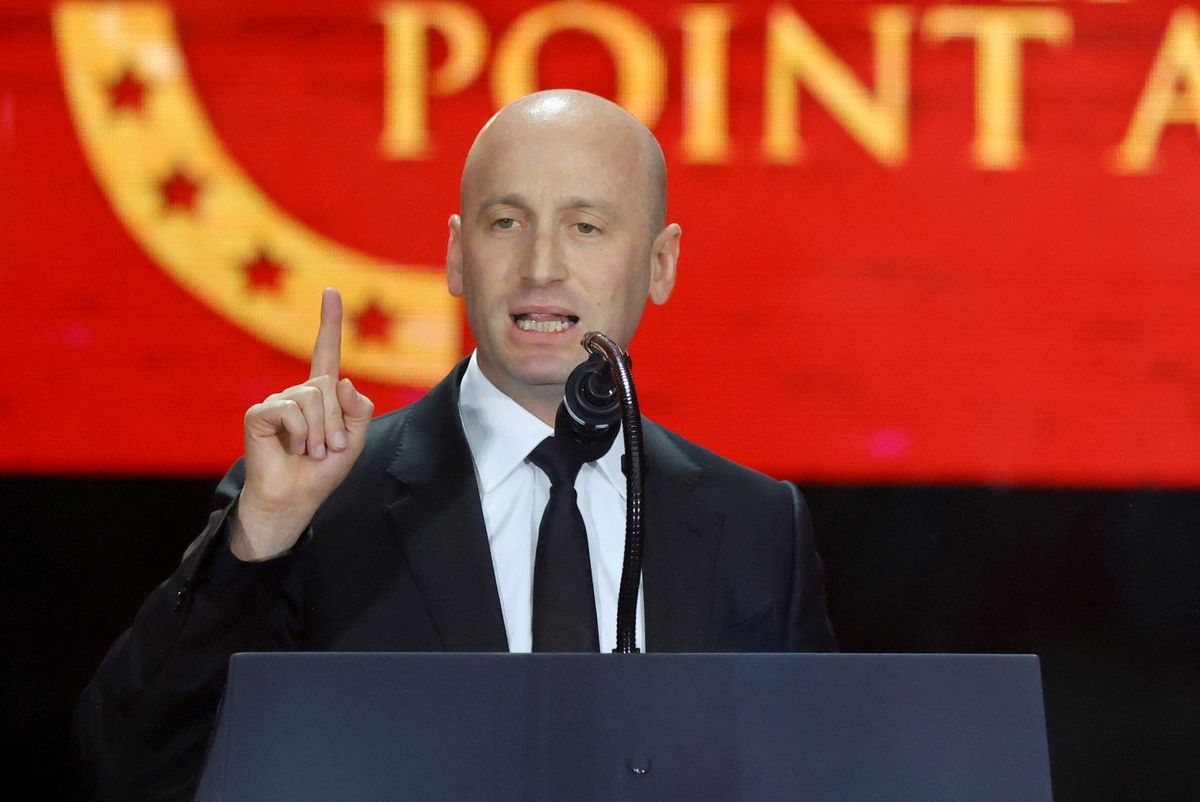
White House Deputy Chief of Staff Stephen Miller speaks at a memorial service for Charlie Kirk. REUTERS/Carlos Barria
One of President Donald Trump's top aides sparked outrage on Tuesday after he claimed that immigration agents enjoy "federal immunity" while they're doing their jobs on Fox News.
White House Deputy Chief of Staff for Policy Stephen Miller joined Fox News host Will Cain on "The Will Cain Show" to discuss the Trump administration's ongoing deportation operations. The interview happened at a time when the operations are facing increased scrutiny following the killing of Renee Good in Minneapolis.
During the interview, Miller said immigration agents that anyone who tries to stop them from performing their jobs is committing a "felony," a claim that legal experts disputed.
"You have immunity to perform your duties, and no one—no city official, no state official, no illegal alien, no leftist agitator or domestic insurrectionist—can prevent you from fulfilling your legal obligations and duties," Miller said.
Political analysts and observers reacted on social media.
"He’s not a lawyer," public defender Eli Northrup posted on X. "There is no blanket 'immunity' for criminal behavior. States can and should hold federal officers accountable."
"Not just false, utterly chilling. Saying you have a free pass to murder people," Norman Ornstein, political scientist and contributing editor at The Atlantic, posted on X. "The law and constitution are clear. States can arrest federal officials who violate their laws." Period.
"Among the most glaring issues of this statement: qualified immunity, which is what ICE officers are covered under, does not shield them from prosecution for *unlawful conduct, civil rights abuses, or excessive force," Evan Rosenfeld, deputy digital director at The Bulwark, posted on X.
White House Deputy Chief of Staff Stephen Miller speaks at a memorial service for Charlie Kirk. REUTERS/Carlos Barria
One of President Donald Trump's top aides sparked outrage on Tuesday after he claimed that immigration agents enjoy "federal immunity" while they're doing their jobs on Fox News.
White House Deputy Chief of Staff for Policy Stephen Miller joined Fox News host Will Cain on "The Will Cain Show" to discuss the Trump administration's ongoing deportation operations. The interview happened at a time when the operations are facing increased scrutiny following the killing of Renee Good in Minneapolis.
During the interview, Miller said immigration agents that anyone who tries to stop them from performing their jobs is committing a "felony," a claim that legal experts disputed.
"You have immunity to perform your duties, and no one—no city official, no state official, no illegal alien, no leftist agitator or domestic insurrectionist—can prevent you from fulfilling your legal obligations and duties," Miller said.
Political analysts and observers reacted on social media.
"He’s not a lawyer," public defender Eli Northrup posted on X. "There is no blanket 'immunity' for criminal behavior. States can and should hold federal officers accountable."
"Not just false, utterly chilling. Saying you have a free pass to murder people," Norman Ornstein, political scientist and contributing editor at The Atlantic, posted on X. "The law and constitution are clear. States can arrest federal officials who violate their laws." Period.
"Among the most glaring issues of this statement: qualified immunity, which is what ICE officers are covered under, does not shield them from prosecution for *unlawful conduct, civil rights abuses, or excessive force," Evan Rosenfeld, deputy digital director at The Bulwark, posted on X.
This deeply damaged psychopath is now Trump's role model
Thom Hartmann
January 13, 2026
As a result, they both delight in killing people via their militaries.
They get high by terrorizing people with their secret police and militias.
They both hate and fear a free and open press and any sort of legislative or judicial power that may constrain them.
They both have corruptly made billions from their political positions, both use public monies to shower wealth and opportunity on their friends, and both wield the police and judicial powers of their nations to punish their enemies. Trump’s most recent is Fed chair Jerome Powell.
Other dictators throughout history have shared these same characteristics. Hitler was an abused, unwanted child, much like Trump and Putin. Saddam Hussein, Benito Mussolini, and Francisco Franco were all the victims of violent alcoholic fathers who beat them and their mothers, growing up in severely dysfunctional families.
Historian Brian Junkermeier notes that, “Stalin’s father was so violent, that on more than one occasion, he physically abused Stalin to the point where he would have blood in his urine for several days.”
All of these men grew up to be abusers, not just of their family members but of their entire nations.
Most Americans, not being psychopaths who survived cruel childhoods, don’t understand and can’t identify with these impulses. But it’s a safe bet that many of the people who’re enthusiastically answering the ICE recruiting call to “reclaim our nation” from Black and brown people and democracy-loving liberals also share Trump’s and Putin’s propensity for violence.
After all, it wasn’t until Renee Nicole Good told Jonathan Ross that she wasn’t mad with him and was leaving — a statement that she was in control and was leaving her abuser, the exact moment when most abusive husbands who kill their wives take that final step — that he fired three times into her head and called her a “fuckin’ bitch.”
It’s a classic abuser’s move, particularly against women.
Meanwhile, a handful of emotionally stunted rightwing billionaires who are democracy-skeptical are right there with Trump, using their financial power to promote autocracy and oligarchy. Many have had their worldview twisted by the power their own wealth gives them.
Robert Caro once noted:
“Power doesn’t corrupt. Power reveals. When a man is climbing, when he needs votes, when he needs allies, he is careful. When he has power, he no longer needs to be careful — and then you see who he really is.”
In that, he’s echoing Lord Acton’s famous 1887 observation:
“Power tends to corrupt, and absolute power corrupts absolutely.”
Trump, the billionaires he surrounds himself with (13 in his cabinet, over a hundred others as major donors), and the police-state toadies like Miller, Noem, Vance, Homan, Patel, Bavino, etc are — based on observable behaviors and statements — almost universally opposed to democracy.
They’re trying to normalize turning America into an oligarchy with the First Family making billions in their first dozen months and their secret police openly killing people in the street and then blaming their victims on national television.
The danger with this is that oligarchy, as I point out in The Hidden History of American Oligarchy: Reclaiming Our Democracy from the Ruling Class, is a transitional form of government that rarely lasts more than a generation or two. It’s so unstable because when the people realize the oligarchs are ripping them off and essentially stealing the nation’s wealth for themselves, they tend to rise up and loudly object.
That’s what we’re seeing with the No Kings and other protests here in America.Average Americans know that when modern GOP-driven Reaganomics started in 1981 fully two-thirds of us had a good, middle-class life with a single paycheck but today it takes two paychecks to barely reach that level, which is why the middle class has collapsed down to fewer than half of us.
They know that the top 1% has extracted more than $50 trillion from working class people over the past 44 years via Reagan, Bush, and Trump tax cuts and the destruction of the union movement.
They know that when Reagan came into office a home cost three times the average salary and today it’s ten times a single salary (or five times a two-income household’s income).
They know their parents went to college for free or cheap and they’re now indebted for half or more of their lives.
They know that healthcare and health insurance used to be affordable when hospitals and health insurance companies were required to be nonprofits, and are now a massive trillion-dollar annual wealth-extraction scheme that’s making people like Rick Scott and Dollar Bill McGuire richer than the pharaohs.
So, when the morbidly rich seize power and rip off the working class, history shows that people rise up against the new oligarchy, leaving Trump and his billionaires with two choices.
They can, like they did in the face of FDR’s overwhelming popularity and success with the New Deal, simply retire from politics and just go back to making money and running their businesses (1933-1981).
Or they can, like they did in Russia two decades ago (and are doing today in numerous other countries including Iran and Venezuela), come down on the protestors with an iron fist, a steel-heeled boot (to paraphrase Grover Cleveland), led by state power and a brutal secret police and intelligence force.
Trump and the hard-right billionaires who made him president appear to be betting option number two will work out for them as well as it did for Putin.
It’s up to us and the politicians we’ve elected to represent us to make sure they don’t succeed and our nation returns to the rule of law.
History tells us how this moment will end if We the People hesitate.
Autocrats like Trump don’t stop because they suddenly find a conscience; they stop when institutions push back, when laws are enforced by judges and the military refuse illegal orders, and when ordinary people refuse to be intimidated into silence.
Russia didn’t fall into tyranny overnight. It slid there step by step, excuse by excuse, “reasonable step away from law and order” by reasonable step, until the police and military were no longer servants of the law but enforcers of loyalty, and regime-aligned billionaires became untouchable partners in plunder.
America is standing at that same fork in the road right now.
Either we insist — loudly, relentlessly, and electorally — that no president is above the law, that no secret police may operate without accountability, that no billionaire may buy immunity, and that democracy is not optional…or we allow fear, exhaustion, and cynicism to finish the job Trump has begun.
This is quite literally a battle over whether the United States remains a democratic constitutional republic or becomes another cautionary tale taught to future generations who inevitably and naïvely ask how a free people could have let it happen.
The choice is still ours, at least for the moment. But history makes one thing clear: once the jackboot is fully laced, it rarely comes off without blood.
Thom Hartmann
January 13, 2026
COMMON DREAMS
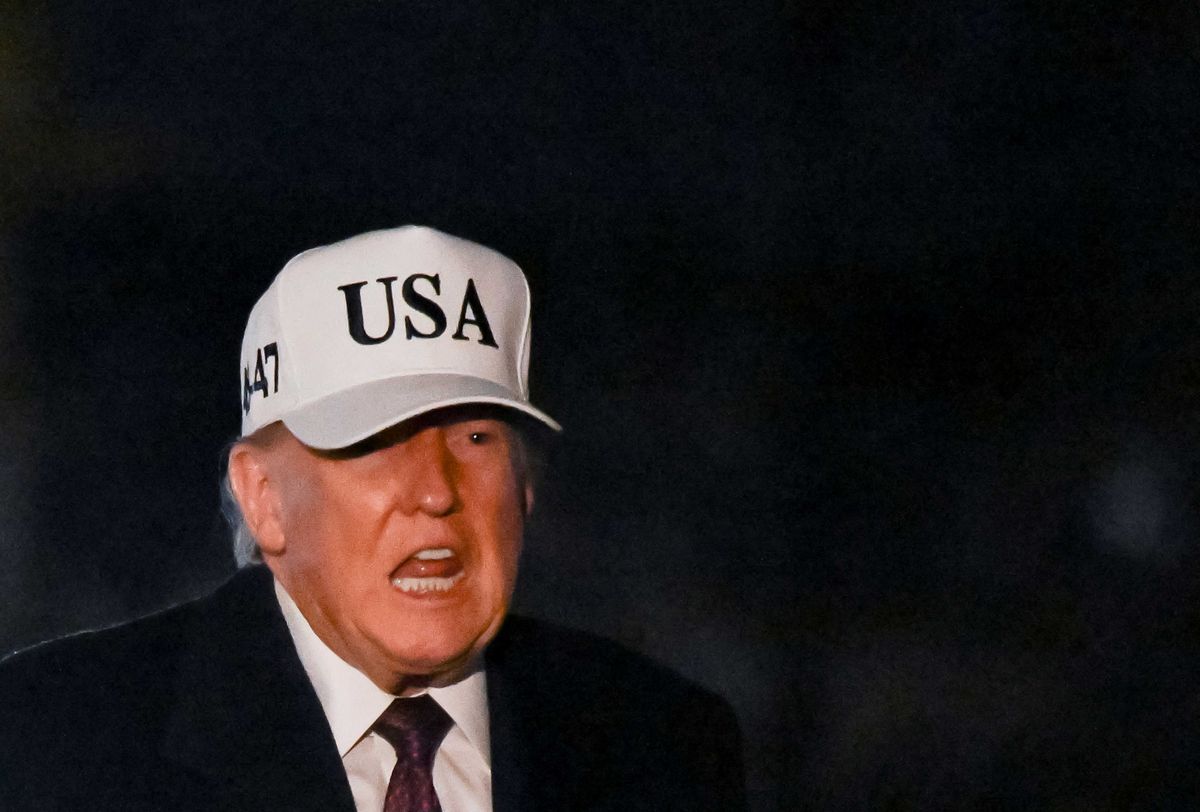
Donald Trump arrives back at the White House. REUTERS/Annabelle Gordon
This past week, Donald Trump demanded that the Pentagon produce an invasion plan for Greenland, an action that would have world-changing consequences to the benefit of Vladimir Putin and the detriment of Europe, democracy, and America. He followed that by suggesting that Marco Rubio should be the next president of Cuba, the same way Putin had promised his generals and oligarchs that they could have Ukraine.
Step-by-step it appears that Trump is trying to turn America into Russia. We saw the latest and most gruesome example this weekend as Homeland Security Secretary Kristi Noem — who shot her puppy in the face and bragged about it — went on national TV to defend Jonathan Ross shooting Nicole Good in the face, then calling her a “f------ bitch.”
What’s becoming increasingly clear to Americans — which is why so many millions were in the streets this weekend — is that Trump is trying to use ICE as his own private version of the Schutzstaffel (SS), a secret, unchallengeable police force loyal to him rather than the law, whose job is to terrify and pacify the population so they won’t object to having their pockets picked and their freedom taken.
And his threats against Greenland are designed to break up NATO, fulfilling Putin’s deepest desire, which could ultimately lead to the disintegration of the Atlantic alliance and eventually to the military domination of Europe by Russia.
Both Putin and Trump appear to want the thorn in their sides of the example of a democratic Europe to fail, thus making the world safe for looter-mentality strongman autocracies.
I used to think that Trump always did whatever Putin told him to, during both his administrations and even before, because Putin was blackmailing him or dangling billion-dollar Trump Hotel Moscow opportunities in front of him.
While both of those options are still pretty likely, increasingly I’m seeing that Trump is doing what Putin suggests because he wants to be like Putin. And he wants America to be like Russia.
These two men are deeply damaged psychopaths who never matured emotionally because of the psychological trauma of their childhoods.
They think alike, as do most dictators in history, men who feel fundamentally insecure and get their feeling of safety by dominating others. Abusers who were abused and now inflict abuse.
Donald Trump arrives back at the White House. REUTERS/Annabelle Gordon
This past week, Donald Trump demanded that the Pentagon produce an invasion plan for Greenland, an action that would have world-changing consequences to the benefit of Vladimir Putin and the detriment of Europe, democracy, and America. He followed that by suggesting that Marco Rubio should be the next president of Cuba, the same way Putin had promised his generals and oligarchs that they could have Ukraine.
Step-by-step it appears that Trump is trying to turn America into Russia. We saw the latest and most gruesome example this weekend as Homeland Security Secretary Kristi Noem — who shot her puppy in the face and bragged about it — went on national TV to defend Jonathan Ross shooting Nicole Good in the face, then calling her a “f------ bitch.”
What’s becoming increasingly clear to Americans — which is why so many millions were in the streets this weekend — is that Trump is trying to use ICE as his own private version of the Schutzstaffel (SS), a secret, unchallengeable police force loyal to him rather than the law, whose job is to terrify and pacify the population so they won’t object to having their pockets picked and their freedom taken.
And his threats against Greenland are designed to break up NATO, fulfilling Putin’s deepest desire, which could ultimately lead to the disintegration of the Atlantic alliance and eventually to the military domination of Europe by Russia.
Both Putin and Trump appear to want the thorn in their sides of the example of a democratic Europe to fail, thus making the world safe for looter-mentality strongman autocracies.
I used to think that Trump always did whatever Putin told him to, during both his administrations and even before, because Putin was blackmailing him or dangling billion-dollar Trump Hotel Moscow opportunities in front of him.
While both of those options are still pretty likely, increasingly I’m seeing that Trump is doing what Putin suggests because he wants to be like Putin. And he wants America to be like Russia.
These two men are deeply damaged psychopaths who never matured emotionally because of the psychological trauma of their childhoods.
They think alike, as do most dictators in history, men who feel fundamentally insecure and get their feeling of safety by dominating others. Abusers who were abused and now inflict abuse.
As a result, they both delight in killing people via their militaries.
They get high by terrorizing people with their secret police and militias.
They both hate and fear a free and open press and any sort of legislative or judicial power that may constrain them.
They both have corruptly made billions from their political positions, both use public monies to shower wealth and opportunity on their friends, and both wield the police and judicial powers of their nations to punish their enemies. Trump’s most recent is Fed chair Jerome Powell.
Other dictators throughout history have shared these same characteristics. Hitler was an abused, unwanted child, much like Trump and Putin. Saddam Hussein, Benito Mussolini, and Francisco Franco were all the victims of violent alcoholic fathers who beat them and their mothers, growing up in severely dysfunctional families.
Historian Brian Junkermeier notes that, “Stalin’s father was so violent, that on more than one occasion, he physically abused Stalin to the point where he would have blood in his urine for several days.”
All of these men grew up to be abusers, not just of their family members but of their entire nations.
Most Americans, not being psychopaths who survived cruel childhoods, don’t understand and can’t identify with these impulses. But it’s a safe bet that many of the people who’re enthusiastically answering the ICE recruiting call to “reclaim our nation” from Black and brown people and democracy-loving liberals also share Trump’s and Putin’s propensity for violence.
After all, it wasn’t until Renee Nicole Good told Jonathan Ross that she wasn’t mad with him and was leaving — a statement that she was in control and was leaving her abuser, the exact moment when most abusive husbands who kill their wives take that final step — that he fired three times into her head and called her a “fuckin’ bitch.”
It’s a classic abuser’s move, particularly against women.
Meanwhile, a handful of emotionally stunted rightwing billionaires who are democracy-skeptical are right there with Trump, using their financial power to promote autocracy and oligarchy. Many have had their worldview twisted by the power their own wealth gives them.
Robert Caro once noted:
“Power doesn’t corrupt. Power reveals. When a man is climbing, when he needs votes, when he needs allies, he is careful. When he has power, he no longer needs to be careful — and then you see who he really is.”
In that, he’s echoing Lord Acton’s famous 1887 observation:
“Power tends to corrupt, and absolute power corrupts absolutely.”
Trump, the billionaires he surrounds himself with (13 in his cabinet, over a hundred others as major donors), and the police-state toadies like Miller, Noem, Vance, Homan, Patel, Bavino, etc are — based on observable behaviors and statements — almost universally opposed to democracy.
They’re trying to normalize turning America into an oligarchy with the First Family making billions in their first dozen months and their secret police openly killing people in the street and then blaming their victims on national television.
The danger with this is that oligarchy, as I point out in The Hidden History of American Oligarchy: Reclaiming Our Democracy from the Ruling Class, is a transitional form of government that rarely lasts more than a generation or two. It’s so unstable because when the people realize the oligarchs are ripping them off and essentially stealing the nation’s wealth for themselves, they tend to rise up and loudly object.
That’s what we’re seeing with the No Kings and other protests here in America.Average Americans know that when modern GOP-driven Reaganomics started in 1981 fully two-thirds of us had a good, middle-class life with a single paycheck but today it takes two paychecks to barely reach that level, which is why the middle class has collapsed down to fewer than half of us.
They know that the top 1% has extracted more than $50 trillion from working class people over the past 44 years via Reagan, Bush, and Trump tax cuts and the destruction of the union movement.
They know that when Reagan came into office a home cost three times the average salary and today it’s ten times a single salary (or five times a two-income household’s income).
They know their parents went to college for free or cheap and they’re now indebted for half or more of their lives.
They know that healthcare and health insurance used to be affordable when hospitals and health insurance companies were required to be nonprofits, and are now a massive trillion-dollar annual wealth-extraction scheme that’s making people like Rick Scott and Dollar Bill McGuire richer than the pharaohs.
So, when the morbidly rich seize power and rip off the working class, history shows that people rise up against the new oligarchy, leaving Trump and his billionaires with two choices.
They can, like they did in the face of FDR’s overwhelming popularity and success with the New Deal, simply retire from politics and just go back to making money and running their businesses (1933-1981).
Or they can, like they did in Russia two decades ago (and are doing today in numerous other countries including Iran and Venezuela), come down on the protestors with an iron fist, a steel-heeled boot (to paraphrase Grover Cleveland), led by state power and a brutal secret police and intelligence force.
Trump and the hard-right billionaires who made him president appear to be betting option number two will work out for them as well as it did for Putin.
It’s up to us and the politicians we’ve elected to represent us to make sure they don’t succeed and our nation returns to the rule of law.
History tells us how this moment will end if We the People hesitate.
Autocrats like Trump don’t stop because they suddenly find a conscience; they stop when institutions push back, when laws are enforced by judges and the military refuse illegal orders, and when ordinary people refuse to be intimidated into silence.
Russia didn’t fall into tyranny overnight. It slid there step by step, excuse by excuse, “reasonable step away from law and order” by reasonable step, until the police and military were no longer servants of the law but enforcers of loyalty, and regime-aligned billionaires became untouchable partners in plunder.
America is standing at that same fork in the road right now.
Either we insist — loudly, relentlessly, and electorally — that no president is above the law, that no secret police may operate without accountability, that no billionaire may buy immunity, and that democracy is not optional…or we allow fear, exhaustion, and cynicism to finish the job Trump has begun.
This is quite literally a battle over whether the United States remains a democratic constitutional republic or becomes another cautionary tale taught to future generations who inevitably and naïvely ask how a free people could have let it happen.
The choice is still ours, at least for the moment. But history makes one thing clear: once the jackboot is fully laced, it rarely comes off without blood.
Thom Hartmann is a New York Times best-selling author and SiriusXM talk show host. His Substack can be found here.


