Friday, January 16, 2026

xAI restricts Grok chatbot after sexualised AI images spark global concern


Elon Musk’s AI company xAI has imposed limits on its Grok chatbot’s image editing capabilities after hyper-realistic sexualised images – including depictions of minors – circulated online. The restrictions apply to all users, including paid subscribers, and block image generation in jurisdictions where such content is illegal.


Issued on: 15/01/2026 
By: FRANCE 24

xAI and Grok logos are seen in this illustration taken on February 16, 2025. © Dado Ruvic, Reuters

Elon Musk's artificial intelligence company xAI said late on Wednesday that it had imposed restrictions on all users of its Grok AI chatbot that limit image editing after the service produced sexualised images that sparked concerns among global regulators.

"We have implemented technological measures to prevent the Grok account from allowing the editing of images of real people in revealing clothing such as bikinis. This restriction applies to all users, including paid subscribers," the company said in an X post.

Hyper-realistic images of women manipulated to look like they were in microscopic bikinis, in degrading poses or covered in bruises began flooding social media platform X this month. In some cases, minors were digitally stripped down to swimwear, sparking broad criticism.

Grok last week began allowing only paying subscribers to use its image generation and editing features. X last week curtailed Grok's ability to generate or edit images publicly for many of its users, but the chatbot still privately produced sexually charged images on demand on Wednesday before xAI's announcement, Reuters found.

Billionaire Musk owns xAI, which in turn owns X, formerly known as Twitter.

xAI added on Wednesday that it blocks users based on their location from generating images of people in skimpy attire in "jurisdictions where it's illegal". It did not name those jurisdictions.
California officials demand answers

California's governor and attorney general said earlier on Wednesday that they were demanding answers from xAI after Musk said he was not aware of any "naked underage images" generated by Grok.

"We’re demanding immediate answers from xAI on their plan to stop the creation & spread of this content," California Attorney General Rob Bonta wrote on X. Governor Gavin Newsom called on Bonta "to immediately investigate the company and hold xAI accountable."

The comments from Newsom and Bonta were the most serious so far by US officials addressing the explosion of AI-generated non-consensual sexualised imagery on X.

The California move added to the pressure Musk is facing in the US and around the world. Lawmakers and advocacy groups have called for Apple and Google to drop Grok from app stores.

Government officials have threatened action in Europe and the United Kingdom. Indonesia temporarily blocked access to Grok.

At first, Musk publicly laughed off the controversy, posting humorous emojis in response to other users' comments about the influx of sexualised photos. More recently, X has said it treats reports of child sexual abuse material seriously and polices it vigorously.

Musk said earlier on Wednesday he was "not aware of any naked underage images generated by Grok. Literally zero."

X did not immediately respond to questions about the California announcement and Musk's comments.

xAI did not respond directly to an emailed request for comment on California officials' statements or Musk's post that he was unaware of sexualised imagery of minors. Reuters received its generic autoreply message for inquiries: "Legacy Media Lies."

(FRANCE 24 with Reuters)

SPACE/COSMOS

Franco-German space company ArianeGroup to double launches in 2026

dpa  16.01.2026

Photo: Hauke-Christian Dittrich/dpa

Franco-German space company ArianeGroup is intending to double the number of launches of its Ariane 6 rocket carrier this year.

Boss Pierre Godart said on Friday that seven or eight flights are planned after four launches in 2025.

By 2027, the company is expected to boost capacity to around 10 flights per year, he added, with further development possible if the market holds.

"We will invest if it makes economic sense," Godart said.

ArianeGroup currently has around 30 launches under contract, with some slots still available in the coming years.

In February, the company is set to launch the most powerful version of the Ariane 6 rocket with four booster engines, enabling it to carry payloads of up to 20 tonnes.

The launch is expected to carry 32 satellites for Amazon's Leo high-speed internet network into space, in the first of 18 launches commissioned by the US giant.

Godart emphasized that ramping up production would guarantee Europe its own access to space, including for the German military.

ArianeGroup is active in the military sector, manufacturing ballistic missiles for French nuclear weapons.

The chief executive is also calling for European governments and state-financed actors to instigate a preference for European-made rockets.

Godart also commented on whether Ariane is aiming to use reusable rockets. He said the matter is a question of economic efficiency, because in order to enable the rockets to return, more fuel is needed, reducing the payload by 30 to 40%.

ISS crew returns to Earth in first-ever medical evacuation

Dmytro Hubenko 
DW with AP, AFP, dpa, Reuters
15/01/2026

For the first time in the International Space Station's history, NASA safely returned a crew of four astronauts to Earth ahead of schedule due to medical issues affecting one of the group.

NASA astronaut Zena Cardman is happy to be home after the ISS crew was picked up aboard a SpaceX shipImage: Bill Ingalls/NASA/Anadolu Agency/IMAGO

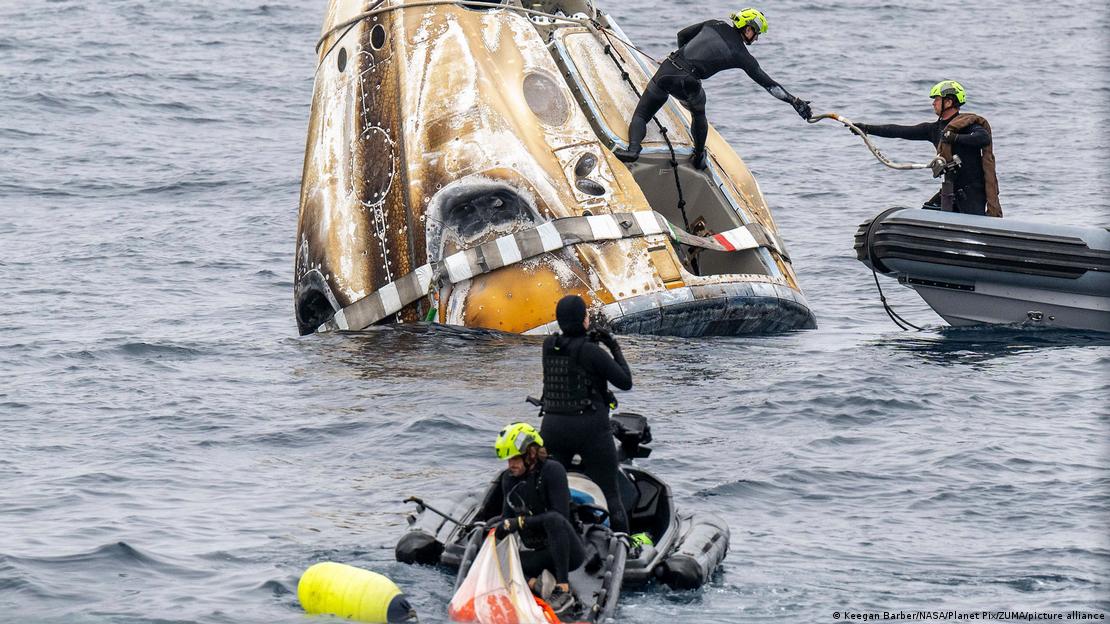
A SpaceX capsule named Endeavour, carrying a four-member International Space Station (ISS) crew home from orbit splashed down safely in the Pacific Ocean off California early on Thursday.

This marked the first time NASA cut short an ISS crew's mission due to a health emergency, bringing the austronauts back a few weeks ahead of schedule.

A joint NASA-SpaceX webcast presented live infrared video showing the deployment of two sets of parachutes from the nose of the free-falling capsule. The parachutes slowed the capsule's descent ra
te to about 15 miles per hour (25 kilometers per hour) before it gently hit the water.

Four parachutes slowed the capsule's re-entry through the Earth's atmosphereImage: NASA/AFP

During a radio transmission to the SpaceX flight control center near Los Angeles, Endeavour's commander, NASA astronaut Zena Cardman, said, "It's good to be home." Fellow US astronaut Mike Fincke, Japanese astronaut Kimiya Yui, and Russian cosmonaut Oleg Platonov joined her on the flight home.

Less than an hour after splashdown, the four astronauts were helped out of the capsule one by one. They were accompanied by the cheers and applause of SpaceX employees aboard a ship.

Just under 11 hours after the astronauts left the International Space Station, SpaceX guided the capsule to splash down in the Pacific Ocean near San DiegoImage: Keegan Barber/NASA/Planet Pix/ZUMA/picture alliance

Why was the mission cut short?

The ISS crew made an early emergency return to Earth due to an undisclosed serious medical condition affecting one of the astronauts.

Last week, NASA announced that it had canceled a spacewalk at the last minute due to health concerns involving one of the crew members. On January 8, the agency announced the decision to bring all four Crew-11 members home early.

Before their return to Earth, NASA astronaut Mike Fincke, Roscosmos cosmonaut Oleg Platonov, NASA astronaut Zena Cardman and JAXA (Japan Aerospace Exploration Agency) astronaut Kimiya Yui posed for a crew portrait (clockwise from bottom left)Image: NASA/AP Photo/picture alliance

According to NASA Administrator Jared Isaacman, one of the astronauts was facing a "serious medical condition" that required immediate medical attention on the ground.

NASA officials have not disclosed which crew member was affected or described the nature of the issue, citing privacy concerns. Later, NASA Chief Health and Medical Officer James Polk said the medical emergency was not caused by an injury that occurred during operations.

Having arrived together in August from Florida, the astronauts spent 167 days aboard the International Space Station.

Edited by: Elizabeth Schumacher
Dmytro Hubenko Dmytro covers stories in DW's newsroom from around the world with a particular focus on Ukraine.

Born In Brightness, Leading To Darkness


What we know of the birth of a black hole has traditionally aligned with our perception of black holes themselves: dark, mysterious, and eerily quiet, despite their mass and influence. Stellar-mass black holes are born from the final gravitational collapse of massive stars several tens of the mass of our Sun which, unlike less massive stars, do not produce bright, supernova explosions.

Or at least, this is what astronomers had previously thought, because no one had observed in real time the collapse of a massive star leading to a supernova and forming a black hole. That is, until a team of researchers at Kyoto University reported their observations of SN 2022esa.

The Kyoto team had wondered whether all massive stars — those that are at least 30 times the mass of the Sun — die quietly without a supernova explosion, or if in some cases they are accompanied by an energetic and bright, special type of supernova explosion. The astronomers then discovered a type Ic-CSM class supernova that appeared to be an explosion of a Wolf-Rayet star, which are so incomprehensibly massive and luminous that astronomers believe them to be the progenitors of black hole formation.

To investigate the nature of this peculiar supernova, the research team utilized both the Seimei telescope in Okayama and the Subaru telescope in Hawaii. The team was able to observe and classify SN 2022esa as an Ic-CSM type supernova, demonstrating that the birth of a black hole is not necessarily quiet since this one could be observed with electro-magnetic signals.

They also discovered something else: the supernova shows a clear and stable period of about a month in its light-curve evolution, leading the team to conclude that it had been created by stable periodic eruptions of the star system once each year before the explosion. Such stable periodicity is only possible in a binary system, so the progenitor must have been a Wolf-Rayet star forming a binary with another massive star, or even a black hole. The fate of such a system, they determined, must be a twin of black holes.

“The fates of massive stars, the birth of a black hole, or even a black hole binary, are very important questions in astronomy,” says first author Keiichi Maeda. “Our study provides a new direction to understand the whole evolutional history of massive stars toward the formation of black hole binaries.”

This study also demonstrates the benefits of using two different telescopes that possess different observational properties. In this case, Seimei’s flexibility and promptness combined with Subaru’s high sensitivity proved to be an effective combination. The team plans to continue conducting research utilizing both telescopes in the coming years.

“We expect many interesting discoveries on the nature of astronomical transients and explosions like supernova,” says Maeda.

Naturally Occurring ‘Space Weather Station’ Elucidates New Way To Study Habitability Of Planets Orbiting M Dwarf Stars

Artist's rendition of the space weather around M dwarf TIC 141146667. The torus of ionized gas is sculpted by the star's magnetic field and rotation, with two pinched, dense clumps present on opposing sides of the star. CREDIT: llustration by Navid Marvi, courtesy Carnegie Science.

January 11, 2026
By Eurasia Review

How does a star affect the makeup of its planets? And what does this mean for the habitability of distant worlds? Carnegie’s Luke Bouma is exploring a new way to probe this critical question—using naturally occurring space weather stations that orbit at least 10 percent of M dwarf stars during their early lives. He is presenting his work at the American Astronomical Society meeting this week.

We know that most M dwarf stars—which are smaller, cooler, and dimmer than our own Sun—host at least one Earth-sized rocky planet. Most of them are inhospitable—too hot for liquid water or atmospheres, or hit with frequent stellar flares and intense radiation. But they could still prove to be interesting laboratories for understanding the many ways that stars shape the surroundings in which their planets exist.

“Stars influence their planets. That’s obvious. They do so both through light, which we’re great at observing, and through particles—or space weather—like solar winds and magnetic storms, which are more challenging to study at great distances,” Bouma explained. “And that’s very frustrating, because we know in our own Solar System that particles can sometimes be more important for what happens to planets.”

But astronomers can’t set up a space weather station around a distant star.

Or can they?

Working with Moira Jardine of the University of St. Andrews, Bouma homed in on a strange type of M dwarf called a complex periodic variable. They are young, rapidly rotating stars that observations show experience recurring dips in brightness. Astronomers weren’t sure if these dips in brightness were caused by starspots or by material orbiting the star.

“For a long time, no one knew quite what to make of these oddball little blips of dimming,” Bouma said. “But we were able to demonstrate that they can tell us something about the environment right above the star’s surface.”

Bouma and Jardine answered that question by creating “spectroscopic movies” of one of these complex periodic variable stars. They were able to demonstrate that they are large clumps of cool plasma that are trapped in the star’s magnetosphere—basically being dragged around with the star by its magnetic field—forming a kind of doughnut shape called a torus.

“Once we understood this, the blips in dimming stopped being weird little mysteries and became a space weather station,” Bouma exclaimed. “The plasma torus gives us a way to know what’s happening to the material near these stars, including where it’s concentrated, how it’s moving, and how strongly it is influenced by the star’s magnetic field.”

Bouma and Jardine estimate that at least 10 percent of M dwarfs could have plasma features like this early in their lives. So, these space weather stations could help astronomers learn a great deal about particles from stars contribute to planetary conditions.

Next, Bouma hopes to reveal where the material in the torus comes from—the star itself or an external source.

“This is a great example of a serendipitous discovery, something we didn’t expect to find but that will give us a new window into understanding planet-star relationships,” Bouma concluded. “We don’t know yet if any planets orbiting M dwarfs are hospitable to life, but I feel confident that space weather is going to be an important part of answering that question.”

Uganda votes under internet blackout and police crackdown

Uganda was on edge as polls opened on Thursday, with President Yoweri Museveni expected to extend his 40-year rule amid an internet shutdown and a police crackdown on the opposition.


Issued on: 15/01/2026 - RFI

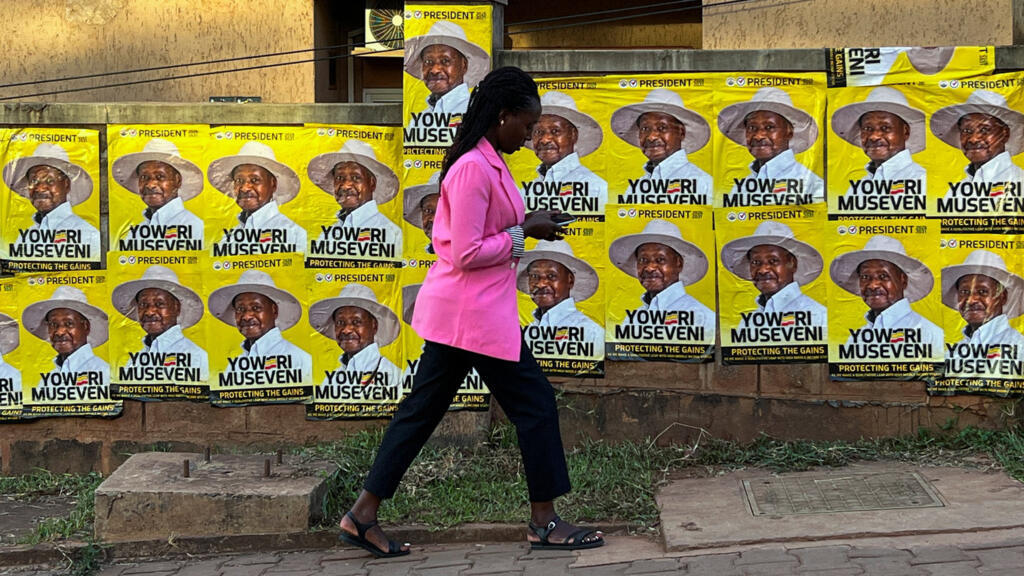
A woman uses a mobile phone as she walks past campaign posters of Yoweri Museveni, Uganda's President and presidential candidate of the ruling National Resistance Movement (NRM), ahead of the general election in Kampala, Uganda, January 14, 2026. © Thomas Mukoya / REUTERS


Polling stations were slow to open, as normal in Uganda, but voting was underway shortly after 7am local time in at least one Kampala suburb.

But in several parts of Uganda stations were still not open almost two hours after voting was due to start, AFP journalists and local sources said Thursday.

AFP reporters in several parts of the capital Kampala and the border city of Jinja said voting had yet to begin, with reports that ballot papers had not been delivered and biometric machines used to check voters' identities were not working.

There were heavy police and army patrols in the border town of Jinja, another AFP team said.

Meanwhile, despite repeated promises that it would not do so, the government shut down the internet on Tuesday for an indefinite period to prevent the spread of "misinformation" and "incitement to violence".

The United Nations called the shutdown "deeply worrying".
'I will crush them'

Western countries have often given Museveni leeway, after he swallowed their demands for neoliberal reforms in the 1980s and made himself a useful partner in the US-led "war on terror" in the 2000s, especially through troop contributions to Somalia.

Many Ugandans still praise him as the man who ended the country's post-independence chaos and oversaw rapid economic growth, even if much was lost to a relentless string of massive corruption scandals.

"Forty years doesn't even matter, we need even more," said one supporter, Banura Oliver, 41, on her way to Museveni's final rally in Kampala.

The president struck a forceful tone, saying: "Go and vote. Anybody who wants to interfere with your freedom, I will crush them."

Many in Kampala were nervous as security forces beefed up their presence for election day.

"We will not talk about elections. You can ask anything but not that," said an accountant in his thirties, who did not give his name.

The police warned the vote was "not a justification for criminal acts" and has deployed newly hired "special constables" to enforce order.

Journalists were harassed and blocked from attending Museveni's rally.

Reporters Without Borders said local journalist Ssematimba Bwegiire lost consciousness after being electrocuted and pepper-sprayed by a security officer at a Wine rally.

Human Rights Watch has denounced the suspension of 10 NGOs, including election-monitoring organisations, and said the opposition had faced "brutal repression".

(With newswires)


'He represents a population desperate for change’, Bobi Wine’s lawyer tells RFI

Uganda's election on Thursday will see incumbent Yoweri Museveni, in power since 1986, seeking a seventh mandate – at the age of 81, in a country where 55 percent of the population is under 20. Supporters of his main rival, Bobi Wine, say he embodies hope for change. Robert Amsterdam, Wine's international legal representative, told RFI of the difficulties he has faced in a campaign fraught with fear and repression.


Issued on: 14/01/2026 - RFI

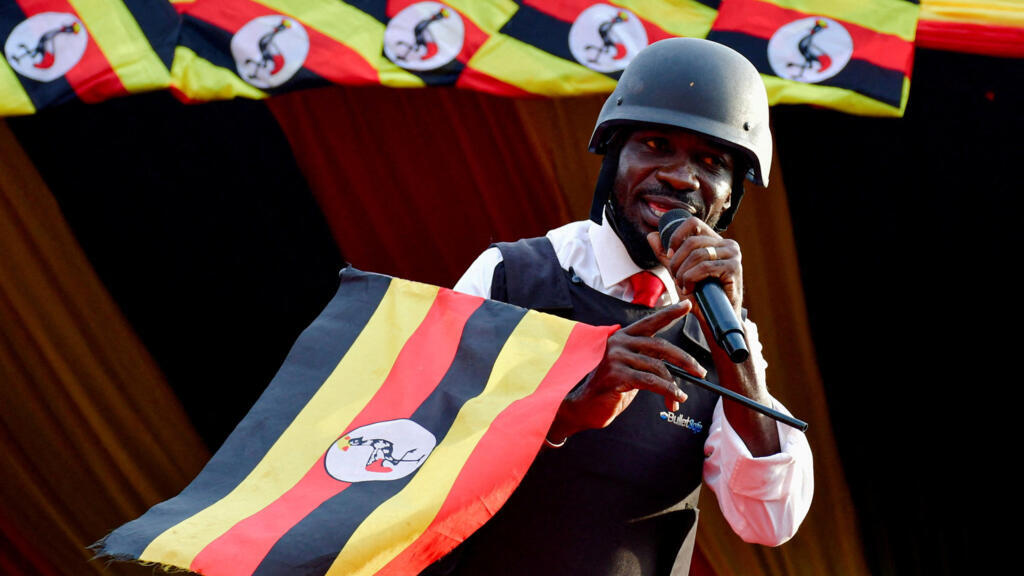
Presidential candidate Robert Kyagulanyi, known as Bobi Wine, addresses the crowd at a rally ahead of the election, Kampala, 12 January. REUTERS - Abubaker Lubowa

By: Melissa Chemam

RFI: For the opposition, and in particular for Bobi Wine, this electoral campaign has been very difficult. How would you describe it?

Robert Amsterdam: Let's be really clear: this is a man who faces death each day. I was first brought in years ago as his lawyer when Museveni tried to kill Bobi by shooting into his car. Bobi was then brutally tortured and held in jail, in a town called Arua, Uganda.

And from that time, Bobi's life has been in danger. And, unlike many, he did not flee his country. He has stood his ground, fighting for Ugandans every day. He is representative of a population that is overwhelmingly under the age of 18 and desperate for change. He is the symbol of change, of youth, not only in Uganda but in Africa. He is an important and emblematic symbol of the fight of this generation to be heard, and for the dinosaurs of previous generations to step out of the way.

The world should start being run by people who have to live in its future, not by those who created a pretty horrendous past in Uganda.

Bobi Wine's fight for democracy in Uganda continues on the big screen

Many human rights organisations have criticised the repression and brutality they say has been seen during this electoral campaign. In light of this, how do you expect the election itself will go?

Of course, it's going to impact the vote. The authorities have cut off the internet. They've divided Kampala into 14 military districts. There's a massive, unprecedented mobilisation of the military. It's absurd and obscene.

I've already had calls from people within the government, who are highly confident of the outcome and are already reaching out to me because they're worried about what the response will be if there is another stolen election. So the government is gearing up to steal another election and deprive Uganda of its vote.

Uganda orders internet blackout ahead of presidential elections

Are there legal mechanisms in place that could ensure Ugandan voters get the result they deserve?

I also represent the opposition in Tanzania, where thousands [of people] were brutally murdered in another stolen election in this part of Africa. So I would be lying if I expressed great confidence in the [possibility of removing] a military dictator.

But at the same time, before a vote, however jaded it may be, I'm not going to make these comments. I'm going to pray for Bobi's safety and for the safety of those with the courage to vote for him and against Museveni and his dynasty. Because he's going to try to put his son in after he's finished.

Do you think Ugandans can see a future where politicians like Wine can emerge? In Uganda and beyond?

He's an inspirational figure, as is Tundu Lissu in Tanzania, who's now in solitary confinement, after being shot 16 times in a prior election. I think these martyrs – and Bobi Wine is a martyr, having suffered through torture and false imprisonment – are heroes of real democracy, not failed leaders and tired policies. These are men of vision who are trying to bring their people out of desperate circumstances.

Uganda police surround opposition leader's party HQ ahead of protests

What is your advice for those parties who may have to wait months, if not years, to be able to represent their voters?

The first thing we have to do is condemn the African Union for living in the past, for making corrupt pacts with unqualified autocrats. We need somewhere in Africa to have a moral stance, and the African Union needs to be a light – not a dim reminder of the past.

And we have great political figures in parts of Africa who are doing their best. Some of them I've come to know through a life in Africa. I'm privileged to act for the Democratic Republic of Congo. And there's just a tremendous amount of inequality and despair that we need to turn around. And all of us who have invested parts of our lives in Africa, we need to not let another Ugandan election be stolen. We need to raise our voices.

Bobi Wine has promised there will be protests if the election is stolen. But can we be confident that people are going to be safe if that's the case?

Absolutely not. There's no confidence. You have a military that's corrupt and out of control. People have every legitimate right to fear for their lives, in a country that has no claim to democracy and no claim to rule of law when it comes to elections.

After 40 years of the same ruler, is change possible in Uganda?

I will never bet against a popular vote, no matter how hijacked I fear an election can be. So let's wait and see. My hopes and prayers are with the people of Uganda in this fateful 48 hours.
How 1,000 Days Of War Pushed Sudan’s Health System to The Brink Of Collapse – Analysis

“Secondly, the best cure for Sudan’s health crisis is peace. We can’t allow children in Sudan to go through another 1,000 days of conflict to pass otherwise we risk the health of a whole generation growing up in this pointless war.”


Families arrive at a UNICEF-supported mobile clinic in Fatasha village in West Omdurman, Sudan. Photo Credit: UNICEF/Ahmed Mohamdeen Elfatih


January 15, 2026
Arab News
By Robert Edwards

After more than 1,000 days of war, Sudan’s health system is buckling under the combined weight of violence, displacement, disease and hunger, pushing millions of civilians toward a crisis with few historical parallels.

What began as a power struggle between the Sudanese Armed Forces and the paramilitary Rapid Support Forces has evolved into what UN agencies now describe as the world’s largest humanitarian and health emergency.

According to the World Health Organization, more than 20 million people in Sudan now require health assistance, while an estimated 33.7 million — roughly two-thirds of the population — are expected to need humanitarian aid this year.

At least 21 million people face acute food insecurity, with famine already confirmed in parts of North Darfur and South Kordofan.

“One thousand days of conflict in Sudan have driven the health system to the brink of collapse,” Dr. Shible Sahbani, WHO’s representative in Sudan, said in a statement. “Under the strain of disease, hunger and a lack of access to basic services, people face a devastating situation.”

The health system’s deterioration has been swift and severe. Since the war began in April 2023, WHO has verified 201 attacks on health care, resulting in 1,858 deaths and 490 injuries.

More than one third of health facilities nationwide — 37 percent — are now non-functional, depriving millions of people of essential and lifesaving care.

“Healthcare facilities are being attacked, there is a shortage of medicines and supplies, and a lack of financial and human resources to operate health services,” Sahbani said. “This means that the system is on the verge of collapse.”

In the hardest-hit regions, particularly Darfur and Kordofan, the picture is even bleaker.

Aid groups estimate that in some areas up to 80 percent of health facilities are no longer operational, leaving overstretched clinics struggling to cope with outbreaks of cholera, malaria, dengue and measles.

“The weather and conditions in Sudan are conducive to the spread of malaria and dengue fever by mosquitoes,” Sahbani said. “Outbreaks of vaccine-preventable diseases, such as measles and polio, are also being reported in many states right now.”

Sudan is now the world’s largest displacement crisis. An estimated 13.6 million people have been forced from their homes — around 9.3 million internally displaced and a further 4.3 million seeking refuge in neighboring countries.

Overcrowded displacement sites, poor sanitation and the collapse of routine health and water services have created ideal conditions for disease outbreaks. Cholera has now been reported in all 18 states, dengue in 14 states, and malaria in 16.

“As the relentless conflict renders some areas inaccessible, particularly in the Darfur and Kordofan regions, the population’s health needs continue to increase,” Sahbani said.

“To meet these mounting needs and prevent the crisis from spiraling out of hand, WHO and humanitarian partners require safe and unimpeded access to all areas of Sudan, and increased financial resources.”
Buy vitamins and supplements

Children are bearing the heaviest burden of Sudan’s collapse. According to the UN children’s agency, UNICEF, roughly half of those expected to need humanitarian assistance in 2026 are children.

“For the children of Sudan, the world is 1,000 days late,” Edouard Beigbeder, UNICEF’s regional director for the Middle East and North Africa, said in a statement.

“Since fighting erupted in April 2023, Sudan has become one of the largest and most devastating humanitarian crises in the world, pushing millions of children to the brink of survival.”

More than 5 million children have been displaced — the equivalent of 5,000 children displaced every day — often repeatedly, as violence follows families from one location to another.

“Millions of children in Sudan are at risk of rape and other forms of sexual violence, which is being used as a tactic of war, with children as young as one reported among survivors,” Beigbeder said.

Malnutrition is compounding the crisis. In North Darfur alone, nearly 85,000 children suffering from severe acute malnutrition were treated between January and November 2025 — “equivalent to one child every six minutes.”

“The collapse of health systems, critical water shortages and the breakdown of basic services are compounding the crisis, fueling deadly disease outbreaks and placing an estimated 3.4 million children under five at risk,” Beigbeder said.

Hunger is worsening Sudan’s health crisis.

“Sudan was once considered to be the food basket of the entire region,” Sahbani said. “Today, it is facing one of the most serious food crises in the world: more than 21 million people face high levels of acute malnutrition and food insecurity.”

Children under five and pregnant or breastfeeding women are particularly vulnerable. “We estimate that nearly 800,000 children under the age of five will have suffered severe acute malnutrition in 2025,” Sahbani added.

UNICEF warns that the breakdown of maternal and child health services has turned childbirth into a life-threatening event, particularly in displacement camps where access to skilled care and surgical facilities is limited or nonexistent.

A Port Sudan-based doctor, who asked to remain anonymous, said the cumulative impact of the war had shattered the country’s health system, with facilities, staff and infrastructure systematically dismantled.

“After a thousand days of awful war, the health system in Sudan remains in a dire situation,” the doctor told Arab News.

“The health system and of course the infrastructure have seen direct attack, where 75 percent of the hospitals and health facilities sustained damage, either via direct shelling or looting of their equipment.”

The conflict has also hollowed out Sudan’s medical workforce. “Many of the health personnel and workforce had to flee, as they were targeted themselves,” the doctor said, warning that the loss of staff has sharply reduced the country’s ability to deliver even basic care.

The collapse of routine services has accelerated the spread of disease, particularly among children. “We started to see the emergence of outbreaks of vaccine-preventable diseases like diphtheria and measles — many outbreaks that we are seeing among children,” the doctor said.

Damage to water infrastructure has further compounded the crisis. “Attacks on water stations led to outbreaks like cholera and hepatitis E with high fatalities among pregnant women,” the doctor added.

Reversing the damage will require far more than short-term emergency aid, the doctor said.

“Sudan’s health system requires huge rehabilitation and rebuilding,” they said, stressing that the consequences of inaction extend well beyond Sudan’s borders. “Health is now global health — whenever there is an outbreak somewhere, there is a risk of it spreading all over.”

The doctor called for urgent international support to stabilize services and rebuild infrastructure.

“There is a need for urgent donations to fill the huge gap in life-saving health services to the people and also to rebuild the health infrastructure,” they said, adding that support must focus on areas of greatest need, “especially conflict areas as well as areas that have been freed of the RSF where now people are returning.”

As international access remains constrained and funding dwindles, much of the burden of care has fallen on Sudanese communities themselves — including diaspora-funded initiatives and volunteer-run clinics and the Emergency Response Rooms

“The conflict has exacerbated all the vulnerabilities Sudan’s health system faced before the war,” Dr. Majdi Osman, a University of Cambridge scientist and founder of Nubia Health, a diaspora-funded clinic in Wadi Halfa in Sudan’s Northern State, told Arab News.

“Decades of under-investment, especially outside of Khartoum, left the health system fragile, but the current violence has pushed it into a state of collapse.”
Buy vitamins and supplements

Supply chains have fragmented, driving up costs and limiting access to essential medicines. “Getting basic medicines has become a challenge but somehow health workers in Sudan are adapting and have been able to get medicines to communities in need,” Osman said.

“For patients with chronic diseases, the war has forced an impossible choice. Stay in a collapsing system or flee across dangerous routes to reach Egypt just to access life-saving treatment that should be a basic right.

“We are seeing families separated and lives risked on these journeys because the local medical infrastructure can no longer sustain the continuous care required for conditions like kidney disease or cancer.”

Despite the devastation, Sudan’s medical workforce has not disappeared. “Sudan does not lack medical expertise; it lacks the infrastructure and stability,” Osman said.

In Wadi Halfa, displaced doctors have arrived from Khartoum, Blue Nile and other conflict-affected regions. “At Nubia Health we are trying to provide them with the resources they need to support health in their communities,” Osman added.

Some organizations are attempting to restore fragments of the national health system. The Sudanese American Physicians Association, a leading humanitarian medical group, has sent a large delegation to Sudan to assess conditions and reopen facilities.

“Our delegation is on the ground to help reopen and restore essential hospital services disrupted by war — starting with the most critical hospitals across the health system’s resiliency, not only in Khartoum but also across the country,” Dr. Anmar Homeida, SAPA’s strategic adviser, told Arab News.

On Wednesday, SAPA announced the reopening of Bahri Teaching Hospital, one of the state’s largest referral facilities, “which represents a lifeline for children, mothers, and people with chronic and hard-to-treat conditions,” said Homeida.

“The impact we’re aiming for is simple: reduce preventable deaths, help local medical providers and humanitarian personnel deliver quality care to people in need, and support families returning home and those still displaced across the country, especially from Darfur and Kordofan, to have quality access to healthcare.

“With Sudan’s health system severely damaged and outbreaks spreading, reopening functional referral hospitals in Khartoum and supporting frontline services across other states is a practical step toward stabilizing communities and enabling recovery.”

Despite insecurity and access constraints, WHO says it continues to deliver lifesaving assistance wherever possible.

Since April 2023, the agency has delivered more than 3,300 metric tons of medicines and medical supplies worth around $40 million, including treatments for cholera, malaria, dengue and severe malnutrition.

About 24 million people have received cholera vaccinations, while more than 3.3 million have accessed care at WHO-supported hospitals, primary health facilities and mobile clinics.

More than 112,400 children with severe acute malnutrition have received treatment at WHO-supported stabilization centers.

“WHO is doing what we can, where we can, and we know we are saving lives and rebuilding the health system,” Sahbani said. “Despite the challenges, we are also working on recovery of the health system.”

Aid agencies are clear that humanitarian action alone cannot resolve Sudan’s crisis. “Humanitarian action can save lives, but it cannot replace the protection that only peace can provide,” Beigbeder said.

WHO, UNICEF and Sudanese doctors are united in their call for an end to the fighting and unimpeded humanitarian access.

“All parties must uphold their obligations under international humanitarian law: protect civilians, stop attacks on infrastructure, and allow safe, sustained and unimpeded humanitarian access across Sudan,” Beigbeder said.For Osman, the message to donors is equally stark.

“Firstly, the international community needs to move quickly and support Sudanese, community-led efforts that are delivering care today,” he said.

“When I recently visited Sudan, I was expecting to see a global response to the world’s largest humanitarian crisis. I found almost nothing.

“Secondly, the best cure for Sudan’s health crisis is peace. We can’t allow children in Sudan to go through another 1,000 days of conflict to pass otherwise we risk the health of a whole generation growing up in this pointless war.”


Arab News

Arab News is Saudi Arabia's first English-language newspaper. It was founded in 1975 by Hisham and Mohammed Ali Hafiz. Today, it is one of 29 publications produced by Saudi Research & Publishing Company (SRPC), a subsidiary of Saudi Research & Marketing Group (SRMG).
Pacific Power Must Show Progress Towards Oregon Emission Reduction Targets, Judge Finds

January 16, 2026 
Oregon Capital Chronicle
By Alex Baumhardt

(Oregon Capital Chronicle) — Oregon’s largest electric utilities will need to show continual progress towards the state’s greenhouse gas emissions reduction targets or face enforcement from the Oregon Public Utility Commission, a judge ruled.

Tuesday’s written ruling from Marion County Circuit Court Judge Channing Bennett follows a spoken directive Bennett gave in November and clears up any uncertainty over the commission’s authority to ensure progress is met on House Bill 2021.

That law requires Pacific Power and Portland General Electric — the state’s two largest investor-owned monopoly electric utilities collectively serving nearly 75% of the state’s electricity users — to reduce their greenhouse gas emissions 80% by 2030, 90% by 2035 and 100% by 2040.

Bennett rejected an appeal from lawyers for PacifiCorp, Pacific Power’s parent company, who argued the commission lacked the power to hold the company accountable for showing “continual progress” in meeting the targets established by the state Legislature five years ago. That’s because commissioners had not defined what “continual progress” meant, the lawyers said.

The case stemmed from a 2023 clean energy plan the company submitted to the Public Utility Commission as required by state law, meant to outline steps the company would take to reduce emissions and ensure reliable service and affordability.

Commissioners determined Pacific Power’s plan was insufficient as it did not include contracting with new clean energy producers to buy more power from them and cancelled a procurement process the company had begun in 2022 for purchasing more clean energy from producers. Instead, the plan outlined several strategies the company might undertake to reduce emissions, but did not commit to them.

“We simply cannot find that backsliding on emissions reductions without committing to a plan for improvement is continual progress, even if it represents a company’s best efforts under challenging circumstances and even though PacifiCorp has continued to advance its analysis and planning,” commissioners wrote.

In 2024, they proposed requiring the company to buy more clean energy from producers on the open market, which PacifiCorp appealed.

Bennett’s ruling affirmed that the commission has the power to ensure companies are making continual progress and that it does not need to define what that means.

“Absent a definition by the Legislature or the Commission, the phrase ‘continual progress’ is to be interpreted in accordance with the plain meaning of those two words,” Bennett wrote. “Backsliding on emission reductions without committing to a plan for improvement does not meet the plain meaning of ‘continual progress.’”

The watchdog Oregon Citizens’ Utility Board, the Green Energy Institute at Lewis and Clark University Law School, and the nonprofits Sierra Club and Renewable Northwest intervened on behalf of the Public Utility Commission in the case. They argued that Pacific Power was attempting to delay implementation of the state law and its legally mandated emission reduction targets, and to delay adding more clean energy resources to its power mix.

“The legislature didn’t anticipate that the utilities would do nothing and then all of a sudden in 2030 reduce their emissions, but that every year they would be taking steps to reach that target,” said Rose Monahan, senior attorney for the Sierra Club. “We were very vindicated to see that a judge who isn’t steeped in the weeds here also just sort of got it.”

Monahan said advocates suspected PacifiCorp’s 2023 Clean Energy Plan did not include more plans to buy clean energy on the open market or to build it themselves due to financial insecurity over the company’s liability in several 2020 powerline-ignited wildfires.

Simon Gutierrez, a spokesperson for PacifiCorp, said in an email that Pacific Power has improved upon its 2023 clean energy plan, and that its most recent clean energy plan presented to the commission in 2025 shows it will exceed the state’s timeline for decreasing emissions by creating and buying clean energy.

By 2030, he said, the company will reach an 85% reduction of emissions in Oregon, and reach a more than 90% reduction by 2035.

But, he added, “the current plan for clean energy deployment in Oregon will impact the cost of living for Oregonians and is becoming increasingly risky for utilities. PacifiCorp urges state leaders to consider these affordability challenges and also work to streamline the approval process for major infrastructure projects.”

The Public Utility Commission “remains committed to ensuring all regulated utilities make continual progress toward the state’s emissions‑reduction goals,” said Kandi Young, a commission spokesperson. “These standards were established by the Legislature to protect Oregon customers, support grid reliability, and advance the state’s transition to a cleaner energy future.”


Oregon Capital Chronicle

The Oregon Capital Chronicle, founded in 2021, is a professional, nonprofit news organization. We focus on deep and useful reporting on Oregon state government, politics and policy. Staffed by experienced journalists, the Capital Chronicle helps readers understand how those in government are using — or abusing — their power, what’s happening to taxpayer dollars, and how citizens can stake a bigger role in big decisions.

Spanish PM Pedro Sánchez’s Dilemma Over Western Sahara


File photo of Western Sahara protests in Madrid, Spain. 
Photo Credit: Cristianrodenas, Wikipedia Commons

Spain’s calls to respect sovereignty in Venezuela and Gaza have drawn attention to alleged hypocrisy vis-a-vis its own colonial past


January 16, 2026 
EurActiv
By Inés Fernández-Pontes

(Euractiv) — Spain’s strong defence of international law in response to a US military operation in Venezuela and Washington’s threats to take over Greenland has reignited scrutiny of Madrid’s own position on Western Sahara, where Spain retains a key and politically sensitive role.

Spanish Prime Minister Pedro Sánchez condemned what he described as a violation of Venezuelan sovereignty following the US capture of the country’s leader, Nicolás Maduro, and urged the EU not to “remain silent” in the face of US interventionism.

“Atlanticism does not mean vassalage,” the socialist leader said last week in his address to ambassadors, adding that respect for the sovereignty of Ukraine, Gaza, Venezuela or Greenland is “non-negotiable.”

The remarks, however, have drawn attention to Spain’s alleged hypocrisy toward Western Sahara, a former Spanish colony, and a long-running territorial dispute with direct legal and strategic implications for Madrid.

Controversies over airspace control

Spain withdrew from Western Sahara in 1975 after decades of colonial rule, opening the way for what international law considers the illegal occupation of the territory by Morocco and Mauritania. Nouakchott eventually withdrew from the conflict, but Rabat continues to lay claim to Western Sahara.

The situation triggered a protracted conflict between Rabat and the pro-independence armed group the Polisario Front, which claims to represent the local population.

“Airspace is part of Sahrawi territory, along with land and maritime space,” Abdulah Arabi, the Polisario Front representative in Spain, told Euractiv.

Arabi recalled the 2024 ruling of the European Court of Justice (ECJ), settling that Western Sahara is a distinct territory from Morocco.” Any action regarding the territory taken “without the consent of the people of Western Sahara and its legitimate representative is illegal under international law,” he noted.

But while Morocco claims sovereignty over Western Sahara, Spain continues to control the territory’s airspace. Since 1976, Spain’s air navigation authority, AENA, has managed air traffic from Gran Canaria’s Gandó airport.

For Rabat, control of the airspace is crucial for asserting control over the disputed territory, explained Isaías Barreñada, professor of international relations at Madrid’s Complutense University. But in Spain, where strong support for the Sahrawi cause persists across the political spectrum, any concession would be highly contentious.

In 2024, amid mounting pressure from political allies, Spanish Foreign Minister José Manuel Albares denied that the government was considering concessions to Morocco over airspace, calling such claims “strange theories.”

Barreñada also noted that Spain doesn’t have the legal authority to transfer control of airspace to Morocco.

There’s also the question of symbolism. Former Spanish army colonel Alfredo Rodríguez told Euractiv that changing who manages the airspace would signal “who is consolidating power in Western Sahara.”

“The debate over air traffic control is not merely technical – it is fundamentally political,” Rodríguez said.


Morocco’s leverage


Spain’s room for manoeuvre is also constrained by its relationship with Morocco.

In 2021, ties between the two countries deteriorated after Madrid allowed the Polisario leader Brahim Ghali to receive medical treatment in Spain without notifying Rabat. Morocco responded by easing border controls, allowing thousands of migrants to storm the Spanish northern African exclave of Ceuta in what Spain’s Defence Minister Margarita Robles described as “blackmail.”

Madrid eventually capitulated, and relations were later “normalised” after Spain broke with decades of neutrality by backing Morocco’s autonomy plan for Western Sahara in 2022, a position the US and France also took.

A joint declaration later opened the door to future “discussions on airspace management.”

Serving as a crucial buffer against the Sahel’s instability, Morocco remains a key partner for Spain in fighting terrorism and criminal trafficking networks. Spain’s Interior Minister Fernando Grande-Marlaska recently hailed this cooperation as “extraordinary,” highlighting Morocco’s role as a vital security shield for the EU.

According to Rodríguez, cooperation on migration, border control and policing gives Morocco significant leverage to “politically and economically influence” Spain.

Sánchez’s silence


Despite the many incentives for the Spanish government to acquiesce to Morocco, its silence leaves the socialists open to criticism.

Roberto Cantoni, an investigator for the organisation Western Sahara Resource Watch (WSRW), said Madrid’s staunch support for international law is, in fact, rather inconsistent.

“It is very striking and controversial given Sánchez’s support for other international rights violations and the self-determination of the Palestinians and Greenland,” Cantoni said.

Sánchez’s silence over the Sahara implies that “the problem does not exist,” he added, “as if there were no international judgments affirming that Morocco does not have sovereignty over this territory.”

The Spanish Ministry of Foreign Affairs did not respond to Euractiv’s requests for comment at the time of publication.

EurActiv publishes free, independent policy news and facilitates open policy debates in 12 languages.
U.S. Wild Horse And Burro Management: Overview Of Costs – Analysis


Background

The Wild Free-Roaming Horses and Burros Act of 1971 (1971 Act, 16 U.S.C. §§1331 et seq.) provides for management and protection of wild horses and burros by the Bureau of Land Management (BLM), within the Department of the Interior, and the Forest Service (FS), within the Department of Agriculture. For decades, federal management of wild horses and burros in western states has generated controversy, study, proposals, and lawsuits on occasion. BLM and FS use several approaches to achieve the appropriate management level (AML) of animals on the range, including placement into private care (primarily adoption and sale), off-range holding, and fertility control, among others. Management costs have increased over time (Figure 1). Issues for Congress include the adequacy and use of funding to achieve AML, primarily on BLM lands.
 
Overview of Authority

Under the 1971 Act, BLM and FS inventory horse and burro populations periodically to determine AML for each herd. When the pertinent Secretary determines that an overpopulation exists and that it is necessary to remove excess animals, the law requires specific actions (16 U.S.C. §1333(b)(2)). First, the Secretary “shall order old, sick, or lame animals to be destroyed in the most humane manner possible.” Second, the Secretary “shall cause … excess … horses and burros to be humanely captured” for private adoption. Third, where there is no adoption demand, the Secretary shall cause excess animals “to be destroyed in the most humane and cost efficient manner possible.”

Congress has enacted additional authorities to reduce excess animals. For instance, P.L. 108-447, Division E, Section 142, authorized excess animal sales, with provisions to (1) direct the agencies to sell, “without limitation,” excess animals (or remains) that are more than 10 years old or offered for adoption unsuccessfully at least three times; (2) remove a ban on sale of wild horses and burros (and remains) for processing into commercial products; and (3) remove criminal penalties for processing the remains of a sold animal into commercial products.

Since 1982, BLM and FS have not used their authority to destroy healthy animals. Further, most (but not all) annual Interior appropriations laws over the past few decades have prohibited BLM from using funds therein for destruction of healthy animals or for sales of animals that result in processing into commercial products. Since FY2020, Interior appropriations laws typically contained a similar FS provision (e.g., P.L. 118-42, Division E, §417(e)).


Population

Achieving and maintaining the number of wild horses and burros at the national AML has challenged BLM for decades. As of March 1, 2025, BLM had set the AML upper limit for all wild horse and burro herds on its lands at 25,556 animals, but the on-range estimate was 73,130 animals. However, this level is 23% less than the 2020 recent high of 95,114 animals, due to factors including increased removals, adoptions/sales, and fertility control.

BLM manages wild horses and burros in 175 herd management areas (HMAs) in 10 western states. Nearly half (83) of the HMAs are in Nevada. Wyoming, Oregon, Utah, and California each have between 14 and 21 HMAs. BLM also manages thousands of these animals—64,205 as of August 2025—off range. During periodic gathers and removals, these additional animals were removed from rangelands exceeding AML. Most (61%) are being cared for in long-term (pasture) facilities, typically for the remainder of their lives. Others (39%) are in short-term (corral) facilities, usually to be readied for adoption or sale. For FS lands, AML is roughly 3,500 (January 2025). The number on range—about 9,000-9,500—is more than double the AML. The animals are on 34 active territories in several states, with about two dozen managed jointly with BLM.
Wild Horse and Burro Program Funding

It is unclear whether funding levels have been appropriate to care for wild horses and burros. Program costs would vary based on the overall management strategy adopted and the particular programs emphasized (e.g., off-range holding, adoption, or population control). For instance, 2018 and 2020 BLM reports (and a 2020 fact sheet) presented management options with varying associated costs.

BLM Historical Appropriations: FY2000-FY2025

The FY2025 appropriation for BLM management of wild horses and burros was $142.0 million. Relative to FY2000 ($20.4 million), this was nearly a 600% increase in nominal dollars and about a 270% increase in 2025 dollars. The FY2025 appropriation also was about 4% less than the FY2023 peak of $147.9 million in nominal dollars and about 9% less in 2025 dollars (Figure 1). FS wild horse and burro appropriations are not separately identifiable.

Since FY2000, appropriations laws periodically have provided BLM funding to reduce animals on the range. For example, in FY2010, BLM received $64.0 million,compared with $40.6 million in FY2009. The increase was for activities (e.g., removal and adoption of animals, population control) to achieve AML by 2013 (which did not occur) and for the escalating cost of long-term holding. As another example, the FY2022 appropriation was $137.1 million, compared with $115.7 million in FY2021, to support “an aggressive, non-lethal population control strategy” as set out in BLM’s 2020 report, according to the explanatory statement. This strategy was to include increased removals, long-term holding, and fertility control.
FY2024 Obligations by Activity

Figure 2 shows FY2024 BLM obligations of wild horse and burro funding of $153.3 million, by activity. Off-range holding accounted for $101.4 million (66%), composed of $70.9 million (46%) for short-term care and $30.5 million (20%) for long-term care. Program support and adoptions and sales were each 10%. Other portions were 5% for gathering (animals on the range), 4% for growth suppression, and 5% for other activities.


Issues and Proposals Related to Costs

Concerns over increasing wild horse and burro populations and program costs have prompted studies and proposals for years. In response to congressional direction, BLM issued a report in 2020 proposing actions to achieve AML over 15-18 years. The emphasis was on animal removals, off-range holding, placement into private care, and fertility control and included related costs. Some Appropriations Committee reports have expressed an intent to fund options in BLM’s 2020 report.

Some questions pertain to how to increase the number, and reduce the average cost, of animals placed in private care. BLM has sought to increase adoptions and sales by partnering with organizations (including new partnerships). BLM typically charges a minimum of $25 to adopt or purchase an untrained animal and $125 per trained animal, but BLM estimated the average cost to the agency at about $1,700 in 2025. This cost includes making the animals more marketable (e.g., by training, advertising, and transporting) but excludes a $1,000 adoption incentive that ended in March 2025. The cost of placement in private care is considerably less than BLM’s average lifetime cost of caring for an animal—about $15,000 in 2025. This was a decrease from $27,500 in 2023, according to BLM, due to the acquisition of additional long-term pasture facilities, which are lower cost than short-term corral facilities.

However, the number of animals in short-term facilities has increased (e.g., by 54% from 16,325 in 2021 to 25,110 in 2025). Another question is whether animals can be moved more quickly from short-term corral facilities into long-term pasture facilities to achieve program savings. Long-term holding typically is used for older and other animals with less potential for adoption or sale, with an average cost in 2025 at about $2.35 per animal per day, according to BLM. The cost of short-term corral facilities was about $6 per animal per day in 2025. Short-term facilities are more expensive due in part to hay costs, veterinary services, and farrier services to prepare the animals for adoption or sale and, in some cases, to the costs of BLM salaried employees.

A third question—how to improve fertility control to reduce herd sizes and costs—has been a focus of BLM research and was recommended by BLM’s Wild Horse and Burro Advisory Board. BLM estimated the cost of the most common method—Porcine Zona Pellucida (PZP) vaccines—at $2,100 per mare in 2025, including gathering, treating with PZP, holding for a short time, and then releasing back to the range. PZP generally is most effective for one year only. To lower costs, areas of research have included longer-lasting fertility control. Since 2018, BLM has increased use of the GonaCon-Equine vaccine, which can produce four or more years of infertility in mares receiving a booster dose. The cost of this treatment was about $2,500 per mare in 2025, including the vaccine; application by dart or gather/treat/hold/release; and staff travel and labor.

A fourth question is how to increase nonfederal funding for management of wild horses and burros. Recent initiatives include BLM establishment of a “micro-donations website.” Also, the BLM Wild Horse and Burro Advisory Board has recommended that the Foundation for America’s Public Lands, BLM’s official charitable partner, serve as a funding source/mechanism for off-range holding.

A fifth question is whether BLM should sell excess animals without limitations and/or destroy excess healthy animals to reduce program costs, as some observers have proposed. President Trump’s FY2026 budget did not prohibit use of funds for destruction of animals. Also, the FY2020 BLM budget justification had called for availability of all authorities under the 1971 Act by removing sale limitations (intended as safeguards against slaughter) and prohibitions on using funds to destroy healthy animals. The FY2020 appropriations law retained these provisions.

About the author: Carol Hardy Vincent, Specialist in Natural Resources Policy

Source: This article was published by the Congressional Research Service (CRS).
The Congressional Research Service (CRS) works exclusively for the United States Congress, providing policy and legal analysis to committees and Members of both the House and Senate, regardless of party affiliation. As a legislative branch agency within the Library of Congress, CRS has been a valued and respected resource on Capitol Hill for nearly a century.