It’s possible that I shall make an ass of myself. But in that case one can always get out of it with a little dialectic. I have, of course, so worded my proposition as to be right either way (K.Marx, Letter to F.Engels on the Indian Mutiny)
Sunday, January 18, 2026
Dry Bulk Takeover Battle Heats Up Between Diana and Genco
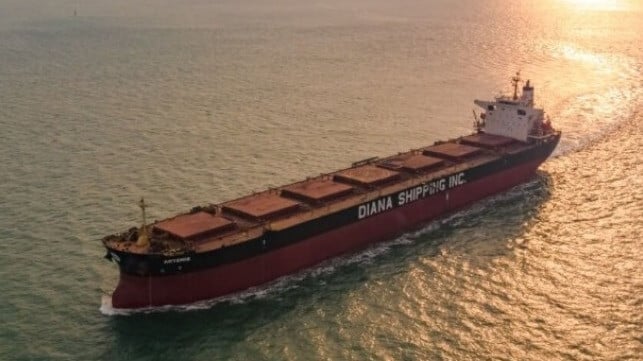
Diana is pushing its proposal to take over Genco to create a dry bulk giant (Diana Shipping file photo)
Two of the leaders in the dry bulk space, Genco Shipping & Trading and Diana Shipping, are trading public jabs in the brewing takeover battle that calls for consolidating the dry bulk sector. Both companies issued public statements six weeks after Diana first went public with its rumored efforts to buy Genco.
Both companies emphasize the opportunities they see emerging in the dry bulk sector. Combined, they would have a fleet of approximately 80 vessels with approximately 9 million dwt. Diana highlights that it currently has approximately 4.1 million dwt with a weighted average age of 12 years for its fleet. It has 36 vessels plus two Kamsarmax methanol dual-fuel vessels on order. Genco currently has a fleet of 45 vessels, with a total capacity of just over 5 million dwt, including a focus on the Capesize and Newcastlemax sectors.
Based on the companies’ statements, the issue is who buys whom. Diana, which already owns 14.8 percent of Genco’s outstanding stock, went public with its non-binding indicative proposal on November 24. It proposed a cash price of $20.60 per share, saying that it represented attractive premiums on a number of measures. It cited the advantages of the combination.
Genco’s board unanimously rejected the offer on January 13, saying its analysis showed that the proposal was not in the best interest of its shareholders. They said Diana’s proposal “lacked value, structure, and certainty.”
As part of its review, Genco said it “determined that the best transaction structure for a combination between Genco and Diana includes Genco acquiring Diana.” It says it sought to engage Diana in discussions to explore an alternative transaction, but that Diana refused to engage and instead reiterated its previous offer.
“Diana believes this ‘proposal’ is merely a tactic that serves no serious purpose other than to dismiss and detract from Diana’s attractive offer,” the company responded. Its board is pushing back on what it characterizes as a “vague and non-actionable suggestion.”
Diana is accusing Genco of not responding and without any meaningful engagement or discussions. It asserts it is offering a “significant premium” and says it is fully backed by committed financing from DNB Bank and Nordea Bank.
Genco says its board and advisers analyzed the offer, looking for an “appropriate premium” while highlighting the offer is below the company’s net asset value and the 10-year high stock price. It asserts it has a proven strategy to deliver value. It claims there is “considerable execution risks posed by the proposed structure,” and asserts the offer lacks committed financing.
At this stage of the takeover battle, the companies appear to be digging in their positions. Diana reports its board “is considering all options” as it seeks to advance its offering to acquire Genco.
How to Improve U.S. Army Corps of Engineers' Navigation Project Delivery
The U.S. Army Corps of Engineers’ Civil Works mission is responsible for constructing the Nation’s inland waterways infrastructure. The HDR study employed a multi-faceted approach, including interviews with customers of the Corps and other relevant entities to obtain perspectives on improving the delivery of lock and dam projects. In addition, HDR conducted comprehensive background research and broader analyses of the systemic challenges associated with delivering large-scale infrastructure projects within established?timeframes?and budgets.
America’s lock and dam infrastructure has been slow to modernize over the past?40?years. Since 1987, only?10?projects to modernize or expand locks on the inland system have been completed. Seven of those projects were started and finished between 1987 and 1997 with an average cost overrun of 33%.
For many years, inadequate or uncertain annual funding was cited as the primary cause of cost overruns and schedule delays, but what has become clear since the infusion of?$2.9 billion?from the 2021 bipartisan infrastructure bill is that project execution?challenges extend?beyond funding.
Key recommendations of the HDR study include:
Treat the inland navigation waterways as a system, versus a series of individual projects. Manage the system holistically to ensure consistency with the Capital Investment Strategy (CIS)*, effectively apply lessons learned across projects, and be aware of how challenges at one project can,?and very often do,?impact other projects within a portfolio. (*CIS is a 20-year plan developed by the Corps, in coordination with the Inland Waterways Users Board (IWUB), to prioritize funding for lock, dam, and waterways infrastructure upgrades, focusing on reliability and efficiency).
Systemically apply programmatic funding
Create a centralized program management office at Corps Headquarters for inland waterways construction
Improve cost estimating and value engineering
Use standard designs for locks and dams where possible
Expand site investigation efforts
Utilize 3D modeling and conduct constructability reviews
Centralize competencies and deepen the Corps’ knowledge base
The study’s findings reveal that most of the recommendations that can 'reasonably be' implemented by the Corps require support and approval from the Office of Management and Budget?(OMB).?It also spotlights the consequences of OMB’s interpretation of Executive Order (EO) 12322 and how it limits access to effective solutions, such as continuing contracts and alternative delivery methods that?provide?considerable opportunity to improve execution and reduce risk. The key recommendations to follow the CIS and take a systemic approach with programmatic funding also require OMB participation.
“WCI is pleased with the depth and clarity provided in HDR’s study recommendations,” said WCI President/CEO Tracy Zea. “The analysis underscores the complex challenges facing lock and dam project delivery and highlights the importance of collaboration and alignment among the Corps, industry, Congress, and the Administration. WCI will continue to support and implement workable solutions that improve project execution and reliability of our Nation’s critically important inland waterways system,” he continued.?
The products and services herein described in this press release are not endorsed by The Maritime Executive.
Birdon Awarded US Coast Guard Contract for Response Boat–Small Demonstrator
Birdon America, Inc. has been awarded a firm fixed price contract to build a Response Boat-Small (RB-S) Demonstrator for the United States Coast Guard (USCG). This award underscores Birdon’s commitment to providing its customers with innovative, reliable solutions that ensure mission success in maritime operations.
The RB-S Demonstrator program is a critical initiative by the USCG to evaluate advanced capabilities for key missions such as Search and Rescue (SAR); Ports, Waterways, and Coastal Security (PWCS); Drug Interdiction (DI); and Migrant Interdiction (MI). Birdon’s design was selected for its ability to meet stringent performance requirements.
"This award reflects Birdon’s dedication to supporting the U.S. Coast Guard with cutting-edge solutions that enhance mission performance and crew safety," said Tony Ardito, President at Birdon. "We are proud to contribute to the Coast Guard’s vital role in safeguarding our nation’s waterways."
Birdon will leverage its in-house rapid prototyping capabilities to build an RB-S Demonstrator. Under the contract, Birdon will deliver its Demonstrator to one of the designated USCG facilities in Norfolk, VA, or Charleston, SC, for a three-month operational evaluation period.
The products and services herein described in this press release are not endorsed by The Maritime Executive.
U.S. Antarctic Resupply Mission Underway with Chartered Dutch Ship
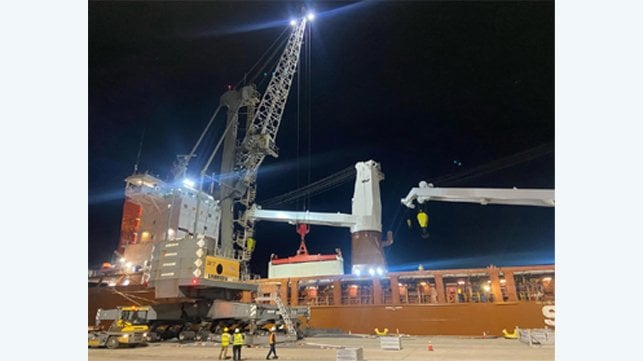
Plantijngracht loading in California for the U.S. resupply mission to Antarctica (Military Sealift Command Pacific)
Each year, the U.S. Military Sealift Command, in coordination with the U.S. Coast Guard and the Navy, undertakes a grueling, more than 8,000 nautical mile mission to resupply McMurdo Station in Antarctica. The USCG polar icebreaker Polar Star has already arrived in Antarctica and now the cargo operation has begun, but this year the U.S. is using a chartered Dutch heavy lift vessel.
The Polar Star has begun its first ice breaking for Operation Deep Freeze 2026. The USCG vessel is in the Southern Ocean and began on January 7, opening channels through the ice.
The same day, the Dutch-flagged heavy lift vessel Plantijngracht (19,330 dwt) operated by Spliethoff departed Port Hueneme, California, after completing the load out of this year’s cargo. The vessel is underway first to Christchurch, New Zealand, and then will make its way to McMurdo Station.
Well-known maritime industry commentator Sal Mercogliano highlighted the use of the Dutch vessel this year instead of in the past, when U.S.-flagged vessels have been chartered to MSC for the mission. He wrote on X, “The reason for the award to the more costly foreign ship was the potential US recipient of the award was outside the 3000-mile radius of Port Hueneme at the time of award, and the ship would have been 4 days late. But, 25 percent of the cargo to load was going to be a week late, so the U.S.-flagged ship could have loaded and departed at the same time as the foreign ship.”
The Plantijngracht is slightly larger than the U.S. vessels Ocean Giant and Ocean Gladiator (each 17,500 dwt), which made the trip in the past. Both ships have made the trip in the past, although the MSC report only highlights the one ship this year.
During the preparation in Port Hueneme, they report that 302 pieces of cargo were loaded. It consists of containers filled with construction materials, construction equipment, parts for the ongoing barge project at McMurdo Station, as well as dry goods and supplies needed for survival on Antarctica. Further material will be loaded during the stop in Christchurch.
In addition to cargo containers, materials for a 65-ton floating causeway system were loaded. The causeway will replace the ice pier at McMurdo Station. Previously, an ice pier made up of rebar and frozen seawater was used for cargo offloads. Because of the size and weight of the cargo this year, the ice pier is unusable.
After offloading the materials, the cargo ship takes aboard trash and other materials from the station. It also returns any outdated or unused equipment no longer required at the station.
The cargo ships in past years have returned to the United States, typically in March. Polar Star, which will mark 50 years of operation in 2026, typically departs Antarctica by early March after having completed its mission and begins the long trip back to the United States.
First Kamsarmax Methanol-Fueled Bulker Delivered for Cargill Charter
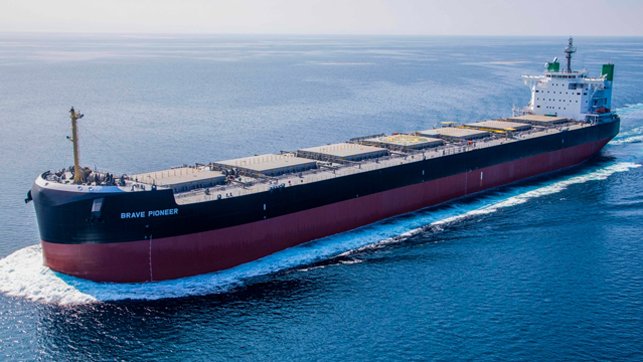
The Tsuneishi-built bulker is the first methanol-fueled Kamsarmax and will provide information on methanol operations (Tsuneishi)
While the industry has seen a slowing in the orders for methanol-fueled ships, the efforts are continuing as shipowners and operators look to understand the segment and the role it can play in sustainable shipping. Cargill, which calls itself one of the world’s largest charters of dry bulk freight, highlights that the vessel will provide critical data as it pursues a multi-solution strategy that also includes wind-assisted propulsion, voyage optimization technologies, energy-efficient retrofits, and a range of alternate fuels, including biofuels and ethanol.
“Technologies like green methanol or wind-assisted propulsion come with uncertainty,” said Jan Dieleman, President of Cargill’s Ocean Transportation business. “But as an industry leader, we have a responsibility to test these innovations on the water, share what we learn, and help shape the systems and standards that will enable wider adoption.”
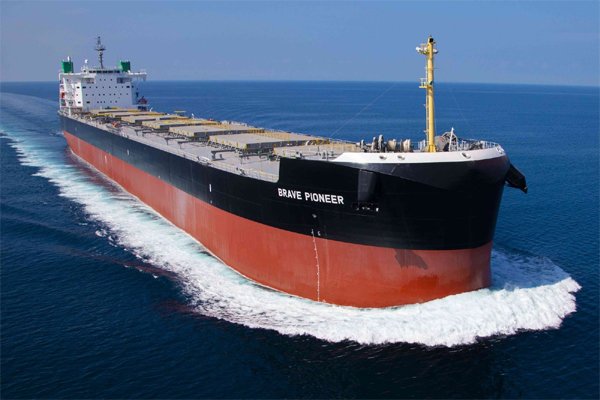
The new vessel, named Brave Pioneer (82,000 dwt), is the first of five green methanol dual-fuel dry bulk carriers that Cargill has chartered. The other ships will join the fleet in the coming years.
Built by Tsuneishi Shipbuilding Co. at the company’s yard in the Philippines, and owned by Mitsui & Co., Brave Pioneer is equipped to operate on both conventional marine fuels and green methanol. At 82,000 dwt, the vessel is larger than the first methanol-fueled bulker, Green Pioneer, which is 62,000 dwt and is operating under charter to NYK Bulk & Projects Carriers.
Tsuneishi highlights that, as a Kamsarmax design, the vessel will be highly versatile. It features a shallow draft and low air draft, which gives it access to a wide range of ports. It is 229 meters (751 feet) in length. It is registered in Panama.
(Tsuneishi Heavy Industries)
By adopting methanol as a propulsion fuel, Tsuneishi says the vessel will achieve a reduction of approximately 10 percent in carbon dioxide (CO2) emissions, 80 percent in nitrogen oxides (NOx), and 99 percent in sulfur oxide (SOx) during operations compared with conventional vessels. The use of green methanol further enhances the vessel’s potential to reduce environmental impact and promote environmentally responsible shipping.
The Brave Pioneer was launched on July 17, 2025, in Balamban, Cebu, by Tsuneishi Heavy Industries. The completion of the vessel also marked a key milestone for shipbuilding in the Philippines. The yard is operated in partnership with Aboitiz Group and has now completed 381 ships.
The President of the Philippines, Ferdinand Marcos Jr. attending the naming ceremony on January 15. He described the event as “a historic milestone for Philippine shipbuilding,” hailing the project as “a showcase of Filipino craftsmanship, ingenuity and competitiveness.”
The ship departs the Philippines and is proceeding to Singapore, where it will bunker green methanol. It will then proceed to Western Australia before sailing onward to Europe.
Cargill reports it will conduct a series of operational trials designed to evaluate green methanol bunkering readiness, understand how environmental attributes can be traced and verified through carbon accounting systems, and assess market appetite for low-carbon freight services.
“We know the road to low-carbon shipping will require a mix of solutions and green methanol is one part of that portfolio,” said Dieleman. “Our new fleet is about optionality and adaptability. These vessels are engineered to perform at a best-in-class level on conventional fuel today, while allowing us to switch to greener fuels as availability improves. It’s a practical way to future-proof ocean transport.”
Mitsui ordered two vessels in 2023 that will both be chartered to Cargill. A month later, J. Lauritzen, through its Lauritzen NexGen Shipping division, placed additional orders for Kamsarmax dual-fuel methanol bulkers. They are reported to be building three vessels, which will start delivery later in 2026 and will also be chartered to Cargill.
Coach Solutions and ClassNK Provide Verification Of Vessel Emissions Data
Agreement automates data transfer for simplified sharing and streamlined compliance with regulatory and commercial requirements.
Copenhagen, 14 January 2026. Coach Solutions, a Kongsberg Company, and leading classification society ClassNK have partnered to deliver an automated emissions data verification process for their mutual clients.
This creates a seamless experience for shipowners and Document of Compliance holders who need to extract, standardize, verify and share vessel data for transparent use by stakeholders.
The integration with ClassNK is a strategic partnership that, from January 2026, will further strengthen Coach’s mission to put practical, functionality-rich tools into the hands of shipowners and DOC holders.
“This integration with ClassNK gives us the ability to offer a fully automated process for vessel data flow directly from the Coach platform into ClassNK for verification,” says Christian Rae Holm, CEO, Coach Solutions. “By reducing manual workload for our shared client base, users can maintain their focus of taking action on their data, helping to make shipping more sustainable.”
The products and services herein described in this press release are not endorsed by The Maritime Executive.
ABB to Build World’s Largest Shore Power Capability for Port of Rotterdam
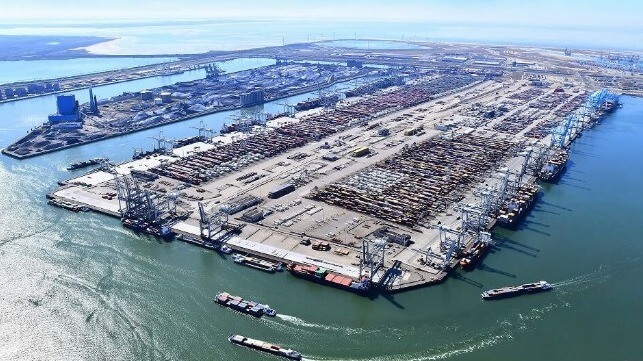
Rotterdam's massive container terminals will get shore power connections in this project (Port of rotterdam)
Europe’s largest port, Rotterdam, is among the ports that faced criticism last year over sluggishness in investing in shore power infrastructures, despite pending EU regulations requiring ships to turn off engines and generators in port. Only days into the new year, however, Rotterdam is making a huge statement after awarding global technology company ABB a contract to construct and maintain what are expected to be the largest to date shore power capabilities in the world.
Rotterdam Shore Power (RSP), a joint venture between Port of Rotterdam Authority and Eneco, said that it selected ABB through a competitive tendering process, with ABB clinching the deal owing to its clear track record and the high quality of its solution. The companies did not reveal the cost of the project.
The project will involve the installation of shore power solutions at APM Terminals Maasvlakte II, Hutchison Ports ECT Delta, and Hutchison Ports ECT Euromax, where a total of eight kilometers of quay will get shore power. The systems are expected to provide power at 35 connection points that will be able to connect some 32 container ships simultaneously while at berth. The combined system is based on a total capacity of over 100 megavolt-amperes (MVA).
The solutions are scheduled to begin operations in the second half of 2028, two years ahead of the 2030 deadline set by the EU requiring ports in the bloc to invest in the provision of onshore power supply (OPS). According to the FuelEU Maritime Regulation, all container and passenger ships above 5,000 gross tonnage are required to use shore power or equivalent zero-emission technology in EU ports from 2030.
The systems will allow vessels calling at the Port of Rotterdam to turn off their engines while at berth, a development that is critical in cutting down on emissions. RSP estimates that by facilitating vessels to use shore power for at least 90 percent of moored time, the port expects to reduce annual carbon dioxide emissions by an estimated 96,000 metric tonnes from 2030. Plugging into the local electricity grid while at berth will also eliminate noise pollution and significantly improve air quality in the harbor area.
“We are excited to work together with ABB on these breakthrough projects for RSP,” said Ina Barge and Tiemo Arkesteijn, RSP co-CEOs. “With their expertise and proven track record, we can help make shore power available to all vessels calling at the APMT and ECT terminals in the Rotterdam port, preventing large amounts of CO2 emissions. Rotterdam is a frontrunner with electrification on this scale.”
Apart from designing, delivering, and installing the shore power systems, ABB will also be responsible for commissioning and testing on-site. The contracts also cover a multi-year maintenance per terminal.
In July last year, Rotterdam was among EU ports that faced criticism from activist NGO Transport & Environment (T&E) for slow investments in shore power despite being the largest port in Europe. Over the nine months from January to September last year, Rotterdam handled 320.2 million tonnes of cargo. Container throughput stood at 10.7 million TEU.
“We are proud to contribute to the Port of Rotterdam’s decarbonization journey in what represents a significant step towards realizing the EU’s ambition for emission-free ports,” said Rune Braastad, President, ABB’s Marine & Ports division.
Installation of shore power systems at the three terminals is expected to start in the second half of next year, subject to final investment decisions and granting of permits. The Dutch government has granted subsidies to the projects under the Temporary Climate Subsidy Scheme for shore power for seagoing vessels.
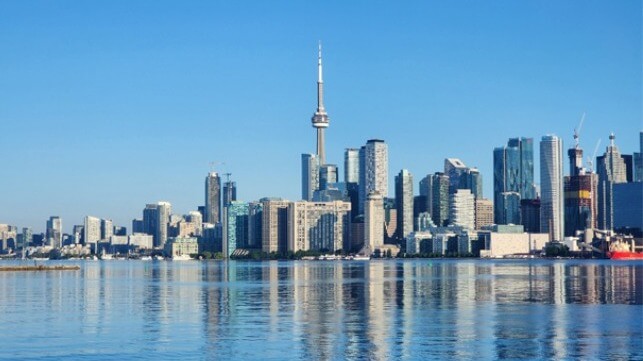
PortsToronto Returns to its Roots as the Toronto Port Authority
Rebrand marks 115 years of city-building and reinforces role of its business units, including Billy Bishop Toronto City Airport, as a critical economic engine and urban connector
After operating as PortsToronto for a decade, the organization that owns and operates Billy Bishop Toronto City Airport and is responsible for stewardship of Toronto's harbour is returning to its roots and will once again be known as the Toronto Port Authority. This rebrand marks a return to its legal name and historic federal identity and signifies a renewed commitment to its legacy as a city builder, economic catalyst for the region and country, and owner and operator of Toronto's national, multi-modal transportation gateways.
This rebrand comes at a pivotal moment. The Toronto region is growing rapidly and Canada is placing new urgency on resilient supply chains, modernized infrastructure and sustainable urban mobility. At the heart of this shift is Billy Bishop Toronto City Airport, one of the country's most important urban airports and major contributor to the region's economic dynamism, the Port of Toronto and the Cruise Ship Terminal, all of which are strategically positioned to support growth and strengthen Canada's interconnected infrastructure network.
"Reintroducing the Toronto Port Authority name is more than a rebrand –- it's a powerful affirmation of our foundational purpose and our future vision," said RJ Steenstra, President and CEO, Toronto Port Authority. "We honour our 115-year legacy as a city builder and steward of Toronto's harbour, shaping the waterfront and enabling the city's evolution. As the owner and operator of Billy Bishop Toronto City Airport which provides critical business connectivity and a significant economic engine, as well as the Port of Toronto which plays a vital role in ensuring resilient supply chains through imports of essential materials, the Toronto Port Authority plays a key role in economic growth for the future. This renewed identity reflects our commitment to modernization, sustainability, and public value for Toronto, Ontario, and Canada."
Strengthening a growing regional economy
The Toronto Port Authority's transportation gateways deliver substantial benefits to the region and the country:
• Billy Bishop Toronto City Airport generates approximately $2 billion in annual economic output and supports more than 4,500 jobs, making it a key driver for Toronto's economy. • Billy Bishop is set to launch U.S. CBP Preclearance in early 2026, facilitating bilateral trade, with additional destinations expected in 2026. • The Port of Toronto generates more than $460 million in economic activity for Ontario, importing critical materials like steel, cement, sugar, and road salt, securing resilient supply chains for the region. • Marine shipping through the Port removes more than 51,000 truckloads annually from GTA roads, significantly reducing congestion and greenhouse gas emissions. • The Port of Toronto Cruise Ship Terminal welcomes nearly 20,000 visitors annually and contributes to a regional $280-million Great Lakes tourism economy, directly supporting Toronto's hospitality, retail and cultural sectors. • Located 10 minutes from downtown, The Outer Harbour Marina is one of Canada's largest freshwater marinas and holds a Diamond designation in the Boating Ontario Clean Marine EcoRating Program, one of the highest ranking attainable for marinas that follow environmental best practices.
Together, Billy Bishop Toronto City Airport and the Port of Toronto position Toronto as a truly multi-modal economic gateway. The Toronto Port Authority links Canada's largest city to major North American business centers while delivering diversified, resilient supply lines from Europe, Asia, Central and South America and the South Pacific. This integrated system supports business mobility, ensures the steady flow of essential goods and reinforces the economic foundation of Canada's fastest-growing urban region.
The Toronto Port Authority's integrated assets create a waterfront mobility network that moves people, goods, and visitors in ways few global cities can match. As the only port authority in Canada to own and operate an airport, Toronto Port Authority is uniquely positioned to pilot new approaches to harbour mobility and connectivity--mirroring innovations seen in leading waterfront cities around the world. This multi-modal approach not only drives economic growth and competitiveness but also advances sustainable, integrated urban transportation across the region.
Operating under a federal mandate, the Toronto Port Authority is financially self-sustaining, reinvesting revenues into critical infrastructure, harbour management initiatives, and community programs. This model ensures independent oversight, financial accountability, and decision-making aligned with the public interest.
The rebrand underscores the Toronto Port Authority enduring commitment to long-term planning, responsible stewardship, and balancing commercial activity with environmental protection and community access, preparing Toronto's transportation infrastructure for the next century.
The products and services herein described in this press release are not endorsed by The Maritime Executive.
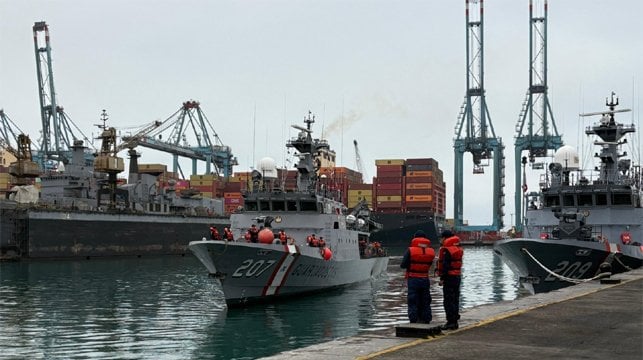
US Plans $1.5B Investment to Modernize Peru’s Naval Base at Callao Port
Part of the plan seeks to reduce the civilian-military interactions at the current base in Callao Port (Peruvian Navy)
The U.S. Department of State announced that it has approved a plan to modernize Peru’s naval base at the port of Callao and delivered the required notification to the U.S. Congress. The plan, which is valued at an estimated $1.5 billion, is seen as a move to counter China’s influence while the State Department highlighted U.S. interest in South America.
The naval base, which is the main facility for Peru’s navy, is located to the north of the commercial port in Callao. It dates to the 1930s and shares the waterways with the commercial port operated by AMP and Dubai World.
The Government of Peru had made a request to the U.S. to permit it to buy equipment and services to support the modernization of the maritime and offshore facilities at the Callao Naval Base. The State Department approval includes design and construction support, management, engineering, construction management, and logistics and other support. The approval also requires the assignment of up to 20 U.S. government or contractor representatives for up to 10 years to provide construction management and oversight.
The State Department said the project will improve Peru’s port infrastructure. It will also provide a safer, more efficient platform for naval operations by reducing civilian-military interactions at the existing facility.
“This proposed sale will contribute to the foreign policy objectives of the United States by helping to improve the security of an important partner which is a force for political stability, peace, and economic progress in South America,” the State Department said, announcing its decision.
Analysts point out that the U.S. has been working to counter China’s presence in South America. In 2024, COSCO completed an investment reportedly of $1.3 billion to develop the new commercial port of Chancay, which is located approximately 50 miles north of Lima. The U.S. countered with an agreement to expand the relationship between the ports of Hueneme in California and Paita in Peru.
Inchcape Opens Office in Peru, Strengthening Presence in South America
Inchcape Shipping Services (ISS), a global leader in port agency and marine services, is proud to announce the opening of its newest office in Mollendo, Peru. This expansion reinforces ISS’s commitment to supporting customers in key regional markets and delivering world-class shipping solutions across South America.
Located in Mollendo, Arequipa, the branch is ideally positioned to serve both the Mollendo Terminal and the adjacent Matarani Port, operated by TISU. These facilities are vital gateways for Peru’s import and export trade, handling a diverse range of commodities including ultra-low sulphur diesel oil (ULSDO), gasolines, grains, general cargo, containers, and copper concentrates.
The new office will provide a comprehensive suite of services, including full port agency, customs clearance, P&I matters, cash to master, crew logistics, husbandry services, cruise call management, and protective agency. This broad portfolio ensures clients benefit from seamless, efficient, and compliant operations, whether handling liquid bulk, dry bulk, general cargo vessels, or container ships.
By establishing a dedicated presence in Mollendo, Inchcape strengthens its ability to deliver reliable, transparent, and cost-effective solutions for shipowners, charterers, and traders operating in Peru’s maritime sector. The move also accelerates Inchcape’s entry into the vital dry bulk market while enhancing service delivery for oil and gas customers.
Hector Cardenas, Peru Marine Services Manager, commented:
“Inchcape’s move into Mollendo marks a pivotal step in strengthening our presence and capabilities within Peru’s maritime sector. With the support of our global network and local expertise, and a highly experienced team led by Jean Arevalo, Operations Manager, and Roberth Velez, Branch Manager for Mollendo & Matarani, we are ideally placed to meet customers’ requirements and support the evolving needs of the shipping industry in this region.”
This latest development highlights Inchcape’s focus on combining international standards with local know-how to deliver value-driven solutions for customers across the shipping industry.
The products and services herein described in this press release are not endorsed by The Maritime Executive.
Clogged Heads Make Headlines Aboard $13B Carrier USS Ford
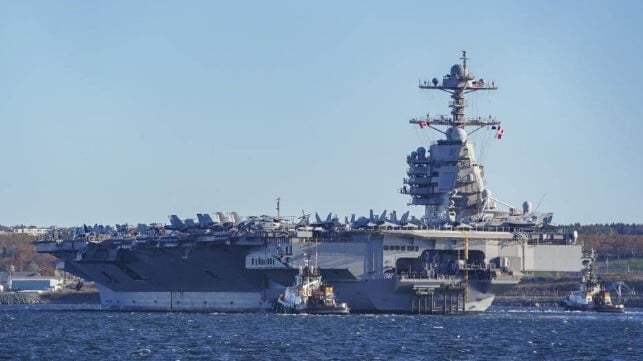
The first-in-class carrier USS Gerald R. Ford has had technical problems from the moment of her delivery in 2017, when she was transferred to the Navy without fully functioning catapults, arresting gear or weapons elevators. Over the intervening years, Ford has become a respected fighting machine, but some of her quirks remain - like her sewer system, which does not always work in all sections of the ship at the same time. According to Norfolk's public radio station, sailors aboard are reporting serious problems with the heads on their marathon deployment in the Caribbean.
Ford's sewer system is a vacuum-flush design similar to those used in the airline industry, and in practice, it has had difficulty keeping up with the rigors of naval service. In March 2020, the Government Accountability Office revealed that the ship's engineering crew had to deal with "unexpected and frequent" clogging of the ship's heads and small-diameter sewage pipes.
At times, this has created unsanitary conditions aboard Ford during deployments, including routine toilet overflows reported on voyages in 2024 and 2025. A spokesperson for Sixth Fleet gave WHRV a specific explanation of the problem: the system can't handle "foreign material induction" like t-shirts and mop heads flushed down the head, which the crew allegedly does about twice a day. Each clog takes up to two hours to clear.
The real challenge, according to the Navy, is that the heads are connected in zones, and one clog tends to affect an entire zone at once. To deal with the issue, the Navy regularly flushes the entire sewage system with an acid treatment to remove buildup. This costs about $400,000 per flush, according to GAO.
U.S. Navy Medevacs Crewmember from U.S.-Flagged Cable Layer off Guam
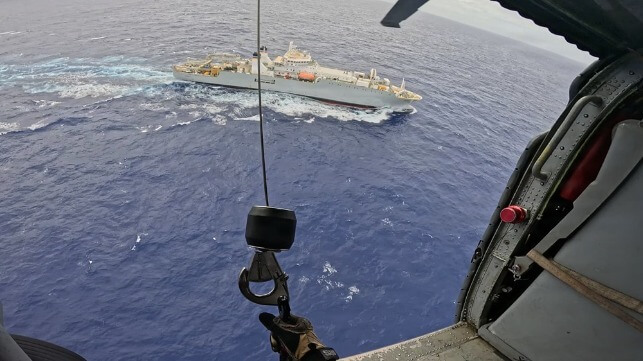
On Tuesday, the U.S. Coast Guard and U.S. Navy teamed up to evacuate an ill crewmember from a U.S.-flagged cable layer off the coast of Guam.
At about 1010 hours on Monday, the Coast Guard station at Guam received a distress call from the captain of the cable-layer Decisive. A 60-year-old crewmember had heart attack symptoms, and needed higher care. At the time, the ship was 400 nautical miles offshore - too far to reach with a helicopter for medevac.
Decisive made way towards Guam to close the distance, and the Coast Guard checked in with the vessel's crew every four hours for a status update. On Tuesday morning, Decisive approached within helicopter range of Guam, and the Coast Guard dispatched a U.S. Navy Knighthawk helicopter aircrew to retrieve the mariner.
The Knighthawk from Helicopter Sea Combat Squadron 25 arrived on scene at 1145 hours Tuesday and hoisted the mariner aboard. He was transferred to Naval Hospital Guam for further care.
Decisive (ex name Tyco Decisive) is a U.S.-flagged cable layer built at Keppel in 2003. She is operated by a manager in Baltimore and crewed by the SIU.
The medevac was the third in a matter of weeks for HSC-25, which works with the Coast Guard to provide SAR coverage on and around the island. Previously, the squadron medevaced a 27-year-old woman who had sustained spinal injuries in a fall, and a mariner who was experiencing serious abdominal pain aboard a foreign-flagged ship.