Monday, January 19, 2026


Decades of suffering: Long-term mental health outcomes of Kurdish chemical gas attacks


Frontiers

Monument 

image: 

 Halabja Monument, Halabja, Iraq

view more 

Credit: Ibrahim Mohammed


Dr Ibrahim Mohammed is a clinical psychologist and researcher specializing in trauma, somatic symptoms, and psychopathology in conflict-affected populations. He has worked for over a decade with survivors of massacres in the Kurdistan Region, integrating clinical practice with research. He is also a lecturer at the Institute of Psychotherapy and Psychotraumatology at the University of Duhok. His current research focuses on validating psychological instruments for Kurdish communities and exploring genetic and phenomic factors related to trauma-related disorders. 

In a new study in Frontiers in Psychiatry, he and colleagues showed exceptionally high levels of trauma among survivors of a notorious atrocity: the 1988 chemical attack on Halabja in Kurdistan. In this editorial, he summarizes their findings.

The Halabja attack was among the most notorious targets of Saddam Hussein's genocidal Anfal campaign of 1988, during which an estimated 182,000 Kurds were killed across Iraqi Kurdistan. At Halabja, an estimated 5,000 people died that day from chemical agents, primarily mustard gas and nerve agents. Thousands still suffer from its long-term effects. Entire families were shattered, homes destroyed, and the community bears the wounds to this day.

When anybody speaks about this chemical attack, the immediate horror often overshadows the story: the thousands of lives lost, the destruction. But less attention is given to what befell those who survived, carrying with them memories, fear, and pain several decades later. Our new study has tried to understand precisely what happens to people after surviving such a catastrophe. How do trauma and loss shape an entire lifetime?

We worked closely with more than 500 survivors of the Halabja chemical attack. We collected information on their experiences, health, and mental state. Somatic complaints, anxiety, depression, and symptoms of post-traumatic stress disorder were also assessed, as were the various traumatic experiences and social and clinical factors. The aim was to ascertain the full impact of such exposure in the long term.

The results were striking: even decades after the chemical gas attack, many survivors showed severe PTSD, depression, and anxiety. Sometimes more obvious than the psychological presentations were somatic symptoms like pain, fatigue, and chronic health issues. It is important to note that trauma does not just disappear with time: it evolves, remains, and weaves itself into the fabric of daily life, particularly in a community that remains under economic pressure and social strain.

Embodied trauma

One of the things we noticed was the tendency of trauma to be embodied. In this part of the world, as in many others, physical symptoms reflect emotional distress, for example in the form of headaches, back pain, exhaustion, or stomach problems. These are not simply medical complaints, but the echoes of psychological injury. We need to understand this in our attempts at care the care that is meaningful and compassionate.

Our study also underlined the cumulative stress. Survivors who faced multiple traumatic events like displacement, loss of loved ones, or witnessing brutal violence, suffered higher levels of distress. Their vulnerability was heightened by factors such as chronic illness, low income, and less education. Yet, despite such hardships, we saw remarkable resilience. After profound experiences, people manage to adjust, provide for their families, and move on.

One story that still stays vividly in my mind is that of a man who was suffering from acute respiratory problems, due to the chemicals at the scene. He bore the scars as deep in his mind as in his body. We arranged for him to see a mental health professional, in hopes of lessening his load. But just a week later, I would hear the news that he had died from complications related to his lung issues. Even decades after the attack, lives are still lost, echoing the enduring toll of that tragedy.

Call to action

In our data, almost 79% of our participants met symptom criteria for PTSD, while 65% had clinically significant depression or anxiety, and well over half experienced severe somatic symptoms. Women, those with lower incomes, and less education were especially vulnerable. Fewer than 17% were receiving psychotropic medications, representing an enormous gap in mental health treatment for survivors.

Perhaps the most sobering finding was the glaring lack of mental health support. Many participants reported never having received proper psychological care. There has been long negligence in attending to the needs of chemical attack survivors, and services in Kurdistan are scant. This study is more than a set of numbers: it is a call to action. Besides recognition, survivors need access to culturally sensitive mental health services, programs to trace missing family members, and official support for compensation and ongoing care.

This is the story of the people behind the statistics. Every number represents a life, a memory, a struggle that extends decades beyond the event. Survivors gave accounts with courage and honesty, reminding us that trauma is very much more than any clinical diagnosis could contain. It is deeply, painfully human.

Healing from mass violence is not a process of forgetting nor returning to some naive version of ‘normal’: for survivors, it may mean carrying memories that will not fade, while finding ways to live with them day after day. Recovery is a journey premised on understanding, empathy, and steadfast care from the community to top levels of policymakers. We hope that this study contributes to such an understanding.

By detailing the long-term psychological and physical effects of chemical attacks, we aim to inform authorities, health professionals, and communities on offering better care. By sharing their experiences, we honor the survivors' resilience and bravery in the face of such profound trauma.

Besides being a story of great loss, Halabja serves as a living reminder that the effects of war continue long after hostilities cease. They echo across lifetimes and generations. By listening closely, studying respectfully, and responding thoughtfully, we can ensure survivors are neither forgotten nor neglected and that their ongoing struggles receive the care and understanding they deserve.

Saved by fans, historic Paris arthouse cinema La Clef reopens

La Clef, a legendary arthouse cinema in Paris's Latin Quarter, remains a symbol of resistance in an era when big screens are struggling to survive. After a long closure, a sit-in and a legal battle, a collective of its supporters bought the venue and reopened it this week.

Photo of the facade of La Clef arthouse cinema in Paris's 5th arrondissement. After a five-year closure, a legal battle and a sit-in, the cinema reopened on 14 January, 2026. © RFI / Ollia Horton
04:07

Issued on: 18/01/2026 
RFI
By: Ollia Horton

The saga could make a script for a David-and-Goliath movie: plucky community group saves local cinema from real estate developers!

That’s exactly what happened to La Clef ("The Key"), one of the few remaining independent arthouse cinemas in Paris, which reopened on 14 January.

Established by cinephile Claude Franck-Forter in 1973, when the 1968 protests still loomed large in the student-dominated fifth arrondissement, the cosy theatre on the corner of Rue de la Clef carved out a niche for non-mainstream films and political debates.

It has always prided itself on supporting rare films from France and abroad, showcasing minority voices and under-represented groups while keeping ticket prices reasonable.

That model came under pressure when the building was taken over by the social committee of a French savings bank in 1981. Although it continued to function as a cinema, its future was uncertain – and even more so when the bank decided to put it on the market, forcing La Clef to close its doors in April 2018.

But the cinema's connection to the neighbourhood and wider film community ran deep – so much so that a collective calling itself La Clef Revival formed to raise funds to buy the building and keep it running as a non-profit organisation.

This ad hoc group of cinema-lovers, activists and local residents organised an illegal occupation of the building from 2019 until 2022, putting on screenings and gatherings and drumming up financial support.


Round-the-clock occupation

After an eviction, a long legal battle and a crowdfunding campaign, the cinema was finally bought by the collective in June 2024 for just over €2.5 million.

Chloé, a member of the collective, has fond memories of the sit-in, when activists occupied the cinema from 6am to midnight everyday to deter police intervention.

“We took turns sleeping in the cinema,” she told RFI. “I remember I had put my mattress behind the screen in the main screening hall and I was awoken by the noise of the 35mm [projector] showing a Gregg Araki film.

“Students from the area were coming in to have a croissant and watch the film before their classes. It was wonderful to wake up in that environment.”
Chloé (L) and Kira (R) are active members of La Clef Revival, a collective that raised money to save La Clef cinema in the 5th district of Paris and keep it running as an independent non-profit organisation. It reopened on 14 January 2026. © RFI / Ollia Horton

The campaign to save the cinema received support from the film world in France and overseas – including in Hollywood, where Martin Scorsese and Quentin Tarantino were among the high-profile backers.

Numerous French directors, including Céline Sciamma and Leos Carax, hosted screenings during the occupation. And in 2023, more than 80 international artists donated works to be sold off in a fundraising auction, including filmmaker David Lynch and photographers Wang Bing and Nan Goldin.

“We were very touched by the recognition from certain figures in the film industry regarding our project and our commitment to saving this place,” says Taddeo, a cinema-goer who helped organise the sale and now acts as one of the collective's programming coordinators.

The day-to-day work of reopening La Clef has been led by ordinary film lovers like him – and Kira, who was in New York at the time of the occupation but remembered the cinema from her childhood in the neighbourhood.

“It’s amazing to show that it's possible to de-commodify an entire building, to take it out of the speculative real estate, to run it together and figure it out, to learn how to use the projectors, to learn how to take care of a space,” she told RFI.


Poster created to help save La Clef cinema in Paris. © RFI / Ollia Horton / La Clef Revival

Simon, who lives nearby, has been a regular spectator for years and loves the variety of films on offer. He became steadily more involved during the occupation and helped renovate the building after the sale was finalised.

“Every time I've seen a screening at La Clef, it's been completely different,” he says. “Being able to discuss amongst ourselves, developing new ways of watching films, is really something we can do in this kind of place.”
A true community cinema

In order to manage the funding and purchase, the collective set up an endowment fund called Cinéma Revival. The new legal status means that the building doesn’t belong to any one entity and decisions must have a consensus from all members, preventing the cinema being sold off on a whim.

To maintain financial independence and limit the need for subsidies, La Clef’s business model is based on a mix of yearly memberships, sales at the bar and pay-what-you-want tickets. This means the price is decided by each audience member according to their means – at an average of €4.

The cinema operates with only two paid employees. The rest are volunteers who receive training to run the building, project the films and liaise with the public.

The collective also rents out the space to other associations for themed screenings and other community activities. And they have partnerships with film schools to allow cinema students to practice using 35mm projectors, as well as image and sound editing.

Model for independents

The cinema is connected to other independent cinemas around Europe via the Kino Climates network, which unites alternative venues in 17 countries.

La Clef Revival hopes their success will be emulated elsewhere, proving that there are viable alternatives to blockbuster films, multiscreen cinema chains and ever bigger streaming platforms.

“We really hope that this serves as an example, and that other people who want to also run spaces that are open to the public in their neighbourhoods and their cities,” says Kira.

“Maybe other countries can come here and see that it actually happened and that they could probably do it too.”
Ice core vault preserving climate history opens in Antarctica

The Ice Memory Foundation on Wednesday opened the world’s first sanctuary for mountain ice cores in Antarctica, aiming to preserve crucial records of Earth’s climate for centuries to come.

]
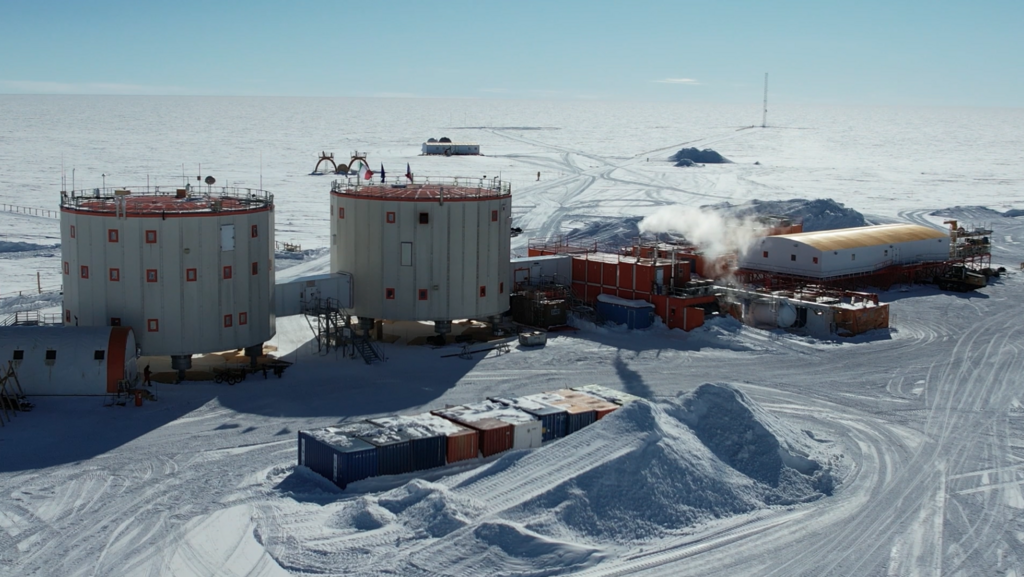
Ice cave and cores storage at the Concordia Station in Antarctica. © Gaetano MaccrÌ-PNRA-IPEV
01:32


16/01/2026 - RFI
By: Isabelle Martinetti

Designed to protect ice cores from glaciers that are rapidly disappearing due to global warming, the sanctuary is housed in Concordia Station, a French-Italian research base located 3,200 metres above sea level.

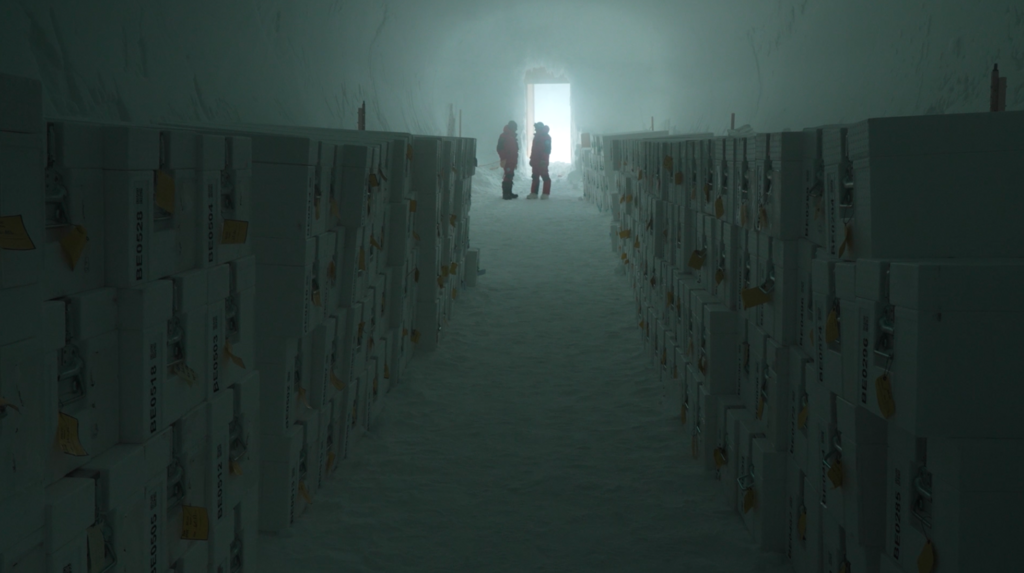
The first samples, taken from two glaciers in the Alps, are stored in a purpose-built snow cave.

Buried about 5 metres beneath the surface, the cave maintains a constant temperature of -52C, allowing the ice to be preserved naturally without artificial refrigeration. It also minimises the risks from human or technical failures.

The Concordia Station in Antarctica where the ice cores are stored. © Gaetano Massimo Macri _ PNRA-IPEV

Scientists officially inaugurated the Ice Memory Sanctuary on Wednesday, amid outside temperatures of -33C.

"We are the last generation who can act," said Anne-Catherine Ohlmann, director of the Ice Memory Foundation.

"It’s a responsibility we all share. Saving these ice archives is not only a scientific responsibility – it is a legacy for humanity."

Entrance to the Ice Memory Sanctuary at the Concordia Station in Antarctica. © Gaetano Massimo Macri / PNRA-IPEV


Preserving climate records

Launched in 2015 by research institutes and universities in France, Italy and Switzerland, the Ice Memory project was conceived after scientists noticed a sharp rise in temperature on several glaciers.

Since 2000, glaciers have lost between 2 percent and 39 percent of their ice regionally and about 5 percent globally, according to a study published in Nature in 2025.

As they melt, invaluable scientific records are lost.

Preserving ice cores will allow future scientists to study Earth's climate history, explained Carlo Barbante, vice-chair of the Ice Memory Foundation and professor at Ca’ Foscari University of Venice.

"By safeguarding physical samples of atmospheric gases, aerosols, pollutants and dust trapped in ice layers, the Ice Memory Foundation ensures that future generations of researchers will be able to study past climate conditions using technologies that may not yet exist," he said.

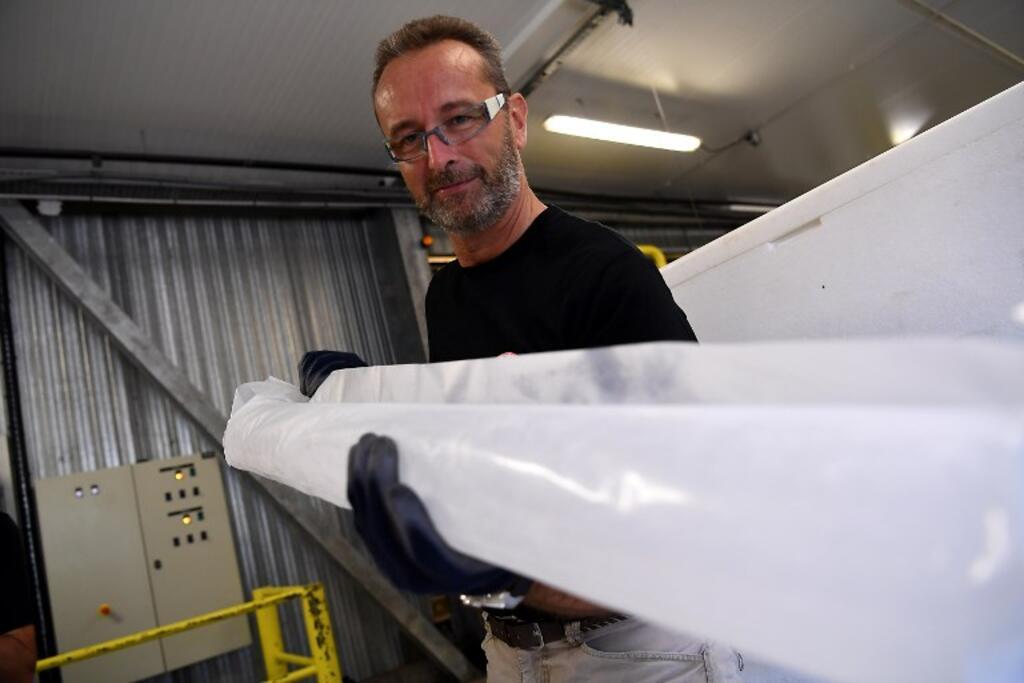
In this 2017 photo, Jérôme Chappellaz, scientific coordinator of the Ice Memory project, shows an ice core from Mount Illimani, Bolivia. @ AFP / Jean-Pierre Clatot

Natural vault

The Ice Memory Sanctuary measures 35 metres long and 5 metres high and wide.


Inside the Ice Memory Sanctuary at the Concordia Station in Antarctica. © Gaetano Massimo Macri _ PNRA-IPEV


Its stability is ensured by the extreme and naturally constant Antarctic temperatures.

The natural and low-impact snow cave was approved in 2024 under the Antarctic Treaty, which regulates the use of Antartica for scientific research, and was funded by the Prince Albert II Foundation.


Where will we store the ice cores?


It currently houses ice cores extracted from the Mont Blanc and Grand Combin glaciers in 2016 and 2025 respectively.


'Race against time'

Dozens of additional ice cores from glaciers worldwide – such as in the Andes, Pamir, Caucasus and Svalbard mountain ranges – are expected to join the Ice Memory archive in the coming years.

An international governance framework will be established over the next decade to ensure fair and transparent scientific access for future generations.

On Wednesday, European climate monitors and US confirmed that 2025 was the third hottest year on record, pushing the planet closer to a key warming limit.

"We are in a race against time to rescue this heritage before it will vanish forever," said Barbante.
US Navy DDG(X) Next-Generation Destroyer Program: Background And Issues For Congress – Analysis


A tomahawk cruise missile launches from the Arleigh Burke-class guided-missile destroyer USS Shoup. (U.S. Navy photo by Mass Communication Specialist 2nd Class William Collins III)


January 19, 2026 
Congressional Research Service (CRS).
By Ronald O’Rourke


Introduction

The Navy’s DDG(X) program has envisaged procuring a class of next-generation guided-missile destroyers (DDGs) to replace the Navy’s Ticonderoga (CG-47) class Aegis cruisers and older Arleigh Burke (DDG-51) class Aegis destroyers. Navy plans have called for procuring the first DDG(X) in the early 2030s. The Navy’s proposed FY2026 budget requested $133.5 million in research and development funding for the program.

On December 22, 2025, the Trump Administration announced a proposed program to build a new class of guided missile battleships (BBG[X]s) for the Navy. (For more on the BBG(X) program, see CRS In Focus IF13142, Navy Guided Missile Battleship (BBG[X]) Program: Background and Issues for Congress, by Ronald O’Rourke.) Somepress reports have stated that the Navy intends to suspend work on the DDG(X) program as a consequence of starting the BBG(X) program.

Navy Large Surface Combatants (LSCs)

Force-Level Goal

The Navy refers to its cruisers and destroyers collectively as large surface combatants (LSCs). The Navy’s preferred 381-ship force-level goal, released in June 2023, calls for achieving and maintaining a force of 87 LSCs.

Existing LSCs

The Navy’s CG-47s and DDG-51s are commonly called Aegis cruisers and Aegis destroyers, respectively, because they are equipped with the Aegis combat system, an integrated collection of sensors and weapons named for the mythical shield that defended Zeus. The Navy procured 27 CG-47s between FY1978 and FY1988. The ships entered service between 1983 and 1994. The first five, which were built to an earlier technical standard, were judged by the Navy to be too expensive to modernize and were removed from service in 2004-2005. The Navy began retiring the remaining 22 ships in FY2022 and wants to retire all 22 by the end of FY2027.

The first DDG-51 was procured in FY1985 and entered service in 1991. The version of the DDG-51 that the Navy is currently procuring is called the Flight III version. The Navy also has three Zumwalt (DDG-1000) class destroyers that were procured in FY2007-FY2009 and are equipped with a combat system that is different than the Aegis system. (For more on the DDG-51 and DDG-1000 programs, see CRS Report RL32109, Navy DDG-51 and DDG-1000 Destroyer Programs: Background and Issues for Congress, by Ronald O’Rourke.)

LSC Industrial Base


All LSCs procured for the Navy since FY1985 have been built at General Dynamics/Bath Iron Works (GD/BIW) of Bath, ME, and Huntington Ingalls Industries/Ingalls Shipbuilding (HII/Ingalls) of Pascagoula, MS. Lockheed Martin and Raytheon are major contractors for Navy surface ship combat system equipment. The surface combatant industrial base also includes hundreds of additional component and material supplier firms.
DDG(X) Program: Program Designation and Lead Ship Procurement

In the program designation DDG(X), the X means the precise design for the ship has not yet been determined. As mentioned earlier, Navy plans have called for procuring the first DDG(X) in the early 2030s. Procurement of DDG-51s—the type of LSC currently being procured by the Navy—would end sometime after the start of procurement of DDG(X)s.

Navy’s General Concept for the Ship

Figure 1 shows a Navy rendering of a notional DDG(X) design. The Navy approved the DDG(X)’s top-level requirements (i.e., its major required features) in December 2020. A January 2025 Congressional Budget Office (CBO) report on the Navy’s FY2025 30-year shipbuilding plan states, “The Navy has indicated that the initial [DDG(X)] design now prescribes a displacement of 14,500 tons—1,000 tons more than the design under the [FY]2024 [30-year shipbuilding] plan and 4,800 tons [about 49.5%] more than a DDG-51.”

Figure 1. Navy Rendering of Notional DDG(X) Design. Source: Navy rendering of notional DDG(X) design accompanying Sam LaGrone, “Navy Wants 3-Year Overlap Between Arleigh Burkes and DDG(X), Considering Propulsion System,” USNI News, January 10, 2024.

The Navy has envisaged the DDG(X) as a ship with (1) DDG-51 Flight III Aegis combat system elements; (2) more growth margin than the DDG-51 Flight III design, meaning more space, weight-carrying capacity, electrical power, and cooling capacity (aka SWAP-C) for accepting additional or higher-power equipment and weapons (including directed-energy weapons) over the ship’s service life; (3) an integrated power system (IPS); (4) reduced vulnerability due to reduced infrared, acoustic, and underwater electromagnetic signatures; (5) increased cruising range and time on station; and (6) increased weapon capacity.

The Navy stated that the baseline DDG(X) design, like the DDG-51 Flight III design, was envisaged as including 96 standard Vertical Launch System (VLS) cells, with an ability to incorporate 12 large missile launch cells in place of 32 of the 96 standard VLS cells, as well as two 21-cell Rolling Airframe Missile (RAM) launchers, and possibly also an ability to be built with an additional mid-body hull section, called the Destroyer Payload Module, that would provide additional payload capacity. The Navy states that


The Future Naval Force Study (FNFS) and the Future Surface Combatant Force Analysis of Alternatives (FSCF AoA) identified the requirement for future large surface combatants (LSCs) to be capable of hosting directed energy (DE) weapons, larger missiles for increased range and speed, increased magazine depth, growth in organic sensors, and an efficient integrated power system to manage the dynamic loads. DDG 51 is highly capable, but after over 40 years in production and 30 years of upgrades the hull form does not provide sufficient space and center of gravity margin to host future capabilities. To reset these design allowances for the future, requirements tradeoff and design studies were performed from FY 2018 to FY 2020 that considered modification of existing surface combatant and amphibious ships in addition to new concepts. These studies concluded that DDG(X) is required to deliver the necessary margins and flexibility to succeed the DDG 51 Class as the next enduring LSC combining the DDG 51 FLT III combat system elements with new hull form, an efficient Integrated Power System (IPS) and greater endurance, reducing the Fleet logistics burden…. (Source: Department of Defense Fiscal Year (FY) 2026 Budget Estimates, Navy, Justification Book, Volume 2 of 5, Research, Development, Test & Evaluation, Navy, June 2025, p. 467.)

Procurement Quantities and Procurement Cost

The Navy’s FY2025 30-year shipbuilding plan projected LSCs being procured in FY2032 and subsequent years in annual quantities of generally one to two ships per year. The January 2025 CBO report estimates the DDG(X)’s average procurement cost in constant FY2024 dollars at $4.4 billion—about 33% more than the Navy’s estimate (shown in the CBO report) of $3.3 billion. The CBO report states that “the Navy’s estimates for its destroyers imply that the DDG(X) would cost about 22 percent more than the DDG-51 Flight III but would have a full-load displacement that was 50 percent greater than that ship. Such an outcome, however, seems unlikely given the history of surface combatants.”

Technical Risk

A June 2025 Government Accountability Office (GAO) report on selected Department of Defense acquisition programs stated


The Navy approved changes to the operational requirements for the [DDG(X)] program in August 2024. The program is assessing how the changes affect its schedule and cost estimates and officials did not provide a time frame for when they will update these estimates. The changes were based on additional input from the fleet and Navy leadership to increase speed and [electrical] power…. The Navy plans to model the IPS at a land-based test site, but the results may not be available to fully inform the ship’s design prior to detailed design. The second critical technology is the ship’s hull form. The program continues to conduct risk reduction activities for both critical technologies.

Issues for Congress

Issues for Congress regarding the DDG(X) program include the following: (1) Does the Navy intend to suspend work on the DDG(X) program as a consequence of starting the BBG(X) program? What would be the net impact on future Navy capabilities and funding requirements of developing and acquiring BBG(X)s instead of DDG(X)s? (2) Would the DDG(X) be more cost-effective than a lengthened version of the DDG-51 design? (3) Did the Navy accurately identify the DDG(X)’s required operational capabilities? (4) Would future Navy budgets permit the procurement of DDG(X)s in desired numbers while adequately funding other Navy priorities? (5) Has the Navy taken adequate steps to mitigate technical, schedule, and cost risk in the program? (6) Has the Navy planned adequately for a transition from DDG-51 procurement to DDG(X) procurement?

FY2026 Funding Request


The Navy’s proposed FY2026 budget requests $51.6 million for Project 0411 (DDG[X] Concept Development) within Program Element (PE) 0603564N (Ship Preliminary Design & Feasibility Studies), which is line 46 in the Navy’s FY2026 research and development (R&D) account, and $81.9 million for “DDG(X) Power & Propulsion Risk Mitigation & Demonstration,” which forms part of Project 2471 (Integrated Power Systems [IPS]) within PE 0603573N (Advanced Surface Machinery Systems), which is line 48.


About the author: Ronald O’Rourke, Specialist in Naval Affairs

Source: This article was published by the Congressional Research Service (CRS).

The Congressional Research Service (CRS) works exclusively for the United States Congress, providing policy and legal analysis to committees and Members of both the House and Senate, regardless of party affiliation. As a legislative branch agency within the Library of Congress, CRS has been a valued and respected resource on Capitol Hill for nearly a century.


The Sweet Power Of Honey – A Recipe Book Celebrating The Versatile Ingredient In Kitchens Around The World

 The BeSafeBeeHoney Recipe Book

By 

\

The BeSafeBeeHoney COST Action drives critical research to anticipate contaminants and environmental stressors, paving the way for strategies that protect honeybees and the products they create. At the same time, it showcases the nutritional and health-promoting potential of honey and related products, providing evidence that informs updated regulations and quality standards. The network actively tracks major threats to honeybee colonies, including emerging and imported diseases. With colony losses posing serious risks to agriculture, ecosystems, and the global food chain, continuous monitoring and the development of integrated solutions are vital to safeguarding honeybees and the agroecosystems they sustain.

What a great way to raise awareness with a recipe book! From starters, main courses to desserts including drinks, the sweet power of honey – We asked:
Dr Sara Leston, Grant Holder Scientific Representative, University of Coimbra – Portugal
Dr Carolina Nebot, WG1 Leader, University of Santiago de Compostela, Spain
Dr Marta Leite, WG6 Leader & Science Communication Coordinator, INIAV – Portugal about this new initiative.

Where does the idea of the BeSafeHoney Recipe Book come from?

The idea emerged within Working Group 1 of the BeSafeBeeHoney COST Action, which focuses on the nutritional and medical aspects of honey and seeks to promote its use and consumption. Scientific discussions gradually evolved into sharing traditional recipes and cultural uses of honey, revealing an opportunity to connect research with everyday life through a collaborative recipe book.

Why use a recipe book as a science communication tool?

The main idea was to promote honey consumption and showcase its versatility through something as simple as cooking. The COST Action brought together members from a wide range of countries, and a recipe book became an ideal way to demonstrate that honey is a product enjoyed worldwide. Additionally, a recipe book offers an accessible and engaging way to communicate science. Using honey as a central ingredient allowed us to translate scientific knowledge on nutrition, diversity, and safety into practical experiences, making research relatable to a wide audience.

How did you collect all the recipes?


Recipes were contributed by members of the COST Action from several countries, mainly across Europe. Each contribution often included personal stories or historical background, reflecting cultural diversity and shared food heritage. Each recipe was then analysed through scientific software to understand its nutritional value as a whole.

Have you had an experience in creative illustration to translate scientific knowledge?

Yes. The project was supported by a professional graphic designer and an illustrator who helped transform scientific concepts and cultural narratives into a visually engaging and accessible publication. Their contribution was essential in strengthening the book’s communication impact.

How can public engagement and science communication projects like this improve knowledge of your field?

Such projects help bridge the gap between science and society. By presenting research through familiar formats like food and storytelling, they encourage curiosity, understanding, and trust in scientific knowledge.

What impact do you hope to achieve?

We hope to raise awareness of honey’s nutritional and cultural value, highlight the importance of bee safety, and demonstrate how international scientific collaboration can resonate beyond academic settings.

How will the book be distributed?

The recipe book is available as a free downloadable eBook on the BeSafeBeeHoney website repository and the COST Website.

A limited number of printed copies were produced and are being gifted to COST Action members and distributed at events. In Portugal, printed copies were also deposited in national repositories as part of the printer’s press and dissemination commitment.

What did you learn during this journey?

We learned that interdisciplinary collaboration greatly enhances science communication. Bringing together scientists, contributors from different cultures, a graphic designer, and an illustrator showed how visual storytelling and personal narratives can make scientific content more engaging and impactful.

 Cracking The Ammonia Code To Move Hydrogen Further


By Diego Giuliani

Behind the scenes of Europe’s energy transition, researchers are reinventing how hydrogen can be stored and moved. Their compact ceramic reactor cracks ammonia, separates and compresses hydrogen in one go. A breakthrough that could make global transport cleaner, faster, and far more efficient in the race to net zero 

The countdown is advancing, and the delay already accumulated leaves no choice: to keep global temperature rise within the critical 1.5°C threshold, reaching net zero by 2050 is imperative. Yet energy efficiency, electrification, and renewables will not be enough. Together, they can only deliver around 70% of the emission reductions needed, warns the International Renewable Energy Agency (IRENA). Hydrogen must therefore play its part in the decarbonisation effort—especially where other options remain immature or prohibitively expensive. According to IRENA’s estimates, “it could contribute 10% of the mitigation needed to achieve the 1.5°C scenario and represent 12% of final energy demand.” As early as 2020, the European Commissioner for Climate and Executive Vice President of the European Commission, Frans Timmermans, acknowledged that “with the world moving ahead on the need to decarbonise and to commit to climate neutrality, the importance of hydrogen increases on almost a daily basis.” Yet, progress has been uneven. The International Energy Agency (IEA) recently revised downward its 2030 forecast for low-emission hydrogen production by almost 25%, citing project cancellations, rising costs, and policy uncertainty. 

The transport challenge 

“Although hydrogen is a very potent energy carrier, storing and transporting it remains challenging and expensive,” states Farid Akhtar, professor of Engineering Materials at Luleå University of Technology in Sweden, who specialises in materials design for energy and environmental applications. Global hydrogen transport infrastructure remains minimal, with few dedicated pipelines, terminals, or storage facilities—and the element’s chemical properties add further complexity.

“Hydrogen is the smallest molecule. Storing and transporting it are challenging because of its low volumetric energy density: you typically use very high pressures (≈350–700 bar) or very low temperatures (~20 K). It also raises safety and leakage concerns, as hydrogen permeates many materials and has a wide flammability range and low ignition energy,” he explains. For this reason, one of the most promising approaches—especially for long-distance transport—is to convert hydrogen into so-called carriers, such as ammonia. “Ammonia is liquid at ambient temperature and pressure, and therefore easy to transport,” says Selene Hernández Morejudo, Research Manager at CoorsTek Membrane Sciences AS in Oslo, Norway. “The infrastructure already exists, because ammonia is produced in large quantities and shipped worldwide.”


Akhtar agrees, noting he has been repeating this argument for a decade: “Storage and transport of ammonia are generally less energy-intensive than for hydrogen, and the supporting infrastructure, safety regulations, and certified transport systems are already well established. What we need to do is convert hydrogen into ammonia, move it where it’s needed, and then either use it directly or recover the hydrogen by splitting the ammonia.” 

Cracking the ammonia code 

Crucial in this conversion process is what experts call ammonia cracking. “As the word suggests, ammonia cracking basically means breaking the ammonia molecule, which is made of one nitrogen atom and three hydrogen atoms,” explains Blaž Likozar, head of the Department of Catalysis and Chemical Reaction Engineering at the Slovenian National Institute of Chemistry. “When you crack it, you get a mixture of nitrogen and hydrogen in a 1:3 ratio.” However, the process is endothermic, meaning it requires heat to proceed. “It’s relatively energy-intensive,” says Likozar, and depending on the final application of the hydrogen, it often needs to be followed by additional stages like purification, separation, and compression. “These take place in separate unit operations, each of which entails energy losses, requires energy input, and adds to operational costs. The purer and more compressed the hydrogen you want, the more energy it will cost you,” he adds. 

Four steps in one: the SINGLE reactor 

Integrating these four steps into a single process is precisely the goal of a European initiative coordinated by Morejudo. “In the process we developed within the SINGLE project, we can carry out all four steps in a single reactor: we supply the heat, convert the ammonia, separate the hydrogen, and compress it,” she explains. “When these processes are split across different reactors, you lose energy at every stage. But by combining them into one, we can significantly reduce those losses and achieve an energy efficiency of around 90%.” 

CoorsTek Membrane Sciences, which specialises in active ceramic membranes for energy conversion, developed the core component of this innovation: a proton ceramic electrochemical reactor. The processes inside it are complex, but its name reveals its essence. “Its key advantage,” says Morejudo, “is that it performs the entire process in one place. The inner part contains nickel—a very good catalyst for cracking ammonia into hydrogen and nitrogen. Then, on the membrane surface, separation occurs: only hydrogen can pass through, effectively isolating it from the nitrogen.” 

Towards industrial scale 

From early 2026, this technology will be tested at a demonstration plant in Valencia, Spain, designed to produce 10 kilograms of hydrogen per day. Once validated, however, the system could easily be scaled up. “We designed our reactor as a modular system,” says Morejudo. “It’s made of what we call stacks, which can be assembled in virtually unlimited numbers. We want to demonstrate that it’s a flexible technology, adaptable to much larger scales for producing substantial amounts of hydrogen.”

The stakes are high. As more countries adopt national hydrogen strategies, and as many emerging and developing economies tap into their abundant low-cost renewable energy resources, the foundations are being laid for competitive global hydrogen markets. Still, warns IRENA, to meet our climate goals, global production of green hydrogen and its derivatives must reach 523 million tonnes per year by 2050. “We don’t yet know how we’ll ultimately produce and transport our hydrogen, or which technologies will dominate,” admits Likozar. “But if Europe were to establish a clear, consolidated strategy for producing hydrogen from ammonia, then cracking would certainly become a crucial piece of the green transition puzzle.”