Venezuela's Rodríguez to visit Washington in first presidential trip since Maduro capture
Venezuela's acting president Delcy Rodríguez will travel to Washington in the coming days, a senior US official told multiple news agencies, cementing her status as President Donald Trump's preferred partner for governing post-Maduro Venezuela despite her two decades defending authoritarian rule
The planned visit would mark the highest-level engagement between the two governments since Nicolas Maduro and his wife were captured and transferred to New York to face narcoterrorism charges after the January 3 operation. It would also make Rodríguez the first Venezuelan president to travel to the United States for bilateral talks in more than a quarter century – aside from protocol appearances at United Nations meetings in New York.
The dramatic US military raid that extracted Maduro from a heavily guarded compound in Caracas has fundamentally reshaped Venezuela's political landscape. Rodríguez, who served as Maduro's vice president and oil minister, assumed interim leadership as part of what Secretary of State Marco Rubio has outlined as a three-phase American strategy beginning with "stabilisation" through economic leverage, followed by "recovery" ensuring US companies gain oil sector access, and concluding with political "transition."
Washington has seized multiple Venezuelan oil tankers and recently completed its first sale of confiscated petroleum worth approximately $500mn whilst controlling revenues that would otherwise flow to Caracas. The Trump administration maintains explicit threats of further military intervention if the interim government fails to cooperate, a leverage that has so far produced tangible results including the release of over 400 political prisoners, though opposition groups report lower figures.
The announcement comes just a week after President Donald Trump met Venezuelan opposition leader and Nobel Peace Prize laureate María Corina Machado. Despite praising Machado personally, Trump has so far sidelined her from the country's transition process, arguing she lacks sufficient political backing.
After Machado presented him with the Nobel Prize, Trump seemed to partially backtrack on January 20, saying, "We're talking to her and maybe we can get her involved some way. I'd love to be able to do that; Maria, maybe we can do that.”
Still, he has firmly endorsed Rodríguez's post-Chavista administration, saying it is operating under his government's tutelage and meeting US demands, including granting access to Venezuela's oil sector and shipping millions of barrels of crude to the US for sale.
In a veiled swipe at Machado, which some also saw as an ironic reference to Maduro, Rodriguez told the National Assembly last week “If one day, as acting president, I have to go to Washington, I will do so standing up, walking, not being dragged." “I’ll go standing tall ... never crawling.”
During his speech at the World Economic Forum in Davos on January 21, Trump heaped praise on Rodriguez stating, "Her leadership is good and smart. We are working together to ensure that both countries prosper in this new era of trade."
Yet the arrangement remains precarious. Rodríguez, a pragmatic technocrat, governs alongside Interior Minister Diosdado Cabello, the brutal enforcer who commands intelligence services accused by the United Nations of crimes against humanity, and Defence Minister Vladimir Padrino López, who controls the armed forces. Armed pro-regime motorcycle gangs known as colectivos have established roadblocks in Caracas, prompting the State Department to issue urgent warnings ordering US citizens to flee immediately. The violence suggests that removing Maduro did not eliminate the coercive apparatus sustaining authoritarian control.
On the same day as Trump's meeting with Machado, Rodríguez held talks in Caracas with CIA Director John Ratcliffe on security matters and potential economic cooperation. Ratcliffe became the most senior US official, and the first cabinet member under Trump, to visit Venezuela since the military operation that ousted Maduro.
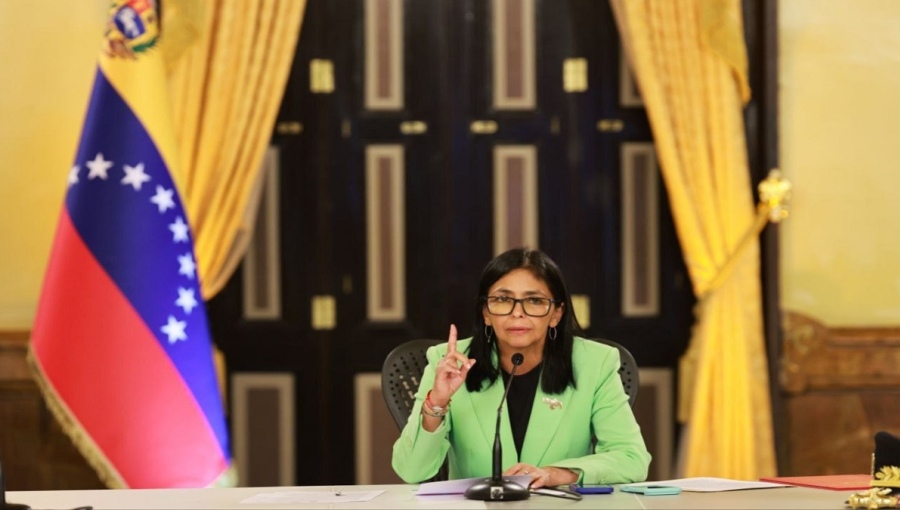
Venezuela's acting president Delcy Rodríguez will travel to Washington in the coming days, a senior US official told multiple news agencies, cementing her status as President Donald Trump's preferred partner for governing post-Maduro Venezuela despite her two decades defending authoritarian rule
The planned visit would mark the highest-level engagement between the two governments since Nicolas Maduro and his wife were captured and transferred to New York to face narcoterrorism charges after the January 3 operation. It would also make Rodríguez the first Venezuelan president to travel to the United States for bilateral talks in more than a quarter century – aside from protocol appearances at United Nations meetings in New York.
The dramatic US military raid that extracted Maduro from a heavily guarded compound in Caracas has fundamentally reshaped Venezuela's political landscape. Rodríguez, who served as Maduro's vice president and oil minister, assumed interim leadership as part of what Secretary of State Marco Rubio has outlined as a three-phase American strategy beginning with "stabilisation" through economic leverage, followed by "recovery" ensuring US companies gain oil sector access, and concluding with political "transition."
Washington has seized multiple Venezuelan oil tankers and recently completed its first sale of confiscated petroleum worth approximately $500mn whilst controlling revenues that would otherwise flow to Caracas. The Trump administration maintains explicit threats of further military intervention if the interim government fails to cooperate, a leverage that has so far produced tangible results including the release of over 400 political prisoners, though opposition groups report lower figures.
The announcement comes just a week after President Donald Trump met Venezuelan opposition leader and Nobel Peace Prize laureate María Corina Machado. Despite praising Machado personally, Trump has so far sidelined her from the country's transition process, arguing she lacks sufficient political backing.
After Machado presented him with the Nobel Prize, Trump seemed to partially backtrack on January 20, saying, "We're talking to her and maybe we can get her involved some way. I'd love to be able to do that; Maria, maybe we can do that.”
Still, he has firmly endorsed Rodríguez's post-Chavista administration, saying it is operating under his government's tutelage and meeting US demands, including granting access to Venezuela's oil sector and shipping millions of barrels of crude to the US for sale.
In a veiled swipe at Machado, which some also saw as an ironic reference to Maduro, Rodriguez told the National Assembly last week “If one day, as acting president, I have to go to Washington, I will do so standing up, walking, not being dragged." “I’ll go standing tall ... never crawling.”
During his speech at the World Economic Forum in Davos on January 21, Trump heaped praise on Rodriguez stating, "Her leadership is good and smart. We are working together to ensure that both countries prosper in this new era of trade."
Yet the arrangement remains precarious. Rodríguez, a pragmatic technocrat, governs alongside Interior Minister Diosdado Cabello, the brutal enforcer who commands intelligence services accused by the United Nations of crimes against humanity, and Defence Minister Vladimir Padrino López, who controls the armed forces. Armed pro-regime motorcycle gangs known as colectivos have established roadblocks in Caracas, prompting the State Department to issue urgent warnings ordering US citizens to flee immediately. The violence suggests that removing Maduro did not eliminate the coercive apparatus sustaining authoritarian control.
On the same day as Trump's meeting with Machado, Rodríguez held talks in Caracas with CIA Director John Ratcliffe on security matters and potential economic cooperation. Ratcliffe became the most senior US official, and the first cabinet member under Trump, to visit Venezuela since the military operation that ousted Maduro.
The Real Reason Washington Wants Venezuela’s Oil
- Venezuelan heavy crude could replace up to 5% of WTI intake at U.S. Gulf Coast refineries, boosting diesel yields and utilization of heavy conversion units.
- China faces higher feedstock costs and financial risk as discounted Venezuelan barrels are redirected toward the U.S., Europe, and India.
- Over the medium term, rising Venezuelan production and easing sanctions could revive domestic refining and reshape global heavy crude flows.
The timeline of the US–Venezuela conflict highlights a long-term strategy centered on securing heavy crude supplies for US Gulf Coast refineries, which are configured to process heavy sour barrels and benefit from Venezuela’s ability to deliver crude over short lead times. This will reduce reliance on Middle Eastern high-sulfur fuel oil (HSFO) for the US. Exports of Venezuela crude are expected to recover slowly toward the US, Europe and India, leaving China disadvantaged, while OPEC+ remains defensive.
US Gulf Coast refineries process nearly 1.45 million bpd of imported crude out of an average 9 million bpd in total refinery runs. With between 400,000 and 500,000 bpd of Venezuelan crude (primarily Merey) expected to be added, nearly 5% of West Texas Intermediate (WTI) crude intake could be replaced by Venezuelan Merey. We used linear programing (LP) modeling (AVEVA) for some Gulf Coast refineries (having coker, catalytic cracker and hydrocracker) to estimate changes in product yields and utilization rates of heavier oil-processing units. The results indicate an average 2% increase in diesel yield, primarily higher utilization of bottom of barrel units, driven by increased utilization of heavy conversion units by almost 2% to 3%.
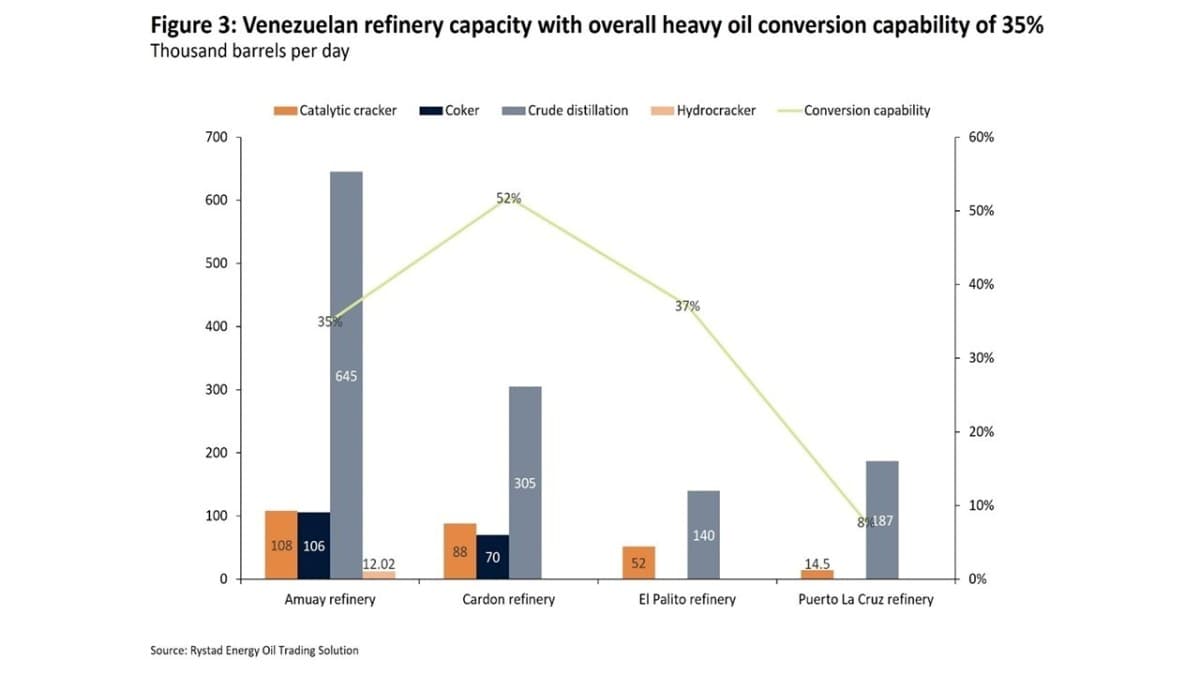
Over the longer term, as Venezuelan crude production just exceeded 900,000 bpd in 2025, with anticipated US capital inflow and a subsequent demand increase, Rystad Energy expects the Venezuelan refining sector – which has 1.2 million bpd of capacity – to start increasing runs within 18 to 24 months. Current run rates are hampered by frequent power disruptions, unplanned outages and improper maintenance of the refineries. We assess that the typical turn-down rate of 60% should be feasible by the middle of next year.
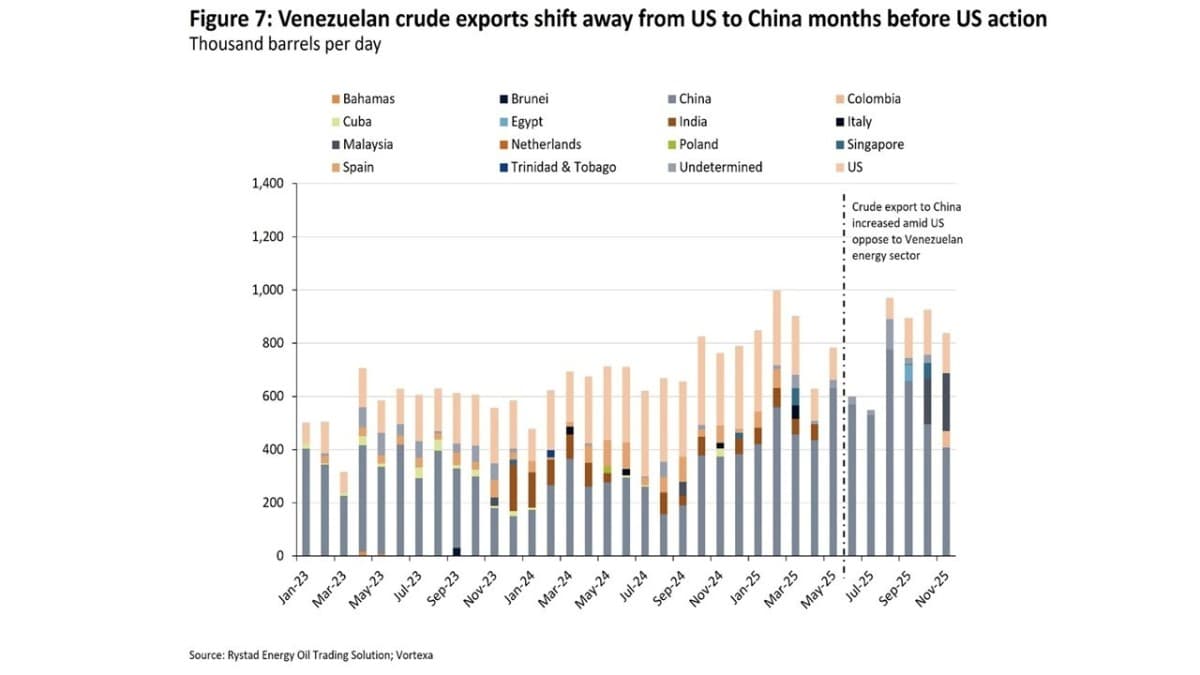
China remains the primary loser in this evolving structure. The loss of heavily discounted Venezuelan crude undermines the economics of independent so-called ‘teapot’ refiners and places approximately $12 billion in oil-backed loans at risk. Although some Middle Eastern HSFO and heavy barrels may now be redirected toward Asia, Chinese refiners still face higher feedstock costs, longer shipping distances and elevated geopolitical risk compared with the Venezuelan barrels they previously imported. India, by contrast, stands out as a structural winner, with complex refineries well suited to heavy sour grades and a renewed opportunity to absorb Venezuelan crude as sanctions ease.
Venezuelan crude accounts for approximately 500,000 bpd of the 15 million bpd in China refinery runs since around 2019, which marked the start of increased US opposition to the Venezuelan energy sector. Chinese refineries processing heavy crudes are typically integrated facilities equipped with heavy bottom-of-the-barrel upgrading units. As a result, the loss of heavy Venezuelan barrels is unlikely to have any noticeable impact on China’s overall product yields, given total refinery runs of around 15 million bpd. While individual refiners processing this crude will need to adjust their crude slate, these changes are not expected to affect aggregate Chinese yields materially.
Disclaimer: The opinions expressed in this article are solely those of the author, and do not necessarily represent the views or beliefs of Rystad Energy.
By Pankaj Srivastava for Rystad Energy
Inside the Economics of Venezuela’s Elusive Oil Reserves
- Venezuela’s reported oil reserves are largely unaudited government claims that ignore economic viability.
- Most of the country’s oil is extra-heavy crude that requires costly upgrading, diluents, and sustained high prices to produce profitably.
- Political instability and long-term investment risks make a major near-term increase in Venezuelan oil production improbable.
In the wake of the Trump administration's prosecution of a war and blockade against Venezuela and the administration's promise to vastly increase oil production in the country, it's worth knowing why claims about Venezuela's oil "reserves" being the largest in the world are problematic. It's also important to understand what this implies for the future of oil production in Venezuela.
Consider the following:
1. Official oil reserves are just that. They are numbers reported by official government sources. Where these numbers come from large state-owned oil companies—as is the case with Venezuela—they are rarely verified through independent audits. And, those numbers tell you nothing about the economic viability of the claimed reserves.
2. There is a pattern among several OPEC countries, including Venezuela, of suddenly claiming vast increases in oil reserves without evidence of additional economically viable discoveries. Just to be clear, reserves are known deposits of minerals demonstrated to be extractable using current technology and profitable at current prices. The term "reserves" does not appear to apply to most of Venezuela's extra-heavy crude at current prices, which is believed to be 90 percent of its supposed reserves. This is true especially if upgrading facilities have to be built from scratch—Venezuela has only one extra-heavy crude facility that began production in 1947. Such an expensive long-term investment requires a belief that prices will reach and maintain much higher levels than today and that political and social conditions will remain calm and favorable over long periods. (For a comparison of Venezuelan crude oil with others in the world, see this infographic.)
In several Middle Eastern countries, the sudden reserve increases mentioned above happened in the mid-1980s. In Venezuela, it happened over a three-year period from 2007 to 2010. The following chart is based on the Statistical Review of World Energy (formerly sponsored by oil giant BP and now published by an independent organization):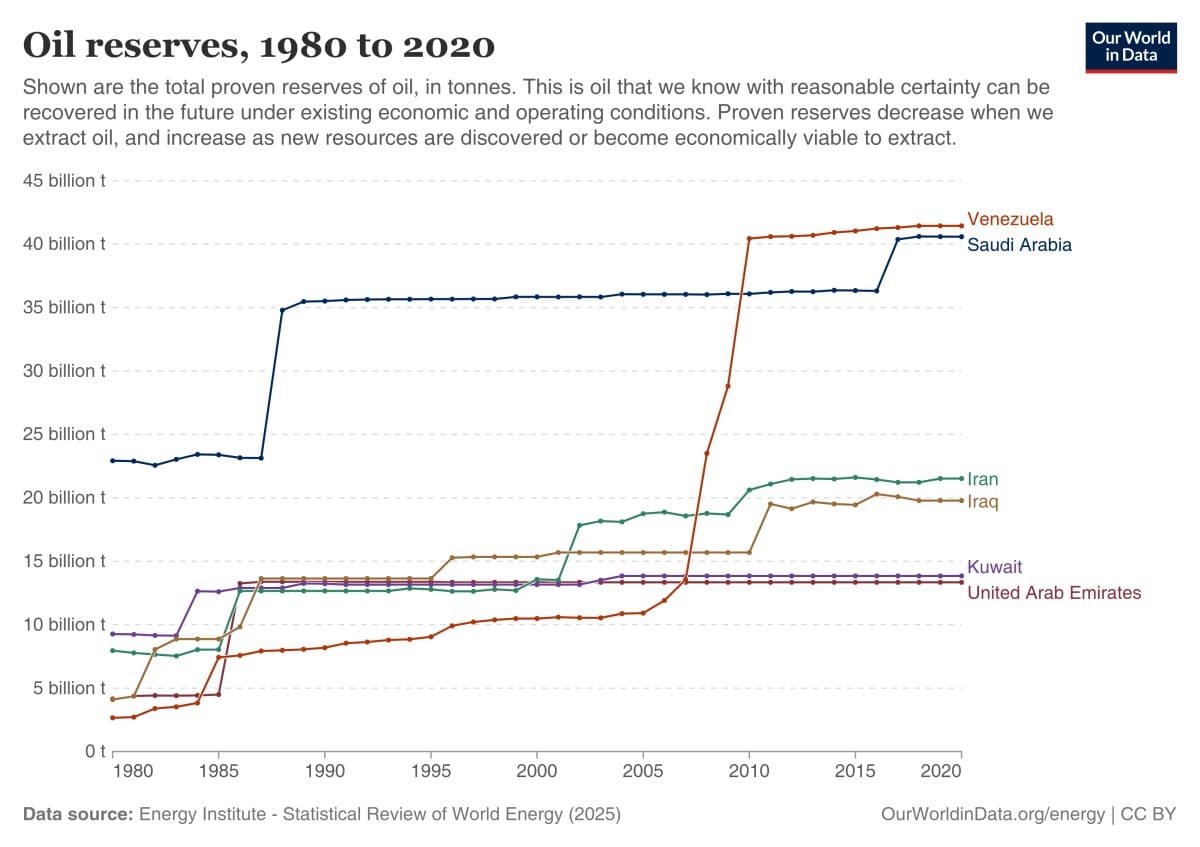
3. The vast majority of Venezuela's so-called reserves are in the form of extra-heavy crude in an area called the Orinoco Belt, which lies in eastern Venezuela along the Orinoco River. The U.S. Energy Information Administration reported that Venezuela's state oil company claimed that there are 270 billion barrels of extra-heavy crude oil reserves in this area in 1998. Venezuela today reports 303 billion barrels of reserves of all types, including heavy crude, which it currently processes and sells. But nobody knows the real numbers because there is no outside independent audit.
4. Extra heavy crude oil is a very viscous liquid—about the consistency of "cold peanut butter"—that is suitable for use in asphalt, but little else. To be useful as oil, it must be upgraded using complex and costly processing that requires vast amounts of natural gas and also diluents such as naphtha, which are mixed with the oil to make it feasible to transport through a pipeline. Just to get the heavy oil out of the ground requires steam or water injection. And during refining, the high sulfur content—sulfur is an air pollutant that has to be removed—makes it more expensive to refine. In other words, it takes a lot of energy to extract and process extra-heavy crude oil to make it into something we call oil. And, all of that is quite expensive.
5. Which brings us to the price of oil and the economics of producing Venezuela's extra-heavy crude. The world benchmark for crude is Brent Crude, currently trading at around $64 per barrel. But because Venezuela's extra-heavy crude is so difficult to refine, it sells for a substantial discount to the world benchmark price, somewhere between $12 and $20. The cost of diluents adds another $15 to the costs of getting this extra-heavy crude through a pipeline.
So the seller is already taking a financial haircut of between $27 to $35 compared to the world benchmark crude. For massive investment to take place in Venezuela, world oil prices would probably have to be and remain around $100 per barrel for years in order to convince oil companies to risk making the kind of investments that only provide a return over 20 to 30 years—the kind that extraction and upgrading of extra heavy oil requires.
6. All this suggests that oil production in Venezuela is probably not going to rise much in the coming years. And, the idea that increased Venezuelan oil production could bring down current oil prices is nothing short of ridiculous since producing the vast majority of the country's oil resources will require much higher prices.
Of course, I haven't even factored in the political and social instability that is plaguing Venezuela in the wake of the U.S. attacks and blockade. Nor have I considered the fact that, despite the removal of Venezuelan President Nicolas Maduro, his vice president (now elevated to acting president) and administration are still in charge. These are the same people who expropriated U.S. oil company assets in the country previously and who levy high taxes on the remaining oil operations. Given this backdrop, it's hard to imagine much investment going into the Venezuelan oil industry from foreign countries anytime soon.
The smash-and-grab diplomacy in which the United States is now engaged in Venezuela may seem like it will somehow liberate Venezuela's supposed oil riches. But all it is likely to do is demonstrate that those riches are as elusive as ever.
By Kurt Cobb via Resource Insights
Maduro Redux
The Profanity of Life
Trump’s behavior has triggered a recall of Mario Vargas Llosa’s novel, based partly on his life, Aunt Julia and the Scriptwriter. In the novel, the protagonist’s employer hires an eccentric Bolivian scriptwriter to write soap opera serials. The novel chronicles the scriptwriter’s success and increasing popularity. The soap operas become more bizarre and reflect the scriptwriter’s descent into madness.
From start of his second ascendancy to king of the kingdom, Trump has exhibited a growing intensity of aggrandizement, internalized success that begs greater accomplishment, and escalations in daring episodes, violations of constitutional norms, and profanity of life. Each day, his disregarding the sanctity of life, permitting arbitrary killing, and indicating he will pardon anyone who commits a crime that has his approval, reflects his scriptwriting descent into madness.
Armed groups — National Guards, Homeland Security and its Immigration and Customs Enforcement (ICE), Federal Bureau of Investigation (FBI), and Secret Service — no longer defend the populace, operate in the benefit of the U.S. president, patrol our streets, commit aggressions, defy laws, and operate without constitutional control. There is no defense to the transgressions, except to take up arms against the armed, and no peace loving and country-loving citizen is prepared to do that. The trend is to increased trampling of national and international law, followed by national and international resistance, followed by national and international strife, and escalation of alarming national and international aggressions by a maddening president who holds the code to releasing nuclear-armed missiles.
Complementing a president descending into madness is a large portion of the population exhibiting symptoms of derangement. The lack of concern for the genocide of the Palestinian people, the inertia in protesting the unnecessary killings of unproven drug smugglers, and the slaughter of up to 100 Venezuelans and Cubans to apprehend a country’s leader and satisfy a U.S. court indictment in a case that will not be resolved for years, highlights the deranged thought. Reactions to the recent shooting of Renée Good by an ICE agent emphasize the derangement.
No normal person can consider the shooting of Renee Good as anything but homicide. From the start of the video of the crime scene to its ultimate tragic conclusion, the behavior of the ICE officers was provocation and use of force. Ms. Good was not entirely blocking traffic, drove the car away as the ICE agents wanted, did not steer the car to the agent who deliberately appeared in front of the car, did not hit the agent, and received bullets through the front and side windshields from ICE officer Jonathan Ross, who was never in danger.
The utterances from administration officials — President Trump initially claiming Ross was run over and was in the hospital; Homeland Security Secretary Kristi Noem saying, that the shooting occurred “because Ms. Good was allegedly using her Honda Pilot as ‘a deadly weapon;’” and Vice President JD Vance haranguing in a briefing that, “The reason this woman is dead is because she tried to ram somebody with her car, and that guy acted in self-defense. That is why she lost her life, and that is a tragedy,” are deliberate falsehoods that do not coincide with the facts.
Reading comments to the reports on the incident in Yahoo news, where a large assortment of the comments agree with the administration, is disturbing. Discussion of the shooting on PBS News Hour by political commentator, David Brooks, increased the disturbance. Brooks recited that, in his X account, followers responded to the shooting in accord with their agendas, splitting exactly as their feelings toward the present administration. He declined to voice his own opinion, willing to leave it to history.
Learning that the electorate is guided by agenda and not by reality and facts is disheartening. How can equality, justice, and freedom be achieved in that environment. Not a day of peace for Americans
Here is an interesting deliberation. Compare the murder of Ms. Good to the response by the Chinese military to the famous “Tank man,” who stopped Chinese tanks on the day after the Tiananmen incident and received no known rebuke, physical or otherwise. We also know that if Officer Ross is indicted and convicted, Trump will grant him a pardon, which is chilling. Dispose of anyone who gains the Trump wrath and don’t be concerned; similar to pardons granted other convicted criminals who were on good terms with Trump, you will not serve a day.
Each day brings another conflict between the U.S. populace and U.S. authorities. Trump has already said “he might use the Insurrection Act to deploy troops to Minneapolis.” With 33 Senate seats and all 435 congressional seats up for re-election, his popularity decreasing, and a possibility that a more heavily constituted Democratic congress might be successful in an impeachment vote and in a conviction, an out-of-control Trump might consider the anarchy he is creating as an excuse to control the mid-term congressional elections.
Will Minneapolis, Minnesota be the 21st century Fort Sumter?
U.S. Seizes Seventh Crude Oil Tanker Linked to Venezuelan Trade
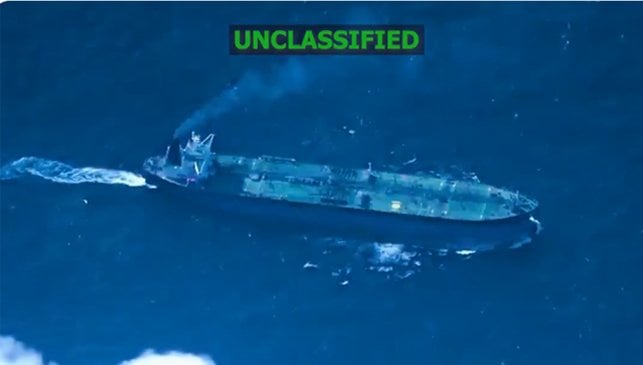
Southern Command announced this afternoon, January 20, that U.S. military forces have seized a seventh crude oil tanker. Few details were provided with the statement, only saying the apprehension took place without incident.
In announcing the seizure, the U.S. again declared that “the only oil leaving Venezuela will be oil that is coordinated properly and lawfully.” Southern Command asserted that the tanker was “operating in defiance of President Trump’s established quarantine of sanctioned vessels in the Caribbean.”
The ship, which had been sanctioned by the United States at the beginning of 2025, as well as sanctions by the European Union and the UK, is different in its modus operandi. Built in 2005, the tanker is 106,433 dwt and has been operating since 2022 under the name Sagitta. Unlike most of the shadow fleet, it has not bothered to change its name, but is reported to have used “zombie” identities.
The analytics service TankerTrackers.com reports the ship had operated for three years exporting Russian oil, but appeared to stop after the January 2025 sanctions. It, however, reports the tanker was tracked exporting fuel oil out of Venezuela in August 2025, using a zombie alias.
The Equasis database lists the vessel’s owners and managers as being in China. The ship was previously flagged in Panama and Liberia, but since 2024 has been operating without a flag registry. Lloyd’s Register lists its class certification as withdrawn in December 2024. The last port state inspection appears to have been in 2023.
The seizure comes as other reports have said some of the previously seized tankers were spotted off Puerto Rico, while the Bella 1 (Marinera) was last seen arriving in Scotland last week to re-provision. Russia’s Foreign Minister today asserted that the United States has not followed through on its commitment to release the two Russian crewmembers aboard the tanker.
Russia’s Minister of Foreign Affairs, Sergey Lavrov, told reporters in Moscow that “We were assured that a decision had been made at the highest level to secure their release.” He called on the U.S. to release the crew of the Bella 1 (Minerva) after Russia declared that the U.S. statement that the crew of the tanker might face prosecution is “categorically unacceptable.”
Trump has vowed the U.S. will seize shadow fleet tankers operating in the Caribbean and sell the oil. Like the Bella 1, it appears today’s seizure is of a vessel traveling only with ballast.